
How Much Does an Italy Road Trip Actually Cost? (Real Numbers)
Fuel, tolls, parking, accommodation, entry fees, food — everything we spent on Rome, Amalfi, Pompeii, Naples, and Tuscany, broken down so you can plan yours honestly.
Why Standard Daily Budgets Don’t Work
Most Italy travel budget guides give you a daily average — “budget €80–120 per person per day” — and leave it there. That number is technically accurate and completely useless for planning. Rome costs differently from Naples. A day on the Amalfi Coast costs differently from a day driving through Tuscany. Entry fees, parking, and how you handle breakfast all shift the total significantly.
So this is a different kind of budget post. We drove to Italy from Germany — four people, our own car, summer — and tracked what we actually spent across the whole trip. What follows is an itemised breakdown by category, with honest context about where the costs concentrate, where we saved, and what we’d do differently. The numbers are real with some rounding.
01 — Getting There: Fuel and Tolls
We drove from Germany, which adds a significant cost category that most Italy budget guides don’t include: the drive itself. For those flying in and renting a car locally, this section covers what to expect from Italian toll roads specifically.
Fuel for the full circuit
Our route — Germany to Rome, south to the Amalfi Coast and Naples, north through Tuscany and Florence, back to Germany — covered approximately 3,200–3,500 kilometres in total. Fuel consumption varies significantly by car, but at average European fuel prices in summer 2025, the full circuit cost roughly €200–240 in petrol. Split four ways, that comes to €50–60 per person for fuel across the entire trip.
Italian fuel is broadly comparable in price to Germany and France, though stations on the autostrada charge a noticeable premium over those on smaller roads. Consequently, it’s worth filling up before joining the motorway wherever possible. Additionally, fuel stations on the Amalfi Coast road are rare and awkward to exit safely — fill up before joining the SS163 at Vietri sul Mare.
There are almost no petrol stations on the SS163 itself, and the ones that exist are difficult to access safely from a moving vehicle. Fill the tank completely before you join the coast road at Vietri sul Mare. This removes one source of stress from an already demanding drive.
Italian toll roads
Italy’s autostrada system uses tolls throughout, and the costs add up meaningfully on a long circuit. Most toll booths accept credit and debit card — carry one accessible in the car rather than hunting for cash at the booth. The Telepass lane (electronic transponder) moves faster but requires a device you won’t have as a visitor, so use the standard lanes.
Our toll costs for the Italian portion of the route — Rome entry, the drive south to the Amalfi area, back north through Tuscany and Florence, and the exit toward Austria — came to approximately €50–65 total for the group, or €13–16 per person. The Brenner Pass motorway in Austria adds a further toll on the drive home from Germany, typically around €10–12 per car.
| Fuel — full circuit (Germany return) | €200–240 total · €50–60 per person |
| Italian motorway tolls | €50–65 total · €13–16 per person |
| Brenner Pass toll (Austria) | €10–12 per car (one way) |
| Amalfi Coast parking | €0 — parked at Vietri sul Mare (free) |
| Rome parking | €15–20/day · 2 days = €30–40 total · €8–10 per person |
| Naples parking | €8–12 for the overnight area |
| Florence parking (park and ride) | €3–5 for the afternoon |
02 — Accommodation
Accommodation was the largest single cost category of the trip. In summer, central Rome commands prices that surprise people who expect Italy to be cheap — it is not, in the major tourist areas during peak season.
Rome — two nights
We booked an apartment in the Prati neighbourhood — northwest of the Vatican, well-connected to both the Vatican and the historic centre by foot and metro. For four people, two nights came to approximately €280–320 total, or €70–80 per person. That works out to €35–40 per person per night — significantly less than four separate hotel rooms would have cost in the same area.
Furthermore, the apartment included a basic kitchen, which meant we ate breakfast there on both mornings rather than paying café prices. We bought supplies from a nearby supermarket the evening we arrived — bread, cheese, fruit, coffee, yoghurt — and that covered two breakfasts for four people for around €15–18 total. By contrast, a sit-down breakfast for four at a Roman café would have cost €30–40 for the same quality of food. Over two days, that saving adds up.
We ate breakfast at the apartment both mornings in Rome, picked up supplies from a supermarket near Prati the night we arrived. It took ten minutes, cost about €8 per person for two mornings, and meant we could leave earlier without the time and cost of finding a café. For a group with a full day’s sightseeing ahead, it’s a simple saving that compounds across several days.
Naples — one night
Naples accommodation is substantially cheaper than Rome. We stayed one night near the city centre — a simple, clean place that cost €80–100 for the group, or €20–25 per person. The contrast with Rome pricing is stark. Furthermore, Naples rewards being centrally located — the streets around Spaccanapoli and the historic centre are what you came for, and staying close to them removes the need for any local transport.
Amalfi Coast — no overnight
We did the Amalfi Coast as a day trip, which means zero accommodation cost for that part of the trip. Overnight accommodation on the coast — Amalfi town, Positano, Ravello — runs €150–300 per room per night in summer. For a group, a shared apartment would reduce that cost, but the saving compared to a day trip is still significant. Our approach: drove the coast, had lunch in Amalfi town, continued to Naples for the night.
Not all of Italy costs the same. Rome and the Amalfi Coast carry the highest accommodation prices on this route. Naples is genuinely affordable. Tuscany (if staying overnight) sits somewhere in between — Florence is expensive, the smaller hill towns less so. If your budget is under pressure, the Amalfi overnight is the most significant single cost to cut — a day trip gives you most of what the coast offers for considerably less money.
| Rome — 2 nights (apartment, 4 people) | €280–320 total · €70–80 per person |
| Naples — 1 night (4 people) | €80–100 total · €20–25 per person |
| Amalfi Coast | €0 — day trip only |
| Tuscany / Florence | €0 — drove through, no overnight |
| Total accommodation per person | €90–105 |
03 — Entry Fees
Entry fees concentrate in Rome and at Pompeii. A surprisingly large portion of the trip costs nothing to enter — much of Rome’s street-level experience, the Amalfi Coast road itself, and all of Tuscany are free.
Rome entry fees
The Colosseum combined ticket — covering the Colosseum, Roman Forum, and Palatine Hill — costs €18 per person. This is non-negotiable in terms of value: the Forum alone justifies the price, and all three sites are covered by the same ticket valid across two days. Booking in advance at coopculture.it is essential in summer; the queue without a ticket can run two hours or more.
The Vatican and what to skip
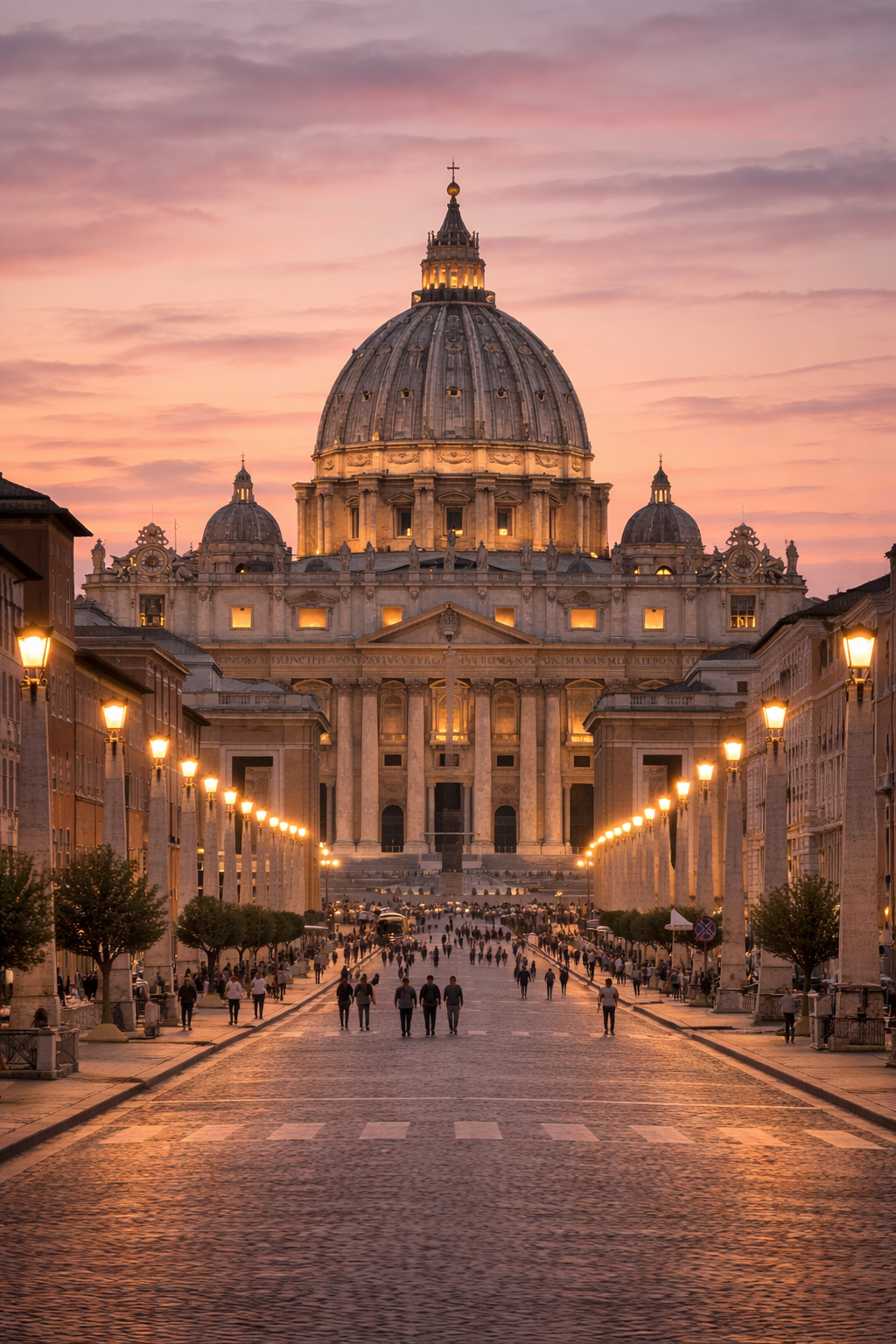
At the Vatican, the Basilica is free to enter. Climbing the dome costs €8 for the full stair route or €10 for the lift to the halfway point, followed by stairs to the top. Neither requires advance booking, but arriving early reduces the wait. The Vatican Museums, which include the Sistine Chapel, cost €17 per person and require both advance booking and several hours — we skipped them on this trip and saved both the money and the time.
In addition, the Pantheon costs €5 per person. Moreover, the Spanish Steps, Trevi Fountain, Campo de’ Fiori, all of Trastevere, and the entire street-level experience of the historic centre cost nothing at all. Rome’s free version is genuinely good.
We didn’t do the Vatican Museums (Sistine Chapel) on this trip. The €17 per person and the time commitment — you need at least three hours to see it properly — didn’t fit the pace of a two-day Rome stop focused on the historic centre. The Basilica and dome gave us Vatican without the queue, the cost, or the crowd. For a first Rome visit, that felt like the right call. The Museums deserve a trip where they’re the main event rather than a box to tick.
Pompeii — exceptional value
Pompeii entry costs €16 per person. For the scale of what you’re seeing — an entire excavated Roman city — this is exceptional value. Book online at the official Pompeii site to avoid the ticket queue on arrival; in summer, buying at the gate adds unnecessary time to a visit that already requires two to three hours.
| Colosseum + Roman Forum + Palatine Hill | €18 per person — book at coopculture.it |
| Vatican Basilica entry | Free |
| Vatican dome climb | €8 (stairs) or €10 (lift + stairs) |
| Pantheon | €5 per person |
| Pompeii | €16 per person — book online in advance |
| Vatican Museums (skipped) | €17 per person if visiting |
| Amalfi Coast, Tuscany, Florence streets | Free — no entry fees |
| Total entry fees per person (our trip) | €47 (Colosseum + dome + Pantheon + Pompeii) |
04 — Food and Drink
Food costs vary more than any other category on this trip, because the cities are dramatically different in price. Naples is one of the cheapest places to eat in Europe. Rome ranges from excellent value to tourist-trap expensive depending entirely on where you sit down. The Amalfi Coast charges what it can get away with. Knowing the differences in advance lets you plan accordingly.
Rome — eating well without overpaying
Our approach in Rome was simple: avoid any restaurant within fifty metres of a major tourist site, look for places with handwritten menus in Italian, and eat the way the city eats — a light breakfast at the apartment, a proper lunch as the main meal, a smaller dinner in the evening. With that structure, we spent roughly €25–35 per person per day on food in Rome, including coffee, which in Italy is never expensive.
Where to eat in Rome without overpaying
The streets around Trastevere and the area north of the Pantheon toward Campo de’ Fiori both offer good, honest restaurants at prices that don’t assume you’re a tourist making a once-in-a-lifetime decision. In contrast, the restaurants on the main piazzas — directly facing the Pantheon, on the Piazza Navona waterfront — charge significantly more for roughly equivalent food. That ten-minute walk away is always worth it.
Coffee at a bar in Rome costs €1–1.50 standing at the counter. The same coffee sitting down can cost €3–5. Drink it standing, the way Romans do — it takes two minutes, tastes the same, and costs considerably less over the course of two days. This is not a hardship. It is, in fact, the better experience.
Naples — the cheapest eating on the route
Naples is where the food budget recovered from Rome. Pizza at a proper Neapolitan pizzeria — not a tourist strip version, but the real thing in the streets back from Via dei Tribunali — costs €7–9. Street food costs €2–4. Coffee costs €1 or under. Overall, we ate very well in Naples for €15–20 per person for an entire day including a substantial dinner.
The key, as with Rome, is walking one street back from the main tourist area. In particular, the places with queues of local people at 7pm are invariably better and cheaper than the places with photos on the menu and a host standing outside. We found our pizza spot two streets back from the main road and went back the following morning for another one. At €8 a pizza, that felt entirely reasonable.
The Amalfi Coast — the most expensive meal on the route
Lunch on the Amalfi Coast was the most expensive meal of the trip. Eating in Amalfi town, in a restaurant off the main waterfront, cost approximately €35–45 per person for a proper lunch with a glass of wine. That is not a complaint — the food was good and the location earns a premium — but it is worth knowing in advance so the price doesn’t arrive as a surprise. In short, budget accordingly: the Amalfi lunch is an event, not a snack stop.
The restaurants directly on the Amalfi town waterfront charge the highest prices on the coast. The streets running north from the cathedral toward the hills have smaller, simpler places at more honest prices. For a quick lunch before continuing the drive, a slice of sfogliatella and a coffee from a bar near the cathedral costs €4–5 and is entirely satisfying. Save the sit-down lunch for a day when you’re not also trying to drive the SS163.
Tuscany and Florence — one meal each
In Tuscany we stopped briefly — a coffee and a pastry from a bar near Pienza, roughly €4 per person. Florence was a dinner stop before continuing north, eaten near the Piazza della Repubblica in a restaurant that was good without being remarkable. Dinner for four with wine cost approximately €120–140 total, or €30–35 per person. In the context of the whole trip, Florence eating was mid-range and unsurprising.
Food cost comparison across the route
| Rome — food per person per day | €25–35 (breakfast at apartment + lunch + dinner) |
| Naples — food per person per day | €15–20 (cheapest eating on the route) |
| Amalfi Coast — lunch per person | €35–45 (most expensive single meal) |
| Tuscany — brief stop per person | €4–6 (coffee and pastry) |
| Florence — dinner per person | €30–35 |
| Total food per person (approx) | €140–180 across the full trip |
05 — Local Transport
Local transport costs on this trip were low, because we covered most of Rome and Naples on foot. City tours by walking — as opposed to taxis, tour buses, or organised excursions — are both cheaper and, in cities this dense with things at street level, more rewarding.
Rome on foot
Rome’s historic centre is compact enough that most of the key sites are within thirty minutes’ walk of each other. We used the metro twice — once to reach the Colosseum from the Vatican side, once to return to the apartment late at night. A single metro journey costs €1.50; a day pass costs €7. Our total metro spend in Rome across two days was approximately €12 for the group, or €3 per person.
Walking distances in Rome
Everything else in Rome we covered on foot. The Pantheon to the Spanish Steps takes fifteen minutes. Another thirty-five minutes gets you from the Spanish Steps to the Vatican, passing through pleasant streets along the way. From the Vatican back to the Trastevere area is a twenty-minute walk across the Tiber. In short, walking Rome is not a concession to budget — it is the correct way to see it. The city is built to be walked, and the streets between the famous things are as interesting as the famous things themselves.
City tour by foot was not a budget decision so much as the natural consequence of how Rome and Naples present themselves. Both cities have too much at street level to move through them quickly. Taxis and buses skip the alleys, the market stalls, the side streets where something is always happening. Walking costs nothing and gives you more than any organised tour. The only caveat: wear shoes that handle cobblestones, because both cities have a lot of them.
Naples on foot
We walked the entirety of Naples we visited — Spaccanapoli, the streets around Via dei Tribunali, the waterfront, the area around Piazza del Plebiscito. No taxis, no metro, no organised tour. The Naples historic centre is linear enough that navigation on foot is straightforward, and the density of the streets makes walking the only pace that actually lets the city register.
| Rome metro (2 journeys × 4 people) | €12 total · €3 per person |
| Naples local transport | €0 — walked entirely |
| Florence tram (park-and-ride to centre) | €6 total · €1.50 per person each way |
| Organised tours or excursions | €0 — none taken |
| Total local transport per person | €5–8 |
06 — The Full Cost Summary
Taken together, here is what the trip cost per person across all categories. These figures cover the Italian portion of the journey — accommodation, food, entry fees, local transport, and Italian tolls and parking. Fuel from Germany to Italy and back is listed separately as it depends entirely on starting location and vehicle.
Per person total — our trip
| Accommodation (Rome + Naples) | €90–105 |
| Entry fees (Colosseum, dome, Pantheon, Pompeii) | €47 |
| Food and drink (all meals, all days) | €140–180 |
| Local transport (Rome metro, Florence tram) | €5–8 |
| Italian motorway tolls | €13–16 |
| Parking (Rome + Naples + Florence) | €10–14 |
| Total per person — Italy only | €305–370 |
| Fuel from Germany (per person, group of 4) | €50–60 |
| Total per person including drive from Germany | €355–430 |
Three versions of the same trip
The numbers above reflect a mid-range trip — apartment accommodation, meals at local restaurants avoiding tourist traps, entry fees for the main sites, no guided tours. However, the same route runs at very different costs depending on choices made in a few key areas.
Hostel or budget hotel accommodation in Rome (skip the apartment), skip the Amalfi overnight entirely (day trip as we did), eat street food and supermarket lunches, skip Vatican Museums and any paid tours. The Amalfi day trip alone saves €100–150 per person compared to a night on the coast. This version of the trip sees the same sights with less comfort and more planning discipline.
Central apartment in Rome split four ways, one night in Naples, Amalfi as a day trip, meals at local restaurants, main entry fees covered. This is a comfortable trip without luxury — you eat well, sleep centrally, and see what you came to see without the stress of cutting every corner.
Add an overnight on the Amalfi Coast (the single biggest cost addition — €100–150 per person for a mid-range room), upgrade Rome accommodation to a hotel, add the Vatican Museums and a guided Pompeii tour, eat sit-down meals at the better restaurants. This version costs roughly double the budget approach for a meaningful but not transformative improvement in experience.
Where to spend and where to save
The quality difference between a €40/night Rome apartment and a €120/night Rome hotel room is real but not decisive — you sleep in both, and Rome happens outside. The quality difference between eating at a tourist-facing restaurant on the Pantheon piazza and a local place two streets back is also real — and it costs less, not more. In other words: spend less on accommodation and more on food, choose location over luxury, and walk everywhere. That’s the version of Italy that stays with you.
Overall Budgets & Value
Accommodation & Practicalities
It requires the right decisions about where the money goes.