
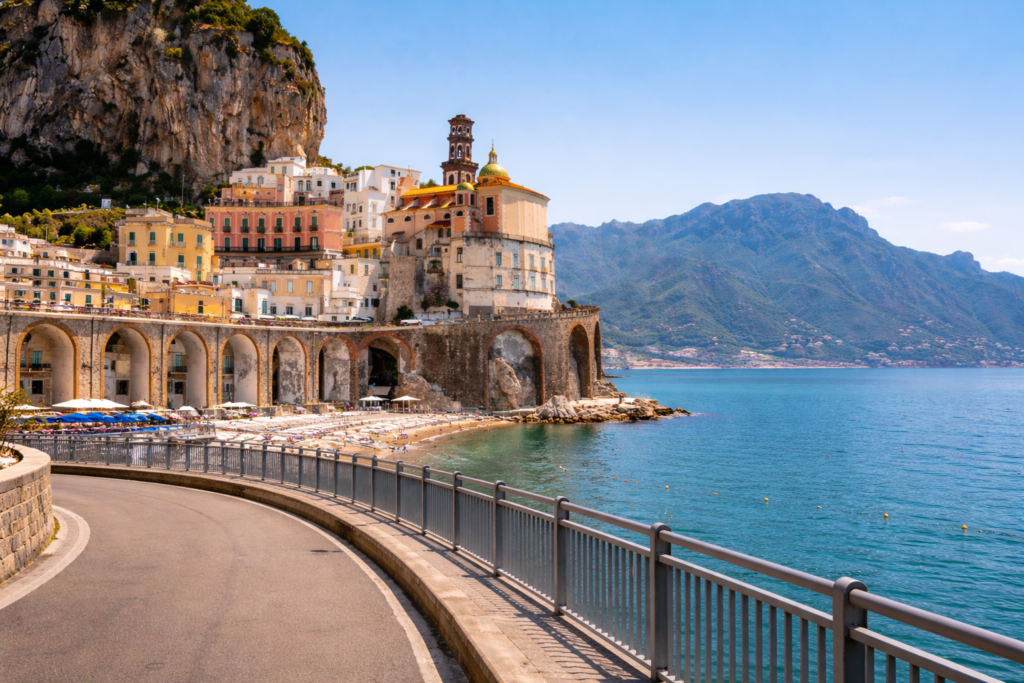
Italy Road Trip: Rome, Amalfi Coast, Pompeii & Tuscany
A first-hand drive through southern Italy — parked in Rome, twisted down the Amalfi Coast, walked the ruins at Pompeii, ate the real pizza in Naples, and came home through Tuscany.
We parked the car in Rome. That was the first decision — and one of the better ones. Rome is not a city you drive. The streets are narrow and old and entirely indifferent to the logic of modern traffic. So we left the car in a garage near the edge of the city and spent two days moving through it entirely on foot and by local transport, which is exactly how Rome should be seen.
Then we drove. South first, along the coast, down to Amalfi. Then to Pompeii. Then Naples for pizza — and I mean that seriously, not as a footnote. On the way back north to Germany we passed through the hills of Tuscany, stopping where it seemed worth stopping. This is that route.
What follows is not a luxury itinerary. It is not a budget itinerary either. Instead, it is an honest one — the kind where you make real choices about time, about what to skip, and about where one day is enough and where it isn’t. If you are planning a drive through southern Italy, this is what that trip actually looks like.
01 — The Route at a Glance
The shape of this trip makes geographic sense. You arrive in Rome, spend time there, then drive south through some of the most photographed coastline in Europe before looping back north through Tuscany. There is no backtracking, no wasted distance. Moreover, every leg flows naturally into the next — which is rarer than it sounds when planning a multi-stop road trip.
Why this circuit works
Most Italy road trips either centre entirely on the north — Florence, Venice, Milan — or attempt to cover too much ground and end up feeling rushed. This southern circuit is different in that it stays coherent. Rome anchors it. The drive south to the Amalfi Coast takes a single day. Pompeii and Naples sit conveniently between the coast and the return route. Tuscany, meanwhile, rewards you simply for passing through it on the way home. In short: the geography does the work, and you don’t spend your evenings doubling back.
→
→
→
→
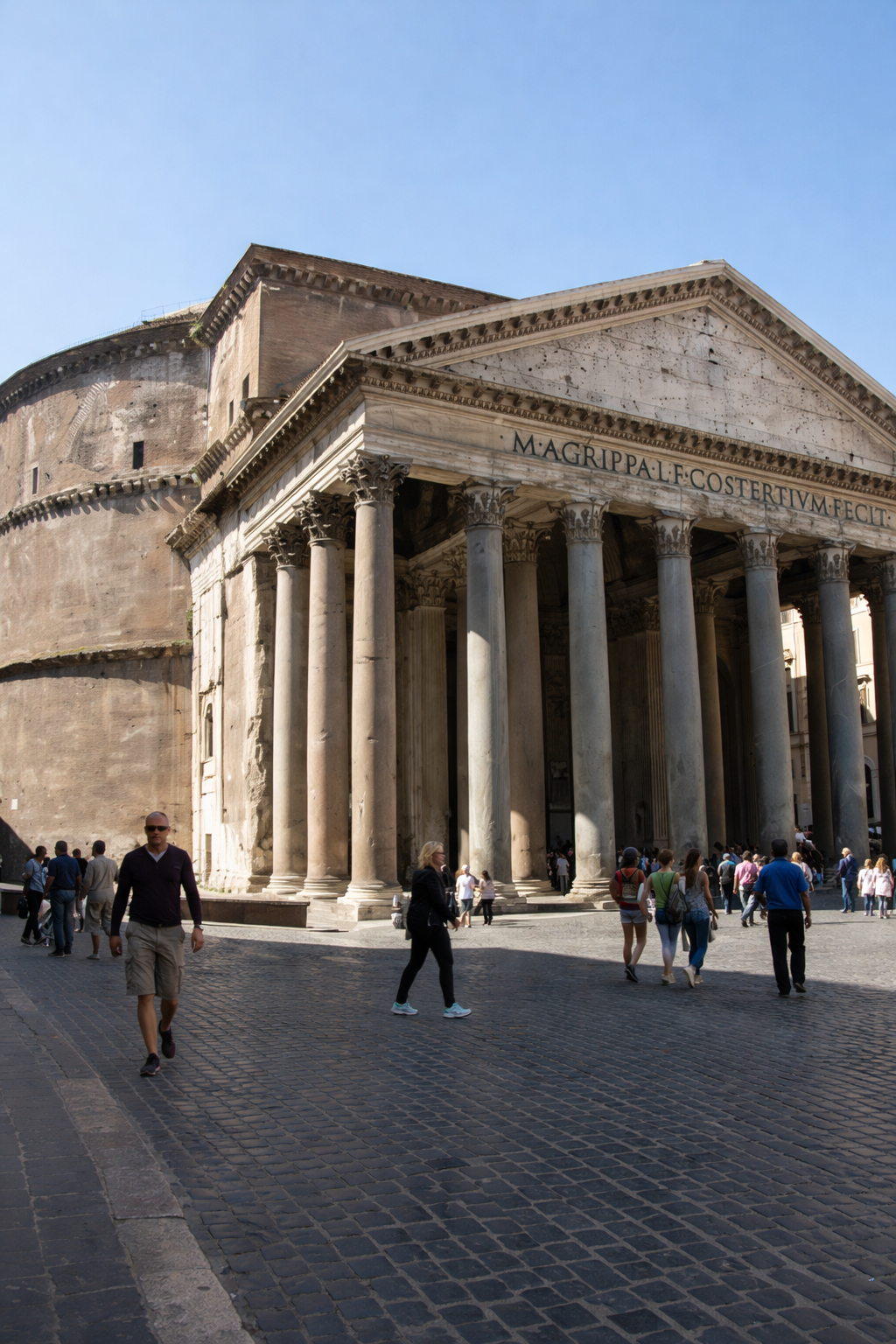
Park near the Prati or Trastevere neighbourhoods, where garages are easier to find than in the historic centre. Spend the afternoon orienting yourself. The Pantheon is a ten-minute walk from most of central Rome — it is a reasonable first impression. The Colosseum is best saved for day two when you can book an early entry slot.
Arrival
Start at the Colosseum early. Walk to the Roman Forum. By midday, cross to the Vatican — climb the dome if your legs allow, because the view of St Peter’s Square from above is one of those images that stays. In the evening, the old town empties and the city becomes something quieter and more itself. Trevi Fountain at midnight has a different quality entirely.
Full Day
Leave Rome early. The drive to Amalfi is roughly 4–5 hours depending on traffic, and you want to arrive with daylight to spare. The coastal road itself — SS163, with the mountain on one side and the sea dropping away on the other — is the main event. Spend the afternoon in Amalfi town or push along to Positano if time allows.
Drive Day
Drive north along the coast and stop at Pompeii by late morning — two to three hours is enough to walk the main ruins and feel the scale of the place. Then continue into Naples. Eat pizza at a proper Neapolitan pizzeria — this is not optional and it will ruin all other pizza for you. Stay overnight in Naples or begin heading north.
Two Stops
This is the drive home — or the drive toward wherever you’re going next. Tuscany appears as you come up through the hills, and it is worth stopping. Even an hour pulled off the autostrada into the countryside adjusts something in you. The light in the late afternoon, the cypress trees, the quiet roads between towns — it earns a stop.
Return Drive
02 — Rome: 2 Days on Foot
Of all the cities on this route, Rome requires the least introduction — but it does need to be approached correctly. The most common mistake is trying to cover too much in too little time. Two days is enough — not to see everything, but to see enough that the city starts to make sense as a place rather than a list of monuments.
Leave the car alone
The decision to park and use local transport was the right one. Rome’s historic centre is dense, the streets are narrow, and many of the most important sights sit within a walkable radius of each other. Additionally, parking in the ZTL zones — the restricted traffic areas that cover most of the historic centre — can result in fines that arrive weeks later. Furthermore, the public transport, while imperfect, covers the main corridors well enough. In short: park once, walk everywhere.
The order that actually works
Most people do Rome in the wrong sequence — they start with the Colosseum in the afternoon heat, then wonder why they feel depleted. Instead, consider reversing the logic: start with the smaller, quieter things — the Pantheon, the Spanish Steps in the morning before the crowds, Piazza Navona — and save the Colosseum for early the following day when the light is better and the queues are shorter. Meanwhile, the Vatican sits on the western side of the river and deserves its own morning entirely.
Book tickets in advance — the queue without one is genuinely long. The interior is more impressive than the exterior suggests, and the Roman Forum immediately beside it adds context that makes the whole visit worthwhile. Allow two hours minimum.
During the day it is crowded to the point of being difficult to appreciate. After 10pm, particularly on weeknights, the square quiets considerably and the fountain under artificial light has a quality the daytime version doesn’t. This is one of those observations that sounds like a cliché until you experience it yourself.
Entry to St Peter’s Basilica is free. Climbing the dome costs a few euros and requires either stairs or a lift to the first level — the stairs continue from there. From the top, St Peter’s Square resolves into a perfect ellipse below you. It is one of those moments where a famous place finally reveals what it’s actually for.
A building that has been in continuous use for nearly two thousand years. Entry now requires a small fee, which is worth paying simply to stand under the oculus and look up. The engineering has not aged in any way that matters — it still works, still impresses, still earns the silence people give it.
The old town — the area around Campo de’ Fiori, Piazza Navona, and the streets near the Pantheon — changes character significantly after 9pm. The tour buses are gone. The gelato queues disappear. The stone cools. Walking these streets late in the evening, with the fountains running and almost no one around, is one of the more unexpectedly calm experiences this city offers.
03 — The Amalfi Coast Drive
The Amalfi Coast has been photographed so comprehensively that it risks arriving as a disappointment — another place that looks better in images than in reality, drowned in tourists and expensive everywhere. That is not, in our experience, what happened.
What the road is actually like
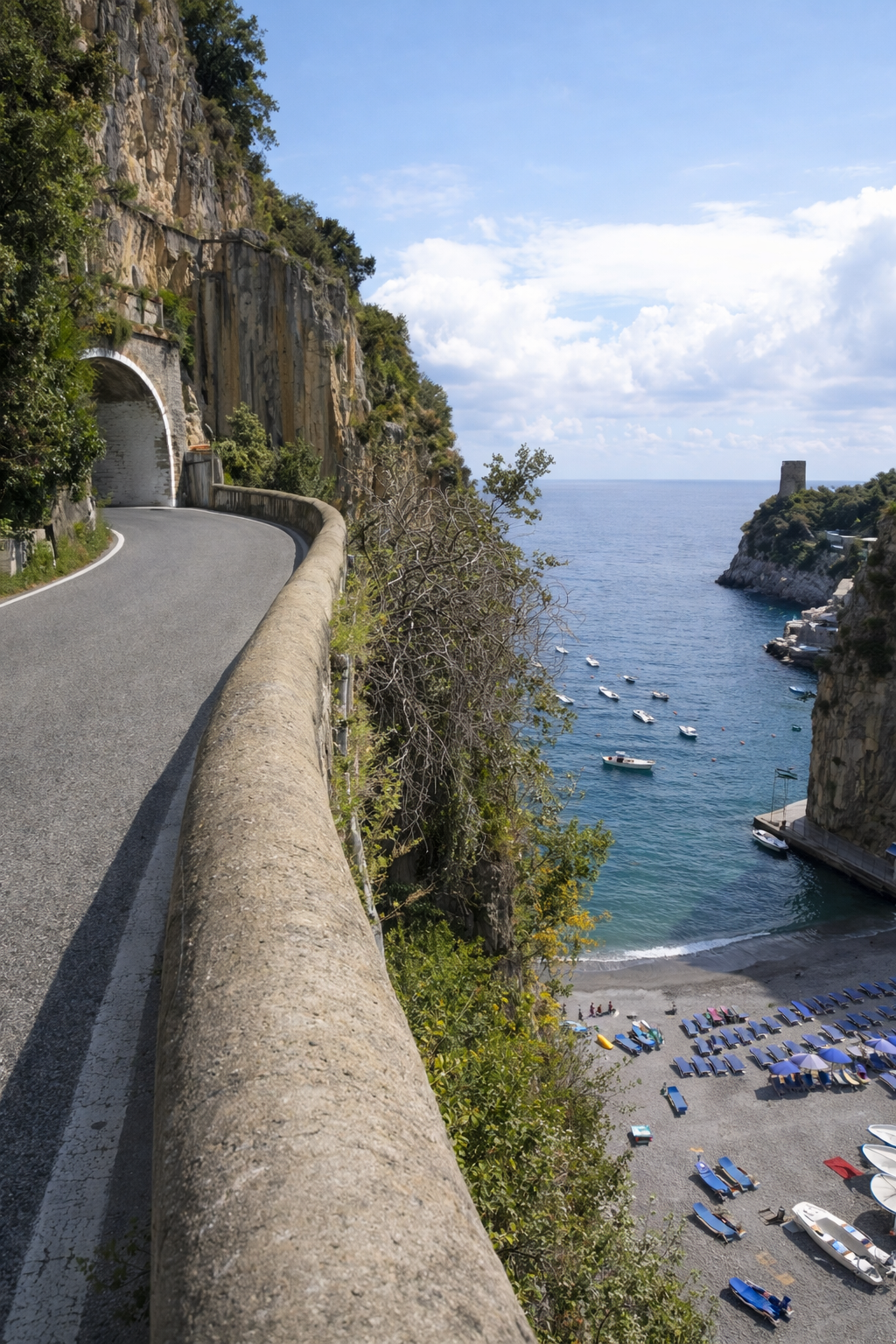
The SS163 — the coastal road — is narrow. In some sections, it is narrow enough that two vehicles passing in opposite directions requires one of them to pull into an alcove and wait. To the left, the mountain rises sharply. On the right, the road drops away to a sea that is a particular shade of blue that doesn’t reproduce accurately in photographs. Consequently, you drive slowly. That slowness is not a problem — it means you see it properly.
The driving itself requires genuine attention. However, it is not technically difficult — it is simply very present. You cannot look at your phone. You cannot be elsewhere in your head. As a result, the drive has an unusual quality for modern travel: it asks you to be completely where you are. Most people, we found, enjoy this more than they expected.
One day: is it enough?
One day is enough to drive the road and spend a few hours in Amalfi town itself. It is not, however, enough to stay, to swim, to wander the smaller villages up the hillside, or to eat a long lunch with the sea below you. That version requires more time — at minimum two days, ideally with a night in Ravello or Praiano rather than Amalfi itself, where accommodation is more expensive and the crowds are thicker.
That said, we had one day. Even so, one day on that road — used incompletely — is still one day on that road. We would return with more time. We do not regret going with less.
Parking in Amalfi town is limited and expensive. Arrive early — before 10am in summer — to find a space. Alternatively, consider parking in Vietri sul Mare at the eastern end of the coast road and driving west toward Amalfi, which gives you the best views with the sea on your right. Large campervans and coaches have restricted access on some sections of the SS163. A regular car has no restrictions.
04 — Pompeii & Naples in One Stop
These two places sit twenty-five kilometres apart and combine logically into a single day — though the combination feels unlikely until you’re doing it. Pompeii is ancient and completely still. Naples, by contrast, is alive in a way that can feel slightly overwhelming if you’re not ready for it.
Pompeii: the scale of it
Nothing quite prepares you for how large Pompeii is. The photographs show ruins — individual columns, a mosaic floor, a plaster cast of a body. What they don’t convey is that this is an entire city, preserved by the eruption of Vesuvius in 79 AD, and that walking through it takes hours. Cobbled streets run for hundreds of metres in every direction. The ruts worn by cart wheels are still visible in the stone, and doorsteps remain precisely the right height to step over.
What the experience actually feels like
The visit is not particularly dramatic in the cinematic sense. There are no grand reconstructions, no theatrical lighting. Instead, it is simply a city that was interrupted — and walking through it produces a kind of quiet that is specific to the place. Not reverent exactly, but attentive. You find yourself reading it carefully, looking for what it tells you about the people who lived there. That quality, more than anything else, makes it worth the visit in a way that no photograph adequately explains.
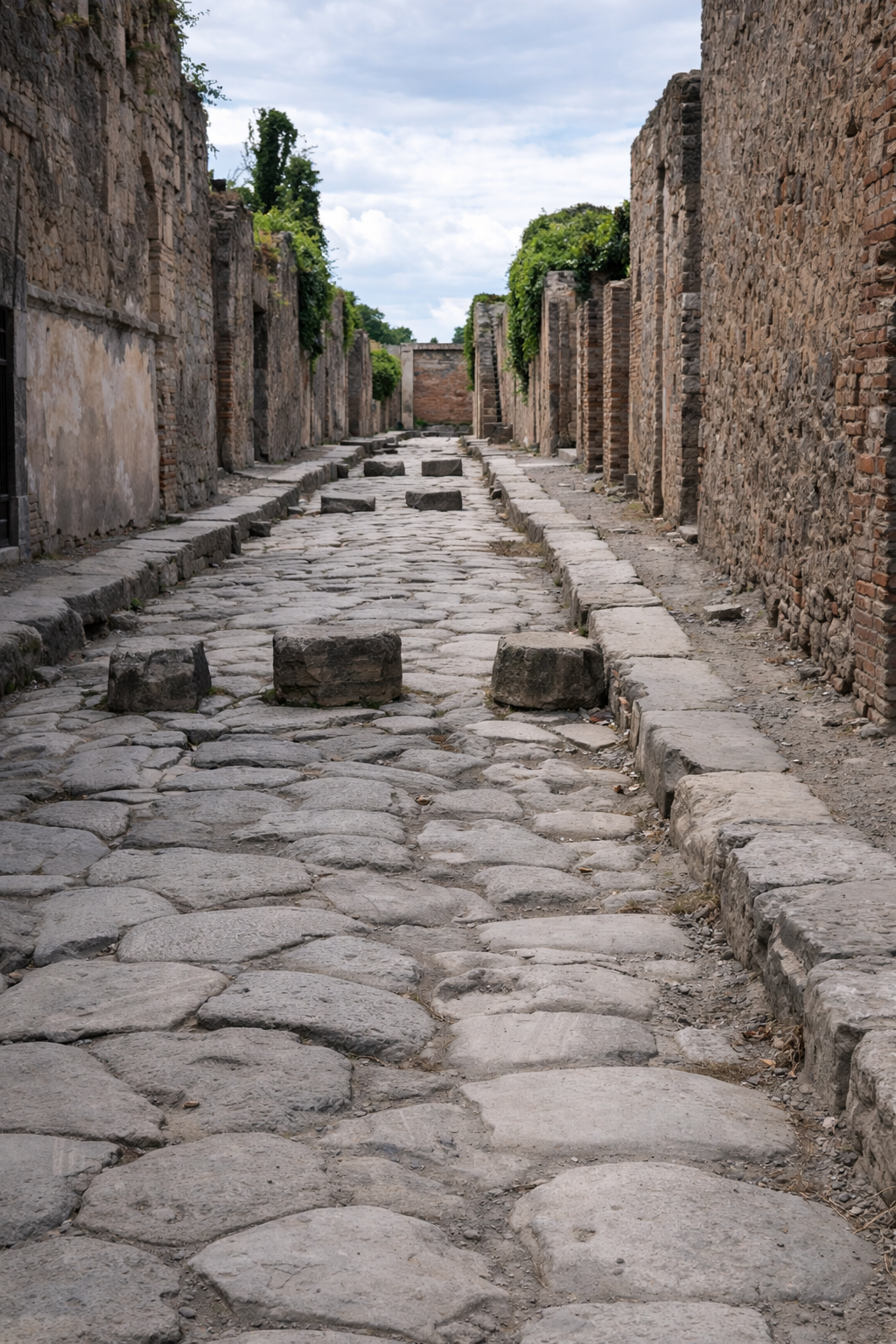
Buy tickets online in advance — the site is popular and queues can be long in summer. Arrive when it opens, ideally before 9am, to walk the main streets in relative quiet before the tour groups arrive. Allow a minimum of two hours; three is better. The site is extensive and exposed — bring water and sunscreen regardless of the season. Audio guides or an official guidebook significantly improve the experience.
Naples and the pizza question
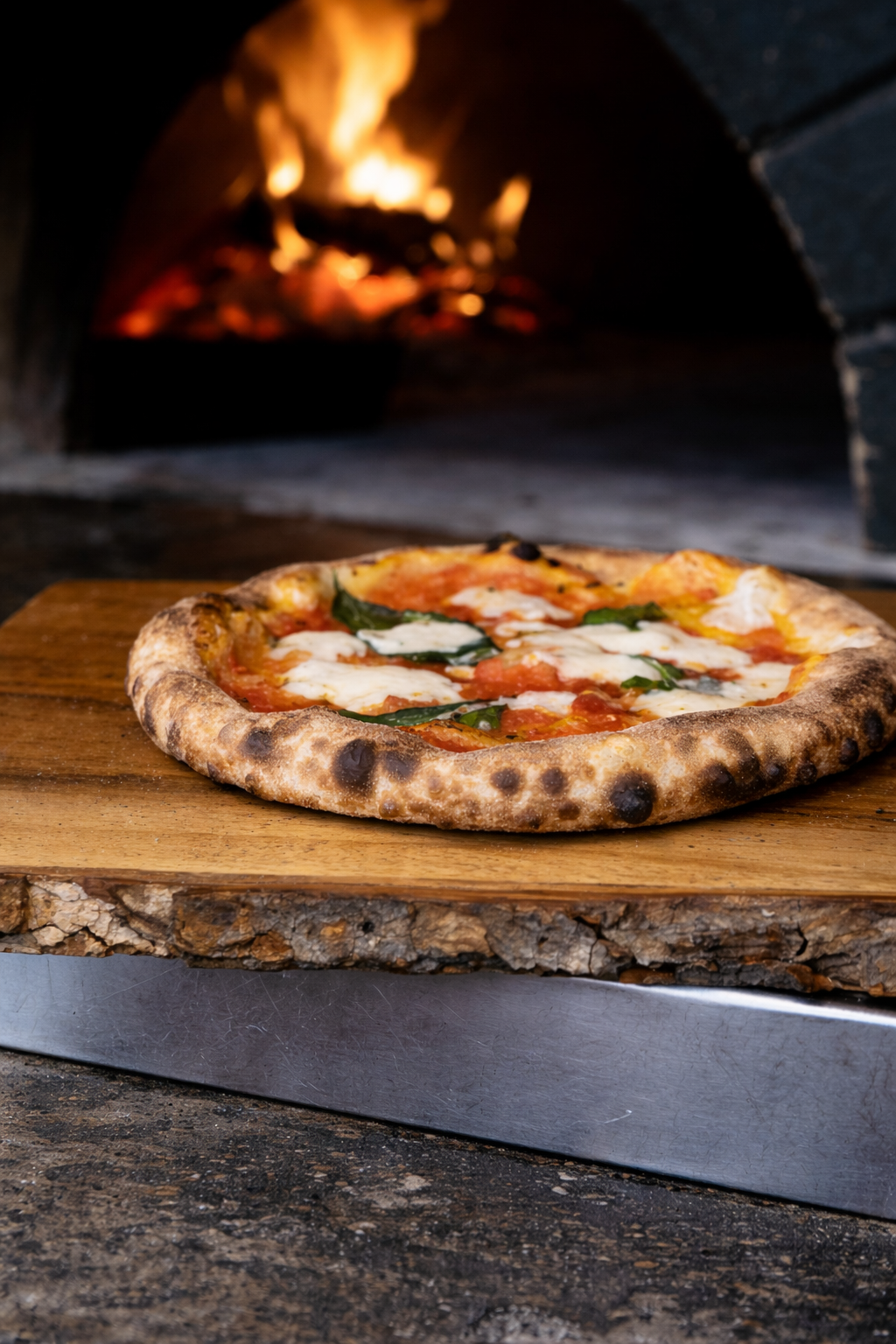
People ask whether the pizza in Naples is genuinely different from everywhere else, or whether this is the kind of food mythology that collapses under actual eating. The answer, honestly, is that it is different — and the difference is immediate and obvious from the first bite. The dough is softer and more elastic than Roman or northern Italian pizza. Meanwhile, the crust charrs at the edges in a way that adds flavour rather than bitterness, and the tomatoes taste of something specific. This is not hype — it is simply the result of particular ingredients, particular water, and a technique refined over centuries in this city that, as a result, doesn’t translate perfectly elsewhere.
We ate at a small pizzeria away from the waterfront. The queue was out the door at 7pm, which is usually a reliable indicator. At less than ten euros a pizza, it remains the standard against which we now measure everything else — which is an inconvenient outcome of the visit.
05 — Tuscany on the Way Home
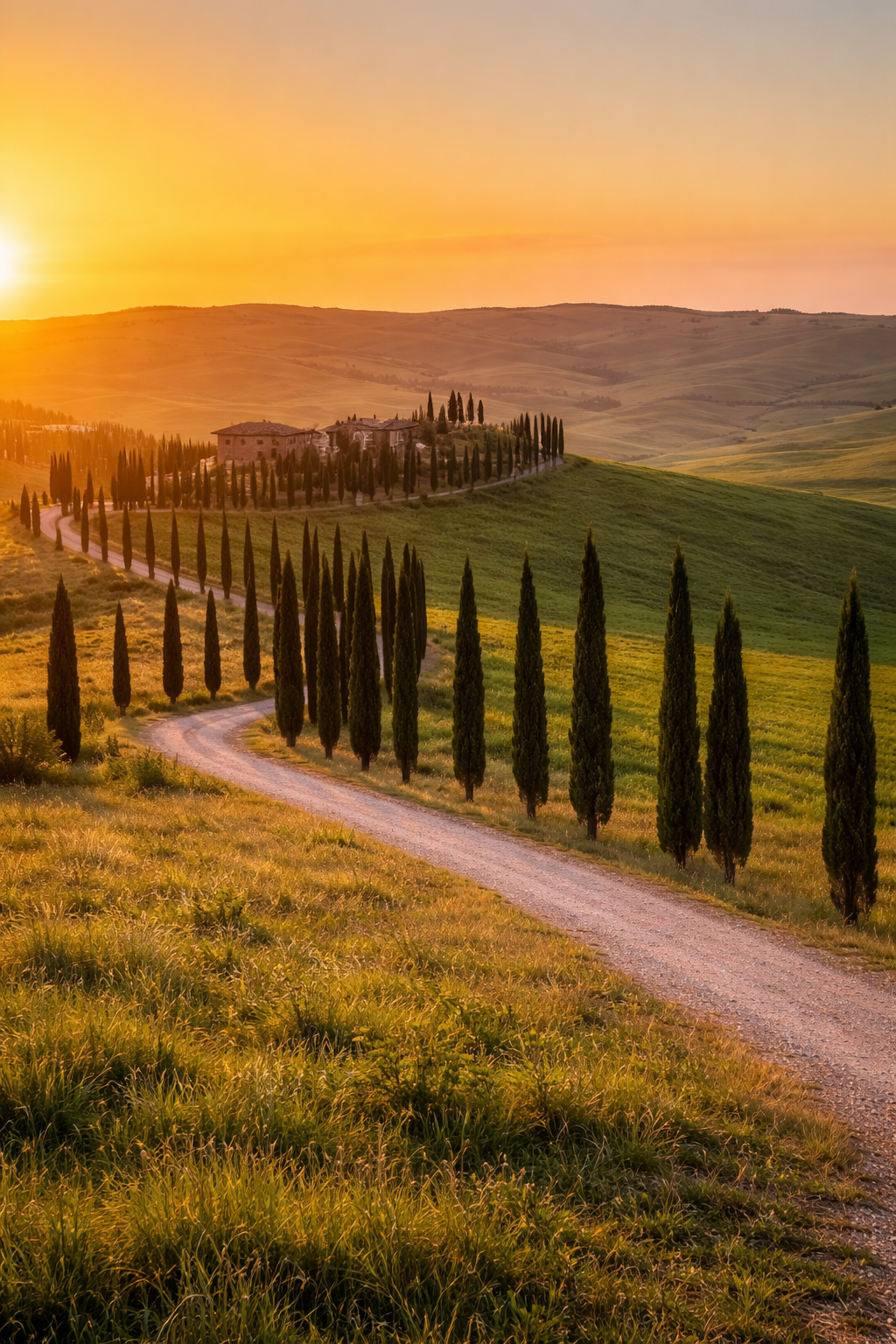
Tuscany was not, for us, a destination. Instead, it was a transition — the part of the drive where Italy changes character from coastal and dense to interior and open, where the road lifts into hills and the light becomes the famous Tuscan light that painters have been chasing for centuries.
Why a passing stop is still worth it
We pulled off the autostrada and took smaller roads for an hour. That hour — with the vineyards on one side and medieval hill towns visible in the distance — earned its place in the trip as fully as any planned stop. Tuscany does not need to be a dedicated chapter of a longer itinerary to justify itself. Even passing through it with attention is enough, and in some ways the lightness of that approach — no plan, no booking, just a road and a direction — suits the landscape perfectly.
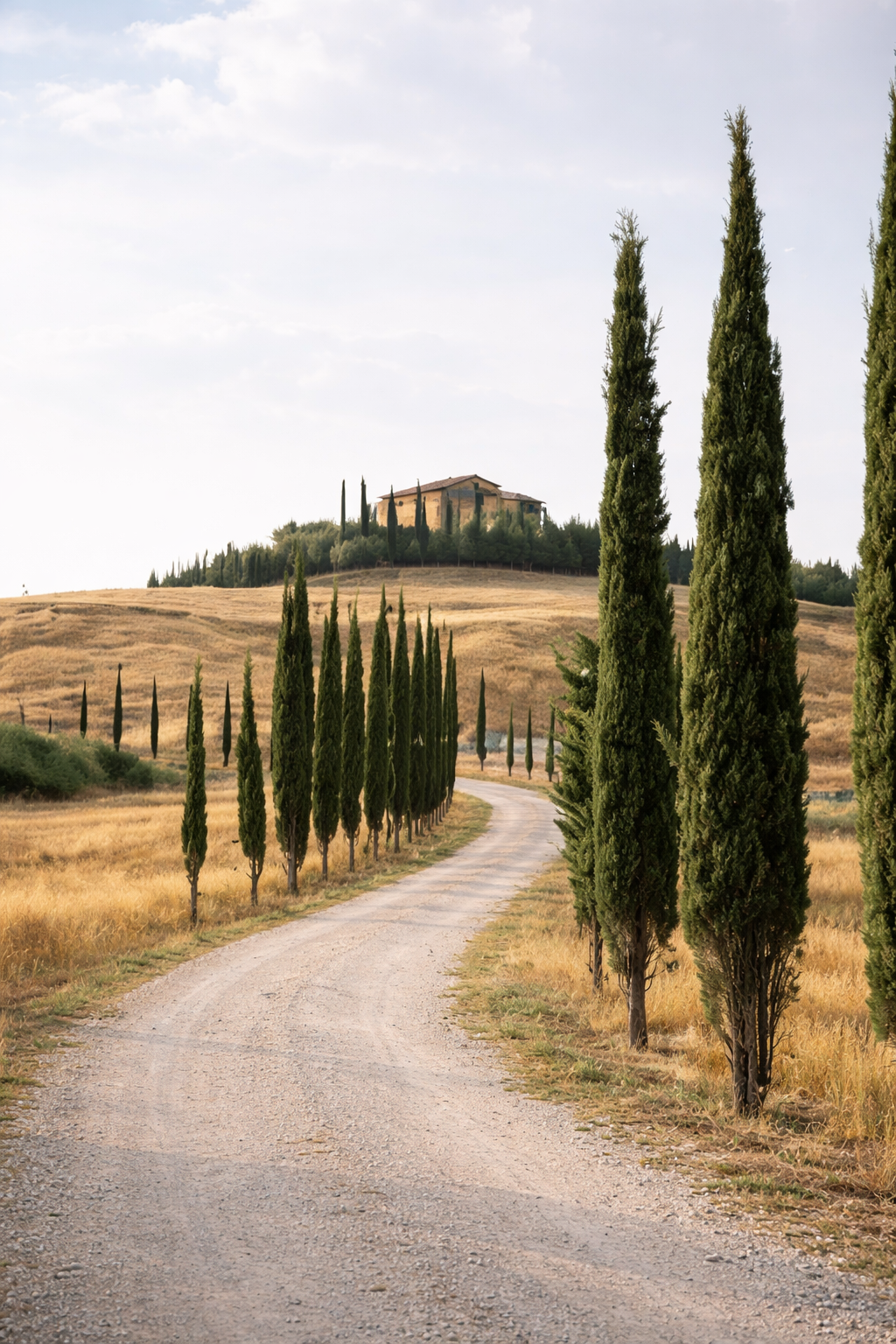
If your route allows an overnight — or even a full afternoon — the Val d’Orcia is the area that delivers what the photographs promise. The towns of Pienza, Montepulciano, and Montalcino each sit within an easy drive of each other and offer the combination of architecture, wine, and landscape that defines the Tuscan interior. Additionally, the drive from Siena south through the hills toward Orvieto is one of the more quietly beautiful drives in Europe.
06 — Practical Information
Getting there and the car question
If you are driving from Germany, Austria, or Switzerland, Rome sits roughly 10–12 hours south — a reasonable two-day drive with a stop in northern Italy. Tuscany then falls naturally on the return, making the whole circuit geographically efficient. Flying into Rome and renting a car there is the other option, and for those coming from further afield it makes more sense than the drive down.
| Car rental | Pick up in Rome, drop off in Rome or Florence depending on your return route. Pre-book in advance — prices rise significantly if you book at the counter. Check that your rental permits driving the Amalfi coastal road; some cheaper operators restrict it. |
| Parking in Rome | Budget €15–25 per day for a covered garage. Park near Prati (northwest of the Vatican) or Trastevere for the most walkable access. Do not park in ZTL zones — the fines are automatic and arrive weeks later. |
| Amalfi Coast parking | Limited and expensive in high season. Arrive before 9am for a space in Amalfi itself. Consider leaving the car at Vietri sul Mare and taking a local bus or ferry along the coast — it eliminates the parking problem entirely. |
| Toll roads | Italy’s autostrada network uses tolls. Carry a credit card — most toll booths accept contactless payment. The total toll cost for this route is typically €40–60 depending on the roads taken. |
| Pompeii entry | Book tickets online at pompeiiparchi.beniculturali.it. Adult entry is currently €16. Tickets sometimes sell out in July and August — book a week ahead minimum in peak season. |
| Where to stay | Rome: central accommodation near the historic centre. Amalfi Coast: if staying overnight, Praiano or Ravello are quieter and better value than Amalfi town itself. Naples: the city centre near Spaccanapoli puts you in the middle of things. |
Budget overview
Overall, this is not an expensive route by European standards — but costs do concentrate in specific places. Rome accommodation in the centre runs higher than most of Italy. Similarly, Amalfi Coast parking and eating will cost noticeably more than elsewhere on the trip. Naples, by contrast, is genuinely affordable, and Pompeii entry at €16 represents good value for the scale of what you’re seeing. As a rough guide, a mid-range daily budget for two people sharing accommodation sits at €150–200 including fuel, parking, entry fees, and meals.
A few things we learned the hard way on this trip. Pickpockets on the Rome metro are real and organised — we came close to being robbed on the Line B train between Termini and Colosseo. The technique is a distraction at the doors as they close: one person bumps you, another goes for the bag. Keep anything valuable in a front pocket or a bag worn across the chest, and be especially alert at Termini and when boarding crowded trains. It takes one incident to turn what was a good day into a bad one.
Italian motorway tolls add up faster than expected. The full route — Rome to the coast and back north through Tuscany — can easily reach €60–80 in tolls, on top of fuel. Factor this in when budgeting rather than being surprised at the booths. Keep a credit card accessible in the car rather than digging for it at a toll queue.
Finally: staying slightly outside Rome’s historic centre is worth considering. Accommodation two or three metro stops from the centre is meaningfully cheaper — sometimes half the price — and Rome’s transport connections are good enough that the trade-off is genuinely favourable. The metro runs frequently and covers the main corridors well. The money saved buys a better dinner.
Italy gives you more than you planned for, in exactly the places you weren’t expecting.
The road home through Tuscany is as much the trip as everything that came before it.