
Seville in Spring vs Summer: Why April Is the Only Answer
An honest comparison of Seville’s two main travel seasons — and why spring, especially April, gives you the city at its most beautiful, comfortable, and culturally alive.
Most Seville travel guides offer the same vague seasonal advice: visit in spring or fall, avoid summer if you can’t handle heat. That guidance is technically accurate. It is also incomplete, because it treats the comparison as if the only variable is temperature.
The difference between visiting Seville in April and visiting in August is not simply a matter of degrees Celsius. In practice, it is the difference between a city in full cultural bloom and one operating under near-siege conditions. You move between orange-scented streets and empty midday plazas, between Semana Santa processions and shuttered restaurants, between a place that feels inhabited by its traditions and one shaped around surviving the climate.
This post makes the case for spring — specifically April — as the only season that gives you Seville at its best. Not because summer is impossible, but because the version of the city you get in spring is categorically superior in almost every measurable way.
01 — Why This Comparison Actually Matters
Seasonal timing matters more in Seville than in most European cities. Barcelona has a Mediterranean climate that stays relatively moderate year-round. Lisbon benefits from Atlantic breezes. Madrid sits on a plateau that gives it genuine seasons. Seville, meanwhile, sits in the Guadalquivir basin in southern Andalusia — one of the hottest parts of Europe — and experiences a version of summer that can genuinely disrupt the experience of being there.
That is not a small detail. Additionally, Seville’s cultural calendar is highly seasonal. The two events that define the city’s identity — Semana Santa and the Feria de Abril — both happen in spring. Orange blossom, which transforms the sensory experience of walking through the old town, peaks in late March and April. The gardens that make the Alcázar and María Luisa Park so memorable are at their greenest and most lush in spring.
Summer, on the other hand, operates differently. The city does not close, but it does retreat. Locals who can leave do. Restaurants reduce hours or shut entirely for August. The rhythm of evening life, which in spring feels organic and welcoming, becomes a survival adaptation in summer — nobody goes outside until the sun drops, and even then the heat lingers.
What the data shows
Tourism statistics confirm the pattern. Spring arrivals to Seville peak in April and May. Summer arrivals are lower overall but more concentrated among visitors who have no choice about timing — families constrained by school holidays, travelers locked into fixed itineraries. Spring visitors, by contrast, tend to be more flexible travelers making a deliberate seasonal choice.
That flexibility is worth preserving if you have it. Seville in April is not simply Seville with better weather. It is a different version of the city entirely.
If you can only visit Seville once, April gives you the fullest, most atmospheric, most comfortable version of the city. Summer gives you survival mode with monuments.
02 — Temperature and Walking Comfort
The temperature gap between spring and summer Seville is not subtle. In April, daytime highs typically range between 22°C and 26°C. Evenings cool to around 12–15°C. That range makes the city walkable at any hour. You can visit the Alcázar at midday without feeling punished for it. You can walk from Santa Cruz to Triana in the afternoon without needing to retreat indoors every twenty minutes.
Summer is a different equation. July and August regularly hit 38–42°C, and those are not brief spikes — they are sustained daytime temperatures that make outdoor activity genuinely difficult between 11am and 7pm. The city adapts by shifting its rhythms later. Dinner does not start until 10pm. Bars fill after midnight. Morning becomes the only comfortable walking window, and even that requires an early start.
22–26°C
12–15°C
All day
Light layers
No
38–42°C
22–26°C
Early morning only
Minimal + sun protection
Yes, unavoidable
Why Seville’s heat is different
Seville is not simply hot in summer — it is one of the consistently hottest cities in Europe. The Guadalquivir valley acts as a heat trap, and the lack of coastal breezes means temperatures build and hold. Other Andalusian cities benefit from elevation or proximity to the sea. Seville has neither advantage.
That matters because the heat does not just make sightseeing uncomfortable. It changes the entire structure of the day. Museums become refuges rather than destinations. The cathedral and Alcázar, which in spring you can visit at your own pace, become places you rush through to escape the sun. Evening walks along the river, which in April feel leisurely and atmospheric, become the only tolerable outdoor activity in August.
03 — Orange Blossom Season Makes Spring Unmissable
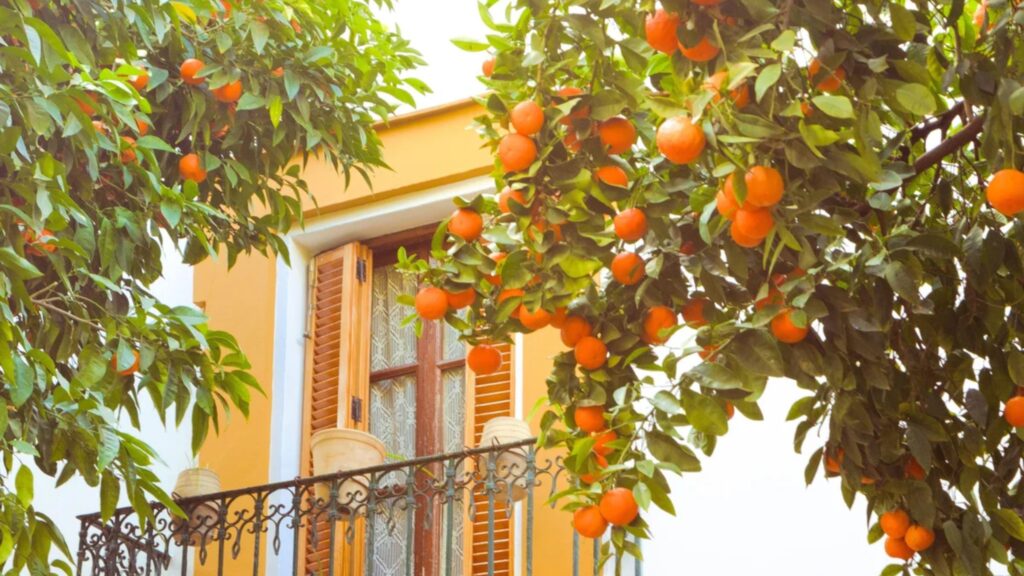
One of the strongest arguments for spring Seville is sensory rather than practical. Late March through April is orange blossom season, and during those weeks the city smells different. The scent is not subtle. It fills entire streets, parks, and plazas. It becomes part of the atmosphere in a way that photographs cannot convey and summer visitors never experience.
Seville has more than 40,000 orange trees lining its streets and parks. Most are bitter oranges, grown historically for marmalade rather than eating. In spring, those trees bloom simultaneously, and the result is one of the most distinctive seasonal markers in European travel. Walking through the old town during peak blossom feels like moving through a city that has briefly turned itself into a garden.
This is not a minor aesthetic detail. The orange blossom season is short — usually four to five weeks — and timing a visit to coincide with it requires planning. However, travelers who do consistently describe it as one of the most memorable parts of their Seville experience. It is the kind of seasonal specificity that gives a trip to Seville in April a quality that cannot be replicated at any other time of year.
Late March through mid-April is the most reliable window. The exact peak varies slightly year to year depending on winter rainfall and temperature, but April visits almost always catch at least the tail end of the bloom.
04 — Semana Santa: Seville’s Defining Cultural Event
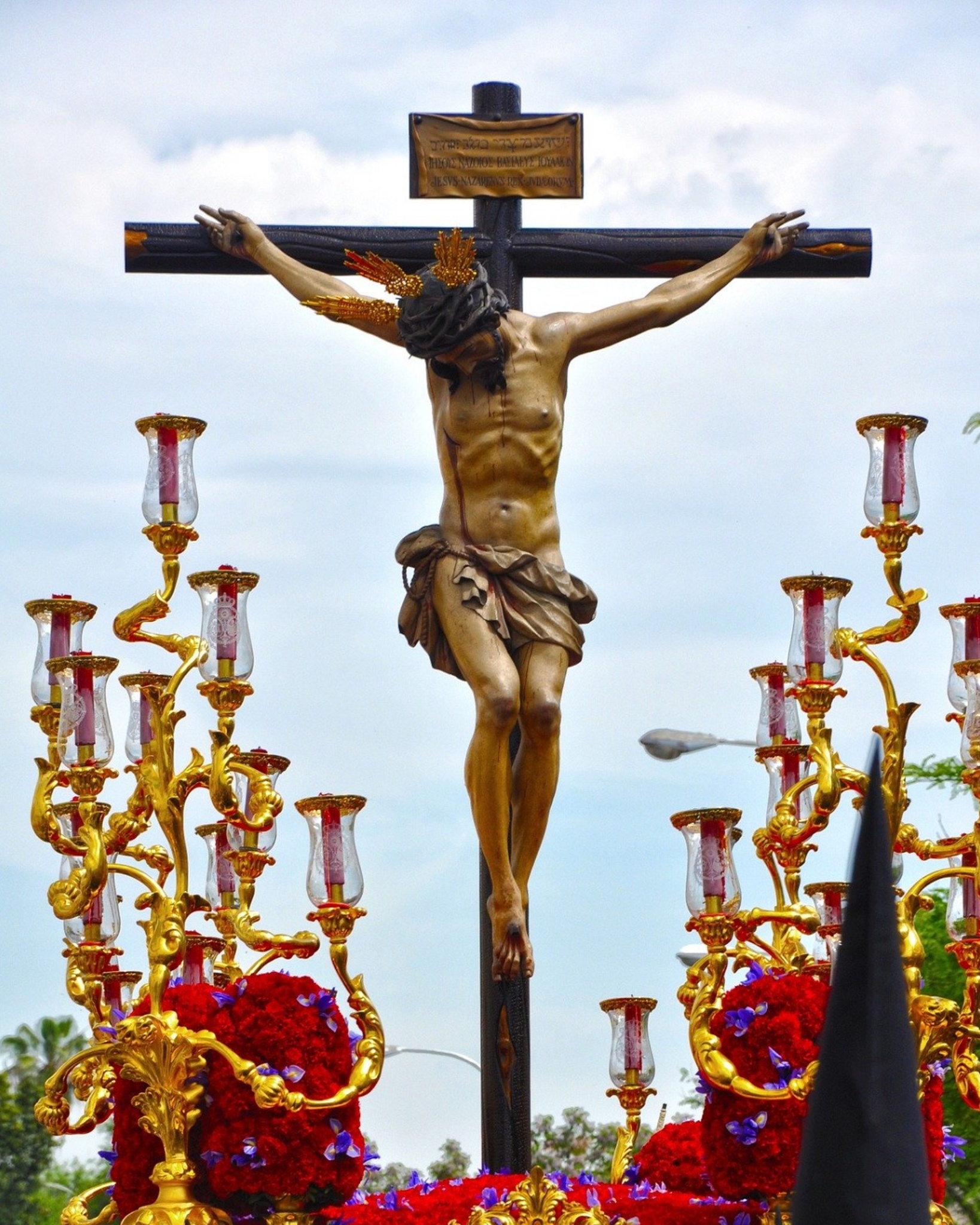
Semana Santa, or Holy Week, is one of the most important cultural events in Seville’s calendar. It happens in the week leading up to Easter, which means the dates shift annually but always fall in late March or early April. During this week, religious brotherhoods parade elaborate floats — called pasos — through the streets of the old town in processions that can last all night.
The atmosphere during Semana Santa is intense. The city fills with visitors, both Spanish and international. Accommodation prices spike. Streets close for processions. The event is not performed for tourists, but tourists are welcome to witness it, and many do. For travelers interested in Spanish religious tradition, Andalusian culture, or simply extraordinary public spectacle, Semana Santa is worth experiencing at least once.
Should you visit during Semana Santa or avoid it?
This depends entirely on what kind of experience you want. Visiting during Semana Santa means accepting higher costs, denser crowds, and a city operating under event logistics. It also means witnessing something genuinely unique — processions that are not reenactments or performances but living traditions that still carry emotional and cultural weight for the people involved.
The alternative is to visit just before or just after Semana Santa. The week before Holy Week gives you spring Seville without the event pressure. The week after gives you post-Easter quiet, lower prices, and a city returning to normal rhythms. Both options still catch orange blossom season and avoid summer heat.
| During Semana Santa | Highest atmospheric intensity. Highest prices. Hardest to navigate casually. Genuinely unforgettable if you are prepared for it. |
| Week before | Still spring, still orange blossom, much quieter, easier logistics, lower costs. |
| Week after | Post-event calm, best value of the spring season, still excellent weather, most locals back to normal life. |
05 — Crowds, Accessibility, and Tourism Pressure
Seville is a popular destination year-round, but the distribution of visitors across seasons is uneven. Spring sees the highest overall numbers, driven by favorable weather and cultural events. Summer sees fewer total visitors but higher concentrations at major monuments, because families and school-holiday-bound travelers have no choice about timing.
That distinction matters for how crowded the city feels in practice. In spring, crowds are spread across the whole city. The Alcázar is busy, but so are the parks, the river, Triana, and the smaller plazas. In summer, crowds concentrate at a handful of major sites — the cathedral, the Alcázar, Plaza de España — while much of the rest of the city empties during the hottest hours.
Booking pressure and advance planning
The Royal Alcázar requires advance booking regardless of season, but summer visitors face tighter availability because the site enforces entry time slots to manage heat and overcrowding. Spring visitors have more flexibility in choosing their preferred time. Similarly, flamenco venues and popular restaurants are easier to book on shorter notice in spring than in peak summer weeks.
Spring allows you to visit major sites without sacrificing spontaneity. Summer requires locking in almost everything in advance or accepting limited options.
06 — What’s Actually Open and Operating
One of the paradoxes of summer Seville is that despite the tourist numbers, parts of the city feel closed. Many local restaurants reduce hours or shut entirely in August. Shop owners take extended holidays. The rhythm of neighborhood life slows or pauses, replaced by a version of the city oriented almost entirely toward short-stay visitors.
Spring operates differently. Everything is open. Restaurants run full schedules. Markets operate normally. The city feels inhabited rather than managed. That difference shows up in small but meaningful ways: better restaurant availability, easier access to local shops and services, and a general sense that the city is functioning for its residents first and accommodating visitors second.
The siesta shift
In spring, the siesta is a cultural tradition but not a survival necessity. Shops and restaurants that close midday do so out of habit, not heat. As a result, the city maintains a relatively consistent rhythm throughout the day. In summer, the siesta becomes essential. Nothing happens between 2pm and 7pm because the heat makes outdoor activity genuinely unpleasant. That compressed schedule affects everything — when you eat, when you visit sites, how you structure your days.
07 — Gardens and Outdoor Life at Their Best
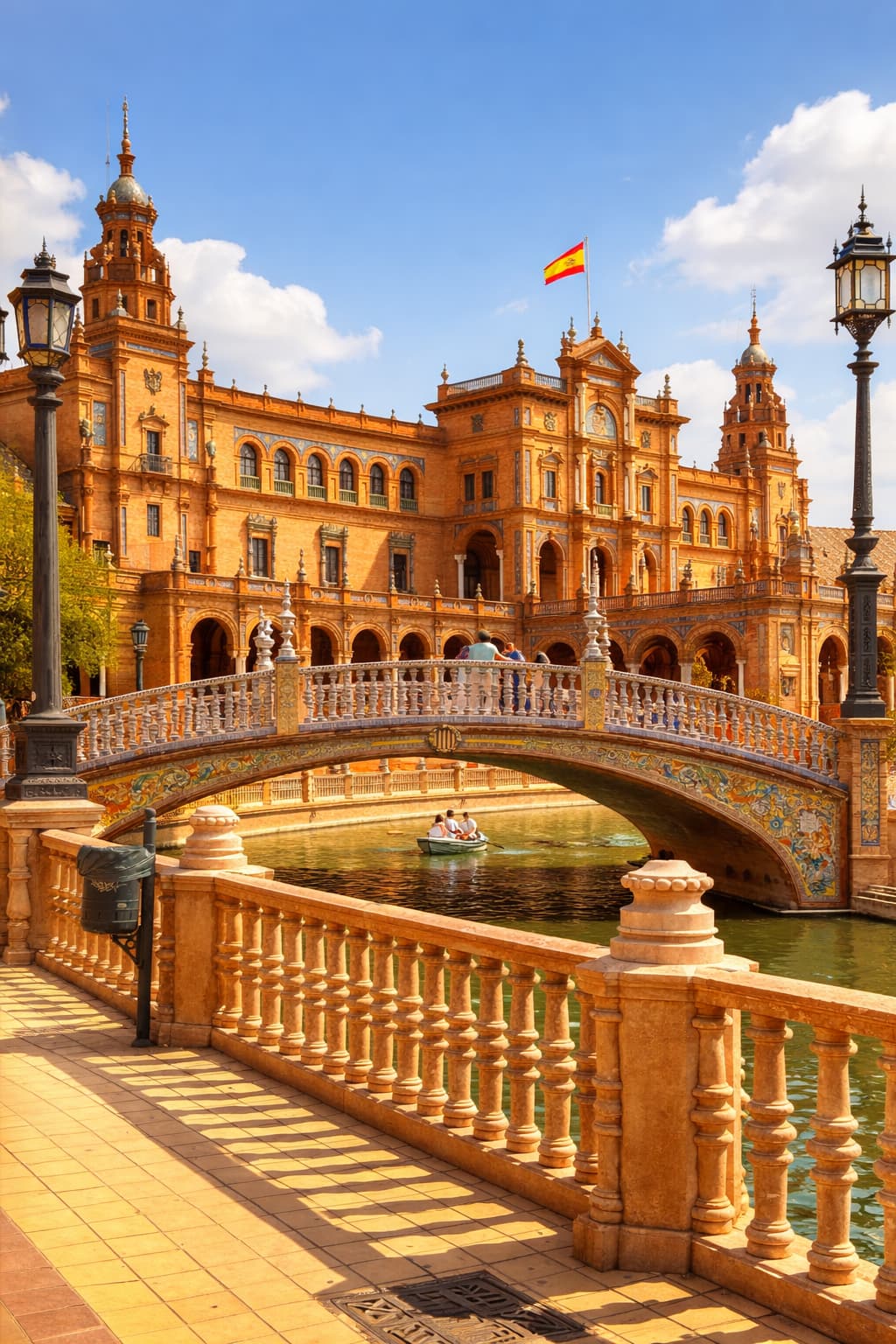
Seville’s gardens are one of its greatest assets, but they are highly seasonal. The Alcázar gardens, which in spring are lush, green, and full of blooming plants, become drier and more sun-scorched as summer progresses. María Luisa Park, one of the most beautiful urban parks in Spain, is at its most inviting in spring when the trees are full and the grass is still green.
Moreover, the experience of spending time in these spaces changes with the season. In April, sitting in the shade of the Alcázar gardens feels restorative. The temperature is comfortable, the light is soft, and the atmosphere invites lingering. In August, even the shade feels oppressive. The gardens become places you pass through quickly rather than places you choose to stay.
River walks and outdoor evenings
The Guadalquivir riverfront is one of Seville’s most pleasant walking areas, but the experience varies dramatically by season. In spring, evening walks along the river feel natural and unhurried. The temperature is mild, the light is beautiful, and the activity along the waterfront — street performers, walkers, people sitting by the water — creates a relaxed, social atmosphere.
In summer, the same walk becomes a necessity rather than a choice. The river is one of the few outdoor spaces that remains tolerable after dark, and consequently it becomes crowded with people escaping indoor air conditioning for a few hours. The atmosphere is still pleasant, but it lacks the easy spontaneity of spring evenings.
08 — The Feria de Abril
The Feria de Abril is Seville’s other major cultural event, and it happens roughly two weeks after Semana Santa. Where Holy Week is solemn and religious, the Feria is exuberant and social — a week-long fair featuring casetas (private tents hosting parties), flamenco, traditional dress, horses, and late-night revelry.
The Feria is harder to access than Semana Santa because many casetas are private and require invitations. However, the atmosphere spills into the streets, and even visitors who do not enter the private tents can experience the city during one of its most culturally specific moments. Seeing Sevillanos in traditional traje de flamenca, watching decorated horses parade through the streets, and hearing impromptu flamenco performances creates a version of Seville that feels entirely different from the rest of the year.
Timing considerations
If you want to experience both Semana Santa and the Feria de Abril, you will need to spend at least three to four weeks in Seville, as the gap between them is roughly two weeks. Most travelers choose one or the other. Semana Santa is more widely accessible and emotionally powerful. The Feria is more celebratory and socially oriented. Both are worth experiencing, but neither is essential to understanding the city.
The Feria typically runs in late April, starting two weeks after Easter Sunday. Exact dates vary annually, so check the calendar before booking.
09 — Spring vs Summer Costs: What You’ll Actually Pay
Seasonal pricing in Seville follows a predictable pattern, but with one important wrinkle. Summer is technically peak season, and accommodation prices reflect that. However, Semana Santa week in spring often sees higher prices than any week in summer because demand spikes sharply and supply remains fixed.
Outside of Semana Santa, spring is generally cheaper than summer. Flights to Seville from major European cities cost less in April than in July or August. Mid-range hotels and guesthouses in the old town charge 20–30% less in early April compared to peak summer weeks. Restaurants do not adjust prices seasonally, but availability is better in spring, which means you are less likely to overpay at mediocre tourist-oriented places out of desperation.
| Flights | Spring (excluding Semana Santa week) is typically 15–25% cheaper than summer from most European departure cities. |
| Accommodation | April (post-Easter) offers the best value. July and August are 20–40% higher. Semana Santa week can be 50–100% higher than baseline. |
| Food and drink | No seasonal variation in pricing, but spring offers better availability and less need to book ahead. |
| Activities | Monument entry fees are fixed year-round. Flamenco shows may charge slightly more during Semana Santa and Feria weeks. |
Early to mid-April, after Easter but before the Feria, gives you spring weather, orange blossom, and the lowest accommodation costs of the season.
10 — Why April Is the Only Answer
The case for April Seville is not simply that it avoids the downsides of summer. It is that April gives you a convergence of factors that do not align at any other time of year. The weather is as close to perfect as southern Spain gets. Orange blossom is at or near its peak. The cultural calendar is active without being overwhelming. The gardens are green. The city feels inhabited. And the pricing, outside of Semana Santa week itself, is more reasonable than summer.
Summer Seville is not impossible. Some travelers have no choice but to visit in July or August, and the city still has plenty to offer if you adjust your expectations and your schedule. However, if you have flexibility, choosing summer over spring is choosing a harder version of the same trip for no real benefit.
April gives you Seville at its best. That is not a matter of preference. It is a matter of measurable advantage across almost every variable that shapes the experience of being there.
Seville in April is not just Seville with better weather.
It is the city at its most alive, most fragrant, and most itself.