
Italy’s Best Coastlines Ranked — Amalfi, Cinque Terre, Puglia, Sicily, Cilento & More
Seven coastlines. One country. Wildly different answers to the same question — where do you actually want to spend your week? This is the honest ranking nobody writes, because it requires saying some unflattering things about the Amalfi Coast.
Every year, millions of people planning an Italian summer holiday arrive at the same question. With Italy coastlines ranked obsessively on travel sites, they’ve seen Positano on Instagram and Vernazza on a magazine cover. However, Italy has coastlines the way it has churches — more than any reasonable person can visit in one trip, each with a distinct character and a specific type of traveller it rewards.
The honest problem is that Italy’s most famous coasts — Amalfi and Cinque Terre — are famous partly because they photograph well. Photographing well, however, is not the same as producing a great week. Meanwhile, Puglia’s Salento has beaches that objectively outperform anything on the Amalfi Coast for a beach day. Tropea has clifftop drama at a fraction of the Positano price. Cilento is where Italian families have been going for decades while everyone else queued for a bus on the SS163. Sardinia is consistently ranked among the finest Italy coastlines in the world and barely makes it into most first-Italy itineraries.
This guide ranks all seven from most famous to most underrated — because the right Italy coastline depends almost entirely on what kind of trip you are planning.
01 — Italy Coastlines Ranked: Honest Verdicts on All Seven
Seven Italy coastlines ranked on the same five questions: beach quality, crowd level, cost, logistical ease, and what type of traveller each actually suits. The order runs from most internationally known to most underrated — not from best to worst, because that ordering depends on you, not on the coastline.
Italy Coastlines Ranked #1–2: Amalfi and Cinque Terre
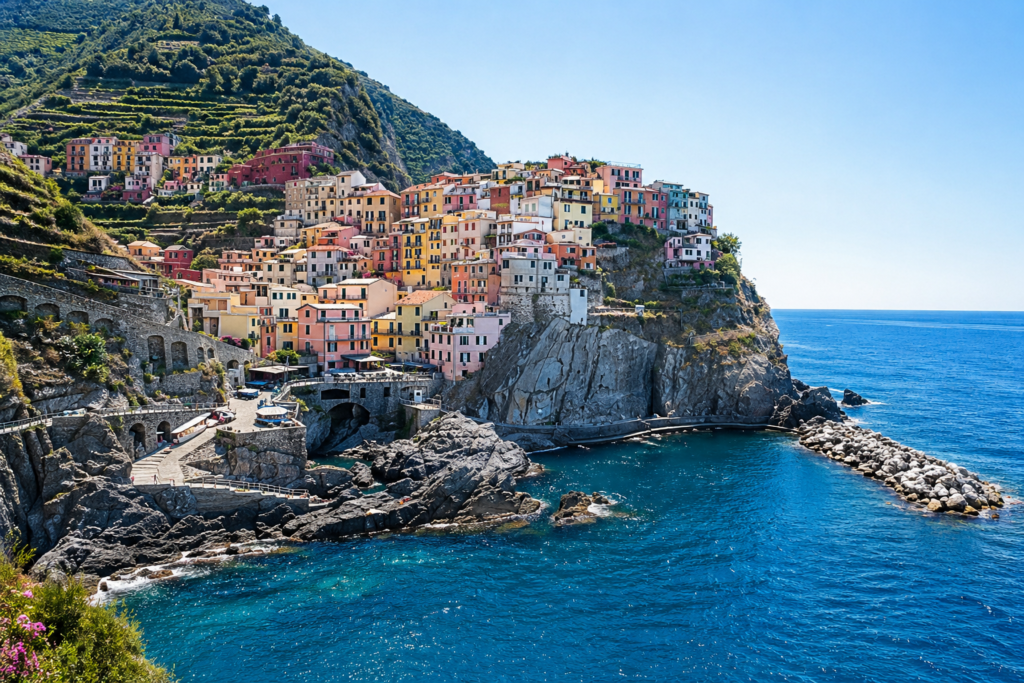
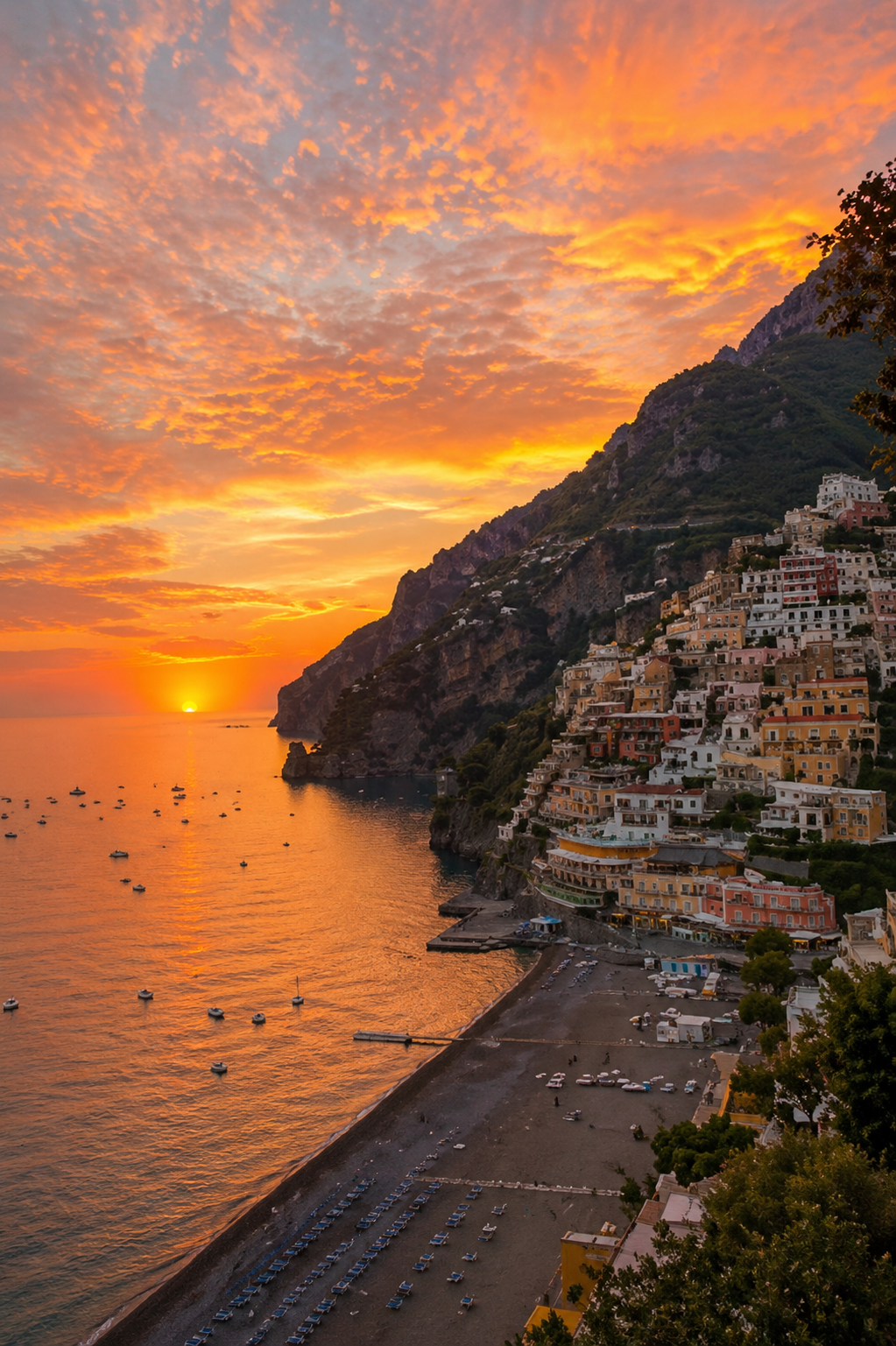
The Amalfi Coast is exactly what it looks like in the photographs — and that is both its greatest strength and its central limitation. The cliff faces above Positano are genuinely dramatic. The light on the Tyrrhenian Sea in late afternoon earns every superlative applied to it. Ravello’s Terrazza dell’Infinito produces one of the finest panoramic views in Europe. Moreover, the eastern towns — Cetara, Atrani, Praiano — contain some of the most authentic village life on any Italian coast.
However, the version most visitors experience is the expensive, overcrowded western strip. Positano in August is less a beach destination than an endurance test. Beaches are almost universally pebble and many lose sunlight early. Additionally, accommodation at every star rating costs significantly more here than on any comparable stretch of Italian coast. The Amalfi Coast is worth it — but understanding its best version before you go changes the trip entirely.
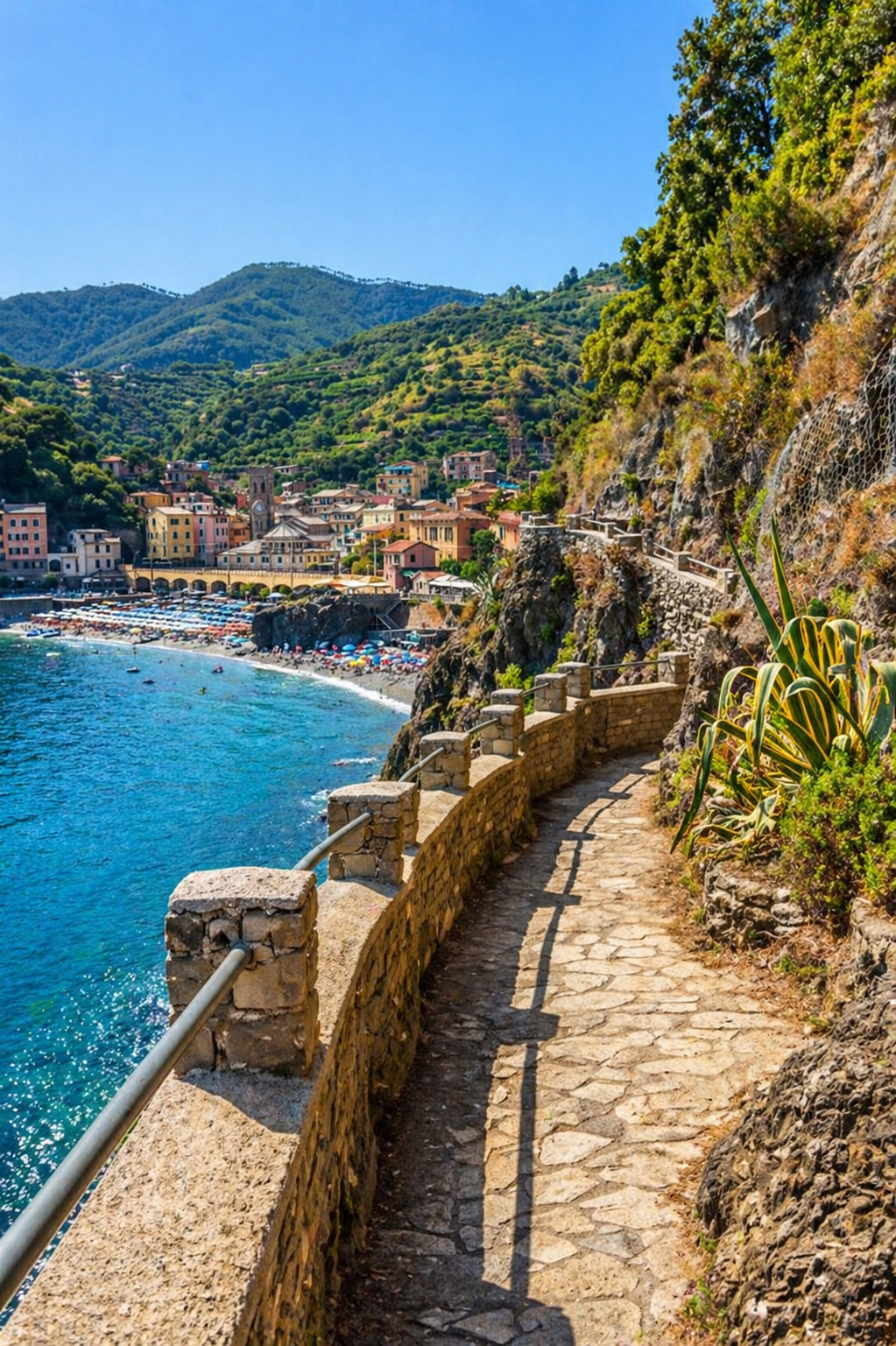
Cinque Terre is smaller, quieter in character, and significantly easier to navigate than the Amalfi Coast. It earns its place on this list not through beach quality but through the accumulated quality of being somewhere real. The five villages still feel genuinely inhabited: fishing boats in Vernazza’s harbour are working boats, terraced vineyards above Manarola are actively farmed, and the Ligurian pesto served at lunch is a regional dish rather than a tourist garnish. Furthermore, the Sentiero Azzurro connects all five villages along the cliff, and the wider trail network covers 120 kilometres — no other Italian coast comes close for coastal hiking.
The principal caveat is structural: the villages are tiny and the train infrastructure funnels visitors efficiently into compact spaces. On a peak August day, the coastal paths queue. Nevertheless, May or September in Cinque Terre remains among the most rewarding short experiences on any Italian coast, particularly for travellers whose priority is the landscape rather than the beach.
Italy Coastlines Ranked #3, 6, 7: Puglia, Cilento, Tropea
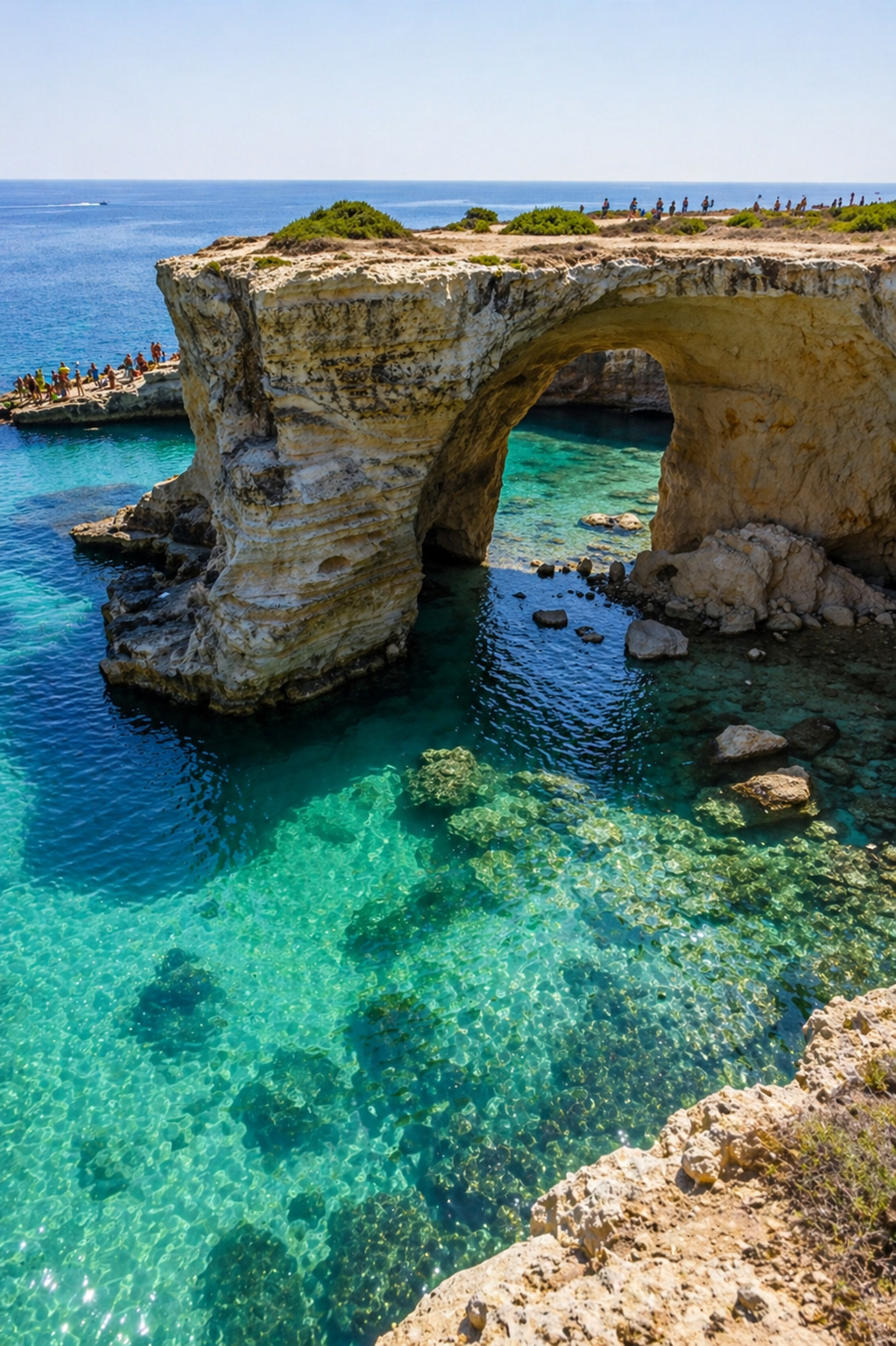
Puglia has the best beaches in mainland Italy. This is not an opinion — it is a straightforward assessment of sand quality, water clarity, and sheer variety. The Salento peninsula, in the south, offers the “Maldives of Italy” comparison that sounds like marketing until you arrive at Punta Prosciutto or Pescoluse. There, white dunes, shallow turquoise water, and pale sand create a Caribbean effect at a fraction of Caribbean prices. The Gargano in the north is a different world entirely: dramatic white limestone cliffs, golden sand tucked between forested headlands, and sea stacks rising from emerald water at Baia delle Zagare.
Between them, the region covers two seas — Adriatic and Ionian — meaning there is always a sheltered coast depending on wind direction. Additionally, Polignano a Mare’s cala carved beneath the old town is one of the most photogenic spots in Italy, and Otranto combines genuine medieval history with good beaches in a combination the Amalfi Coast cannot replicate. The relative lack of international tourism keeps both prices and atmosphere in better shape. Moreover, the food — orecchiette, burrata, grilled octopus — is among the finest regional cooking in the country.
Cilento is the coastline that serious students of Italian travel eventually discover, usually after one too many August experiences in Positano. Located directly south of the Amalfi Coast — just two hours from Naples by car — it stretches 100 kilometres within the boundaries of a UNESCO World Heritage national park. The beaches here are genuinely superior to those on the Amalfi Coast: wide sandy stretches around Acciaroli and Santa Maria di Castellabate, and dramatic limestone coves around Palinuro that rival anything in the Italian Adriatic.
The Spiaggia degli Infreschi, accessible only by foot or boat from Marina di Camerota, was voted the best beach in Italy in 2014 and still receives a fraction of the attention that distinction implies. Additionally, driving in Cilento is an entirely different proposition from the gridlocked SS163: open roads, easy parking, the kind of relaxed coastal driving the Amalfi Coast once offered. See the dedicated section below for the full case for Cilento.
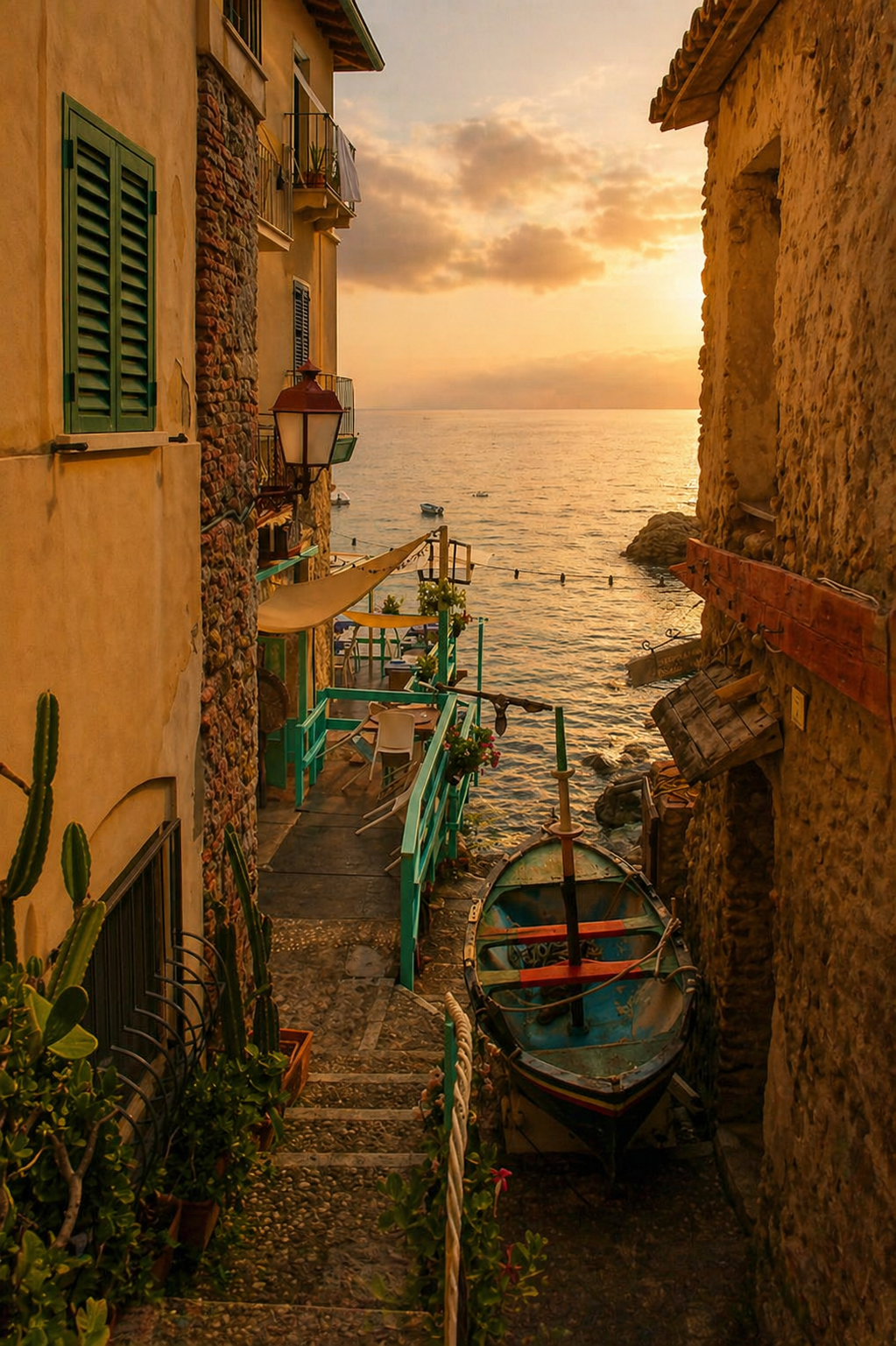
Tropea is, quite simply, what Positano would be if it had sandy beaches, half the price, and a fraction of the international tourist volume. The historic centre sits 150 metres above the Tyrrhenian Sea on a clifftop in Calabria, looking across turquoise water to Stromboli on the horizon. The beaches below are wide, sandy, and a particular pale blue that makes the Caribbean comparison not obviously absurd. The Santuario di Santa Maria dell’Isola — the 11th-century monastery on its rocky outcrop — produces the canonical Tropea photograph from nearly any angle.
Notably, almost all tourists here are Italian, which keeps prices, atmosphere, and food quality in the relationship that tourist-only economies tend to disrupt. The honest caveat: Calabria is not yet integrated into most international Italy itineraries. For anyone prepared to make it a destination rather than a stop, however, Tropea represents the best-value combination of scenery, beaches, food, and authenticity on any Italian coast.
Italy Coastlines Ranked #4–5: Sardinia and Sicily
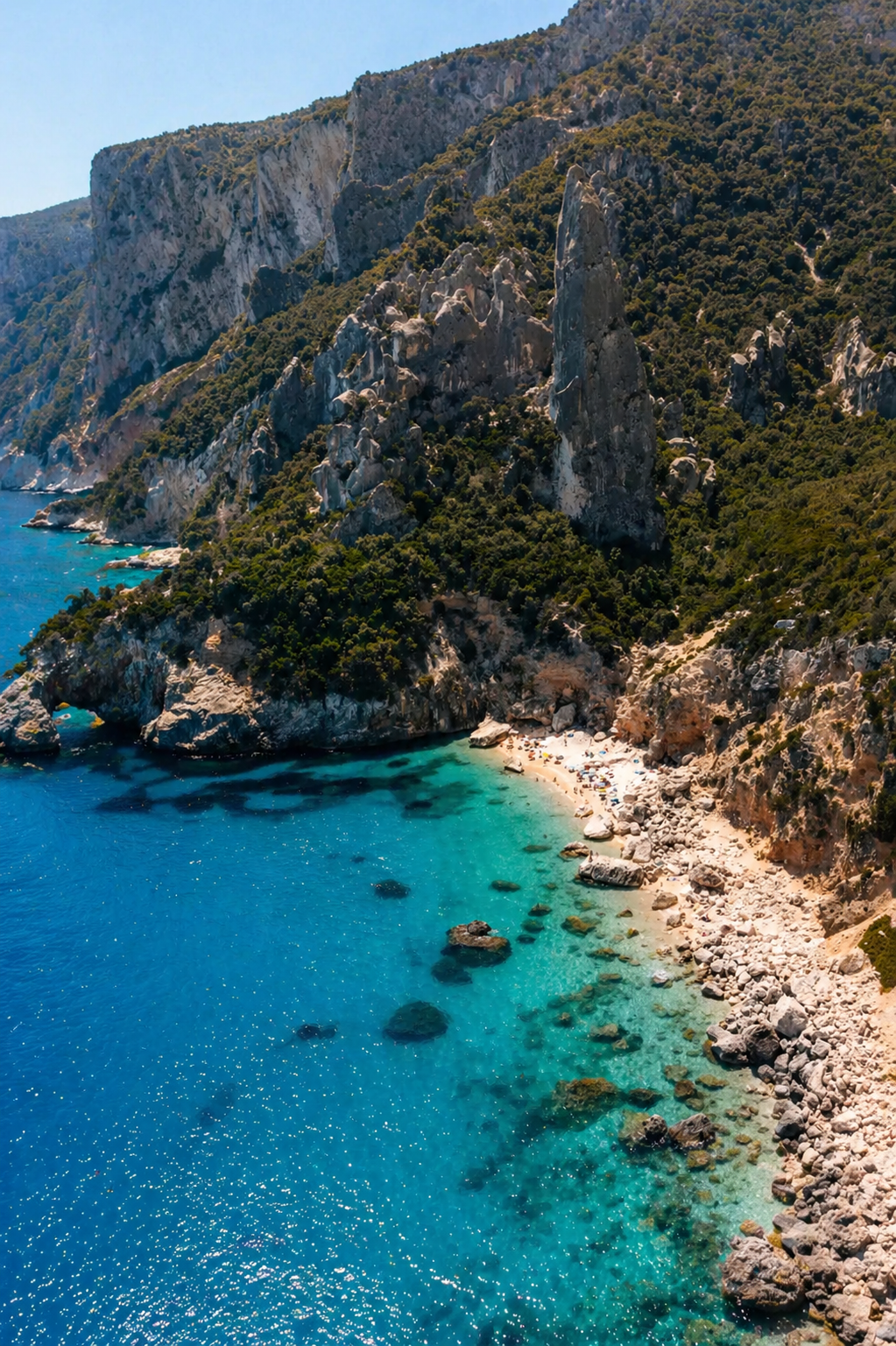
Sardinia is consistently ranked among the finest coastlines in the world — and it is consistently under-included in first-Italy itineraries, which is one of the more puzzling gaps in how people plan Italian travel. The Costa Smeralda in the north produces the postcard images: emerald water, granite boulders, powder-white sand. However, Sardinia rewards the traveller who looks beyond that famous northern strip. The south and west coasts — the Sulcis-Iglesiente coastline, the Gulf of Oristano, the volcanic beaches of the Sinis peninsula — offer genuinely wild, uncrowded swimming at beaches that require no entry fee and no queue.
The interior adds a separate dimension: Barbagia villages, ancient Nuraghe stone towers, and Cannonau wine from volcanic soils. Sardinia is also, outside August, more affordable than most visitors expect. The challenge is access — it requires a flight or a long ferry from the Italian mainland. For anyone who can dedicate a full week, however, it is the single most consistent coastal destination in the country.
Sicily is the largest island in the Mediterranean and the one most capable of producing an entire holiday from its own resources — ancient ruins, volcanic landscapes, Baroque hill towns, and a coastline ranging from the calm fishing village of Cefalù to the black volcanic sand beaches below Etna. The north coast between Palermo and Cefalù is the most immediately accessible for beach travel, with sandy coves and clear water. Furthermore, the Aeolian Islands offshore — Stromboli, Lipari, Salina — add a volcanic dimension that no other Italian coast offers.
The Sicilian interior also provides a full cultural circuit: Agrigento’s Valle dei Templi, Syracuse’s archaeological park, and the Baroque towns of the Val di Noto. Consequently, Sicily suits travellers who want to move through a place rather than settle on a beach for the week. In high summer it is genuinely hot — but the heat that makes August in Palermo difficult makes Sicilian evenings in September among the best in the Mediterranean.
02 — Amalfi vs Puglia: The Italy Coastlines Ranked Comparison
The comparison most people don’t think to make — because one is world-famous and the other is still catching up internationally. On five dimensions that actually determine the quality of a coastal week, Puglia makes a stronger case than the reputation gap suggests.
Pebble, small, many lose sun early — beautiful settings, difficult swimming
Complex — SS163 gridlocks in summer; bus/ferry required; no parking in western towns
Very high — Positano among the most expensive towns in Italy; even eastern towns run high
Very high June–August; cruise ship day-trippers amplify peak pressure in western towns
Outstanding — Naples, Pompeii, Herculaneum, Capri all within 30–60 minutes
Exceptional — white sand, turquoise shallow water, two seas offering variety by wind direction
Easier — open roads, parking available, car recommended; internal distances are longer
Moderate — 40–60% cheaper than Amalfi across accommodation, food, and beach access
Lower internationally; Italians holiday here in August but spread across a much larger coastline
Strong — Lecce (Italian Baroque), Alberobello trulli, Matera nearby; different combination
What the Comparison Actually Means for Your Trip
The Amalfi Coast wins on drama, scale, and what you can combine it with — Naples, Pompeii, and Capri from the same base is an itinerary combination that Puglia cannot replicate. In contrast, Puglia wins on actual beach quality, cost, and the kind of travel that doesn’t feel like work. If you’ve already done the Amalfi Coast and want a different version of the Italian coastal south, Puglia is the most substantive upgrade available.
03 — Cilento: The Most Underrated Entry in Any Italy Coastlines Ranked Guide
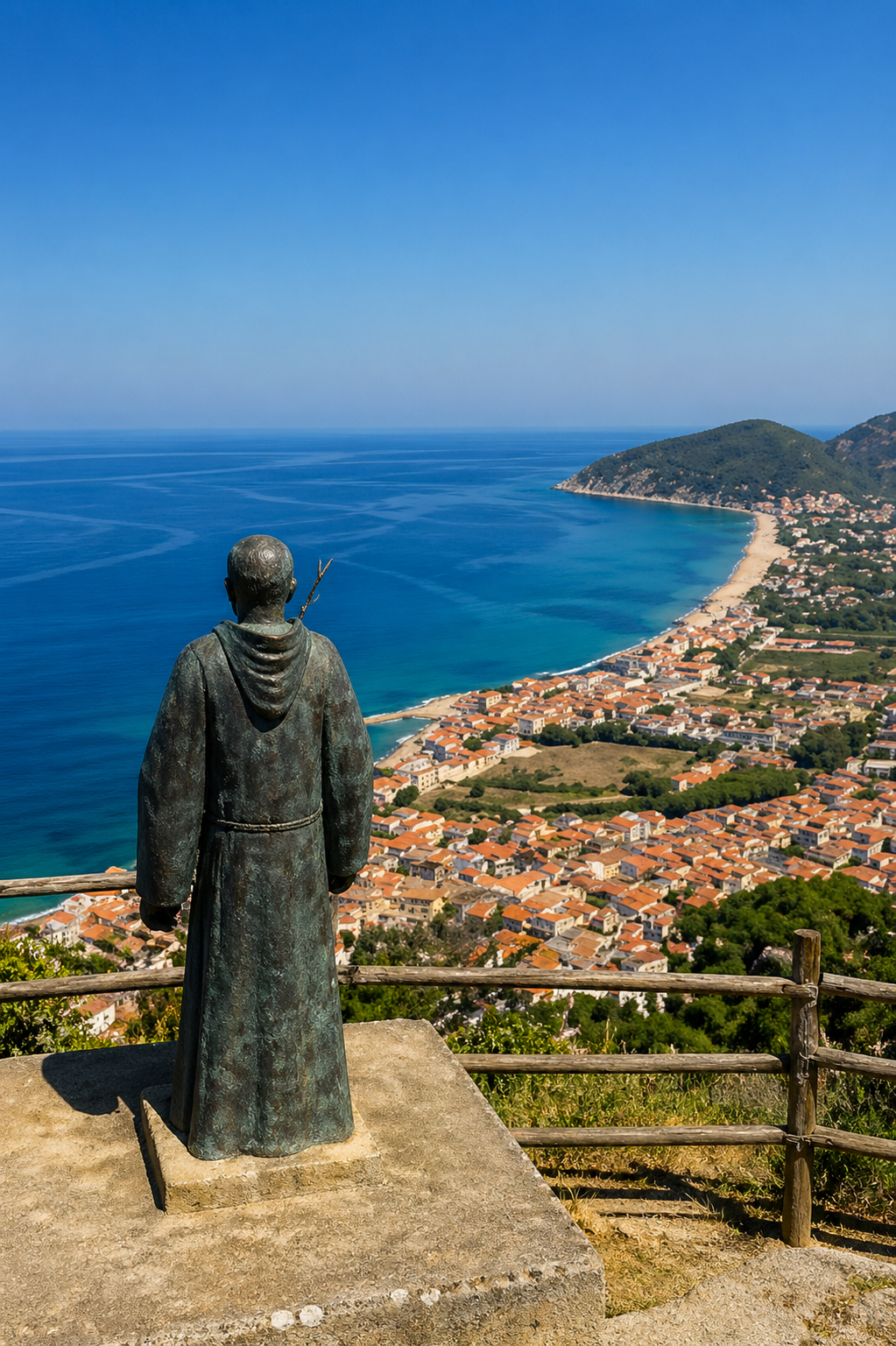
Cilento is where Italians go instead of the Amalfi Coast. Two hours south of Naples, inside a UNESCO-listed national park, with 100 kilometres of coastline that includes some of the best beaches in Campania — and almost no international tourists. The beaches are better. The roads are driveable. The mozzarella di bufala comes from just a few kilometres inland near Paestum. Moreover, the coast around Palinuro and Marina di Camerota produces dramatic limestone coves, sea grottoes, and boat-only beaches that rival anything in southern Italy at a price point that makes Positano feel like a different planet.
What the Coast Actually Offers
The Cilento coast runs from the Gulf of Salerno south to the Gulf of Policastro — a stretch that covers two distinct personalities. The northern and central section, around Acciaroli, Santa Maria di Castellabate, and Ascea, offers wide sandy beaches, shallow water, and the relaxed small-town atmosphere of a coast where the main activity is genuinely just the sea. Furthermore, these towns feel lived-in in a way that most Amalfi Coast villages have stopped being: fishing boats come in on schedule, bars serve proper espresso rather than tourist coffee, and accommodation owners are surprised rather than accustomed to international visitors asking for help in English.
The southern section — from Palinuro through Marina di Camerota toward Policastro — is a different character entirely. Here the limestone coast becomes dramatic in the way the Amalfi Coast is dramatic, with cliffs, grottoes, and isolated coves. The Spiaggia degli Infreschi, accessible only by a serious hike or a short boat from Marina di Camerota, regularly appears in lists of Italy’s finest beaches and is still largely unknown outside the country. Additionally, Palinuro itself offers sea-cave kayaking, wild coastal trails, and a town centre that functions as a genuine southern Italian beach town rather than a stage set for tourism.
The Practical Case for Cilento
Cilento also makes practical sense in a way the Amalfi Coast does not always manage. Driving here is simply relaxed — open coastal roads, parking available at most beaches, no plate restriction system to navigate. A mid-range hotel in high season runs €60–120 per night, compared to €200–400 for an equivalent room in Amalfi town. The archaeological site of Paestum — three of the best-preserved Greek temples in the world, quieter than any comparable site in Italy — is 45 minutes from the coast and bookable directly through the Paestum museum site. Moreover, the food is the same Campanian tradition — fresh seafood, buffalo mozzarella, pasta with clams — without the tourist premium attached to each plate.
The honest limitation is that Cilento rewards a slower itinerary. It does not work as a day trip, and it does not have the concentrated drama of the Amalfi cliff faces. However, for anyone planning a week in southern Italy who wants genuine beaches, authentic towns, and a pace that doesn’t require managing logistics constantly — Cilento is the answer that most Italy travel writing still hasn’t caught up to.
04 — Italy Coastlines Ranked: Which One Is Right for You
Seven is too many to navigate without a framework. With Italy coastlines ranked here by character rather than fame, the decision comes down to three questions: what is the primary activity (beach, hiking, culture, or all three), how much does logistics overhead matter, and whether this is a first Italy trip or a return one. The grid below collapses the ranking into actionable decisions.
For Culture, Activity, and the Full Italy Combination
- Both coasts earned their reputation. The Amalfi Coast’s cliff faces and Cinque Terre’s village character are genuinely as good as the photographs suggest — the crowds and logistics are simply the price of entry. On a first trip, the famous experience is often the right one.
- Amalfi pairs naturally with Rome, Naples, and Pompeii. Cinque Terre pairs with Florence and Tuscany. In both cases, the coast you choose should follow the structure of your wider Italy itinerary rather than the other way around.
- Puglia offers the single largest upgrade available to a returning Italy traveller. The beach quality is objectively superior, the food is among the best regional cooking in the country, and the towns — Lecce, Otranto, Polignano a Mare, Vieste — have a cultural density that the Amalfi tourist strip cannot replicate.
- A week based in Lecce or Otranto, with day trips to the different coastal sections, is the formula that works best. A car is necessary — public transport covers the region but the coastline’s variety requires flexibility.
Budget, Islands, and the Overlooked Southern Coasts
- If swimming, sand, and clear water are the point rather than the backdrop, Sardinia and Puglia’s Salento are the only serious answers on this list. Both offer sandy beaches, shallow warm water, and a beach-day experience the Amalfi Coast’s pebble coves simply cannot match.
- Tropea is the best mainland option — large sandy beaches, genuine clifftop drama, and remarkable value — if a flight to Sardinia or the full week in Puglia is not possible.
- Cilento and Tropea both offer comparable — and in some cases superior — coastal scenery to the Amalfi Coast at 40–60% of the cost. Both require a car to get the most from the coastline, but the absence of paid lido queues, tourist-menu pricing, and Positano parking fees makes a meaningful difference over a week.
- Puglia is also budget-friendly relative to Amalfi. Sardinia in August, however, is not — the island’s high-season pricing on the Costa Smeralda competes with Amalfi. In shoulder season, on the other hand, Sardinia delivers world-class beaches at honest prices.
| Amalfi Coast | Best for: drama, photography, southern Italy combination. Cost: very high. Beaches: pebble. Crowds: extreme in summer. Flying in: Naples. |
| Cinque Terre | Best for: hiking, authenticity, northern Italy combination. Cost: high. Beaches: limited. Crowds: high but escapable on trails. Flying in: Pisa or Genoa. |
| Puglia (Salento/Gargano) | Best for: beaches, food, return Italy visits. Cost: moderate. Beaches: outstanding. Crowds: manageable. Flying in: Bari or Brindisi. |
| Sardinia | Best for: world-class beach holiday. Cost: moderate to high (peaks in August). Beaches: world-class. Crowds: high August on Costa Smeralda. Flying in: Cagliari, Olbia, or Alghero. |
| Sicily | Best for: culture + coast combination. Cost: moderate. Beaches: varied (some sandy, some pebble). Crowds: manageable outside peak weeks. Flying in: Palermo or Catania. |
| Cilento | Best for: quiet, budget, serious beaches. Cost: low to moderate. Beaches: excellent and sandy. Crowds: low internationally. Flying in: Naples (2 hrs by car). |
| Tropea | Best for: best-value beach drama in Italy. Cost: low. Beaches: exceptional sandy. Crowds: Italian domestic; limited international. Flying in: Lamezia Terme (1 hr). |
Beaches, Crowds, and the Famous Coasts
Planning, Combining, and Getting There
Timing — When to Visit Italy Coastlines Ranked Here
Italy has enough coastline that the right answer is genuinely different for different people.
The famous ones earned their fame. The unfamous ones are waiting for the rest of you.