
Skip the Amalfi Coast Crowds — These Italian Beach Towns Are Better
The Amalfi Coast is genuinely beautiful. The version most tourists experience is genuinely not its best. Here are the towns — some on the coast itself, one entirely off it — that earn the trip the overcrowded itinerary never quite delivers.
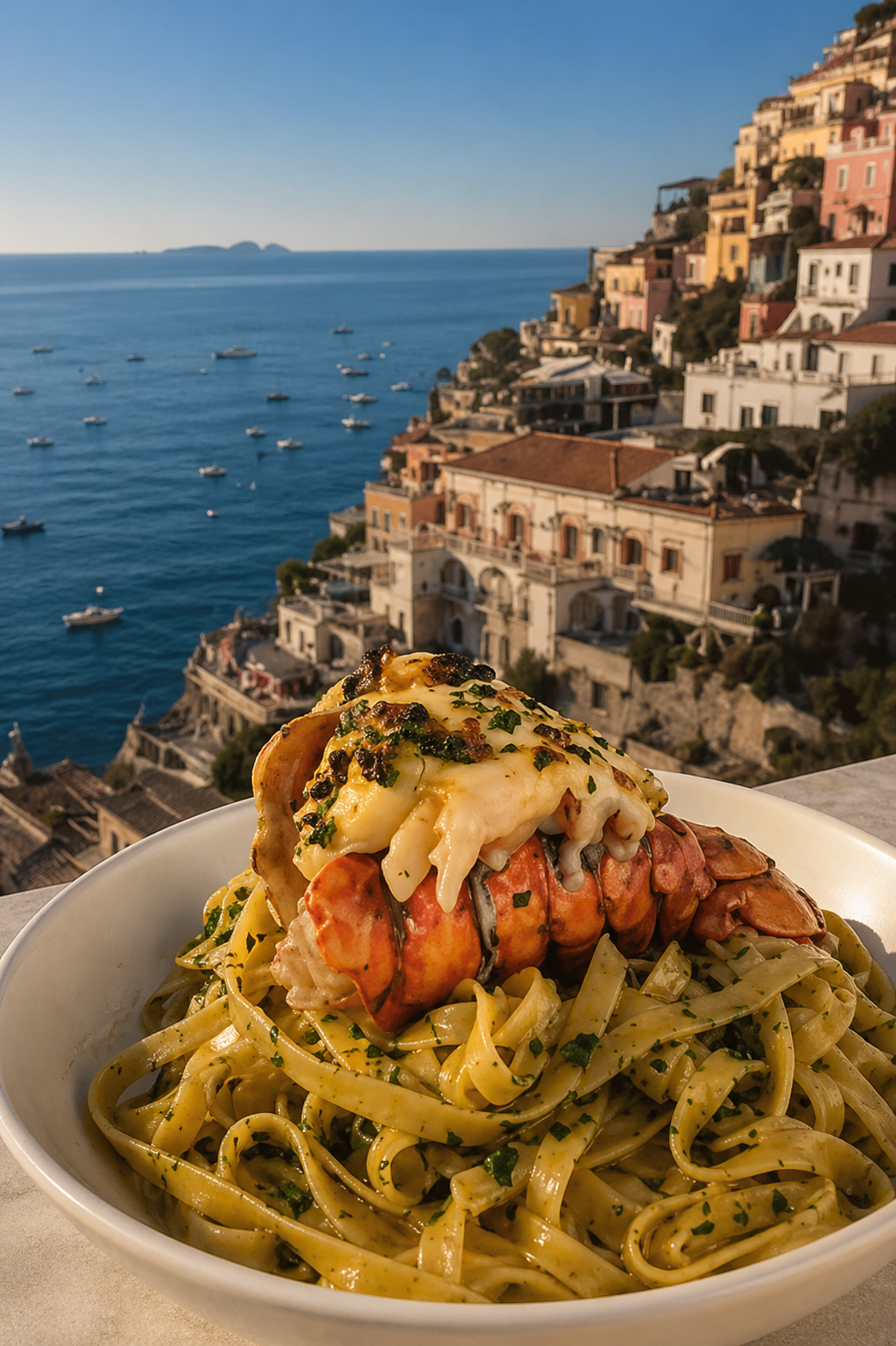
Here is the honest situation with the Amalfi Coast in summer. Positano’s Spiaggia Grande at 11am in July is not a beach — it is a managed event. The SS163 between Sorrento and Amalfi reduces to a walking-pace queue behind tour buses by mid-morning. A pair of sunbeds at a front-row Positano lido costs more than a night’s accommodation in most of Italy. The pasta in a sea-view restaurant in the main piazza runs €28, and you eat it alongside 200 people who arrived on the same ferry.
None of this means the Amalfi Coast is not worth visiting. It means the itinerary most people follow is the least rewarding version of a genuinely outstanding place. The alternative exists — not as a compromise, but as a genuine upgrade. It requires knowing which towns to move toward and which version of the coast to look for.
Five towns on the Amalfi Coast itself do this job. One escape route takes you entirely off the coast and into something better. All six appear below, with honest assessments rather than resort-brochure hedging.
01 — Five Towns Worth the Trade
Five towns — four on the coast, one above it — consistently produce a better experience than either Positano or central Amalfi in peak season. Each one has a specific reason it works. None requires sacrificing the things that make the Amalfi Coast worth visiting in the first place.
The towns in brief
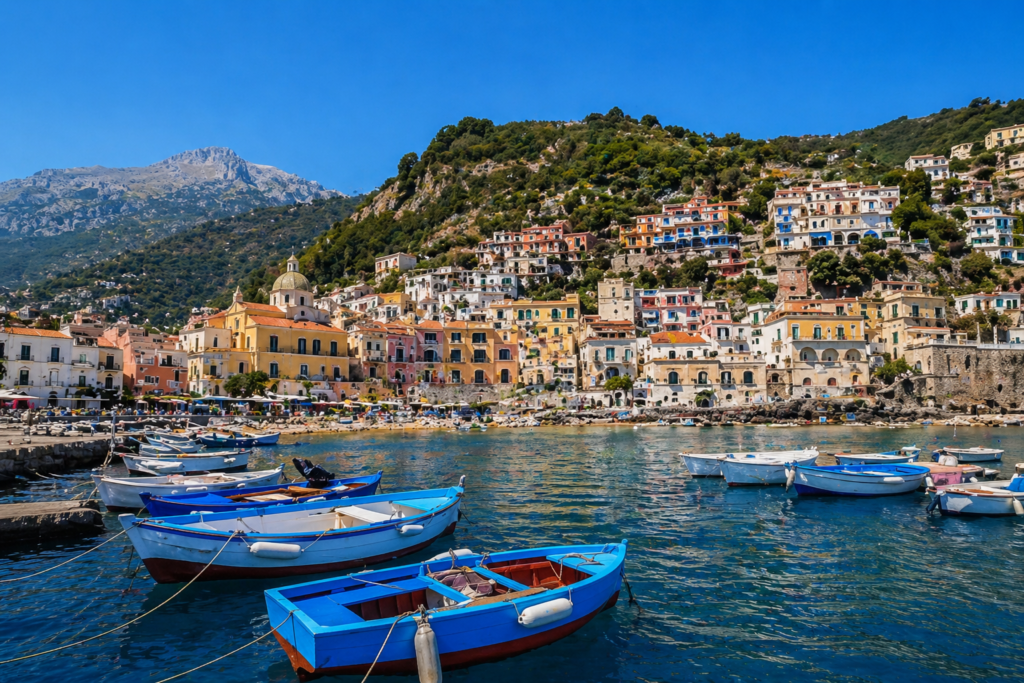
Cetara sits at the eastern end of the coast, seven kilometres from Salerno. It is the town the Amalfi Coast used to be before tourism arrived at scale. The fishing boats in the harbour are working boats. The tuna caught off the coast exports to Japan for sushi. The colatura di alici — a fermented anchovy extract with roots in ancient Roman garum — gained PDO certification in 2020. Restaurants here still charge restaurant prices rather than landmark prices. A full lunch runs €25–35 per person. Furthermore, the town lacks handbag shops, Instagram photographers, and the sense that its primary function is to be visited. It is, by any honest assessment, the most satisfying single stop on the entire Amalfi Coast.
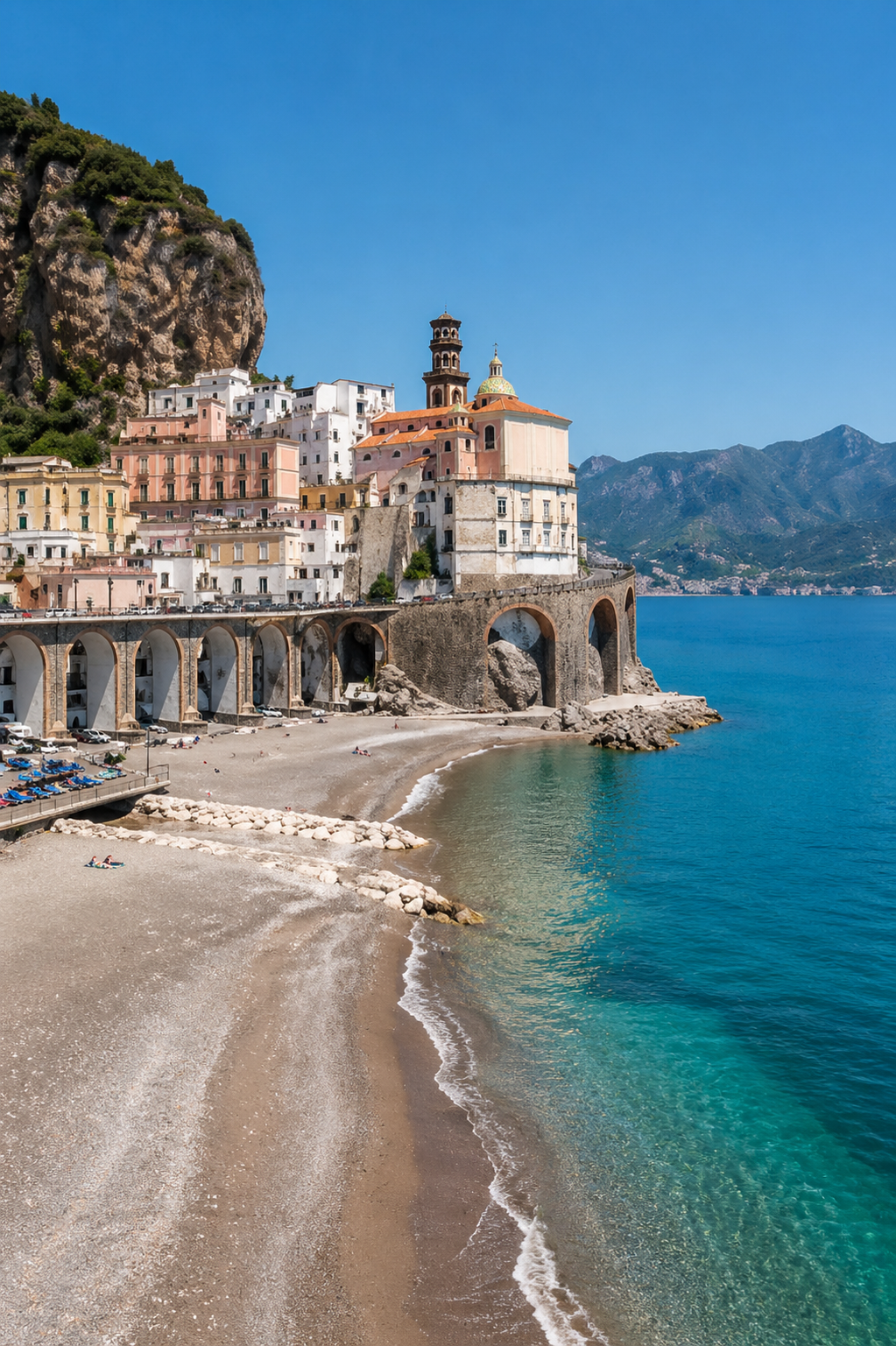
Atrani occupies 0.12 square kilometres on the cliff immediately east of Amalfi town. It is technically a separate municipality and historically where the Doges of the Amalfi Republic were crowned. At around 800 inhabitants, it holds the record as Italy’s smallest municipality by surface area. The practical result is a village that still functions like one: children in Piazza Umberto I, locals at the bar at 7am, fishing boats going out after dark. Moreover, the walk from Amalfi takes under ten minutes. Atrani is not a destination requiring planning — merely the decision to turn left instead of turning back. The crowd level is a fraction of Amalfi’s, in the same proportion as its beach.
Seven kilometres east of Positano, Praiano is the town serious travellers consistently choose over its famous neighbour. A mid-range hotel with sea views runs €80–200 per night in peak season. In Positano, the same room costs €250–500. Furthermore, Praiano faces due west — meaning genuine sunsets all the way to the horizon, while Positano loses direct light behind its cliff faces by mid-afternoon. The direct trail to the Path of the Gods starts from Praiano’s upper streets. The sunset from Piazza San Gennaro, with an Aperol spritz from the bar above, is the finest evening on the Amalfi Coast. It costs nothing. The town requires one trade: it is vertical, built in stairs, and the beach at Marina di Praia demands effort rather than delivery. That trade is worth making.
Conca dei Marini sits between Praiano and Amalfi with around 700 inhabitants and a strong claim on attention: it is the birthplace of the sfogliatella Santa Rosa. Local nuns developed this layered pastry with semolina cream and sour cherry filling around 1600. The recipe stayed secret for 150 years. The pastry is still made here in the old way and is extraordinary. Separately, the Grotta dello Smeraldo charges approximately €5 to enter by rowboat. An underwater fissure filters sunlight into luminous green — the experience earns the visit in a way the Blue Grotto of Capri, at fifteen times the price, often does not. Additionally, the village terrace produces an unobstructed view of the full western coast, and accommodation here carries correct pricing and remains largely unknown.
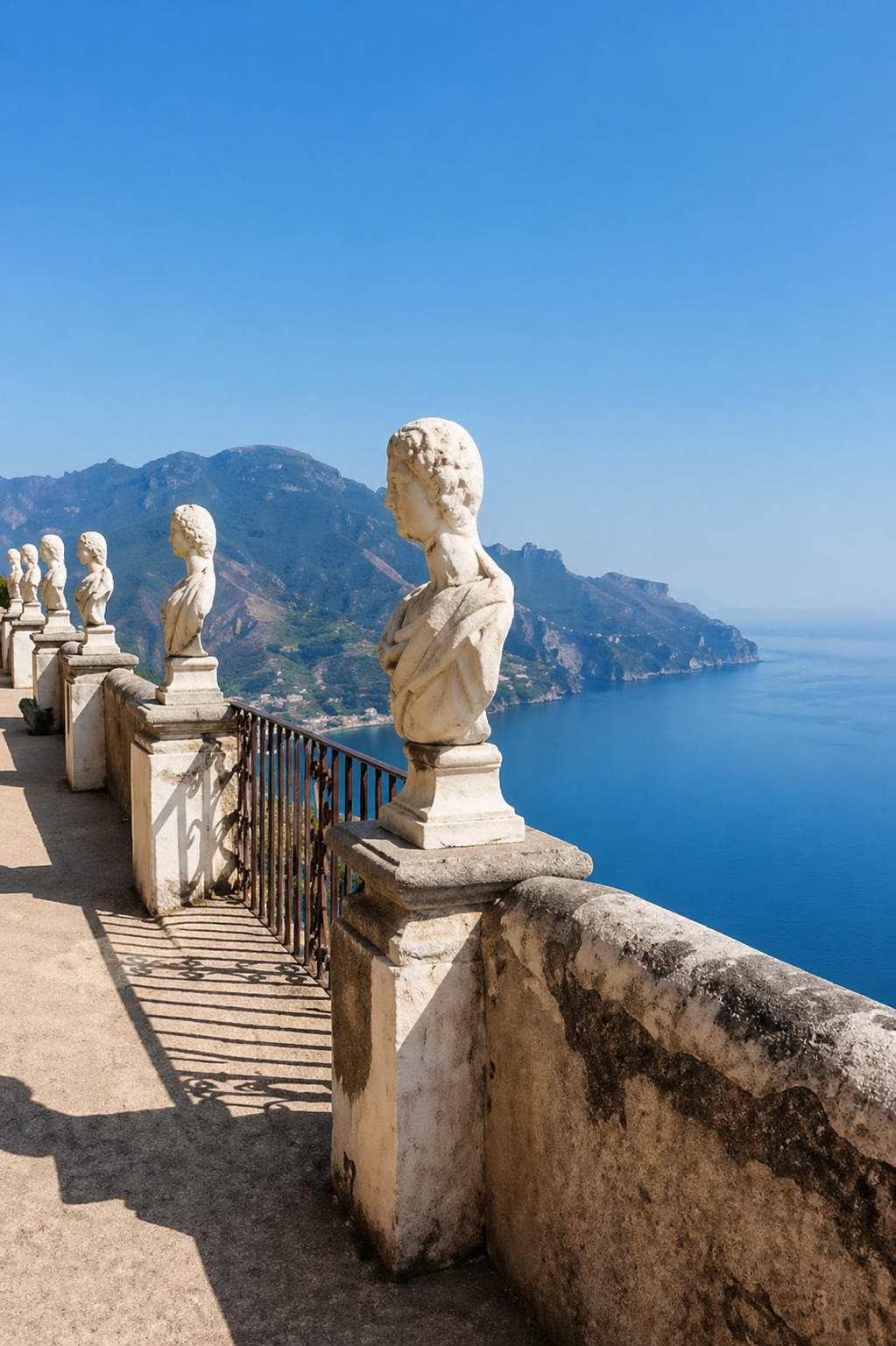
Ravello sits 365 metres above the sea, accessible from Amalfi by bus in 25 minutes. It has no direct beach access. Consequently, most day-trippers underweight it relative to Positano and Amalfi. This is an error. The Terrazza dell’Infinito at Villa Cimbrone produces the finest unobstructed panoramic view on the Amalfi Coast. Villa Rufolo’s gardens inspired Richard Wagner, and the annual Ravello Festival stages classical music against the cliff terrace in summer. Moreover, Ravello is perceptibly quieter than the coastal towns even in August. The absence of a beach and a ferry dock thins the day-tripper demographic dramatically. Restaurants charge honest prices, the lanes are walkable, and the evenings carry the specific quality of somewhere not entirely converted into a tourism machine.
02 — Cetara: What Makes It Different from Every Other Amalfi Town
Why it still feels like a real place
Almost every other town on the Amalfi Coast exists primarily to be visited. Cetara still exists primarily as a fishing village that happens to receive visitors. The distinction sounds subtle. It is not. The fishing boats that leave in the evening are not for tourists — they catch the anchovies and bluefin tuna that the restaurants cook the following day. The colatura di alici in small bottles at local shops carries PDO certification with roots in the Roman empire. The church dome covered in yellow-and-green majolica tiles above the marina is a landmark without a queue. And the pasta here costs what pasta costs in a real Italian restaurant, not what it costs within walking distance of Positano.
What the town is actually like
Cetara is physically small — a cluster of pastel houses around a working harbour, with the 16th-century Torre Vicereale watchtower on the promontory above the beach and a narrow central road connecting the village to the SS163 above. The beach at Spiaggia della Marina faces south-east, catching sun for most of the day including off-season. As a result, it has a practical advantage over the west-facing beaches that fall into shadow by mid-afternoon. Furthermore, the beach has a free public section alongside the lido operation, with sunbeds at honest prices rather than the Positano premium rate.
The food case
Cetara’s name derives from the Latin cetaria — tuna fishery — and the town has caught and processed fish since the Roman period. The colatura di alici technique involves packing anchovies in salt in wooden barrels, then collecting and ageing the resulting liquid over several months. A few drops over spaghetti with garlic, olive oil, and parsley produce one of the simplest and most structurally complex dishes on the coast.
The restaurants that serve it — Il Convento, L’Acqua Pazza, San Pietro — are family operations where the fish arrived that morning. A full seafood lunch including colatura pasta and local wine runs €25–35 per person. Additionally, the bottles sell at local shops for €10–15. They make the most practical souvenir on the entire coast: small amber vials of something genuinely extraordinary.
Practical access
Getting to Cetara requires deciding to go there, which is partly what keeps it quiet. The SITA Sud bus runs from Amalfi (approximately 15–20 minutes) and from Salerno (approximately 20 minutes) along the SS163. By ferry, seasonal boats connect Cetara to Amalfi and Salerno. The ferry approach from the water — the village visible against the cliff above the small beach — is the most pleasing arrival. By car, parking is easier here than in the western towns and the road from Salerno is direct. Note that the plate restriction rules on the SS163 apply in high season, as they do across the coast.
03 — Atrani: Ten Minutes from Amalfi Town, Zero Tourists
What makes it different from its neighbour
Walk east from Amalfi town along the coastal path for ten minutes. You arrive in Atrani: Italy’s smallest municipality by surface area (0.12 km²), around 800 inhabitants, a main square where locals actually sit at the bars, and a fraction of the tourist pressure of the town you just walked from. During the Maritime Republic of Amalfi, Atrani hosted the coronations of the Doges. Today it functions as somewhere the Amalfi Coast itinerary consistently misses, which is the most useful thing about it.
The character of the town
Atrani is compressed in the way only a 0.12 km² village can be. The central Piazza Umberto I opens directly onto the beach — a small, pebbly square backed by colourful buildings on all sides. The Church of San Salvatore de’ Birecto’s bronze doors, cast in Constantinople in the 11th century, face the water. They are contemporaneous with the doors in Amalfi’s cathedral, and they sit here with no queue in front of them.
Meanwhile, the lanes radiating from the piazza are narrow enough to touch both walls simultaneously. They pass through archways, past flower-box windows, and along staircases climbing toward the Valle del Dragone. Writing in the local dialect appears on walls. A small fountain from 1927 anchors the square. The overall effect — particularly at night, when fishing boats go out with their lampare lights and the square empties of day-visitors — is of somewhere that has maintained an interior life independent of whether you arrived to witness it.
The practical case for staying
Most visitors treat Atrani as a half-day addition to time based in Amalfi — reasonable, and it produces a good experience. Staying here, however, is the more rewarding choice for travellers who want the coast without the tourist machine. Accommodation is limited: a handful of B&Bs and apartment rentals, with Palazzo Ferraioli as the principal formal hotel option. That limitation carries a useful side effect — the overnight population stays small and mornings are genuinely calm.
Furthermore, Amalfi town is a ten-minute walk in one direction and the Ravello path starts from the upper village in the other. In short, Atrani works as a functional base without its smallness becoming a constraint. The beach is smaller and quieter than Amalfi’s Marina Grande, the restaurants charge marginally more honest prices, and the experience is simply better calibrated than its famous neighbour.
04 — Cilento: The Full Escape from Amalfi
The five towns above are all on the Amalfi Coast itself — alternatives within the same framework, offering a better version of the experience most visitors are looking for. Cilento is a different proposition entirely: two hours south of Naples by car, inside the UNESCO-listed Cilento and Vallo di Diano National Park, the coast that serious Italian beach travellers have chosen over the Amalfi Coast for decades.
The case for going entirely off-coast
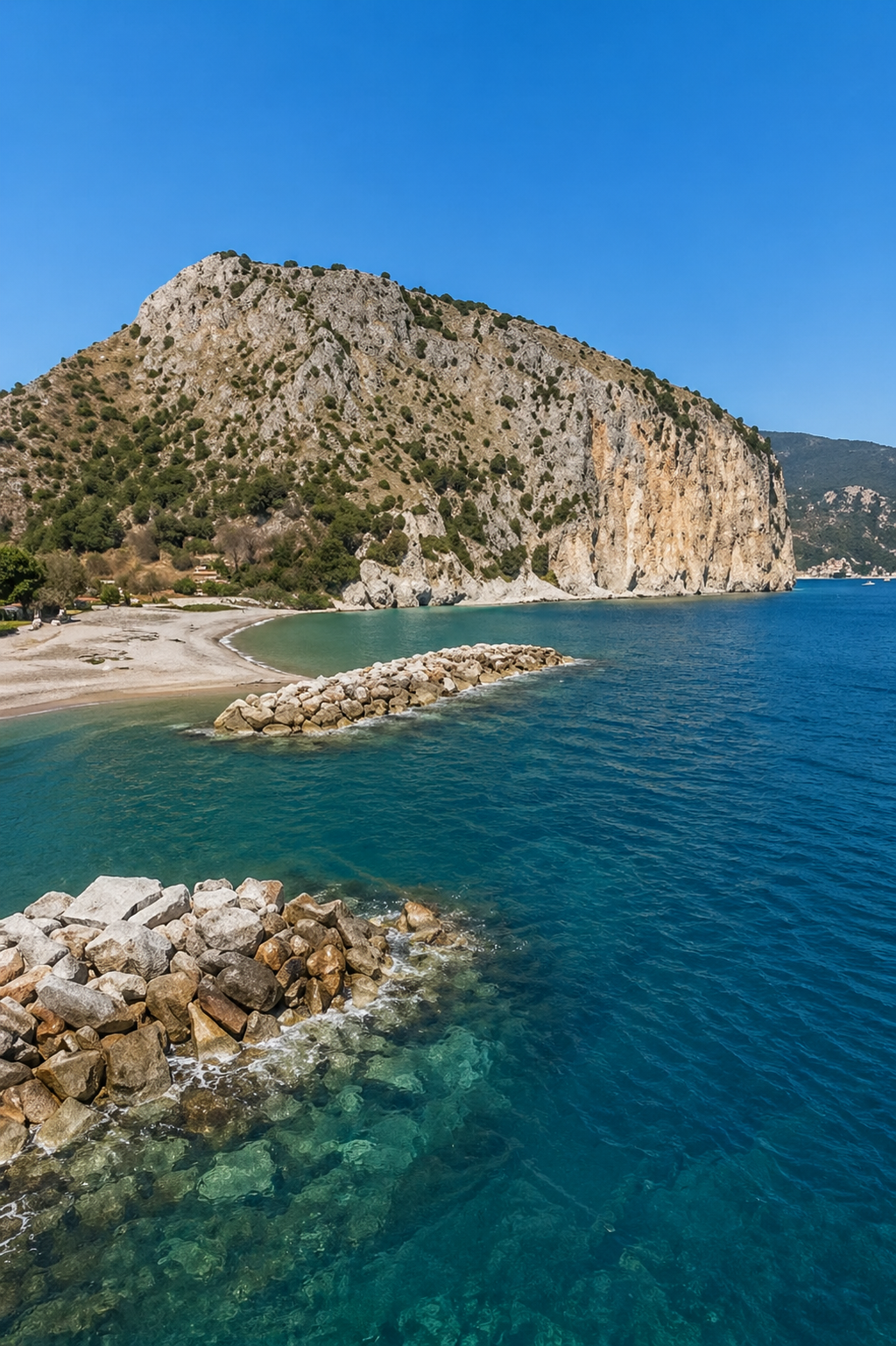
Cilento stretches for 100 kilometres from the Gulf of Salerno to the Gulf of Policastro. The beaches here genuinely surpass those on the Amalfi Coast — wide sandy stretches around Acciaroli and Santa Maria di Castellabate, dramatic limestone coves around Palinuro and Marina di Camerota that require either a hike or a boat, and the Spiaggia degli Infreschi near Marina di Camerota (voted the best beach in Italy in 2014) accessible only by trail or by sea. The entire coastline sits inside national park boundaries, which means protection from the development that transformed the famous coasts into what they are now. Furthermore, driving here is simply relaxed — open coastal roads, parking available, no plate restriction schedule to navigate. This is where Italians holiday in August when they have given up on the Amalfi Coast.
Northern Cilento — beaches and towns
The northern towns — Acciaroli, Santa Maria di Castellabate, Ascea — offer wide sandy beaches, shallow family-friendly water, and the relaxed atmosphere of a coast where the main activity is the sea itself. Accommodation runs €60–120 per night at mid-range hotels in high season. A full lunch with fresh seafood costs €25–35. There are no sunbed queues, no tourist-bus drop-offs, and no pricing designed around visitors with no alternative nearby.
Southern Cilento — cliffs and caves
By contrast, the southern stretch — Palinuro through Marina di Camerota — is where the coast produces its most dramatic scenery. Limestone cliffs, sea caves accessible by kayak, and isolated pebble coves keep this area quiet even in August. Palinuro has a functioning town with restaurants and accommodation. The Grotta Azzurra here offers a sea-cave kayaking experience without the commercialisation surrounding its Capri equivalent. Additionally, the archaeological site of Paestum — three of the best-preserved Greek temples in the world — sits 45 minutes from the coast, making a strong cultural case for the region without requiring a separate trip.
The honest limitation
Cilento does not offer the Amalfi Coast’s cliff-face drama or its combination with Naples, Pompeii, and Capri. It requires a car — public transport covers the region, but the coastline’s variety is only accessible independently. Moreover, it rewards a slower itinerary: it does not work as a day trip from Amalfi. For a dedicated five-to-seven-day stay in southern Italy where the beach is the primary purpose, however, Cilento is simply the correct answer. The food, anchored in the Mediterranean diet traditions of Campania, is outstanding. The buffalo mozzarella from nearby Paestum ranks among the best produced anywhere in the country.
05 — When to Go Is As Important as Where to Go
The towns above work across the whole season. However, the single most effective intervention on the Amalfi Coast is timing rather than location. May and September are the most honest months on this coast. Arriving before 9am at any beach or town gives a fundamentally different experience from arriving at 11am in peak season.
The overnight advantage
Every town on the Amalfi Coast empties of day-trippers after around 5pm. The coast that appears in the Instagram photographs — quiet lanes, empty piazzas, tables with actual space — exists from roughly 6pm onwards in summer. This is not a minor adjustment. Arriving to stay rather than arriving to visit puts you automatically in the version of the coast worth experiencing. Cetara’s harbour in the early morning, Atrani’s piazza after dinner, Praiano’s sunset from San Gennaro — these are the experiences the coast reserves for people who stay, not for people who arrive by ferry at noon and leave by 4pm. The practical advice is simple: base yourself in one of the towns above, stay long enough to see the coast at its own pace, and let the day-trippers pass through Positano without you.
A note on shoulder season specifically
May is the best single month on the Amalfi Coast by almost every measure. The roads are driveable without the plate restriction system, accommodation is available without six-month advance booking, and the SS163 has traffic rather than gridlock. In addition, water temperatures are swimmable by mid-month in the south, and the coast carries lemon blossom and the specific spring light that no summer photograph replicates. September is the strong second choice — warm, post-August, with sharply reduced cruise ship volumes and a return of the local character that August visitors mistake for something that no longer exists here.
October still works well in Cetara, Atrani, and Cilento — all of which remain open significantly later into autumn than the western tourist towns. In addition, the sea stays warm enough to swim in well into October at this latitude. By then, accommodation has dropped to honest pricing and the crowd question resolves itself entirely.
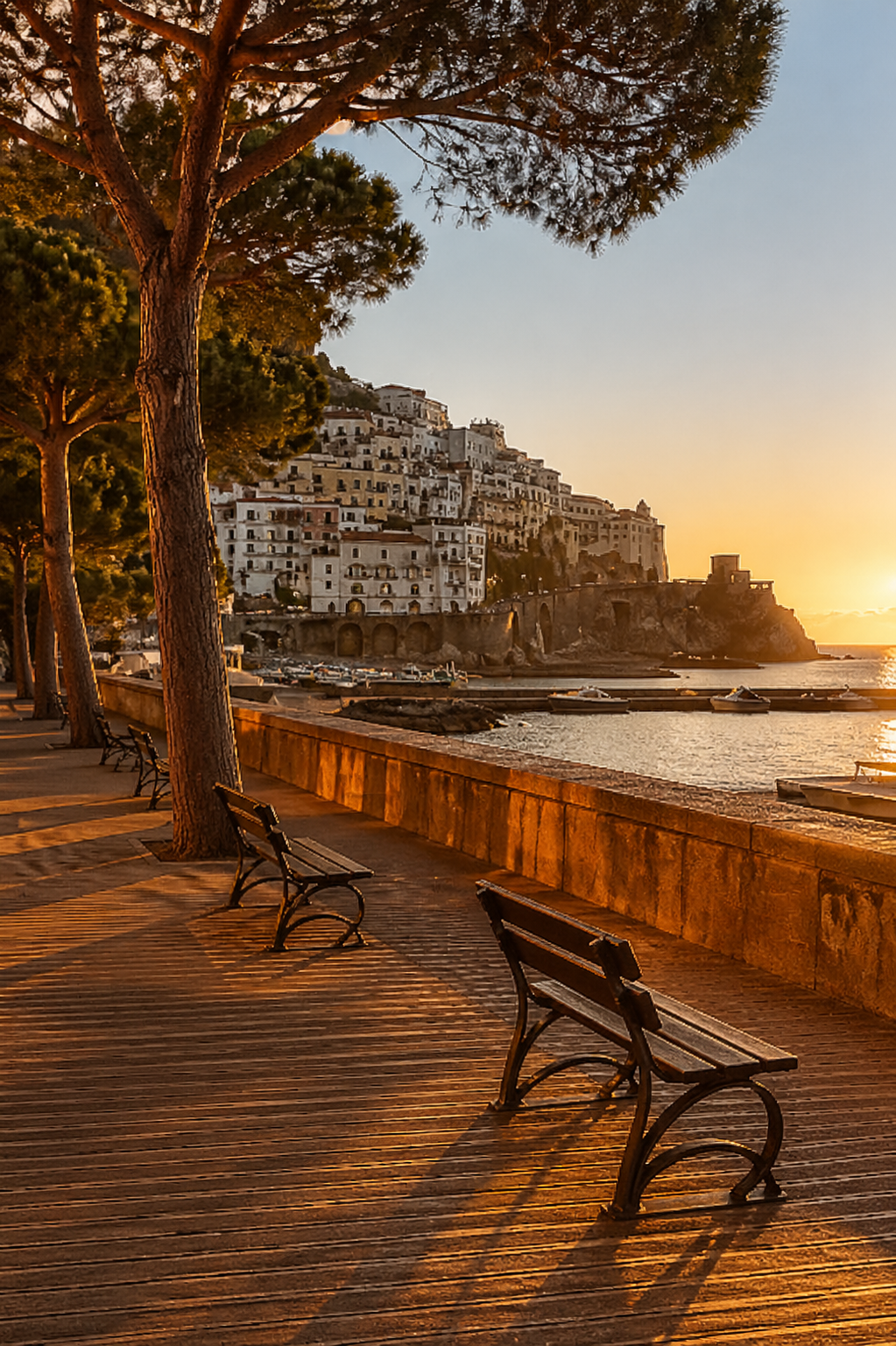
The Amalfi Coast is not the problem. The itinerary is.
Cetara, Atrani, Praiano — the coast the photographs were taken of, before everyone arrived to take the same ones.