
Praiano: The Amalfi Coast Town Serious Travelers Stay In Instead of Positano
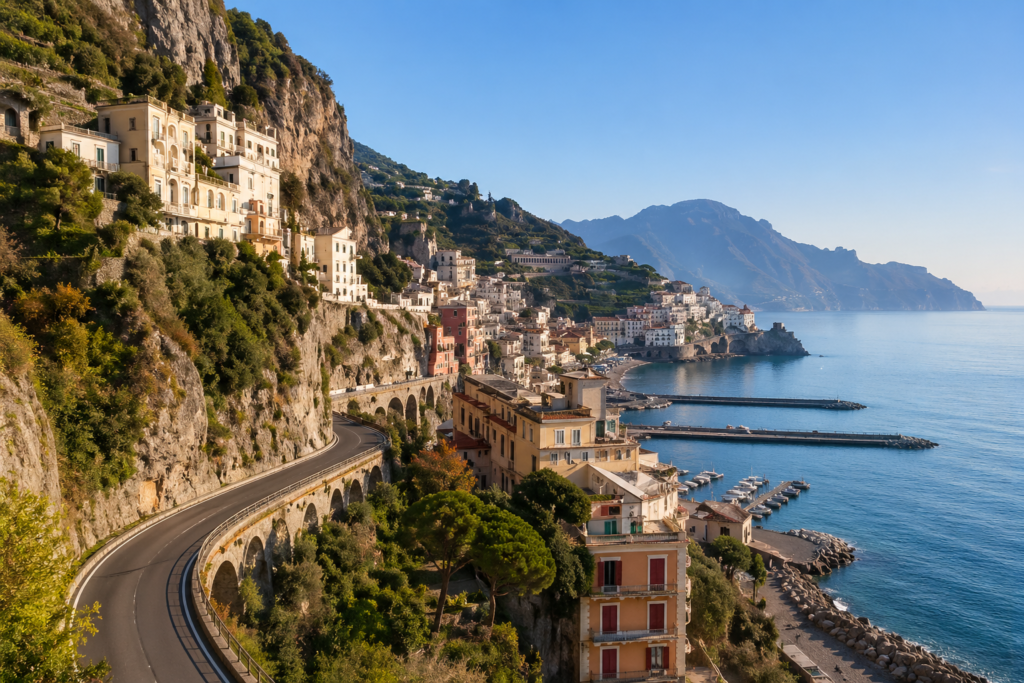
Seven kilometres east of Positano, past the point where most tourists turn back, Praiano sits on its cliffs facing west — quieter, cheaper, and better positioned than anything it neighbours. Here is the full guide to doing it properly.
Why It Rarely Appears on Lists
Praiano, on the Amalfi Coast, rarely appears in the opening paragraph. It falls between the famous towns, gets two lines in the “lesser-known stops” section of most itineraries, and is typically used as a waypoint between Positano and the Fiordo di Furore. Furthermore, it has no single landmark to anchor the visit — no cathedral with a fanfare, no world-famous photograph, no queue of people waiting to take the same picture.
That absence is, as it turns out, the most compelling thing about it.
What Praiano Actually Is
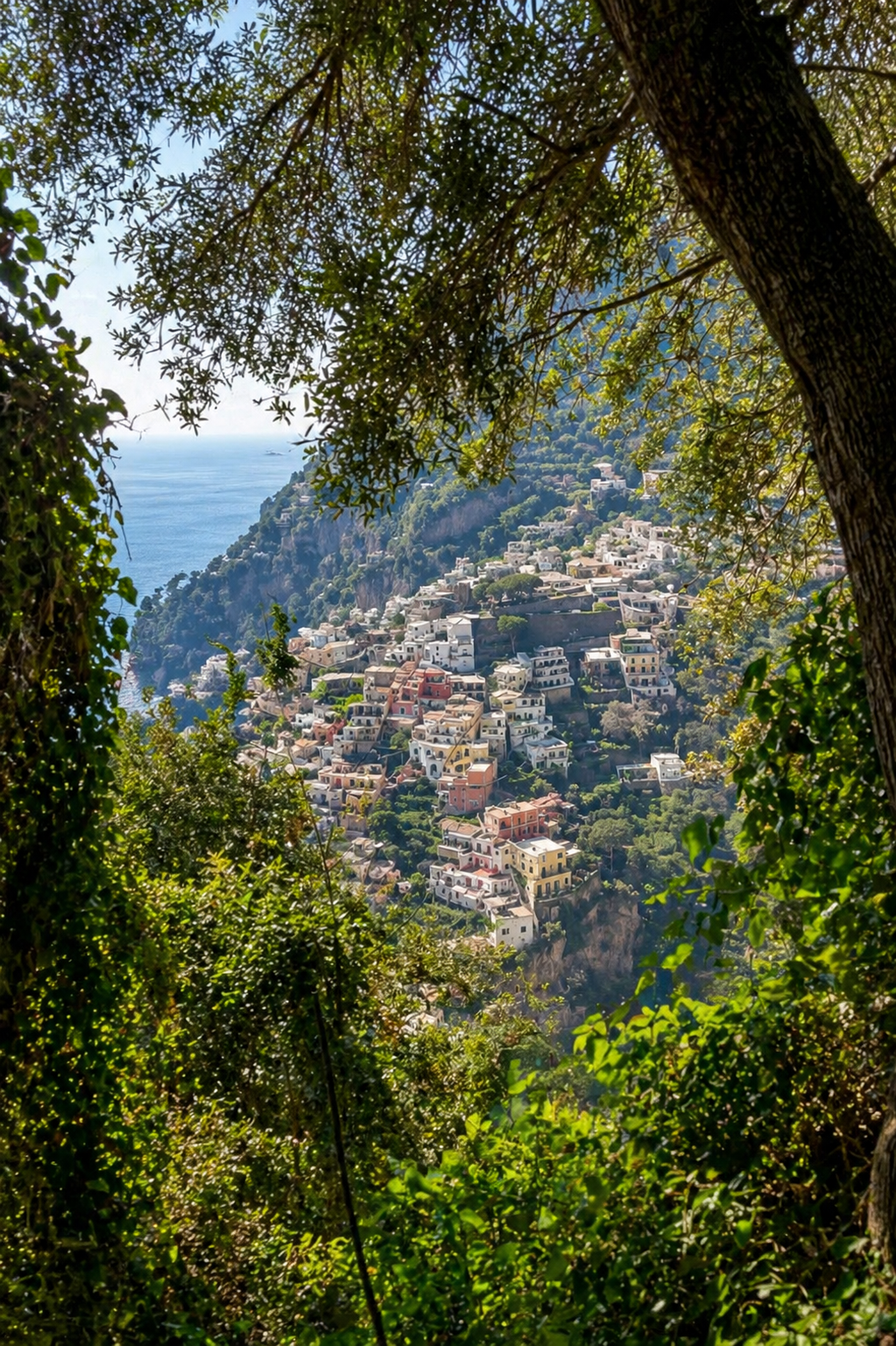
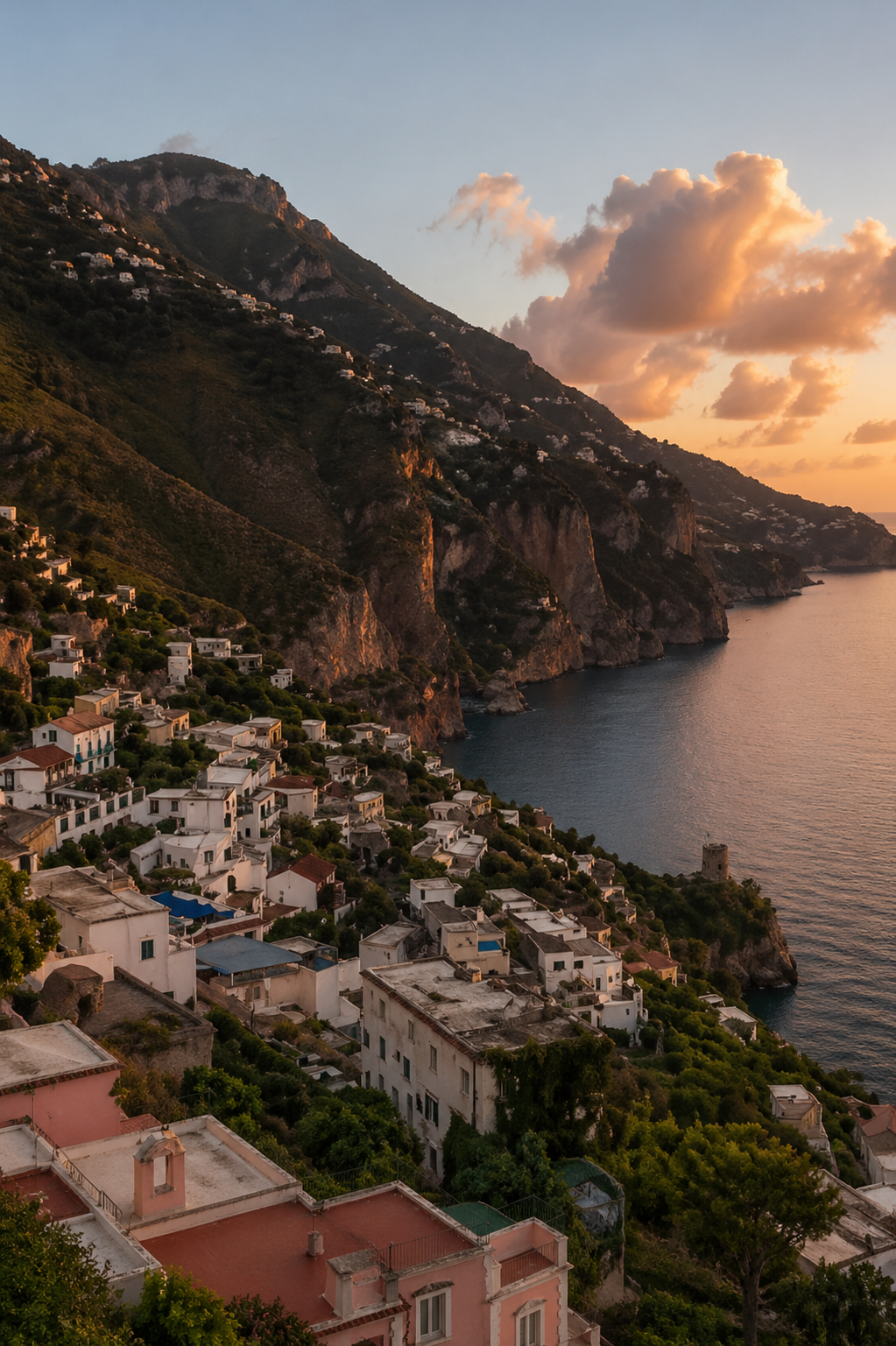
Praiano is a village of roughly 2,000 inhabitants spread across two hamlets — Vettica Maggiore above and Praiano proper below — on a cliff face that faces due west over the Tyrrhenian Sea. Historically, it served as the summer residence of the Doges of the Amalfi Republic, who understood centuries before the travel industry did that this particular angle of cliff and this particular angle of light were worth choosing over somewhere more prominent. The distinction still holds today. Praiano receives a fraction of Positano’s visitor numbers, charges meaningfully less for accommodation and food, has two good beaches and direct trail access to the Path of the Gods — and then delivers what no brochure can adequately explain: the best sunsets on the Amalfi Coast, every evening, at no charge.
01 — Why Praiano, Amalfi Coast, Over Positano
The Honest Case for Choosing It
The argument for Praiano over Positano is not about budget, though Praiano is cheaper. It is about the quality of the experience. Positano is one of the most photographed places in Italy — which means it is one of the most managed, most staged, and most consistently overwhelmed by demand. Praiano receives the same light, the same sea, and a comparable cliff face. What it doesn’t receive is the 6,000 daily visitors, the €50 sunbeds, the handbag shops, and the sense that the town exists primarily to be looked at rather than lived in. If you’ve done Positano on a previous trip and wonder whether there’s a version of the Amalfi Coast that feels more like discovery and less like attendance — there is. It’s called Praiano.
The Price Comparison
The practical comparison is direct. Praiano is 7km from Positano by road — roughly 20 minutes on the SITA bus or 15 minutes by ferry in season. The coast it occupies is the same geological formation, the same cliff type, the same species of lemon tree. However, a mid-range hotel room in Praiano in July costs €80–200 per night. The equivalent room in Positano, same view category, same star rating, runs €250–500. A seafood lunch in Praiano costs €25–35 per person at a restaurant that has actual locals eating beside you. The same meal in Positano’s restaurant row costs €45–65, and the restaurant is serving a table of twelve who arrived by tour bus.
What You Give Up
Praiano has no Spiaggia Grande equivalent — its beaches are smaller and require more effort to reach. It has no immediate name recognition for anyone back home. The shopping is limited to a handful of local ceramics and limoncello producers rather than a full high-street strip. Additionally, the town sprawls vertically across the cliff in a way that rewards exploration over convenience; stairs are the primary form of local infrastructure, and anyone staying for more than a day will feel them in their legs by evening.
That said, if you came for the coast and not for the commerce, the trade-offs are acceptable. Moreover, Praiano’s central location — equidistant between Positano and Amalfi — means both towns are accessible by bus or ferry within 20 minutes without requiring a car or a complicated logistics plan. Using Praiano as a base is, for many travelers, simply the most sensible decision on the coast.
€80–200/night mid-range with views
€25–35/person at a local trattoria
Low to moderate, even in July
Two — stairs or boat required for both
Best on the coast — faces due west
Direct trail to Path of the Gods
€250–500/night mid-range with views
€45–65/person, tourist pricing throughout
Very high from June–August; queue-level
Three — Spiaggia Grande walkable; others stairs or boat
South-facing — cliffs block the last light early
Trail from Nocelle side — requires bus to start
Amalfi Town as a Third Option
Amalfi is more centrally located, has better ferry and bus connections, and suits anyone whose priority is getting around the coast efficiently. Praiano, in contrast, is better for anyone whose priority is actually staying somewhere. The two towns serve different travel styles, and in practice a sensible Amalfi Coast itinerary can include nights in both.
02 — What to Do in Praiano
Praiano does not have a long sightseeing list, and that is partly the point. Most of what makes it worth visiting is not an attraction — it is an atmosphere. That said, there are several specific things worth building time around.
Things Worth Your Time
The small tiled square in front of the Church of San Gennaro is the natural gathering point for Praiano’s evenings. It faces due west, which is significant: most of the Amalfi Coast loses direct sunlight behind its own cliff faces well before the actual sunset. Praiano, with its western exposure, keeps it until the sun drops below the horizon. Come at 6:30pm with an Aperol spritz from the bar above and let the light do what it does. This is not a viewpoint you queue for — it is simply where the village stands at the end of the day, and you are invited.
The Sentiero degli Dei — the Path of the Gods — consistently ranks among the finest coastal hikes in Europe. The standard route runs between Bomerano and Nocelle, passing above Praiano on the way. However, Praiano also offers its own trailheads into the network, connecting via Via Costantinopoli into the higher trails. The climb from the village is steep for the first 40 minutes; consequently, starting before 8am in summer avoids the worst of the heat. Several hikers use Praiano as the base to walk toward Nocelle and then descend to Positano by staircase, returning by ferry — a well-structured full day that requires no shuttle or complicated logistics.
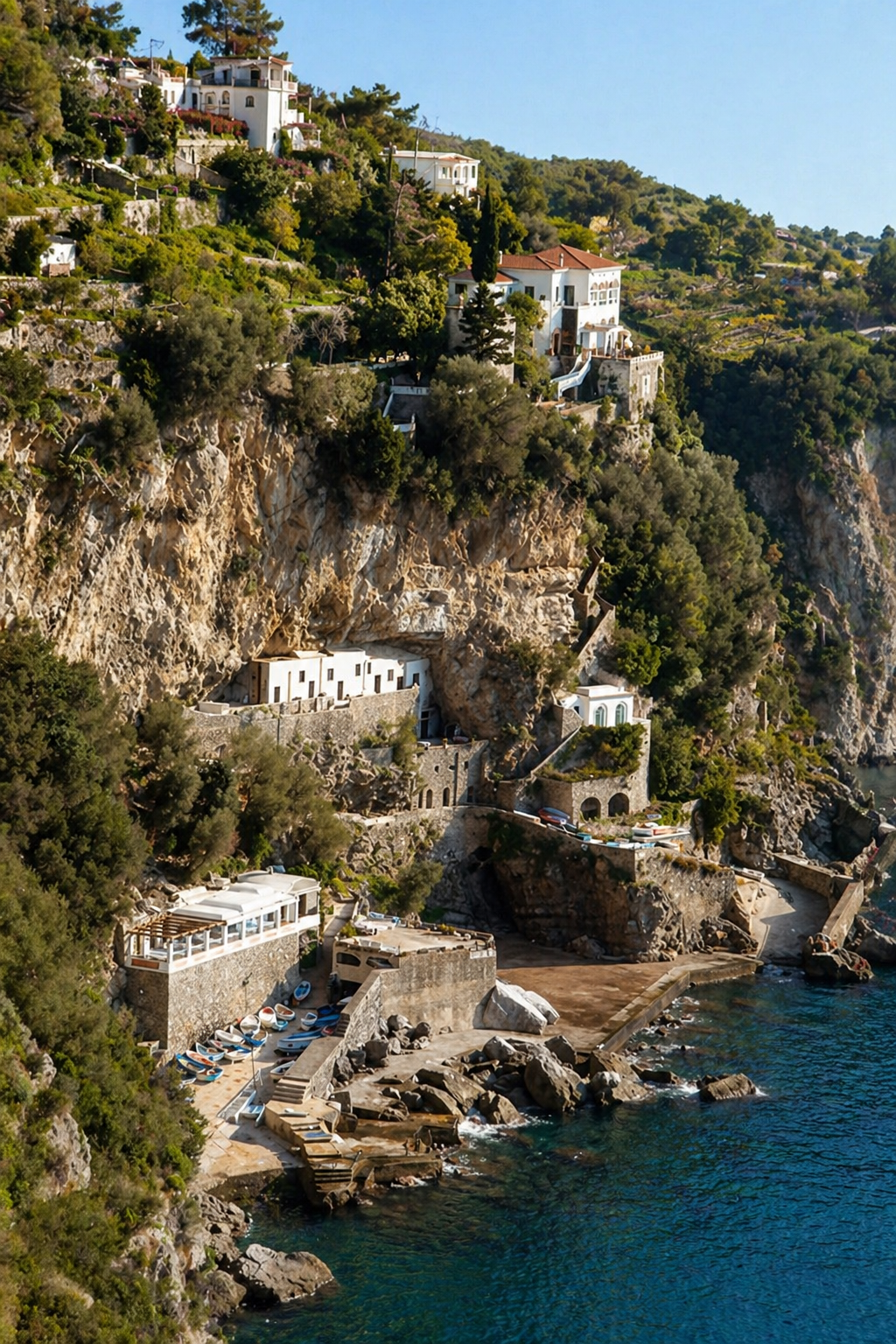
From the small harbour at Marina di Praia, renting a gozzo — a traditional wooden boat — opens up the section of coast the road cannot reach. The grottos of Suppraiano and Africana, the isolated beach Le Praie, the Torre di Grado cliff, and swim spots that have no name are all accessible only from the water. Additionally, boat rental from Praiano costs meaningfully less than the same service from Positano, and the departure point already puts you closer to the more interesting eastern stretch of coast. Rates in 2025 typically started around €80–120 for a half day for a small self-drive vessel. Bring more fuel money than you think you need.
The Village and Its Evenings
The 16th-century Church of San Gennaro contains a silver bust of the patron saint and relics considered locally significant for centuries. The interior follows the majolica-tiled Campanian church tradition in a minor key. More rewarding than the church itself, however, is the walk through Praiano’s upper streets to get there: narrow lanes, overhanging lemon trees, walls covered in bougainvillea, and the specific quiet of a village that has not yet been landscaped for tourism. The Church of San Luca Evangelista in the lower part of town is an older structure with a stronger Amalfi Republic connection and is worth the additional 10 minutes.
Le Grotte dell’Africana is one of the more genuinely unusual venues on the Amalfi Coast: a nightclub built inside sea caves below the cliff, with glass floors through which the water is visible, and a history dating to the 1960s when it hosted international celebrities. It operates seasonally in summer, typically from around 11pm. Not for everyone — the access involves a staircase descent and the experience is unapologetically theatrical. Nevertheless, it earns a mention because nothing else on this stretch of coast is quite like it, and the juxtaposition of ancient cave and cocktail service is, at minimum, an interesting evening.
03 — Where to Eat in Praiano
Praiano’s restaurants are, as a category, better value than the same-quality equivalents in Positano. The key distinction is that many of them still serve an actual local clientele — which keeps pricing and quality in the relationship that tourist-only restaurants tend to abandon. Scialatielli pasta (a short, thick Campanian noodle) with clams or fresh seafood, grilled fish with lemon and olive oil, and homemade limoncello served after dinner are the consistent pattern. None of the following are cheap by Italian standards; all of them are honest by Amalfi Coast ones.
The Restaurants Worth Booking
Positioned directly at the water’s edge at Marina di Praia beach, Il Pirata serves the kind of seafood pasta that the setting demands and the quality delivers. The scialatielli with crab and the linguine with mussels and clams are the menu anchors. Furthermore, Il Pirata doubles as a lounge bar — making it a reasonable choice for both lunch and an aperitivo hour watching the boats in the harbour. Booking in high season is advisable; walk-ins are possible at lunch on weekdays in shoulder season.
A family-run trattoria with sea views and a menu that changes with what came in from the boats. The clams and tuna opener followed by grilled red squid or prawns is the sequence recommended by regulars. The wine menu runs heavily toward local Campanian whites, which pair correctly with the food. In short, Da Armandino is the answer when the question is: where do people who have been coming to Praiano for years actually go for dinner?
For Coffee, Pastry, and the View
The best sfogliatelle on this stretch of the coast, and the specific discovery that Praiano rewards over Positano. The sfogliatelle — crispy layered pastry, ricotta filling, dusted with sugar — is made properly here in a way the tourist-facing pasticcerie of Positano and Amalfi town rarely replicate. Café 94 also serves proper espresso at counter prices rather than terrace prices, and the owners have the easy familiarity with their regulars that only survives in towns that have not been entirely subsumed by seasonal tourism. Worth three visits in a week, as several travelers have reported actually doing.
The restaurant at Gavitella beach offers a specific experience: lunch with your feet effectively at the water’s edge, on a beach that keeps sun until the evening, looking directly at Positano and Capri across the water. The food is straightforward fresh seafood with the sea view doing considerable work. Additionally, a free shuttle boat runs from Marina Grande in Positano for guests who book ahead — which makes for a natural half-day combining the Positano experience with a considerably more pleasant lunch than anything available there at comparable pricing.
Many of Praiano’s best restaurants have terraces rather than indoor space and fill quickly after sunset on warm evenings — particularly from late June through August. Call ahead on the day you plan to eat, even for restaurants that don’t technically take reservations. Most owners will tell you honestly whether they can fit you and what time to arrive. In this village, direct communication works better than third-party booking platforms, which often have incomplete availability for smaller family operations.
04 — Praiano’s Two Beaches
Praiano has two distinct beaches with different access logistics and different characters. Understanding both before you arrive means you spend your time swimming rather than navigating.
Marina di Praia — The Easier One
Marina di Praia is Praiano’s historic fishing harbour and its most accessible beach. A by-road off the SS163 — signed and straightforward — descends to the harbour level, where there is a small paid car park. By bus, the SITA stop on the main road sits directly above, with the descent taking under five minutes. The beach itself is a narrow pebble cove set between two limestone cliffs, with the Torre a Mare watchtower on the promontory above. Sheltered and compact, the cove keeps the working harbour character intact — boats arriving and departing alongside swimmers — and that combination is part of the appeal.
When the Sun Reaches Marina di Praia
Because the cliffs on both sides are high, the sun reaches Marina di Praia primarily during the central hours of the day — roughly 10am to 3pm in summer. Morning visits give you the atmosphere without the light; afternoon visits give you the swimming without the midday heat. In peak season, the beach fills by mid-morning, though weekdays are meaningfully quieter than weekends. Il Pirata and Da Armandino both have terraces at beach level, making lunch the natural midpoint of a Marina di Praia morning.
Gavitella Beach — The Better One
Gavitella remains the more rewarding of the two beaches for one specific and non-negotiable reason: it is the only beach on the entire Amalfi Coast that receives direct sunlight until the actual sunset. Every other beach on the SS163 loses the sun behind its cliff face at some point in the afternoon — Gavitella, facing directly west, does not. Travel writers have been noting this quality for long enough that the phrase “best-kept secret” no longer applies, but the beach itself remains unchanged.
Access requires 413 steps descending from Piazza San Gennaro in the village centre. The descent takes about 20 minutes at a relaxed pace and passes through lemon groves and past village houses — a genuinely pleasant walk down. Midway, a bar offers the first sea view of the descent and is worth a pause. The climb back up is the honest test: allow 30 minutes and bring water. Alternatively, a shuttle boat runs from Marina di Praia and from Positano’s Marina Grande to guests who book at La Gavitella restaurant — for anyone arriving from Positano, this is the more elegant entry point.
What to Expect at the Beach
The beach itself is 30 metres of pebbles with two concrete platforms extending the usable area. La Gavitella restaurant privately manages the site, though a free public zone exists alongside. Sunbeds and umbrellas are available for hire. The Fontana dell’Altare — a natural swimming pool inside a grotto just around the cliff — is worth the short scramble to find it. One Fire Beach Club occupies the eastern side with a lively atmosphere and a watermelon ceremony at 4:30pm that has become a ritual for regular visitors, equal parts theatrical and charming.
05 — Getting There, Parking & Where to Stay
Getting to Praiano — Your Options
| By bus from Positano | SITA Sud on the Amalfi–Sorrento line — approximately 20 minutes. Tickets cost around €2.50 and must be bought at a tabaccheria before boarding. The main Praiano stop is on the SS163 in the village centre; the Marina di Praia stop is a separate, earlier stop signed from the road. In peak summer, buses run every 30–40 minutes but fill quickly — stand at the stop early and be prepared to wait for the following bus if the first is full. |
| By bus from Amalfi | Same SITA Sud line in the opposite direction — approximately 20–25 minutes. Praiano sits between the two towns, so both directions use the same ticket and the same bus. |
| By ferry (seasonal) | Seasonal ferry services run from April through October connecting Positano, Praiano, Amalfi, and the eastern towns. The Positano–Praiano ferry takes about 15 minutes and costs approximately €6–9 each way depending on the operator. The approach by sea gives you the cliff face from the water — the version of Praiano the Doges saw arriving by boat. Check timetables at the harbour; they vary by season and do not operate in rough weather. |
| By car | Driving to Praiano is possible and the parking situation is easier than Positano, though still imperfect in high season. Several small public car parks exist in the village centre and along the approach to Marina di Praia. Pricing is lower than Positano but rises in July and August. The plate restriction on the SS163 (even/odd alternating, weekends and public holidays, mid-June through September, 10am–6pm) applies here as on the rest of the coastal road — check your plate number before planning a peak-season drive day. |
Where to Stay in Praiano
| Accommodation range | Praiano’s accommodation runs from family-run B&Bs at €60–90 per night (La Barbera, La Limonaia) to mid-range hotels with pools and sea-view terraces at €100–220 (Hotel Il Pino, Hotel Tramonto D’Oro, Hotel Margherita) to boutique cliff-side properties at €250–400 (Grand Hotel Tritone, Casa Angelina). Nearly every property has a sea view — this is the one feature Praiano’s topography makes unavoidable. Book 2–3 months ahead for peak summer; May and September have better availability and more honest pricing. |
| The Praiano Card | Ask your hotel or accommodation host about the Praiano Card on arrival. It is a local tourism discount card offering reductions at restaurants, boat rental operators, and some beach services. Not all businesses participate, but it is worth asking, particularly for stays of three nights or more. |
The Core Question
Getting There and Getting Around
Planning Your Visit
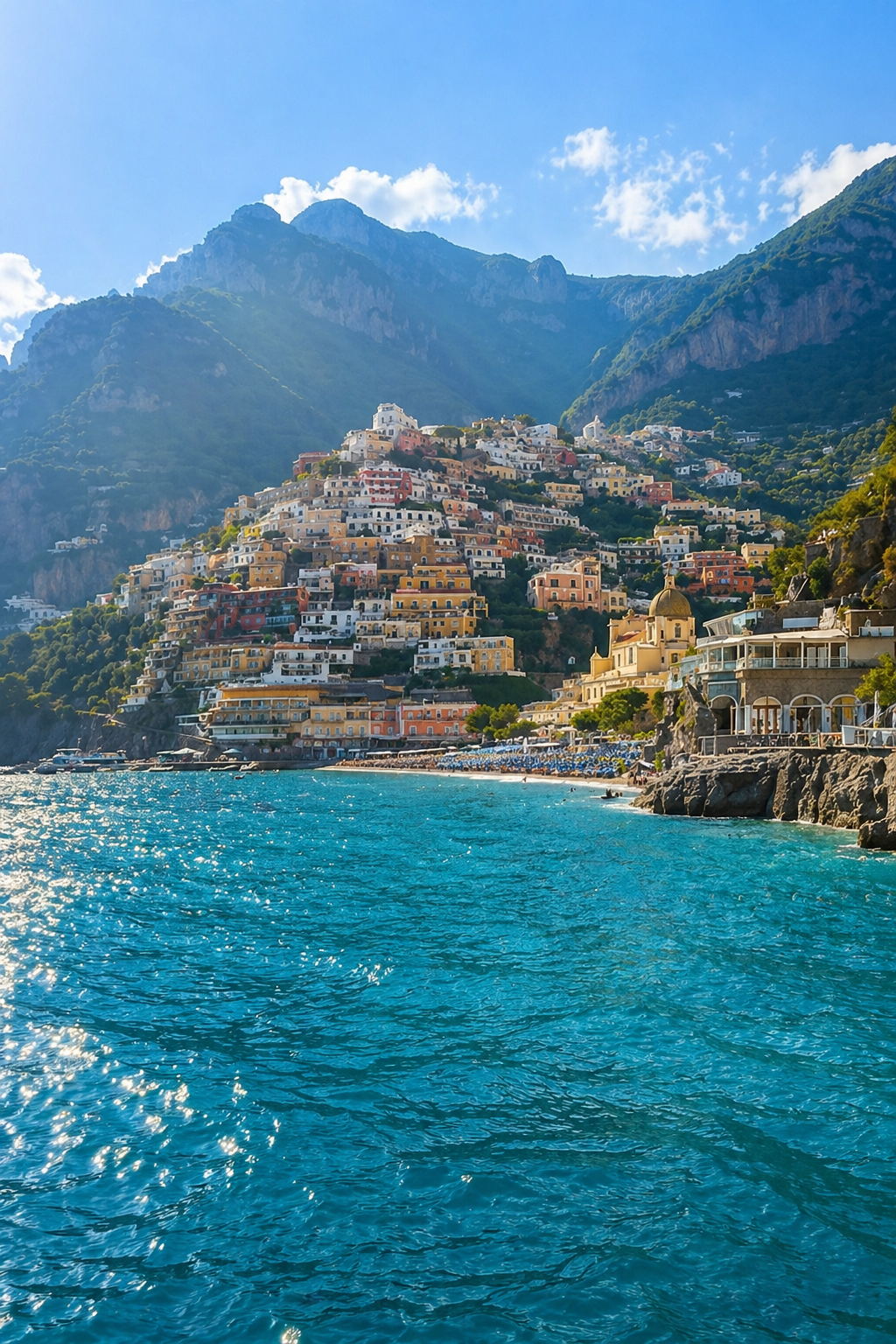
The Doges of Amalfi understood something about Praiano’s cliff face that most modern itineraries still haven’t caught up to.
Come for the sunset. Stay for the quiet. Leave knowing you found the right version of this coast.