
Granada Travel Guide: Experiencing the Moorish Soul of Andalusia
The Alhambra. The Albaicín at sunset. Free tapas with every drink. Granada quietly became the most memorable stop of our entire Andalusia trip.
This Granada travel guide covers everything you need to plan a visit — and Granada has a way of making every other stop on an Andalusia trip feel like a warm-up act.
When we planned our journey through Andalusia, we expected cities like Seville or Córdoba to impress us the most. By the time we left Granada, however, it had become the place we talked about the most — and the one we kept trying to explain to people who hadn’t been.
Granada sits at the foothills of the Sierra Nevada in southern Spain — and that geography, specifically, tells you something before you even arrive. For centuries it was the final stronghold of the Moorish kingdom in Iberia, and the weight of that history is present everywhere: in the architecture, in the shape of the streets, in the way the city still feels shaped by a world that ended here in 1492. Mountain air, Moorish palaces, and winding lanes that belong to another century — all of it compressed into a city small enough to walk across in an afternoon.
For us, in short, Granada ended up being the most enjoyable and memorable stop of our entire Andalusia road trip.
01 — Getting to Granada
Granada does have its own small airport — GRX — but in practice most international travelers arrive through Málaga, one of the largest airports in southern Spain. From there, Granada is roughly a 1.5 to 2 hour drive through scenic Andalusian landscapes.
For our trip, we flew into Málaga and had already booked a rental car for the entire Andalusia journey. Driving gave us the flexibility to explore multiple cities without depending on train schedules — if you’re planning the full route, the complete Andalusia cities guide covers the logistics in detail. That said, renting a car is not the only option — there is a reliable direct bus connection between Málaga Airport and Granada which takes around two hours and is both comfortable and affordable.
By car: Rent from Málaga Airport, ~1.5–2 hours drive. Best for flexibility across Andalusia. By bus: Direct bus from Málaga Airport to Granada, ~2 hours. Comfortable and affordable. By train: Trains connect Seville and Madrid to Granada via Renfe. By plane: Granada has a small airport (GRX), mainly domestic connections.
02 — Where to Stay in Granada
Our accommodation was an Airbnb located about five minutes from Casa Doñana. The location turned out to be ideal — close enough to the historic areas to be walkable, while still accessible by car. In practice, that combination made a significant difference when moving between parts of the city across two days.
Like many historic European cities, driving inside the old quarters can be difficult due to narrow streets and restricted zones. As a result, having a place slightly outside the busiest historic streets made parking considerably easier while still keeping us within easy walking distance of the main attractions.
03 — Exploring the City with the Hop-On Hop-Off Train
On our first day in Granada we wanted to explore the city in a relaxed way before visiting the Alhambra the following day. We drove into the city centre, parked in a public car park, and from there boarded one of the small hop-on hop-off tourist trains that circulate through the historic districts. It turned out to be, in fact, one of the better decisions of the trip — and in particular, it gave us a clear sense of the city’s geography before we started climbing on foot.
Subsequently, the train winds its way through the city centre — past old markets, small squares, churches, and narrow streets — before climbing toward the historic hills of the Albaicín and Sacromonte. In particular, it turned out to be a great way to understand the layout of the city and decide where to stop and explore on foot before committing to the climb.
If it’s your first time in Granada, the hop-on hop-off train is worth doing on day one. It gives you a quick overview of the city’s geography before you start exploring on foot. The Albaicín and Sacromonte are built on hills — knowing where things are saves a lot of wandering.
04 — Discovering the Albaicín District
One of the best decisions we made that day was hopping off the train in the Albaicín. Granada’s historic Moorish quarter is — in fact — one of the most atmospheric neighbourhoods in Spain — a maze of narrow streets, stone staircases, and whitewashed houses dating back to the medieval Islamic period. It has been a UNESCO World Heritage Site since 1984, and walking through it makes clear why.
Walking through these streets felt like travelling through time — and specifically, the detail in these neighbourhoods rewards slow exploration. Many houses were decorated with colourful ceramic tiles and Moorish-style patterns near their entrances. Moreover, the further you climb, the quieter it gets — and the better the views over the city become.
05 — Best Sunset View of the Alhambra
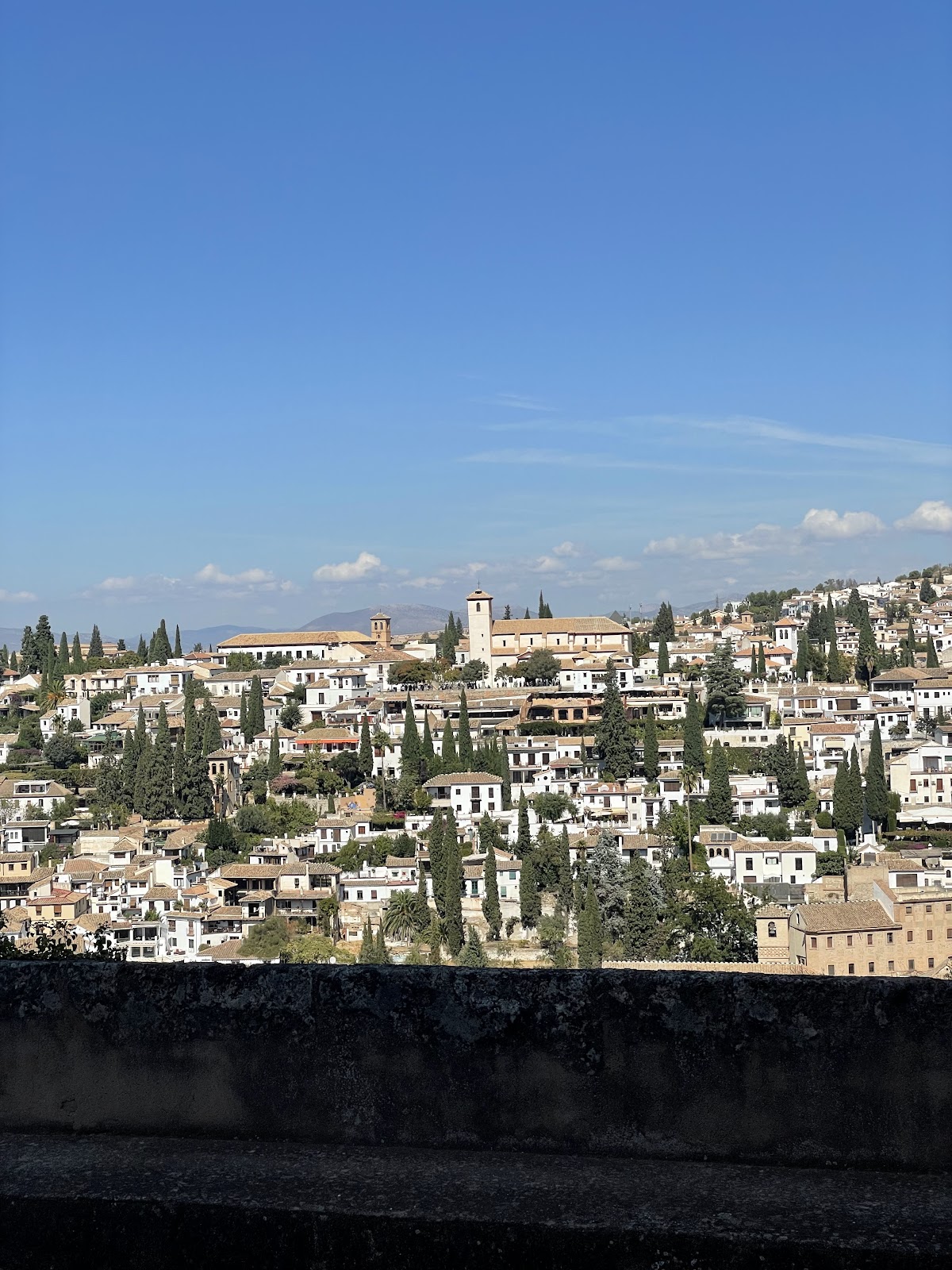
Eventually we reached the Mirador de San Nicolás — the small square where one of Granada’s most famous views reveals itself. On one side stands a mosque; directly across the valley, the Alhambra rises on the opposite hill. Consequently, it is the kind of view you have seen in photographs and still are not quite prepared for in person — the scale of the palace complex against the Sierra Nevada takes a moment to absorb.
- Mirador de San Nicolás — The most famous viewpoint, directly across from the Alhambra. Arrive 45 minutes before sunset to get a good spot
- Mirador de San Cristóbal — A quieter alternative further up the hill with fewer crowds
- Both are free and accessible on foot from the Albaicín streets
06 — Flamenco Caves of Sacromonte
Nearby lies the Sacromonte district, famous for its cave houses carved directly into the hillside. These caves have long been home to artists and Roma communities who helped shape Granada’s flamenco traditions — and consequently, the performances here carry a weight and authenticity that is difficult to find anywhere else in Spain. Today, as a result, many of them host intimate flamenco shows where dancers perform in small candlelit rooms, accompanied by guitars and cante jondo singing.
Even while walking through the area you can sometimes hear the rhythmic clapping and music drifting through the hills. Specifically, it is one of the few places in Spain where flamenco still feels genuinely embedded in a community rather than performed for visitors — and that difference registers immediately, even if you have seen flamenco elsewhere.
07 — Visiting the Alhambra
The Alhambra is, above all, the reason most people come to Granada — and it delivers on that reputation without qualification. Built during the 13th century by the Nasrid dynasty, the last Muslim rulers of Spain, the complex served as royal palace, fortress, and administrative centre. As a result, it is not a single building but an entire world spread across a hilltop — and today it is one of the most visited monuments in Europe, for reasons that become immediately clear the moment you step inside.
Alhambra tickets sell out extremely quickly — often weeks or months in advance. We had not booked early enough for standard tickets and had to find a guided tour at a higher cost. The guided tour was absolutely worth it, but book early to avoid paying more. Book standard tickets at tickets.alhambra-patronato.es as early as possible. If sold out, GetYourGuide and Viator both offer guided entry options.
08 — Inside the Alhambra Complex
The Three Areas to See
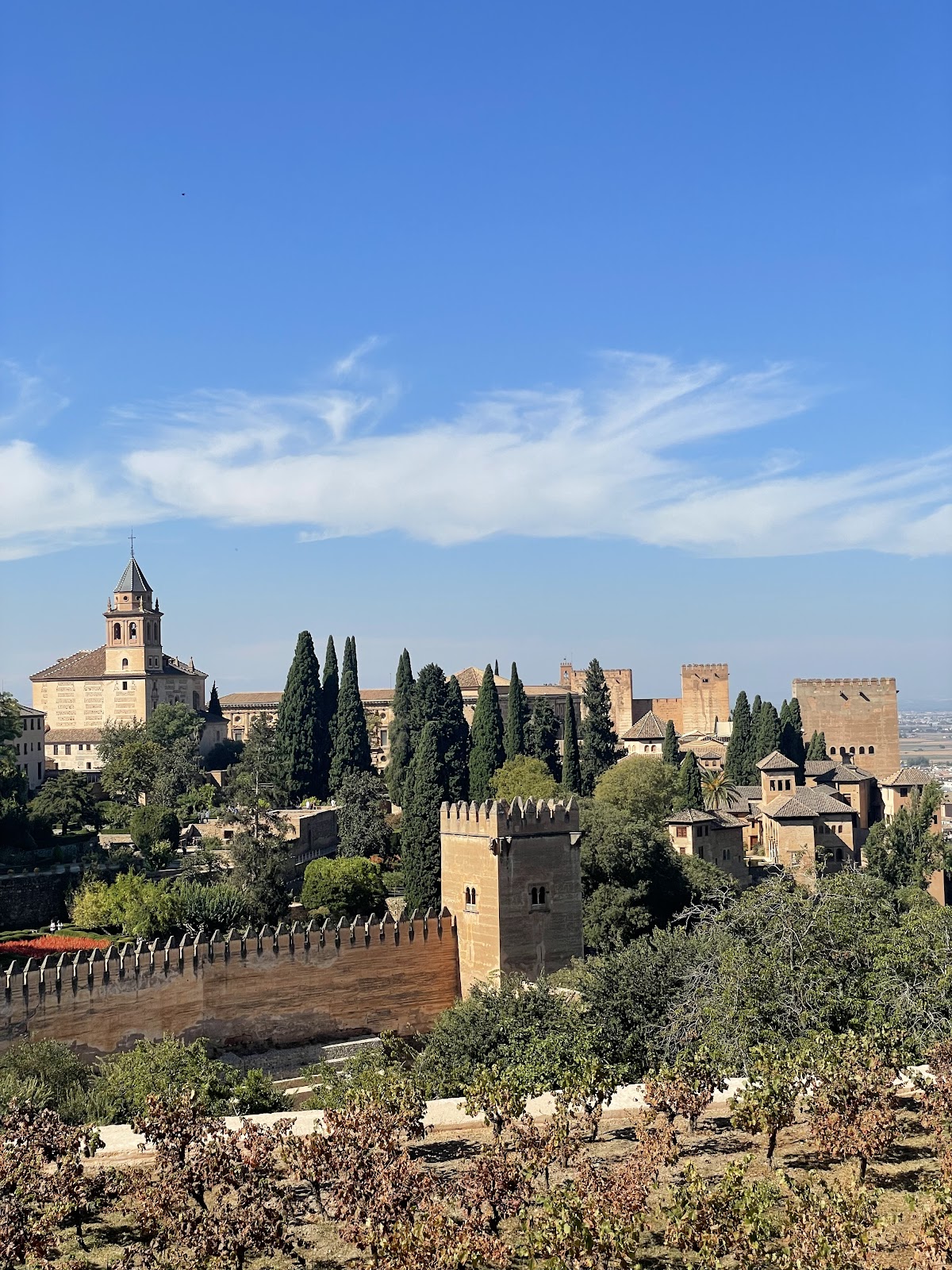
The Alhambra is enormous and deserves at least half a day — ideally a full one. There are three main areas to visit, each with a completely different atmosphere — and rushing between them means missing what makes each section worth the journey. Overall, the sequence from Generalife to Alcazaba to Nasrid Palaces works best.
Once the summer retreat of the Nasrid rulers — water channels, fountains, and carefully arranged gardens designed to provide cool relief during hot Andalusian summers. In short, a beautiful and unhurried introduction before the intensity of the palaces begins.
The oldest section of the complex — massive stone walls and watchtowers that once protected the royal court. Climbing the towers, moreover, rewards visitors with panoramic views of Granada and the Sierra Nevada mountains rising behind it.
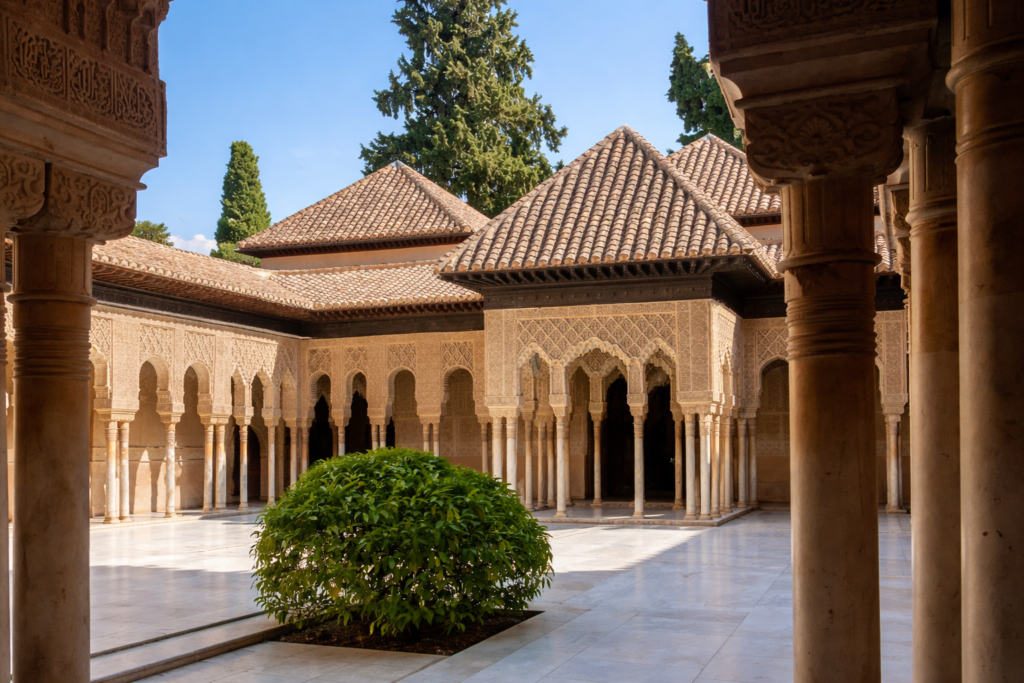
The finest examples of Moorish architecture in existence — intricate carvings, Arabic calligraphy, geometric patterns, and delicate columns cover nearly every surface. In particular, the courtyards with fountains and reflecting pools are unlike anything else in Europe. The timed entry window is strict — do not be late.
What It Feels Like Inside
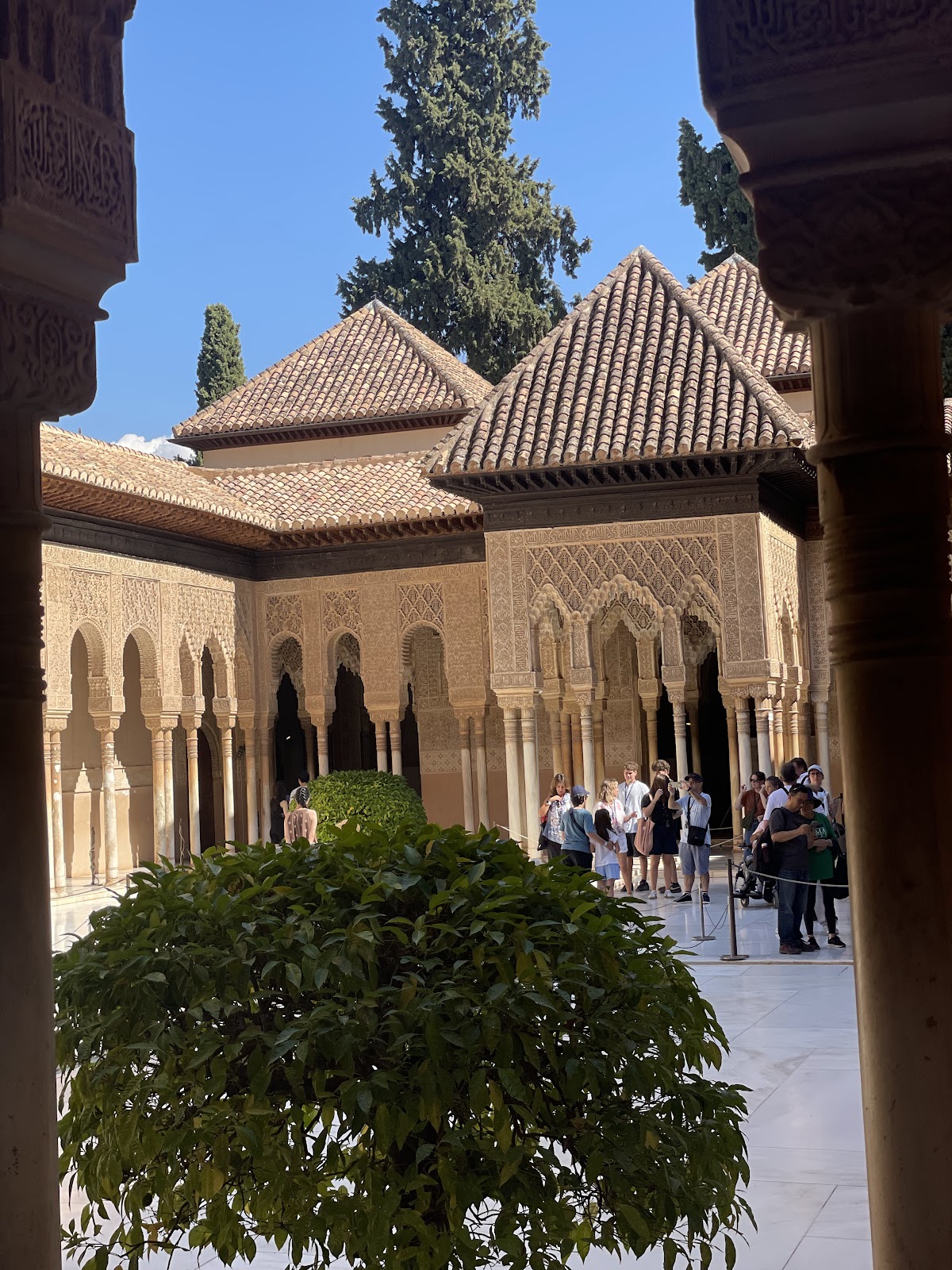
Allow at least 3–4 hours for a proper visit across all three sections — ideally a full morning. The Nasrid Palaces have a timed entry window — do not be late or you may lose your slot. Wear comfortable shoes — the complex is large and involves a lot of walking on cobblestone. There is a café inside but it is overpriced; eat before or after your visit in the city.
09 — Food and Tapas in Granada
Granada is, notably, famous for something you will not find in most Spanish cities: free tapas with every drink. Most bars still serve a small plate automatically when you order — and as a result, this encourages visitors to move between several bars throughout the evening. Each round, moreover, brings a different dish.
During our stay we mostly ate near the Muslim quarter, where Arabic and North African influences run deep. The food was outstanding — grilled meats, fresh bread, rich spices, and flavourful sauces that felt more Moroccan than Spanish. In fact, walking through the area felt almost like stepping into a different country entirely — and if Morocco is on your radar, our honest Morocco guide covers the overlap well. It is part of what makes Granada so unlike anywhere else in Andalusia.
- Free tapas tradition: Order a drink at almost any bar and a tapa arrives automatically — move between bars to try different dishes
- Calderería Nueva (Tea Street): The heart of Granada’s Moroccan quarter — lined with tea houses, spice shops, and Middle Eastern-inspired restaurants
- Near the Albaicín: Small local restaurants tucked into the hills — usually better value and quality than tourist-facing spots near the main plazas
10 — What This Granada Travel Guide Can’t Fully Prepare You For
A City Shaped by Many Worlds
Granada feels different from many other Spanish cities because its cultural layers are so visible. Roman influences, Islamic architecture, Christian churches, Roma flamenco traditions, and modern Spanish life all coexist within the same hills and streets. Notably, unlike cities where history is housed in museums and kept at a careful distance, in Granada it is built directly into the fabric of daily life — and that is what you feel from the moment you arrive.
The geography reinforces this. Standing in the Albaicín you can see the Alhambra across the valley — and looking back from the Alhambra, the historic Moorish neighborhood fills the opposite hillside. Consequently, the city feels connected by history, geography, and culture in a way that few European cities manage.
Why It Stays With You
Part of that impression comes from the pace the city encourages. In short, Granada rewards slowness — and specifically, it rewards people who resist the urge to tick boxes. The Alhambra deserves a full day, not a rushed morning. Wandering the Albaicín without a map is far more rewarding than following a route. Lingering over several tapas bars rather than treating them as a checklist gives the evenings their proper shape. In short, Granada is one of those destinations where the quality of the experience depends entirely on how much time you give it.
How Long to Give It
If you are planning a journey through southern Spain, give Granada at least two days — three is better. Overall, the city rewards patience enormously: street by street, courtyard by courtyard, it earns every extra hour you offer it.
11 — Frequently Asked Questions
How Long to Stay
The Alhambra and Budget
Safety, Timing and Transport
Granada is a place best explored slowly — street by street, courtyard by courtyard.
For us, it was the most memorable stop of our Andalusia trip. We think it will be yours too.