
Must-Visit Cities in Andalusia: A Complete Guide to Southern Spain
The must-visit cities in Andalusia sit within a week’s drive of each other — golden sunsets over Moorish palaces, cathedral bells echoing through streets once ruled by sultans, and nearly 800 years of Islamic history still visible in stone across six southern Spanish cities.
- Why Andalusia Stands Apart
- Planning Your Route
- Málaga — Coastal Gateway
- Ronda — Cliffside Drama
- Cádiz — Atlantic Calm
- Gibraltar — Edge of a Continent
- Granada — The Crown Jewel
- Córdoba — A Forest of Arches
- Seville — Grandeur & Flamenco
- All Seven Stops Compared
- Suggested Itineraries
- Getting Between Cities
- Best Time to Visit
- FAQ
01 — Why the Cities in Andalusia Stand Apart
A Region Unlike Any Other in Europe
Standing at the edge of Gibraltar, looking across the narrow stretch of sea toward North Africa, you can almost feel the weight of history in the air. In 711 AD, Muslim forces crossed these waters into Iberia, beginning nearly eight centuries of rule that would shape the architecture, science, agriculture, and soul of southern Spain in ways still visible — and deeply felt — today. As a result, the cities in Andalusia are not simply a collection of old towns, but a layered civilisation that refused to be erased.
What Makes It Worth the Journey
Andalusia is not just another region of Spain. It is where Islamic dynasties, Roman emperors, and Catholic monarchs layered century upon century of ambition and artistry into one of Europe’s most visually extraordinary destinations. Flamenco was born here. Furthermore, some of the finest Moorish architecture outside the Middle East still stands here. In addition to all of that, the Mediterranean and Atlantic meet in a landscape that shifts between mountains, coastline, and ancient whitewashed towns — often within an hour’s drive of each other.
Moorish architecture found nowhere else in Europe at this scale. Cádiz, founded around 1100 BC, is one of the oldest continuously inhabited cities in the Western world. Over 300 days of annual sunshine. The major cities in Andalusia are just one to two hours apart by train — which means you can cover extraordinary ground without feeling rushed.
02 — Planning Your Route
How the Arc Works
One of Andalusia’s greatest advantages is its flexibility. The major cities in Andalusia form a loose arc that lends itself naturally to a road trip or train-based itinerary, with almost no backtracking required. Most international travelers arrive via Málaga Airport — one of southern Spain’s busiest international hubs — which makes it the natural starting point.
My route ran west along the coast before cutting inland through the mountains and finishing in Seville:
→
→
→
→
→
→
This logic works well because it begins relaxed on the coast, then builds through the dramatic landscapes of Ronda and the Atlantic edge of Cádiz, before moving inland for the three heaviest cultural cities — Granada, Córdoba, and Seville — saving the grandest for last. I dropped the rental car in Córdoba and took the AVE high-speed train into Seville, which is exactly the right way to arrive in Andalusia’s capital.
Before You Go
I drove this route over ten days in spring — picking up the car in Málaga, following the coast west before cutting up through the mountains, then dropping the car in Córdoba and finishing in Seville by train. Every city in this guide I visited personally. Granada was the last stop before Córdoba, and I am still not sure I gave it enough time. This is the guide I wish I had before I went.
Fly into Málaga (AGP): Best international connections for starting the coastal leg. Fly home from Seville (SVQ): A natural end point after finishing the route inland. From Madrid: If connecting from outside Europe, the AVE high-speed train reaches Seville in 2.5 hours and Málaga in 3 hours.
03 — Málaga: Where Empires Meet the Sea
More Than a Transit Point
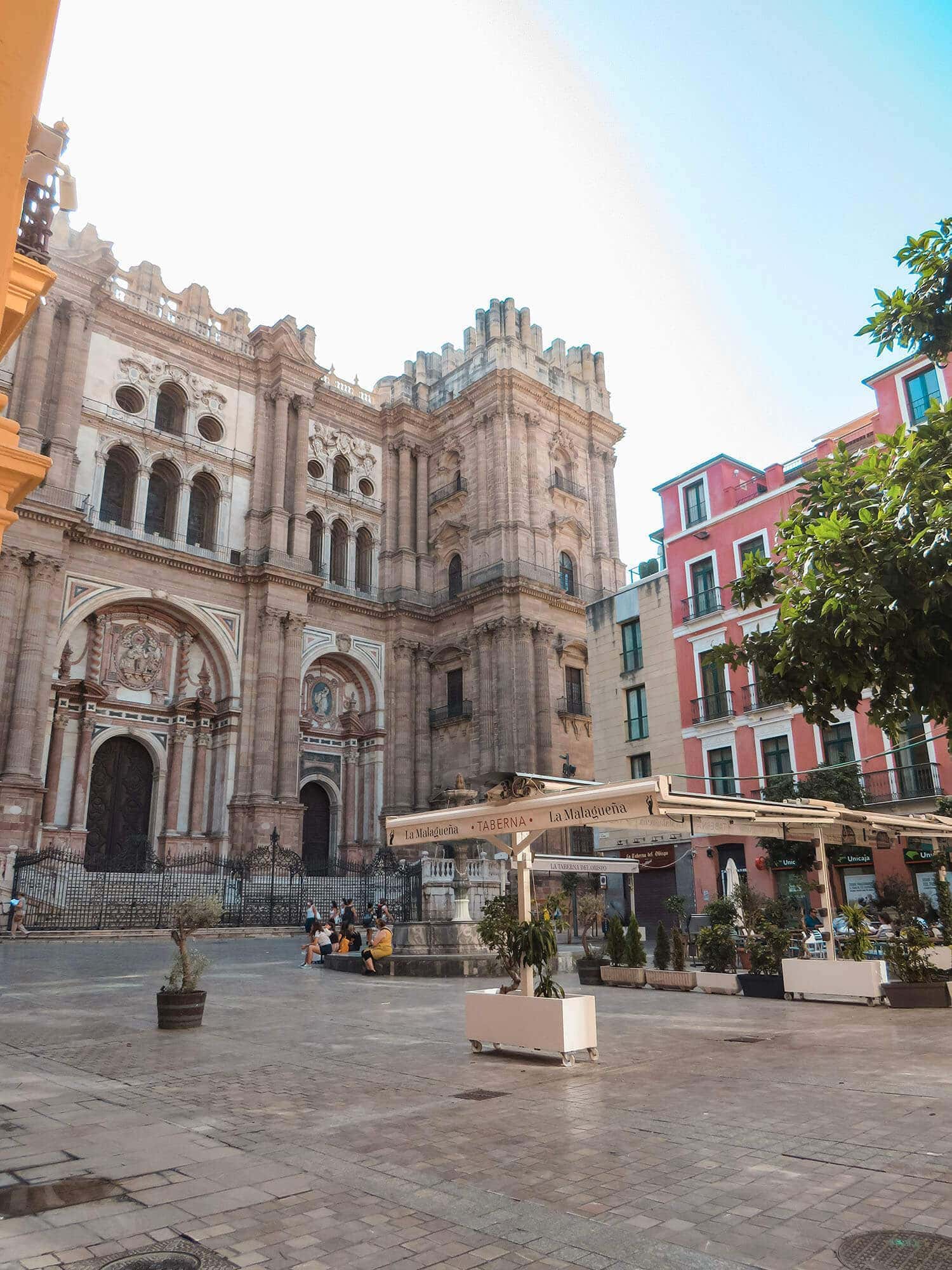
Arriving in Málaga feels light and unhurried. Palm trees sway along the promenade, beaches stretch along the Mediterranean, and open plazas fill with evening energy. Over the past two decades, the city has transformed dramatically from a transit point into a destination worth exploring properly — and it rewards those who stay.
Málaga’s past is anything but simple. Phoenicians, Romans, Visigoths, Muslim dynasties, and eventually the Catholic Monarchs all left marks here — often stacked directly on top of each other. As a result, these layers remain visible if you know where to look, and the city has an unusual depth for somewhere most people dismiss as a gateway.
An 11th-century Moorish fortress with panoramic views over the port and city. Specifically, it is one of the best-preserved alcazabas in Spain — and free entry on Sundays.
A remarkably well-preserved 1st-century BC theatre sitting directly below the Alcazaba. In a single view, you get the layers of Málaga’s entire history made visible.
Known locally as “the one-armed lady” because one tower was never completed. Legend holds the funds were consequently redirected to support the American Revolution.
Málaga is Picasso’s birthplace — and as a result, the museum in the Buenavista Palace holds over 200 works across his career, from early pieces to late Cubist canvases.
04 — Ronda: The Cliffside Drama
Where the Road Changes Everything
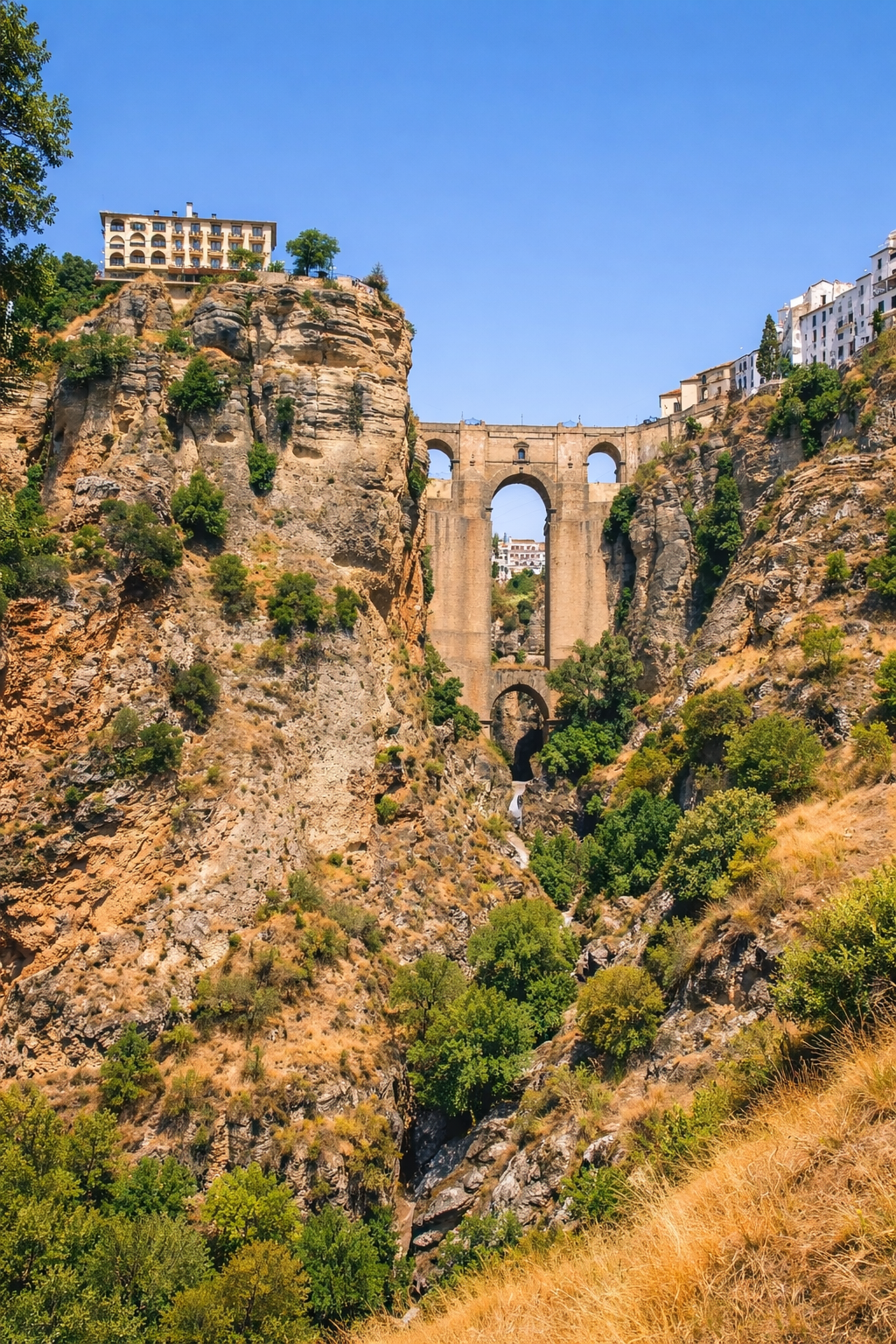
Heading inland from Málaga to Ronda changes everything about the journey. The scenery shifts from coastal Mediterranean to dramatic mountain landscape as the road winds through the Serranía de Ronda. Consequently, the destination arrives with impact — a town that sits with extraordinary confidence on the edge of a gorge nearly 120 metres deep. In short, nothing on the coastal leg prepares you for it.
The iconic bridge spanning the 120-metre gorge. Walk across it first, then descend the Camino de los Molinos path below for the photograph that genuinely does it justice.
One of the oldest bullfighting arenas in Spain, dating to 1785 — the birthplace of modern bullfighting as an art form. Even so, it is worth visiting for the museum alone.
Well-preserved Moorish baths from the 13th century, among the finest Arab bath complexes in Andalusia. Specifically, the intact star-shaped skylights that filter light across the stone pools make this worth the detour.
The Mirador de Aldehuela gives the classic below-the-bridge photograph — a short but steep walk down from the town. Go early morning or late afternoon when the light catches the stone rather than bleaching it out.
05 — Cádiz: Atlantic Calm and Ancient Streets
The City That Doesn’t Need to Impress You
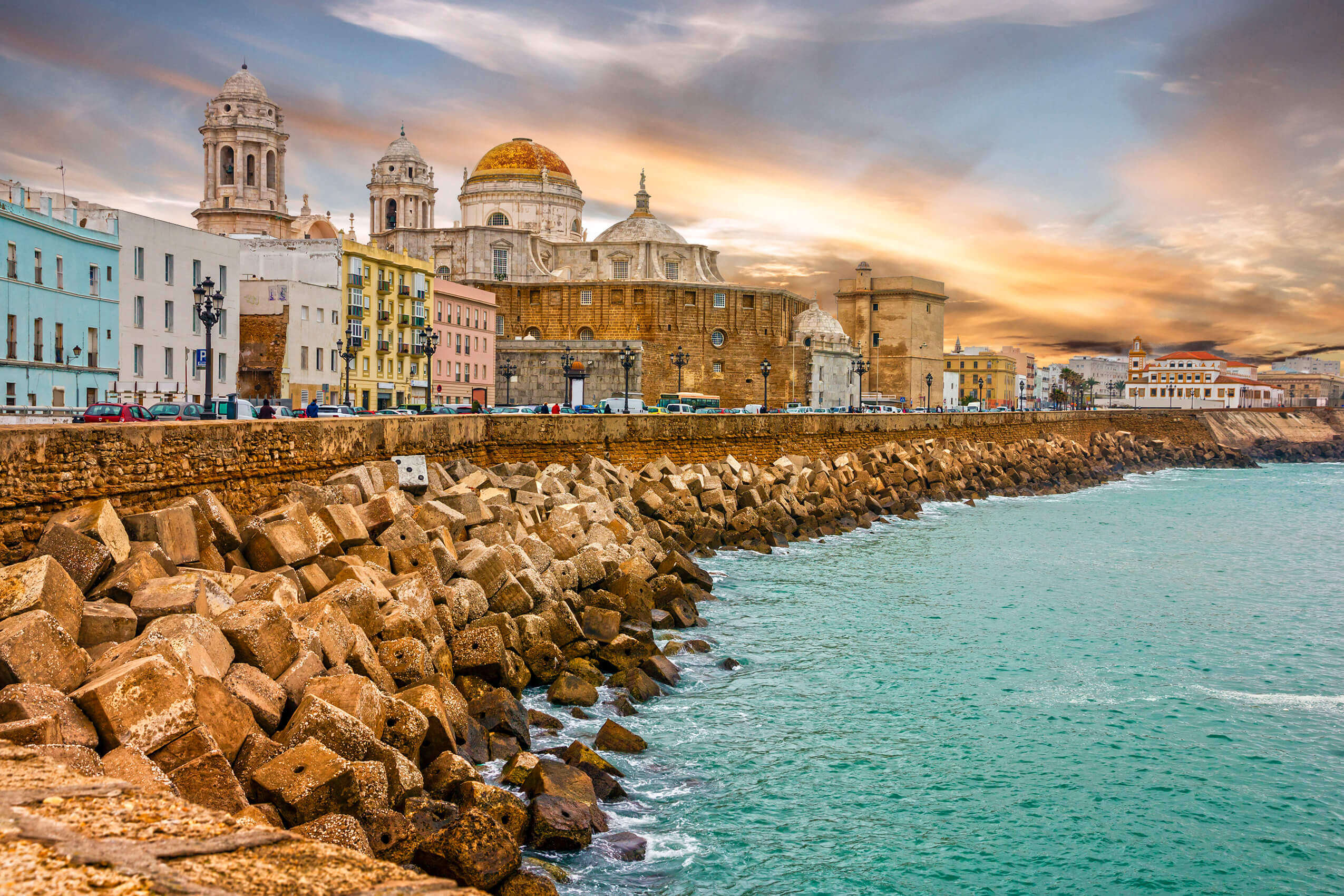
Continuing west brings you to Cádiz — widely considered one of the oldest continuously inhabited cities in Western Europe, founded by Phoenician traders around 1100 BC. Surrounded almost entirely by the Atlantic Ocean on a narrow peninsula, Cádiz feels fundamentally different from Mediterranean Andalusia: windier, saltier, more open to the horizon.
For centuries, Atlantic trade passed through this city. Spanish fleets departed from here for the Americas, and the wealth that came back helped build the elegant 18th-century old town that still defines it today. In contrast to Seville or Granada, Cádiz carries its history with considerably less fanfare — which is precisely its appeal. It is quieter, less touristy, and all the better for it.
What to Do in Cádiz
Its golden dome is visible from much of the city and out to sea. Built over nearly a century (1722–1838), it contains the tomb of composer Manuel de Falla.
The tallest watchtower in the city, once used to spot incoming ships. A camera obscura at the top projects live images of the city below — genuinely surprising.
The most atmospheric beach in Cádiz, flanked by two sea fortresses. Small, historic, and far better than the more crowded tourist beaches further along the coast.
Cádiz’s central market — one of the finest in Andalusia for fresh seafood and morning tapas. Arrive before 10am for the best of it.
06 — Gibraltar: Thirty Minutes at the Edge of the World
A Half-Day Worth Making
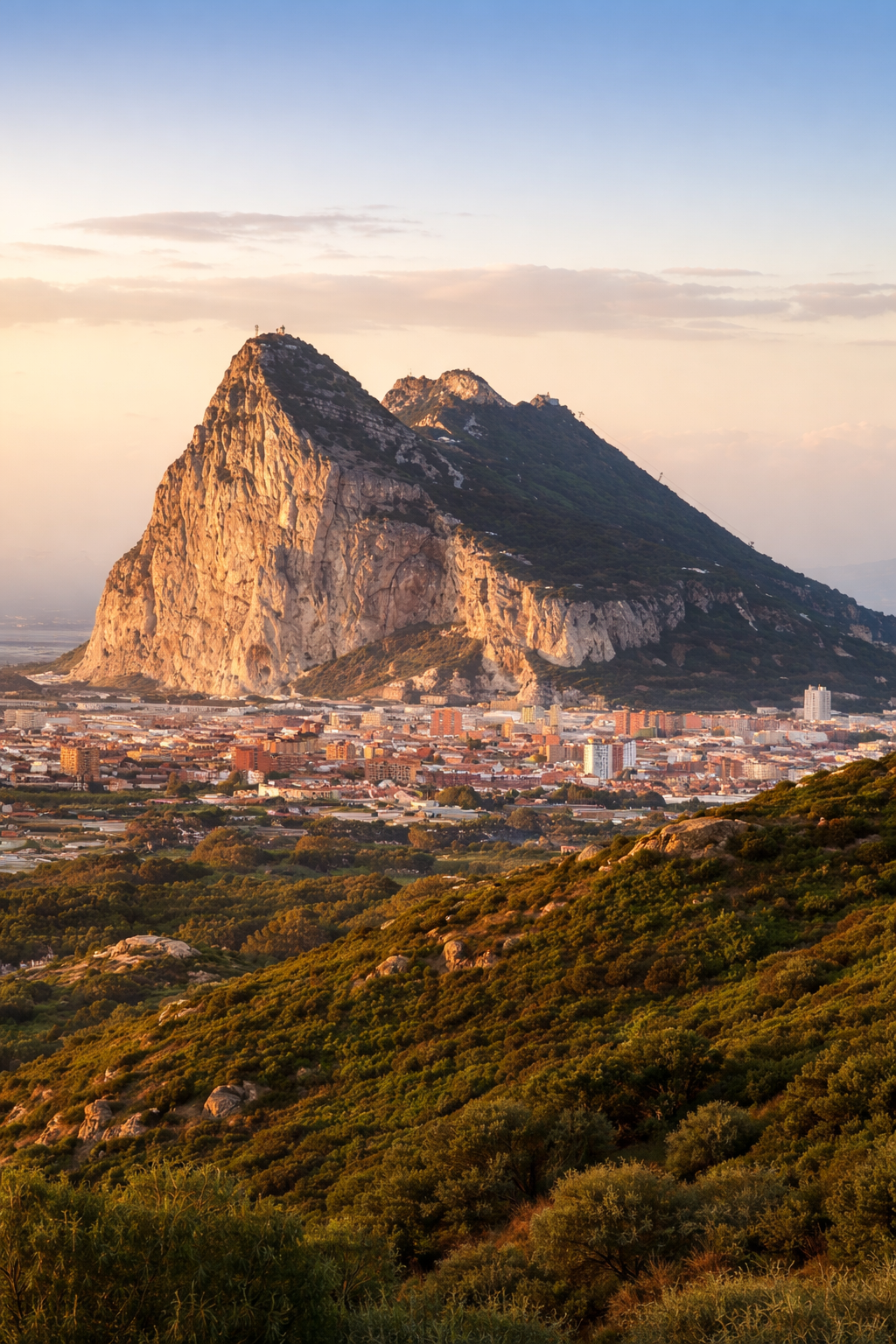
Gibraltar is not Andalusia — it is a British Overseas Territory — but it sits at such a charged geographical and historical point that skipping it entirely feels wrong. From here, the African coastline is close enough to make the crossing feel plausible. In fact, standing at the southern tip of the Rock with Morocco visible across the Strait is one of the more disorienting and genuinely moving moments on this entire route.
Practically speaking, a half-day is enough. Drive across the border in the morning, take the cable car to the top of the Rock, walk with the Barbary macaques, look south toward Africa, then continue to Granada in the afternoon. That sequence works cleanly, and the border crossing is generally faster before 9am.
Cable car to the summit: Worth it for the view and the macaques. Border crossing: Queue times vary — early morning is usually faster. Passport required. Time needed: 3–4 hours is comfortable — 1.5 hours at a minimum if you’re short on time. Currency: Gibraltar uses the Gibraltar pound, but euros are accepted almost everywhere.
07 — Granada: The Crown Jewel of Andalusia
The Last Kingdom
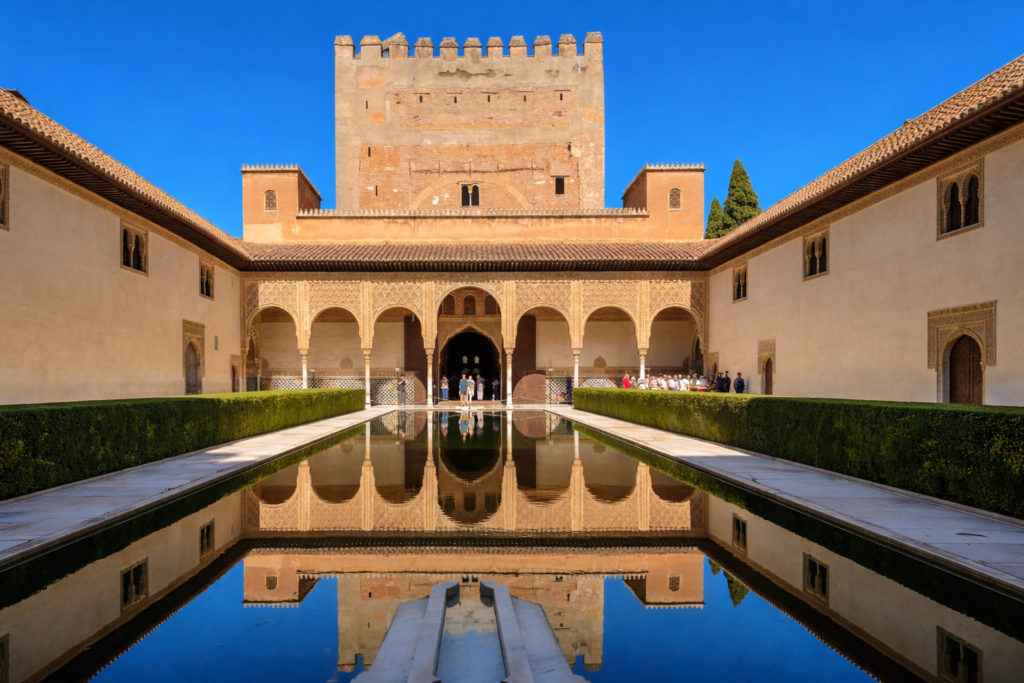
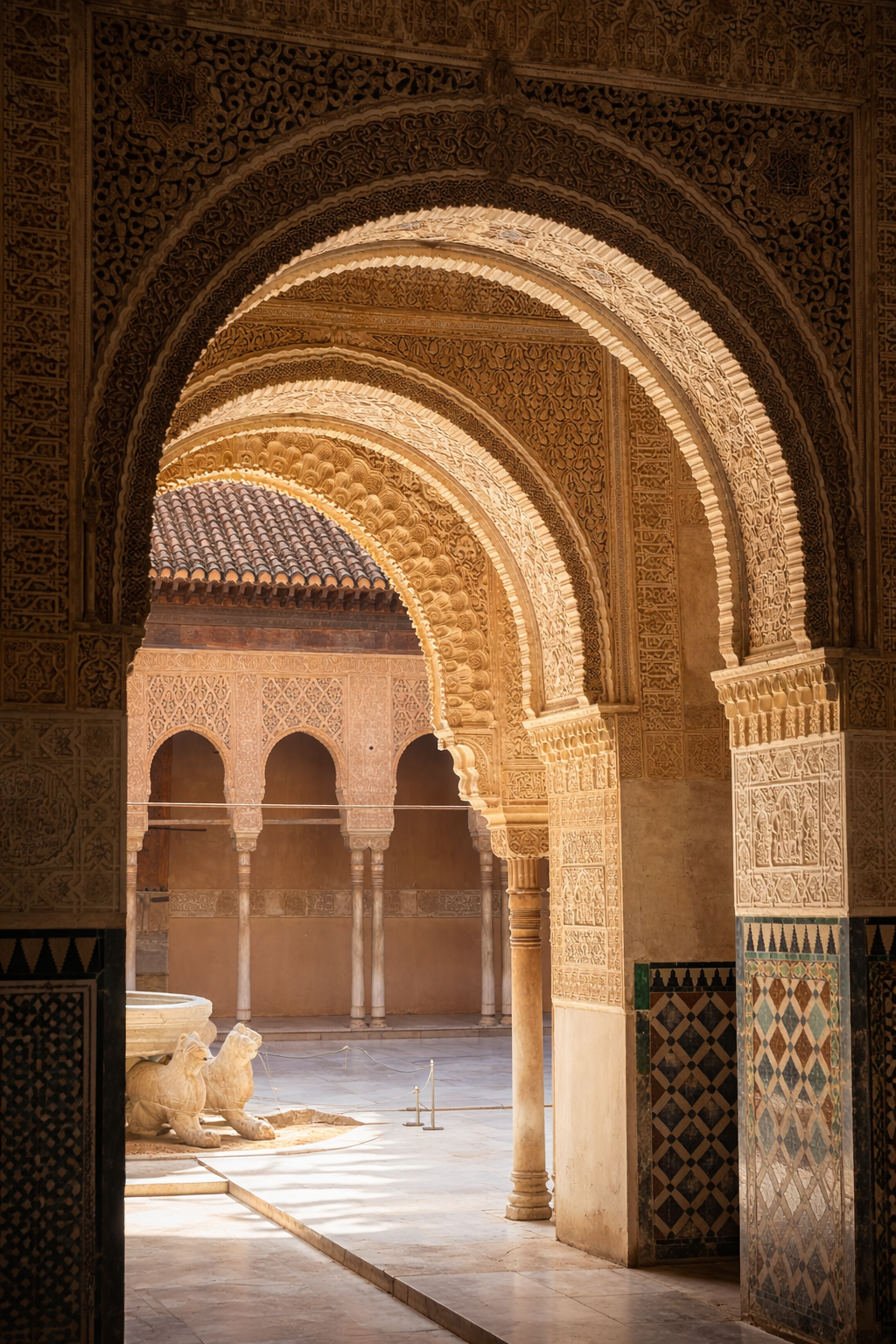
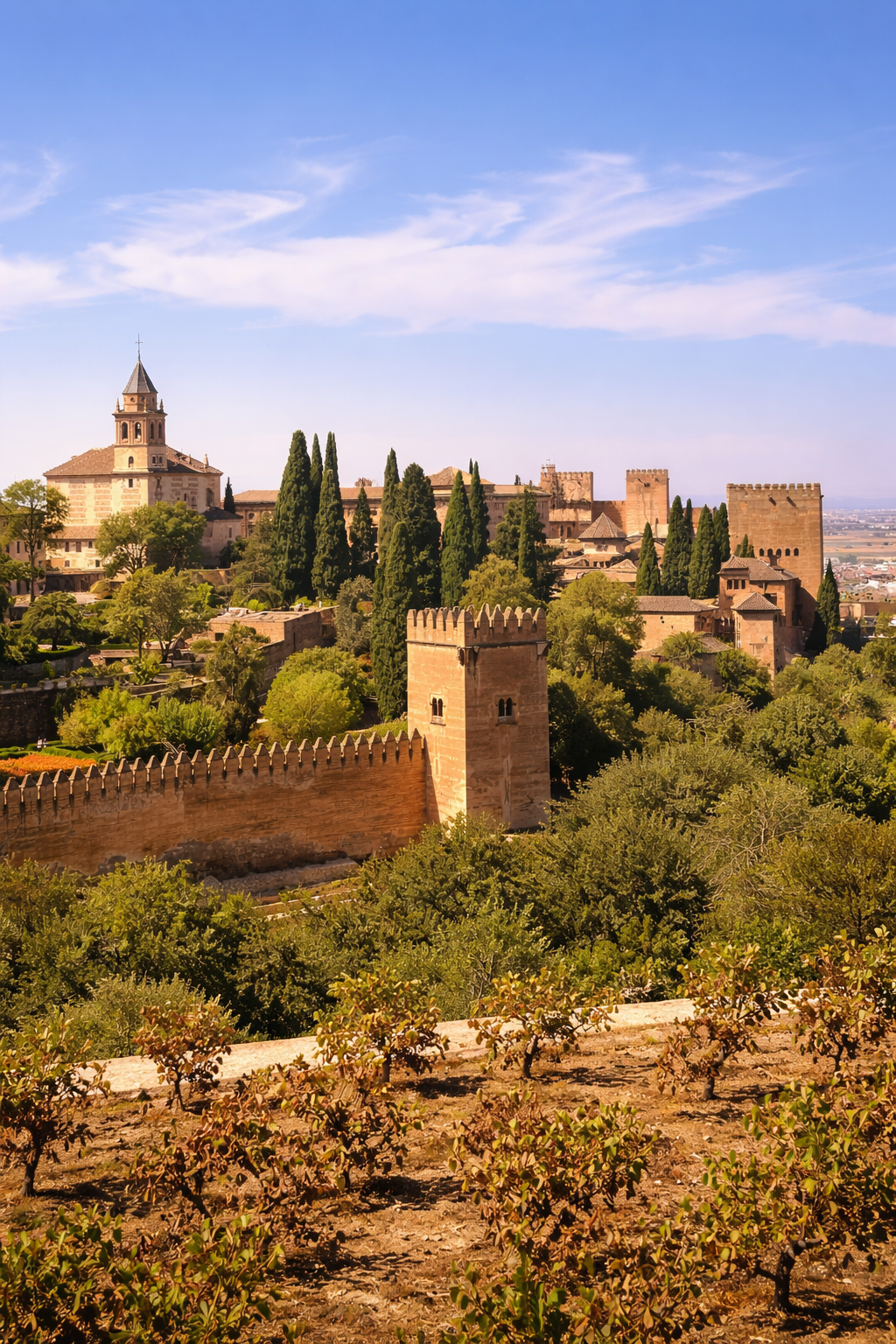
Arriving in Granada after the coast and the mountains, something shifts. Granada was the last Muslim kingdom in Iberia before it fell to the Catholic Monarchs in 1492, and the weight of that history is present everywhere — not as melancholy, but as a kind of preserved intensity. Notably, the conquering rulers chose to keep what they found rather than erase it, and that decision is precisely why Granada remains one of the most remarkable cities in Andalusia. In turn, what you get is a city where Islamic heritage is not a museum piece — it is still the dominant visual language of the streets.
What to See
Intricate stucco carvings, reflecting pools, and gardens designed for contemplation — refined across two centuries of Nasrid rule. One of the most visited monuments in Europe, and worth every visitor it gets. Book well in advance at alhambra-patronato.es.
The historic Moorish quarter above the city. Narrow cobbled streets, Moorish-style bazaars, and the Mirador de San Nicolás — the best viewpoint in Andalusia for watching the Alhambra turn amber at sunset.
The cave district above the Albaicín, historically home to Romani communities and flamenco performers. Cave shows here are among the most atmospheric in Andalusia — small venues, low ceilings, no distance between you and the music.
Granada is one of the last cities in Spain where a tapa arrives automatically with every drink, at no extra charge. Move between bars — each round brings a different dish. It is, in short, one of the most enjoyable ways to spend an evening in Andalusia.
Before You Leave Granada
Alhambra tickets sell out weeks ahead during spring and summer. Book the moment you confirm your dates at alhambra-patronato.es — not the day before you arrive. Morning entry (8:30am) is the best slot: softer light, thinner crowds, and a full afternoon free for the Albaicín at golden hour.
08 — Córdoba: A Forest of Arches
The Quietest of the Great Cities
A short drive from Granada brings you to Córdoba — a city that carries extraordinary history with unusual quietness. Once one of the most important cities in the Islamic world and among the largest in medieval Europe, Córdoba today is compact, unhurried, and easy to navigate in a day. It is also, however, home to one of the most visually singular buildings in existence.
Dropping the rental car here felt right. Córdoba is best experienced slowly on foot — and after days of driving, the rhythm of walking through the old town, past flower-filled courtyards and across the Roman Bridge, is a natural way to decompress before the final train into Seville. Moreover, leaving the car behind removes the last practical friction from the trip.
The Three Things Not to Miss
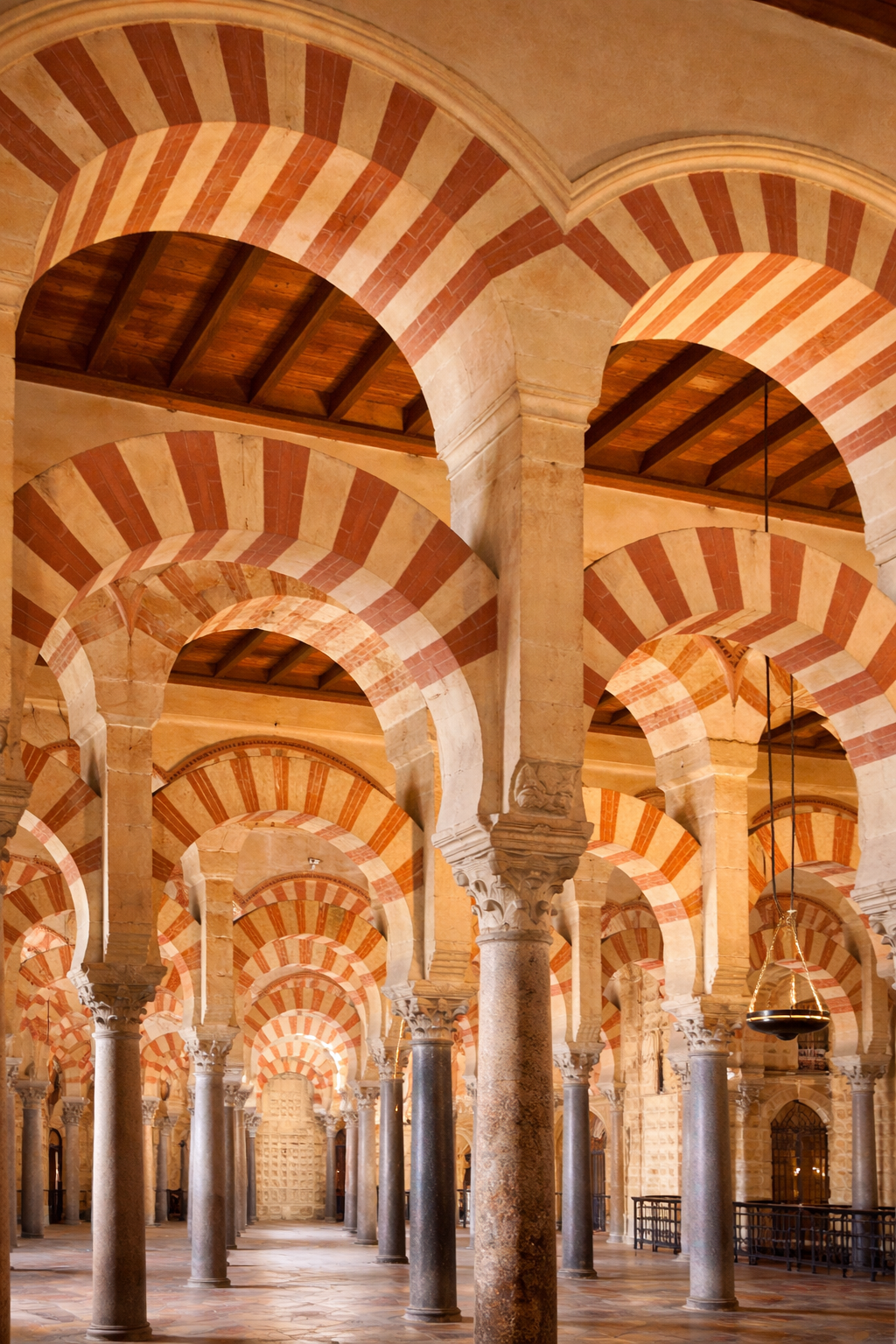
Rows of red-and-white striped arches stretching across a vast interior — originally a mosque, later a cathedral built inside it. Consequently, nothing else in Europe looks quite like it, or carries quite this weight of layered history.
A nearly 2,000-year-old bridge crossing the Guadalquivir River — the best sunset walk in Córdoba. At that hour, the Mezquita is silhouetted behind you and the river turns gold below.
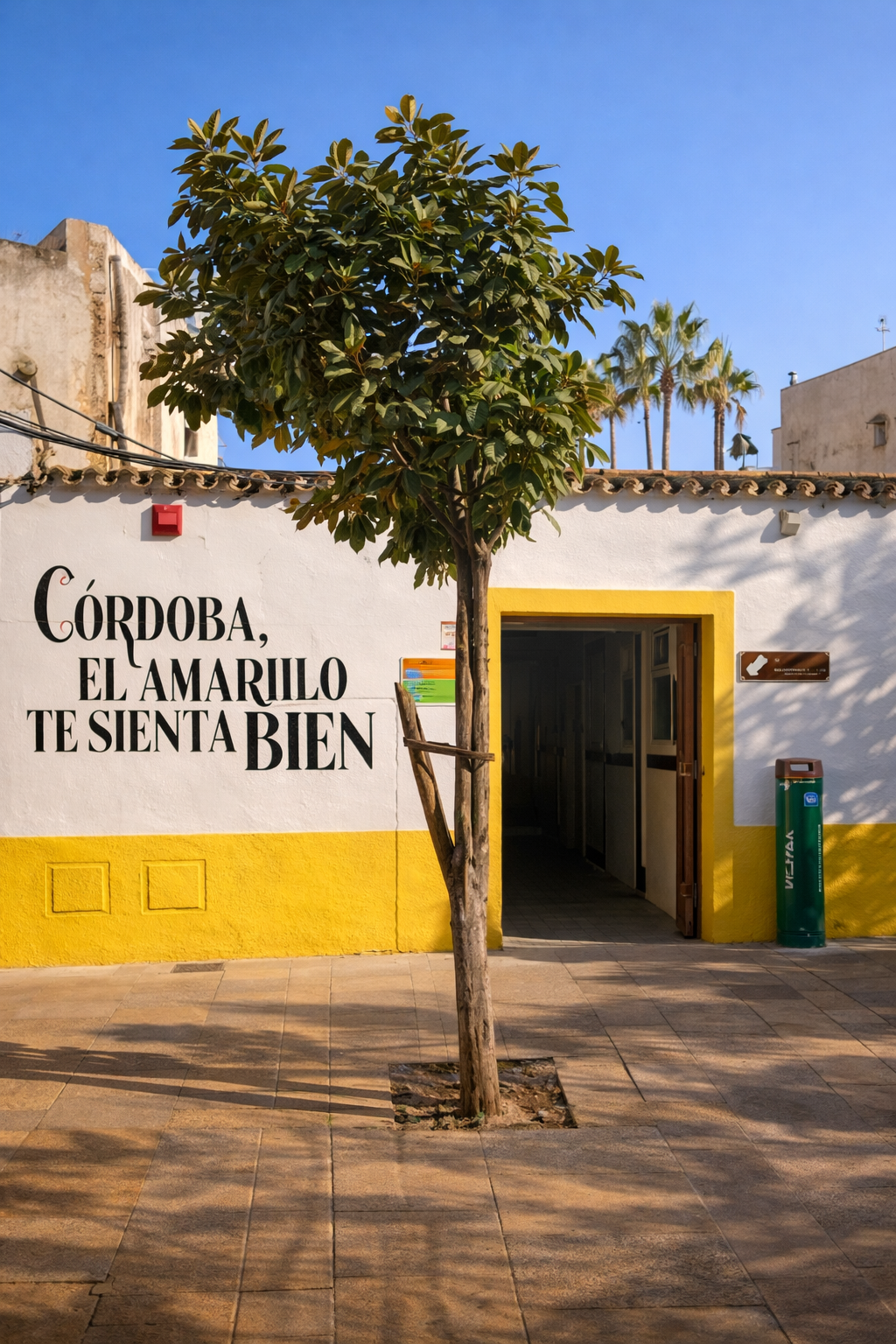
A maze of narrow whitewashed streets surrounding the Mezquita. In May, moreover, residents open private flower-filled courtyards for the UNESCO-recognized Patio Festival — genuinely spectacular.
09 — Seville: Grandeur, Flamenco, and the Best Arrival in Spain
The Right Way to Arrive
Arriving in Seville by AVE from Córdoba is one of the better travel moments on this route. The high-speed train takes 45 minutes, and stepping off at Santa Justa station into a city of this scale — after the quieter pace of Córdoba — has a particular theatrical effect. Seville, in short, does not reveal itself modestly.
As the capital of Andalusia and the fourth-largest city in Spain, Seville carries its history with remarkable confidence. The old town contains one of the largest medieval city centres in Europe. Furthermore, within it are monuments of a scale and beauty that make most European capitals feel understated by comparison — which is saying something after the Alhambra and the Mezquita.
What Seville Does Best
A living royal palace still used by the Spanish royal family, with Mudéjar architecture of extraordinary intricacy. As a result, it sells out weeks in advance during spring — book at alcazarsevilla.org the moment you confirm your dates.
The largest Gothic cathedral in the world. La Giralda tower was originally a Moorish minaret before the Reconquista — climb it for panoramic views over the city rooftops. It is, in particular, worth the queue.
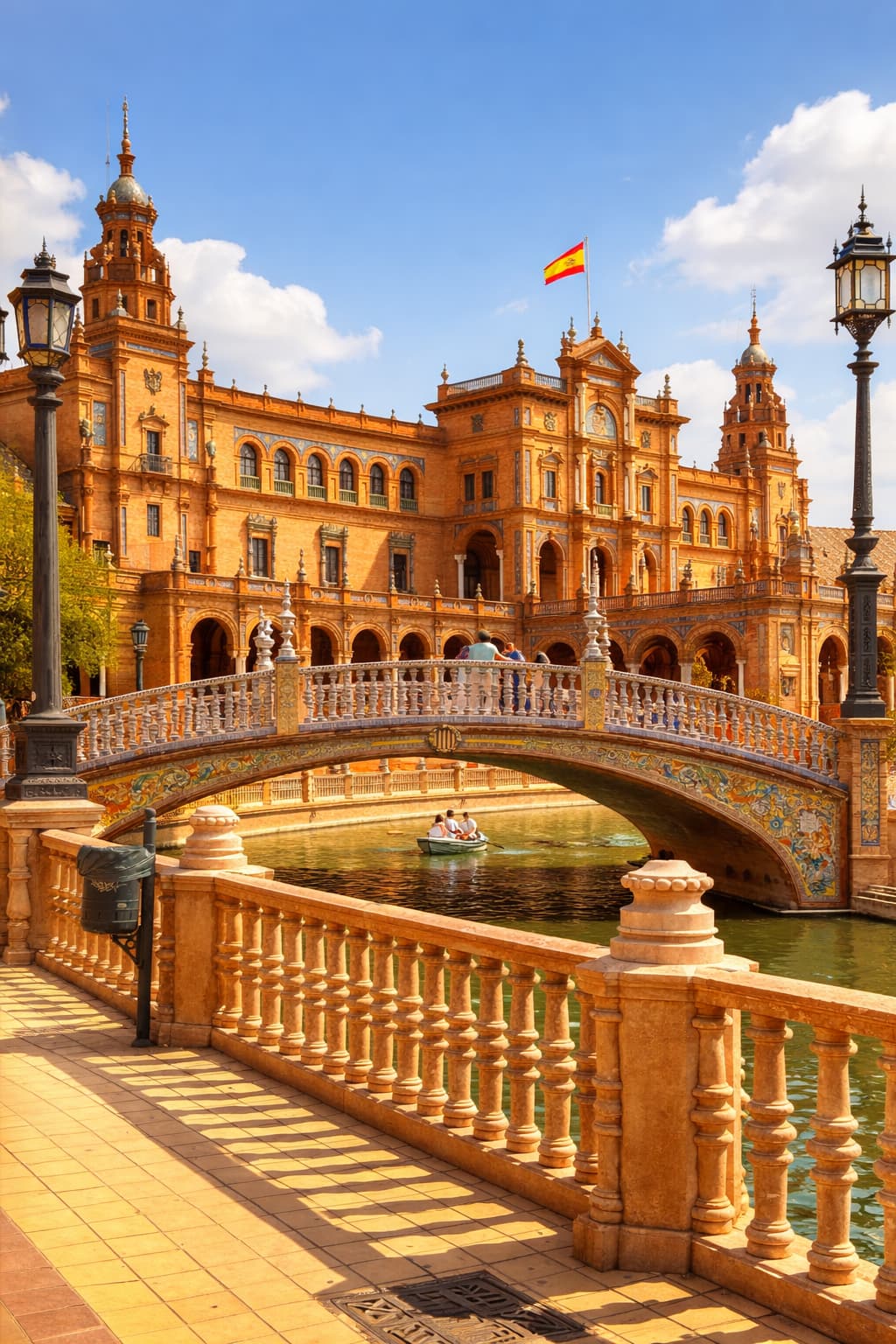
Built for the 1929 Ibero-American Exposition — an enormous semicircular baroque palace with a canal, ceramic-tiled alcoves, and rowboats for hire. Overall, one of the finest public spaces in Spain.
Across the river — historically the home of Seville’s flamenco artists and bullfighters. In contrast to the tourist-facing centre, Triana remains the most genuine part of the city for an evening meal and a drink.
The Royal Alcázar sells out weeks in advance during spring. Book at alcazarsevilla.org the moment you confirm your dates. Morning entry is best — the light in the gardens is softer and the crowds are thinner.
10 — All Seven Stops Compared
To help you decide where to spend your time and what to prioritise, here is a side-by-side look at every stop on the route. Overall, each of these cities in Andalusia offers something distinct — so the right choice depends on how many days you have and what draws you most.
| City / Stop | Best For | Time Needed | Don’t Miss |
|---|---|---|---|
| Málaga | Coast + cultural intro | 1–2 days | Alcazaba, Roman Theatre |
| Ronda | Dramatic landscape, photography | 1 day | Puente Nuevo, gorge walk |
| Cádiz | History, Atlantic coast, local feel | 1 day | Cathedral dome, La Caleta |
| Gibraltar | Geography, views, the Rock | ½ day | Cable car, Strait view |
| Granada | Architecture, history, tapas culture | 2–3 days | Alhambra, Albaicín sunset |
| Córdoba | Islamic heritage, quiet atmosphere | 1–2 days | Mezquita, Roman Bridge |
| Seville | Architecture, flamenco, grandeur | 2–3 days | Alcázar, Plaza de España |
11 — Suggested Itineraries
How you structure the trip depends on your time and pace. Below are two versions — one tighter, one with room to breathe. That said, both follow the same west-to-east logic and both end in Seville.
7-Day Route
| Days | Location | Focus |
|---|---|---|
| Days 1–2 | Málaga | Alcazaba, Roman Theatre, Picasso Museum, beaches |
| Day 3 | Ronda + Cádiz | Ronda morning, drive to Cádiz afternoon |
| Day 4 | Granada | Drive via Gibraltar, arrive Granada late afternoon |
| Day 5 | Granada | Alhambra (pre-booked), Albaicín sunset, tapas evening |
| Day 6 | Córdoba | Mezquita, Roman Bridge, Judería — drop car here |
| Day 7 | Seville | AVE train from Córdoba, Alcázar, Triana evening |
10-Day Route
| Days | Location | Focus |
|---|---|---|
| Days 1–2 | Málaga | Full city exploration + beach afternoon |
| Day 3 | Ronda | Puente Nuevo, gorge walk, Arab baths, bullring museum |
| Day 4 | Cádiz | Old town, cathedral, Torre Tavira, market morning |
| Day 5 | Gibraltar + drive east | Gibraltar morning, drive toward Granada via coast |
| Days 6–7 | Granada | Alhambra full day, Albaicín, Sacromonte cave flamenco |
| Days 8–9 | Córdoba | Mezquita, Roman Bridge, Judería, Medina Azahara (optional) — drop car |
| Days 10–11 | Seville | AVE from Córdoba, Alcázar, Plaza de España, Triana, fly home |
Alhambra (Granada): alhambra-patronato.es — sells out weeks ahead in spring and summer. Royal Alcázar (Seville): alcazarsevilla.org — same urgency in April and May. Mezquita (Córdoba): mezquita-catedraldecordoba.es — worth booking ahead in peak season. Flamenco shows: small venues sell out — book at least a day ahead, more during festivals.
12 — Getting Between Cities
Andalusia is well connected by both road and rail. The right combination depends on your route — trains are ideal for the major city-to-city legs, while a car opens up the smaller towns and dramatic landscapes between them. Overall, the hybrid approach works better than committing to one mode of transport for the entire trip.
| Route | Best Option | Duration | Approx. Cost |
|---|---|---|---|
| Málaga → Ronda | Car or bus | ~1.5 hrs | €5–15 by bus |
| Ronda → Cádiz | Car (via white villages) | ~2 hrs | Toll + fuel |
| Cádiz → Gibraltar | Car (direct) | ~1.5 hrs | Toll + fuel |
| Gibraltar → Granada | Car (scenic inland route) | ~2.5 hrs | Toll + fuel |
| Granada → Córdoba | Car or train | ~2 hrs | €18–30 by train |
| Córdoba → Seville | AVE high-speed train | ~45 mins | €15–25 |
Rent a car in Málaga for the first leg — it gives you Ronda, Cádiz, Gibraltar, and the drive to Granada without being tied to bus timetables. Drop the car in Córdoba — one-way drop fees are usually modest and worth paying. Take the AVE into Seville — 45 minutes, affordable when booked at renfe.com, and a genuinely satisfying way to arrive in Andalusia’s capital. That sequence is exactly what I did.
13 — Best Time to Visit Andalusia
Andalusia’s climate is one of the most extreme in Europe — intensely hot in summer, remarkably mild in winter, and briefly perfect in spring and autumn. Consequently, getting the timing right makes a considerable difference to the whole experience.
| Spring (March–May) | The best time to visit. Orange blossoms, mild temperatures (18–26°C), Semana Santa processions, Feria de Abril in Seville. Peak crowds but peak beauty. Book everything well in advance. |
| Autumn (September–November) | Warm and quieter than spring. Temperatures 20–30°C in September, dropping pleasantly through October. Fewer crowds, lower prices — an excellent alternative. |
| Summer (June–August) | Avoid for inland cities. Seville and Granada regularly reach 40–45°C. Coastal Cádiz and Málaga are more bearable but extremely crowded. |
| Winter (December–February) | Mild (12–18°C), very quiet, and genuinely underrated. Almost no tourists, monuments to yourself, honest prices — ideal if you prioritise space over guaranteed sunshine. |
Events Worth Planning Around
Andalusia in September: The Window People Miss
Early September is still deep summer in Andalusia. Seville and Córdoba do not cool down on schedule — inland temperatures regularly run above 35°C through the first two weeks of the month. The coast (Cádiz, Málaga) is more bearable, but it is also still fully in peak season. If heat management matters to you, the second half of September is the safer window.
From mid-September onward, the shift is real. The school holidays end across Europe, the crowds thin noticeably, and accommodation prices begin to fall. The Alhambra and the Real Alcázar stop selling out weeks in advance — you can often book a few days ahead rather than months. The light in late September and October is also better for photographs: lower, warmer, and less bleaching than the July sun that flattens everything.
Early September (1–14): Still hot inland (35°C+), busy coast. Book ahead as you would in summer. Late September (15–30): Temperatures begin to ease. Crowds drop noticeably. Prices fall. Monuments become bookable closer to your dates. October: The sweet spot — 22–26°C, quiet, and one of the most pleasant times to be in southern Spain.
Andalusia in Winter: Quiet, Affordable, and Genuinely Underrated
December through February brings a different version of Andalusia. Daytime temperatures sit around 14–18°C — warm enough for sightseeing in a light jacket, cool enough that a misty morning in the Albaicín or a grey day at the Puente Nuevo in Ronda feels atmospheric rather than disappointing. Rain exists, particularly in January and February, but rarely lasts all day.
The practical differences are significant. The Alhambra, the Real Alcázar, and the Mezquita are all bookable with very short notice. There are almost no queues at monuments. Hotel rates drop across the board. Seville’s narrow lanes and Córdoba’s courtyards, which fill shoulder-to-shoulder in April, become genuinely navigable. The tapas bars and restaurants remain fully open — this is not a destination that closes for the winter — and the locals reclaim the streets in a way that makes the cities feel like themselves again.
One practical note: Andalusian buildings are designed to shed summer heat, not hold warmth in winter. The thick stone walls and high ceilings that feel like relief in August work against you in January. Pack a layer for evenings and mornings regardless of the daytime forecast, and budget for heated accommodation — it makes a difference.
You trade guaranteed sunshine for near-total solitude. The Alhambra in December, with snow on the Sierra Nevada visible through the arches and almost no one else in the Nasrid Palaces, is one of the more extraordinary things this route offers — and it is only available to people who come in the off-season.
Semana Santa (April): Religious processions in every major city — Seville’s are considered the most spectacular in the world. Book accommodation months ahead. Feria de Abril (Seville, late April): Flamenco dresses, horsemen, and casetas — one of the most alive events in Spain. Córdoba Patio Festival (May): Residents open private flower-filled courtyards to the public. UNESCO-recognized and genuinely extraordinary.
14 — Frequently Asked Questions
Planning & Logistics
Cities & Timing
The combination of Andalusia is rare — seven stops within a week’s drive of each other, each one feeling like a completely different country.
Standing at the tip of Gibraltar with Morocco visible across the water, the crossing that started all of this history seems almost within reach. Drive the route, end in Seville, and that moment will stay with you long after the flight home.