
Córdoba Travel Guide: The Mezquita, Roman Bridges & Andalusia’s Hidden Gem
A calm, practical guide to visiting Córdoba — from the Mosque-Cathedral and Roman Bridge to courtyards, cafés, and why this quieter Andalusian city deserves more than a rushed day trip.
After Granada, Córdoba can seem almost understated at first. It does not announce itself with the same theatrical force, and that is part of its strength. The city feels smaller in scale, quieter in rhythm, and more willing to reward attention rather than demand it.
But the quietness is deceptive. Córdoba once stood among the most advanced cities in medieval Europe, renowned for scholarship, architecture, and cultural life. It was the capital of Islamic Spain, a place of libraries, scientific exchange, and political weight. That history still shapes the city now, though in a lower register than travelers sometimes expect.
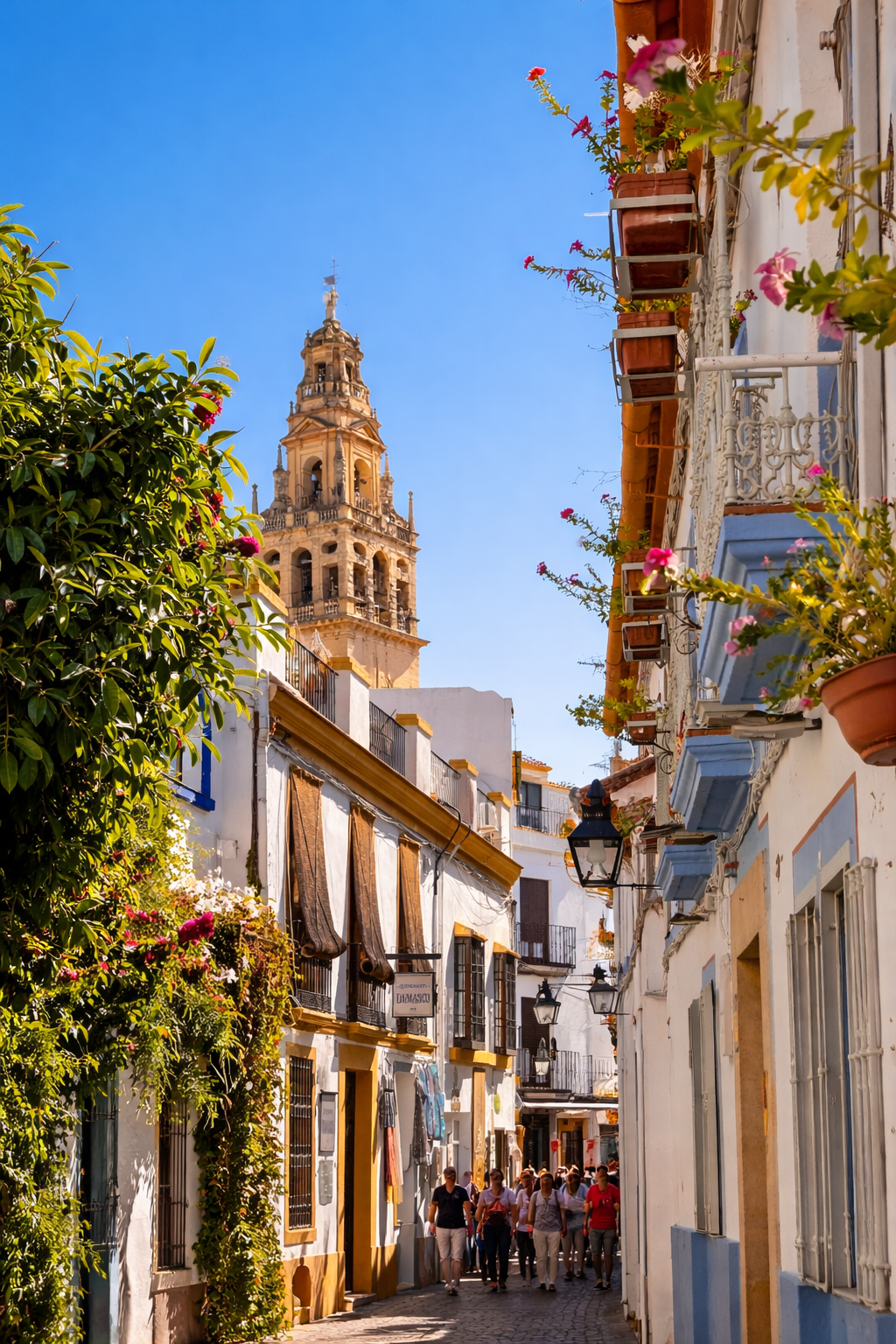
What stays with me most is how natural Córdoba feels to explore on foot. Narrow white streets, small shaded plazas, café tables near old stone walls, flower pots glowing against yellow and white facades — it is the kind of place where walking without much agenda becomes part of the experience rather than wasted time.
01 — Getting to Córdoba
Córdoba works especially well as part of a broader Andalusia route. If you are traveling overland through the region, it sits naturally between Granada and Seville, and that position alone makes it one of the easiest cities to add without disrupting the flow of the trip.
I reached Córdoba by car, and the drive through olive-covered countryside made the approach feel gradual and coherent. That landscape matters. It reminds you that Andalusia is not just a set of monumental cities, but an entire region held together by agriculture, heat, distance, and centuries of movement between one urban center and another.
Córdoba is one of the smartest stops on an Andalusia itinerary because it is easy to reach, compact to explore, and culturally dense enough to justify the detour immediately.
| From Granada | Roughly 2 hours by car, or around 1.5 to 2 hours by train depending on the service. |
| From Seville | Very easy by high-speed train, often under an hour. |
| From Madrid | A straightforward AVE connection makes Córdoba one of the easiest Andalusian cities to reach from the capital. |
| Best approach | Use Córdoba as either an overnight stop between Granada and Seville or as a deliberate day trip with an early start. |
If you are only visiting Córdoba itself, the train is usually easier than driving. If you are building a larger Andalusia road trip, a car keeps the route more flexible.
02 — First Impressions of Córdoba
Córdoba feels different from the larger Andalusian cities almost immediately. The old town moves at a slower pace. Streets narrow. The scale drops. The city becomes less about grand urban gestures and more about atmosphere, texture, and details noticed in passing.
That makes it especially good for solo travel. There is no pressure to perform the city at maximum efficiency. You can pause in a square, wander into a side lane, sit near the Mezquita with coffee, or walk toward the river just because the light is changing. Córdoba accommodates that kind of unstructured time unusually well.
It is also one of the few historic cities where the layers of Roman, Islamic, Jewish, and Christian history still feel visibly interwoven rather than cleanly separated for visitors. You notice that not only in monuments, but in the shape of streets, in the placement of plazas, and in the fact that the city never feels reducible to just one era.
03 — Visiting the Mosque-Cathedral of Córdoba
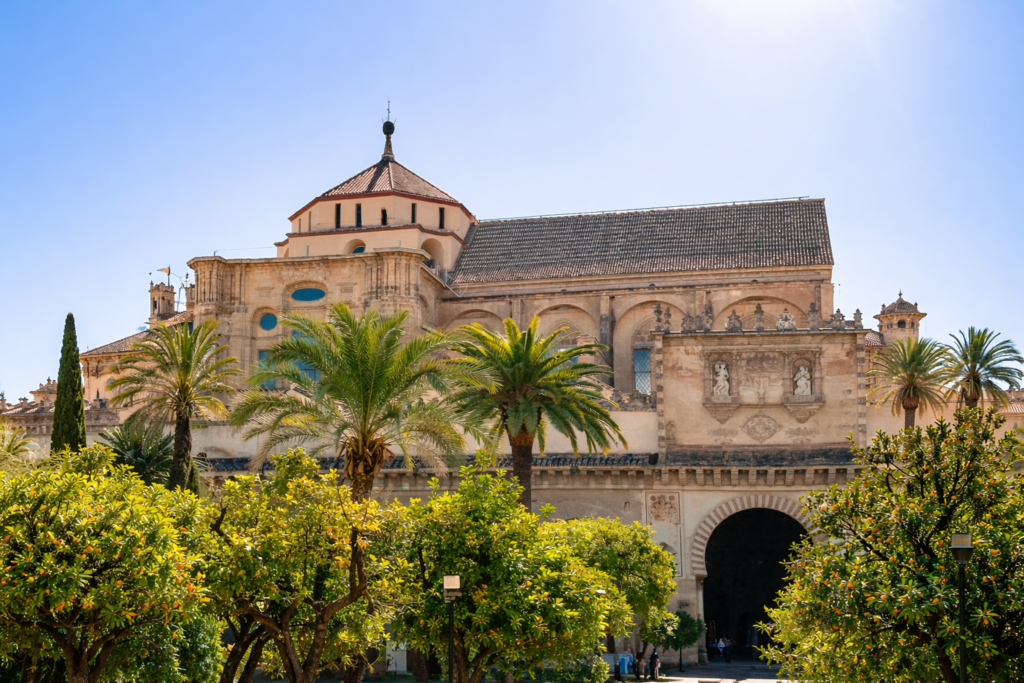
The Mosque-Cathedral is Córdoba’s defining monument and the strongest reason the city belongs on any Andalusia route. From the outside, it is impressive but restrained. Inside, everything changes. The scale expands, the architecture multiplies, and the whole building begins to feel less like a single structure than a layered spatial argument built across centuries.
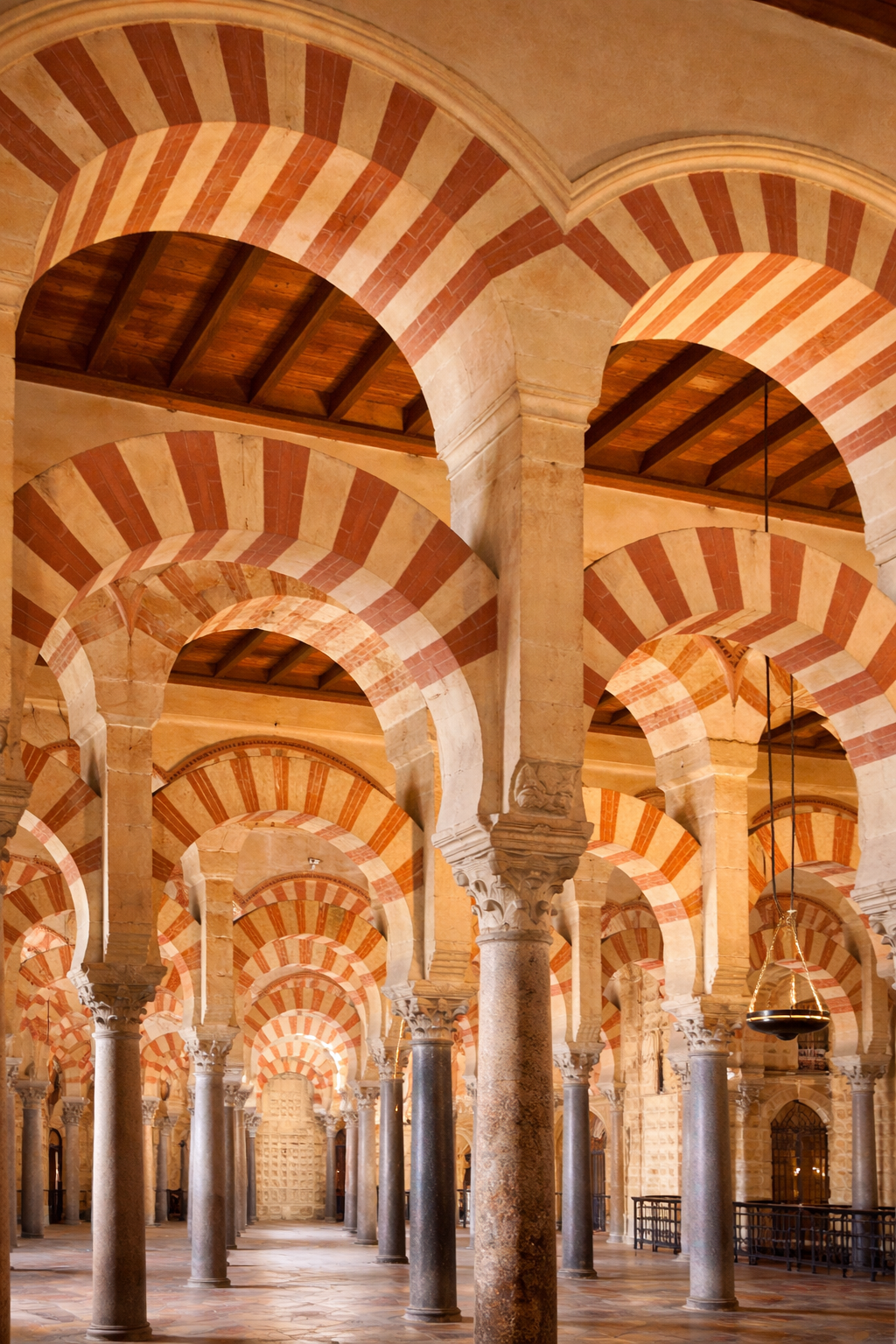
The red-and-white arches are the image most people know beforehand, but the experience of standing among them is harder to prepare for. The repetition is what gives the space its force. It feels at once ordered and overwhelming, familiar and impossible. Then, at the center, the inserted cathedral interrupts that rhythm with a totally different architectural language. The contrast is exactly what makes the whole building unforgettable.
That collision of histories — Islamic foundation, Christian intervention, centuries of continuity rather than total erasure — is what gives Córdoba its particular emotional weight. You are not just seeing a monument. You are standing inside the material record of political and religious transition.
The visual signature of the Mezquita, but more powerful in person because the repetition changes how you move through the space.
The building’s most striking conceptual shift — not because it is subtle, but because it is not.
Give yourself a few minutes before entering. The transition into the interior lands better when you do not rush it.
Allow at least 1.5 hours. Less than that turns the visit into a checklist rather than an encounter.
Book ahead when possible, especially in spring. Early morning is the best time to go if you want lower temperatures, fewer people, and more space to actually feel the building.
04 — The Riverside Fortress and Gardens
Just a short walk from the Mezquita, the Alcázar of the Christian Monarchs adds another layer to the city’s history. Compared with the Mosque-Cathedral, it is less overwhelming, but that difference works in its favor. The fortress, courtyards, and gardens give the day a different rhythm — more open, more exterior, and more forgiving after the density of the Mezquita.
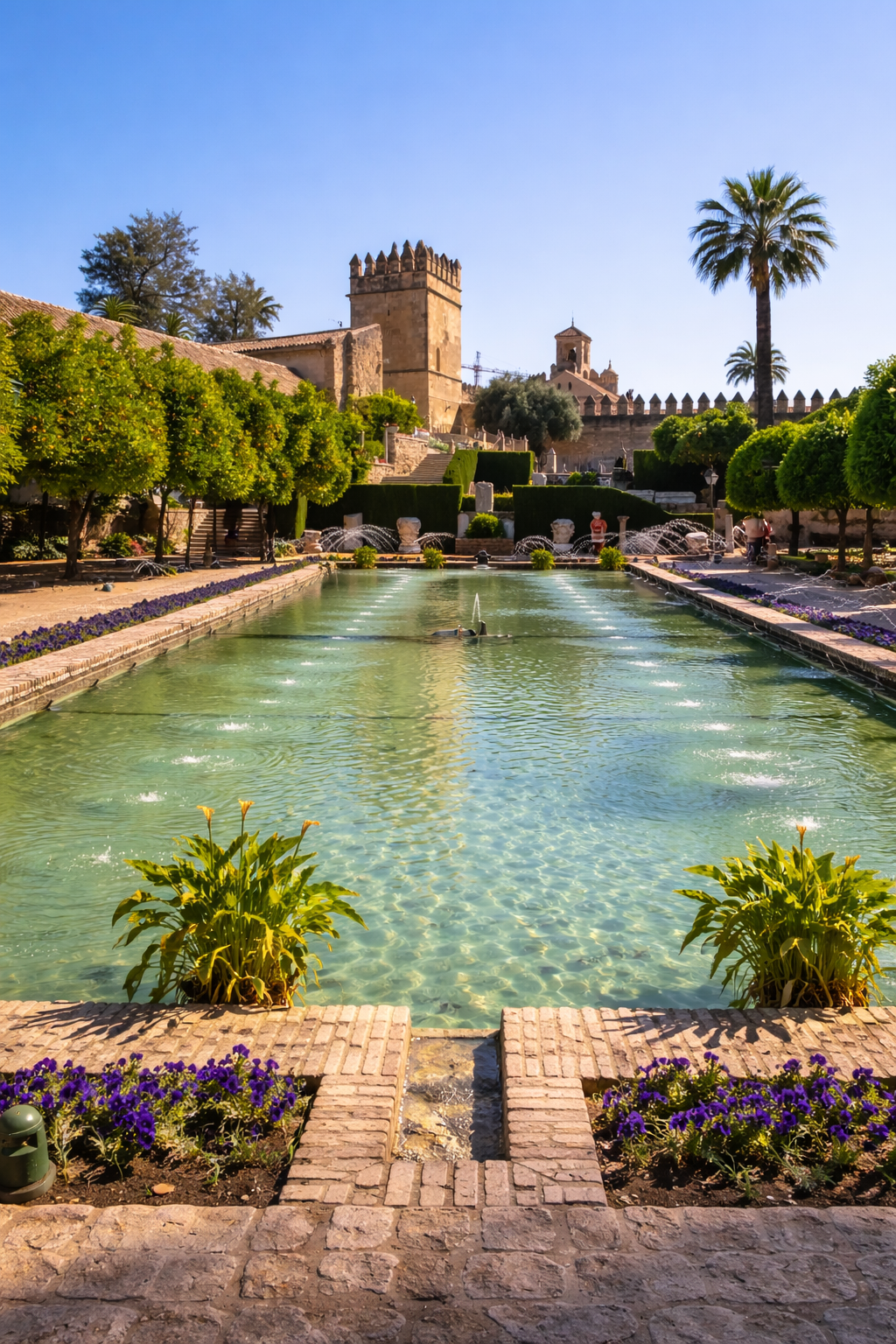
The riverside position matters too. Córdoba is not only a city of enclosed historic streets. It also opens toward the Guadalquivir, and the Alcázar helps you feel that edge of the city more clearly. The gardens are especially good if you need a slower hour between major sights.
Less ornate than other Andalusian palaces, but important for understanding Córdoba’s later political history.
Particularly welcome in spring, when the city’s slower and greener side becomes more apparent.
Because the walk is short, both can fit naturally into the same day without logistical effort.
05 — Walking the Roman Bridge at Sunset
In the evening, the Roman Bridge becomes one of the city’s most memorable places. It is not only old, though it is very old, but exceptionally well placed. From the center of the bridge, the Mezquita rises above the city, the river catches the last light, and Córdoba begins to feel momentarily suspended between eras.
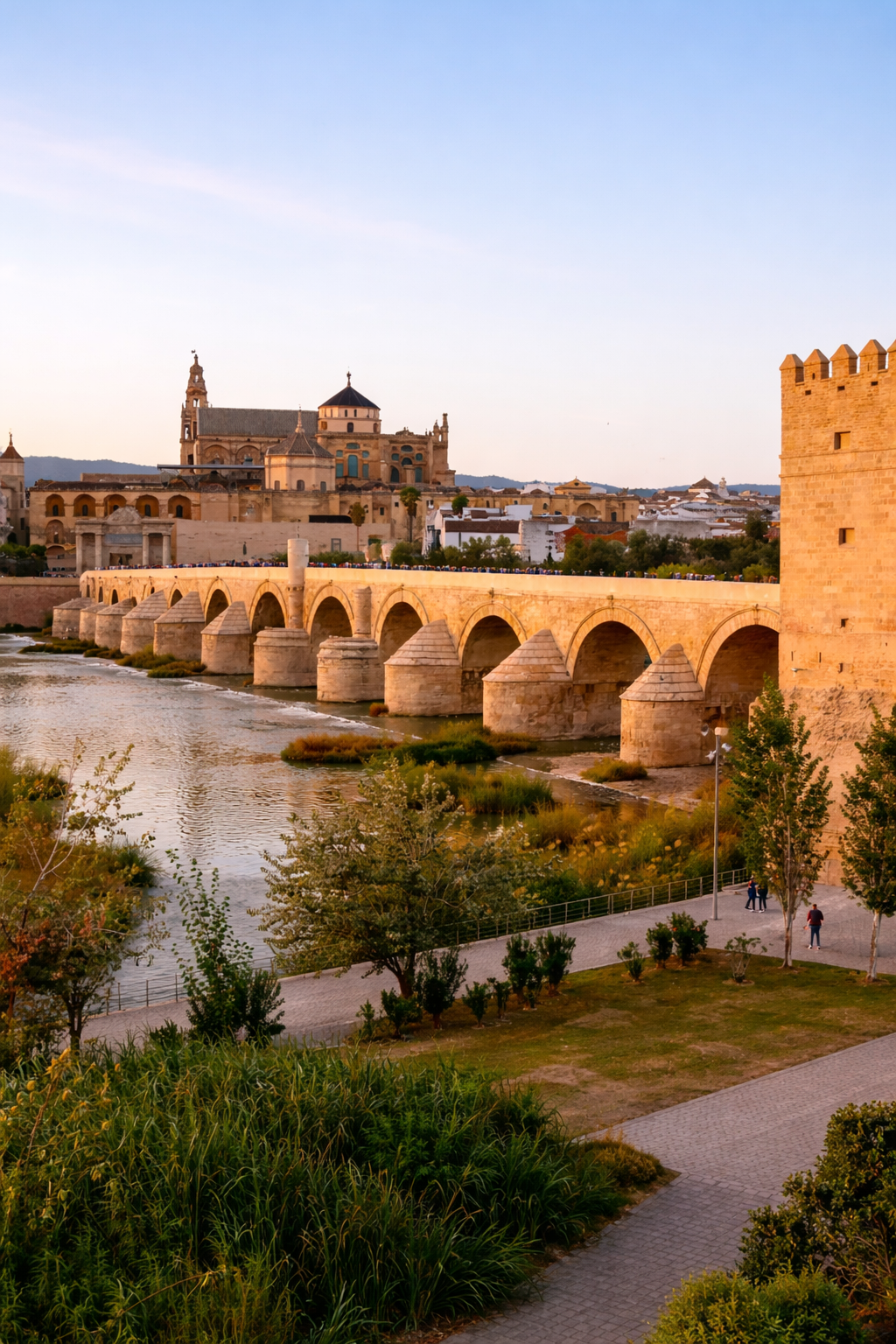
This is one of the reasons staying overnight is worth considering. A rushed day trip can cover the major monuments, but it often misses the hour when the city becomes most atmospheric. Córdoba after the heat eases, with the bridge glowing and the skyline beginning to soften, is a different experience from Córdoba at midday.
Go at sunset, then stay a little longer. The bridge is beautiful in warm evening light, and equally worth seeing once the monuments begin to glow after dark.
| Cost | Free to walk at any time. |
| Best time | Sunset for warm light; early night for illumination. |
| Why it matters | It gives you the best broader view of the historic center and one of the strongest closing moments of the day. |
06 — Roman and Caliphal History Beyond the Center
Córdoba’s story does not end inside the old town. If you have more than one day, Medina Azahara is one of the most worthwhile additions. Located outside the center, the archaeological site reveals the ambition of Córdoba during its caliphal height and helps put the Mezquita into a larger political and cultural context.
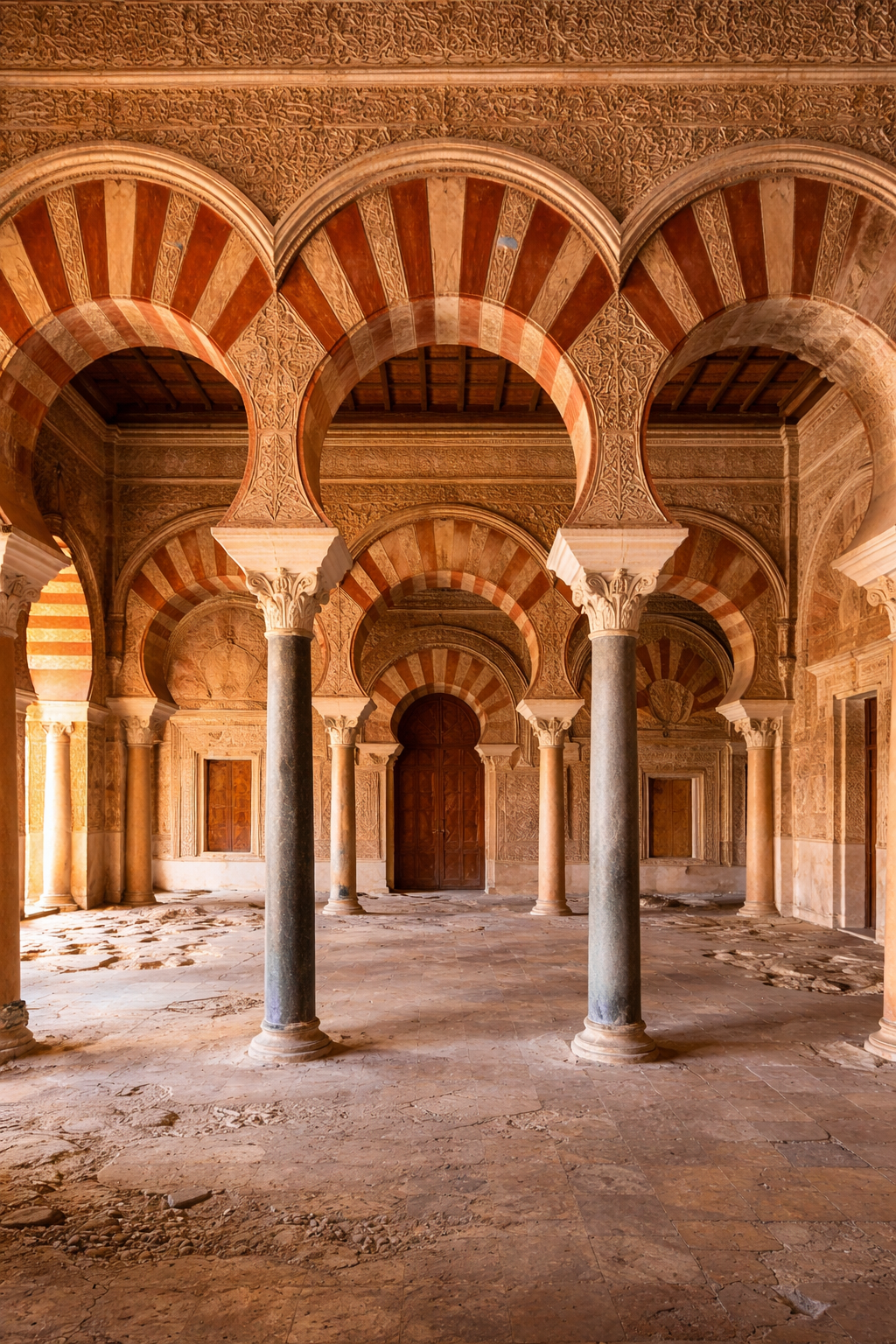
It also broadens the city beyond the compressed historic core most travelers see. Córdoba was not important only because of one mosque or one bridge. It was important because it functioned as a center of power, learning, and architectural patronage on a scale that reshaped the region.
Yes, if you have the time. It works best as a half-day extension for travelers who want more than a surface-level visit and want to understand Córdoba’s golden age more fully.
07 — Courtyards, Yellow Walls, and Patio Culture
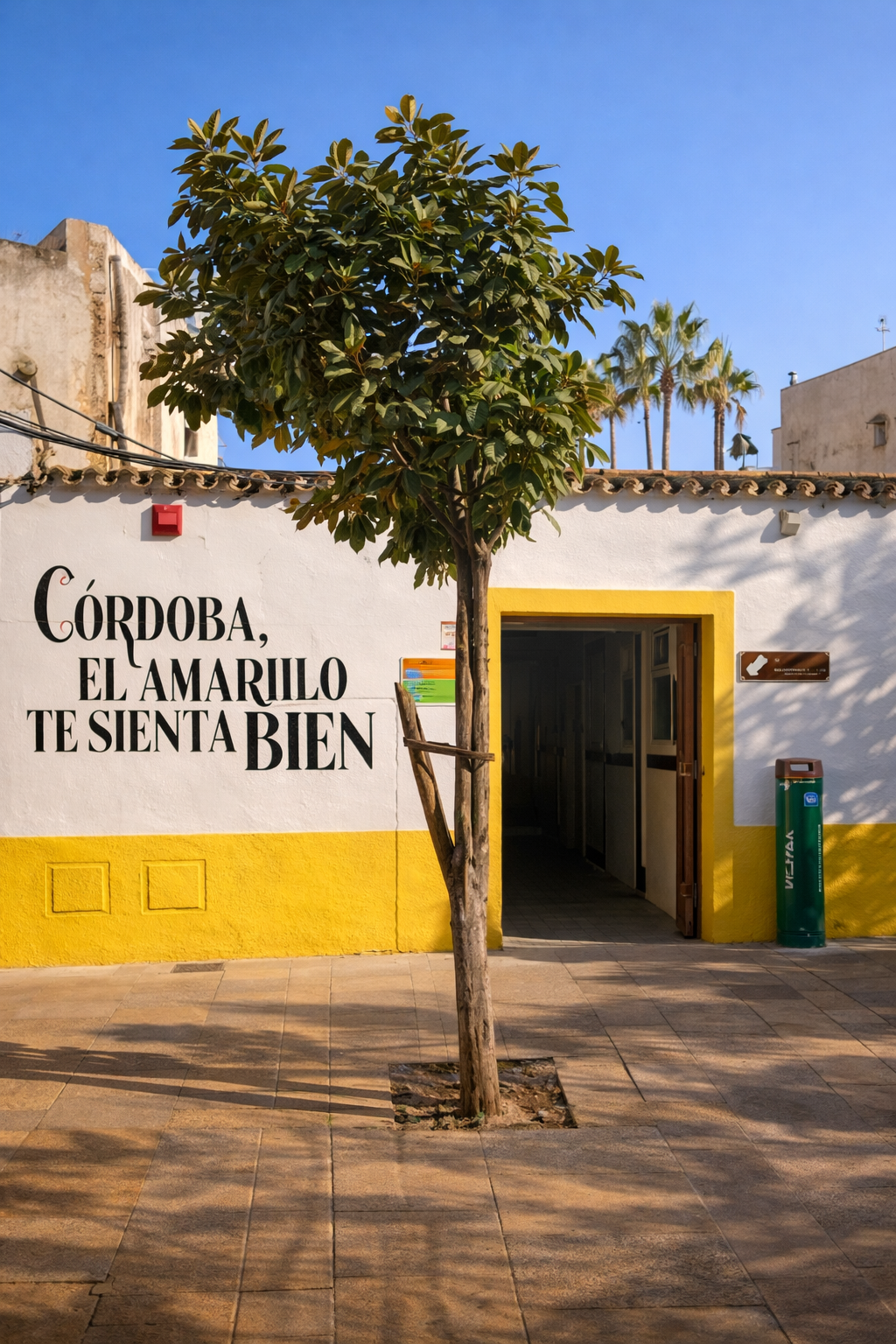
One of the city’s quieter pleasures is simply walking. Córdoba is full of decorative details that never feel ornamental for the sake of tourism alone — flower pots mounted against white walls, painted facades catching late light, glimpses into courtyards through half-open doors. The city’s visual warmth comes as much from these ordinary surfaces as from its major monuments.
The famous patio culture is part of that identity. In spring especially, Córdoba’s courtyards move from private beauty to public celebration, and the whole city seems to lean further into flowers, shade, and domestic detail. Even outside festival periods, that sensibility is visible in the streets.
The Patio Festival is one of the city’s defining seasonal experiences. If your dates are flexible, spring is the moment when Córdoba’s slower beauty becomes most obvious.
08 — Where to Pause for Food and Coffee
The area around the Mezquita is one of the easiest places in the city to settle into a slower rhythm. There are enough cafés, tapas bars, and traditional restaurants nearby that you never need to plan too aggressively. Córdoba is best enjoyed with pauses built in, and this part of the city makes that especially easy.
For solo travelers, that matters. A place where sitting alone with coffee feels natural rather than conspicuous changes the whole tone of a day. Córdoba is good at that. It gives you enough movement around you to feel part of the city, but not so much intensity that every stop feels exposed or rushed.
Córdoba’s signature cold tomato dish — thicker, richer, and more satisfying than many first-time visitors expect.
A slower, heavier local specialty that suits a longer lunch or evening meal better than a quick stop.
One of the simplest and best ways to experience the city’s rhythm without trying to optimise every hour.
Avoid peak lunch hours right beside the main monuments if you want a calmer meal. A slightly later lunch or a short walk away from the busiest edge of the center usually improves the experience.
09 — Why Córdoba Is Worth Visiting
Córdoba may not get the same attention as Granada or Seville, but that lack of constant spotlight is part of what makes it so satisfying. The city is easier to enter, easier to walk, and less dependent on spectacle. It reveals itself through proportion, atmosphere, and the accumulation of details rather than through nonstop grandeur.
But none of that means it is minor. The Mosque-Cathedral alone makes Córdoba indispensable. Add the Roman Bridge, the Alcázar, the courtyards, the old-town rhythm, and the city’s historical depth, and it becomes clear that Córdoba is not a side note on an Andalusia trip. It is one of the places that gives the whole region its meaning.
If you are deciding whether to include it, the answer is yes. If you are deciding whether to rush it, the answer is no. Even one extra evening here changes the experience.
Córdoba does not demand attention the way some cities do.
It earns it quietly, then keeps it for much longer than expected.