
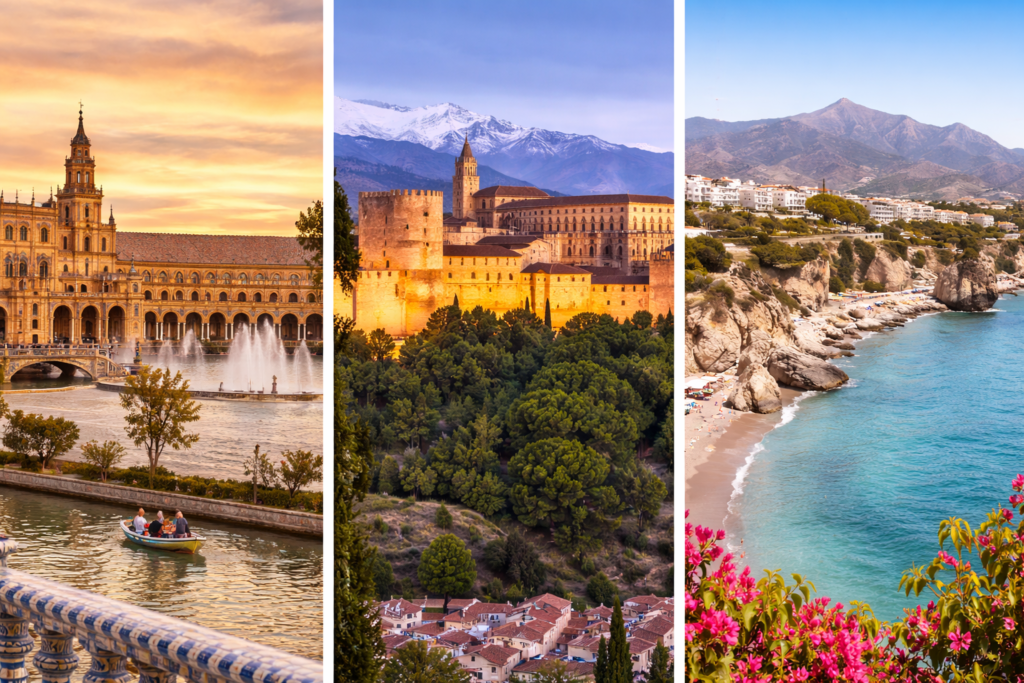
Your Summer Bucket List Isn’t Complete Without Andalusia
Six cities, one unforgettable southern Spain route — from Málaga and Ronda to Granada, Córdoba, and Seville, with the kind of Moorish history, coastlines, and evening culture that makes an Andalusia summer road trip feel unusually complete.
There is a moment, standing at the edge of Gibraltar and looking across the water toward North Africa, when Andalusia stops feeling like a holiday region and starts feeling like a crossroads. Southern Spain holds that sensation unusually well — and you feel it in the architecture, in the shape of the streets, in the way an evening seems to begin properly only after the day has already been long.
I travelled through Andalusia on a route that began in Málaga and ended in Seville, and what stayed with me was not just the beauty of individual places but how coherent the whole region feels when you move through it slowly. Each city is different enough that the trip never flattens out, yet close enough together that you never lose momentum. That combination, in practice, matters more than most people realise when they plan a summer itinerary.
What makes Andalusia distinct
What makes Andalusia distinct, moreover, is not only that it is beautiful but that its beauty carries layers. Roman theatres. Moorish fortresses. Cathedral towers built over earlier worlds. Flamenco that still feels local rather than staged. Atlantic wind in Cádiz. Dry inland light in Córdoba. And at the end of the route, the Alhambra rises above Granada like the end of a sentence you already know you will remember.
01 — Why Andalusia Belongs on Every Summer Bucket List
More Than a Beach Break
Most summer bucket lists default to islands, beaches, or one-city breaks with good weather. Andalusia, however, offers something more layered. It gives you architectural density, serious historical weight, food that suits late evenings, and enough coastline to soften the heat when needed. Moreover, it gives you rhythm — and that matters more than it sounds. Some destinations are pleasant but tiring; Andalusia, by contrast, teaches you how to move through it — if you travel it correctly.
Why the History Changes Everything
Part of the reason is geographical. Specifically, Andalusia is Spain’s southernmost autonomous community, touching both the Mediterranean and the Atlantic. That position made it a threshold for centuries — and as a result the region was shaped by successive civilisations rather than a single dominant one. In practice, that means your trip moves through Roman, Islamic, Jewish, and Christian traces almost continuously, often within the same square kilometre.
The Alcázar, the Mezquita, the Alhambra, the Alcazaba — Andalusia is one of the few places in Europe where Islamic architecture shapes the whole emotional tone of a trip, not just one monument.
In Seville and Granada especially, flamenco does not feel like an imported performance for visitors. It feels rooted, local, and entirely at home in the night.
In practice, this is one of the strongest arguments for the region. Six excellent stops fit into one clean route without wasting half the trip in transit.
Late dinners, tapas, shaded plazas, and cities that come properly alive after dark make Andalusia one of the few places where summer heat and local rhythm align rather than compete.
Andalusia works best for travelers who want their summer trip to feel both beautiful and substantial. You get the sun, but you also get a sense of having gone somewhere with weight.
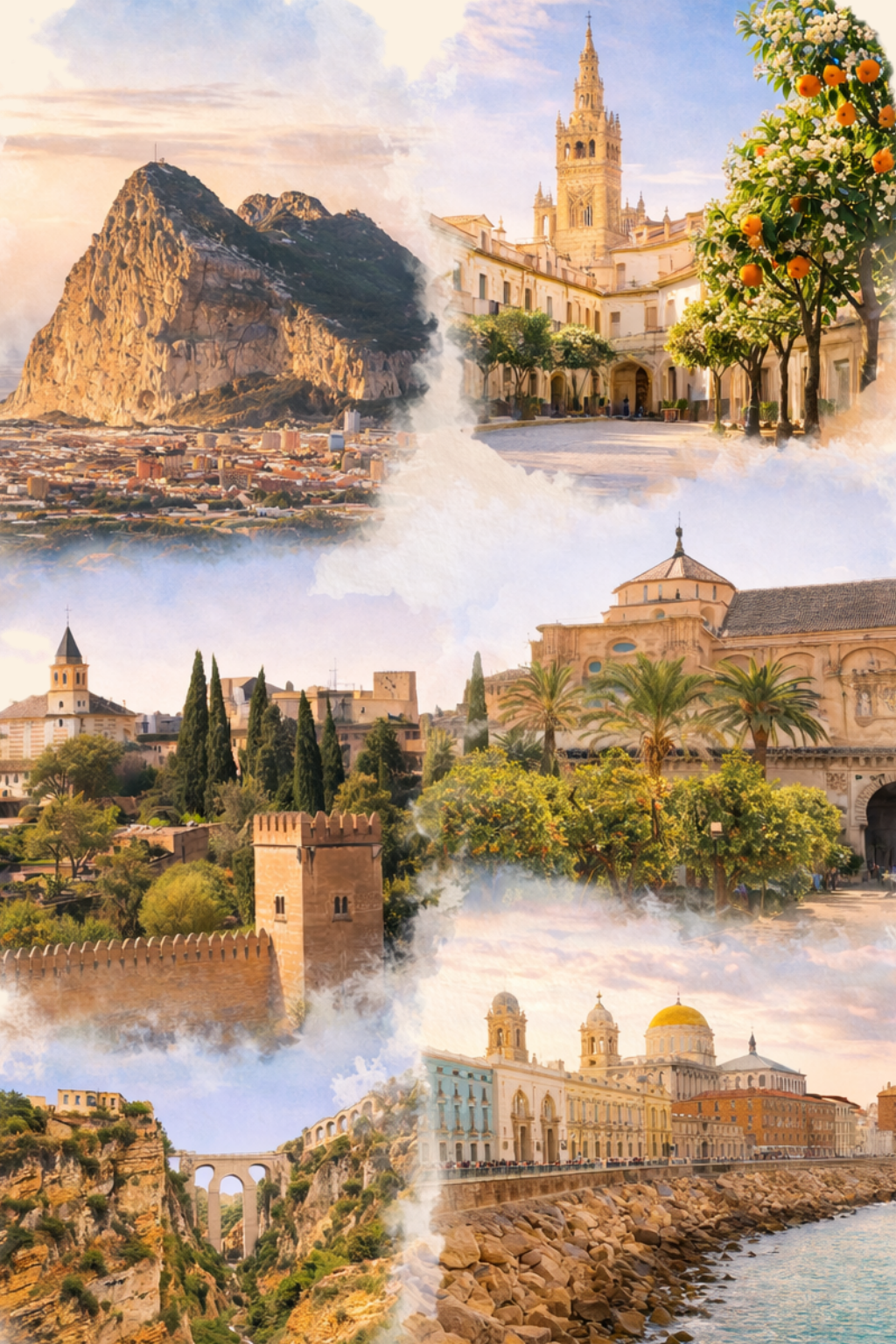
02 — The Route at a Glance
How I Structured It
The route that made the most sense for me began in Málaga, moved inland to Ronda, continued west toward Cádiz and Gibraltar, then cut inland to Granada before finishing through Córdoba and Seville. The complete Andalusia cities guide covers every stop in full detail if you want a deeper look at any individual city. As a result, it avoids awkward backtracking, lets the trip build naturally, and saves some of the most emotionally powerful stops for the second half. I drove the western leg, dropped the car in Córdoba, and took the AVE high-speed train into Seville — which is, in fact, the ideal way to arrive in Andalusia’s capital.
→
→
→
→
→
→
Each Stop in Brief
- Fly into Málaga (AGP): the easiest entry point for most international travelers and the most natural start to this route.
- Fly home from Seville (SVQ): a natural exit after finishing the route — the city sits at the end of the arc.
- From Madrid: useful for long-haul arrivals; continue south by AVE train.
- Granada: best only if you specifically want to build the trip around Granada and work outward.
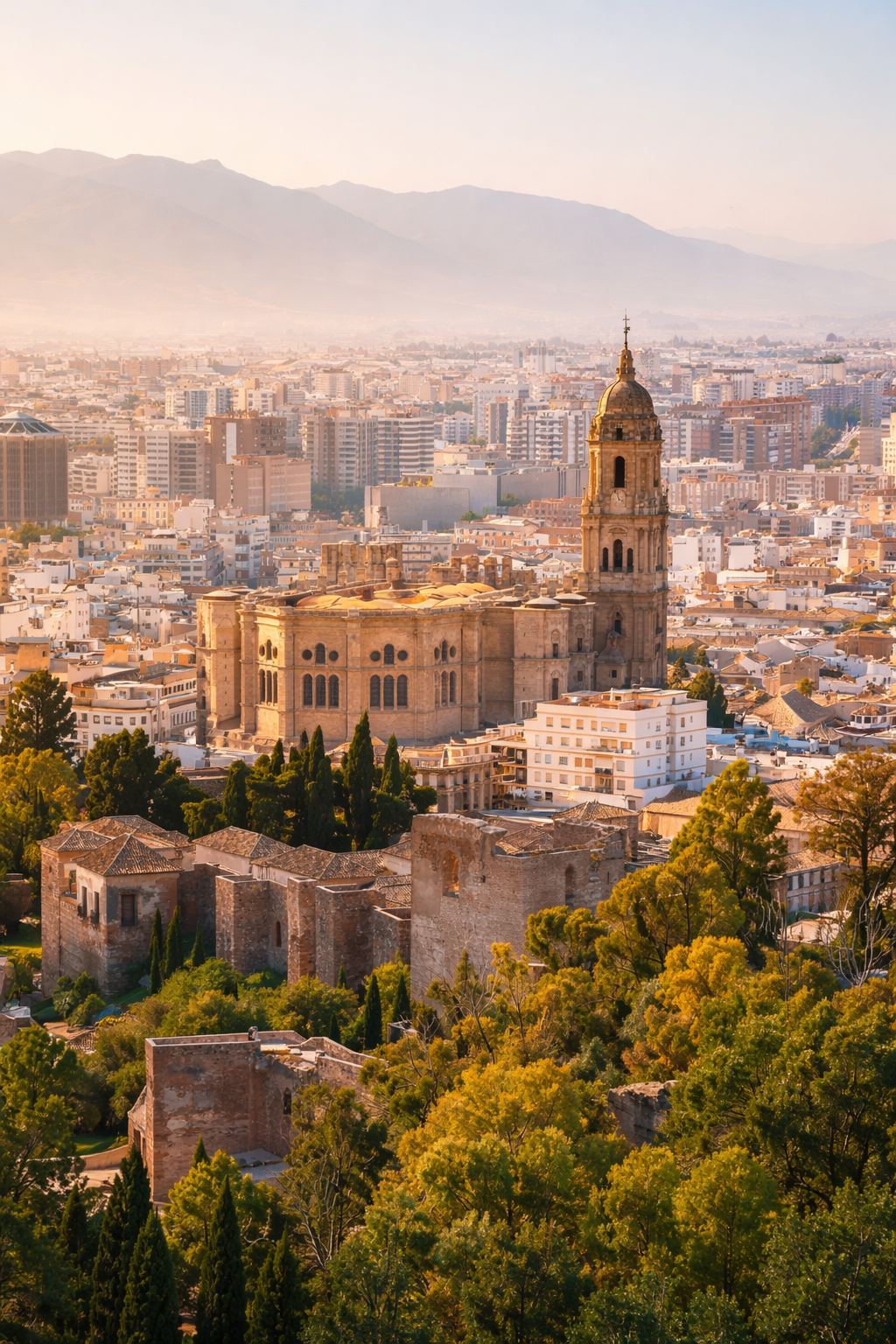
03 — Málaga: The Right Way to Begin
A City That Earns More Than One Day
Arriving in Málaga feels exactly right for a summer trip. There is air in the city, light, and a kind of Mediterranean ease that helps you arrive gradually instead of being thrown straight into intensity. That matters because the deeper Andalusian cities ask more of your attention — and Málaga, as a result, gives you room to settle first.
Notably, its history is denser than the relaxed atmosphere initially suggests. Phoenician, Roman, Islamic, and Christian periods all left visible traces — and nowhere is that more obvious than around the Alcazaba and Roman Theatre, where entire eras sit almost literally on top of one another. For a first stop, that combination is ideal: sea on one side, history on the other, and enough urban energy to keep the first days feeling open rather than heavy.
An 11th-century Moorish fortress rising above the city, and one of the clearest early signs that Andalusia’s Islamic history will shape the whole trip.
Worth it for the view alone — city, port, sea, and the sense of geographical openness that makes Málaga such a strong first stop.
A compact but striking reminder that the route’s historical depth begins immediately, not later. Notably, it sits directly below the Alcazaba — two eras in a single glance.
A worthwhile pause if you want your first city to include something quieter and interior before the road continues inland. Málaga is, after all, Picasso’s birthplace.
One to two days is enough. Málaga is not the emotional centre of the trip, but it is one of its best calibrations.
04 — Ronda: The Cliffside Interruption
Where the Landscape Takes Over
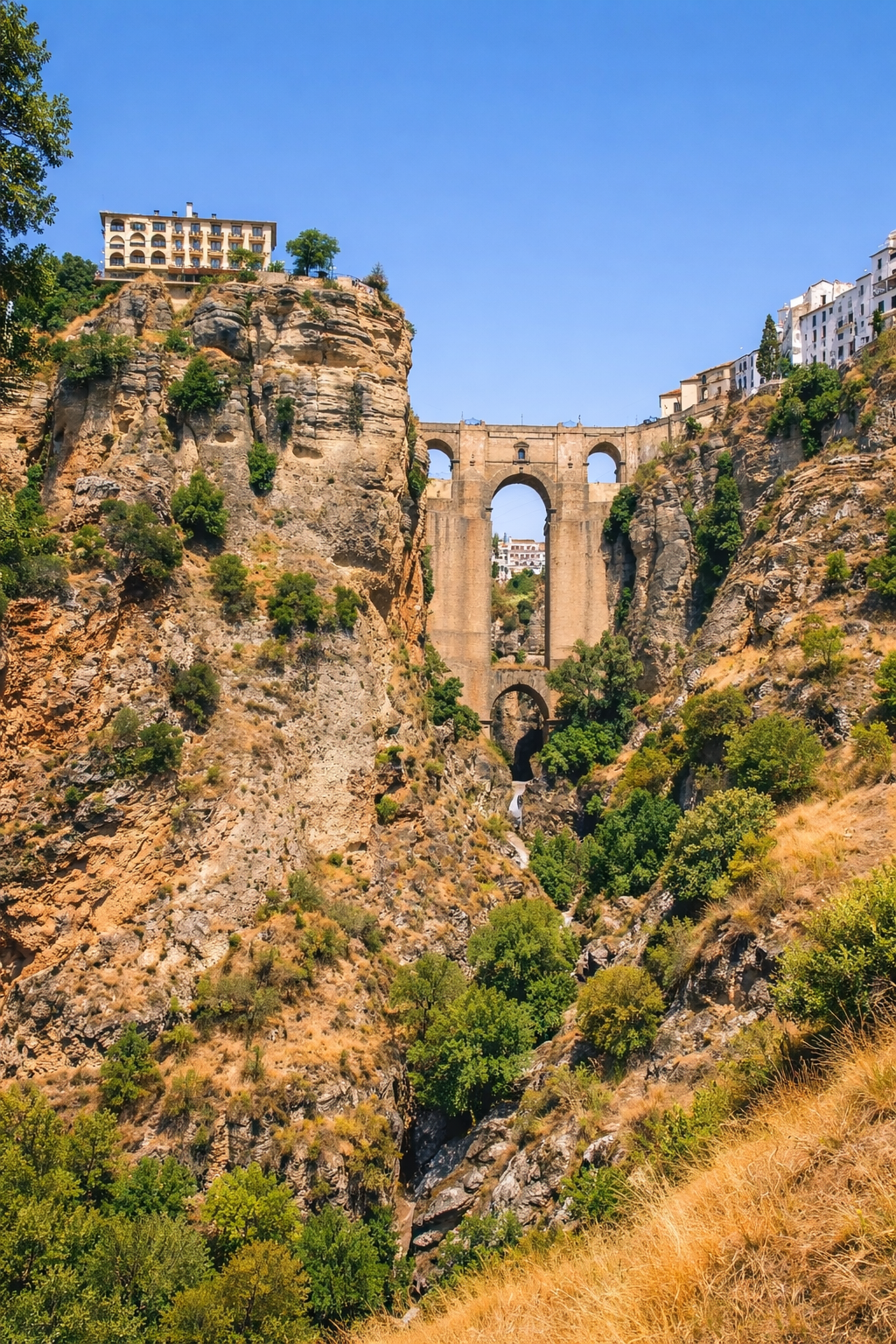
From Málaga, the shift inland changes the whole register of the journey. The softness of the coast gives way to stone, height, and drama. Ronda is built above a gorge so severe it seems to split the town into two separate arguments — and the Puente Nuevo bridging that void is the reason most people come. In person, it still feels improbable.
Ronda works best as a concentrated stop rather than a long stay. One full day gives you the bridge, the gorge viewpoints, the old town, and enough time to understand the mood of the place. More than that is possible, but not necessary unless you are intentionally moving slowly. Its role in the route, in short, is to break the coastal flow and introduce the more dramatic interior side of Andalusia.
What to See in Ronda
Ronda’s defining image — worth viewing from multiple angles. Descend to the Mirador de Aldehuela for the below-bridge photograph that does it justice; crossing it is only half the experience.
Among the best-preserved Arab baths in the region, and an easy reminder that even a smaller stop in Andalusia carries deeper layers than expected.
Historically important, even if bullfighting itself is not the reason you came. It tells you something about Ronda’s place in Spanish cultural history that other towns on this route do not.
05 — Cádiz: The Atlantic Detour That Changes the Mood
A City That Already Knows What It Is
Cádiz feels different from the rest of the route, and that difference is precisely why it earns its place. It is not only older than the other major cities in Andalusia, but atmospherically separate from them. Surrounded by the Atlantic on three sides, it has more air, more salt in the wind, and less pressure to impress.
That unhurried quality matters after Ronda’s drama and before the inland intensity still to come. Cádiz steadies the trip. It also softens summer better than the inland cities do — and on a very hot route, that alone is a serious practical advantage. Furthermore, Cádiz feels genuinely local in a way that many better-known cities in the region struggle to preserve.
Its dome anchors the skyline and reinforces the city’s old maritime identity — something you feel from the waterfront as much as from inside.
Worth climbing for perspective. Cádiz makes more sense once you see how tightly land and water are woven together here.
A small beach with atmosphere rather than scale, and one of the most satisfying late-day pauses on the whole route.
The oldest quarter, where medieval and Roman traces remain built into the city’s ordinary fabric rather than isolated as a spectacle.
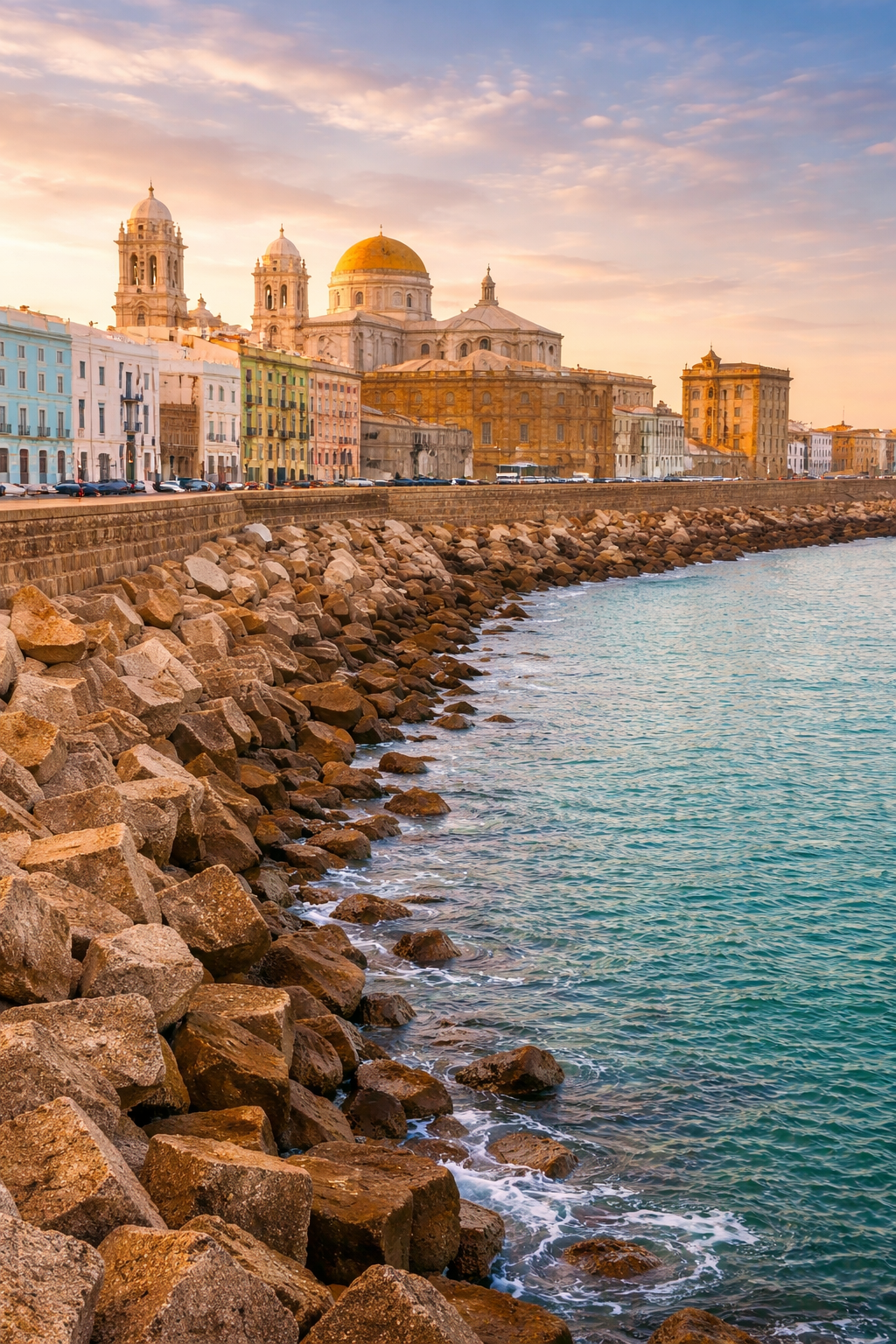
06 — Gibraltar: Thirty Minutes at the Edge of the World
A Half-Day Worth Making
Gibraltar is not Andalusia — it is a British Overseas Territory — but it sits at such a charged geographical and historical point that skipping it entirely feels wrong. From here, the African coastline is close enough to make the crossing feel entirely plausible — and in fact, Morocco is visible on clear days. In fact, standing at the southern tip of the Rock with Morocco visible across the Strait is one of the more genuinely moving moments on this entire route.
Practically speaking, a half-day is enough. Drive across the border in the morning, take the cable car to the summit, walk with the Barbary macaques, look south toward Africa, then continue inland to Granada in the afternoon. As a rule, the border crossing moves faster before 9am — worth factoring in if you want to keep the day clean.
Cable car: Worth it for the view and the macaques. Border crossing: Passport required, queues vary — early morning is usually fastest. Time needed: 3–4 hours comfortable, 2 hours minimum. Currency: Gibraltar pound, but euros are accepted almost everywhere.
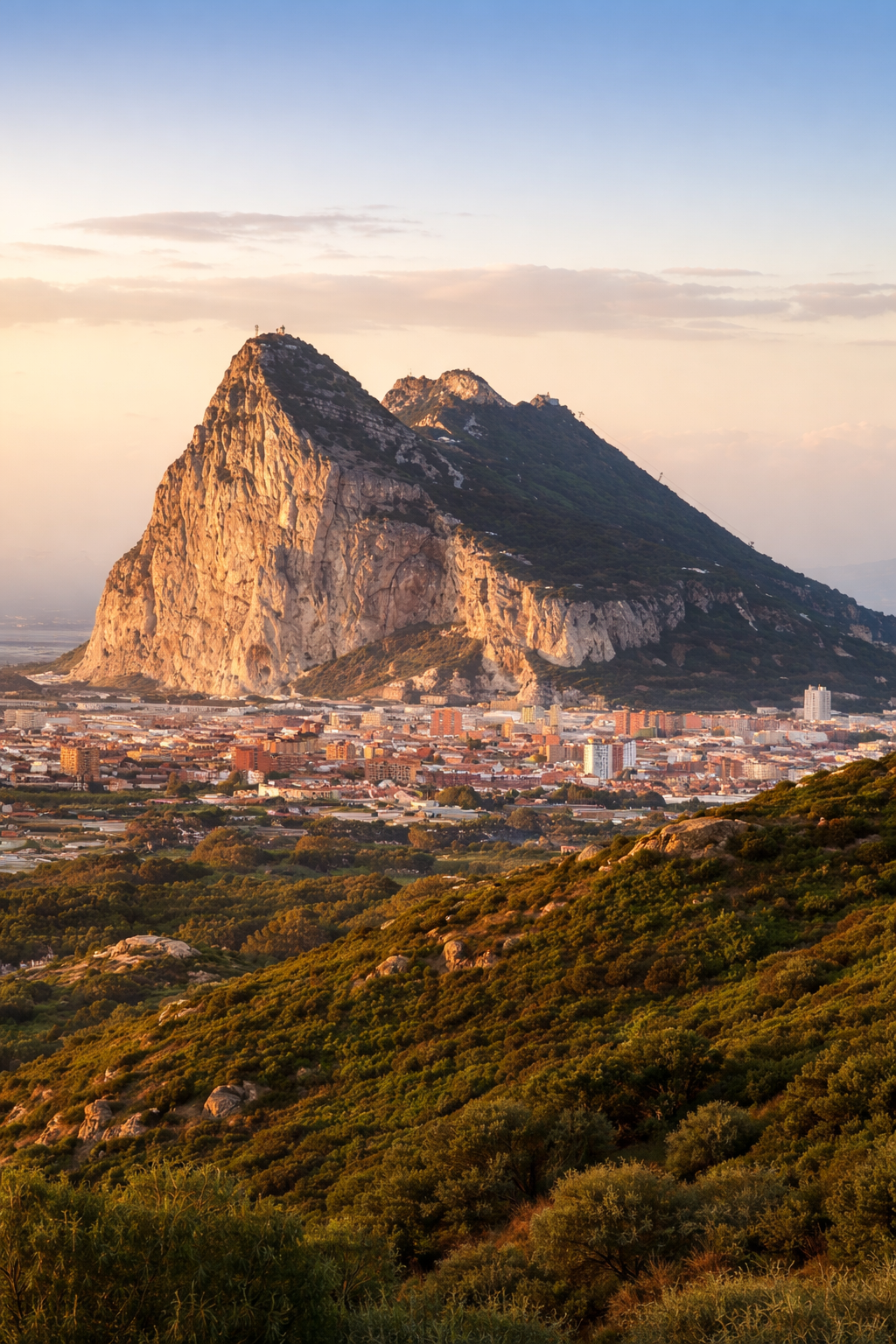
07 — Granada: The End the Route Earns
Where the Whole Trip Comes Into Focus
Every strong itinerary has one stop that gathers the meaning of the rest. For this route, that stop is Granada. By the time you reach it — after the coast, the gorge, the Atlantic, and the edge of a continent — the whole journey has prepared you for the Alhambra. Preparation, however, does not lessen the effect. If anything, it sharpens it.
Granada is not only the Alhambra, though. The Albaicín, with its steep lanes and impossible sunset views, gives the city texture outside the monument. Sacromonte, in turn, adds another register entirely. Furthermore, the tapas culture makes evenings feel genuinely open-ended — and the city’s scale is exactly right: large enough to keep unfolding, small enough to remain legible.
What to Prioritise
The single most important advance booking on this route. Go slowly — do not try to compress it into a rushed half day. Morning entry (8:30am) gives you the best light and the thinnest crowds.
The historic Moorish quarter and the place that gives Granada its lived texture beyond the palace complex. Specifically, the Mirador de San Nicolás at sunset is the best viewpoint in Andalusia.
For cave flamenco and a more atmospheric, less polished evening experience than Seville offers. Small venues, low ceilings, no distance between you and the music.
One of the route’s best small pleasures — the kind of nightly ritual that makes Granada easy to love beyond its monuments. A tapa arrives with every drink, at no extra charge.
- Book the Alhambra early — summer dates can disappear well before your trip. Book at tickets.alhambra-patronato.es, not third-party resellers.
- Give Granada two days if possible. One for the Alhambra, one for the city itself.
- Stay central so the evenings remain walkable and the city keeps its shape around you.
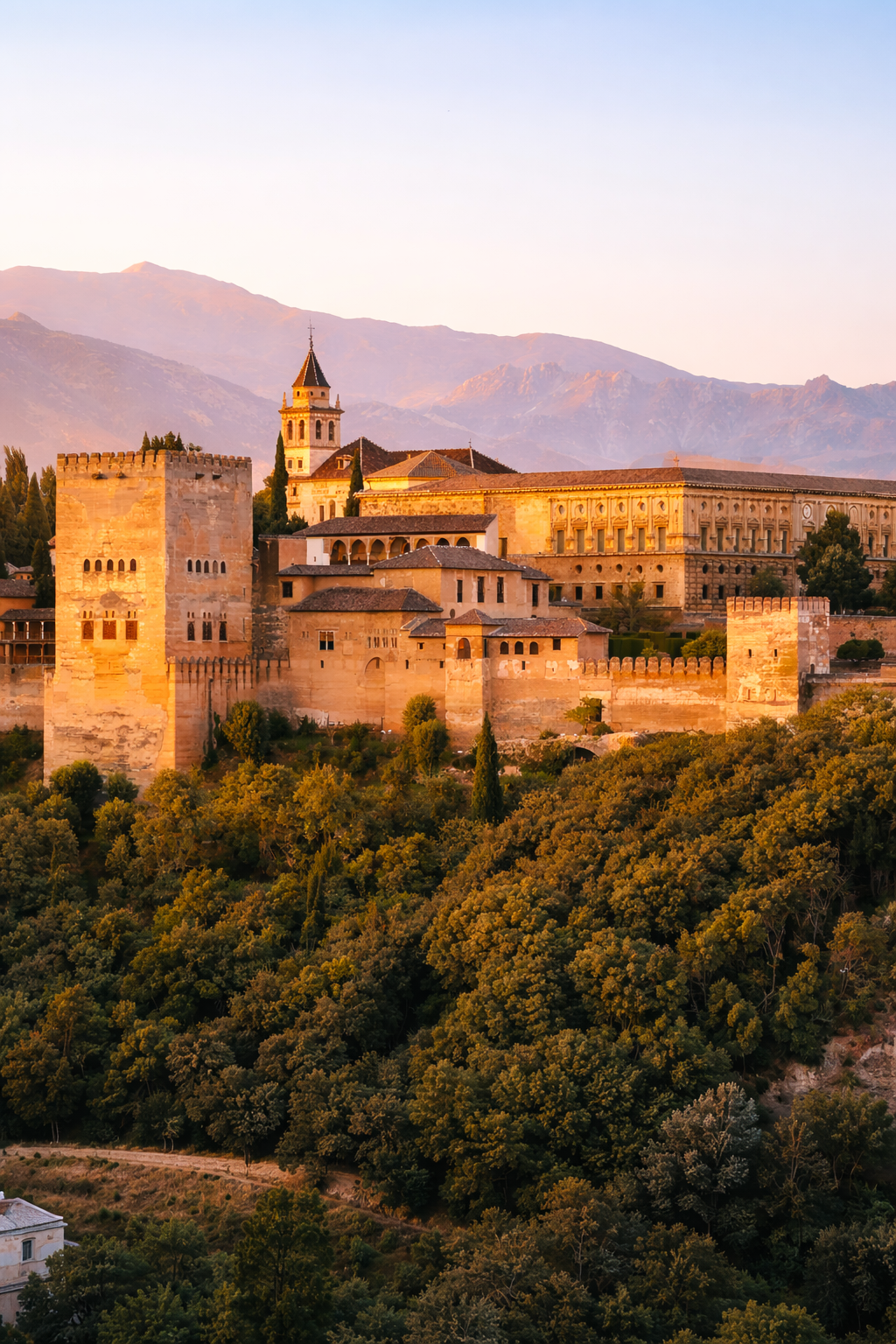
08 — Córdoba: Quiet City, Astonishing Centre
The Place Where the Car Gets Left Behind
Córdoba arrives after Granada almost as a correction in scale. The energy lowers, the streets tighten, and the city begins to feel more private. That privacy, in turn, is part of what makes it so effective — Córdoba does not present itself dramatically. Then you enter the Mezquita-Catedral — and consequently, the whole trip momentarily reorganises around it.
Dropping the rental car here felt right. Córdoba is best experienced slowly on foot — and after days of driving, the rhythm of walking through the old town, past flower-filled courtyards and across the Roman Bridge, is a natural way to decompress before the final train into Seville. In addition, the Mezquita rewards a slow pace more than almost anything else on this route.
The reason Córdoba belongs on this route even if you only have one day. Nothing else in Europe looks or feels quite like it — the forest of red-and-white arches stretches further than seems possible.
Best at sunset, when the city’s quieter mood becomes fully apparent and the skyline settles into itself. The Mezquita silhouettes beautifully behind you.
A whitewashed maze of streets that rewards walking without much agenda — one of the most understatedly beautiful parts of the city, particularly in the mornings before the heat builds.
A worthwhile extension if you have more than one day and want a deeper sense of Córdoba’s political and architectural past. Located just outside the city — a car is needed.
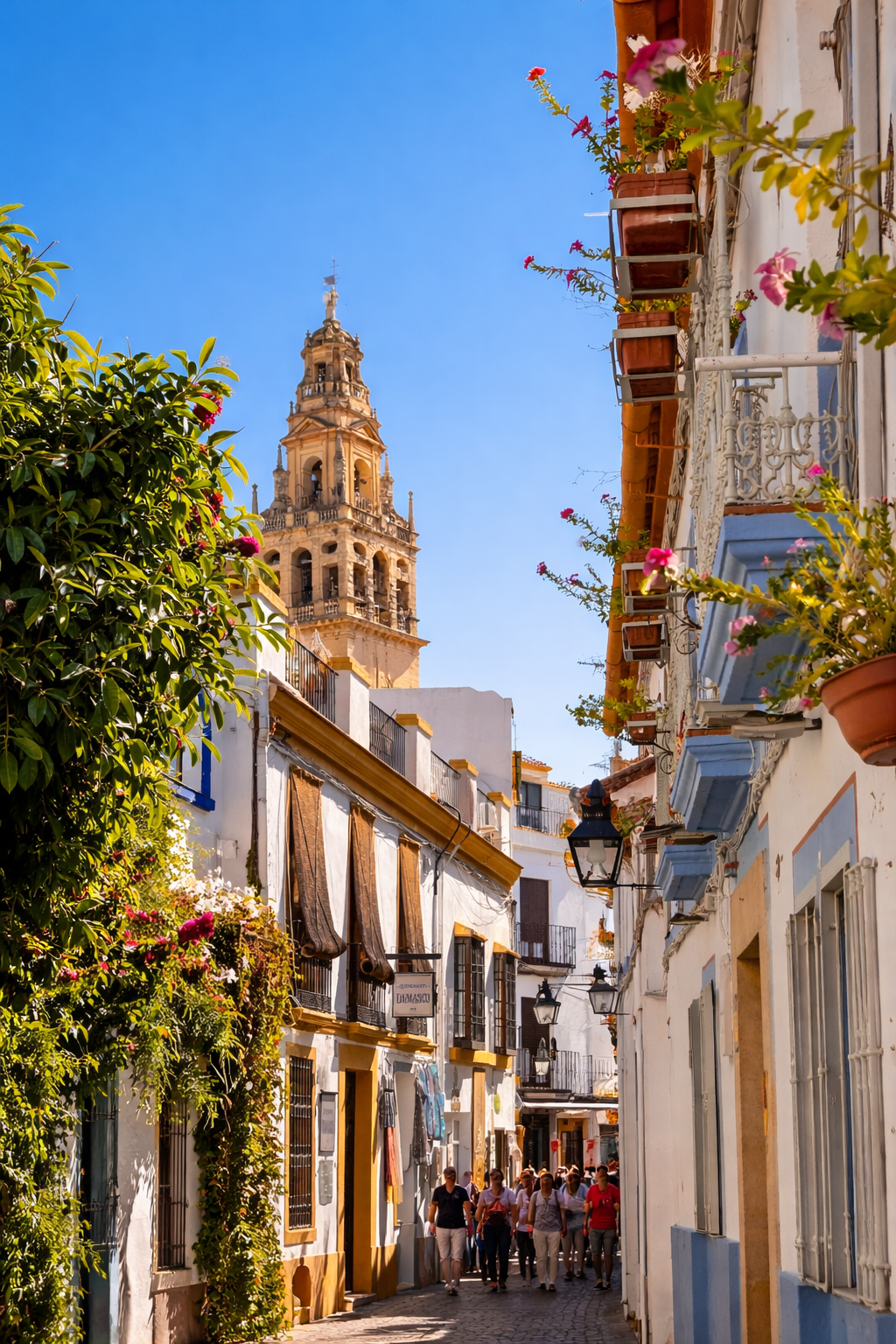
09 — Seville: The Grand Andalusian City
The Right Way to Arrive
Arriving in Seville by AVE from Córdoba is one of the better travel moments on this route. Where the previous cities reveal themselves gradually, Seville arrives whole — and the 45-minute high-speed train makes the transition feel sudden and intentional. Orange trees, courtyards, huge civic spaces, horse-drawn carriages, flamenco after dark: everything people associate with Andalusia is concentrated here, and in most cases the cliché survives because it is grounded in something real.
What Seville Does Best
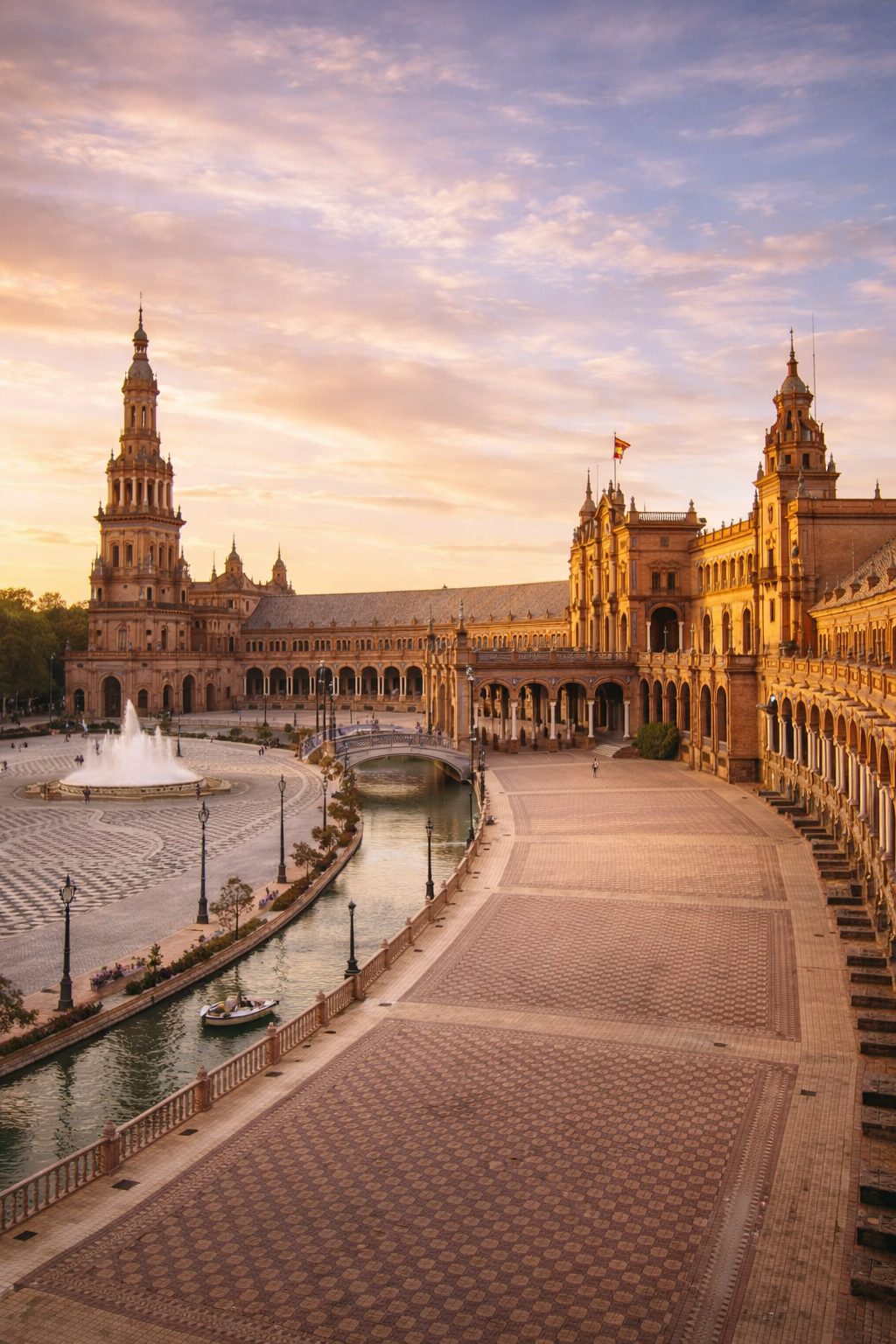
Seville is monumental, but that monumentality is not remote. The old town remains dense, walkable, and alive — which is part of why the city lands so forcefully. Furthermore, the Royal Alcázar, the cathedral, the Giralda, Plaza de España, and Triana are not peripheral attractions requiring a logistical campaign. Instead, they are embedded in a city that still feels inhabited rather than curated.
One of the essential monuments of Andalusia — ornate, layered, and still capable of feeling intimate despite its fame. Book at alcazarsevilla.org well before your arrival date.
Grand in scale, but still worth approaching patiently. The Giralda’s ascent gives Seville back to you in broad perspective — the tower was originally a Moorish minaret.
A theatrical civic space that somehow still earns its reputation. Go early or late to avoid flattening the experience with crowds and glare — morning is particularly good.
The evening side of Seville — the neighbourhood to remember if you want the city to feel less like a monument and more like a living place. Cross the bridge after dark.
Seville is also the city where summer asks the most of you. The heat here is not incidental — in peak summer, inland Seville regularly reaches 40°C and above. Consequently, you need to plan your day around it rather than against it. Early monument visits, long midday pauses, and evenings that stretch late are not optional style choices; they are how the city is meant to be inhabited.
10 — All Seven Stops Compared
To help you decide where to spend your time and what to prioritise, here is a side-by-side look at every stop on the route. Overall, each city offers something distinct — so the right choice depends on how many days you have and what draws you most.
| Most dramatic stop | Ronda for geography, Granada for emotional impact. |
| First-time visitors | Seville if you want the full monumental version immediately; Málaga if you want a gentler start. |
| Value for money | Granada — the city experience extends well beyond paid monuments, and free tapas culture lowers the evening budget considerably. |
| Underrated stop | Cádiz — less famous than the others, but one of the smartest additions to the route. |
| Surprising addition | Gibraltar — not a full city, but the geographical moment of standing at the continent’s edge is unlike anything else on this route. |
11 — 7-Day and 10-Day Itinerary Options
7-Day Essential Route
Walk the centre, visit the Alcazaba and Roman Theatre, and let the trip begin lightly — above all, resist the urge to overperform on day one.
Coastal start
See the bridge and gorge in the morning, then drive west via the white villages. Arrive in Cádiz in the evening — that sequence gives you two moods in one day.
Mountain + coast
Morning in Cádiz, then south for a Gibraltar half-day, then drive inland to Granada. Admittedly a long day, but a remarkably complete one.
Atlantic + strait
The most important booking on the trip. Start at 8:30am and move slowly — in particular, do not try to compress it into half a day.
Advance booking
Give the city itself a full day. Sunset at Mirador de San Nicolás is the priority — then cave flamenco in Sacromonte in the evening.
City depth
This day revolves around the Mezquita-Catedral. After that, walk the Judería and Roman Bridge, and drop the rental car here.
Drop car here
Take the 45-minute high-speed train from Córdoba. In particular, use the late hours well — Triana or a flamenco evening makes the best first impression of Seville.
Train arrival
10-Day Full Route
Settle in, walk the centre, and keep the first day intentionally light.
Arrival
Alcazaba, Gibralfaro, cathedral, a seaside pause — and one museum if it suits the pace.
Coastal history
A full day for the gorge, bridge, Arab baths, and old town. In short, let Ronda do its work.
Photography stop
Old town, cathedral, Torre Tavira, La Caleta — and above all, an Atlantic evening.
Relief day
Gibraltar morning — cable car, macaques, Strait view — then drive inland to Granada. Admittedly a long transit day, but one of the most memorable.
Edge of Europe
The major booking and the route’s emotional climax. Move slowly — and above all, book months ahead.
Crown jewel
Albaicín, Sacromonte, tapas evening, and a noticeably slower pace throughout.
City depth
Mezquita, Roman Bridge, Judería, Medina Azahara optional. Return the rental car here — this is the logical end of the driving chapter.
Drop car
Train from Córdoba, then let the city announce itself after dark. Specifically, use Triana or flamenco as the first evening — Seville rewards that approach.
Train + grand arrival
Alcázar, cathedral, Plaza de España. Evening flight from SVQ.
Final city
Alhambra first, Royal Alcázar second, Mezquita after that. Those are the bookings most likely to shape the whole trip if you leave them too late. Flamenco shows at smaller venues also sell out — book at least a day ahead, more during festivals.
12 — How to Get Between Cities
The Hybrid Approach
The most efficient version of this trip is hybrid. Use a car where geography matters — specifically, the western leg from Málaga through Ronda, Cádiz, and Gibraltar to Granada — and switch to trains once you reach Córdoba. That split, overall, keeps the trip flexible without making urban arrivals more complicated than they need to be. Overall, it also avoids city parking entirely for the final three stops.
-
Málaga → Ronda: easiest and most flexible by car, especially if you want to enjoy the inland mountain scenery properly. -
Ronda → Cádiz: the western leg makes the strongest case for driving — the route via the white villages is worth it in itself. -
Cádiz → Gibraltar → Granada: drive the full arc. Gibraltar requires a car for the border crossing anyway, and the inland drive to Granada is straightforward. -
Granada → Córdoba: drive or train — both work. If you drop the car in Córdoba, drive this leg and hand back the keys there. -
Córdoba → Seville: AVE high-speed train, ~45 minutes. Fast, affordable when booked ahead at renfe.com, and a satisfying way to arrive in Andalusia’s capital.
- Use a car for: Málaga, Ronda, Cádiz, Gibraltar, and the drive to Granada.
- Drop the car in Córdoba: one-way fees are usually modest and well worth paying.
- Switch to trains for: Córdoba → Seville. Trains are fast and frequent on this leg.
13 — Making Andalusia Work in Summer
Working With the Heat, Not Against It
Andalusia in summer is not a trip to underestimate. It is fully worth doing — but only if you accept that the heat is part of the structure, not an inconvenience to manage around. Coastal cities help considerably: Málaga and Cádiz are far more bearable than the inland cities. Seville, Córdoba, and Granada, however, require a different daily rhythm altogether, and consequently the way you plan your days needs to shift.
Four Rules That Actually Help
As a rule, major monuments are best at the beginning of the day anyway — and in summer, that becomes a practical necessity rather than just a preference. By 10am, the heat and the crowds arrive together.
Admittedly, this is one of the few destinations where leaning into the rhythm of the day makes the trip better rather than less productive. Two hours in the shade is not wasted time in Seville.
Tapas, city walks, and flamenco all improve when you stop expecting the best part of the day to happen before dinner. In Andalusia, it consistently happens after.
Especially in Seville and Córdoba, hydration and shade are part of the itinerary whether you write them in or not. Carry water into every monument visit.
Book accommodation with reliable air conditioning. In peak summer, atmosphere is not a sufficient substitute — and a bad night’s sleep will flatten the following day faster than the heat itself.
14 — Frequently Asked Questions
Planning the Trip
Cities and Choices
Andalusia does not feel like six separate stops strung together.
It feels like one long conversation between light, history, and the road.