
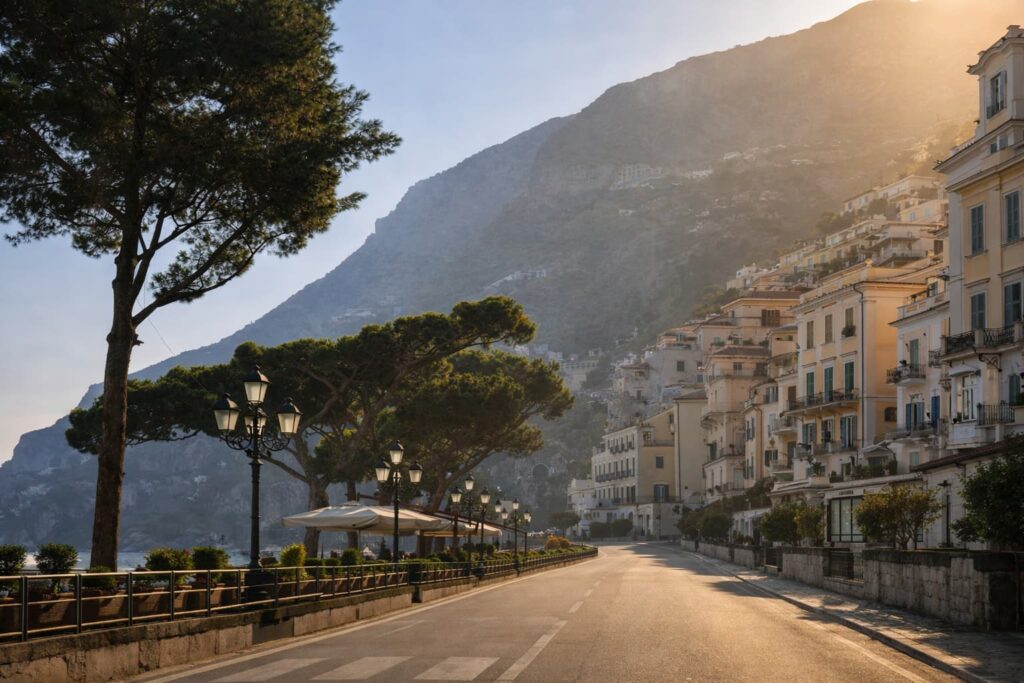
Driving the Amalfi Coast: What Nobody Tells You About That Road
The most famous coastal drive in Europe lives up to its reputation — but not always in the ways you expect. Here’s what the road actually feels like from behind the wheel.
There is a particular type of travel experience where the thing you came to see is the road itself — not the destination at the end of it, but every kilometre of the getting there. The Amalfi Coast drive is that. The SS163 Amalfitana, which threads along the cliff face between Salerno and Sorrento, is arguably the most visually dramatic coastal road in Europe. However, depending on the hour and your temperament, it can also be one of the most physically demanding things you do behind the wheel.
I drove it as part of a broader Italy road trip — coming south from Rome via Salerno, with a full day carved out specifically for the coast. Initially, I underestimated just how involved the experience would be. The road demands your full attention. At the same time, the scenery competes for it. As a result, for long stretches, you simply cannot fully take in both at once.
01 — What the Road Is Actually Like
Most photographs of the Amalfi Coast are taken from boats or from high viewpoints looking down at the road. As a result, you arrive expecting something smooth and cinematic. In reality, the experience is far more involved — and far more physical.
The road is genuinely narrow
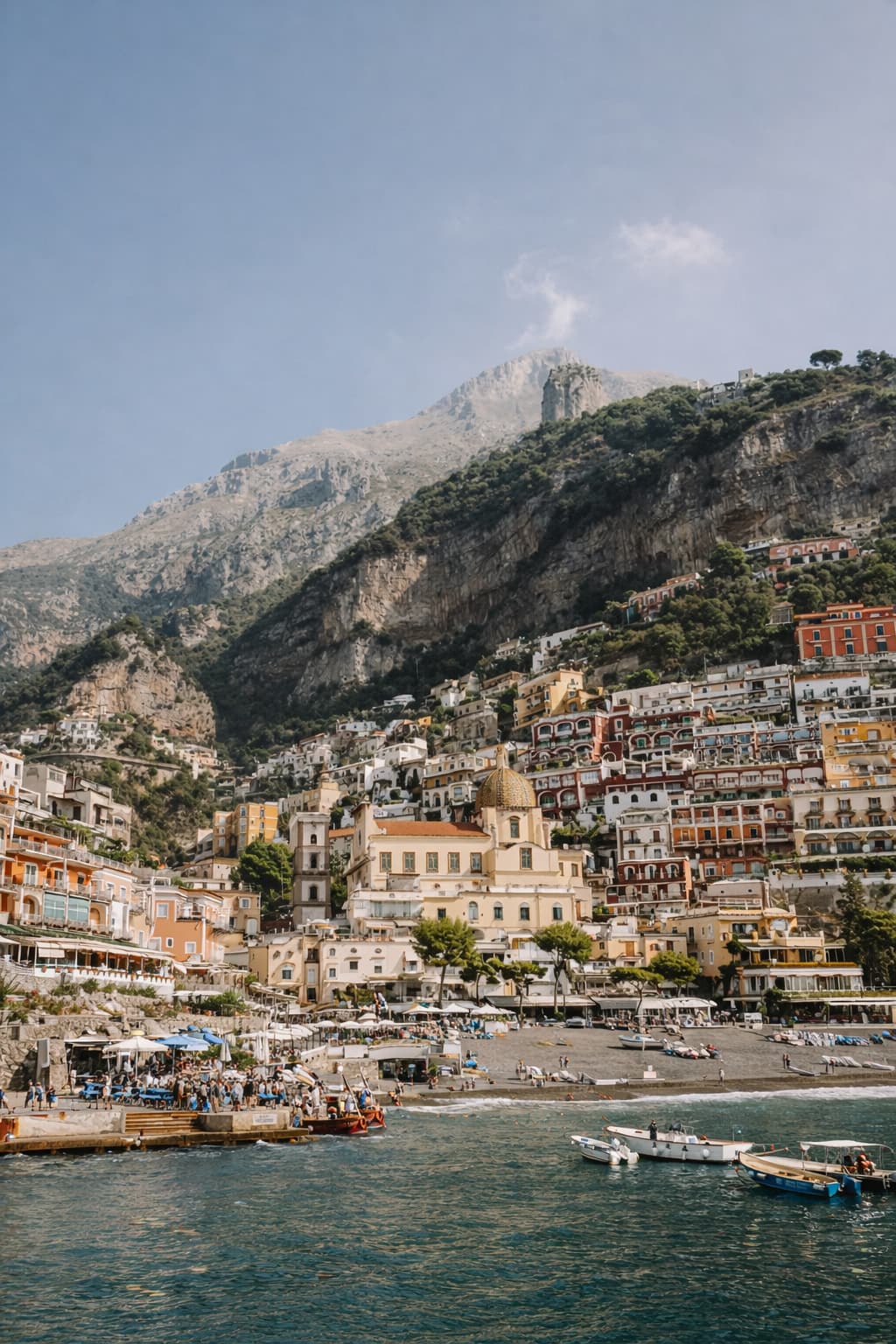
Built in the 1850s, the SS163 predates modern traffic entirely — and it feels like it. In many sections, two regular-sized cars can pass only if both drivers commit early to their line. Additionally, local buses — full-sized coaches — move through the same space with complete confidence. Meanwhile, scooters weave through gaps that don’t quite exist. Taken together, this creates a driving environment unlike anything in northern Europe.
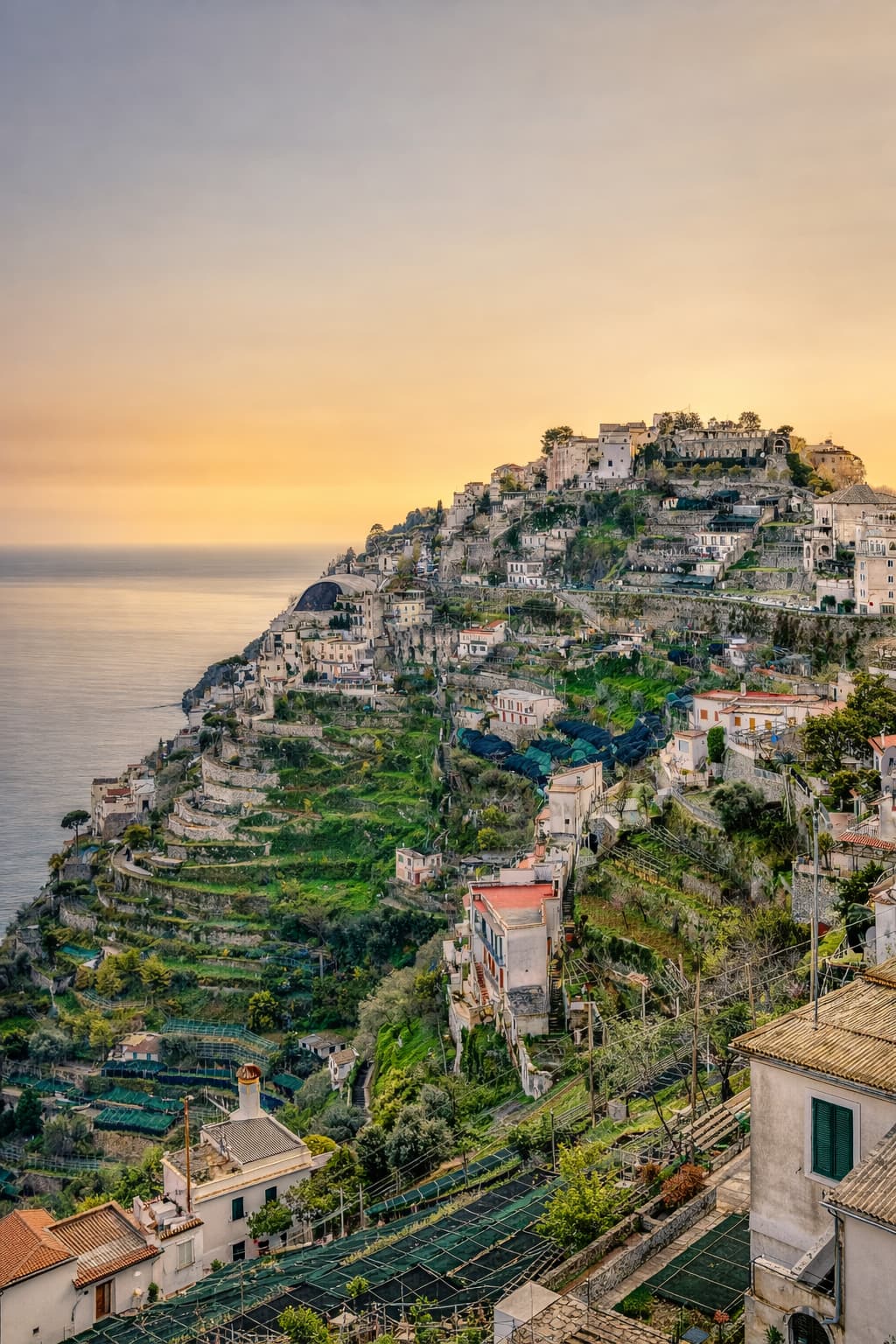
On one side, the mountain presses close; on the other, the land falls sharply toward the sea. Barriers are intermittent, low, and sometimes missing entirely — and the drop can run several hundred metres. Initially, that exposure feels dramatic. However, once you settle into the rhythm of the road, it becomes part of the experience rather than something unsettling.
The pace is dictated by the road, not by you
Looking at a map, it’s easy to assume you can control the timing of your stops. In practice, the road decides everything. A delivery truck reversing into a loading bay can pause traffic for ten minutes. Similarly, a tour bus navigating a tight bend creates its own temporary standstill. Therefore, build more time into the drive than you think you need. Instead of treating delays as frustration, treat them as moments where the landscape reveals itself slowly.
02 — Doing the Drive in a Day
How the day actually unfolds
We came from Rome, entering the coast from Salerno and driving west toward Amalfi. This meant moving against the main flow of traffic, which usually comes from Naples and Sorrento. As a result, the morning felt noticeably calmer. From Amalfi, we continued west toward Naples instead of doubling back — which turned out to be the better choice. You experience the full road once, cleanly, without repetition.
Starting point matters
If you’re based in Naples, starting from Sorrento and driving east places the sea on your right — the more dramatic side in a left-hand-drive car. Alternatively, if you’re coming from Rome, entering from Salerno and exiting toward Naples creates a natural one-way route. Either way, starting early — ideally before 9am — makes a noticeable difference. By mid-morning, both the road and the parking fill up considerably, and the calm of the early drive becomes something else entirely.
How to pace the day
Realistically, a full day on the Amalfi Coast works in stages. First, allow about an hour to reach the start of the coast road. Then plan three to four hours for the drive itself, including two or three stops. After that, give yourself one to two hours for a proper lunch — ideally in Amalfi town or up in Ravello, where the road noise drops away and you can actually hear yourself think.
If your next stop is Naples, continue west rather than retracing your route. As a result, the drive becomes a clean one-way circuit. By the end of the day, you’ll feel physically tired — the kind that comes from sustained concentration — but also quietly satisfied.
We drove the SS163 with four people in the car. Nobody talked for the first twenty minutes — not from tension, but because the road required everyone to be present in a way that conversations interrupt. The passenger in front kept instinctively reaching for a handle that wasn’t there. The two in the back went quiet and just watched. That shared silence turned out to be one of the better parts of the trip — an experience that a ferry or a bus simply doesn’t replicate.
03 — Where to Stop Along the Way
Choosing fewer stops is better
The road passes through several towns, each with its own character. However, distances are deceptive on the Amalfi Coast — what looks like ten minutes on a map can take thirty, and parking adds more time on top. Therefore, instead of trying to see everything, choose two or three stops and give each one proper time. A rushed hour in four towns is significantly less satisfying than a relaxed two hours in two.
The main towns worth your time
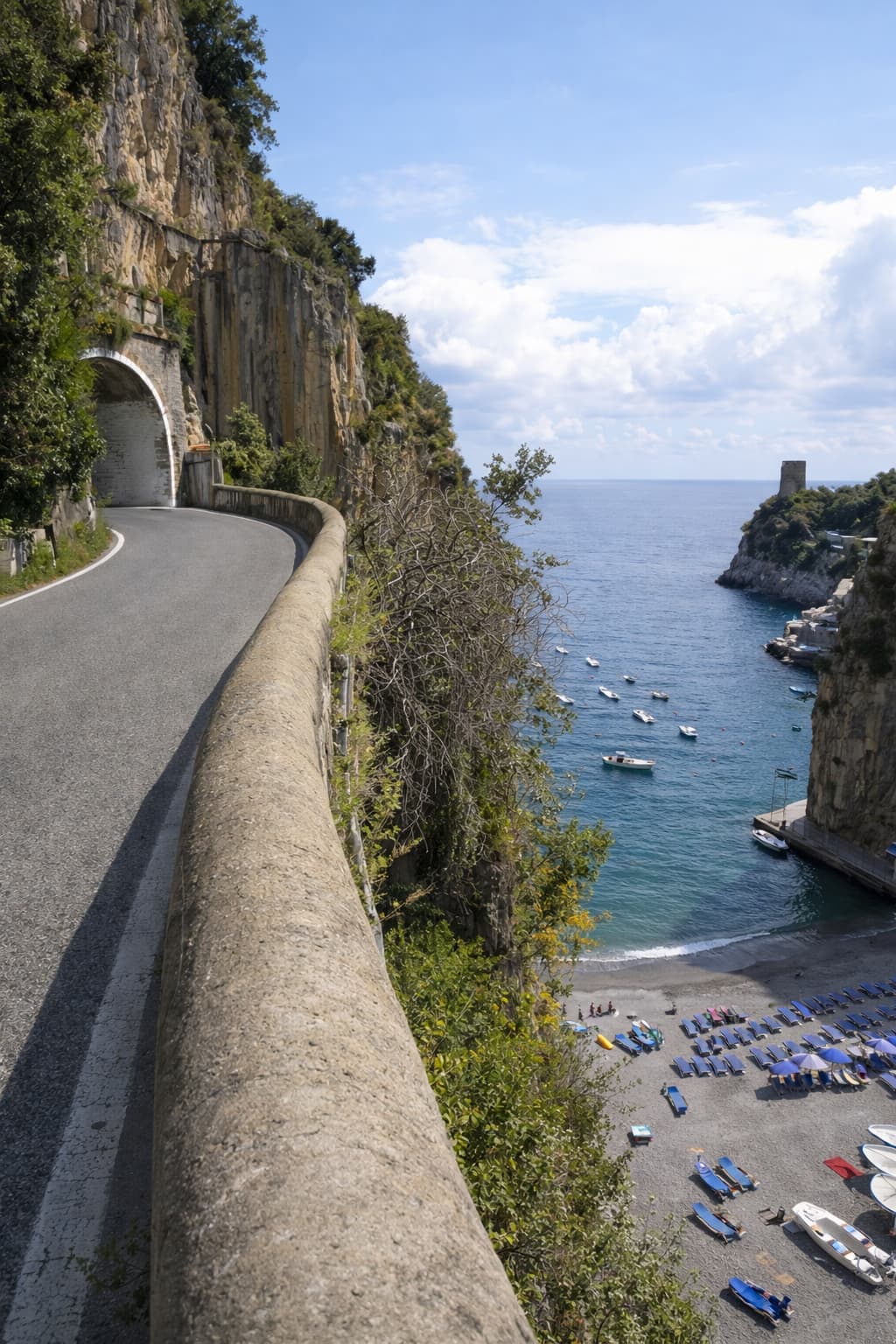
The most photographed town on the coast — pastel-coloured houses stacked vertically above a small beach, visible from the road as you approach from the east. Parking is genuinely difficult; the best approach is to stop at one of the car parks on the upper road and walk down into the town. Allow at least ninety minutes if you want to reach the waterfront. In peak summer, Positano is extremely crowded — if crowds bother you, the view from the road above is almost as good as the town itself.
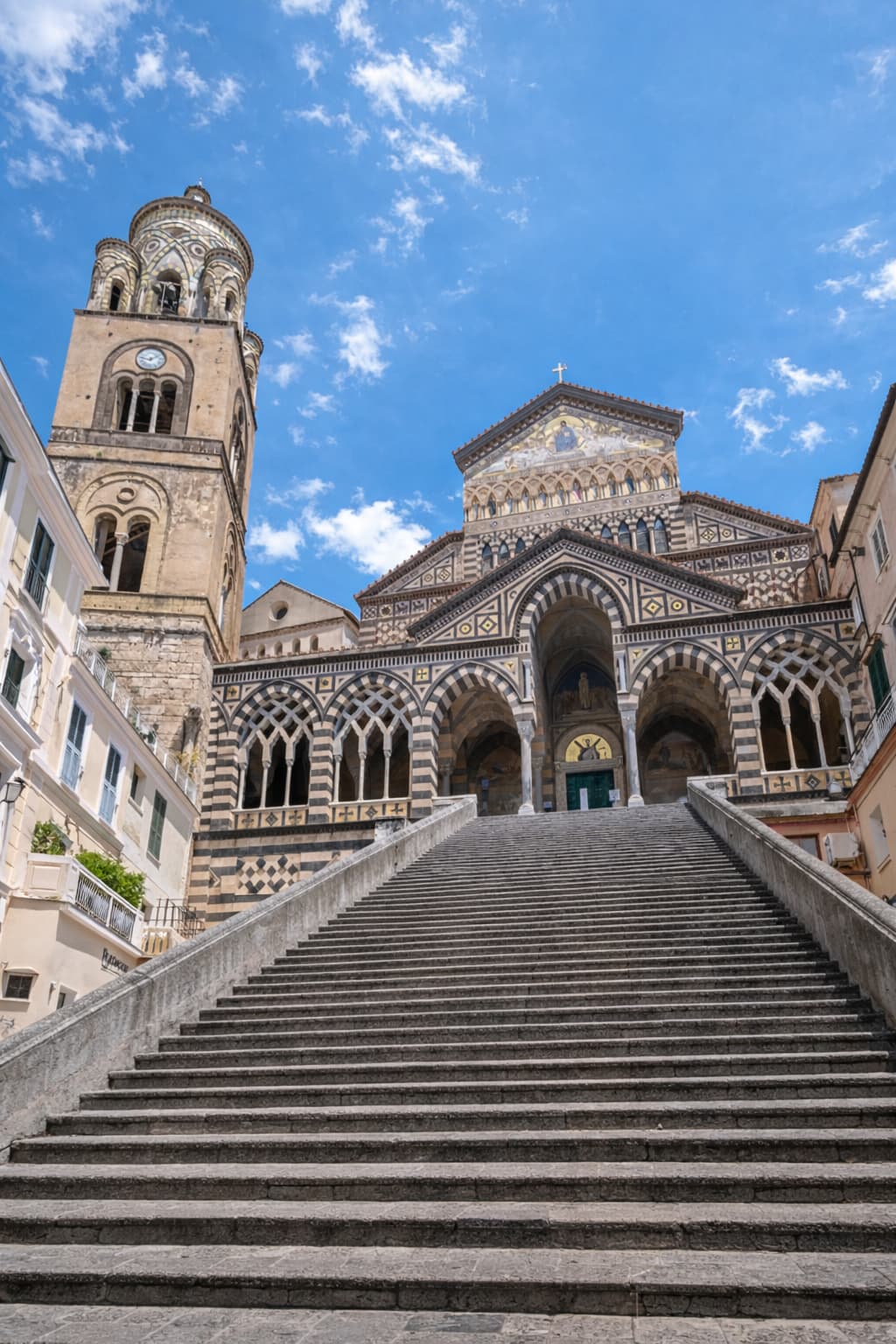
The natural midpoint and the most practical stop on the route. The cathedral steps, the narrow streets running uphill from the main piazza, and the handmade paper shops — Amalfi has a centuries-old paper-making tradition that most visitors miss entirely — reward a proper hour and a half rather than a quick pass-through. Moreover, this is where to eat lunch: the restaurants a street or two back from the waterfront are noticeably better value than the ones on the main square facing the sea.
Ravello sits above the coast road on a ridge, reached by a short drive up from Amalfi. It is quieter than anywhere on the main road — the tour buses rarely make it up — and the views from the Villa Rufolo gardens look directly down the coastline. Additionally, the village itself has an unhurried quality that the coast towns lack in summer. If you have time for only one detour off the main road, Ravello is the one worth making.
04 — Practical Planning Notes
Driving vs the alternatives
You don’t have to drive the Amalfi Coast. Ferries connect Salerno, Amalfi, Positano, and Sorrento and offer a perspective from the water that the road doesn’t give you — you see the full scale of the cliffs from below, which is genuinely different. Similarly, the SITA bus runs the entire coast road for under €3 and removes the stress of driving entirely. Guided tours are another option. However, driving creates an experience that none of the alternatives replicate: the road itself — the turns, the exposure, the constant small adjustments — is something you can only feel from behind the wheel. If the road is the reason you’re coming, driving is the only answer.
When to go — the honest seasonal guide
May and early June are the best months. The weather is warm, the sea is swimmable from late May, the coast road is busy but manageable, and the towns feel like themselves rather than overflow points for summer tourism. September is equally good — the summer crowds begin to thin from mid-month, the light shifts to something lower and warmer, and accommodation prices drop noticeably.
July and August present a different experience. The road becomes genuinely congested in the middle of the day, parking disappears by 9am, and the heat on the coast can be exhausting rather than pleasant. That said, summer is not impossible — it requires leaving very early, accepting that you’ll share the road with a lot of other people, and adjusting expectations accordingly. October is quieter still, though some smaller restaurants and accommodation options begin to close toward the end of the month.
Large vehicles — campervans over a certain length, coaches — face restrictions on sections of the SS163, particularly between Amalfi and Positano. Standard passenger cars have no restrictions. Fuel up before you join the coast road — petrol stations are rare on the SS163 and awkward to exit safely. Also check that your rental agreement permits driving the coastal road; a small number of budget operators restrict it.
Parking — the biggest friction point
Parking is the aspect of the Amalfi Coast drive that most guides underplay. In high season, Positano’s upper car parks fill before 9am. Amalfi town has a central underground car park but it is limited and expensive. The practical solution most visitors don’t know: park at Vietri sul Mare at the eastern end of the coast road, where spaces are readily available and significantly cheaper. From there, drive west with the sea on your right — the more dramatic direction — and either return the same way or take the SITA bus back to your car if you want to continue into Naples.
Ravello, reached by a short detour off the main road, has easier parking than anywhere on the SS163 itself — another reason to include it rather than skip it. In general, arriving before 9am solves most parking problems on this road. Arriving at 11am in August does not.
05 — Is It Worth It?
The case for going
The Amalfi Coast drive is, without much competition, the most visually dramatic road in Europe that a regular driver can access without special skills or a motorcycle. The combination of the cliff scale, the sea colour, the villages built into the rock, and the physical involvement of the road itself creates an experience that is genuinely difficult to replicate anywhere else. Furthermore, it is not a long drive — fifty kilometres, done in a day, connects naturally to both Rome and Naples. The effort-to-reward ratio is exceptionally high.
The honest caveats
In peak summer, the experience changes significantly. Traffic can reduce the drive to a slow crawl in the middle of the day, the parking situation becomes genuinely stressful, and the towns — particularly Positano — can feel overwhelmed rather than charming. Additionally, the heat on exposed cliff roads in July and August is not comfortable. None of this makes the drive not worth doing — it makes timing the single most important decision about the trip. Go in May or September, start early, and the caveats largely disappear.
Go in May, September, or October. Start before 9am. Keep your plan loose — the road will adjust it anyway. Choose two stops and do them properly rather than three stops rushed. And if you’re driving with other people: let the road do what it does. The silence it creates is part of the experience.
What stays with me is not a specific town, but a short stretch of road between Amalfi and Positano — no traffic ahead, just sea on one side and mountain on the other, the engine noise and the wind. It doesn’t last long. However, it defines the entire experience.
Some roads exist to get you somewhere. This one exists in its own right.