
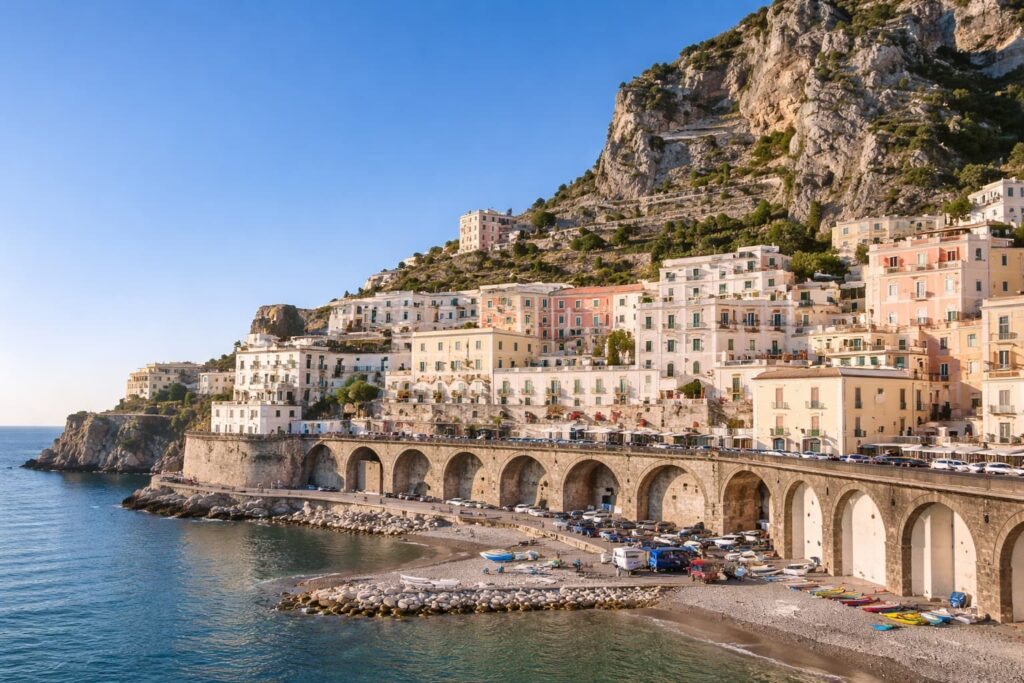
Amalfi Coast Without the Hotel: The Day-Trip That Actually Works
You don’t need to pay €200 for a night on the Amalfi Coast. Here’s what a day-trip costs, how to make it work, and what you honestly miss by not staying.
01 — The Question This Post Answers
An Amalfi Coast day trip is entirely possible — and for most road trippers, it’s the right call. The coast is one of the most expensive stretches of coastline in Europe to sleep on. Mid-range accommodation in Amalfi town in summer runs €150–250 per night. In Positano, that figure climbs to €200–350. Even Ravello, which sits above the main tourist drag, runs €120–200 for anything decent. For a road trip with multiple stops and multiple costs, those numbers change the entire budget shape of the trip.
A day trip is not a compromise version of the Amalfi Coast experience. It is a different version — one that prioritises the road and the town over the evening light and the swimming. Whether that trade-off makes sense depends entirely on what you want from the visit and what you can reasonably spend.
What overnight gives you that a day trip doesn’t
Staying on the coast gives you the Amalfi that day visitors never see: the evening after the tour buses leave, when the towns quiet down and the light turns amber on the cliffs. It gives you swimming — the water is genuinely excellent and a morning swim before the day-trippers arrive is one of the better experiences on the coast. Furthermore, it gives you flexibility; an overnight means you can drive the road at dawn, which is when it is at its best.
What a day trip gives you that overnight doesn’t
A day trip gives you the drive, the town, the lunch, and the view — which accounts for the majority of what most people come for. It also saves €150–300 per night, which on a longer Italy road trip is a meaningful sum. Moreover, the day-trip structure forces a clarity of purpose: you know what you’re there for, you do it, and you move on. There is no dissatisfying afternoon spent in an expensive room wondering if you should have kept driving.
Mid-range accommodation in Amalfi town in summer: €150–250 per night. In Positano: €200–350. In Ravello: €120–200. The day-trip alternative — parking at Vietri, driving the coast, eating lunch in Amalfi town, driving on — costs roughly €40–65 per person including fuel, parking, and food. The gap is real, significant, and worth naming honestly before deciding.
02 — Amalfi Coast Day Trip Logistics: How to Actually Do It
The practical challenge of an Amalfi Coast day trip is not the distance or the driving — it is parking. Amalfi town’s car parks fill by mid-morning in season, charge by the hour, and sit at the bottom of a steep approach road. As a result, solving the parking problem becomes the central logistical task, and there are two clear ways to do it.
The entry point most visitors don’t use — Vietri sul Mare
Vietri sul Mare sits at the eastern end of the SS163, where the coast road begins. Most visitors pass through it without stopping on the way to Amalfi. However, as an entry point for a day trip, it changes everything. Parking here costs €5–8 for a full day — a fraction of the Amalfi town rates — and the town itself sits directly on the SITA bus route that runs the entire length of the coast.
In practice, the structure becomes straightforward: park at Vietri, then either drive or take the bus west toward Amalfi and Positano. Spend the day along the coast, and later return to Vietri by bus in the afternoon. After that, collect the car and continue the road trip. No scramble for parking in Amalfi town. Hourly rates disappear. Just as importantly, the stress of reversing out of a full car park on a narrow road disappears as well.
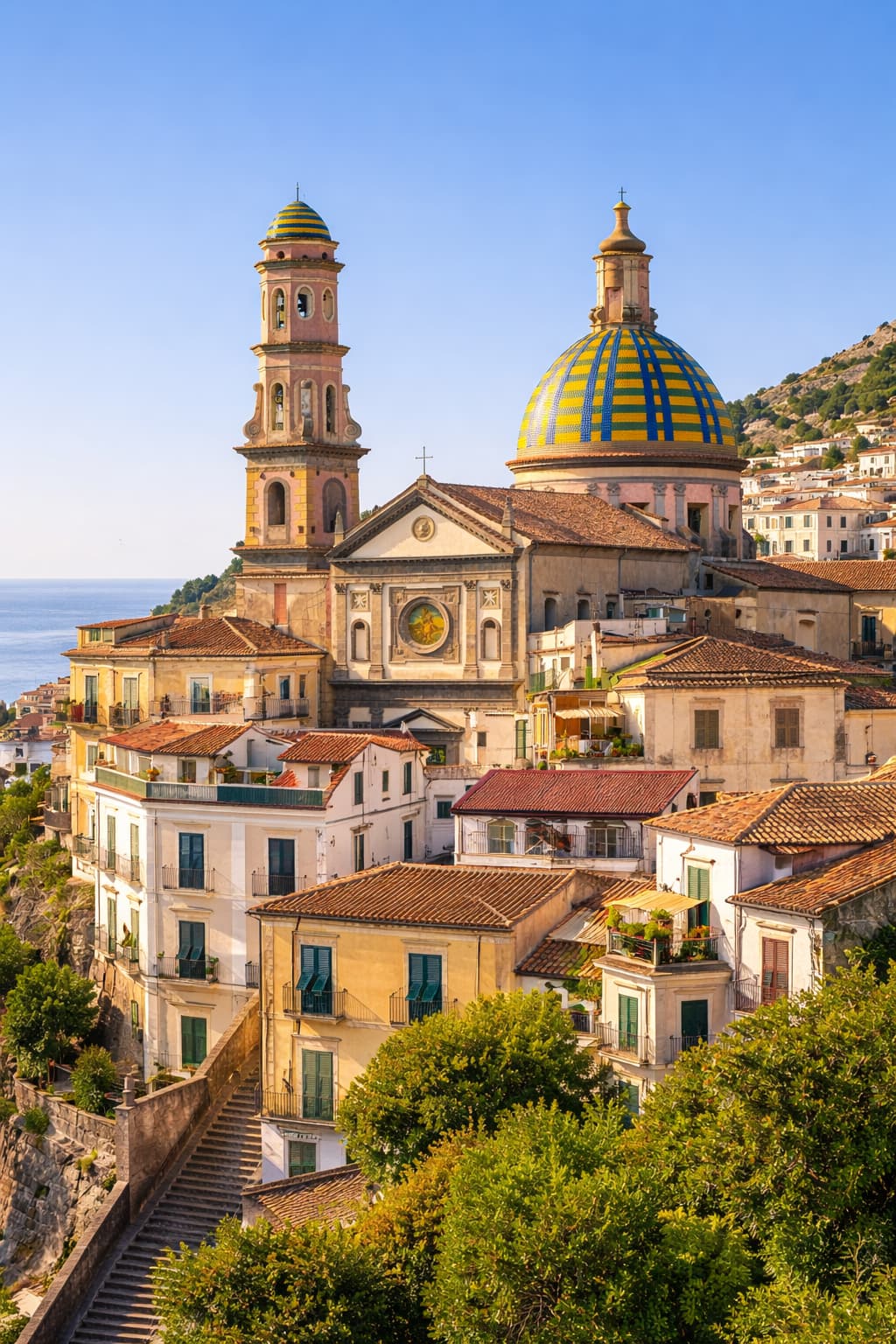
The SITA bus — the option that removes the parking problem entirely
If driving the coast road yourself is not the priority — or if you want to drink with lunch — the SITA bus becomes a serious alternative. At under €3 for a single journey, it runs the full SS163 between Salerno and Sorrento and stops at every town along the route. Additionally, it allows you to experience the coast without dealing with tight roads or traffic pressure.
That said, the best version for many people is a hybrid approach. Take the bus one way, then drive the other. Alternatively, base yourself in Salerno and use SITA connections for the entire day. In both cases, costs stay low while you still experience the same coastline.
You can check the SITA Sud timetable before you go — schedules vary by season. For current parking rates at Vietri, the Vietri sul Mare comune website publishes updated information.
What time to arrive and when to leave
For a day trip, arriving at Vietri by 8:30am gives you the coast road at its calmest before the main tourist traffic builds. Meanwhile, leaving Amalfi town by 3:30–4pm helps you avoid peak return traffic and reach Vietri before buses become crowded.
Overall, a day that starts at 8:30am and ends around 4pm gives you roughly seven hours on the coast. That is enough for the drive, 90 minutes in Amalfi town, lunch, and at least one additional stop — without the day feeling rushed.
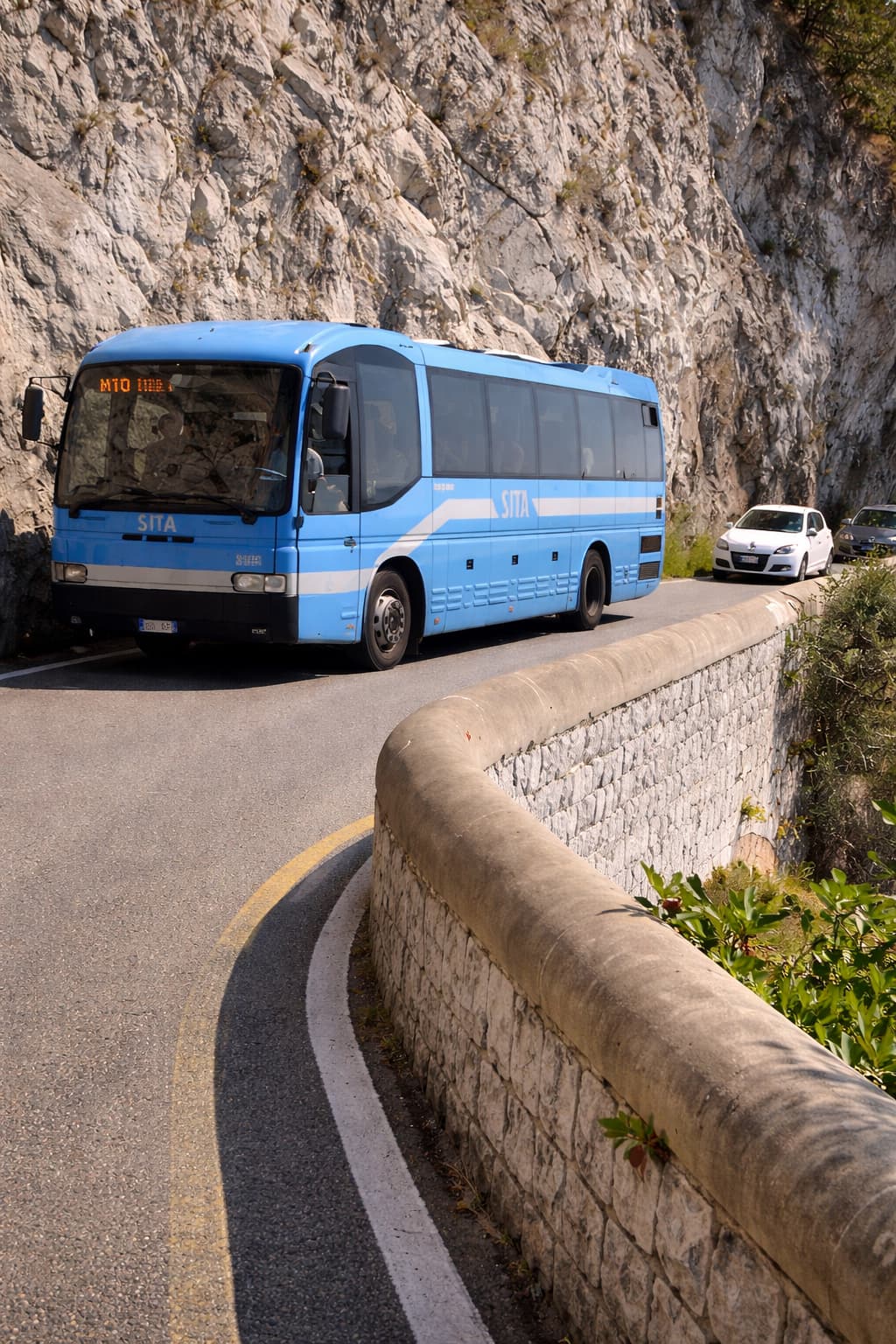
03 — What to Do With the Day
A day trip does not support trying to see everything. Two stops maximum is the right structure — one of them Amalfi town, which is the only stop on the coast that warrants more than 30 minutes, and one other depending on direction and interest.
The one stop worth 90 minutes — Amalfi town
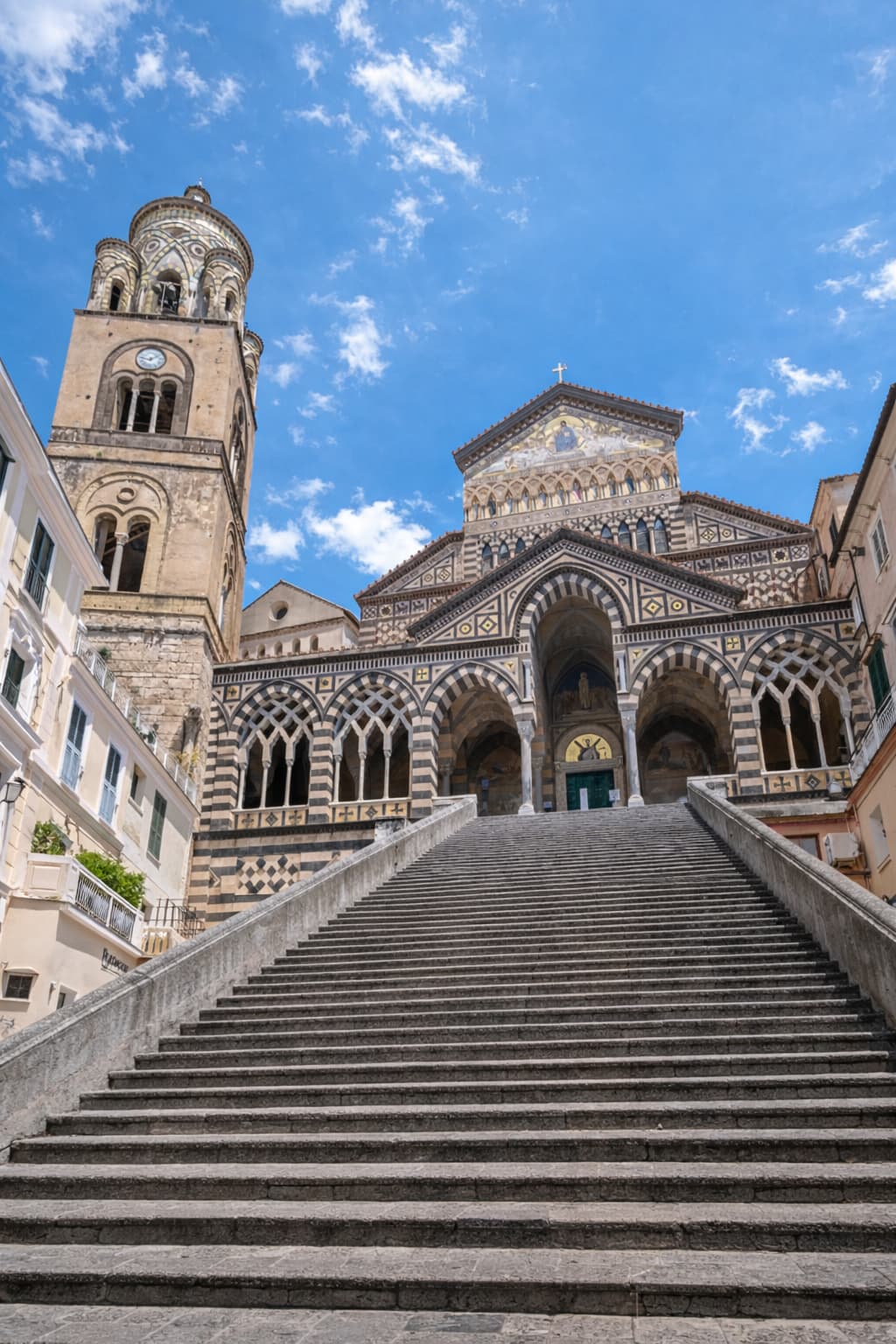
Amalfi town is the natural anchor of a day trip. The Cathedral of Sant’Andrea is worth entering, the waterfront piazza is good for coffee, and the streets behind the main square are quieter than the tourist-facing front and give a better sense of what the town actually is. Lunch here is the right call — restaurants are more varied than Positano’s and the piazza is a reasonable place to sit for an hour.
For the full description of stops along the coast road — Positano, Ravello, the unnamed lay-bys that are often better than the named towns — see the Amalfi Coast driving guide. This post covers the logistics of the day trip; that one covers what you’ll find when you stop.
How to fit this into the wider road trip
The Amalfi Coast day trip slots most naturally into a Rome–Naples–Pompeii road trip as the coastal leg between those two cities. Coming from Rome via Salerno, entering at Vietri, driving through to Amalfi, then continuing to Naples uses the coast as a route rather than a destination. No hotel booking required, no retracing — the coast delivers within a single day and the road trip continues.
We did the Amalfi Coast as a day trip as part of the broader southern Italy loop — drove from Salerno, spent 90 minutes in Amalfi town, ate lunch there, drove on to Naples. We didn’t stay overnight. Looking back, we don’t regret it — the coast delivered what it promised within the day we gave it.
What we missed by not staying: the evening light on the cliffs, swimming, the quieter version of Amalfi after the day-trippers leave. Those are real losses. They are also €200 losses, and on a trip with other costs, the day version was the right call for us. Your calculation may differ — but it is worth making it honestly before booking, rather than discovering afterwards that the overnight added pressure to enjoy a very expensive room.
04 — Real Cost Breakdown
The full day-trip cost table
| Parking at Vietri sul Mare | €5–8 for a full day. Plentiful, easy to find, no time pressure. |
| Fuel (Salerno or Naples to Vietri and back) | €8–15 depending on vehicle and starting point. Short distances. |
| SITA bus (if used instead of driving the coast) | Under €3 per journey. Buy tickets at a tabacchi before boarding. |
| Lunch in Amalfi town | €12–20 per person for a sit-down lunch at a non-tourist-facing trattoria. Pizza al taglio alternative: €5–7. |
| Coffee and drinks | €4–8 across the day standing at bars rather than table service. |
| Entry to anything | The coast road, towns, and beaches are free. Ravello’s Villa Rufolo: €7 if you go up. |
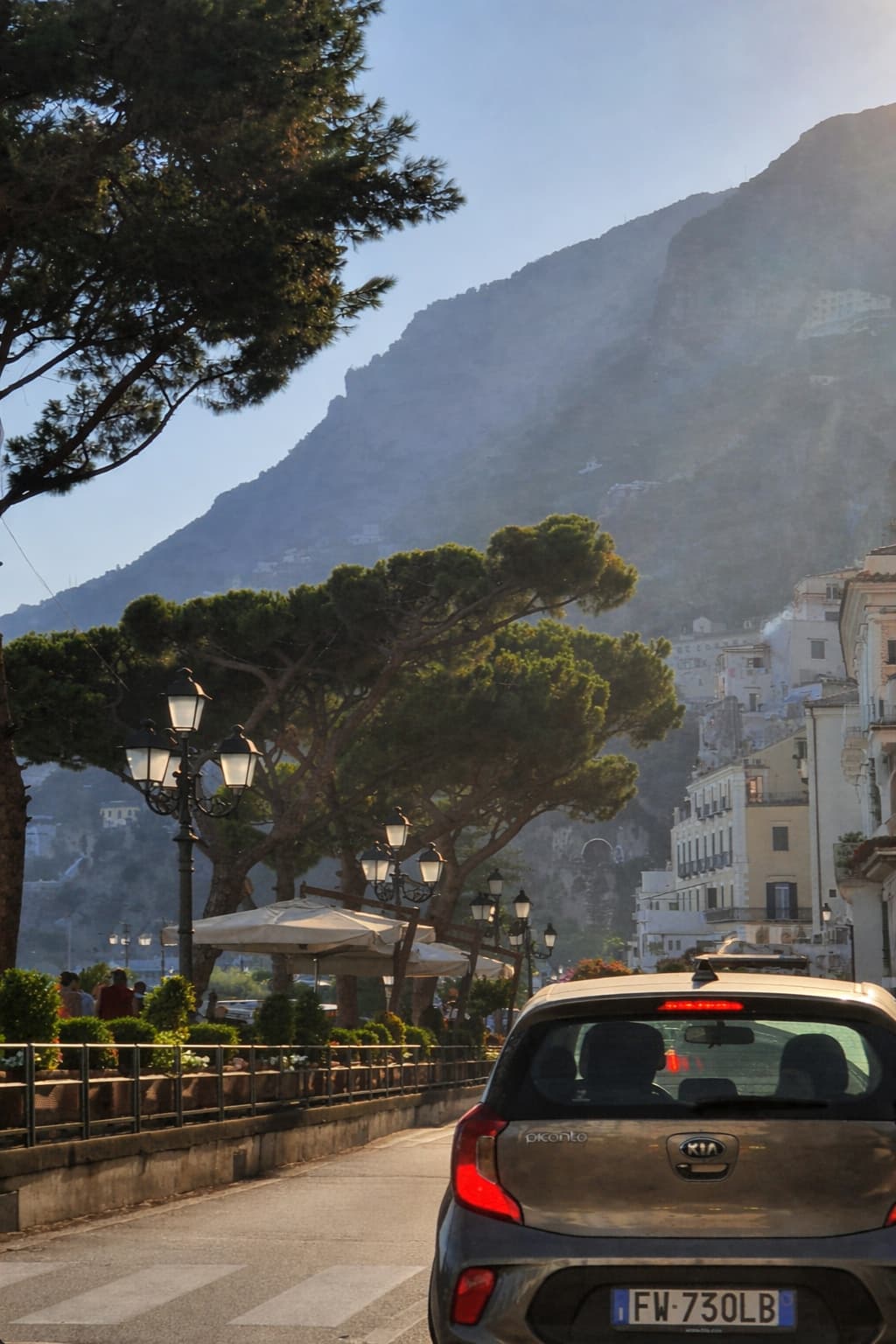
The Amalfi Coast doesn’t require an expensive hotel to deliver what it promises.
It requires a good entry point, an early start, and knowing which stop is worth your time.