

Madeira in Winter: Is It Warm Enough, and Which Month?
Winter in Madeira is mild, green and walkable, but it is not a beach holiday. Here is what December, January and February are really like, and what to plan around.
Why Madeira Works as a Winter Escape
Madeira in winter suits walkers, people escaping a cold climate, and anyone who wants fireworks on New Year’s Eve. It does not suit anyone who wants to lie on a beach. Days are mild rather than hot, the Atlantic is cool, and the weather changes sharply from one side of the island to the other.
Every brochure repeats the phrase “eternal spring”. It is catchy, but it hides the details that decide whether your trip works. In January, spring means a light jacket in Funchal, a heavier layer in the hills, and a real chance of rain on the north coast.
The good news is that the three winter months are quite different from each other. December brings the lights and the crowds. January is the quietest stretch. February adds Carnival and slightly drier days. Pick the right month and Madeira in winter is easy to love; pick the wrong one and you pay peak prices for an ordinary week. For the island’s sights and towns, the Madeira travel guide covers everything this seasonal guide leaves out.
- How Warm It Really Is
- December, January or February: Which Month
- New Year’s Eve in Madeira
- Hiking in Winter: Bookings, Fees and Closures
- The Catch: The Airport and Winter Wind
- What to Do When It Rains
- Madeira or Somewhere Else for Winter Sun?
- Getting There and Adding Mainland Portugal
- What to Pack
- FAQ
01 — How Warm Is Madeira in Winter, Really?
In Funchal, winter days sit between 20°C and 21°C on average, according to the long-term records of the Portuguese weather service. December is the warmest month of the three, with highs near 21°C and lows around 15°C. January averages a high of 20°C and a low of 14°C. February is almost identical, at roughly 20°C and 14°C. Frost does not happen at sea level.
Those are averages, though, and the island is not one climate. Altitude and coastline matter more than the calendar, so it helps to think of Madeira in winter as three different places stacked on top of each other.
The south coast versus the north and the mountains
Funchal and the south coast sit in a rain shadow, so they get the most sun and the least rain. The north coast and the high interior catch the clouds that roll in off the Atlantic, which means grey skies and heavier showers. Consequently, a grey morning in the hills often turns into a bright afternoon on the coast, just thirty minutes away by car.
The mountains add a third layer. Snow is possible on the highest peaks, even while it is warm and sunny at sea level. On a clear day, you can stand in a T-shirt in Funchal and see a white dusting on the ridge above you.

Can you swim in Madeira in winter?
Yes, technically. The sea is about 19°C in December and drops to around 18°C by February. That is cold enough to make most visitors give up after a minute. Many hotels have heated pools, and the natural lava pools along the coast are lovely to look at, but you should treat swimming as a bonus rather than a plan.
Daylight is the other winter trade-off. Days are short, with sunset arriving shortly before six in the evening in December, so plan outdoor activities for the morning and early afternoon. Evenings suit slow dinners, old-town walks and the festive lights rather than long hikes.
02 — Madeira in Winter by Month: December, January or February
All three months share the same mild temperatures, so the real difference lies in crowds, prices and what is happening on the island. The table below sums it up, and the notes underneath explain the reasoning.
| Month | Weather | Crowds and prices | What’s on |
|---|---|---|---|
| December | Warmest of the three, but the wettest (about 95 mm over 8–9 rain days) | Busiest and most expensive, especially around Christmas and New Year | Christmas lights from 1 December, Noite do Mercado on 23 December, New Year’s Eve fireworks |
| January | Mild, with about 67 mm over 6 rain days, mostly in short showers | Quietest and best value after 7 January | Lights until 10 January, Chants of Epiphany on 5 January |
| February | Slightly cooler, and the driest of the three (about 72 mm over 5–6 rain days) | Moderate, with a bump around Carnival | Carnival from 3 to 14 February 2027 |
December: festive, wet, and expensive
Funchal’s Christmas lights run from 1 December 2026 to 10 January 2027, and the streets look their best after dark. Noite do Mercado, the market night on 23 December, fills the old town with food and music. Then comes New Year’s Eve, which is the single biggest event of the winter.
However, this is also the wettest month, with around 95 mm of rain on average, and hotels charge their highest prices. If you want the festive atmosphere and you accept both facts, December is a strong choice. Otherwise, wait.
January: the quiet window after 7 January
Once the holiday crowds leave, the island exhales. Trails are emptier, tables are easier to find, and accommodation costs noticeably less. Rain does fall, with roughly 67 mm in an average January, but it mostly arrives as short, heavy showers followed by sunshine rather than days of drizzle.
Early January still has the lights and the Chants of Epiphany on 5 January. After 7 January, though, the quiet weeks are the best-value time to visit Madeira in winter.
February: Carnival and a drier spell
February is the driest of the three months by rain days, and the light starts to stretch. Funchal’s Carnival runs from 3 to 14 February 2027, with the main Allegoric Parade on 5 and 6 February and the Slapstick Parade on 9 February. Dates come from the official regional calendar and can change, so check before you book.
A simple way to choose is by traveller type. Festive travellers should book December, ideally the week of 23 December through New Year. Budget-minded walkers should pick mid-January. Anyone who wants a lively atmosphere without the New Year’s Eve crush should aim for Carnival in February, since the island feels busy but not packed.
The island’s biggest night, centred on Funchal bay. Start time had not been published at the time of writing.
A quieter, traditional evening of song, and a gentle way to end the festive season.
Parades, costumes and music in the streets, with the main parades on 5, 6 and 9 February.
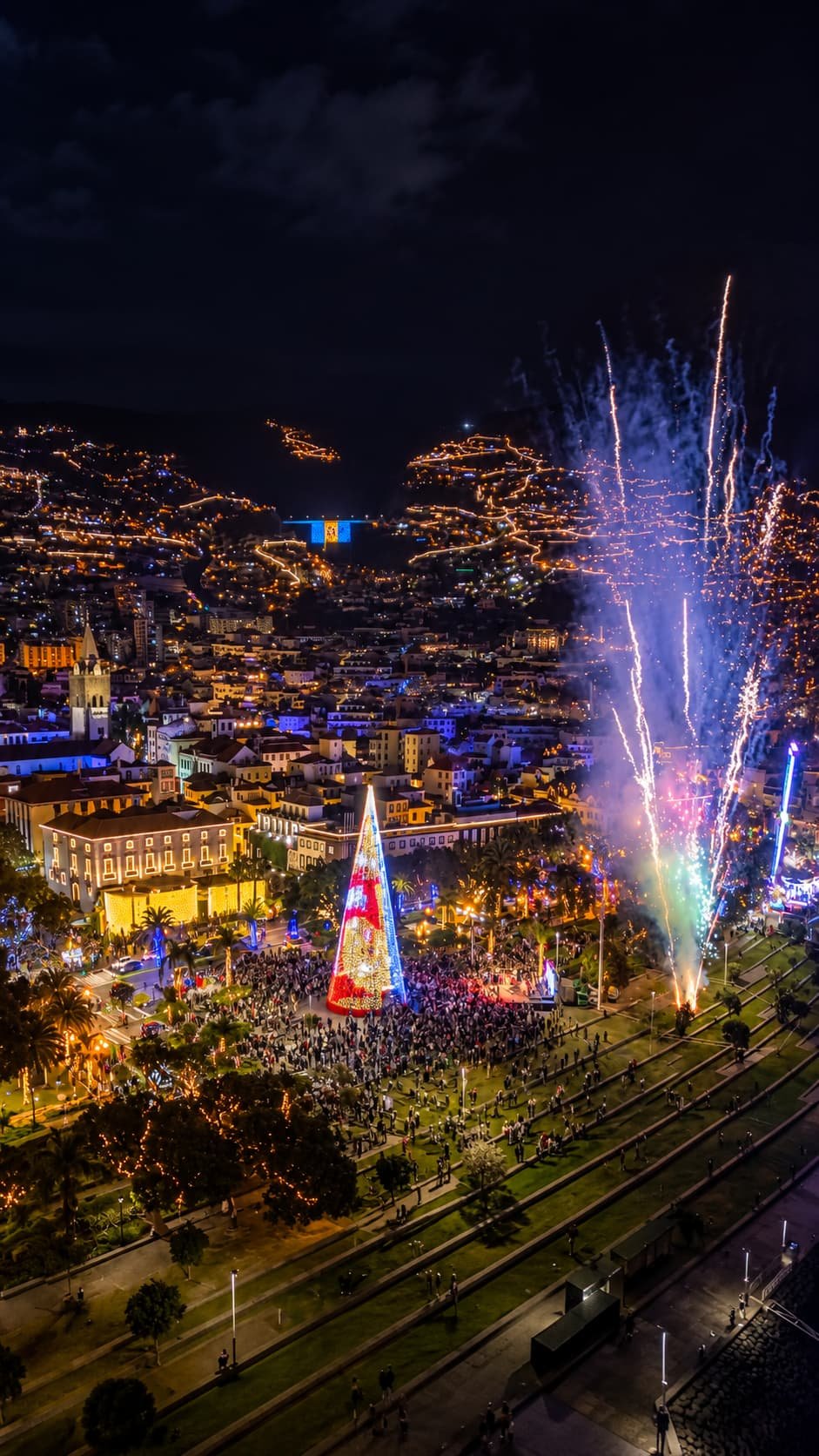
03 — New Year’s Eve: The Biggest Night of Madeira in Winter
Madeira’s New Year’s Eve display is one of the best-known in Europe, and it earned a Guinness World Record in 2006 as the world’s largest. It is not a gimmick. Last year’s show lasted eight minutes and fired 97,000 shots from 58 launch sites, using about 22 tonnes of pyrotechnics.
What the night is really like
Funchal bay becomes an amphitheatre. A fleet of cruise ships anchors in the harbour, and more than 30,000 people gather around the port, including about 22,000 cruise passengers. Because the show is staged across the hillside as well as the water, you can see parts of it from many viewpoints, though the best angles near the harbour fill early.
The start time for this year had not been published at the time of writing. Earlier displays began around midnight, so check the official programme closer to the date.
The honest downsides
Accommodation is close to fully booked every year, and boat trips sell out weeks ahead. Crowds are heavy, and moving around the centre after the show takes patience. Weather is the other risk. Last year, low cloud, wind and light rain cut visibility in some areas, so the view depends partly on luck.
To handle that, book early, stay within walking distance of the bay, and pick a viewpoint above the harbour rather than in the thickest crowd. Solo travellers will find the atmosphere friendly, although it is easier if you have a confirmed bed before you land.
Timing your arrival also matters. Landing on 29 or 30 December gives you a buffer if wind delays your flight, and it leaves a day to find your viewpoint in daylight. Arriving on 31 December itself is risky, because a single diversion could mean missing the show entirely.
Anyone weighing a cold European Christmas against a mild Atlantic one should know that the contrast is stark: Madeira offers a jacket and fireworks, while Prague in December offers snow and early dark.
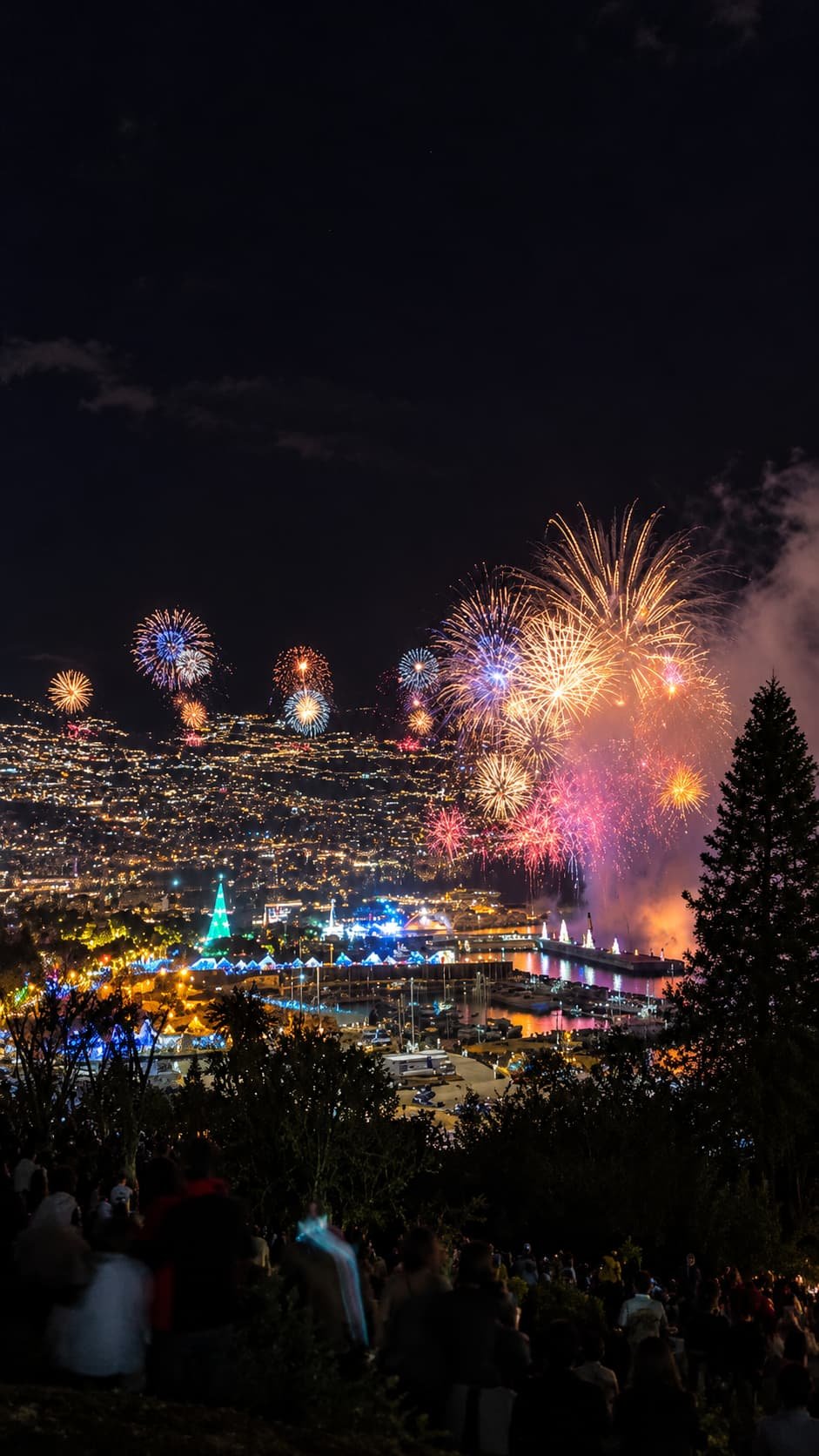
04 — Hiking in Madeira in Winter: Bookings, Fees and Closures
Winter is a good time to hike in Madeira because the heat is gone and the vegetation is green. It is also a time when the rules matter most, since you can no longer simply turn up and start walking.
Booking is mandatory, and it costs money
Every classified trail now requires a time-slot reservation through the official SIMplifica system before you start. In 2026, the fee is €4.50 per person for classified trails, and €10.50 for the PR1 route. Payment happens at the time of booking, and slots run in 30-minute windows. The 2027 fees had not been confirmed at the time of writing, so check the official site when you book.
Closures are part of the plan
Trail closures are common after heavy rain and storms, and the regional authority can close a route at short notice. Always check the status of your chosen trail on the morning you walk, and keep a lower-level backup in mind. Therefore, a flexible itinerary works far better than a rigid one.
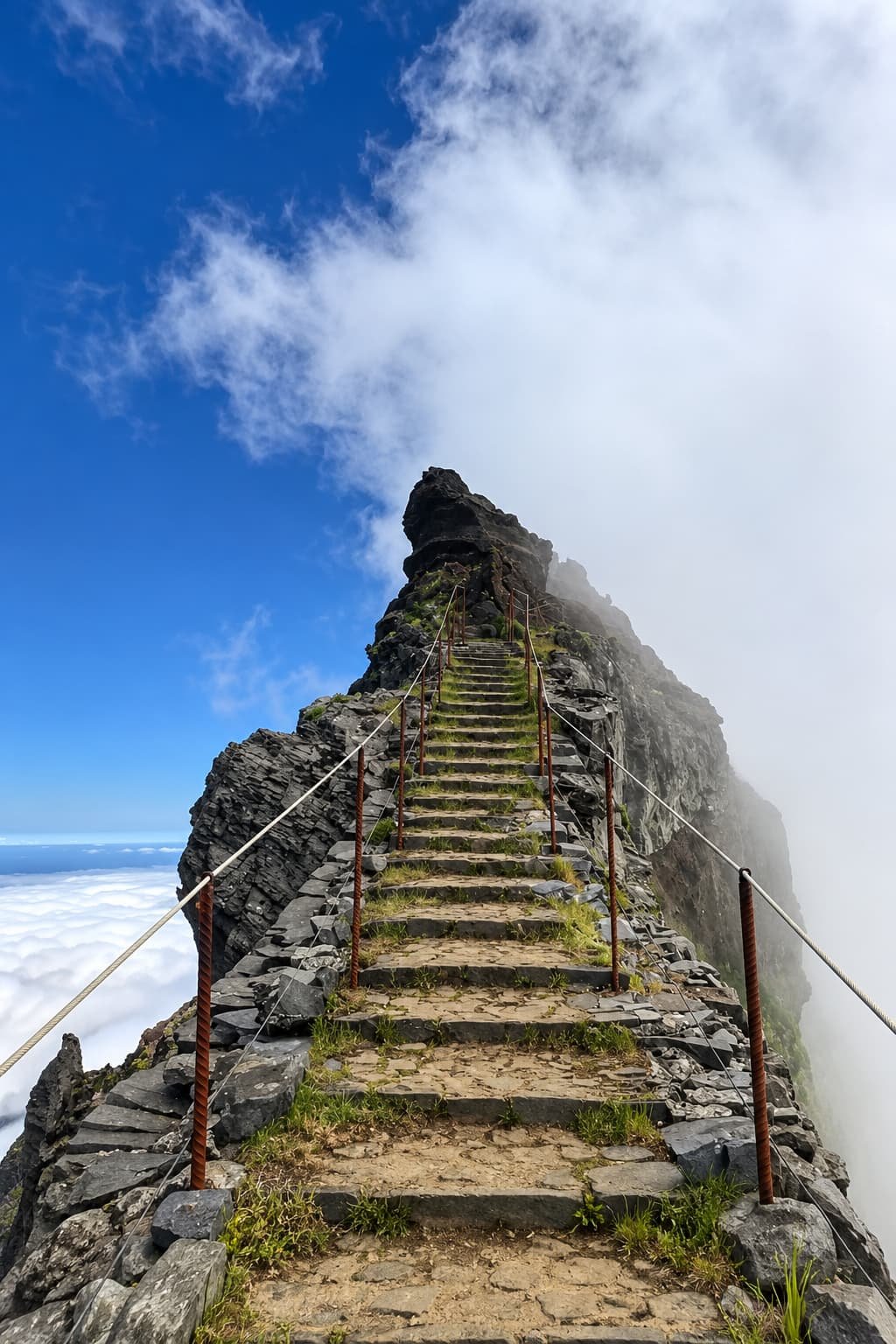
High peaks versus low levadas
Altitude changes everything. Trails near Pico do Arieiro sit above the clouds, so they can be cold, windy, icy in places, and sometimes closed. Meanwhile, the lower levadas, the old irrigation channels that wind through the hills, are far more sheltered and stay walkable through most winter weather.
As a rule, save the high ridges for a clear forecast and use the lower levada paths on uncertain days. For the best routes and what each one is like, see the Madeira travel guide, which handles the walks in full.
05 — The Catch: The Airport and Winter Wind
Funchal’s airport is one of the most wind-sensitive in Europe. The single runway sits beside ocean-facing cliffs, and part of it is raised on columns. As a result, strong, gusty winds can force pilots to delay, divert or cancel.
This is not only a winter problem. During Storm Regina on 2 and 3 March 2026, more than 170 flights were disrupted over two days, with around 70 cancelled on the second day. Yet summer is not immune either: 22 flights were cancelled on 9 June 2026, and on 1 July, 37 were delayed and five cancelled.
For that reason, treat the airport as part of your trip design rather than a footnote. Book flexible fares where you can, avoid arriving on the last night of a hotel booking, and check your airline’s alerts the evening before you travel. Wind is the cause in most cases, and it can ease within hours, so a calm approach usually pays off.
Never schedule a tight onward connection on the day you leave Madeira. Keep one spare day before any long-haul or non-refundable flight, because diversions to Porto Santo are common, and flights are sometimes sent to the Canaries, Faro or back to Lisbon.

06 — What to Do in Madeira in Winter When It Rains
When the north turns grey, head for Funchal and the south coast, the island’s “dry side”. The city has enough indoor options to fill a wet day without feeling like a compromise.
Winter rain in Madeira rarely means a ruined day. Showers are often short, and the sun can return within the hour, so it pays to keep plans loose and to check a regional forecast each morning. Even so, it helps to have a few indoor options ready for the days when the cloud settles in.
Funchal has small museums covering history, sacred art and local life, and most are easy to reach on foot from the centre.
Botanical gardens look especially green after rain, and showers often pass quickly, so you can walk between the covered areas.
Fruit, flowers and fish make the market a good place to spend a wet morning, and it is a reliable stop for lunch.
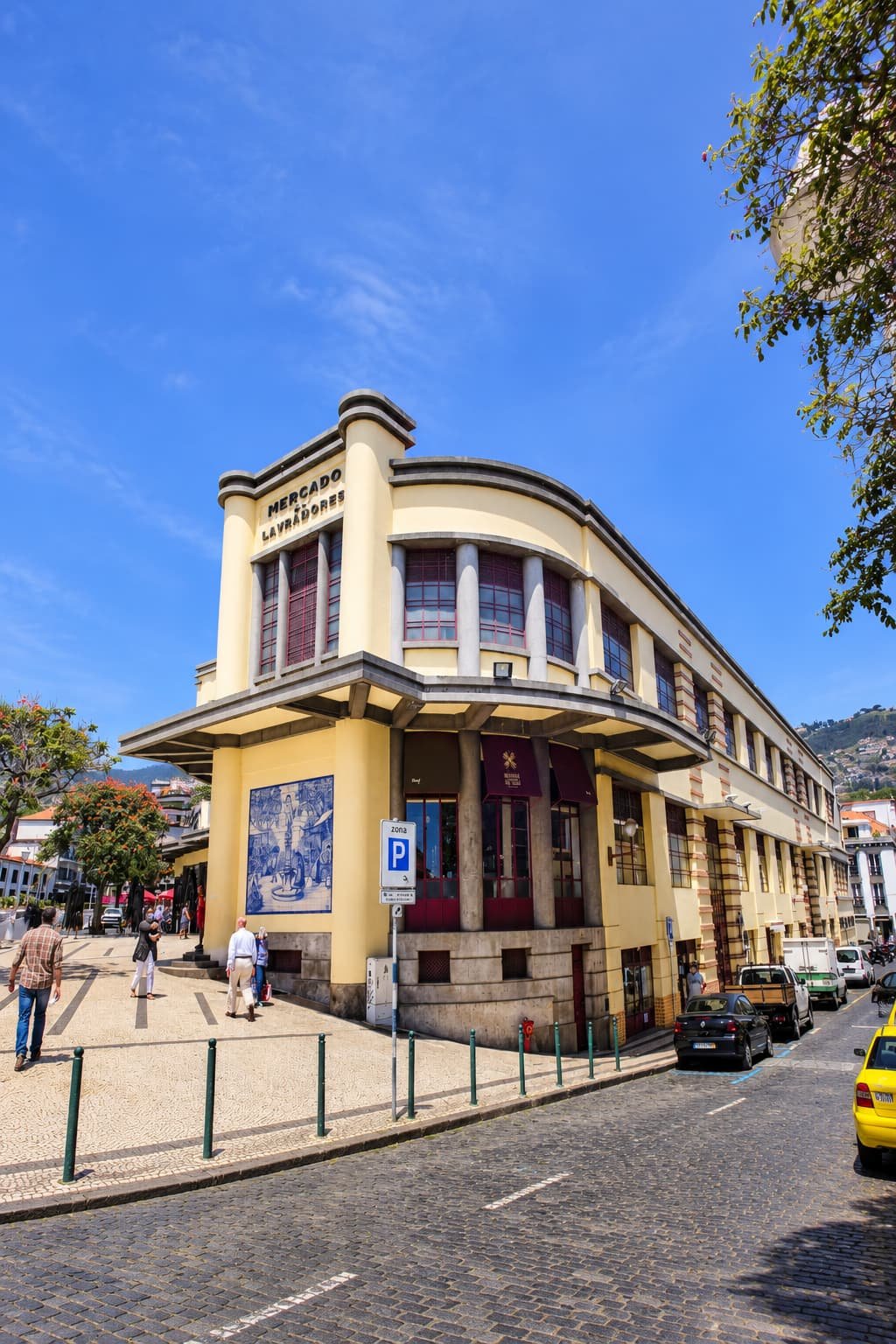
07 — Madeira in Winter or Somewhere Else for Winter Sun?
If you want guaranteed beach warmth, Madeira in winter is not the answer. The Canary Islands sit further south and usually run a few degrees warmer, so they suit swimming better.
That said, Madeira in winter offers things a beach resort cannot. The air is clean and mild, the hills are green after the autumn rains, and the walking is far more comfortable than in summer. If your idea of a winter break is a long walk, a hot meal and a bed with a view, the island delivers. If it is a sunbed and a cold drink, look elsewhere.
Madeira wins when you want green hills, walking and a mild escape rather than a hot one. For readers still choosing a December destination, where to go in December compares the wider options. For Portugal’s other Atlantic island group, the Azores São Miguel travel guide shows a cooler, wilder alternative. If you would rather have real snow than mild air, skiing in Europe ranks ten alpine resorts.
08 — Getting There and Adding Mainland Portugal
Most visitors fly via Lisbon, since the capital connects to Funchal several times a day. Because of the airport catch above, a few nights on the mainland also give you somewhere to wait if flights are disrupted. Our guide to 3 days in Lisbon fits neatly before or after the island, and the Portugal travel tips cover transport and practical basics.
One more cost to know about: Funchal charges a tourist tax of €2 per night for up to seven nights for guests aged 13 and over. The council has approved doubling it to €4, subject to a consultation, with the aim of starting in January 2027, plus a new exemption for stays extended by airport disruption. Check the current rate before you book.
A short mainland stay also helps with budgeting. Lisbon is easier to enjoy in winter than in summer, as queues are shorter and the city is cooler for walking. Combined with a week on the island, it makes a balanced trip: a few days of city streets, then several days of hills and ocean.

09 — What to Pack
Layers matter more than anything else. Bring a light jacket, a warm mid-layer for evenings and mountains, and a waterproof shell for sudden showers. Sturdy shoes with good grip are essential for wet levada paths. For a full checklist, see the Europe packing list.
New Year’s Eve, Hiking, Flights, and Winter Rain

Winter does not turn Madeira into summer. It turns it into a quieter, greener island that rewards the people who show up for what it really is.