
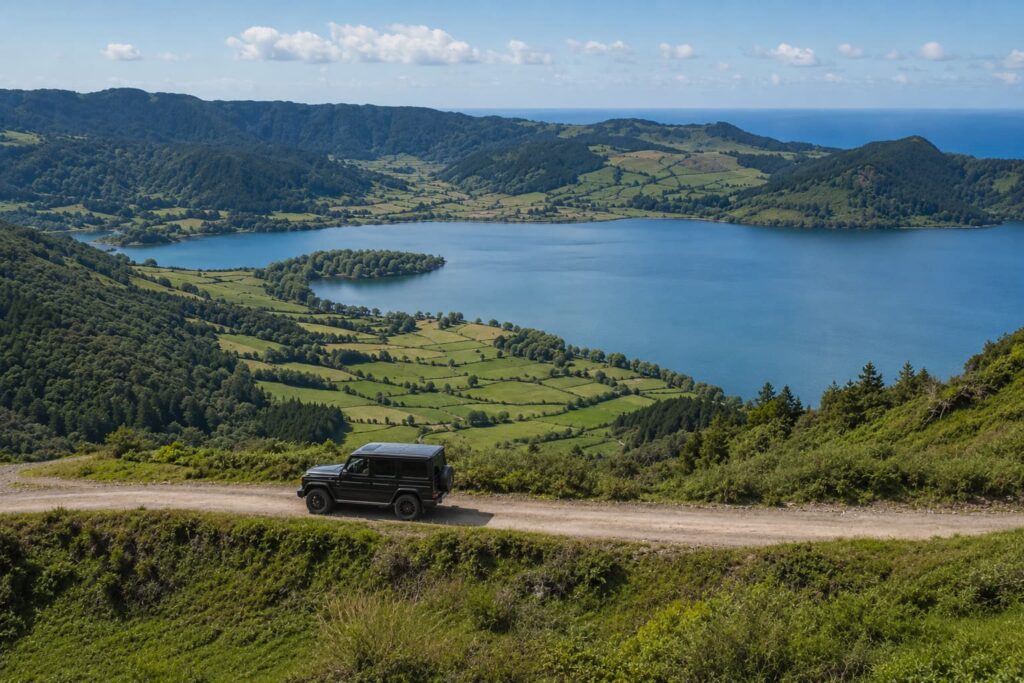
The Azores Travel Guide: An Honest Look at São Miguel (and Whether It’s Still the Quiet Island Everyone Promises)
An honest Azores travel guide to São Miguel — when to go, how many days you actually need, and whether one island is enough before you book the flight.
Why This Azores Travel Guide Starts with São Miguel
This Azores travel guide is written for the traveller who has seen the photos — the green-and-blue crater lakes, the steam rising off a valley floor — and wants to know what the place is actually like before booking a transatlantic flight. The Azores are a nine-island volcanic archipelago marooned in the mid-Atlantic, roughly 1,400 km west of mainland Portugal, and São Miguel is the largest island and the usual first stop. It is genuinely extraordinary. Even so, it is no longer the secret that every other guide insists it is, and the honest version of this story matters more than the brochure one.
So this is the honest version. Specifically, where the island still goes quiet, when to go to actually get the empty-island feeling, how many days you really need, and whether São Miguel on its own is enough or you should island-hop. In short, the answer to “is it worth it” is yes — but for specific reasons, and with a few expectations worth resetting first.
01 — Where Are the Azores, and What Are They Known For?
Before any Azores travel guide gets to the sights, it has to start with the geography, because the geography is the whole personality of the place. The Azores are nine volcanic islands sitting almost exactly in the middle of the North Atlantic, on roughly the same longitude band as Iceland and the eastern United States. That remoteness shapes everything. Madeira, Portugal’s other Atlantic island, is far closer to the African coast and feels more like a developed resort destination; the Azores, by contrast, feel like the ocean kept a few green mountains for itself and forgot to tell anyone.
São Miguel, meanwhile, is the largest island and the main gateway. Almost every international arrival lands at João Paulo II Airport (PDL), just outside the small capital of Ponta Delgada, and you can drive the length of the whole island in a little over an hour. That scale is part of why it works as a first trip — specifically, a single island gives you crater lakes, hot springs, whales offshore, and tea plantations within an easy day’s drive of each other.
What the islands are actually known for
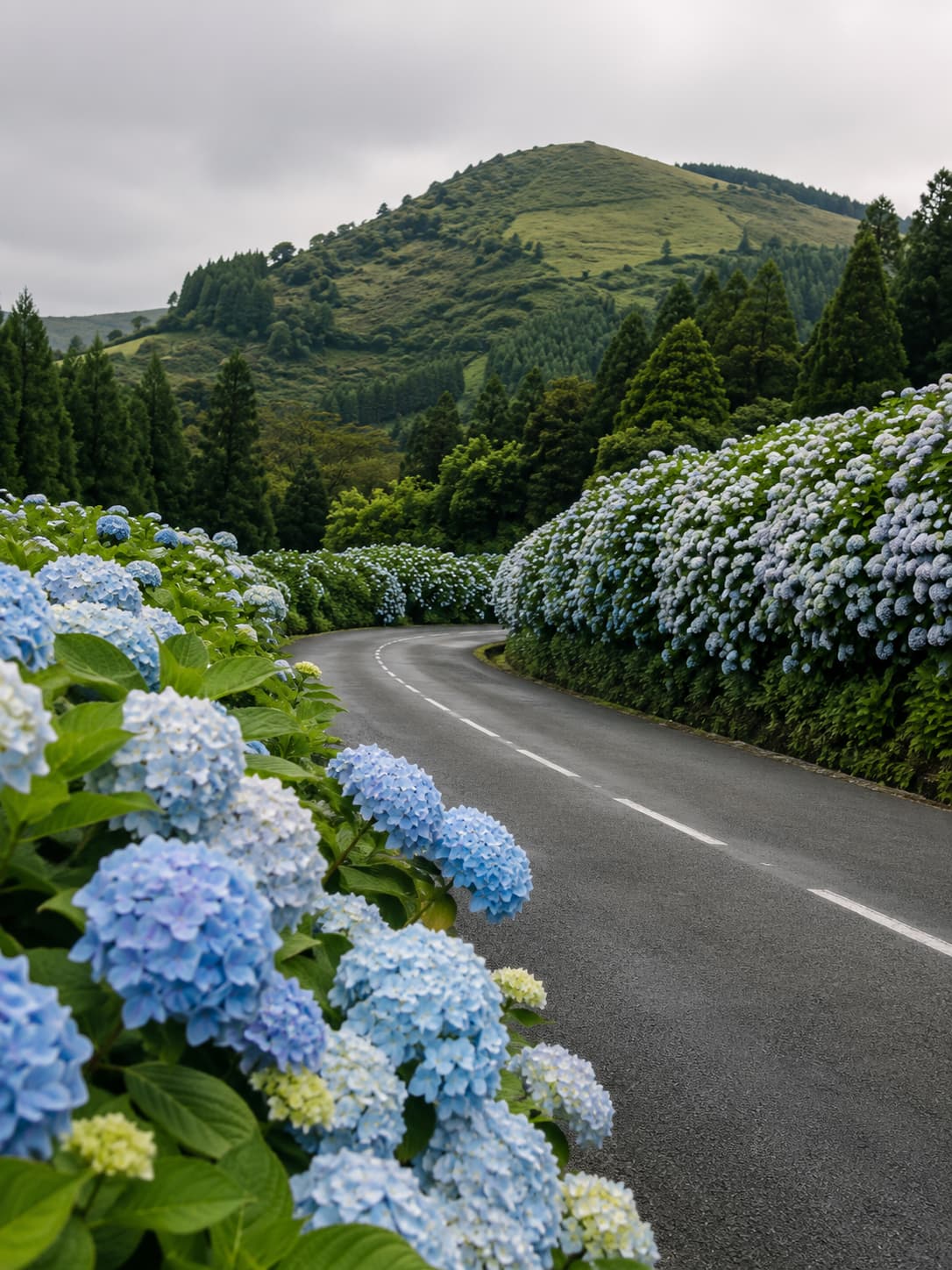
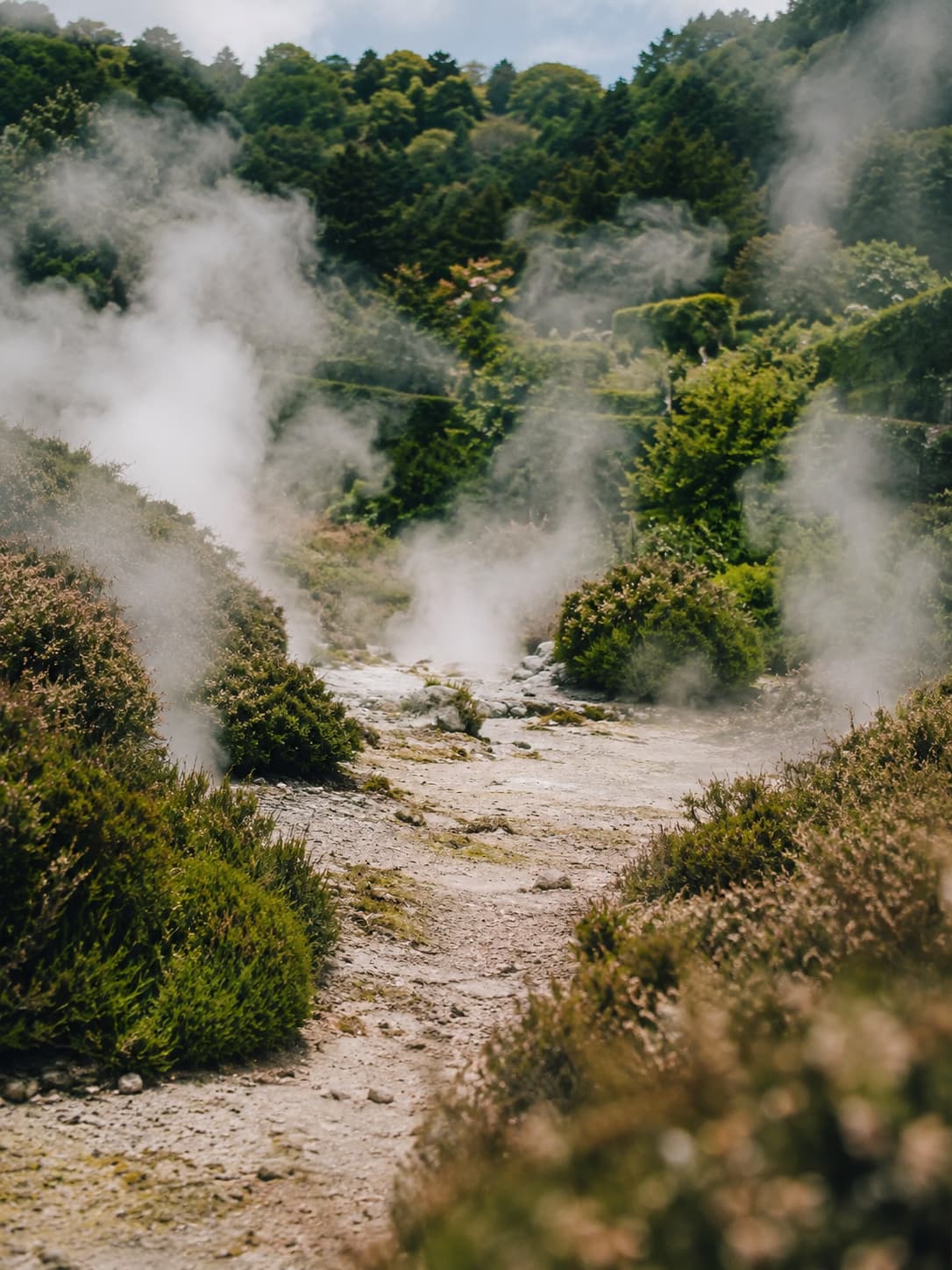
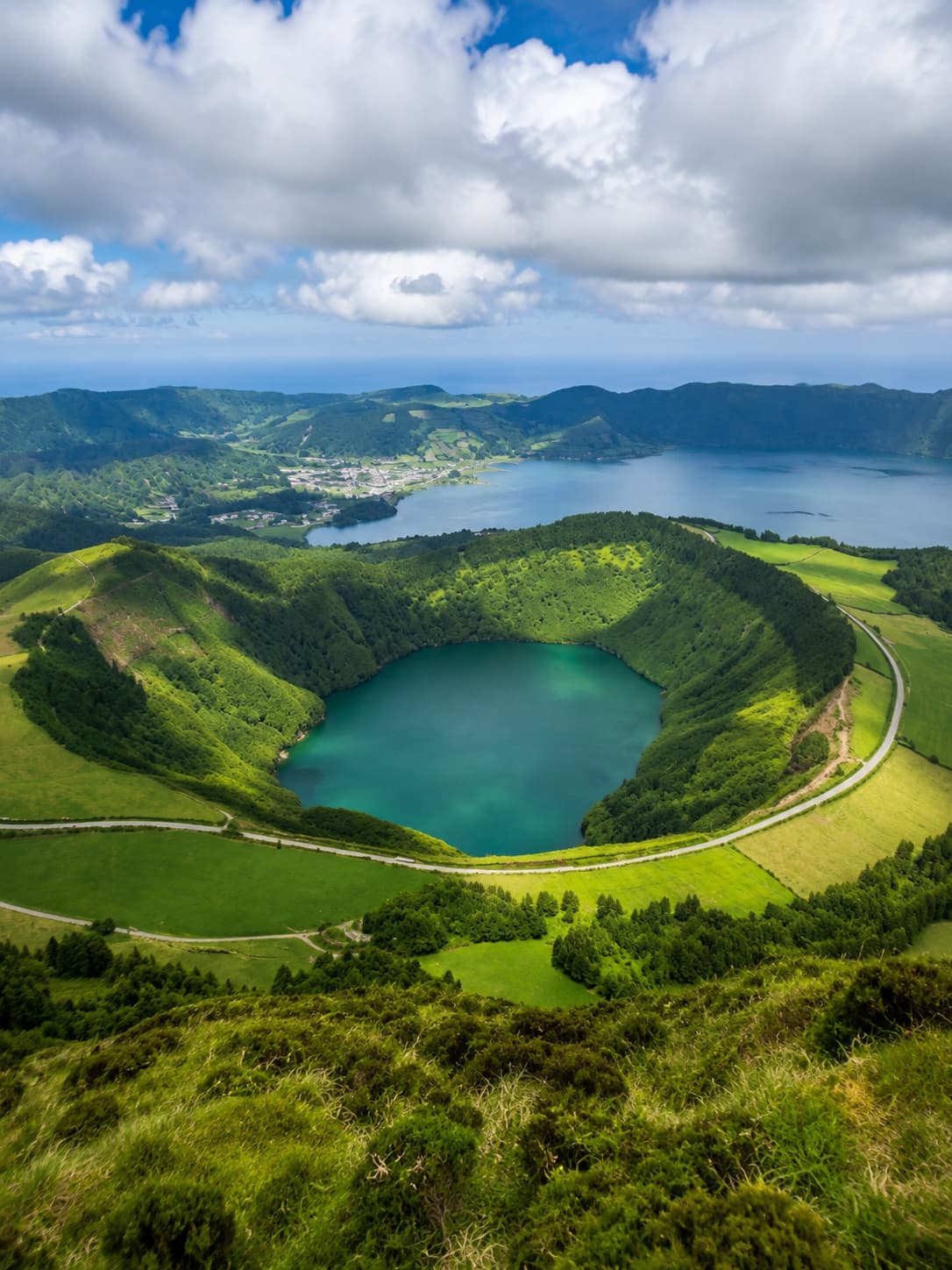
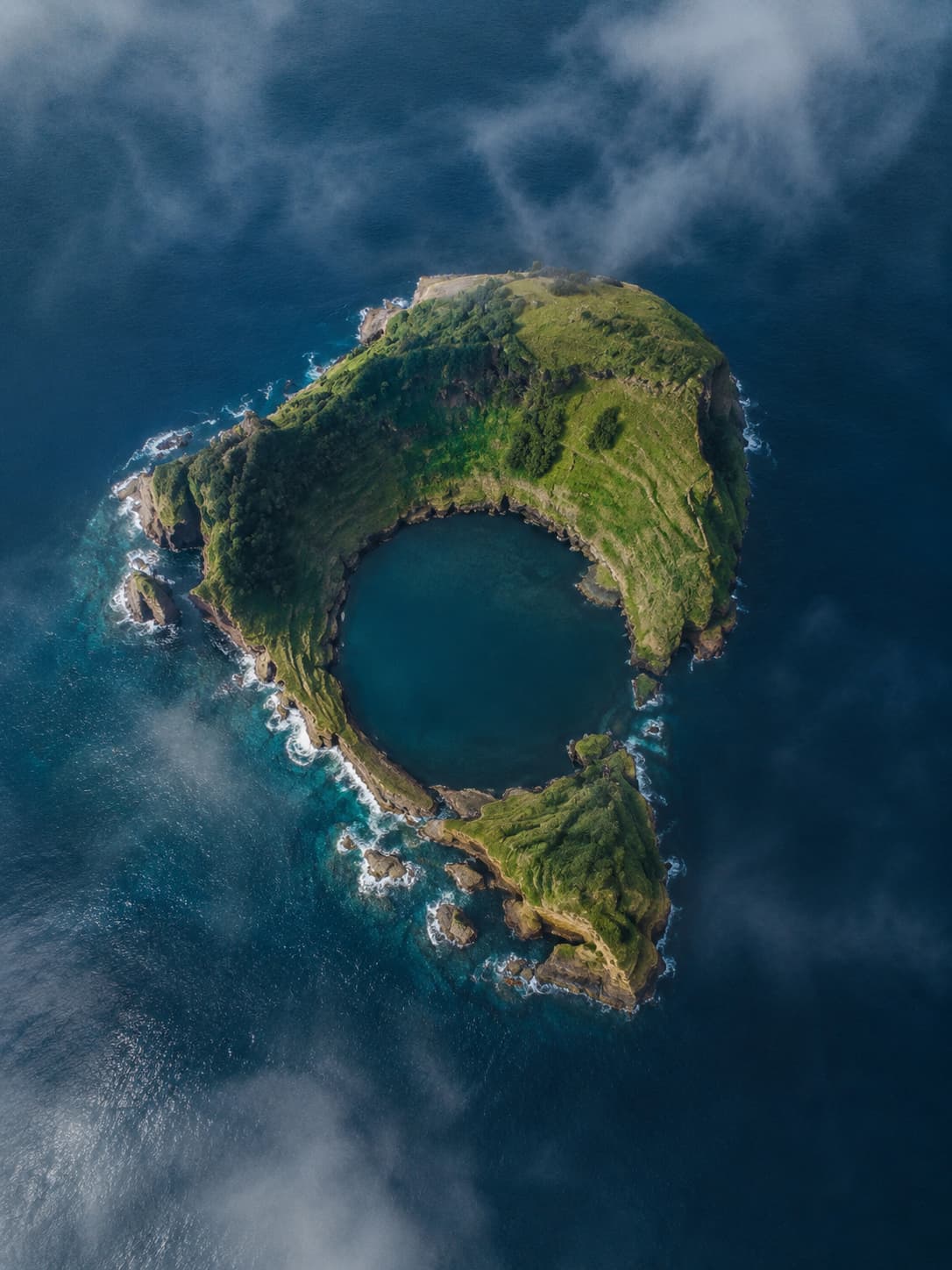
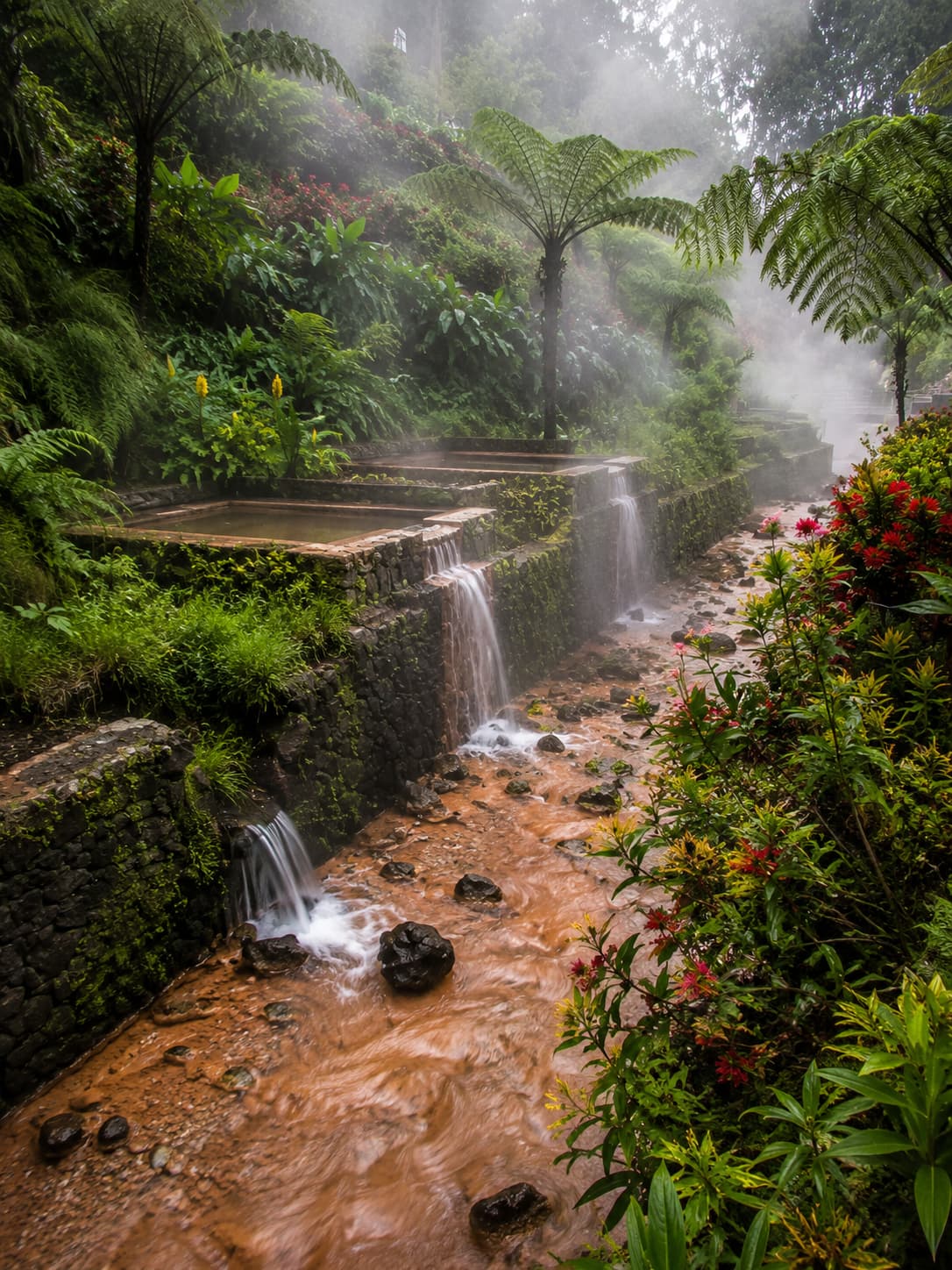
What are the Azores actually known for? Crater lakes, first of all — Sete Cidades and Lagoa do Fogo are the headline sights, both of them collapsed volcanic calderas now filled with water. Then the geothermal valley at Furnas, where the ground steams and locals slow-cook stew in volcanic soil. Whales and dolphins pass through the surrounding waters for much of the year. Furthermore, the hillsides turn dense with blue and pink hydrangeas in summer, lining the roads in a way that has become the island’s signature image. Taken together, it reads less like a beach holiday and more like a hiking-and-soaking trip on a green volcano.
02 — Is the Azores Worth Visiting? (An Honest Answer)
Yes — if you want nature, hiking, hot springs, and a slow pace, and no, not really, if you’re after guaranteed sun and a beach holiday. That is the honest split, and it is the question this Azores travel guide exists to answer, because a lot of people arrive expecting the second trip and get the first.
The case for going is strong. Specifically, the landscape genuinely delivers: standing on the rim of Lagoa do Fogo with the lake far below and the cloud moving fast over it is the kind of view that justifies the flight on its own. Beyond that, the island is uncrowded compared with almost anywhere in mainland Mediterranean Europe. Moreover, it is good value once you’ve landed, with food and rooms costing noticeably less than the Algarve or the Italian coast.
Here is the part most guides skip. The “Hawaii of Europe” and “untouched paradise” lines you’ll read everywhere are now out of date. São Miguel’s headline sights get genuinely busy in July and August, the famous thermal pools increasingly require booking a time slot in advance, and on cruise-ship days the centre of Ponta Delgada fills up fast. None of this ruins the island. However, it does mean the “you’ll have it to yourself” promise is only true if you go in the shoulder season and start your mornings early. Manage that expectation and the Azores are very much worth it; arrive in mid-August expecting solitude and you’ll feel slightly misled.
03 — Azores Travel Guide to Timing: The Best Time to Visit
The Azores have famously changeable weather — locals like to say you can get all four seasons in one day, and they are not exaggerating. That single fact shapes every timing decision, because no month guarantees sun and every month gives you a real chance of dramatic, fast-moving cloud. What changes between seasons is the odds, the water temperature, and the crowds.
Best months for weather and whale watching
For the best balance of warmth, longer days, and stabler conditions, aim for June or September. July and August are statistically the driest and warmest, but they are also the busiest and the most expensive. September in particular is the quiet traveller’s month: the sea is at its warmest after a summer of heating, the crowds thin out, and prices ease. Whale and dolphin watching, meanwhile, runs across much of the year, but spring into early summer — roughly April through June — is the classic window, when migrating species like blue and fin whales pass through. Specifically, if marine life is your main reason for coming, lean earlier rather than later.
When the hydrangeas actually bloom
The hydrangeas that define every Azores photo are a summer event, not a spring one. They generally peak from mid-June through August, which is part of why those months draw the crowds they do. If lining your photos with walls of blue flowers is the point of the trip, you are choosing the busy season by definition — there is no quiet month that also has peak hydrangeas. June is the honest compromise: blooms are coming in, the weather is warming, and the worst of the August rush hasn’t arrived yet.
The crowd reality in July and August
In peak summer, the island does not feel empty. The car parks at Sete Cidades and Lagoa do Fogo fill by mid-morning, the thermal pools sell out their time slots, and Ponta Delgada’s restaurants want reservations. It is still a far cry from the Amalfi Coast in August — but it is no longer the secret island, and going in expecting one sets you up for disappointment. Consequently, the single most effective thing you can do is shift your trip to the shoulder season and treat early mornings as non-negotiable.
Go in June or September. June gives you hydrangeas coming in and fewer crowds than August; September gives you the warmest sea, the quietest sights, and the best prices. Both beat July–August for the kind of trip the Azores are actually good at.
04 — How Many Days Do You Need? An Azores Travel Guide to Trip Length
Five full days on São Miguel is the sweet spot. That is enough to see the two great crater lakes without rushing, spend a slow day in the Furnas valley with its hot springs and stew, drive the wilder eastern end, watch whales, and still keep a buffer day for the weather to ruin one of your plans — which it will.
Three days is the realistic minimum, and it works only if you accept that you’ll see the highlights and little else. Specifically, with three days you can do Sete Cidades, Lagoa do Fogo, and Furnas, and that’s roughly it. On the other hand, a full week lets you slow right down, add the tea plantations and the northeast coast, and absorb the pace the island rewards rather than ticking sights. For most people flying transatlantic for this specifically, five days hits the point where the trip feels complete without dragging.
05 — Do You Need a Car in São Miguel?
Yes. This one isn’t really a judgment call. Specifically, the island’s public buses are built for residents getting between towns, not for visitors reaching crater rims and trailheads, and most of the sights you came for sit at the end of roads no bus serves usefully. Without a car, consequently, you’ll spend the trip on organised day tours, which work but lock you into someone else’s pace and timing — the opposite of why most people come here.
Renting is straightforward, the island is small, and a car turns the whole place into a series of easy day drives. One practical tip worth planning around: consider splitting your stay. Basing a couple of nights near the west (close to Sete Cidades and Ponta Delgada) and a couple near the east (around Furnas or the northeast coast) cuts your daily driving and lets you catch the best sights early, before the day-trippers arrive from town. In short, rent the car, and use geography to stay ahead of the crowds.
Two nights west, two or three nights east. It sounds fussy, but it means you reach Sete Cidades and Lagoa do Fogo before mid-morning on the days you’re based nearby — which, in the shoulder season, can mean having a world-famous viewpoint nearly to yourself.
06 — Is São Miguel Enough, or Should You Island-Hop?
Why one island is usually the right call
For a first trip of a week or less, São Miguel alone is enough — and trying to island-hop on a short trip is usually a mistake. This is the question the brochures dodge, so here is the direct take: the inter-island logistics eat time, the weather can strand small flights and ferries, and you end up seeing two islands shallowly instead of one island well. Go deep on São Miguel first. It has the most variety of any single island and the easiest access.
What each other island is for
That said, the other islands are real and distinct, and they reward a second, longer trip. It’s worth knowing what each one is for before you decide.
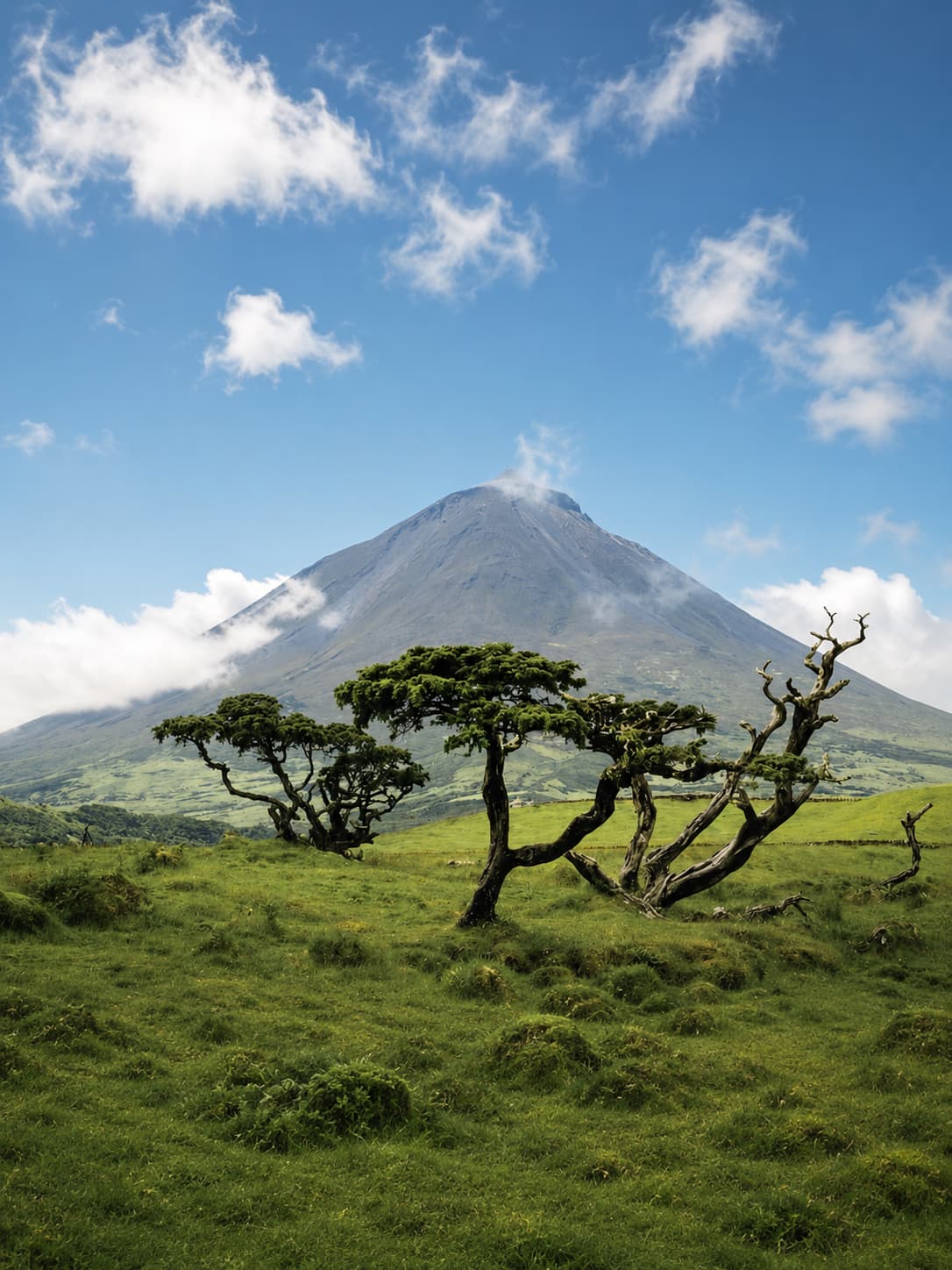
Home to Portugal’s highest mountain — a near-perfect volcanic cone — plus UNESCO-listed vineyards grown in black lava walls. The island for hikers and wine.
The most historic, with a colourful UNESCO World Heritage capital at Angra do Heroísmo and a strong festival culture. The island for towns and atmosphere over raw landscape.
A sailing crossroads with the famous Peter Café Sport in Horta, a dramatic caldera, and the lunar Capelinhos volcano. Often paired with Pico, which sits just across a short channel.
The far west and the most spectacularly green — waterfalls everywhere, hard to reach, and genuinely the closest the Azores still come to the “untouched” promise. The island for a serious second trip.
If you do want a second island on a longer trip, the cleanest pairing is São Miguel plus Pico (with Faial alongside it), since Pico gives you the biggest landscape contrast. Otherwise, resist the urge to collect islands. On balance, the Azores reward depth, not breadth.
07 — How Do You Get to the Azores?
This is where the Azores quietly beat most of Europe for East Coast Americans, and it’s the practical heart of any Azores travel guide. Specifically, the islands are roughly a five-hour flight from the US East Coast, which makes São Miguel one of the closest European destinations there is — closer in flying time than much of the mainland, and about half the time it takes to reach Hawaii.
From the United States, Azores Airlines flies nonstop year-round from Boston and New York (JFK), and United runs a seasonal nonstop from Newark across the summer months. Coming from mainland Portugal, meanwhile, it’s about a two-hour hop from Lisbon, with frequent connections that also link onward to the rest of Europe. As a result, the Azores are far easier to reach than their mid-ocean position suggests.
Azores Airlines runs a StopOver programme that lets you break a Europe–US trip in the Azores for up to a week at no extra airfare. If you’re already crossing the Atlantic, it’s one of the cheapest ways to add a genuinely different destination to an existing trip — worth checking when you book.
| From US East Coast | ~5 hours. Azores Airlines nonstop year-round from Boston and New York (JFK); United seasonal nonstop from Newark in summer. |
| From Lisbon | ~2 hours, frequent daily flights — the easiest connection from the rest of Europe. |
| Main airport | João Paulo II Airport (PDL), Ponta Delgada, São Miguel — handles almost all international arrivals. |
| Between islands | Short inter-island flights and seasonal ferries; both vulnerable to weather, so build in buffer time. |
08 — Is the Azores Better Than Madeira?
They aren’t better or worse — they’re different trips, and choosing between them comes down to what kind of traveller you are. Both are Portuguese Atlantic islands with volcanic landscapes, dramatic coastlines, and excellent hiking. From there they diverge sharply.
How the two islands differ
The Azores are wilder, greener, more remote, and quieter, with the crater-lake-and-hot-spring character this whole guide has described. Madeira is more developed, more dramatically vertical, warmer on average, and considerably more set up for tourism, with a denser network of trails, gardens, and infrastructure. In other words, Madeira is the easier, more comfortable trip; the Azores ask a little more of you and give back a wilder kind of quiet.
If you want warmth, comfort, and an easier introduction to Atlantic-island travel, choose Madeira. By contrast, if you want the wilder, quieter, more remote version and don’t mind the weather rolling the dice, choose the Azores. our full Madeira guide goes deep on that side of the choice.
Azores Sights, Costs and Solo Travel
This Azores Travel Guide in One Line: Who São Miguel Is Really For
The Azores are for the traveller who reads “wild, green, changeable, and a little remote” as a promise rather than a warning. They are not the untouched secret the internet keeps selling — that framing slipped a few years ago, and pretending otherwise does no one any favours. Nevertheless, what’s actually here is better than the myth: a real volcanic island you can drive in an hour, with quiet still available to anyone willing to go in the shoulder season and wake up early.
So come for the crater lakes and the hot springs, give São Miguel five unhurried days, rent the car, and time it for June or September. If this Azores travel guide leaves you with one thing, let it be that: do those four, and the islands deliver exactly the thing the brochures promise and rarely guarantee — the feeling of having a remarkable place mostly to yourself.
The island never promised to stay a secret.
It only promised to be quiet — and on the right morning, it still keeps that one.