
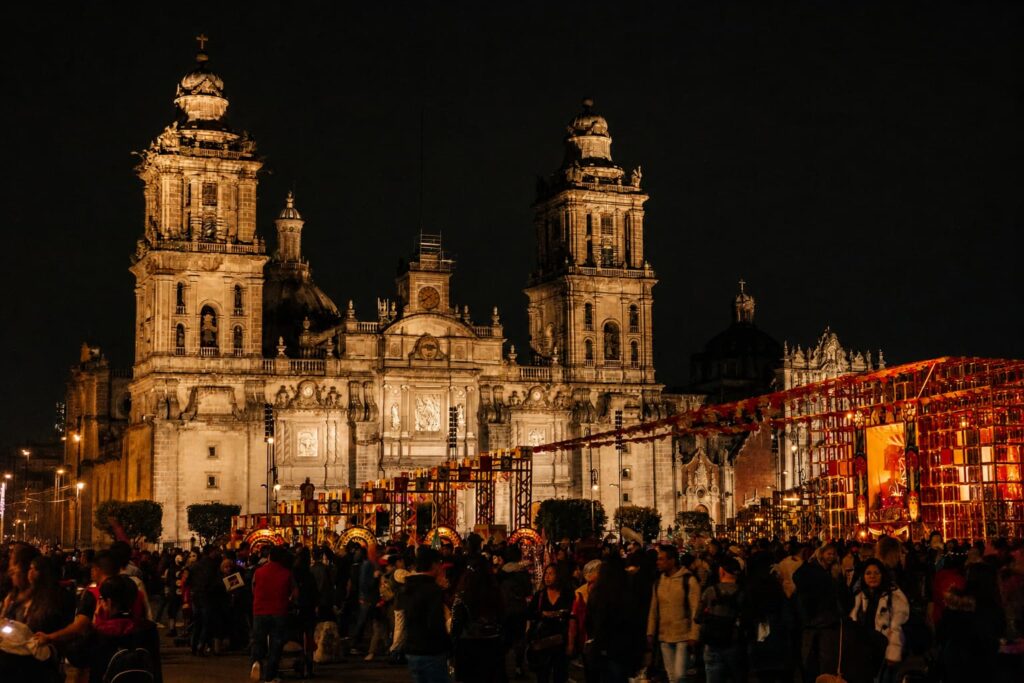
The Mexico City Day of the Dead Parade: Dates, Route, and Where to Stand
There isn’t one parade — there are three. And the date for the biggest one won’t be announced until a month before it happens. Here’s how to actually plan for this.
The Day of the Dead parade in Mexico City — officially the Desfile de Día de Muertos — has no fixed calendar date. It falls on a Saturday in late October or early November, and the CDMX government typically confirms the exact date only four to six weeks beforehand. Most of what you’ll find on the first page of Google is guesswork dressed as certainty.
There’s also a structural problem with most guides to this event: they describe one parade, when Mexico City actually stages three separate Day of the Dead processions across different days, on different routes, run by different organisations. Turn up on the wrong day at the wrong end of Reforma and you’ve missed everything — not because you were unlucky, but because the post you read didn’t make the distinction.
This is the version that does. Dates, routes, viewing strategy, and why this parade exists at all.
01 — When Is the Day of the Dead Parade in Mexico City 2026?
The short answer: not yet confirmed at time of writing (August 2026). This is not a gap in the research — it’s how the parade actually works. The CDMX government typically announces the exact date four to six weeks before the event, and that announcement lands on the official portal at cdmx.gob.mx and Mexico’s national tourism site, visitmexico.com. Those two are the only sources worth trusting.
Historically the Grand Parade has fallen on a Saturday in the last few days of October or the first week of November. The 2016 inaugural parade was held on 29 October. Subsequent editions have shifted between 31 October and the first Saturday in November depending on the calendar year and civic scheduling. In years where 31 October falls mid-week, a November Saturday becomes more likely. In years where Halloween lands on a Saturday, the parade often moves to the following weekend to avoid street-access conflicts in areas with high American visitor concentration.
The practical upshot: if you’re travelling specifically for this event, book flights and accommodation that give you flexibility across the last weekend of October and the first weekend of November. Check the CDMX portal from September onwards. Once announced, the date doesn’t change.
CDMX typically announces four to six weeks ahead. Bookmark cdmx.gob.mx and check from mid-September. The announcement will also appear on visitmexico.com within 24 hours.
02 — There Are Three Parades, Not One
Mexico City stages three distinct Day of the Dead processions across late October and early November. Each is run by a different organisation, on a different route, on a different date. Most guides blur all three into a single event, which is how people end up on the wrong end of Reforma watching street vendors pack up.
| Parade | Organiser | Typical Dates | Route Direction | Length |
|---|---|---|---|---|
| Alebrijes Parade | Museo de Arte Popular | Mid–late October (night) | Zócalo → Reforma (east to west) | ~4km |
| Procession of Catrinas | Various civic orgs | 1–2 Nov (historically) | Ángel de la Independencia → Zócalo | ~4km |
| Grand Parade | CDMX Government | Late Oct / early Nov Saturday | Chapultepec → Zócalo (west to east) | ~6km |
The Alebrijes Parade
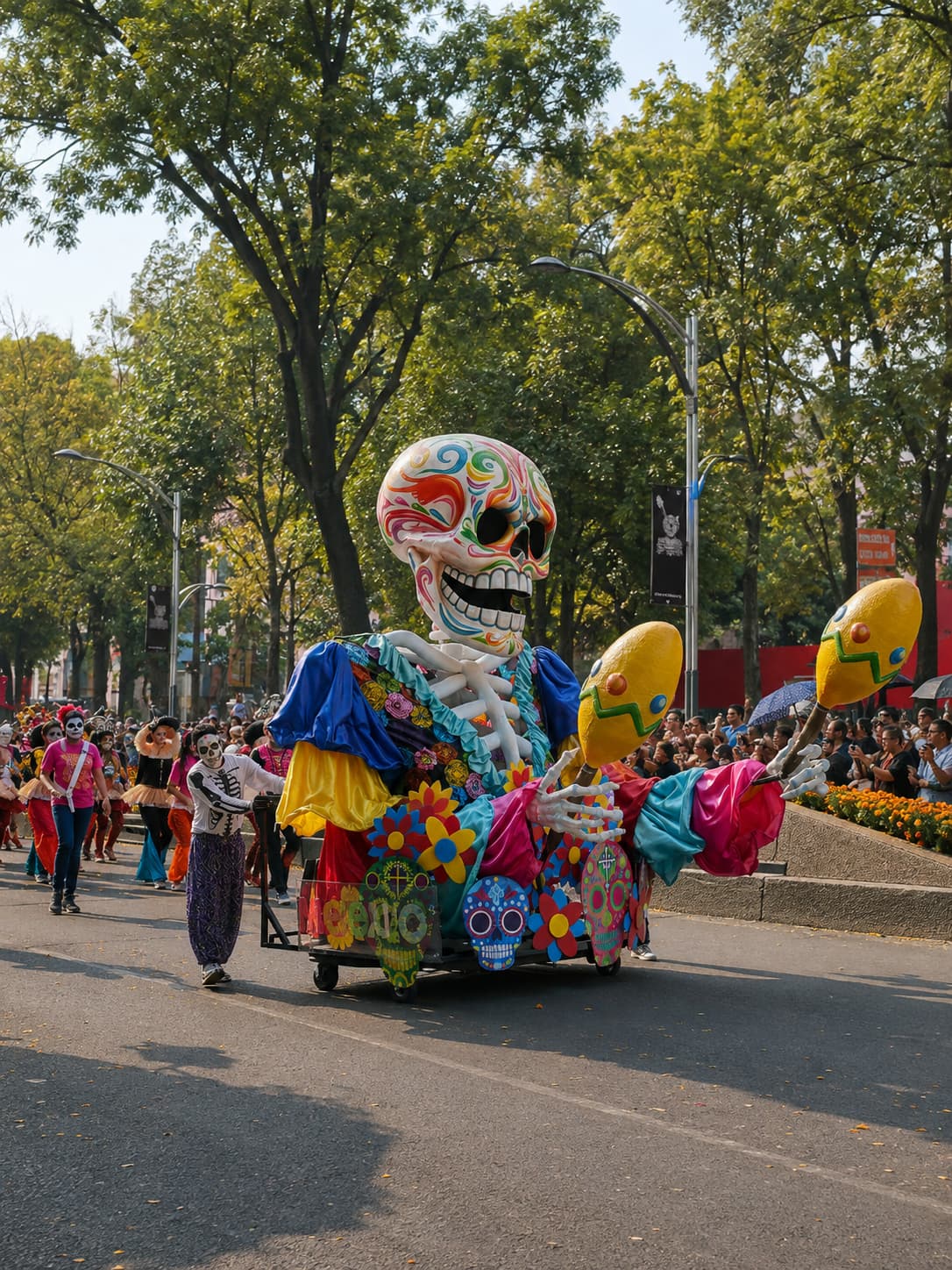
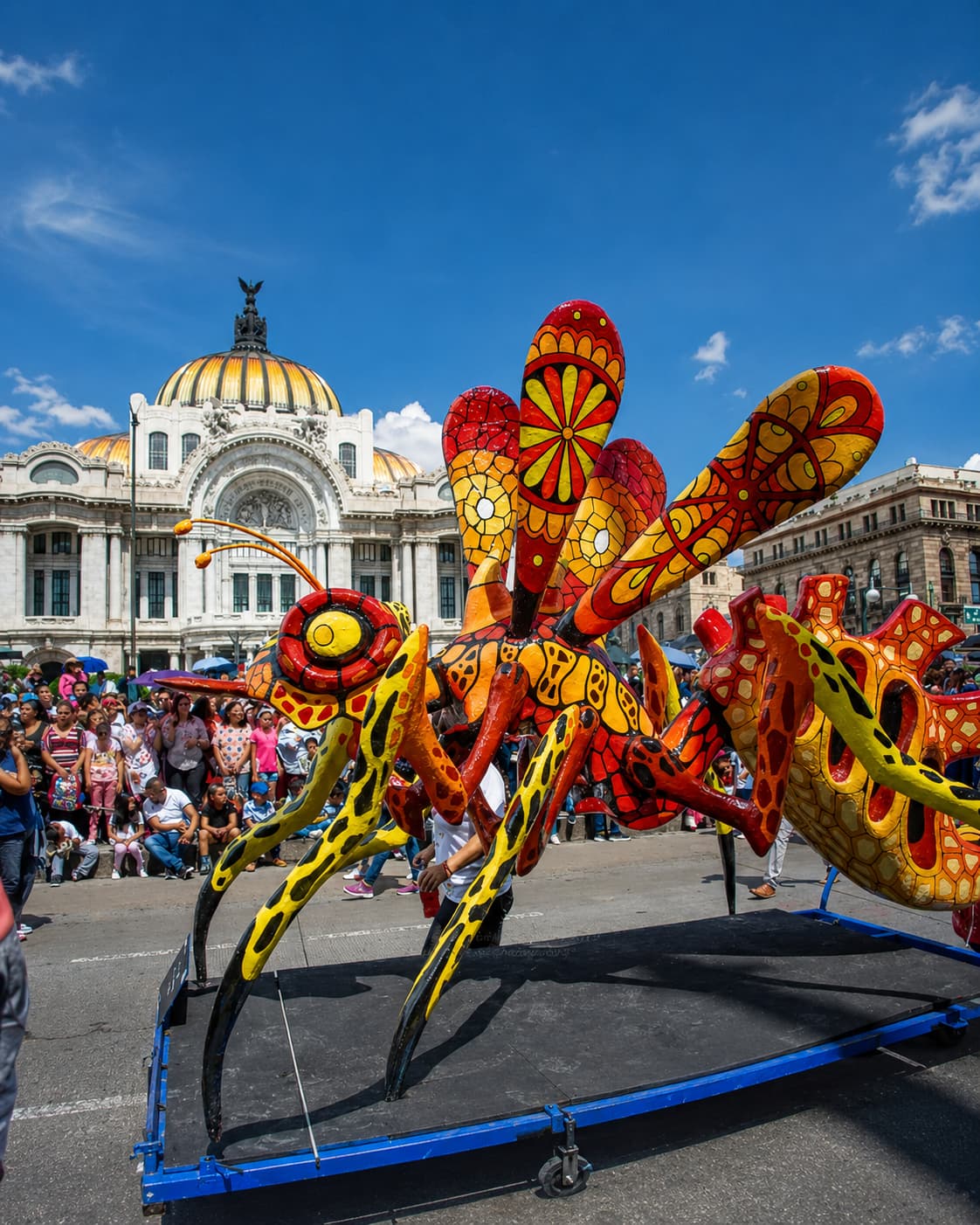
Organised by the Museo de Arte Popular, the Alebrijes Parade features giant papier-mâché creatures — alebrijes — created by artists across Mexico over months of work. The parade itself moves from the Zócalo westward along Paseo de la Reforma, making it the only one of the three that travels in the opposite direction from the Grand Parade.
After the parade, the winning sculptures are displayed along Reforma for several days, which means you don’t need to attend the moving parade to see the creatures — you can walk the boulevard at your own pace in daylight. The Museo de Arte Popular announces its exact dates independently via its own social accounts and website; they typically fall in the third or fourth week of October.
The Procession of Catrinas
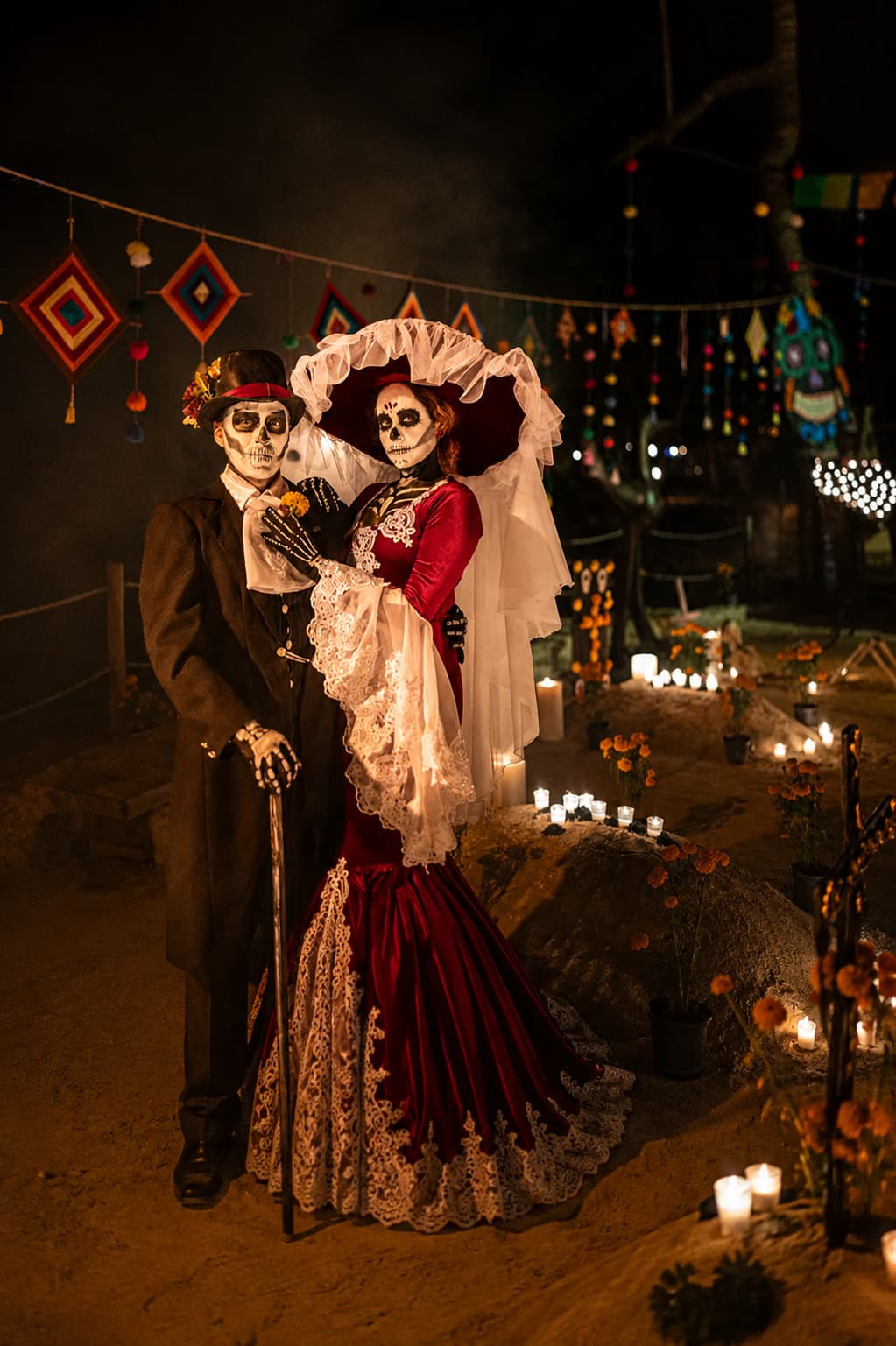
The Procession of Catrinas is a separate civic event where thousands of participants — many costumed as La Catrina, the elegantly dressed skull figure — walk from the Ángel de la Independencia monument to the Zócalo, covering roughly four kilometres. It has historically taken place on or around 1–2 November, aligned with the Día de Muertos religious observance rather than the Grand Parade weekend.
This is the most participatory of the three events: many attendees are in full Catrina makeup and costume, and the atmosphere is closer to a community procession than a spectator parade. It is also the one most likely to shift dates or format year to year — verify against the CDMX portal before planning around it.
The Grand Parade — Desfile de Día de Muertos
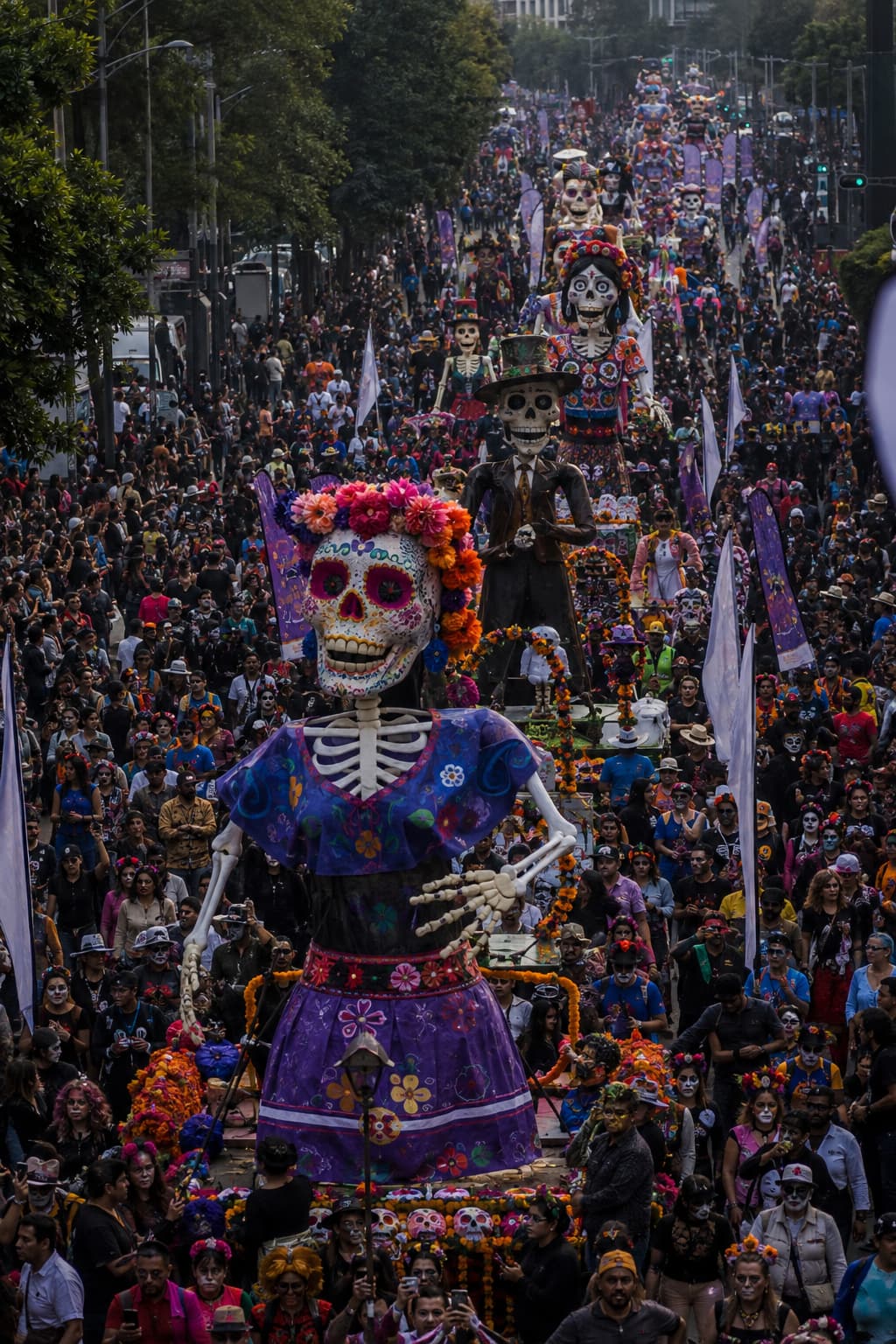
The Grand Parade is the centrepiece — the one that draws international crowds and the one most guides are attempting to describe when they say “the Day of the Dead parade.” It covers approximately six kilometres from Puerta de los Leones in Chapultepec Park, west to east along Paseo de la Reforma, past the Ángel de la Independencia and Glorieta de la Palma, south along Avenida Juárez past the Alameda Central, along 5 de Mayo, and ending at the Zócalo. It takes approximately four hours end to end.
03 — Day of the Dead Parade Route: Landmark by Landmark
The Grand Parade route runs west to east. Starting point is Puerta de los Leones, the main western entrance to Chapultepec Park. From there the parade turns onto Paseo de la Reforma and travels the full length of the boulevard into the historic centre. Key landmarks it passes:
Puerta de los Leones, Chapultepec
Start point. The lion-flanked western gate of Chapultepec Park. If you want to see the parade form and begin moving, this is the quietest vantage point — but expect it to be densely packed closest to the gate.
Ángel de la Independencia
The golden winged monument at Glorieta del Ángel is the most photographed point on the route. The elevated base gives an elevated view down the boulevard, but the crowds are at their heaviest here. Arrive 2–3 hours early if this is where you plan to stand.
Glorieta de la Palma
Further east along Reforma. Crowds thin slightly here compared to the Ángel stretch — reasonable compromise between accessibility and atmosphere if the Ángel area is already impassable when you arrive.
Alameda Central
The parade turns south here onto Avenida Juárez. Good daytime viewpoint and easier to reach by Metro — Bellas Artes station is a short walk, and the park itself offers standing space at a slightly more human density than the main boulevard.
Zócalo (Plaza de la Constitución)
End point. The parade finishes here, and the square hosts performances and installations in the days surrounding the event. By parade time, the Zócalo itself fills to capacity. If you’re watching the finish rather than the procession, position yourself along the 5 de Mayo approach rather than in the square itself.
04 — Best Places to Watch the Mexico City Day of the Dead Parade
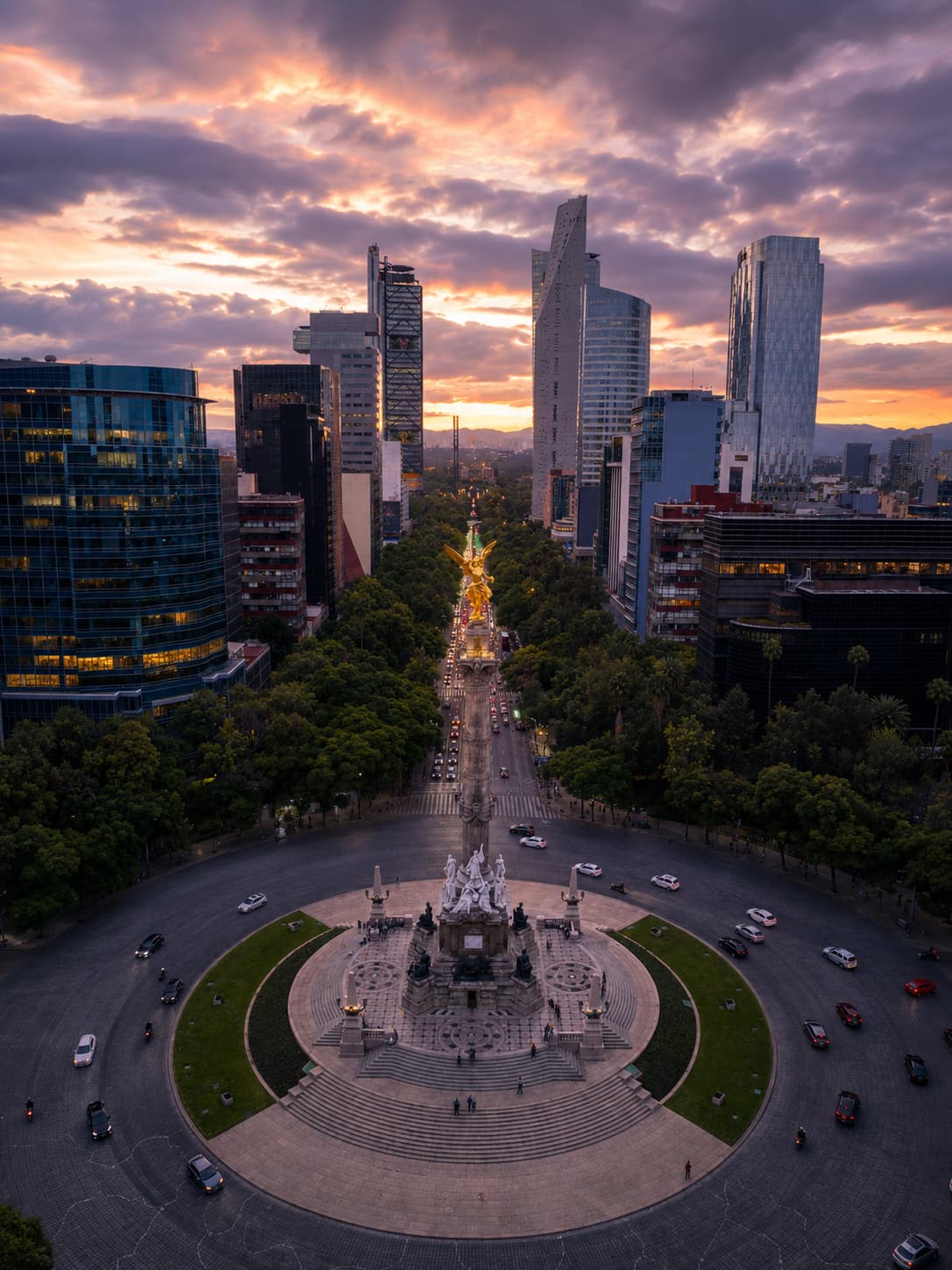
The most important thing to know before you choose a spot: once the barriers go up, crossing from the north side of Reforma to the south is extremely difficult. The south side fills faster and earlier. If you want the south side — which faces north toward the parade and tends to be photographically better for afternoon and evening light — you need to be in position before barriers close, typically two hours before the official start time.
Reforma between Glorieta de la Palma and Fuente de la Diana
The sweet spot for most visitors. West enough to see the parade before the floats start to thin from fatigue, not so central that the Ángel-adjacent crush makes it unpleasant. Arrive 90 minutes early for a decent position.
Ángel de la Independencia area
Best for photographs — the monument provides background and the wide intersection gives you depth. Plan to arrive 2.5–3 hours before start time. Do not arrive here at start time expecting to find space; the area becomes impenetrable. Metro: Insurgentes (Line 1) or Sevilla (Line 1).
Juárez and Alameda stretch
Lower crowd density. More manageable for people with children or anyone who’d rather actually see the floats than stand behind four rows of people. The Alameda park itself is often accessible as a vantage area and provides a natural crowd buffer. Metro: Hidalgo (Lines 2 and 3) or Bellas Artes (Lines 2 and 8).
Grandstand / paid seating
Private operators typically sell grandstand seats along Reforma in the weeks before the parade. Prices vary but a reserved seat eliminates the early-arrival problem entirely and puts you at eye-level with the floats. If the date means a lot to you and you have one chance to be there, this is worth researching as soon as the date is confirmed.
05 — Start Time, Duration, and What It Costs
Sources conflict on the start time — noon, 2pm, and 3pm all appear in various guides, and the actual start has varied between years. The CDMX announcement will include the confirmed start time. Historically, the parade has begun in the early afternoon and the procession reaches the Zócalo approximately four hours later.
The Grand Parade is free and requires no ticket. Grandstand seats along the route are sold by private operators and typically become available once the official date is confirmed — search for “desfile día de muertos palco” once the announcement drops. The event itself is open to anyone who finds a spot on the route.
Getting there: Paseo de la Reforma is well-served by Metro lines 1 and 7, though expect heavy crowding on parade day. Chapultepec station (Line 1) for the start of the route; Insurgentes, Sevilla, or Cuauhtémoc for the middle stretch; Hidalgo or Bellas Artes for the Alameda section near the end. Many visitors take Ecobici bike share to a position outside the barrier zone and walk in. Rideshare access will be restricted on parade day — plan accordingly.
06 — Why Was the Mexico City Day of the Dead Parade Created?
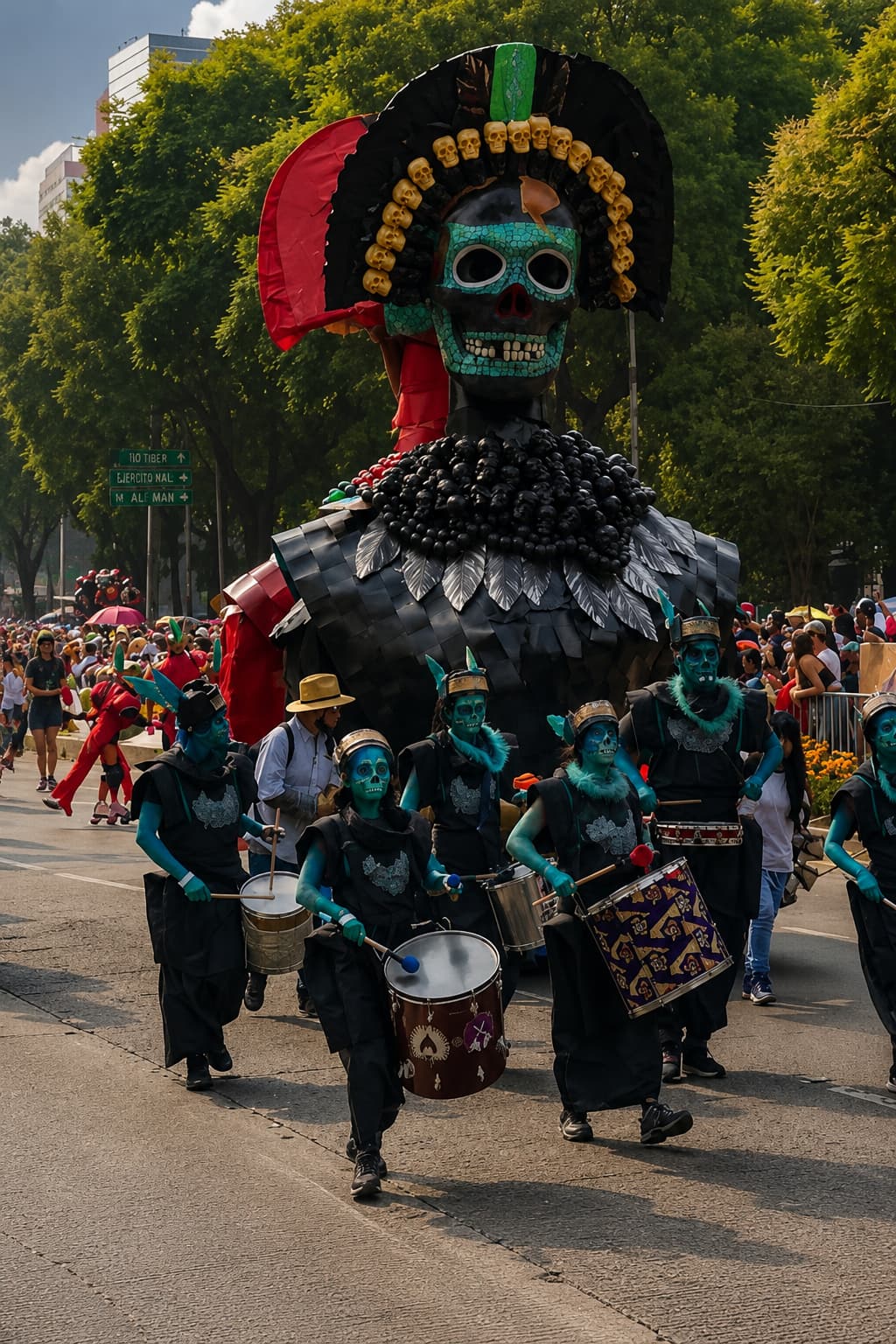
The Grand Parade did not exist before 2016. It was created in direct response to the fictional parade sequence in the 2015 James Bond film Spectre, which depicted a massive Día de Muertos procession through central Mexico City. That procession was invented for the film — no such event existed at the time. Mexican authorities watched the sequence, recognised the tourism potential of bringing it into reality, and coordinated with the CDMX government to stage an inaugural parade in October 2016. Mexican officials referred to it openly as a “Spectre-style” parade in their own communications.
What happened next is the more interesting story. The parade has grown every year since, becoming one of the largest annual public events in Latin America. It has developed its own aesthetic identity — elaborate floats, thousands of costumed participants, giant skull and Catrina sculptures — that has effectively replaced the invented scene with something genuinely original. A nine-year-old civic spectacle created by a government responding to a film has become one of Mexico City’s defining annual events. That’s worth telling straight.
The key distinction is that Día de Muertos itself is an ancient and active tradition. Family ofrendas, cemetery gatherings, and marigold altars predate the Bond franchise by centuries. By contrast, the Grand Parade is a public spectacle that runs alongside the private observance rather than replacing it. It is explicitly not a religious event.
07 — What Else Is On That Week
The parade occupies one afternoon. The week around it has several things worth knowing about:
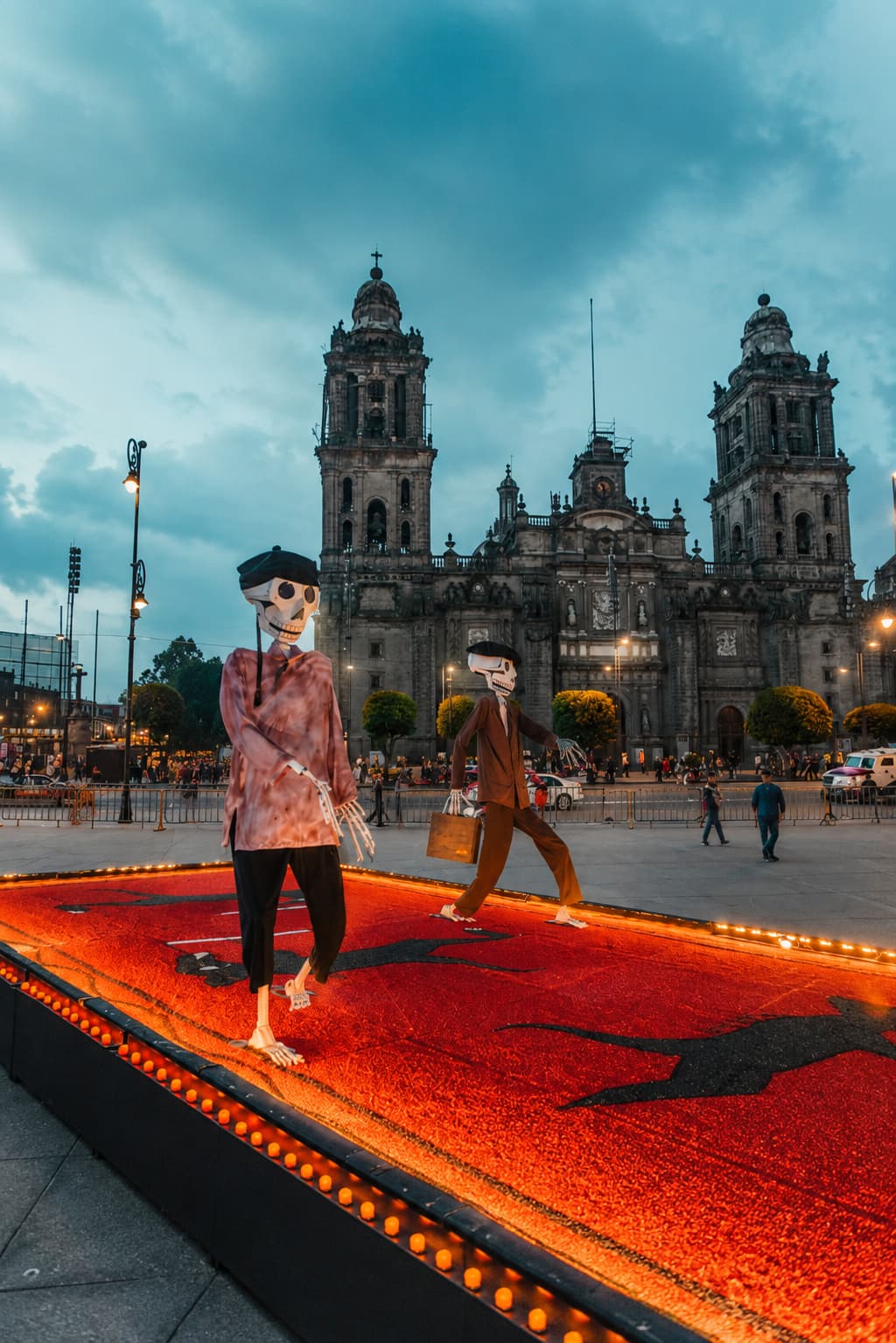
The main plaza of the historic centre hosts a large public ofrenda — a monumental altar installation — in the days surrounding Día de Muertos. It’s free, accessible by Metro (Zócalo, Line 2), and represents the traditional side of the observance rather than the parade. Worth visiting independently of the parade.
After the Alebrijes Parade, the winning sculptures remain on display along Reforma for several days. Walking the boulevard during the day with the creatures lined up is one of the quieter pleasures of the week — no crowds, no barriers, just enormous papier-mâché animals in the daytime light.
The organiser of the Alebrijes Parade hosts exhibitions around the event, usually including the voting process for the winning creature and historical context for the tradition. Located near Alameda Central — a short walk from the parade route’s southern end.
Attending the Parade With Kids and Without a Tour
Arrival Times and Understanding Día de Muertos
Confirming the 2026 Parade Date
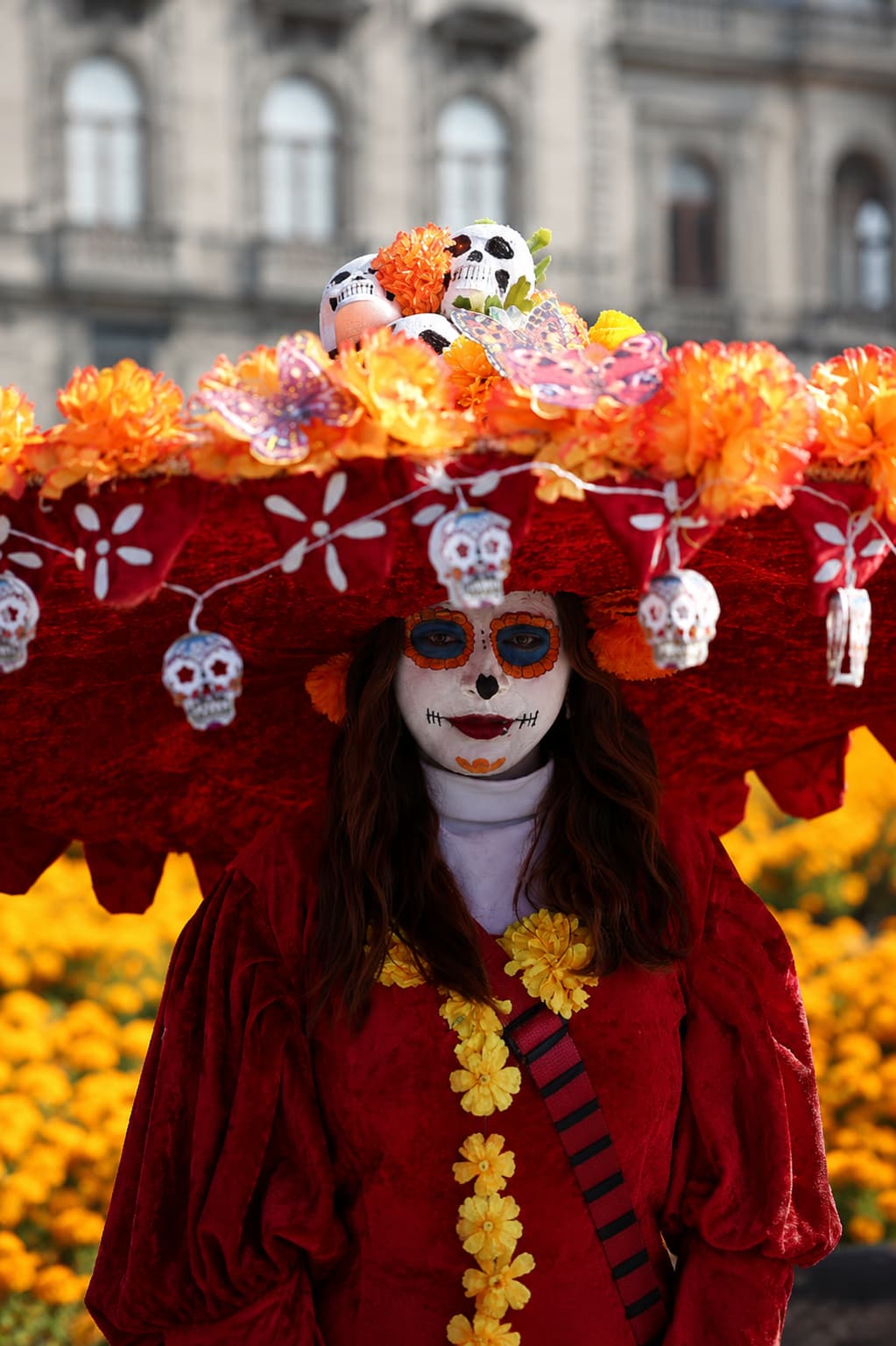
A government staged a parade because a spy film invented one — and then a million people showed up, and kept showing up, and it became real.
Whatever the date turns out to be, that’s worth seeing once.