
Halloween in Europe: Where It’s Ancient, Where It’s Imported, and Where It’s Something Else Entirely
Not every European city that calls itself a Halloween destination has the same claim to the name. Here’s how to tell the difference — and why it matters for planning a trip you’ll actually remember.
Three Ways Halloween Is Celebrated Across Europe
Halloween in Europe is more complicated than the roundups make it look. Every late October, the same five destinations appear again: Dublin, Derry, Bran Castle, Disneyland Paris, and Amsterdam. That makes Halloween in Europe look like one homogeneous experience. It isn’t. Europe celebrates the season in three fundamentally different ways. Mixing them together creates disappointing trips, especially when you expect ancient ritual and find a theme-park queue.
The first tier covers the places where the tradition is native: Ireland and Scotland. Here, the festival we now call Halloween grew out of Samhain, the Gaelic Celtic New Year. The second tier is quieter and rarely appears in English-language travel content. Across much of Catholic Europe, 1 November — All Saints’ Day — is the date that shapes the week. The third tier is imported entertainment. These destinations have added Halloween to existing gothic or party infrastructure without claiming the same historical lineage.
Understanding the difference doesn’t mean some places are better than others. It means you can choose the one that fits what you’re actually looking for — and go to Halloween in Europe knowing exactly what to expect.
01 — Is Halloween in Europe Actually Celebrated?
Yes — Halloween in Europe is real, but the word “Halloween” covers a range of things across the continent. In Ireland and Scotland, late October marks a living cultural observance with deep pre-Christian roots. Across Poland, Portugal and much of Catholic Central Europe, the significant date is 1 November, not 31 October — and the traditions around it have nothing to do with costumes. Meanwhile, cities like Amsterdam, Barcelona and Transylvania’s Bran Castle treat Halloween as a commercial and entertainment event that borrows the aesthetic and runs it well.
The fraction of Europe that treats 31 October the way Americans do — costumes, parties, decorations on every shopfront — is smaller than the roundups suggest, and concentrated in the British Isles and a handful of major cities. The fraction that marks the season in its own, older way is considerably larger, and largely invisible to the average Halloween travel article.
02 — Where Did Halloween in Europe Originate?
Halloween originated in Europe, not America. That is one of the most useful facts to know before planning this trip. Samhain — spelled Samhuinn in Scots Gaelic — is one of four major Gaelic seasonal festivals. It marks the shift from the light half of the year to the dark half. It also functioned as the Celtic New Year. Communities across Ireland, Scotland, Wales, and Brittany observed it, placing its roots firmly along Europe’s Atlantic fringe.
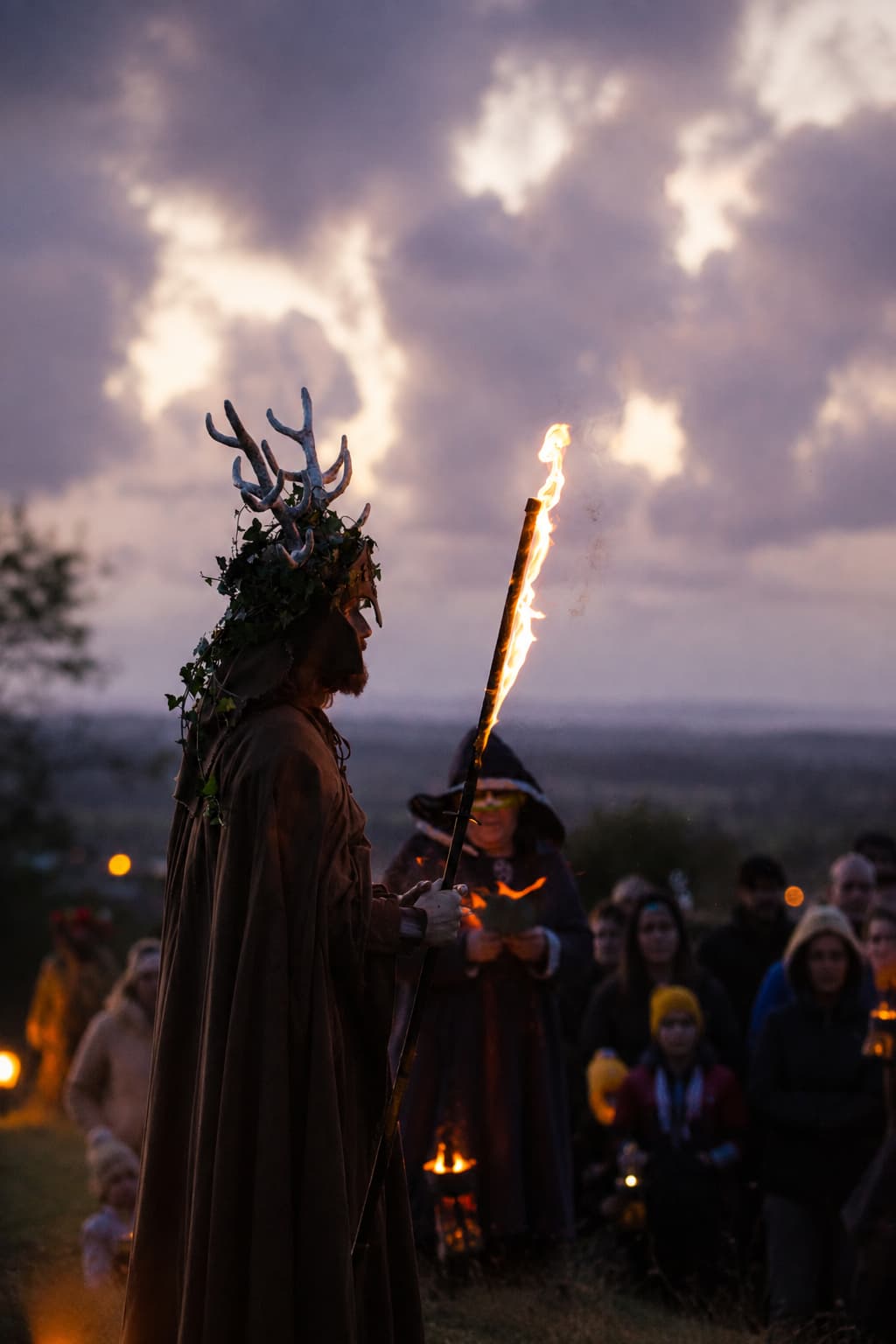
Gaelic tradition held that Samhain was the night when the veil between the living world and Otherworld grew thinnest. During this period, the Aos Sí — supernatural beings of Celtic tradition — could pass freely between realms. People lit bonfires to ward off spirits and wore costumes or disguises to confuse or blend in with them. The pattern remains recognisably connected to Halloween today, even without the plastic pumpkins.
Irish and Scottish settlers carried the observance to North America in the nineteenth century. There, communities commercialised and expanded it before exporting a transformed version back to Europe. Today, the original cultures sometimes barely recognise that reworked format. For a broader look at how this plays out on the ground, travelling in Eastern Europe covers how the season feels across the region.
What is Samhain, and how is it different from Halloween in Europe?
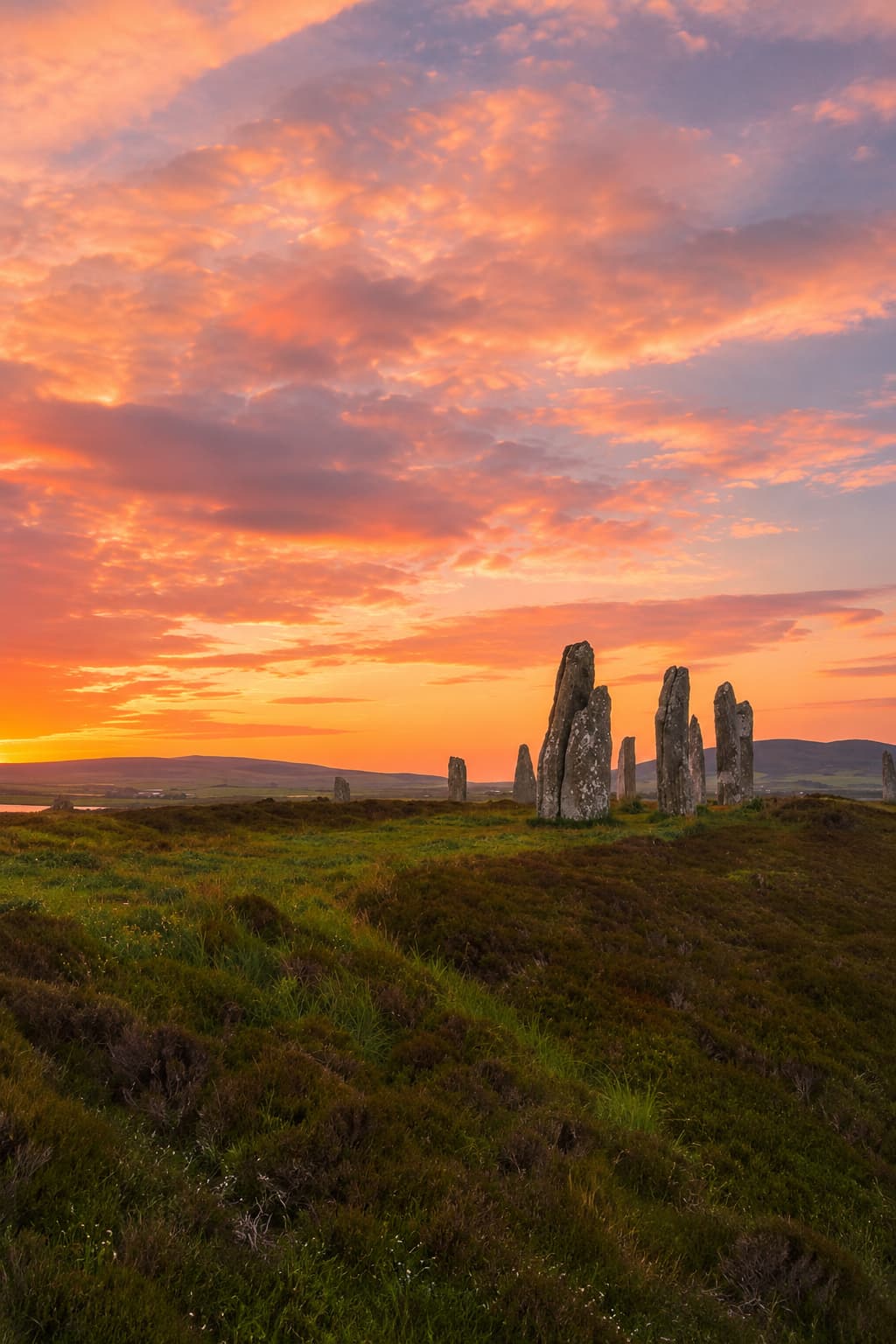
Samhain was a functional seasonal marker. It marked the Celtic calendar’s turn from the light half to the dark half. It also marked the shift from summer grazing to winter shelter. Communities lit bonfires, extinguished household hearths, and relit them from a central sacred flame. Families also set places at the table for people who had died during the preceding year. The Aos Sí were not necessarily malevolent; people viewed them as powerful, unpredictable, and temporarily uncontained.
The Christian church eventually placed the feast of All Saints on 1 November (All Hallows’ Day), which made 31 October the eve of that feast — All Hallows’ Eve, contracted over time to Halloween. The two traditions ran in parallel for centuries, which is why the same date carries such different meanings in Ireland and in, say, Poland.
03 — Halloween in Europe Tier One: Where the Tradition Is Native
If you’re planning Halloween in Europe and the word “authentic” matters to you, this is where to look. Ireland and Scotland are the only places in Europe where a continuous, unbroken line connects what happens at the end of October to its pre-Christian source. That doesn’t make them objectively superior destinations for Halloween, but it does make them categorically different from everywhere else on this list — and for a certain kind of traveller, that distinction is exactly what they came for.
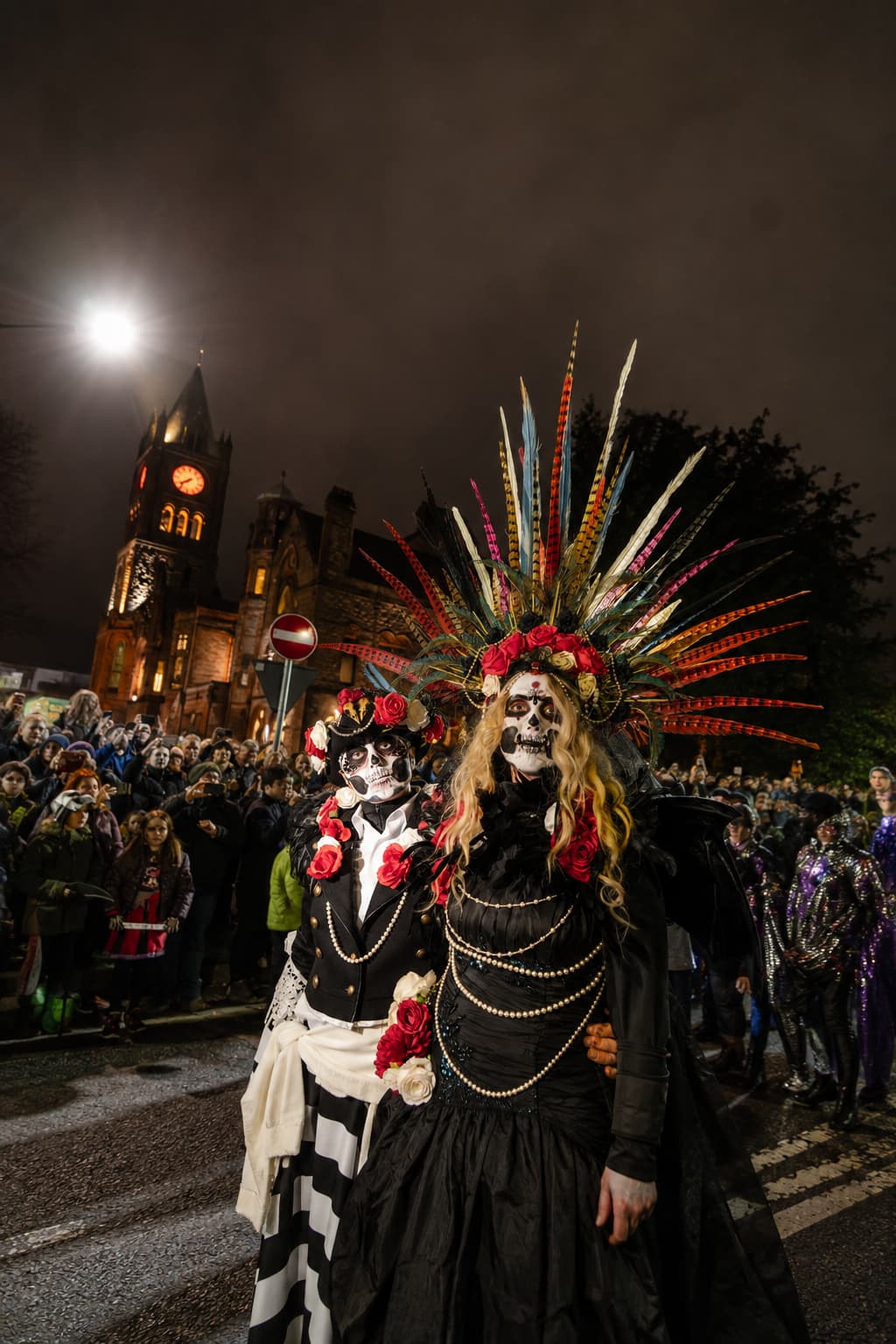
Derry Halloween 2026 runs from 28 to 31 October, marking the festival’s 40th anniversary. The four-night programme fills the historic walled city with the Awakening the Walled City Trail — a free-roam night route through illuminated performances, pyrotechnics, and street theatre — along with the main Carnival Parade and a fireworks finale. The scale is significant: this is consistently billed as Europe’s largest Halloween festival, and the 400-year-old city walls provide a setting that no theme park can replicate. Accommodation books out months in advance for the peak nights; if you’re planning for 2026, the time to book is now.
Dublin and the wider Irish programme — the Bram Stoker Festival and Púca
Dublin runs its annual Bram Stoker Festival across the last weekend of October — a literary-gothic celebration of the city’s most famous horror export (Stoker was born in Clontarf, on the north side of the city). Separately, the Púca Festival in County Meath anchors itself at the Hill of Ward, where Celtic priests are believed to have lit sacred fires more than two thousand years ago, making it arguably the closest thing to a geographically authentic Samhain observance still running. In 2026, the Irish national programme has expanded to seven regional hubs across Galway, Kerry, Kilkenny, Limerick, Longford, Westmeath, and Fingal — each with its own schedule of fire processions, storytelling, and night-time trails. Check the Fáilte Ireland Home of Halloween programme for confirmed dates closer to October.
Edinburgh, Scotland — Samhuinn Fire Festival on Calton Hill
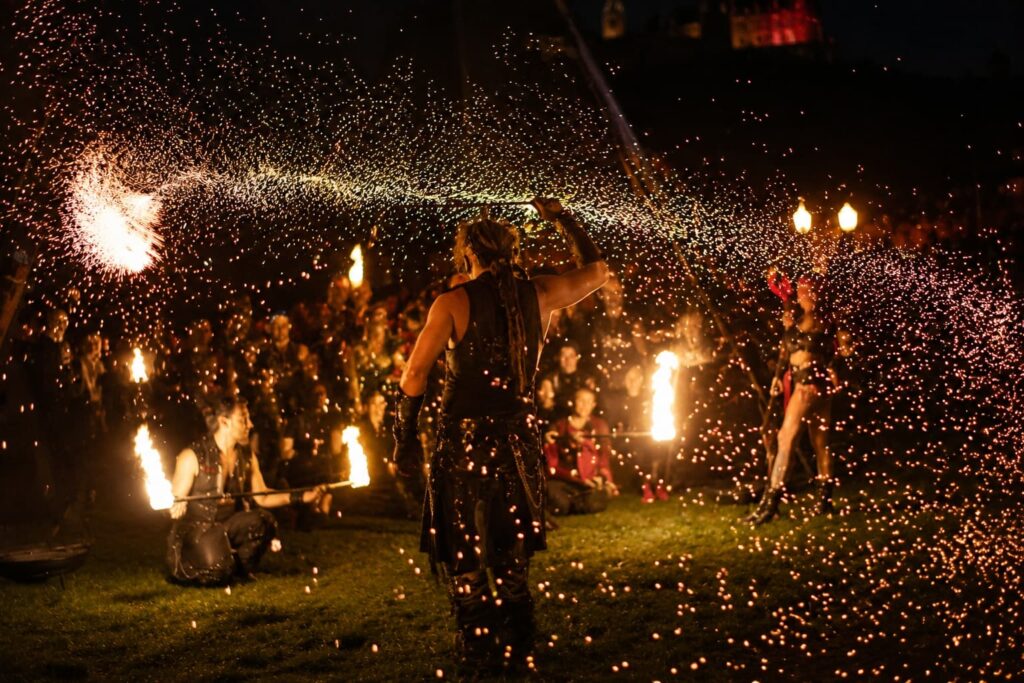
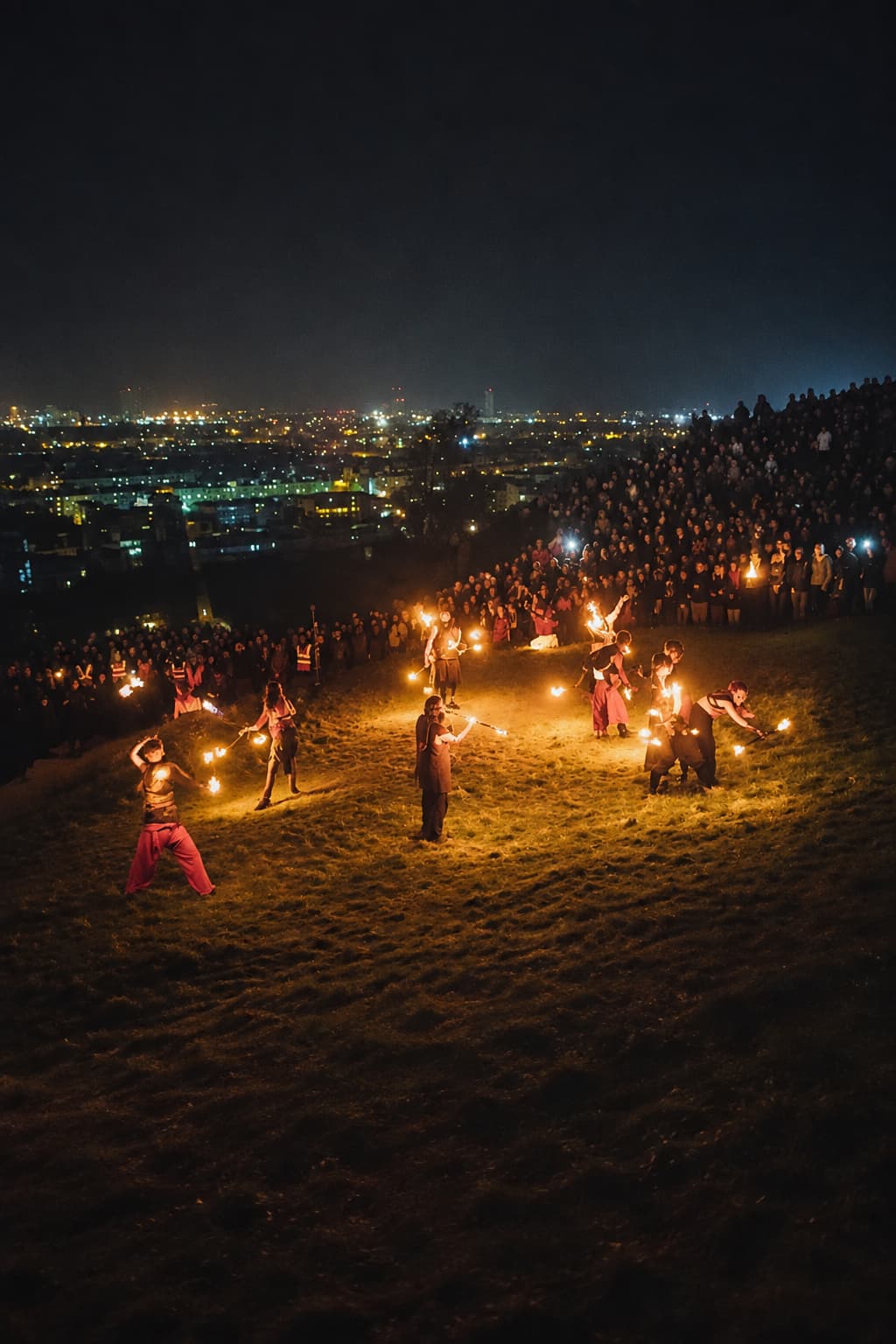
Edinburgh’s Samhuinn Fire Festival is held every 31 October on Calton Hill, organised by the Beltane Fire Society, a community arts charity that has run the event since 1995. It is a ticketed, outdoor performance — fire-play, drumming, acrobatics, and neo-pagan theatre staging the battle between the Summer and Winter Kings, performed by over 200 volunteers. The 2025 festival sold out; 2026 tickets are expected to follow the same pattern and are released through Citizen Ticket in the months before October.
The event is not suitable for very young children (the festival guidelines note semi-nudity and uninhibited behaviour; under-16s must be accompanied). Outside of the festival itself, Edinburgh in late October offers ghost tours through the underground vaults, the medieval atmosphere of the Old Town, and a cityscape that requires very little theatrical assistance to feel appropriately unsettling. For more on the country, the full Scotland itinerary covers what to know before you go.
Galway — the Macnas parade
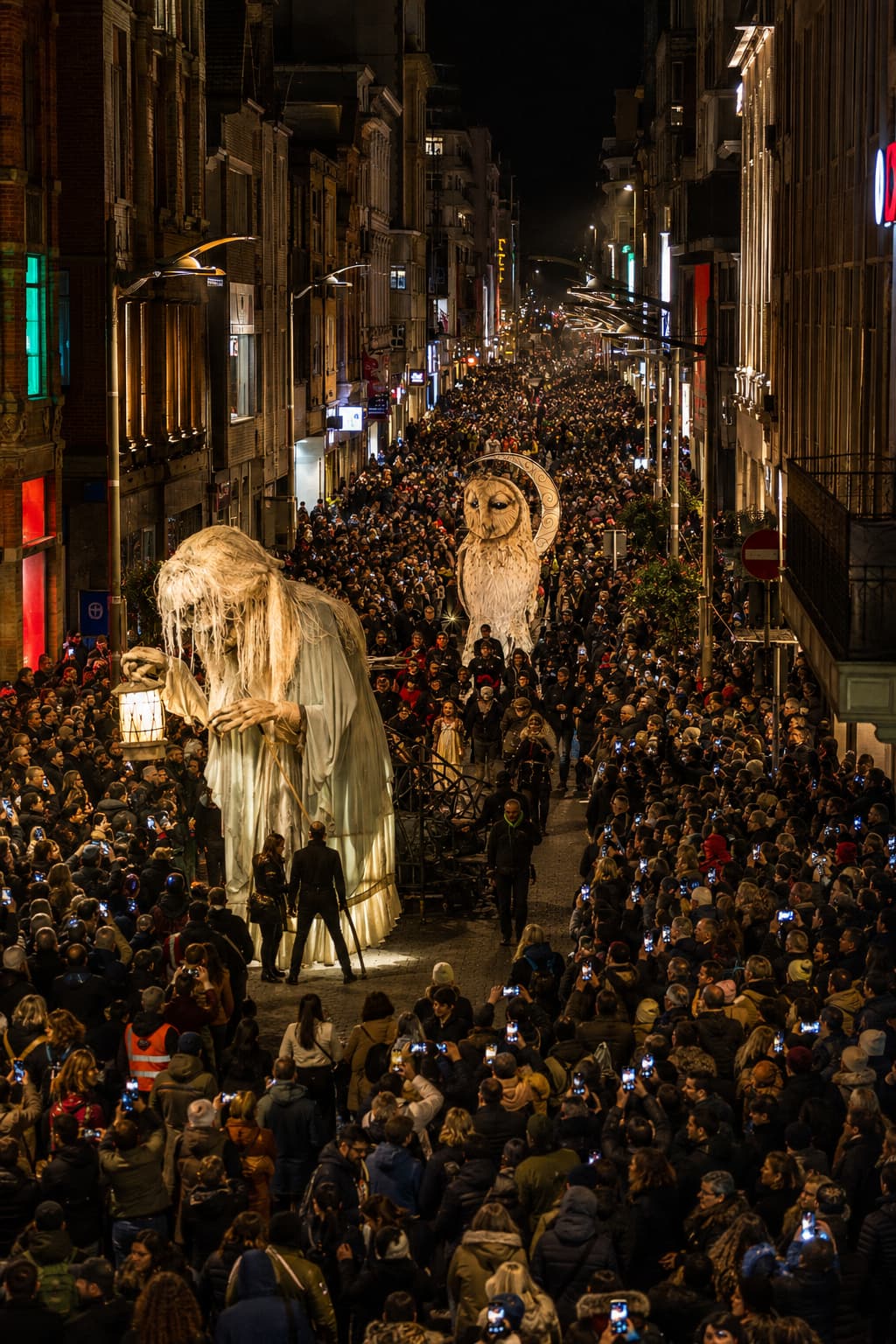
Galway’s Macnas is a large-scale outdoor theatre company that stages an annual Halloween parade through the city streets — a procession of giant puppet figures, stilt walkers, fire performers and original costumes that has been running for decades. It is free to attend and draws very large crowds. Dates vary year to year; check the Macnas website in early autumn for 2026 programme details. Galway is a smaller, walkable city with a strong arts identity and considerably less tourist infrastructure than Dublin or Edinburgh — which for some people is exactly the appeal.
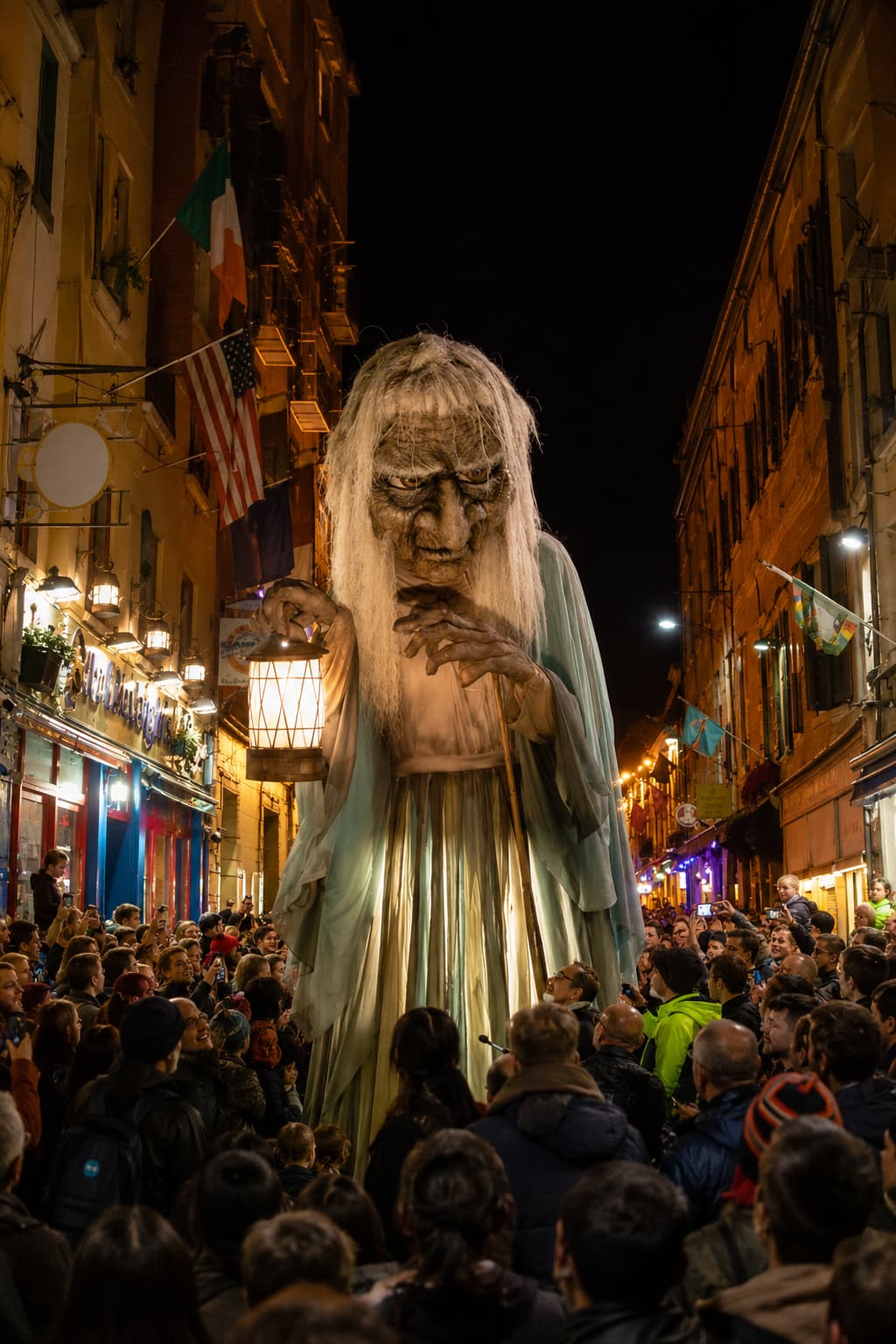
Is Halloween in Europe big in Ireland?
Bigger than anywhere else on the continent, and growing. Ireland has leaned into its position as Halloween’s country of origin — Fáilte Ireland, the national tourism authority, now runs a coordinated “Home of Halloween” programme that spans multiple weeks and reaches cities and towns across the island. In 2025, the Púca Festival and Derry Halloween together drew over 169,000 visitors. The 2026 programme, officially launched in July on the Hill of Uisneach in County Westmeath, is the most extensive yet.
04 — Tier Two: Where 1 November Matters More Than 31 October
This is the part of the Halloween in Europe story that almost no English-language travel article covers, and it is the part that will most directly affect your trip if you happen to be in the wrong city on the wrong day.
All Saints’ Day — 1 November — is a fixed public holiday in Austria, Belgium, Croatia, France, Hungary, Italy, Lithuania, Luxembourg, Poland, Portugal, Slovakia, Slovenia, Spain, and more than a dozen other European countries. It is observed across religious and secular households alike, and in much of Central and Eastern Europe it shapes how an entire week feels: quieter, slower, more inward-facing. This is not an atmosphere; it is how the season actually runs.
Do European countries celebrate Halloween or All Saints’ Day?
Both — but the balance varies enormously by country. In Ireland, Scotland and the UK, 31 October carries the cultural weight. Poland, Portugal, Croatia, France, Spain, and much of Catholic Europe place that weight on 1 November instead. Germany, the Netherlands, Belgium, and several larger European cities give both dates a presence, with Halloween expanding in urban areas while All Saints’ remains the older, deeper observance.
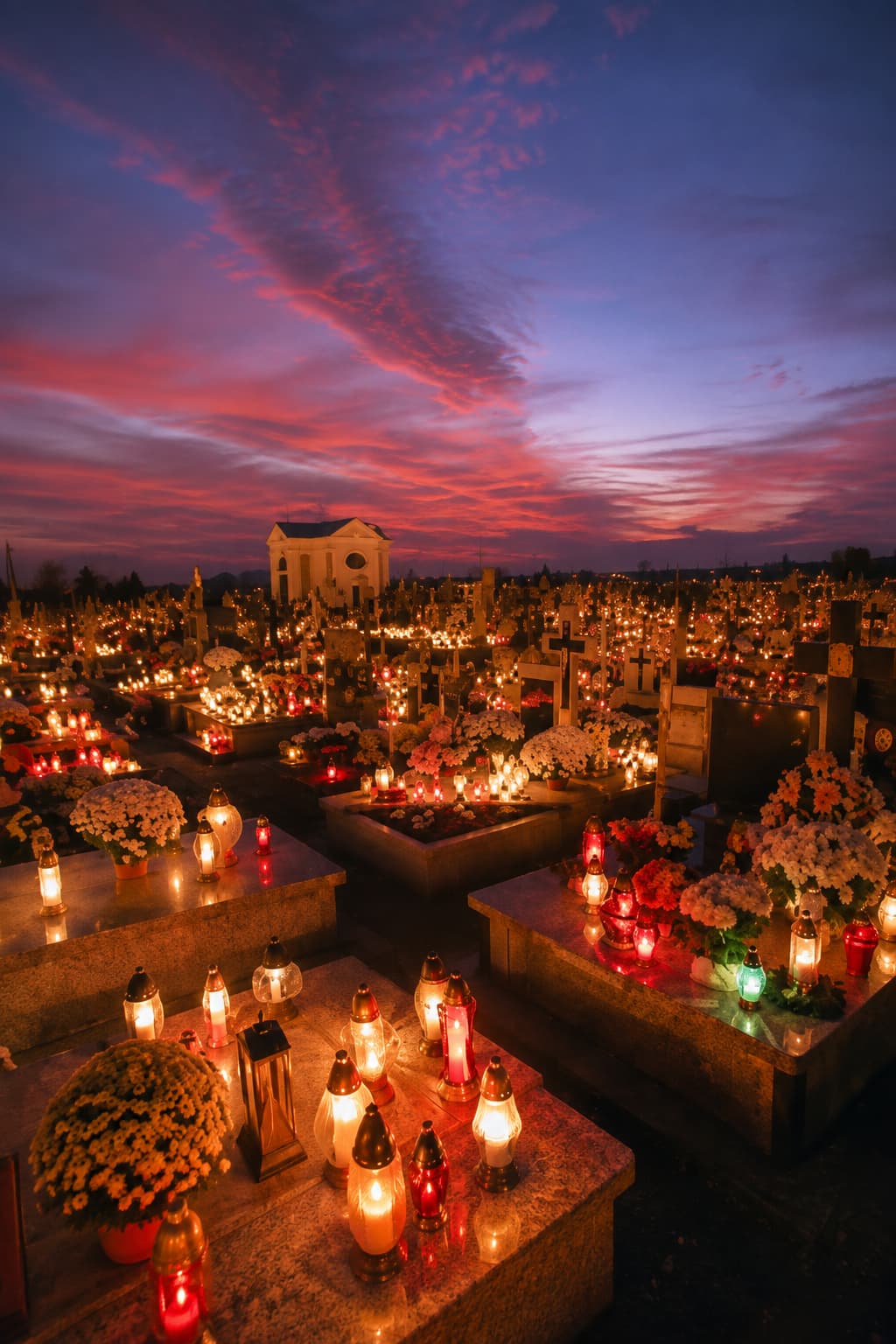
The practical difference matters. On 1 November in Poland, almost all shops and services close. People travel across the country to their hometowns, bringing votive candles known as znicze and chrysanthemums, until millions of candles illuminate cemeteries nationwide. It is one of the most visually striking things that happens in Europe in autumn — and it is not a spectacle designed for tourists. It is a family observance, a day of collective mourning and remembrance, treated seriously by the people participating in it.
Portugal has its own door-to-door tradition: Pão-por-Deus (Bread for God), in which children go house to house asking for bread, nuts, or sweets — a practice with clear parallels to trick-or-treating, but rooted in religious charity rather than costume culture, and observed on 1 November rather than 31 October.
If your plans take you through Poland, Portugal, France, Spain, Croatia, Austria or Hungary around All Saints’ Day, plan around widespread closures. Restaurants, museums, tourist sites and most shops may be closed or operating on reduced hours on 1 November. Book any dining in advance and check attraction opening times before you go. A cemetery on this date is a place where families are grieving — not a photography opportunity.
What’s open on 1 November in Europe?
The practical answer depends on which country you’re in and how observant that region is. In Poland and much of Central Europe, expect widespread closures — supermarkets, pharmacies, restaurants, and tourist sites frequently close entirely. France and Spain present a more mixed picture: major tourist attractions in Paris or Barcelona may stay open, but local businesses and many services will not. By contrast, 1 November is not a public holiday in the UK and Ireland, so trading continues normally. If your trip spans the 31st and 1st, it’s worth a five-minute check on which category your destination falls into. For a wider look at how October plays out across the continent, the best European cities in October covers crowd levels, weather, and value city by city.
05 — Halloween in Europe Tier Three: Where It’s an Import
The third tier of Halloween in Europe covers what most roundups list first: the destinations that have taken the aesthetic and run with it. Calling a destination a “Halloween import” is not a criticism. Transylvania didn’t invent the vampire mythology, and Disneyland Paris was never going to claim a Samhain lineage. These places have taken Halloween as an entertainment framework, run with it, and in some cases created very good experiences. The clear labelling matters because it helps you arrive with the right expectations.
Bran Castle, Transylvania — gothic atmosphere, borrowed mythology
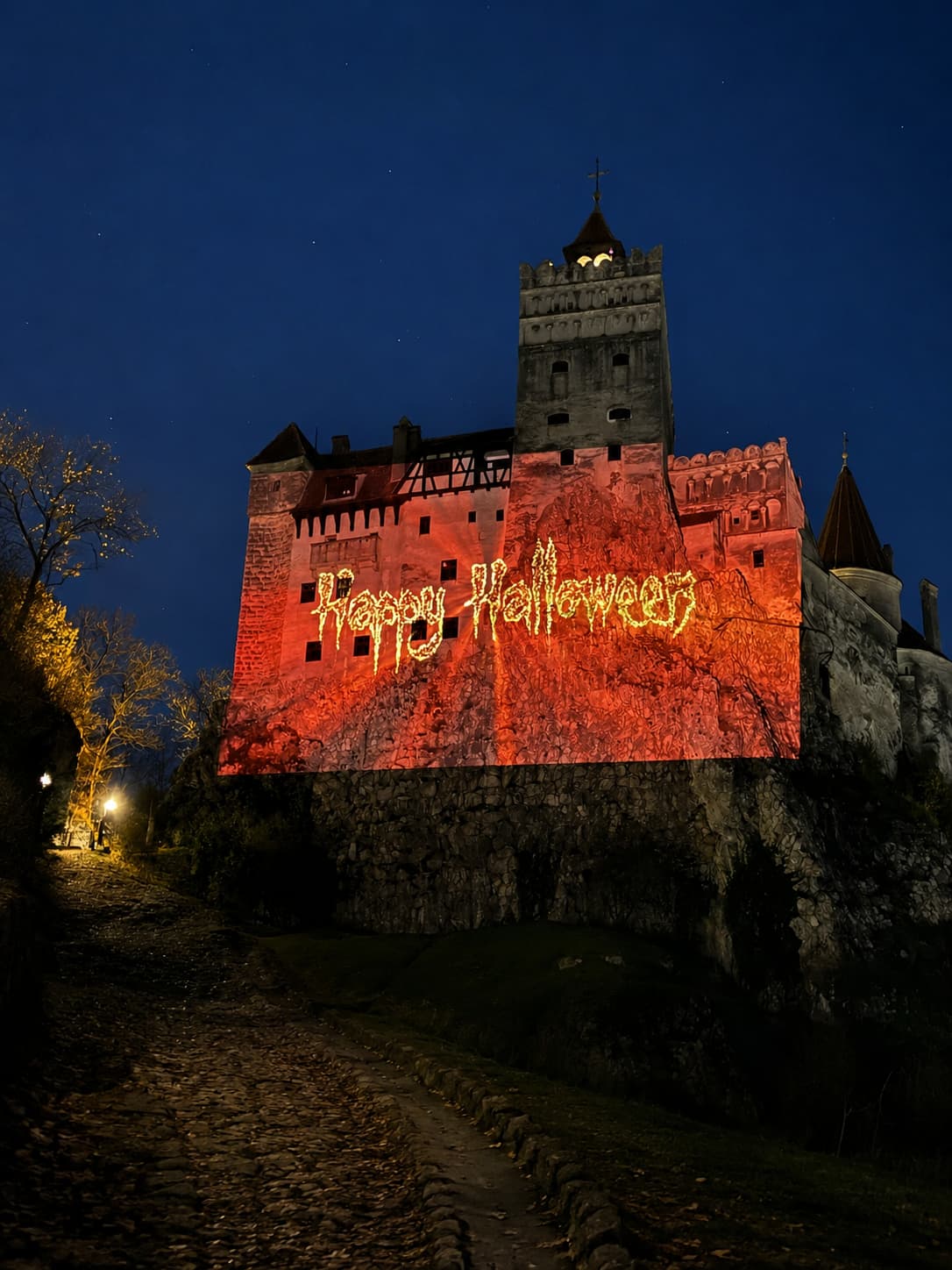
Bran Castle in Romania is the building most closely associated with Dracula in the popular imagination, though its connection to Bram Stoker’s novel is more atmospheric than biographical — Stoker almost certainly never visited Romania. Halloween was not traditionally observed in Transylvania, but the castle leans into its reputation with annual events in late October that range from after-dark tours to costume parties inside the castle walls. The setting is remarkable: a 14th-century fortress surrounded by Carpathian forest in peak autumn colour. If you want gothic architecture and medieval drama, it delivers. For more on Europe’s castle landscape, the 20 most beautiful castles in Europe gives a wider frame — and if you’re combining Bran with time in Bucharest, the Transylvania itinerary from Bucharest covers the logistics.
Disneyland Paris — Halloween season, not Halloween night
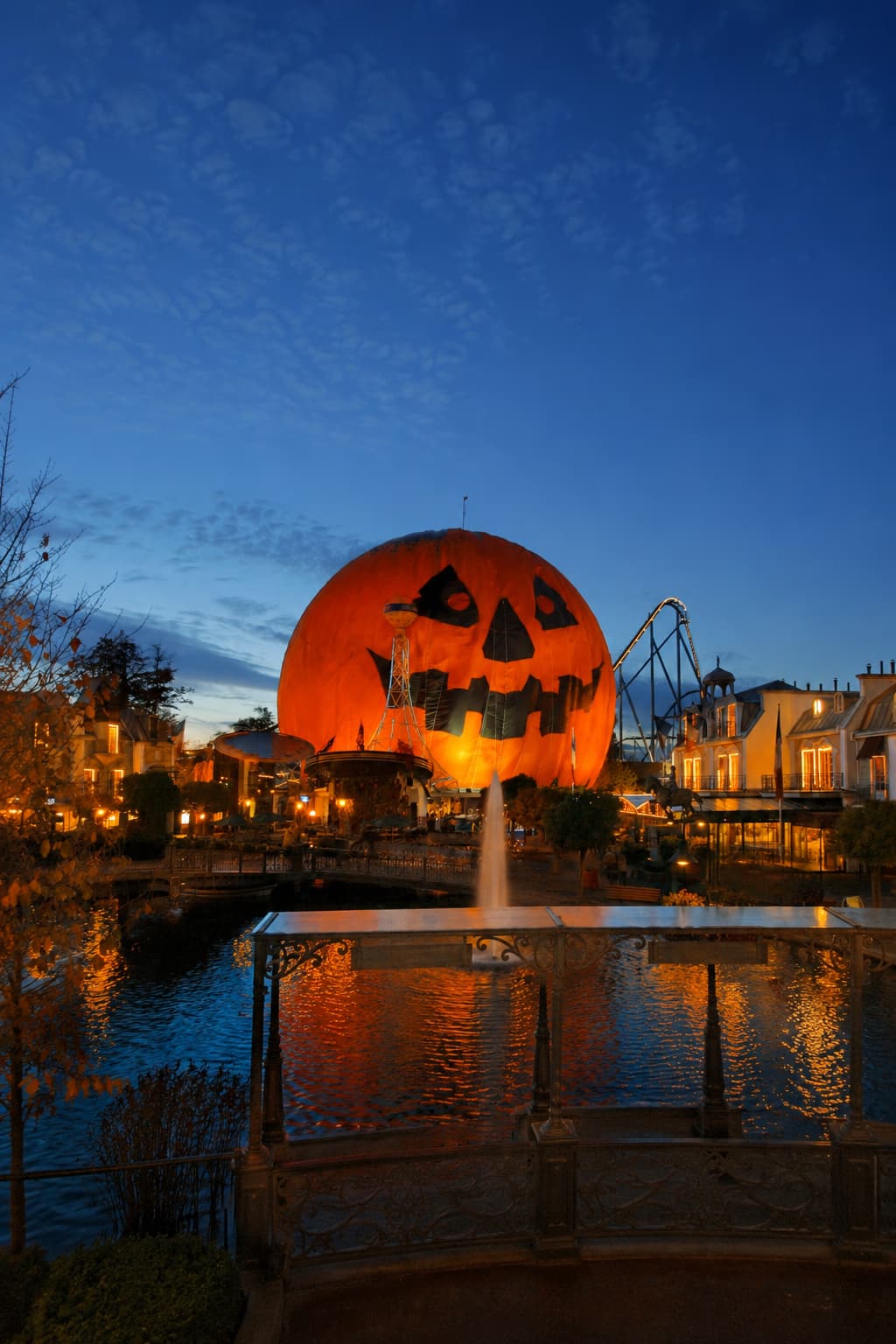
Disneyland Paris runs its Halloween season across the whole of September and October, rather than concentrating on 31 October specifically. The park adds themed overlays, villain meet-and-greets, and the Mickey’s Halloween Celebration parade across multiple weeks. It is a well-executed family entertainment product. It is also, unambiguously, an American theme park on French soil — the tradition is Disney’s, not Samhain’s, and that’s fine if it’s what you’re after. Worth noting: it is one of the most expensive entries on this list and should be booked well in advance.
Amsterdam and Barcelona — party cities with good infrastructure
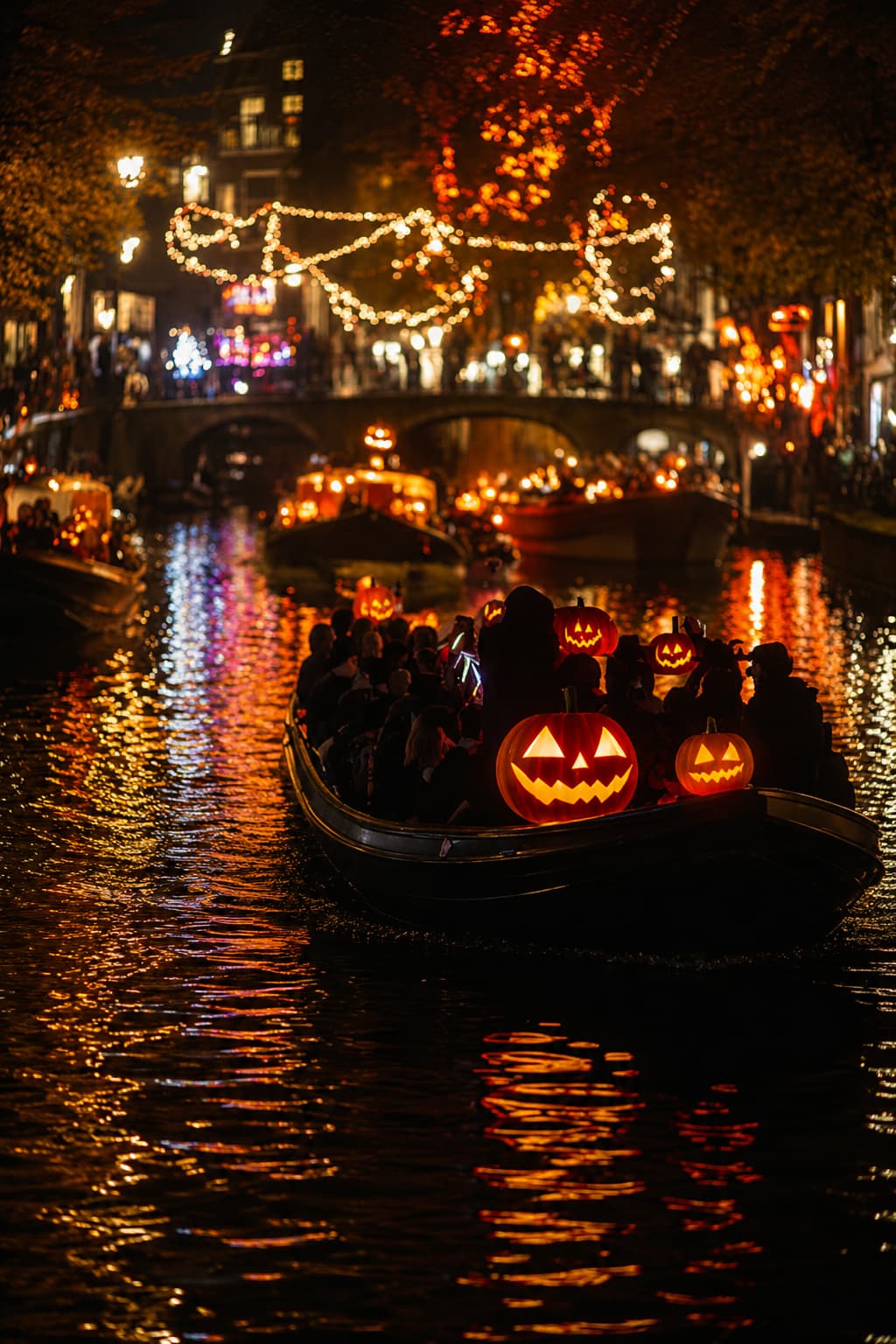
Amsterdam and Barcelona have adopted Halloween as a nightlife event. Both cities have the bar density, the young international visitor base, and the tolerance for elaborate costume in public to pull it off convincingly. Neither has a meaningful cultural claim to the date, and neither tries to make one. If you want a city-break where you can walk between venues, eat well, and participate in a large, loose Halloween party without buying a ticket to anything specific, both work well. The entertainment is the city itself.
06 — What’s the Best Place for Halloween in Europe?
The best place to celebrate Halloween in Europe depends entirely on what you’re looking for, and on being honest with yourself about that before you book. This is not a question with one answer — it has four, one per tier.
If you want the tradition in its most complete, least mediated form — the genealogical claim, the ancient setting, the sense that the people around you are observing something that predates the holiday as packaged entertainment — go to Ireland. Derry for the spectacle, the Púca Festival in County Meath if you want to stand closer to the source. Either way, book early: accommodation in Derry on 30 and 31 October sells out months ahead. For first-timers planning Halloween in Europe around cultural authenticity, Derry is the clearest answer.
If you want something visually extraordinary and are prepared to plan around ticketing — Edinburgh’s Samhuinn Fire Festival on Calton Hill is unlike anything else on this list. Two hundred volunteers, fire dancing, drumming, and a piece of landscape theatre that takes place on one of the most dramatic hilltops in Europe. Tickets go through Citizen Ticket; past festivals have sold out well in advance of October. Halloween in Europe doesn’t get much more elemental than this.
If you want a city break with good restaurants, manageable crowds, and Halloween woven into the nightlife rather than the main event — Amsterdam or Barcelona both work. You won’t get cultural depth; you will get a well-functioning city in peak autumn form.
If you want gothic atmosphere and medieval architecture without the Irish or Scottish crowd volume — Bran Castle and Transylvania deliver visually, with the understanding that the tradition was grafted on rather than grown.
Halloween in Europe with kids
Travelling to Halloween in Europe with children narrows the field usefully. The strongest choices for families are Derry and Dublin. Derry’s festival is built around families — the Awakening the Walled City Trail and the main Carnival Parade are free, outdoors, and designed to accommodate all ages. There are kids’ storytelling sessions and family activity zones alongside the more theatrical elements. Dublin’s Bram Stoker Festival has family events running through the daytime hours. Both cities are physically walkable and manageable with children in tow.
Edinburgh’s Samhuinn is explicitly not recommended for very young children — the Beltane Fire Society’s own guidelines flag semi-nudity and uninhibited behaviour, and under-16s must be accompanied by a full-paying adult. Bran Castle is more atmospheric than programmatic — the castle itself is interesting, but for very young children who want active participation, it may feel like a long drive for a gothic building.
Disneyland Paris is the obvious family default and needs no elaboration, except to note that it runs Halloween content across the full September-October season, so you have more flexibility on dates than with one-night events.
Samhain, Trick-or-Treating and Late-October Travel
Booking Halloween Trips and Visiting Bran Castle
The Púca Festival and Salem vs Europe
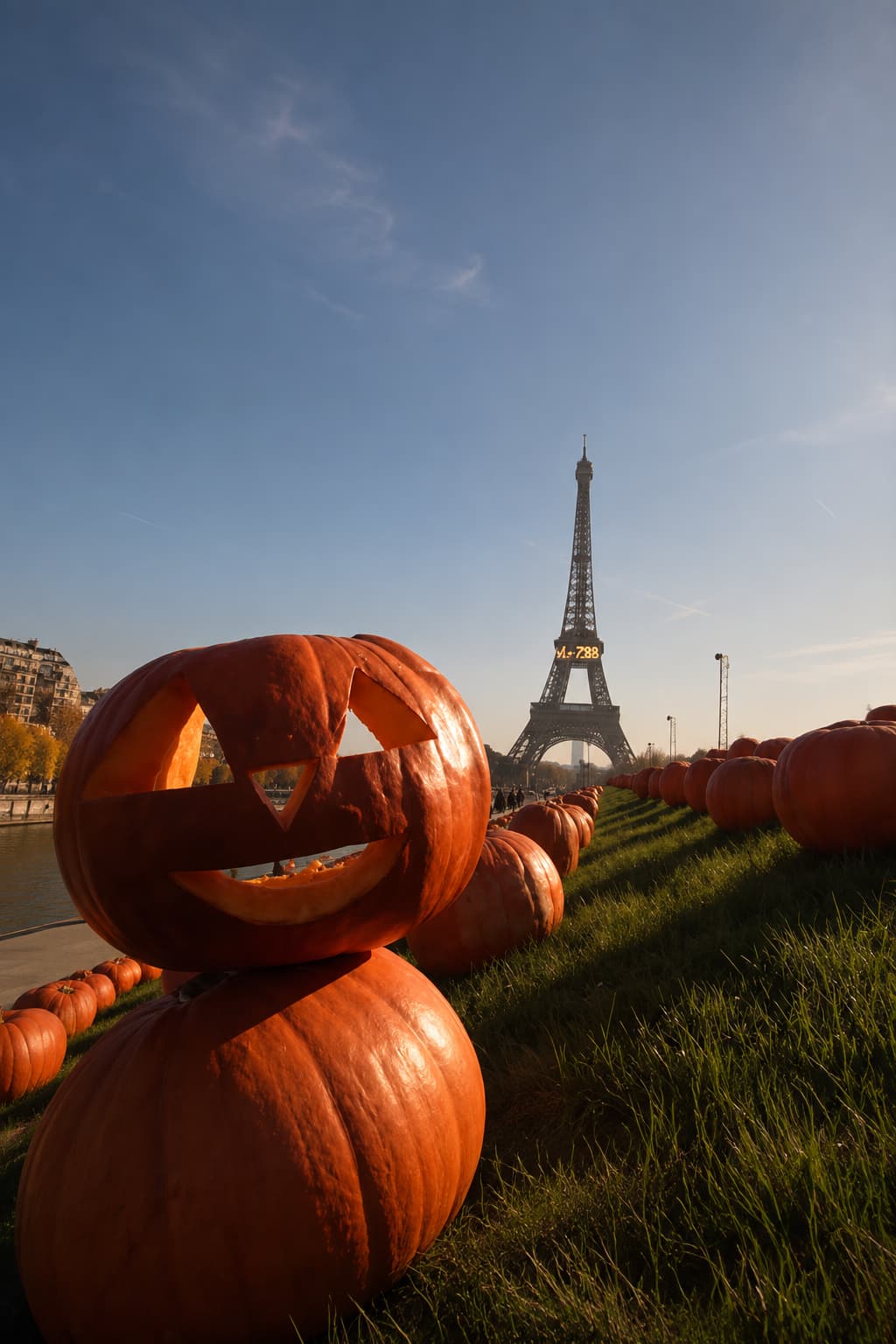
Halloween left Europe centuries ago and came back dressed differently.
The original is still here, if you know where to look.