

Couples Trip Ideas: How to Choose a Place That Suits Both of You
Not a roundup of “romantic” destinations — a framework for finding couples trip ideas that actually suit both of you, starting with the four mismatches most pairs never name out loud.
Most couples trip ideas lists have a structural problem: they were written for one person. A single editor, a single travel style, a single definition of a good trip — so the result is a roundup of places that are pleasant for someone, just not necessarily for both of you at once. Research consistently finds that the most common sources of conflict on a couples trip are not destination choice but budget disagreements, mismatched travel styles, decision fatigue, and overpacked schedules. In other words, the destination’s real job is to reduce those four pressures, not add to them.
This post works differently. Instead of listing couples trip ideas by mood or popularity, it groups them by the mismatch they solve. Whether you’re negotiating pace, budgets that don’t quite line up, or the fact that one of you has a colour-coded spreadsheet and the other has a carry-on and an idea — there’s a version of this that works for you. And in one case, the honest answer is that you shouldn’t take the same trip at all, and that’s fine too.
01 — Why Most Couples Trip Ideas Lists Don’t Work
The template problem is easy to spot once you’ve noticed it. Open any “best couples vacations” roundup and you’ll find Santorini, Tuscany, Bali, Paris, and a Caribbean resort — ordered by how photogenic they are, not by what kind of pair they suit. Implicit in all of them is the assumption that both people want the same thing from a holiday, that the holiday should feel like a commercial for itself, and that the right answer is always somewhere beautiful.
None of those assumptions hold for most couples. Furthermore, the places that dominate these lists are usually the ones that generate the most sponsored content, not the ones that actually absorb the widest range of travel personalities.
The four mismatches that actually decide a trip
Before choosing anywhere, it’s worth naming what you’re actually trying to solve. In practice, almost every couples travel disagreement reduces to four variables:
Pace — one person wants to move every day; one wants to stay somewhere for a week and slowly understand it. This is the most common mismatch and, in turn, the easiest to fix with the right destination — because some places reward both rhythms without requiring you to split up.
Budget — not necessarily how much you spend total, but how you weight the spend. One person wants a good hotel and basic food; one wants to eat well and doesn’t care about the room. Specifically, the destination affects which tradeoffs feel natural rather than like a concession.
Planning style — the spreadsheet person vs the person who likes to see what happens. A city with a useful transit network and good serendipity-friendly neighbourhoods suits both. However, a city that rewards pre-booked timed entry and careful route planning suits only one — and the other person will feel managed rather than on holiday.
Heat and crowd tolerance — this one gets ignored until it becomes the whole trip. August in Dubrovnik at 37°C with 9,000 cruise ship visitors has quietly derailed more couples trips than any destination choice ever could. As a result, the fix is almost always timing, not destination.
It also helps to name what each of you actually needs in order to feel like the trip was a success — not what sounds nice in theory, but the three things that would make you feel it was worth going. Do that before you open a browser tab.
02 — What Is the Best Trip for a Couple Who Like Different Things?
The best couples trip ideas solve a specific mismatch rather than a general mood. Look for places that support two different daily rhythms without requiring you to be together every hour. Destination fit for couples is best measured by variety rather than beauty. Somewhere that does one thing beautifully (the beach, the ski slope, the spa) puts enormous pressure on both of you to want that one thing. By contrast, a place with genuine range — architecture and coastline, hiking and good restaurants, markets and museums and nothing in particular — gives each person room to move.
A widely recommended pre-trip exercise: each partner names the top three things they need to do or see in order to consider the trip a success, stated out loud before anything is booked. Not aspirational items, not concessions — actual must-haves. In most cases, the lists don’t clash as badly as expected. What they reveal is where the real priorities are, which makes planning faster and arguments about days less likely.
Furthermore, the exercise usually surfaces the thing nobody said they wanted but would have been miserable without — a morning with nothing planned, a day by the sea, an afternoon in a bookshop. These are the things that don’t survive itinerary-building unless you protect them deliberately.
03 — Where Should Couples Go on Vacation?
The following groups each identify the mismatch they solve. These couples vacation ideas name two or three places and link to the post that actually covers them in depth — because the point here is to help you diagnose the fit, not to summarise destinations in two paragraphs.
If one of you wants to move and one wants to stop
The best solution is a place with a good base and easy day-trip range. You’re not splitting up — you’re building an itinerary where the active person leaves in the morning and the other one gets a slow coffee and a market.
Porto, Portugal is the example that comes up most often, because the city is genuinely walkable and compact (the person who wants to wander can fill three days without a plan), while also sitting within easy reach of the Douro Valley, the coast, and Guimarães for whoever wants to keep moving. The three-day Porto itinerary addresses both rhythms honestly.

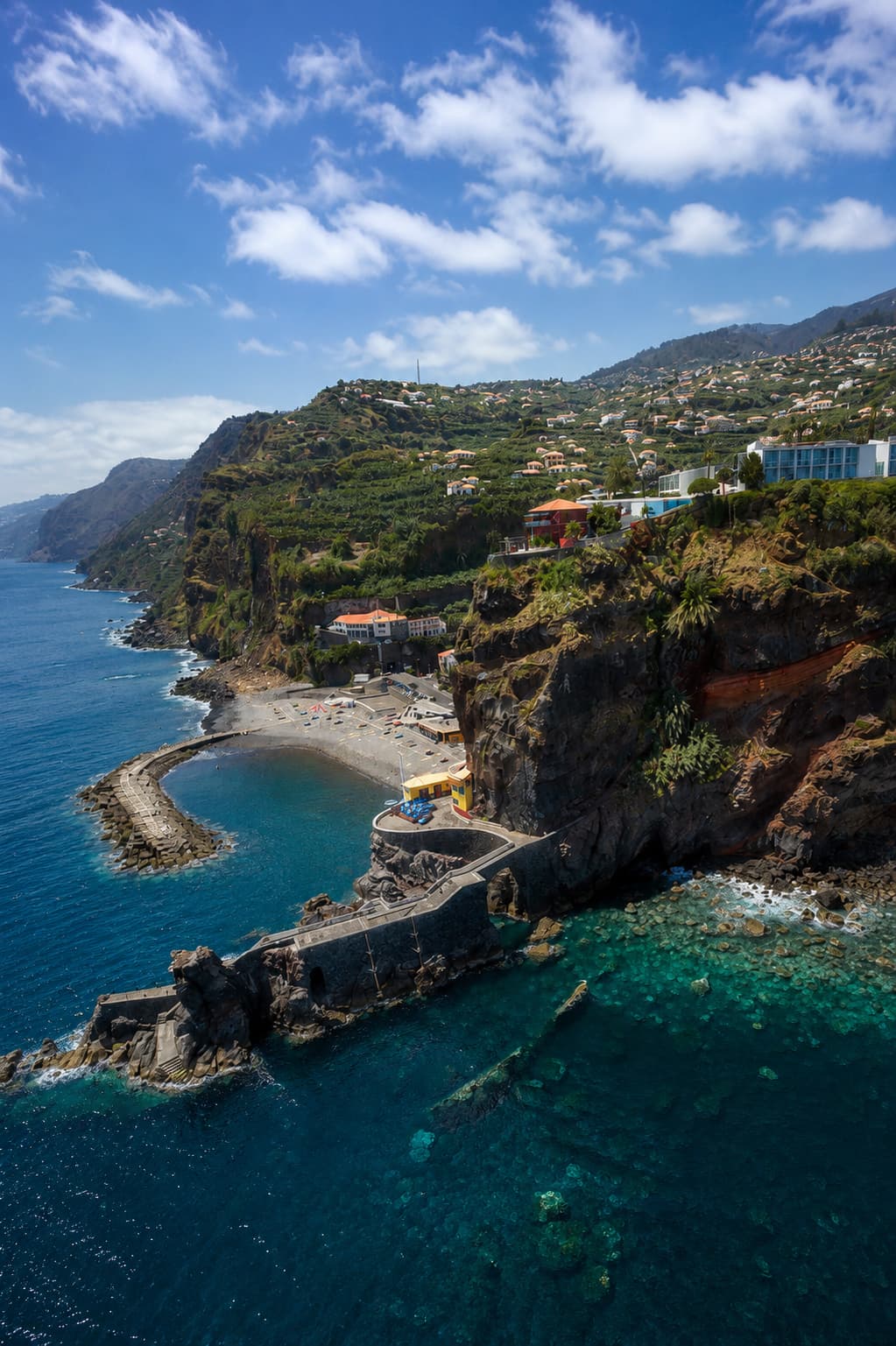
Madeira solves the same mismatch differently. It’s compact enough that you’re never far from each other, but the range of what’s available — coastal walks, levada hiking, mountain roads, the seafront town of Funchal — means a week there doesn’t require agreeing on every day. The Madeira travel guide goes into the practical logistics.
The Amalfi towns offer a more dramatic version of the same principle. The towns along the coast vary wildly in energy — Positano and Ravello are essentially different trips. Consequently, the quieter option is always an hour away, which means the split-pace problem is built into the geography. In particular, Praiano is the natural choice for whichever half of the pair needs somewhere slower.

If your budgets don’t match
Budget mismatches are almost always about categories, not totals. The useful question isn’t “how much will we spend?” but “which of us is willing to save on what?” In short, a place with a wide range of accommodation and food options — not just a budget tier or a luxury tier — makes that negotiation easier, because neither person is visibly sacrificing.
Barbados is an underrated answer here. It reads as expensive because it’s Caribbean, but it has a functioning local economy with supermarkets, rum shops, and beach bars where the bill doesn’t feel like a destination tax. The gap between a self-catering villa split two ways and a resort room is far smaller than in comparable destinations, which takes the “who’s paying for what” calculation out of every meal. The Barbados travel guide covers where the real value sits.

Albania is the European version of this. It’s one of the cheapest destinations on the continent for accommodation and food, which means whoever cares less about spending can relax and whoever does care can find something genuinely nice without it costing what it would in Croatia or Greece. The Albania travel guide gives the honest numbers.

If one of you plans and one of you doesn’t
The planning-style mismatch is often disguised as a personality conflict when it’s actually a systems problem. In practice, the planner is anxious about things not being in place; the non-planner is anxious about rigidity. What solves this is a destination where the genuinely unmissable things either don’t require advance booking or are easy to get last-minute, and where improvisation is consistently rewarded.
Lisbon runs largely on this logic. The tram goes where you point it, the neighbourhoods change character every ten minutes, and the places worth eating aren’t the ones that need six-week reservations. Meanwhile, there are enough day trips, museums, and Fado shows that a planner can build structure around them without it feeling like a grid.

Eastern Europe in general — Prague, Budapest, Kraków — tends to suit this dynamic. The cities are dense and walkable, the costs are low enough that an unplanned day doesn’t feel wasteful, and the must-do items (the castle, the thermal baths, the old square) are accessible enough that they don’t require planning as much as they require showing up. The Eastern Europe travel guide covers what each of these cities actually demands in terms of planning versus what you can leave open.

If one of you can’t take the heat
This is the mismatch that makes Southern European summer trips quietly miserable for one person and secretly ruins the trip before the conversation about it happens. Several major European destinations have also started managing crowds in ways that affect the experience directly: Greece has introduced levies on cruise passengers at Santorini and Mykonos during peak summer months, and Venice’s access fee applies on selected days from April 2026 — so the crowding problem is now also a cost and logistics problem.
The useful reframe: heat and crowds are timing problems, not destination problems. Paris in October is one of the most consistently pleasant weeks you can spend in Europe, and it suits almost every combination of travel personalities. The best time to visit Paris makes the timing case in full.
For genuinely hot-weather destinations — the Greek islands, the Mediterranean coast — the fix is almost always shoulder season. If one person runs cold and wants sun and the other simply can’t handle July heat, May or September generally pleases both: warm enough for the beach person, bearable for everyone else. Meanwhile, the Santorini vs Mykonos comparison covers the timing and crowd question for those two specifically.

04 — Couples Trip Ideas Beyond the Beach Resort
Beach resorts dominate couples trip ideas lists not because they’re the best fit, but because they’re the easiest to photograph and the easiest to sell. The all-inclusive model removes decision-making, which is appealing when you’re tired — but it also removes the variation that makes a trip feel like you went somewhere rather than nowhere specific.
If neither of you particularly wants a beach resort but one of you keeps finding them in search results, the four categories below tend to work better as a starting point.
Four couples vacation formats that actually work
A city with good food and no agenda. Two or three nights, somewhere neither of you has been, with a list of restaurants and a willingness to walk. Porto, Bologna, Lyon, Tbilisi — places where the city itself is the activity, which means neither person has to convince the other of a plan.
A slow trip to one country. Not an itinerary — a base. One apartment, one neighbourhood, two weeks. The goal is to stop performing tourism and simply be somewhere. This works especially well if one person is exhausted and the other is energised: the apartment means you can move at completely different speeds on any given day without negotiating.
A landscape trip. Madeira, the Azores, the Scottish Highlands, the Norwegian coast — places where the point is outside, where the itinerary is mostly “go there and look at that” and where the conversation on the drive matters as much as the destination. Landscape trips are also low-stakes in a way city trips aren’t: there’s rarely a wrong answer about what to do next.

A long weekend somewhere you’d never go for a week. Trip length matters more than people acknowledge. Some pairs run out of agreement by day four of any city trip; two nights in Bruges, Ghent, or Tallinn is exactly enough — genuinely interesting, not exhausting, and over before anyone has to manufacture enthusiasm.

05 — Good Couples Trip Ideas for a First Holiday Together
Among all couples trip ideas, a first trip together deserves its own logic. The most useful constraints are length, distance, and reversibility — in that order.
Length: three to five days is enough. Longer than a weekend so you get past the first-day adjustment; shorter than a week so you’re not testing the relationship’s full load-bearing capacity on a holiday that cost £800 each. Overall, a long weekend in a neighbouring country is a genuinely useful calibration exercise without the stakes of a major commitment.
Distance: closer is better the first time — not because the destination matters less, but because the logistics of a long-haul first trip add friction (jet lag, unfamiliar food, longer transit) that makes it harder to tell which tension is about the travel and which is about the person. A short-haul European city removes those variables and lets you focus on the part that’s actually new.
Reversibility: a first trip should have an easy exit if needed. This doesn’t mean planning for failure — it means not structuring things so tightly that a change of plan feels catastrophic. A city with flights home most days of the week and accommodation you can move out of is a more gracious structure than a non-refundable eight-night villa.
In practice: a three-night city trip, somewhere neither of you has been, with one or two things decided in advance (a restaurant, a museum) and the rest left open. You’ll learn more about compatibility in 72 hours of low-stakes exploration than from planning a two-week trip together in theory. For European city options with flexible logistics, Lonely Planet’s European city guide covers the range well.
06 — How Do You Plan a Trip with Your Partner Without Arguing?
Most couples trip arguments aren’t about the destination — they’re about the process.Specifically, about who is carrying the cognitive load of planning, what happens when one person’s expectation was never said out loud, and how decisions get made when you’re tired and hungry and in an unfamiliar place. Three concrete mechanics help more than any destination choice:
Separate the research from the decisions
One person doing all the research and then presenting options is a recipe for resentment in both directions. The researcher feels unappreciated; the non-researcher feels presented with a fait accompli. A cleaner split: each person researches one half (one researches accommodation, one researches things to do) and each makes a few non-negotiable picks. The rest gets decided together on the ground, where the decision is easier anyway.
Agree on the budget before the first tab is opened
The trip goes better when the budget is explicit, specific, and agreed in advance — not a vague “let’s not go crazy.” Specific means: total trip spend, accommodation tier, and what’s included (are flights in that number or separate?). It also means agreeing who pays for what, especially if incomes differ. A few awkward conversations before booking prevents a lot of silent scorekeeping during the trip.
Build in a nothing day
On any trip longer than four nights, build in one day with nothing scheduled. Not “we’ll figure it out” — genuinely nothing planned, with permission to do nothing if that’s what you need. The nothing day absorbs the mood of wherever you are rather than fighting it. It’s also where the best things tend to happen: the restaurant you walked past twice, the neighbourhood you’d have skipped, the afternoon that didn’t need explaining. Overpacked itineraries are, consequently, the single biggest source of couples travel arguments after budget.
07 — When You Shouldn’t Take the Same Trip
This is the section most roundups skip, and it’s the most useful one. Sometimes the honest answer to “where should we go together?” is: there isn’t a place that solves this particular mismatch — at least not right now, not for the same dates.
One TravelZoo survey found that 60% of solo British travellers are in relationships, and 43% of married people have taken a solo city break, hiking trip, or retreat.
That’s not a failure state. In fact, it’s a recognition that two people can love each other and want completely different experiences from a holiday — and that forcing the overlap doesn’t serve either person.
Three situations where separate trips make more sense
One person wants a physically demanding trip and one needs to rest. A hiking week in the Alps and a beach week in the Algarve are not the same trip. Attempting to combine them produces something that satisfies neither — the hiker is bored, the rester is pressured, and both come home slightly resentful.
One person wants to go somewhere the other genuinely dislikes. Compromise destinations are real, but so is the situation where one person wants a hot city in August and the other finds heat genuinely miserable. No planning framework fixes that — you either go at a different time of year (often the real solution), or you go separately.
One person is burning out and needs a solo reset. This is more common than it gets discussed, and it’s not a signal about the relationship. A few days alone somewhere quiet is sometimes the thing that makes the next couples trip possible.
The structure that usually works instead
Split-days rather than separate trips — overlapping for the parts you genuinely share and building in time apart within the same rough geography. For longer trips, a combination often works well: a week together, then a week each doing the thing the other person didn’t want. Neither arrangement is a failure. The birthday trip ideas post covers how to plan around a fixed date, which is a useful framework for these logistics.

Budget and Trip Length for Couples
Solo Travel and Daily Planning as a Couple
The best couples trip isn’t the most beautiful destination or the most romantic itinerary.
It’s the one where both of you had enough of what you needed — and some of what you didn’t know you did.