
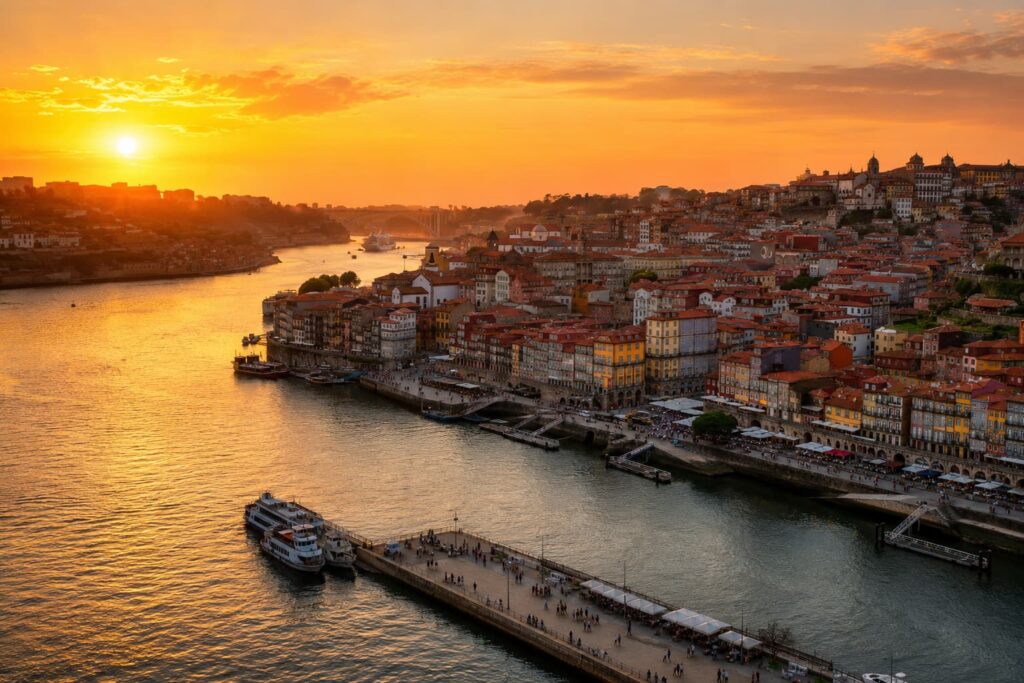
3 Days in Porto Itinerary: An Honest Guide
A real day-by-day plan for a Porto weekend — the highlights worth protecting, the queues worth skipping, and a straight answer on whether day three belongs in the city or out on the Douro.
This 3 days in Porto itinerary is built around how the city actually walks, not how it photographs. Three days is enough to see Porto properly — the old town, the river, the port cellars across the water — with a third day you can spend out in the Douro Valley or slow down inside the city, depending on the kind of traveller you are. What follows names the genuine highlights, flags the parts most guides oversell, and gives you a real verdict on the third day rather than the usual shrug.
Porto rewards a pace that most “perfect itinerary” lists refuse to admit it needs. The hills are steep, the best moments are unhurried, and a morning lost to the wrong queue is a morning you don’t get back. So this 3 days in Porto itinerary protects the things that are worth it and tells you plainly where to spend your time and where not to.
01 — Is 3 Days Enough Time in Porto?
Yes — for the city itself, three days is comfortable, and arguably generous. Porto is compact enough to cover its main sights on foot in two to four days, which means the real question is not whether three days is enough, but what to do with the third one. Specifically, the choice is between a long day trip out to the Douro Valley and a slower, second pass through the city you’ve only half seen.
Two full days handle the essentials without rushing. The first covers the old town, the Ribeira riverside, and São Bento. Day two then crosses the river to Vila Nova de Gaia for the port cellars and the city’s best sunset. That leaves the third day of your 3 days in Porto itinerary genuinely open — and unlike the guides that quietly default to “just pick a day trip,” this one commits to a recommendation further down, because the right answer depends on what you actually came for.
If this is your first time and you want to feel like you understood Porto rather than ticked it off, two slow city days plus one Douro day is the strongest shape. If you’d rather know one city deeply than add a fourth hour on a minibus, keep all three days in town. Both are valid — the plan below works either way.
02 — How to Spend 3 Days in Porto: The Itinerary
Here is the shape of this 3 days in Porto itinerary before the detail. Day one stays in the historic core. On day two you cross the Douro to Gaia and end at golden hour. Day three is the flexible one — Douro Valley or a slower city day, your call.
The medieval centre on foot — the riverfront, the tiled station, the bookshop question. End the day along the Cais da Ribeira as the light drops.
Old town
Cross the Dom Luís I bridge, tour a cellar, then climb for the view. This is where the trending riverside sunset actually happens.
The river
The world’s oldest demarcated wine region, or a second unhurried pass through Porto. A real verdict on which to choose is below.
Your call
Day 1 — Ribeira, the old town & São Bento
To begin, start in the Ribeira — the riverside district that gives Porto its postcard. It sits inside a historic centre that has been a UNESCO World Heritage Site since 1996, which is precisely why the lanes still tangle and climb the way they do rather than having been flattened into something more convenient. You’ll feel that in your legs — the old town is a stack of stairways and switchbacks — but it’s also the reason the place looks the way it does.
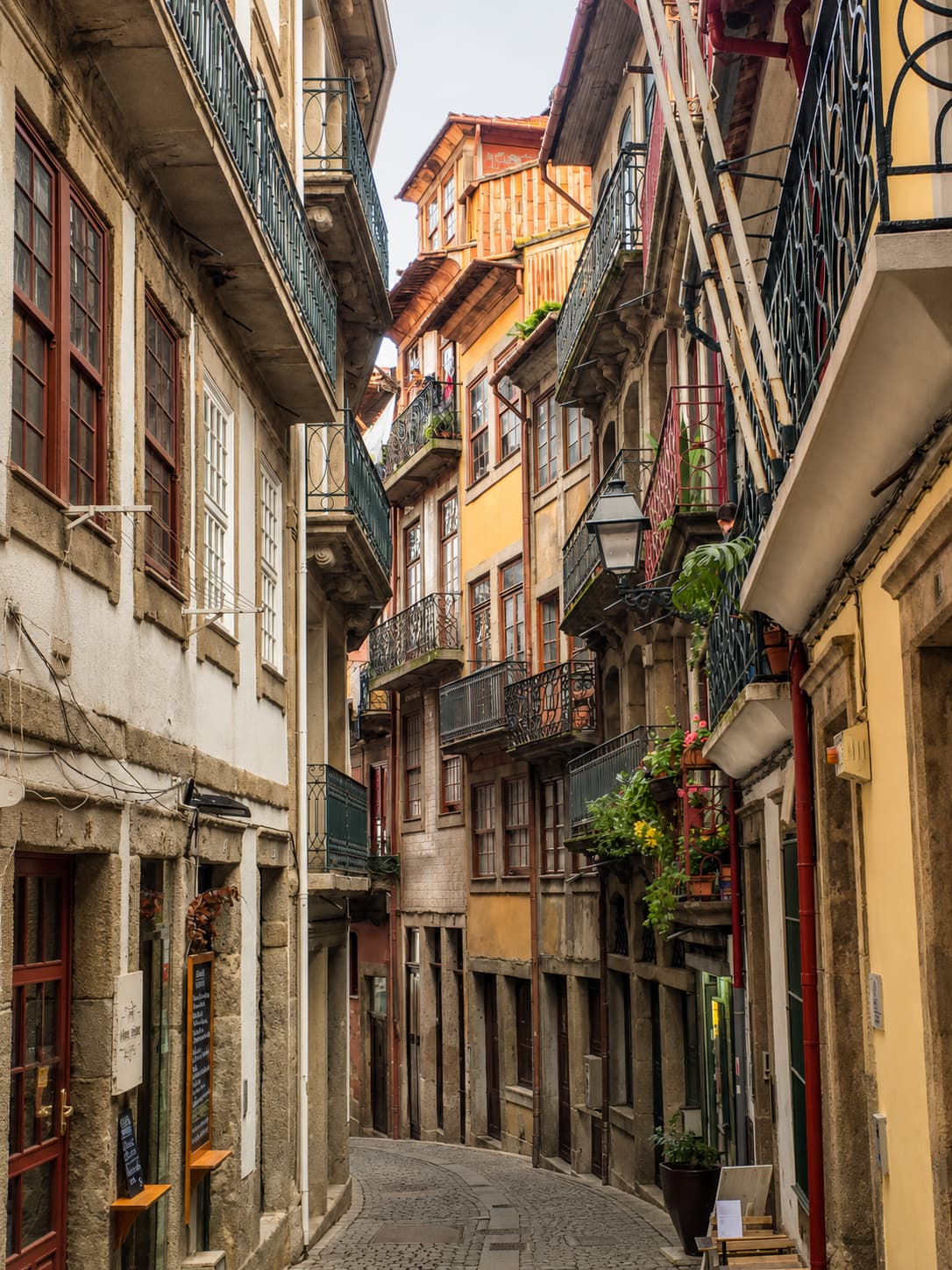
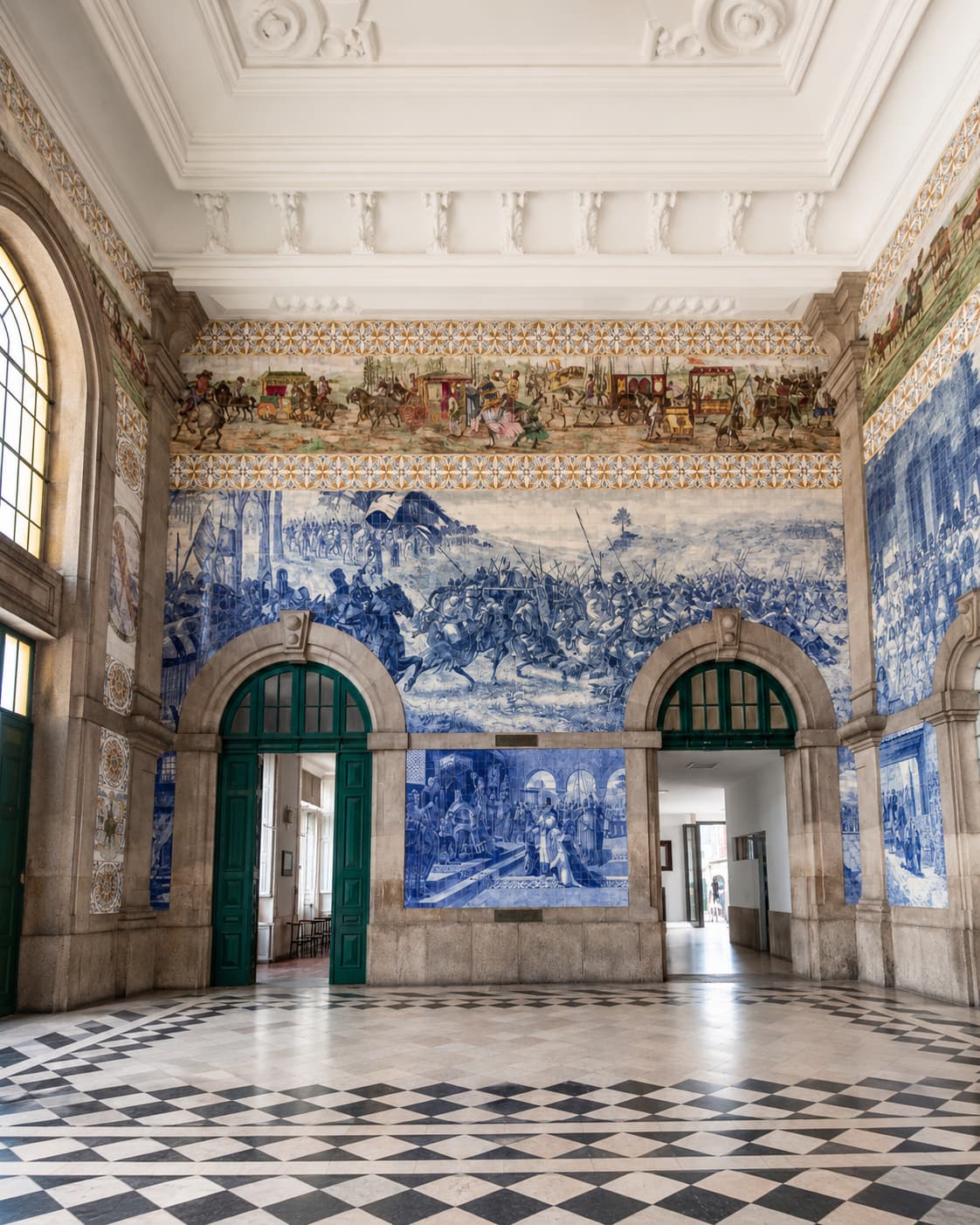
Meanwhile, work your way up to São Bento railway station, which is free to enter and worth every minute even if you’re not catching a train. Its main hall is lined with around 20,000 hand-painted azulejo tiles, created by the artist Jorge Colaço between 1905 and 1916, depicting scenes from Portuguese history across the walls. Most visitors step in, look up, and stay longer than they planned. From there it’s a short, scenic walk down through the Sé cathedral terrace, which gives you a first proper look across the river to Gaia.
For the rest of the day, let the Ribeira itself be the activity. Wander down to the Cais da Ribeira, the arcaded quay at the water’s edge, and let the afternoon go slowly. If you’re the kind of traveller who likes to anchor a city against its peers, Porto’s riverfront earns a place among the most beautiful places in Europe on visual drama alone — the layered houses, the iron bridge, the working river.
Don’t over-schedule the first afternoon. Porto’s old town is best understood by getting slightly lost in it, and the single most common regret travellers report is packing the first day so tightly they never just sat by the river. Leave a gap on purpose.
Day 2 — Vila Nova de Gaia, port cellars & golden hour
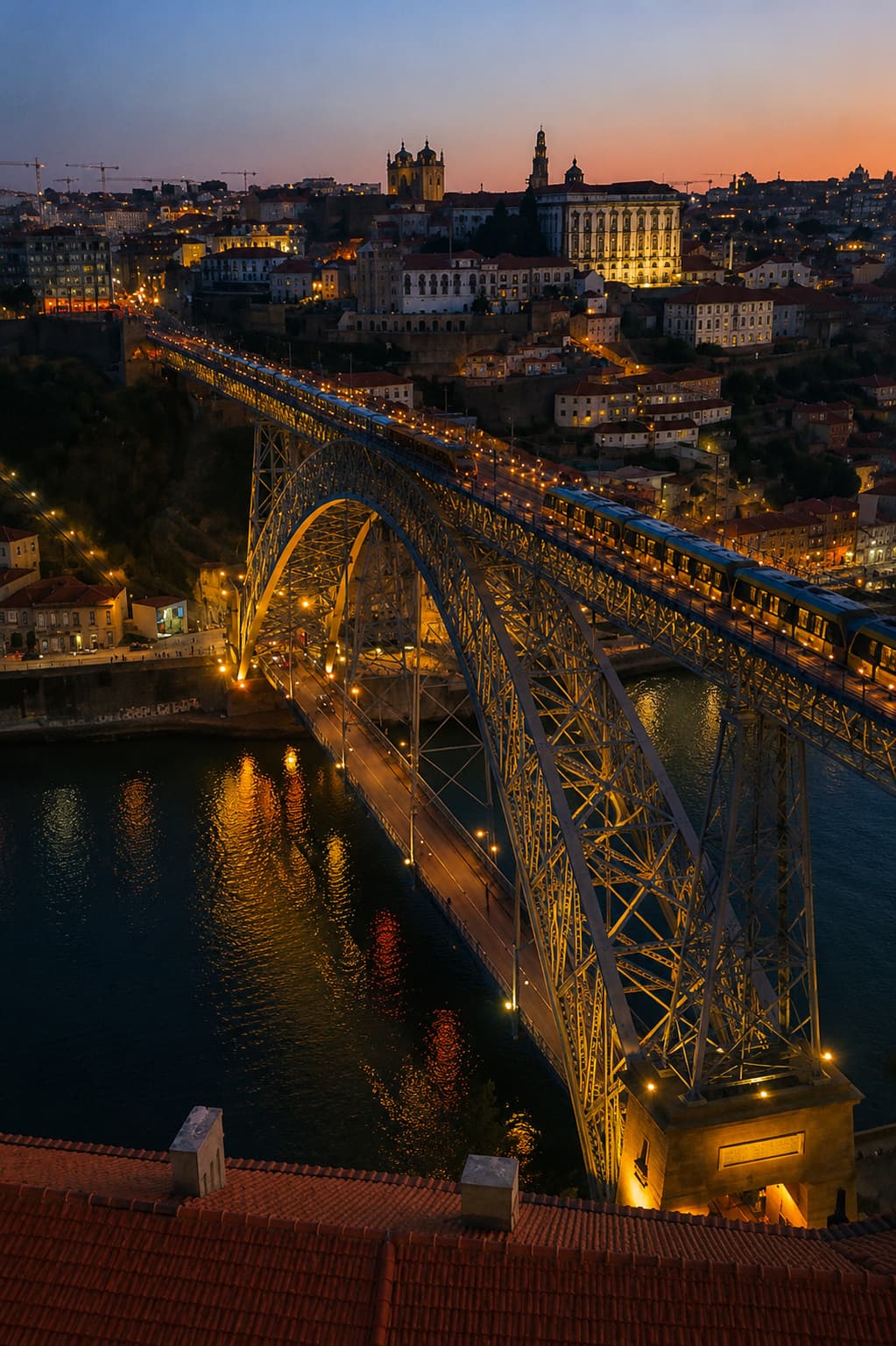
Here is the detail that trips up first-timers: the famous port wine cellars are not in Porto at all. They sit across the Douro in Vila Nova de Gaia, a separate city reached on foot over the Dom Luís I bridge — roughly a ten-minute walk from the Ribeira. Cross on the lower deck for the closest river-level views, or the upper deck for the drama of the height. Either way, the walk across is part of the experience, not just transit.

So spend the morning on a cellar tour — most of the big houses run them through the day, and a single tasting is plenty unless you’re a committed enthusiast. The tours explain how the wine is shipped up from the Douro Valley and aged here by the cooler river, which neatly sets up the day trip if you decide to take it. Afterwards, the Gaia waterfront is a fine place for a long lunch looking back across at the Ribeira you walked the day before.
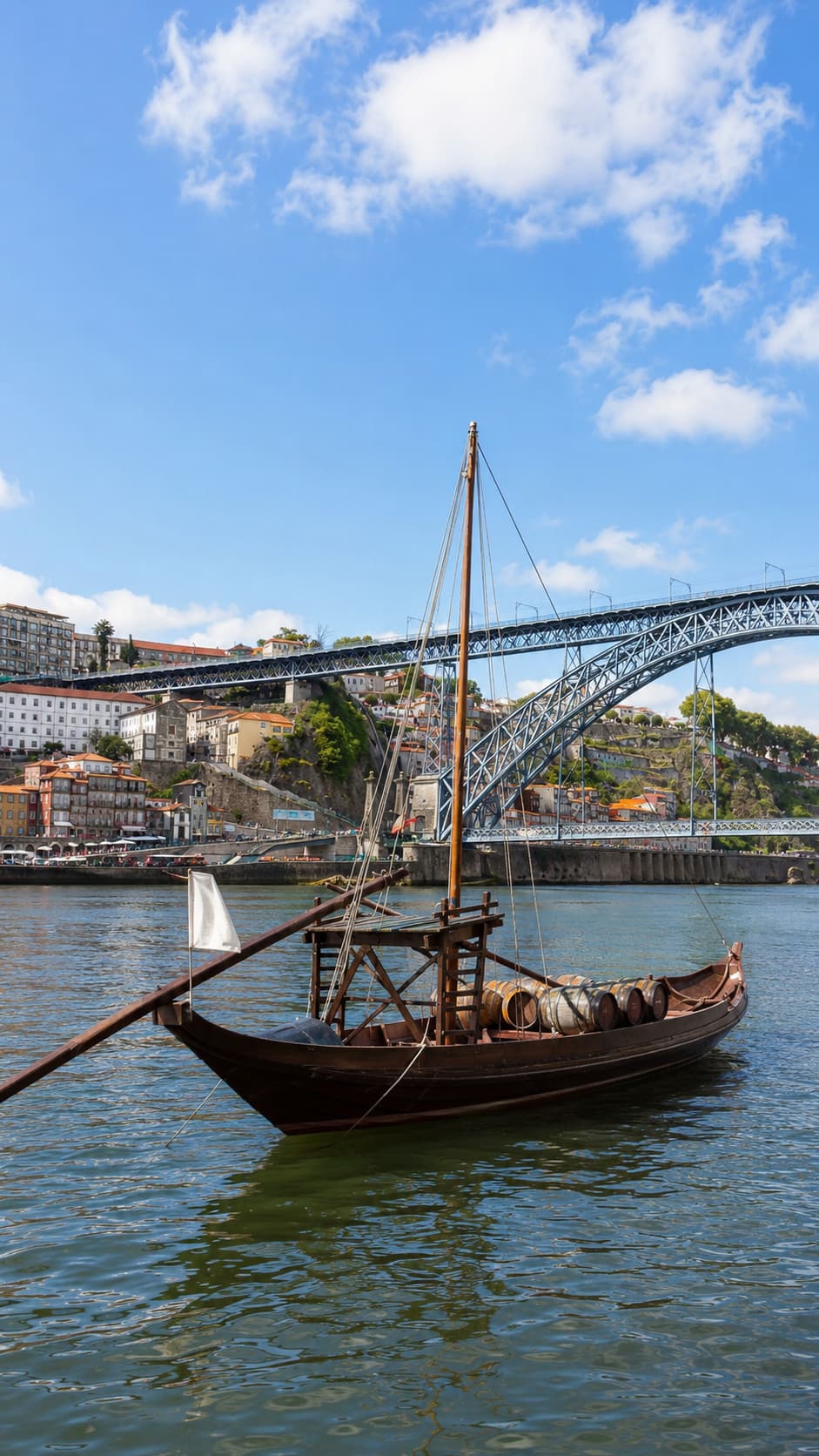
After that, stay on the Gaia side for the evening, because this is where the city’s best light happens — more on the exact spots below. The point of structuring the day this way is simple: you arrive on the right bank of the river just as the sun starts to drop behind Porto, which is the view everyone is actually chasing when they save those golden-hour pins.
Day 3 of Your 3 Days in Porto Itinerary — Douro Valley or a Slower City Day
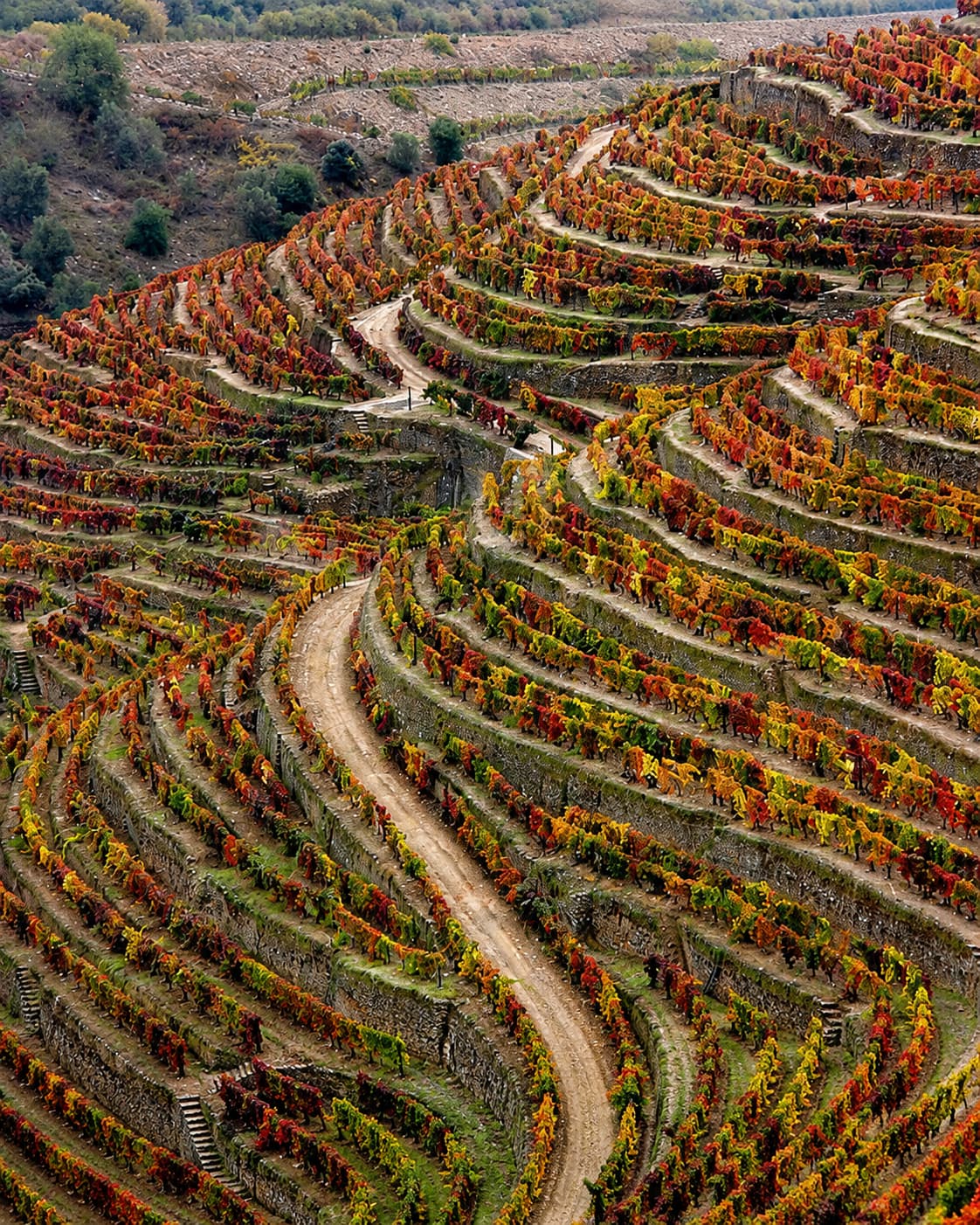
The third day is the one the glossy guides fumble. Most of them list a Douro day trip as an obligation and move on. The truth is more useful: the Douro Valley is genuinely spectacular — terraced vineyards dropping to a green river, the oldest demarcated wine region in the world — but reaching it is a long round trip, and whether that trade is worth it depends entirely on you.
If you take the day trip, go by organised tour or train rather than driving, so the valley roads aren’t your problem and a tasting isn’t a risk. Should you stay in the city instead, day three is for the things days one and two skimmed: a slow morning at a café, the Bolhão market, a tram out to Foz where the river meets the Atlantic. In short, the full verdict on which to choose sits in its own section below, because it deserves more than a line.
03 — Is Porto Walkable, or Do You Need Transport?
Porto is walkable — emphatically so for the historic centre — but it is also genuinely steep, and that’s the honest caveat the brochures leave out. Any 3 days in Porto itinerary is walked, not driven, but the old town climbs from the river in a series of staircases and ramps, so a route that looks short on a flat map can mean a real ascent. If you have mobility concerns or a tight knee, factor that in rather than discovering it halfway up.
That said, for the longer hops the metro and buses are cheap and easy with an Andante travel card, which you tap and top up as you go. The one ride worth taking purely for itself is the vintage tram out to Foz, where the Douro opens into the Atlantic. It’s slow — slower than walking would be over a short distance — but that’s the point of it. Take it as an experience on a relaxed afternoon, not as efficient transport when you’re short on time.
On foot for the centre — steep but rewarding. Andante card for the metro and buses to outer areas. Tram to Foz for the romance of it, not the speed. Skip a rental car entirely — parking in the old town is a headache you don’t need for a three-day trip.
04 — Should You Do a Douro Valley Day Trip?
This is the trip’s biggest fork, so here’s the straight version. The Douro Valley is the payoff for travellers who came to Portugal partly for the wine and the landscape — terraced hillsides, river cruises, quintas where the port is actually made. As the world’s oldest demarcated wine region, it has a sense of place that the cellars in Gaia can only gesture at. If that’s what pulls you, the day trip is the highlight of the three days, not a filler.
The trade-off, honestly weighed
But it is a long day. Reaching the valley and getting back eats real hours, and a rushed half-day there can feel like a lot of transit for a short window of vineyard. So the trade is clear: a full, committed day for genuine scenery, or those same hours spent going deeper into a city you already like.
You came partly for wine and landscape, you’d rather see one extraordinary valley than re-walk a city, and you’re happy to give a full day to travel and tasting.
You like knowing one place well over collecting another, you’re travelling with anyone who tires on long transit days, or the idea of a slow market morning beats a minibus.
My honest steer for a first visit: if the weather is good and you have the energy, take the Douro day. The valley is the kind of scenery you remember years later, and the cellars in Gaia make far more sense once you’ve seen where the wine actually comes from. If you’d rather slow down, the city more than fills the day — and you won’t feel you missed the trip’s core, because Porto itself is the core.
05 — Is Livraria Lello Worth Visiting?
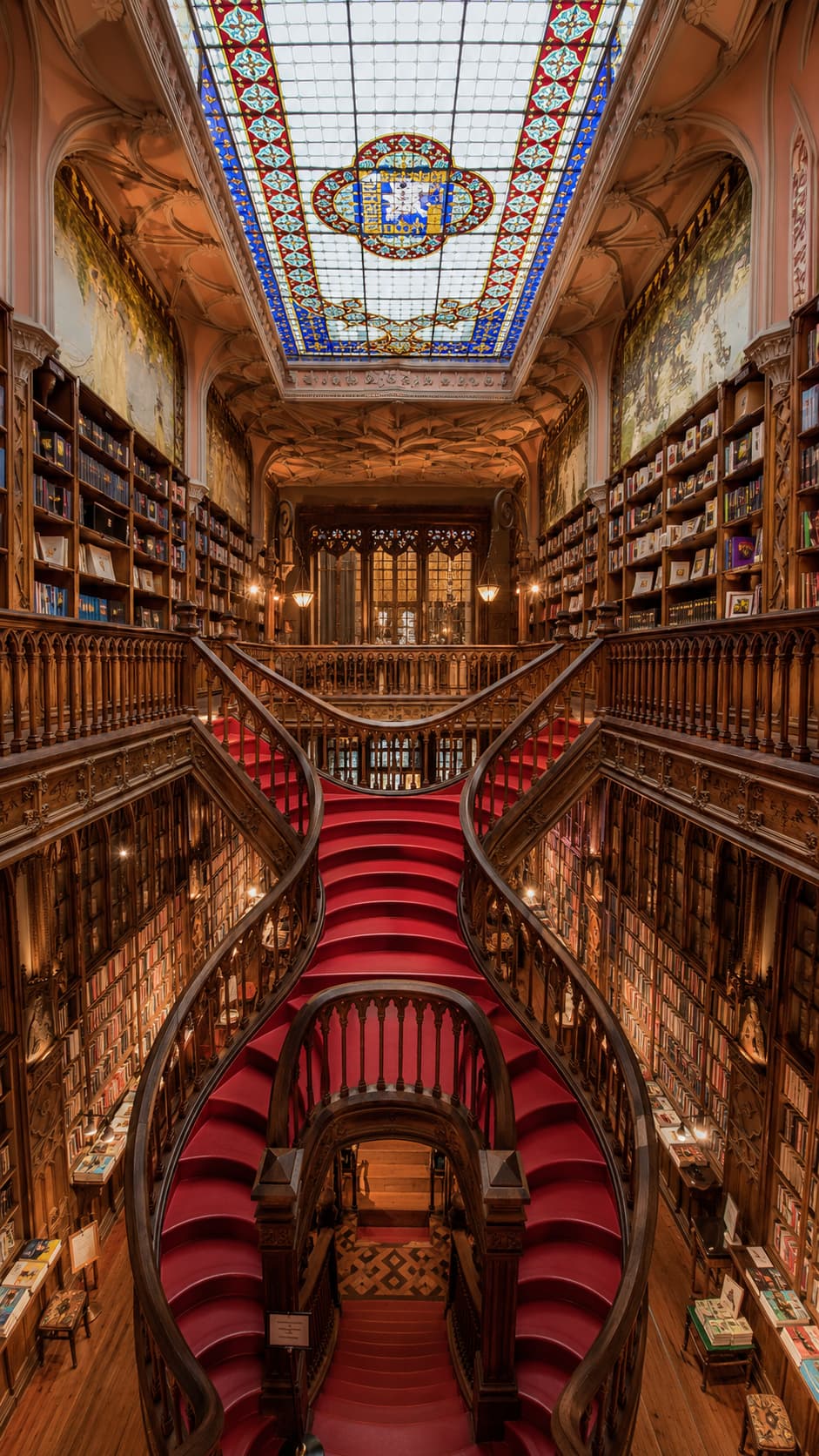
This is the honest-flag moment of the whole trip, and the one stop most worth questioning on a 3 days in Porto itinerary. Livraria Lello is a genuinely beautiful early-twentieth-century bookshop with a famous curved red staircase, and it is also one of the most over-queued, over-photographed sights in Portugal. Entry is ticketed — you pay to get in, and the fee is usually redeemable against a book — and at peak times the line and the crush inside can swallow a good chunk of your morning.
So the real question isn’t whether it’s pretty. It is. The question is whether it’s worth the queue for you. For most travellers on a tight three-day plan, the answer is no — not because the shop isn’t lovely, but because the time cost is high and the interior is so packed at midday that the photo you came for is nearly impossible to get cleanly.
Go only if you book a timed ticket for the very first slot of the day, before the crowds build — and treat it as a ten-minute visit, not an event. If that doesn’t fit your morning, skip it without guilt. The staircase looks better in photos than it feels when you’re shoulder to shoulder with two hundred people trying to climb it.
06 — Where to Watch the Sunset in Porto
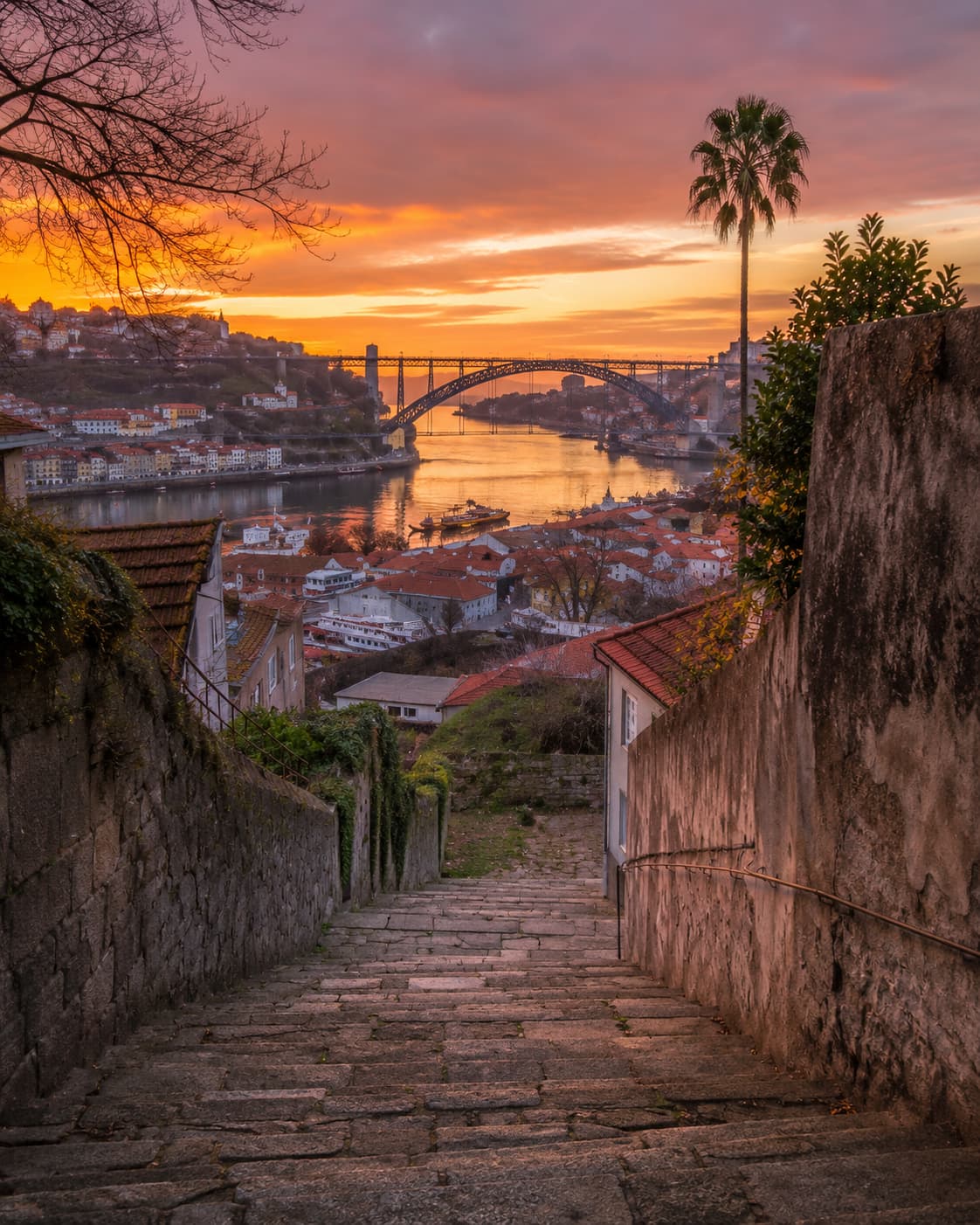
Across any 3 days in Porto itinerary, sunset is when Porto is at its best, and the good news is that the finest spots are free and easy to reach. The thing they share is a westward view back across the Douro toward the city, so the light falls on the layered Ribeira houses rather than away from them. Three places stand out, each with a slightly different mood.
The grassy park on the Gaia side, right by the upper bridge deck. It’s the classic, easy choice — a gentle slope full of people watching the sun go down over the bridge. Lively rather than quiet, but the view is unbeatable.
For the same view with a glass in hand. Several cellars and hotels on the Gaia waterfront have rooftop terraces facing Porto. More comfortable, a little pricier, and ideal if you’re ending Day 2 here as planned.
The quieter, local-leaning choice, set among the rooftops on the Porto side. Less of a crowd, a more intimate angle over the tiled roofs and the river. Worth it if you’d rather watch the light alone than in a festival.
07 — The Best Time of Year to Visit Porto
Spring and autumn are the clear winners for timing a 3 days in Porto itinerary. The months of March to June and September to October offer Porto’s best balance of weather, prices, and lower crowds — warm enough for the river and the rooftops, calm enough that the old town doesn’t feel overrun. For a walking-heavy trip in a hilly city, that mild weather matters more than it might somewhere flatter.
By contrast, July and August are peak season and the sunniest stretch, which is a fair trade if summer is your only window — just expect more people on the bridge and higher room rates. Winter, by contrast, is the rainiest part of the year. It can still be atmospheric, with the river under low cloud and the cellars cosy, but you’ll want a plan that survives a wet afternoon.
If you’re using Porto as a gateway to the rest of the country, the timing logic extends outward. Flights from Porto connect easily to Portugal’s Atlantic islands, and the shoulder seasons that suit the city also suit them — though they’re an entirely different kind of trip. The contrast is worth knowing: read the Madeira travel guide for the subtropical, mountainous island that runs well into winter, or the Azores São Miguel guide for the green, volcanic Atlantic option Americans keep overlooking.
Porto Itinerary, Costs and Cellar Tours
Porto vs Lisbon and Airport Transport
Porto doesn’t ask to be rushed, and this 3 days in Porto itinerary is built to honour that.
Spend the third however suits you — out on the river or back in its streets — and you’ll leave feeling you understood the place rather than merely saw it.