Albania Travel Guide: The Honest, Practical Guide Nobody Actually Writes
What Albania is actually like — costs, roads, beaches, and the parts most guides skip over.
This Albania travel guide covers a safe, affordable, and dramatically undervisited European destination — best suited to travelers comfortable with some unpredictability, where the coast, historic towns, and mountain landscapes reward those willing to meet the country on its own terms.
01 — Why Albania Feels Different From the Rest of Europe
This Albania travel guide starts with the same honest observation: Albania doesn’t feel like the Europe most people imagine.
It is not polished in the way Italy is. Germany feels more structured by comparison. France often tries harder to impress. Albania simply exists — a little rough around the edges, still figuring itself out, and surprisingly open once you settle into it.
And that difference is exactly why people either love it or quietly decide it’s not for them.
If you’re expecting seamless logistics, perfect signage, and curated experiences, you’ll notice the gaps immediately. But if you’re comfortable with a bit of unpredictability, Albania feels refreshingly real in a way that more established destinations no longer do.
02 — What Albania Is Actually Like for Travelers (The Honest Version)
This is the part most guides skip.
Albania travel is increasingly popular — and the country is developing fast. But it’s still in transition. You’ll see modern cafes next to unfinished buildings, beautiful coastlines next to chaotic parking, and new hotels operating in places where the infrastructure hasn’t fully caught up yet. Roads can be unpredictable. Service varies. Systems aren’t always self-explanatory.
And yet — it works. You adjust quickly. The pace slows down a little. Eventually, you stop expecting everything to run like a Swiss railway, and in return you get something far less manufactured.
Albania rewards flexibility. The less rigid your expectations, the better your experience tends to be. Think of the unpredictability as texture, not obstacle.
03 — Where to Go in Albania: A Practical Travel Guide to the Best Regions
You don’t need a complicated itinerary here. Albania is best experienced simply — pick a base, move slowly, and leave room for things to unfold.
The Albanian Riviera
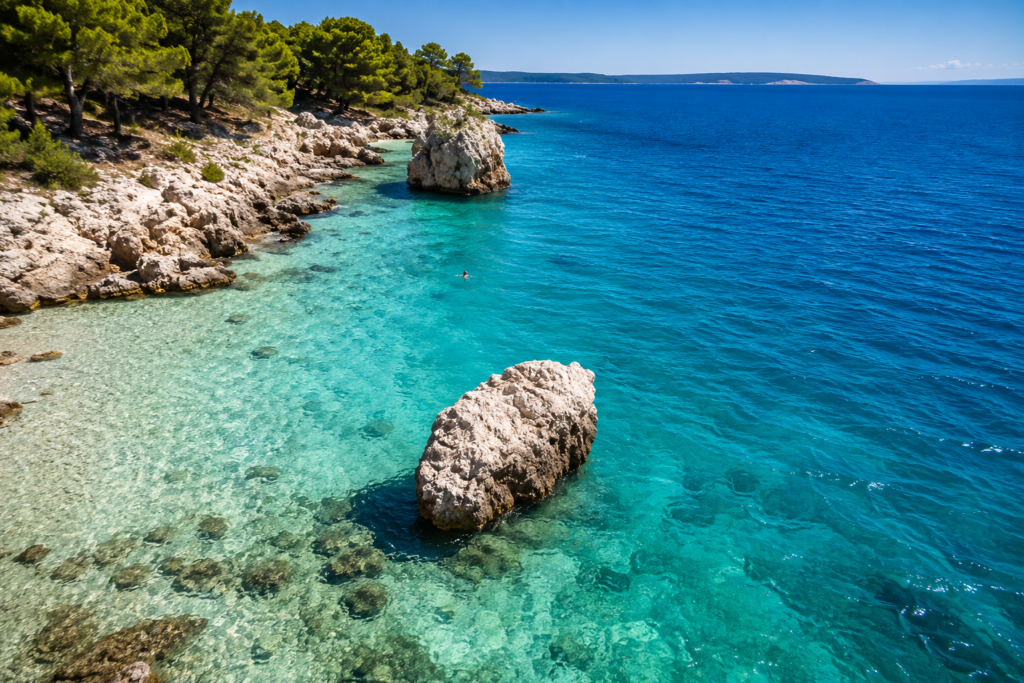
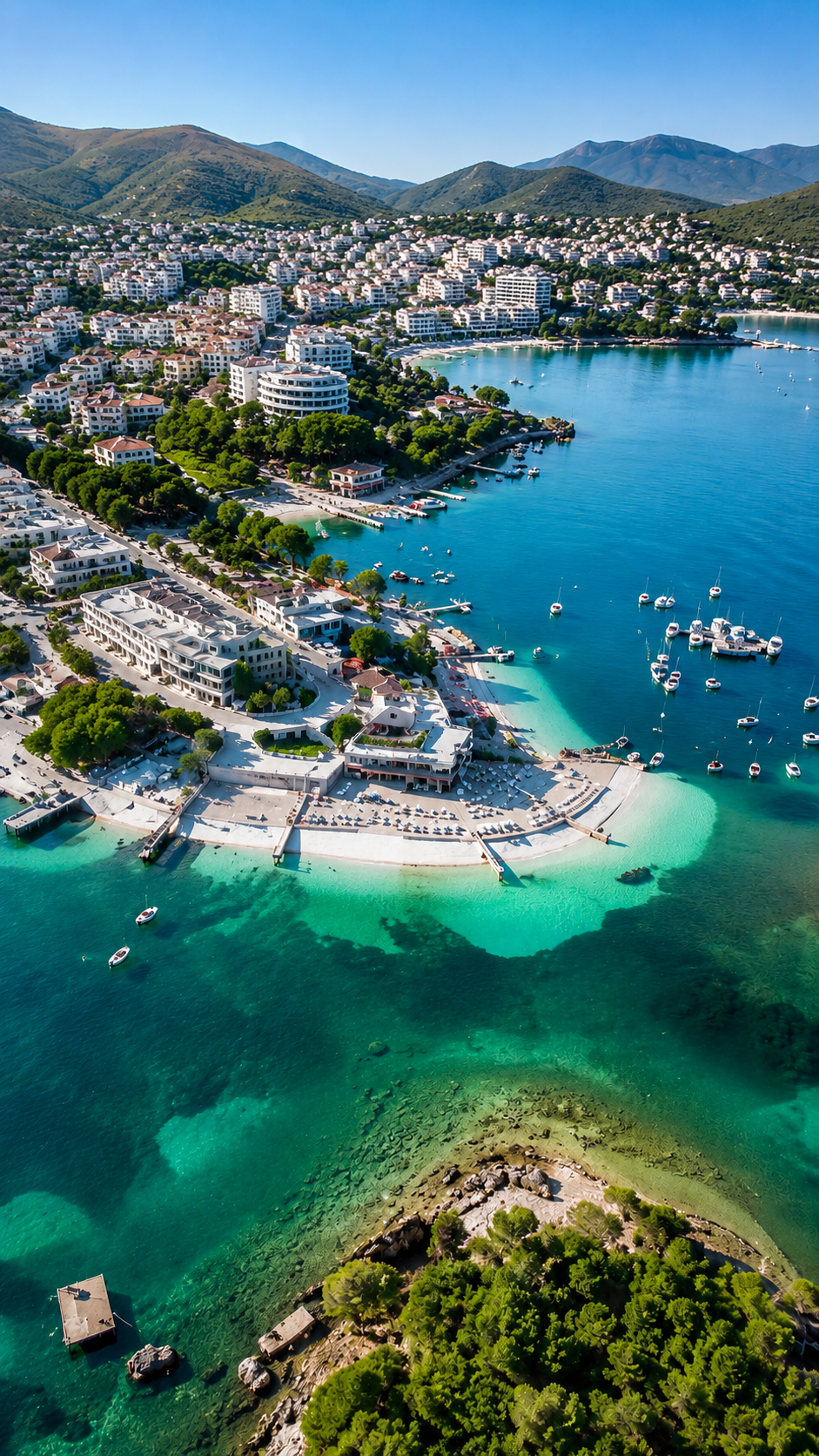
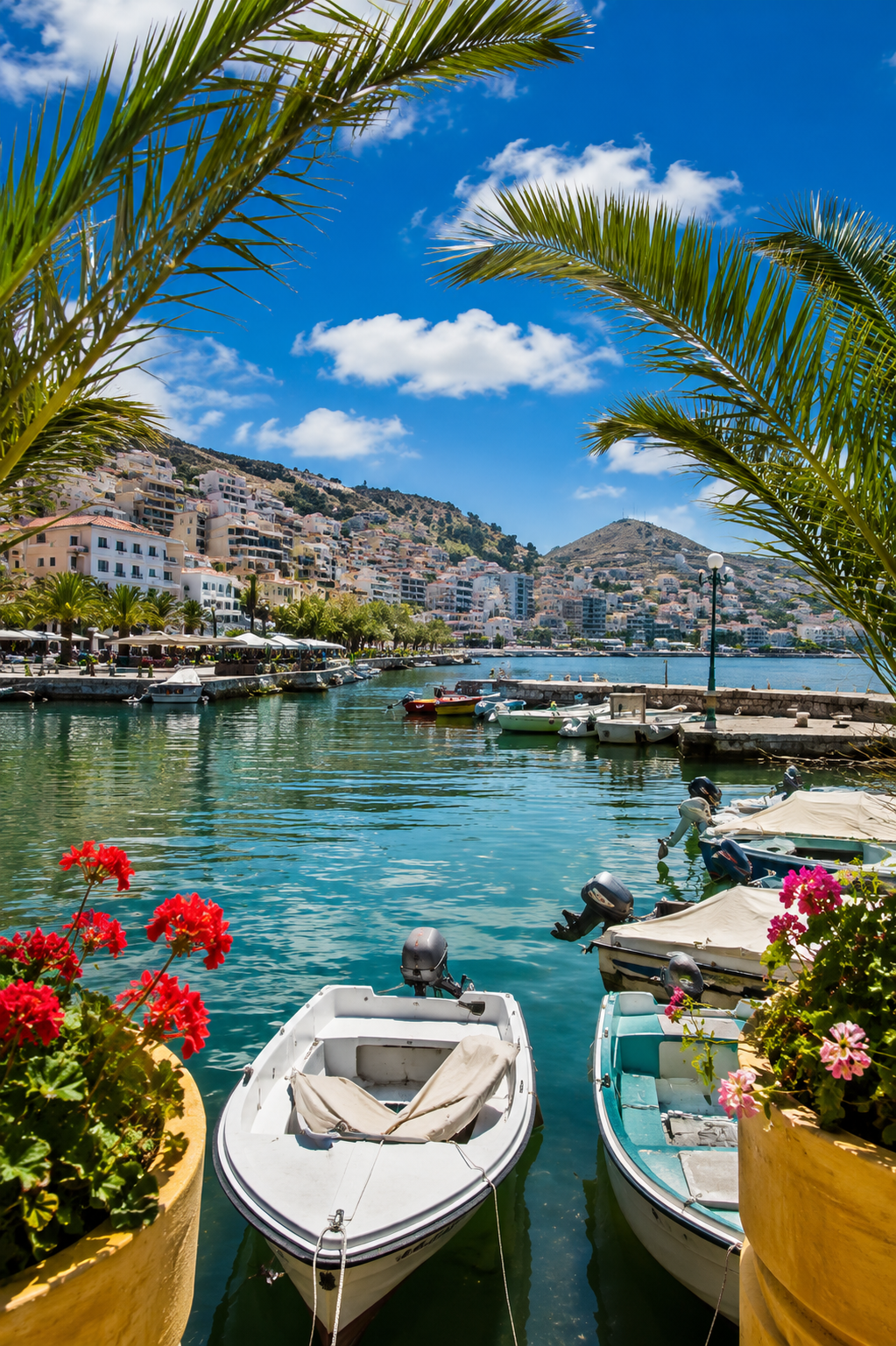
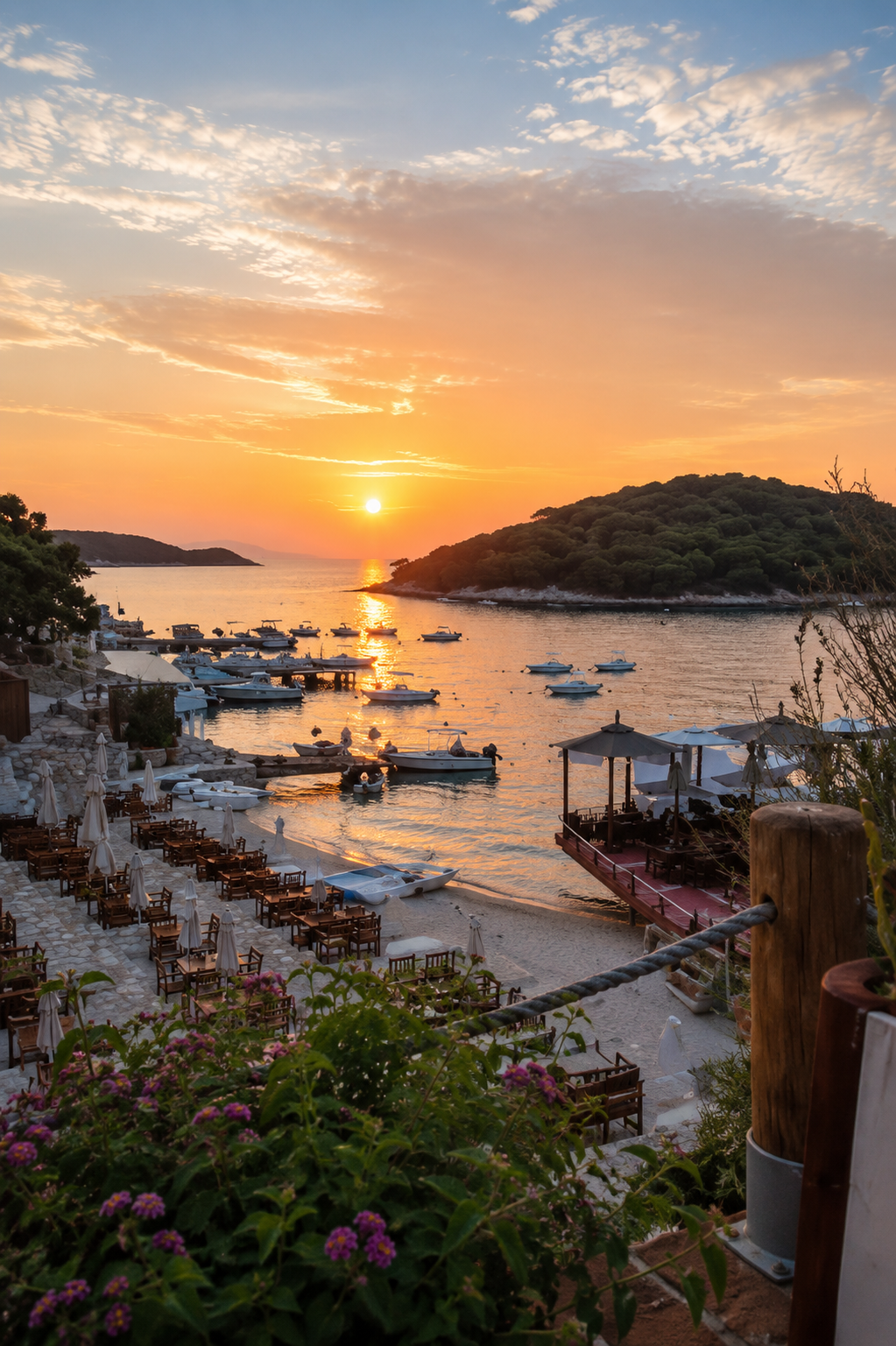
This is why most people come. Stretching from Vlorë south to Ksamil near the Greek border, the coastline is dramatic, bright, and far less built-up than comparable Mediterranean destinations. Himara feels calmer and more local. Ksamil is more crowded but visually extraordinary. Dhërmi sits somewhere in between — a good compromise if you want the beach without full peak-season chaos.
Berat & Gjirokastër
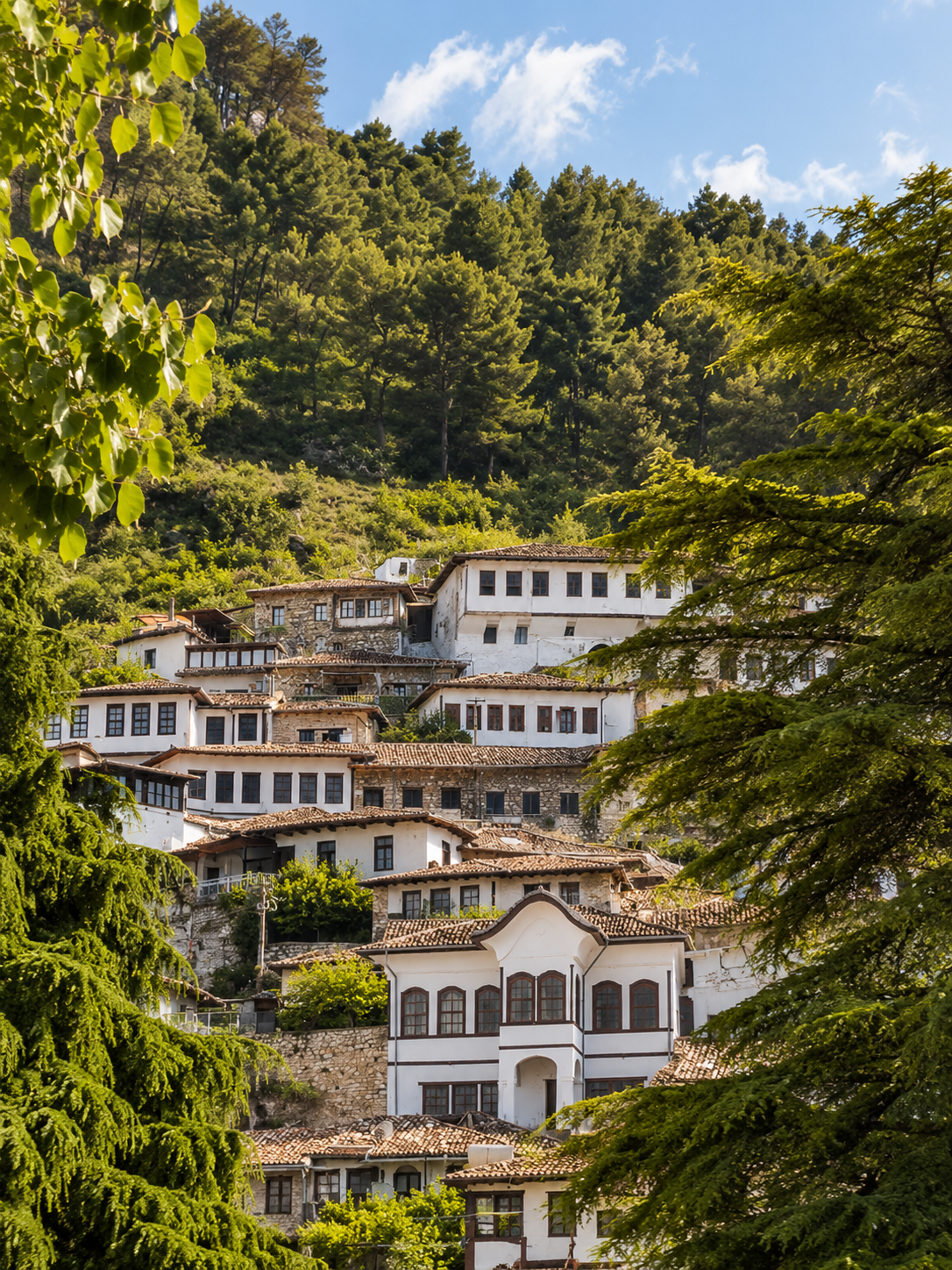
These are the quieter highlights — two UNESCO-listed towns with layered Ottoman architecture and a pace that rewards an afternoon of aimless walking. Berat is softer and more open, easier to navigate without a guide. Gjirokastër feels more structured and stone-heavy, and climbs steeply up a hillside in a way that makes it genuinely dramatic to arrive in.
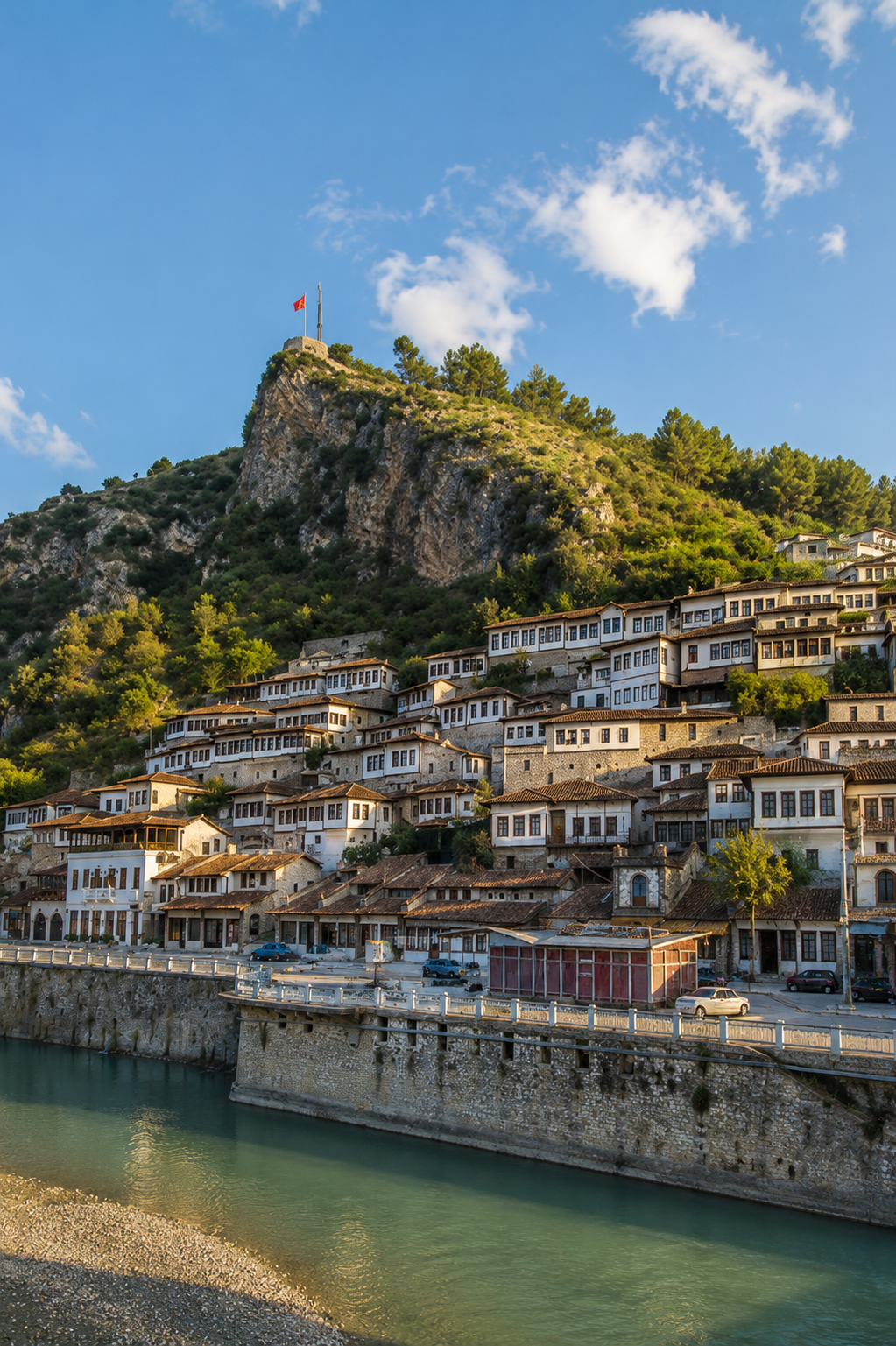
Tirana
The capital is not a must-see — but it’s worth a day. It’s energetic, slightly chaotic, and gives you useful context for the rest of the country. The colourful building facades, the Blloku neighbourhood’s café culture, and the odd Soviet-era monuments are all worth an afternoon.
The North
If you have extra time and any interest in hiking or remote landscapes, the Albanian Alps — particularly the area around Valbonë and Theth — are a completely different experience from the coast. Cooler, quieter, and more nature-focused. Not practical to combine with the Riviera in under a week unless you’re renting a car and driving through.
04 — Getting Around Albania (This Matters More Than You Think)
Transport is the variable that shapes the trip more than anything else.
Public transport exists — buses run between major cities, and furgons (shared minibuses) cover shorter routes — but schedules aren’t always clear, connections aren’t always reliable, and for the coastal villages you’ll most want to visit, the bus simply doesn’t go there conveniently.
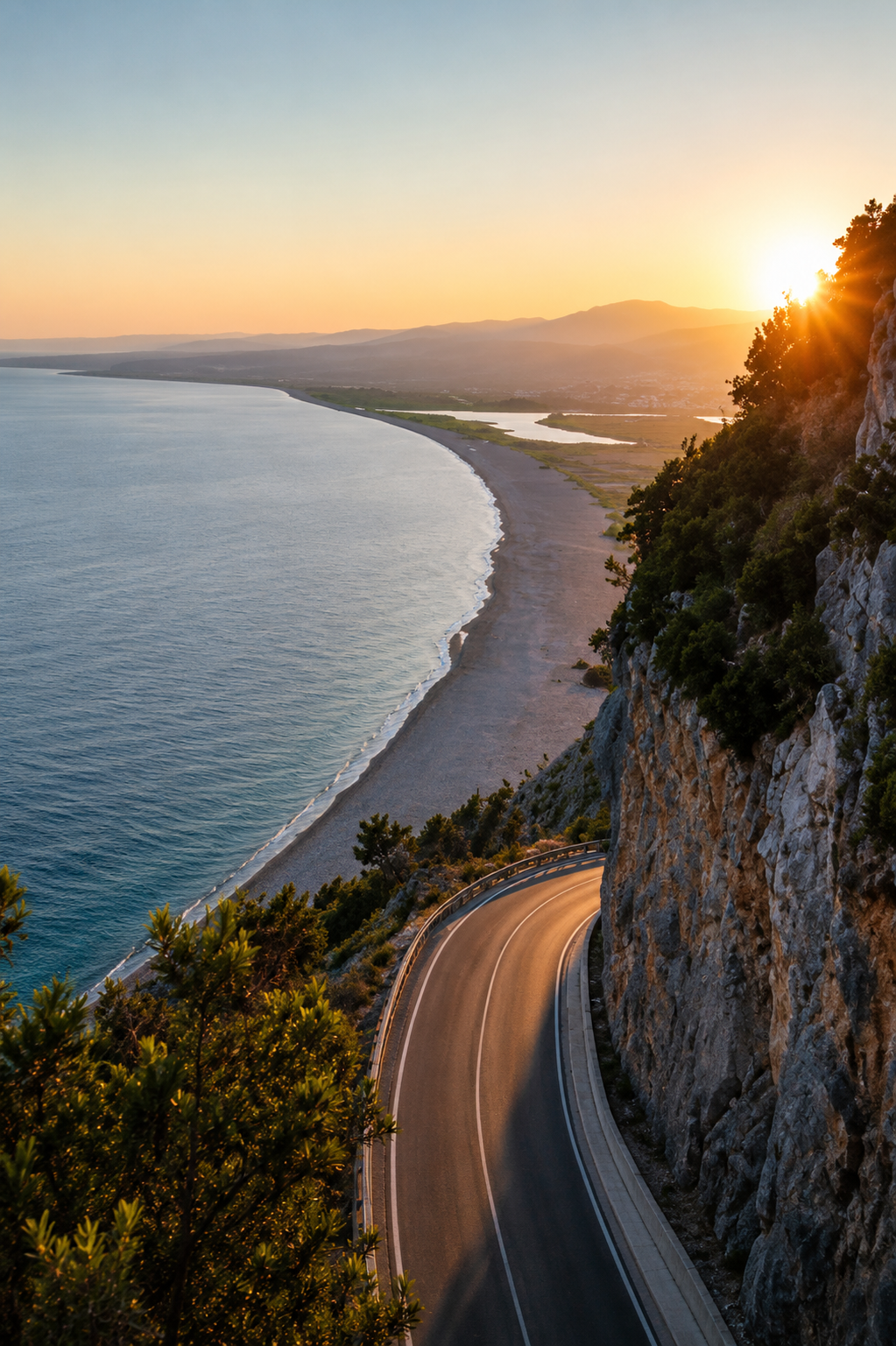
Renting a car is manageable — but expect narrow roads, sharp mountain curves, and a more relaxed local approach to lane discipline. It’s not difficult once you adjust. The coastal road (SH8) is genuinely one of the most scenic drives in Europe. Check your rental agreement covers Albania — not all do by default.
- Car rental: Book in advance, verify cross-border terms if combining with Montenegro or Greece
- Furgons: Useful for city-to-city travel — leave when full, not on a fixed schedule
- Taxis: Negotiate price before getting in outside of Tirana
- Rideshare apps: Bolt works in Tirana and some larger cities
05 — Albania Travel Costs: Is It Actually Cheap?
Yes — but not in the way older travel content suggests.
Albania used to be extremely cheap across the board. Now it’s more accurate to say it’s affordable relative to Western Europe, with significant variation depending on where you are and when you visit. It’s one of the most important things to understand before you travel to Albania.
| Accommodation | Budget guesthouses €15–30/night. Mid-range €40–70. Beach areas in July–August cost noticeably more. |
| Food | Local restaurants and byrek bakeries are very affordable — €4–8 for a proper meal. Tourist-facing restaurants on the Riviera charge closer to Greek prices in summer. |
| Car rental | €25–50/day for a basic manual. Fuel costs add up on mountain roads. |
| Transport (no car) | Furgons are cheap — typically €2–6 for city-to-city. Limited for coastal villages. |
| Daily budget | €40–60/day is comfortable including accommodation, food, and transport outside peak summer. €70–90 in July–August on the coast. |
The Albanian Riviera prices have risen sharply in recent years, particularly in Ksamil. In July and August, beach accommodation and restaurants in coastal villages are no longer the bargain they once were. May, June, and September offer better value with nearly the same weather.
06 — When to Visit (And When Not To)
Timing shapes the trip significantly.
Peak Season — July and August
July and August bring the best guaranteed weather — but also the highest prices, the busiest beaches, and a coastal atmosphere that starts to feel more like a package resort than an undiscovered destination. If you’re coming specifically for the Riviera in summer, manage expectations accordingly.
The Better Months — May, June and September
May, June, and September are the better calls for most travelers. The weather is still reliable and warm, the roads are far less crowded, prices return to normal, and the experience feels closer to what Albania actually is rather than its peak tourist version. The sea is swimmable from late May.
Autumn and the Interior
October onwards gets cooler and some coastal businesses close. However, Berat and Gjirokastër are excellent in autumn — lower light, near-empty streets, and the interior towns at their most atmospheric.
07 — What Caught Me Off Guard
Not the beaches. Not the prices.
It was how quickly the country shifted depending on where you were. One afternoon you’re sitting on a quiet cove on the Riviera with almost no one around. A few hours later you’re navigating Tirana’s afternoon traffic. The following morning you’re in Berat, which operates at an entirely different speed again.
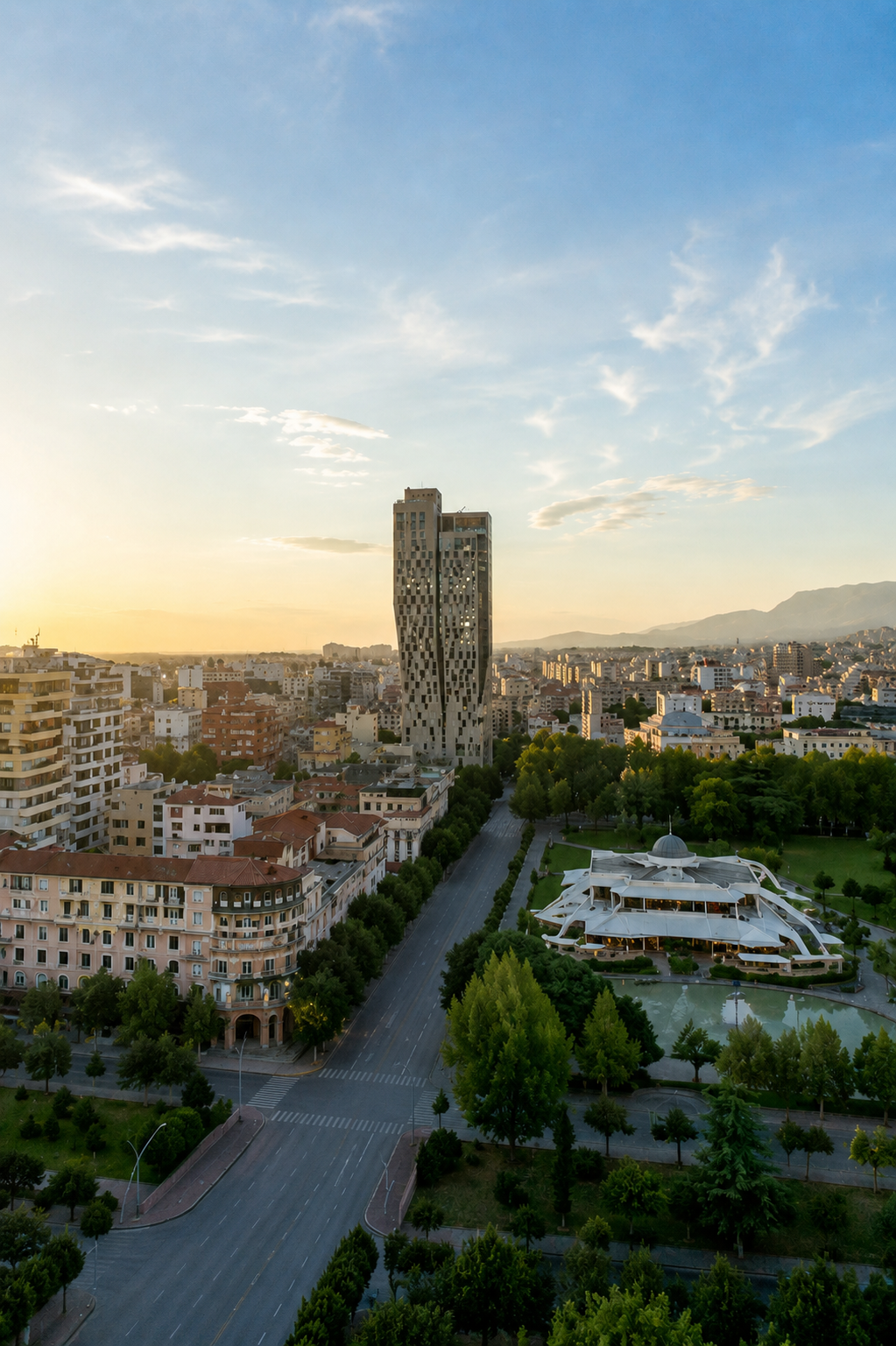
Albania doesn’t feel like one destination — it feels like several layered together, with very little transition between them. That contrast is actually one of the things that makes it interesting.
The other thing that caught me off guard was the hospitality. It’s not performative — it’s genuine and sometimes startling. Being offered tea, directions, or food by a stranger happens here in a way it simply doesn’t in most of Western Europe.
08 — Is Albania Worth It? (And Who It’s For)
The honest answer to this Albania travel guide’s central question: Albania is not for everyone — and that’s not a criticism. It’s an honest read of what the country is right now.
If you want ease, predictability, and polished infrastructure, there are better choices in Europe. Albania still asks something of you: patience with uncertainty, tolerance for the unfinished, willingness to figure things out as you go.
But if you want somewhere that still feels like it’s becoming — somewhere that hasn’t been fully curated for tourists yet, where the coastline is genuinely dramatic and not yet overrun, where the price-to-experience ratio is still compelling — Albania is worth it.
It gives something different in return for what it asks. That exchange is increasingly rare in European travel.
Safety, Transport and Budget
Best Time, Solo Travel and Trip Length
Albania is still becoming. That’s the whole point.
Go before it finishes.