
Paris Landmarks: An Honest Guide to What’s Actually Worth Your Time
Not every Paris landmark rewards the effort. Here’s a frank, site-by-site verdict — what to prioritise, what to see differently, and what you can skip without missing anything.
Paris landmarks are the reason most people book the trip. The Eiffel Tower, Notre-Dame, the Louvre — they have a kind of gravitational pull that makes an itinerary feel pre-written before you even arrive. And then a particular kind of Paris trip goes wrong in a very specific way: you queue at dawn, you go up the tower, stand in the Mona Lisa scrum, do Notre-Dame, do Sacré-Cœur, and leave feeling vaguely exhausted and vaguely cheated — as though you ticked the list but weren’t actually present for any of it.
This guide covers the main Paris landmarks one by one — what each is actually like on the ground, who genuinely benefits from going inside versus outside, and which ones you can visit differently without losing anything meaningful. There’s also one significant piece of 2026 information that most Paris guides are still getting wrong, which matters if you’re planning around the best views in the city.
- What to Prioritise — and What to Skip
- The Eiffel Tower: Up or Outside?
- Notre-Dame in 2026
- The Louvre: Beyond the Mona Lisa
- Sainte-Chapelle
- The Arc de Triomphe
- Best Views in Paris Now That Montparnasse Is Closed
- The Panthéon, Les Invalides, and Palais Royal
- Paris Landmarks You Can Visit Differently
- FAQ
01 — Paris Landmarks: What to Prioritise (and What to Skip)
Before the monument-by-monument breakdown, here’s the short version. Every landmark below falls into one of three tiers depending on what you’re here for — the detail follows in the sections beneath.
Notre-Dame nave (free, genuinely moving post-restoration), Sainte-Chapelle (most underrated site on this list), Arc de Triomphe rooftop (especially now Montparnasse is closed), the Louvre if you have more than two hours and go beyond the Mona Lisa room.
Eiffel Tower summit (high cost, long queue — some people love it; many find the view from the Trocadéro enough), Notre-Dame bell towers if you want the elevated view and the history, Les Invalides if you have a genuine interest in military history or Napoleon.
Champs-Élysées (a walk, not a destination), Sacré-Cœur (the steps and the neighbourhood over the interior), Moulin Rouge area (Montmartre itself beats the show on most measures), Panthéon (for history devotees only).
02 — The Eiffel Tower: Up or Outside?
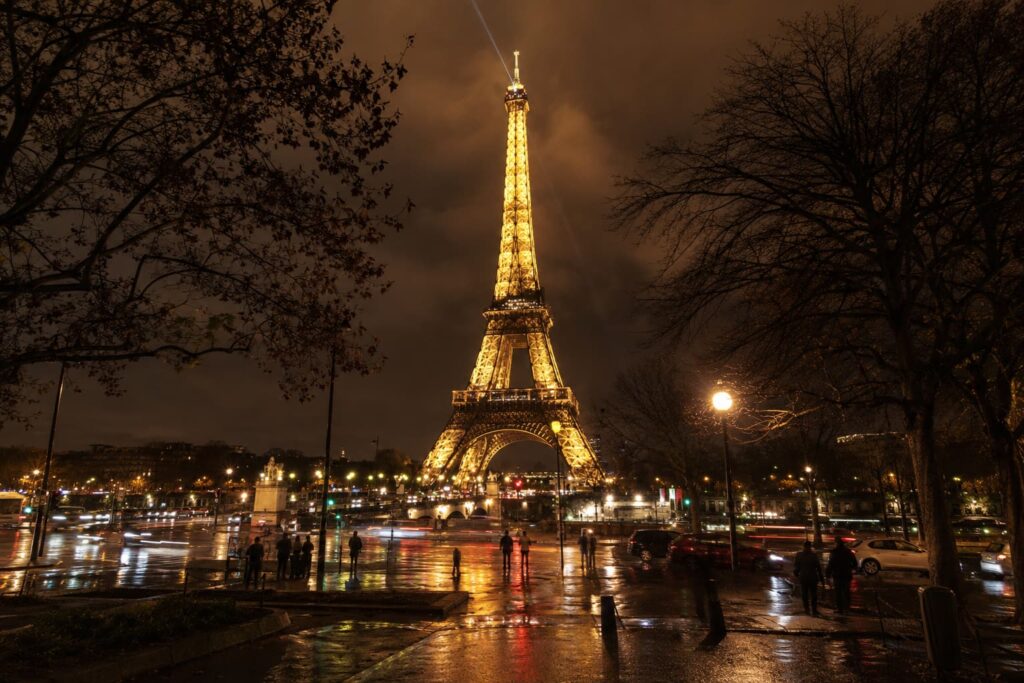
The honest case for skipping the summit is stronger than most Paris guides will admit. The queue is long even with advance booking, the cost is high (around €30–35 for the top by lift), and the view from up there — while undeniably Parisian — shows you a city that looks better from ground level or across the Seine than from above it. The Eiffel Tower is one of those buildings that works best as something you look at, not from.
That said: if this is your first time, and the Eiffel Tower is the reason you came, go up. There’s nothing wrong with wanting that. The second floor (lift or stairs) is the better compromise — shorter queue, lower cost, and the view is 95% of what you get from the summit.
Where to stand if you’re not going up
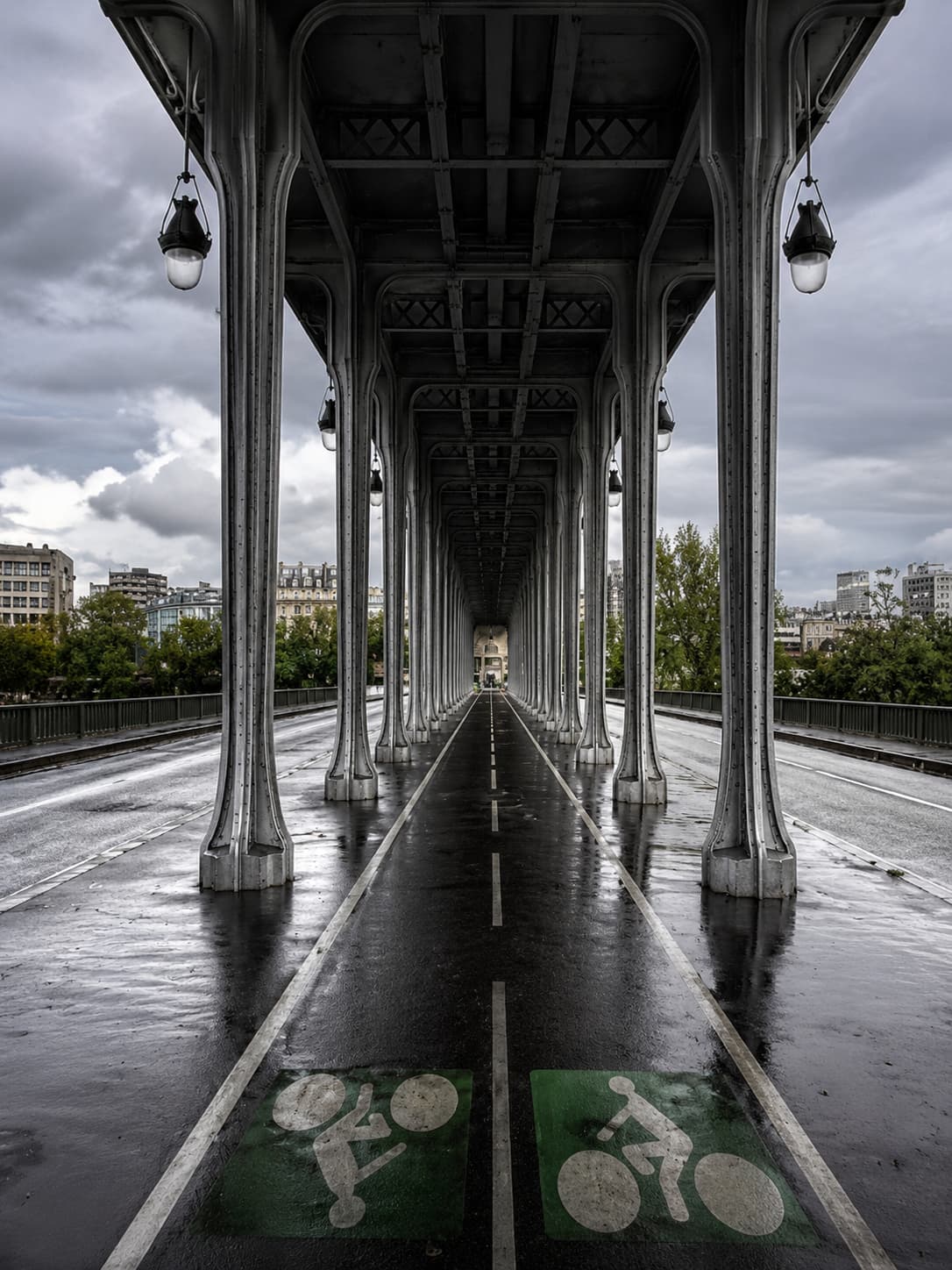
The Trocadéro esplanade, directly across the Seine, is the classic — and the reason it’s classic is that it works. The framing is near-perfect from the top of the steps, especially at dawn before the crowds appear, or at dusk when the tower starts its light show on the hour. The Champ de Mars lawn on the south side is a softer, more relaxed option; better if you want to sit down with it rather than photograph it. The quietest vantage point most visitors don’t find is the Bir-Hakeim bridge, a few hundred metres along the river — the tower frames between the bridge’s iron arches and the view is genuinely different from anything you’d get at the tower itself.
03 — Notre-Dame in 2026
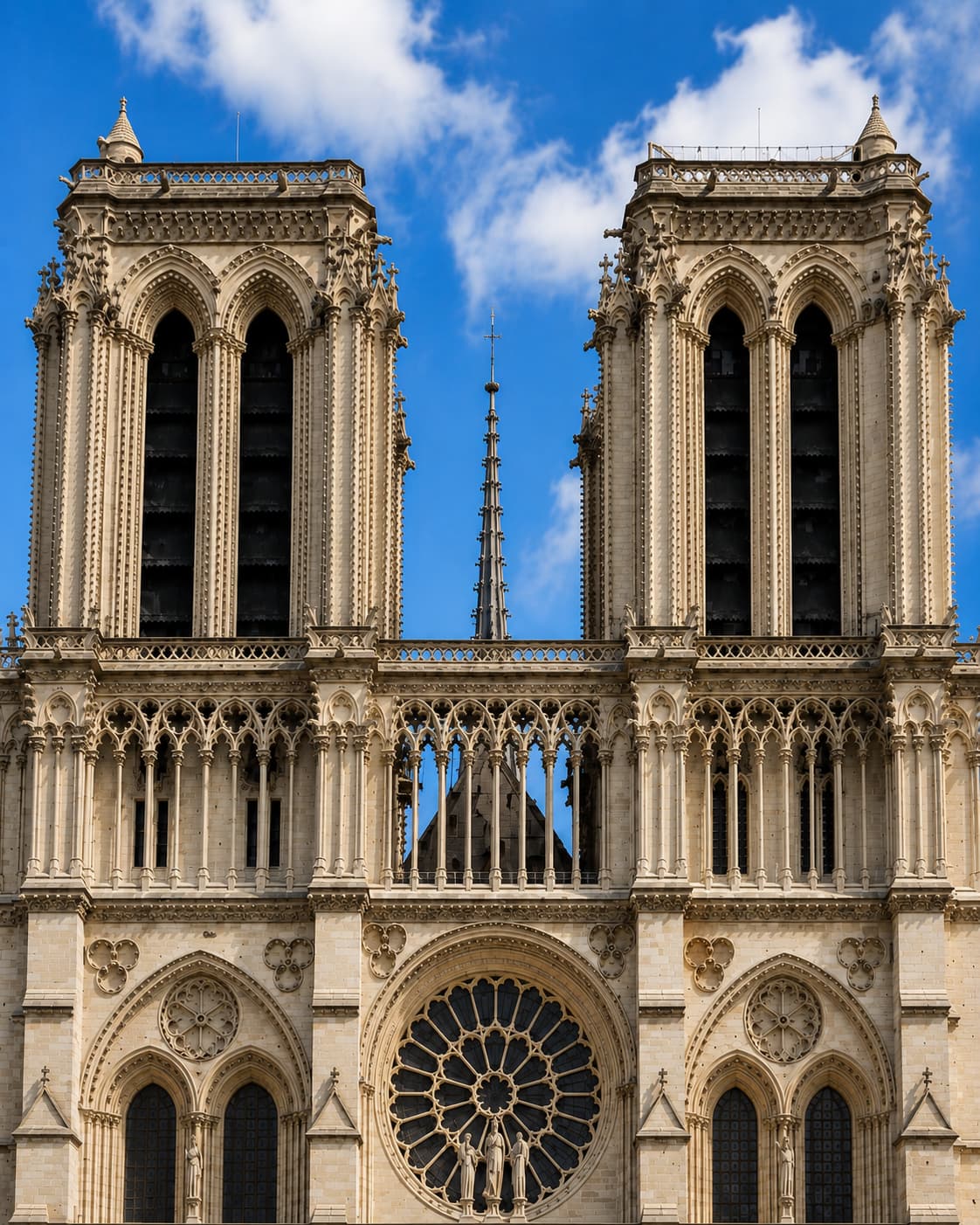
Notre-Dame reopened on 7–8 December 2024 after five years of restoration following the 2019 fire. This is one of the more significant things to have happened to Paris as a destination in recent years, and a meaningful number of travel guides are still describing it as partially closed or “coming soon.” It isn’t. It’s fully open, and the interior is in better condition than it was before the fire.
Entry to the nave is free, with no booking required — you queue outside and wait, usually 20–40 minutes in peak season. What you find inside has been cleaned, restored, and in places rebuilt to a level of craftsmanship that is, depending on your perspective, either miraculous or unsettling in its newness. The stonework is pale. The light through the windows falls differently than it did. It feels, for better or worse, like a cathedral that has just been made again.
The bell towers: are they worth the €16?
The towers reopened in September 2025 and require a separate €16 ticket, booked exclusively online through the Centre des Monuments Nationaux website. There is no on-site sales option. The climb is 422 steps and the views take in the Seine, the Île de la Cité, and the Paris roofline at a level that’s closer and more intimate than the Arc de Triomphe or any of the purpose-built viewpoints. For people who want a view with genuine historical weight rather than a panorama for its own sake, this is the strongest case on the list.
04 — The Louvre: How to Visit Without Losing a Morning to One Painting
The Louvre is the world’s most visited museum, which tells you something about what visiting it is actually like. The Mona Lisa draws the biggest crowd in the Denon Wing — a wall of phones, a rope barrier, a painting that is smaller than you expect and harder to see than almost anything else in the building. It is worth a quick look for the experience of having been there. It is not worth planning your morning around.
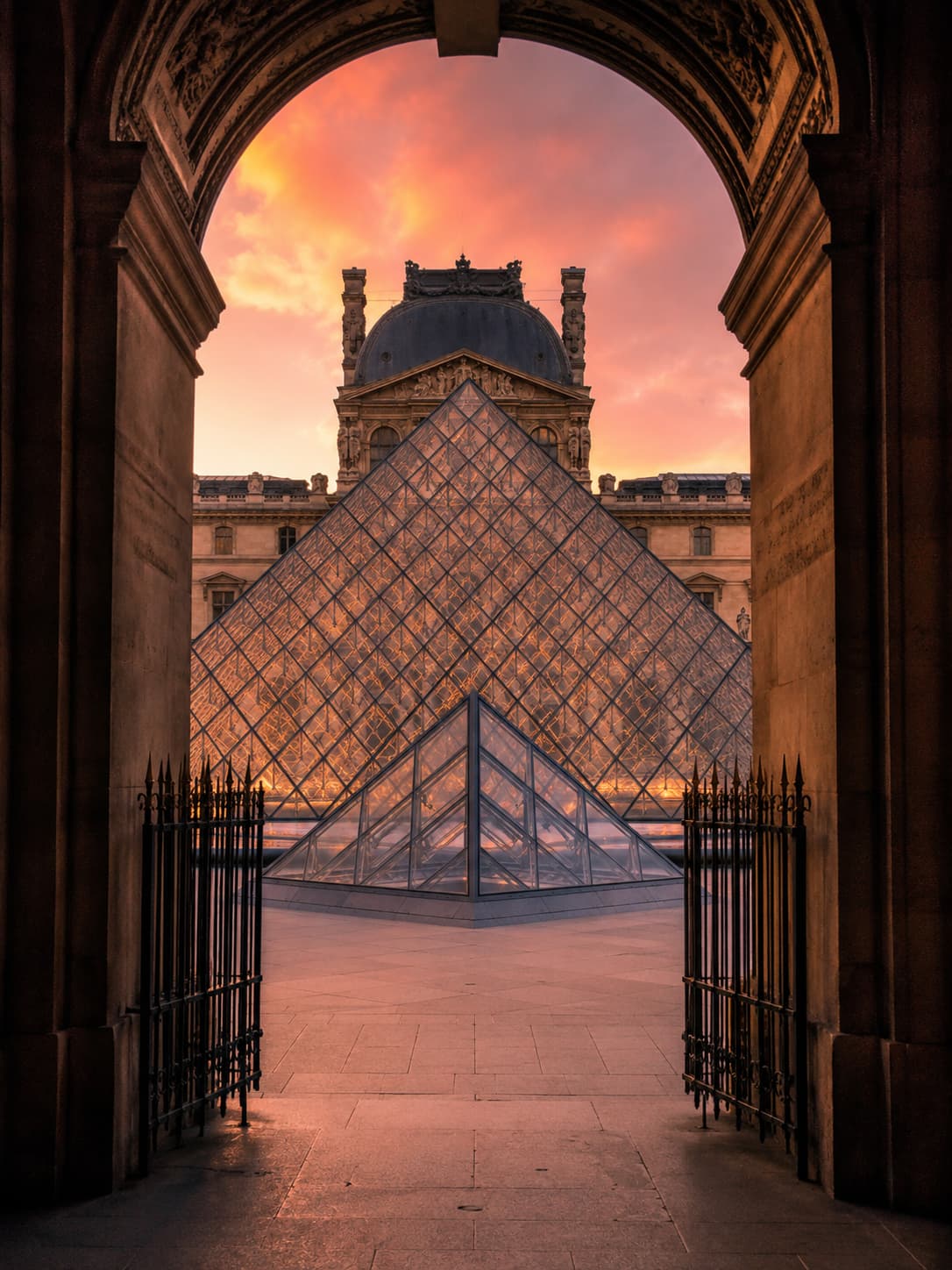
Tickets must be booked online in advance. There is no longer a reliable walk-up option, and the timed entry system means you need to plan your visit slot. Once inside, the Venus de Milo and the Winged Victory of Samothrace are both easier to see without competition, and both reward more attention than the Mona Lisa room allows. The Egyptian Antiquities wing is consistently under-visited relative to its quality. The building itself — the Denon Wing’s vaulted ceilings, the glass pyramid from below — is as worth looking at as most of what’s inside it.
Booking, timing, and not getting lost
First-time visitors almost always underestimate the Louvre’s scale. Allow a minimum of two and a half hours if you want to see more than the famous-painting highlights. Three is more comfortable. Pick two or three areas before you arrive and treat everything else as a bonus — the alternative is two hours of beautiful disorientation and very sore feet. The Richelieu Wing (Northern European painting, French sculpture) is quietest. The early morning slot, immediately after opening, is meaningfully better than any other time of day.
05 — Sainte-Chapelle: The Most Underrated Paris Landmark
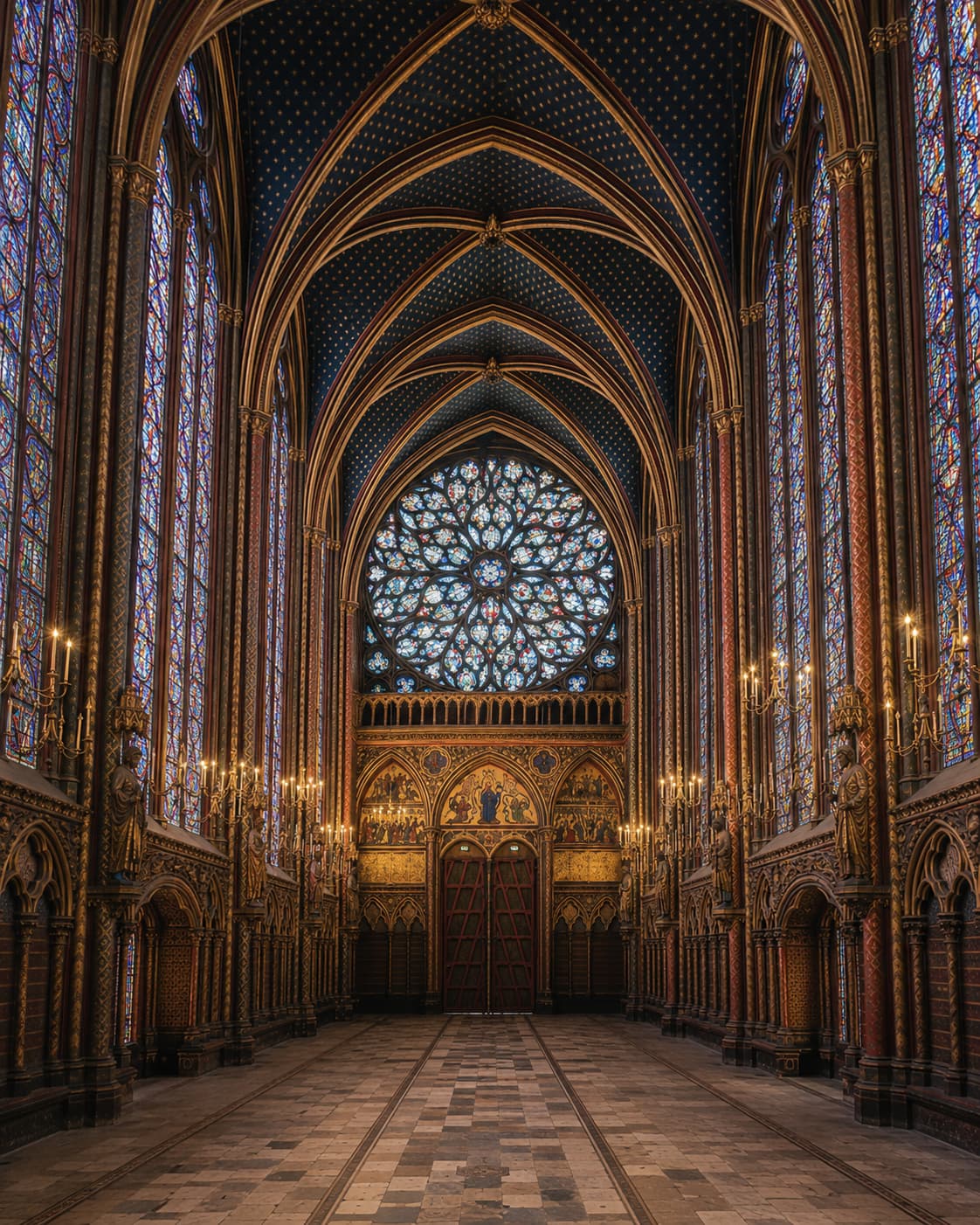
If you are visiting Paris as a first-timer and you have to choose between Sainte-Chapelle and one of the more obvious landmarks on the standard itinerary, this is the argument for Sainte-Chapelle: the upper chapel’s stained glass is genuinely exceptional. Not “quite good for a medieval church” exceptional — genuinely one of the more striking interiors you’ll see anywhere. Fifteen windows, floor to ceiling, covering 1,113 scenes from the Old and New Testaments. On a bright afternoon the light changes the colour of the stone floor. There is no crowd equivalent to the Mona Lisa scrum here.
It sits on the Île de la Cité, five minutes’ walk from Notre-Dame. Tickets are around €13 and can be booked online. The queue without a booking can be significant; with one it moves quickly. The lower chapel (the entry level) is much plainer and easily mistaken for the whole thing — the upper chapel is reached by a narrow staircase on the right side. Don’t leave without going up.
06 — The Arc de Triomphe: Worth Climbing Now
The Arc de Triomphe has always been worth a visit — the monument itself is significant, the story of the Tomb of the Unknown Soldier underneath it is genuinely moving, and the rooftop view has always been good. What has changed in 2026 is that the view is now the best accessible panorama in the city.
The Montparnasse Tower observation deck, which previously drew over 1.2 million visitors a year, closed permanently to the public on 31 March 2026 for a renovation with no confirmed reopening date. It won’t be back for the rest of the decade. Any guide recommending it — and there are many still doing so — is out of date. The Arc de Triomphe rooftop gives you 360-degree views from the centre of Paris’s most significant urban axis: the Champs-Élysées in one direction, the Grand Arche de la Défense in the other, and twelve avenues radiating outward. It’s 284 steps, no lift, and the ticket is around €13. Book online to skip the ground-level queue.
- Steps: 284 — no lift. Allow 10–15 minutes each way.
- Best time: Late afternoon heading into dusk, when the Champs-Élysées streetlights come on below you.
- Ticket: ~€13, book at monuments-nationaux.fr
- Note: The underpass to the monument is the only safe crossing — do not try to cross the roundabout on foot.
07 — The Best Views in Paris Now That Montparnasse Is Closed
This is a genuine 2026 information gap. Most “best views in Paris” articles still lead with Montparnasse. It’s closed. Here’s what has replaced it as the practical options:
The best all-round paid view currently available in central Paris. Central location, clear sightlines in all directions, the Eiffel Tower visible to the southwest. Best at dusk.
An elevated view with genuine historical character — you’re looking out from the same position the gargoyles have occupied for centuries. The Île de la Cité spread out below. Requires advance booking, 422 steps.
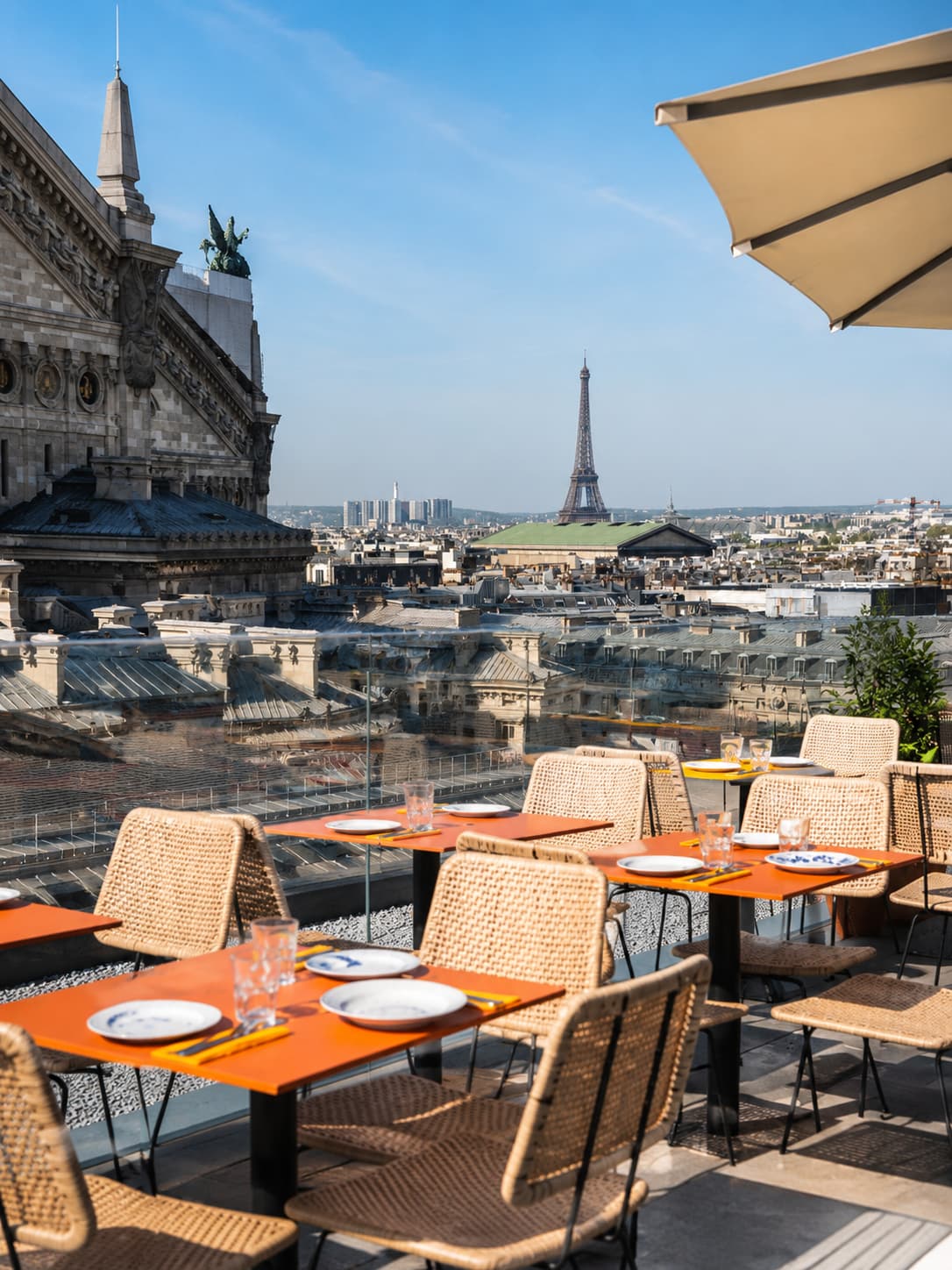
No ticket, no booking, no steps. A department store terrace that happens to have a direct sightline to the Eiffel Tower and a clean view of the Haussmann roofline. Genuinely one of the better free views in the city and almost nobody plans around it.
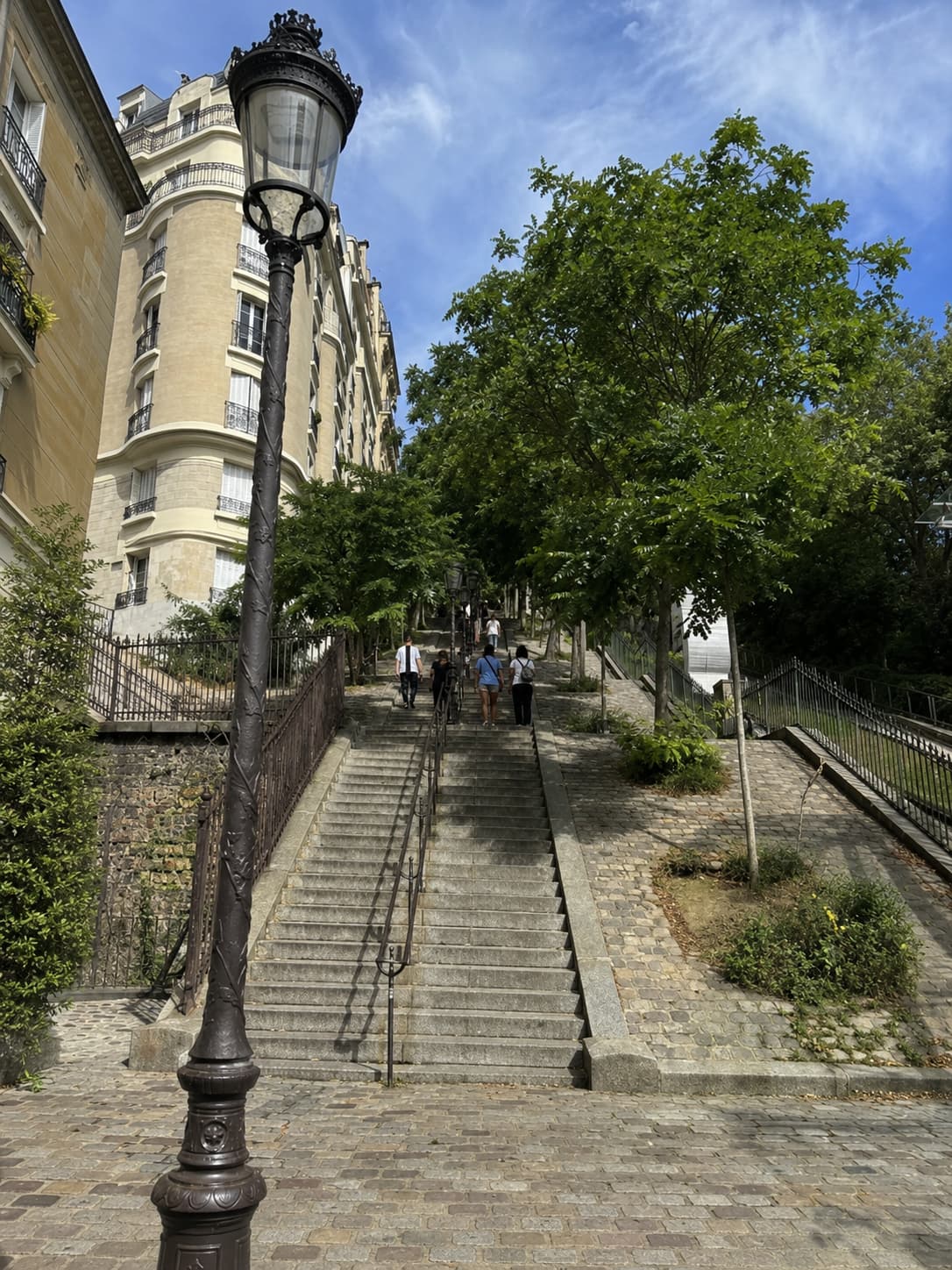
The Montmartre hillside gives you a wide, lower view of Paris from the north — not a panorama in the observation-deck sense, but one of the more atmospheric perches in the city, especially in the evening.
08 — The Panthéon, Les Invalides, and Palais Royal
These three don’t make most short-trip itineraries, and for most first-timers that’s the right call. But they’re not interchangeable — each has a distinct argument for the right visitor.
Les Invalides houses Napoleon’s tomb and an extensive military history museum. If you have a genuine interest in either, it’s worth a few hours. If you don’t, the grandeur of the building and the dome are appreciable from the esplanade at no cost, and that’s probably enough. The interior is genuinely vast and easy to over-schedule time for.
The Panthéon is a secular mausoleum that contains the remains of Voltaire, Rousseau, Marie Curie, Victor Hugo, and others — a remarkable concentration of people who shaped the modern world, in a building that earns its neoclassical ambition. Worth it for anyone interested in French intellectual or political history. Worth considerably less to everyone else.
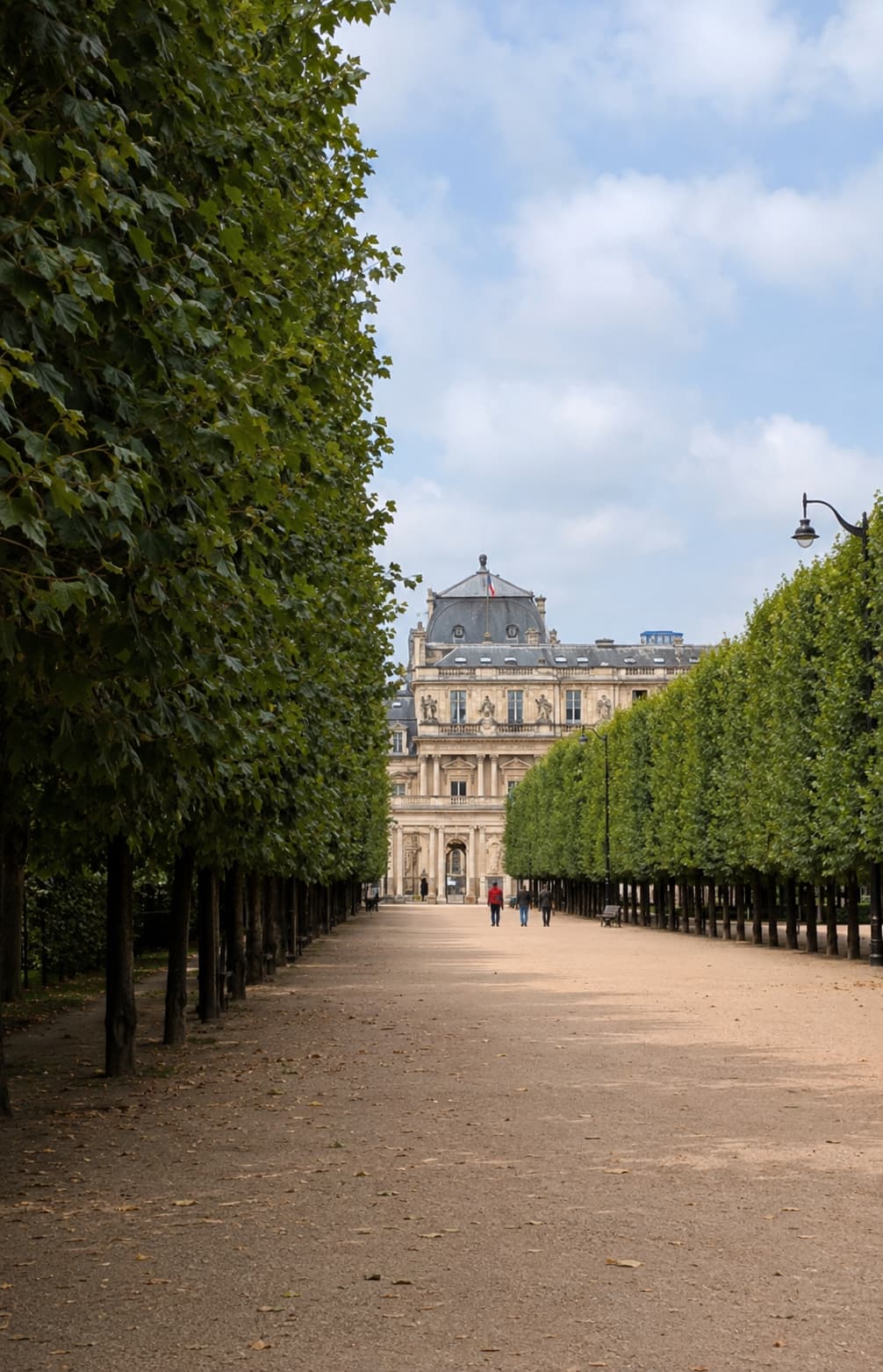
Palais Royal costs nothing and rewards a detour. The gardens are free, the colonnaded arcades are quiet by Paris standards, and the Daniel Buren columns in the courtyard — the black-and-white striped columns that look like abstract art escaped from a museum — are one of the more interesting things you can stand next to in the city without paying for the privilege. Fifteen minutes on foot from the Louvre.
09 — Paris Landmarks You Can Visit Differently
Not every entry on the standard list of Paris landmarks rewards the same approach. Some are better experienced as context than as attractions — walked past, looked at from the right angle, and folded into the day rather than scheduled as a destination.
The Champs-Élysées is better understood as a walk than a destination. The stretch between Place de la Concorde and the Arc de Triomphe is worth doing once — the scale is impressive, the tree-lined geometry works — but the avenue itself is largely luxury retail and chain restaurants at prices that reflect the postcode rather than the quality. Walk it in the direction of the Arc, look up at it as you arrive, and keep moving.
Sacré-Cœur is more interesting as a neighbourhood than as an interior. The basilica itself is open and free, but the interior is a single large whitewashed space without the historical depth of Notre-Dame or the visual drama of Sainte-Chapelle. The steps outside, on the other hand, with Montmartre spreading uphill behind them and Paris stretching out ahead, are one of the more pleasant places in the city to sit and do nothing for an hour.
The Moulin Rouge area is best approached as the neighbourhood of Montmartre rather than as the show. The windmill at the top of the hill, the Place du Tertre (busy, touristy, still worth a look), and the winding streets between them are genuinely worth the climb. The cabaret show is a significant investment of both time and money for something that’s primarily about spectacle rather than quality. That’s not a dismissal — it’s a question of what you’re here for.
Not every monument in Paris needs to be climbed. Some are better as a backdrop — something you walk past, look up at, and carry with you in a different way than a ticket stub allows.
The city rewards that approach too, if you let it.