
What to Buy in Morocco: An Honest Guide to Shopping the Souks
This Morocco souk shopping guide tells you which purchases hold up at home, which are minefields, and what things should actually cost.
Why This Morocco Souk Shopping Guide Is Honest
Every Morocco travel blog has a souk shopping list. Lanterns. Spices. A rug. Argan oil. This Morocco souk shopping guide starts where those lists end: which version of each item is worth your money, what it should actually cost in the souks, and which sales tactics are running in the background while you admire the colours. It is not a catalogue. It is the buying layer the catalogues leave out.
Morocco’s two great medina souks — Marrakech and Fes — have distinct characters that affect what you’ll find and how the buying process feels. Both reward the same approach: look first, price nothing on day one, and learn the arithmetic before you spend anything significant. More on all of that below. For broader context on both cities, start with the honest shortlist of Morocco’s best places.
01 — What Is Actually Worth Buying in Morocco’s Souks?
First, use this frame: some items in the souks are genuinely excellent and hard to replicate elsewhere. Producers make others for tourist volume at tourist margins. Meanwhile, some are straightforwardly overpriced novelties. The tier matters.
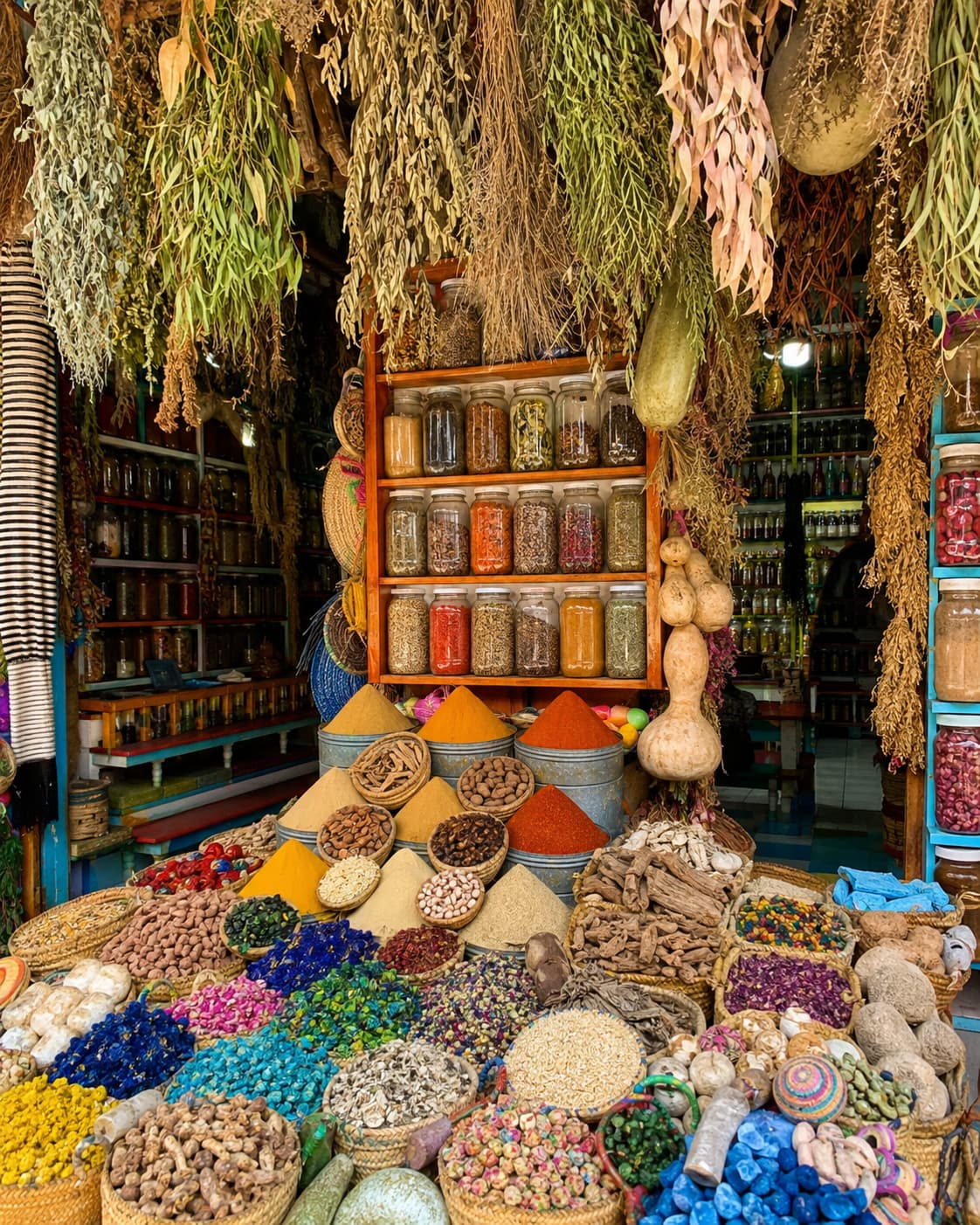
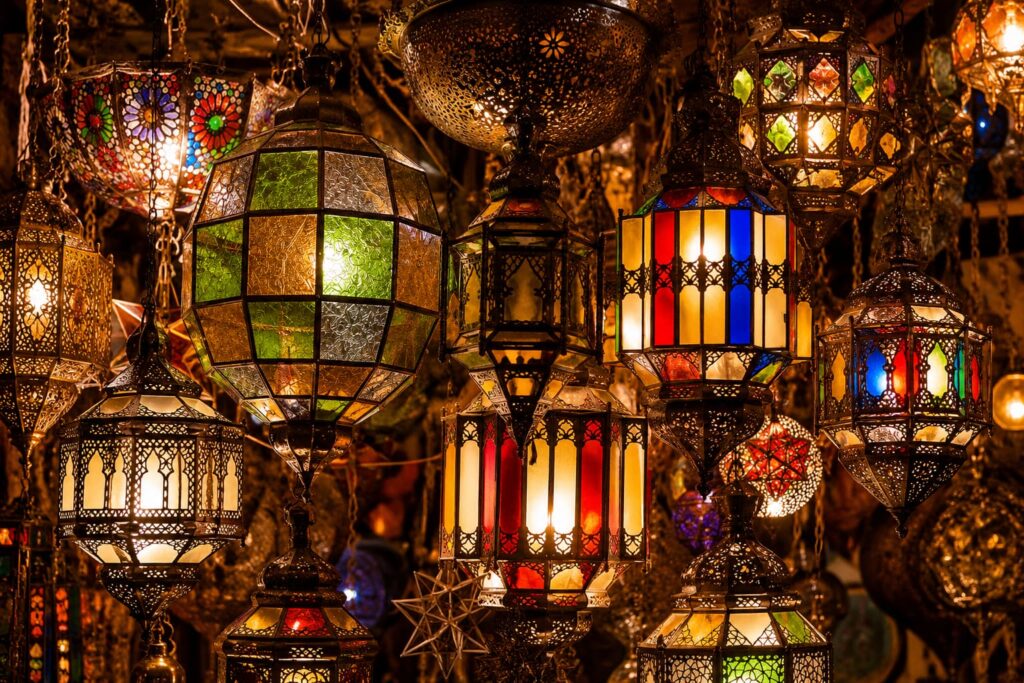
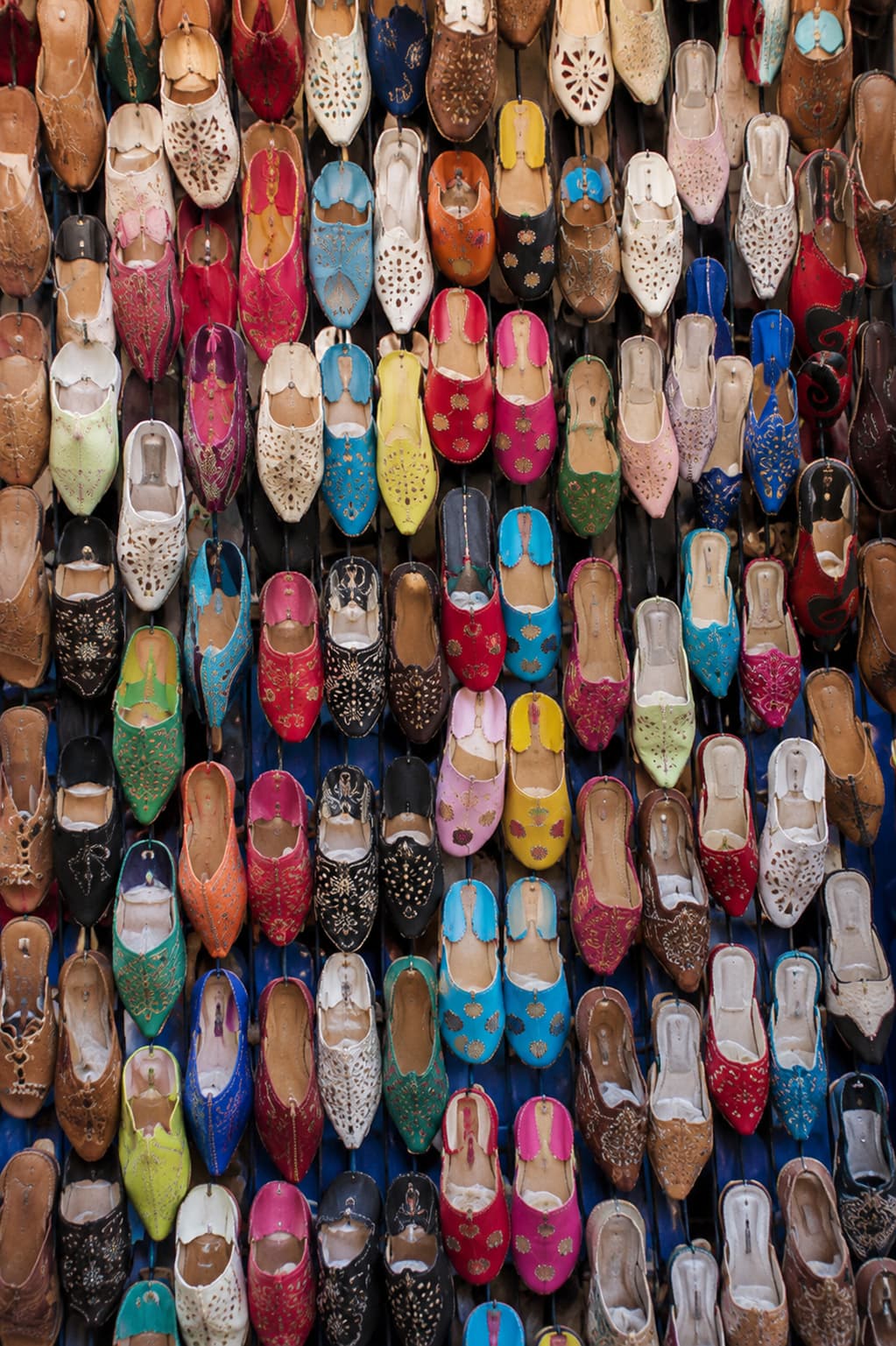
Buy with confidence: Loose spices you buy from the spice souk itself — not pre-packed tourist mixes in decorative tins — are consistently good value. Ras el hanout, cumin, paprika, and dried rose petals hold up well at home and cost a fraction of European supermarket prices. Woven baskets and raffia goods are light, cheap, and genuinely craft-made. Babouches (leather slippers) are an honest souvenir if you try them on and know your size — the colourful tourist versions and the plain working ones are different products at different prices. Brass lanterns and serving trays are bulky but real, and the craftsmanship on mid-range pieces is good. Ceramics from Fes (the blue-and-white Fassi pottery is region-specific) and Safi (earthier glazes) are among the most rewarding purchases in the country. Mint-tea sets — the tray, the pots, the glasses — are practical and hold their design at home.
Argan oil: Buy it from a women’s cooperative, not a tourist stall. Cooperatives sell both culinary and cosmetic grades, at fixed prices, with proper labelling. The going rate is meaningful — significantly more than the “pure argan” bottles at souk prices — but what you’re getting is the actual product. Tourist stalls routinely dilute the cheap bottles. Morocco has dozens of certified cooperatives; road signs mark many of them on the road south from Marrakech, and some have small shops in the medinas. This is one purchase where fixed price is the right price.
Is the saffron in Morocco souk stalls real?
This is worth addressing directly because saffron is one of the most reliably faked items in tourist souks worldwide, and Morocco’s tourist markets are no exception. Morocco does produce genuine high-quality saffron — it comes from Taliouine, a small town in the Anti-Atlas mountains, and it is among the world’s best. The threads from Taliouine are dark red with orange tips; they tint water slowly yellow (not orange, not red); and the smell is distinct, hay-like and faintly metallic.
What tourist stalls sell as saffron is frequently dyed safflower or marigold petals. The test: steep a few threads in warm water. Real saffron tints the water yellow gradually over several minutes. Fake saffron bleeds red or orange almost immediately. If a seller at a tourist stall is offering saffron at a price that seems reasonable — assume it’s fake. Real Taliouine saffron is expensive. If you want the genuine article, buy from a certified Taliouine producer or an upmarket spice merchant who can show you the origin.
How much does a rug cost in Morocco?
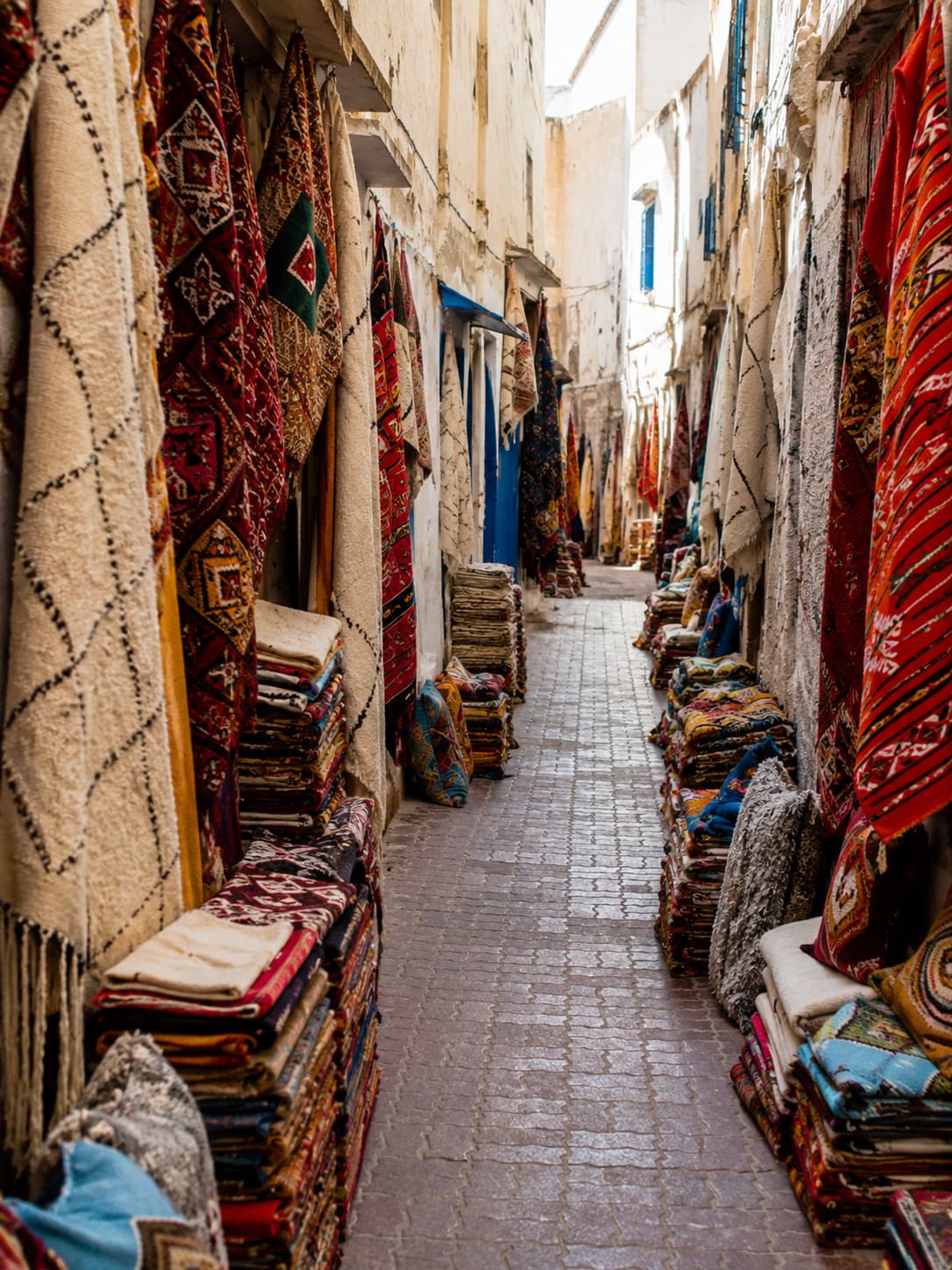
This question has no clean answer, which is part of the problem. A small Berber kilim might sell for 300–600 MAD (~€27–55) in honest circumstances. A medium-sized Beni Ourain-style wool rug — the ones with the geometric patterns on cream ground — can run anywhere from 1,500 MAD to 8,000 MAD depending on size, wool quality, whether it’s genuinely hand-knotted or machine-made, and how much the seller thinks you’ll pay. “Antique” rugs commanding premium prices are almost always not antique. Factory-made rugs are sold with tribal origin stories that are largely invented. This isn’t a reason not to buy a rug — some of the craft is real and the aesthetics are genuinely good. But the right frame is: buy it because you love how it looks, not because you believe the story about which village grandmother made it. And don’t pay antique prices for a story you can’t verify.
In practice, the rug-buying process typically involves tea. The seller invites you to sit, mint tea arrives, and staff unroll rugs around you. This is a specific sales process that builds social obligation and keeps you in the room. However, understanding it does not mean you cannot enjoy it. The tea is usually good. The rugs are interesting to look at. You can drink the tea, spend an hour looking at rugs, and leave without buying anything. Walking away is not rude. In fact, it is the move that sometimes produces the real price.
Walk past: “Fossils” at tourist stalls — Morocco does have genuine fossil beds, but the trilobites and ammonites at souk stalls are widely faked in plaster. “Antique” anything without documented provenance (and the paperwork to export it legally). Pre-packaged spice mixes in decorative tins — the mark-up is enormous and the spice quality is tourist-grade. Saffron at too-good prices.
02 — Morocco Souk Shopping: How the Haggling System Works
The first rule of this Morocco souk shopping guide — or any honest one — is that haggling isn’t a confrontation — it’s a choreography. Both sides know the steps. The opening price in a tourist souk typically runs two to four times what the seller expects to receive. A workable counter starts around 25–30% of the first stated price, and you negotiate upward from there toward a middle ground. The final price is usually somewhere between 40–60% of the opening ask, depending on the item and how interested the seller reads you as being.
The most important thing any Morocco souk shopping guide can tell you about haggling isn’t a target percentage — it’s the sequence. Browse first without asking prices — once you ask, you’re in negotiation. Never name your price first; make the seller open. The deeper you go into the souk, away from the medina entrances, the cheaper prices tend to be — the outer ring is tourist-facing, the inner ring supplies locals. Walking away is the strongest move available to you; it’s when sellers sometimes call you back with the actual price. And know when not to haggle at all: food stalls, juice vendors, small everyday purchases — haggling here reads as ungenerous and achieves nothing. Save it for craft goods where margins are genuinely wide.
Do souks have fixed prices anywhere?
Yes — and using them as a baseline before entering the souk proper is one of the most useful things you can do. Morocco has state-regulated ensemble artisanal shops (sometimes called “Maison de l’Artisan”) in most major cities. These sell Moroccan craft goods at fixed, government-supervised prices. They’re not cheap — the prices reflect something closer to actual craft value — but they remove the uncertainty. Spending an hour in one before you enter the souks gives you a reliable reference point: now you know roughly what a good ceramic plate costs, what a well-made babouche costs, what argan oil costs. The souk price should come in at or below ensemble artisanal prices for equivalent quality; if it doesn’t, after negotiation, that tells you something.
03 — Souk Scams: What Every Morocco Souk Shopping Guide Should Warn You About
The word “scam” overstates most of what happens in tourist souks — most of it is sales pressure and misdirection, not fraud. Calibrate accordingly: these are tactics, not crimes. But knowing the specific repertoire helps.
Someone offers to show you around, establishes rapport, then leads you to a specific shop — always a cousin’s, a friend’s, a “family business.” The guide earns commission on whatever you buy. The shop prices are set accordingly. You’re not in danger; you’re in a sales funnel. Politely decline unsolicited guiding.
A classic opener, specific to Fes. Someone tells you the famous tannery is closed/under construction/only accessible from a particular direction — and that direction involves their shop. The tannery is almost certainly open. This is the entry to the same commission-shop funnel described above.
Counting change quickly back to you in a currency you’re not fluent in, or returning 50 MAD notes that are actually 10 MAD notes. Count your change before you leave the stall. There’s no social pressure against this — take your time.
Inside the rug room, after the tea: the seller explains that Berber rugs are an investment, that this specific piece is rare, that the price is actually a deal compared to what it sells for in Europe. The arithmetic usually doesn’t hold. Buy a rug because you want it in your home, not as a financial move.
04 — Are Things Cheaper in Marrakech or Fes?
The question every Morocco souk shopping guide gets asked: is Marrakech or Fes cheaper? The honest answer: the price difference is smaller than most comparisons suggest, and the bigger variable is your own negotiating rather than which city you’re in. That said, the two souks have genuinely different characters that affect the buying experience.
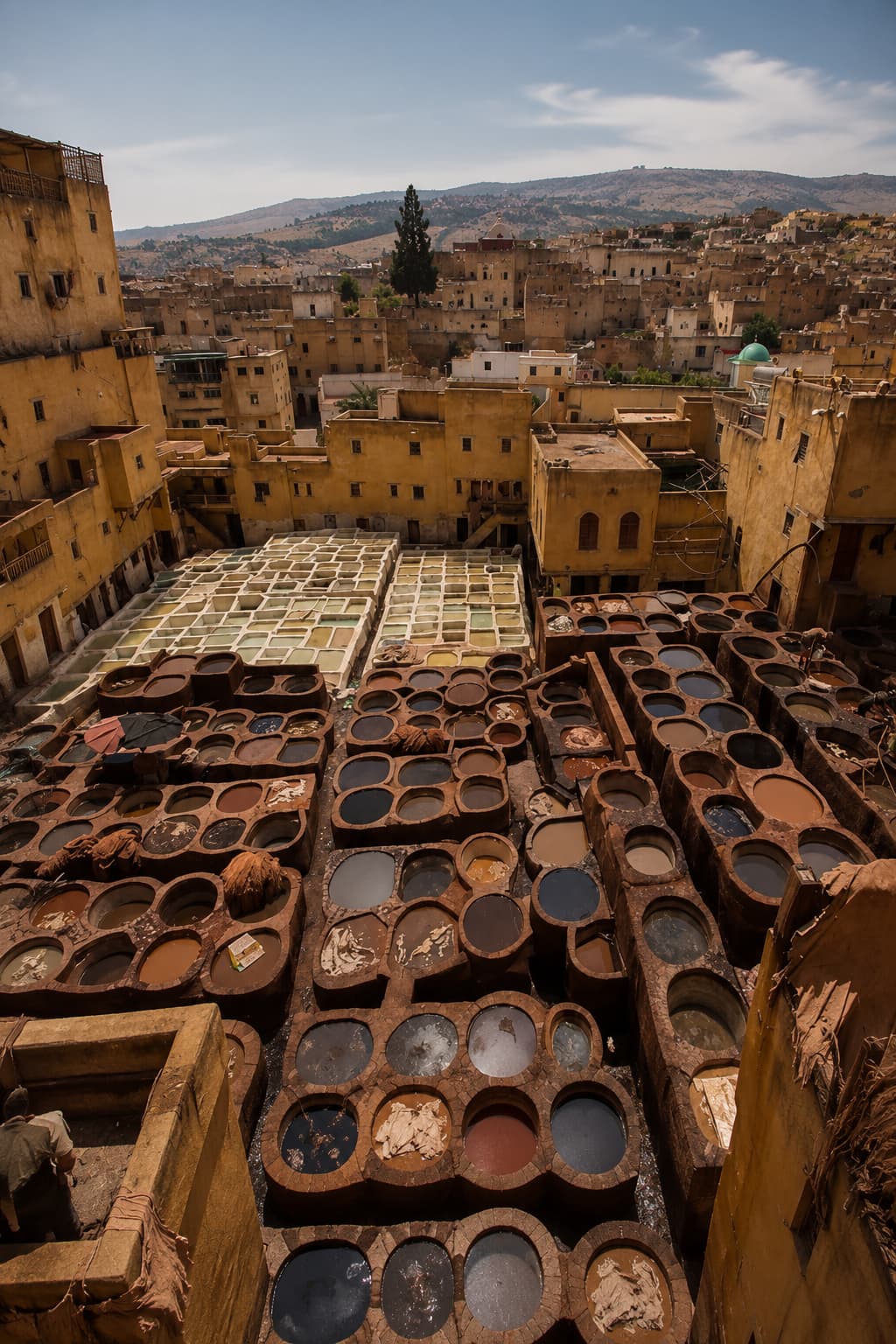
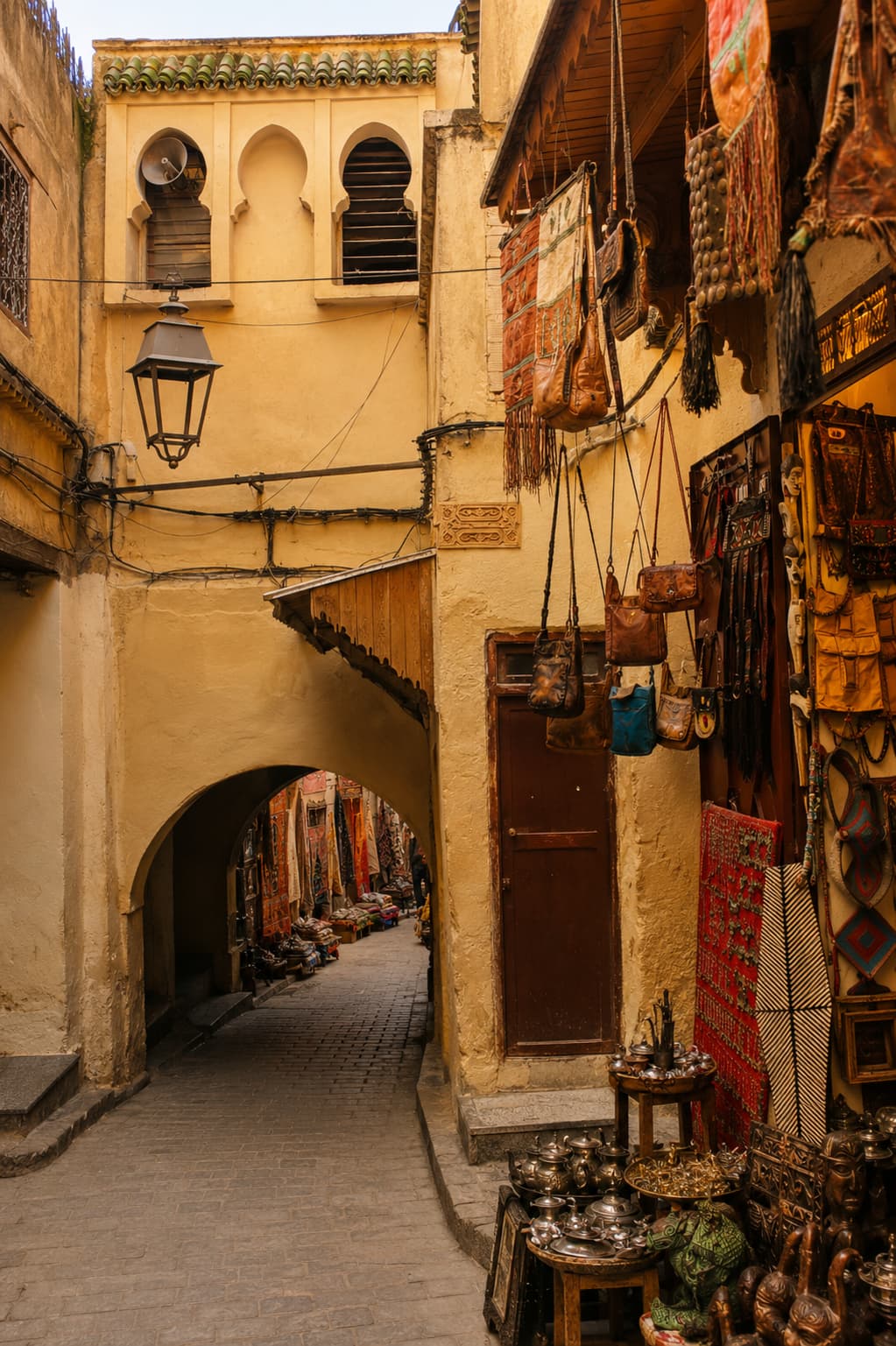
Fes is closer to the workshop. Its medina is a UNESCO-listed medieval city that still functions largely as it always has — the tannery district, the woodworkers’ souk, the Attarine (spice), Henna, and leather quarters are still geographically distinct craft guilds, and in many cases you are buying from or close to the people who made the thing. The leather goods here — particularly bags, belts, and traditional slippers — tend to be slightly better quality than equivalent-looking items in Marrakech, and the tourist pressure, while real, is a degree less saturating than in the Jemaa el-Fna orbit. Ceramics from Fes, particularly the blue Fassi pottery, are worth buying in Fes specifically because that’s where the workshops are.
Marrakech has wider selection, higher energy, and higher tourist density — which means more pressure and slightly inflated prices on identical goods, but also a larger inventory. The famous Jemaa el-Fna market feeds into the surrounding souks, and the souk areas north of the square are well-organised into loosely themed sections, though less rigidly distinct than Fes. First-timers who want maximum variety in minimum time will usually find Marrakech more practical. Travellers who want to feel closer to the craft and slightly further from the sales funnel should give Fes more time. For a direct city comparison across all dimensions, the Marrakech vs Fes honest verdict goes deeper than shopping alone.
05 — Can You Take Souk Purchases Home? Customs and Practicalities
Spices, Argan Oil and Small Souvenirs
One practical area most Morocco souk shopping guides skip entirely: what you can actually take home. Argan oil and spices: Both are straightforward in carry-on or checked luggage under EU, US, and UK rules for personal quantities. Argan oil goes through airport security as a liquid (under 100ml in carry-on, or in checked luggage). Spices have no meaningful restriction for personal amounts in any of these jurisdictions. Bring them in sealed bags to avoid mess.
Rugs, Fossils and Antiques
Rugs: A medium rug fits in checked luggage if rolled tightly; larger pieces are often shipped. Reputable rug merchants can arrange shipping — get a quoted price in writing before agreeing, and understand you’re paying Moroccan and destination-country import costs. Shipping is sometimes presented as included; it rarely is for international destinations.
Fossils and “antiques”: Morocco restricts the export of significant quantities of fossils and anything classified as a cultural heritage item. Items sold in tourist stalls as fossils are usually fakes (and therefore not subject to restrictions, but also not worth buying). Genuine antiques require export paperwork that most souk sellers cannot and do not provide. If someone is selling you an actual antique — which is vanishingly rare in an ordinary tourist souk — the paperwork is your responsibility to obtain before you leave the country.
Cash vs card: Most individual souk stalls deal in cash only. Larger fixed-price shops and ensemble artisanal shops may take cards. Budget for cash needs in the medina — ATMs are available in most Moroccan cities but less accessible once you’re deep inside a medina. Withdraw before you enter.
Morocco Souk Shopping FAQ
Food Souvenirs and Souk Language Questions
The souk rewards the buyer who knows roughly what things cost and is willing to leave.
Everything else — the theatre of it, the tea, the labyrinth — is part of what you came for.