
What to Eat in Morocco: An Honest Food Guide
The real problem isn’t finding food in Morocco — it’s escaping the same five dishes on every laminated tourist menu. Here’s what to actually seek out, and where each thing is worth eating.
Why This Morocco Food Guide Is Honest
Knowing what to eat in Morocco is half the problem — the other half is knowing where each dish is actually good. Walk through any medina and you will find dozens of places serving recognisable Moroccan dishes. The problem is that tourist-zone restaurants recycle the same abbreviated menu — tagine, couscous, brochettes, a salad, done — and the quality of those versions rarely matches what the same dishes taste like in the right setting. Consequently, this guide does not simply name dishes. It covers which ones reward genuine effort, which venue types produce the best versions, and the practical knowledge — safety, etiquette, vegetarian realities — that makes the difference between eating memorably and eating the same laminated menu for a week. For a broader first-timer orientation, the guide to the best places to visit in Morocco covers where to go and why.
01 — What to Eat in Morocco: The Dishes Worth Seeking Out
Every travel guide answering “what to eat in Morocco” lists the same dishes. Few bother to tell you which ones justify real effort and which ones appear on every tourist menu because visitors expect them. Here is an honest tier — not a ranking of “best,” but a division between the dishes that reward seeking out and the ones that will find you regardless.
The Moroccan food worth going out of your way for
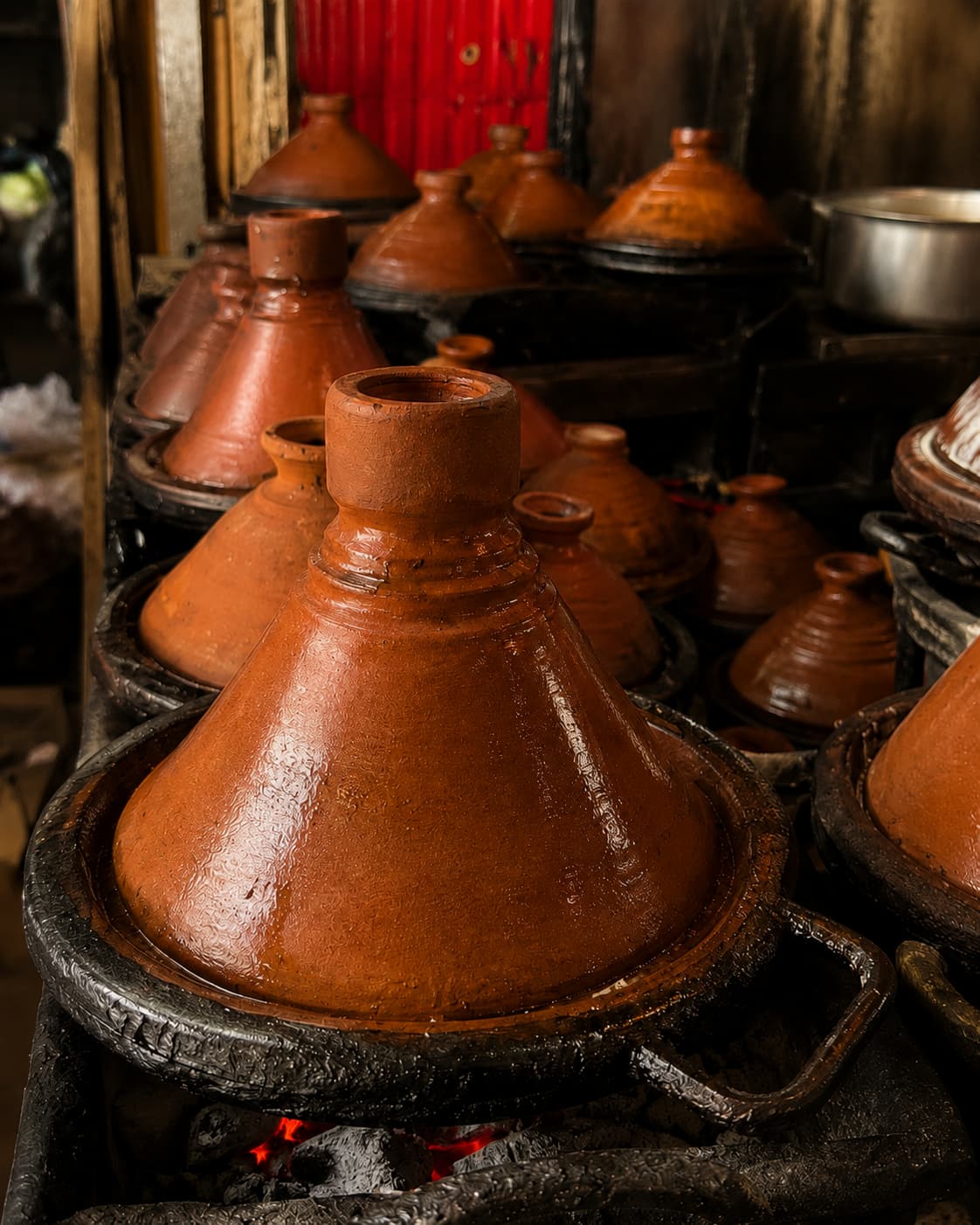
Chicken tagine with preserved lemon and olives is the single dish that best represents what Moroccan cooking can do. A tagine is both the conical clay pot and the dish itself — the lid recirculates steam so the food braises in its own juices over low charcoal heat, with no added water. Preserved lemons give it a bright, salty depth that no other North African dish quite matches. However, this version specifically — not the generic “mixed tagine” on tourist menus — is what you want to order.
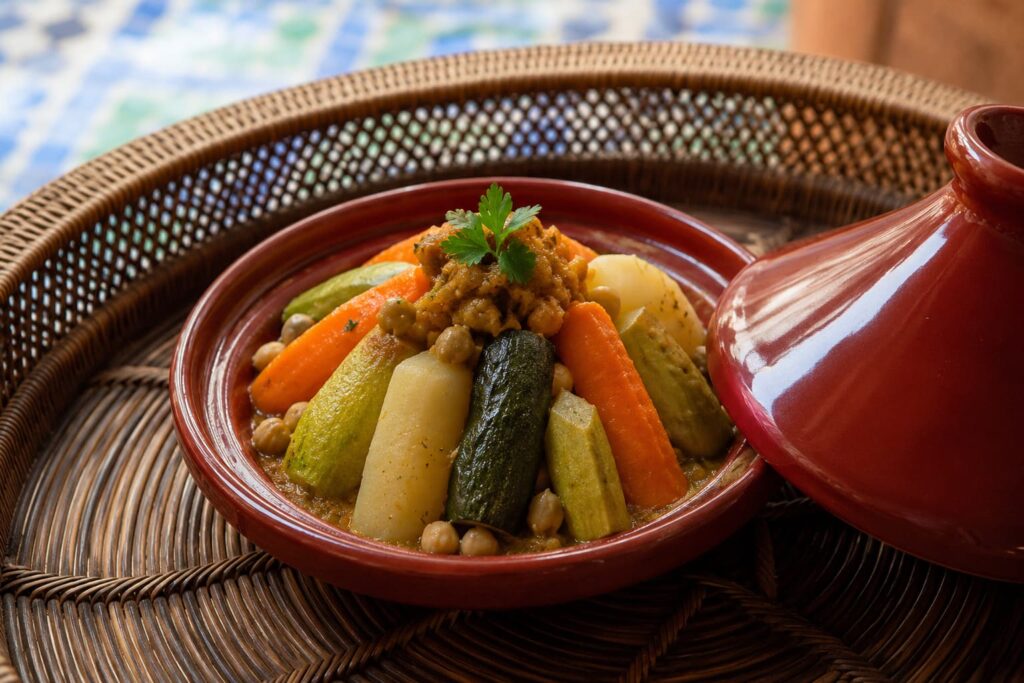
Friday couscous deserves its own category. Couscous is Morocco’s national dish, traditionally hand-rolled, steamed three times over broth, and eaten by families on Fridays after midday prayers. The quick-hydrated version served in tourist restaurants on a Tuesday afternoon is a different product entirely. If you can time a meal at a riad or a local family-style restaurant on a Friday, the difference is striking — the grains are separate, the broth is deep, and the seven-vegetable tradition (the number is significant) is honoured.
Regional specialties and deeper finds
Tanjia is Marrakech’s signature dish specifically — do not confuse it with tagine. Meat is slow-cooked in an urn-shaped clay vessel that is sealed and buried in the embers of the neighbourhood hammam’s furnace for four to six hours. Historically a bachelors’ dish (men working in the souks had the butcher fill the pot, then dropped it at the hammam on their way to work), tanjia produces meat so tender it dissolves. You will not find it in Fes or Chefchaouen — this is a Marrakech-only pursuit.
Bastilla (also spelled pastilla) is the dish that surprises every first-timer: a flaky warqa pastry shell filled with spiced pigeon or chicken, almonds, and eggs, then dusted with powdered sugar and cinnamon. Sweet and savoury together, in a way that should not work but does. Families traditionally prepare it for celebrations, though better restaurants serve it year-round.
Harira — thick, tomatoey, rich with lentils and chickpeas — is the soup that breaks the Ramadan fast, but it is available every day of the year. On a cool morning or as a light evening meal with a round of khobz, it is one of the most satisfying things you can eat in Morocco for under 15 MAD.
Bissara is the northern Moroccan breakfast that most visitors never hear about: a dense, smoky split-pea or fava-bean soup drizzled with olive oil and cumin, eaten with bread at dawn stalls in Fes, Chefchaouen, and Meknes. At 5–10 MAD a bowl, it is possibly the best-value meal in the country.
Beyond these, msemen and beghrir from a griddle stall (flaky layered flatbread and the “thousand-hole” semolina pancake), sardine bocadillos on the Atlantic coast (Essaouira’s port grills are the definitive version), and méchoui (whole lamb pit-roasted until the meat pulls apart by hand) are all worth seeking if your route allows.
What is the difference between tagine and tanjia?
People confuse these constantly. A tagine is a wide, shallow dish with a conical lid — cooked on a brazier at home or in a restaurant kitchen, available everywhere in Morocco. Tanjia is a tall, urn-shaped pot — sealed and buried in hammam embers for hours, exclusive to Marrakech. As a result, tagine is everyday food you will eat repeatedly; tanjia is a specific experience you plan for in one city.
On every menu anyway — and that is fine
The generic tagine-couscous-brochette triad will appear on every tourist-zone menu regardless of whether you seek it out. These are not bad dishes. Brochettes (grilled meat skewers with cumin and salt) are solid street food, and even a middling tagine is a warm, filling meal. The point is that if you eat only what the laminated menu offers, you will leave Morocco thinking the food is pleasant but repetitive — and you would be wrong about the cuisine, just right about the menu.
02 — Where Each Dish Is Actually Good: The Venue-Type Guide
This is the part most food guides skip, and it is the most important thing to understand about eating well in Morocco. Knowing that tagine exists does not help you if you order it at a square-side restaurant pitched at tour groups. Where you eat matters more than what you order — and in Morocco, the venue types form a clear hierarchy that applies in every city.
Restaurants populaires and side-alley family spots
These are the small, no-frills restaurants down the side alleys of any medina, where locals actually eat. The menu is short — often just two or three tagine options, a couscous on Friday, and harira — because everything is cooked that morning in actual tagine pots over charcoal. Prices are a fraction of the square-side places: a tagine for 30–50 MAD instead of 90–120 MAD. Consequently, the quality is often better, because the kitchen is cooking one thing well rather than twenty things adequately. Look for places where the pot has been on since morning.
Grill stalls
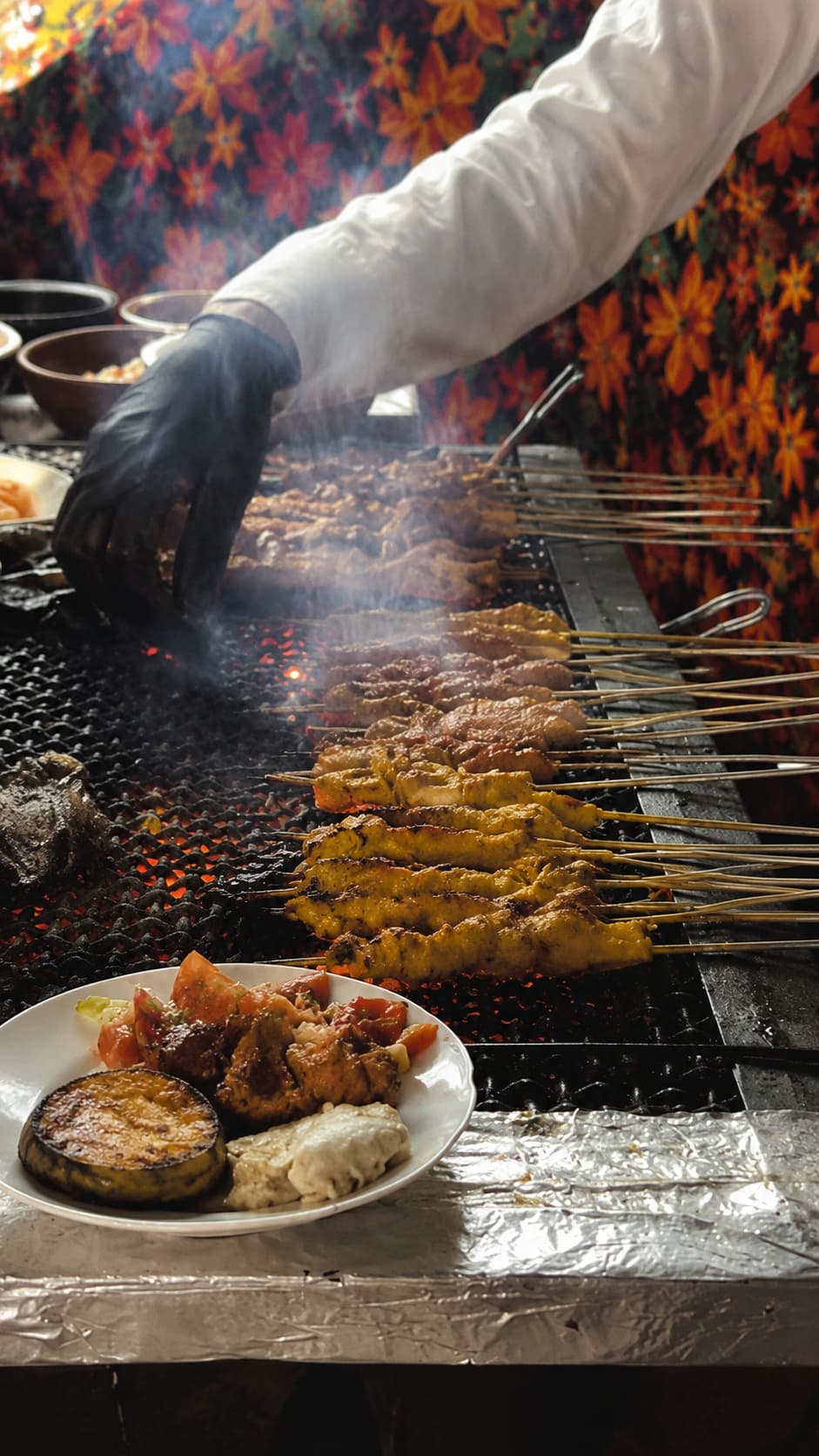
For brochettes, kefta (spiced minced meat), and merguez sausage, the grill stalls in every medina are the right venue. You will see them by the smoke. Meat is cooked to order over charcoal and served with khobz, harissa, and cumin-salt. At 8–20 MAD per skewer, this is the fastest and cheapest way to eat well.
The community bread oven
Every neighbourhood has a ferran — a communal wood-fired oven where families bring their dough to be baked for a few dirhams. A chalk mark from the baker identifies each family’s loaves. You will see children carrying wooden trays of bread on their heads to and from the oven — one of the most genuinely Moroccan sights in any medina. Khobz is torn by hand (never cut with a knife at a traditional table) and used to scoop tagine, pinch meat, and mop every last drop from the plate. Make no mistake: this is not a side dish. It is a utensil.
Riad dinners — the sleeper best meal
Many riads (traditional guesthouses with a courtyard) offer home-cooked dinner by their kitchen staff, and these meals are often the best answer to what to eat in Morocco that a visitor will access. The reason is simple: riad cooks are preparing a small number of dishes with care, using real tagine pots and proper technique, for guests who have reserved in advance. A riad dinner typically runs 150–300 MAD per person — more than a populaire, but below any comparable quality restaurant. If your riad offers dinner, take it at least once.
Djemaa el-Fna — spectacle with food, eyes open
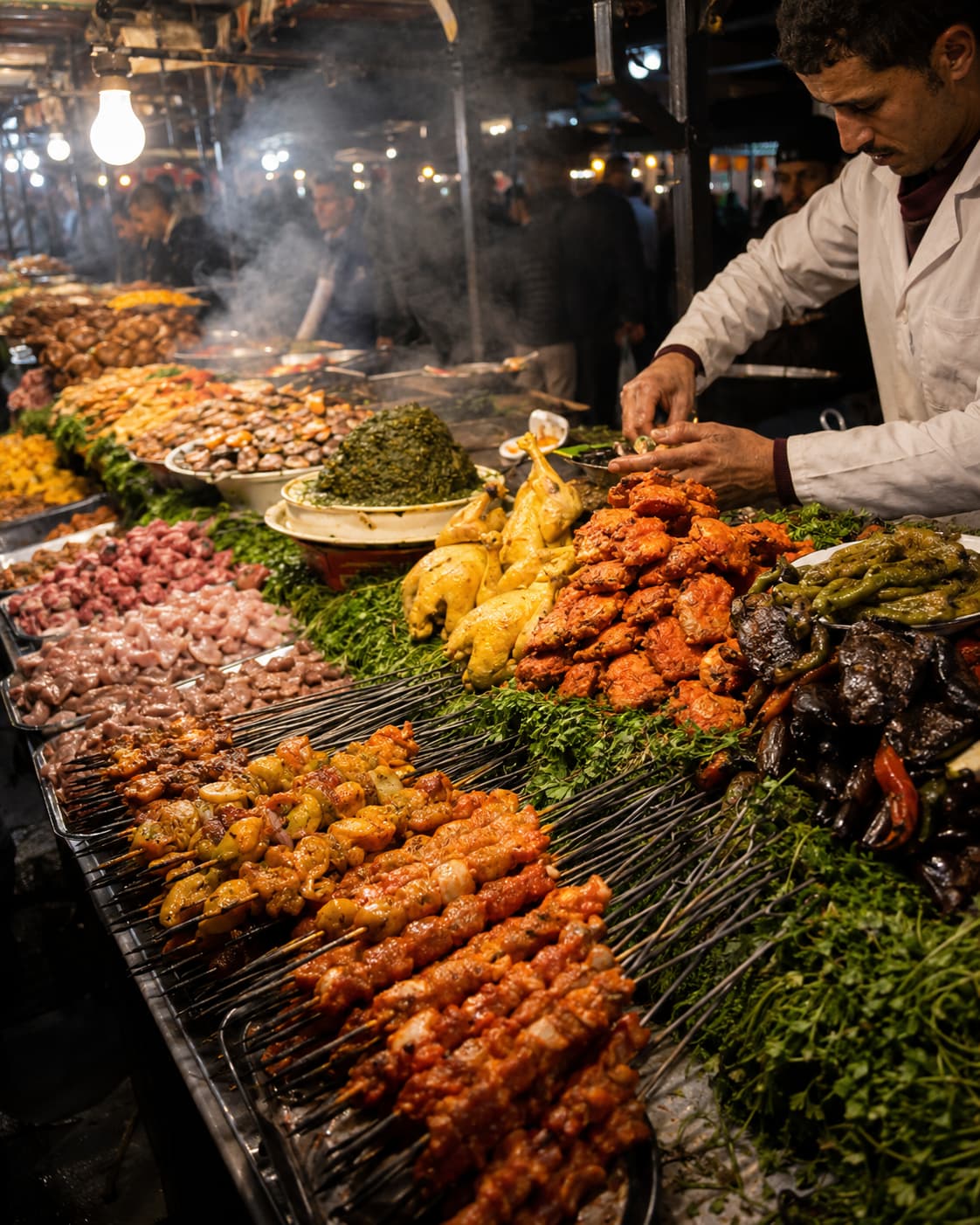
The nightly food stalls on Marrakech’s main square are worth visiting at least once for the atmosphere alone. Aggressive touts will try to seat you — pick a stall yourself, ideally one with locals already eating. The food is decent, the spectacle is real, and the prices (a tourist markup of 2–3x over medina rates) are the cost of the theatre. Go for the grilled meats and harira rather than the seafood, which sits longer in the heat. For more on navigating Marrakech specifically, the Marrakech vs Fes comparison covers the character of each city honestly.
This guide deliberately avoids naming specific restaurants. “Best tagine in Marrakech” claims require sitting in the restaurant, and most blog recommendations are sponsored, recycled, or based on a single visit. Instead, use the venue-type framework: find the right kind of place, in any city, and you will eat well.
03 — Is Moroccan Street Food Safe to Eat?
This is the question every first-timer asks, and most guides answer with either blanket reassurance or blanket fear. Neither is useful. Here is the calibrated answer: Moroccan street food is generally safe if you apply the same logic locals do.
A three-part safety heuristic
High turnover: A stall surrounded by people is restocking constantly. Food does not sit long enough to become a problem. An empty stall where food has been sitting under a heat lamp for hours is a different calculation. Cooked through: Anything that comes off a grill, out of a fryer, or from a boiling pot is safer than anything that has been sitting at room temperature. Grilled brochettes, fried sfenj, boiling harira — all low-risk. Locals eating there: Moroccans are not immune to food poisoning. If a stall has a steady stream of local customers, the food is almost certainly fine.
What actually causes trouble
Most stomach issues for visitors come not from grilled street meat but from raw salads washed in tap water, too much rich food too quickly on day one (the combination of olive oil, spices, and unfamiliar fats hits hard on an unadjusted stomach), and ice in drinks at places that use unfiltered tap water. The safe approach: start with cooked dishes for the first day or two, skip raw lettuce salads at places you are unsure about (cooked salads like zaalouk are fine — they are served warm), and drink bottled water. Everything you need to know about tap water, Ramadan, and general safety is covered in the things to know before visiting Morocco guide.
04 — Is Moroccan Food Spicy?
When people research what to eat in Morocco, spice level is one of the most common concerns. In reality, Moroccan food is aromatic rather than hot — heat arrives via optional harissa on the side, not in the cooking itself. The spice rack is deep (cumin, coriander, saffron, paprika, ginger, cinnamon, turmeric), but these create complexity, not burn. If you have eaten Thai or Indian food expecting a similar experience, you will be surprised by how gentle the heat is.
What some travellers find unexpected is the sweet-savoury register. Prunes in a lamb tagine. Cinnamon dusted over bastilla. Honey drizzled on msemen. This combination is central to Moroccan cuisine, and some visitors love it while others find it disorienting. That is an honest reaction — the sweet-savoury fusion is a genuine feature of the cuisine, not a tourist adaptation, and it is worth knowing about before your first meal rather than being caught off guard.
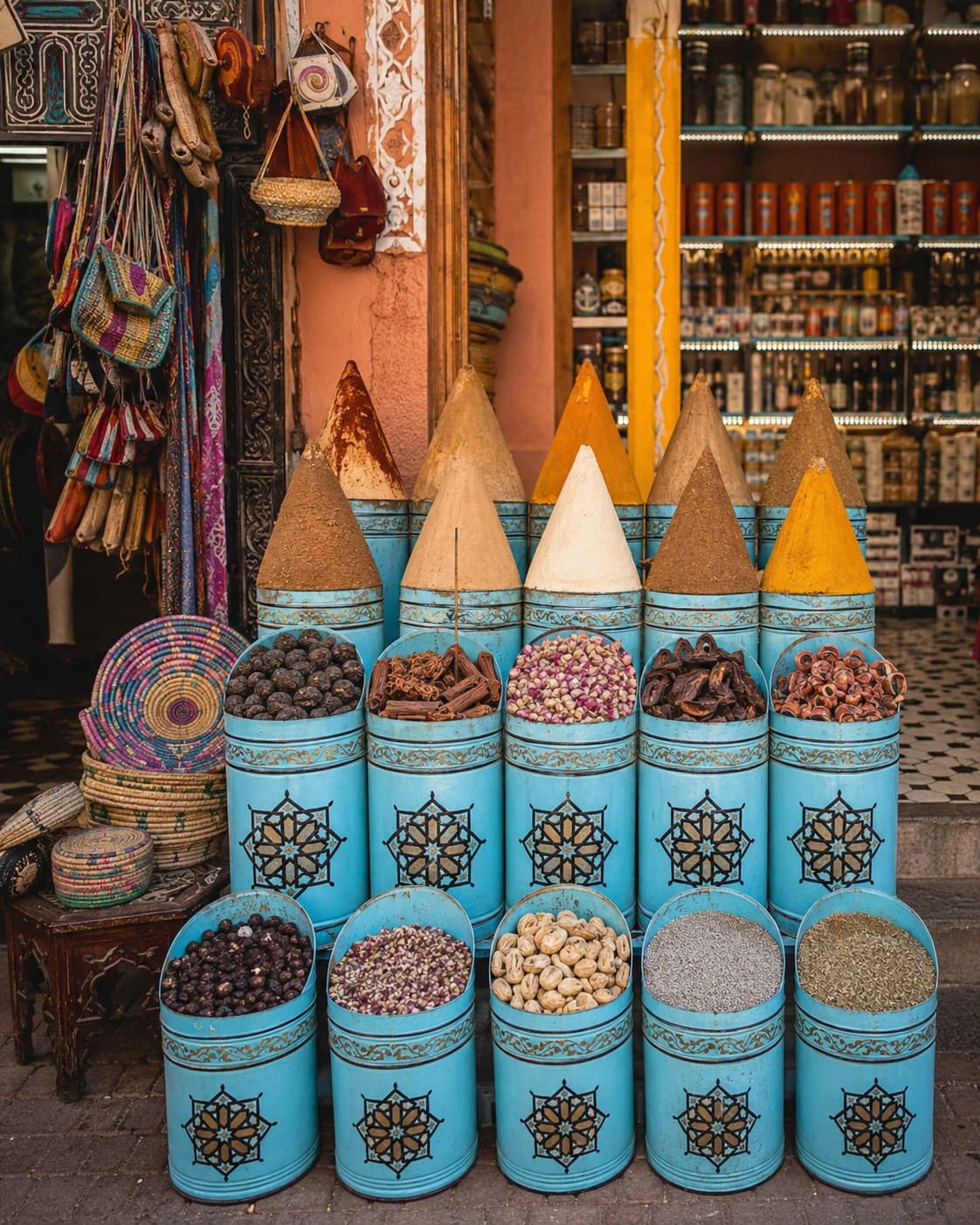
Harissa — the chili paste served in a small dish on the side — is the only consistently hot element. Use it or leave it; nobody will judge either choice. Ras el hanout, the famous spice blend whose name translates to “head of the shop” (the best the spice seller has), is aromatic and complex but not spicy in the chili sense. It is also one of the best food souvenirs to bring home — the guide to shopping the souks covers what to buy, what to avoid, and how to tell real saffron from the imitation sold to tourists.
05 — What Do Moroccans Eat for Breakfast?
Breakfast is one of the most underrated parts of eating in Morocco, and there are two completely different versions depending on where you have it.
Riad breakfast
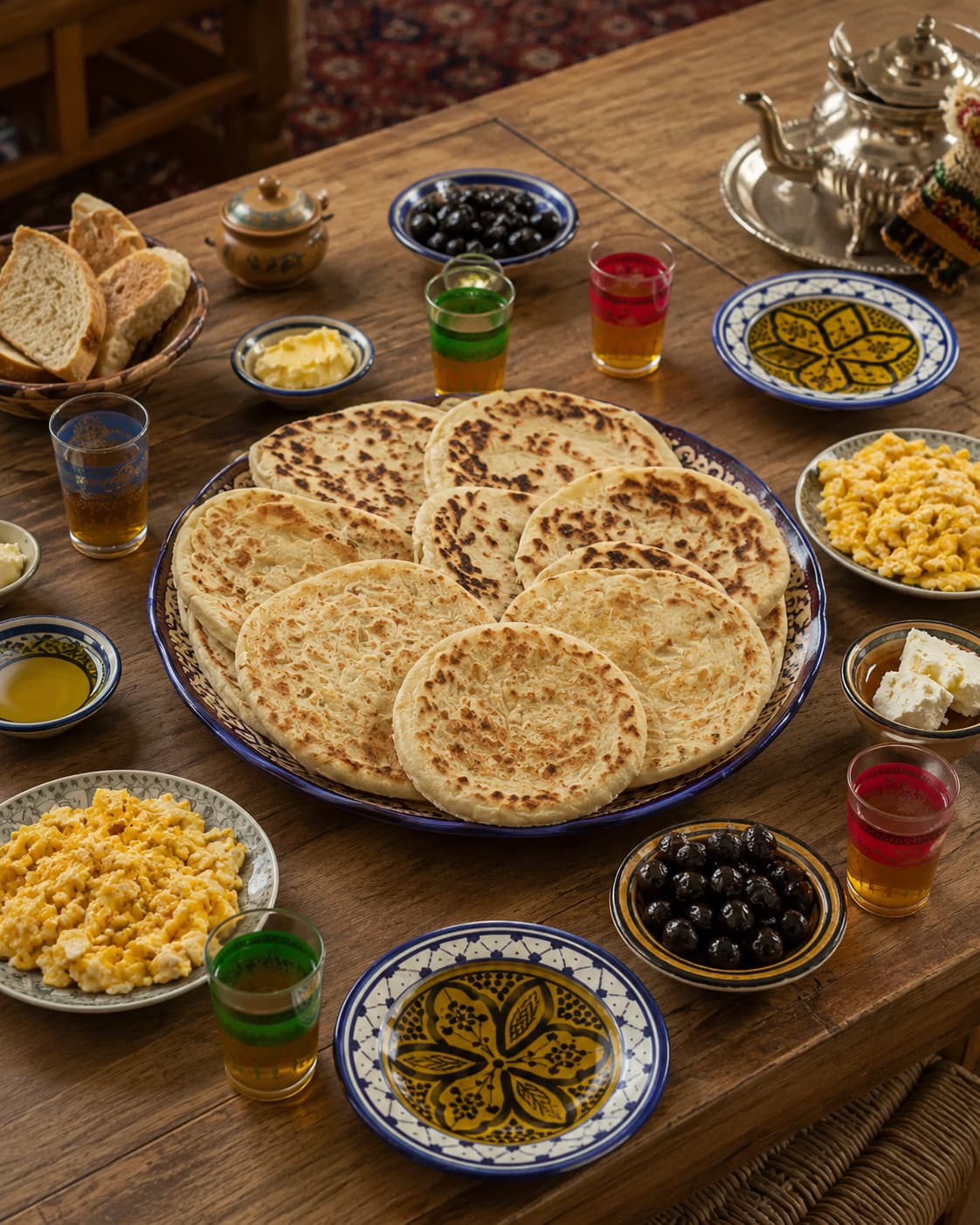
Most riads serve a spread that has become its own institution: msemen (flaky, layered square flatbread), beghrir (the thousand-hole semolina pancake, spongy and eaten warm with melted butter and honey), khobz, amlou (a rich paste of argan oil, almonds, and honey — addictive), olives, jben (fresh white cheese), hard-boiled eggs, fresh-squeezed orange juice, and mint tea. This spread is generous, calm, and one of the genuine highlights of staying in a riad. It is also included in the room rate at most places.
Street breakfast
On the street, the morning economy is different. Sfenj — Moroccan doughnuts, fried fresh and dusted with sugar — cost 2–4 MAD each and are eaten standing up with a glass of mint tea at the morning stall. In the north (Fes, Chefchaouen, Meknes), bissara replaces sfenj as the standard dawn meal — a thick bean soup with olive oil and cumin, eaten with bread, for under 10 MAD. Meanwhile, the orange-juice ritual is everywhere: fresh-squeezed juice from street vendors for 5–10 MAD a glass, using Morocco’s famously sweet oranges. It is one of the cheapest and most reliable pleasures in the country.
06 — Can Vegetarians Eat Well in Morocco?
For vegetarians wondering what to eat in Morocco, the honest answer is yes — with a real caveat. On the surface, Morocco offers plenty of vegetable-forward food: zaalouk (smoky aubergine and tomato salad), taktouka (roasted pepper and tomato), vegetable couscous, bissara, lentil dishes, and a wealth of cooked salads. Bread, olives, amlou, and fresh fruit round out a diet that looks entirely plant-based.
The caveat is that “vegetable” does not always mean “meat-free” in Moroccan kitchens. Vegetable tagines are frequently cooked in meat-based broth. Couscous broth is almost always lamb or chicken. Harira contains meat by default. Even salads may be dressed with rendered fat rather than olive oil at cheaper establishments. Asking for a vegetarian version is straightforward — “bla l7am” (without meat) works — but understand that in a populaire kitchen running one large pot, the concept of separating meat and vegetable cooking is simply not how the kitchen operates. Riad kitchens, which cook to order, handle vegetarian requests far more reliably.
Vegans face a harder road. Dairy, eggs, butter, and honey are foundational to Moroccan cooking, and the language barrier makes communicating exclusions difficult outside tourist-facing restaurants. It is doable but requires more effort and more self-catering from markets.
07 — Eating Etiquette in Morocco: Do You Eat With Your Hands?
Yes — and doing it correctly is simpler than most guides make it sound. When eating from a communal plate (the traditional format for couscous and many tagines), you eat from your section of the plate, using your right hand. Bread is the primary utensil: tear a piece of khobz, use it to pinch or scoop, and eat. Forks and spoons are available at tourist restaurants without asking, but at family meals and populaires, hands and bread are standard.
The etiquette that actually matters
Right hand only for eating. Your left hand is considered unclean in this context, even if you are left-handed. Use it to hold bread or pass dishes, not to eat from a communal plate. Eat from your zone — do not reach across to someone else’s section of a shared plate. The host may push choice pieces of meat toward you, which is a gesture of generosity. Leave a little on the plate when you are finished — cleaning the plate completely can signal that you were not given enough.
Mint tea — the ritual that matters most
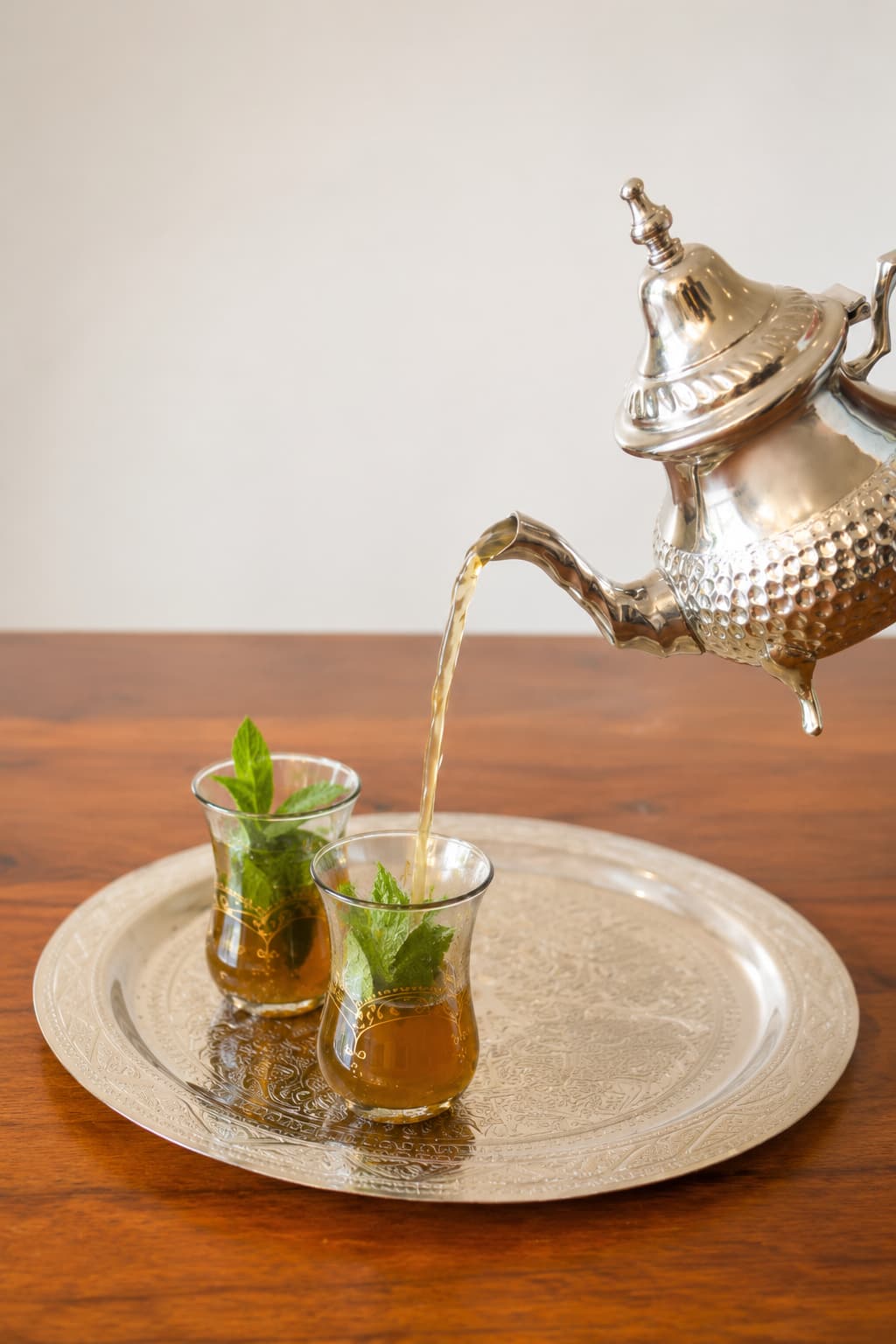
Moroccan mint tea combines Chinese gunpowder green tea with fresh spearmint and significant sugar, poured from height to aerate and create a light froth. As a result, it is simultaneously a drink, a ritual, and a social gesture. When offered tea as a guest — in a shop, a home, or a riad — accept at least the first glass. Refusing the first offering is a genuine etiquette misstep, not a minor faux pas. You may politely decline a second or third round if needed.
During Ramadan, most Moroccans observe the daytime fast, and eating in public during daylight hours is considered disrespectful even for non-Muslim visitors. Tourist restaurants remain open, but street food stalls largely shut down until sunset. The things to know before visiting Morocco guide covers Ramadan dates, timing, and what practically changes day-to-day.
Food Souvenirs and Food Tours
Eat where the pot has been on since morning. Follow the charcoal smoke into the side alleys. Accept the first glass of tea. Once you stop asking what to eat in Morocco and start following the smoke, the laminated tourist menu becomes the only genuinely bad meal in the country — and everything else, from a 5-MAD bowl of bissara to a Friday couscous in a riad kitchen, is worth the trip on its own.