
Morocco Itinerary: 7 vs 10 Days, and What Each One Actually Costs You
Most Morocco itineraries fail on transit math, not destination choice. Here is the honest fork in the road — what 7 days buys you, what 10 days adds, and what gets cut either way.
Planning a Morocco itinerary — whether 7 days or 10 — is entirely possible and genuinely satisfying if you build it around what each length can actually deliver. The problem is not the length. It is the itineraries that promise the Sahara, Fes, Chefchaouen, and Marrakech in a week, then bury the transit math in fine print. That math catches up with you on day two, somewhere on a nine-hour drive through the Atlas. For a fuller sense of which places are worth your time and which are overrated, the companion post on the best places to visit in Morocco covers the selection question — this post covers the sequencing question.
The honest version: 7 days in Morocco works beautifully as a Marrakech-to-Fes journey with an Atlas detour. Ten days is the minimum that earns you a real Sahara night without sacrificing the medinas. Everything else is negotiable — but only if you know what you are negotiating away.
01 — How Many Days Do You Need for a Morocco Itinerary?
The honest answer depends entirely on one question: do you want the Sahara Desert as part of your trip, or not? That single decision splits every Morocco itinerary into two different journeys.
Without the Sahara, seven days is enough to do Morocco properly — not rushed, not squeezed. You get two to three nights in Marrakech, a full day in the High Atlas with a stop at Aït Ben Haddou, and two to three nights in Fes. That is a complete, satisfying trip. You leave having actually understood both cities rather than ticking them off.
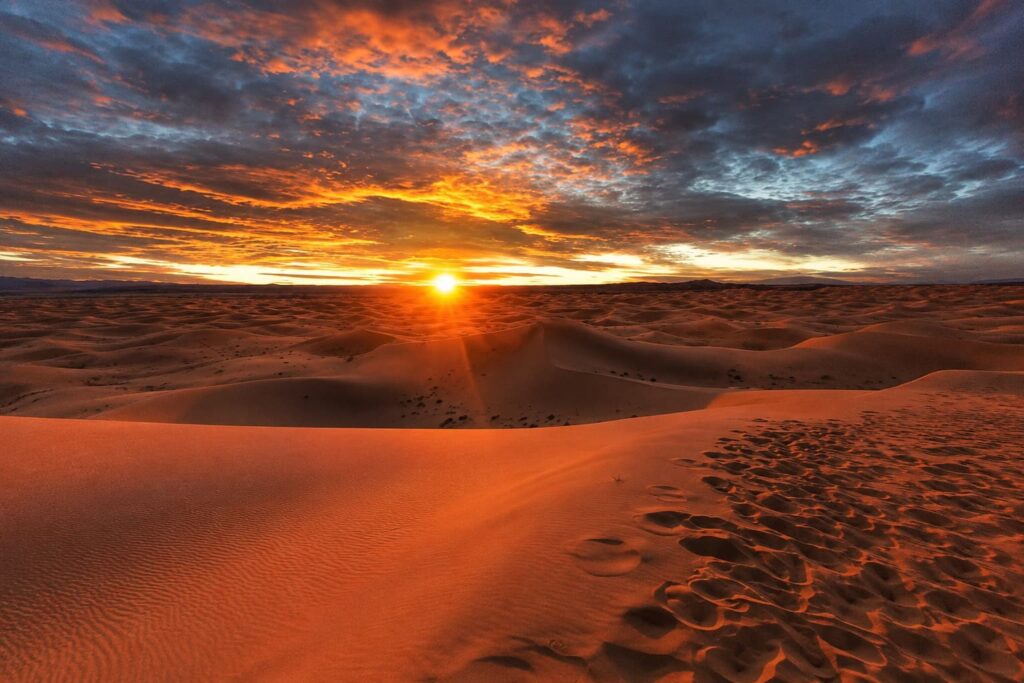
With the Sahara, the calculus changes entirely. The desert eats three days minimum — one to travel down, one night in the dunes, one to travel back out. That means a realistic Sahara loop requires ten days as a baseline. Under ten days, you are either cutting the cities short or turning the Sahara into a blur of windshields.
7 days = Marrakech + Atlas + Fes, no Sahara. That is not a compromise version of Morocco — it is a different, quieter version that many travelers prefer. 10 days = the full southern loop with the desert. Go 10 if you possibly can. Go 7 without apologising.
Is 5 days enough for Morocco?
Honestly, no — not for the classic circuit. Five days gives you enough time for one city well, or two cities lightly. Marrakech alone could fill five days. However, if your only goal is Marrakech plus a day trip into the Atlas foothills, five days is sufficient for that narrow brief. For anything involving Fes or travel to the south, it is too short and the transit time will devour the experience.
02 — The Transit Math No Morocco Itinerary Post Shows You
Most Morocco itinerary posts mention drive times in passing, tucked between enthusiastic descriptions of kasbah walls and spice markets. The honest version puts the numbers front and centre, because they determine everything else.
The key distances at a glance
| Route | Distance | Drive time (non-stop) | Realistic day impact |
|---|---|---|---|
| Marrakech → Merzouga | ~560 km | 9–10 hours | Full travel day, no sightseeing |
| Fes → Merzouga | ~470 km | 7–8 hours | Full travel day, some scenic stops possible |
| Marrakech → Fes (direct) | ~540 km | 7–8 hours | Full travel day — or fly (1 hr) |
| Fes → Chefchaouen | ~195 km | 3.5–4 hours | Half travel day |
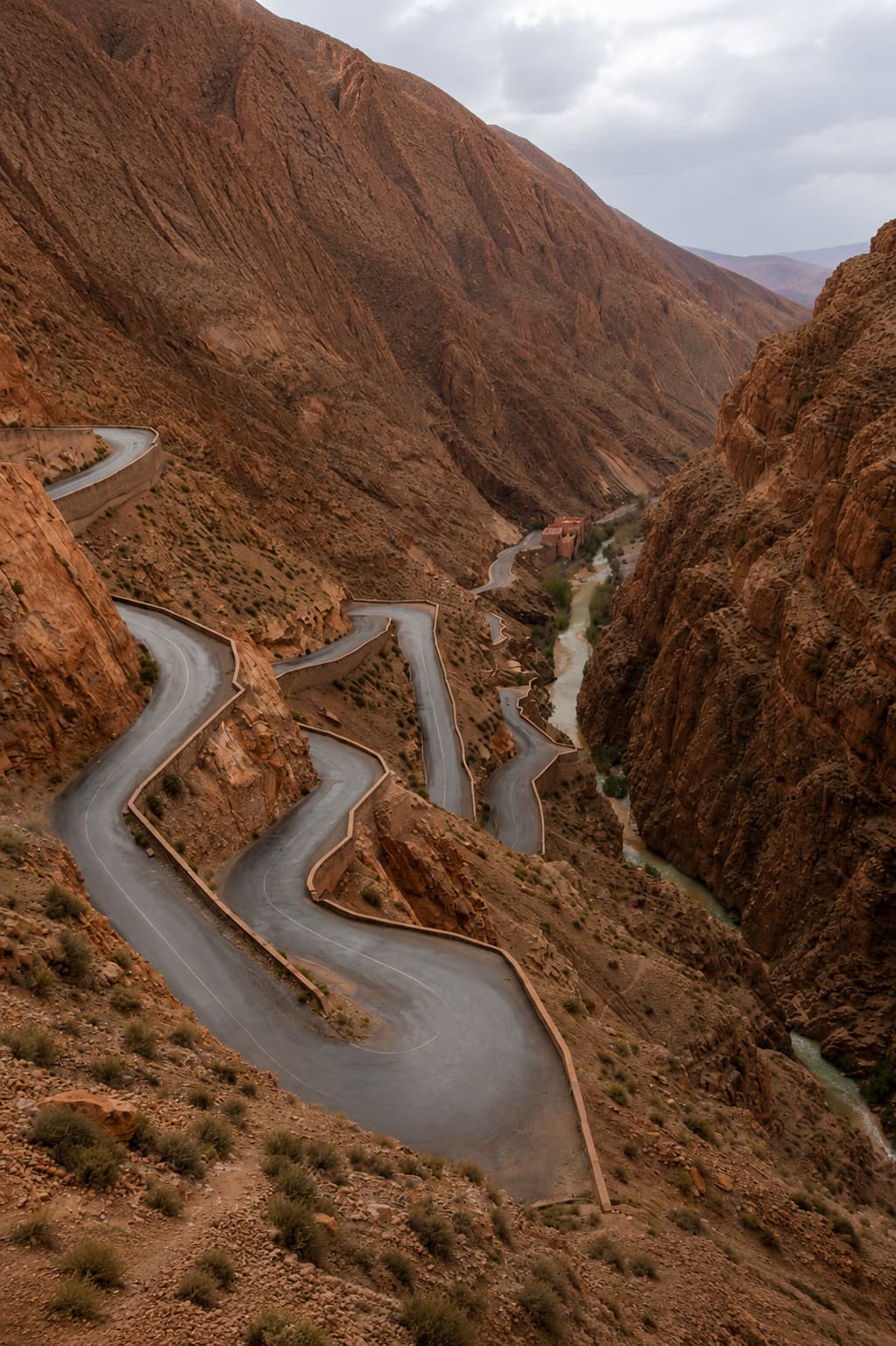
The Marrakech-to-Merzouga leg is the one that derails the most itineraries. At 560 kilometres via the Tizi n’Tichka pass — the highest major road pass in Morocco, climbing to 2,260 metres — the road is spectacular and genuinely slow. Non-stop driving takes 9–10 hours. In practice, with stops at Aït Ben Haddou and lunch somewhere along the Draa Valley, you are looking at a full 11–12 hour day from door to dunes.
From Fes, the situation is marginally better. The 470-kilometre route south through the Middle Atlas and the Ziz Valley takes 7–8 hours by car, making Fes the closer Sahara gateway. Even so, it still consumes a complete travel day. There is no version of getting to Merzouga and back that does not cost you two full driving days — one in each direction.
Why the Sahara Costs Three Full Days
That three-day toll is what makes the 7-day version of the Sahara so costly. Add the Sahara to a 7-day trip and you have four remaining days to cover Marrakech and Fes. That means one day in each city, which is sightseeing at a sprint, not travel. Consequently, the 7-day Morocco itinerary in this post deliberately omits the desert — not as a failure, but as a deliberate choice in favour of actually understanding the cities you visit.
03 — Is 7 Days Enough for Morocco?
Seven days is enough for Morocco if your Morocco is Marrakech, the High Atlas, and Fes. That is not a lesser Morocco — it is the one that gave most travellers their defining impression of the country long before Instagram decided Chefchaouen was a personality.
The 7-day Morocco itinerary, day by day
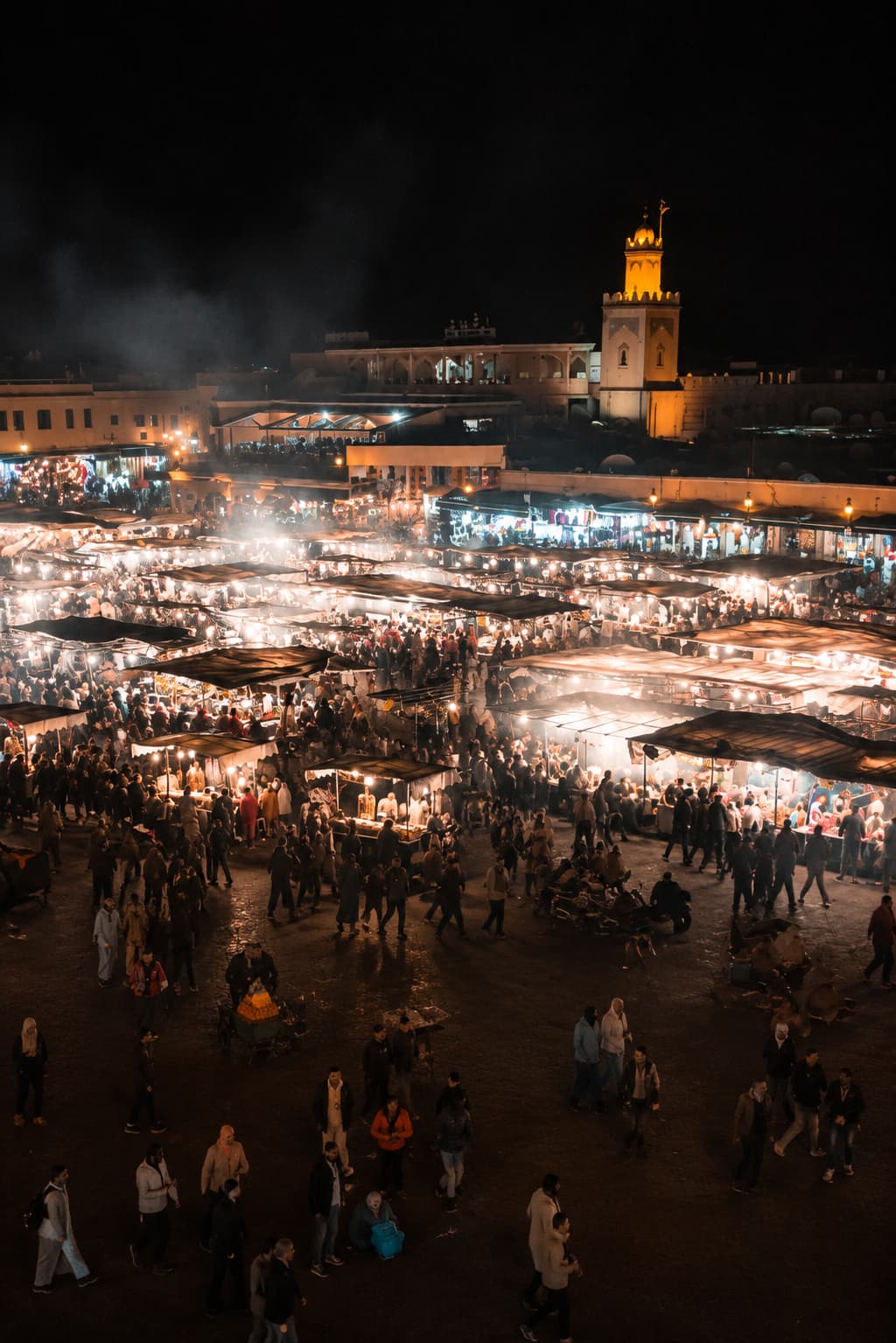
Arrive, check in, and do nothing ambitious. The medina at dusk is best experienced without an agenda on day one — let the Jemaa el-Fna square overwhelm you on your own terms before you try to navigate it.
Marrakech
The medina’s landmarks: Bahia Palace, the Saadian Tombs, the tanneries near Bab Debbagh. Afternoon in the souks. Book the Bahia Palace early in the morning before the crowds build. Allow the afternoon to be unplanned.
Marrakech
Hire a driver or join a day tour south over the Tizi n’Tichka pass to the UNESCO-listed ksar of Aït Ben Haddou — the mud-brick citadel that has appeared in more films than most actors. Return to Marrakech by evening. This is a long day (roughly 300 km round trip), but entirely manageable.
High Atlas
Days 4–7: Transfer to Fes and Departure
The direct Marrakech–Fes drive is 7–8 hours by road and not particularly scenic. Flying is strongly recommended — the route takes under an hour and costs from around €30–50 on RAM or Ryanair, saving a full day. If you drive, accept that today is a travel day only. Arrive Fes by evening.
Transit
Fes el-Bali is the world’s largest car-free urban area and one of the genuinely disorienting places on earth. Start at the Chouara tannery viewing terrace, then work your way through the medina toward the Bou Inania Madrasa. Accept that you will get lost. That is the point.
Fes
The Mellah (historic Jewish quarter) and the potters’ quarter near Bab Ftouh are quieter than the tourist circuit and worth the walk. Afternoon for the Nejjarine Museum of Wooden Arts and Crafts or a cooking class. Fes rewards a second day more than almost any Moroccan city.
Fes
Fly out of Fes-Saïss Airport (FES) for the cleanest exit, or catch the train to Casablanca and fly from Mohammed V International (CMN) if your connections suit. A morning departure gives you time for a final medina walk before heading to the airport.
Departure
Can you do the Sahara in a 7-day trip?
Technically, yes. Practically, it costs you everything else. Adding the Sahara to a 7-day itinerary means two full driving days (one down from Marrakech, one back out to Fes) plus the desert night — consuming three of your seven days. That leaves four days for two of the most layered cities in North Africa. Four days for Marrakech and Fes is a sprint, not a visit. Furthermore, the drive itself, particularly the Marrakech–Merzouga leg at 9–10 hours, is gruelling enough that you arrive at the dunes too depleted to enjoy them properly. The arithmetic is possible; the experience is not.
→
→
04 — Is 10 Days Enough for Morocco?
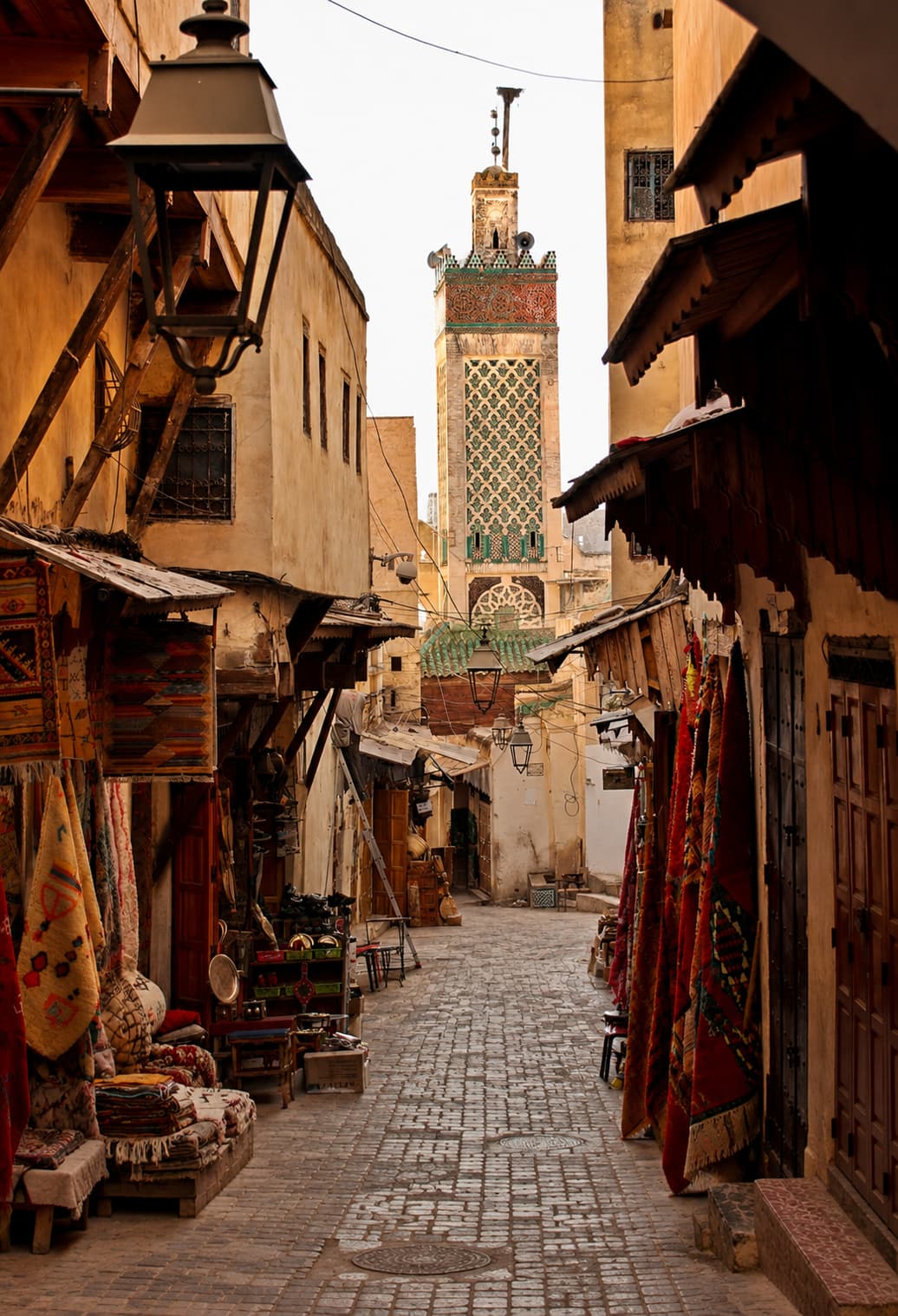
Ten days is the minimum that makes the Sahara worth including. It is not luxurious — two travel days still bookend the desert on either side — but it is enough to give the experience the room it deserves rather than bolting it onto a sprint.
The 10-day Morocco itinerary, day by day
Same as the 7-day start: arrive, resist the urge to immediately sightsee, let the city absorb you gradually. The square after dark is worth doing before the rest of the medina.
Marrakech
Bahia Palace, Saadian Tombs, Ben Youssef Madrasa, the souks. A full day in the medina. Book the Saadian Tombs first thing — it is the most visited site in the city and queues build fast after 9am.
Marrakech
This is the start of the desert loop. Cross the Tizi n’Tichka pass, stop at Aït Ben Haddou (1–2 hours), continue to Ouarzazate for lunch, then drive east along the Road of a Thousand Kasbahs to the Dades Gorge — one of the more dramatic overnight stops in Morocco. Roughly 7–8 hours total.
Atlas → Dades
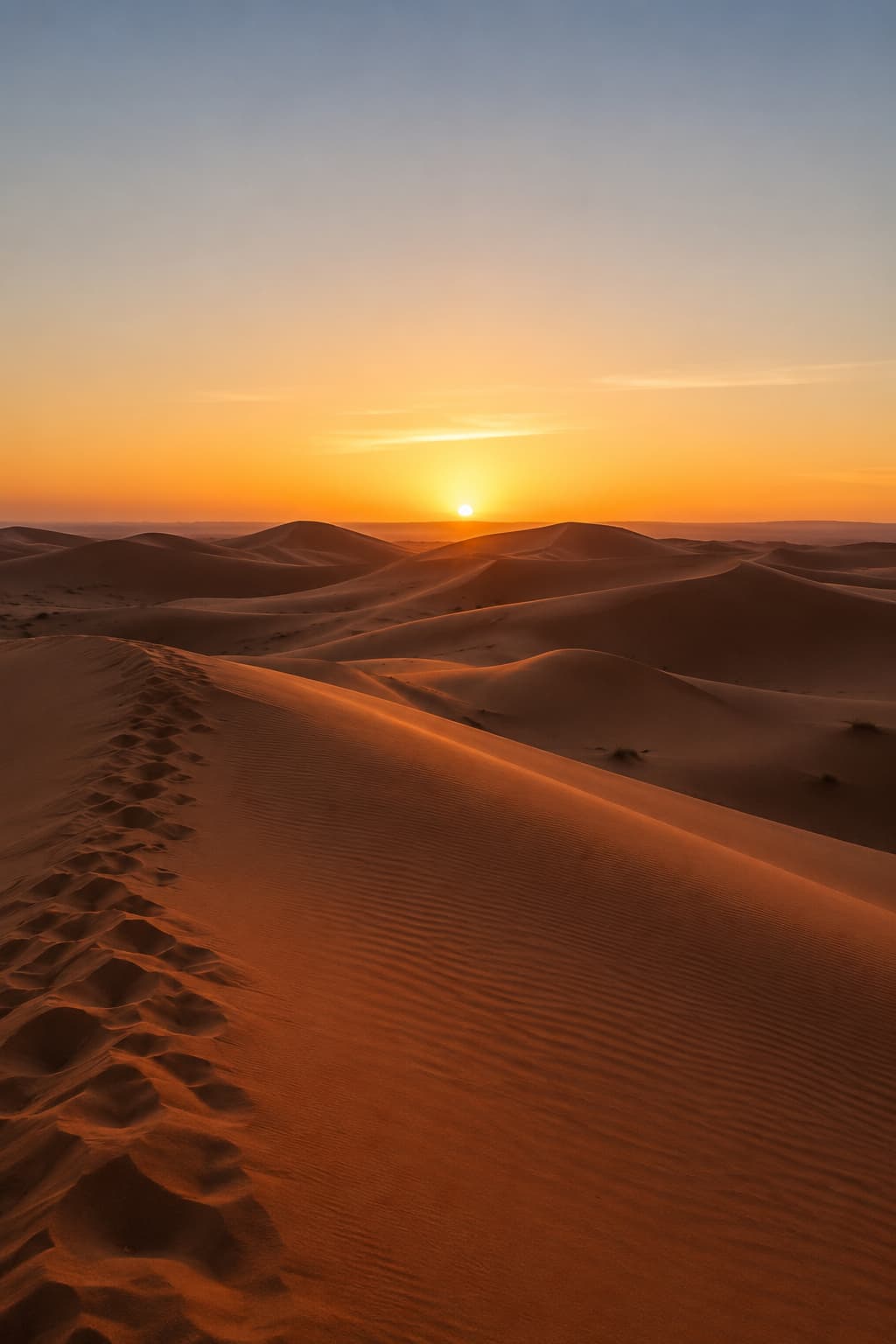
Morning walk in the Todra Gorge — 300-metre limestone walls that narrow to less than 10 metres — then continue southeast to Merzouga and the Erg Chebbi dunes. Arrive in the late afternoon in time for a sunset camel trek into the dunes to your camp for the night.
Todra → Merzouga
Wake before dawn, climb a dune for sunrise — this is the moment the whole route builds toward. After breakfast at camp, begin the long drive north toward Fes via Midelt and the Ziz Valley. The Fes–Merzouga drive is 7–8 hours; aim to stop overnight in Midelt or Azrou if you want a less brutal day. Otherwise accept a long one.
Sahara → North
Days 6–10: Fes and Departure
If you drove straight from Merzouga, you arrive into Fes tired. Give yourself the afternoon to settle and make one gentle foray into the medina — the Bab Bou Jeloud gate at dusk is a good first impression. Tomorrow is for serious exploration.
Fes
Full day in the medina. The tannery viewing terraces above the leather-dyeing vats are the iconic image — arrive early to avoid the worst of the crowds. The medina is genuinely overwhelming; consider hiring a local guide for a morning to gain bearings before going solo in the afternoon.
Fes
The Mellah district, the Andalusian quarter across the river, the potters at Bab Ftouh. By day two you will navigate the medina with something approaching confidence. Morning at the Nejjarine fountain and museum, afternoon wherever the city takes you.
Fes
Days 9–10: Meknes, Volubilis and Departure
Meknes is 60 kilometres from Fes — an easy day trip that adds one of Morocco’s imperial cities and the nearby Roman ruins of Volubilis, the most intact Roman site in North Africa. Alternatively, a slower second day in Fes for those who want depth over breadth.
Meknes / Volubilis
Fly out of Fes (FES) for the simplest exit, or take the train to Casablanca if your international connections run through CMN. The Fes–Casablanca train runs roughly every two hours and takes about 3.5 hours — a reasonable option if you want to see something of Casablanca before departing.
Departure
→
→
→
→
Why Marrakech → Fes beats the reverse direction
The logic of west-to-east is partly practical and partly experiential. Flying into Marrakech (RAK) and out of Fes (FES) or Casablanca (CMN) saves you a full backtrack day — open-jaw flights on this corridor are common and often no more expensive than a return. Additionally, Marrakech eases you into Morocco gradually: it is more touristy, more fluent in European visitor expectations, and has better infrastructure for hitting the ground running. By contrast, Fes rewards travellers who are already comfortable with the country. Arriving in Fes first and leaving through Marrakech works on paper, but you lose the open-jaw advantage and tend to find Fes overwhelming on day one.
05 — Should You Start in Marrakech or Fes?
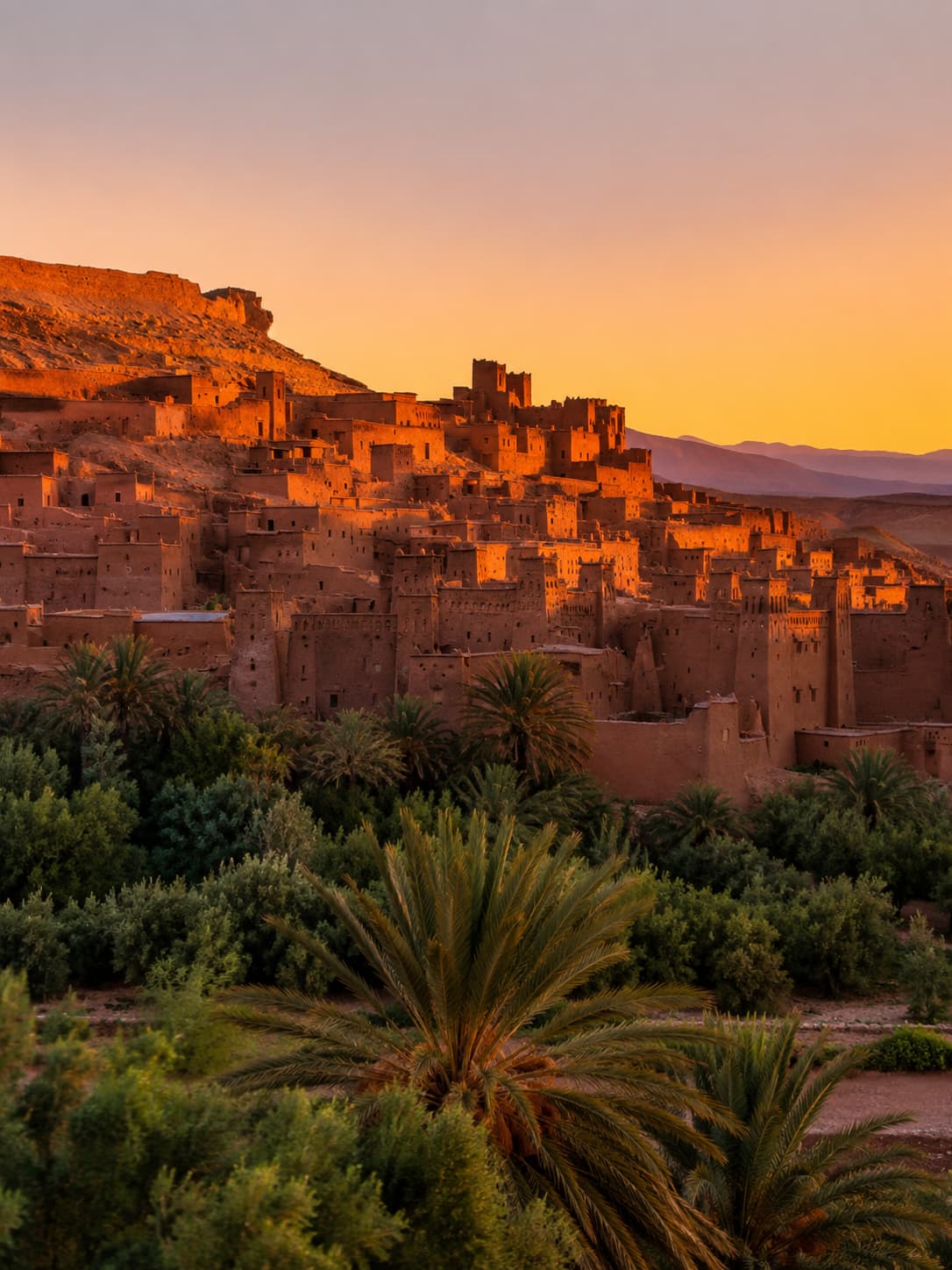
For routing purposes: start in Marrakech, end in Fes. That direction works with the geography rather than against it.
The strongest practical case for Marrakech-first is the open-jaw flight. Flying into Marrakech Menara Airport (RAK) and out of Fes-Saïss (FES) or Casablanca Mohammed V (CMN) is a widely available routing on European carriers and typically costs no more than a return to one city. That single flight choice buys you an additional full day — the day you would otherwise spend driving or flying back to your entry point.
If your schedule requires a return to Marrakech, flying between the two cities (roughly 45 minutes, often under €50) is far preferable to the 7–8 hour drive, which offers little scenic reward compared to the southern circuit route. The direct Marrakech–Fes road is motorway-dominated and dull. Save the driving for the routes that deserve it. A full city comparison is in the dedicated Marrakech vs Fes post.
06 — What About Chefchaouen?
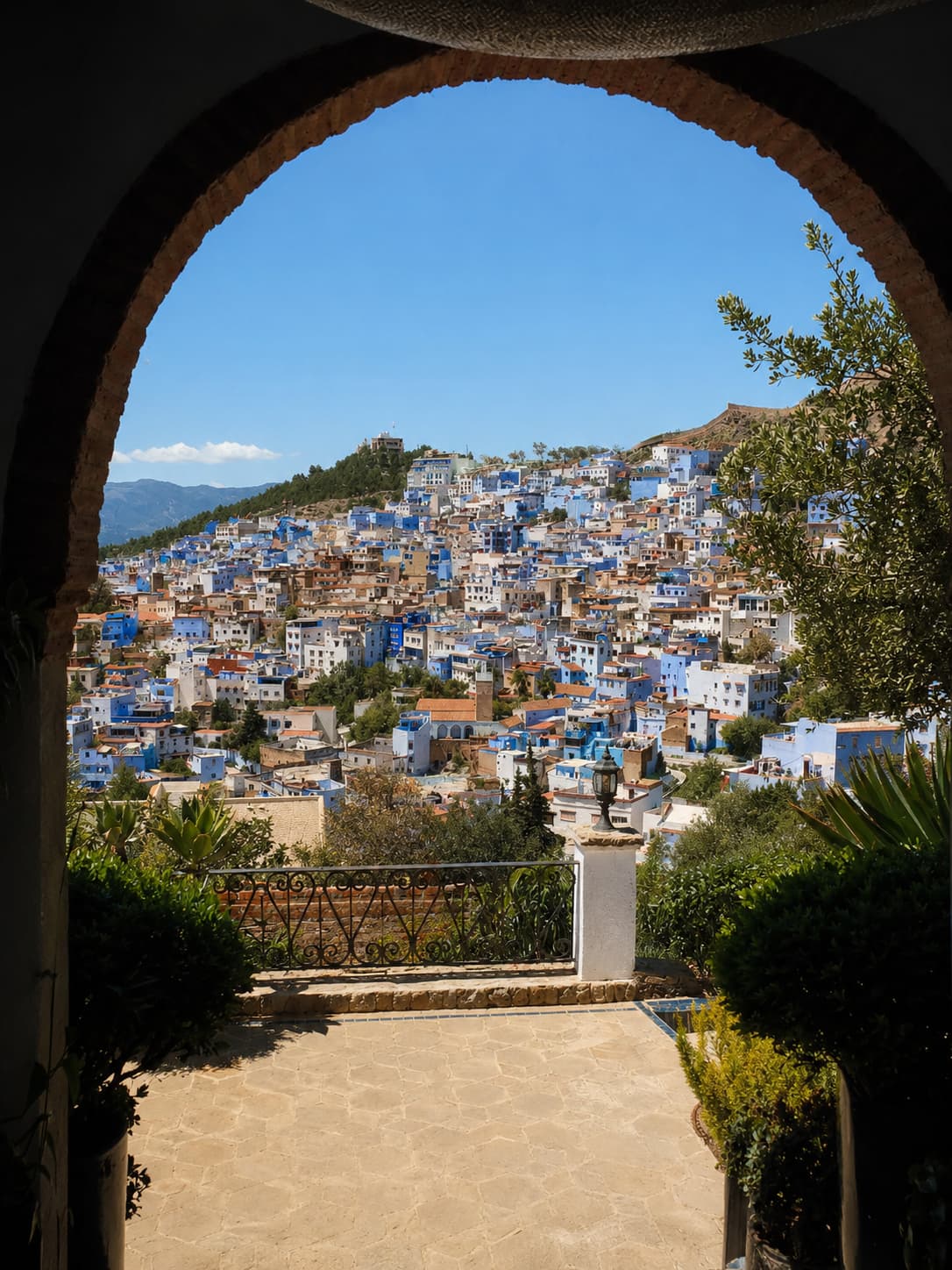
Chefchaouen deserves an honest routing assessment rather than the Instagram-adjacent enthusiasm it usually receives. The blue-painted medina is genuinely beautiful. However, it sits roughly 3.5 to 4 hours north of Fes — and critically, it does not loop back into either the 7-day or 10-day circuits described above.
Adding Chefchaouen to either itinerary means a dedicated out-and-back detour from Fes, or extending the trip north after Fes before flying out of Tangier or Tetouan. Either way, you need a minimum of two to three additional days to visit Chefchaouen meaningfully — one day to travel up, a full day in the blue medina, and one day to travel back or onward. Tacking it onto a 7-day trip as “just a quick stop” reliably results in arriving exhausted and leaving before you have seen anything beyond the Uta el-Hammam square.
The sensible approach: treat Chefchaouen as an extension that turns a 10-day Morocco itinerary into a 12 to 13-day trip, not as an add-on you squeeze into existing time. Its charm is in wandering slowly through the pale-blue alleyways at 7am before anyone else is up. That requires staying the night, which requires time. The fuller case for when it is and is not worth the detour is in the dedicated post on whether Chefchaouen is worth visiting.
Only add Chefchaouen if you have 12+ days total. With 10 days, the choice is Chefchaouen or the Sahara — not both. Most travellers who have done both prefer the Sahara. Chefchaouen is beautiful; the Sahara is unrepeatable.
07 — Tour, Driver, or Self-Drive?
For the cities — Marrakech and Fes — independent travel is both practical and preferable. Both medinas are walkable, riads are plentiful at every price point, and the experience of navigating them on your own is a significant part of what makes them memorable.
For the desert circuit, the calculation shifts. The southern route from Marrakech to Merzouga via the High Atlas and Draa Valley covers terrain that is rewarding to travel with local knowledge — the right stops, the better lunch spots, the access roads that Google Maps treats as adequate when they are not. Three realistic options exist:
Shared Tour, Private Driver, or Self-Drive?
The most affordable option. Shared 3-day tours from Marrakech to Merzouga typically run from €95 to €120 per person and include transport, a guesthouse overnight, the desert camp, a sunset camel trek, and most meals. The trade-off is pace — stops are set, group size varies (usually 6–15 people), and the experience is structured. Best for solo travellers and budget-conscious pairs who do not mind company.
The sweet spot for most travellers. A private driver handles navigation, speaks both Arabic and French (and often English), and can adapt the route in real time. Pricing is typically quoted per vehicle — figure €195–300+ per person for a private 3-day trip, dropping significantly if split across 2–4 travellers. This format also doubles as a cultural resource: a good Moroccan driver-guide is better value than any guidebook.
Possible, and genuinely rewarding for experienced drivers. The main roads are paved and generally well-maintained; the Tizi n’Tichka pass is winding but not technically difficult. The challenge is navigation outside GPS signal, driving norms that differ from European expectations, and the recommendation never to drive after dark on desert routes due to animals on the road. A regular car handles all paved routes; 4×4 is only required for off-road dune excursions at Merzouga itself.
What About Sahara Camp Quality?
On the question of Sahara camp quality: the gap between a basic shared camp and a mid-range private camp is significant and worth researching before you book. That selection process — what separates a good desert camp from a disappointing one — is covered in the dedicated guide to Merzouga vs Zagora vs Erg Chigaga. Entry requirements are worth checking before you travel via the UK Foreign Travel Advice for Morocco or your country’s equivalent.
Frequently Asked Questions
Best Time and Transport for a Morocco Itinerary
Self-Drive and Planning Questions
Chefchaouen and the Agafay Desert
Go with 10 days if you possibly can. Go with 7 without apology if you cannot.
Just do not build the 7-day trip that pretends to be a 10-day one — that version disappoints everyone.