
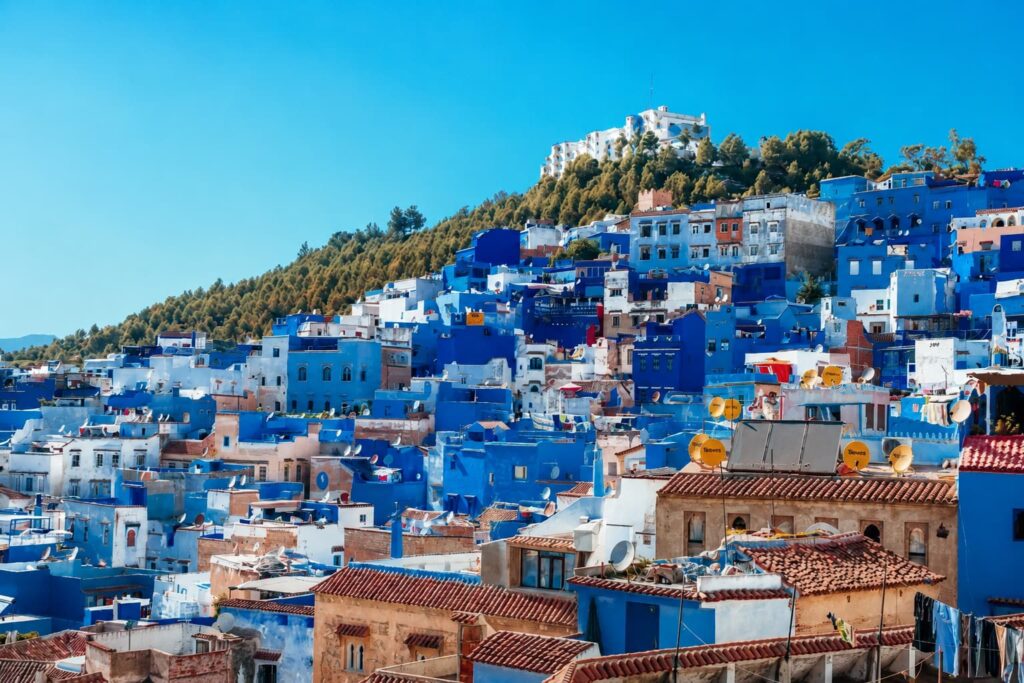
Is Chefchaouen Worth Visiting? An Honest Answer
The most photographed town in Morocco — and the least honestly described. Whether Chefchaouen is worth the detour depends almost entirely on where you’re starting from and how long you’re willing to stay.
Why Chefchaouen Needs an Honest Answer
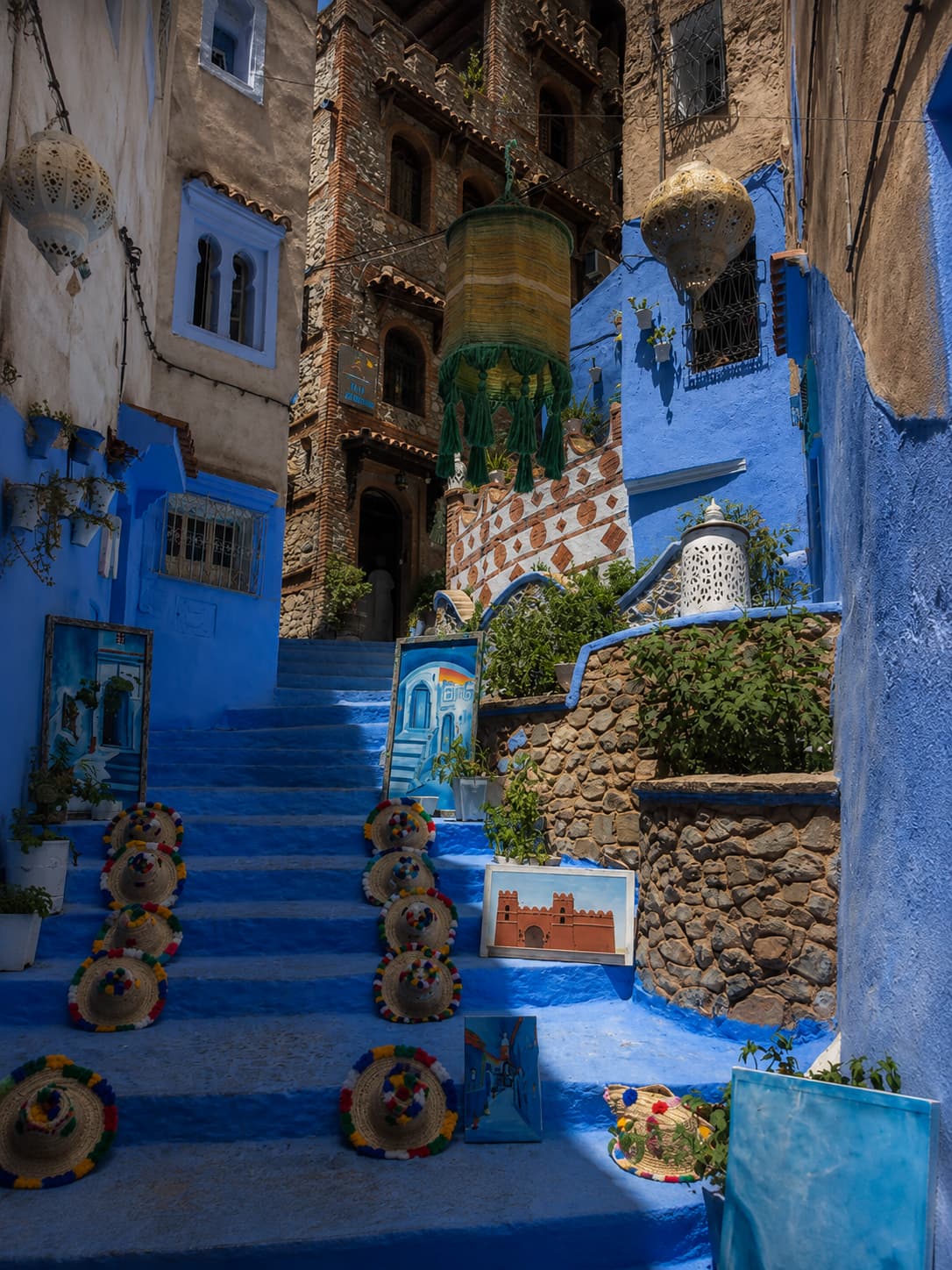
Is Chefchaouen worth visiting? Every travel feed in existence will tell you yes, usually accompanied by the same cobalt stairway shot and a string of adjectives that mean nothing. The honest answer is more conditional than that — and far more useful. Chefchaouen is a small mountain town in Morocco’s Rif range, genuinely beautiful in parts, genuinely overhyped in others, and worth the trip only if your routing and expectations are calibrated correctly.
In practice, this post breaks down the real verdict by where you’re starting from, how the town actually looks beyond the curated angles, and the one practical strategy that separates the Instagram version from the tourist-trap version. If you’re building a broader Morocco trip, the full guide to the best places to visit in Morocco covers how Chefchaouen fits — or doesn’t — into the bigger picture.
01 — Is Chefchaouen Worth Visiting? The Short Answer
The worth-it question for Chefchaouen is almost entirely a function of geography. Not the town’s geography — yours. Where you’re starting from determines whether the detour costs you a manageable half-day or an entire trip segment, and that cost is the real variable nobody frames clearly.
From Tangier or Tetouan — yes, with little hesitation
If you’re arriving in Morocco through Tangier or spending time along the northern coast, Chefchaouen sits roughly 1.5 to 2.5 hours away by road. At that distance, the routing cost is low enough that the question almost answers itself. You can drive or bus there in a morning, stay one night, explore the medina at dawn before the day-trippers arrive, and continue south without losing meaningful time. For a northern Morocco circuit, Chefchaouen is a natural stop rather than a forced detour.
From Fes — yes as an overnight, no as a day trip
Fes sits roughly four hours from Chefchaouen by CTM bus, with no train connection and no shortcut. As an overnight — ideally two nights — the arithmetic works. You absorb the travel time once in each direction, arrive in the afternoon, get the empty medina at sunrise the next morning, and leave having seen the version of the town that justifies the trip. As a day trip, however, you’re looking at eight to nine hours of round-trip travel for roughly four to five hours in the town, most of them during peak day-tripper chaos. That equation does not balance.
From Marrakech or the southern circuit — not on a first trip
Marrakech is seven-plus hours from Chefchaouen by road, with no direct bus worth taking. Adding Chefchaouen to a southern-circuit itinerary means committing two to three extra days that don’t loop back — days better spent on the Atlas, the coast, or the desert on a first visit. This isn’t a knock on the town. It’s routing math. If your trip is ten days or fewer and you’re starting from the south, Chefchaouen is the destination most likely to cost you something better. On a longer second trip that includes the north by design, the calculation changes entirely. The 7 vs 10-day Morocco itinerary lays out why the northern loop only fits certain trip lengths.
So is Chefchaouen worth visiting from every starting point? No. Is it worth visiting under the right conditions? Absolutely — and those conditions are what the rest of this post maps out.
02 — What Chefchaouen Actually Looks Like (Beyond the Photos)
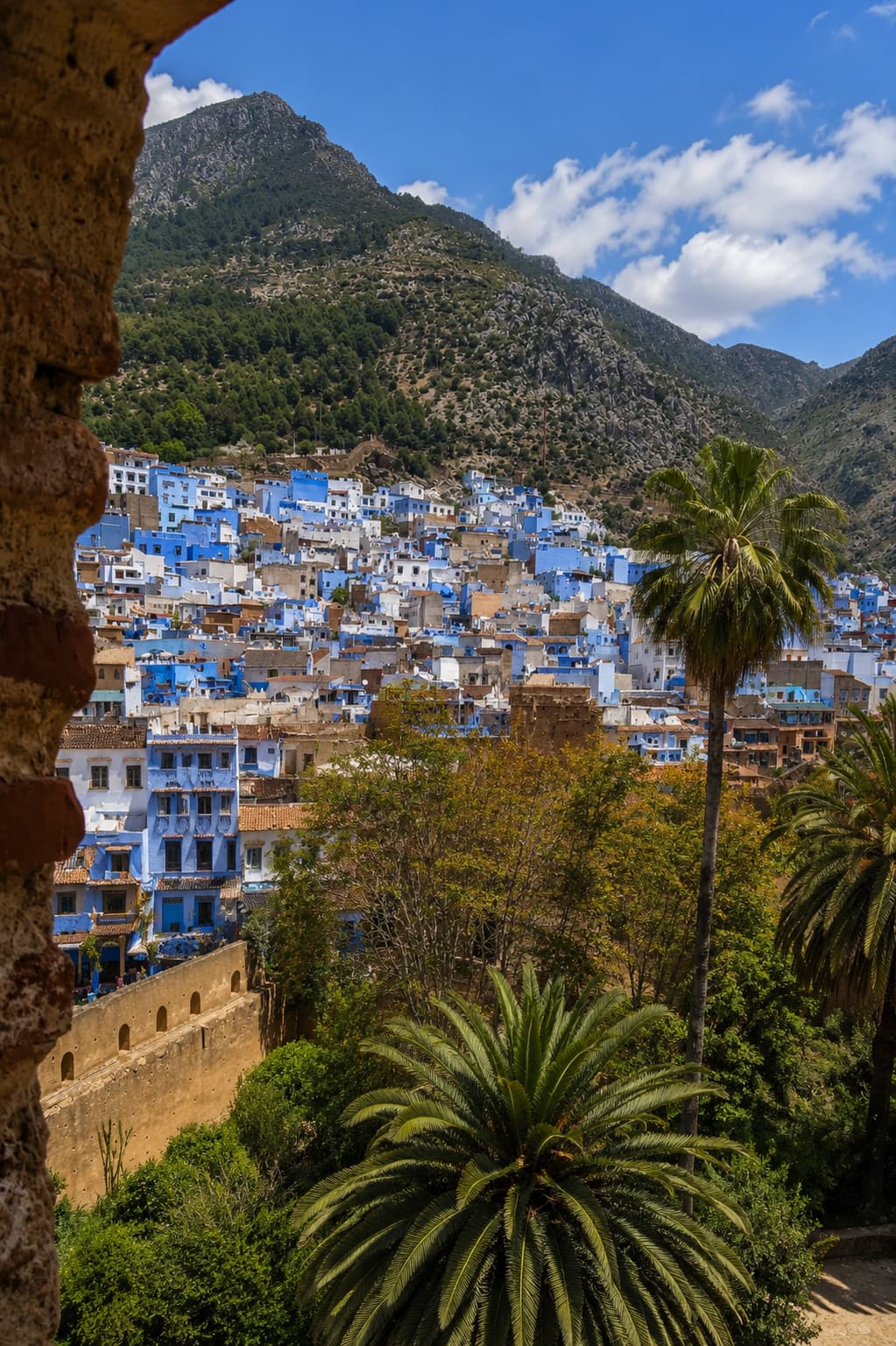
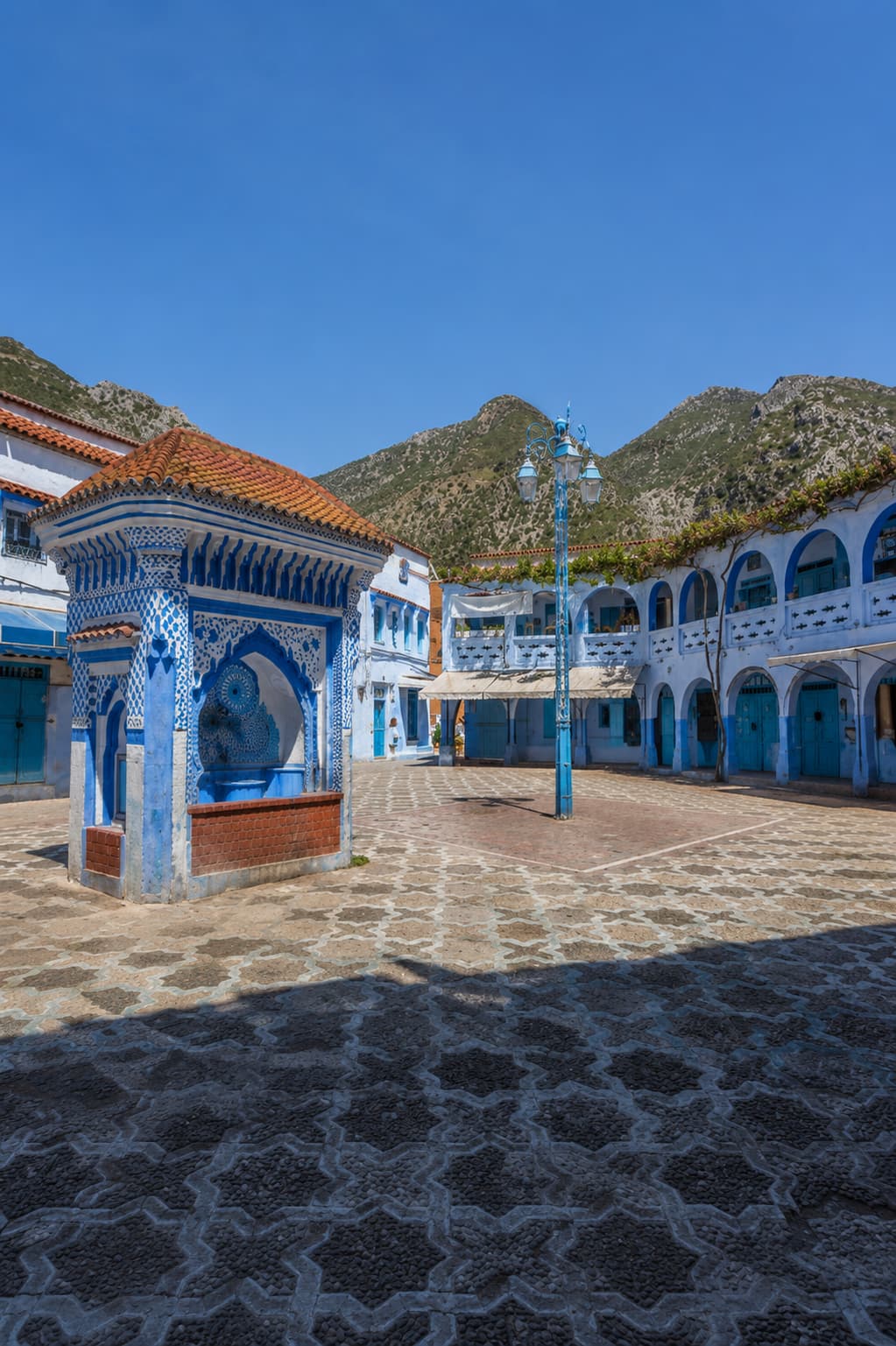
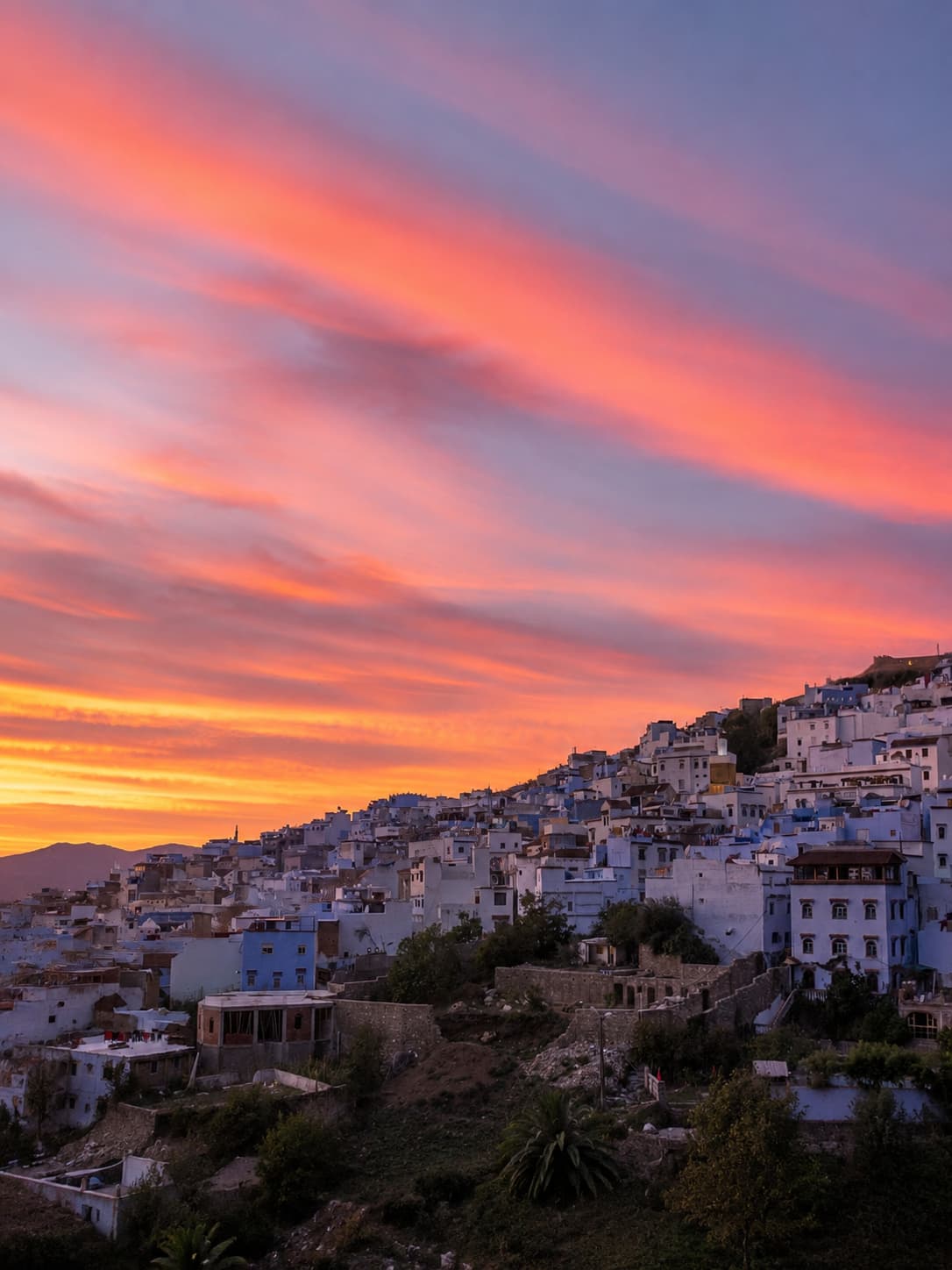
At first, every photograph of Chefchaouen prepares you for the colour. What no photograph communicates is the scale — and scale is part of why the answer to “is Chefchaouen worth visiting” depends so much on expectations. This is a small town — a two-square-kilometre medina on a mountainside, with a central square (Place Outa el-Hammam), a 15th-century Kasbah, and a waterfall (Ras el-Maa) at the eastern edge where the medina meets the mountain. You can walk end to end in twenty minutes. On a second day, you will walk the same streets, and that’s not a failure of planning — it’s the size of the place.
What the photos do undersell is the setting. Chefchaouen sits at roughly 600 metres in the Rif Mountains, and the green slopes that frame the town are more impressive in person than the blue walls themselves. The air is cooler than the coast or the interior plains. In the evenings, the temperature drops enough for a jacket, even in summer. It feels, in an unexpected way, more like a Mediterranean mountain village than a Moroccan medina — a product of the Andalusian refugees who shaped its architecture after the fall of Granada.
Why is Chefchaouen painted blue?
You will hear several explanations, and none of them is definitively confirmed. The most commonly cited theory attributes the blue-washing to Jewish refugees from the 1930s, for whom blue symbolised the sky and the divine. Other explanations include mosquito deterrence (the theory that blue paint repels insects, which has limited scientific support) and, more recently, tourism-driven repainting to maintain the town’s marketable look. What older residents and local historians generally agree on is that the blue was originally concentrated in the mellah — the Jewish quarter — and only spread to the wider medina in the second half of the 20th century.
Crucially, the blue quarter covers roughly a third of the town, not all of it. The most photographed alleys are concentrated in a few streets near the main square and the Kasbah. Step outside that core and you’ll find plenty of white walls, unpainted stone, and ordinary Moroccan residential streets. This isn’t a flaw — it’s just the gap between the curated feed and the actual place.
03 — Is Chefchaouen a Tourist Trap?
The backlash camp calls Chefchaouen a staged set. Meanwhile, the hype camp calls it a fairy tale. Both are partly right, and the difference between the two experiences is almost entirely a question of timing.
What the “tourist trap” criticism gets right
Day-tripper buses from Fes and Tangier typically arrive between mid-morning and noon. By 11am on a busy day, the most photographed alleys have queues — not for an attraction, but for the chance to take a photo in front of a blue wall without another tourist in the frame. Hash is offered within minutes of entering certain streets, persistently and to everyone regardless of interest. Shop owners in the main drag are practiced at the hard sell. None of this is unique to Chefchaouen — it’s the standard friction of any small Moroccan town that’s absorbed more tourism than its infrastructure was designed for — but it’s real, and pretending otherwise does nobody a favour. The things to know before visiting Morocco guide covers the hassle factor across the country in more detail.
What the backlash camp misses
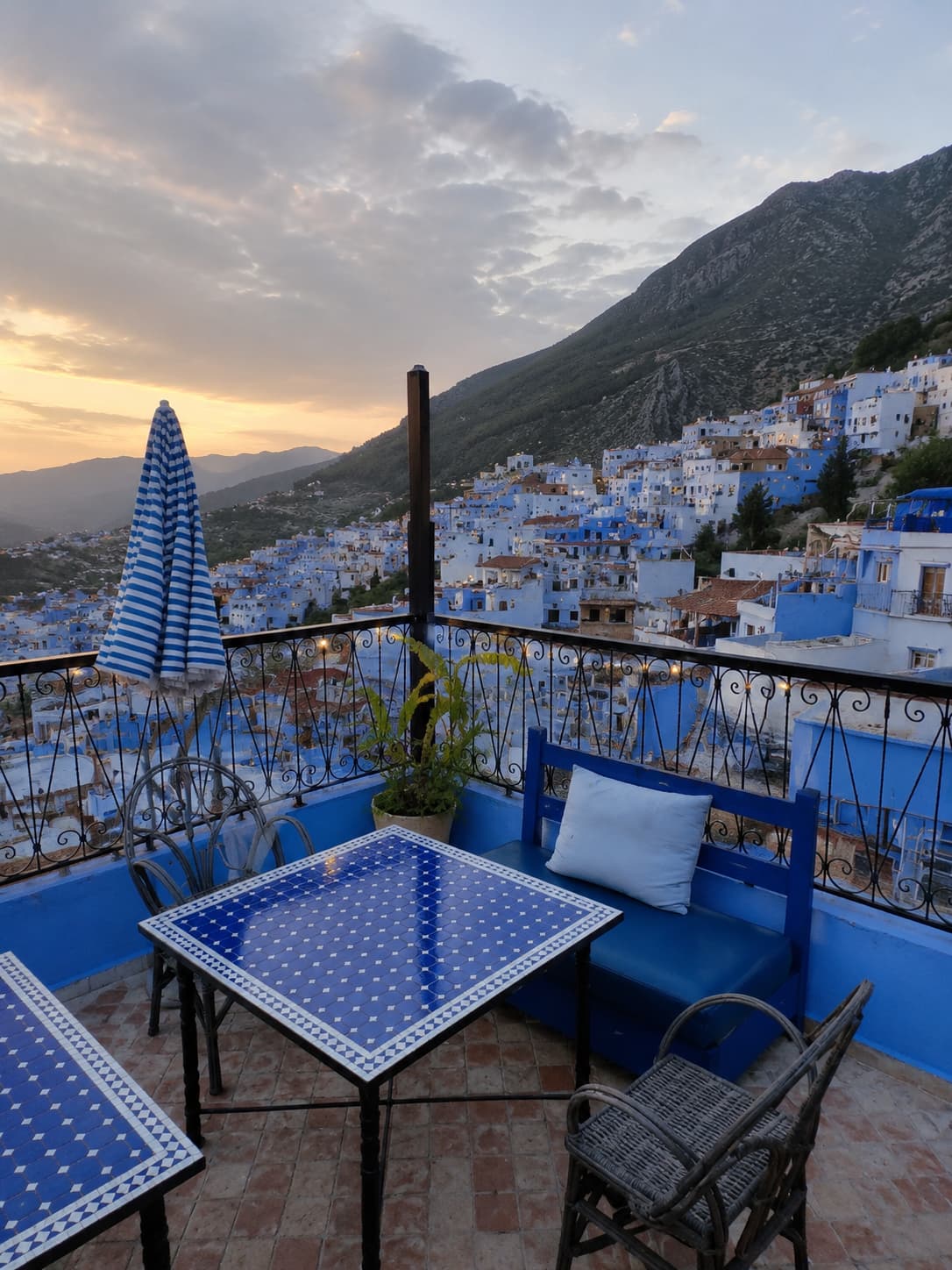
Day-tripper buses leave by late afternoon. By sunset, the medina belongs to overnight guests and residents again. In the evening, the main square fills with locals, not tour groups. And in the early morning — before 9am, before the first bus arrives — the town is genuinely, almost startlingly quiet. Low warm light fills the alleys. Empty lanes replace the midday crowds. The blue walls, without twenty people posing in front of them, look the way they’re supposed to look. This is the version of Chefchaouen that earns the trip, and it only exists for overnight visitors willing to set an alarm.
So is Chefchaouen worth visiting, or is it a tourist trap? At midday, in peak season, standing in a queue to photograph a staircase — it can feel that way. By dawn, sitting on a rooftop terrace watching the Rif Mountains catch the first light — it doesn’t feel like that at all. Stay overnight, wake up early, and give the middle of the day to a long lunch or a nap. The town rewards that rhythm more than almost any other place in Morocco.
04 — Day Trip or Overnight — How Many Days Do You Need?
In short, one to two nights covers Chefchaouen thoroughly. That’s not a diplomatic answer — it’s the honest ceiling. The medina is small enough to walk completely in a single morning. A second day repeats the same streets, which is fine if you’re the kind of traveler who likes sitting still in a beautiful place, but it won’t reveal a hidden second layer of things to do. Two nights is the sweet spot for most people: you arrive in the afternoon, get the evening square, wake for the 7am medina, spend the second morning at a slower pace, and leave after lunch.
One night works if you’re on a tighter schedule, especially coming from the north. You sacrifice the second morning but keep the crucial early-morning window on your first full day. Anything beyond two nights starts to feel long unless you’re combining the town with hiking in Talassemtane National Park or a day trip to the Akchour waterfalls.
Is Chefchaouen worth visiting as a day trip from Fes?
Technically, yes — you can do it. The CTM bus departs Fes around 8am and arrives in Chefchaouen roughly four hours later, around noon. Return options leave between early and late afternoon, putting you back in Fes by evening. In that window, you get four to five hours in the town — the busiest, most crowded, least representative hours. You also get eight to nine hours on a bus, much of it on winding Rif Mountain roads that are not comfortable for motion-prone travelers.
A private driver compresses the transit time to about three hours each way and adds the option to stop at Volubilis and Moulay Idriss on the route, which genuinely improves the day. Even so, the fundamental problem remains: a day trip delivers the midday version of Chefchaouen and nothing else. If a day trip is all you can manage, it’s better than skipping the town entirely. However, the version of Chefchaouen that earns the praise — the empty early-morning medina, the sunset from a rooftop — requires spending the night.
05 — How Do You Get to Chefchaouen?
Logistically, Chefchaouen has no train station and no nearby airport. The nearest practical connections are buses and shared taxis from Fes, Tangier, and Tetouan. This remoteness is both the town’s charm and its main logistical challenge — there is no quick, elegant way to get there from the south. Understanding the transport realities before you go is part of deciding whether Chefchaouen is worth visiting on your particular trip.
| Route | Transport | Duration | Cost (approx.) |
|---|---|---|---|
| Tangier → Chefchaouen | CTM bus | ~2.5–3 hours | 100–120 MAD ($10–12) |
| Tetouan → Chefchaouen | Grand taxi | ~1.5 hours | 50–80 MAD ($5–8) |
| Fes → Chefchaouen | CTM bus | ~4–4.5 hours | 120–150 MAD ($12–17) |
| Fes → Chefchaouen | Grand taxi | ~3.5 hours | 150–200 MAD per seat |
| Fes → Chefchaouen | Private driver | ~3–3.5 hours | 800–1,500 MAD (whole car) |
Bus logistics worth knowing
For most travelers, CTM is the most reliable bus operator on every route into Chefchaouen. Buses are air-conditioned, reasonably comfortable, and make one rest stop en route from Fes (usually near Ouazzane). Book your tickets as early as possible — this route sells out regularly in spring and summer, and showing up at the station on the morning you want to travel is a genuine risk. Tickets can be booked online through ctm.ma.
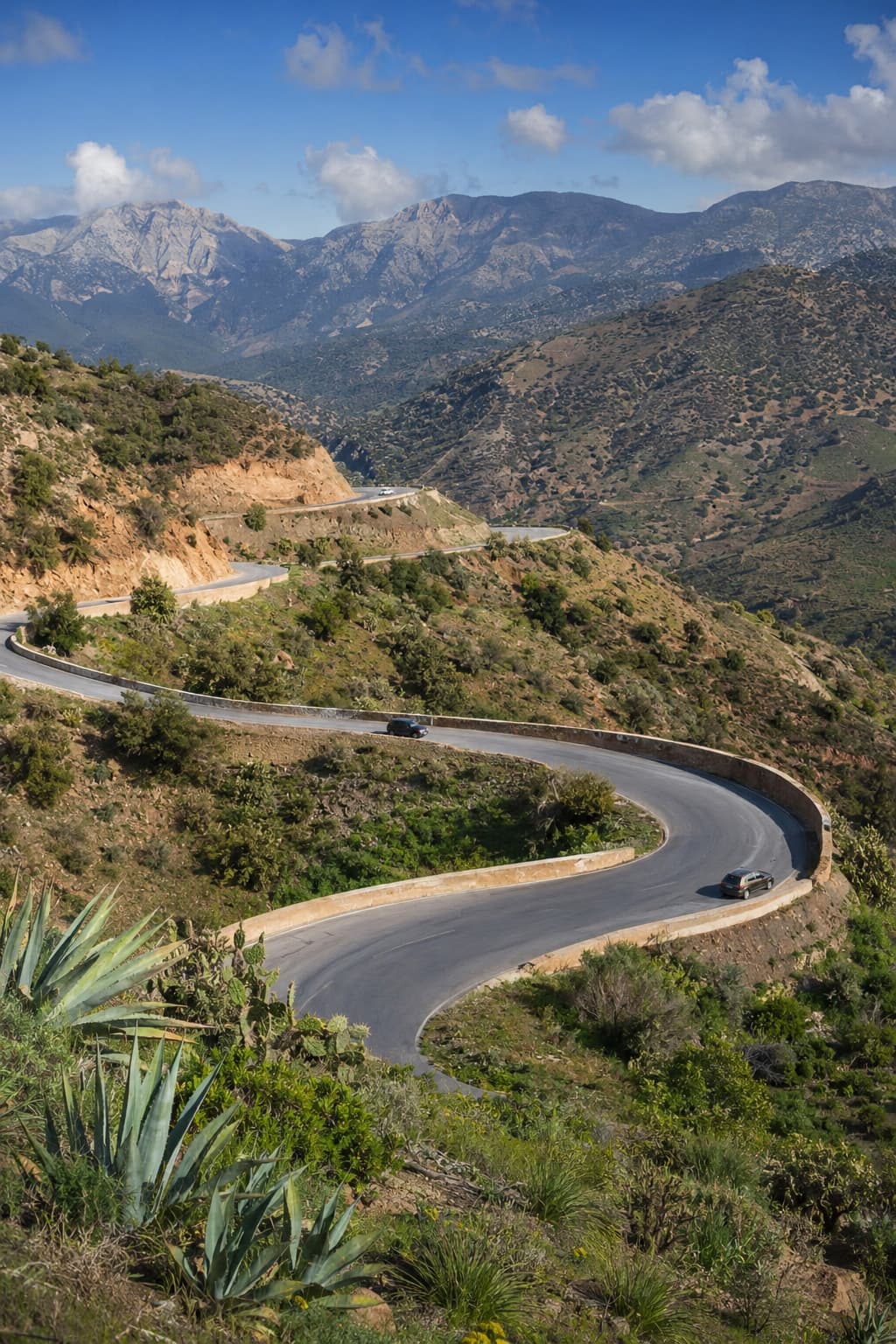
One detail that catches people off guard: Chefchaouen’s bus station sits above the medina on a hillside. The walk down is steep, roughly fifteen minutes with luggage on uneven ground. If you arrive tired or with heavy bags, a petit taxi from the station to the medina gate costs around 10–15 MAD — worth it. In the other direction, heading back uphill to the station, that taxi becomes less optional.
The private driver option
From Fes, a private driver cuts the travel time to around three hours and adds genuine flexibility. Most travelers pair it with a stop at Volubilis (the Roman ruins) and the hilltop town of Moulay Idriss on the way — two sites that are difficult to reach by public transport and worth seeing on their own terms. Expect to pay 800 to 1,500 MAD for the whole car, which splits well between two or more travelers. Your riad in either city can usually arrange this.
Chefchaouen FAQ
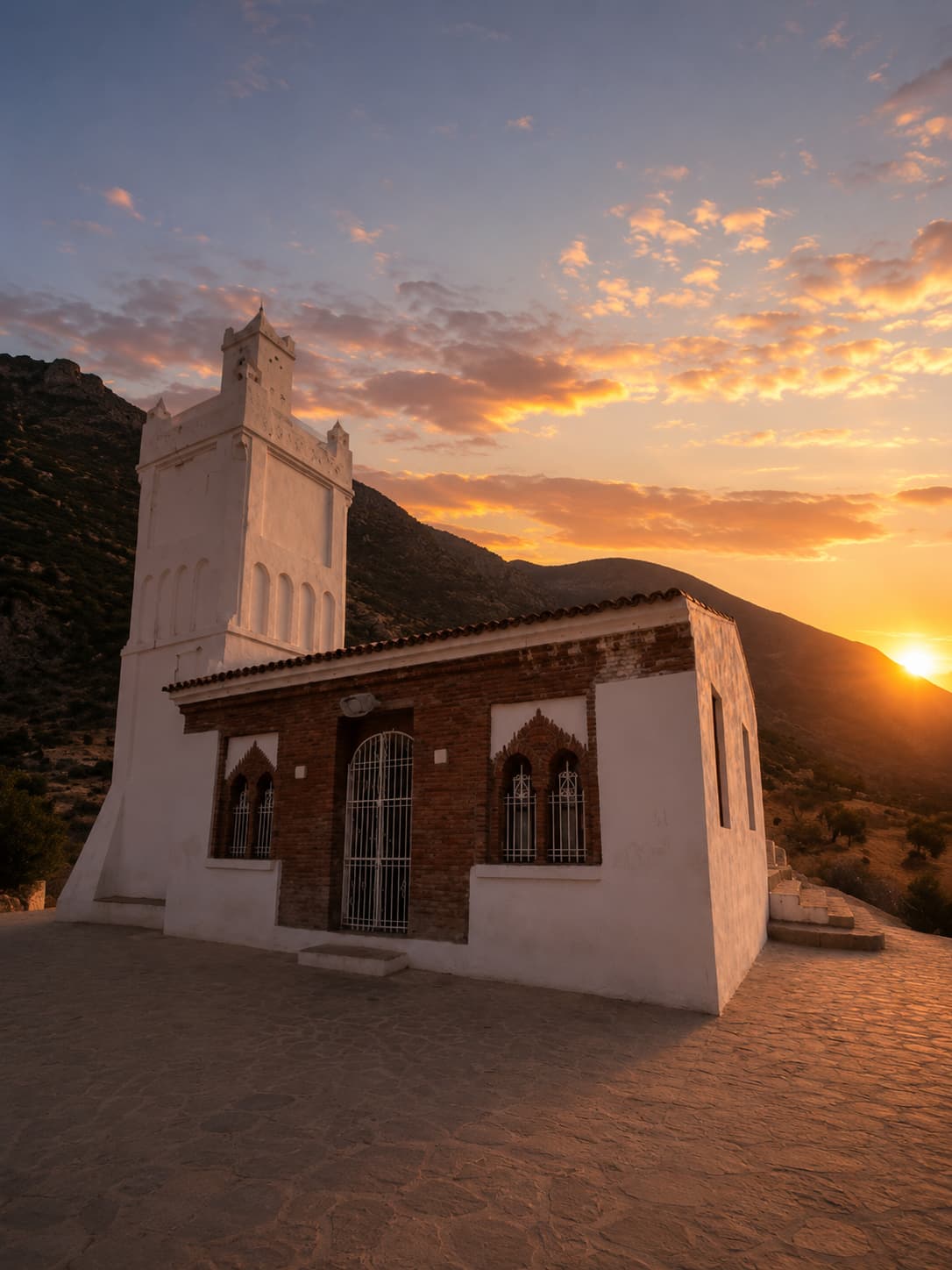
Not an enormous amount — and that’s the point. The Spanish Mosque viewpoint, a twenty-minute uphill walk from the medina, gives the best panorama of the town, especially at sunset. Ras el-Maa, the small waterfall at the eastern edge of the medina, is atmospheric rather than dramatic. Meanwhile, the Kasbah museum is modest but worth it for the rooftop view.
Beyond the medina, Talassemtane National Park offers proper hiking, and the Akchour waterfalls are a popular day trip. However, Chefchaouen is not really a sightseeing-list destination. It is a place for sitting still, eating well, and watching the light change. For northern food details, the honest Morocco food guide covers specialties like goat cheese and pastilla.
Chefchaouen Compared With Other Morocco Stops
Go if the north is already in your trip, or if you’ll give Chefchaouen the two days it costs to see properly. Skip without guilt if it means rushing the south. Is Chefchaouen worth visiting? Under the right conditions, without question. The blue city isn’t going anywhere — and it’s better when you’re not in a hurry to get there.