Switzerland in Winter Without Skiing: Where to Go and What to Actually Do
Planning a trip to Switzerland in winter without skiing? The country has thermal pools at altitude, mountain railways that run all season, and cities that look genuinely extraordinary under snow — no lift pass required.
Why Switzerland Works in Winter Without Skiing
Switzerland in winter without skiing is not a compromise. Most people assume it must be, because the country in December and January is so visibly oriented around ski culture — the train stations have ski racks, the tourist boards lead with lift passes, the resorts price everything around the assumption that you have one. However, step outside that frame and a completely different trip comes into focus: one built on mountain railways that reach 3,400 metres, outdoor thermal pools surrounded by snow peaks, centuries-old wooden bridges wearing winter frost, and a toboggan run six kilometres long that requires no skill whatsoever.
The question most people are actually asking when they search this topic is not “what can I do” but “is it worth it” — specifically, is Switzerland worth the considerable expense in winter if you’re not skiing? That is a fair question, and the honest answer is yes, with one important caveat about where you sleep.
01 — Can Non-Skiers Actually Enjoy Switzerland in Winter?
The direct answer is yes — but the experience depends heavily on understanding what kind of trip you’re actually going on. Switzerland in winter without skiing is not a ski holiday with the skiing removed. It is a different trip entirely, and treating it as such is what makes it work.
The Trap Most Non-Skiers Fall Into
The problem most non-skiers run into is structural: they book accommodation in a ski resort (Zermatt, Grindelwald, Verbier) because those are the places they’ve heard of, then pay ski-resort prices for a non-ski experience and wonder if they made a mistake. Mountain views are extraordinary in those places, but the whole infrastructure — the lift passes, the rental shops, the slope-side restaurants — is built for people who ski, and the cost reflects that. For someone who isn’t using any of it, the value equation breaks down fast.
The alternative framework is to stay in the cities — Bern, Lucerne, or Zurich — and travel to the mountains on day trips. Mountain railways and gondolas run throughout winter regardless of skiing conditions, giving non-skiers access to the same high-Alpine scenery that skiers pay to reach. You arrive, you go up, you stand in the snow with the Alps around you, and you come back down — without once needing a lift pass, ski rental, or resort booking. The accommodation you return to costs a fraction of what a ski resort hotel charges, and the city itself earns its own winter visit.
Beyond the mountain railways, Switzerland has a category of experience that has almost nothing to do with skiing: thermal baths. Leukerbad in particular — an open-air thermal spa town in the Valais Alps — offers what is genuinely one of the most extraordinary winter experiences in Europe. More on that below. The point here is that “Switzerland in winter without skiing” is not a reduced version of the country. It’s a specific way of experiencing a place that is, in the right season and in the right spots, quietly remarkable.
02 — The Non-Skier’s Formula: Cities First, Mountains by Day
Stay in a City. Day-Trip the Alps.
This is the single most useful piece of advice for a non-ski winter trip to Switzerland, and almost no one states it plainly: stay in a city, and take the mountains as day trips.
Bern, Lucerne, and Zurich each have direct or near-direct train connections to major mountain destinations. From Lucerne, you can reach the top of Pilatus or Rigi in roughly an hour. Interlaken — reachable from Bern in under an hour — is the departure point for the Jungfraujoch train to Europe’s highest railway station at 3,454 metres. From Zurich, both the Rigi and a direct line toward Graubünden put you in the mountains in well under two hours. Consequently, you get the full Alpine experience without sleeping inside the resort price bubble.
Why a City Base Costs Less in Winter
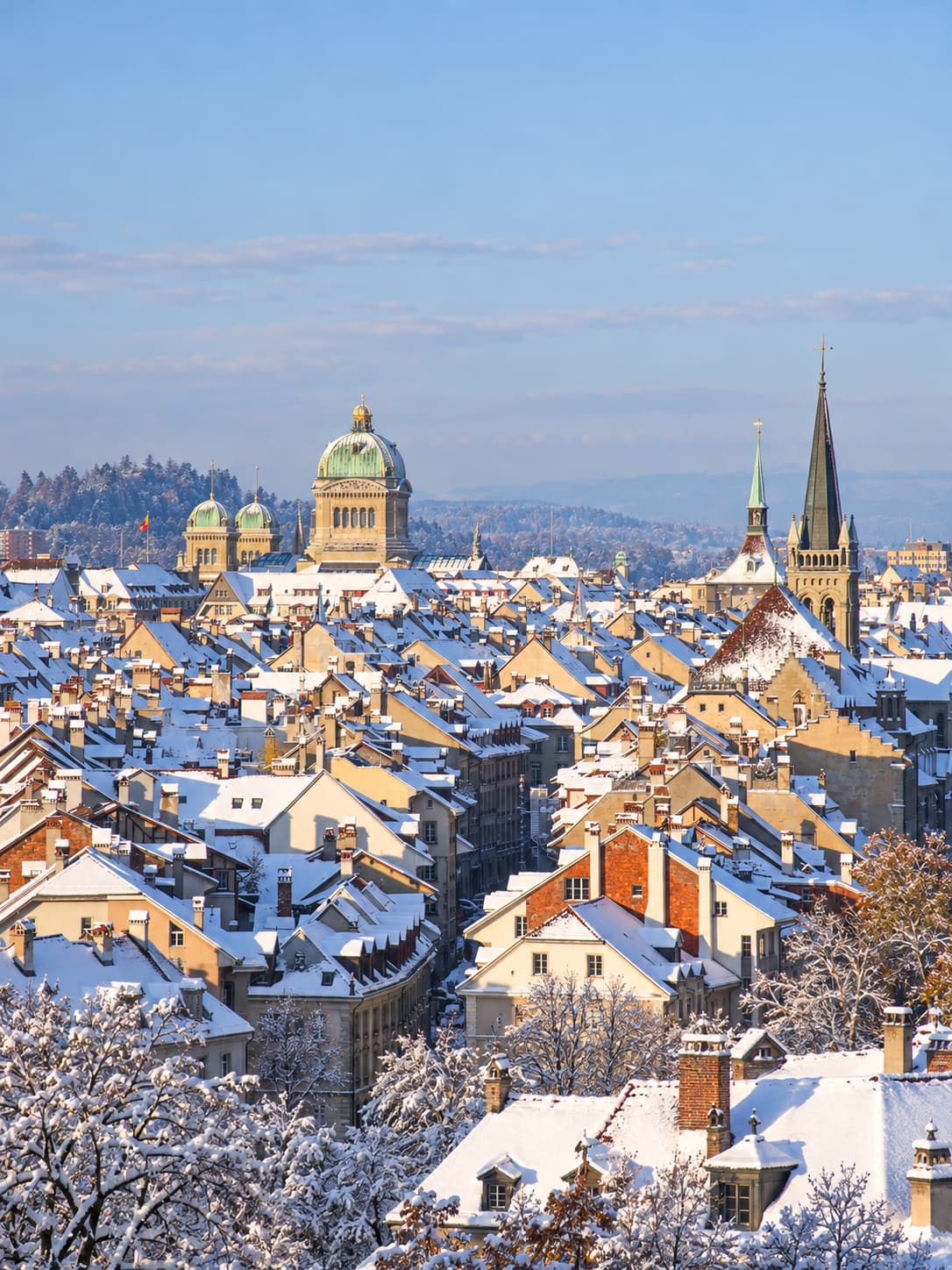
City hotel rates in Bern and Lucerne in January run genuinely lower than in summer — a 20 to 30 percent drop is typical — while ski resort accommodation is priced at or near its peak. That gap is real money on a five-night trip. Moreover, the cities are genuinely beautiful in winter. They are not consolation prizes. Bern under snow, with the medieval arcades carrying a dusting of white and the UNESCO-listed old town quiet in January cold, is one of the finer things this country offers. Lucerne’s Chapel Bridge with frost on its roof and the lake still at the edges earns a morning on its own terms, not just as a base for the Pilatus gondola.
On top of that, the Swiss Travel Pass (2nd class, available in 3, 4, 6, 8, or 15-day versions) covers trains, city transport, lake boats, and a significant portion of mountain railway fares — typically 25 to 50 percent off rack price for the high-altitude lines. For a non-skier doing three or more mountain day trips across a week, it generally pays for itself. Verify the current pass inclusions on the Switzerland Tourism website before purchasing, as specific mountain inclusions vary.
03 — The Best Things to Do in Switzerland in Winter Without Skiing
Go Up the Mountain Anyway — No Skis Required
Switzerland’s mountain railways were not built exclusively for skiers, and in winter they continue to operate specifically because the views at altitude are extraordinary regardless of whether you strap boards to your feet. Several routes in particular are worth structuring a day around.
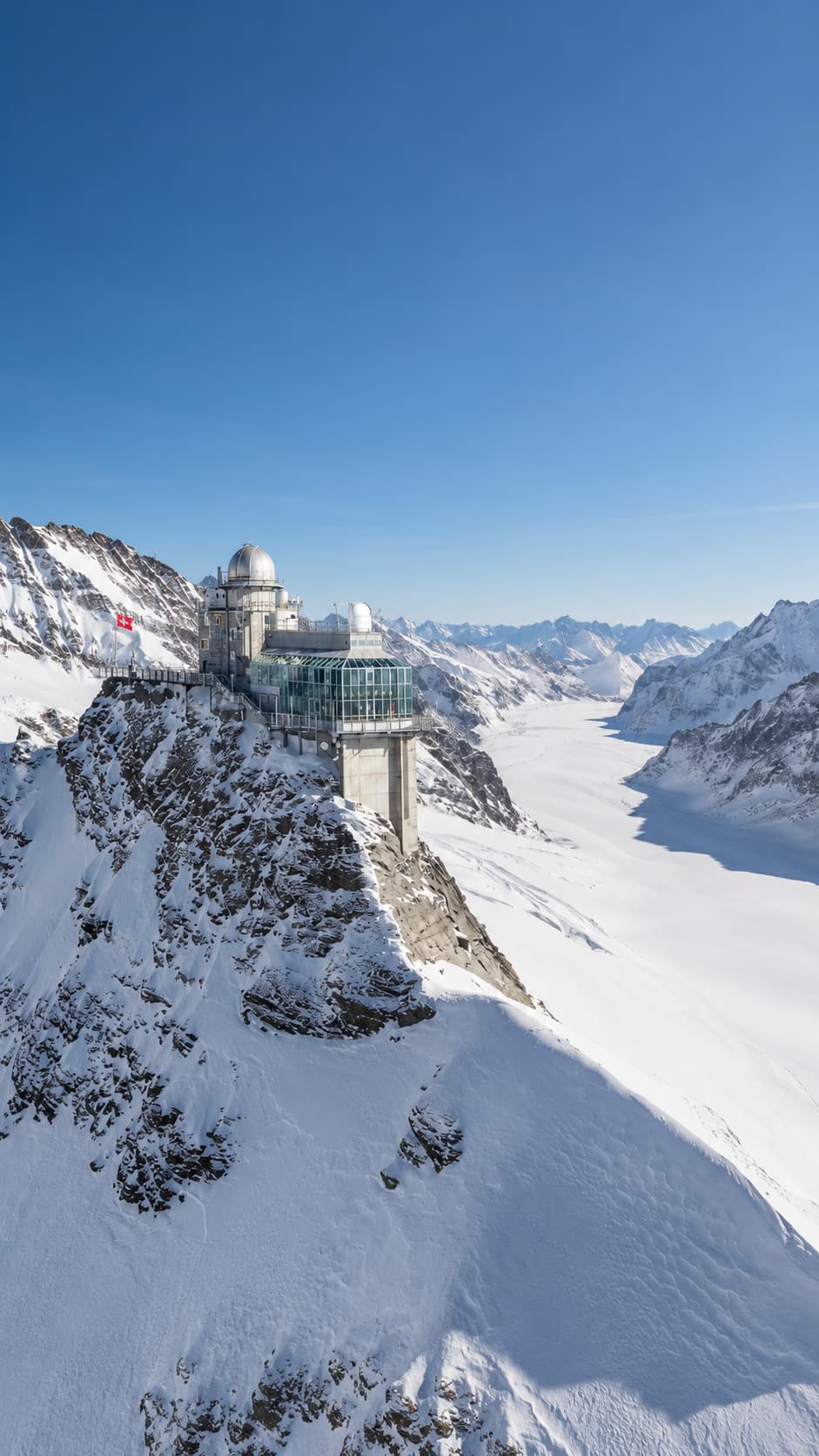
The Jungfraujoch — marketed as the “Top of Europe” — takes you by train from Interlaken to a station at 3,454 metres, the highest railway station on the continent. In winter, the platform at the top is surrounded by glaciers, and the observation terrace looks out onto a snowfield so wide and white it feels barely real. The journey itself, passing through the Eiger and Mönch, is the experience — the train climbs through ice tunnels and emerges at altitude with a cold that is genuinely startling even in a good coat. Specifically, book tickets in advance via the official Jungfrau Railways website; the Jungfraujoch sells out during school holiday windows.
Furthermore, from Lucerne two alternatives offer slightly different experiences: the Pilatus, reached by gondola and cable car (the world’s steepest rack railway runs only in summer), and the Rigi, traditionally called the “Queen of the Mountains,” reached by cogwheel railway and offering a panoramic view across multiple Alpine ranges. Both are accessible without ski passes and run year-round. The Rigi is noticeably quieter in winter and is the better pick for anyone who wants the mountain without the ski-resort crowd.
Importantly, temperature at altitude drops sharply. At 3,000 metres in January, you are looking at -15°C or colder on a clear day. Pack for it — base layers, a windproof outer layer, and good gloves — or the experience becomes about surviving the cold rather than enjoying the view.
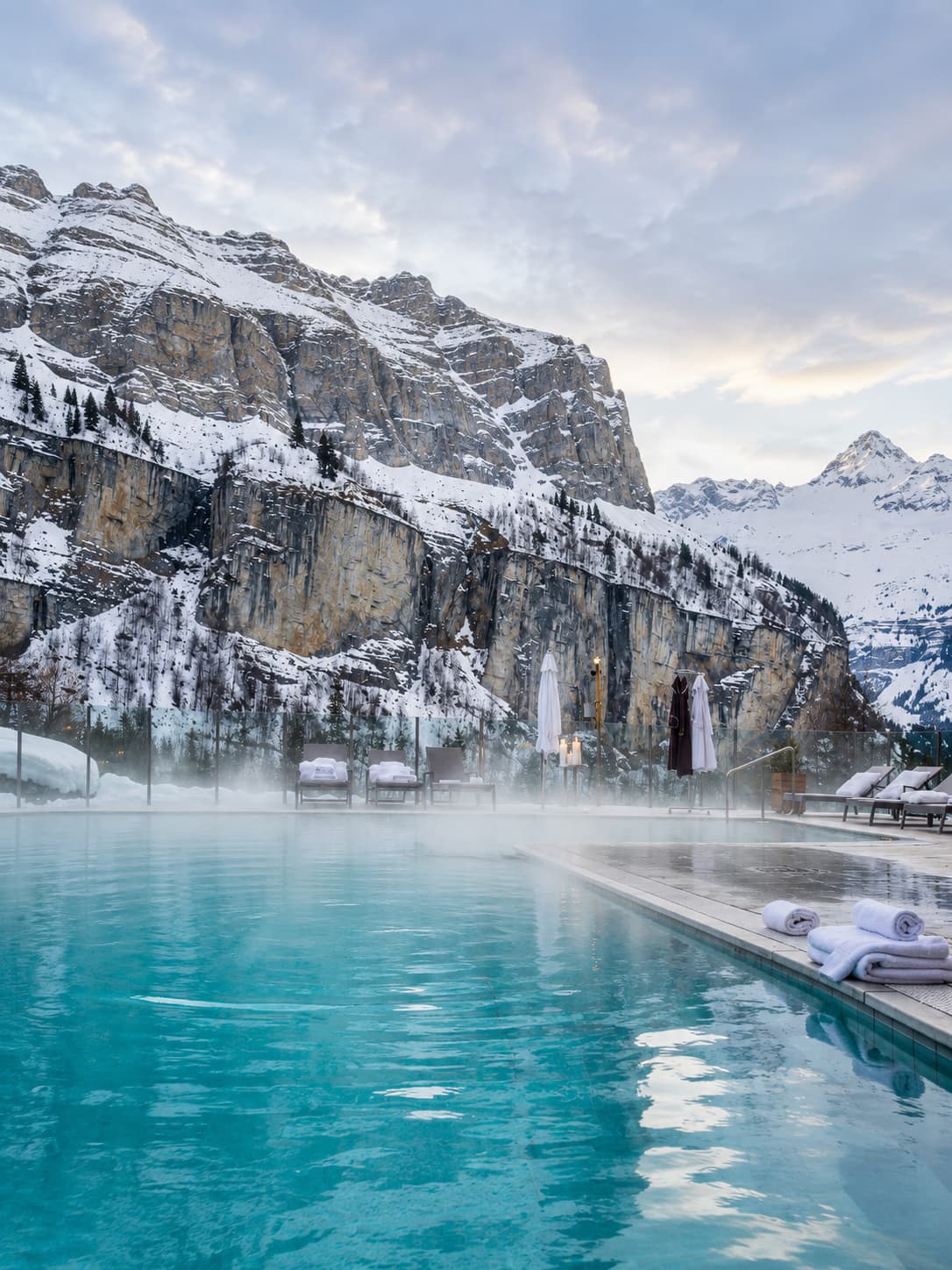
Leukerbad — The Thermal Bath Experience Nobody Talks About
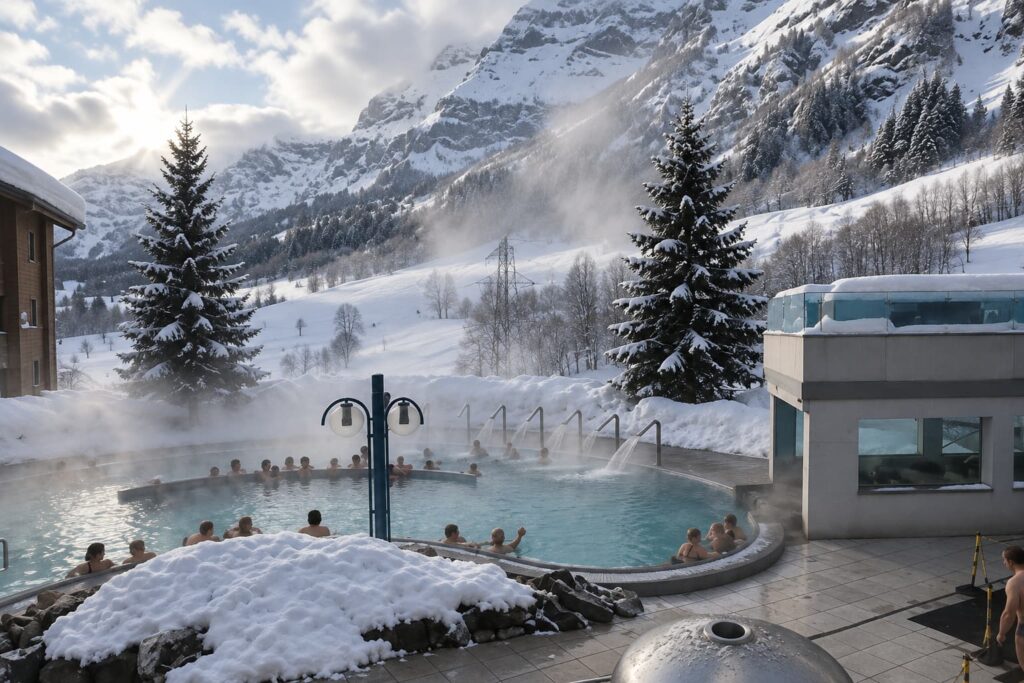
If there is one experience that defines what Switzerland in winter can be for a non-skier, it is Leukerbad. The town sits at 1,400 metres in the Valais Alps, and its open-air thermal pools — fed by natural geothermal springs at 36 to 43 degrees Celsius — operate throughout winter. You swim in warm mineral water while the temperatures around you sit well below freezing, the steam rising off the surface into cold mountain air, the limestone cliffs of the Gemmi Pass rising sheer on three sides, snow covering the upper ridges. It is a specific kind of extraordinary that does not require any setup or context — it simply is what it is.
Leukerbad is the largest Alpine thermal spa resort in Europe. The main public bath facility, the Burgerbad Leukerbad, has indoor and outdoor pools and is accessible for a day-visit fee. Alpentherme is the other main complex in town. Both are open to non-residents — you do not need to stay overnight in Leukerbad to access the baths, though a two-night stay allows you to experience the pools at different times of day, which is worth it if your itinerary allows.
Getting to Leukerbad Without a Car
In terms of getting there: Leukerbad is not on the main rail network. From Brig (reachable by direct train from Bern or Zurich), a PostBus climbs the valley road to the town in around 45 minutes. As a result, it works best as a night-stay rather than a pure day trip from a city base, though the day-trip option is feasible from Brig. The drive up in winter requires snow chains or winter tyres — note this if renting a car. Most visitors take the PostBus.
For a broader picture of European spa destinations, the best spa towns in Europe post covers how Leukerbad sits in context with other thermal destinations across the continent.
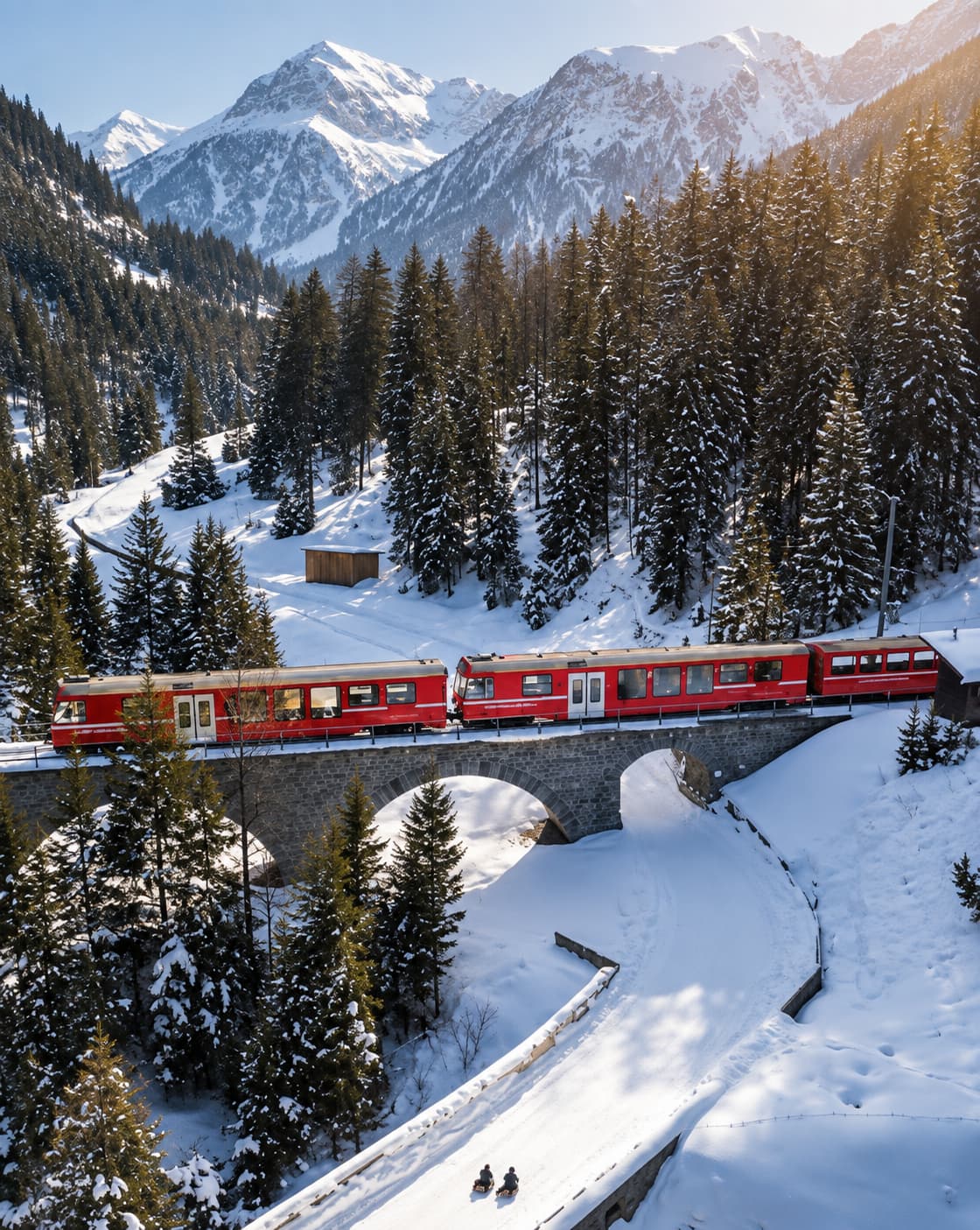
Toboggan the Bergün–Preda Run
In the canton of Graubünden, a natural toboggan run descends six kilometres from the village of Preda down to Bergün, losing 400 metres of altitude along the way. It is one of the longest natural toboggan runs in the world, and it requires no prior experience, no equipment beyond warm clothing, and no ski pass. In practice, you rent a sled at the top, push off, and spend twenty-odd minutes navigating bends and straights through a snow-lit valley with the Albula railway viaducts visible above you.
The loop works beautifully: train from Zurich or Chur to Preda (the Rhaetian Railway climbs through the Albula gorge, and the journey itself is worth the ticket), toboggan down to Bergün, and take the train back up. Repeat until legs give out. Night sessions are also available on certain evenings — tobogganing by lantern light through the Graubünden valley is, in the specific way that Swiss experiences often are, quietly absurd and completely worthwhile.
Additionally, Grindelwald-First has a shorter but well-maintained toboggan run that operates on a gondola-served slope — more immediately accessible from Interlaken but busier, particularly on weekends.
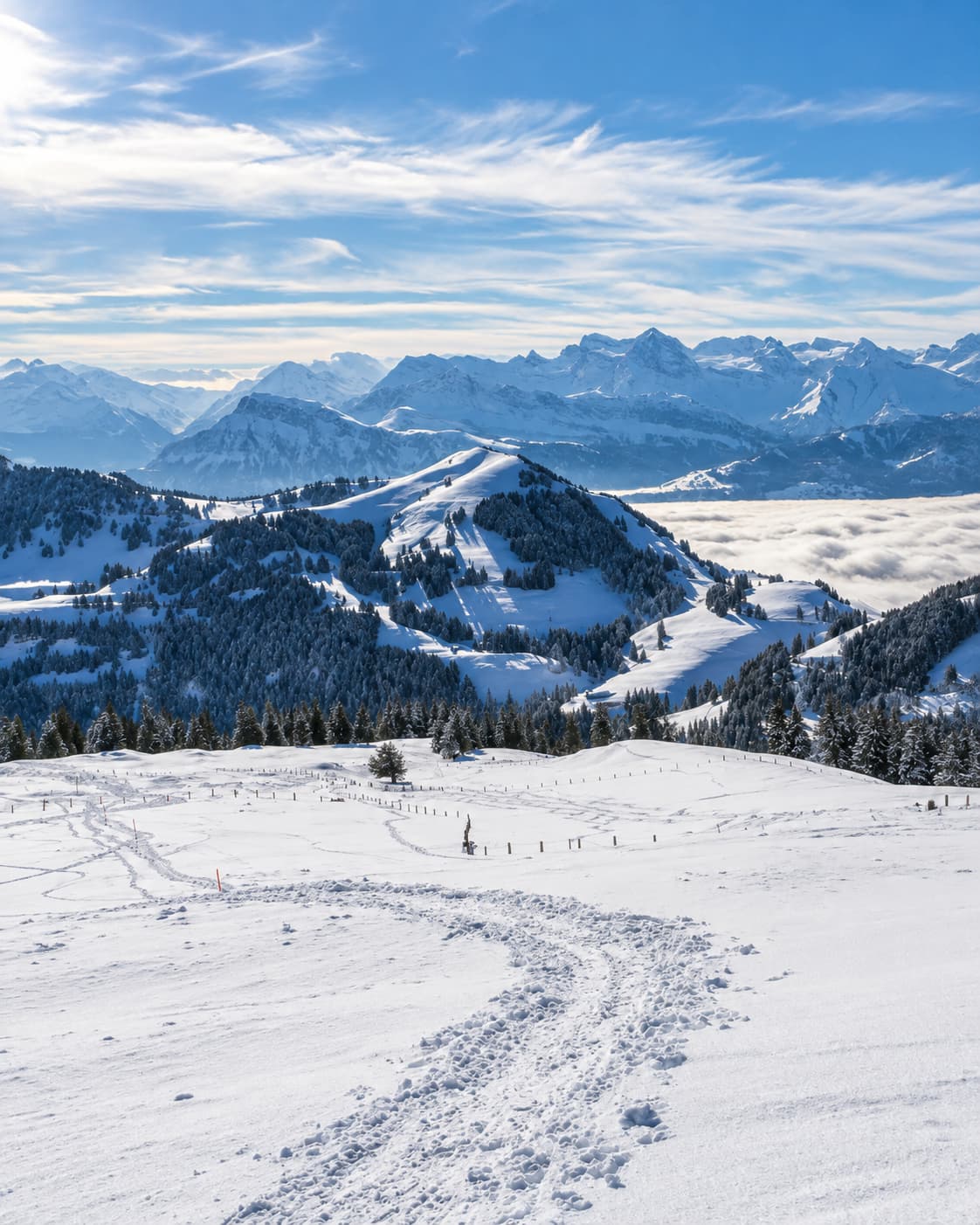
Snowshoe Through a Village or Forest
Snowshoeing is the easiest entry point into winter mountain terrain for non-skiers: gear rents for roughly CHF 15 to 25 per day at most Alpine towns, no instruction is needed for flat or gentle terrain, and the experience — walking through a snow-covered forest or across a valley floor with the peaks around you — is exactly what it looks like from the outside. Quiet, slow, and worth the cold.
In particular, the Appenzell region in northeastern Switzerland has particularly good snowshoe terrain: rolling hills, traditional farmhouses, the Alpstein massif in the distance. For wilder scenery, the area around Grindelwald and the Lauterbrunnen valley offers snowshoe routes through genuine Alpine landscape without requiring the altitude or cold of the summit trains. Zermatt, below the Matterhorn, runs groomed snowshoe trails outside the main ski area.
This is not an adrenaline activity. It suits the IQT reader well — slow, deliberate, and gives you the winter landscape rather than rushing through it.
Winter in the Swiss Cities
As a starting point for Swiss city time, Bern’s medieval old town is a UNESCO World Heritage Site, and the covered arcades — the Lauben — that run for six kilometres through the city centre make it a genuinely walkable winter destination in a way that open-street cities are not. In January, the Rosengarten viewpoint above the old town looks across the snow-dusted roofscape to the Bernese Alps on clear days, and the bear park below — home to real bears, which is a thing Bern quietly maintains — operates year-round.
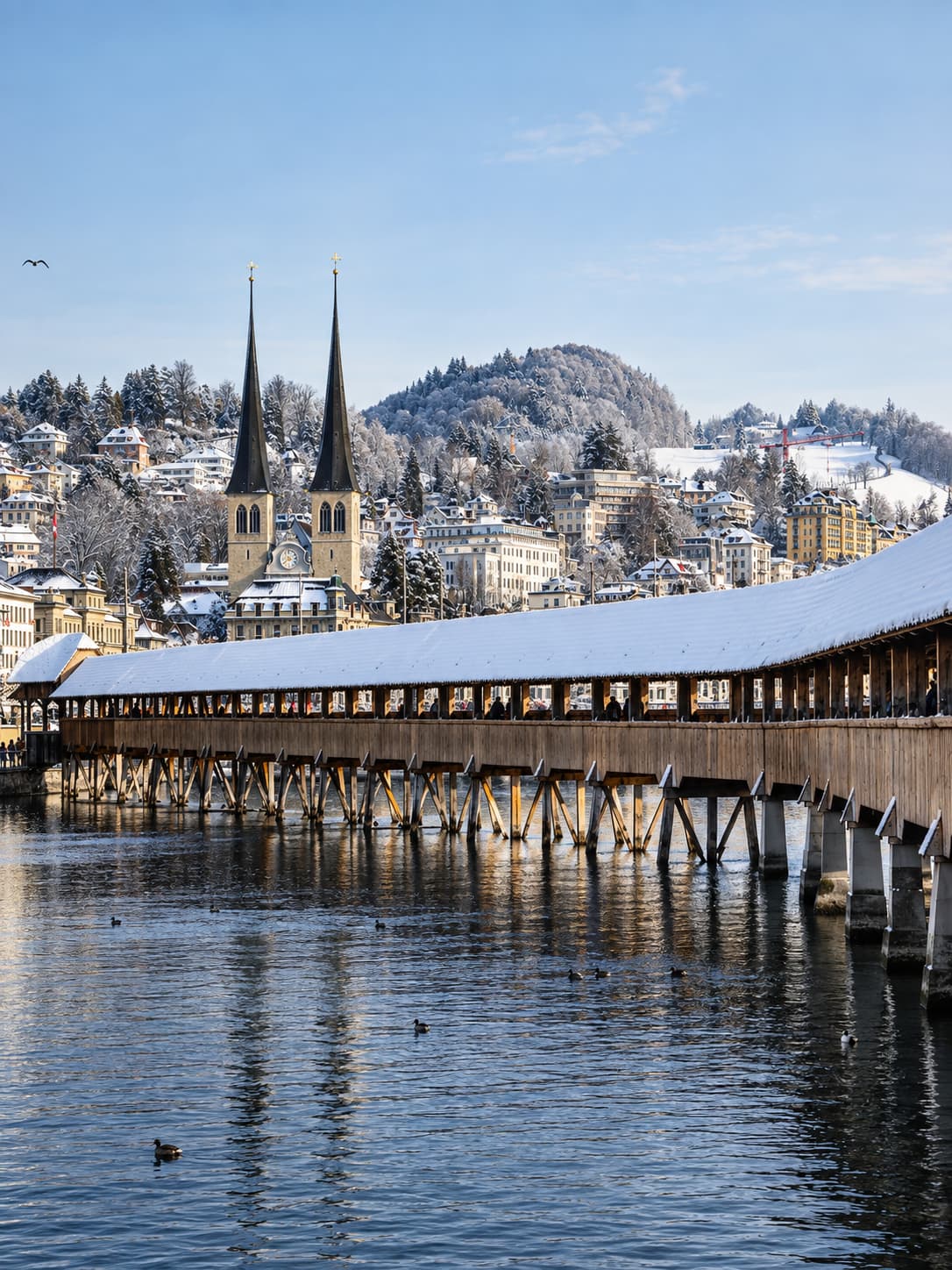
Lucerne, similarly, draws photographers back specifically in winter. The Chapel Bridge — the wooden covered bridge dating to the fourteenth century, rebuilt after a 1993 fire — looks extraordinary with frost on the roof and low winter light on the Reuss River. On calm January mornings the lake sits still enough to mirror the mountains behind the city. Rosengart Collection (Paul Klee and Picasso, in particular) provides a reason to spend a museum afternoon without it feeling like a consolation for not being outside.
Meanwhile, Zurich in December has the Bahnhofstrasse lights and several Christmas markets, including Wienachtsdorf on Sechseläutenplatz and the market at the main station — both running through mid-to-late December. If December is your window, the Switzerland Christmas markets guide breaks down which one is actually worth your time, and the Montreux Christmas Market guide covers the most photogenic of them all. In January, the city is quieter, the museum quarter (Kunsthaus, Landesmuseum) absorbs a half-day easily, and hotel rates are at their winter low. The old town (Altstadt) on both sides of the Limmat is compact, walkable, and considerably less crowded than it will be come summer.
Ice Skating on a Lake or Mountain Rink
Natural ice skating on a frozen lake is one of those experiences that sounds too romanticised to be real, but in a cold Swiss January it genuinely happens. Davos lake, when conditions allow, freezes to skate-ready thickness and is one of the largest natural skating lakes in Europe. Grindelwald maintains an outdoor natural rink that operates when temperatures allow. Both Bern and Zurich have temporary outdoor rinks in the city centre through December and January.
For natural lake ice, January and February in cold years are the reliable window — December is too early most years, and it depends heavily on temperature patterns. The rink at Grindelwald-First, served by the gondola, is more consistent as it’s maintained rather than natural. Overall, skating is worth building a morning around rather than travelling specifically for, unless you’re visiting in a confirmed cold snap.
Ride the Glacier Express Through the Snow
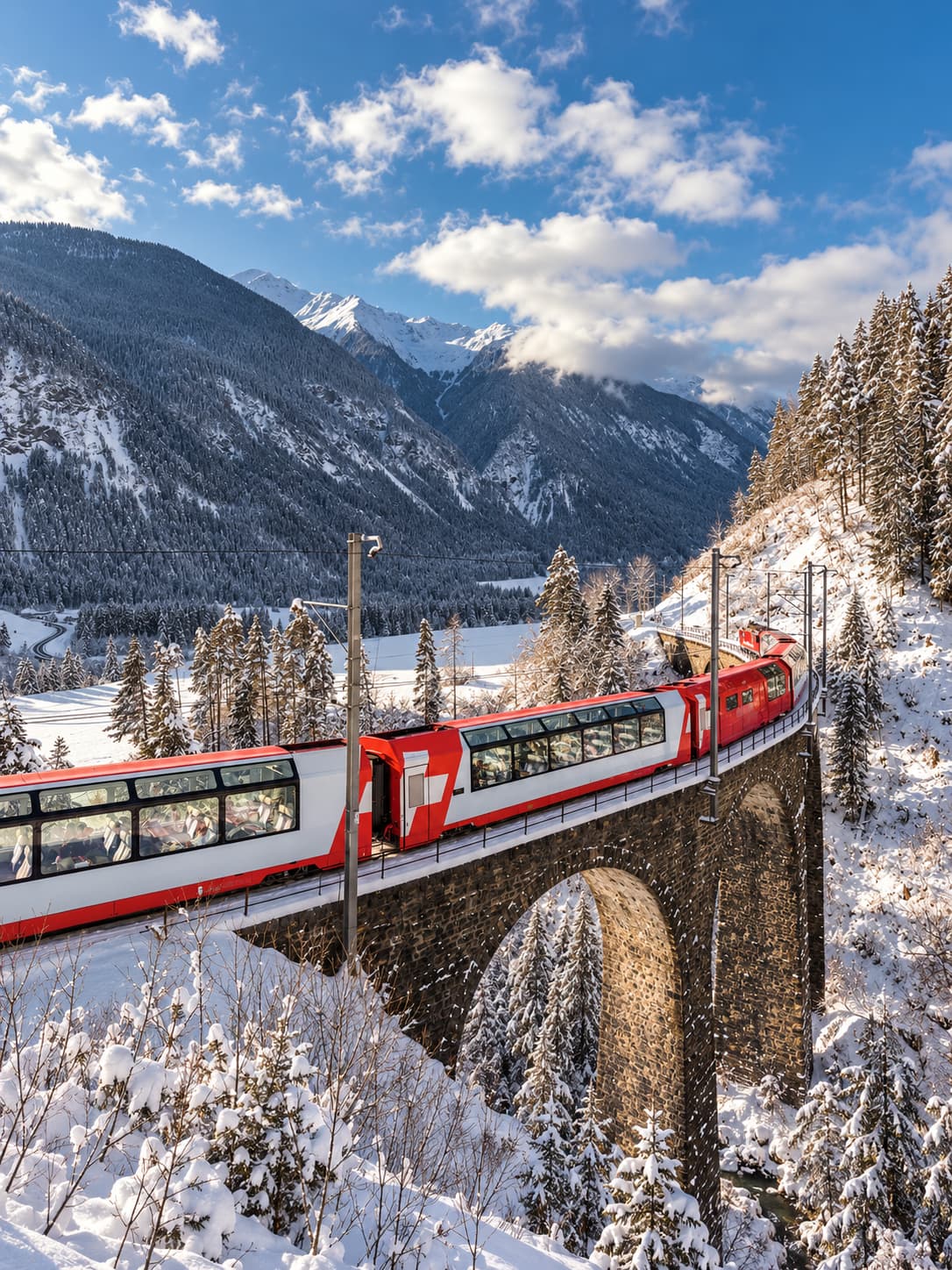
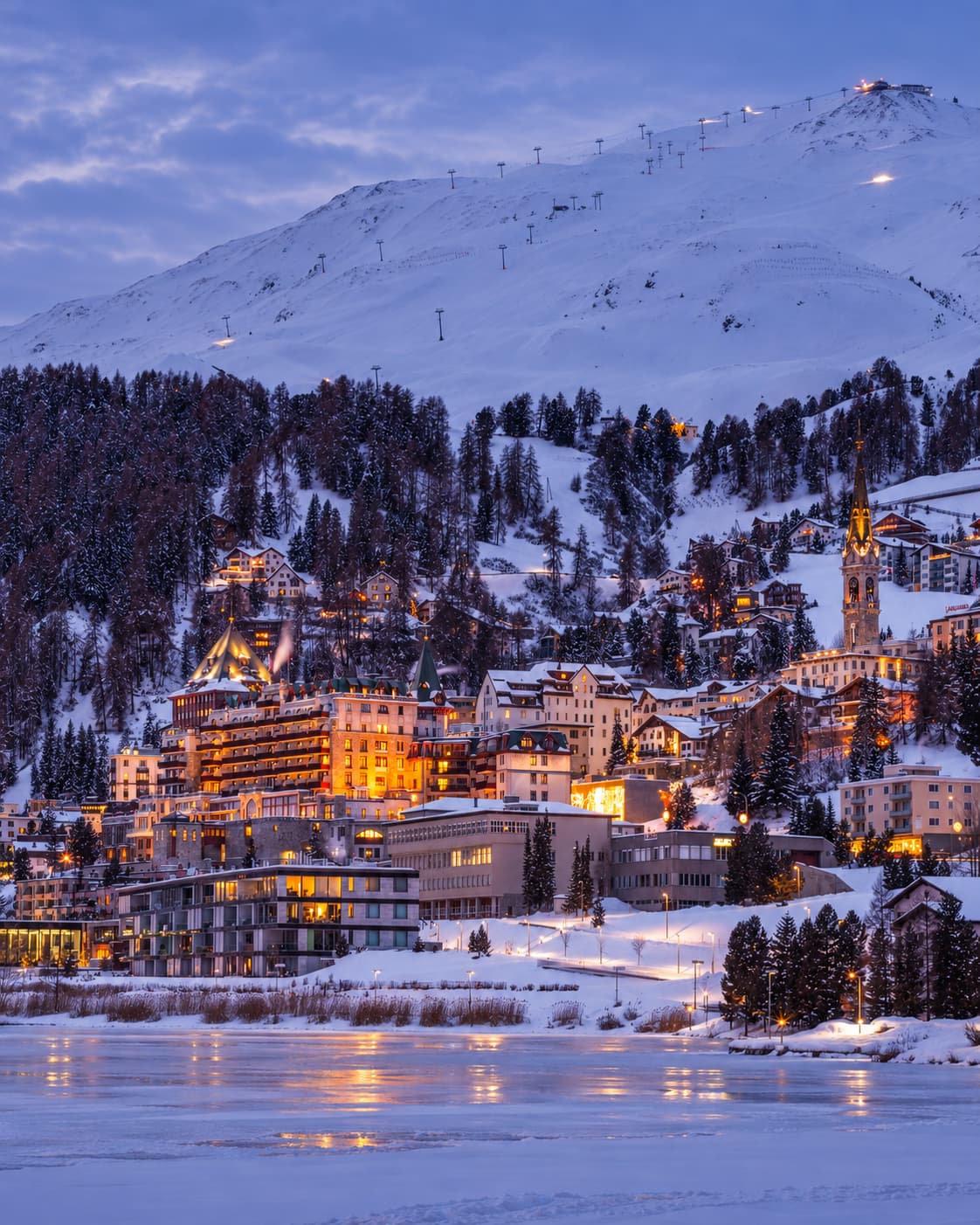
The Glacier Express runs between Zermatt and St. Moritz, taking roughly eight hours and crossing 291 bridges and 91 tunnels through the central Alps. In winter, the route passes frozen rivers, snow-covered larches, and climbs to the Oberalp Pass at 2,033 metres — the highest point on the route — through scenery that is, objectively, one of the great train journeys of the world.
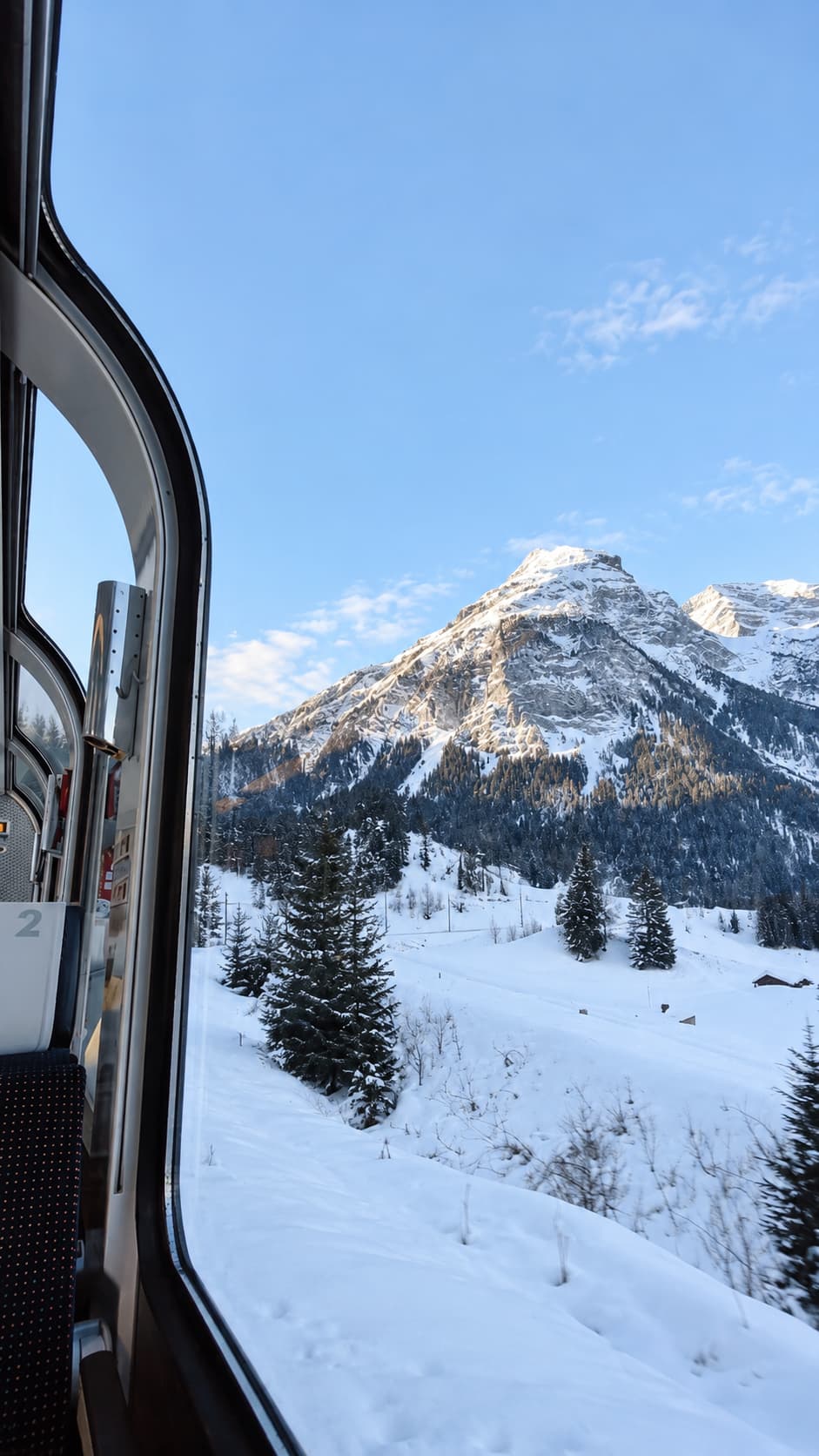
For a non-skier, this is the most efficient way to experience the scale of the Swiss Alps in winter without leaving a heated seat. You book a reservation (mandatory — Glacier Express is a reservation-required scenic train), board in Zermatt or St. Moritz, and spend the journey watching the landscape from a panoramic window. Standard class is comfortable; additionally, Excellence Class adds white-gloved service and a five-course meal if budget allows. In winter specifically, the contrast between the warm interior and the -15°C world outside the glass is part of the experience.
Note that the Glacier Express winter season typically runs December through late April — check current schedules on the official SBB or Glacier Express site before booking, as specific dates vary by year.
04 — Is Switzerland Cheaper in Winter Without Skiing?
The Honest Answer on Cost
Switzerland is expensive. That is the baseline reality regardless of season, and no amount of strategic travel planning eliminates it entirely. However, the non-skier does have a genuine cost advantage over the ski-resort traveller, and it is worth understanding where that advantage actually lies.
Ski resort accommodation in Zermatt, Grindelwald, Verbier, and Davos in January is priced at or near peak — because January is peak ski season and demand is highest. Hotels that would charge CHF 150–200 per night in September are at CHF 300–450 in January. Conversely, Bern and Lucerne city hotels in January are typically 20 to 30 percent below their summer rates, because the city-break tourist market slows after Christmas and before the spring surge. That gap — between what you’d pay for a ski resort base and what you’d pay for a city base doing the same mountain day trips — is the non-skier’s financial argument.
Moreover, skipping the lift pass (CHF 60–90+ per day in most major resorts), ski rental (CHF 30–60+ per day), and the resort-altitude restaurant pricing (where a bowl of pasta and a beer can exceed CHF 40) adds up to a genuinely significant daily saving. The mountain train tickets are expensive by European standards — the Jungfraujoch charges over CHF 200 round trip at full price — but against a week of ski passes and equipment, the non-ski mountain day-trip budget is considerably lighter.
In short: Switzerland in winter without skiing is not cheap, but it is materially cheaper than Switzerland in winter with skiing, provided you make the key call about where to sleep.
05 — What Is the Best Month for a Winter Trip?
December, January, February: What Each Actually Offers
Each winter month offers a different kind of non-ski Swiss trip, so the best choice depends on what you’re actually after.
December is the most atmospheric month in the Swiss cities. The Christmas markets in Bern, Zurich, and Basel run from late November through roughly December 23rd, and the cities are at their most visually compelling — lights on the arcades, market stalls in the squares, the old towns doing exactly what medieval city centres were always designed to do in winter. Snow has generally arrived at altitude by early December, so mountain day trips work. That said, the trade-off is that early-to-mid December is still relatively busy with European short-break travellers, and the post-Christmas week between December 26th and January 1st is both crowded and expensive as Swiss ski season hits its early peak.
January and February: Value vs Crowds
Early January (the first two weeks, before Swiss school winter holidays begin in the third week) is the sweet spot for non-skier value. By then, the Christmas market crowds have gone, city hotels are at their winter low, and snow at altitude is reliable. The mountains are technically at their most crowded with skiers during January overall, but day-trippers on the mountain railways see this much less acutely than someone staying in the resort. For most non-skiers, the first ten days of January represent the best combination of cost, snow reliability, and quiet.
February brings Swiss school winter holidays, pushing prices and crowds up across the board — including in the cities, where families from across Europe converge on ski resorts and the knock-on effects spread outward. Snow is typically excellent in February, but overall, it is the most expensive and most crowded month of the Swiss winter for a non-ski trip, and is consequently the lowest-priority window unless your own schedule leaves no alternative.
For anyone whose primary motivation is Leukerbad specifically: the thermal baths are open and at their best from December through February, with no meaningful difference between months for that experience beyond the general cost advice above.
06 — How Many Days Do You Need?
Three Days
Three days is enough to do Switzerland in winter properly if the itinerary is tight. One city (Lucerne is the most compact and mountain-adjacent), one mountain day trip (Pilatus or Rigi from Lucerne — both achievable in a day), and one experience that is purely non-ski winter (Leukerbad as a night-stay, or the Chapel Bridge in January morning quiet). This is the minimum viable Swiss winter trip — you leave having seen snow mountains from above, soaked in outdoor thermal water, and walked a genuinely medieval European city in winter cold.
Five Days
Five days allows a proper dual-city base. Zurich and Lucerne are under an hour apart by train, giving you access to two sets of mountain connections (Pilatus and Rigi from Lucerne, Rigi also from Zurich, the Graubünden routes from Zurich) plus two distinct city characters. In addition, five days accommodates the Glacier Express as a dedicated travel day — Zurich to Chur to board, arrive St. Moritz or Zermatt, train back — without sacrificing the rest of the trip.
Seven Days
A week unlocks the full loop: Zurich or Lucerne as a city base, the Jungfrau region (Interlaken, with the Jungfraujoch as a day trip), two nights in Leukerbad, and the Bergün toboggan run folded into a Graubünden day. Seven days is the version of this trip where you come back feeling like you’ve actually been to Switzerland in winter, rather than passed through it. If you’re thinking about extending into the shoulder seasons, the Switzerland in autumn guide covers when the larches turn gold — a completely different country again. For the Italian side of Switzerland rarely covered in English, Ticino in autumn is worth a read too.
Winter Switzerland Trip Logistics
| Getting there | Zurich Airport is Switzerland’s main international hub, with direct connections to most European cities and many long-haul routes. Bern and Geneva also have airports with European connections. Swiss Federal Railways (SBB) connects the airports to city centres in 10–30 minutes. |
| Getting around | The Swiss Travel Pass (3, 4, 6, 8, or 15-day options) covers unlimited travel on trains, buses, and boats, plus reduced fares or free travel on many mountain railways. For a non-ski winter trip with multiple mountain day trips, it typically earns back its cost from day 3 or 4 onward. |
| Mountain train booking | The Jungfraujoch in particular sells out during school holiday windows. Book tickets online in advance via the Jungfrau Railways website. The Glacier Express requires a mandatory seat reservation (CHF 33–52 depending on class, separate from your travel pass). |
| Leukerbad transport | Train to Brig (direct from Bern, Zurich, or Lausanne), then PostBus 471 to Leukerbad (around 45 minutes). The PostBus is included in the Swiss Travel Pass. No car required. |
| Currency | Swiss Franc (CHF). Cards accepted almost everywhere. Switzerland is not in the Eurozone — euros are widely accepted in tourist areas but at unfavourable exchange rates. Withdraw CHF on arrival. |
| Language | German in Bern, Lucerne, and Zurich; French in western Switzerland (including Leukerbad, which is in the German-French border zone — German-speaking). English is reliably spoken throughout the tourist infrastructure. |
Zermatt and Winter Packing
Transport, Budget, and the Best Winter Month
08 — The Honest Case for Going Without Skis
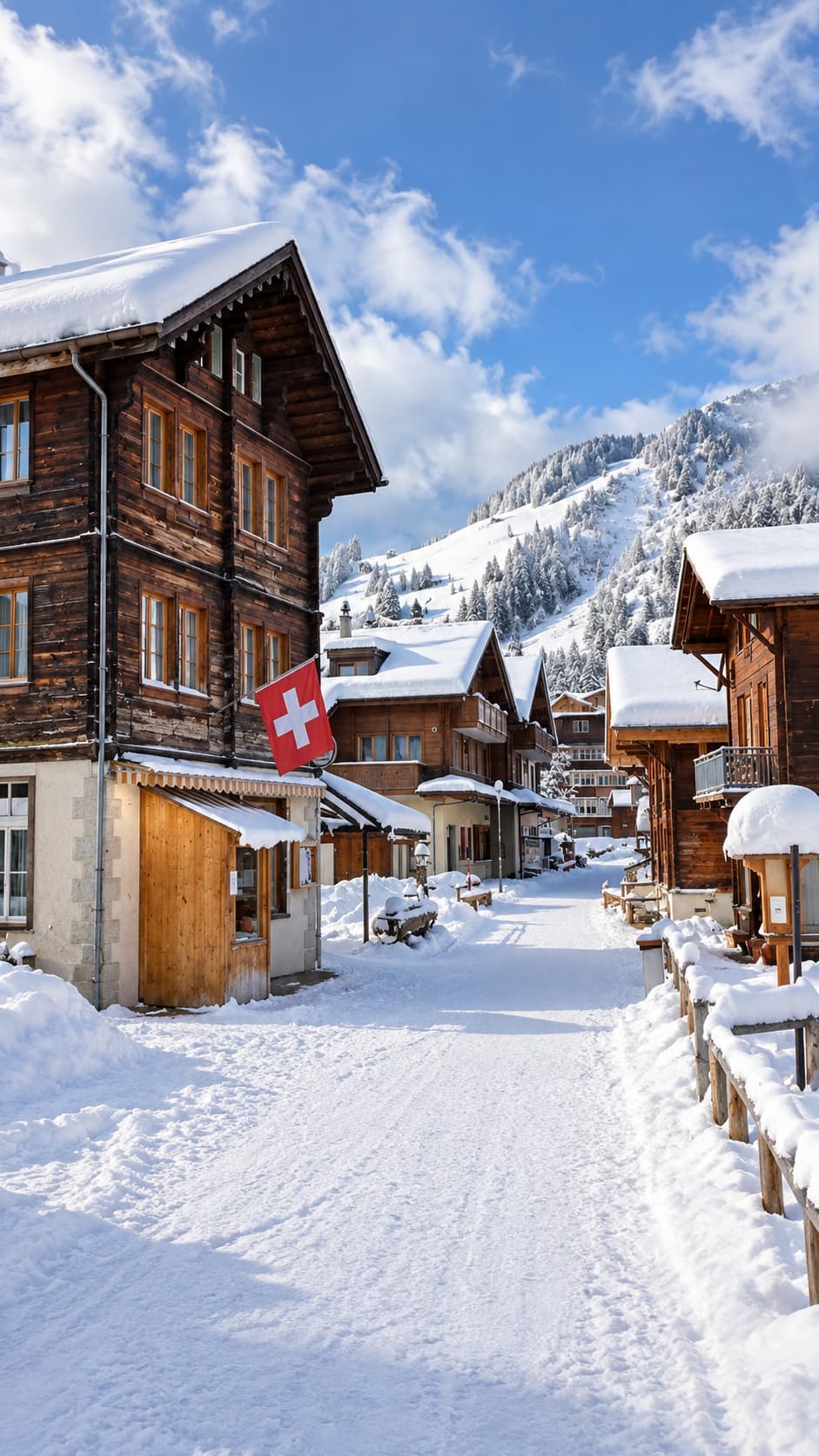
The honest case for going is this: most countries in winter are versions of themselves with the light turned down. Switzerland in winter is something else — an outdoor thermal pool at altitude with snow on your shoulders and limestone peaks above you, a medieval wooden bridge at seven in the morning with frost on its eaves, a train climbing through a granite mountain and emerging at 3,400 metres into a silence that has nothing to do with skiing and everything to do with where you are. The lift passes are beside the point.
The mountains don’t close when the skiers go up.
They’re just quieter. Which is, depending on who you are, the better version.