
The Best Spa Towns in Europe: What Makes Each One Worth Visiting
From a 19th-century marble bathing palace in the Black Forest to a free volcanic waterfall in Tuscany — Europe’s best spa towns are not a category. They’re ten very different ideas about what water does to a person.
The best spa towns in Europe are not what most people expect when they start searching. The word “spa” has expanded so far from its origins that it now covers everything from hotel treatment rooms to Ottoman hammams to a volcanic waterfall in an Italian field. Before choosing where to go, the more useful question is: what kind of water experience do you actually want?
This guide distinguishes between the types, covers ten destinations honestly — what they offer, what they cost, how to get there — and explains why autumn specifically changes the quality of the experience at almost every one. Additionally, several entries on this list can be visited as a day trip for under €30. That’s worth knowing before anything else.
01 — The Three Types of European Spa Town
This distinction matters because most roundups skip it — and it’s the main reason people end up somewhere that doesn’t match what they were looking for.
Thermal bathing towns
You immerse in geothermally heated water, either in a historic bathing palace or in natural outdoor pools. The treatment is the heat and the mineral content of the water itself. Examples: Baden-Baden, Budapest, Terme di Saturnia, Leukerbad. These are the most immediately dramatic — you are physically in the water, not observing it.
Drinking-cure towns
The mineral water is the treatment, but you drink it rather than bathing in it. Guests collect water from named springs along colonnaded promenades, each spring with a different mineral composition and a prescribed therapeutic purpose. The whole ritual is slower, stranger, and considerably more atmospheric than it sounds. Examples: Karlovy Vary, Mariánské Lázně, Vichy, Montecatini Terme. Spa bathing is available at hotels, but the spring-sipping ritual is the defining experience.
Heritage spa cities
The architecture and cultural history are the draw as much as the water itself. The thermal experience remains available, but the town has grown into something larger than its springs — a city-scale destination where the baths are one part of a broader character. Examples: Bath, Spa (Belgium). Both have genuinely functioning thermal facilities; both are also worth visiting for everything around them.
In practice, many towns blur these categories — Karlovy Vary has hotel spa facilities; Baden-Baden has a colonnaded park. Even so, knowing which type dominates a destination tells you whether your primary experience will be immersion, ritual, or exploration. That’s the decision that matters most before you book. For a broader overview of European spa culture and history, UNESCO’s Great Spa Towns of Europe page is the authoritative starting point.
02 — Why Autumn Is the Right Season
The thermal spa towns of the 18th century operated on a September–October cure season. Aristocratic visitors arrived after the summer heat, when the cooler air made the contrast between ambient temperature and thermal water most pronounced. That logic still holds — and it has nothing to do with nostalgia. Specifically, it’s about the quality of the experience itself.
The contrast effect
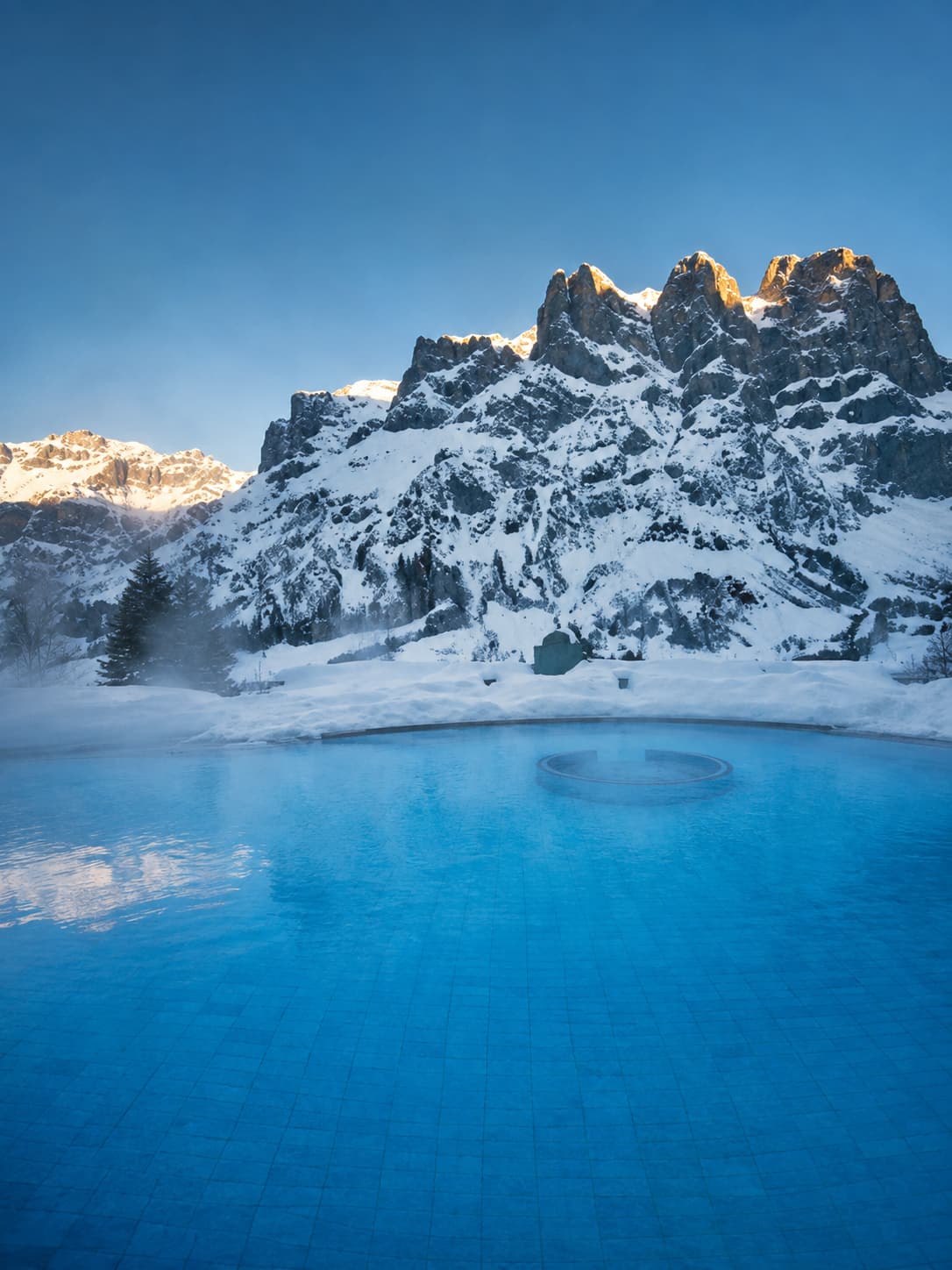
Soaking in 38°C water when the air temperature is 22°C is a pleasant experience. Doing the same when the air temperature is 10°C and there’s mist on the hills above is a qualitatively different one — the contrast is the point. At Leukerbad in the Swiss Alps, the difference between outdoor pool temperature and mountain air sharpens the experience in a way that a July visit simply cannot replicate. Similarly, at Terme di Saturnia, steam rising from volcanic travertine pools against an October sky is the image the place is famous for — not the summer version.
Crowd patterns
Most of these towns peak in summer and again around the December holidays, so October and November sit in a genuine shoulder window. Karlovy Vary — normally busy with film festival visitors in July and summer tourists through August — quiets considerably after mid-September. The Friedrichsbad in Baden-Baden is best experienced without a capacity crowd cycling through its 17 stages; a weekday in October reliably delivers that. Generally speaking, the contrast between peak-season and shoulder-season visitor numbers at these towns is sharper than at most European city destinations.
Landscape
Several of the best entries on this list sit inside landscapes that peak in autumn. Baden-Baden is at the northern edge of the Black Forest — deciduous and colourful in October. The Bohemian hills around Karlovy Vary and Mariánské Lázně are beech and oak, and reliably turn in mid to late October. The Ardennes around Spa, Belgium, are some of the best autumn-foliage country in Northern Europe. Even Montecatini Terme, which sits in the Tuscan hills between Florence and Pisa, benefits from the lower autumn light that flattens and softens in summer.
Additionally, shoulder-season pricing applies at most thermal hotels and spa resorts. A day-trip entry to the baths costs the same year-round, but accommodation rates in towns like Karlovy Vary, Mariánské Lázně, and Leukerbad are noticeably lower in October than in peak summer.
03 — The Best European Spa Towns to Visit
Baden-Baden, Germany
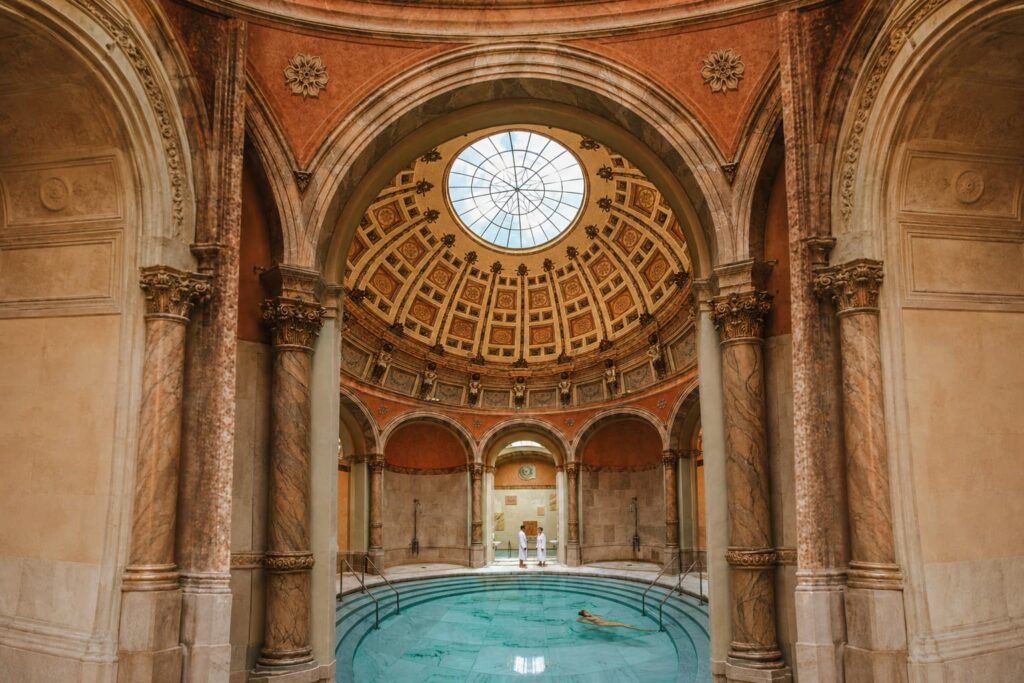
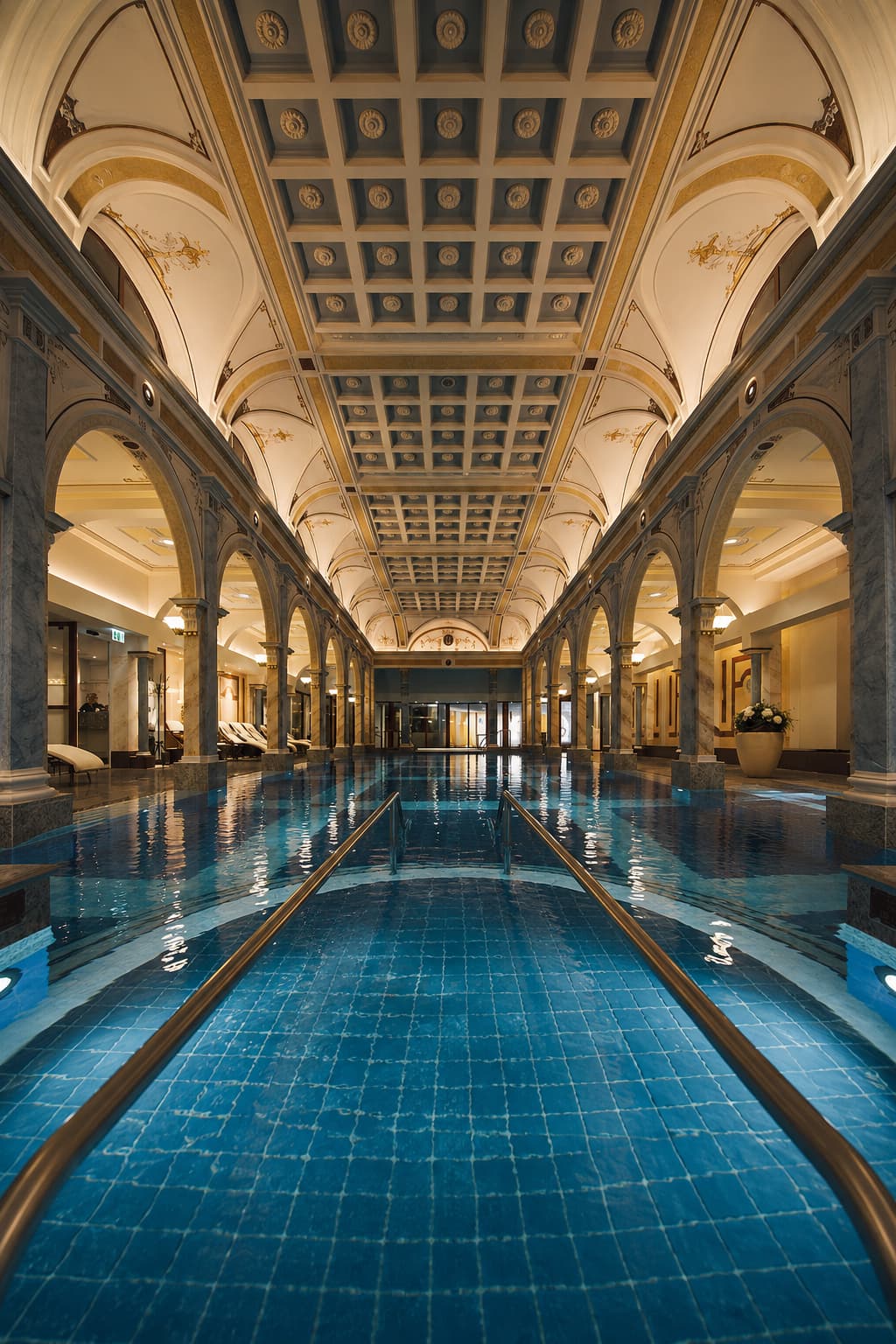
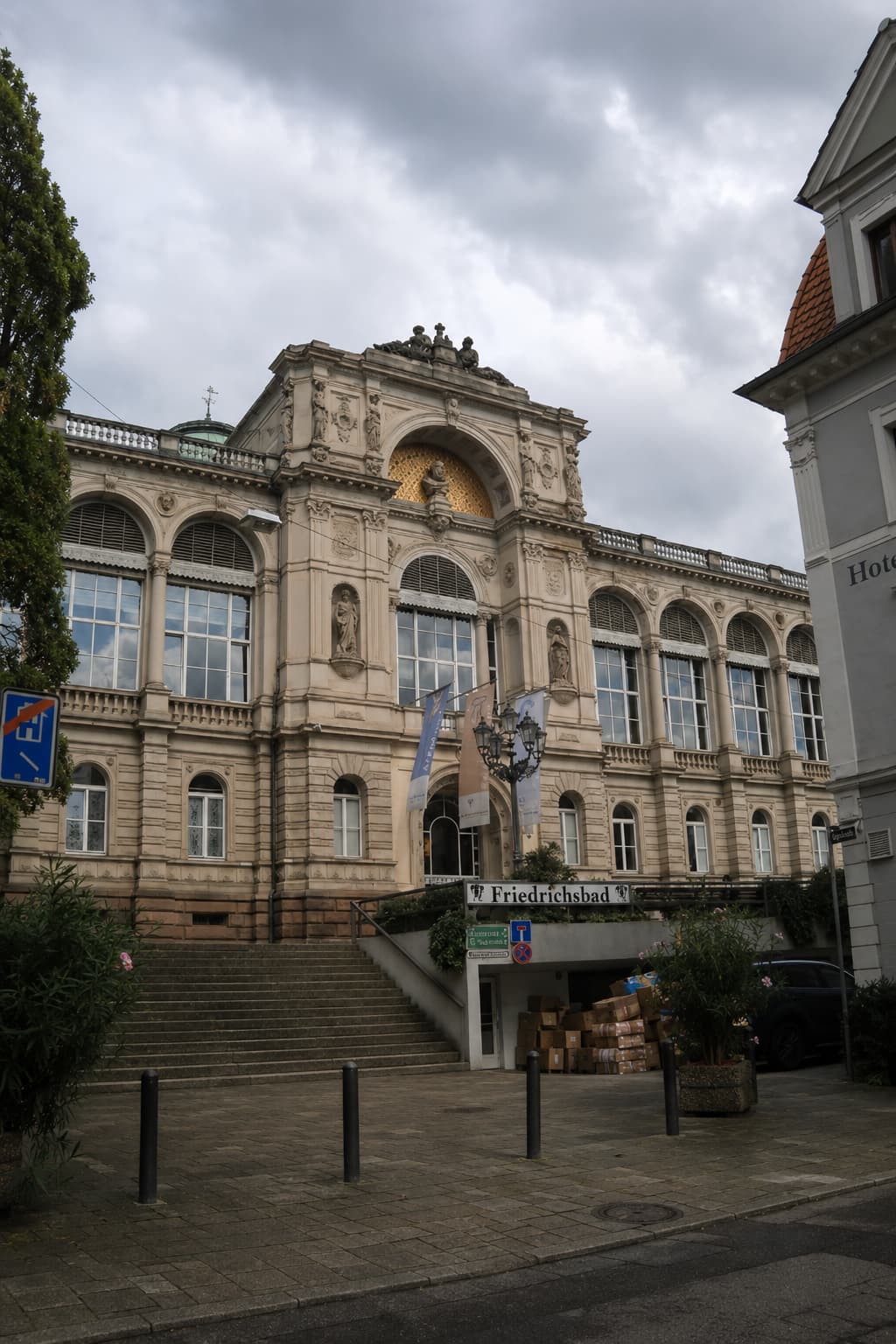
The most architecturally iconic spa town in Europe. Two baths sit side by side and offer almost opposite experiences. Friedrichsbad (1877) is a neoclassical marble palace operating on a prescribed 17-stage bathing programme — roughly two hours, no clothing permitted anywhere in the building, entirely unlike anything else available in Europe. It is one of the stranger and more memorable experiences on this list. Caracalla Terme (next door) is modern, glass-and-water, swimwear required, and significantly more relaxed — better for families or first-timers who want something warmer in tone. The town itself is worth half a day: the Kurhaus casino, the Trinkhalle colonnade, and the Lichtentaler Allee along the river are all elegant without being fussy. Baden-Baden sits 45 minutes from Strasbourg and 90 minutes from Frankfurt — an easy day trip from either. Cost: Friedrichsbad €29–35 for the full programme; Caracalla from €18.
Bath, England
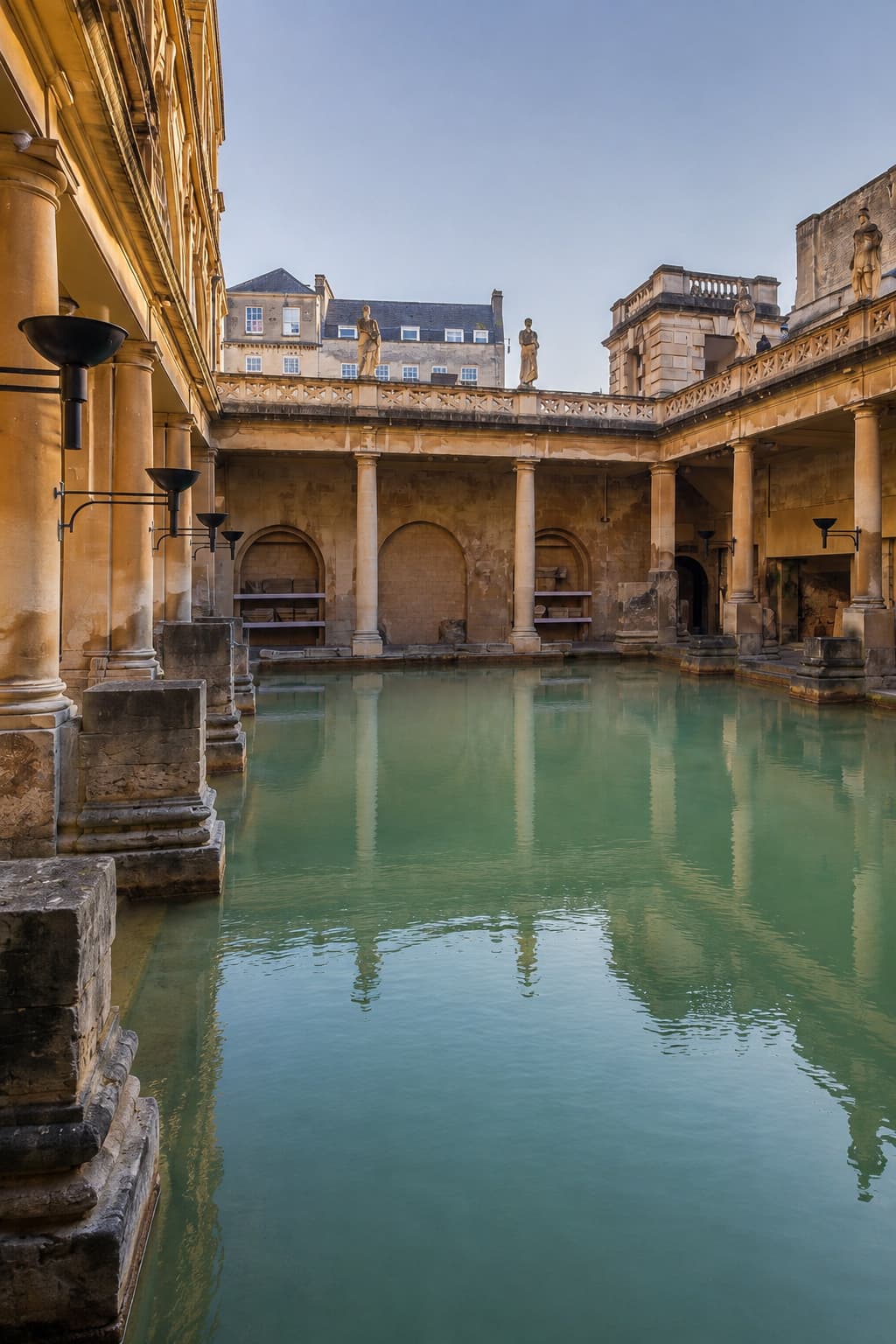
The only naturally occurring hot spring in the United Kingdom feeds two very different experiences in the same city. The Roman Baths below street level are one of the best-preserved Roman sites in northern Europe — you walk around them as a museum, not through them as a bather (the water is open to the sky and not swimmable). The Thermae Bath Spa above is the contemporary facility built on the same geothermal source, with a rooftop pool where you actually swim in the naturally heated water with a view across Bath’s Georgian skyline. Bath itself easily fills two days regardless: Georgian terraces, independent bookshops, the Pump Room. Autumn strips back the summer crowds that dominate in July and August — October light on honey-coloured stone is genuinely better. Two hours from London Paddington by direct train. Cost: Thermae Bath Spa from £40 for 2 hours; Roman Baths entry £19–24.
Karlovy Vary, Czech Republic
Arguably the most underrated entry on this list. Karlovy Vary is a Bohemian spa town of extraordinary architectural beauty — colonnaded promenades running along a river gorge, Art Nouveau hotels climbing the hillsides, Belle Époque villas stacked up the forested slopes — and its defining thermal tradition is a drinking cure rather than immersion. Guests collect mineral water from twelve named springs along the Mlýnská Colonnade using traditional porcelain cups, each spring carrying a different mineral composition and a different supposed therapeutic effect. The experience is strange, specific, and entirely authentic. Two hours from Prague by direct bus, making this the easiest pair with a Czech capital trip — or a natural stop on a Central Europe road trip. The International Film Festival in July is a draw; October is a reason to go without the crowd it brings. Cost: spring access is free; hotel spa treatments from €50.
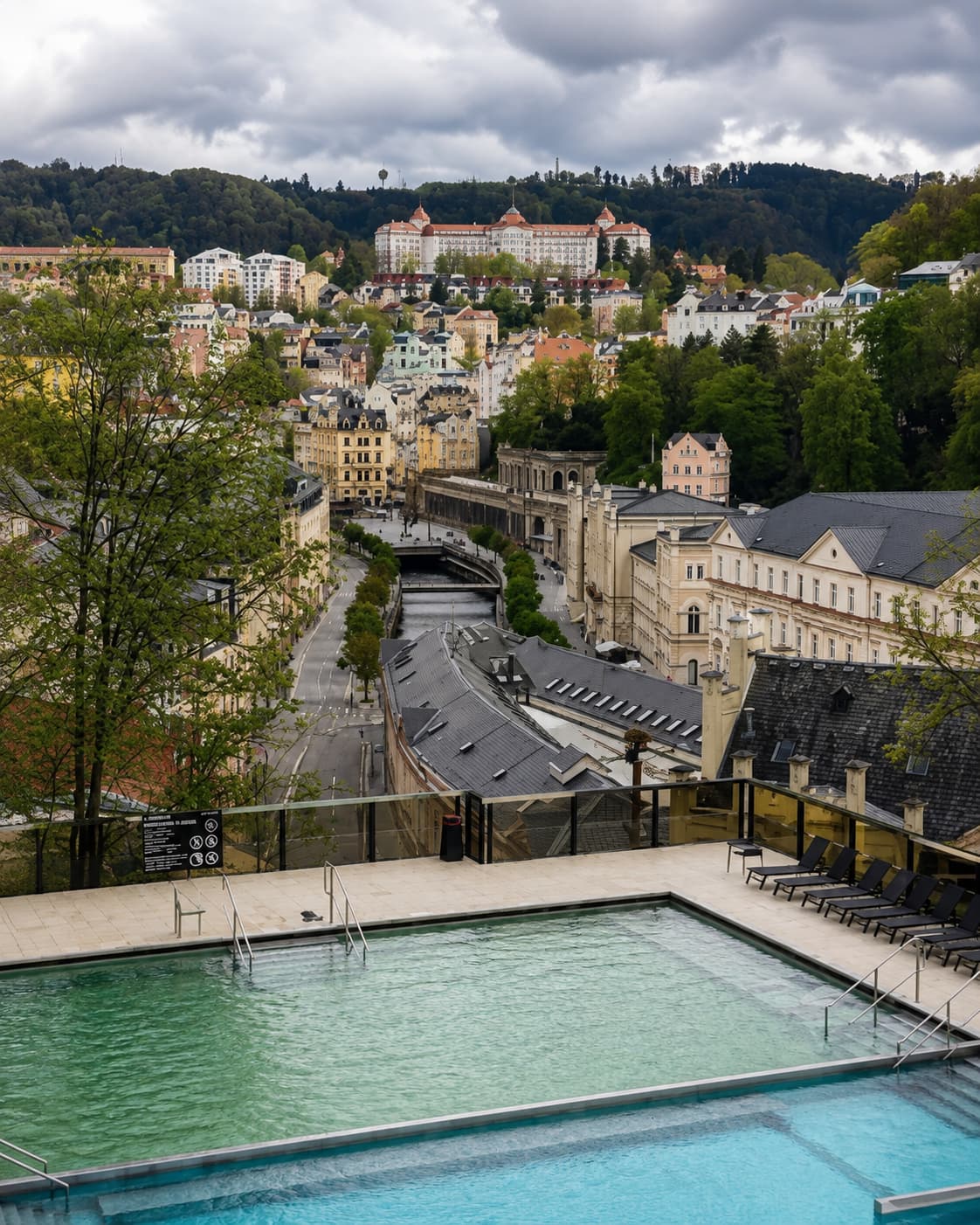
Spa, Belgium
The town that gave the word to every wellness facility on earth. In the Ardennes, 45 minutes from Liège, surrounded by forest — Spa was attracting therapeutic visitors to its iron-rich mineral springs in the 14th century, and by the 16th century its bottled water was being exported across Europe. The modern Thermes de Spa has been fully renovated and offers a serious contemporary wellness facility built on the original historic spring source. Spa draws fewer international visitors than any comparable destination on this list, partly because Belgium doesn’t read as a thermal travel destination to most European travelers. That’s the gap worth exploiting: the town is authentic, small, and entirely unforced in its character. The Ardennes landscape in October is excellent walking country around the thermal visits. Cost: Thermes de Spa from €35 for a half-day session.
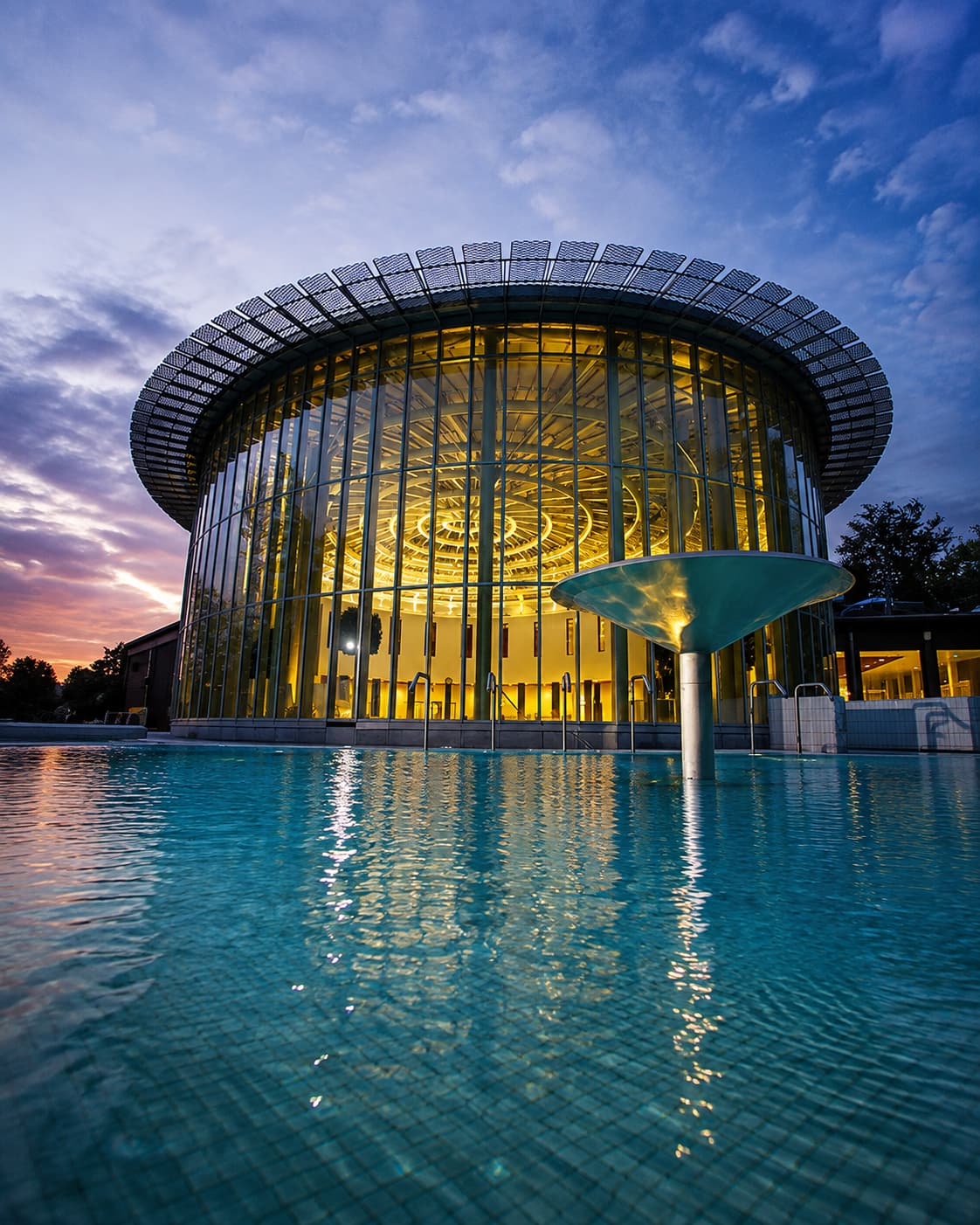
Terme di Saturnia, Italy
The most dramatically natural thermal experience in Europe. In Tuscany’s Maremma region — roughly three hours from Rome and two from Siena — a volcanic spring produces water at a constant 37.5°C that has been in use since Etruscan times. The spring feeds a series of natural travertine pools and a waterfall (the Cascate del Gorello) that cascade down a hillside at the roadside. These are entirely free to access, at any hour, with no booking required. The paid resort above (Terme di Saturnia Resort) offers a full wellness programme and manicured pools; the waterfall below costs nothing. In October the light softens, the pools empty of summer visitors, and the smell of sulphur in cool morning air becomes one of the stranger and more atmospheric things available in Italy. Connects naturally with a wider Tuscany trip — the Maremma is deliberately slow country. Cost: Cascate del Gorello — free; resort entry from €50.
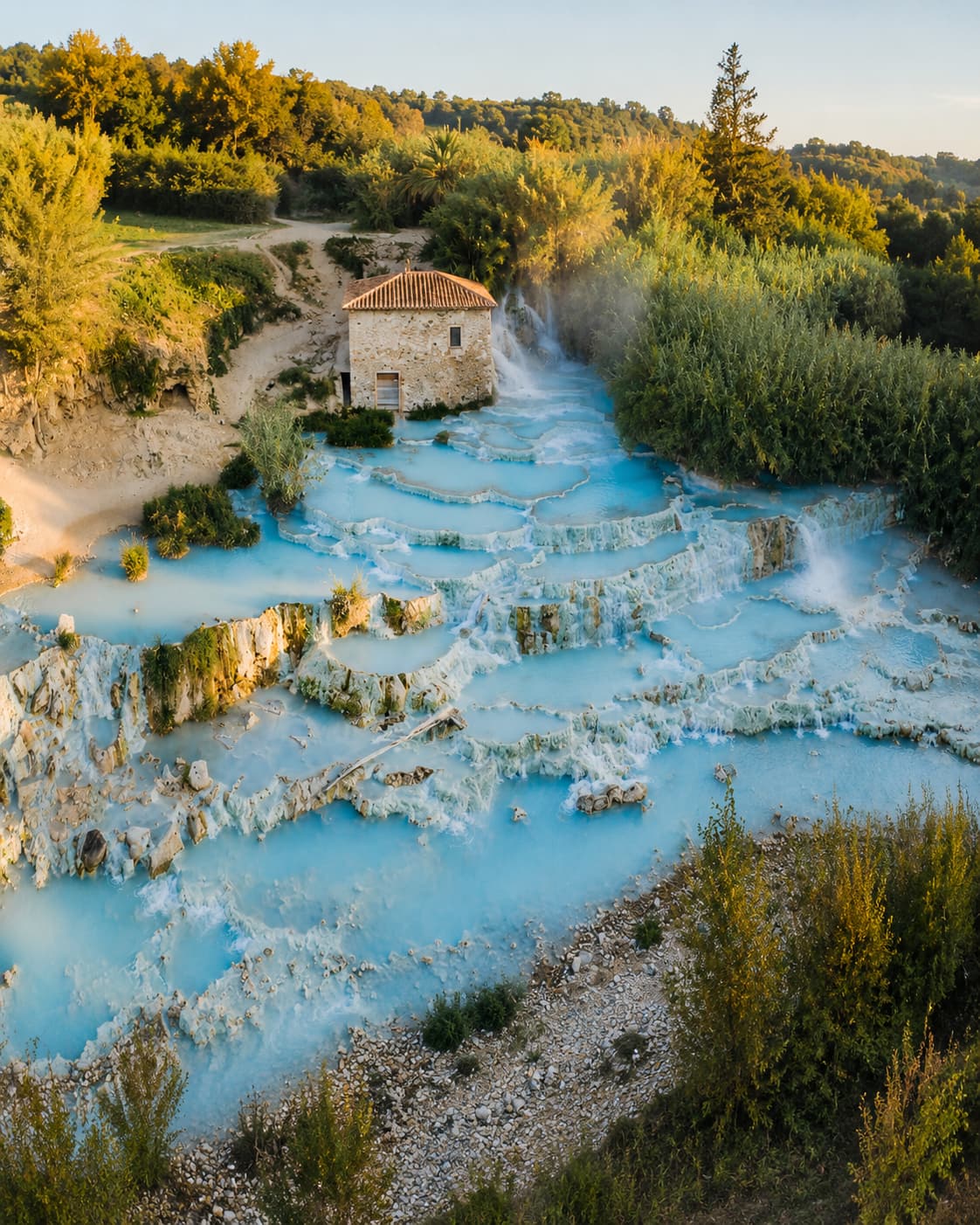
Budapest, Hungary
Not among the UNESCO-listed Great Spa Towns, but arguably the most impressive thermal bath city in Europe. The Ottoman conquest of Hungary in the 16th century left behind a network of hammams; subsequent Hungarian development produced some of the most architecturally spectacular bath complexes on the continent. Three worth knowing: Széchenyi (the largest thermal bath complex in Europe — yellow Neo-Baroque exterior, outdoor pools with chess players, genuinely open to all weathers), Gellért (Art Nouveau tilework and stone, indoor wave pool, attached to its grand hotel), and Rudas (an Ottoman dome above the original central pool, rooftop hot tub with city views at night). If you’re spending two days in Budapest, one of them belongs to the baths — the question is only which one. Cost: entry from €20–30 depending on bath and session type.
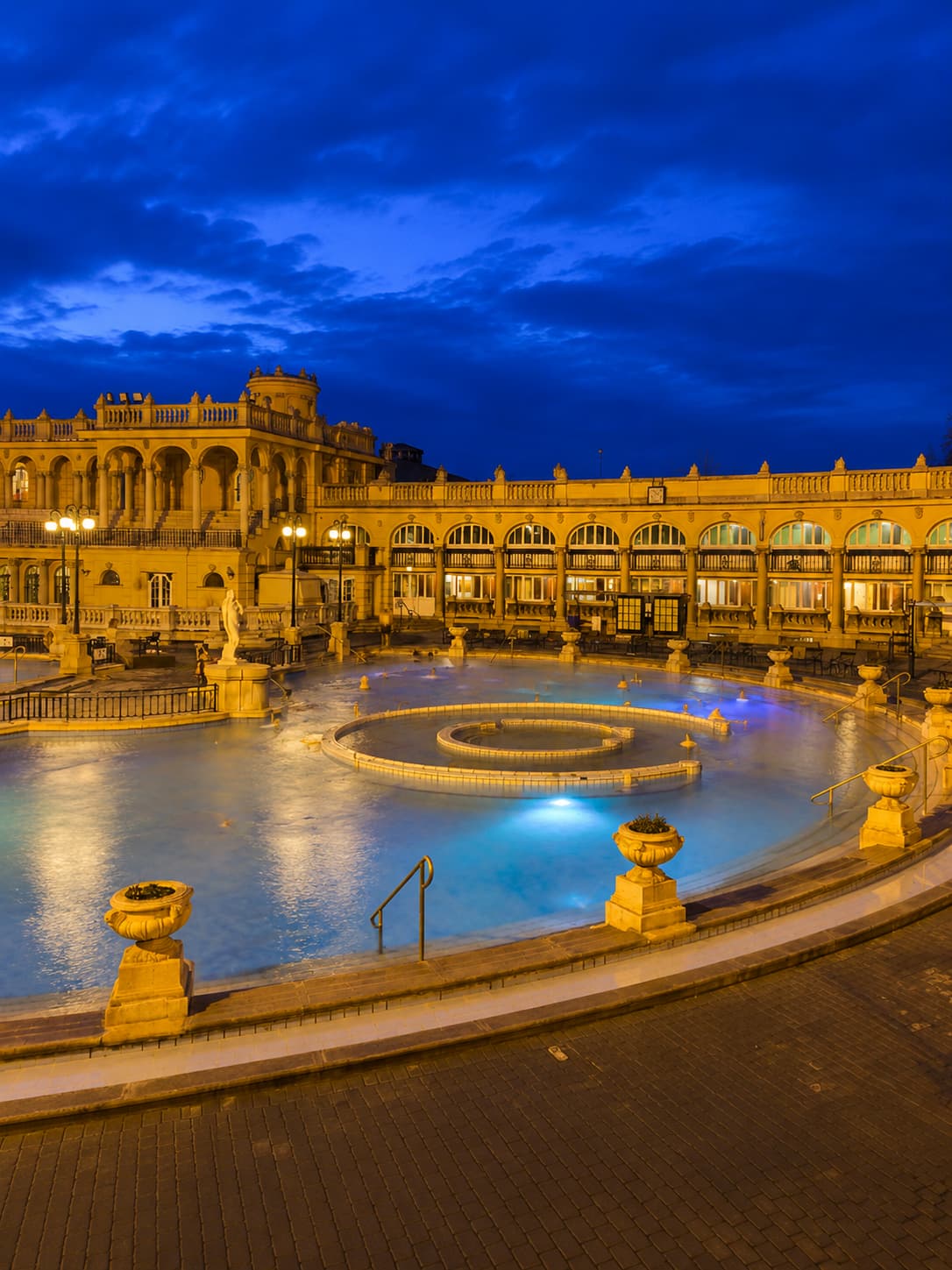
Mariánské Lázně (Marienbad), Czech Republic
Karlovy Vary’s quieter sibling, an hour to the west. Fewer visitors, a more melancholy atmosphere — Goethe wrote his most famous unrequited love poem here after a visit aged 74; Chopin came for treatment; Kafka returned several times. The cast-iron Singing Fountain at the Colonnade puts on a light and music show on the hour that is unexpectedly delightful. Surrounding forests of beech and oak turn reliably in October. For travelers who want the Bohemian drinking-cure experience without Karlovy Vary’s more crowded summer character, Mariánské Lázně is the better choice — and it pairs naturally with Karlovy Vary as back-to-back stops, particularly on a Central Europe road trip. Cost: spring promenade access is free; spa hotel treatments from €40.
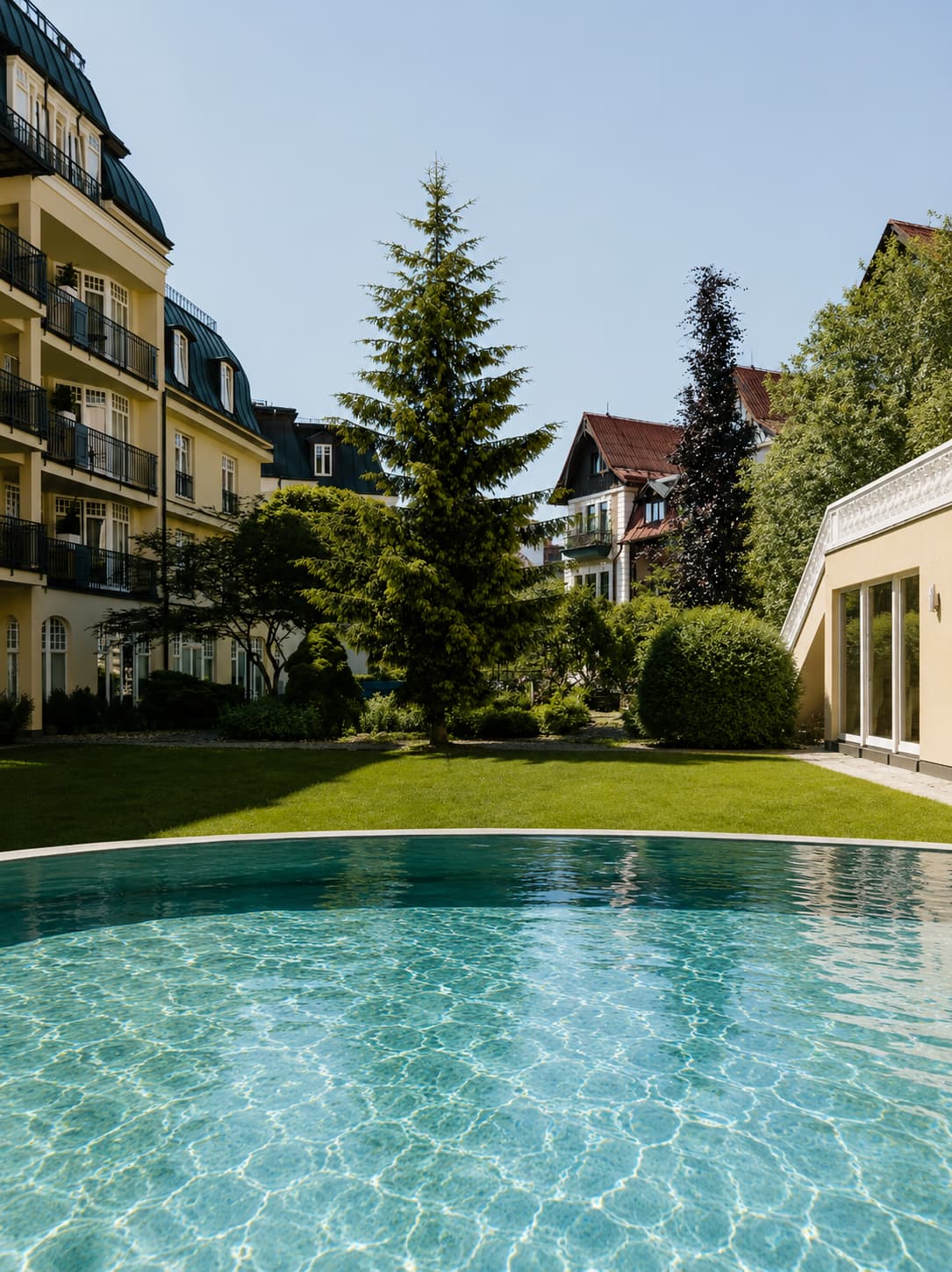
Montecatini Terme, Italy
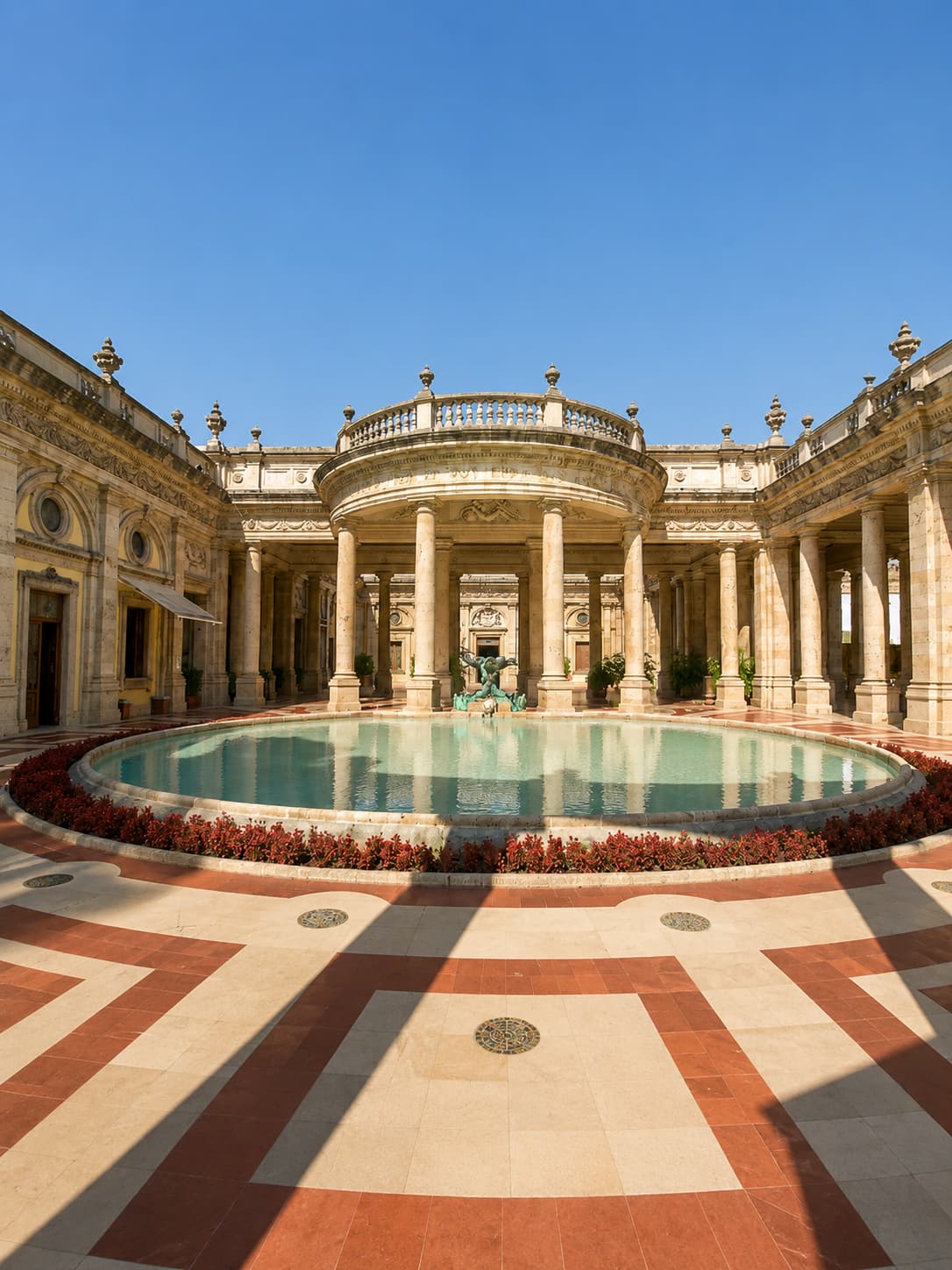
Tuscany’s grand old thermal establishment, in the hills between Florence and Pisa — 45 minutes by train from Florence, which makes it straightforwardly day-trippable. The Terme Tettuccio is a Liberty-style (Italian Art Nouveau) colonnaded complex of real architectural beauty: marble, mosaics, fountains, and a formal garden laid out with the slightly unreal precision of a set from a 1950s film. Its drinking cure tradition parallels Karlovy Vary — sulphurous mineral water from prescribed fountains under ornate arcade roofs, Verdi and Puccini having apparently submitted to the same ritual in earlier decades. Less dramatically natural than Terme di Saturnia but architecturally exceptional. The thermal season runs April through November; October is quiet and the prices at accommodation are lower. Cost: Terme Tettuccio entry from €15; full bathing programmes from €40.
Vichy, France
The most architecturally ambitious spa town in France and the most historically complicated. The Vichy government of 1940–44 operated from here — the hotels and thermal halls becoming the administrative centre of occupied France. That history sits visibly alongside extraordinary Belle Époque infrastructure: the Opéra de Vichy, the thermal halls, the long riverside parks. The tension between the architecture’s beauty and its political associations is part of what makes Vichy genuinely interesting rather than merely pretty. Vichy is almost entirely overlooked by non-French visitors, partly because of that association and partly because it simply doesn’t appear on most European travel itineraries. October is well-suited: the thermal facilities are open through November, the summer crowds are gone, and the town has enough architecture, food, and history to justify two nights. Cost: thermal sessions from €30; the parks and architecture cost nothing.
Leukerbad, Switzerland
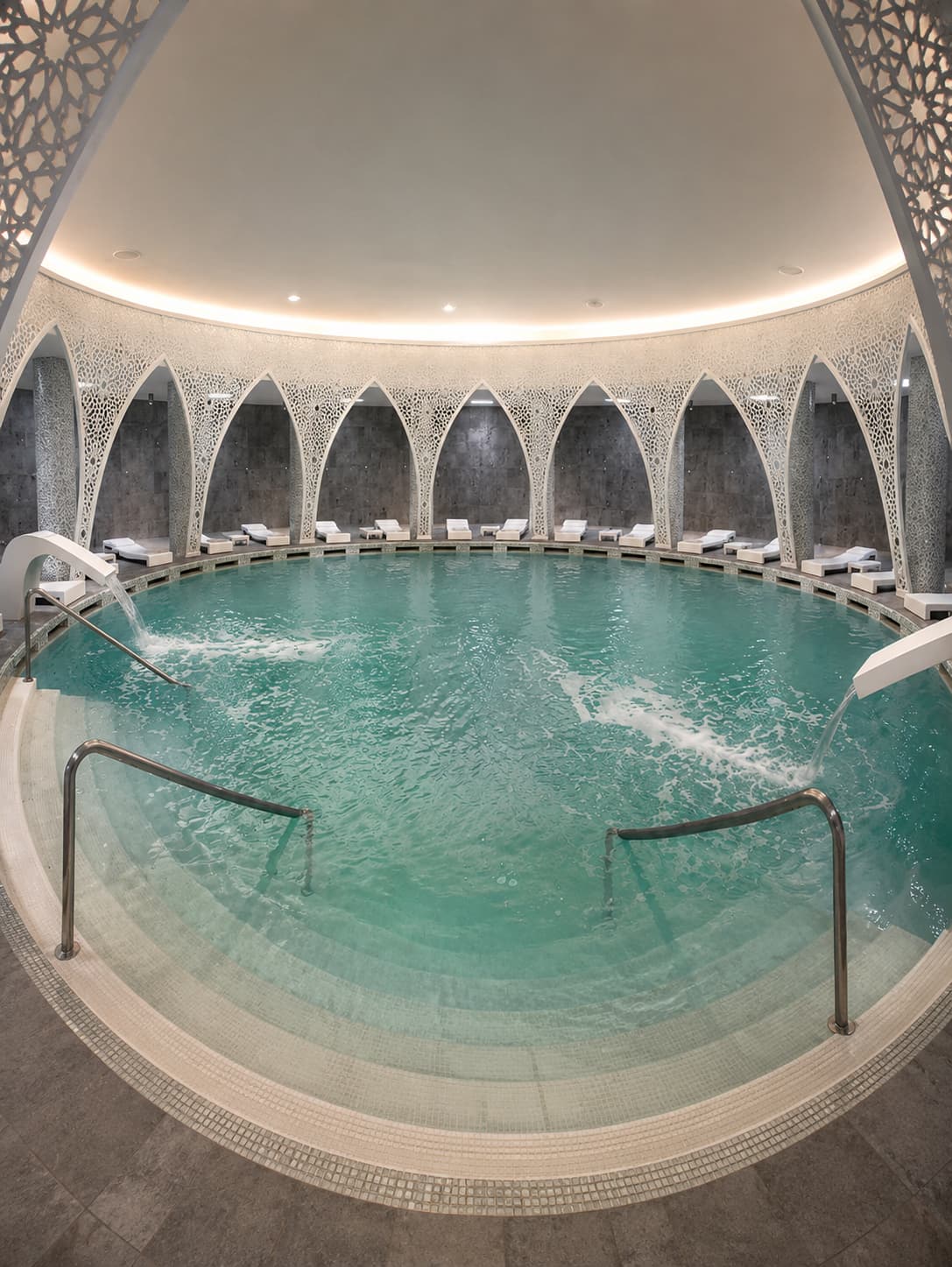
Not on the UNESCO list but arguably the most spectacular setting of any thermal destination in Europe. The highest thermal resort in the Alps — set in a high Valais valley, accessible by cable car or a steep mountain road — Leukerbad’s outdoor thermal pools sit at roughly 2,000m with direct views of the Gemmi Pass limestone walls above and the Bernese Alps beyond. Soaking in 40°C water while snow falls on the mountains overhead is an experience that doesn’t require much elaboration. Pricey in the way Switzerland tends to be, but justifiable if the setting is the point. Day trip from Sion or Brig, or stay in the village. Pairs naturally with a wider Alps in October trip. Cost: pool entry from CHF 25; accommodation from CHF 150 per night.
04 — How Much Does It Cost to Visit a European Spa Town?
One of the things most roundups obscure is how wide the range actually is. In fact, the best spa towns in Europe are not uniformly expensive — several of the most memorable experiences are either free or cheaper than most museum entry fees.
| Free | Terme di Saturnia (Cascate del Gorello waterfall and roadside pools) — €0. Spring access at Karlovy Vary and Mariánské Lázně — €0. Vichy parks and colonnades — €0. |
| Budget entry (under €30) | Most Hungarian baths (Széchenyi, Rudas, Gellért): €20–30. Terme Tettuccio Montecatini: from €15. Thermes de Spa Belgium: from €35 for a half-day. |
| Mid-range session | Baden-Baden Friedrichsbad: €29–35 for the full 17-stage programme. Thermae Bath Spa, Bath: £40 for a 2-hour session. Leukerbad pool entry: from CHF 25. |
| Full spa day with treatments | Most destinations offer hotel spa day packages in the €80–150 range, depending on the property and season. |
| Overnight in a thermal hotel | Range is wide: from around €80/night at Karlovy Vary’s mid-range hotels in October to €400+ at Terme di Saturnia Resort or Leukerbad’s spa hotels. |
The most underutilised insight here is the day-trip model. Karlovy Vary from Prague takes two hours by bus and costs a few euros each way. Baden-Baden from Strasbourg is 45 minutes by train; Montecatini Terme from Florence is under an hour. In each case, the spring access or bath entry is the main cost — and that cost is low. The overnight premium applies only if you want it.
05 — Which European Spa Town Should You Visit First?
That depends on what you’re optimising for. In each case, the answer below is genuinely differentiated rather than the usual hedged non-answer of “it depends on your style.”
English-speaking, two hours from London Paddington by direct train, Georgian cityscape, and a working thermal spa you can actually swim in. The most accessible first spa town for anyone based in or visiting Britain.
The Friedrichsbad is unlike any other thermal facility in Europe. The 17-stage programme, the no-clothing rule, the marble vaulted rooms — it’s odd in the best way. If the goal is an experience genuinely different from anything else you’ve done, this is the one.
For Best Value
Széchenyi entry for around €25 is extraordinary value — a Neo-Baroque complex the size of a palace, outdoor pools open in all weather, and a city around it that deserves two days of its own.
Both are authentic, undervisited by international travelers, and offer experiences with real local character. Mariánské Lázně in particular gives the Bohemian spa town atmosphere of Karlovy Vary at a quieter register.
Karlovy Vary pairs with Prague; Terme di Saturnia pairs with a Tuscany base; Montecatini is a day trip from Florence; Leukerbad slots into an Alps in October itinerary; Mariánské Lázně and Karlovy Vary work back-to-back on a Central Europe circuit. Baden-Baden’s Christmas market — one of Germany’s finest — opens in late November, noted in the separate guide on when Christmas markets start across Europe.
Day Trips and Thermal Spa Rules
What to Bring and Solo Spa Travel
The UNESCO Great Spa Towns of Europe
The Best Season for a European Spa Town
A spa town is not a luxury experience. Several of the best on this list cost less than a cinema ticket to enter. What they offer, at their most honest, is a specific relationship between people and water — sometimes architectural, sometimes medicinal, sometimes both at once. Autumn sharpens that relationship: cool air, hot water, quiet streets, a drink of something sulphurous from a porcelain cup that nobody made you take.
Summer softens all of it. October is when it makes sense.