
Alsace in Autumn: Best Villages, Wine Route & What to Do
In autumn, Alsace gets written about far less than it does in summer or at Christmas — the vines turn gold, the villages go quiet, and October might be the best season of all.
Why Autumn Changes the Alsace Experience
Most people who look up Alsace in autumn have already seen it in December — the mulled wine, the fairy lights, the market stalls stacked three deep. What they haven’t seen, however, is the month before that, when the same vineyards turn gold instead of getting strung with lights, and the villages are doing the actual work of the year instead of performing for a crowd.
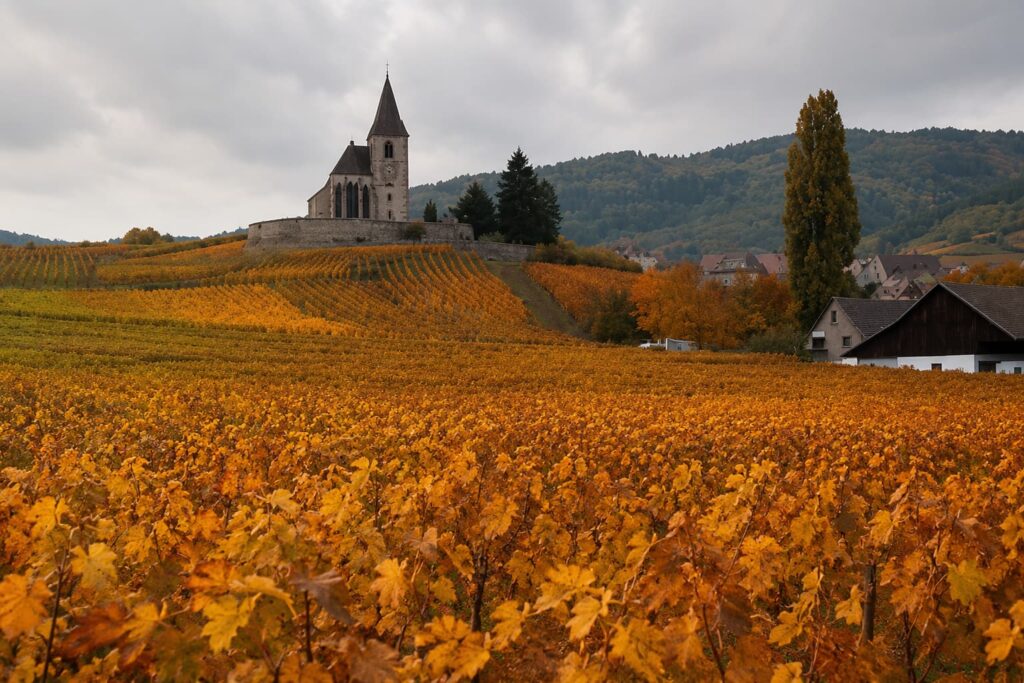
October in Alsace is, above all, the harvest. Along the wine route, the vines shift from green to amber to a deep, almost burgundy red, and for a few weeks the hills look like the postcard version of themselves without the postcard version of the crowds. As a result, Riquewihr — the most photographed village on the route — becomes something closer to a real place. That’s the trade this guide is built around.
01 — Is October the Best Time for Alsace in Autumn?
Yes — and for a first visit, it may honestly be the strongest choice on the calendar. By the first week of October, the crowds that fill Riquewihr and Colmar’s old town through July are gone. Meanwhile, the Christmas market crowd hasn’t arrived yet either, since most markets don’t open until late November. In the gap between the two, the wine route is doing what it actually does: bringing in the harvest.
That timing matters more here than almost anywhere else in France. Specifically, the Vosges forest above the vineyards hits peak foliage from mid-October, which means the same slopes that draw summer visitors for their green terraces draw a much smaller number of people for something more dramatic — gold vine leaves against a wall of turning beech and oak.
What You Trade for the Quiet
Nothing about this season is free, admittedly. Days get shorter fast through October and into November, and evenings turn cold enough that a single layer won’t cut it once the sun drops behind the Vosges. On top of that, rain shows up more often than it does in summer, though usually in short bursts rather than long ones. A handful of smaller guesthouses and family-run restaurants — particularly in villages that lean on Christmas market traffic — also close for a few weeks in November before reopening for the season. None of that is a reason to skip the trip, though. It’s a reason to pack properly and book ahead in the smaller places.
02 — What the Weather Is Actually Like in Autumn
Alsace sits in a rain shadow east of the Vosges, which gives it one of the drier climates in France for its latitude. This detail matters more in autumn, in particular, when neighboring regions get soaked and Alsace often doesn’t.
October
Expect highs of 14–17°C and lows around 6–8°C, with the valley floor noticeably colder in the early morning than the vine-covered slopes above it. Sunny stretches are still common in the first half of the month, and even so, the Vosges can turn genuinely dramatic when mist sits low over the ridgeline — a feature of the season, not a flaw in your trip planning.
November
Temperatures then drop to roughly 8–10°C by day and 2–4°C at night. Days shorten fast, rain becomes more frequent, and by mid-month some villages begin quietly preparing for the Christmas markets. That said, early November is still very workable for an autumn-focused trip; late November, on the other hand, tips into a different season entirely, covered further down.
A proper warm layer for evenings, something waterproof for short bursts of rain, and shoes that can handle wet cobblestones and the odd muddy vineyard path. Mornings around the vines are colder than the daytime high suggests — dress for the coldest hour, not the average.
03 — The Alsace Wine Route in Autumn
The Route des Vins d’Alsace runs 170 km from Marlenheim in the north to Thann in the south, threading through roughly 70 wine-producing villages along the eastern foot of the Vosges. It’s the spine the whole region is organised around, and autumn, in turn, is when it’s doing the most interesting work of the year.
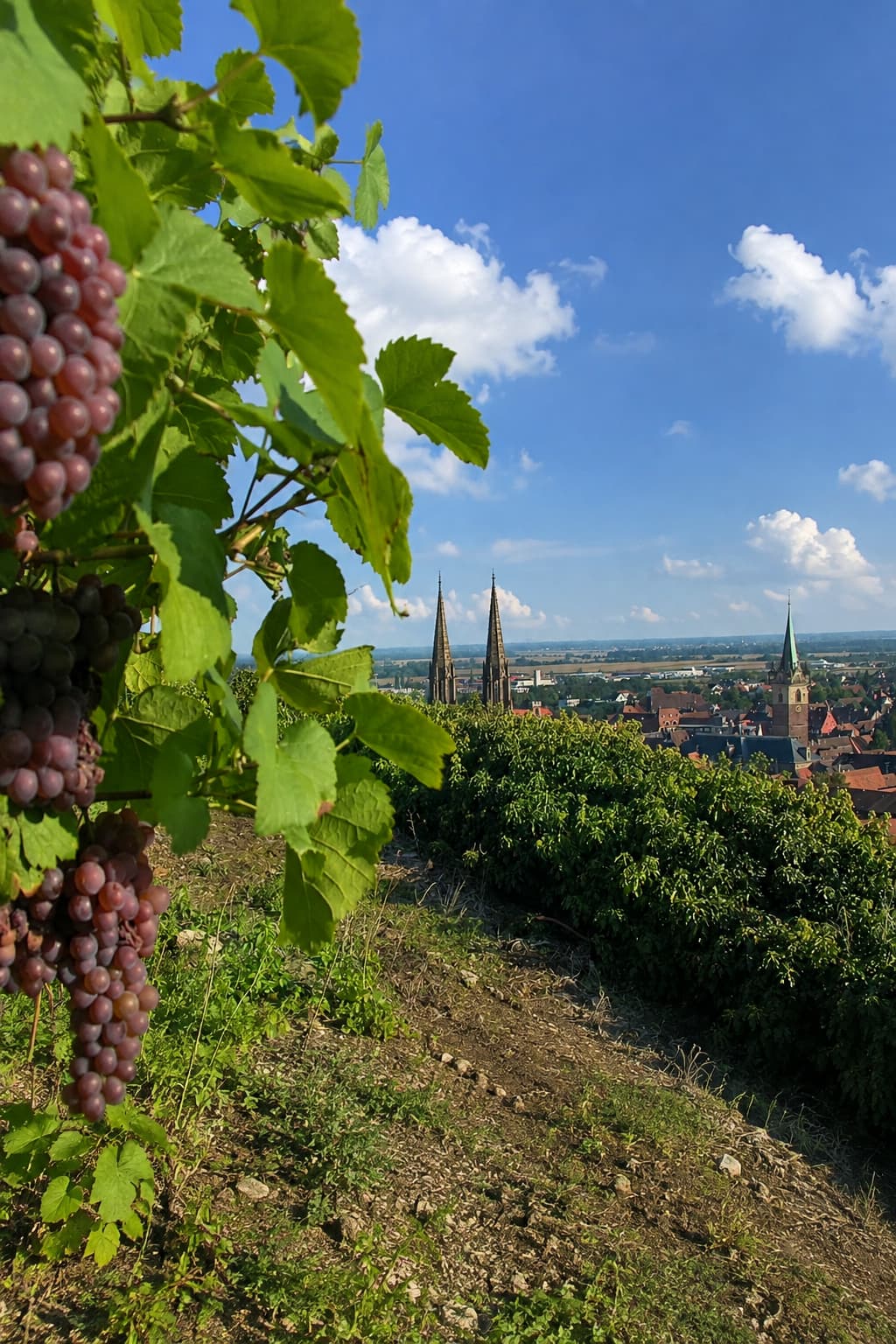
Vendanges, or the grape harvest, runs from mid-September through mid-October depending on the variety, with Riesling and Gewurztraminer typically picked last. During this window, tractors move between rows, cellar doors stand open, and the villages smell faintly of fermenting must. Furthermore, Alsace is the only major French wine region that labels its bottles by grape variety rather than by appellation — Riesling, Gewurztraminer, Pinot Gris, Muscat, and Pinot Noir are the principal grapes, which makes tasting your way along the route unusually easy to navigate even without deep wine knowledge.
Vendange Tardive — the Late-Harvest Window
Some estates, in addition, leave grapes on the vine deliberately into November to make vendange tardive, or late-harvest wine — among the most distinctive sweet wines produced in France. If you’re visiting in early November specifically, this is often the moment to ask a cellar directly whether they’re running late-harvest tastings. It’s a narrower window than the main harvest, in other words, and worth timing around if it interests you.
Every summer photo of the Alsace wine route is, in a sense, really an approximation of what the vines look like in autumn. The gold, amber, and deep red tones that photographers chase in summer light are simply what the leaves actually turn once the season shifts — no filter required.
04 — The Most Beautiful Villages and Places to Visit
The wine route is long enough that trying to see all of it in a short trip usually means seeing none of it properly. For this reason, what follows is a working list — not a checklist to rush through, but the places worth building a slower trip around.
Colmar
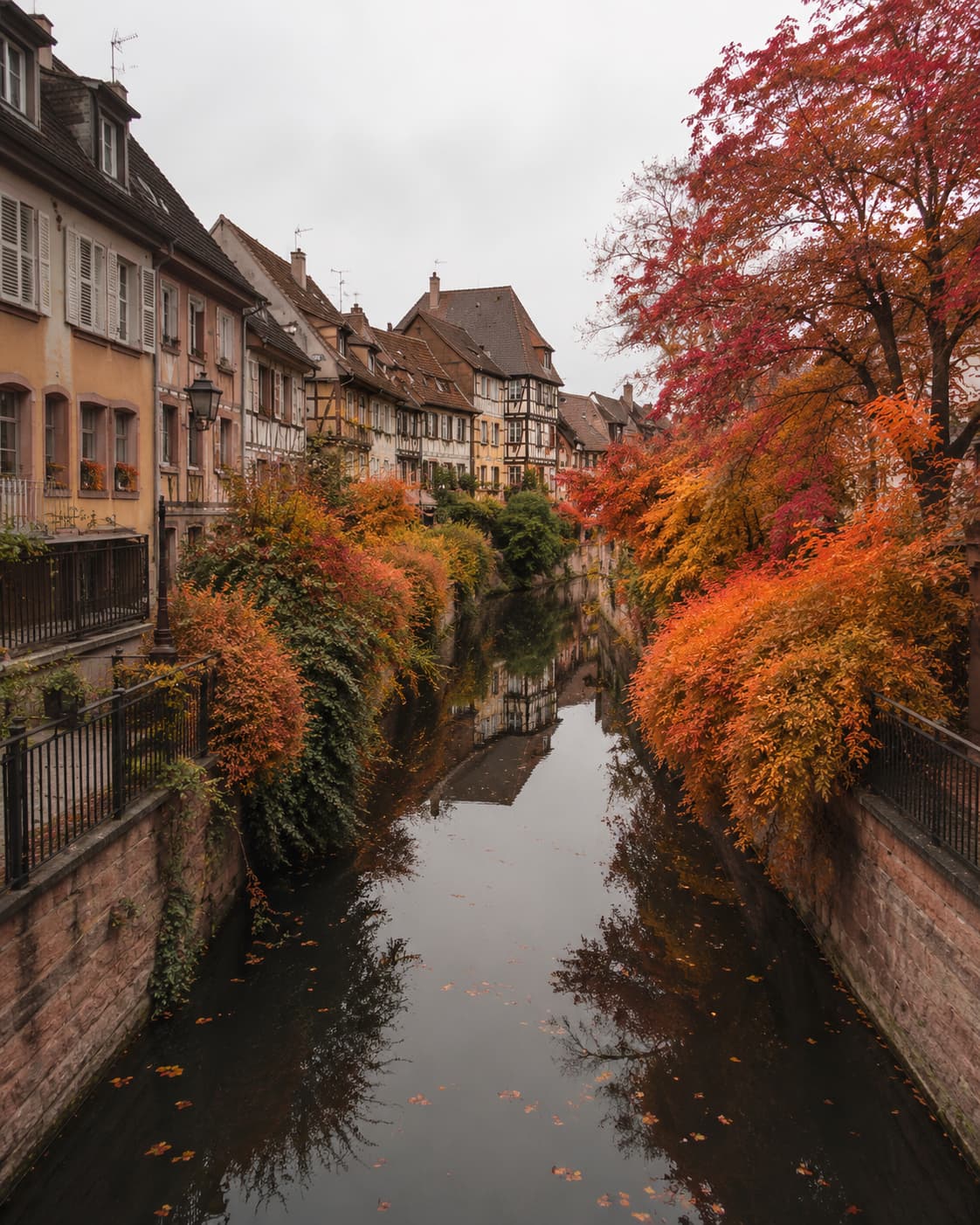
The natural base and the largest town on the route. The Petite Venise canal district and the tanners’ quarter are worth a slow walk rather than a checklist visit, and furthermore, the Unterlinden Museum holds the Isenheim Altarpiece — one of the major works of Northern European art. In October, as a result, Colmar functions as a real town again rather than a staging ground for tour groups. Two nights minimum.
Riquewihr
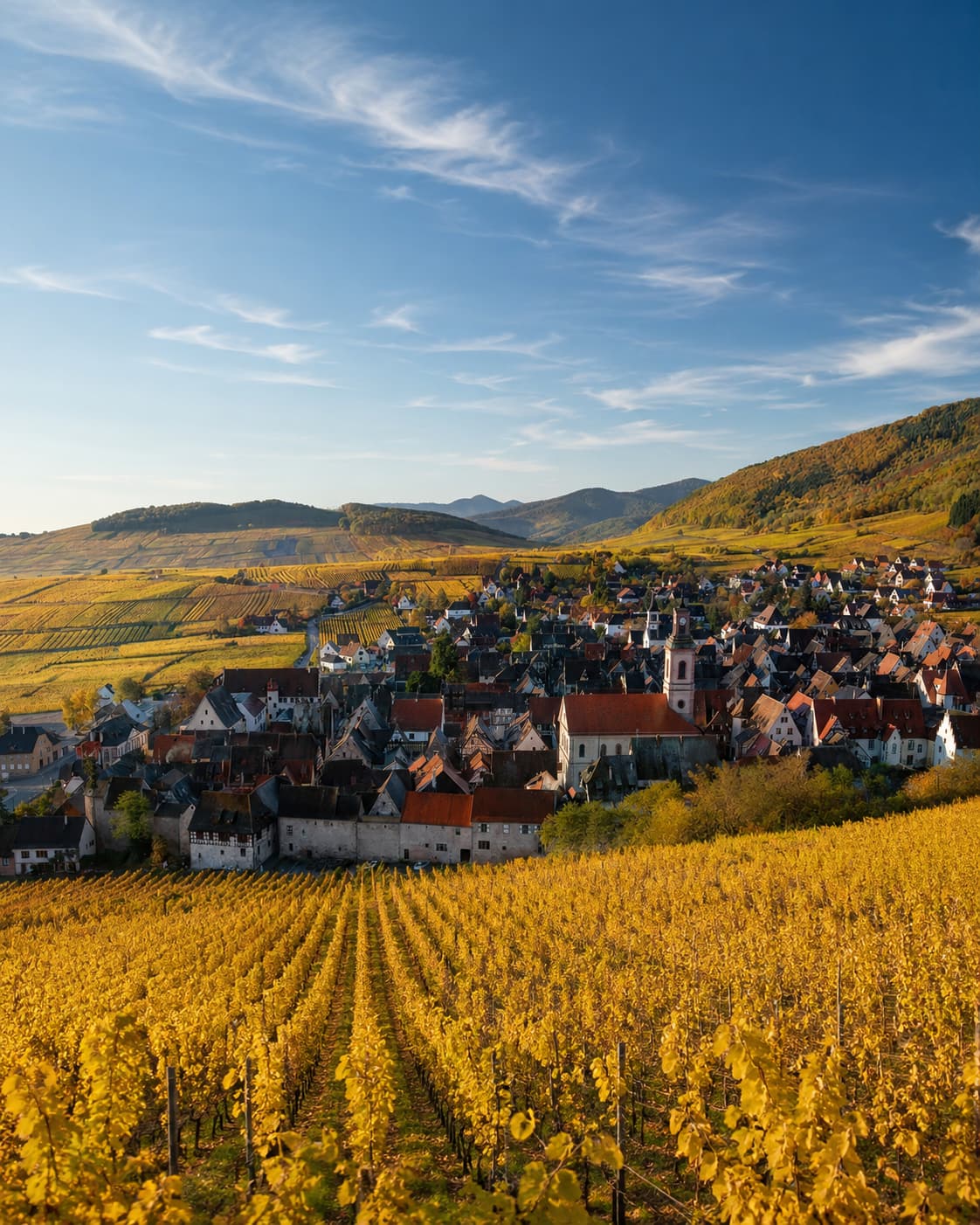
The most-visited village on the entire route, which is exactly why October matters here. It’s surrounded by Riesling vineyards that turn deep gold by mid-October, and the medieval core is almost entirely intact. Arrive early in the morning, before the day’s visitors arrive from Colmar.
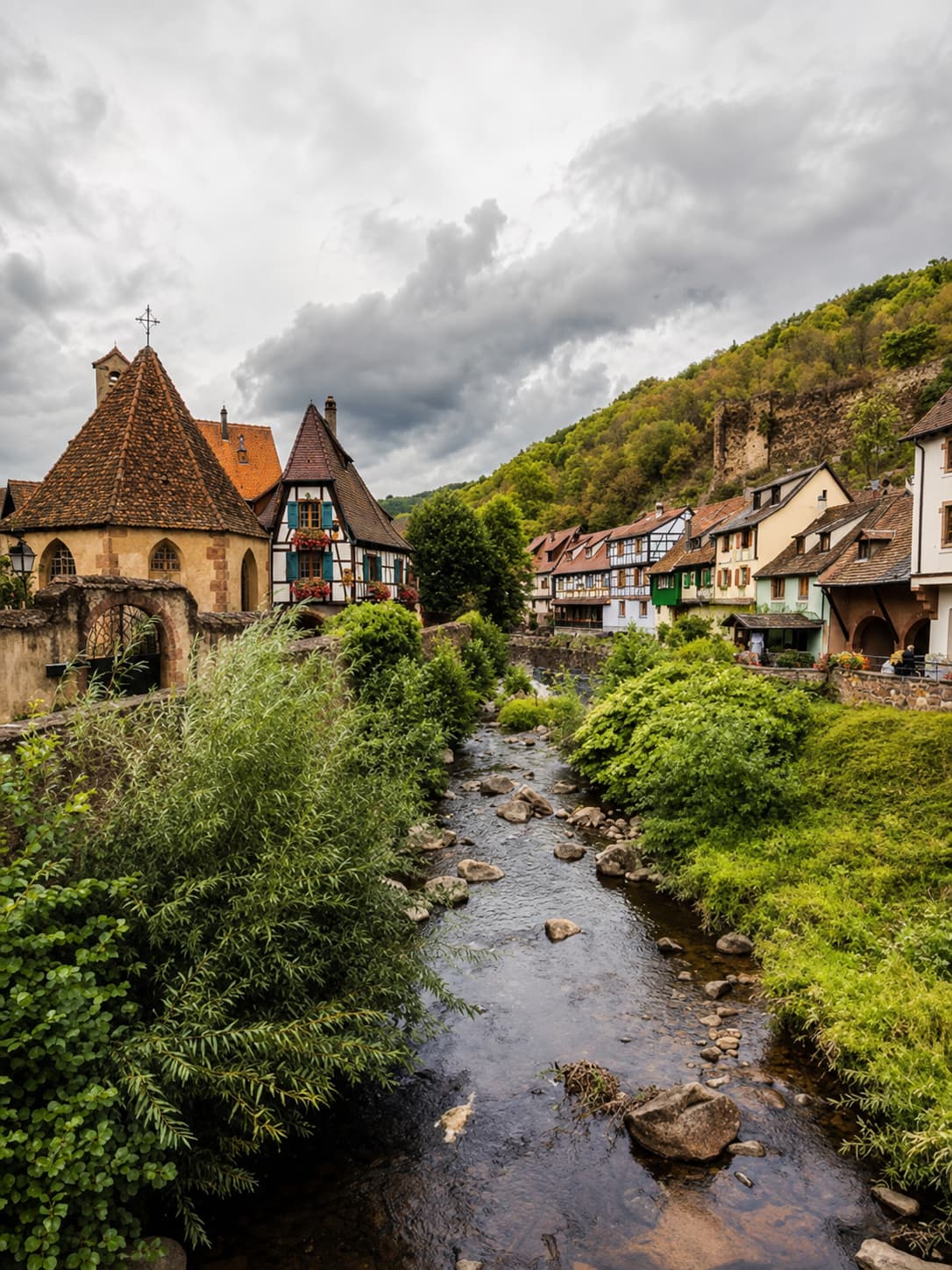
Kaysersberg
Arguably the most beautiful village on the route and the least hyped for it. A small river runs through the centre, a ruined castle sits above town, and the Saturday market is genuinely local rather than staged. Albert Schweitzer was born here.
Ribeauvillé
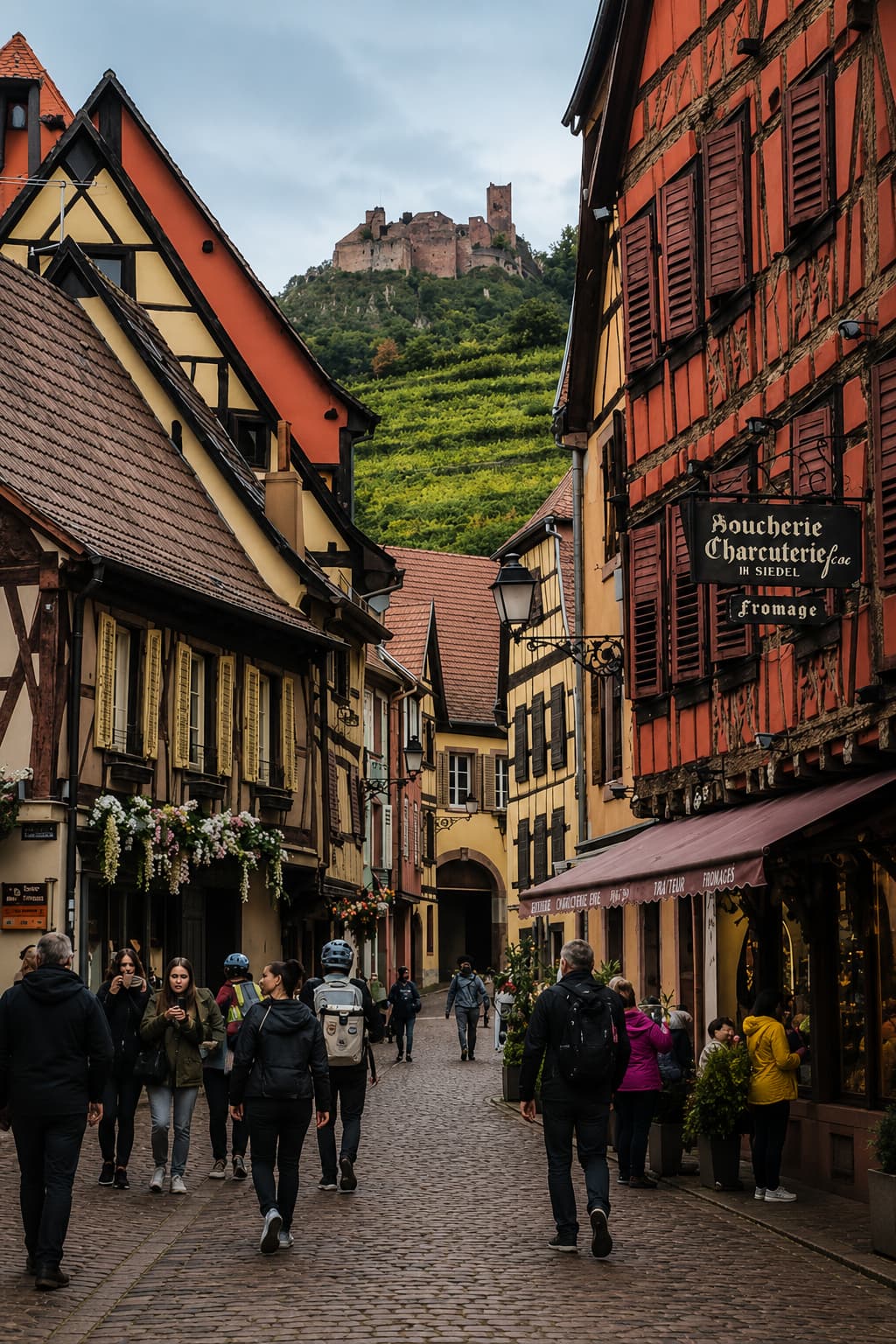
Three castle ruins sit in the hills above town, visible from the main street below. Ribeauvillé, in contrast to some of the more polished stops nearby, feels like a working town rather than a museum piece, and the climb through the Vosges forest to the ruins — deep in October colour — is one of the better short hikes on the whole route.
Eguisheim
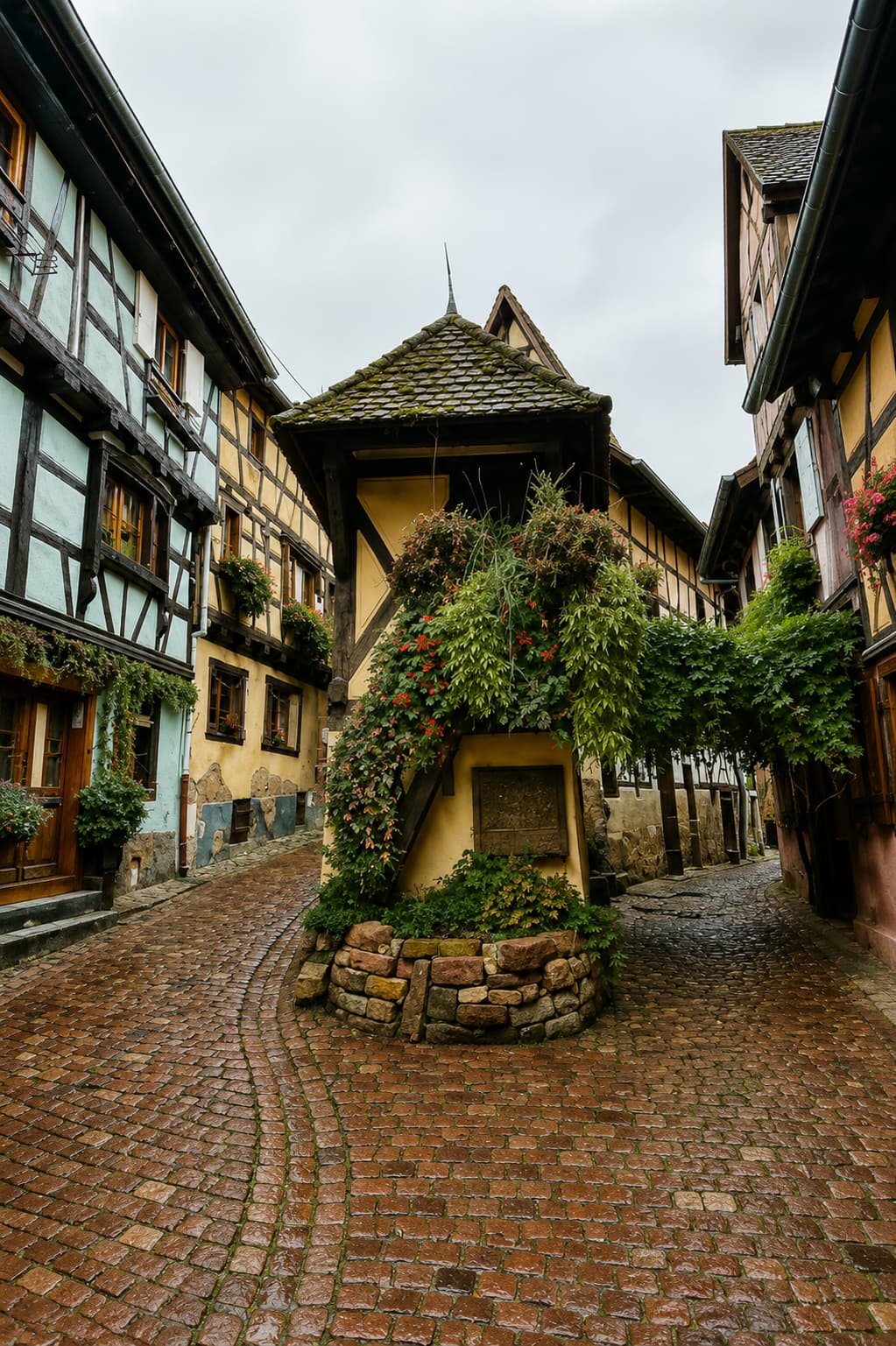
A circular medieval village organised around a single ancient street looping the fortified core — often named among the most beautiful villages in France. Compact enough to walk in under an hour, and striking in the low gold light of an October afternoon.
Obernai
Slightly off the main tourist axis and better suited to staying than day-tripping. A strong local market, solid restaurants at fair prices, and a rougher, less polished feel than Colmar — in a good way.
The most substantial castle in the region, rebuilt in the early 20th century to medieval specifications. It sits high on a Vosges spur, and on a clear October day the view stretches over forested slopes, valley fog, and the Rhine plain toward the Black Forest. Go on a weekday.
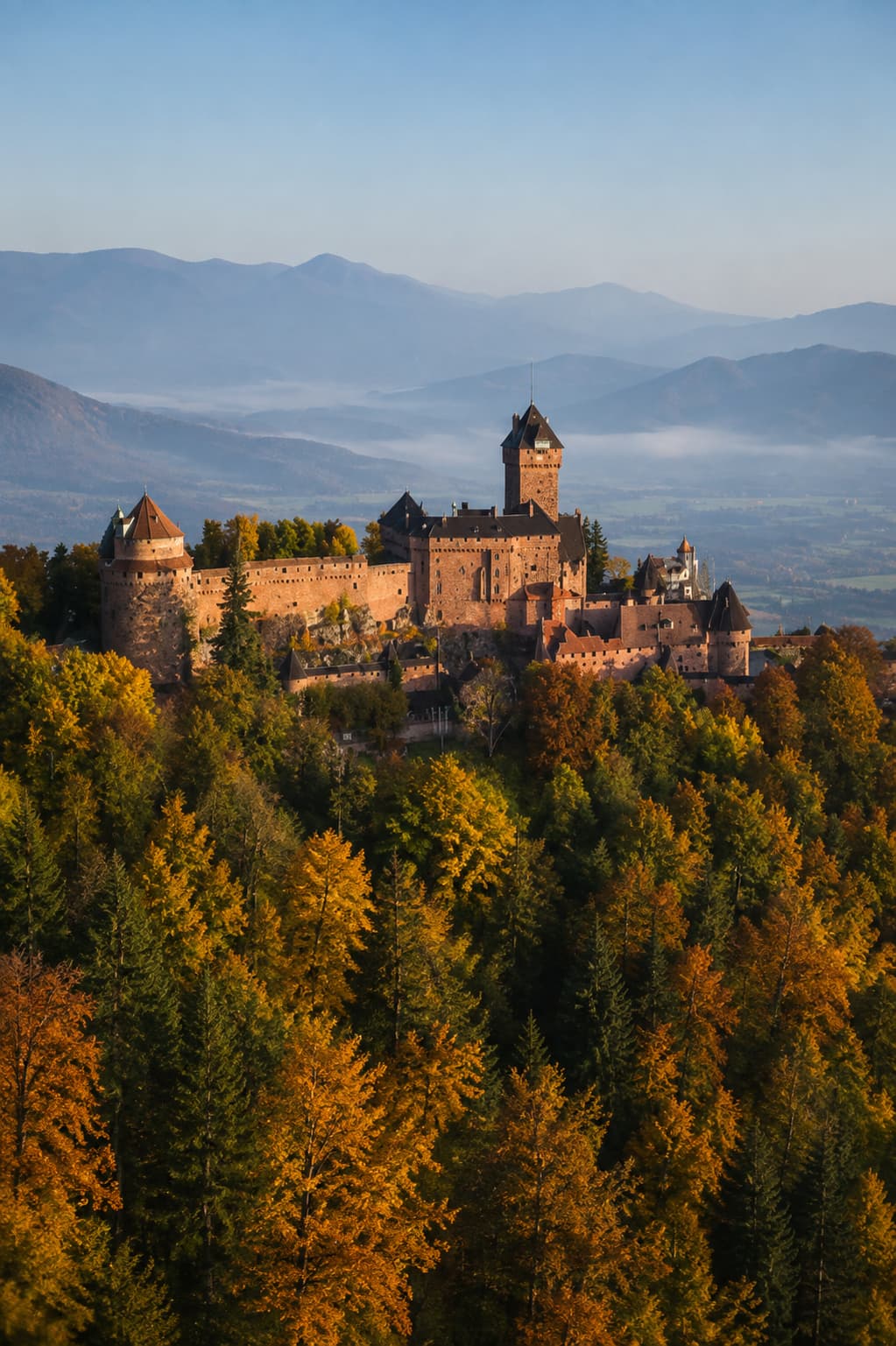
Munster Valley
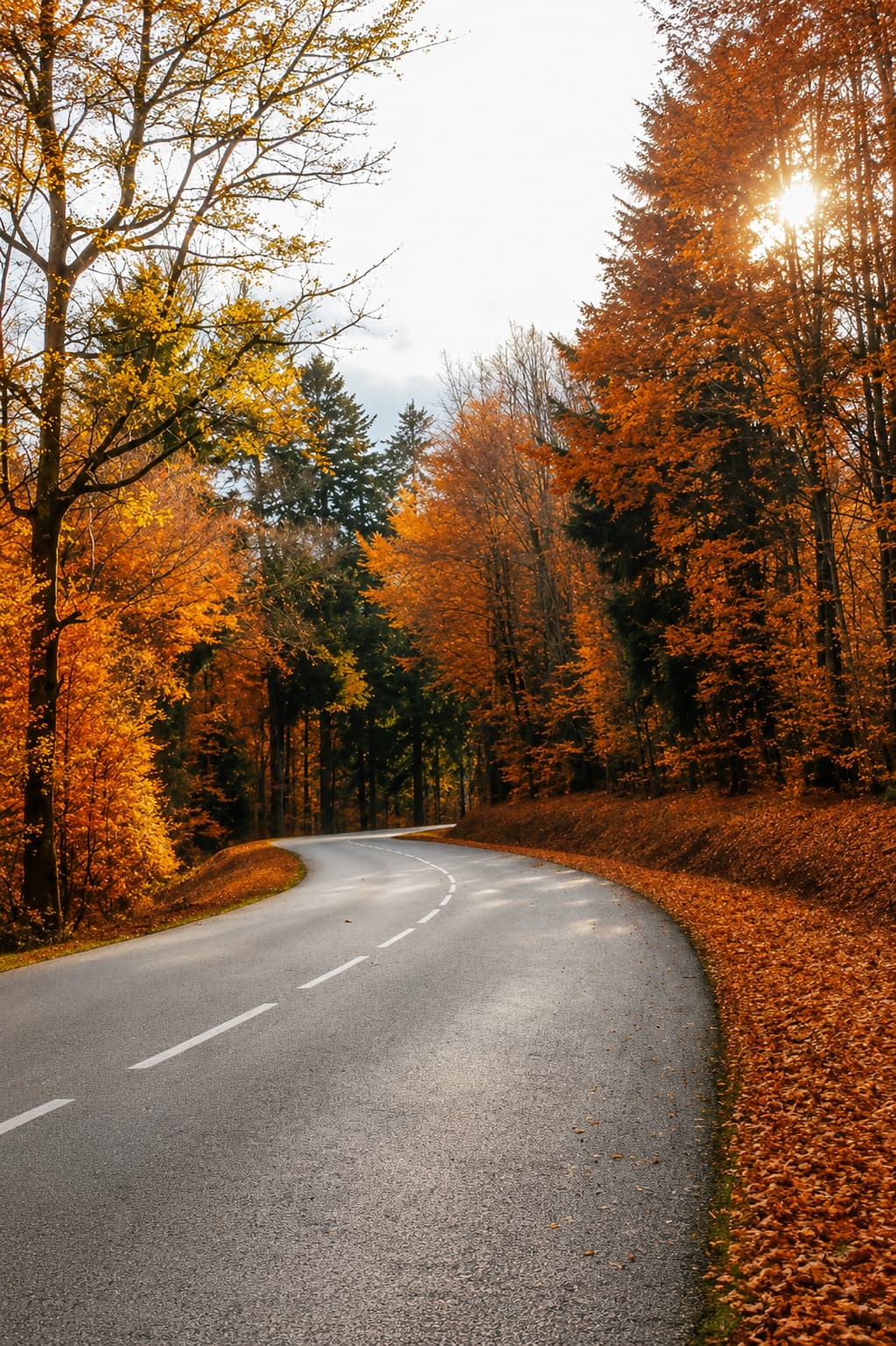
Not a village but a Vosges valley west of Colmar, and the drive through its beech forest at peak October colour is one of the better autumn drives in France. The town of Munster is the source of the washed-rind cheese that shares its name — buy some while you’re there.
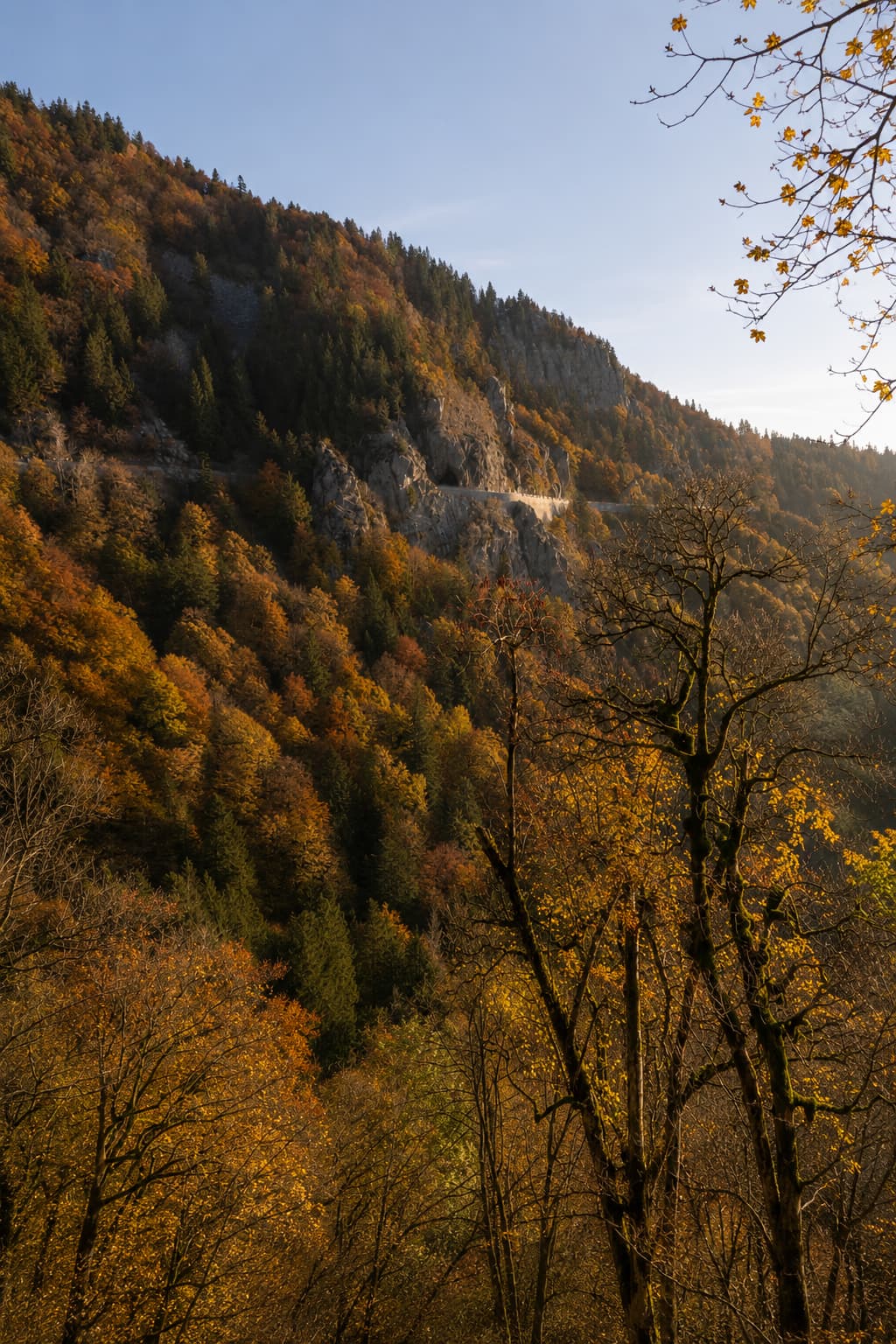
Sélestat
An underrated stop with a genuine Humanist Library — one of Europe’s earliest public libraries, holding a 9th-century illustrated manuscript. It’s more lived-in than Colmar, on the whole, practical as a base, and largely unknown outside specialist circles.
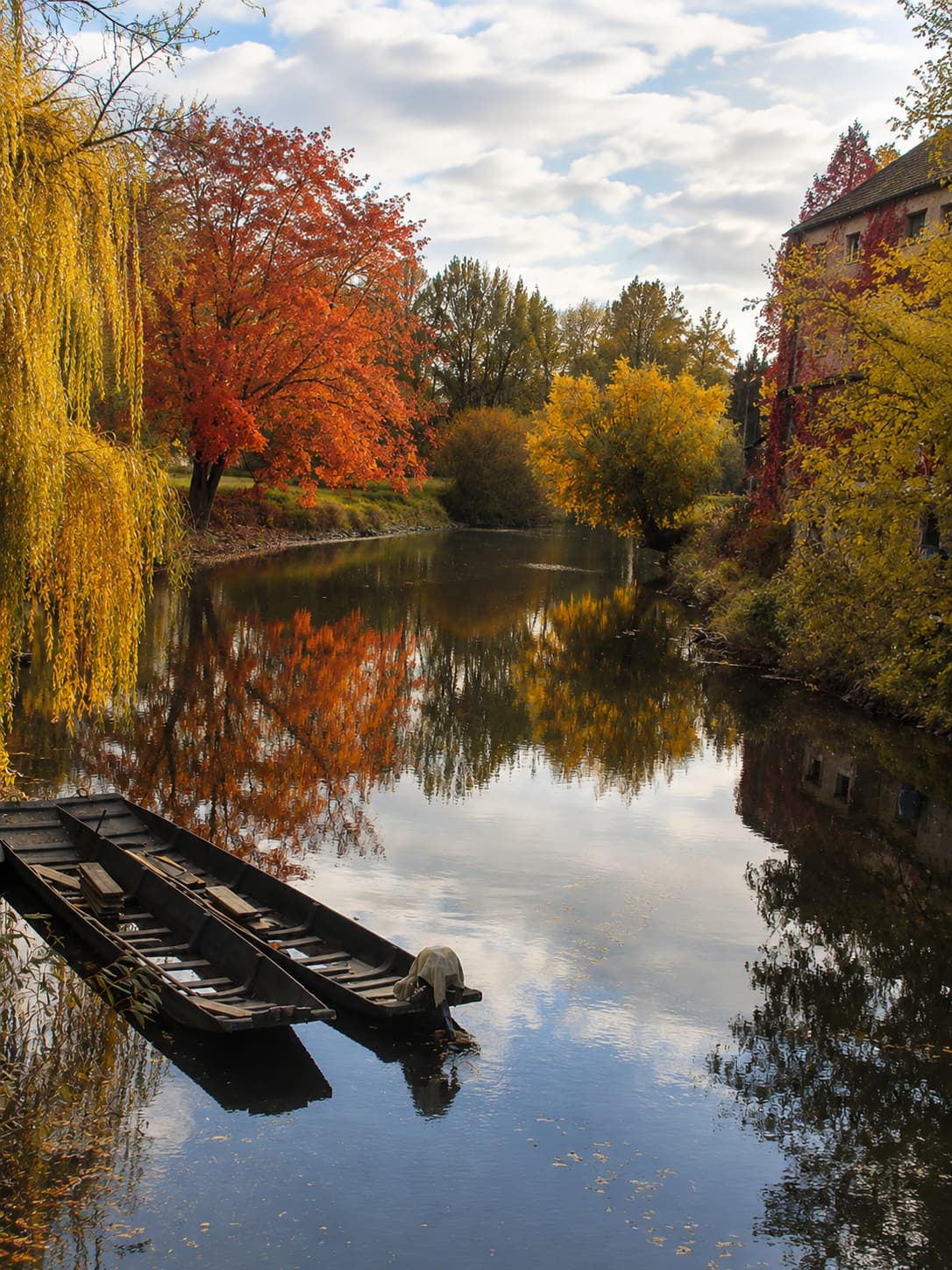
Andlau
A small village south of Barr with a Romanesque abbey and a remarkably carved portal, surrounded by vine terraces turning colour in October. The kind of place you find by accident and think about coming back to.
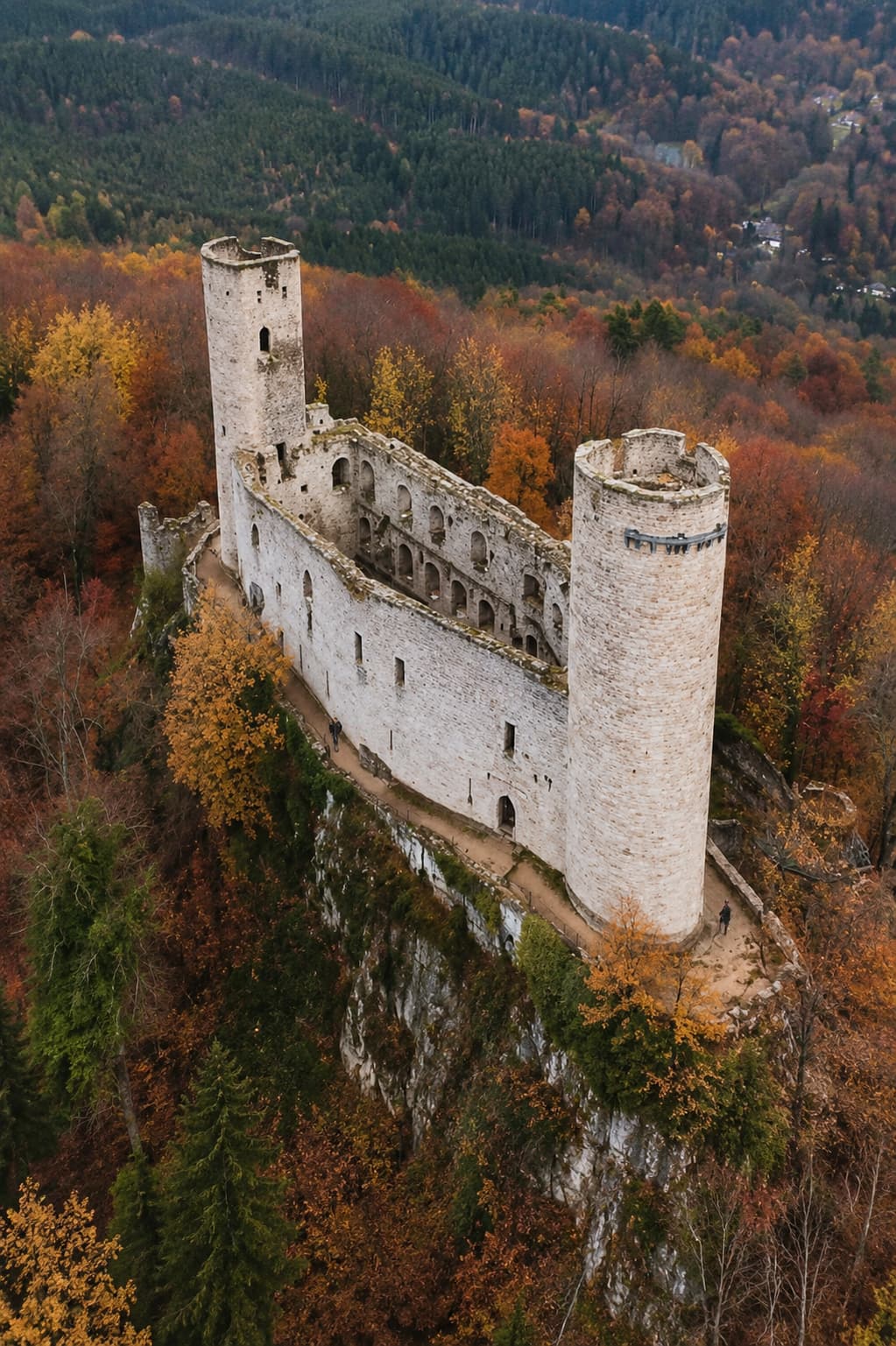
05 — The Best Things to Do in Alsace in Autumn
Beyond the villages themselves, Alsace in autumn opens up a handful of activities that don’t really exist in the same way in summer or during the Christmas season.
Pick a 20–30 km stretch and stop when something looks interesting rather than following a fixed list. The route rewards wandering more than it rewards efficiency.
Many estates along the route are open without an appointment during and just after the vendanges — a rarer thing outside this window.
A 2–3 hour walk through October foliage with views back over the vine-covered valley — one of the best short hikes on the route and easy to underestimate from the trailhead.
Housed in the Unterlinden Museum, it’s one of the most powerful paintings in existence. In October, you can stand in front of it without navigating a tour group.
The Alsatian flatbread — crème fraîche, lardons, onions — served at the region’s version of a wine bar, usually open for lunch.
Farms in the Munster Valley sell directly. The smell announces itself before you see the stall; the taste makes the case for itself.
The Castle Path runs along the Vosges ridge between Ribeauvillé and Haut-Koenigsbourg, most accessible in dry October weather before the wetter stretch of November sets in.
Alsace holds one of the highest white stork populations in Western Europe. Most migrate south by September; even so, some remain into October, and nests are still visible on rooftops across the route.
06 — Is Alsace in Autumn Crowded?
It depends which two weeks. Through the first half of October, lighter summer crowds are still possible on weekends in the most famous villages, Riquewihr and Eguisheim especially. From mid-October onward, however, the region turns genuinely quiet, particularly on weekdays, and you can walk most village streets without navigating a tour group at all.
November, in turn, brings a further drop — the pre-Christmas calm, with very few visitors and some smaller guesthouses and restaurants closing on Mondays and Tuesdays. That said, quiet here doesn’t mean shut. The winstubs, wine cellars, and local markets keep running through it all; they’re simply not running for tourists anymore.
07 — Is November Too Late to Visit Alsace?
Early November is arguably the best-kept secret on this calendar. The vendange tardive tastings are still running, the last of the foliage is often still visible, and Christmas market construction hasn’t started yet. At this point, in other words, the region feels at its most local — this is Alsace without an audience.
Mid-to-late November, on the other hand, is a different matter. From around the third week of the month, the Christmas markets in Colmar, Strasbourg, and smaller villages begin opening, and as a result, the character of a trip shifts entirely — busier, more festive, more commercial. That’s a valid reason to visit on its own terms, admittedly, but it isn’t the trip this guide is describing.
If autumn is what you’re after, aim to be there before November 15th. After that date, in other words, you’re stepping into Christmas market season — a good trip, but a completely different one. See our full guide to when Christmas markets start across Europe if that’s the season you’re actually planning around.
08 — How Many Days Do You Need in Alsace?
Alsace is a small region, and it’s easy to rush through it without meaning to. Specifically, a 3-day sprint through every village on this list will leave you with photographs and not much else — the route is built for 20–30 km days with long lunches, not a checklist pace.
Three Time Frames That Work
| Minimum — 3 days | Colmar as a base, one day trip along the wine route, one day for the Vosges or Haut-Koenigsbourg. |
| Recommended — 5 days | A proper north-to-south drive of the route with overnight stops in two or three villages, room to slow down between them. |
| Full road trip — 7 days | Strasbourg, the full wine route, Vosges hiking, and genuinely unhurried village time without cramming the itinerary. |
Alsace sits close enough to Paris, moreover, that pairing it with a longer route through the region makes sense for anyone road-tripping through the country in autumn. If you’re building a longer trip, our Central Europe road trip guide covers how Alsace fits alongside a wider France–Germany–Switzerland route, and the Vosges foliage described above, in turn, overlaps with what we cover in our broader guide to fall foliage across Europe.
Transport, Costs, and Food in Alsace
Day Trips and November Travel in Alsace
Alsace gets photographed twice a year — once in summer, once at Christmas — and both versions are true as far as they go. October, however, is neither of those things. It’s the region between its own peaks, doing what it actually does: making wine in the hills, eating well in small rooms, and looking extraordinary in low autumn light. That, in the end, is the version worth going for.