
Tuscany in Autumn: Best Places, Harvest Season & Days Needed
What Tuscany in October and November actually looks like — grapes coming off the vine, truffle dogs working the fog, and hill towns nobody’s fighting you for a table in.
Why Autumn Changes the Tuscany Experience
Tuscany in autumn doesn’t perform for anyone. By late September, the tour buses that clog the Val d’Orcia roads all summer have mostly gone home, and what’s left is a landscape genuinely occupied with its own work — grapes coming off the vine, truffle dogs working the tree lines at dawn, the first press of new olive oil going out to tasting rooms that don’t bother advertising it. This is the version of Tuscany that doesn’t need summer’s heat or crowds to be worth the trip. It simply needs you to show up in October or November instead.
Most guides treat this season as a quieter backdrop for the same photos everyone already takes in July. That’s backwards. Autumn is the one time of year Tuscany is actually producing something — wine, truffles, oil — rather than serving tourists a version of itself. This guide covers where to go, what’s genuinely happening in the fields and the truffle woods, how the weather holds up, and how many days you actually need to see it properly without turning the trip into a checklist.
01 — Tuscany in Autumn: Is October a Good Time to Visit?
Yes — and for a reason that has nothing to do with dodging crowds. October is when Tuscany is doing something. The grapes are being pressed, the olives are starting to come down, and the roads that were bumper-to-bumper with rental cars in July are instead lined with tractors hauling crates of sangiovese to the co-op winery. Summer Tuscany is a place you visit. Autumn Tuscany is a place that’s still working, and you happen to be there for it.
The Honest Case for Autumn
Crowds thin out considerably once September ends, particularly on weekdays and especially past the second week of October. Hotel and agriturismo rates also drop — sometimes by 30% or more compared to July and August — and restaurant tables that required reservations weeks out in summer become available same-day. Temperatures, meanwhile, sit in a genuinely comfortable range: warm enough for full days outdoors, cool enough that climbing the streets of a hilltop town like Volterra or Cortona doesn’t leave you drenched by 10am. On top of all that, this is harvest season — wineries open their doors for tastings tied directly to the vendemmia, and truffle hunts run on a schedule that simply doesn’t exist in June.
What You Actually Give Up
- Coastal areas wind down: beach towns along the Tuscan coast start closing seasonal restaurants and beach clubs by late September
- Shorter days: by November, sunset arrives before 5:30pm, which compresses how much driving-and-stopping you can fit into a day
- Reduced hours: a handful of smaller museums and civic sites in less-visited towns cut back their opening hours in November
- Weather is less predictable: a clear October afternoon can still turn to rain by evening, particularly in the second half of the month
None of that outweighs what autumn adds. In particular, it’s worth noting that a traveler who wants beach time and long, hot evenings is better served by June. Someone who wants to watch the season actually happen is better served by October.
02 — Tuscany in Autumn Weather: What It’s Actually Like
October in Tuscany stays close to 14–18°C, and sunshine is still reliable through most of the month, with occasional rain arriving mid-month and again toward the end. November runs cooler and wetter, generally 10–14°C, though early November remains very workable for a trip — it’s really the last ten days of the month where the region starts to feel dormant. Mornings are cold in both months, especially in hilltop towns where the wind has nothing to block it, so the temperature swing between 8am and 2pm can be considerable.
- Layers, always: a warm morning jacket you can shed by early afternoon
- Real shoes: hilltop towns mean cobblestones and steep grades, not sandals
- A compact umbrella or rain shell: for the mid-month rain windows
- A scarf: for the cold mornings at outdoor markets and vineyard visits
03 — Tuscany in Autumn Harvest Season: What’s Actually Happening in the Fields
This is the part every other guide skips past on its way to a photo of Val d’Orcia. Three separate harvests overlap across October and November, and each one is something you can actually be part of, not just observe from a car window.
The Grape Harvest — Vendemmia
Tuscany’s vendemmia, the grape harvest, runs from late September through mid-October. The same roads that back up with tourist traffic in July are instead lined with tractors carrying sangiovese grapes to cooperative wineries across Chianti and to the Brunello estates around Montalcino. Many estates open specifically for harvest-season tastings, and some let visitors watch — or join — the pressing itself. Booking a harvest tasting in early October, while the presses are still running, gets you a version of a winery visit that simply doesn’t exist the rest of the year.
White Truffle Season
White truffle season in Tuscany peaks between October and December. The truffle fair in San Miniato, held over three weekends in November, ranks among the oldest and most respected in Italy — truffles sourced from this zone are sold on to restaurants across Europe. Guided truffle hunts run around San Miniato and the Crete Senesi through this window, and the dogs, not the humans, do the actual work. It’s a genuinely odd, quiet way to spend a morning: following a dog through wet woodland at dawn while someone explains what it’s smelling for.
Guided hunts around San Miniato fill up fast during the November fair weekends specifically. If a truffle hunt is a priority, book it before you book anything else on the trip.
The Olive Harvest and Olio Nuovo
The olive harvest in Tuscany begins in November, earlier at lower altitudes and later as you climb into the hills. Cold-pressed olio nuovo — the season’s first olive oil — is peppery, intensely green, and unrelated to anything sold in a supermarket bottle. Many estates offer tastings directly from the press, often paired with simple bruschetta so the oil itself stays the point. If truffle season is the headline event of a Tuscan autumn, olio nuovo is the quieter one — easy to miss unless you specifically go looking for it.
04 — The Most Picturesque Places to Visit in Tuscany in Autumn
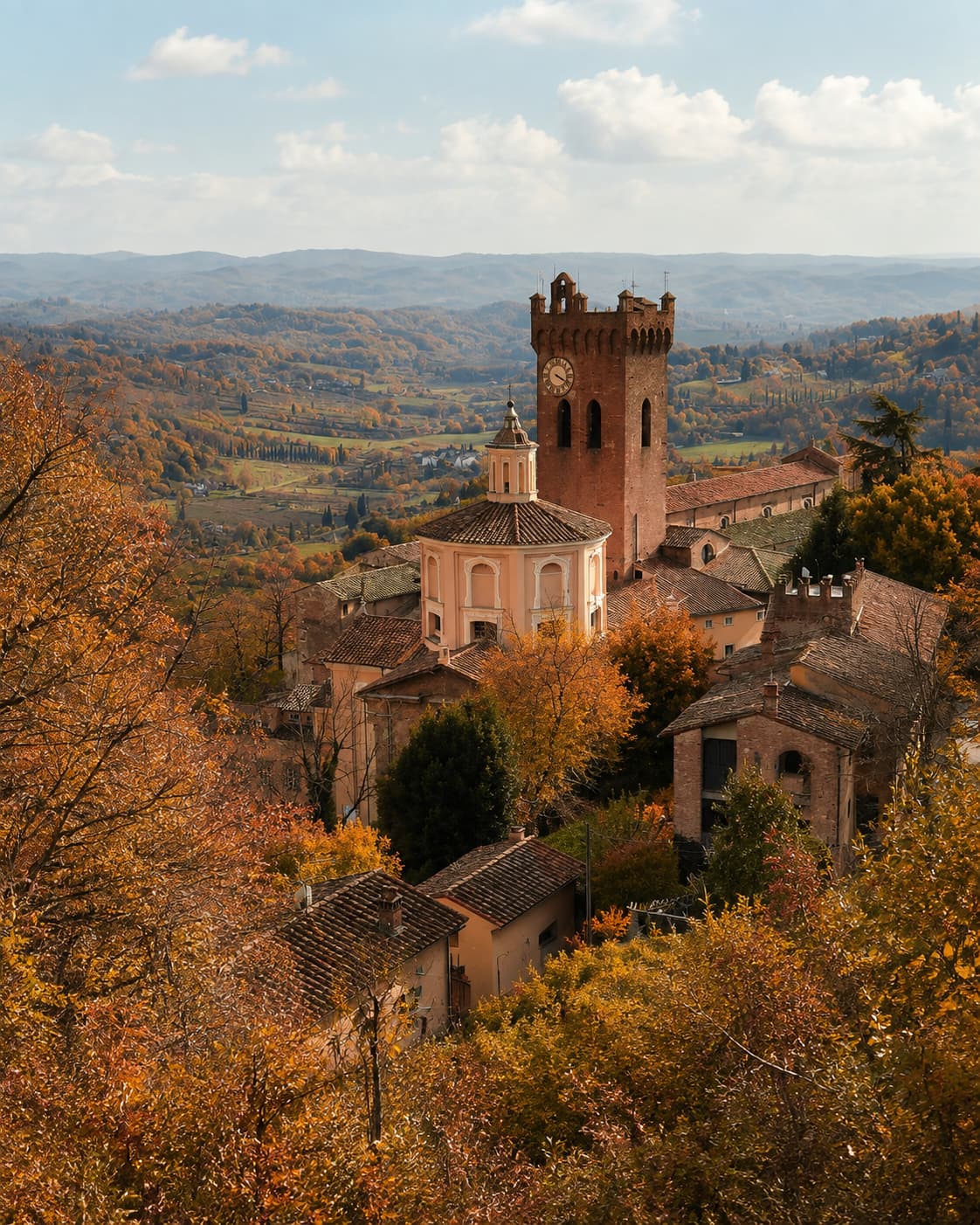
Ten places worth building a route around, grouped the way they actually sit on a map rather than by how famous each one is.
Val d’Orcia and the Wine Hills
Val d’Orcia
Chianti
Montalcino
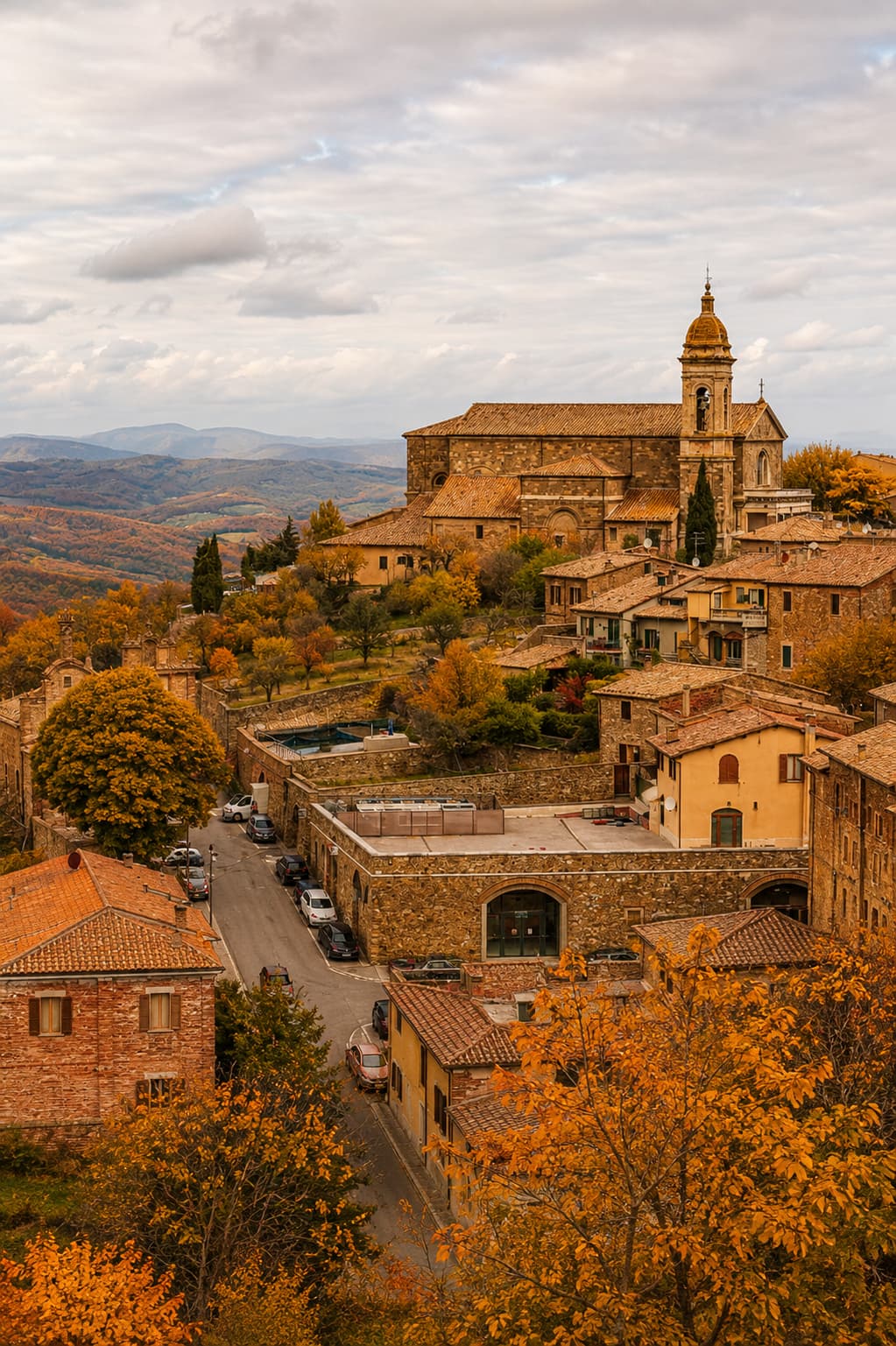
Montepulciano
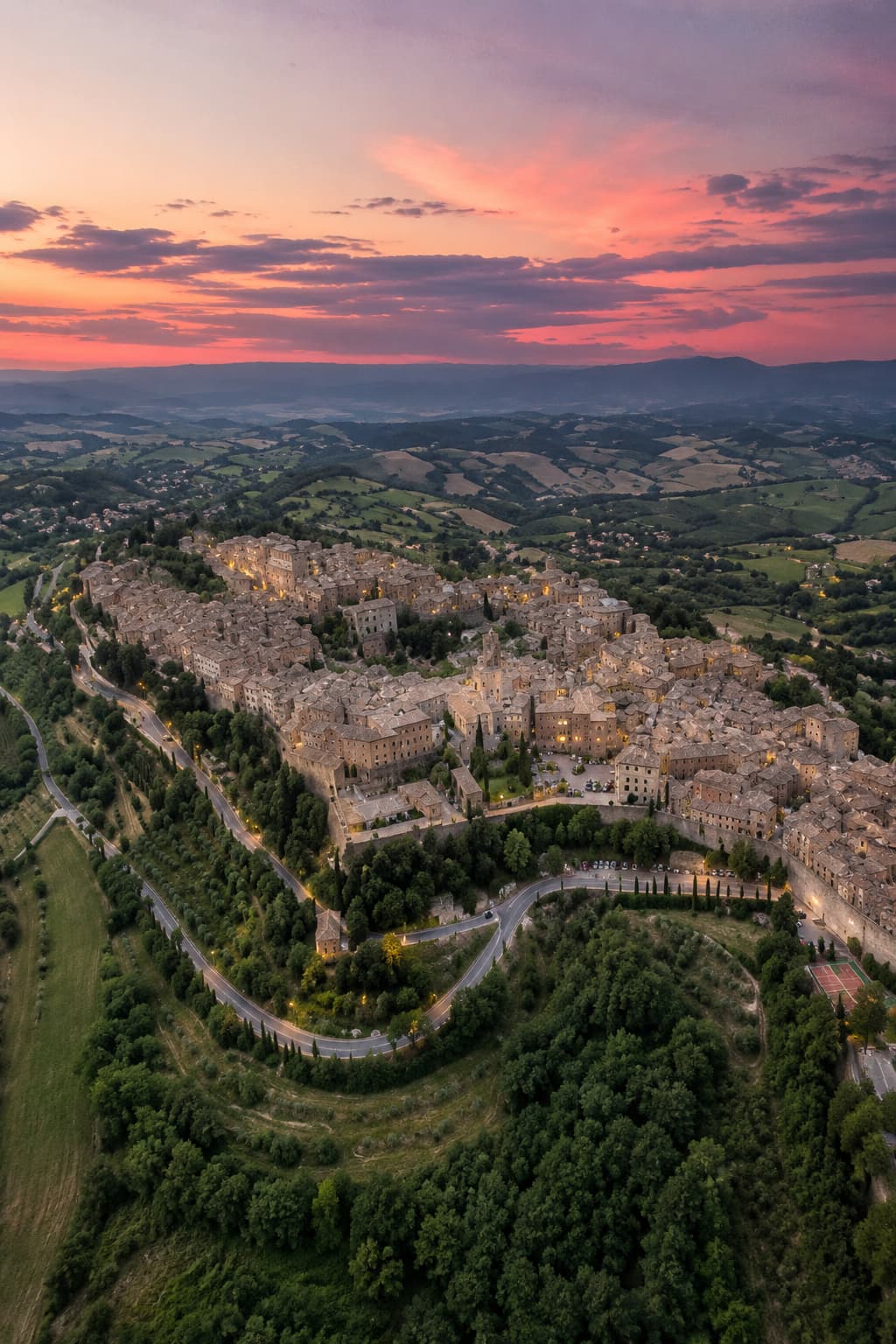
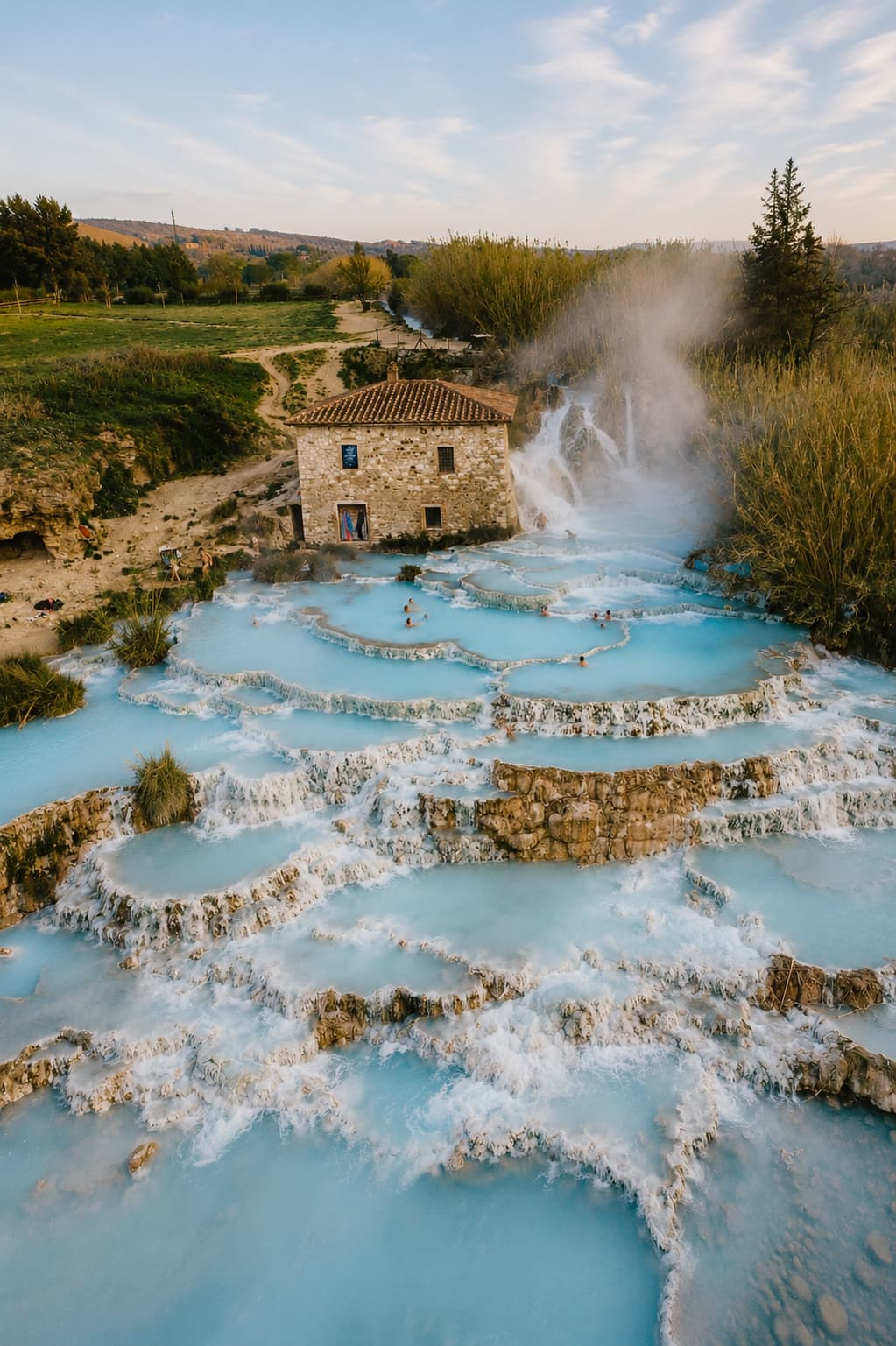
Bagno Vignoni
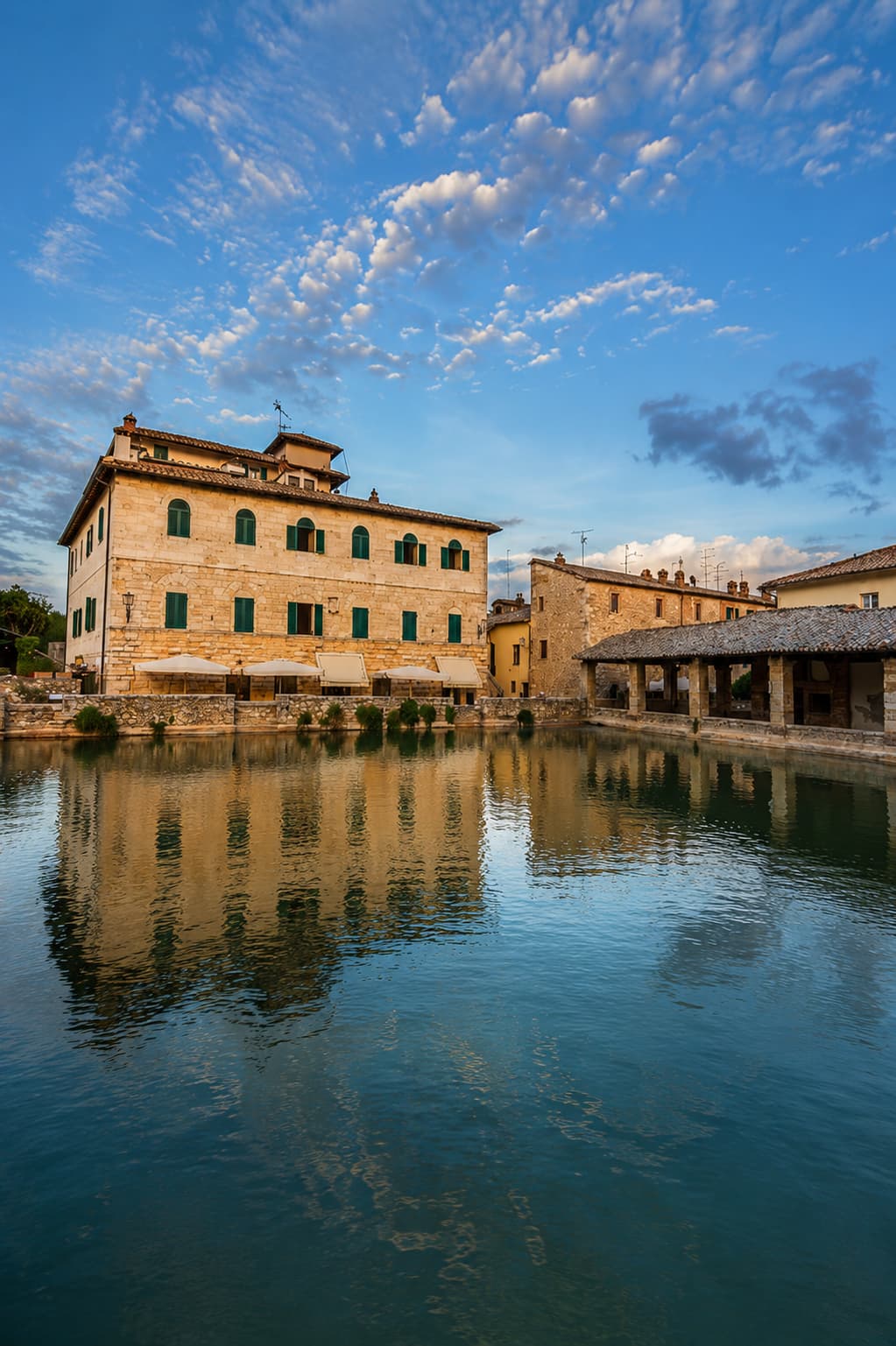
The Walled Hill Towns
San Gimignano
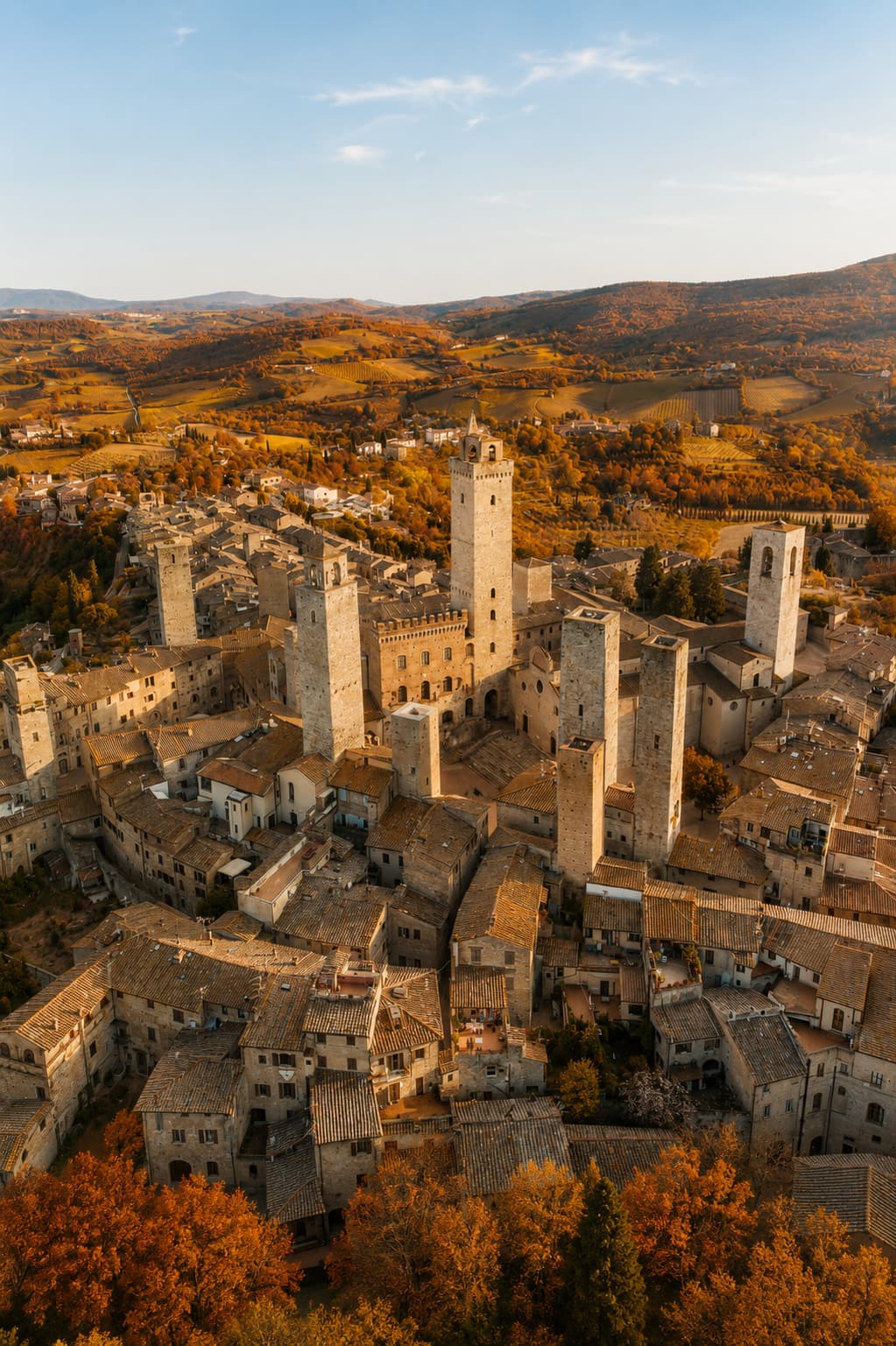
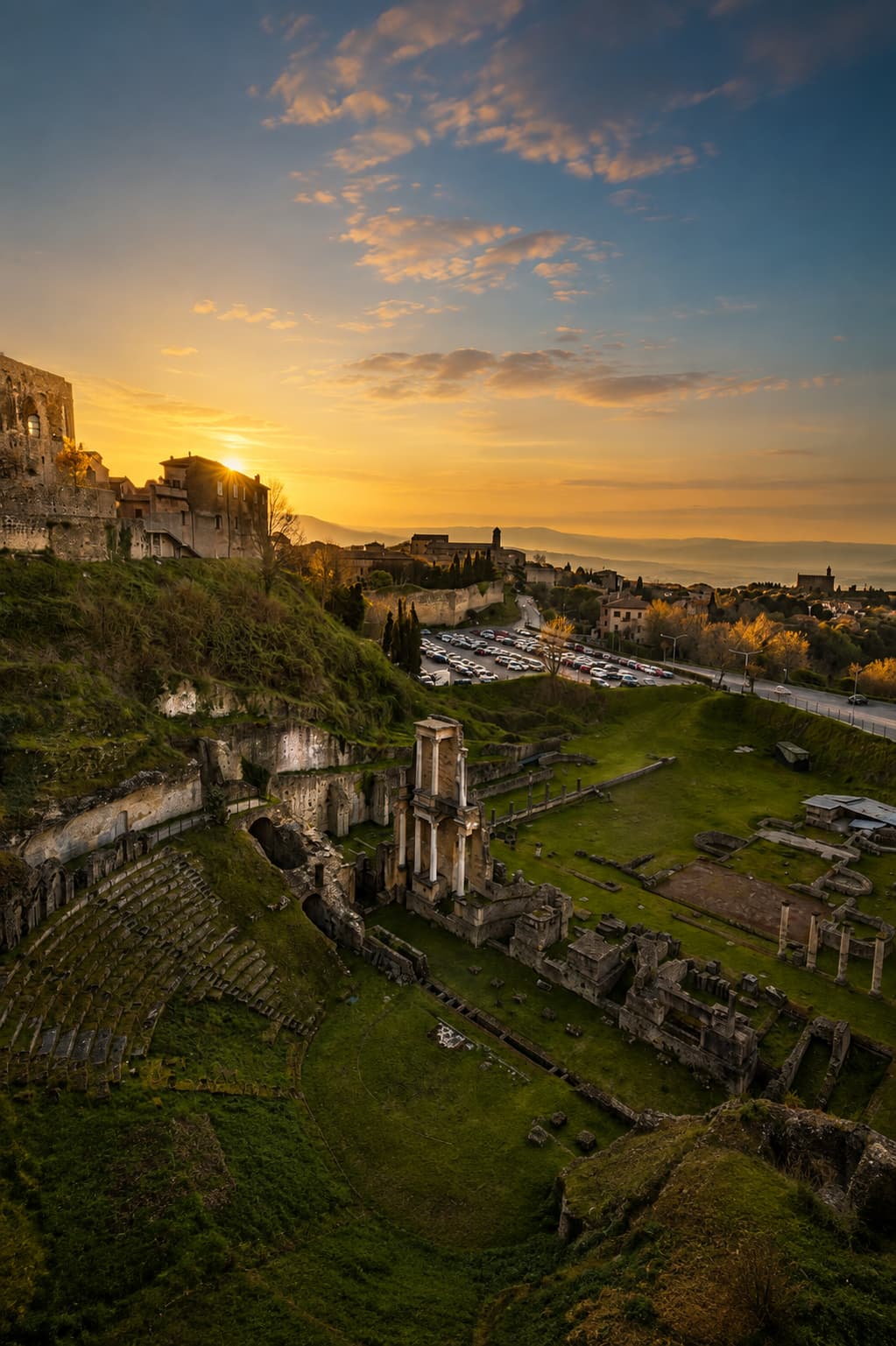
Volterra
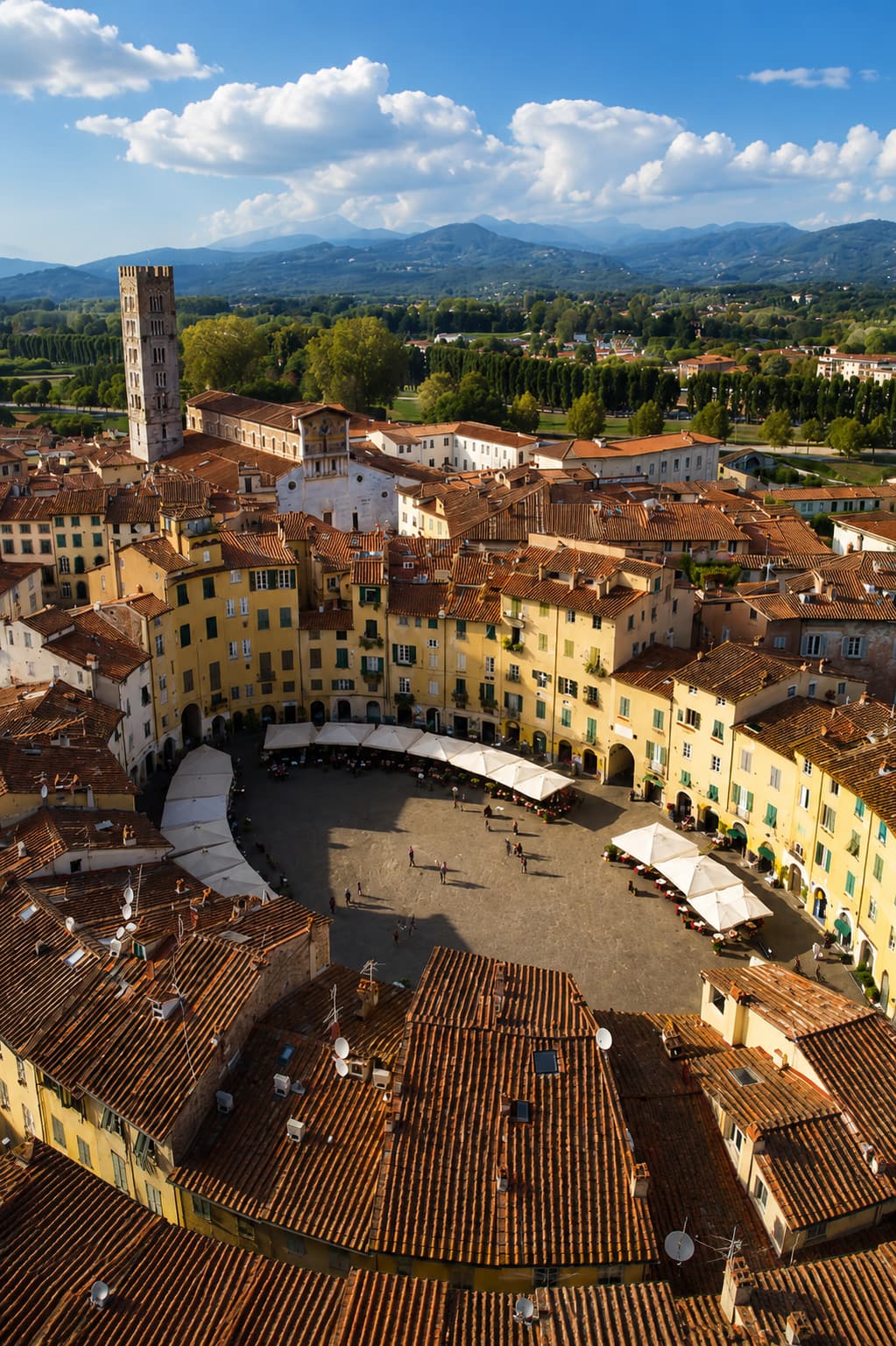
Lucca
Siena and the Quiet South
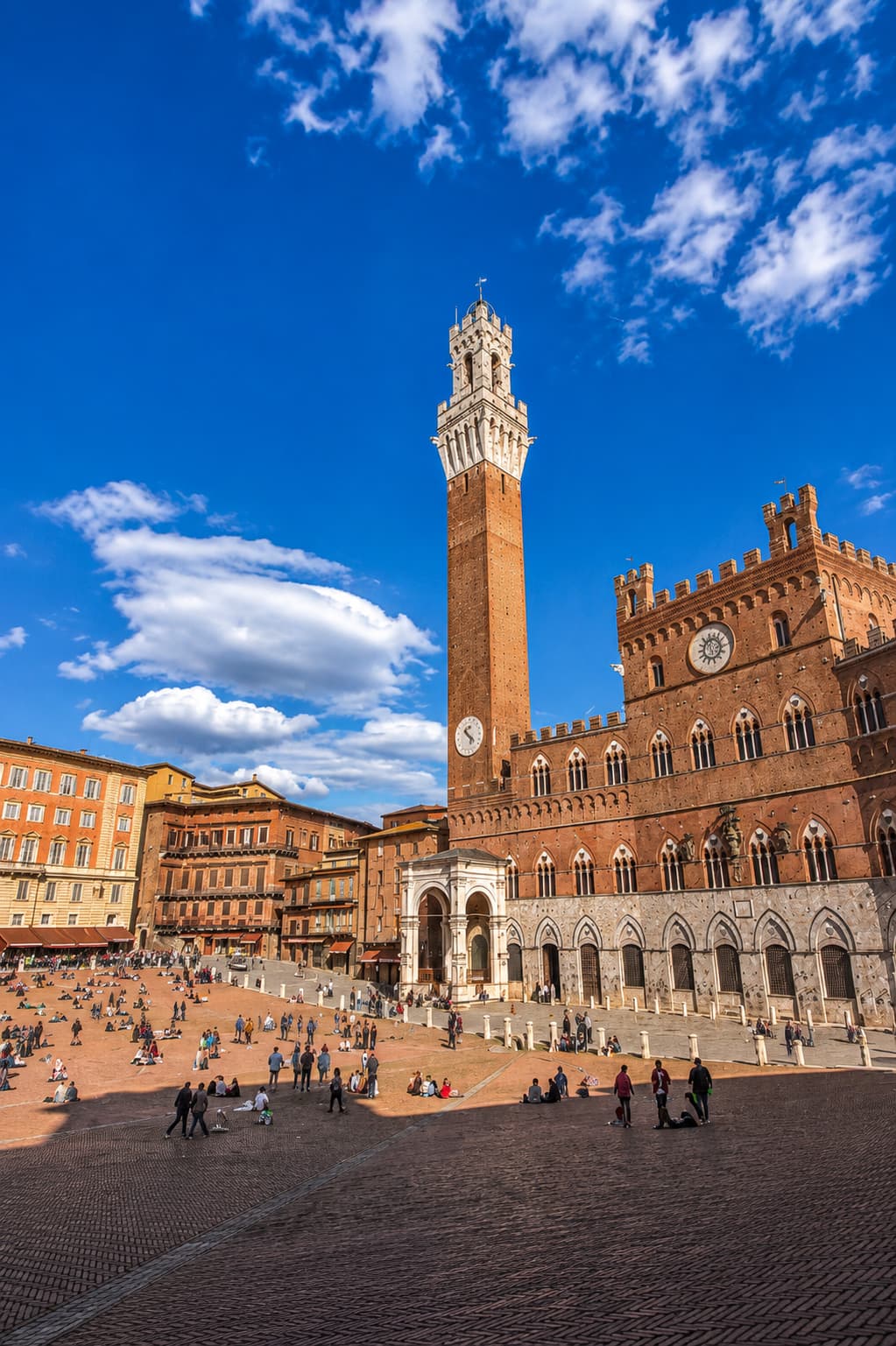
Siena
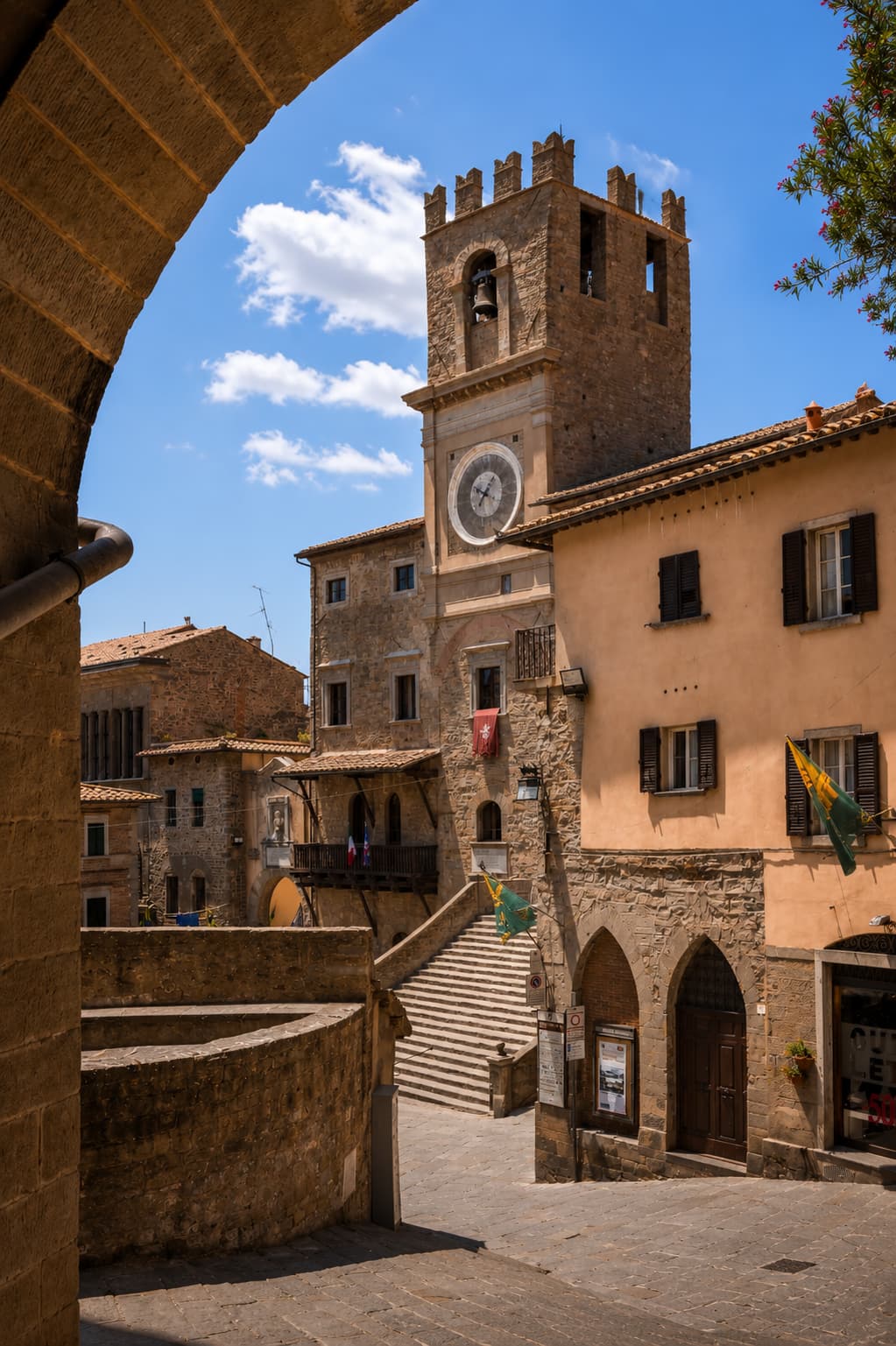
Cortona
05 — The Best Things to Do in Tuscany in Autumn
- Join a truffle hunt: guided experiences run around San Miniato and the Crete Senesi — the dogs do the actual work, you just follow
- Visit a winery during or just after vendemmia: harvest tastings in Chianti or around Montalcino aren’t available the rest of the year
- Drive the Val d’Orcia route at dawn: pick up coffee in Pienza before the light changes and the fog burns off
- Attend the San Miniato Truffle Fair: held over three weekends in November, and worth building a trip around directly
- Taste olio nuovo at an olive estate: if visiting in November, this is easy to skip and genuinely worth not skipping
- Walk the walls of Lucca at sunset: the full circuit takes under an hour on foot, longer by bike
- Climb the Torre del Mangia in Siena without a queue: something that’s simply not possible in July
- Eat pici cacio e pepe somewhere serving mostly locals: autumn menus lean heavier, and it shows
06 — How Many Days Do You Need for Tuscany in Autumn?
Five days works as a minimum, based in Florence with two day trips into the countryside — enough to get a taste, not enough to feel unhurried. Seven days is the recommended length, and it allows a proper road-trip circuit: Florence to Chianti, down to Siena, into Val d’Orcia, and back. Ten days adds northern Tuscany — Lucca, Volterra — plus something that matters more than it sounds like it should: actual time to sit somewhere and not be moving toward the next stop.
Why the Slow Version Wins in Autumn
Tuscany is better slow, and autumn is the season that makes that obvious. The towns here are small and close together, so the point was never the driving distance — it’s stopping when something looks good and eating when you’re actually hungry, not on a schedule built around parking availability. A race-through itinerary misses what autumn in Tuscany actually is: a working landscape moving at its own pace, not a backdrop waiting for you to photograph it. Consequently, the itinerary that respects that pace tends to be the one people remember.
07 — Is November Too Late for Tuscany in Autumn?
It depends which half of the month. Early November is still a genuinely good window; late November asks more of a traveler willing to accept some grey.
Early November is genuinely something of a hidden window — the truffle fair is still drawing people specifically, the olive harvest is just starting, and the crowds are already gone. Late November, on the other hand, is for travelers who don’t mind grey skies and don’t need the countryside operating at full capacity. City bases like Florence and Siena stay fully functional either way; it’s the rural experience that thins out first.
08 — The Best Base for a Tuscany in Autumn Trip
Florence works as a base if this is a first visit and day trips are the plan — it puts Florence’s own sights within reach alongside Chianti and Siena. That said, a moving base — a few nights in Val d’Orcia, a few more near Lucca — suits autumn better, since the whole point of the season is the driving between places, not staying still. Anyone planning the countryside route by car should look at how the rest of an Italy road trip gets structured before locking in a base.
Planning an Autumn Trip to Tuscany
Getting Around and What to Eat in Tuscany
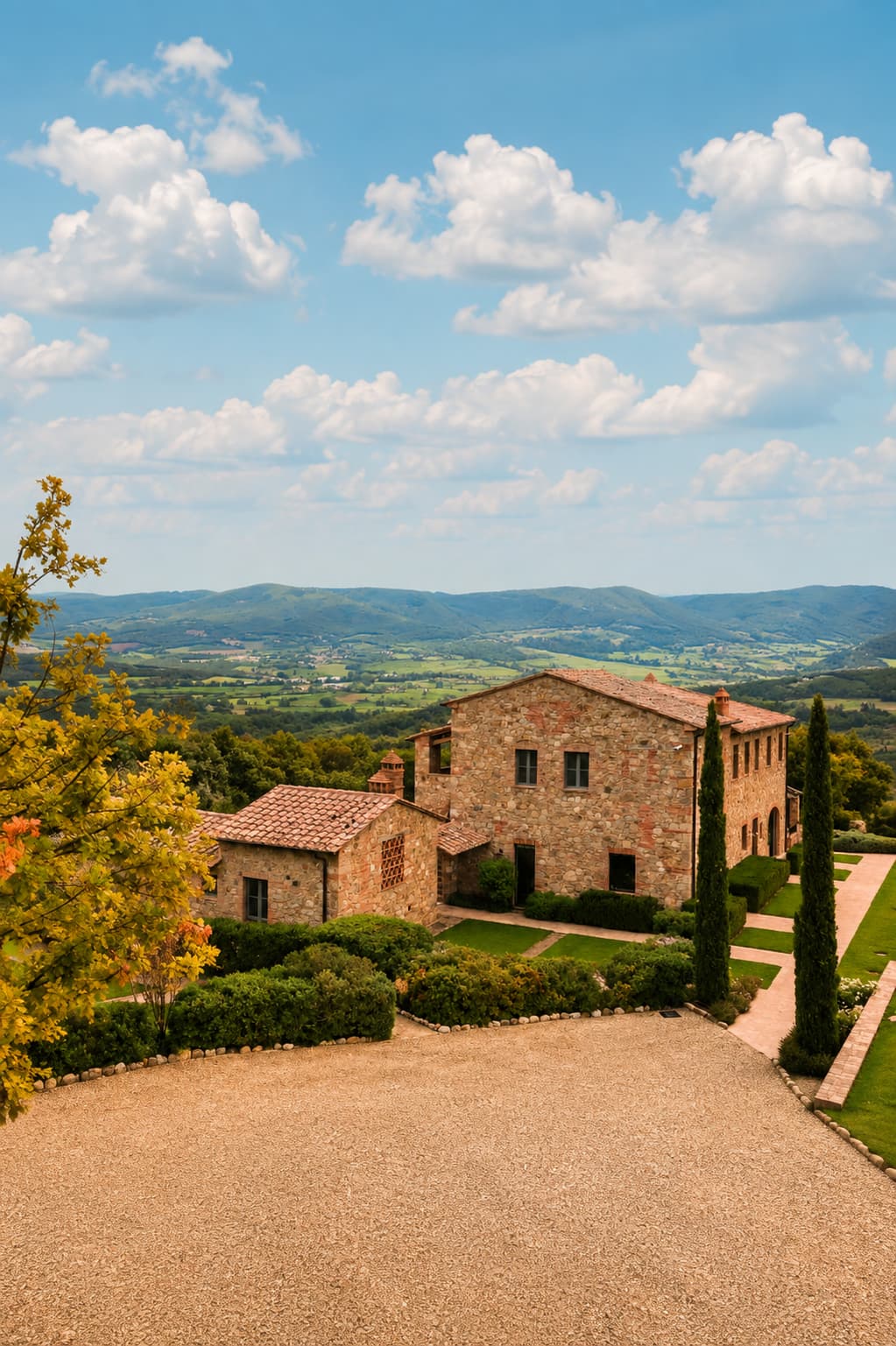
Tuscany in summer is beautiful, crowded, expensive, and hot — a very particular experience. Autumn is a different Italy, one that’s producing food and wine instead of performing for whoever showed up that week. Whether that trade-off is worth it depends on what you’re actually after. If empty hilltop towns, the smell of new wine, and a truffle you watched a dog find an hour ago sound like your kind of trip — this is your season.