
Things to Do in Florence: An Honest Guide to Landmarks, Days Needed & Solo Travel
The real landmarks, how many days you actually need, and what solo travel in Florence is honestly like — crowds, closures, and all.
The most useful thing anyone can tell you about the things to do in Florence is also the least glamorous: the city is small, dense, and crowded at its core, and it only opens up once you slow down. Almost every guide either hypes it as flawless or buries the practical answers under affiliate links. This one does neither. You will get a decisive verdict on how long you actually need, an honest read on the landmarks worth your time, and a clear sense of what solo travel here really feels like.
Florence rewards a particular kind of traveller — the one who books the museums in advance, walks more than they ride, and accepts that the centre will be busy no matter when they come. Granted, the crowds are real. Even so, the payoff is unusually high for a city you can cross on foot in half an hour.
01 — What Florence Is Actually Like
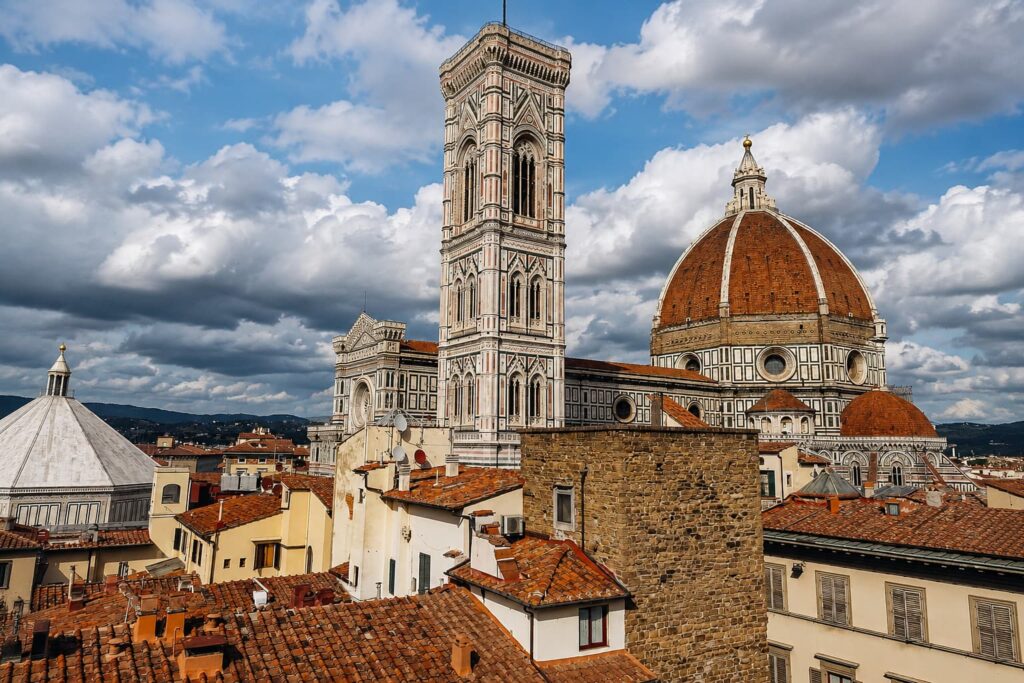
Florence is compact in a way that surprises people. Its historic centre is a UNESCO World Heritage Site, and you can walk across it in roughly 20 to 30 minutes, which makes it one of Europe’s most walkable major cities. That sounds like a gift, and on a quiet morning it is. By mid-morning, however, the same streets fill with tour groups funnelling between the Duomo, the Uffizi, and the Accademia along a handful of narrow lanes.
The density is the whole experience, for better and worse. Specifically, the concentration of Renaissance art and architecture in such a small area has no real equal, but it also means the headline sights share the same crowded footpaths. The trick is timing. Early mornings and late evenings belong to a different city — one where you can stand in a piazza and actually look up.
If you arrive expecting calm, you will spend the first day frustrated. Arrive expecting a small, intense, art-saturated city that needs to be worked around rather than rushed through, and it becomes one of the most satisfying places in Italy. Overall, the people who leave disappointed are usually the ones who tried to see everything in a single day.
02 — The Must-See Landmarks in Florence
You could spend a week here and not exhaust the museums. Most visitors, though, are working with two or three days, so this section focuses on the landmarks that genuinely earn their place — and is honest about the one or two that come with caveats.
The Duomo & Brunelleschi’s Dome
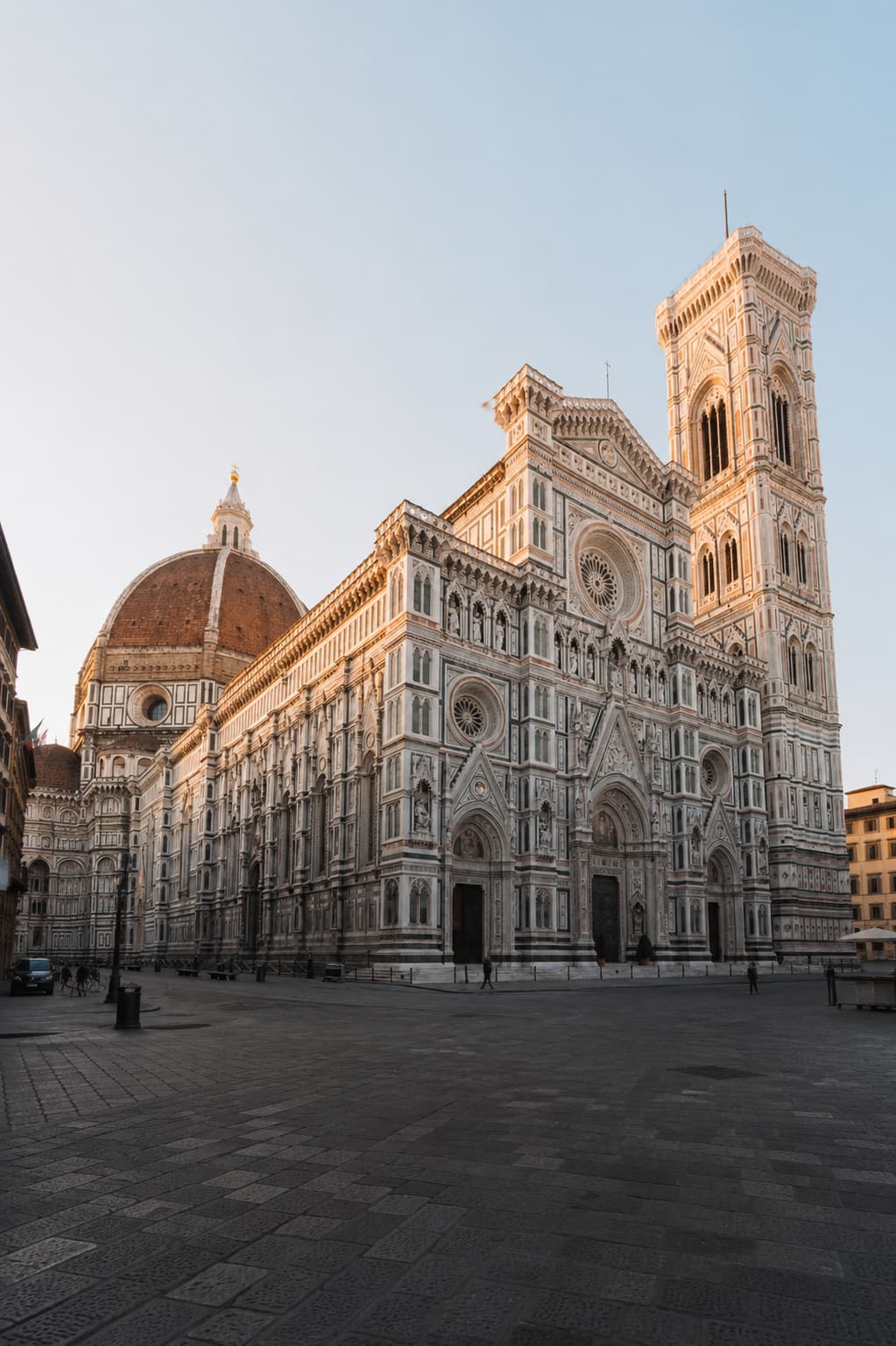
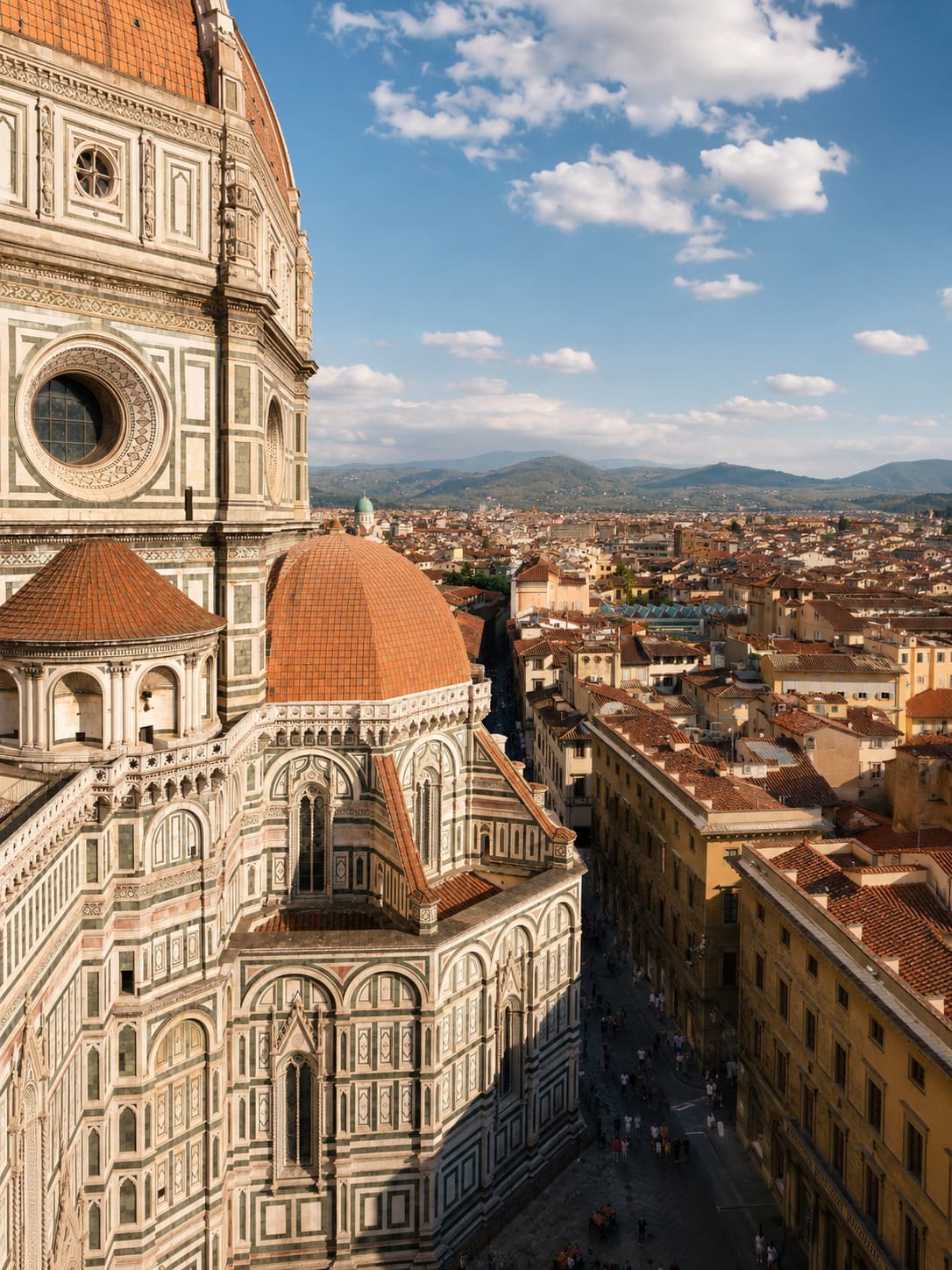
The cathedral of Santa Maria del Fiore anchors the city, and its dome is the reason. Brunelleschi’s cupola remains the largest masonry dome ever built, constructed in the early 1400s without scaffolding using an ingenious double-shell design. Standing beneath it, the scale is hard to process. Climbing it is another matter entirely.
The climb is 463 steps with no elevator, up a narrow, twisting staircase between the two shells. It is genuinely demanding, and the passages get tight near the top. Is it worth it? If you have decent knees and no claustrophobia, yes — you pass directly beside Vasari’s Last Judgment frescoes before emerging onto the lantern for the best view in the city. That said, Giotto’s nearby bell tower offers a comparable panorama with the bonus of putting the dome itself in your photos, so it’s a fair alternative if the staircase sounds like too much.
Dome access requires the timed-entry Brunelleschi Pass, which must be reserved in advance and cannot be changed once issued. Book directly through the official Opera del Duomo site for the best price, and choose the earliest slot in summer — there’s no air conditioning inside the staircase.
Galleria dell’Accademia (David) & the Uffizi Gallery
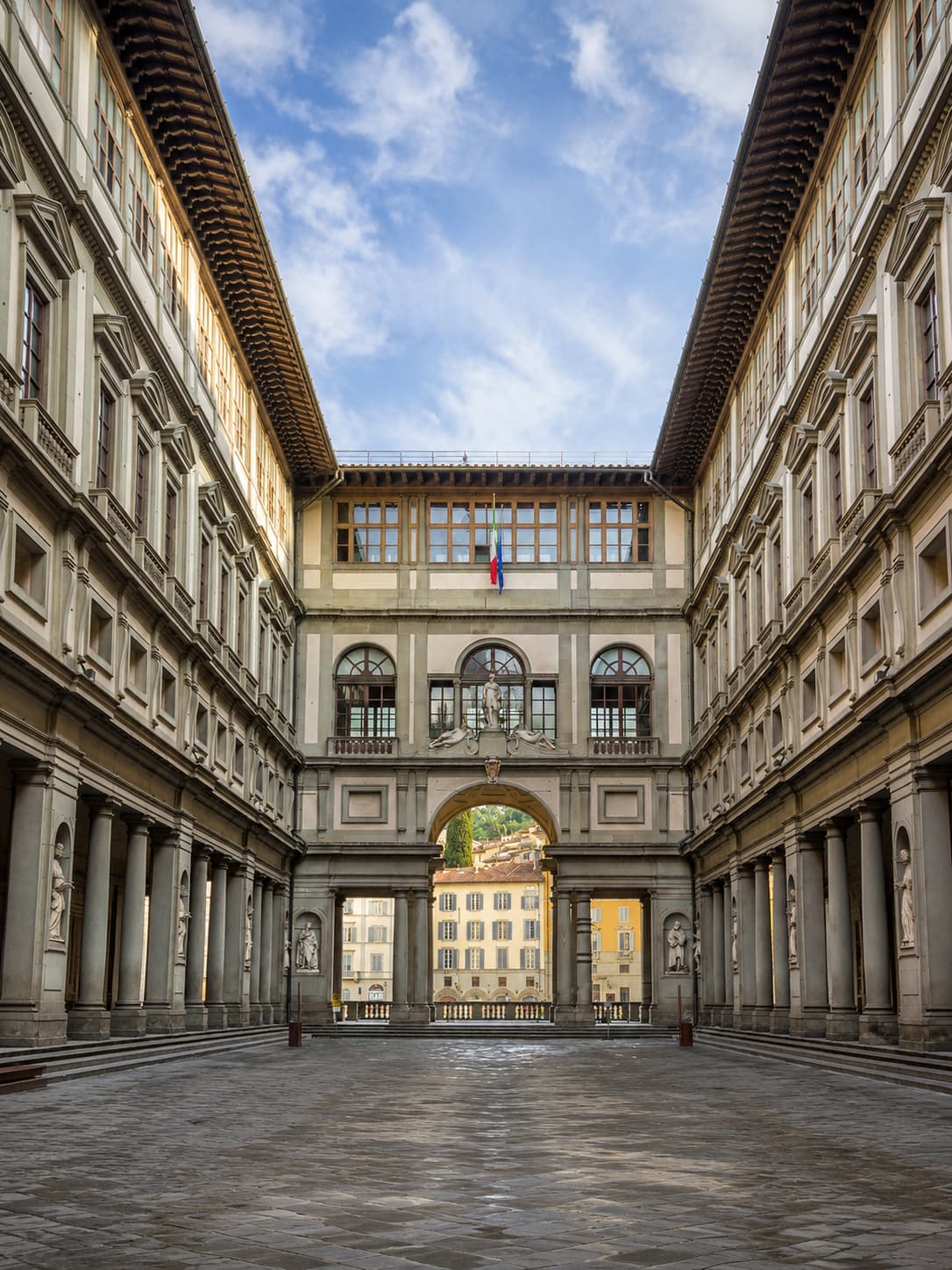
Two museums, two very different visits. The Accademia exists, for most people, because of one statue. Michelangelo’s David stands about 17 feet (5.17 metres) tall in the Tribune, a room built specifically to house it in the 1870s. The marble seems to breathe up close, and the scale only registers when you’re standing beneath it. Beyond David, the four unfinished Prisoners in the corridor show Michelangelo’s process better than any finished work — most visitors walk straight past them.
The Uffizi is the heavier visit, in the best sense. Its collection of Italian Renaissance painting is unmatched: Botticelli’s Birth of Venus and Primavera, Leonardo, Caravaggio, Raphael, room after room. Plan two to three hours minimum. Both museums close on Mondays, and both sell out in peak season, so book a timed slot through the official Uffizi site and the official Accademia site rather than gambling on the walk-up line.
Pick the Uffizi. It’s larger, more varied, and gives you a fuller sweep of the Renaissance. The Accademia is a one-headliner museum — extraordinary, but a 45-to-90-minute visit. With half a day, do both; the Uffizi first, the Accademia after lunch.
Ponte Vecchio & Piazza della Signoria
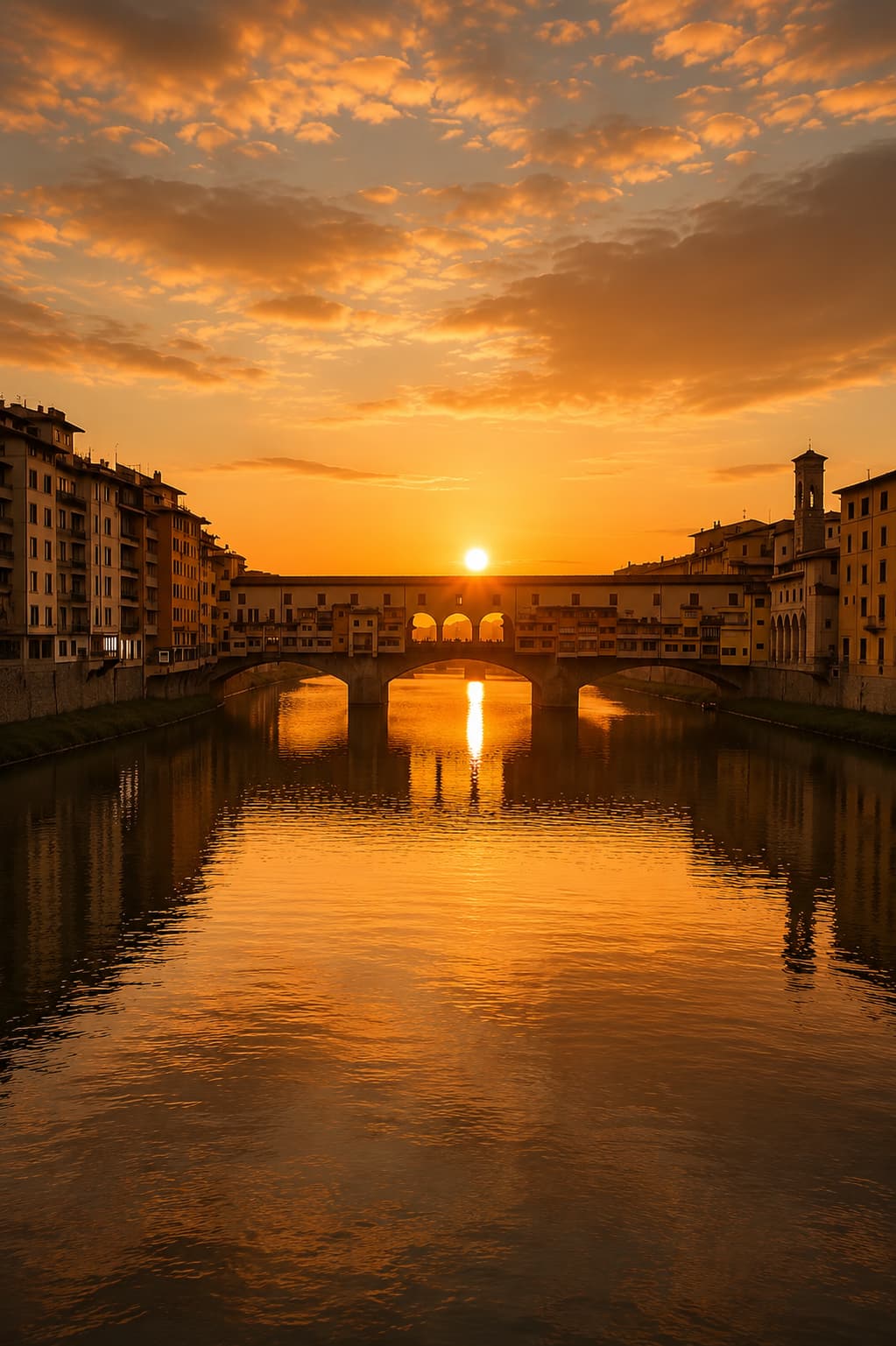
The Ponte Vecchio is the medieval bridge lined with goldsmiths’ shops, and it photographs beautifully — at dawn. By day it’s a slow-moving crush of visitors and overpriced jewellery. Cross it early, or view it from the next bridge along, the Ponte Santa Trinita, which actually gives you the better picture. Piazza della Signoria, meanwhile, functions as Florence’s open-air sculpture gallery, anchored by the Palazzo Vecchio and a replica of David where the original once stood. The Loggia dei Lanzi beside it holds genuine Renaissance sculpture you can see for free.
Piazzale Michelangelo & San Miniato al Monte
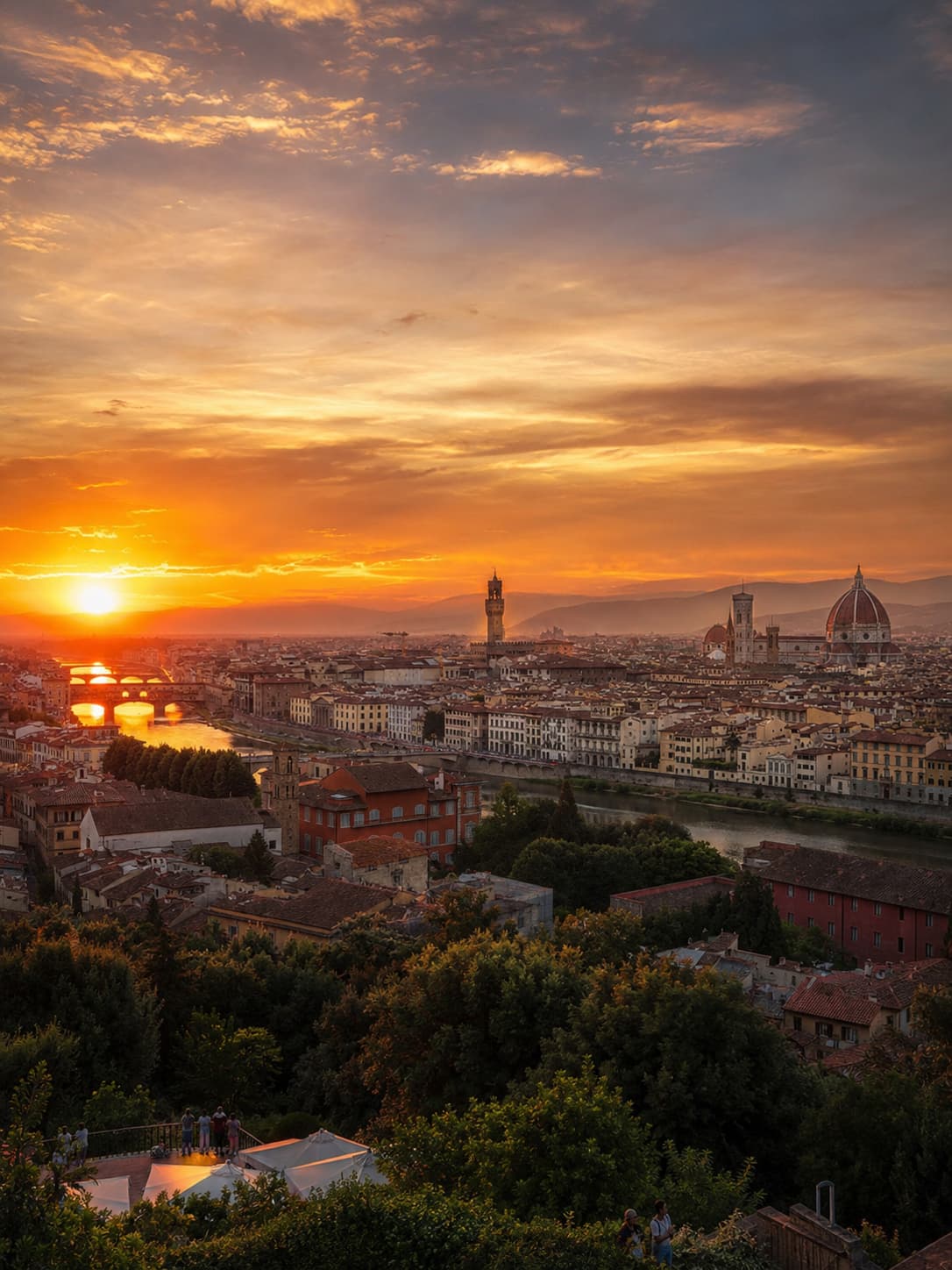
Here’s the honest part. Piazzale Michelangelo gives you the postcard view of Florence — the whole city, the dome, the river, all in one frame — and at sunset it is genuinely beautiful. It is also genuinely packed. Tour buses unload, and the terrace can be three rows deep. For this reason, walk five minutes uphill to San Miniato al Monte instead: a Romanesque church with an almost identical view, a fraction of the people, and Gregorian chant during evening services. The climb up from the river is worth doing on foot for the way the city reveals itself behind you.
The Oltrarno — Where to Escape the Crush
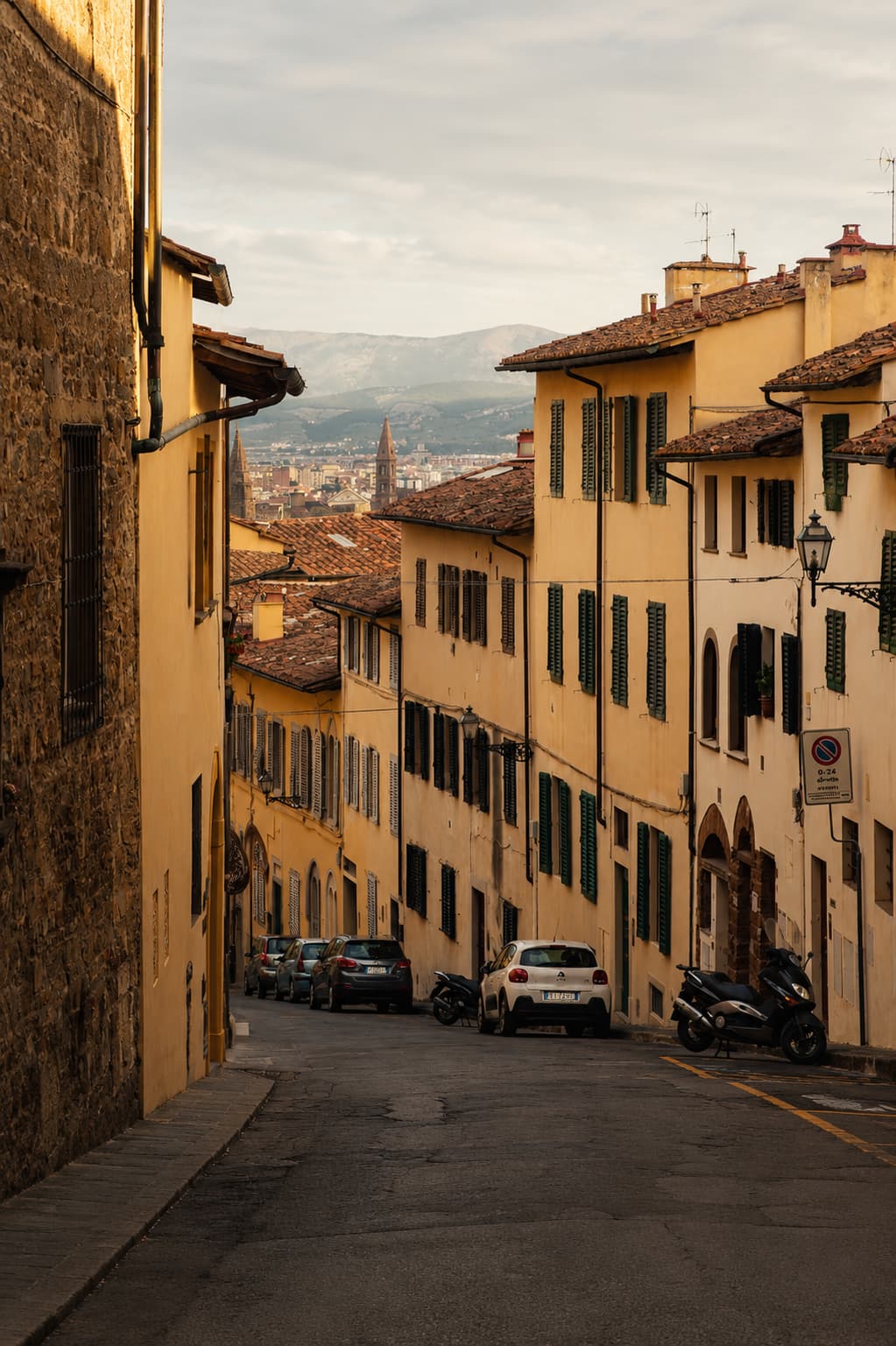
Cross to the south bank of the Arno and the temperature of the city changes. The Oltrarno is where Florence still feels like somewhere people live and work — artisan workshops, leather and gilding studios, quieter piazzas, and trattorias that aren’t priced for one-time visitors. Santo Spirito, with its plain Brunelleschi facade and morning market, is the heart of it. When the centre gets too much, this is where you go to remember why you came.
03 — What Florence Is Famous For
Florence is, above all, the birthplace of the Renaissance — the city where Western art reorganised itself around perspective, anatomy, and human scale in the 15th and 16th centuries. Much of that flowering was funded by the Medici, the banking dynasty whose patronage shaped the city’s art, architecture, and politics for generations. Their wealth built the collections you now queue to see.
Beyond the art, the city is known for its leather and artisan workshops, a craft tradition still alive in the Oltrarno and around Santa Croce. It also has a fair claim to the origins of modern gelato, refined in Florence during the Medici era. In short, the things Florence is famous for aren’t separate from the things to do here — they’re the same Renaissance thread running through the museums, the churches, and the workshops alike.
04 — How Many Days Do You Need in Florence?
This is the question everyone hedges on, so here’s the straight answer first: three days is the sweet spot for a first visit. That gives you the Duomo, the Uffizi, and the Accademia without stacking them into back-to-back mornings, plus room for one slower afternoon in the Oltrarno or up at San Miniato. Below, the honest breakdown by trip length.

Is One Day in Florence Enough?
One day gives you glimpses, not the city. You can see the Duomo from the outside, walk through Piazza della Signoria, cross the Ponte Vecchio, and climb to Piazzale Michelangelo for sunset — a good day, but a surface one. You will not get into both major museums, and you’ll spend much of the day moving rather than looking. If a single day is all you have, skip the museum interiors entirely and treat it as a walking day; that’s a more honest use of the time than rushing a half-hour past David.
Is Two Days in Florence Enough?
Two days works if you’re disciplined. It’s enough for one major museum, the cathedral complex, and a proper wander through the Oltrarno, with a sunset viewpoint on one of the evenings. What two days can’t absorb is a Monday, when the Uffizi and Accademia both close — land on the wrong day and a short trip loses its headline sights. Book your museum slots before you book anything else.
Why Three Days Is the Sweet Spot
Three days is where Florence stops feeling like a checklist. You get both flagship museums on separate mornings, the dome or bell tower climb, an unhurried Oltrarno afternoon, and an evening that isn’t spent power-walking to a viewpoint before dark. Crucially, it leaves margin for the city to surprise you — a church you didn’t plan on, a market you lingered in, the Bargello or the Medici Chapels if sculpture pulls you in. Three days respects how small the city is and how dense it is at the same time.
If Florence Is Part of a Rome–Florence–Venice Trip
Many people fit Florence into the classic Italian triangle, and the honest truth is that your arrival day is mostly a write-off. Between the train, checking in, and finding your feet, you realistically get an afternoon and evening, not a full day. Build your plan around that: count arrival as a half-day, give Florence two clear days in the middle, and don’t schedule a major museum for the morning you leave. If you’re driving the wider region, our Italy road trip guide covers how Florence fits a longer Tuscany loop, and the Passing Through Tuscany post is the one to read if you’re only stopping briefly. For the Rome leg, see our honest two days in Rome itinerary.
On a multi-city Italy trip, never book a timed museum entry for your arrival afternoon or your departure morning. Trains run late, check-in eats time, and a missed Uffizi slot is non-refundable. Keep those windows loose and put the big-ticket bookings in the solid middle of your stay.
05 — Is Florence Good for Solo Travelers?
Yes — and it’s one of the easier Italian cities to do alone. The centre is small and walkable, the sights are close together, and the rhythm of museums and cafés suits a solo pace. You’re never far from your hotel, and you rarely need transport. The two things solo travellers tend to worry about — safety and eating alone — both have reassuring answers here.
Is Florence Safe to Visit Alone?
Florence is generally very safe for solo travellers, including at night in the well-lit centre. The real risk is pickpocketing, not violence, and it concentrates in predictable places: the dense crowds around the Duomo, the queues outside the Uffizi and Accademia, and packed buses to Piazzale Michelangelo. Keep your bag zipped and in front of you in those spots and you remove most of the problem. Otherwise, walking the centre alone after dinner feels relaxed rather than tense.
Eating Alone in Florence
Florence can feel couples-heavy, especially at dinner, but it’s surprisingly easy to eat alone well. Counter seating is your friend: wine bars, the stalls upstairs at the Mercato Centrale, and casual trattorias all make a solo meal feel normal rather than conspicuous. Aperitivo — a drink with a spread of small bites in the early evening — is practically designed for one. Lunch is even simpler, since a panino and a glass of wine standing at a counter is a perfectly Florentine thing to do alone.
Where to Stay Solo
The trade-off is location versus calm. Staying in the centre puts you steps from everything but inside the crowds and the higher prices. The Oltrarno, just across the river, gives you quieter streets, better-value food, and a short walk back to the sights — often the better call for a solo traveller who wants somewhere to decompress at the end of the day. For more on travelling Italy solo versus with company, see Italy with friends vs. solo travel, and for the wider picture of going it alone in the region, more solo Europe here.
06 — Are There Free Things to Do in Florence?
More than you’d expect for a city this art-heavy. The best view in Florence — from Piazzale Michelangelo or San Miniato al Monte — costs nothing. Many of the churches are free to enter or charge only a small amount, and the Loggia dei Lanzi in Piazza della Signoria is open-air Renaissance sculpture with no ticket at all.
The same panorama as Piazzale Michelangelo, a few minutes higher, with far fewer people and evening chant inside the church.
Cross it before the shops open and the crowds arrive. It’s a different bridge at 7 a.m. — quiet, golden, almost yours.
The Santo Spirito morning market and the ground floor of the Mercato Centrale cost nothing to walk through and show you the city that isn’t on the museum trail.
Santo Spirito, the exterior of the Duomo, and the open squares give you a great deal of Florence for free if you’re patient with timing.
07 — A Few Honest Trade-Offs Before You Go
None of these should stop you coming. They’re simply the things the brochures leave out, and knowing them ahead of time turns most of them into non-issues.
| Monday closures | The Uffizi and the Accademia both close on Mondays, along with many other state museums. A one- or two-day trip that lands on a Monday loses its biggest sights, so check the day before you book your dates. |
| Booking ahead | The Uffizi, the Accademia, and the dome climb all use timed entry and sell out in peak season. Walk-up waits can run to two hours. Reserve through the official sites first; they’re cheaper than resellers. |
| Ponte Vecchio prices | The jewellery on the bridge is heavily marked up for the view and the foot traffic. Browse it, but buy elsewhere if you’re actually shopping for gold. |
| Summer heat | July and August are hot and crowded, and the dome staircase has no airflow. If you’re climbing in summer, take the earliest slot you can. |
Florence asks for a little patience and gives back more than almost any city its size.
Plan the museums, walk the rest, and let the early mornings be yours.