
The Solo Traveler’s Guide to Wellness Retreats in Europe: Where to Go and What It Costs
An honest guide to solo wellness retreats in Europe — the real destinations, pricing tiers, and the single supplement problem, without the resort-brochure gloss.
There’s a specific anxiety that arrives when you start researching solo wellness retreats in Europe and the results come back full of couples lounging in infinity pools. The implication feels clear: this is a space designed for two. You’d be the odd one out at the communal dinner table, the one who ordered a single room in a place where everything faces the view in pairs.
That anxiety, however, is mostly wrong. Furthermore, the assumption that wellness travel is inherently couples territory has more to do with how retreats market themselves than how they actually function. In practice, a significant portion of wellness retreat guests arrive alone. Many of the better retreats design their programs specifically with solo guests in mind. The social architecture of a good retreat, communal mealtimes, group activities with optional participation, shared spaces that feel convivial without being forced, handles the solo traveler question before it becomes a problem.
This guide is for people who want honest answers. What does it actually cost? Which countries are worth the trip? What is a single supplement and how do you get around it? Below, you’ll find a frank breakdown — no paid placements, no curated luxury lists without price tags.
- Are Wellness Retreats in Europe Good for Solo Travelers?
- What Does a Solo Wellness Retreat Actually Cost?
- What’s a Single Supplement — and How Do You Avoid It?
- Which European Countries Are Best?
- Yoga Retreat, Spa Break, or Medical Wellness Clinic?
- When Is the Best Time of Year to Go?
- What to Look For (and Quietly Avoid) When Booking
- FAQ
01 — Are Wellness Retreats in Europe Actually Good for Solo Travelers?
The short answer is yes — more so than most other forms of group travel. Unlike a group tour where the social dynamics are fixed for the duration, a wellness retreat gives you genuine control. You can eat dinner at the communal table and connect with other guests, or take your meal quietly and no one will notice. Most programs center on individual sessions — massages, diagnostics, movement classes — which means the social pressure that exists on other trips simply doesn’t apply here in the same way.
The couples-and-spas fear — and why most retreats aren’t like that
Spa hotels and wellness retreats are not the same thing, and this distinction matters when you’re traveling alone. A spa hotel — the kind with a heated pool, a champagne menu, and a couples massage suite on the top floor — is genuinely oriented around pairs. A wellness retreat, by contrast, is program-based. Guests come with individual goals: reducing stress, following a detox protocol, deepening a yoga practice. The day’s structure follows those individual goals, not togetherness.
Additionally, many European retreats actively attract solo guests. Euphoria Retreat in Greece, VIVAMAYR Maria Wörth in Austria, and Ayurveda Parkschlösschen in Germany all specifically design their communal dining and group activities to help solo guests connect with others naturally — without the forced-fun energy that makes group travel exhausting. The key word is “naturally.” You sit next to someone at dinner, you end up in the same morning walk group, the conversation happens without it being engineered.
What communal dining and group activities actually look like
At most European wellness retreats, communal dining operates on a round-table or shared-seating basis. Guests don’t book a table for two — they sit where there’s space. Staff understand that solo guests need folding into the room, not seating at a corner table facing the wall. In practice, this works well. The shared experience of the retreat — the slightly strange therapeutic diet, the early morning classes, the universal low-level tiredness — creates genuine common ground among strangers.
Moreover, group activities at wellness retreats tend to be gentler on the solo dynamic than group activities elsewhere. A yoga class, a forest walk, a cooking demonstration — these are activities where participation is self-directed. You’re not required to pair up, contribute to a team, or perform. That low-stakes social architecture suits solo travelers particularly well.
02 — What Does a Solo Wellness Retreat in Europe Actually Cost?
Cost transparency is the biggest failure in wellness travel content. Most roundups either present vague price ranges or omit figures entirely, leaving readers to contact retreats for quotes they may never receive. Below is a frank breakdown of what you’re actually looking at across three tiers — all figures inclusive of accommodation and meals unless noted.
Budget tier: €400–£635 for 3–4 nights
This tier exists, though it takes more research to find. Portugal’s Alentejo region and rural Spain both have yoga retreats and small wellness guesthouses operating in this range. Mallorca has several smaller yoga-focused retreats that come in under £600 for a long weekend, particularly outside of July and August. In this price tier, expect comfortable but not luxurious accommodation, group classes rather than private sessions, and a wellness focus that leans toward rest and yoga rather than clinical treatment.
That said, the budget tier delivers something the expensive options sometimes don’t: a more relaxed, community-oriented atmosphere. When guests haven’t paid €5,000 for a week, the social pressure to extract maximum value from every session loosens. Things move at a more human pace.
Budget retreats typically don’t include airport transfers, spa treatments, or private consultations — those come as add-ons. Factor in €50–€150 extra per day if you want more than group classes and accommodation. In some cases, a 3-night budget retreat plus two private treatments still undercuts a mid-range week on total cost.
Mid-range tier: €1,600–€2,600 for 7 nights
This is the most populated tier in European wellness travel. Programs in Greece, Spain, and Portugal cluster heavily here. It’s also where the distinction between a wellness retreat and a spa hotel becomes clearest. At this price, you’re typically getting a full program: an arrival consultation, daily movement or therapeutic sessions, medical or nutritional guidance, all meals included, and usually access to hydrotherapy or similar facilities.
Retreats in this tier vary considerably by approach. Some focus on fitness and detox; others lean into Ayurveda or naturopathy; a few offer psychological wellness alongside physical. It’s worth reading the program carefully before booking — “wellness retreat” covers a wide range of philosophies. Some are more rigorously evidenced than others.
Premium and medical wellness clinics: €3,000–€5,000+
At the upper end, European wellness moves into medical territory. SHA Wellness Clinic in Spain, VIVAMAYR in Austria, and Lanserhof across Germany and Austria operate as integrated medical wellness centers. Guests arrive with health goals, receive diagnostic workups, and follow clinically supervised protocols throughout their stay. These are not spa holidays with a doctor’s office attached; they’re structured medical programs with accommodation as a secondary consideration.
Consequently, this tier suits a particular kind of traveler: someone with a specific health objective, a tolerance for structured days, and no objection to eating carefully calibrated food in a clinical-adjacent environment. For solo travelers, the medical framing actually works in your favor — the program is built around individual treatment, so there’s no couples-orientation to contend with. You’re a patient as much as a guest.
03 — What’s a Single Supplement — and How Do You Avoid It?
A single supplement is an additional charge that operators levy on solo travelers who occupy a room designed for two. Hotels and retreats calculate room pricing around double occupancy — two people splitting the cost. When you book alone, you still occupy the entire room, so the operator charges you extra to cover the shortfall. In practice, a single supplement typically adds 20–40% to the base rate. In some cases, it pushes the solo price close to what a couple pays in total.
According to Mintel’s UK Solo Holidays Market Report 2024, 16% of solo travelers cite single supplements as a direct barrier to booking a retreat or wellness holiday. That figure is probably an undercount — plenty of solo travelers simply don’t book rather than identifying it as a formal barrier.
How to sidestep the single supplement
Several routes exist. First, look for retreats that explicitly offer single-occupancy pricing — these are becoming more common as the solo travel market grows, and some retreats now list single rooms as a standard category rather than an exception. Second, many smaller yoga retreats and wellness guesthouses in Portugal, Ibiza, and rural Spain use shared-accommodation pricing models, where the setup is part of retreat culture rather than a budget compromise. Third, booking in shoulder season often unlocks promotional pricing that absorbs or waives the supplement entirely.
Additionally, if you’re looking at mid-range or premium retreats and the single supplement is non-negotiable, it’s worth asking directly whether any shared-room option exists. Some retreats partner single guests who opt in — a sensible arrangement that benefits both parties and is more common than the booking pages suggest.
“Is there a single supplement on this program, and is there any shared-occupancy option for solo guests?” A surprising number of retreats have informal arrangements that don’t appear on the website. The question costs nothing.
04 — Which European Countries Are Best for a Solo Wellness Retreat?
Not all European wellness destinations serve solo travelers equally well. Geography, culture, price level, and the specific retreat infrastructure of each country make a real difference to how a solo trip plays out. Below is an honest breakdown of the main options.
Spain — SHA, ZEM, and Marbella’s varied landscape
Spain has the most developed wellness retreat industry in Western Europe. SHA Wellness Clinic in Alicante is one of the most internationally recognised — a medically-led program with a strong macrobiotic food philosophy, significant in the premium tier. ZEM Wellness Clinic in Marbella offers a similarly clinical approach at a slightly lower price point. However, Spain also has a strong budget and mid-range layer: smaller yoga retreats across Ibiza, Catalonia, and the Canary Islands give solo travelers genuine flexibility on cost.
The main advantage Spain offers solo travelers is variety. You can find a €500 long-weekend yoga retreat and a €5,000 medical detox program in the same country. Matching your budget and goals is more straightforward here than in destinations with only one tier.
Greece — Euphoria Retreat and the emotional layer
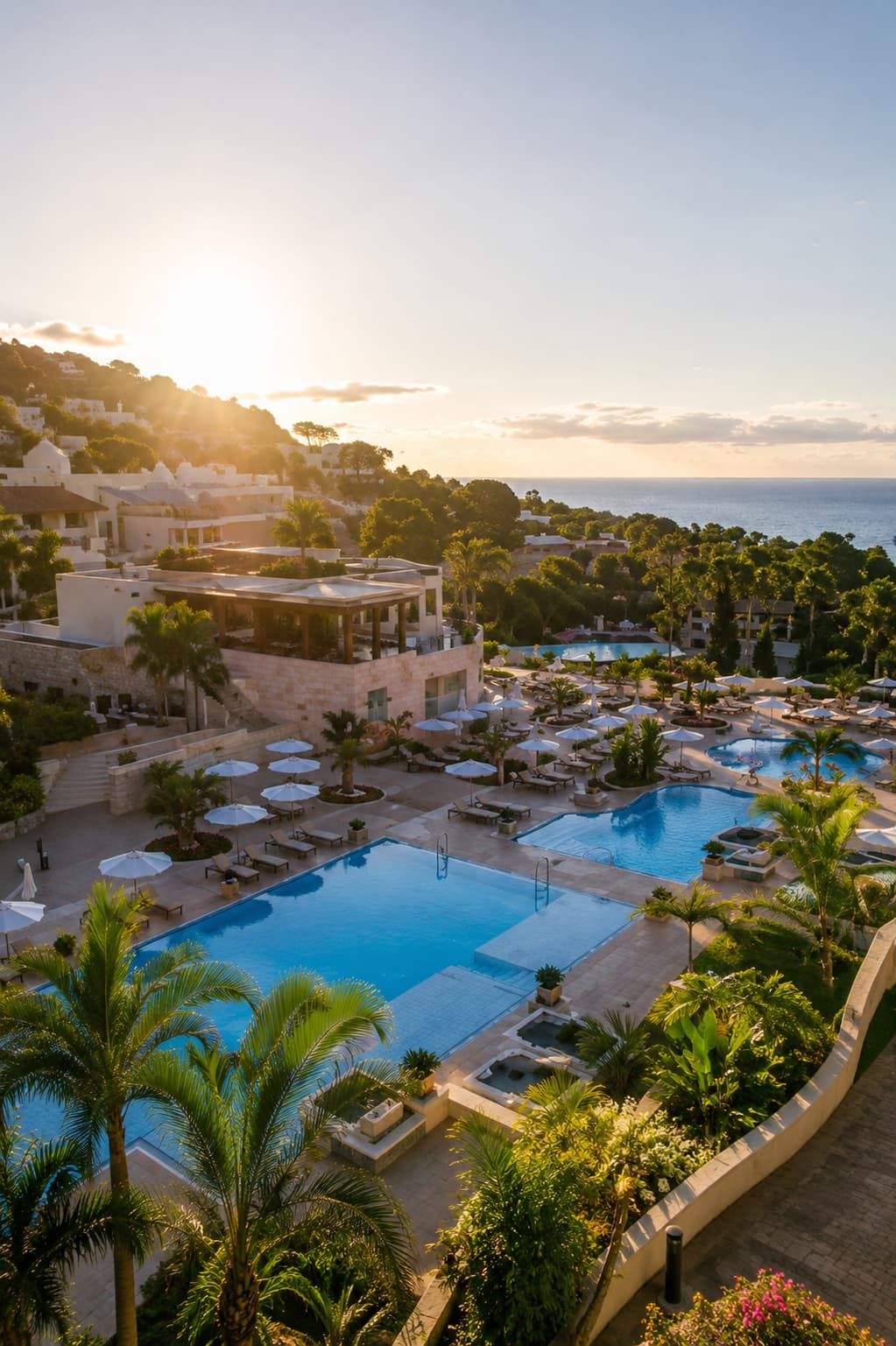
Euphoria Retreat in the Peloponnese is one that travel and wellness press consistently name among the best solo-friendly wellness retreats in Europe, and the reputation is earned. Its program draws on Byzantine and ancient Greek wellness philosophies, and its communal structure actively works to connect solo and group guests alike. Furthermore, its approach to wellness carries a psychological dimension — the focus isn’t purely physical. That makes it particularly well-suited to solo travelers looking for more than a body reset.
Greece more broadly is a strong choice for solo wellness travel in the shoulder season. Retreat programs typically run April through October, and September in particular offers the dual advantage of full programs without the summer heat and premium pricing.
Austria — VIVAMAYR and the introvert’s retreat
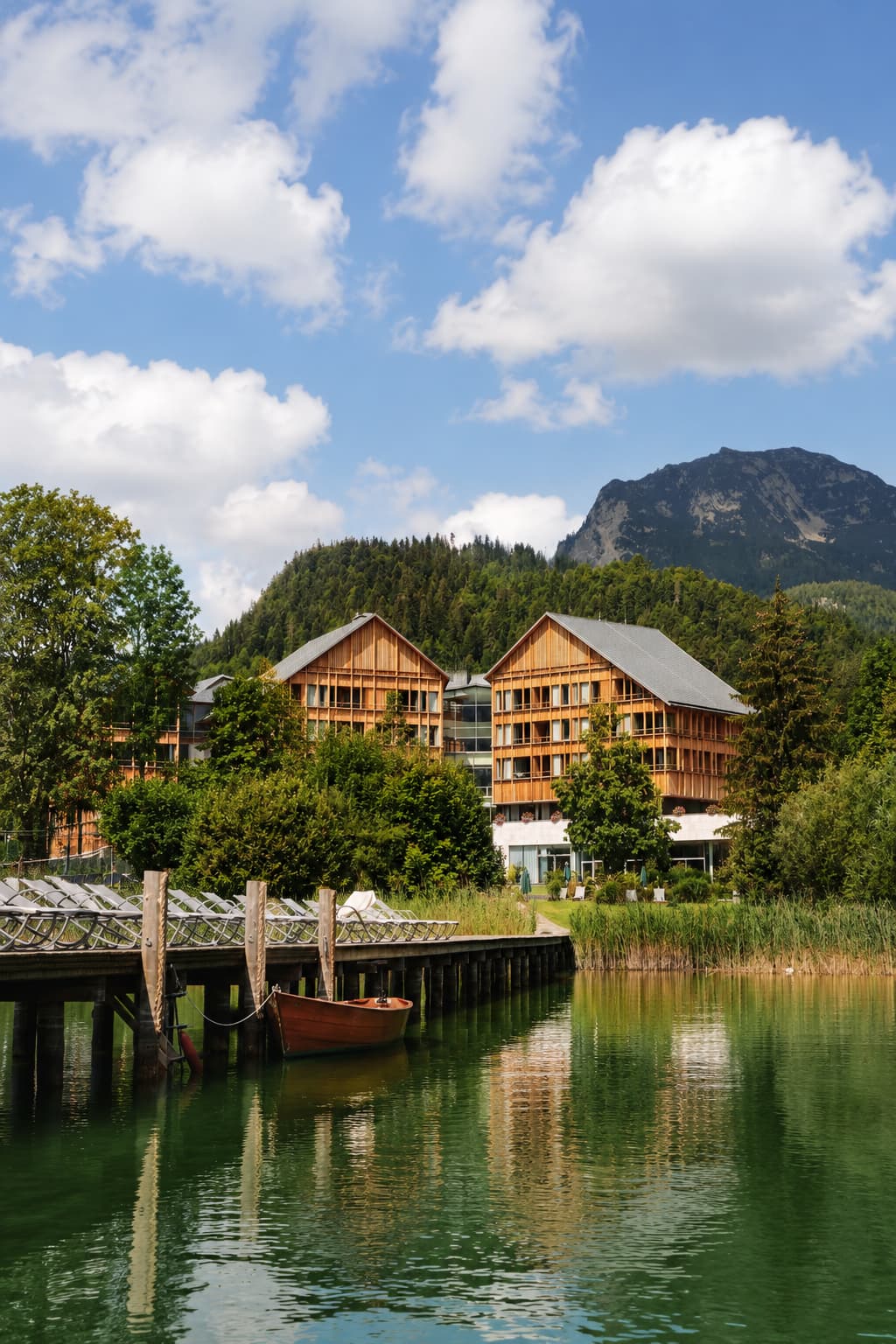
VIVAMAYR Maria Wörth on the Wörthersee lake operates on a medical gut-health protocol that is genuinely unusual in European wellness. The program combines diagnostic testing, personalized dietary intervention, and manual therapy in a lakeside setting that manages to be beautiful without being showy. For introverts — and a meaningful number of solo wellness travelers are introverts — the structured day and individual treatment focus cuts the low-level anxiety of unscripted social time.
Austria’s approach to wellness is generally clinical rather than spiritual, which works well for guests who are skeptical of retreat culture but want results. The environment is quiet, the program is demanding in a productive way, and the setting on the Wörthersee is legitimately restorative.
Germany — Ayurveda Parkschlösschen and the forest setting
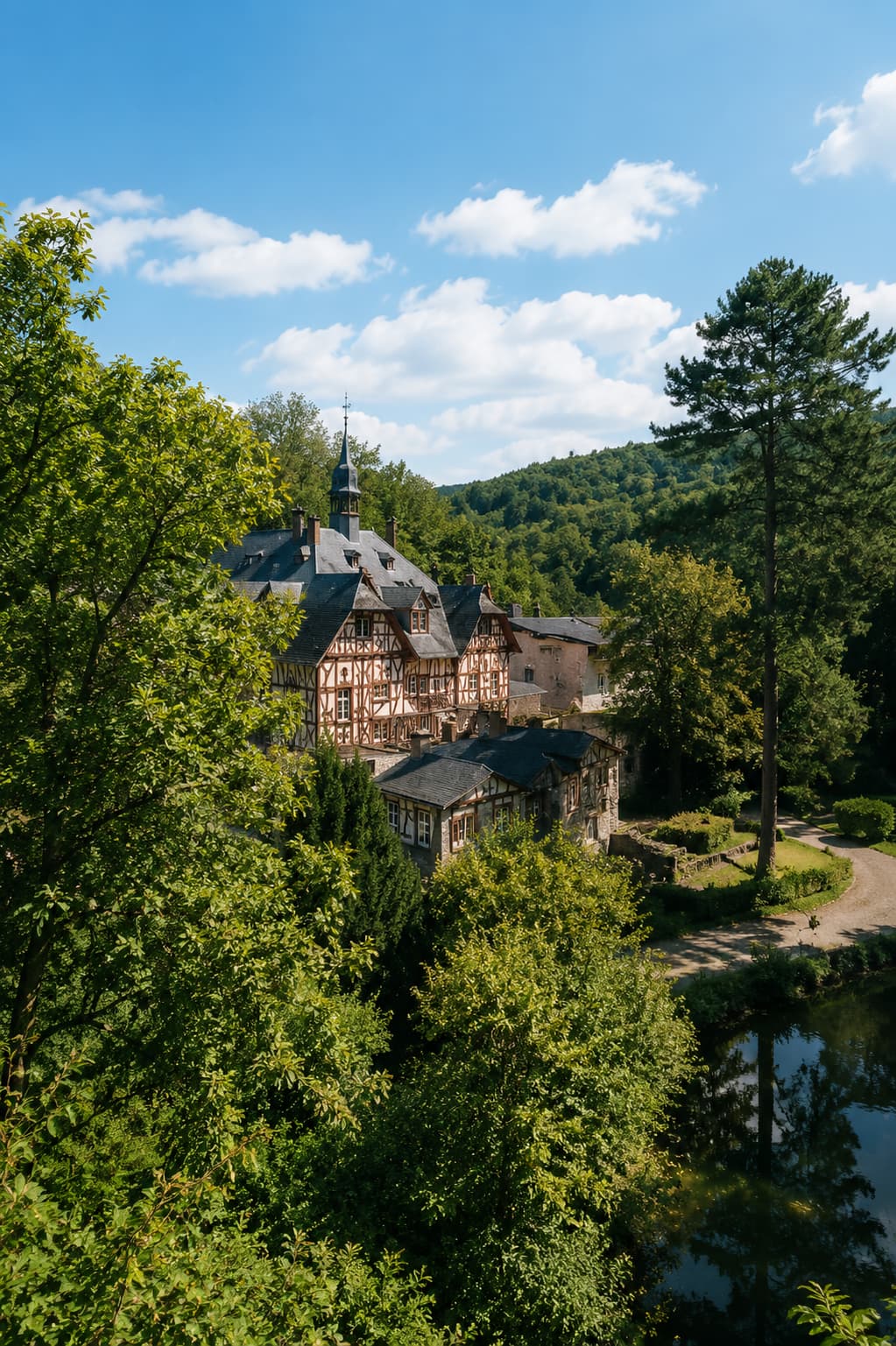
Ayurveda Parkschlösschen in the Moselle region is one of the most authentic Ayurvedic retreat experiences in Europe. Set in a converted manor house surrounded by forest, it runs a medically-supervised Ayurveda program with German precision. Solo travelers report consistently that the environment — quiet, forested, unhurried — strips away the social performance that can make wellness retreats feel hollow. You’re there to follow a treatment protocol, and the setting supports exactly that.
Portugal and Mallorca — mid-range and yoga-forward
Both destinations occupy a useful mid-range sweet spot. Portugal’s Alentejo and Algarve regions have a growing cluster of retreat centers — most are smaller and yoga-focused, with pricing in the budget-to-mid-range window. Mallorca in shoulder season is particularly good value: the island has a well-established wellness infrastructure, accommodation quality tends to exceed what the price suggests, and the landscape — limestone hills, olive groves, quiet coves — does real work on its own.
Ibiza — smaller, more intimate, good for first-timers
Ibiza’s wellness reputation coexists with its party reputation, which can make it feel like an unlikely choice. In practice, the two worlds barely intersect. The wellness retreats operating in the island’s quieter north tend to be small — eight to twelve guests at most. That intimacy makes them unusually good environments for solo first-timers. The intimacy reduces the social anonymity of a larger retreat and makes it easier to settle in quickly. Additionally, the smaller size means single supplements, where they exist, are often negotiable.
05 — Yoga Retreat, Spa Break, or Medical Wellness Clinic — What’s the Difference?
Marketing often uses these three categories interchangeably, but they describe genuinely different experiences. Understanding the difference before booking is particularly important for solo travelers, because the social architecture and daily structure of each type affects the solo experience differently.
Program built around daily yoga classes, usually two sessions per day. Retreats include meals — typically plant-based. Social atmosphere is often the most relaxed of the three types — guests share a common practice, which creates natural connection. Solo-friendly by default. Best fit for people whose main goal is rest, stress reduction, or developing a regular practice.
Accommodation with a significant spa facility — treatments, pools, thermal areas. Less structured than a retreat; guests build their own day from a menu of services. The least suitable type for solo travelers, as the experience skews toward couples and the social context is neutral-to-absent. Best fit for someone who wants high-quality treatments and flexibility, and doesn’t need a social element.
A clinically-supervised program with diagnostic testing, individual treatment protocols, and medical oversight. The most structured of the three, with the least unscheduled time. Paradoxically the best option for solo travelers who find unstructured social time stressful — the day is designed for you, individually, from arrival. Best fit for guests with specific health goals, a tolerance for restriction, and the budget for the premium tier.
06 — When Is the Best Time of Year to Go?
The wellness retreat calendar in Europe follows a logic that slightly differs from standard tourism seasonality. Most retreats operate year-round — unlike beach holidays, they’re not dependent on outdoor weather for the core experience. That said, timing still matters, particularly for solo travelers watching cost and atmosphere.
Shoulder season: May–June and September–October
These two windows are consistently the best choice for solo travelers. Pricing is meaningfully lower than peak summer — a July booking at a Mallorca retreat can cost 30–40% more than the same program in May. Meanwhile, the retreats are full enough that social life functions, but not so crowded that the quieter atmosphere wellness retreats depend on gets swamped. You need other guests for communal dining to feel communal — just not too many. September is particularly good in Greece and Spain — the summer heat has broken, the harvest season adds something to the landscape, and the retreat clientele shifts slightly toward more purposeful travelers.
Winter programs: November–March
Winter retreats are genuinely underrated. The crowds are at their lowest, the prices often reflect that, and the atmosphere at a forest retreat in Germany or a lakeside program in Austria has a particular quality — compressed, inward-looking, well-suited to what wellness retreats are actually designed to do. Moreover, medical wellness clinics like VIVAMAYR and SHA tend to offer their most competitive rates in January and February. Post-Christmas detox demand fills part of their capacity, which drives promotional pricing for the remaining spots.
For popular retreats in Greece, Spain, and Austria, book 2–3 months ahead for shoulder season and 4–6 weeks for winter programs. Summer (July–August) slots at well-known retreats often fill 4–5 months in advance.
07 — What to Look For (and Quietly Avoid) When Booking
The wellness retreat market has more variance in quality and honesty than most travel categories. Some retreats deliver exactly what they describe; others rely on the difficulty of verification from a distance. These are the signals worth paying attention to.
Green flags
Transparent pricing — retreats that show what’s included and what costs extra are generally more trustworthy than those requiring an inquiry for any figure. Detailed program pages that explain the daily structure, practitioner qualifications, and therapeutic philosophy in plain language. Guest reviews that mention solo travelers specifically. A clear cancellation and single-supplement policy. Any retreat confident in its offer should welcome pre-booking questions — an initial consultation call is a good sign.
What to quietly avoid
Vague language around “transformation” and “healing” without specifics about how the program achieves either. Retreats that lead with aesthetics — beautiful photography, aspirational lifestyle imagery — but provide little information about the actual program. Any retreat that makes you feel as though asking about cost is somehow incongruent with the spiritual nature of the experience. Additionally, be cautious with any program using testimonials that make specific medical claims — this often signals a retreat operating at the fuzzier edges of wellness legitimacy.
Furthermore, it’s worth checking whether the retreat has an outdoor or social program that implicitly assumes you’re with a partner. Some retreats include couples’ sunset walks or romantic dinner options in their standard program descriptions. Those aren’t disqualifying — but they’re a signal about who the retreat is primarily designed for.
The single supplement is a real problem. Everything else is mostly in your head.