
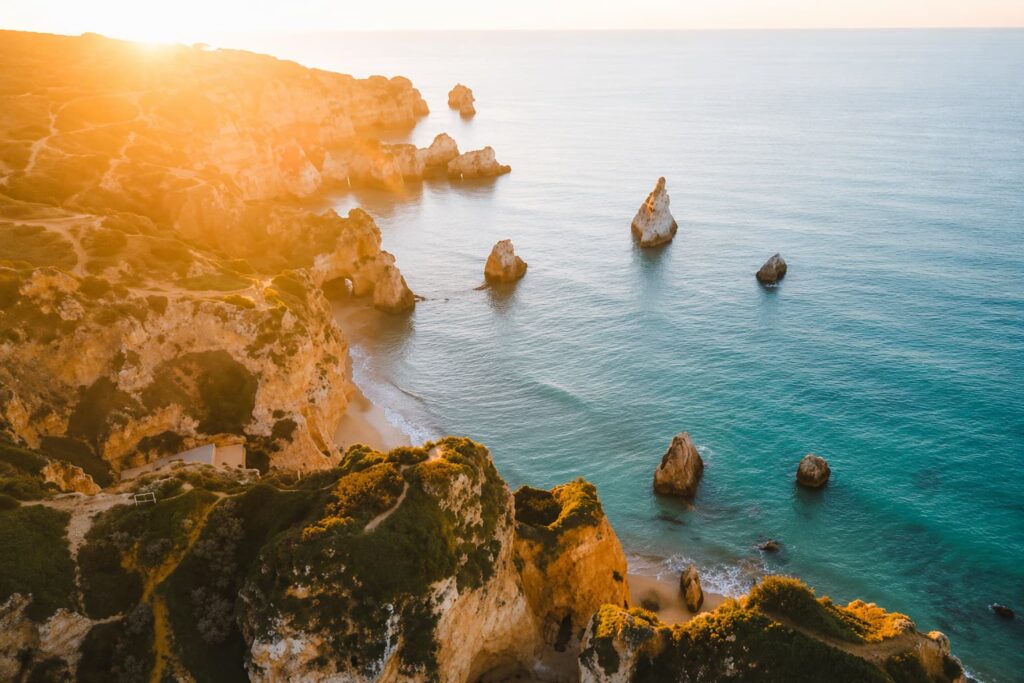
Algarve Travel Guide: An Honest Look at the Coast
Three coastlines in one. Which zone you choose determines what kind of trip you actually get — use this Algarve travel guide to find yours.
This Algarve travel guide exists because almost every other one skips the thing that matters most: the coast is not one place. Stretching over 150 kilometres, the Algarve covers three genuinely different geographies — sandstone cliff country in the west, the postcard cave-and-cove zone in the centre, and a quiet lagoon world of barrier islands in the east. Most first-time visitors book without knowing this split exists. As a result, some end up in a resort corridor in Albufeira and wonder if the Algarve is overrated; others find Tavira or Sagres and want to come back the following year. Which part of the coast you chose is everything.
This guide structures everything around that west/central/east framework — because it is the single most useful thing to understand before you book, and most content skips it entirely. Additionally, there are a handful of time-sensitive facts here, particularly around Benagil Cave access, that most other guides still describe inaccurately.
01 — Is the Algarve Worth Visiting?
The first question any honest Algarve travel guide should answer: yes — but with a condition. The Algarve at its best is one of the most dramatically beautiful coastlines in Europe: layered sandstone cliffs dropping into Atlantic water, coves that can only be reached by sea, clifftop trails where the geology does something extraordinary every few hundred metres. At the same time, the central Algarve in July and August — specifically the Albufeira corridor — runs close to the worst version of a European beach destination: packed resorts, queues for every boat tour, accommodation priced at a premium for an experience that has been largely smoothed of character. Those two trips are both the Algarve. Which one you get comes down to zone selection and timing.
For IQT readers specifically: the Algarve suits the traveller who wants something visually extraordinary and doesn’t mind being strategic about avoiding the crowds. The western zone and the eastern barrier islands both deliver genuinely quiet, slow experiences even in high season. Consequently, this Algarve travel guide gives more space to those zones than to the central resort belt — not because Albufeira doesn’t exist, but because honest advice about the coast means being clear about what each part of it actually is.
02 — The Three Algarves: How the Coast Actually Divides
No other Algarve travel guide states this plainly, but it’s the most structurally important thing to say: the Algarve is not one coast. It is three distinct experiences sharing a regional name, and treating them as interchangeable is how people end up disappointed. Here is how the coast actually breaks down.
The Western Algarve — Lagos, Sagres, dramatic cliffs
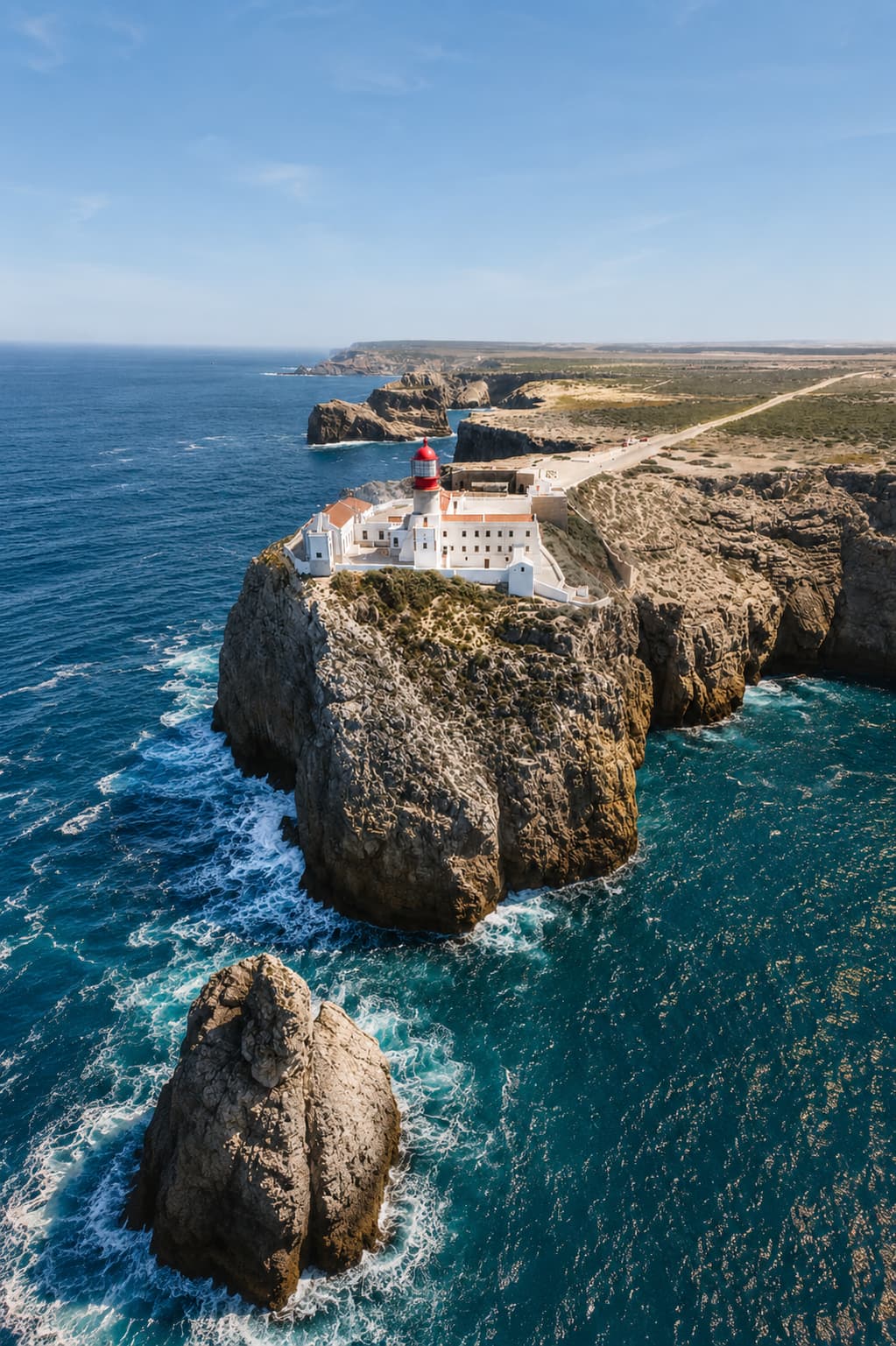
The west runs roughly from Lagos to Sagres, at the southwestern tip of continental Europe. This is cliff-and-cove country — the geology here is dramatic sandstone in shades of ochre, rust, and cream, carved by Atlantic waves into arches, sea stacks, and hidden beaches accessible only by boat or a scramble down a rope. Ponta da Piedade, just south of Lagos, is one of the most extraordinary coastal formations in Portugal: a labyrinth of rock spires and sea caves best seen from a small boat at low tide. Praia do Camilo sits below an impossibly vertical cliff and requires a wooden staircase to reach. Near Sagres, Praia do Beliche is a west-facing surf beach with almost no development visible from the shore.
Furthermore, the water here is noticeably cooler than in the east — this is open Atlantic, not sheltered lagoon — and the waves are bigger. Surf culture is real here in a way it isn’t in Carvoeiro or Tavira. The western zone is also the least resort-dense part of the coast, which makes it naturally quieter. Lagos itself is a proper town with a historic old quarter, good restaurants, and a ferry port — it functions independently of the beach season in a way that Albufeira doesn’t. Overall, the western Algarve is the IQT recommendation for photographers, surfers, and anyone who finds the central zone exhausting.
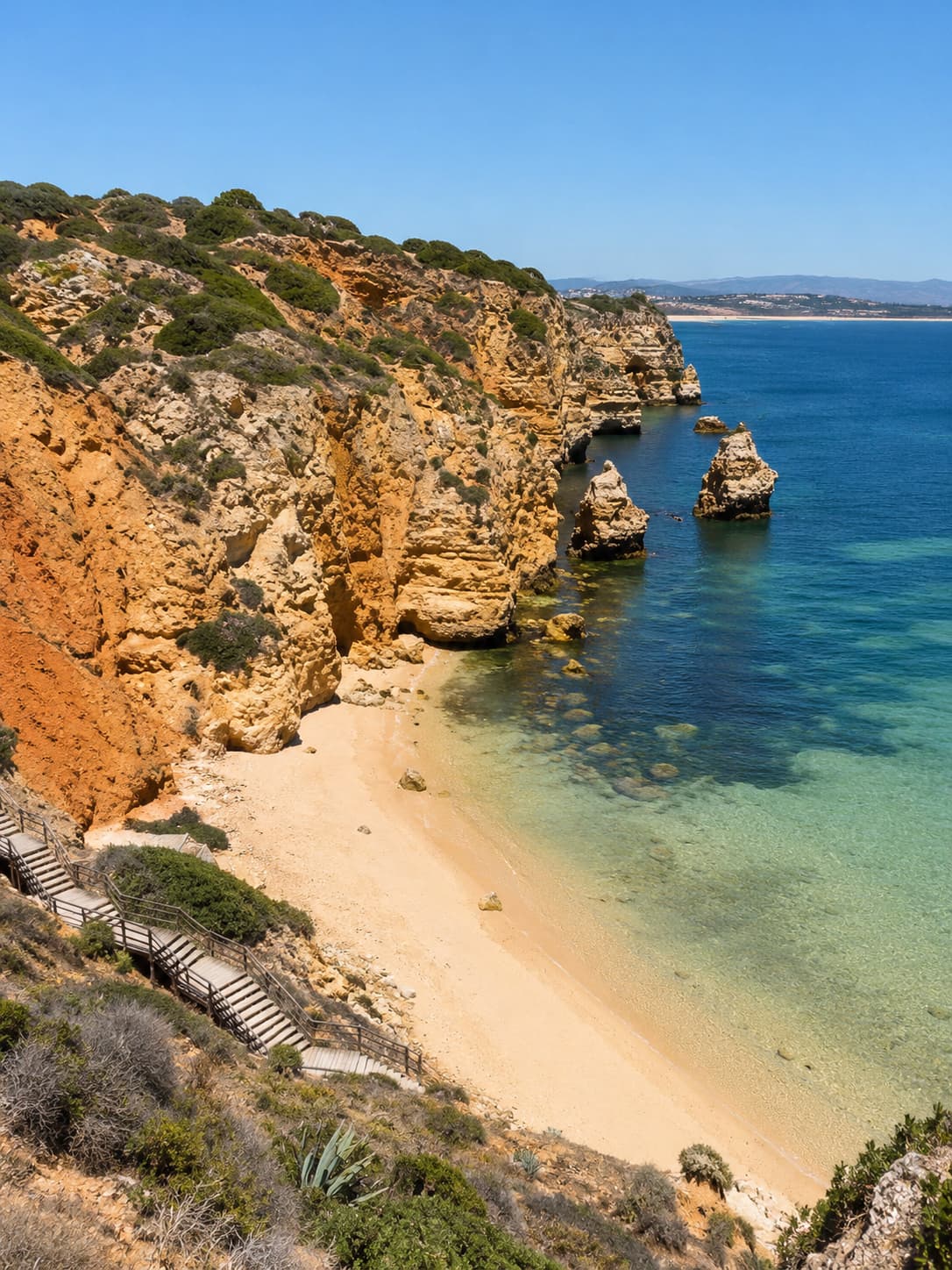
The Central Algarve — Praia da Marinha, Benagil, Carvoeiro
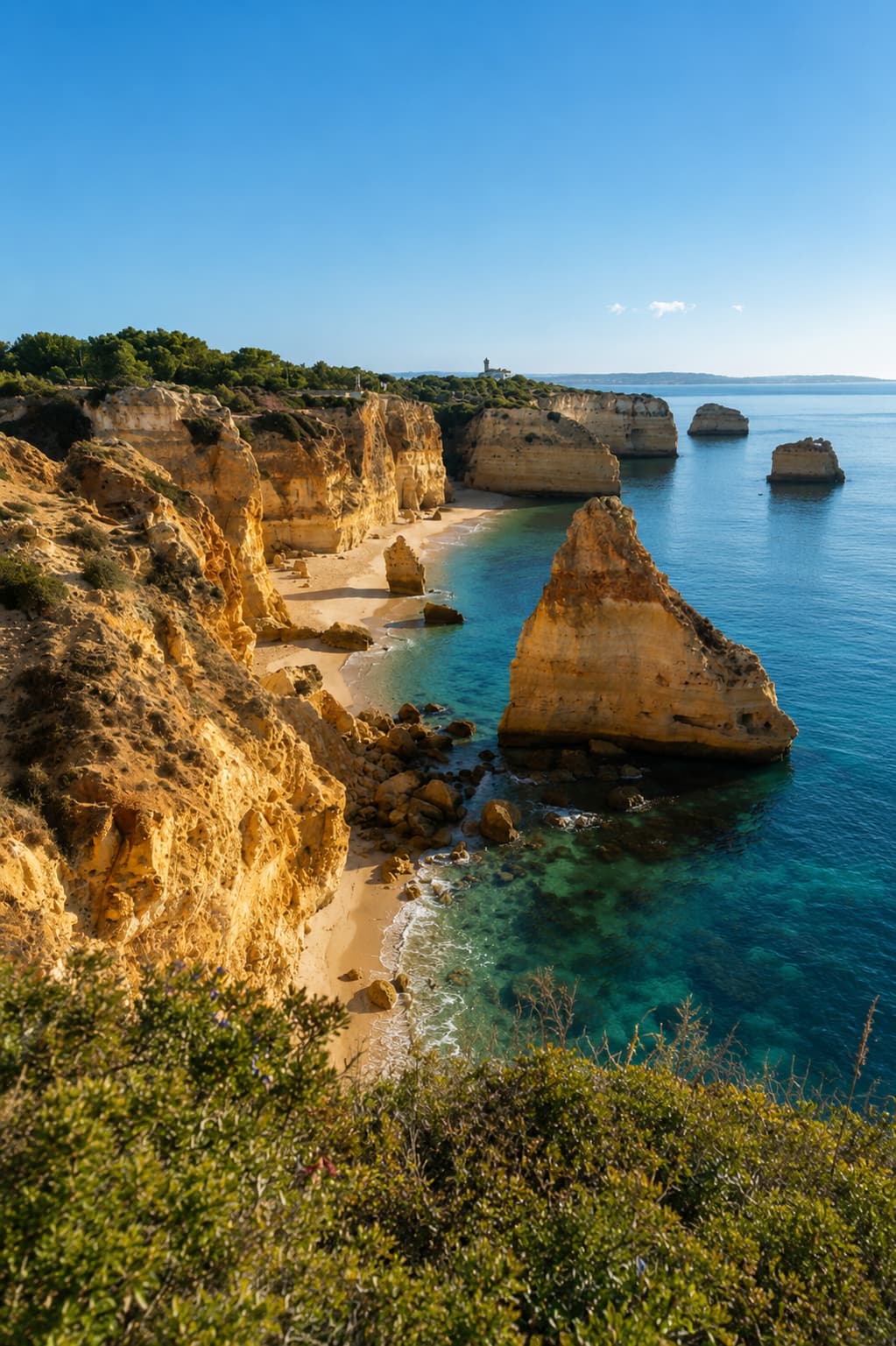
The central zone, stretching roughly from Carvoeiro through Armação de Pêra to Vilamoura, holds the Algarve’s most recognisable beaches — and its most visited. Praia da Marinha is genuinely one of the most beautiful beaches in Europe: a small cove framed by layered limestone cliffs, with rock formations in the water and a colour that photographs almost too well to believe. The Benagil coastline runs east of here, with a sequence of caves, arches, and sea stacks that have made this stretch the most photographed part of the Portuguese coast.
However, honesty requires a note on Albufeira. It is the resort capital of the Algarve and it delivers exactly what it promises: infrastructure, beach clubs, full-service hotels, and the full summer resort experience. In July and August, it is also genuinely overwhelming — boat tours booked days ahead, beaches packed from early morning, a general sense that you are sharing the coastline with a considerable portion of northern Europe. Carvoeiro is a quieter, more characterful alternative within the same central zone: a small fishing village with a good beach, whitewashed buildings, and access to Praia da Marinha by foot or by car without the Albufeira volume. If the central zone is where you want to be, Carvoeiro is the better base.
The Eastern Algarve — Tavira, Faro, the Ria Formosa barrier islands
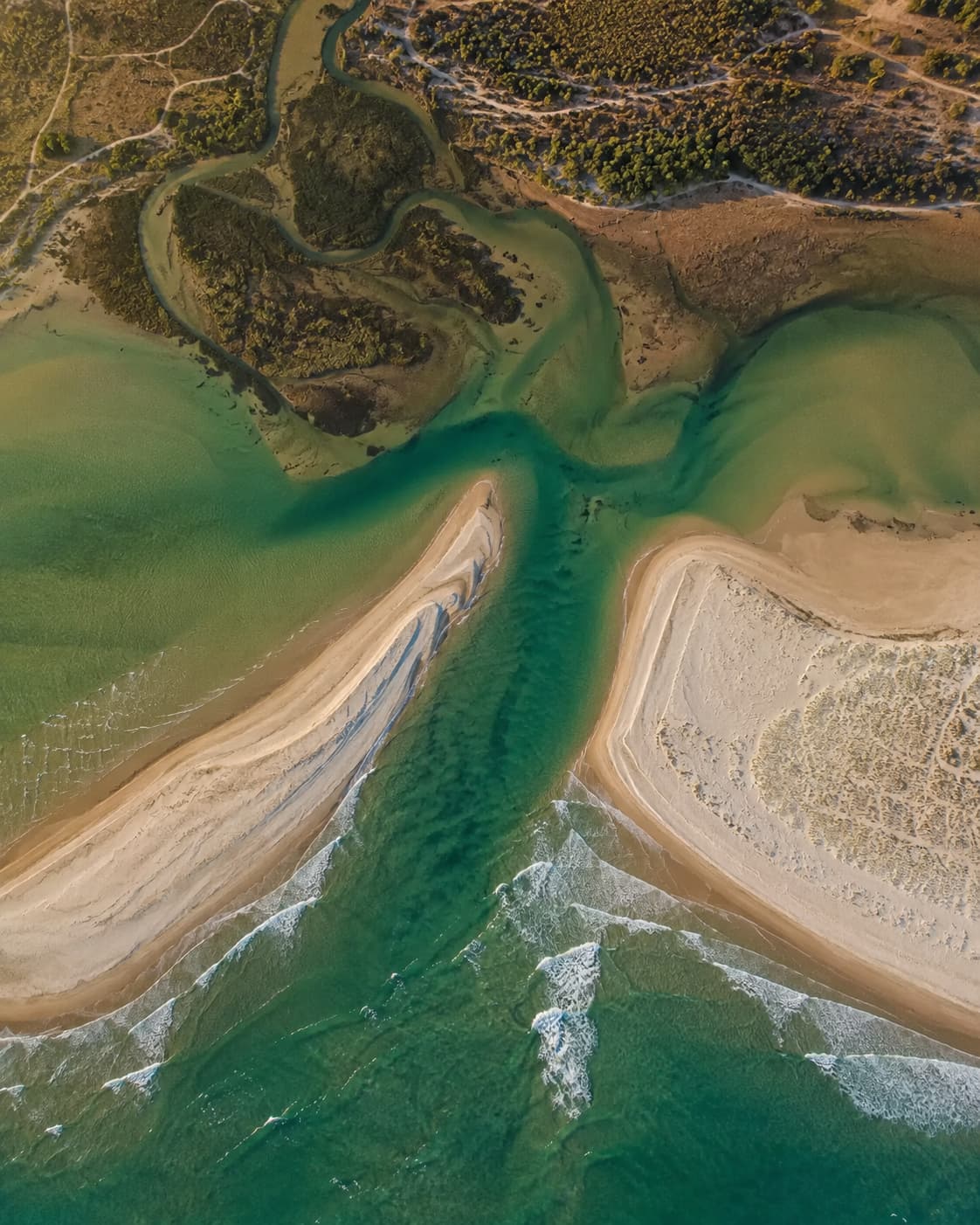
The east is an entirely different Algarve. There are no cliffs. Instead, the coast becomes a shallow lagoon — the Ria Formosa Natural Park — separated from the open Atlantic by a chain of long, flat sand barrier islands. Reaching them requires a short ferry crossing from villages along the mainland shore, and that ferry crossing is the single most effective crowd filter in the Algarve. Day-trip coach parties don’t cross to Ilha Deserta. Ilha de Tavira, accessed by a ten-minute ferry from the town of Tavira, is long, clean, and quiet even in August.
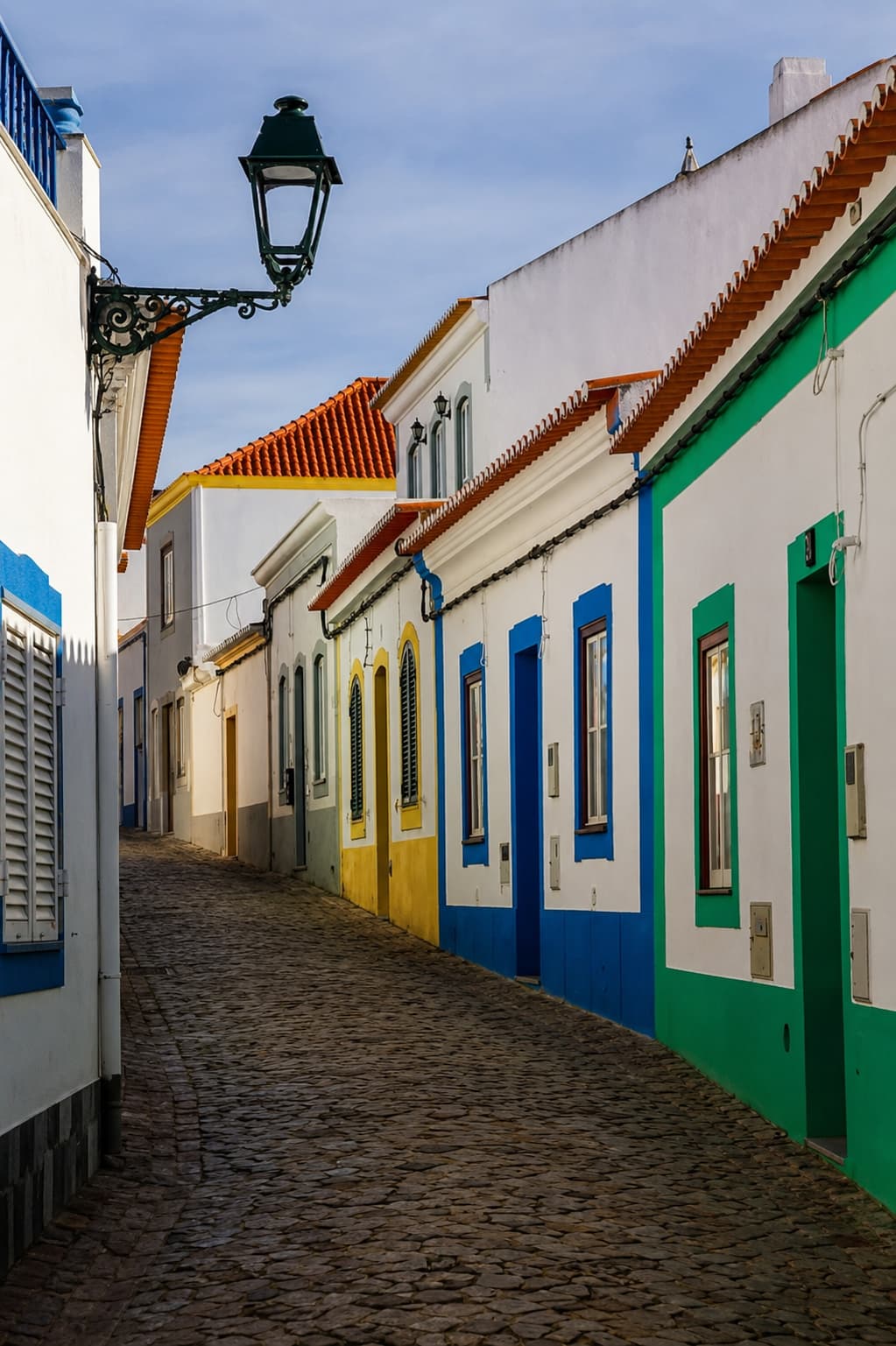
Moreover, the water in the eastern Algarve is the warmest in the region — shallow lagoon conditions mean it heats up significantly, making it the most comfortable swimming zone even outside peak summer. Tavira itself is arguably the most elegant town on the Algarve coast: low-rise, whitewashed, with a Roman bridge across the Gilão river, a weekly market, and a local food scene that functions for residents year-round rather than tourists in season. For anyone who wants the Algarve without the Algarve crowd, the eastern zone is the honest recommendation.
03 — Where to Base Yourself: Lagos, Albufeira, or Faro?
Any useful Algarve travel guide covers the base question honestly, because the choice of base is really a choice of which zone you want to be in, since the coast is long enough that commuting across all three by day trip is impractical without significant driving time. Here are plain verdicts rather than category-by-category scorecards.
Lagos — the IQT recommendation for most readers
Lagos is the best base for travellers who want the dramatic western coastline. It has a genuine town centre with a historic old quarter, good cafés and restaurants that are open year-round, and access to Ponta da Piedade and Praia do Camilo within fifteen minutes. The beaches accessible from Lagos — by boat tour or on foot — are some of the most extraordinary on the coast. Additionally, Lagos has the practical advantage of being a real place that doesn’t shut down outside summer, which matters if you’re going in May or October.
Albufeira — honest about what it is
Albufeira works for families who want full resort infrastructure: beach clubs, organised water sports, a wide choice of hotels and apartments, and the convenience of having everything within walking distance. In contrast to what most travel writing either over-promotes or reflexively dismisses, it delivers exactly what it is designed for. The central beaches are good; the old town has some remaining character; and the practical infrastructure for a family summer holiday is genuinely strong. That said, if you are an IQT reader expecting a quiet, slow, observational trip, Albufeira in July is probably the wrong choice.
Faro or Tavira — for the eastern zone
Faro is the regional capital and the gateway to the Ria Formosa islands. It is a functional, underrated city with a well-preserved historic quarter and direct ferry access to Ilha Deserta. However, Tavira is the stronger base for the eastern experience: smaller, more characterful, closer to Ilha de Tavira, and genuinely pleasant to spend time in off the beach. For anyone whose priority is the barrier islands, warm lagoon water, and a quieter pace, Tavira is the go-to.
04 — How to Visit Benagil Cave in 2026
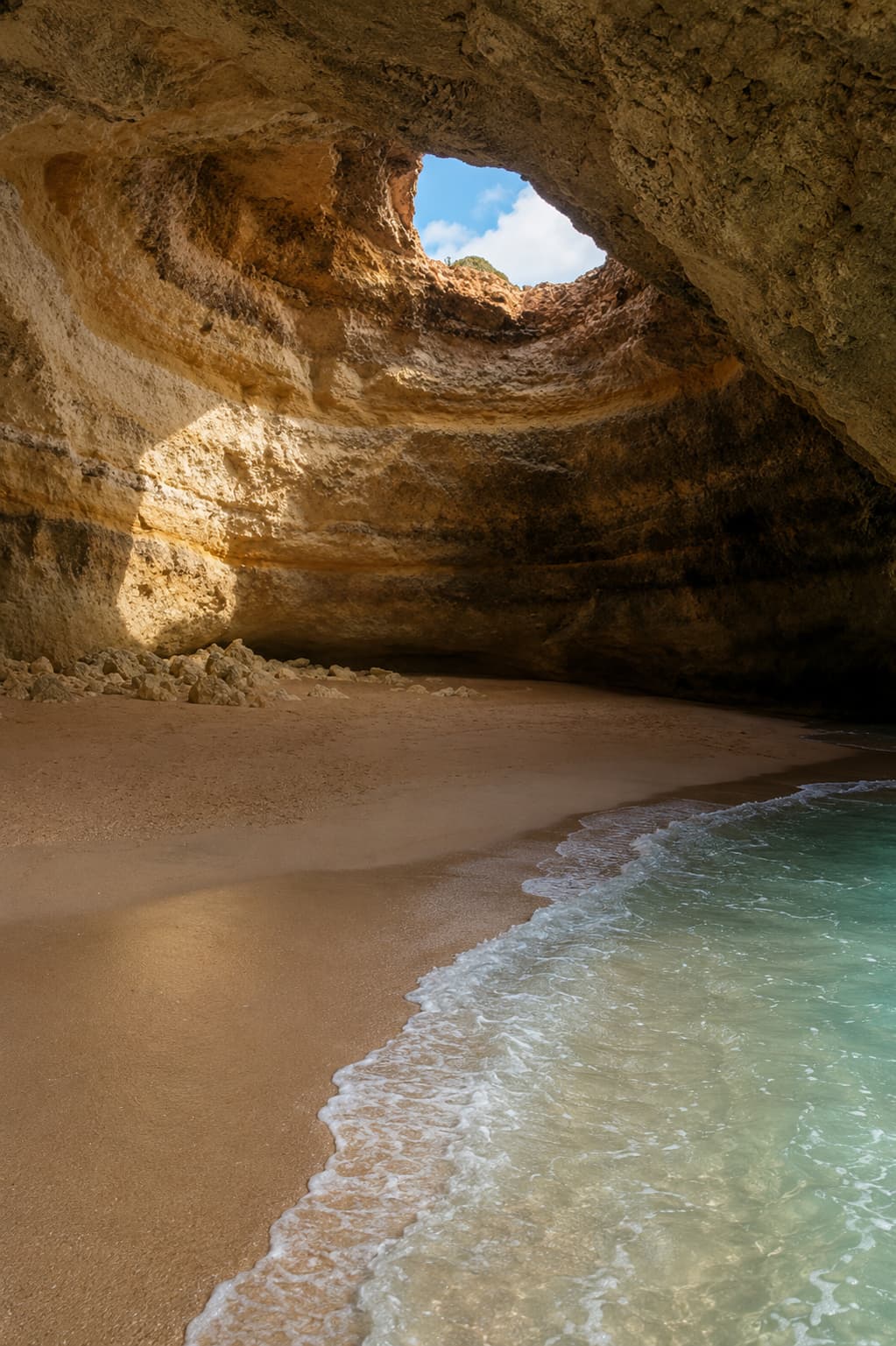
Benagil Cave — technically Gruta de Benagil — is the most searched single attraction in the Algarve, and the one section of this Algarve travel guide most other guides currently get wrong. The access rules changed in August 2024 and haven’t been fully updated across most travel content, so let’s be precise about what applies now.
Current access rules — confirmed for 2026
Since 13 August 2024, swimming from Benagil Beach into the cave has been permanently prohibited by the Portuguese Maritime Authority. The only legal access is via licensed guided boat tours or licensed guided kayak tours. Inside the cave, kayak groups are limited to a maximum of eight minutes; landing on the inner beach is not permitted. Fines for independent access — swimming in, paddleboarding in — reach up to €2,500. These rules are actively enforced in 2026, and most accounts of people swimming in that you’ll find online predate the prohibition.
Boat tour vs kayak — which to choose
Boat tours (typically 45–75 minutes, covering several caves and arches along the coast) give you the best overall view of the Benagil coastline and are the simplest option to organise. The cave interior view from a boat is clear and unhurried. Kayak tours get you closer to the cave walls and give you more time in the immediate vicinity, but are physically more demanding and depend more heavily on sea conditions. In summer, both options sell out early — consequently, booking at least two days ahead is sensible in July and August, and same-day availability is genuinely rare in peak weeks. The best practical timing for either tour is early morning, when the light inside the cave is at its best and the water is calmest.
As a practical note on seasons: May, early June, and September offer the best Benagil experience. The operators are running, the water is calm, and you’re not competing with thirty other boats for the eight-minute cave window.
05 — The Seven Hanging Valleys Trail
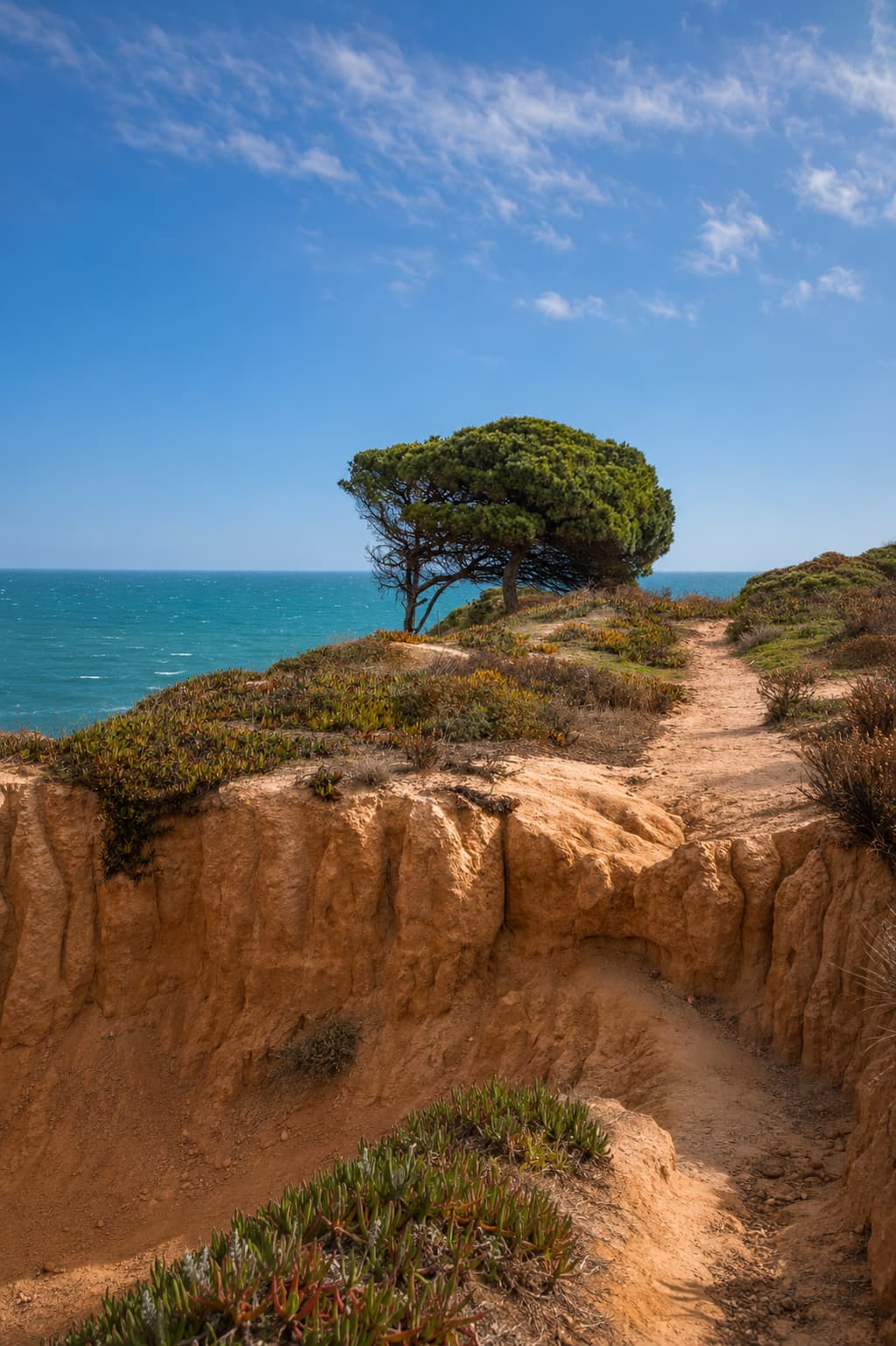
Known locally as the Percurso dos Sete Vales Suspensos, this is the best clifftop walk in the Algarve and, given its quality, one of the most underrated coastal walks in Europe. Running approximately 6 kilometres one-way along the cliff edge between Praia de Vale de Centeanes and Praia da Marinha, it threads through a sequence of coves, sea arches, and geological formations that make every few hundred metres feel different from the last. Free to walk, no booking required, and the path is well-marked throughout.
The walk takes two to three hours at a relaxed pace, with multiple points where the path reaches a headland and the view opens out over the coastline below. Furthermore, the trail passes directly above several of the formations you see from the water on a Benagil boat tour — which means doing both on the same day gives you the experience from two completely different vantage points. The recommended combination: walk the trail in the morning while the light is good for photography, then take a boat tour in the afternoon from Benagil Beach. Both can be done in a single day from a Carvoeiro or Lagoa base.
In summer, the trail should be walked early morning or late afternoon — midday heat on an exposed cliff path with limited shade is significant in July. Bring water and sun protection regardless of the month.
06 — Is a Car Necessary in the Algarve?
For most trips: yes. Every credible Algarve travel guide should be direct about this — the beaches that make the Algarve worth visiting — Praia da Marinha, Ponta da Piedade, Praia do Camilo, the western surf beaches near Sagres — sit at the end of roads the train and bus don’t serve in any practical way. A coastal railway runs east-west between Faro and Lagos in roughly 1.5 hours, and it’s entirely fine for moving between towns. However, beach-hopping without a car means depending on local taxi services (expensive and unreliable at busy times) or organised tours.
There are two specific cases where a car matters less. First, if your trip is centred entirely in one base town with a good local beach — Tavira for the island ferry, Lagos for Praia do Camilo — you can manage well on foot and taxi for a few days. Second, the eastern Algarve’s Ria Formosa islands are accessed by public ferry from Faro, Olhão, or Tavira, so that specific experience doesn’t require driving. Nevertheless, for a trip that wants to cover multiple zones or reach the Algarve’s most dramatic spots, a car is the difference between seeing the coast and seeing a fraction of it. Rentals in Faro are competitively priced, particularly in shoulder season.
07 — Best Time to Visit: What This Algarve Travel Guide Recommends
Ask any Algarve travel guide for a timing verdict and most hedge with “May to October.” September is the strongest single month, and the research is clear enough to state that plainly rather than hedging. Sea temperatures reach their annual peak — around 22°C — air temperatures sit between 22–28°C, the August crowds have thinned considerably, and accommodation prices begin to ease. That combination of warmest water, most available space, and lower prices than peak season doesn’t occur in any other month. If you can go in September, go in September. Most Algarve travel guide content vaguely suggests “May–October” without committing to a single best month — September is it.
Month-by-month honest summary
May and early June: the clifftop trails are at their best — wildflowers on the headlands, cool morning light, paths largely empty. Sea temperatures are around 17–18°C, which is swimmable for confident swimmers but cool for casual paddling. Additionally, Benagil boat tours are running and accessible without advance booking of weeks. This is the best month for photography and hiking.
July and August: hottest, most crowded, most expensive. The western and eastern zones remain manageable; the central Algarve around Albufeira is at its busiest. However, the conditions are also objectively the most conventionally “beach holiday” — long hours of sun, warm water, everything open. If you travel with children or specifically want the full summer beach experience, peak season is the right call. Otherwise, the framing crowds are real and worth weighing.
October, November and Winter in the Algarve
October and November: warm by northern European standards (18–22°C air, water dropping to 19°C in October), significantly cheaper, and emptier. Many beach facilities begin to close, but towns like Lagos and Tavira remain open and pleasant. Specifically, this is the best window for a slow town-based trip without needing the beach infrastructure.
December to February: the Algarve in winter is mild — January averages around 16°C — very cheap, and essentially empty. It’s a different kind of trip entirely: walking, quiet towns, off-season light, no competition for a café table. Most content doesn’t acknowledge this as a legitimate option, but for IQT readers who travel slowly and avoid peak crowds, it suits the approach well.
Algarve Practical Planning Info
| Getting there | Fly into Faro Airport (FAO) — well connected from most UK, German, Dutch, and Scandinavian airports. From Lisbon, the train to Faro takes approximately 2.5–3 hours; book via CP (Comboios de Portugal). From Porto, allow 4.5–5 hours by train. |
| Getting around | Car hire from Faro Airport is the most practical option. The coastal railway runs Faro–Lagos (1.5 hrs); useful for town-to-town movement but not for reaching beaches. Local buses exist but are slow and infrequent. |
| Best base by zone | West: Lagos. Central: Carvoeiro (quieter than Albufeira). East: Tavira (stronger character than Faro). |
| Benagil Cave | Licensed tours only. Book in advance in summer. Boat tour (~60 min, ~€20–35) or kayak tour (~2–3 hours, ~€40–60). Morning departures recommended for light and sea conditions. |
| Seven Hanging Valleys | Free, no booking. 6km one-way. Between Praia de Vale de Centeanes and Praia da Marinha. Walk early morning or late afternoon in summer. |
| Currency | Euro. Cards widely accepted at restaurants and hotels; bring cash for smaller beach vendors and ferry crossings. |
| Language | Portuguese. English is widely spoken in tourist areas; in eastern towns like Tavira, a few words of Portuguese go a long way. |
Algarve Trip Length, Crowds and First-Time Planning
Western Algarve, Eastern Algarve and Ria Formosa Questions
The Algarve rewards the traveller who looks past the resort brochure version of it.
The coast has more to offer than most content admits — and the best parts of it are still findable, even in summer, if you know which zone to choose.