

3 Days in Lisbon: An Honest Itinerary
What’s worth the queue, what isn’t, and a straight answer on whether Day 3 belongs in Sintra or in the city.
01 — Is 3 Days in Lisbon Enough?
Yes — with a condition. 3 days in Lisbon is enough to see the city properly: Alfama, Belém, the miradouros, the neighbourhoods you’ll actually remember. What three days doesn’t give you is margin. You can’t do Sintra and do the city at any kind of pace. You have to choose.
That choice is the central question of this itinerary. The Day 1 and Day 2 plans below are essentially fixed — there’s a logical sequence to Lisbon that the city’s geography imposes. Day 3 is the fork: Sintra, one of the most architecturally strange places in Europe, or a slower third day in Lisbon that lets you breathe, get lost in Mouraria, and actually sit somewhere without a queue behind you.
Both are defensible. This post gives you the honest trade-off so you can make the call for yourself — not the default answer that every other Lisbon guide gives, which is “do Sintra” with no caveats whatsoever.
02 — How to Spend 3 Days in Lisbon
Start high. São Jorge Castle opens at 9am — arrive early and you’ll have the ramparts mostly to yourself. Work downhill through the Sé Cathedral and the narrow lanes of Alfama to Portas do Sol, the viewpoint with the cleanest overview of the old city’s rooftops. Afternoon in Baixa — the flat, grid-planned lower city — then Chiado at dusk for a drink and the slow golden light on the hills.
Old City
Take the 15E tram west along the waterfront to Belém. Jerónimos Monastery in the morning — book tickets in advance, the queues without them are punishing. Belém Tower next: it reopened in May 2026 with timed entry and a strict daily cap, so this also requires advance booking. Pastéis de Belém for the custard tarts — yes, the queue moves. LX Factory if there’s afternoon time. Back to Chiado for sunset from a rooftop bar.
Belém · Waterfront
The fork. Sintra is extraordinary — Pena Palace, Quinta da Regaleira, the forested hills above the Atlantic — but it demands the full day and genuine pre-planning. The alternative is a third day in Lisbon itself: Mouraria, Príncipe Real, the National Tile Museum, or a train to Cascais for the coast. The full decision breakdown is below.
Your call
Day 1 — Alfama, Baixa, and the city’s best viewpoints
Lisbon’s old town is steep in the way that surprises people who haven’t walked it before. The hills aren’t decorative — they’re a genuine physical fact of the city, and Alfama in particular is a maze of narrow lanes that rise and fall without obvious logic. Wear shoes with grip. This isn’t a warning; it’s just what it takes to actually enjoy the neighbourhood rather than fight it.
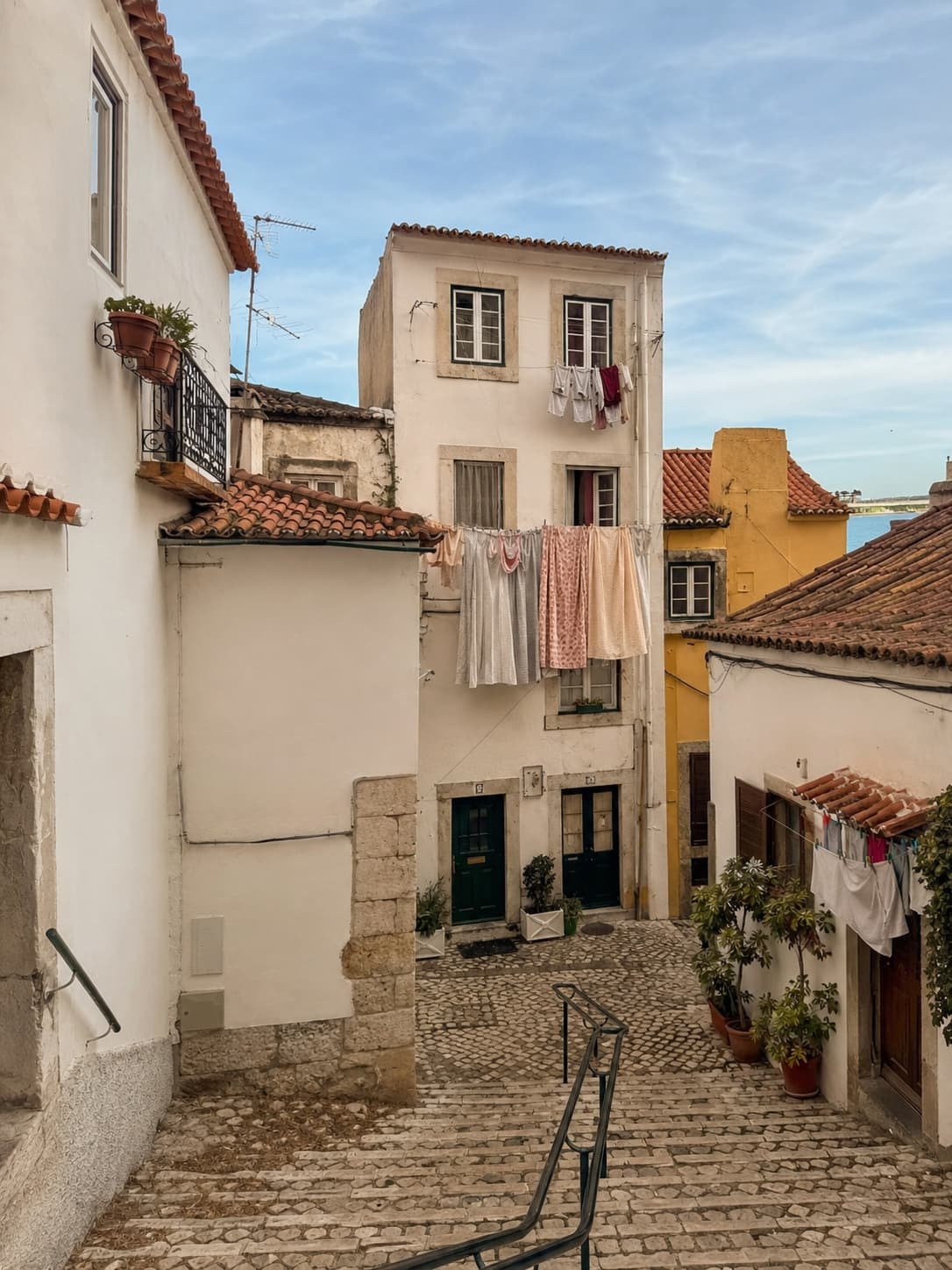
São Jorge Castle (Castelo de São Jorge) gets a complicated reputation — some guides dismiss it as overpriced, others push it as essential. The honest answer is that the interior is thin, but the ramparts give you a panorama of the city that nothing else at this price point matches. Book online to skip the ticket queue; arrive when it opens to skip the crowds.
After the castle, walk downhill through Alfama rather than taking the tram back. This is where the neighbourhood actually reveals itself — in the detours, the miradouros you stumble onto, the sound of fado drifting from somewhere out of sight. Portas do Sol is the viewpoint worth stopping at: it looks directly over the rooftops toward the Tagus, and it’s one of those views that makes the city make sense spatially for the first time.
Praça do Comércio in the afternoon — the grand square opening onto the river — then walk uphill toward Chiado as the light shifts. Chiado is where Lisbon’s bookshop culture lives alongside its best cafés, and the neighbourhood earns a slow evening without any particular agenda.
Day 2 — Belém, the waterfront, and Chiado
The 15E tram runs from Praça da Figueira along the waterfront to Belém — about 40 minutes with traffic. It’s slow, but it’s scenic, and it drops you at the right end of the Belém cultural strip. Alternatively, the 727 bus is faster and has air conditioning. Both work.
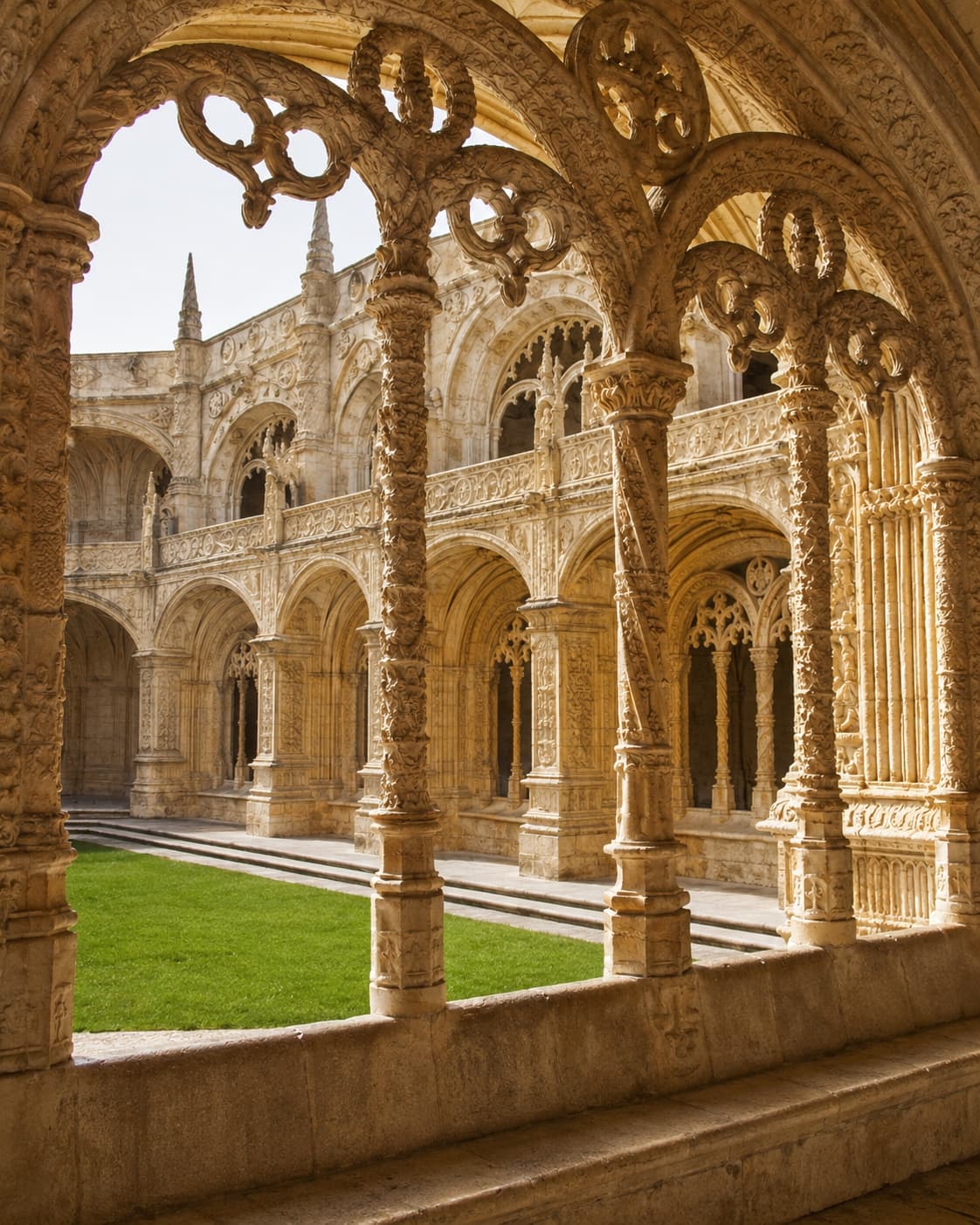
Jerónimos Monastery is one of the genuinely important buildings in Portugal — Manueline architecture at its most elaborate, built from the profits of the spice trade. The cloister is the thing worth seeing. Book ahead; the ticket desk has long queues, and this is one of those places where arriving without a booking is a decision you’ll regret by 10am.
Belém Tower deserves a note: after a 13-month restoration, it reopened in May 2026 under a new timed-entry system that caps admissions at 60 visitors per 30 minutes, with a maximum of 900 people per day. No on-site ticket sales — everything is booked online in advance, at €15. The interior isn’t expansive, but the exterior is the reason it became an icon, and seeing it up close from the river walkway is worth the trip regardless of whether you go inside.

Pastéis de Belém, the bakery that invented the pastéis de nata in its current form, is two minutes from the monastery. The queue is usually visible from the street. It moves. A tray of custard tarts with coffee at the marble counter inside is one of those unremarkable things that stays with you.
Day 3 — The fork
The Day 3 decision is handled in full in the Sintra section below. The short version: Sintra is extraordinary and deserves the day if you have the energy for an early start and full planning. If you’d rather spend that day at a slower pace — the Tile Museum, Mouraria, a train to Cascais — that’s also a good day in this 3 days in Lisbon plan, and not a lesser choice.
03 — Is Tram 28 Worth It?
Tram 28 is one of those Lisbon things that’s treated as non-negotiable by the travel internet. The yellow trams, the steep streets, the postcard image. The actual experience in peak season is different: packed to the point of physical discomfort, slow, and reliably targeted by pickpockets who work the crowded carriages.
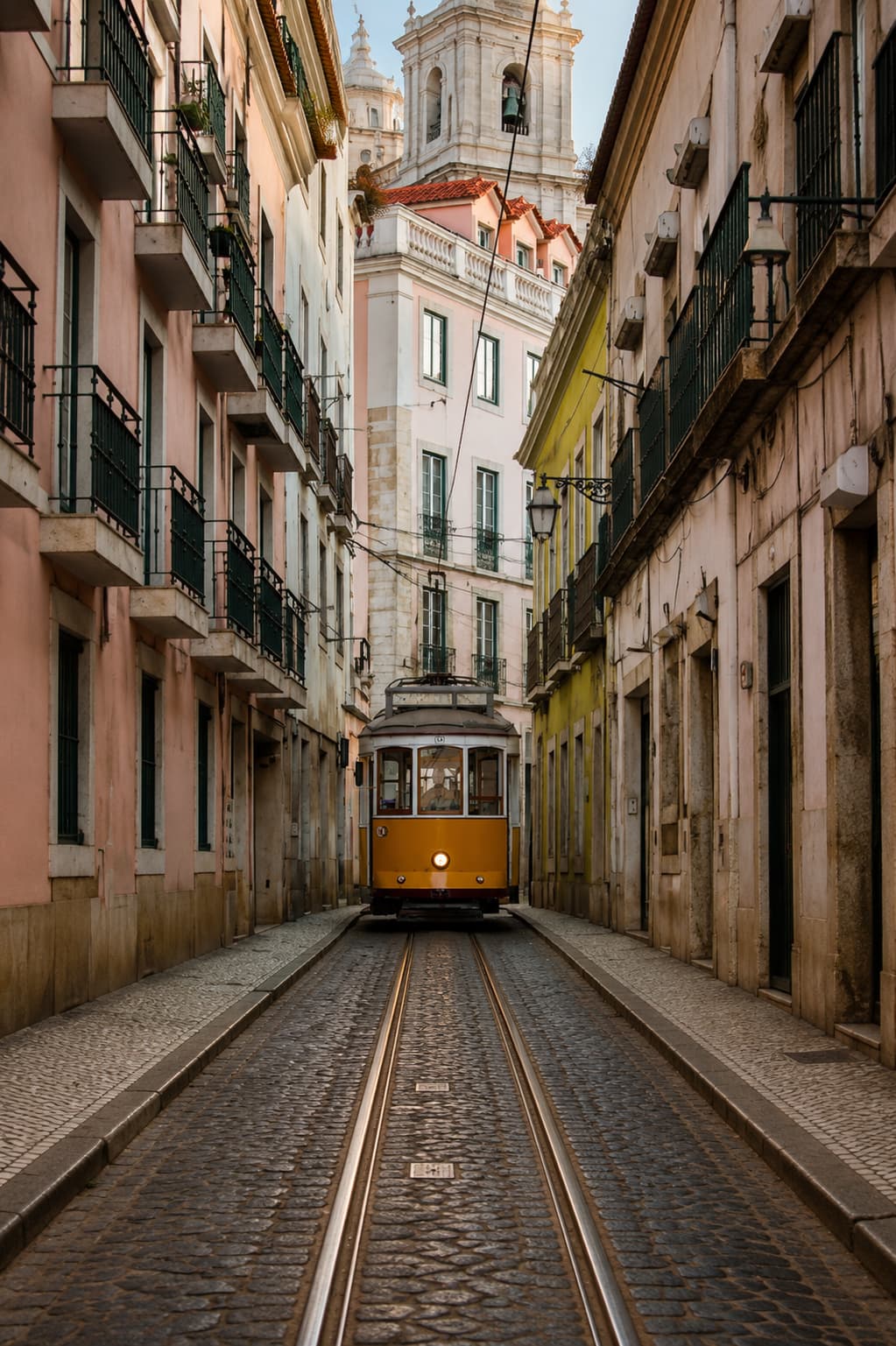
The honest verdict, which Lisbon locals are quite clear about: ride Tram 28 once, before 9am, boarding at Martim Moniz where the line starts and the tram is least crowded. That way you get the experience — the lurch up the gradient, the views through the windows, the creak of the old rolling stock — without the worst of the peak-hour conditions.
After that, Bus 737 runs the same route, has air conditioning, runs to schedule, and doesn’t come with the pickpocket warning. For practical transport across the same corridor, it’s the rational choice the rest of the day.
Is Tram 28 a must-do on a 3 days in Lisbon visit? Not really — not in the way it’s marketed. It’s a nice-to-have with very specific conditions attached.
04 — Is Sintra Worth a Day Trip from Lisbon?
The trade-off, honestly weighed
The most common reason people spend 3 days in Lisbon and still feel like they missed something is skipping the Day 3 decision entirely. Sintra sits in forested hills about 40 minutes from Lisbon by train, and it’s genuinely one of the stranger places in Europe — Pena Palace is a 19th-century royal fantasy built in competing colours on a cliff top, Quinta da Regaleira has underground initiation wells and tunnels that feel more Gothic novel than real life, and the whole area sits inside a UNESCO World Heritage landscape that justified the designation.
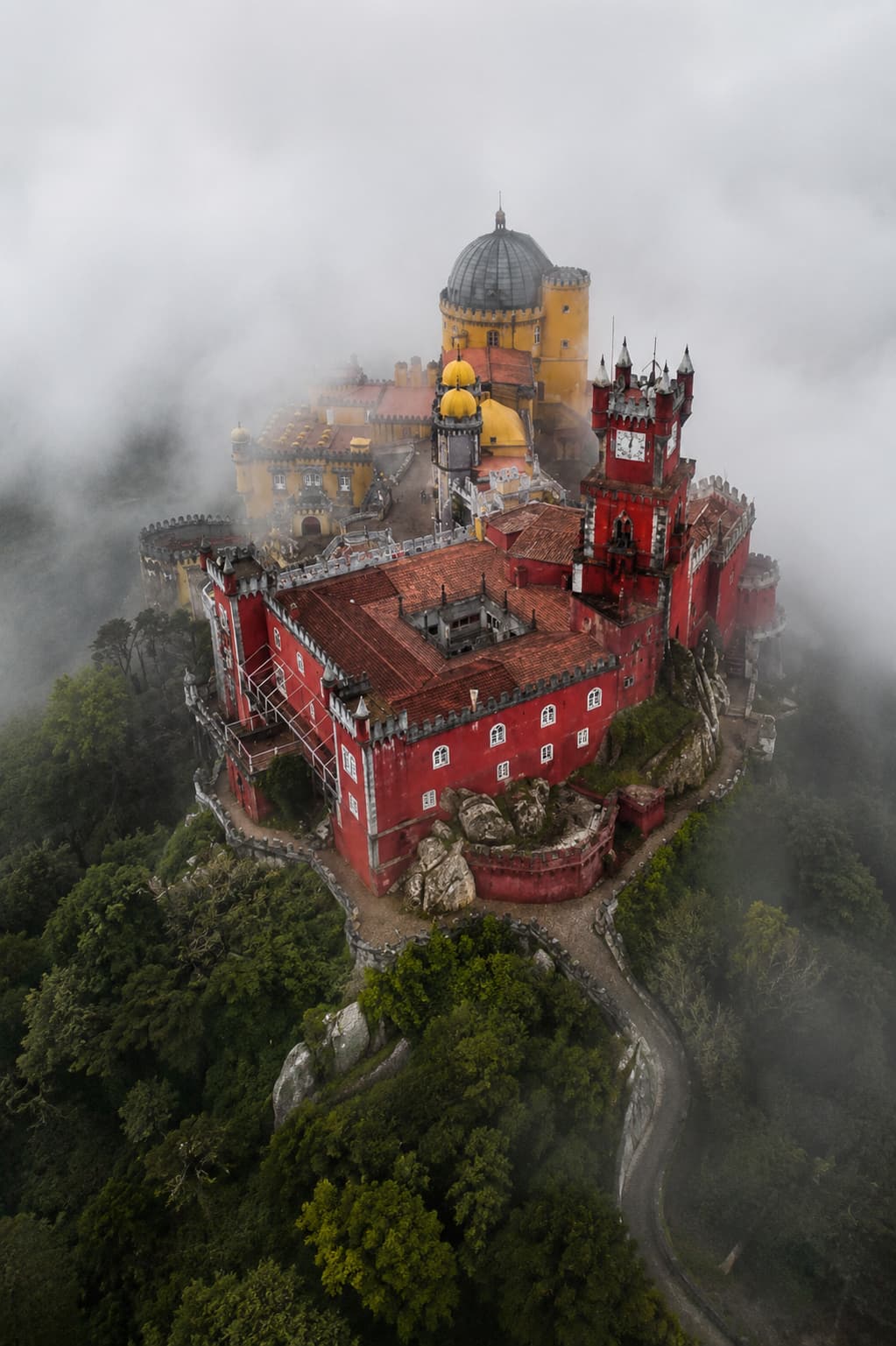
It also gets crowded in a way that Lisbon, despite its tourism, mostly doesn’t. The main sites require timed tickets booked in advance. The hilltop transport between sites can have queues. A day in Sintra done well means an early train (first one leaves Rossio station around 7:30am), pre-booked tickets for at least Pena Palace, and a clear plan for which sites you’re prioritising — because trying to do all of them in a day is how Sintra becomes exhausting rather than extraordinary.
Do the Sintra day trip if…
- You have high energy for logistics: early start, pre-booked tickets, planned sequence of sites
- You haven’t been to Sintra before: it really is unlike anything else in Portugal, and the first visit lands differently
- Pena Palace or Quinta da Regaleira specifically interest you: these are the anchors worth building the day around
- You’re happy with one full-on day followed by travel: it’s a good final day if you’re leaving the next morning and want the high note
Stay in Lisbon if…
- You haven’t seen Mouraria or Príncipe Real: these are two of the most interesting neighbourhoods in the city and Day 1–2 don’t reach them
- You want the National Tile Museum (Museu Nacional do Azulejo): it’s the best museum in Lisbon and genuinely requires unhurried time
- Cascais appeals: the coastal town 40 minutes from Cais do Sodré by train is a genuinely good half-day — beach, esplanade, a different tempo
- You’re tired: three days in Lisbon is tiring if you’ve walked it properly. A slow third day with no agenda has real value
05 — How to Get Around Lisbon
Lisbon’s public transport is managed through the Navegante card — a reusable card (€0.50 to buy) that you load with Zapping credit. Each trip costs €1.72 loaded this way, covering metro, bus, tram, and the suburban trains out to Sintra and Cascais. Contactless bank cards work on the metro only — not on trams or buses — so the Navegante card is worth picking up at any metro station on arrival.
-
Metro: Four lines covering most of the city efficiently. Fastest option for longer distances. Contactless bank cards accepted here. -
Bus: Navegante card only. Bus 737 covers the Tram 28 corridor faster and with less hassle. Bus 15E (actually a tram) runs along the waterfront to Belém. -
Uber: Cheap, reliable, and widely available. For getting up steep hills with luggage or navigating between neighbourhoods quickly, it’s genuinely the practical choice. -
Walking: Essential for Alfama, Chiado, and Baixa — the historic centre is compact enough. Build in time for the hills; they slow pace significantly. -
Suburban trains (CP): Rossio station → Sintra (40 min, €2.35 each way). Cais do Sodré → Cascais (40 min, same price). Both covered by the Navegante card with Zapping credit.
06 — Best Neighbourhoods to Stay in Lisbon
07 — The Best Viewpoints in Lisbon
Lisbon’s miradouros are the best argument for the city’s hills. Every elevated point seems to have been turned into a viewpoint, and the collection of them — all free, distributed across the different neighbourhoods — is something no other city in Europe quite matches for sheer quantity of good views. These are the four worth planning around.
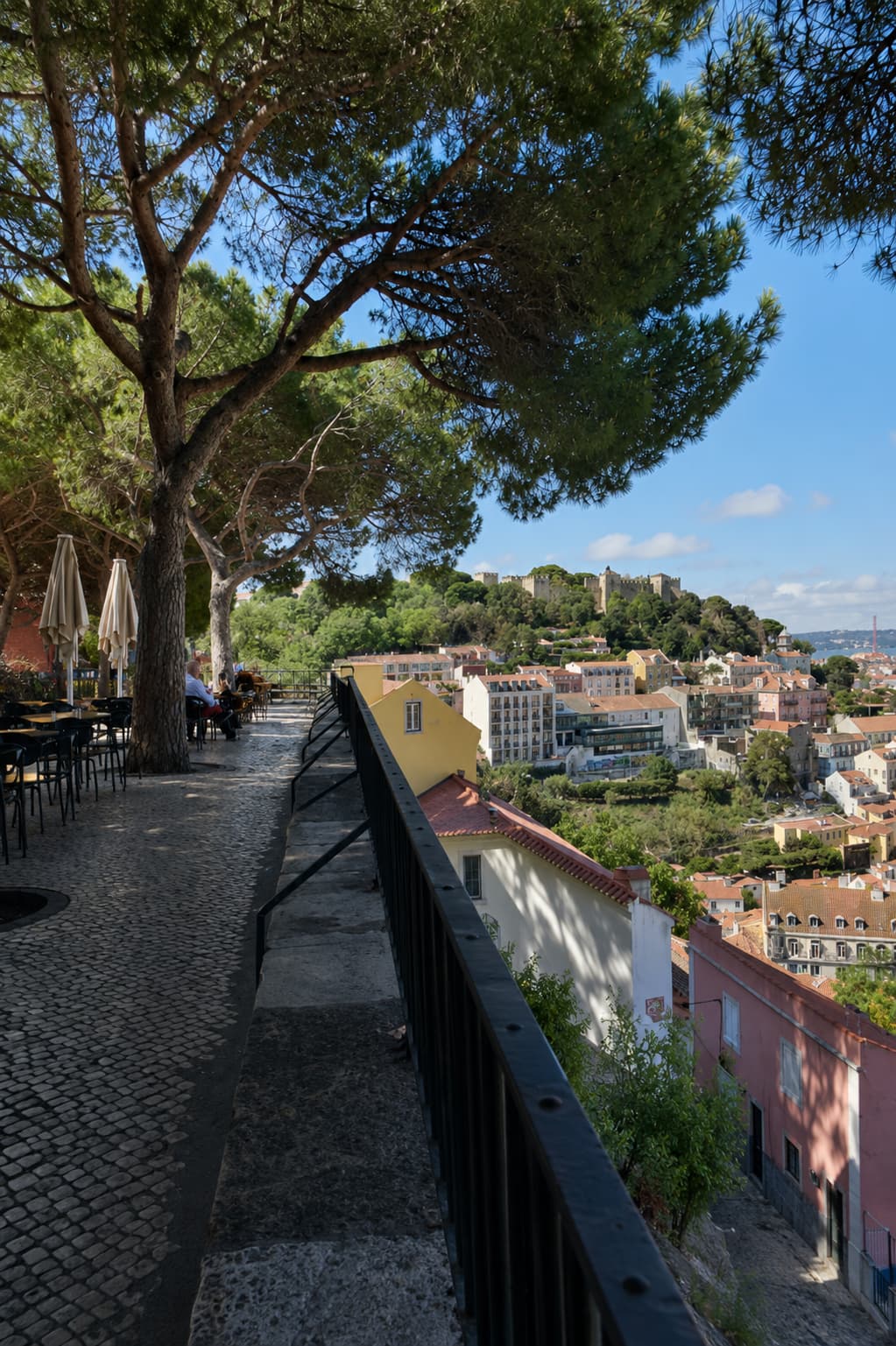
The clearest overview of Alfama’s rooftops and the dome of São Vicente church. Easy to reach from the São Jorge Castle loop, and usually less crowded than the more famous miradouros nearby. Best mid-morning before the tour groups arrive.
The widest panorama in central Lisbon — the city from the castle to the Tagus, with Belém visible in the far distance on a clear day. This is the one to visit at golden hour if you’re choosing only one. The kiosk café here is a good reason to linger.
The highest viewpoint in the historic centre and the best for golden hour specifically — the light hits the rooftops from an angle that makes every photograph look better than it deserves to. Ten minutes’ walk uphill from Graça, and usually quieter.
Chiado’s viewpoint, facing west toward the 25 de Abril bridge and the Tagus estuary. The crowd here is younger and more local than at the Alfama viewpoints — students, guitarists, people who live in the neighbourhood rather than people ticking a list. A different atmosphere, and worth it for that alone.
Before You Go
On the Ground
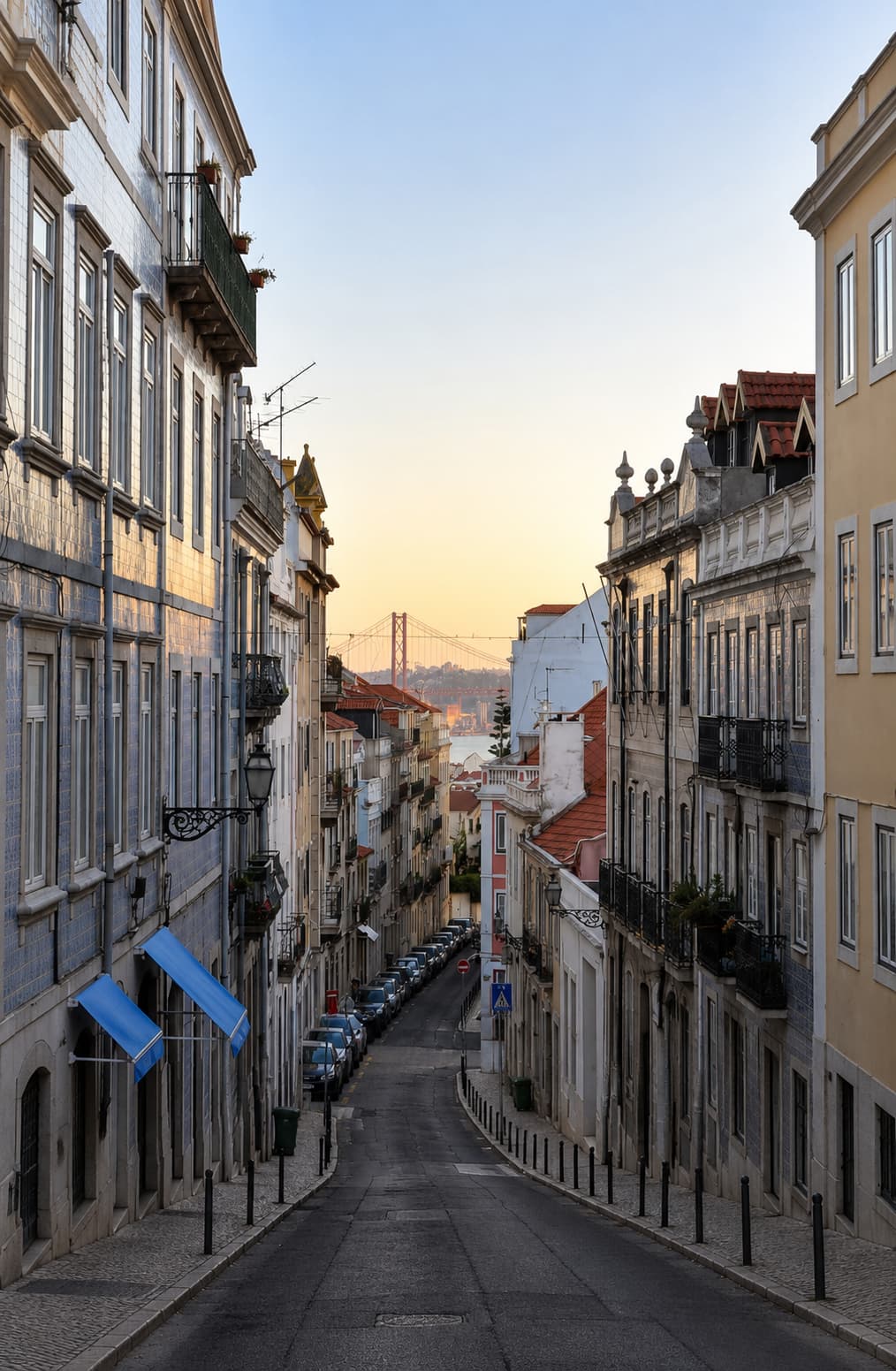
Lisbon is one of those cities that gets better the slower you move through it.
Three days is enough to understand why people keep coming back for more.