
Italy with Friends vs Italy Solo: How the Same Trip Feels Completely Different
We did Italy with friends — Rome, the Amalfi Coast, Pompeii, Tuscany. Here’s what the group changed, what it made better, and what made me want to go back alone.
We did Italy with friends. That is the trip this post is built on — four people, a parked car in Rome, the Amalfi road, pizza in Naples, Tuscany on the way home. It was good. It was also, at certain moments, very obviously not a solo trip.
The contrast between the two versions of Italy is what this post is about. Not a verdict — Italy is not categorically better one way or the other. Instead, it is a genuinely different country depending on how many people you bring with you, and the differences are specific enough to be worth understanding before you go.
01 — The Thing That Changes Everything: Decisions
Before destinations, the structural difference between group and solo travel is this: decisions. Solo travel means your own pace, your own hunger, your own sense of when something is finished. Group travel means democratic decisions — where to eat, when to leave, how long to spend somewhere, whose tiredness sets the schedule for the afternoon.
What group decisions actually look like
In practice, group decisions on a trip like this are mostly fine and occasionally frustrating. The fine version: someone spots a good-looking restaurant and everyone agrees without much discussion. The frustrating version: it’s 2pm at Pompeii, you want another hour in the ruins, and two other people are hot and ready to leave. Neither version is wrong. They’re just the texture of travelling with other people, and it is worth knowing that texture before you go.
The single most useful thing you can do before a group Italy trip is agree on pace in advance. Are you the kind of group that does one or two things a day and does them properly? Or the kind that moves quickly and covers more ground? A mismatch in pace expectations is the most common source of friction in group travel — and it is almost entirely avoidable if you talk about it before you’re standing outside the Colosseum arguing about lunch.
What solo pace actually feels like
Solo pace is not faster — it is more responsive. You leave when you’re done, stay when you’re not, eat when you’re hungry rather than when the group converges on a decision. In a city like Rome, that responsiveness means the difference between spending forty minutes at the Pantheon because that’s how long the group takes and spending two hours there because something about the light on the floor holds you. Both are valid ways to be in Rome. Only one of them is available when you’re travelling alone.
Solo pace also means there is nobody to suggest the restaurant you would never have found yourself, nobody to share the cost of a better apartment than you’d book alone, and nobody to turn to when the drive gets quiet and you want someone else to have noticed what you just noticed. Solo travel in Italy gives you depth. Group travel gives you company at the moments when company is the right thing.
02 — Rome: The City That Rewards Both Differently
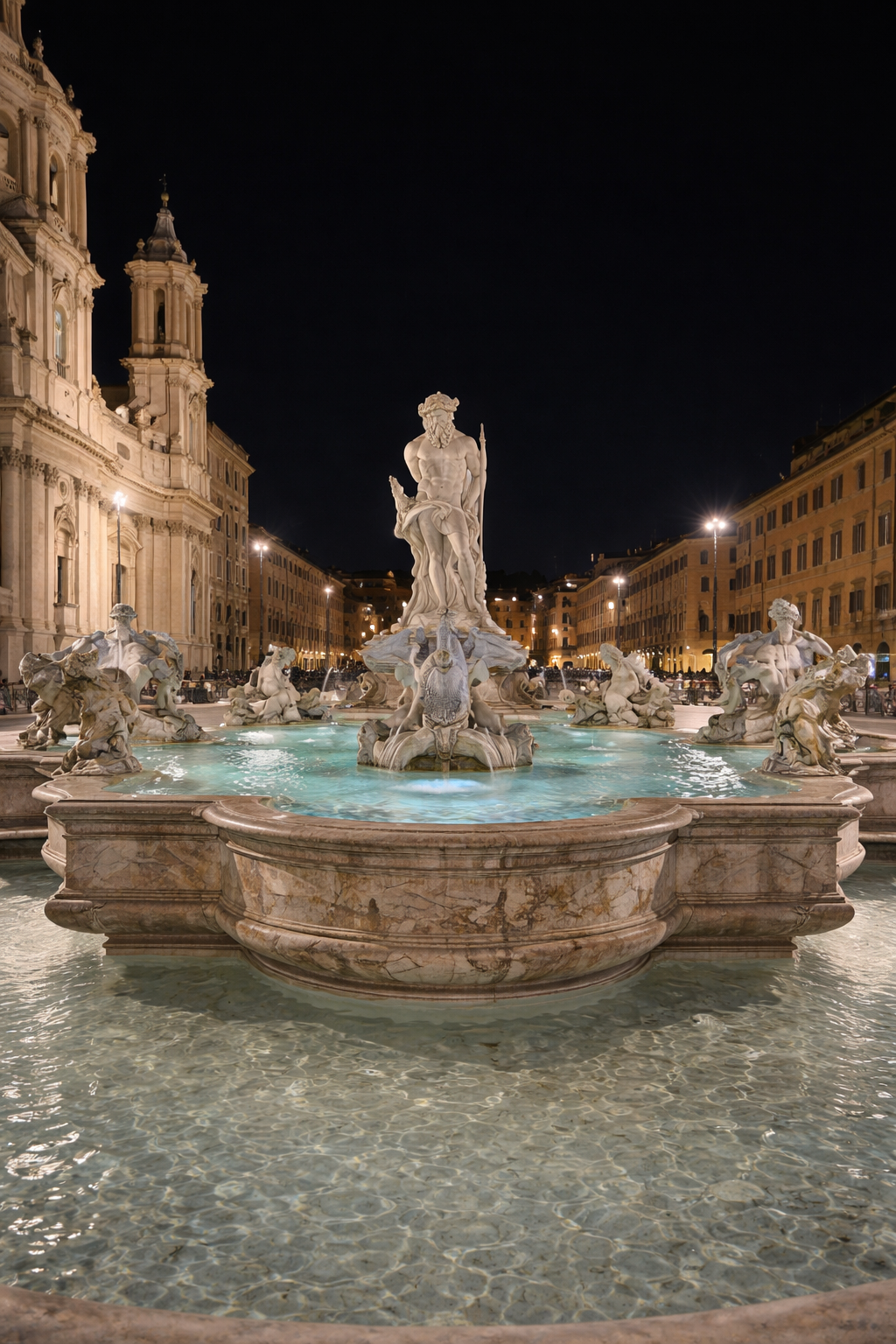
Rome with four people in summer meant a central apartment that none of us would have booked alone — the cost split made it possible, and the location made the whole two days work better. It also meant long evenings near Campo de’ Fiori, everyone still talking at midnight, the warm stone and the fountains and the specific pleasure of a city that doesn’t close until very late.
What summer does to Rome with a group
Summer Rome is busy and hot in the middle of the day. With a group, the heat is manageable in a way that solo heat isn’t — you split off for a few hours in the afternoon, some people rest, some people wander, and you reconvene in the evening when the city comes back to life. That rhythm, it turned out, suits group travel particularly well. The evenings in Rome in summer are long and social and very much the point of being there — and evenings are better shared.
Book tickets for the Colosseum and Vatican before you arrive — for a group, this is non-negotiable. Queuing for two hours with four people in August heat is significantly worse than queuing alone, and the timed entry slots sell out. Book at coopculture.it for the Colosseum and the official Vatican site for the Museums. Do this at least a week in advance in July and August.
What solo Rome looks like in contrast
Solo Rome is faster and more absorbing. You spend exactly as long at each place as the place deserves rather than as long as the group consensus allows. The sites become genuinely contemplative rather than social experiences — the Pantheon alone, standing under the oculus with no one to talk to, is a different experience from the Pantheon with three other people discussing where to go for lunch. Moreover, solo Rome at night has a quieter quality — you walk without a destination and the city reveals things it keeps from tour groups and couples busy with each other.
03 — The Amalfi Coast: The Most Obvious Difference
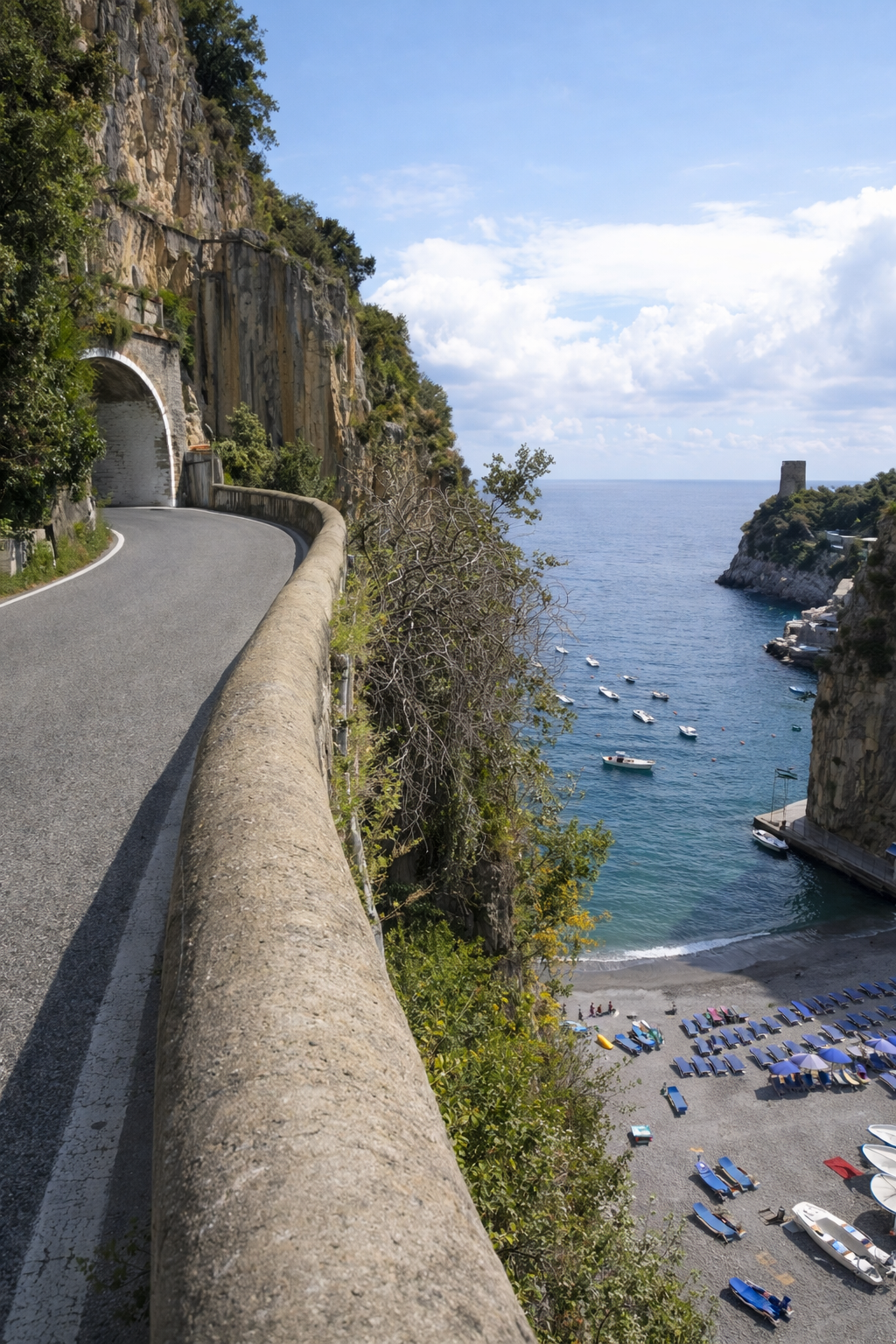
The SS163 with four people produced something I didn’t expect: collective silence. Nobody talked for the first twenty minutes. Not from tension — from the road. The passenger in front kept reaching instinctively for a handle that wasn’t there. The two in the back went quiet and just watched. The road asked everyone to be present at the same time, and that shared presence turned out to be one of the better parts of the trip.
A solo driver on the SS163 has only the road and their own thoughts. A car with four people has a shared experience of the same thing — the same narrow section, the same sudden view of sea, the same moment when the road drops away on the right. That shared experience creates a different kind of presence. It is not better than solo presence. It is its own thing, and it was unexpectedly good.
The practical group differences on the coast
With a group, stops require consensus — one person is always ready to move when another wants more time. Furthermore, parking with four people means one person navigating while the driver focuses on the road, which is genuinely useful on the SS163. The fuel cost splits well across four people, making the drive notably cheaper per person than solo.
The SS163 requires the driver’s full attention. Before you reach Vietri sul Mare, designate one person as navigator — phone in hand, responsible for parking spots, upcoming bends, and when to tell the driver to slow for a stop. This division of labour makes a material difference to how stressful the drive feels for the person behind the wheel.
04 — Pompeii: The Place That Works Better Alone
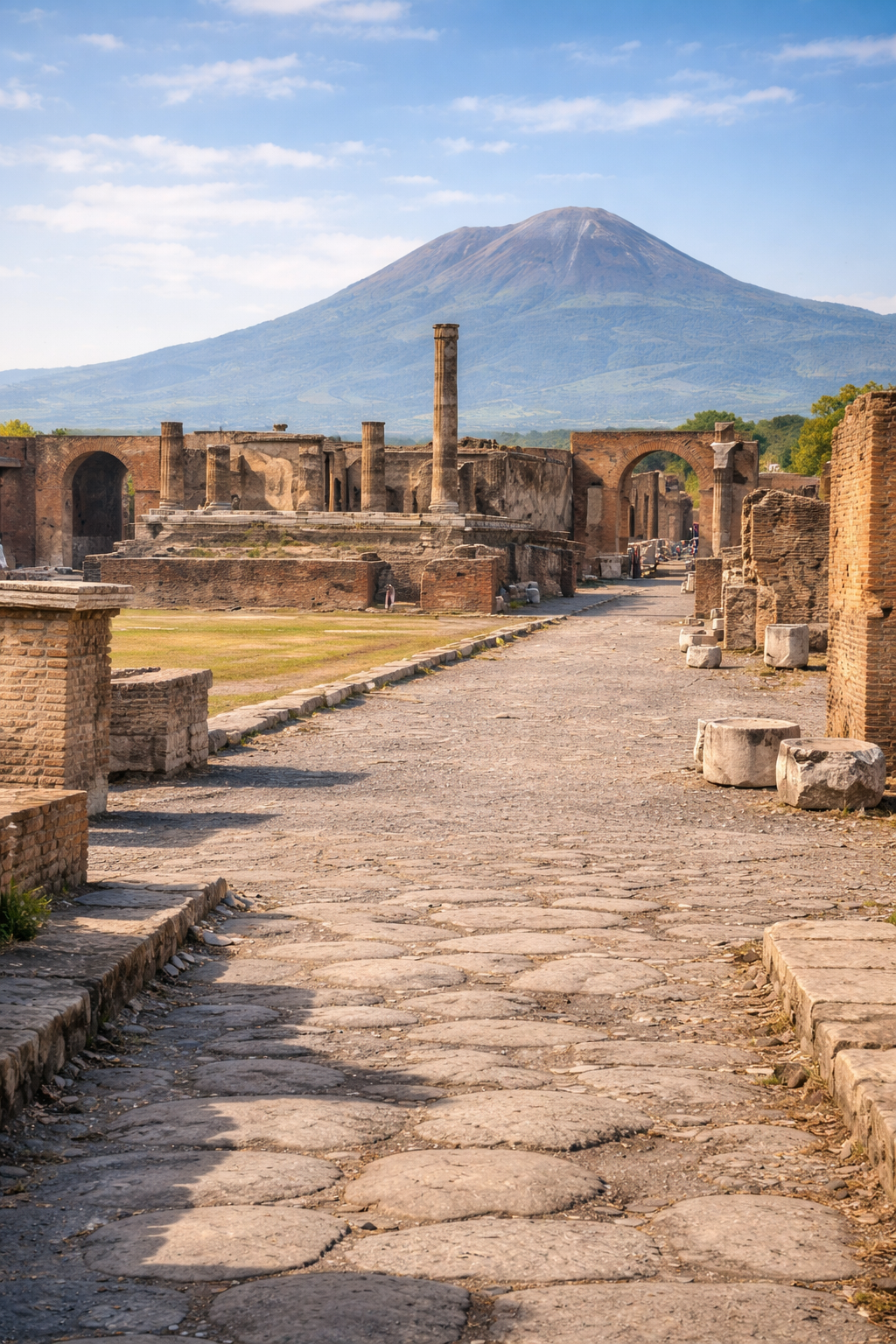
This is the honest section. Pompeii’s particular quality — the quiet, the attention it asks for, the feeling of reading a city rather than sightseeing in one — is harder to access in a group. Not impossible, but harder. With four people, someone is always ready to move when you’re not. The cobbled streets, the cart ruts worn into the stone, the doorsteps precisely the right height to step over — these are things you notice when you’re moving slowly and looking carefully. Groups don’t always move slowly.
Why Pompeii is the exception
Of all the stops on this trip, Pompeii is the one I’d go back to alone. Not because the group made it bad — we spent two and a half hours there and covered the main streets properly. Rather, it’s because the place rewards a quality of attention that group dynamics make difficult to sustain. Someone always has a different pace. Someone is hot and ready for the exit before you’ve finished. Solo Pompeii would have been slower, more absorbed, and more in the spirit of what the site actually is.
There is a moment, somewhere in the middle of the ruins, when you stop thinking about Pompeii as a tourist site and start thinking about it as a city. The ruts in the street from cart wheels. The stepping stones across the road — raised because the streets flooded. The bakery with the millstones still in place. These details require stillness and no conversation. They are easier to find alone than with company — but they are worth finding regardless.
05 — Naples and Tuscany: The Easier Comparisons
Naples — where the group actually helps
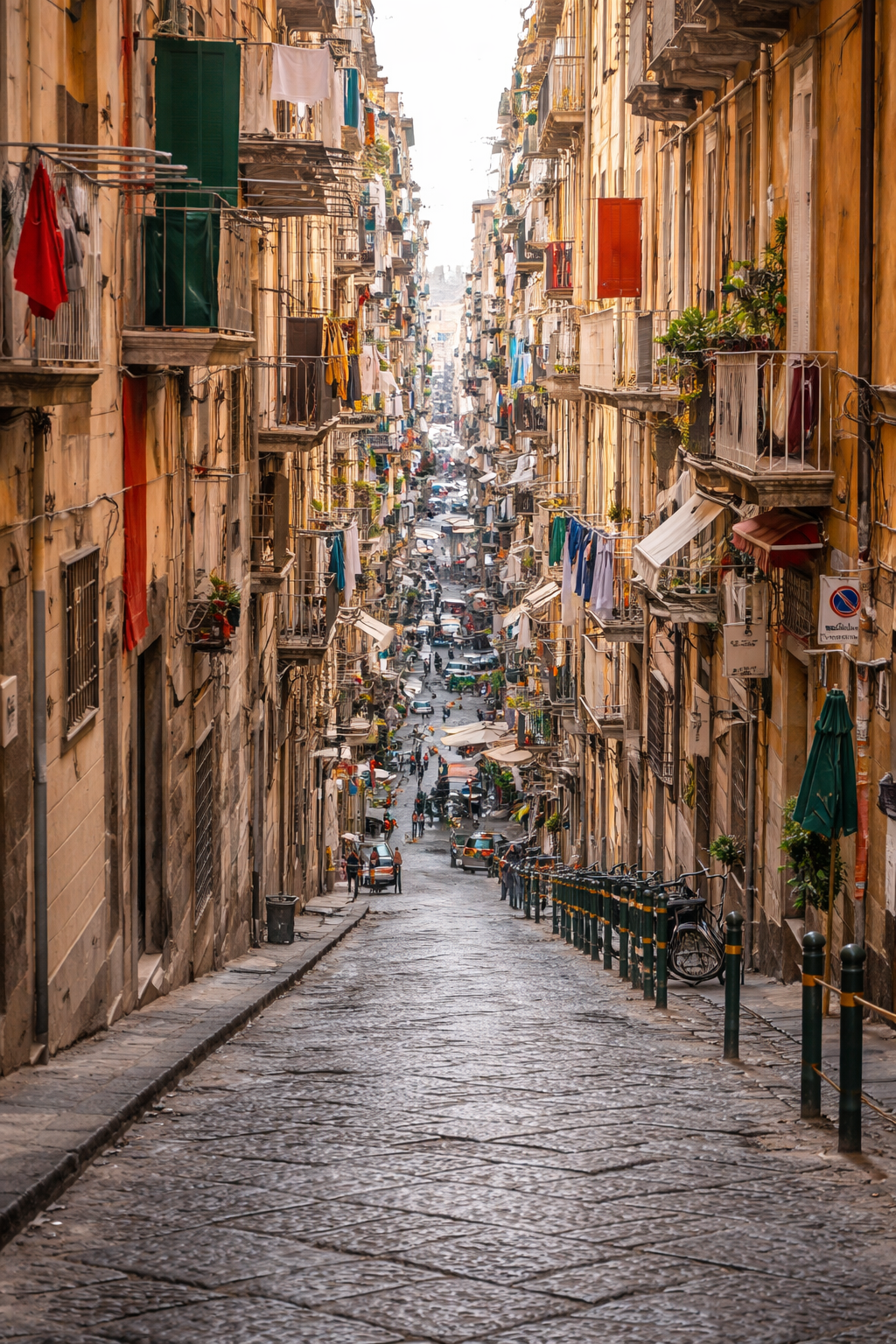
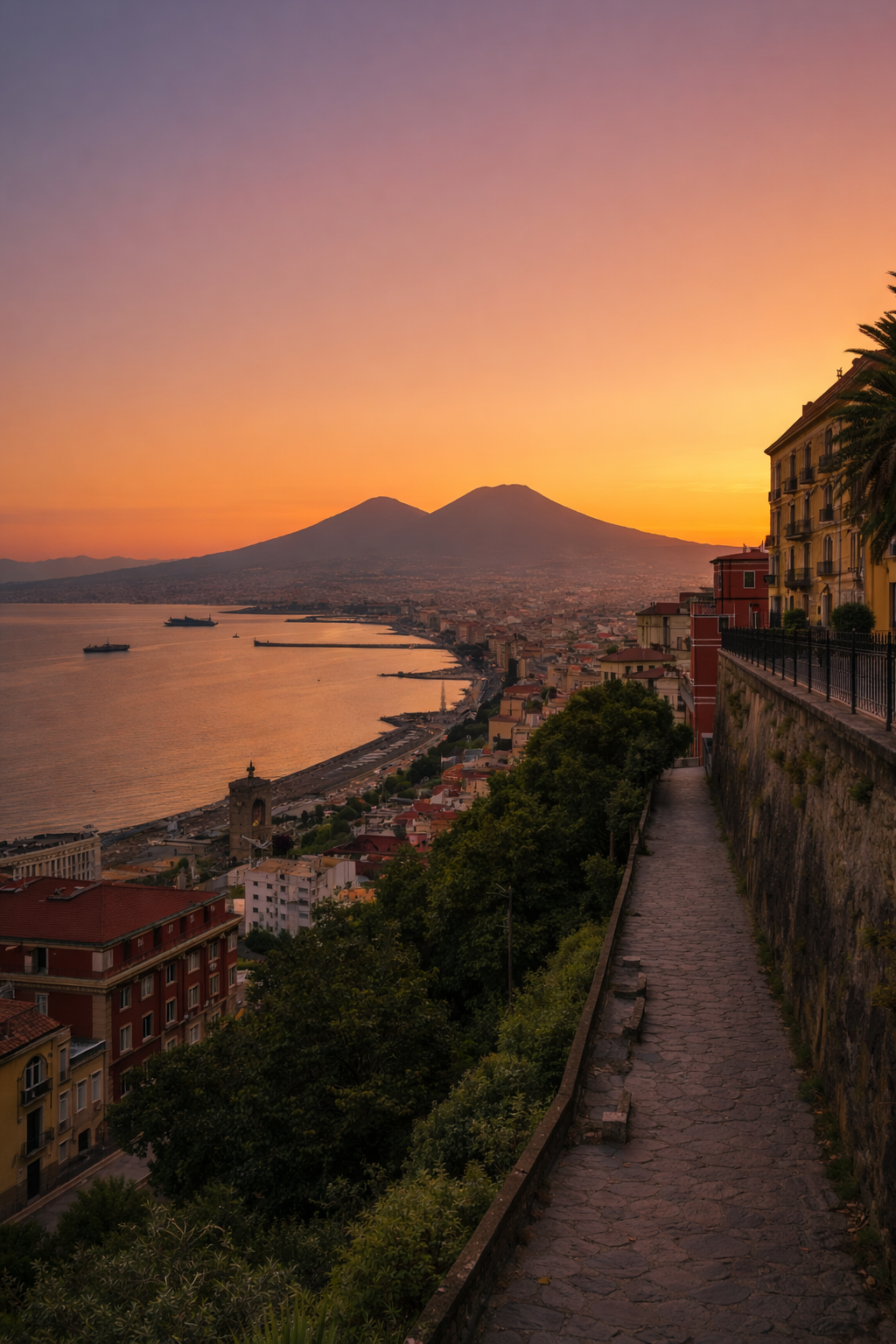
Naples suits groups in a way that Pompeii doesn’t. The city’s energy — loud, chaotic, alive in a very specific way — absorbs group dynamics naturally. Standing in a pizza queue together, someone makes a joke. Finding Spaccanapoli at dusk with four people is still finding Spaccanapoli at dusk. The noise of the group disappears into the noise of the city, and what you’re left with is the shared experience of one of the more distinctive places in Europe.
This applies equally to solo travel, but a group makes it easier to commit to. Walk one street back from the main tourist corridor near the major sights. Look for a queue of local people rather than a laminated English menu in the window. The pizza will be better and cost less than €10. We found ours two streets back from Via dei Tribunali and went back the next morning.
Tuscany — the drive that suits either
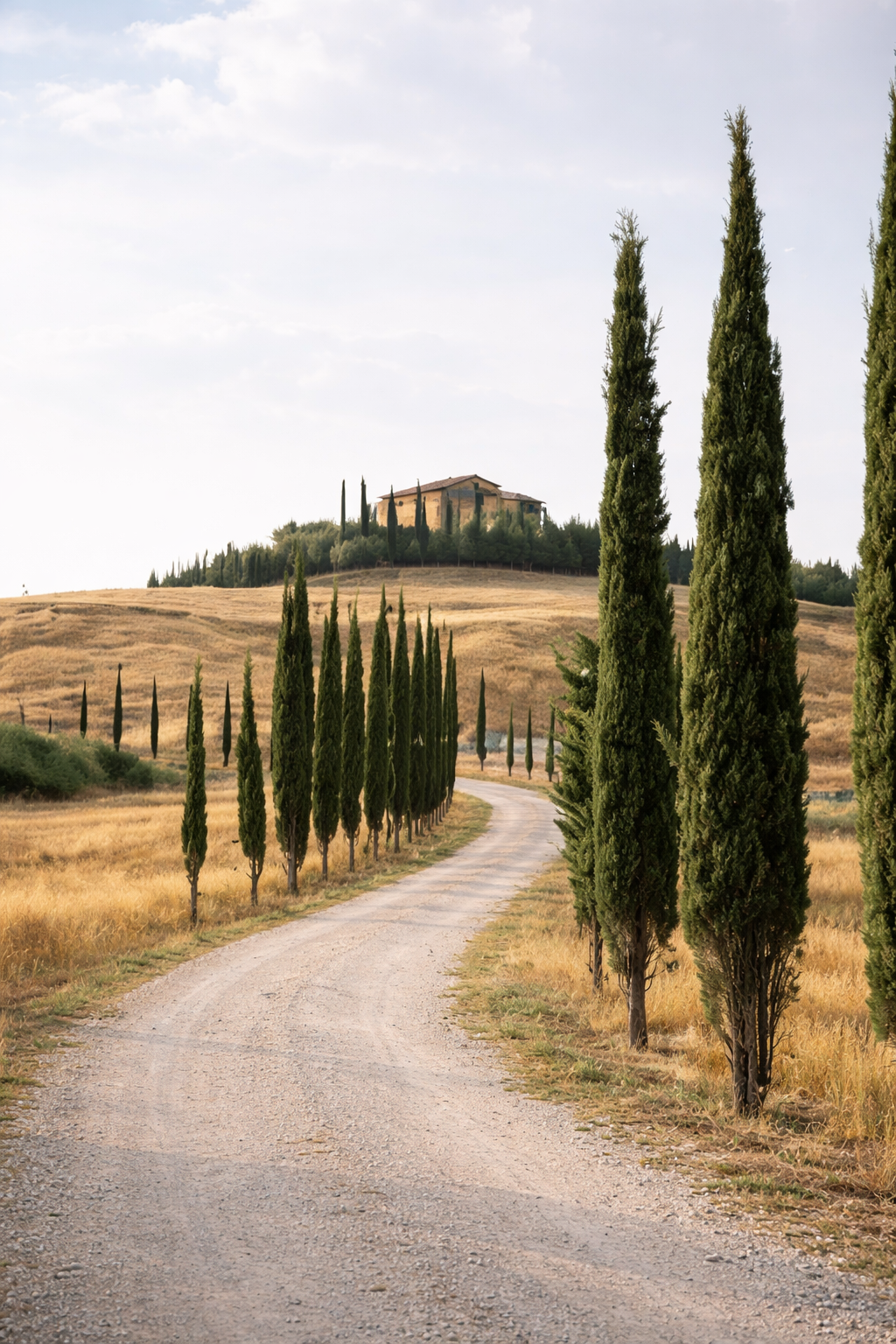
Tuscany on the way home was brief for both versions — an hour off the autostrada, small roads through the hills, vineyards and cypresses and the light that the painters came for. The difference is that solo you stop exactly when you want and leave exactly when you’re done. With a group, the stop is a consensus. In practice, we all wanted to stop and we all knew when it was time to get back on the road. Tuscany, it turns out, is hard to argue with regardless of the company.
Pull off the autostrada south of Florence — the A1 toward Rome passes through the heart of the Chianti region — and take the SP101 or similar smaller roads toward Greve in Chianti or Radda. You don’t need a plan. The landscape does the work. An hour on these roads, then back to the motorway, is one of those stops that earns its place in the trip regardless of how you got there or who is in the car with you.
06 — The Honest Summary
Where each version wins
Both cities have an evening energy that is genuinely better shared. The long table near Campo de’ Fiori, the pizza queue in Naples, the cost split on a central apartment — these are things that group travel makes possible and solo travel doesn’t. If you go to Rome for the evenings as much as the monuments, go with people.
Pompeii rewards the kind of absorbed, unhurried attention that group dynamics make difficult. Solo Tuscany means stopping when you feel it and staying until you’re done. Both are places where the quality of presence matters more than the quality of company.
The drive is good both ways for different reasons. Solo gives you private focus and complete control of stops. With friends, it gives you the communal silence and the shared experience of something demanding. The road earns its reputation regardless of who is in the car.
What we’d do differently
I’d keep the group for Rome and Naples without hesitation — the evenings, the shared apartment, the long table. I’d do Pompeii alone; the place deserves the kind of attention four people with different energy levels can’t quite give it together. The Amalfi drive was better with four people than I expected — the communal silence was something I didn’t anticipate and wouldn’t trade. Tuscany I’d do either way. It’s brief either way, and both versions earn their stop.
Italy solo and Italy with friends are the same country described in two different languages.
Both are fluent. Neither is a translation of the other.