
Andalusia in Autumn: The Best Places to Visit, Things to Do & How Many Days You Need
October in Seville is 24°C with no queues. The Alhambra has available slots two weeks out. The plazas run at their own pace again. Here’s what Andalusia in autumn actually looks like — and why it might be the best timing in Europe right now.
Why Autumn Changes the Andalusia Experience
Andalusia in autumn is the region at the temperature it was built for. The wide shaded plazas, the cool tile interiors, the open-air bars angled to catch an evening breeze — all of it makes sense in October in a way it simply doesn’t in July, when walking the centre of Seville at 2pm is an act of minor endurance. Come in summer and you’re surviving Andalusia. Come in autumn and you’re actually using it.
The SERP for “Andalusia in autumn” is dominated by tour operators and weather aggregators, which tells you something. Nobody has written the honest version yet — the one that explains why this is arguably the best timing in Europe, what you give up, which cities reward the season most, and how many days you actually need. That’s what this is.
The blog already has city guides for Seville, Granada, and Córdoba. This post sits above those — it’s the timing guide that tells you why autumn is when those cities finally make sense to visit.
- Is October a Good Time to Visit Andalusia?
- What the Weather Is Actually Like in Autumn
- The Best Places to Visit in Andalusia in Autumn
- The Best Things to Do in Andalusia in Autumn
- Autumn Events Worth Planning Around
- Is Andalusia Crowded in October and November?
- Is November Too Late to Visit Andalusia?
- How Many Days Do You Need in Andalusia?
- FAQ
01 — Is October a Good Time to Visit Andalusia?
Yes — and for most travelers, it’s better than spring, and substantially better than summer. The short answer is that October gives you all the reasons to visit Andalusia while removing almost all the reasons to delay or endure it.
Why Andalusia in Autumn Beats Other Seasons
Seville’s average October high is 24°C — close to what the Spanish coast delivers in summer — but without the 38°C peaks that make July and August in the city genuinely taxing. Crowds at major monuments drop sharply after the first week of October. The Alhambra, which books out three months in advance in summer, has available slots two to three weeks ahead in October, sometimes less. Prices for accommodation fall noticeably from September highs, and the general atmosphere of the cities shifts back to something local and unhurried.
Additionally, the light changes in a way that benefits both photography and walking. Low autumn sun hits Seville’s limestone facades at angles that don’t exist in summer. The plazas that are too bright and exposed in July become genuinely pleasant in the morning cool. Furthermore, the tapas bars and cervecerías fill up at the rhythm they’re designed for — the evening paseo, the long lunch — rather than the frantic tourist pace of peak season.
What you give up
Honesty requires a counterweight. Swimming is possible through early October on the coast (Cádiz, Málaga), but the water cools fast — by mid-October, sea temperatures drop below comfortable. Some smaller rural guesthouses and country restaurants in the Sierra Nevada foothills close from late October. Daylight shortens; by November, sunset arrives before 6pm. And while October is generally dry, occasional rain becomes possible from mid-month — Granada and the mountainous interior can get brief showers that don’t appear much in Seville or Cádiz.
On balance, none of that outweighs the gains. The spring argument is closer — April in Seville is beautiful — but spring also brings crowds nearly as thick as summer at the major monuments, and the accommodation pricing reflects it. October resolves that without removing any of the core reasons to visit.
02 — What the Weather Is Actually Like in Andalusia in Autumn
Andalusia’s autumn weather is not uniform. The region spans mountain ranges, river valleys, Atlantic coast, and Mediterranean coast — and each behaves differently once summer ends.
October Weather Across Andalusia
In Seville, October averages 22–25°C highs with mostly clear skies and occasional light rain possible in the second half of the month. It feels like a fine European summer day. Granada runs cooler at 18–22°C due to its position below the Sierra Nevada — evenings require a jacket from early October, and by month’s end, morning temperatures can dip to single figures. The Atlantic coast (Cádiz, Tarifa, Huelva) stays mild longest, buffered by the sea, and retains swimming temperatures into early October. Jerez de la Frontera and the sherry country between Seville and Cádiz is warm and largely dry through October.
November: the honest picture
November shifts things noticeably. Average highs drop to 16–19°C across most of Andalusia — still mild by northern European standards, but evening layers are non-negotiable. Rain increases, particularly in the second half of the month. Mornings often clear even when afternoons don’t. The cities work well in early November; the rural areas, small villages, and hill towns can feel genuinely quiet to the point of sparse in late November. For the urban circuit (Seville, Granada, Córdoba), November remains a strong option. For the pueblos blancos route or the olive country of Jaén, late October to early November is the sweet spot.
03 — The Best Places to Visit in Andalusia in Autumn
These aren’t all places to visit in Andalusia. They’re specifically the places that the season makes better — cities and towns where October and November represent a genuine improvement over summer, not just a lateral move. For a full breakdown of what each city offers — monuments, neighbourhoods, logistics — the complete Andalusia cities guide covers the region stop by stop. What follows here is about what the season changes.
The big three
Seville
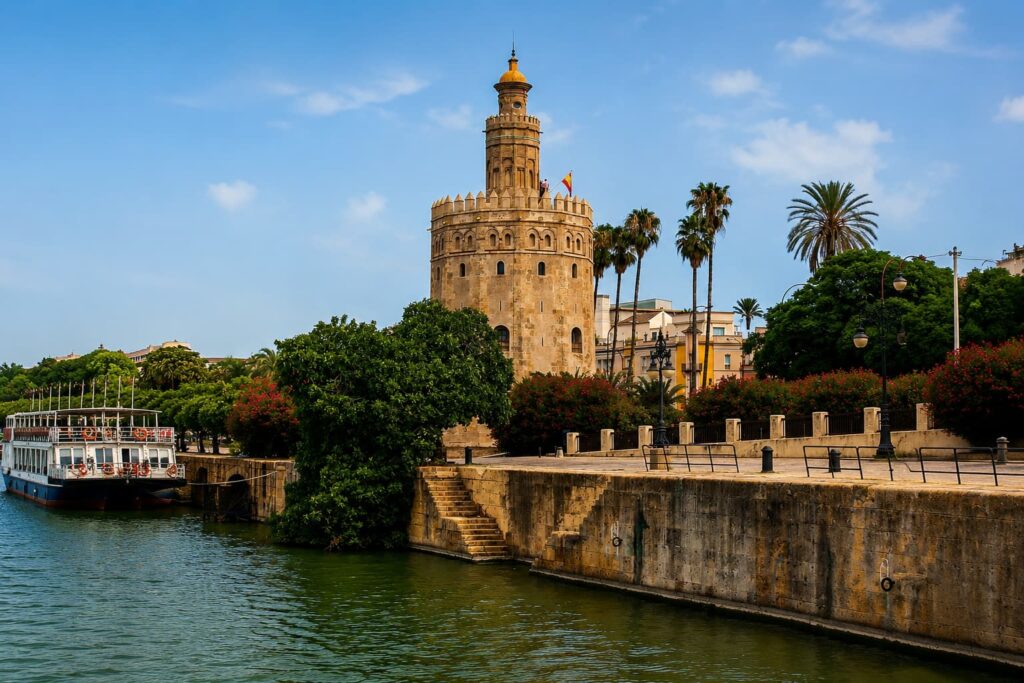
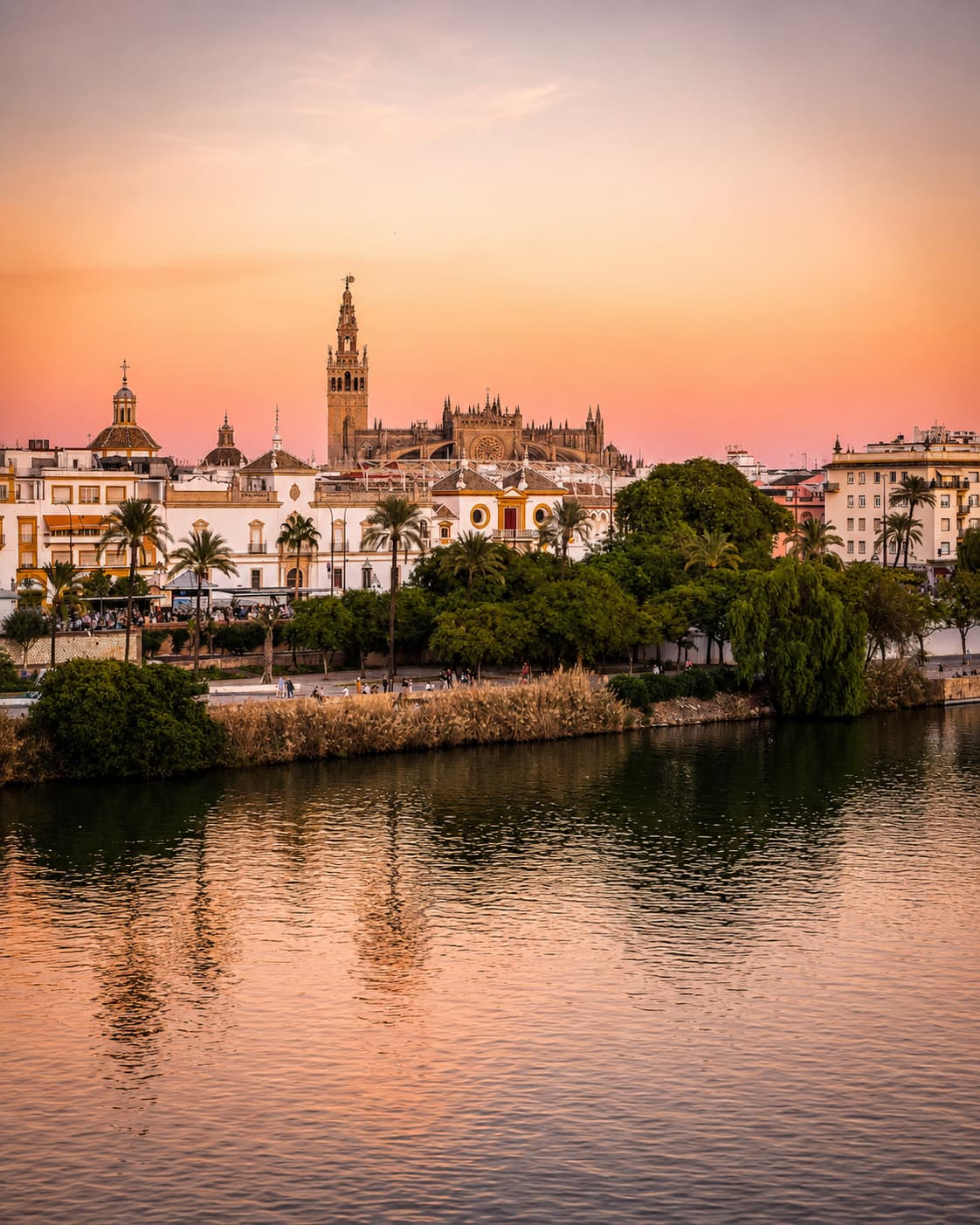
October temperatures make the historic centre walkable in a way July simply doesn’t allow — the Alcázar, Cathedral, and Triana in a single morning rather than in tactical stages around the heat. Queues at the Alcázar shorten noticeably, and the evenings return to the rhythm they were designed for. In summer you’re managing Seville; in October you’re using it. For monuments, neighbourhoods, and logistics, see the full Seville travel guide.
Granada
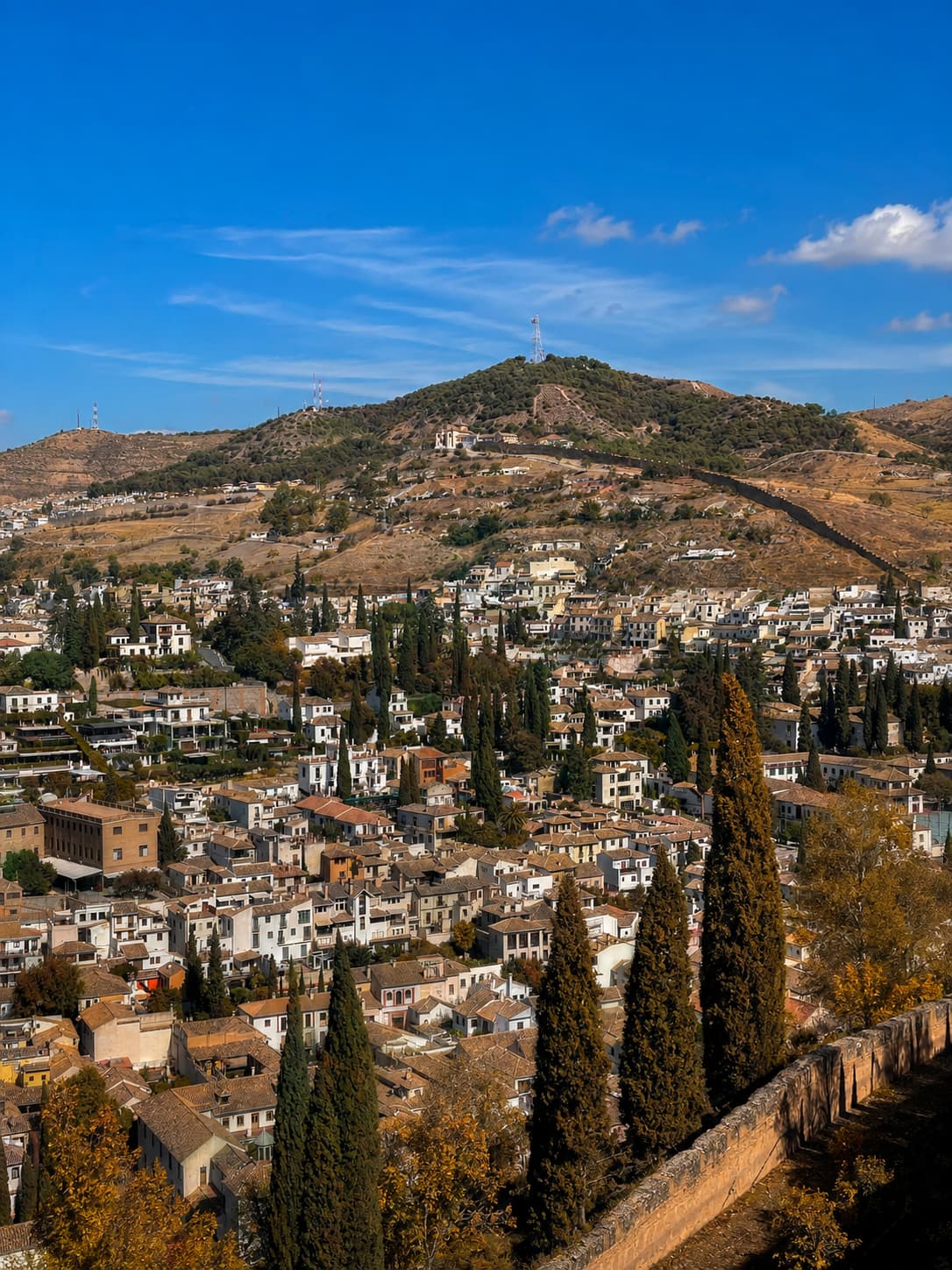
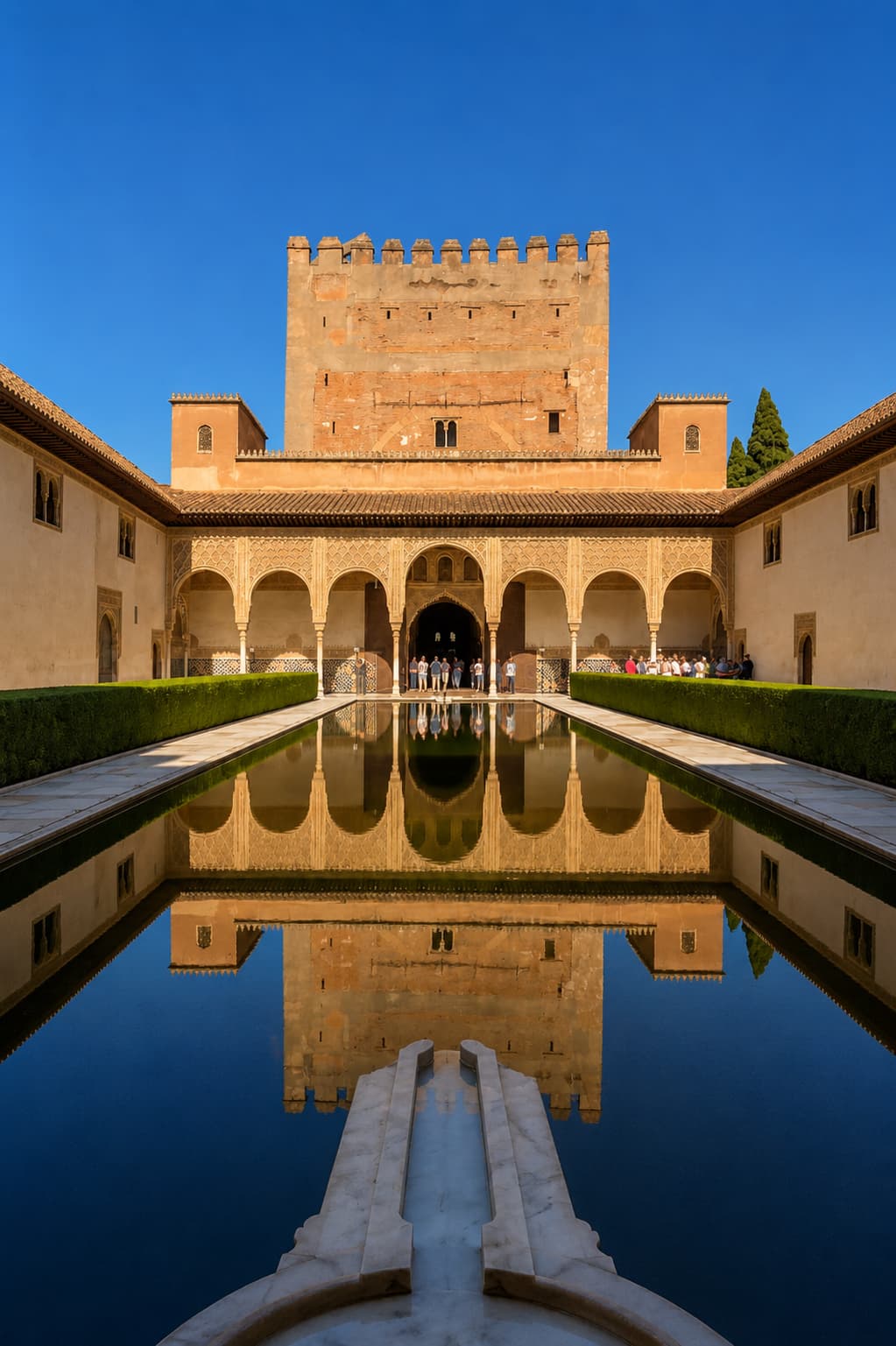
The single biggest practical shift: Alhambra slots that book out three months ahead in summer are available two to three weeks ahead in October, sometimes less. The Nasrid palaces reward slow attention — October gives you that instead of a shoulder-to-shoulder rush. And with the Sierra Nevada peaks beginning to show their first snow above the Albaicín, the city is visually dramatic in a way that summer heat actively suppresses. For everything else Granada offers, see the full Granada travel guide.
Córdoba
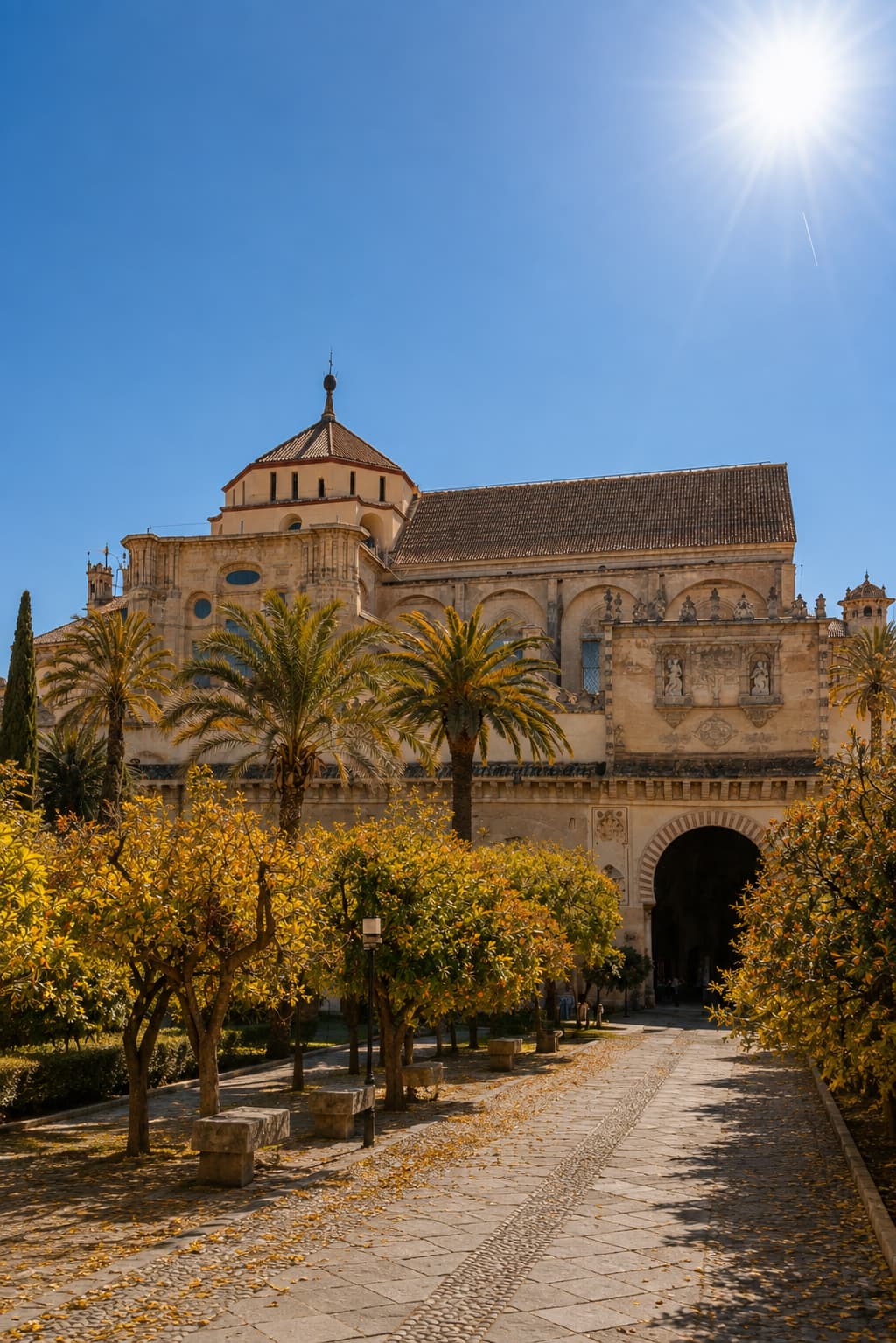
The Mezquita without the July crush is a fundamentally different experience — you can stand in the forest of columns and hear the acoustics rather than navigating through tour groups. In October the patios and lanes of the Jewish quarter work at the city’s own logic rather than the logic of mass tourism. Two nights is enough; in autumn, that’s actually sufficient time to understand the place. Full city breakdown: Córdoba travel guide.
Smaller cities worth the detour
Ronda
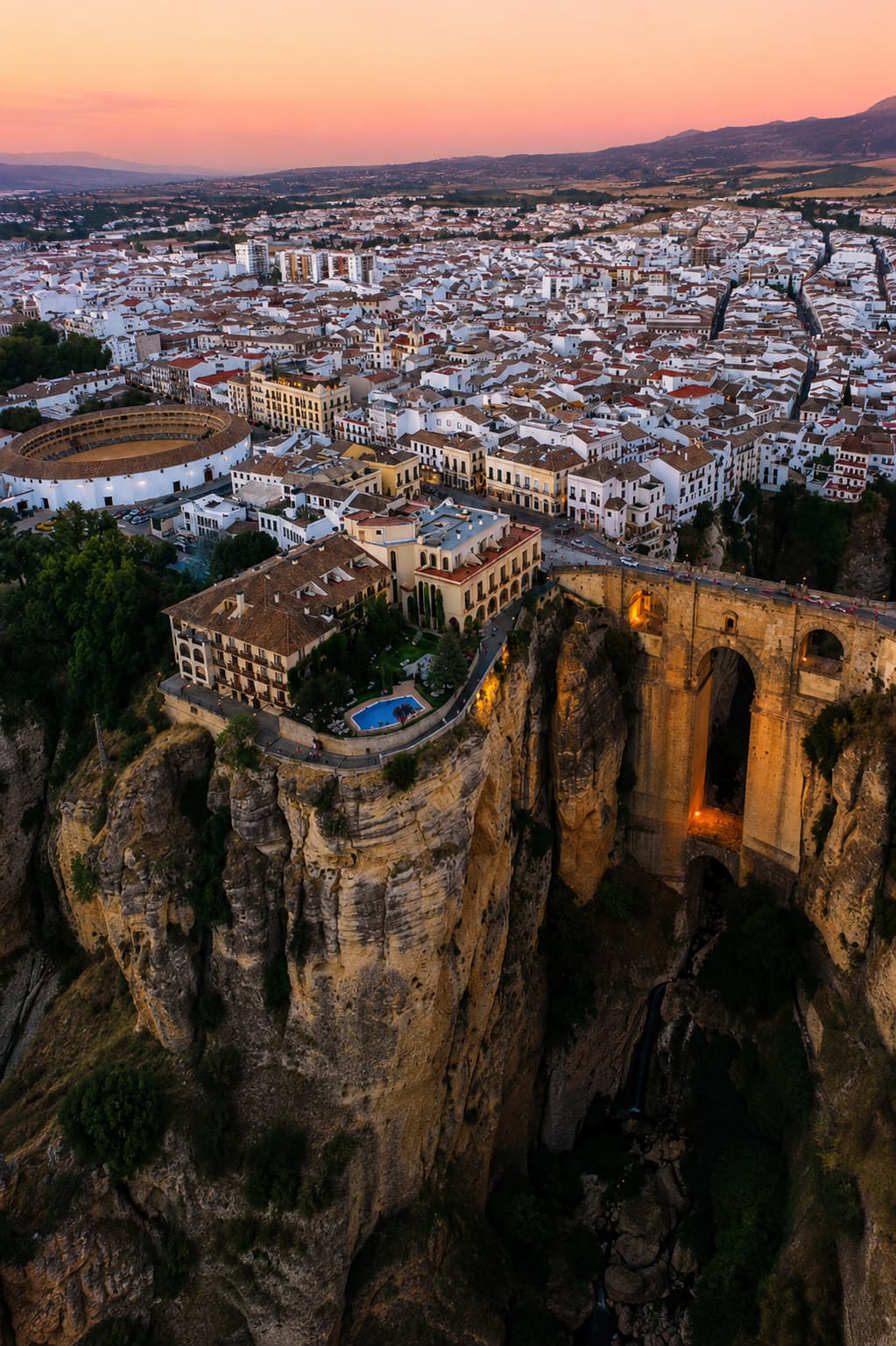
Ronda sits on a clifftop above a gorge — the Tajo — and the low autumn sun hits the vertical rock walls at angles that make photography effortless. Beyond the visual drama, Ronda is genuinely pleasant to walk in October: the gorge path and the viewpoints around the Puente Nuevo bridge are comfortable rather than scorching, and the town itself is small enough to cover in a day. It also works well as a base for the pueblos blancos circuit — the white villages strung through the hills between Ronda and Arcos de la Frontera.
Jerez de la Frontera
Jerez is sherry country, flamenco schools, and Andalusian horses. In autumn, the bodega tours that run all year feel more authentic when you’re not sharing them with eight coaches — in October the visitors are mostly people who specifically came for sherry, which changes the atmosphere considerably. The Sherry Harvest Festival (Fiesta de la Vendimia) runs in September, with the traditional grape-treading ceremony and blessings of the harvest carrying its atmosphere into October. A glass of manzanilla in a Jerez bodega on a grey October morning is one of the more specific pleasures Andalusia offers.
Cádiz
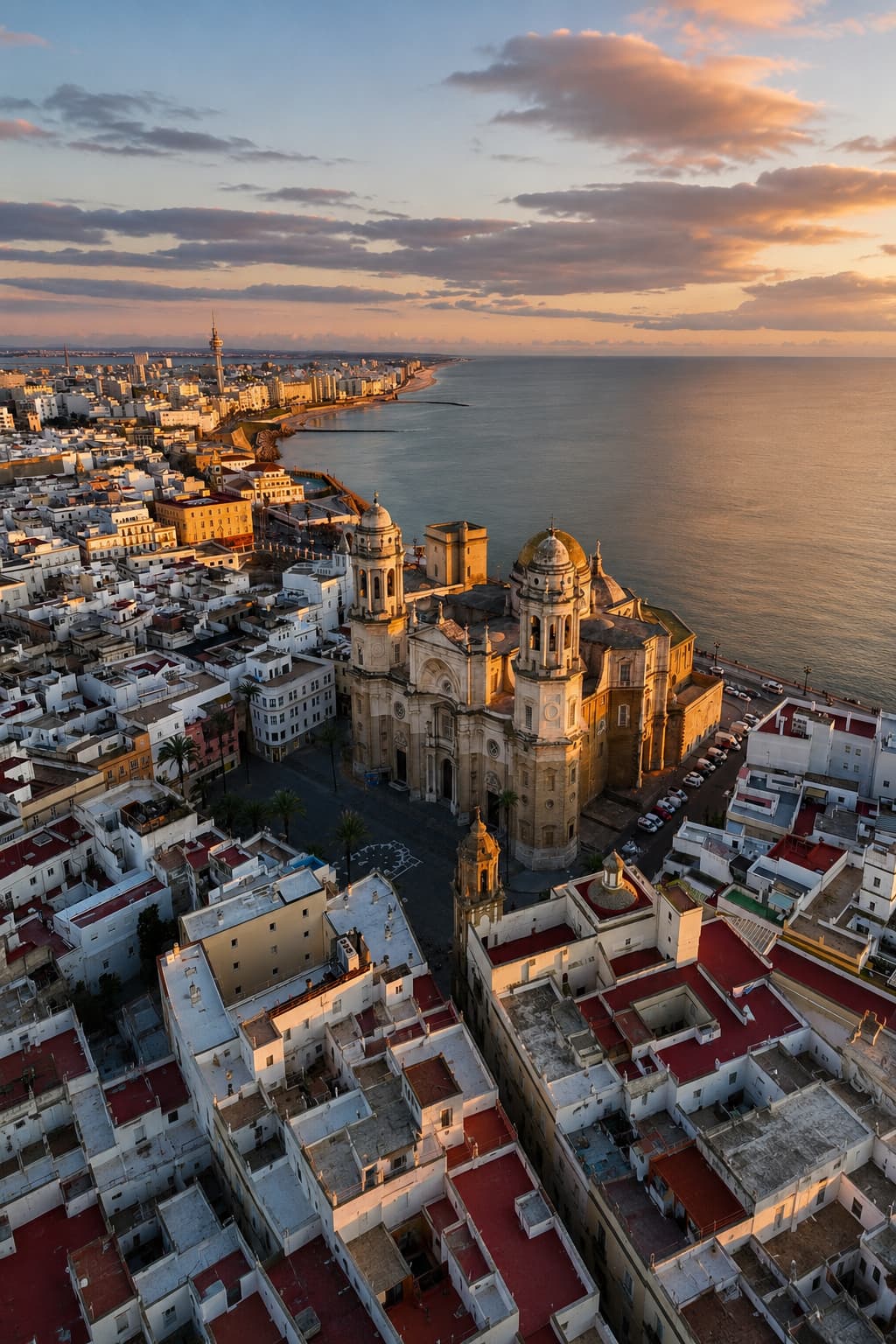
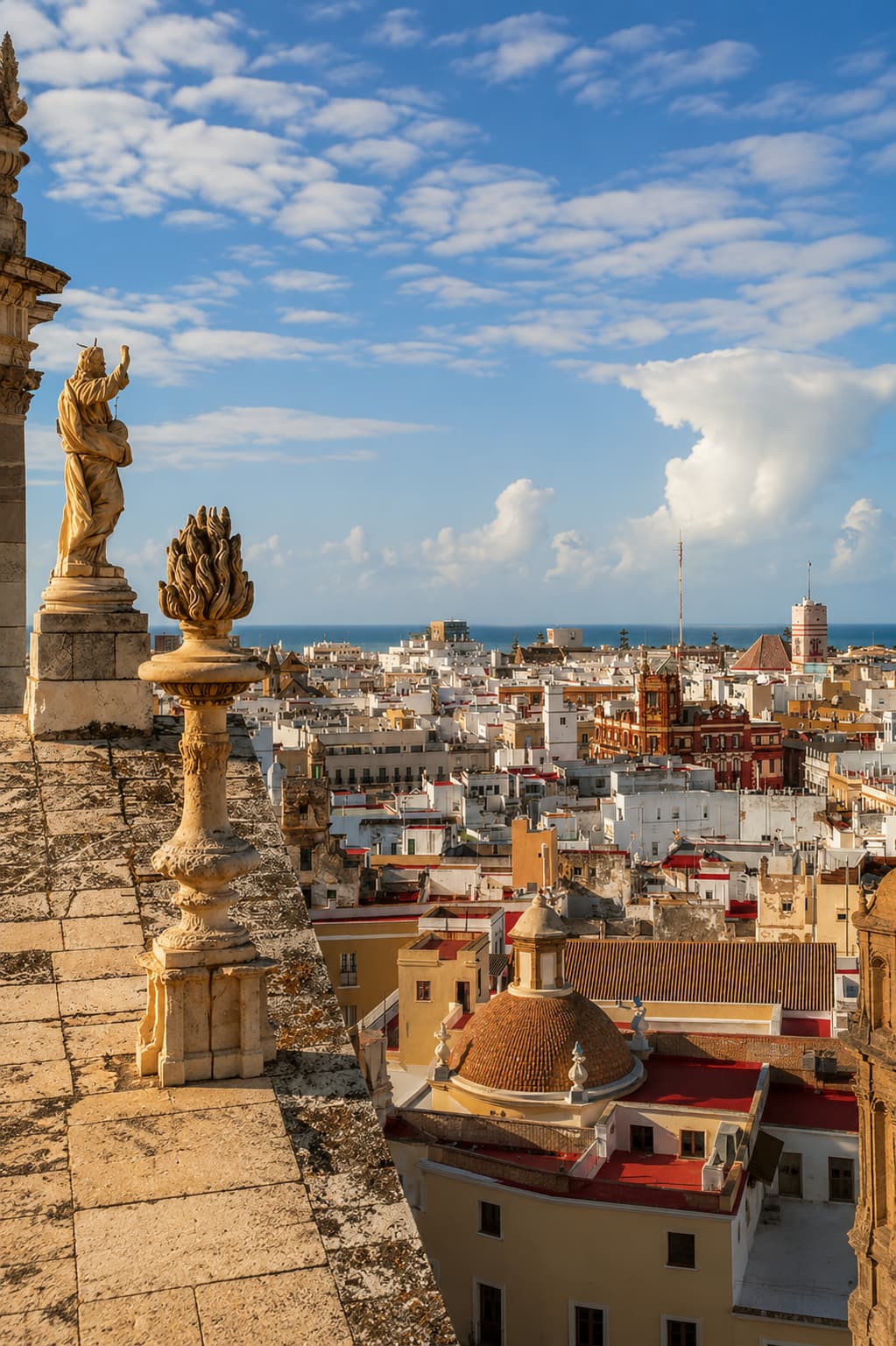
The most Atlantic of Andalusian cities — a white city built on a narrow peninsula with sea on three sides, the old cathedral, the central market, a promenade that feels like the edge of the continent. October beach days are still possible in early autumn. By mid-October the city is almost entirely a local experience, and that’s specifically the point. Cádiz in August is overrun; Cádiz in October is what it was designed to be — a provincial Andalusian city going about its life by the sea.
Off the tourist trail in Andalusia in Autumn
The Pueblos Blancos
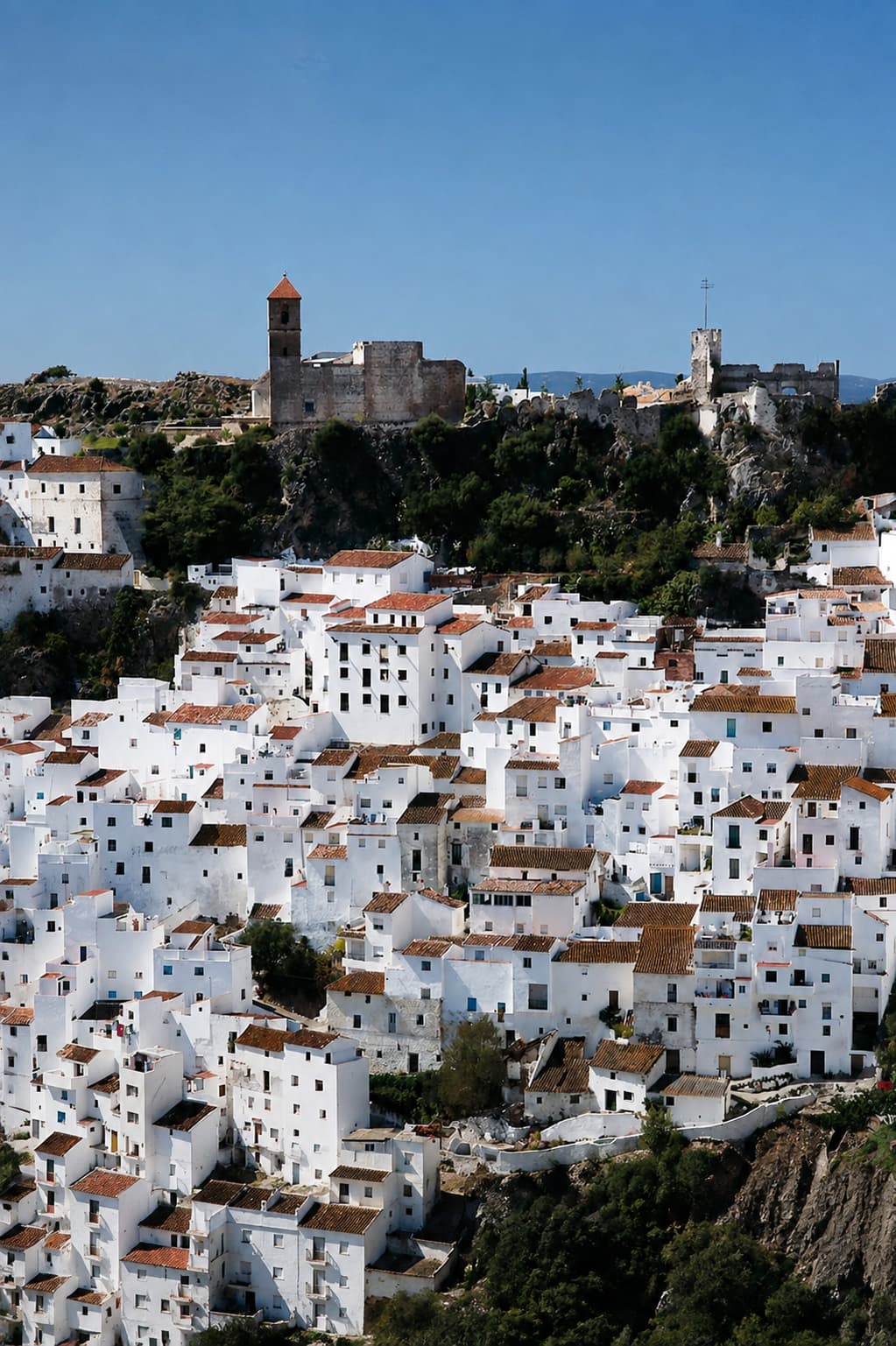
The white villages of the Serranía de Ronda — Zahara de la Sierra, Grazalema, Setenil de las Bodegas (where the houses are literally built under a cliff overhang), and Olvera — are among the most visually distinctive villages in Europe. In summer they’re nearly impossible to enjoy: temperatures regularly exceed 35°C, some villages have single-road access that clogs with day-trippers, and there’s no shade to speak of. October is the first month they become properly walkable. The roads between them through the limestone hills are some of the most beautiful driving in Spain. One day, based out of Ronda, covers the main circuit comfortably.
Úbeda and Baeza
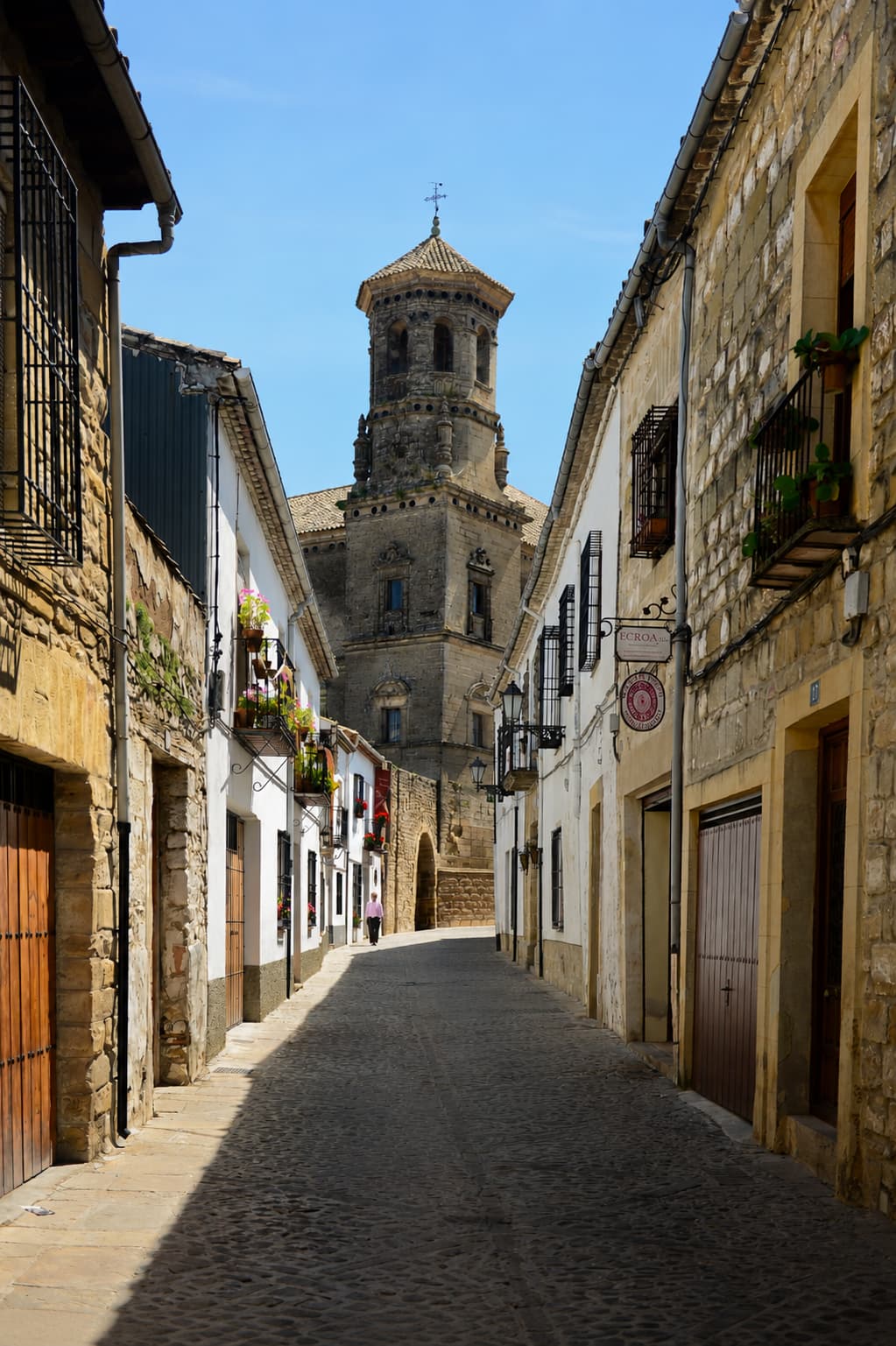
The twin UNESCO Renaissance cities in the province of Jaén, about two hours from Granada, represent the best-kept secret in Andalusia. The quality of their Renaissance architecture — Andrés de Vandelvira’s work in particular — rivals anything in Spain, yet almost nobody visits them. They’re surrounded by olive groves going into harvest in November, the province produces more olive oil than Greece, and the local mills open for tastings of olio nuevo — the first-pressed oil of the season — from November onward. If you want somewhere in Andalusia that hasn’t been organised around tourism, Úbeda and Baeza are it.
04 — The Best Things to Do in Andalusia in Autumn
Some of these things are possible year-round. Several of them are specifically better — or only possible — in autumn. The season isn’t just about lower temperatures; it opens up activities and experiences the summer heat either degrades or closes off entirely.
Visit the Alhambra without booking three months out
October slots are available 2–3 weeks ahead, sometimes less. Book the Nasrid palaces for the first entry slot (8:30am) and you’ll have the courtyard to yourself for the first thirty minutes. In summer that same slot books out in minutes and is gone for months. The experience is architecturally the same; the logistics are entirely different. Book directly through the official Alhambra ticket site — it’s the only authorised source.
Drink manzanilla in a Jerez bodega on an October morning
Manzanilla is specifically a Sanlúcar de Barrameda wine — a fino sherry aged by the sea — and it’s best drunk cold, in a small glass, earlier in the day than you’d expect. The bodegas in Jerez run tours that include a tasting. In October, you’re sharing the experience with people who came specifically for it rather than people who included it because it was on the tour operator’s list.
Drive the pueblos blancos route based out of Ronda
The circular route through Zahara de la Sierra, Grazalema, Setenil de las Bodegas, and back to Ronda takes a full day and covers some of the most striking rural landscape in southern Spain. In October the roads are quiet, the air is clear, and the villages are accessible in a way they categorically aren’t in summer. Take it slow — these roads aren’t made for speed.
Watch Sevilla FC or Real Betis at home
La Liga season is in full swing from October. The Ramón Sánchez-Pizjuán and Estadio Benito Villamarín are both in Seville — two clubs with genuine history, a real rivalry, and a stadium atmosphere that’s worth the visit even if you’re not particularly a football person. Tickets for most home games in October are available without advance planning — check the Sevilla FC ticket page or Real Betis tickets for fixtures and availability.
Day trip to Doñana National Park for the Atlantic bird migration
Doñana, on the Atlantic coast between Huelva and Cádiz, is one of Europe’s most significant wetland nature reserves. November marks the height of the Atlantic migration season — hundreds of thousands of birds use the marshes as a staging post. Guided 4×4 tours run from El Rocío; the Doñana National Park official site lists authorised tour operators and access points. It’s a very different Andalusia from the city circuit, and genuinely one of the best wildlife experiences in Spain.
Taste olio nuevo near Jaén in November
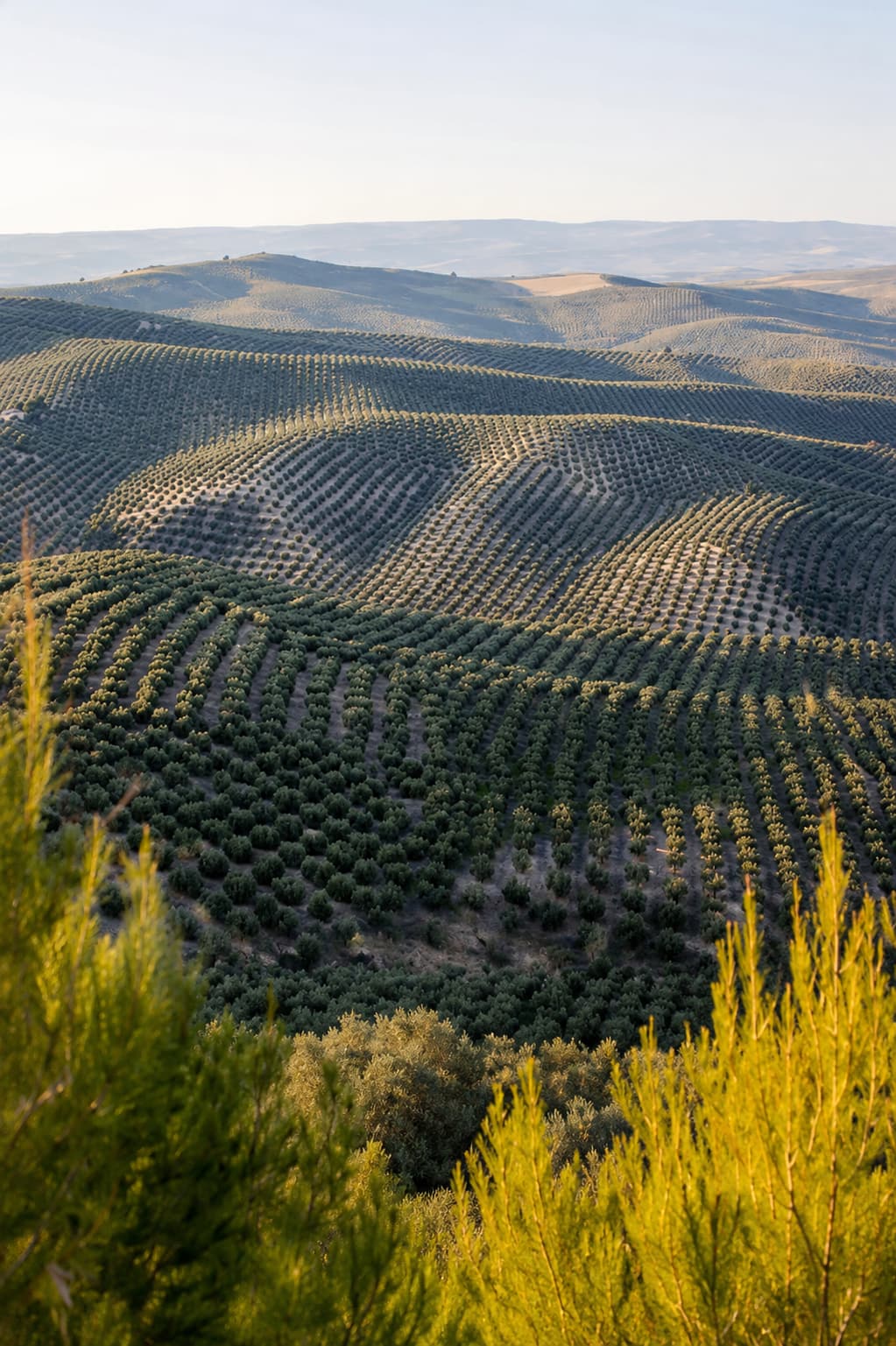
The olive harvest in the province of Jaén begins in November, and the first-pressed oil of the season — olio nuevo — is available at local mills for tasting from November onward. Jaén produces more olive oil than the whole of Greece; the landscape is olive groves in every direction. It’s a long day from Seville or Granada, but the detour through Úbeda and Baeza makes it worth planning properly.
05 — Autumn Events in Andalusia Worth Planning Around
Andalusia’s autumn calendar is less obviously dramatic than the spring feria season, but several events are worth specific timing if you’re flexible with dates.
One of Spain’s oldest wine ceremonies — the traditional grape-treading, the blessing of the harvest, and a festival atmosphere that carries into early October. Worth timing a visit if you’re arriving in the first half of September. The bodega experiences in Jerez carry the harvest spirit well into October even after the formal events end.
One of Andalusia’s oldest annual fairs — dating to the 15th century — held in Jaén city each October. Almost completely unknown outside Spain, which means it’s a genuine local fair rather than a tourist event. If you’re heading to Úbeda and Baeza anyway, timing it around San Lucas gives the region an additional layer of atmosphere.
Candlelit cemetery visits across Andalusia on the evening of November 1st. Unexpectedly moving. Spanish culture treats this differently from Northern European traditions — it’s less gothic, more familial, and genuinely worth witnessing if you happen to be in the region. Seville and Granada’s cemeteries are particularly atmospheric.
Not a formal festival, but a genuine seasonal experience: local mills in Jaén province open for tastings of olio nuevo as the harvest begins. The quality of early-press oil is markedly different from the bottled versions available elsewhere. Worth planning if you’re in the region after November 10th.
06 — Is Andalusia Crowded in October and November?
Fewer crowds is relative — but the shift is real and measurable.
In the first two weeks of October, some summer overhang remains, particularly at the Alhambra and Seville’s Alcázar. Both are still popular enough that booking in advance makes sense — but “in advance” means two or three weeks rather than three months. Mid-October onward, the change is noticeable: you can walk most of Seville’s historic centre without navigating tour groups, the Alcázar gardens have room to breathe, and the restaurants and bars return to something closer to their natural rhythm.
November is genuinely quiet. Some restaurants close Monday and Tuesday in smaller towns. The villages of the Sierra essentially revert to local life. Seville and Granada remain fully operational — both are real cities with year-round populations and activity — but they feel like themselves rather than a tourist attraction operating at capacity.
The honest note: the crowds in October are still crowds. Seville is a world-class tourist destination and October is popular. The difference from summer isn’t silence — it’s manageability. You can visit the Alcázar without planning the visit as a tactical operation. That’s a meaningful improvement.
07 — Is November Too Late to Visit Andalusia?
Early November is one of the better-kept secrets in European travel timing. Temperatures average 16–19°C — warm enough for outdoor dining, walking, and sightseeing without discomfort — and the cities are emptied of the main tourist wave. Accommodation prices drop further from October. The Alhambra is bookable the week before. All Saints’ Day on November 1st adds a layer of Andalusian tradition that most visitors never see.
Late November shifts the calculation. Rain increases, days shorten to around 9 hours of daylight, and smaller rural areas and pueblos blancos become notably sparse. The city centres of Seville, Granada, and Córdoba still work well — they’re genuine cities, not seasonal resorts. However, if the rural Andalusia experience (the white villages, the olive country, the Sierra Nevada approaches) is part of why you’re going, late November asks for more tolerance for quiet and shortened days than early November does.
In short: early November is excellent. Late November is fine for city-focused itineraries and worth it if you can time it around All Saints’ Day. The pueblos blancos are better in October.
08 — How Many Days Do You Need in Andalusia?
The honest answer is that Andalusia rewards slowness more than almost any other region in Europe. The temptation is to rush the triangle — Seville, Córdoba, Granada — in five days and feel like you’ve covered it. You’ve covered the monuments. You haven’t covered Andalusia.
Andalusia Itinerary Length by Route
| Seville only | 3 solid days minimum. Add a half-day for Carmona or a day trip to Cádiz if you have time. |
| Seville + Granada | 5–6 days. Train connection takes about 3 hours; both cities deserve full days. |
| Seville + Córdoba + Granada | 7–8 days. The classic triangle. Córdoba needs 2 nights — don’t pass through in an afternoon. |
| Full circuit (+ Ronda, Jerez, Cádiz) | 10–12 days. This is where Andalusia opens up beyond the monuments. |
| Full circuit + pueblos blancos + Jaén | 14 days. You’re not rushing anything, and you’re seeing the Andalusia that most people miss. |
Moreover, the countryside and smaller towns are where the season specifically shows itself. The olive groves going gold in Jaén, the limestone villages of the Serranía de Ronda against a clear October sky, the sherry country quiet in the mornings — none of that appears if you follow the triangle and treat the train schedule as your itinerary. Andalusia in autumn is worth doing slowly, or at least more slowly than the monument checklist suggests.
For a broader look at how to structure an Andalusia trip, the must-visit cities in Andalusia guide covers the full regional logic. And if you’re weighing up season trade-offs specifically for Seville, the Seville spring vs summer comparison answers the timing question for the city in detail. The Andalusia summer bucket list is also worth reading as a counterpoint — it makes the case for what summer does well, which is useful context for understanding what autumn resolves.
October Weather, Transport, and Costs
Swimming, Autumn Food, and Festivals
Andalusia’s summer reputation is deserved and also a trap. The region was built for the climate it has in October — wide shaded plazas, cool tile interiors, open-air bars designed to capture an evening breeze.
Come in July and you’re surviving it. Come in October and you’re using it the way it was meant to be used.