
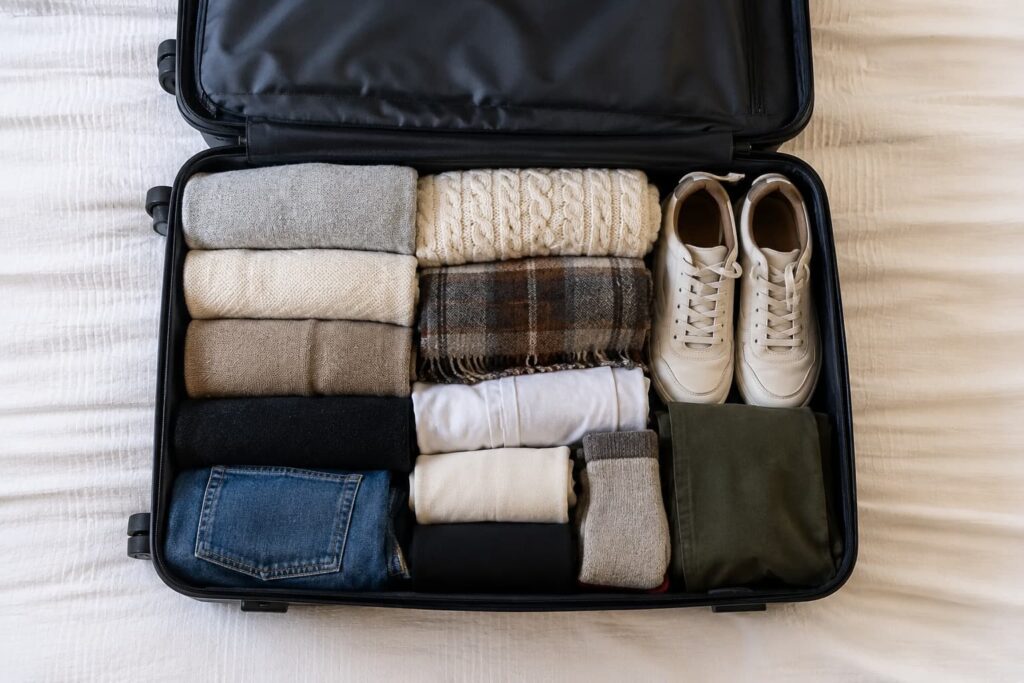
The Honest Packing List: What Actually Earns a Place in Your Bag for Two Weeks in Europe
Not what the influencers pack. What you’ll actually use — and what you’ll haul through six airports and never touch.
This Europe packing list is built around one principle that every other packing guide either buries or ignores. Before the items, before the bag, there’s a rule — and everything else follows from it. If you’re still building the itinerary itself, this post on using AI to plan a trip covers that side of the planning. Once the trip is confirmed, come back here.
01 — The One Rule This Packing List Is Built On
Pack for seven days. Wash once. That’s it.
It sounds obvious, but most Europe packing lists ignore it entirely — they either assume you’ll wear everything once and deal with the weight, or they quietly assume you’re checking a bag. This list assumes neither. If you can wear an outfit, wash it mid-trip, and wear it again without it being an event, you can do two weeks in one carry-on. The math works. The only question is whether you’re willing to do one sink wash or one laundromat run around Day 7.
Everything that follows is built on this. Items that couldn’t justify their weight without it got cut. Items that earn their place twice because of it stayed in.
02 — How Many Outfits Do I Need for 2 Weeks in Europe?
Fewer than you think, re-worn more than you’d admit to at home.
The working number: five to six outfits — not five to six complete looks, but five to six pieces that mix. Three bottoms that all work with the same two or three tops gives you nine combinations before anything repeats noticeably. Add one layer that works for both transit and an evening out, and you have a wardrobe that fits in half a carry-on.
The outfit math only fails when people pack for occasions that don’t exist. The “fancy dinner” outfit for the restaurant they never book. The “hiking” gear for the hike they never take. Pack for what the trip actually looks like: walking, sitting in cafes, getting on trains, and occasionally going somewhere worth dressing up for. That’s three categories at most.
Re-wearing without apology is the other half of this. Nobody in the streets of Lisbon is tracking whether you wore those trousers yesterday. The anxiety about being seen in the same outfit twice is entirely in your head, and it will cost you ten kilograms of checked luggage if you let it.
03 — Europe Carry-On Packing: What the Rules Actually Say
Packing for Europe in a carry-on is entirely doable. The harder question is which carry-on, on which airline, on which fare — because those three things are no longer the same answer.
What size carry-on is allowed on European airlines?
The short answer: it depends on the fare class you booked, not just the airline name.
| EU reference standard | Main cabin bag up to 55 × 40 × 20 cm; personal/under-seat item up to 40 × 30 × 15 cm. Measurements include wheels and handles. ⚑ Verify at publish. |
| Ryanair | Free personal bag: 40 × 30 × 20 cm. Anything larger at the gate without paying in advance triggers a ~€70–75 on-the-spot charge. ⚑ Verify at publish. Full policy: ryanair.com/baggage-policy |
| Lufthansa Group (Economy Basic) | As of May 2026, Economy Basic includes only the 40 × 30 × 15 cm personal item. The full carry-on is a paid add-on on the cheapest fare. ⚑ Verify at publish. |
| From 2027 (agreed, not yet in effect) | EU rules will entitle every passenger to two free items on board: under-seat bag (40 × 30 × 15 cm) and a carry-on up to 100 cm total / 7 kg. Do not plan a 2026 trip around 2027 rules. |
The rule that cuts through all of it: check the allowance for your specific fare class on each flight before you pack, measure your bag fully packed including wheels and handles, and if it’s borderline, pay the baggage add-on in advance — it will be cheaper than the gate charge.
Should I bring a backpack or a suitcase to Europe?
Neither is right for everyone. A carry-on suitcase is easier to live with if you’re staying in one place for several days and your accommodation has a lift. A backpack wins if you’re moving every two or three days, navigating old train stations without lifts, or dragging luggage down four flights of stairs at 6am.
The cobblestone point is real and underestimated. The wheels on a carry-on suitcase are not designed for the surfaces that make up most of historic Europe. You end up carrying the suitcase anyway, just badly. A bag you carry on your back is already built for that. The trade-off is that backpacks expand to fill whatever space you allow them — the discipline has to come from the list, not the bag.

04 — The Europe Packing List: What Earned Its Place
Every item below has a one-line justification. If I couldn’t write one that wasn’t “just in case,” it didn’t make the list.
Clothing for packing for Europe
Dark jeans earn their place on almost every evening of a city trip. Avoid pale colours unless you enjoy the extra laundry anxiety. Two pairs is the floor and the ceiling.
Three tops that all go with both pairs of trousers = six combinations before anything repeats. Avoid busy prints — a solid or subtle pattern is harder to clock as “worn before.” The mixing principle is what makes three tops enough.
A lightweight jacket, a merino zip, or a structured blazer — something that works as both a travel layer and a going-out layer. This is what saves you from packing a separate “nice outfit” for evenings. If it can’t earn its place twice, leave it home.
One per day before the wash. Merino wool socks are worth the price: longer between washes, faster to dry after them. The one category where packing fewer doesn’t work.
One piece, if and only if you’re going somewhere with a pool, beach, or lake. A lot of Europe packing lists include this by default. This one doesn’t. Earn every decision.
What shoes should I bring to Europe?
Two pairs. That’s the ceiling, and most people who’ve done a European trip on one bag will tell you the same thing.
Not new. Already broken in before you leave. Blisters on Day 1 of a European city trip are a particular kind of avoidable misery. The shoes don’t need to be hiking boots — they need to handle six to eight hours on varied surfaces without destroying your feet. Cushioned trainers, quality flat shoes, broken-in sneakers — whatever fits that description for you.
A clean trainer that transitions well, or a flat that holds up over longer distances. High heels on cobblestones is a decision you’ll reconsider within the first twenty minutes of landing. The third pair — whatever you were about to add — is the heaviest thing in the bag and the pair you’ll wear least.
Tech & documents
Europe uses Type C and Type F sockets across most of the continent. One compact adapter with USB-A and USB-C ports covers most situations. Buy it before you go — airport versions cost more and are usually worse.
Navigation, photos, transit cards, and messages drain a phone fast. The power bank earns its place every single day on a European trip, not just on Day 12. Airlines restrict power banks over 100 Wh in the hold — carry it with you.
Data roaming on EU-issued SIM cards across the Schengen zone is generally included — but if you’re coming from outside the EU, a local SIM or eSIM sorted before departure is cheaper and faster than sorting it in arrivals. Check your phone is unlocked first.
Physical copies of critical documents stored separately from the originals — in the bag, not in the same pocket. Digital copies in cloud storage work as backup. Carry your insurance details and the first night’s accommodation confirmation.
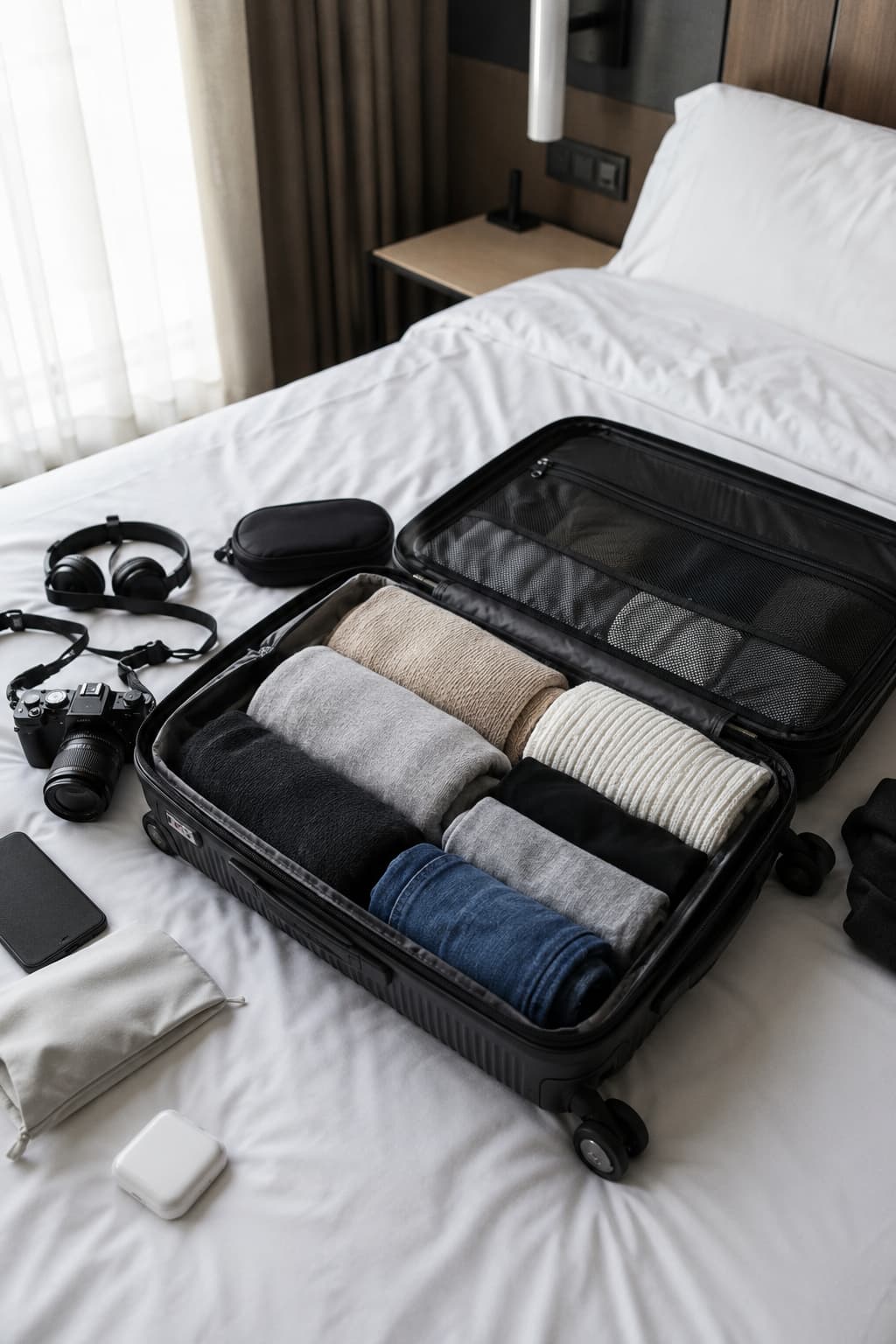
05 — The Cut List: What to Leave Off Your Europe Packing List
This is the section that most Europe packing guides skip. Everything below is something that gets packed on a European trip and sits untouched until it gets unpacked at home.
What should you not pack for a trip to Europe?
The dress or smart outfit brought in case you go somewhere fancy. If it isn’t booked before you leave, there’s a good chance you won’t book it when you arrive. And if you do go somewhere nice, the layer you already packed works. This is the single most common dead weight in a European carry-on.
One book is fine. Two books and a backup is three books, most of which travel across six cities unread. E-readers solve this entirely. If you’re committed to physical, take one at a time and swap at a hostel book exchange or secondhand shop — Europe has them everywhere.
Shampoo, conditioner, body wash, and moisturiser in full bottles take up more room than almost anything else in the bag and weigh more than a day of clothing. Travel-size or solid versions exist for almost everything. So does every pharmacy in Europe.
Hiking poles for the hike you might do, a snorkel for the beach you might visit. If it’s not on the itinerary, it doesn’t go in the bag. You can buy or rent gear in almost any European city if the activity materialises.
Paracetamol, ibuprofen, a few plasters, and your prescription medication covers almost everything you’ll need. Antihistamines, rehydration sachets, antidiarrheal tablets — all available at pharmacies throughout Europe, often more cheaply than at home. You are not going somewhere without pharmacies.
What toiletries can I buy in Europe instead of packing?
Almost everything. Shampoo, conditioner, body wash, deodorant, toothpaste, sunscreen, moisturiser, razors, cotton pads, hair ties, tampons and pads, over-the-counter medication — all available at pharmacies in every European city, town, and most large villages. The staff generally speak enough English to help, and prices are comparable to or cheaper than home.
The only things genuinely worth packing from home: prescription medication (carry enough for the trip plus a few days’ buffer, in original packaging, with a copy of the prescription); any specialist skincare you rely on and can’t match; contact lens solution in a specific formulation if you have sensitivities. For everything else — buy it there. The space saving is significant, and you land with a lighter bag.
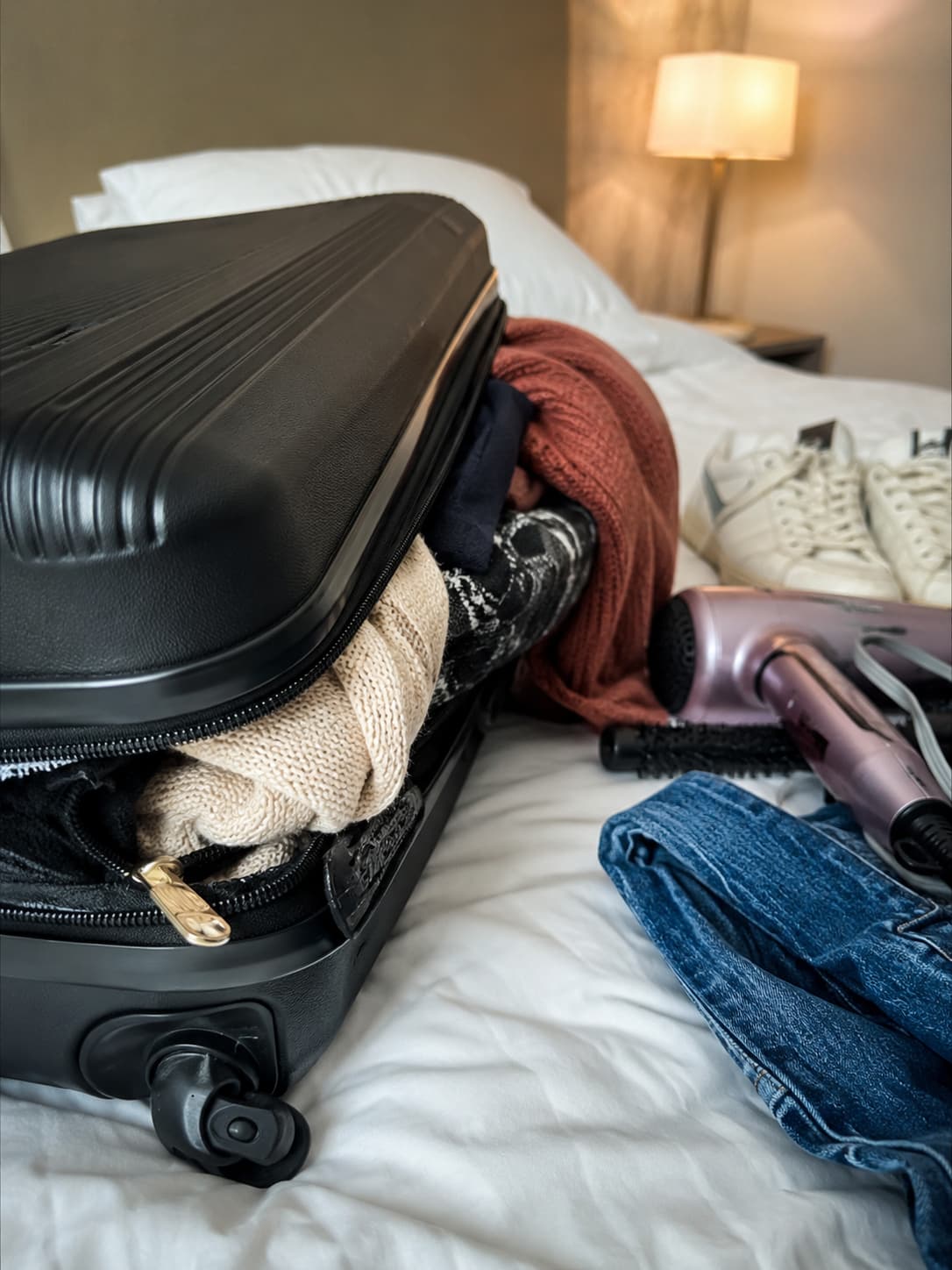
06 — How to Do Laundry While Traveling in Europe
Two options, both simpler than most people expect before their first trip.
Sink washing works fine for most non-denim clothing. Fill the sink, add a small amount of travel laundry soap or a few drops of hand soap, squeeze the items through, rinse thoroughly, and hang to dry. The critical detail: cotton items take twelve to twenty-four hours to fully dry; merino and synthetic fabrics take significantly less. Don’t sink wash jeans the night before a 7am train.
Laundromats are more available in European cities than most travelers expect — they’re simply less visible because they’re tucked down side streets rather than on main thoroughfares. A mid-trip laundromat run handles everything at once and leaves you with properly dried clothing for the second week. Most cost €5–10 for a full wash-and-dry cycle. Google Maps with “laundromat near me” will find your nearest option.
The timing that works: plan the laundry stop around Day 6 or 7, at a point where you have a base for the night. Do it the afternoon you arrive somewhere rather than the morning you’re leaving.
Rolling vs folding: what actually saves space in your Europe packing
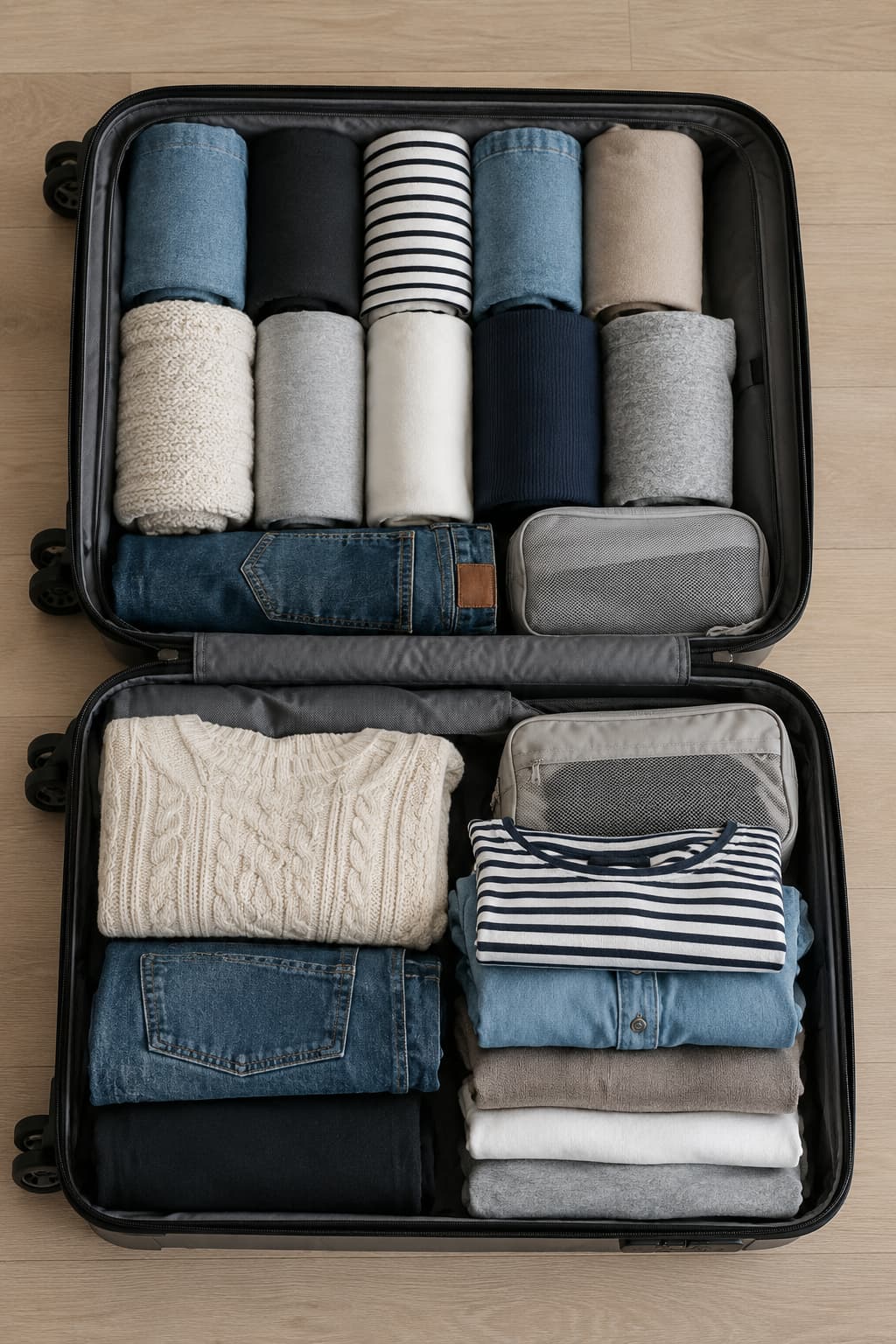
Rolling wins for soft fabrics — t-shirts, casual trousers, merino layers, underwear. The roll compresses more efficiently into the irregular spaces of a backpack and produces fewer deep creases in fabric that’ll be worn all day anyway. Method: fold in half lengthwise, then roll tightly from the hem up. Packing cubes make rolling more effective by containing the rolls and letting you pack the cube vertically.
Folding holds its ground for structured pieces: a blazer, a collared shirt, dress trousers. These want to maintain their shape, and a tight roll distorts fabric in ways a flat fold doesn’t. Stack them flat and put them where heavier items won’t sit on top. The honest reality: the method matters less than the list. A well-edited packing list for europe beats a perfect rolling technique every time.
07 — The Europe Packing List: Copy-Paste Checklist
Everything on this europe packing list, stripped of commentary. Print it, screenshot it, save the pin. Items marked ⚑ depend on your specific trip.
- CLOTHING
- 2 pairs trousers or jeans (one dark, one lighter)
- 3 tops — mix-and-match capable, no busy prints
- 1 versatile layer (jacket, merino zip, or blazer)
- 7 pairs underwear
- 7 pairs socks (merino recommended)
- ⚑ Swimwear — only if trip includes beach or pool
- ⚑ Lightweight scarf — for churches, cold trains, shoulder cover
- SHOES
- 1 pair walking shoes — already broken in before departure
- 1 pair for evenings (smart trainer or versatile flat)
- TOILETRIES — travel-size or buy on arrival
- Prescription medication + copy of prescription
- Toothbrush and toothpaste
- Deodorant
- Solid or travel-size shampoo (or buy in Europe)
- Sunscreen — small; top up in Europe
- Paracetamol and ibuprofen
- 4–5 plasters
- Travel laundry soap
- ⚑ Specialist skincare if needed
- TECH
- Phone and charging cable
- Power bank 10,000–15,000 mAh — in hand luggage only
- Universal travel adapter (European plug)
- Headphones
- ⚑ Camera
- ⚑ Laptop or tablet — only if genuinely needed
- DOCUMENTS AND MONEY
- Passport — valid for trip duration plus 6 months beyond return
- Physical copy of passport stored separately from the original
- Travel insurance details
- First-night accommodation confirmation
- Local SIM or eSIM — activated before departure
- Debit card with low or no international fees (Wise, Revolut, or equivalent)
- Small amount of local currency for arrival
- BAG EXTRAS
- Packable tote or lightweight day bag — for day trips from a base
- Luggage lock
- ⚑ Packing cubes — optional but useful
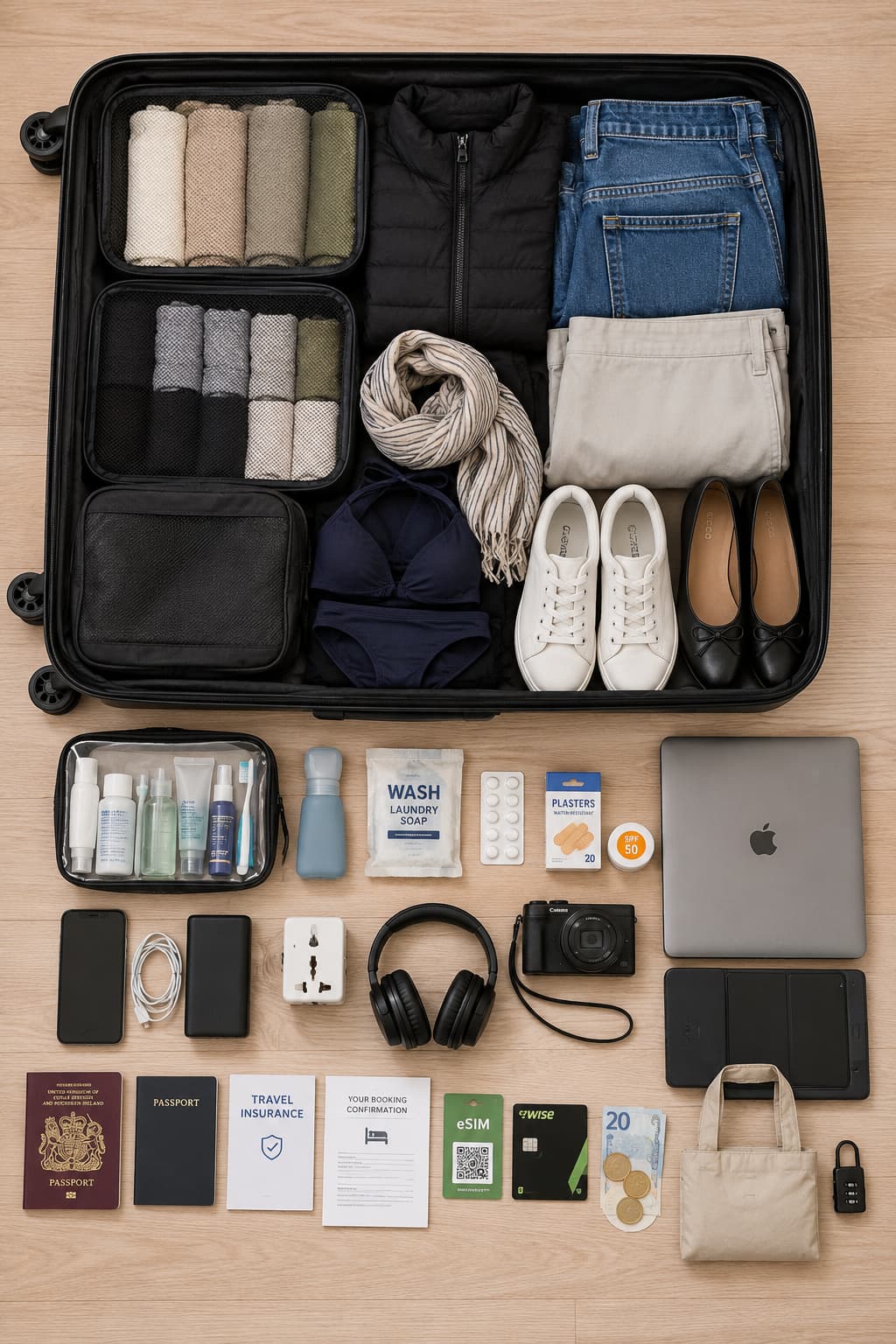
Europe Packing List
Bag Size, Security and Personal Item Questions
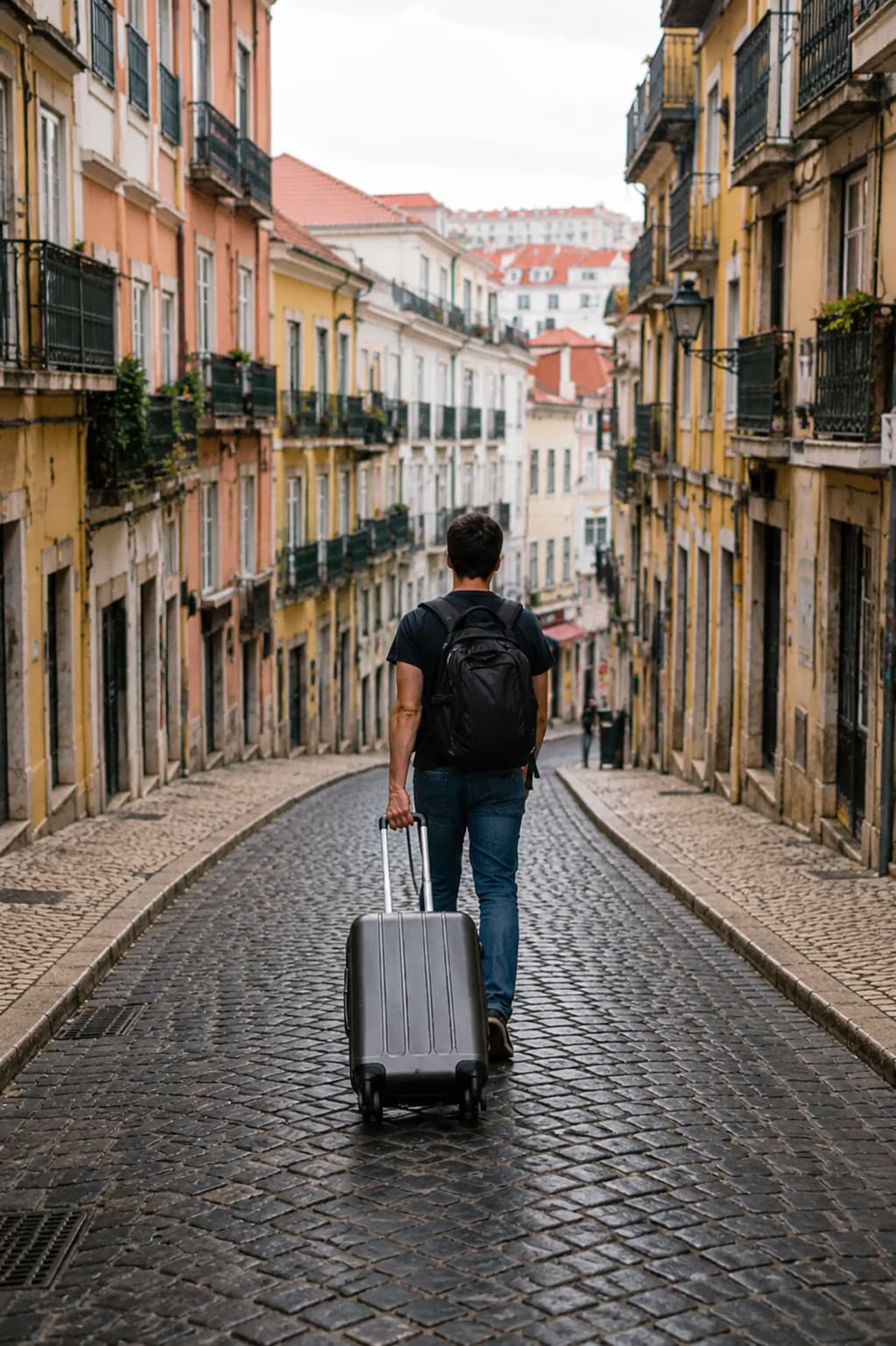
The bag you stop thinking about halfway through Day 1 is the right one.
The point of packing light isn’t minimalism for its own sake — it’s arriving somewhere and already being somewhere, rather than managing your luggage.