
Fall Foliage in Europe: Where to See It, When It Peaks, and Which Regions Do It Best
Europe’s autumn colour isn’t one season — it’s a wave that moves across the continent from late September to late November. Here’s where to catch it, and exactly when each region peaks.
Every autumn, a version of this question lands in every travel forum and search bar: where should I go to see fall foliage in Europe? The honest answer is that the question matters less than the follow-up: when? Fall foliage in Europe doesn’t arrive all at once — it sweeps south and downhill in a slow wave, reaching the Scottish Highlands first in late September, moving through Central Europe’s forests across October, and finally settling into the Douro Valley’s terraced vineyards in November. Plan to a destination without knowing its peak window and you might arrive to green leaves or bare branches.
This guide covers the regions with the best autumn colour in Europe — not as a ranking, but as a genuine leaf-peeper’s map, organized by when each place turns. For every region, I’ve included what actually changes colour there (the tree species matter; larches behave very differently from beech), a specific peak window based on typical historical patterns, and one practical note to help you plan around it.
How to Use This Guide
One honest caveat before we start: climate change has pushed average peak dates roughly a week later over recent decades in many European regions. The windows below reflect typical historical ranges, not guarantees. Local foliage reports — especially for alpine areas — are worth checking closer to your travel date. Regional Alpine tourism boards and the German Weather Service phenology pages are among the better live sources for Central Europe timing.
- How Autumn Moves Across Europe
- The Alps & Dolomites — Autumn Foliage at Its Most Dramatic
- Germany — Bavaria & the Black Forest
- France — Autumn Colour in the Vineyards and Mountains
- The UK — Scotland & the Lake District
- Portugal — The Douro Valley
- Central & Eastern Europe — Autumn Foliage Without the Crowds
- Does Southern Europe Get Autumn Colour?
- Timing Cheat Sheet
- What Actually Turns Colour
- FAQ
01 — How Autumn Colour Moves Across Europe
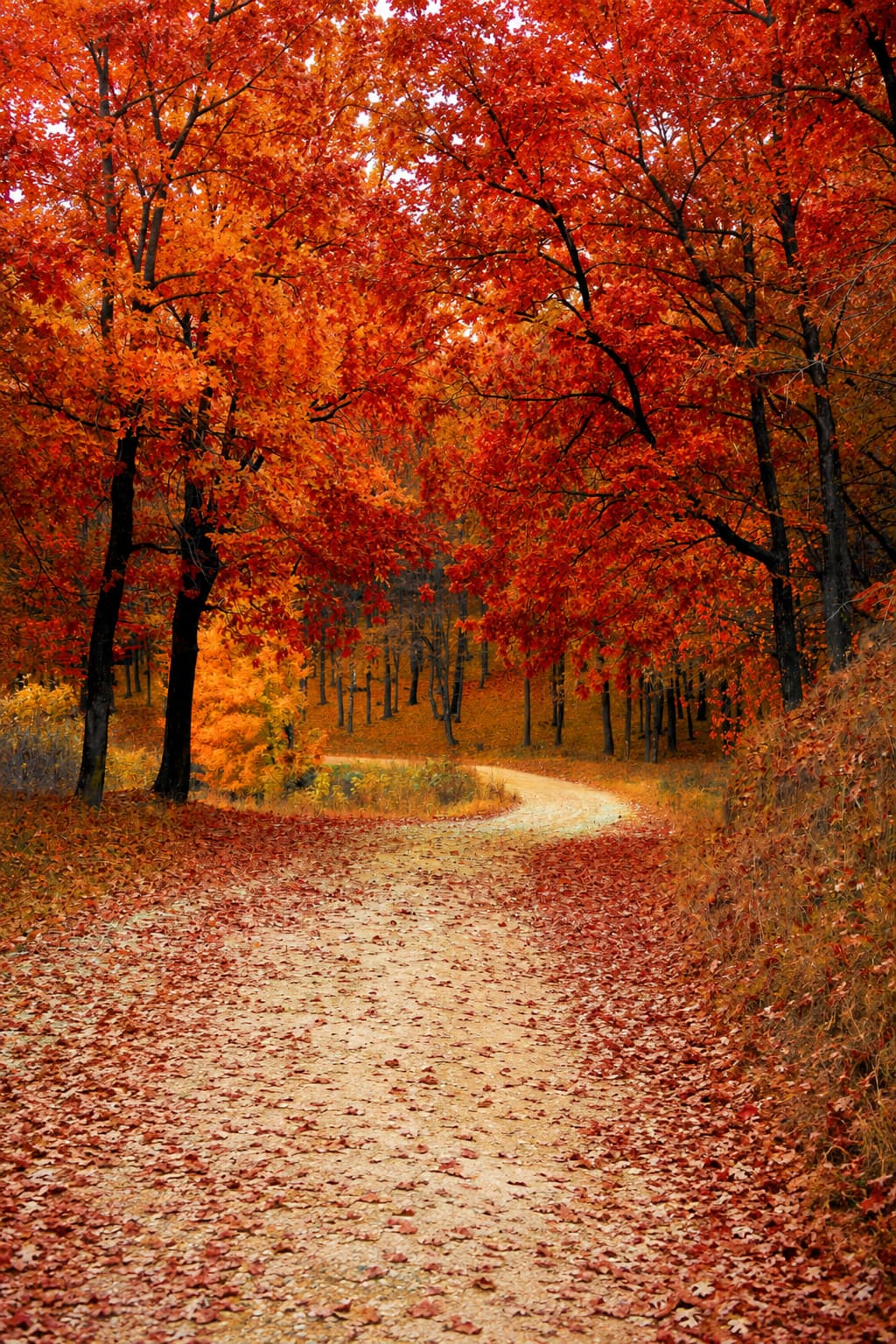
European autumn colour doesn’t follow a fixed date — it follows temperature, elevation, and latitude. The general pattern runs north-to-south and high-to-low: the Scottish Highlands turn first, in late September, because they’re both northern and often elevated. The high Alps follow closely. Central and Western Europe — France, Germany, Austria — reach their peak from mid-October into early November. The south comes last: Portugal’s Douro Valley, the Mediterranean coast, and parts of southern Spain don’t turn until late October or November, and even then the palette is subtler.
Elevation is the variable most travellers underestimate. In the Dolomites, you can be standing in peak colour at 1,500 metres while the valley floor an hour below is still green. This means a destination doesn’t have one peak window — it has several, stacked by altitude. High-altitude spots turn first; valley floors and lower slopes follow by days or even weeks.
The 7–10 day reality is the other thing worth knowing. Unlike New England, where major highways have foliage reports updated daily, most European regions don’t have real-time tracking infrastructure. Once you’ve identified your destination, account for the fact that the window is short — a hard frost or an early November storm can strip a hillside in a day. Build a day or two of flexibility into your timing if peak fall colour is the point of the trip. If you’re also thinking about where to base yourself in October, see the best European cities for September for shoulder-season context.
02 — The Alps & Dolomites — Autumn Foliage at Its Most Dramatic
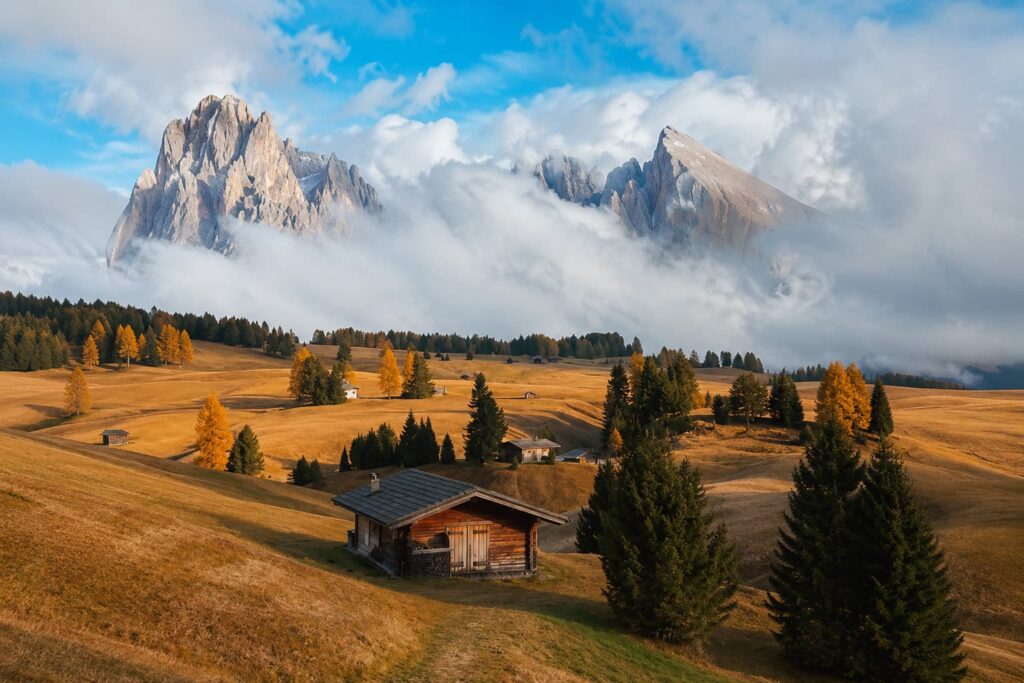
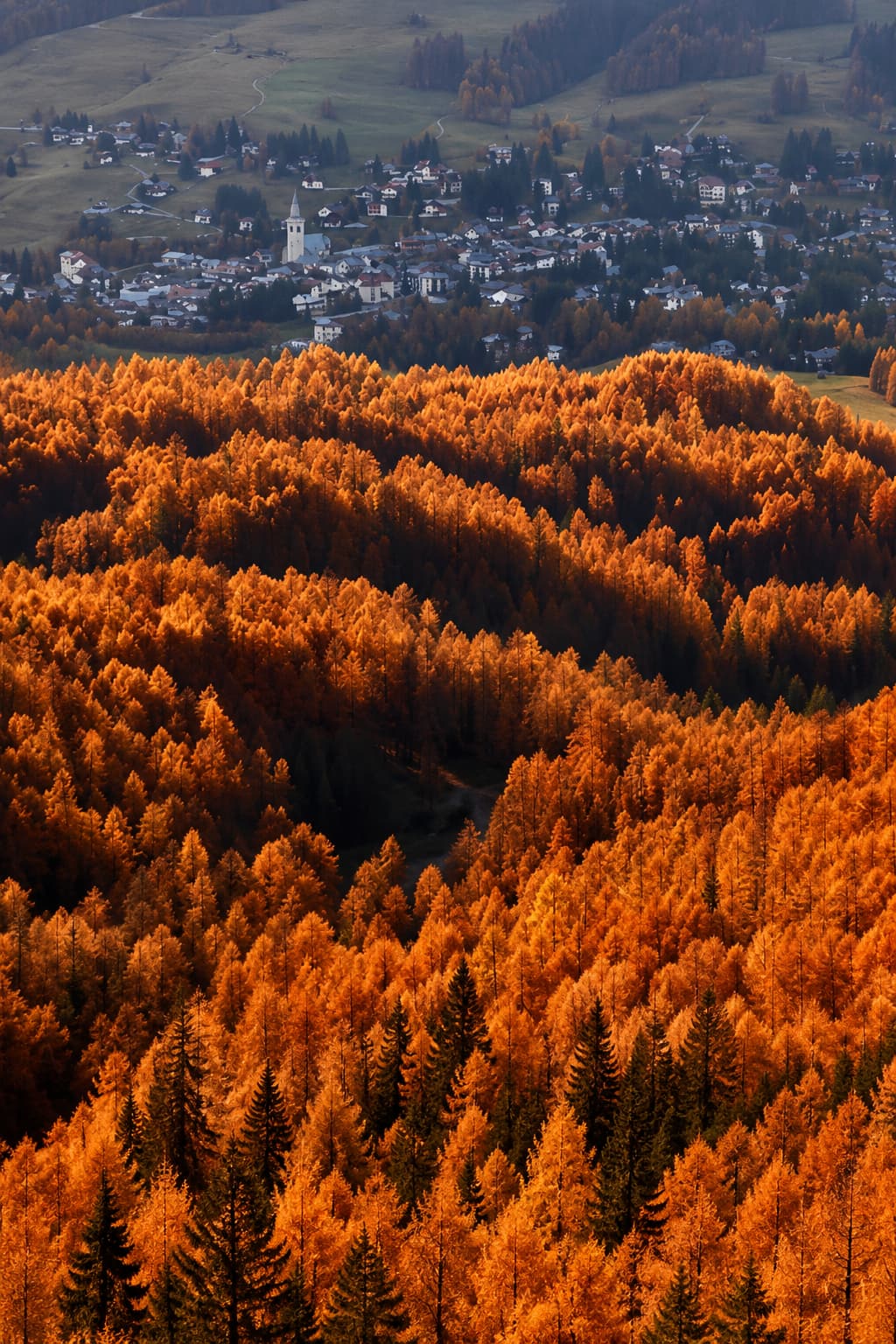
If there’s one image that defines fall foliage in Europe, it’s this: orange larch forest against grey Dolomite limestone. Larches are one of the few deciduous conifers — they look like pine trees all summer and then, in autumn, turn from gold to amber to a deep tangerine-orange before dropping their needles. The contrast against pale rock faces and dark evergreen pines is unlike any other autumn landscape on the continent. For more on Alpine destinations in October specifically, see the Alps in October guide.
Italian Dolomites — South Tyrol & Val Gardena Autumn Colour
The Dolomites are the highest-drama option in Europe for fall foliage, and October is the month to be there. Val Gardena stays open longer than most mountain areas — many Dolomites tourist facilities close in late September, but Val Gardena’s valley floor and lower trails remain accessible into November. The Alpe di Siusi plateau above Ortisei is the classic spot: open meadows turning rust-gold, ringed by larch forest and the distinctive rock towers of the Sassolungo group. Many of the higher cable cars and rifugi close for their inter-season break from late September to early December — valley-based hikes and lower trails are still exceptional, but check before banking on a specific high route.
Austrian Alps — Autumn Foliage in the Salzkammergut
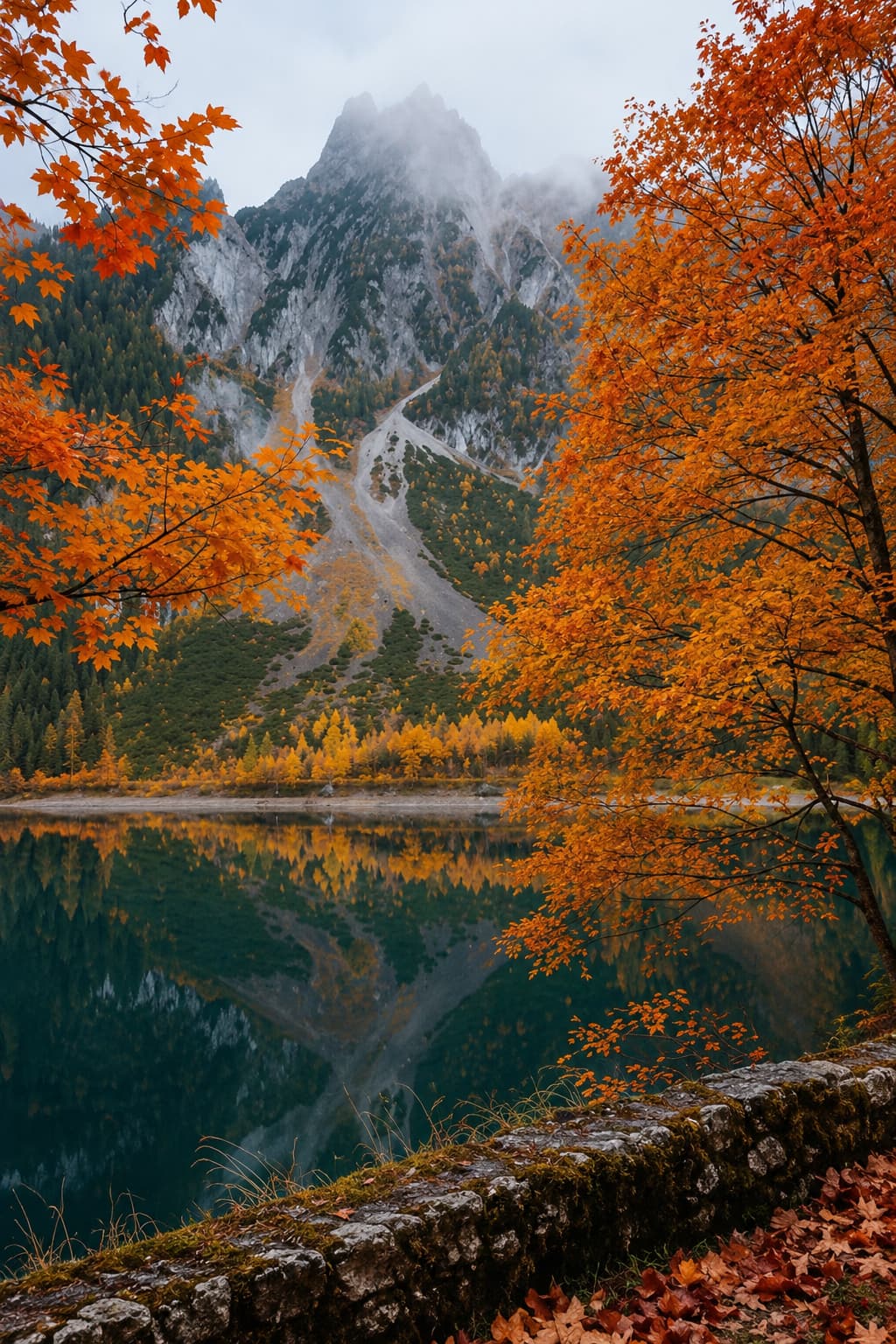
Austria’s alpine foliage arrives slightly earlier than the Italian Dolomites — the Austrian Alps are at a similar elevation but further north, which moves the timeline forward by about a week. The Salzkammergut lake district, with its beech-covered hillsides and silver lakes, is the most photographed corner. Hallstatt is the obvious anchor, though crowds in October are still substantial — Gosau, just over the ridge, is quieter and offers direct views of the Dachstein glacier framed by autumn forest.
Swiss Alps — Canton of Bern & the Bernese Oberland
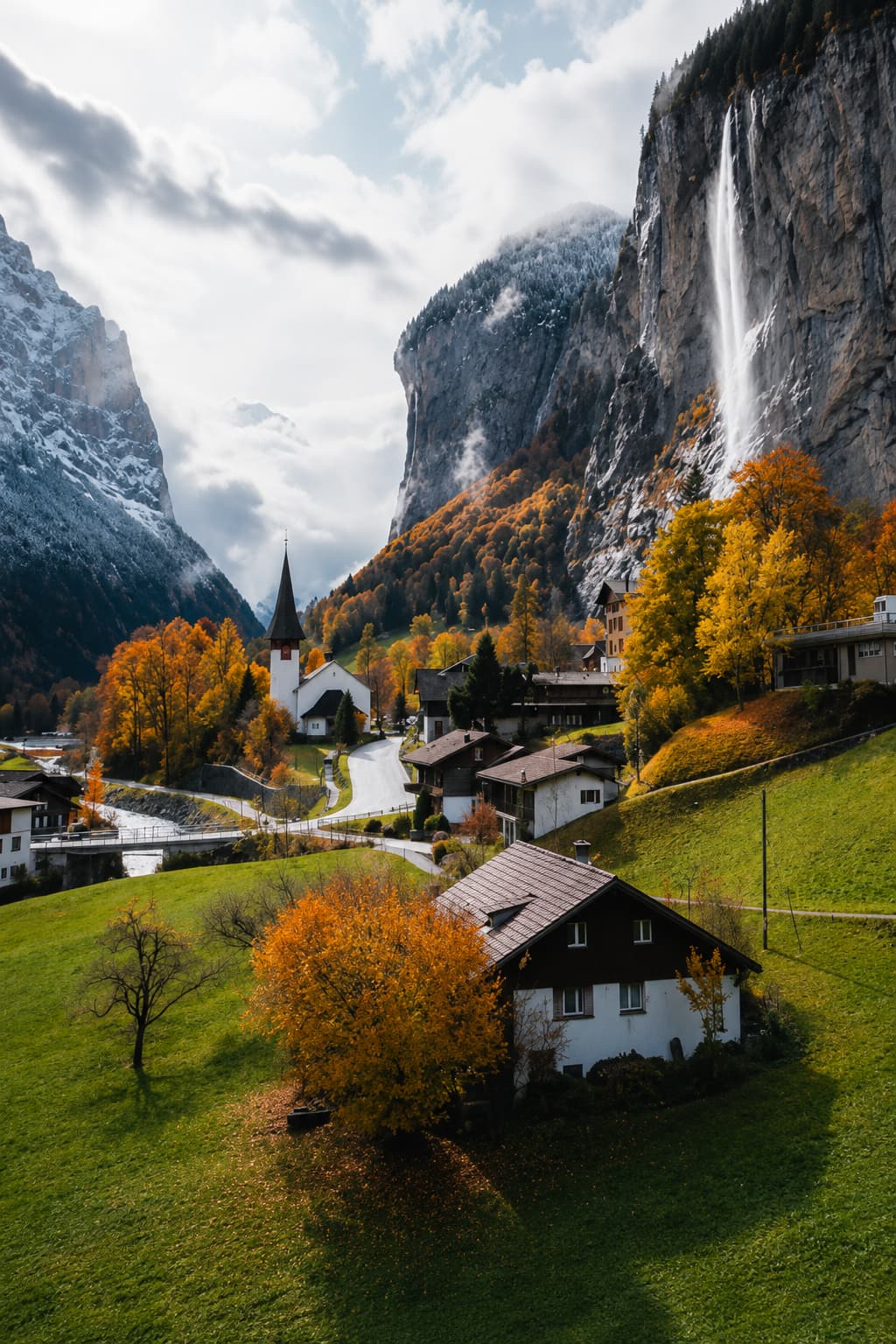
Switzerland’s foliage peaks earliest of the three alpine countries, partly because the central Alps sit further north and partly because Switzerland has more varied tree coverage — the mix of beech, maple, and larch at different elevations creates a longer colour progression. The Bernese Oberland — Grindelwald, Lauterbrunnen, the Jungfrau region — combines classic alpine scenery with genuine autumn colour. The Simmental valley and the hills above Lake Thun are less visited and often more rewarding.
03 — Germany — Fall Foliage in Bavaria & the Black Forest
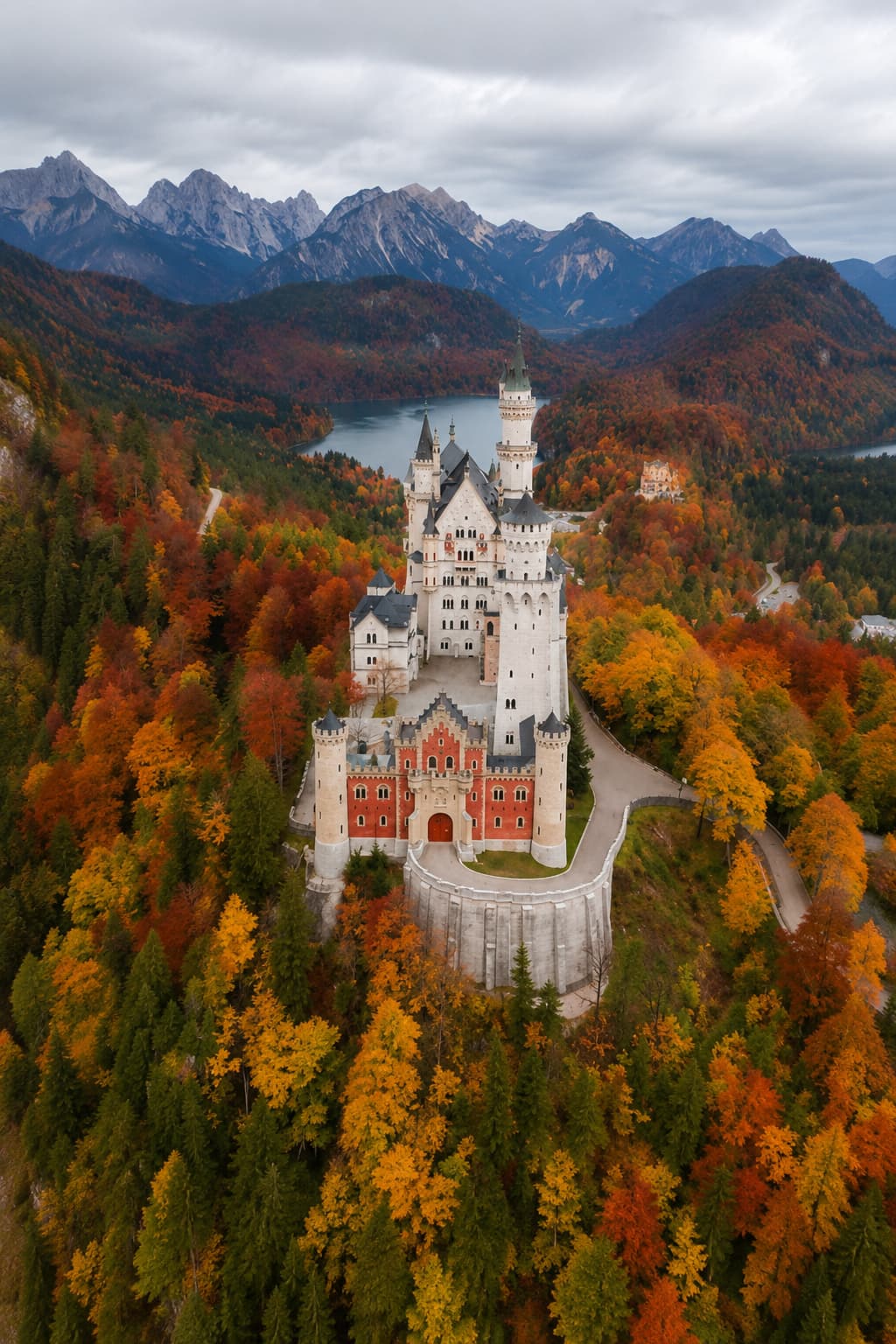
Germany’s best fall foliage concentrates in two areas: the Bavarian Alps and foothills in the south, and the Black Forest in the southwest. Bavaria’s forests reach their peak from mid-October, when the broad-leaved mixed woodland of the Alpine foothills turns against a backdrop of castle-scattered hillsides. Neuschwanstein in autumn colour is genuinely one of the better travel photographs you can take in Central Europe — the castle emerging from orange forest, framed against snow-dusted Alps. Burg Eltz in the Moselle Valley, less well-known but arguably more dramatic, sits in a river gorge that traps autumn colour into late October.
Bavaria vs the Black Forest: Which Region Should You Choose?
Munich is the practical base for Bavarian foliage — the English Garden turns reliably through October — but the real colour is in the hills an hour south. The Isar Valley between Munich and the Alps is underused by tourists and vivid in October. The Black Forest’s western slopes, accessible from Freiburg, tend to peak a week or so later than Bavaria due to lower elevation. For city-focused October planning, the best European cities in October covers Munich and other bases in more detail.
04 — France — Autumn Colour in the Vineyards and Mountains
France offers three distinct autumn foliage experiences, each with a different character and a slightly different timeline. The common thread is that French autumn colour tends to blend landscape and culture in a way the purely-alpine options don’t.
Alsace — Wine Route & Vosges Forest
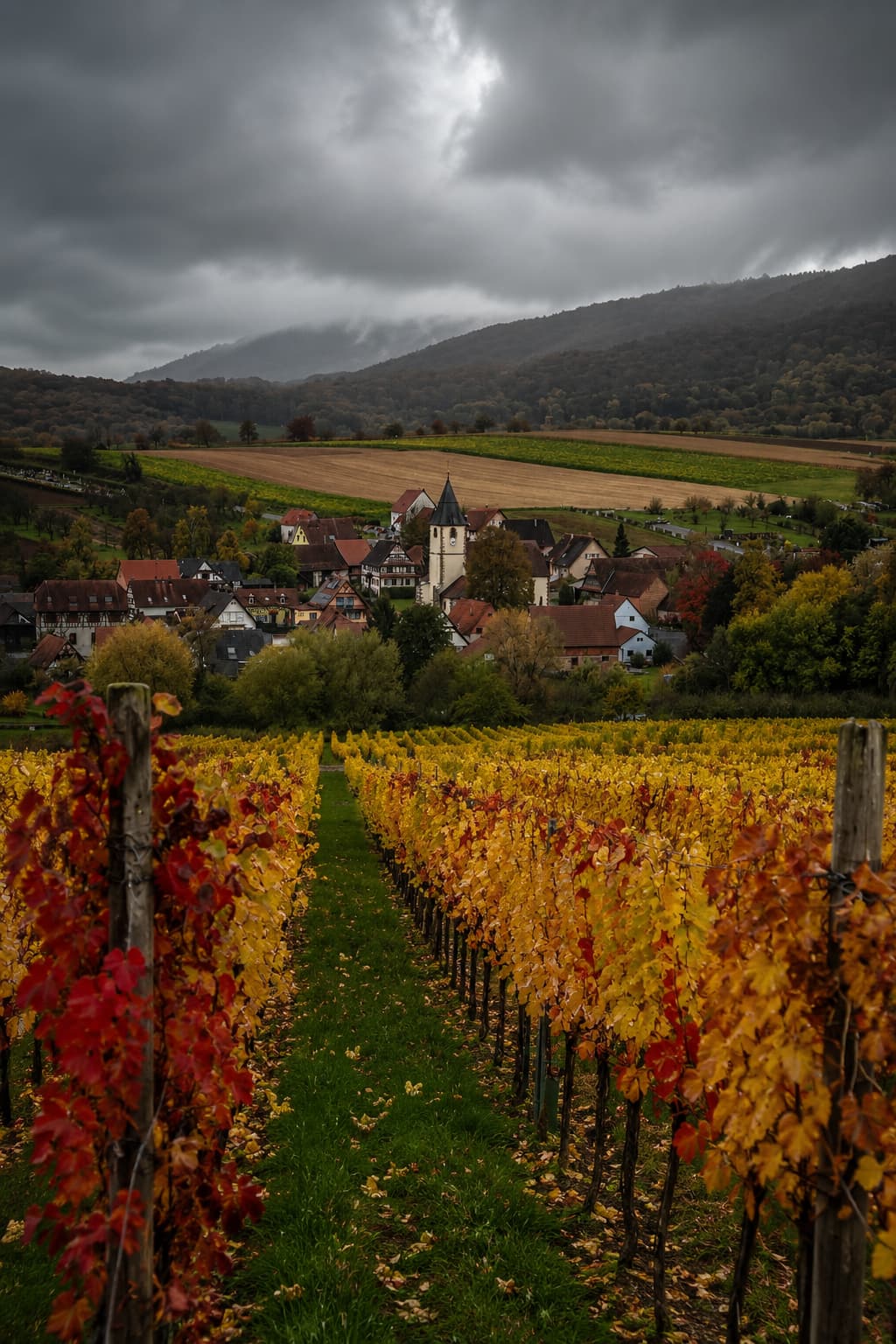
Alsace is the most reliably spectacular. The village-studded wine route runs along the Vosges foothills, where the vine rows turn gold and copper against the half-timbered backdrop of towns like Riquewihr, Kaysersberg, and Ribeauvillé. The forest above the vineyards adds a second layer of colour — beech and oak on the Vosges hillsides peak in mid-to-late October, after the vines have already turned. This is one of the few places in Europe where you can see vineyard and forest autumn colour simultaneously.
Loire Valley — Châteaux & River Forest
The Loire Valley’s focus is different: fewer dramatic landscapes, more soft transitions through vineyard and river-bottom forest. The royal châteaux — Chambord, Chenonceau, Villandry — sit in mature deciduous parks that turn beautifully in mid-October. Autumn here is also the moment when crowds have retreated and accommodation prices drop, which changes the experience substantially.
French Pyrenees — Irati Beech Forest & Gavarnie
The French Pyrenees are the least-visited option and arguably the most dramatic for pure landscape. The beech and oak forests of the Basque Country and the Ariège reach peak colour from mid-to-late October, with the valley floors turning last. Gavarnie’s famous cirque — a UNESCO natural site — is typically accessible into October and frames autumn colour against high limestone walls. The Irati Beech Forest on the French-Spanish border is one of the largest in Europe and nearly unknown outside the region.
05 — The UK — Scotland & the Lake District
The UK’s fall foliage peaks earlier than most of continental Europe — a consistent pattern that many leaf-peeping travellers don’t account for. If you’re planning a Europe autumn trip in late October, Scotland may already be past its best. If you’re going in late September or early October, Scotland is exactly right.
Scottish Highlands — Autumn Colour in Glencoe, Cairngorms & Perthshire
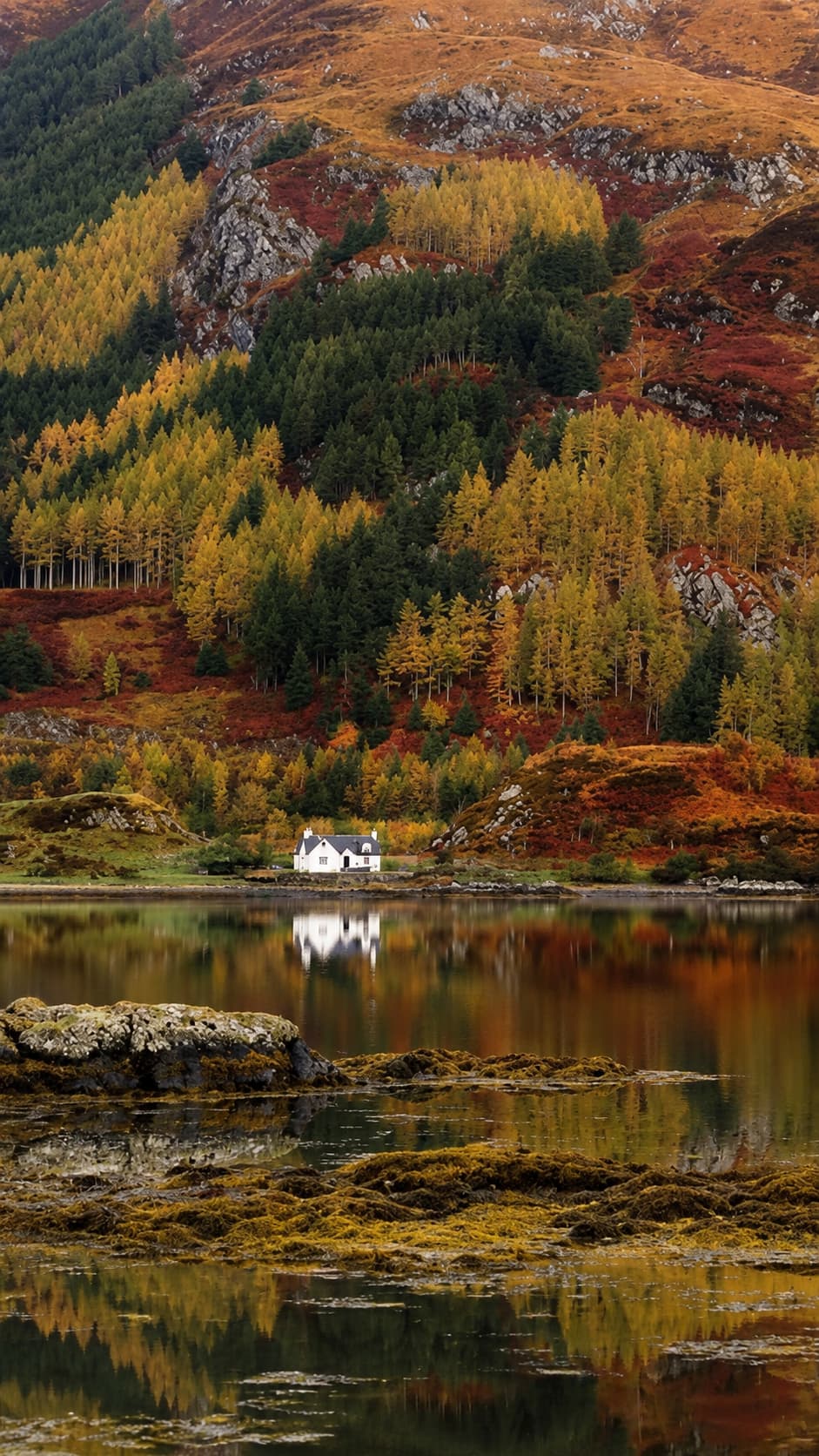
Scotland’s colour is led by birch, rowan, and bracken — a palette of yellows, golds, and rust-red that’s distinct from the deep reds of New England or the orange larches of the Alps. The Highlands turn early because birch is one of the first trees to change, and because cooler Highland nights accelerate the process. Glencoe is the most dramatic showcase: the glen walls go amber and gold while the bracken floor turns rust-orange, all against the dark shapes of the Three Sisters. The Cairngorms plateau offers birch and aspen colour in the lower glens, with Glen Affric — a native Caledonian Forest remnant — particularly rewarding for early October colour.
Perthshire deserves a specific mention. Known locally as “Big Tree Country,” the area around Pitlochry and Dunkeld has some of the most varied deciduous woodland in Scotland — oak, beech, birch, larch, and Douglas fir mixed together. The Hermitage walk near Dunkeld is a reliable October classic. By mid-October, much of the Highlands has reached or passed peak; the lower Lowlands hold colour into late October.
For the fuller Highland picture, the Scottish Highlands guide covers timing and access in detail.
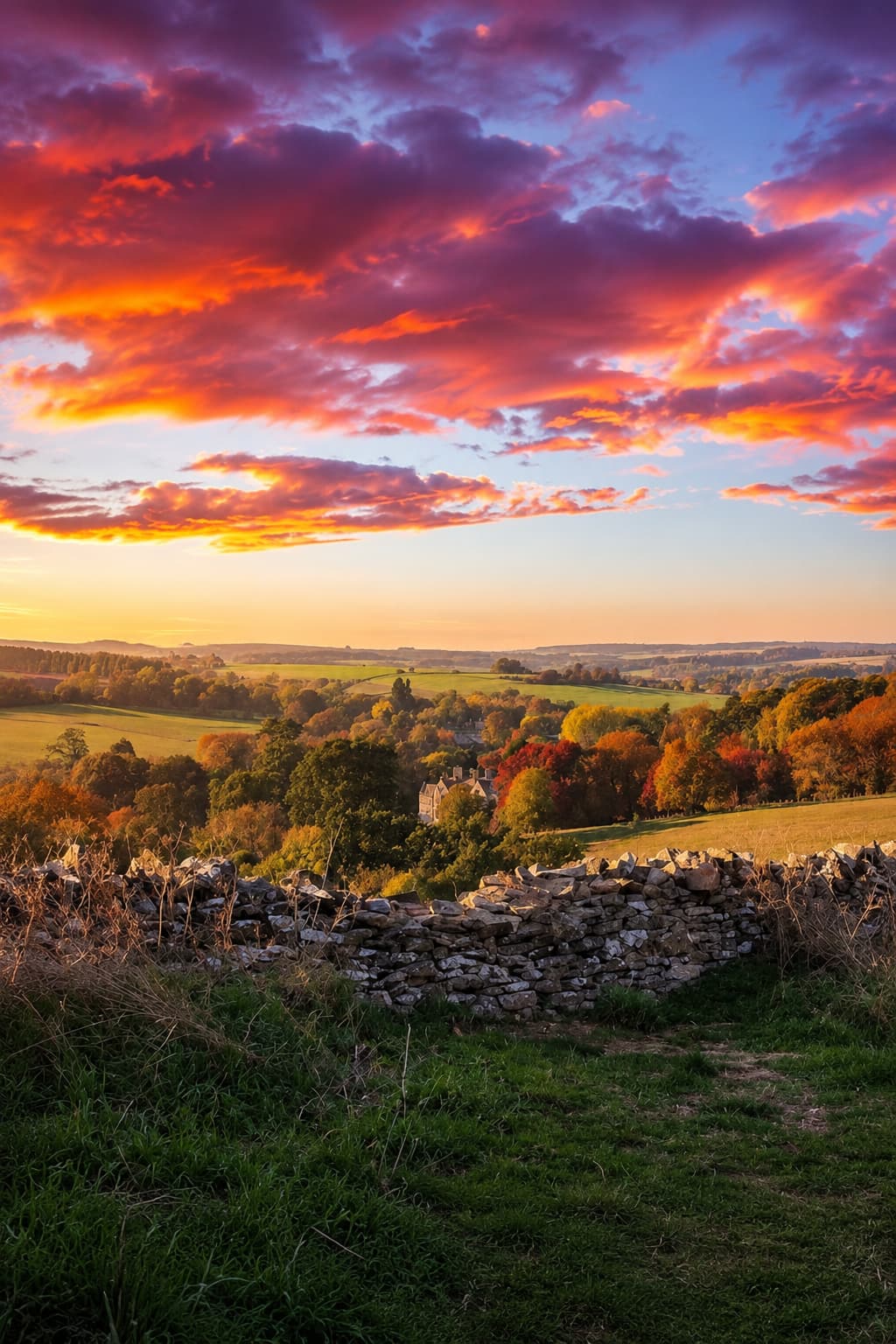
The Lake District & the Cotswolds — England’s Best Autumn Colour
England’s best foliage follows Scotland by roughly two to three weeks. The Lake District — Borrowdale, Langdale, Ullswater — combines mixed oak and birch woodland with larch plantations that turn gold on the upper slopes, creating layered colour that frames the lakes well in October. Cotswolds beech woodlands peak later, often into early November, with the long escarpment walks through Cleeve Common and Haresfield Beacon particularly worth the effort.
06 — Portugal — Autumn Foliage in the Douro Valley
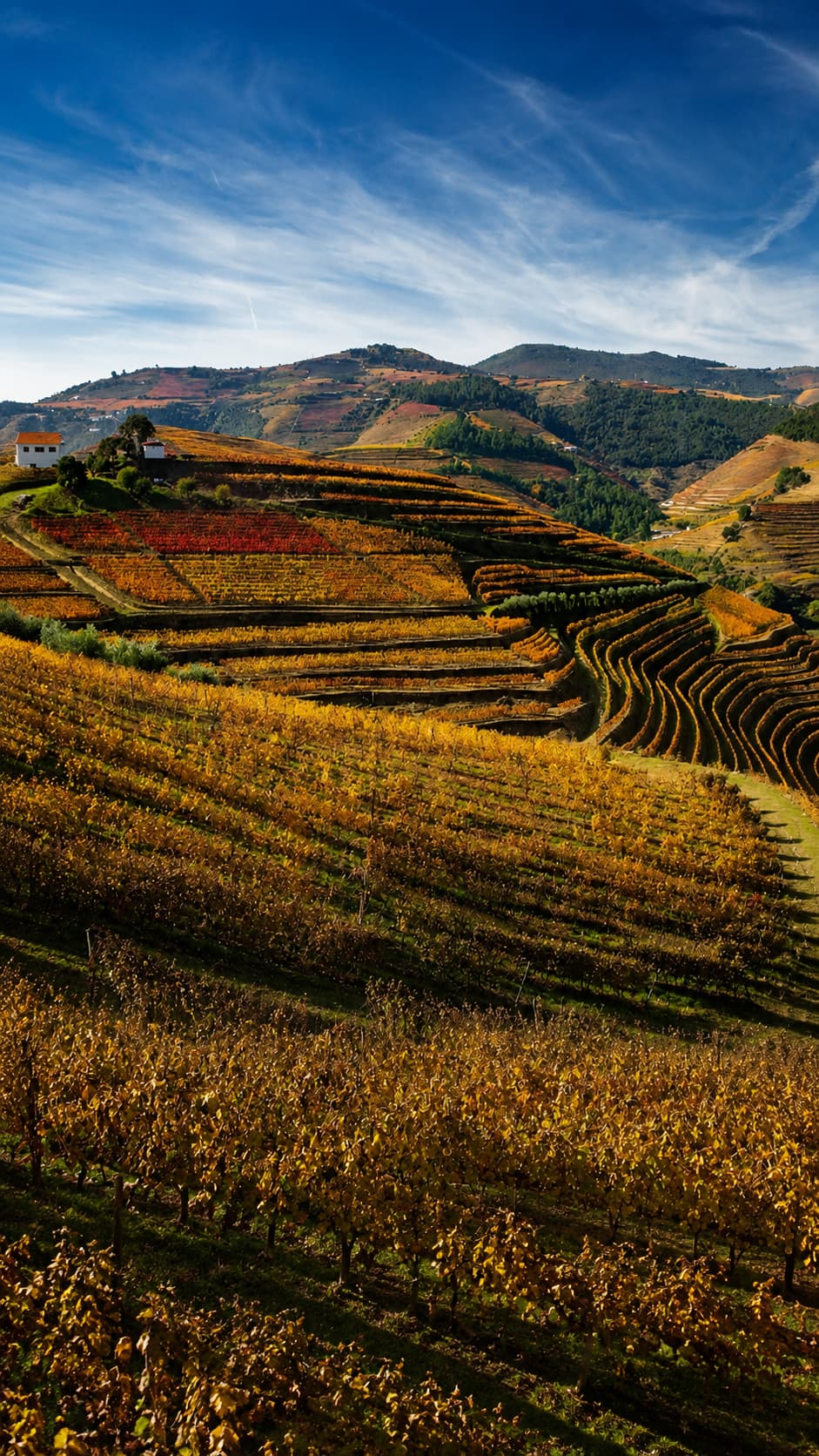
Portugal’s Douro Valley is the sleeper pick on any fall foliage Europe list — the least expected but, in the right week, one of the most visually arresting places on the continent to be in autumn. The UNESCO-protected terraced vineyards that line the river gorge from Peso da Régua to the Spanish border shift from green through shades of crimson, copper, amber, and gold as the growing season ends. What makes it unusual is the geometry of the terraces — you’re watching colour move across architecture as much as landscape.
Why the Douro Valley Looks Different from Forest Foliage
The Douro’s timeline differs from alpine foliage: the harvest runs through September into early October, and the colour that draws photographers arrives after — late October into November, when the post-harvest vines are at their most vivid and the valley has exhaled after the season. This is also the moment when the crowds thin, the quintas are more relaxed, and the whole valley shifts into a quieter, more introspective mode. Rain risk increases from late October, but many visitors find the mist and low light actually suit the valley’s mood.
Porto is the natural gateway and a worthwhile stay in its own right. For the Douro itinerary, see the 3 Days in Porto guide.
07 — Central & Eastern Europe — Autumn Foliage Without the Crowds
The best-kept secret about fall foliage in Europe is that Central and Eastern Europe often delivers more dramatic natural colour — at lower cost, with fewer tourists — than the more famous western destinations. For a broader overview of the region, the Eastern Europe travel guide covers costs, safety, and where to actually go.
Romania — the Carpathians & Transylvania
Peak: late Sept to late Oct
Romania has the largest remaining area of old-growth beech forest in Europe, concentrated in the Carpathian arc around Transylvania. The beech turns from gold to copper across hillsides that also have bears, wolves, and medieval fortified churches — a combination that exists nowhere else on this list. The Transfăgărășan highway, one of Europe’s most dramatic mountain roads, is accessible into October (it closes in winter — check current dates) and passes through colour-saturated forest at its lower elevations. Brasov is the practical base — see the Transylvania itinerary from Bucharest for the full route.
Slovenia — Lake Bled & Triglav National Park
Peak: mid to late Oct
Slovenia’s autumn colour is concentrated in the Julian Alps and the forests surrounding Lake Bled. Triglav National Park’s beech and maple turn vivid in mid-October; the lake itself, already one of the most photographed in Europe, takes on an additional dimension when the surrounding hills are amber and the light is low. The Soča Valley to the west — emerald river through limestone canyon — adds forest colour to its already-dramatic backdrop. Bled is busy even in October; the Bohinj Valley next door is substantially quieter with equivalent autumn scenery. See the Lake Bled autumn itinerary for the 2-day plan.
Hungary — the Bükk Mountains & Lillafüred
Peak: mid to late Oct
Hungary doesn’t appear on most European foliage lists, which is exactly why it should. The Bükk Mountains in northern Hungary are almost entirely forested in beech and oak, and mid-October colour here is as good as anything in the Alps without the Alps crowds or prices. Lillafüred, a small resort village deep in the Bükk, has a Victorian hotel and forest walks that feel almost theatrical in autumn — one of those places that rewards travellers who are done with the obvious destinations.
Croatia — Plitvice Lakes National Park
Peak: late Sept to mid Oct
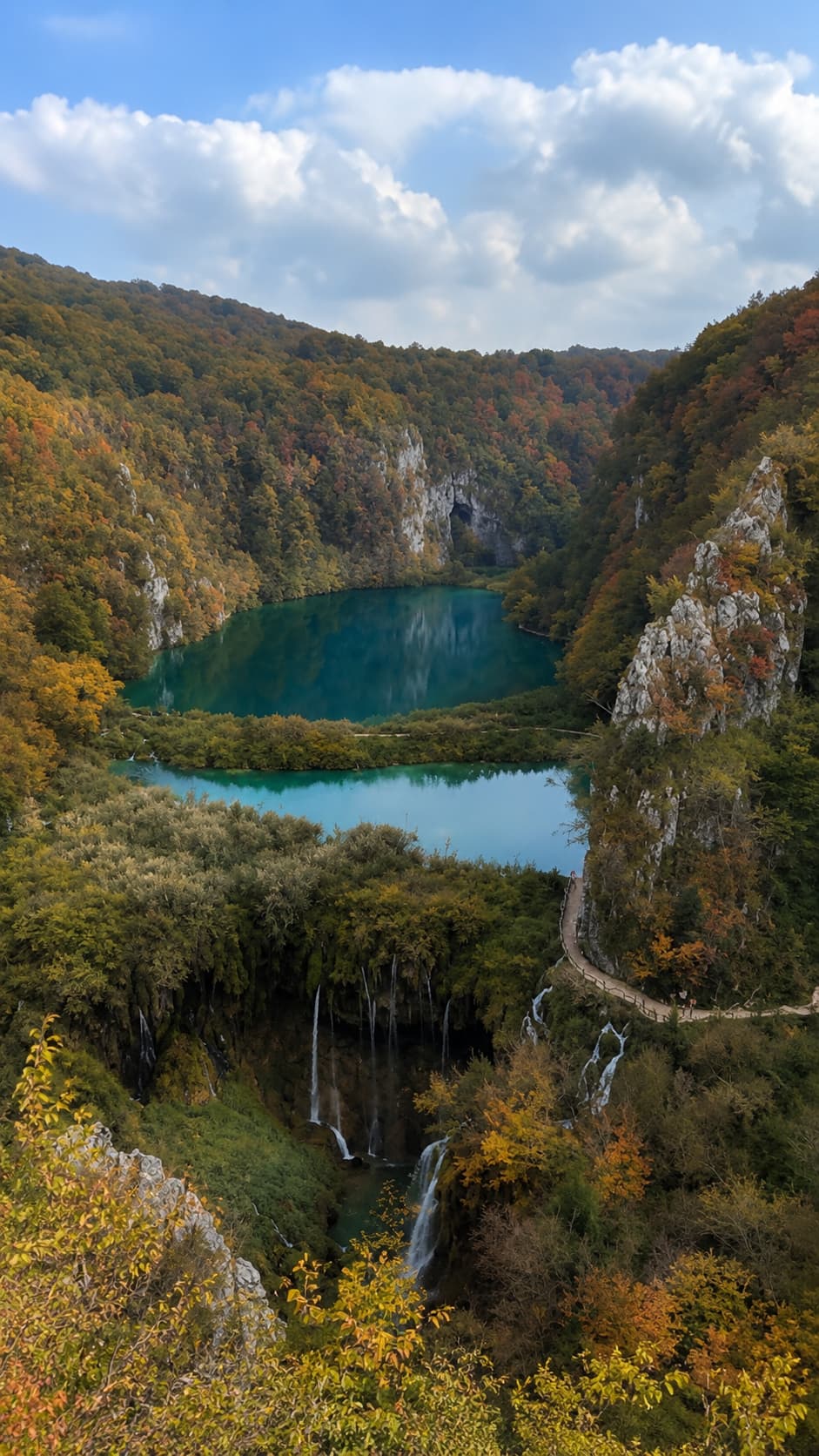
Plitvice Lakes is already a UNESCO World Heritage Site famous for its turquoise water and cascading falls. In autumn, the surrounding beech and maple forest adds a layer of colour that the summer crowds never see — red and orange leaves reflected in the lakes, waterfalls framed by golden trees. Peak colour and shoulder-season timing happen to coincide here almost perfectly: late September and October are busy but manageable, rather than the summer’s truly overwhelming visitor numbers.
08 — Does Southern Europe Get Autumn Colour?
Yes — but honestly, not in the way most leaf-peepers are imagining. If you’re hoping for New England-style saturation in Andalusia or Tuscany’s southern coast, you’ll be disappointed. The Mediterranean climate — mild, relatively dry — doesn’t produce the cold-night, warm-day temperature swings that trigger dramatic colour in deciduous trees. Olive trees, cypress, and most Mediterranean shrubs don’t change colour at all.
Where You Can Still Find Autumn Colour
What does turn, and when:
- Central and northern Italy (Tuscany, Umbria): Mixed deciduous woodland at elevation turns reliably in October. The Chianti hillsides and the Apennine forests above Florence offer genuine autumn colour from mid-October, though it’s softer and shorter-lived than the Alps.
- Northern Spain (Galicia, Basque Country, Navarra): Genuinely Atlantic in climate, not Mediterranean — these regions get real autumn colour in October. The Navarran Pyrenees and the Irati Beech Forest reach peak colour in mid-to-late October and are almost entirely visited by domestic tourists.
- Southern Spain and coastal Italy: Foliage here arrives late and stays muted — November into early December in places. It’s not nothing, but it’s not the point of a trip.
- Greece — the mountainous interior: Zagori, Pelion, northern Epirus — genuine beech and oak colour in October. The islands don’t.
Should You Travel South for Autumn Foliage?
The honest answer for southern Europe is: if fall foliage in Europe is your primary reason to travel, go north. If you want warm autumn weather with some colour as a bonus, the northern Mediterranean in October is a legitimate choice — and far cheaper than peak summer.
09 — When to Go: Fall Foliage Europe Timing Cheat Sheet
All the peak windows in one place, organized earliest-to-latest. All windows are typical historical ranges — elevation, weather, and year-to-year variation will shift them. For alpine destinations especially, check local foliage reports close to your travel date.
| Late September | Scottish Highlands (Glencoe, Cairngorms, Perthshire) · High Alps (Swiss Alps, upper Dolomites) · Plitvice Lakes, Croatia |
| Early October | Swiss Alps (Bernese Oberland) · Romanian Carpathians · Scottish Lowlands · Lake Bled, Slovenia |
| Mid October | Italian Dolomites · Austrian Alps · Bavaria · Alsace · Bükk Mountains, Hungary · Triglav, Slovenia · Tuscany/Umbria (at elevation) |
| Late October | Black Forest, Germany · Loire Valley, France · French Pyrenees · Lake District, England · Douro Valley, Portugal · Northern Spain |
| November | Douro Valley (peak vineyard colour) · Cotswolds, England · Southern Mediterranean (late, subtle) |
In any alpine area, add 1–2 weeks to the peak window for every 500m you descend. The high Dolomites in late September can already be turning gold while valley-floor trails near Bolzano are still green. You can extend your autumn foliage season by planning a descent rather than camping at a single elevation.
10 — What Actually Turns Colour (and Why It Matters)
Knowing what you’re looking for changes where you go to see fall foliage in Europe and when. European autumn colour comes from a more limited palette of species than North American foliage — the reds that define New England’s autumn are largely from maples, which are far less dominant in European forests. Europe’s palette skews gold and amber, with bursts of deeper colour from specific species in specific places.
Larch — Alps & Dolomites
The defining tree for European foliage enthusiasts. Gold to amber to tangerine-orange, mid-October. A deciduous conifer — it keeps its cone shape while the needles turn, creating an unusual texture against rock and sky. Italian Dolomites and Austrian Alps are the prime locations; nothing else on this list looks quite like it.
Beech — Central Europe, France & UK
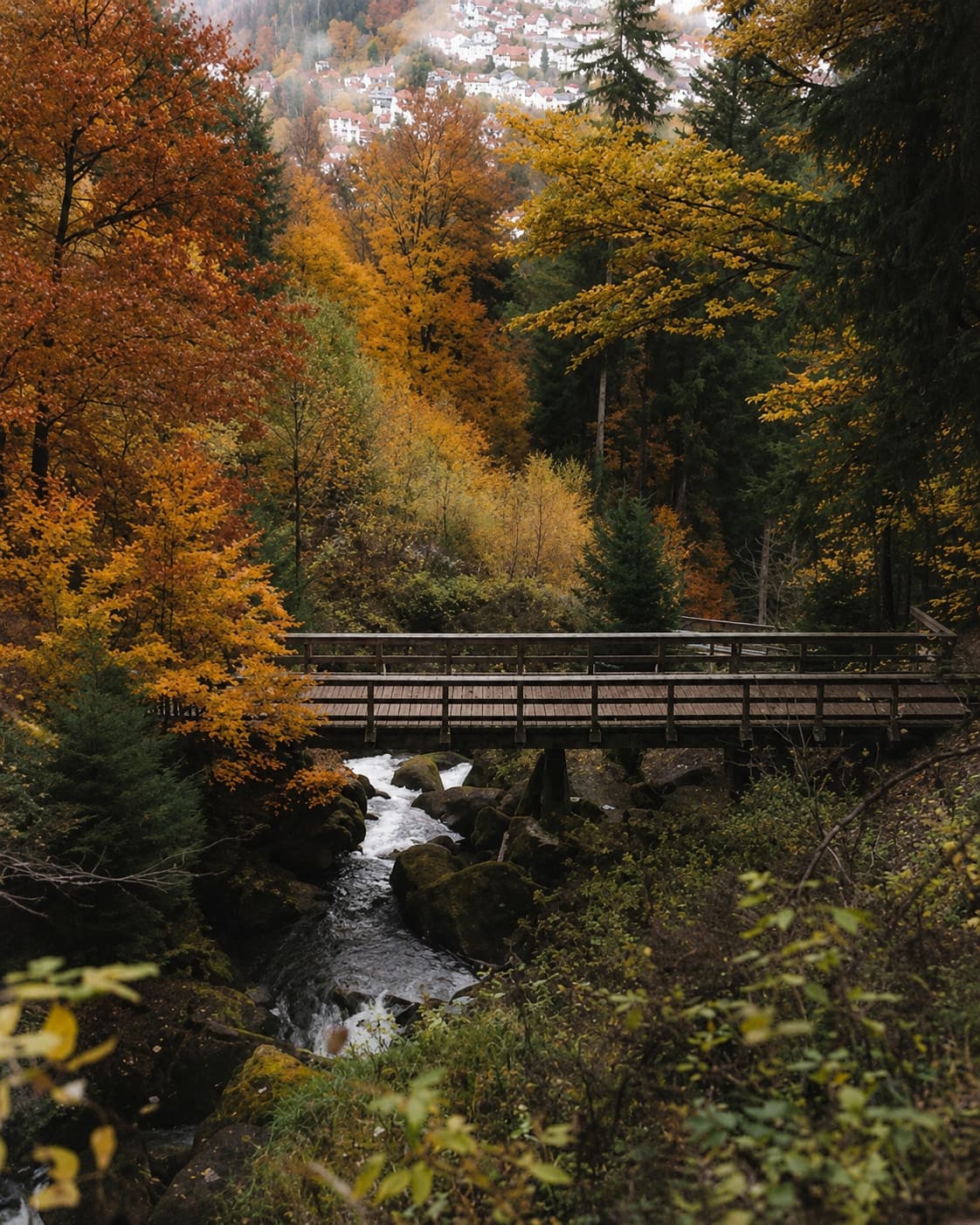
The dominant broadleaf tree in European deciduous forests. Turns from green through bronze-copper, holding leaves late — beech stands in the Cotswolds, Carpathians, and the Bükk are still vivid in November when much of Europe has already dropped. Produces the most even, enveloping canopy coverage of any European tree.
Birch & Rowan — Scotland & Scandinavia
Birch turns an early, clean yellow; rowan adds orange-red alongside its red berries. Together they create Scotland’s characteristic autumn palette — golden yellow floor, dark pine above. Peak late September to mid-October in the Highlands. The earliest-turning combination on this list.
Vine Leaves — Douro, Alsace & Loire
Vineyard foliage doesn’t follow tree timing — vines turn once the growing season ends, typically from late October. The colour depends on variety: some turn pure gold, others deep crimson or copper. Vineyard colour is shorter-lived than forest colour and closely tied to harvest dates, which shift each year.
Planning Your Trip
Regional Questions
Autumn is the season that rewards precision. Know when your chosen region peaks, build in a day or two of flexibility, and don’t overthink the destination. The Dolomites and the Douro Valley and the Scottish glens are all doing the same thing — pulling colour out of summer and letting it go slowly.
The only mistake is arriving a week too early or a week too late.