
The Best Cafés in Prague — For the View, the Room, or the History
The best cafes in Prague split into two very different scenes: grand historic coffee houses that have been serving writers and philosophers since 1902, and a sharp modern specialty movement that has quietly become one of the best in Central Europe. Here’s where to sit, and why.
01 — Prague’s Café Culture, Briefly
The best cafes in Prague fall into two very different traditions, and understanding that split makes the city’s coffee scene make a lot more sense. On one side: the grand coffee houses of the early twentieth century, built when Prague was still part of the Habsburg Empire and intellectuals gathered over black coffee and newspapers to argue about everything. On the other: a modern specialty movement that emerged in the last decade, drawing on Central European craft-roasting culture and producing some genuinely excellent espresso in stripped-back rooms with good light.
These two worlds rarely overlap. The historic cafés are mostly about the room — the tilework, the chandeliers, the weight of having been somewhere for a hundred years. The specialty bars are mostly about the cup. Both are worth your time, but for entirely different reasons, and conflating them sets up disappointment in both directions.
This post is structured around that distinction. If you’re planning the wider trip — when to visit, what to see, how to get around — the Prague travel guide covers that in full. This is strictly the companion for where to sit and drink. And if you’re still deciding between Prague and its neighbour, the Prague vs Budapest comparison covers the café culture of both cities side by side.
02 — The Best Historic Coffee Houses in Prague
These are the cafés that gave Prague its reputation. Not all of them have aged equally well — some are living institutions, some have become exercises in historical cosplay — but each has something real to offer if you go in with honest expectations.
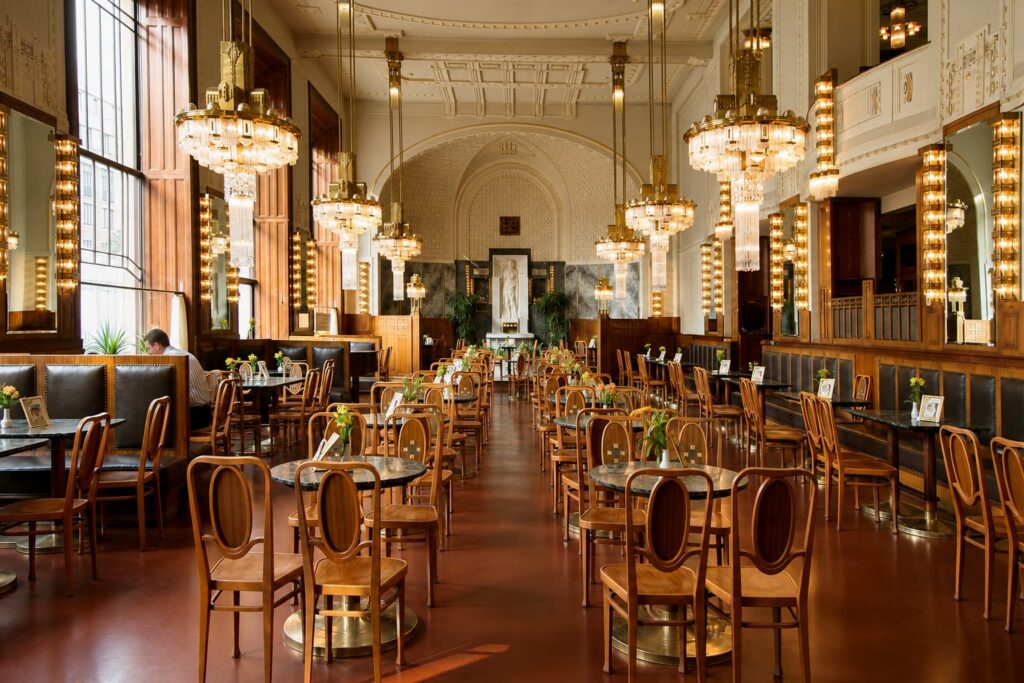
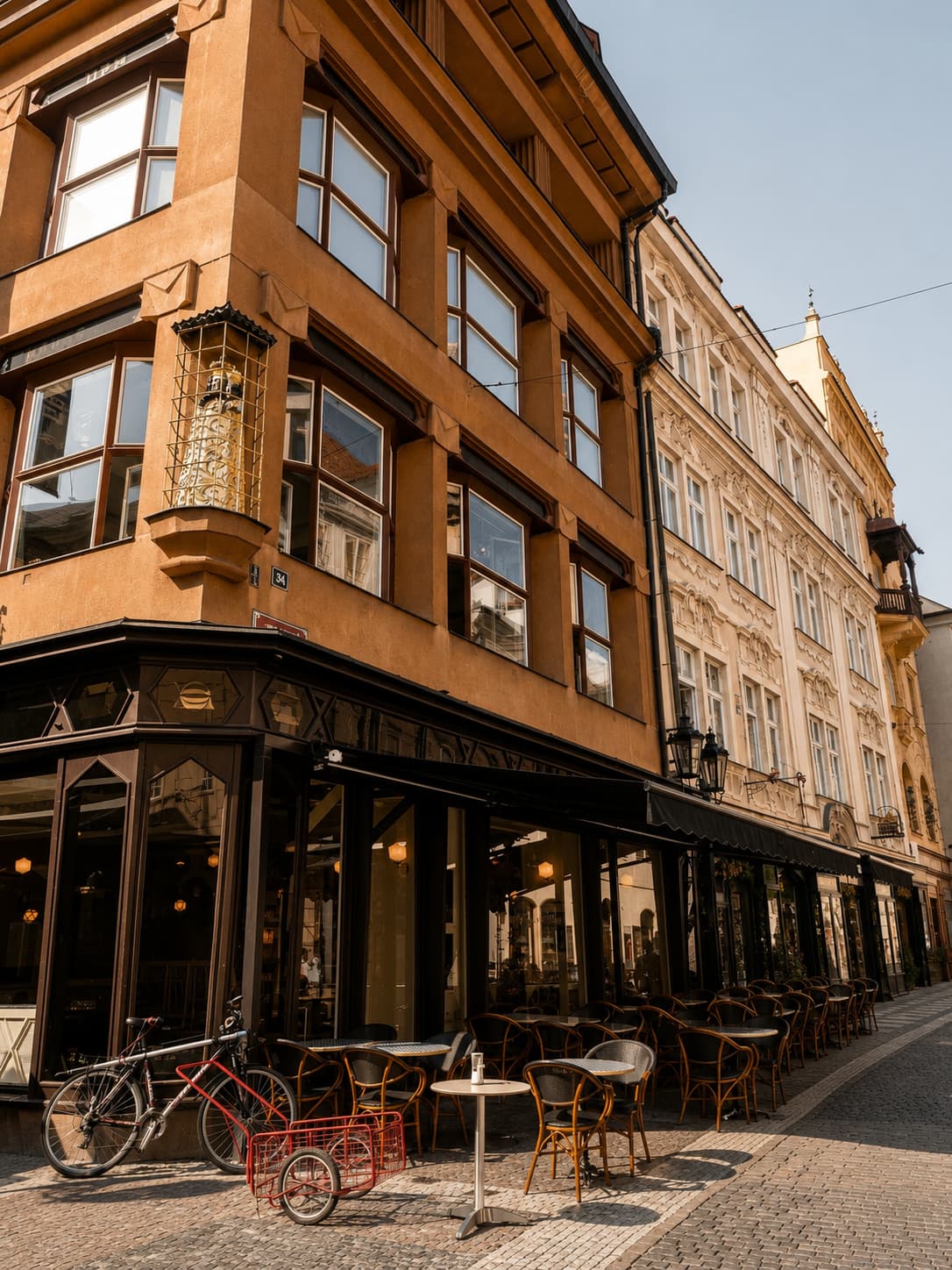
Architecturally the most singular of the best cafes in Prague, Grand Café Orient began in 1912 when Josef Gočár designed the entire House of the Black Madonna — including the first-floor café — as an exercise in Czech Cubism. Every door handle, chair back, lamp, and curtain rail expresses the same angular design language. It closed in the 1920s when Cubism fell out of fashion and was faithfully restored in 2004 using period photographs. The room is genuinely singular: no other Cubist café exists anywhere in the world. Go for a coffee and one of their square-shaped pastries (a deliberate Cubist joke on the traditional Czech věneček) — the food doesn’t justify the prices, but the architecture more than justifies the visit. One note: the ground floor has a newer Cubist-style café that opened in 2018. Go up the stairs to the first floor for the original.
More historic cafes in Prague worth your time
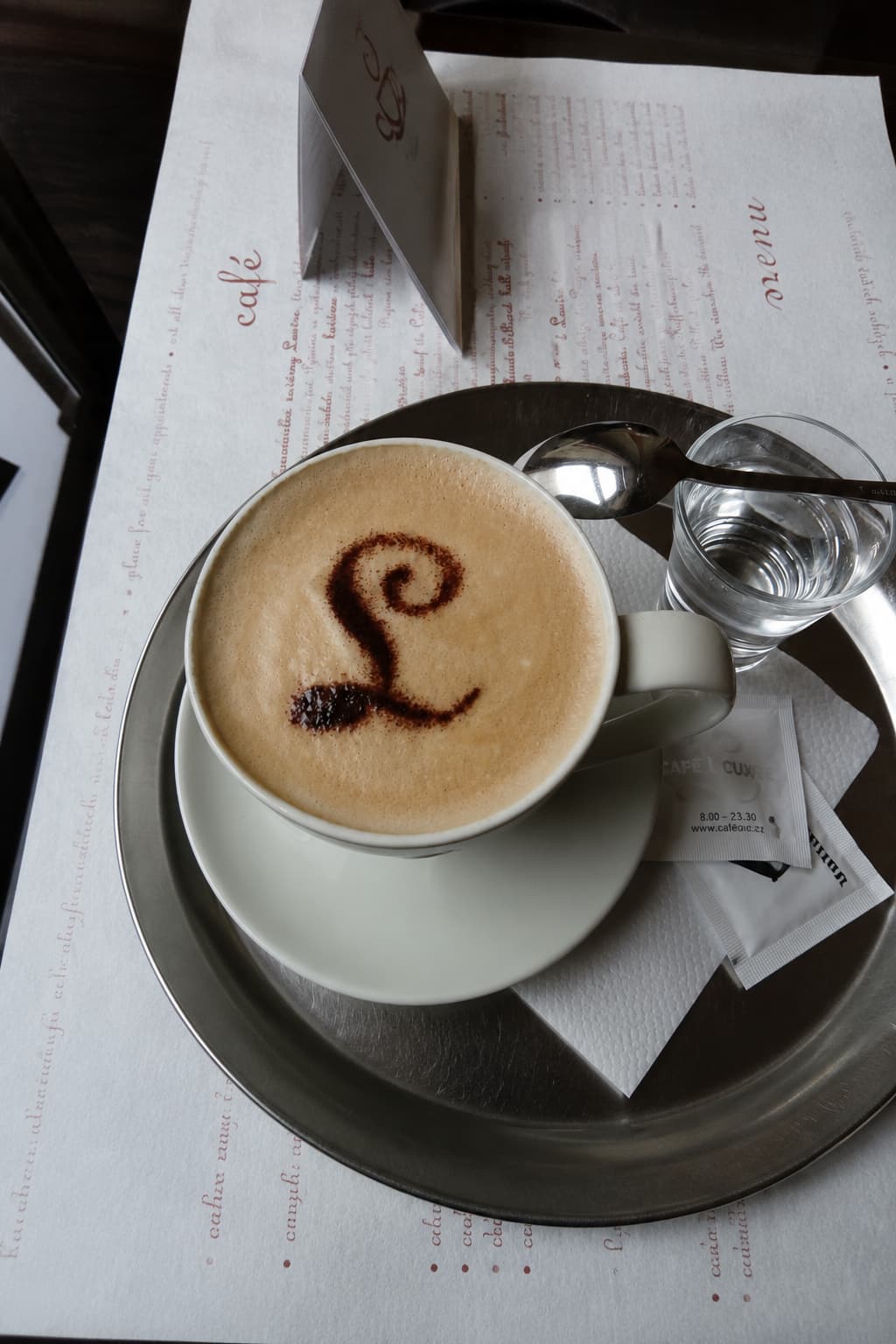
Café Louvre opened on Národní třída in 1902, elevated on the first floor in the Parisian tradition. Franz Kafka and Max Brod were regulars — renting a private club room here. Albert Einstein visited on Tuesday evenings while teaching at Prague’s German University around 1911–1912. Karel Čapek, T. G. Masaryk, and half the Czech literary world passed through these rooms. Nationalised by the Communists in 1948, it deteriorated until 1992, when the current owner restored it. The 1930s ceiling and wall decorations survive. It’s the best of the historic coffee houses for actually spending time — real atmosphere, fair prices, and genuinely frequented by Praguers rather than exclusively by tourists. The café’s own Prague City Tourism listing has opening hours and practical details.
Café Imperial on Na Příkopě dates from 1914 and contains one of the most impressive interiors in Prague: floor-to-ceiling ceramic wall tiles and a mosaic ceiling, all original, all intact. Kafka and composer Leoš Janáček were regulars in its early years. Czech celebrity chef Zdeněk Pohlreich runs the kitchen today — in 2026 it received a Michelin Guide mention — so unlike some historic cafés, the food here actually justifies a full meal. Go at lunch on a weekday for the quietest version of a room that can feel large and hotel-like in the evenings. You can see the full menu and book a table on the Michelin Guide entry.
Prague’s most historic riverside café
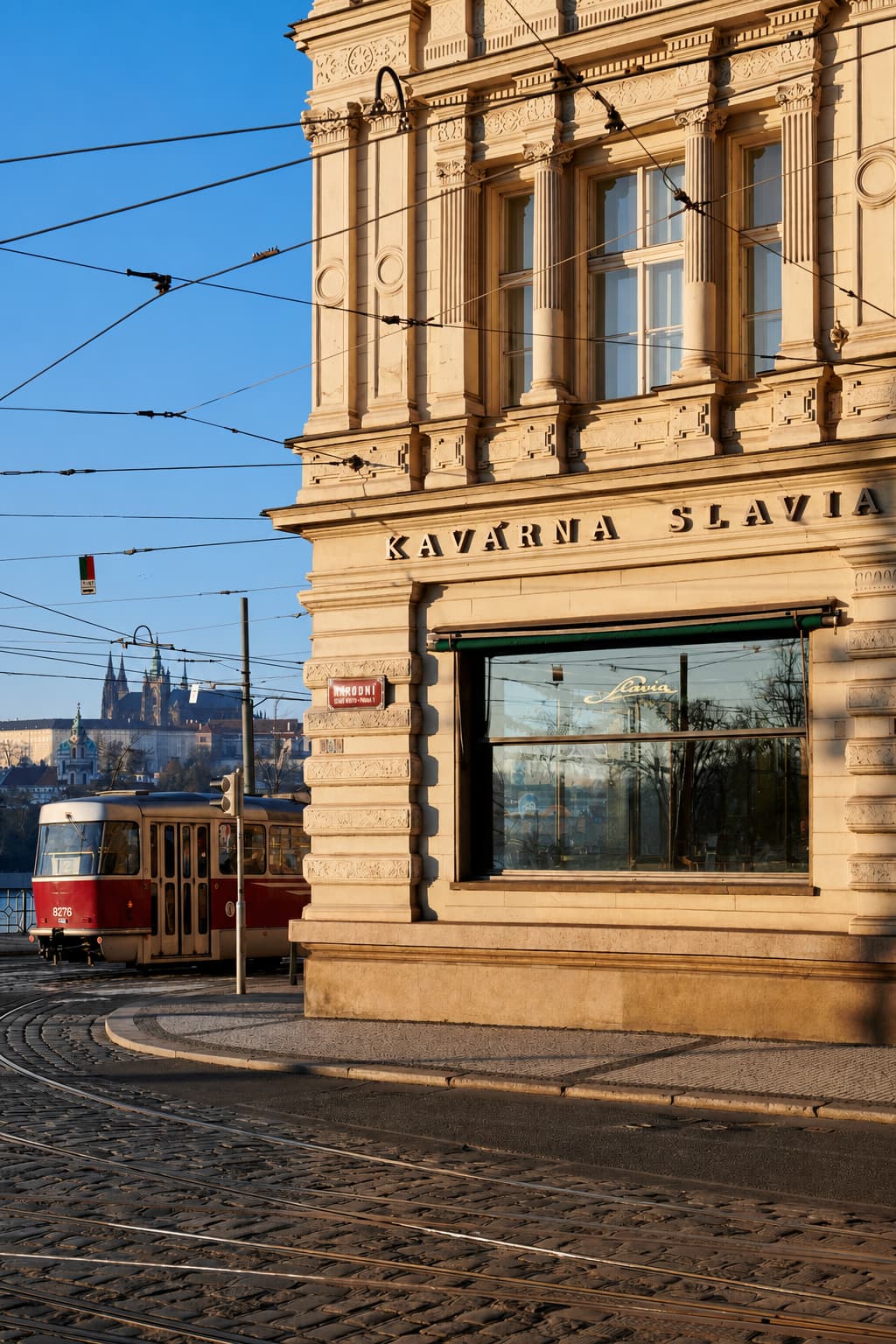
Café Slavia sits across from the National Theatre on Smetanovo nábřeží, facing the Vltava, and has been there since 1884. Václav Havel wrote here. Rainer Maria Rilke and Jaroslav Seifert drank here. The Czech Surrealists met here. It’s worth being honest about Slavia as it exists now: the food is mediocre and the service inconsistent. However, what it has — and what no renovation can replicate — is location and history fused into the same window seat. On a grey afternoon with a coffee and the river outside, it delivers something the newer, more polished spots simply can’t. Go for the window, not the menu.
03 — Prague Cafes & Restaurants With a View
Prague’s topography gives it excellent raw material for view dining — a city built on hills, with a castle, a river, and enough church spires that you’re never short of something worth looking at. The honest note before this section: view restaurants charge for the view. Some of them charge fairly. Some are primarily selling the photo opportunity at food and service prices that don’t match. The verdicts below reflect that honestly.
Terasa U Zlaté studně — the best cafe in Prague for a castle view
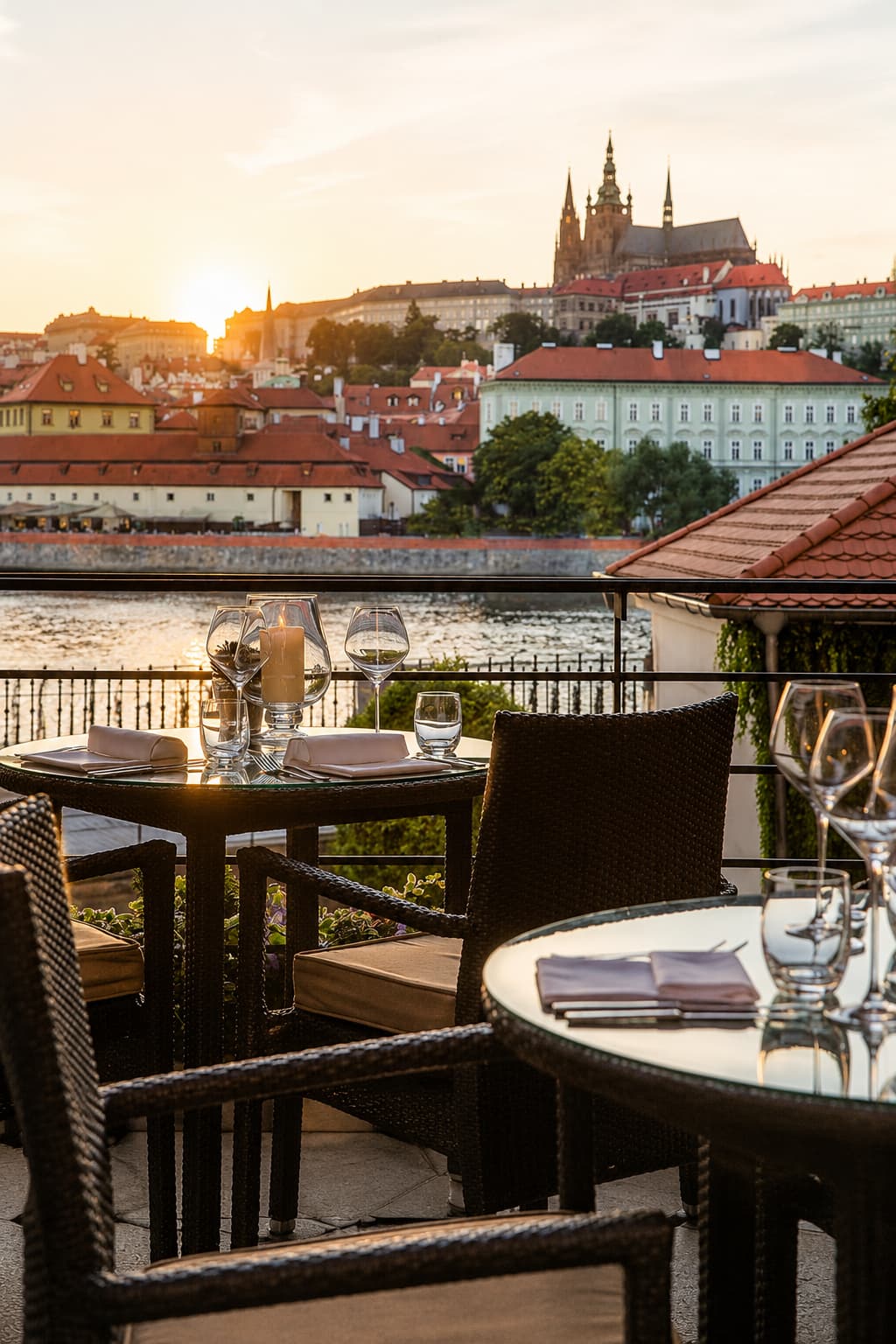
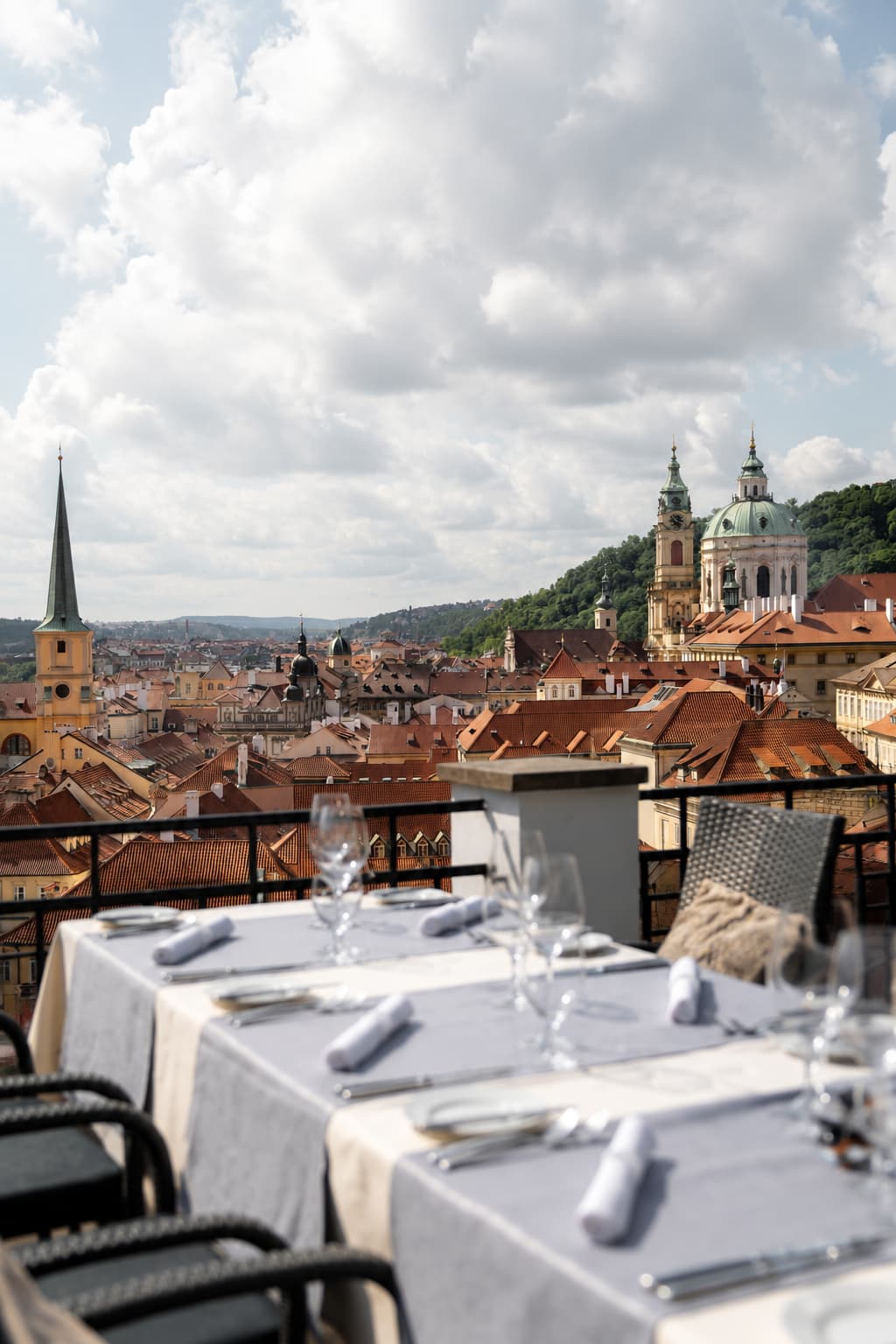
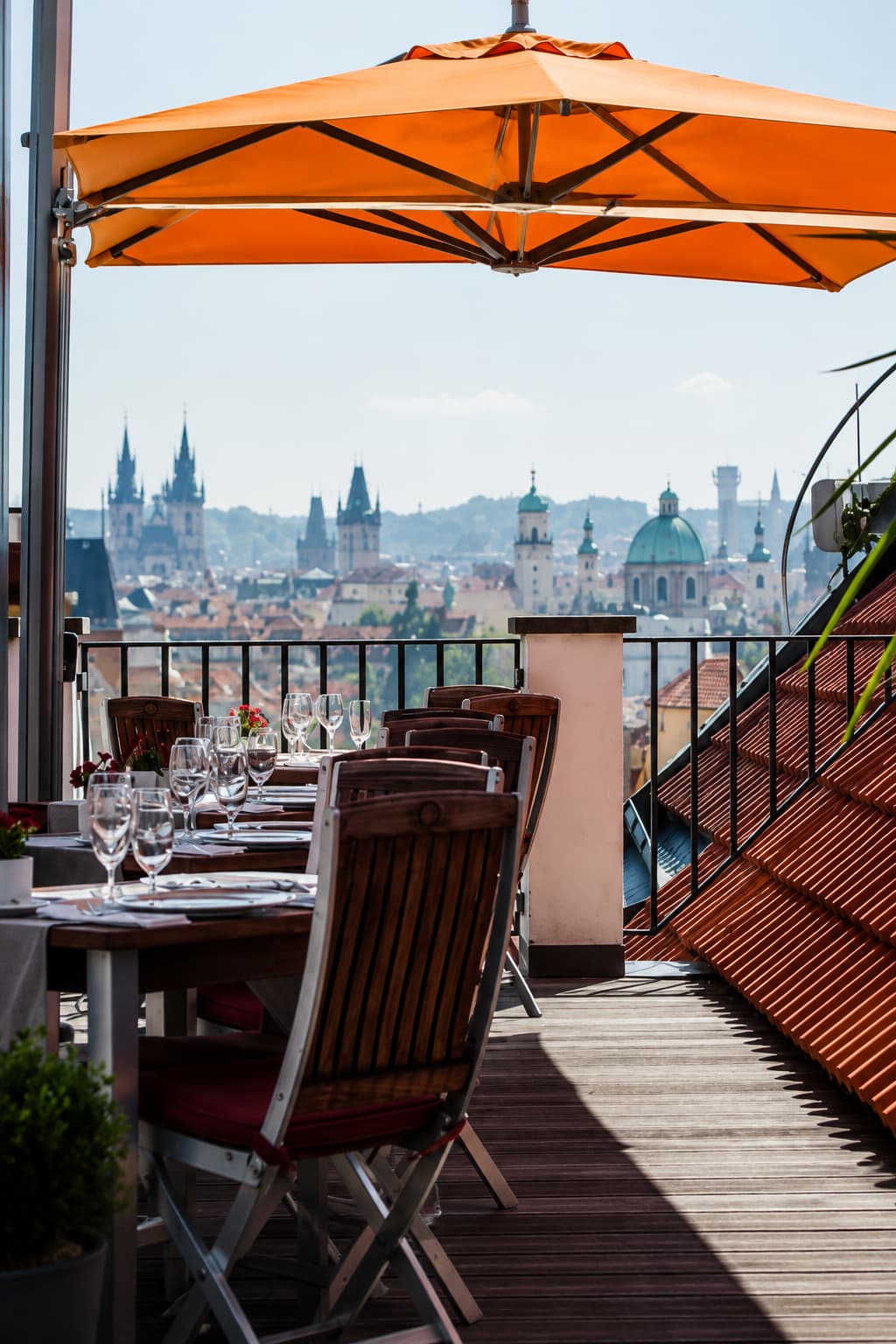
Terasa U Zlaté studně sits on the fourth floor of the Golden Well Hotel in Malá Strana, directly beneath the walls of Prague Castle. The building dates from the sixteenth century, and the terrace has a private entrance to the Royal Gardens that Emperor Rudolf II once used. From the terrace — which seats up to 60 people and is open April through October — you get a panoramic view over the red rooftops and spires of the Old Town, framed by the castle above.
This is the view restaurant that genuinely justifies the premium. The kitchen, currently led by Executive Chef Lukáš Hlaváček, received three toques from Gault & Millau in 2026 — the food is excellent, not just photogenic. Book well in advance for dinner, especially in summer. If the budget doesn’t stretch to a full meal, the bar terrace for a drink in early evening, when the light on the castle is at its best, is a fair alternative.
U Prince Rooftop — best cafes in Prague with a view, honest verdict
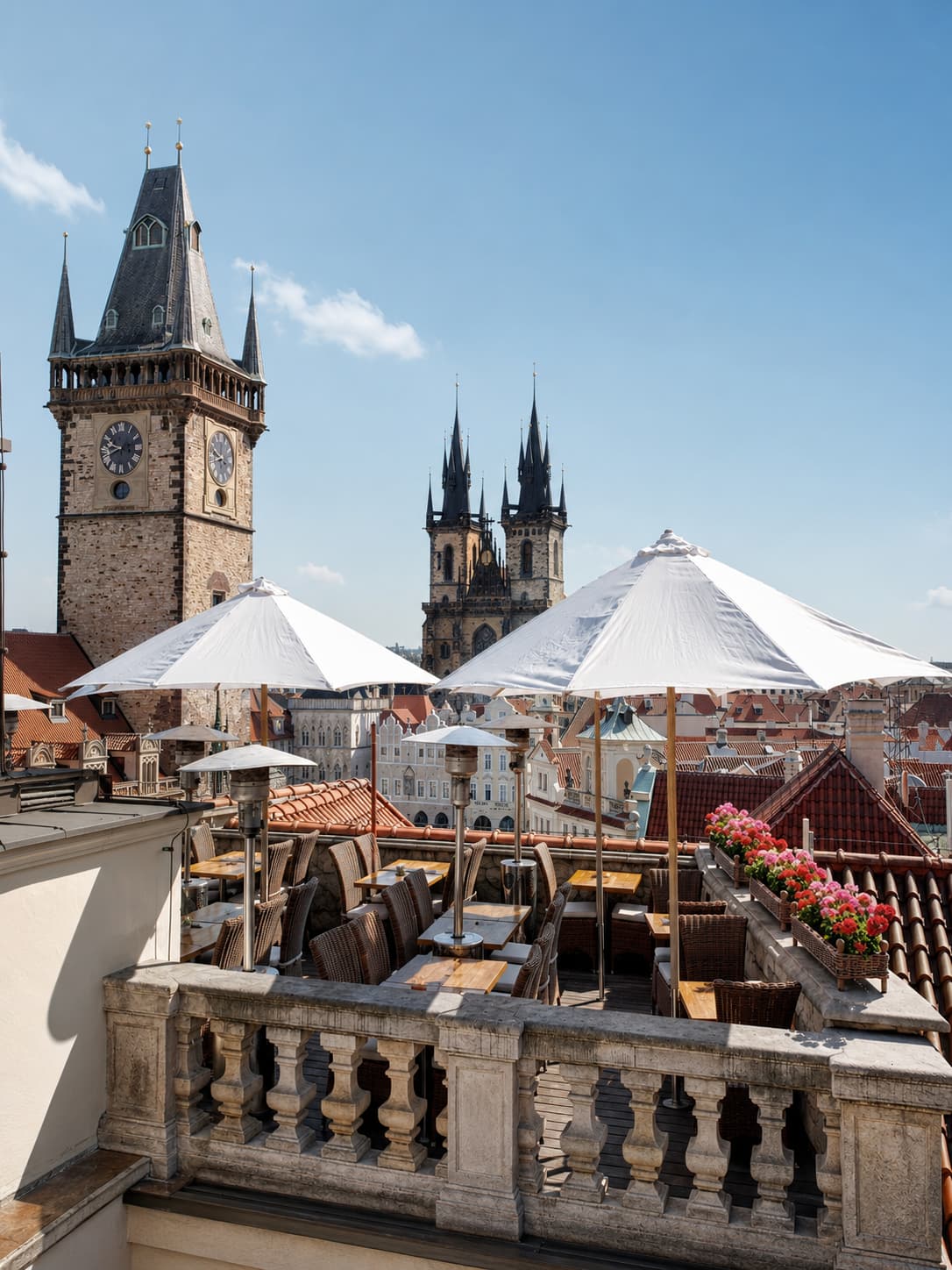
The U Prince Hotel on Old Town Square has a rooftop restaurant with one of the most photographed views in Prague: the Týn Church twin towers, the astronomical clock tower, and the square spread out below. As a view, it’s undeniably spectacular. As a dining experience, reviews consistently suggest the kitchen is well aware the view is doing the heavy lifting.
The honest verdict: go for a drink rather than a meal. A glass of wine on the U Prince terrace with that view is memorable and not unreasonably priced for what it is. A full dinner will feel like a long and expensive lesson in the trade-offs between location and quality. Moreover, the terrace is busy, loud, and nothing like the intimacy of Zlaté studně.
Ginger & Fred — Dancing House café with a river view
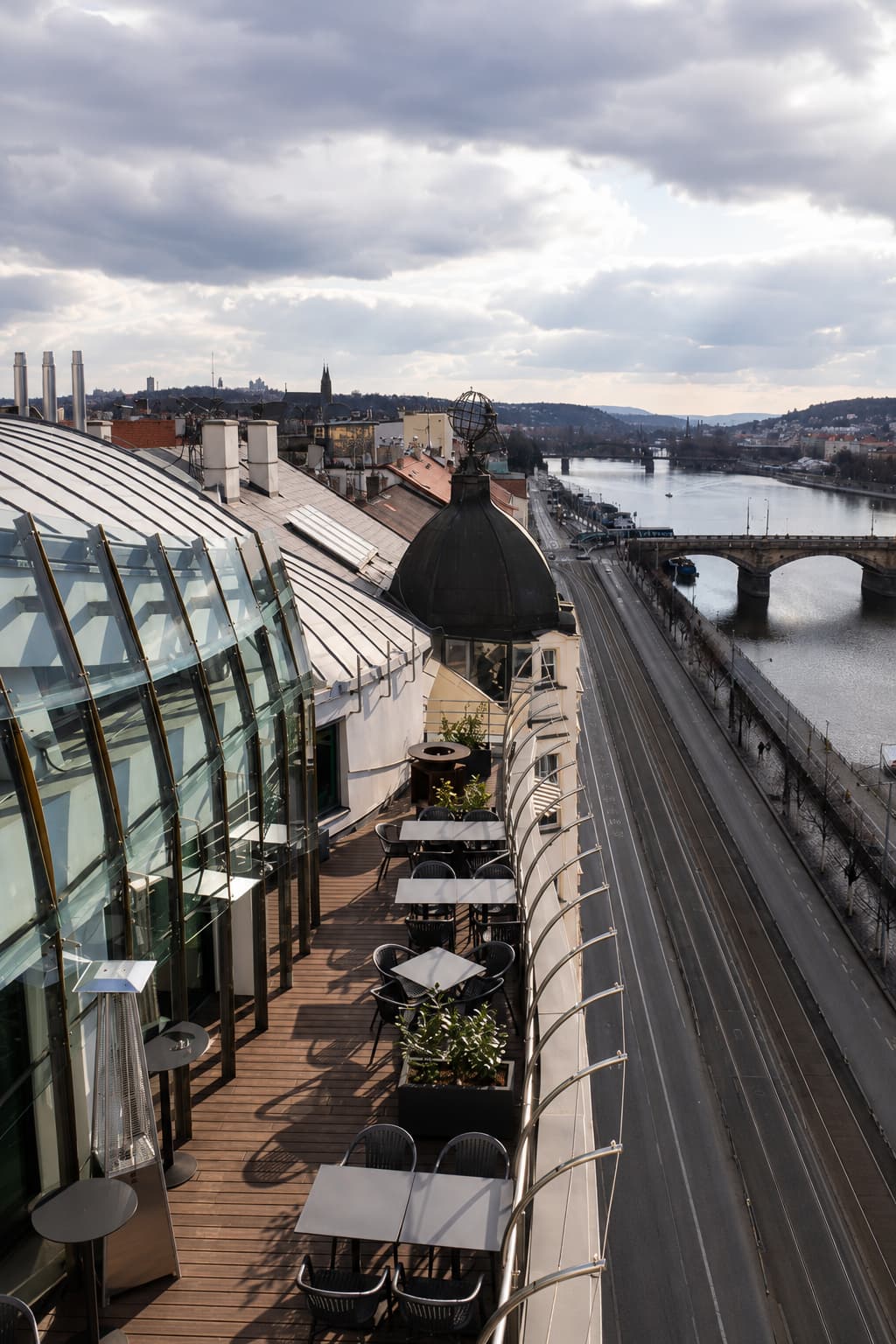
The Dancing House on the Vltava embankment is one of Prague’s most distinctive pieces of modern architecture, designed by Frank Gehry and Vlado Milunić and completed in 1996. The restaurant on the top floor, Ginger & Fred, gives you a view along the river in both directions — the embankment, the bridges, the castle in the distance — from a position most visitors never reach. In contrast to the Old Town Square rooftops, the Vltava view from here feels less like a postcard and more like the city seen from a lived-in angle. It’s fine dining rather than a café, so best suited to a special dinner rather than a casual coffee stop.
Café Slavia’s windows — the best-value view among Prague cafes
Worth noting separately: Café Slavia’s window seats facing the National Theatre and the river require nothing more than the price of a coffee. As a result, it’s the best-value view in Prague’s café scene. The view isn’t as dramatic as the castle panoramas above, but on a quiet morning it’s a genuinely beautiful spot. Specifically, the tables at the far left of the room command the best angle.
04 — The Most Beautiful Modern Interiors
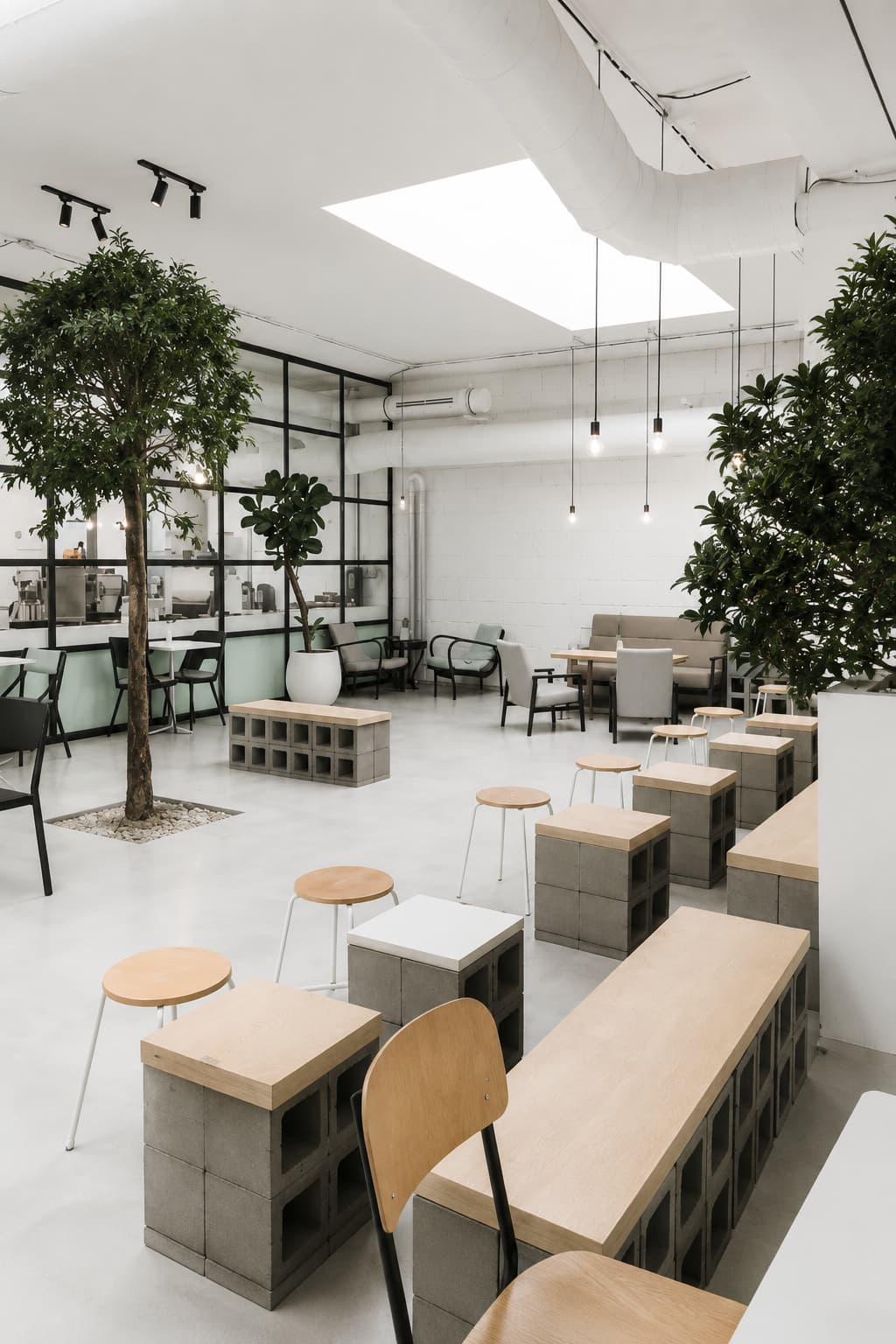
Prague’s interior design scene has quietly produced some striking café and restaurant spaces in recent years. These aren’t historic institutions — they’re places built or renovated with a clear aesthetic intention, and the result is rooms worth going to for their own sake.
Coda at the Aria Hotel — art-deco rooftop, Prague castle view
The Aria Hotel in Malá Strana has a rooftop restaurant called Coda with two things working in its favour simultaneously: a considered art-deco interior and a castle view that competes with Terasa U Zlaté studně. It’s more compact and less well-known, which means booking is sometimes easier. The menu leans fine dining. Additionally, the indoor space is worth seeing even in winter when the terrace isn’t accessible — the design is more considered than most hotel dining rooms manage.
Overall, Coda sits slightly in the shadow of Zlaté studně in most lists, but for certain combinations — a clear autumn evening, a preference for the art-deco aesthetic, a quieter atmosphere — it can be the better choice. Both restaurants occupy the same corner of Malá Strana, so they’re straightforward to compare on a visit. If you’re planning a trip for autumn specifically, the best European cities in October guide has Prague well-placed in the ranking for this exact combination of atmosphere and terrace season.
05 — For the Coffee Itself — Best Specialty Cafes in Prague
If what you’re actually after is good coffee rather than architectural context, Prague’s specialty scene delivers. It developed later than Vienna or Berlin, but it has arrived at genuine quality — and in some cases, the unpretentious efficiency of the best Prague espresso bars is its own kind of pleasure after a week of ornate interiors.
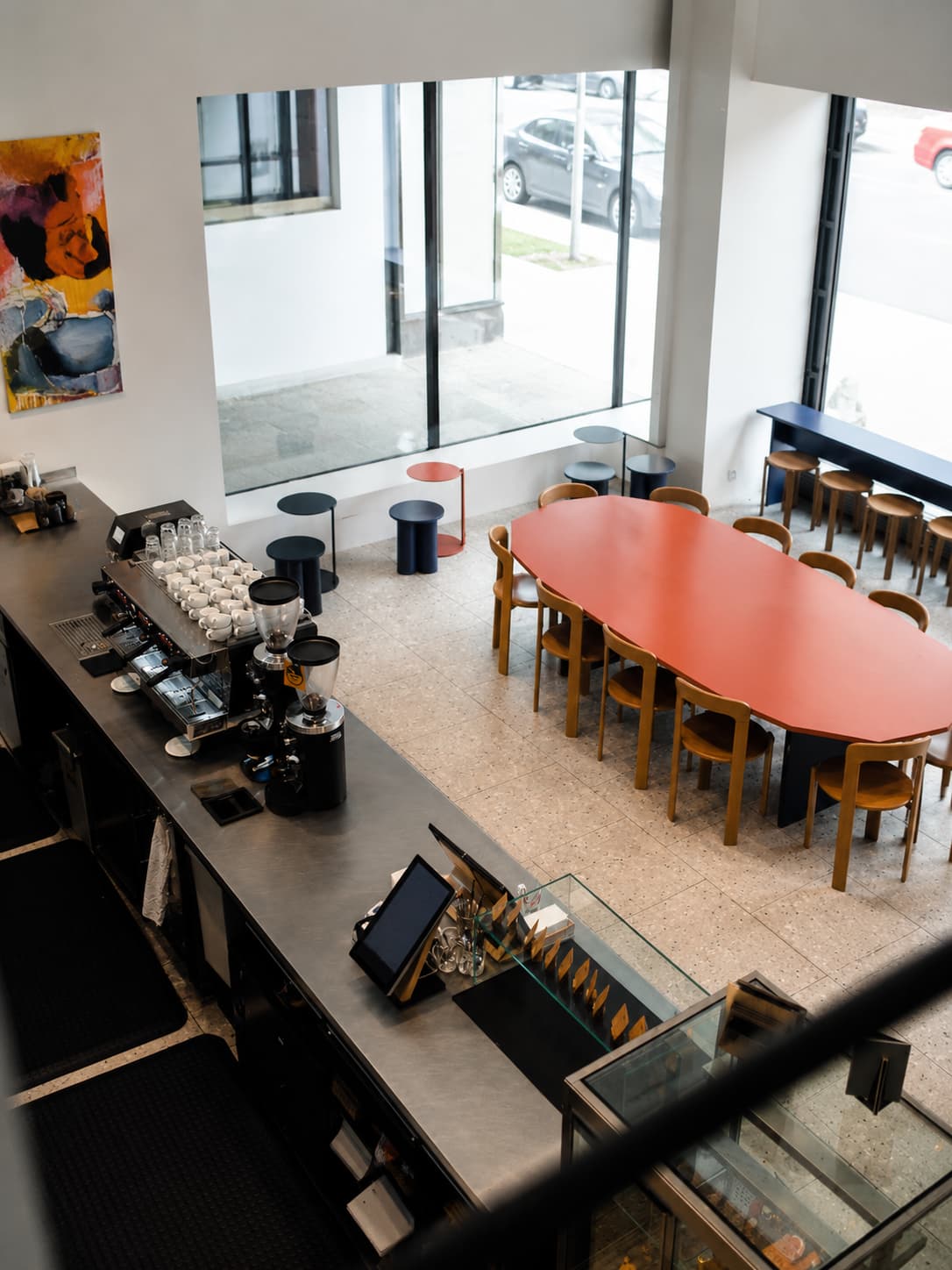
Among the best cafes in Prague for pure coffee quality, EMA has been operating since 2013 and now runs four locations across Prague, sourcing from its sister roastery Alfabét. The flagship on Na Florenci near Masarykovo nádraží is the best-known, and the espresso — sharp, balanced, consistently pulled — has earned a reputation as some of the best in the city. The space is minimal and the atmosphere is efficient rather than cosy. Notably, EMA operates paper-cup-free across all locations. The Czech buns and homemade pastries are genuinely good. Lines are long during peak hours — go at off-peak times or budget the wait.
More specialty cafes in Prague — for the serious coffee drinker
Mazelab positions itself as a tasting studio more than a standard café, with a rotating focus on specific origins and processing methods. It’s for people who want to taste what the coffee actually is rather than what the milk texture is. As a result, it’s a more demanding experience than EMA — staff engage with the product at a level that can feel intensive if you’re not in the mood. That said, if you care about specialty coffee seriously, it’s probably the most interesting stop in Prague’s scene.
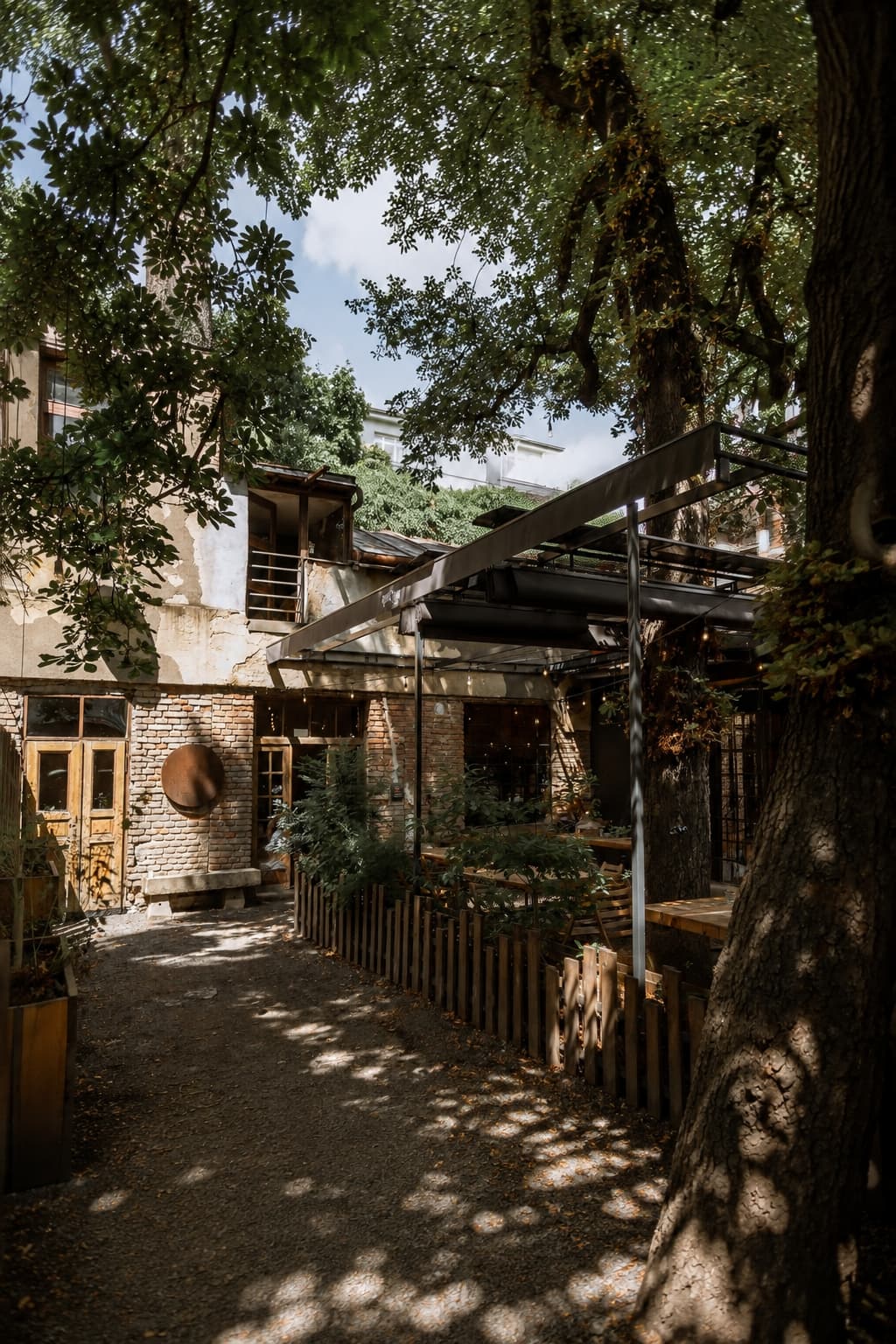
One of the best cafes in Prague for escaping tourist traffic, this Žižkov spot’s name translates roughly as “the café that’s looking for a name,” and it sits in the Žižkov neighbourhood away from the tourist centre. It’s a proper neighbourhood café — good coffee, relaxed atmosphere, used by locals rather than organised around visitor traffic. If you’re spending more than a couple of days in Prague and want a morning routine that feels less like sightseeing, this gives you that. Furthermore, Žižkov itself is worth exploring — one of the few central Prague neighbourhoods that still feels genuinely lived-in.
06 — Honest Notes on Prices & Tourist Traps
One honest note before booking the best cafes in Prague: prices have risen consistently over the last few years. As of 2026, a specialty flat white or cappuccino at a good café typically costs 80–110 CZK — roughly €3 to €4.50. The historic coffee houses and view terraces charge more: 100–150 CZK for coffee is standard at places like Café Imperial and Café Louvre, and view restaurants sit above that again.
Prague cafe prices — where the tourist markup hits hardest
Old Town Square is the obvious offender. Anything on or immediately facing the square charges location prices that have nothing to do with coffee quality. One block back — down Melantrichova, up Celetná, or around the corner onto Jilská — and prices drop noticeably for equivalent or better coffee. The astronomical clock is visible from a lot of places in the Old Town; you don’t have to pay square-side prices to see it.
The U Prince rooftop is the most extreme example of view-charging: the view is real but the restaurant knows it, and prices reflect that knowledge more than the kitchen’s ambitions. In contrast, the Slavia window gives you almost as much atmosphere for the price of an ordinary coffee. Prague is a city where knowing one block makes a real difference to what you pay — it’s among the strongest arguments for reading a proper guide before you arrive rather than walking in blind.
Which of the best cafes in Prague are actually worth it
Café Louvre is the honest answer to “which famous café should I go to.” It’s genuinely atmospheric, fairly priced for what it is, and still frequented by people who aren’t tourists. Grand Café Orient is worth a short visit for the architecture alone — treat it as a 45-minute experience rather than a lunch stop. Café Imperial justifies a full meal if you want the historic-café experience with food worth eating.
Café Slavia occupies its own category: go once for the window seat and the history, manage your expectations on the food, and you won’t be disappointed. For visitors doing a broader Central or Eastern European trip, the Eastern Europe travel guide has a honest breakdown of costs and café culture across the region — Prague sits at the higher end of the price spectrum for the area.
- Book Terasa U Zlaté studně at least a week ahead for dinner — it fills fast in summer and autumn
- Go to Grand Café Orient on a weekday morning before the tour groups arrive; the room is quietest before 10am
- Café Louvre opens at 8am on weekdays — one of the earlier openings in a city that starts slowly
- One block from Old Town Square is the rule: better coffee, lower prices, fewer people
- EMA Espresso Bar gets crowded at lunch — go mid-morning or late afternoon for a quick wait
- Café Slavia’s best window seats are on the far left of the room facing the Vltava — get there early
Prague cafes in context — Budapest, Eastern Europe, and beyond
Prague fits neatly into a wider Central European café conversation — Budapest’s grand coffee houses are the sister tradition across the border, equally worth seeking out. If you’re doing both cities, the Prague vs Budapest comparison has the café culture covered in detail. And if Budapest is already on the list, the Budapest two-day itinerary has the café stops built in. Prague is also one of the strongest autumn city-break destinations in Europe — the best European cities in October guide ranks it well for exactly the combination of indoor culture and view terraces this post covers.
Finding the best cafes in Prague — common questions
Prague cafe prices, traps, and tradition — what to know
Prague’s cafés are easy to get wrong: too many lists push the tourist-facing spots and miss what makes the city’s coffee culture genuinely interesting. The grand coffee houses reward the visit when you go in knowing they’re about the room, not the kitchen. The specialty bars reward it when you go in knowing they’re about the cup, not the décor.
The best mornings here are the ones where you find one of each.