
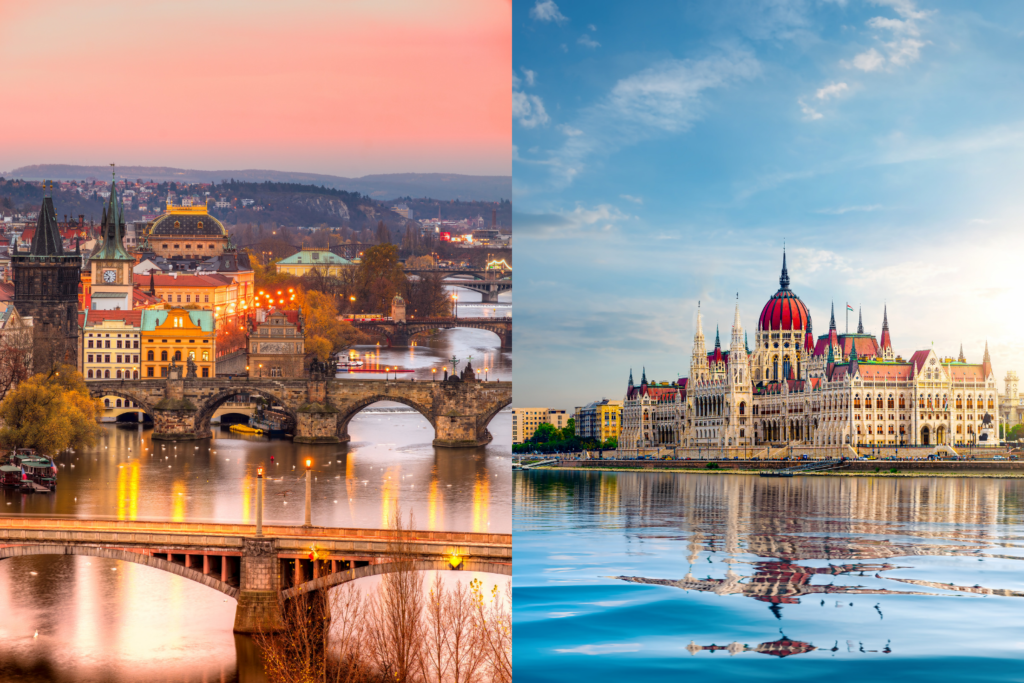
Prague vs Budapest: Which City Should You Spend More Time In?
A direct comparison of two of Central Europe’s most visited cities — not “both are wonderful.” One will suit your trip better than the other, and the differences are more specific than most guides admit.
Two cities, one question
Both cities sit at the top of every Central Europe itinerary for good reason. Both have exceptional architecture, strong food cultures, and the kind of streets that reward walking without a fixed agenda. Neither city disappoints. That said, they are not the same experience, and most travel guides smooth over the differences in a way that does not actually help you plan a trip.
Prague is compact, medieval, and immediately legible. You understand what it is within hours of arriving. Budapest, in contrast, is larger, more layered, and takes longer to reveal itself — but what it reveals is considerable. The question is not which city is better in the abstract. Instead, the question is which city suits the kind of traveller you are, and how much time you have.
We spent two nights in each, having come from Dresden and Bratislava, and moving on toward Vienna. What follows is an honest account of both.
01 — The Direct Comparison
Strip away the photographs and compare the cities by how they actually feel across two or three days, and the differences become clear. Prague wins on architectural concentration and immediate beauty. Budapest, on the other hand, wins on scale, value, atmosphere, and the quality of daily life in its streets.
The headline differences
How they compare: first impressions and atmosphere
| Visual impact on arrival | Prague wins. The Old Town and castle district deliver an immediate, concentrated beauty that Budapest takes longer to build. |
| Street-level atmosphere | Budapest wins. The streets feel more lively and less managed — overall, the city has a pulse that Prague’s heavily touristed centre sometimes loses. |
| Value for money | Budapest wins clearly. Food, accommodation, and daily costs are meaningfully lower than Prague, which itself is cheaper than Vienna or Amsterdam. |
How they compare: food, architecture, and overall verdict
| Food and café culture | Budapest wins on variety and price. Prague has excellent food, but Budapest’s café scene is exceptional — grand historic coffee houses alongside inventive modern spots. |
| Architecture | Depends on preference. Prague is Gothic and Baroque; Budapest is Neo-Gothic, Art Nouveau, and imperial — broader in style but less concentrated in the old centre. |
| Best for a short visit | Prague. Its compactness means two days here covers the essential picture. Budapest, however, rewards more time. |
| Best all-round city | Budapest — for the combination of value, scale, atmosphere, and the quality of a longer stay. |
02 — Prague: The Full Picture
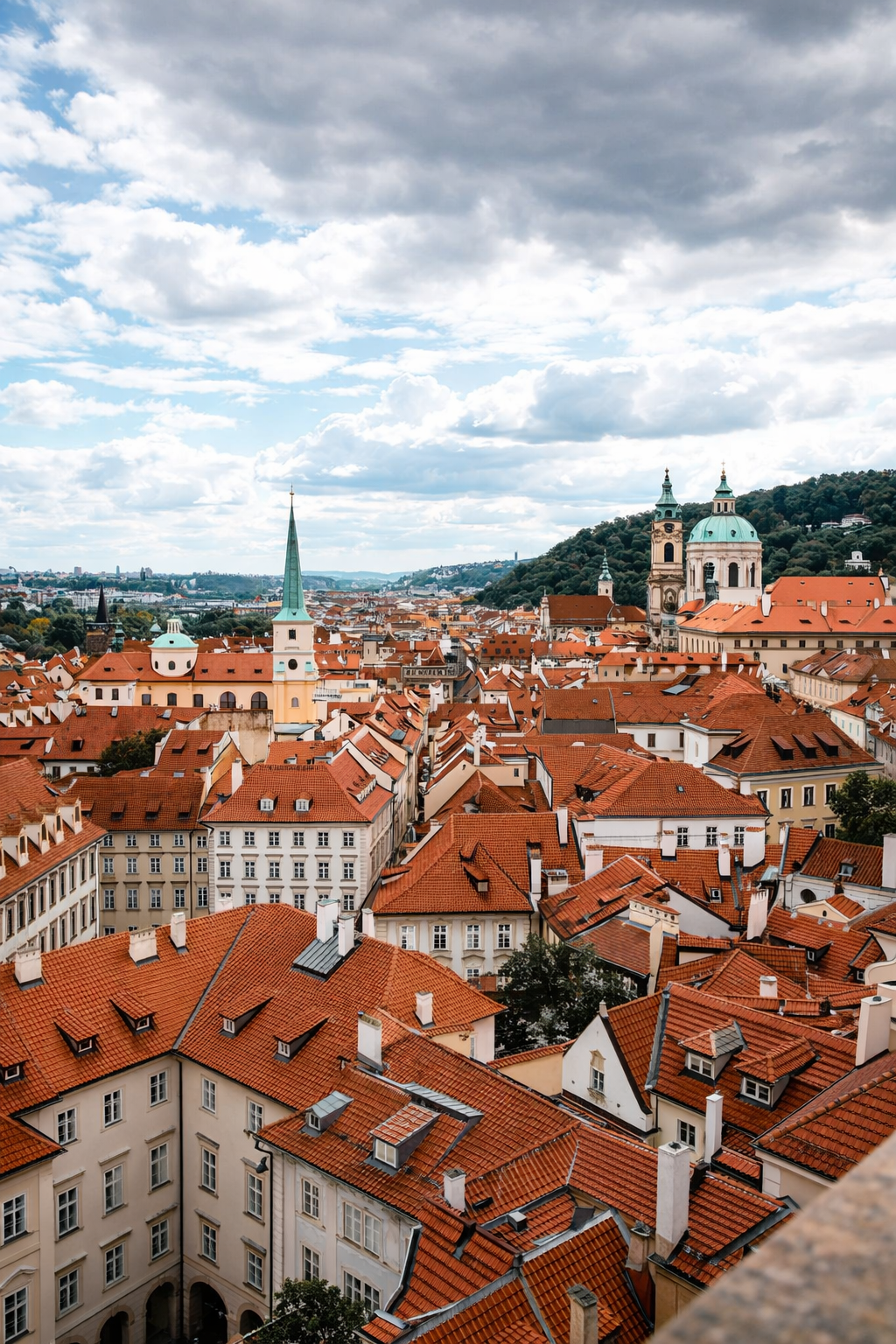
Prague does one thing better than almost any city in Europe: it preserves the medieval city almost entirely intact. The bombing that levelled Dresden and Warsaw in the Second World War did not reach Prague. As a result, the old centre has a continuity of architectural fabric that is genuinely rare — you are walking streets that have been there, more or less in this form, for six or seven centuries.
The castle side — and that view
Prague Castle and the Hradčany district sit on the hill above the Vltava, and the view from up there is the defining moment of any visit to the city. Standing on the castle side and looking back across the river at the Old Town below — the terracotta rooftops, the Gothic spires, the stone bridges, the hills on the far side — produces the specific feeling of being in a city that has existed continuously for a very long time. In that respect, it reminded us of Rome: not in the style of its architecture, but in the quality of its age. The weight of accumulated centuries is something you feel rather than see, and Prague has it in full.
The castle complex itself is the largest in the world by area — St. Vitus Cathedral at its centre, the Old Royal Palace, the Golden Lane, the gardens below. Allow at least a morning. Furthermore, the cathedral interior is worth entering — the stained glass windows, including one designed by Alfons Mucha, are exceptional and not something the exterior prepares you for.
Charles Bridge and the Old Town
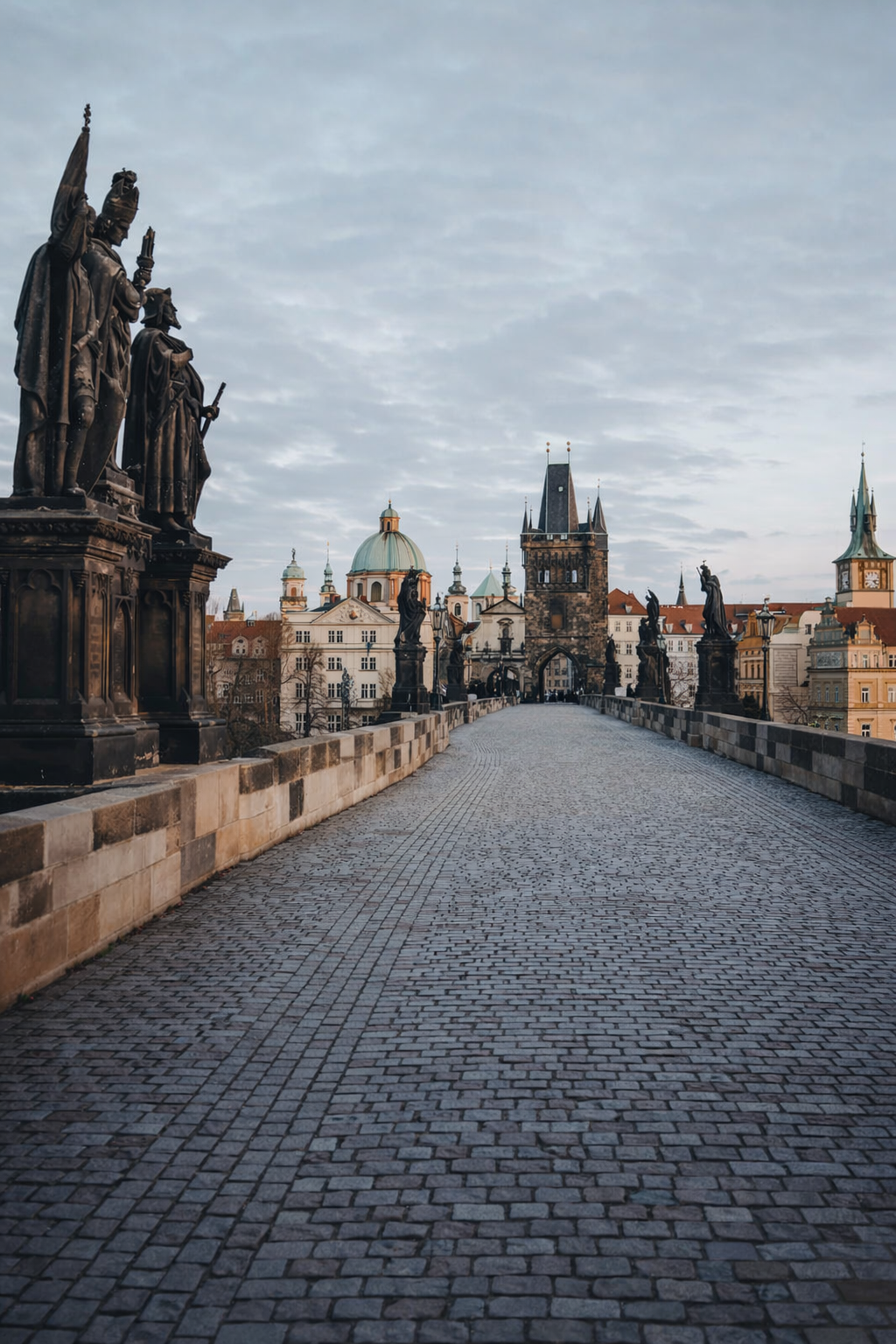
Charles Bridge is the most photographed point in the city and one of the most photographed in Europe. That fact, combined with its genuine quality — 30 Baroque statues lining a 14th-century stone bridge over a wide river — creates a specific challenge: the bridge is worth seeing and simultaneously hard to experience if you go at the wrong hour. The solution, however, is the one that always applies: arrive before the city wakes up. Before 8am in any season, Charles Bridge belongs to the few people who understood the logic. By 10am, in contrast, it belongs to everyone else.
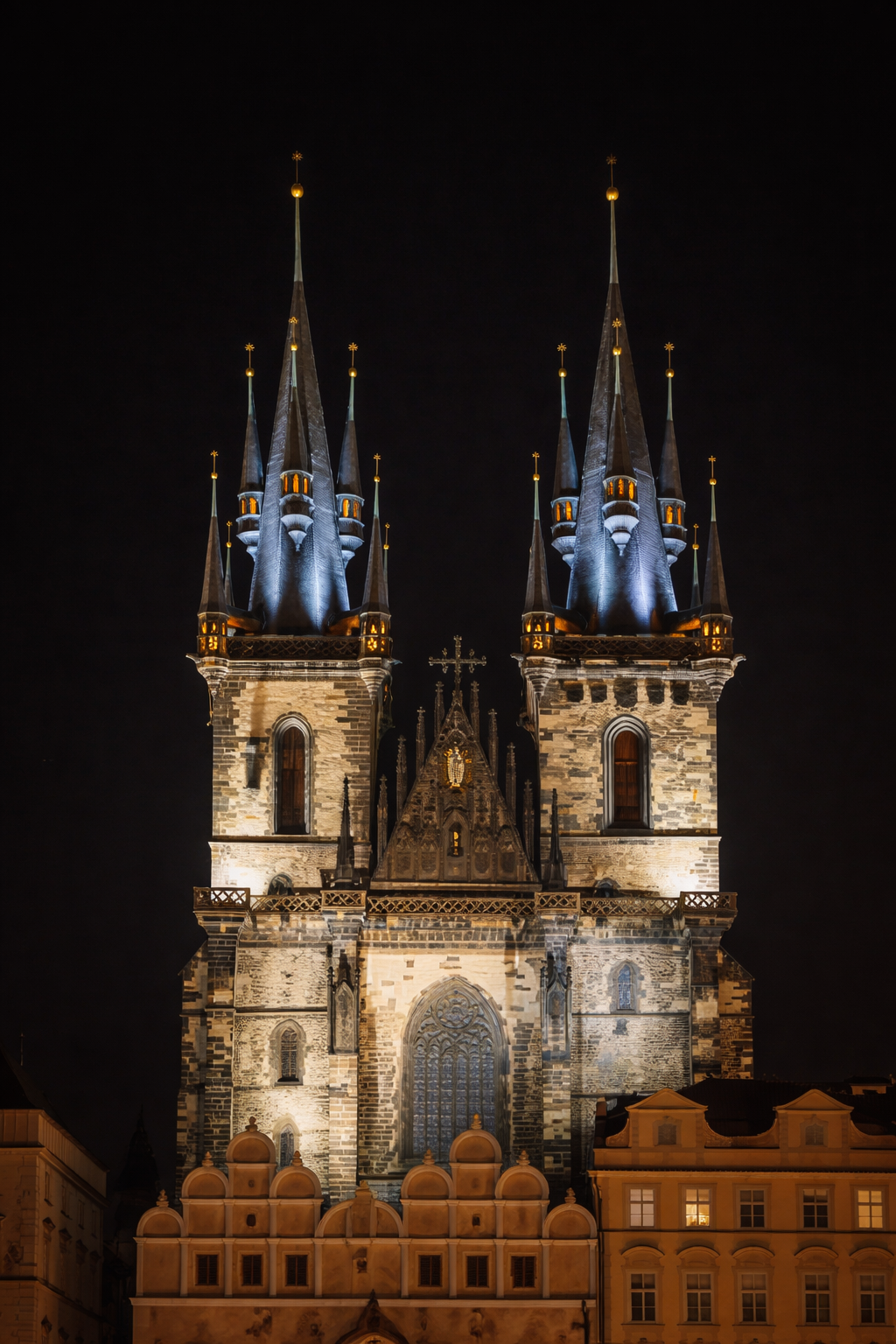
The Old Town Square — Staroměstské náměstí — gives you the Astronomical Clock, the Church of Our Lady before Týn, and the medieval town hall. The clock performs on the hour: a small procession of figures emerges while a crowd gathers below. It is modest rather than spectacular, but the square it anchors is genuine — in fact, it is one of the finest medieval public spaces in Central Europe.
What makes Prague complicated
The city’s weakness is the one produced by its strength. Prague’s beauty has made it one of the most heavily visited destinations in Europe, and consequently the weight of that tourism is felt in the old centre. Stag parties, coach groups, and souvenir shops compete with the medieval fabric for your attention, and they win more often than they should. However, the further you move from the main tourist circuit — into Žižkov, Vinohrady, or across the river into Smíchov — the more the real city reasserts itself. That context is worth having before you arrive.
Prague’s essential sites
The largest castle complex in the world by area. St. Vitus Cathedral is the centrepiece — the stained glass interior is far better than the exterior suggests. Allow a full morning. Additionally, book tickets online to skip the queue.
The 14th-century stone bridge lined with 30 Baroque statues. Outstanding in the early morning; genuinely congested by mid-morning in peak season. Go early. The view from the bridge toward the castle hill is the second-best in the city after the castle view itself.
The medieval heart of Prague — the Týn Church towers, the Baroque St. Nicholas Church, and the 15th-century Astronomical Clock performing on the hour. The square is tourist-dense but genuinely beautiful. Best experienced at the edges of the day.
Beyond the centre — two sites worth the effort
Six synagogues and the Old Jewish Cemetery, which contains roughly 12,000 graves layered over each other across several centuries. One of the most sobering and historically significant sites in the city. Allow two hours and buy the combined ticket.
The forested hill on the west bank with a miniature Eiffel Tower observation point and a mirror maze. Good for an afternoon escape from the old centre — the funicular runs from the bottom to the top, and the view from the observation tower on a clear day extends far into Bohemia.
03 — Budapest: The Full Picture
Budapest is two cities that were merged in 1873 — Buda on the hilly west bank and Pest on the flat east bank — and it has never quite stopped being two cities. Buda has the castle, the quiet residential hills, and the thermal baths carved into the hillside. Pest, meanwhile, has the Parliament, the Grand Boulevard, the ruin bars, the café culture, and the energy that made this feel like the most alive city on the road trip. The Danube between them is wide and serious in a way the Vltava is not, and crossing between the two sides — on the Chain Bridge or the Erzsébet Bridge — gives you a noticeably different city on each bank.
The Parliament and the Pest bank
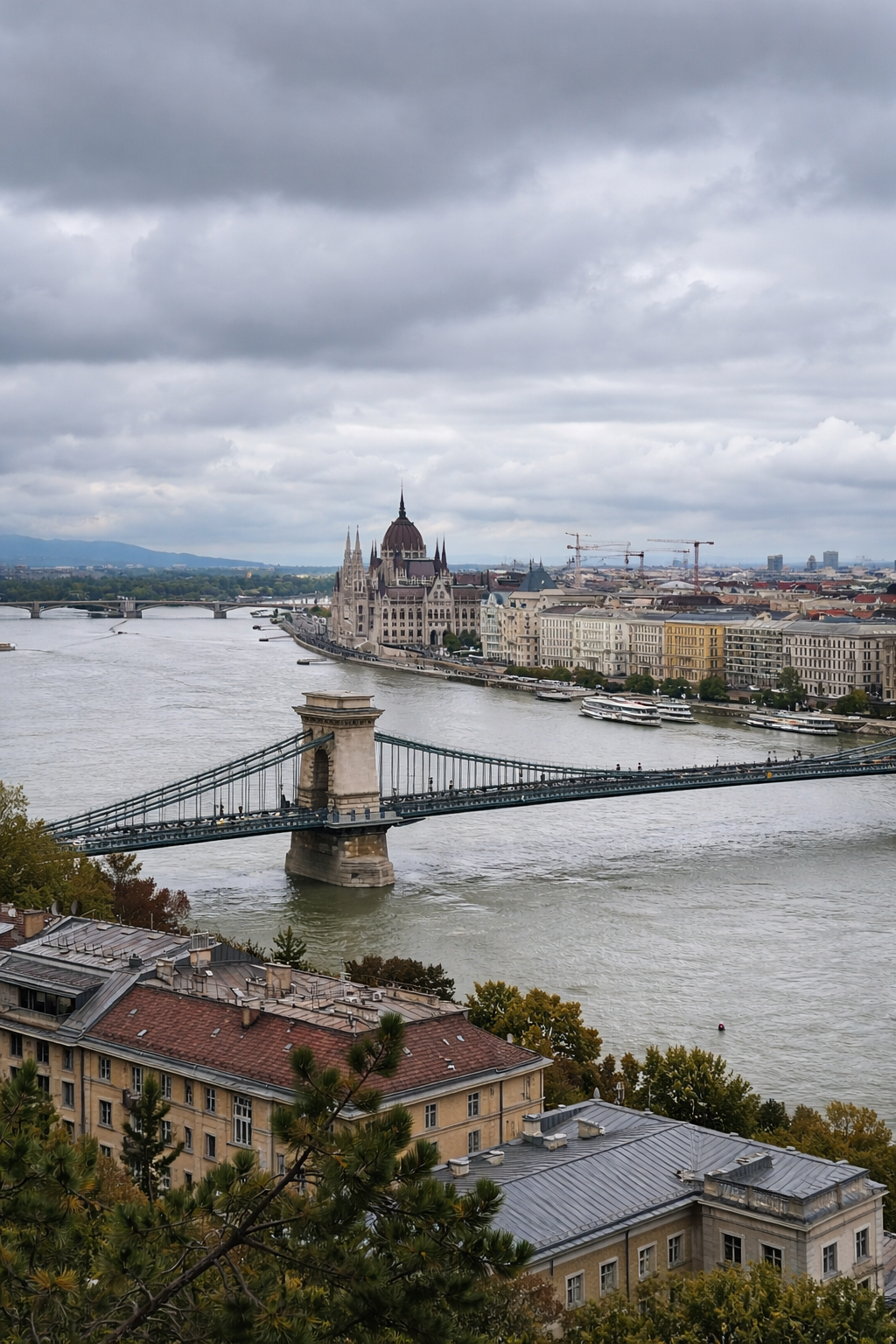
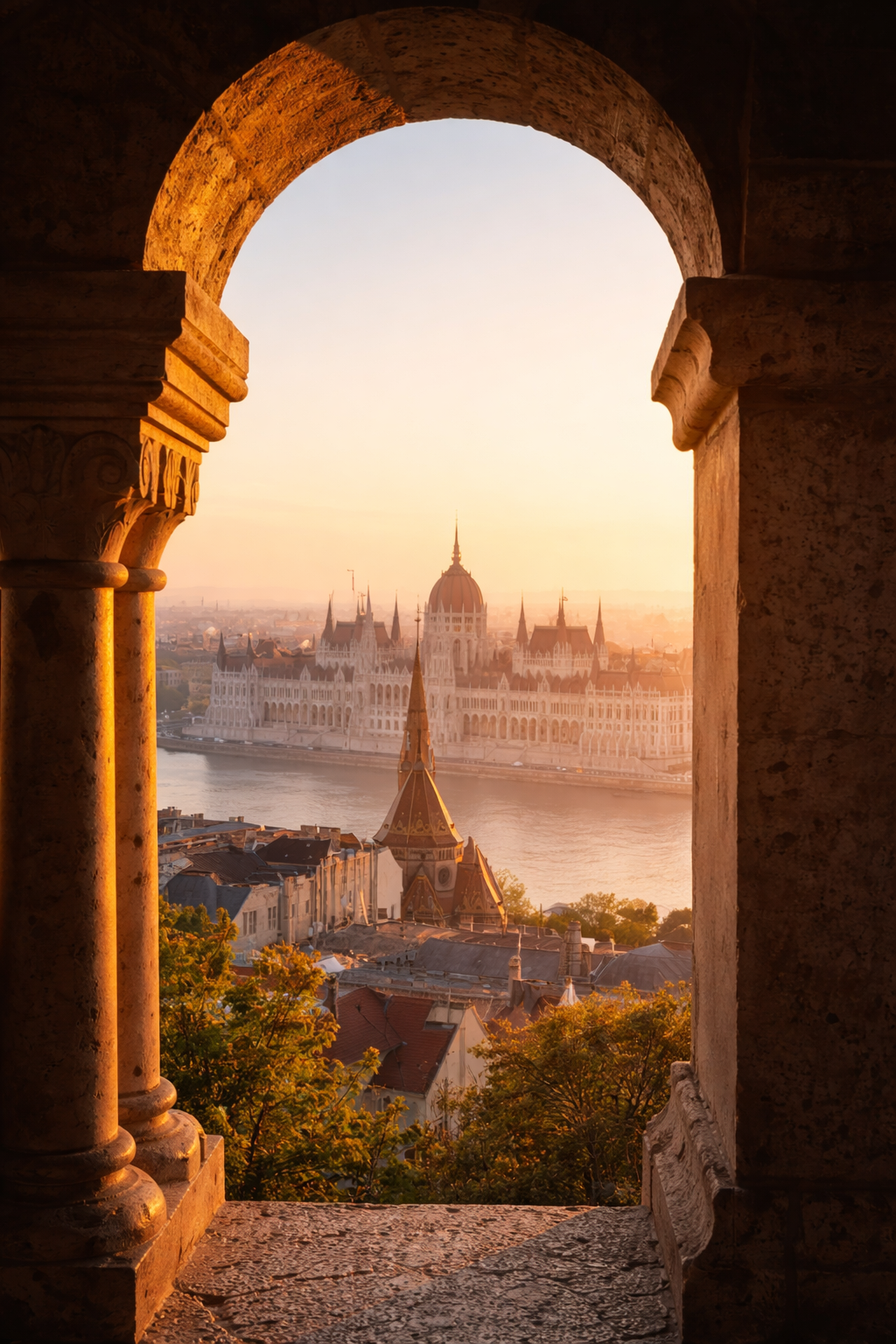
The Hungarian Parliament building is one of the most visually arresting structures in Europe. It sits directly on the Danube bank in Pest — Neo-Gothic, 268 metres long, with a central dome flanked by symmetrical wings — and it is best seen from the Buda side of the river, specifically from the Fisherman’s Bastion above, where the full façade is visible in a single frame. At golden hour, the limestone turns amber and the river below catches the light, and the result is one of those views that does not require any help from a photographer’s instincts.
The interior of the Parliament is accessible on guided tours — the main staircase, the domed hall, the Hungarian Crown Jewels displayed in the central chamber. Book online well in advance, as tickets sell out. The exterior, however, is free and equally worth your time.
Buda Castle and Fisherman’s Bastion
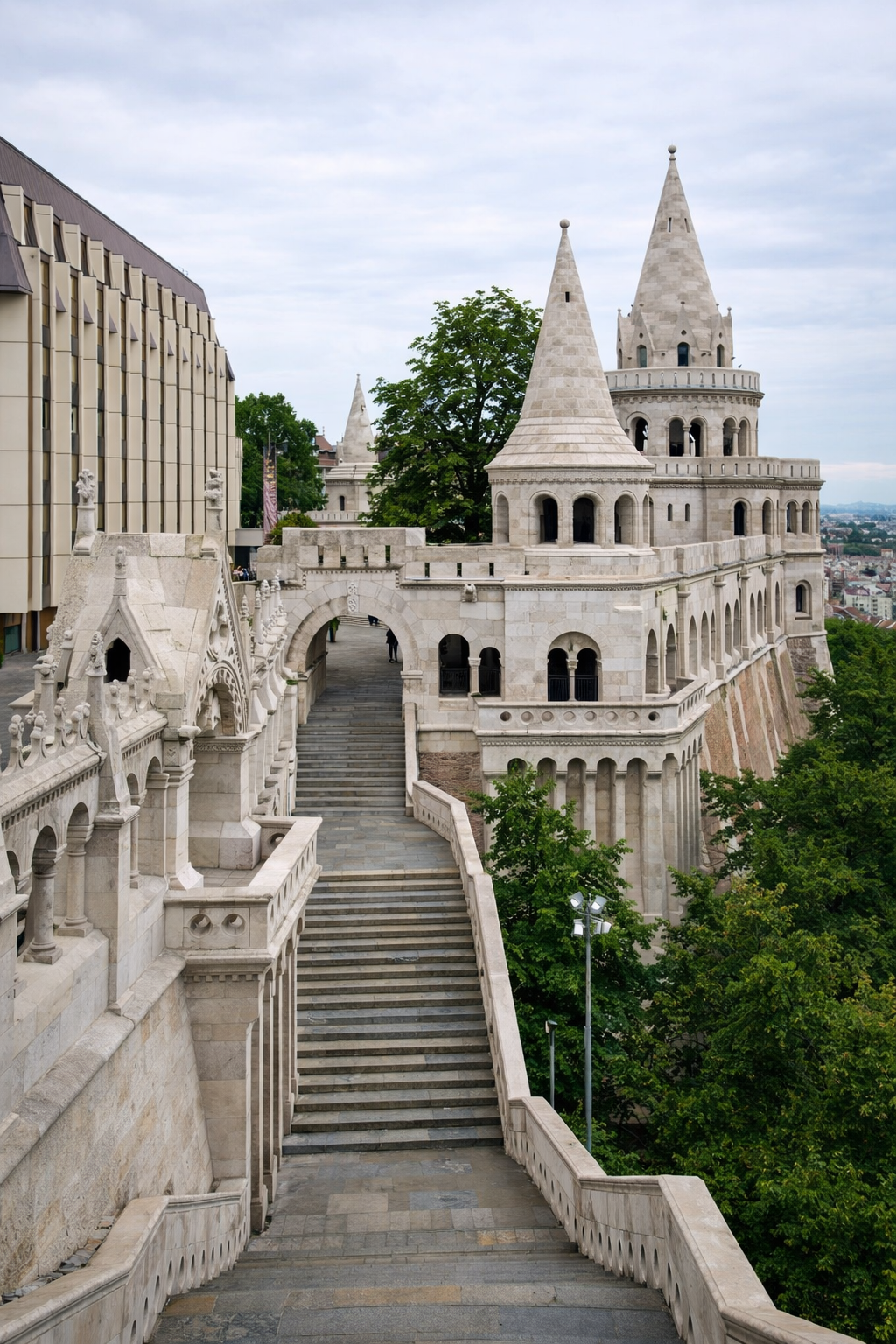
Buda Castle sits on the hill above the western bank, reachable on foot or by the historic Castle Hill Funicular from the Chain Bridge. The Fisherman’s Bastion — a Neo-Romanesque terrace with seven towers representing the seven Magyar tribes — gives the best view in Budapest: the Parliament directly across the water, the Chain Bridge below, and Pest spreading flat to the horizon beyond. It is best in the early morning before the tour groups arrive, or alternatively at sunset when the Parliament glows. Between those hours it is, by some margin, the most photographed terrace in Hungary.
The Jewish Quarter and the Great Synagogue
Budapest has the largest Jewish community in Central Europe, and the Jewish Quarter in the seventh district holds the physical record of that history. The Great Synagogue on Dohány utca is the largest synagogue in Europe and the second largest in the world — its Moorish Revival façade and twin onion domes are immediately distinctive, and the interior, which we entered, is extraordinary: gilded, red-carpeted, enormous, and genuinely moving. Behind the synagogue, moreover, the Raoul Wallenberg Holocaust Memorial Park contains the Weeping Willow sculpture, a metal tree whose leaves bear the names of Hungarian Jews killed in the Holocaust.
The thermal baths
Budapest sits on more than 100 thermal springs, and the city has built bath culture around them in a way that has no real equivalent in Europe. The Széchenyi Baths in City Park — yellow-domed, vast, partly outdoor — are the most famous. The Rudas Baths, in contrast, are older and more atmospheric, built under Ottoman rule in the 16th century, with a domed octagonal pool lit by star-shaped apertures above. Both are open to the public, both require modest entry fees, and both belong on any Budapest itinerary that has more than a day. Going in the evening, when the outdoor pools are lit and the crowds are thinner, is consequently the better choice.
Twentysix — the café worth finding
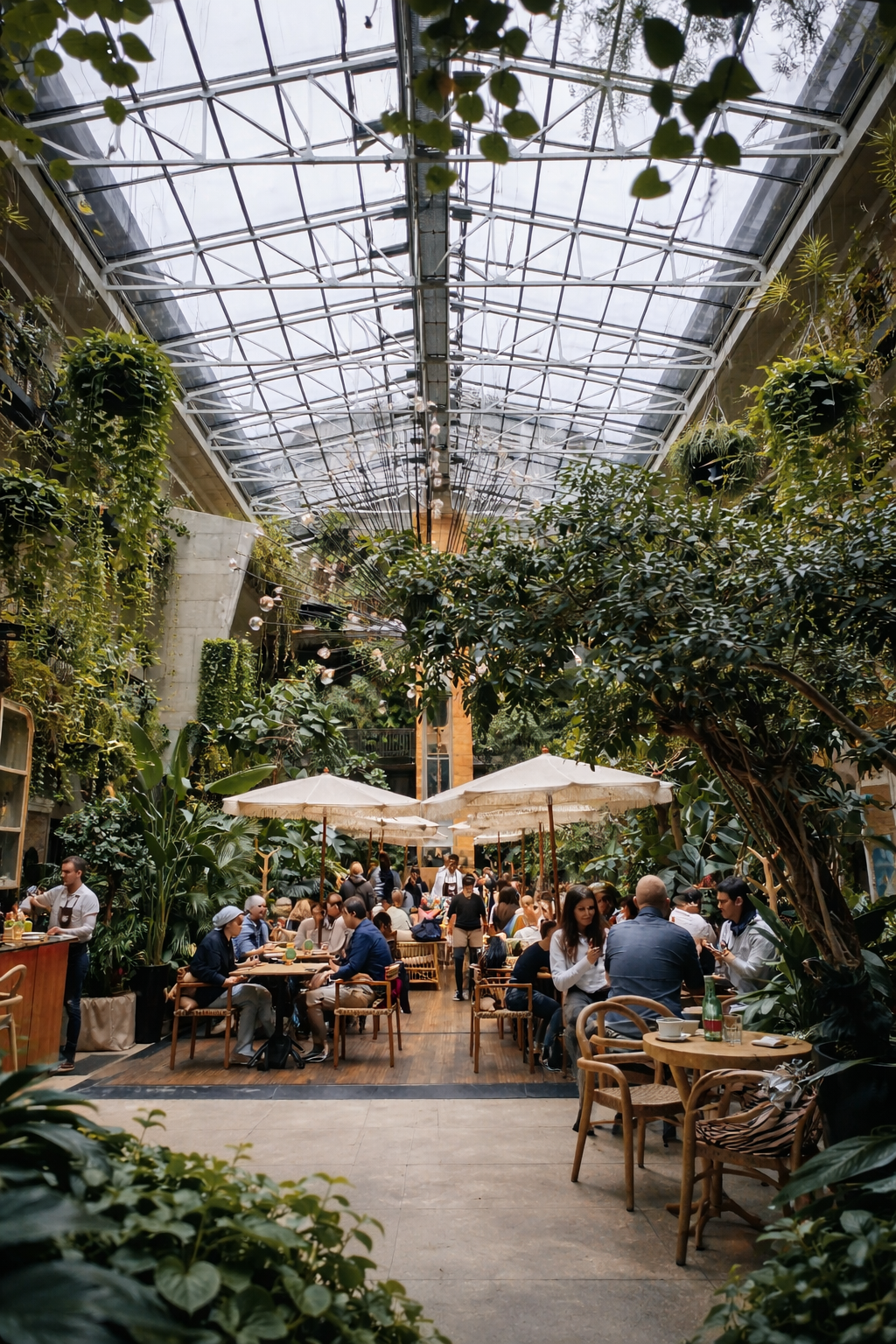
On Király utca 26 in the heart of Pest, Twentysix is the kind of place that becomes a favourite quickly. The interior is dense with plants — tropical, climbing, layered from floor to ceiling in a way that makes the room feel like a greenhouse that has been persuaded to serve Mediterranean food and excellent coffee. Since opening in 2020, it has become a local institution rather than a tourist destination, which is the best possible thing a café can become. The food leans healthy and generous — hummus plates, shared dips, good pastries — and the coffee is properly made. There is also KAA°, a cocktail bar component, for later in the day. It is worth going specifically rather than stumbling across.
Király utca 26. A jungle-themed café and restaurant that has become genuinely popular with locals since 2020 — good coffee, Mediterranean food, lush plant-filled interior. Not a tourist spot. Go for breakfast or a mid-morning coffee and stay longer than you planned. The cocktail bar KAA° in the same space is worth noting for evenings.
Budapest’s essential sites
One of the finest Neo-Gothic buildings in Europe, sitting directly on the Danube. The exterior view from the Buda bank is unmissable. Interior tours must be booked online well in advance — tickets sell out days ahead in peak season.
The Neo-Romanesque terrace on the Buda hill — the best view of the Parliament and the Danube. Free to walk the lower level; the upper towers charge a small entry fee. Go at sunrise or just before sunset. Midday in summer is the worst time.
The iconic suspension bridge connecting Buda and Pest, opened in 1849. Walk it in both directions for the best perspective on both banks. The view from the middle of the bridge — Parliament upstream, Buda Castle behind — is the most balanced panorama of the city.
History, culture, and the bath scene
The largest synagogue in Europe, with a Moorish Revival interior that is more striking than any photograph suggests. The Holocaust memorial behind the building adds a necessary gravity to the visit. Buy tickets online to avoid queuing.
Budapest’s thermal bath culture is unlike anything else in Central Europe. Széchenyi in City Park is the most famous and most social. Rudas, built under Ottoman rule with its original domed pool, is more atmospheric. Go in the evening when crowds are thinner.
The largest covered market in Budapest — a 19th-century iron-and-brick structure on the Pest bank near the Liberty Bridge. Ground floor for produce, meat, and local food; upper floor for paprika, lace, and the tourist-facing version of the same. Good for a morning walk and an honest lunch at the food stalls.
04 — Cost: The Honest Numbers
The cost difference between the two cities is real and worth stating plainly. Budapest is considerably more affordable than Prague, and Prague is itself cheaper than Vienna, Amsterdam, or Paris. On the Central Europe road trip, the drop in daily spend when crossing from the Czech Republic into Hungary was noticeable — not because Prague is expensive by Western European standards, but because Budapest is genuinely affordable by any standard.
What you can expect to pay: accommodation and food
| Accommodation | Good mid-range hotels in central Pest: €60–90/night. Comparable quality in Prague’s Old Town: €90–140/night. Both cities, however, have hostel options from €20–30 for a private room. |
| Meals | A sit-down lunch with a drink in Budapest: €8–14. The same in Prague: €12–18. A goulash soup with bread at a Budapest market stall: around €4. Furthermore, Budapest’s food is also excellent — the lower price does not mean a lower quality of experience. |
| Beer | A half litre of draught beer in a non-tourist bar in Budapest: €1.50–2.50. In Prague: €2–3.50. Both cities are considerably cheaper than Vienna or Amsterdam for the same drink. |
What you can expect to pay: attractions and daily totals
| Attractions | Charles Bridge and the Old Town Square in Prague are free. Prague Castle combined ticket: €15–20. Budapest’s Fisherman’s Bastion lower level is free; Parliament tour €18–22; Great Synagogue €18; thermal baths €20–30 depending on facility and time. |
| Overall daily spend | A comfortable budget traveller in Budapest can manage well on €60–80/day including accommodation. The equivalent in Prague is closer to €80–110/day. |
Budapest being affordable does not mean it feels cheap. The restaurants are good, the cafés are properly done, and the grand public buildings are the equal of any in Europe. You are getting the same quality of experience at a lower price — which is a different thing from simply spending less on less.
05 — Which City Should Come First?
Why the sequence matters
If you are doing both cities on the same trip — which you should — the order matters more than most guides acknowledge. The standard route through Central Europe by road goes Prague first, Budapest second, and that sequence has a logic to it that goes beyond simple geography.
Prague’s compactness and immediate visual impact make it the right opening city. It orients you quickly, gives you a concentrated burst of medieval architecture, and does not require the same kind of time investment as Budapest to feel understood. Starting in Prague and moving to Budapest means the trip opens with clarity and deepens as it progresses — which is, on balance, the better narrative shape for any journey.
Budapest, in contrast, rewards the investment of arriving with more time and slightly more experience. By the time you get there, you are comfortable enough in Central Europe to slow down, explore both banks, go to a bath, find a café that is not in the guidebook, and let the city come to you rather than trying to extract it efficiently. That is exactly how Budapest is best experienced.
The practical breakdown
| Best order | Prague → Budapest. The trip builds from concentrated to expansive, which suits both cities’ individual characters. |
| Why Prague first | It is the more immediately legible city. Two days here feels complete in a way two days in Budapest sometimes does not. |
| Why Budapest second | It rewards a slightly slower pace and, moreover, benefits from arriving later in a trip when you are more comfortable with the region. |
| If you only have one | Budapest — for the combination of value, variety, and the quality of a longer stay. Prague is the answer if the priority is one unforgettable medieval city in a short time. |
| How many nights | Two nights each works as a minimum. Three in Budapest is significantly better than two if your itinerary allows it. |
Planning your visit
Budget, itinerary, and logistics
Getting around and going out
Both cities are worth your time. The question was never which one is better — it was which one suits the kind of traveller you are becoming on this particular trip.
Prague shows you what Central Europe looked like. Budapest shows you what it feels like.