
Marrakech vs Fes: An Honest Verdict, Not a Tie
Marrakech vs Fes is the most common question in Morocco trip planning — and most guides dodge it. This one gives the answer: which city suits which traveler, how many days each one deserves, and why the order you visit them matters more than most guides let on.
Every Morocco trip plan eventually arrives at the same fork: Marrakech vs Fes, and nearly every guide answering it flinches. They’ll walk you through food, riads, day trips, and souks, category by category, then land on some version of “both are wonderful in their own way.” That’s not an answer. It’s a refusal to commit.
So here’s the commitment, the same verdict I’ve given in our guide to the best places to visit in Morocco: Fes is the more memorable city. Marrakech is the better starting point. Those two claims sound contradictory — they’re not. They work together, and the rest of this post explains why, for whom, and what to do about it practically. If you’re also weighing whether to add other stops, the 7 vs 10 day Morocco itinerary covers full-trip routing.
01 — Is Marrakech or Fes Better to Visit? The Verdict by Traveler Type
The honest answer to Marrakech vs Fes depends less on the cities themselves and more on what kind of traveler you are. One rewards accessibility and spectacle. The other rewards patience and a tolerance for disorientation. Neither is better — but one is better for you, and pretending otherwise wastes your time.
First-Timer to Morocco
Marrakech. It’s not close. The medina is navigable within a day, the infrastructure around tourism is mature, and the sensory intensity — Jemaa el-Fnaa at sunset, the Saadian Tombs, the Majorelle Garden — gives you a concentrated Morocco experience without demanding much prior knowledge. Fes on a first trip is entirely possible, but it asks more of you, and first impressions of Morocco shouldn’t feel like a test. Our things to know before visiting Morocco guide covers what to prepare for either way.
Solo Woman Traveler
Marrakech edges it, with a caveat. Harassment from touts is more relentless in Marrakech — particularly around the main square and souk entrances — but the constant flow of other tourists means you’re rarely isolated. In Fes, the approaches are fewer but the labyrinth means you can end up genuinely alone in unfamiliar alleys. Paradoxically, Fes’s medina often feels calmer once you accept the disorientation. However, for a first solo trip to Morocco, Marrakech’s familiarity with independent travelers makes it the safer bet logistically.
Comfort-and-Pool Traveler
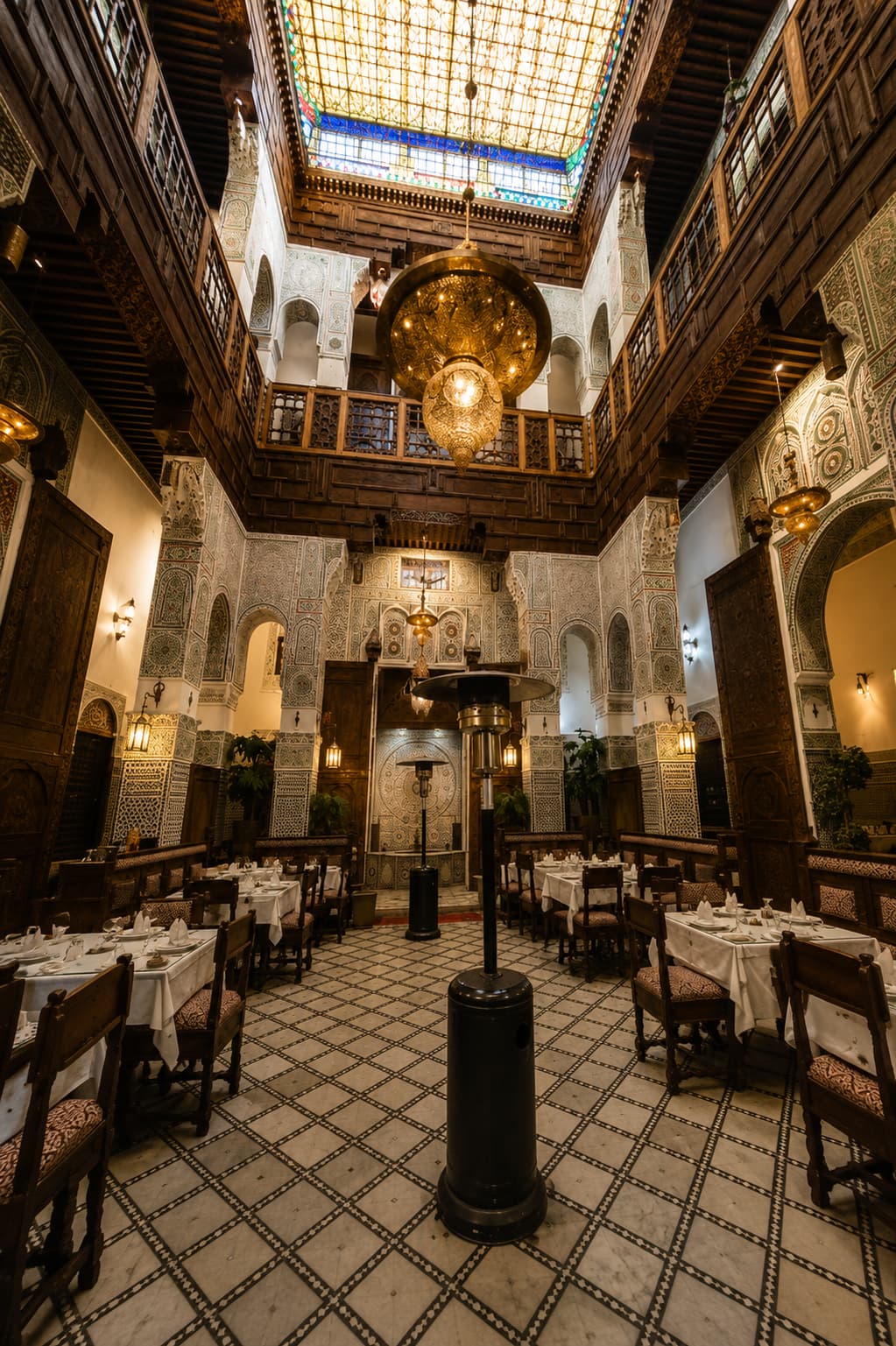
Marrakech, decisively. The riad and boutique hotel scene is enormous — over 1,000 properties — and the luxury end (rooftop pools, hammam spas, courtyard dining) is world-class. Fes has beautiful riads, some with more authentic architecture for less money, but the pool-and-spa tier is thinner, and the medina’s hilly terrain makes the walk from your riad to anywhere more physically demanding.
Architecture-and-History Traveler
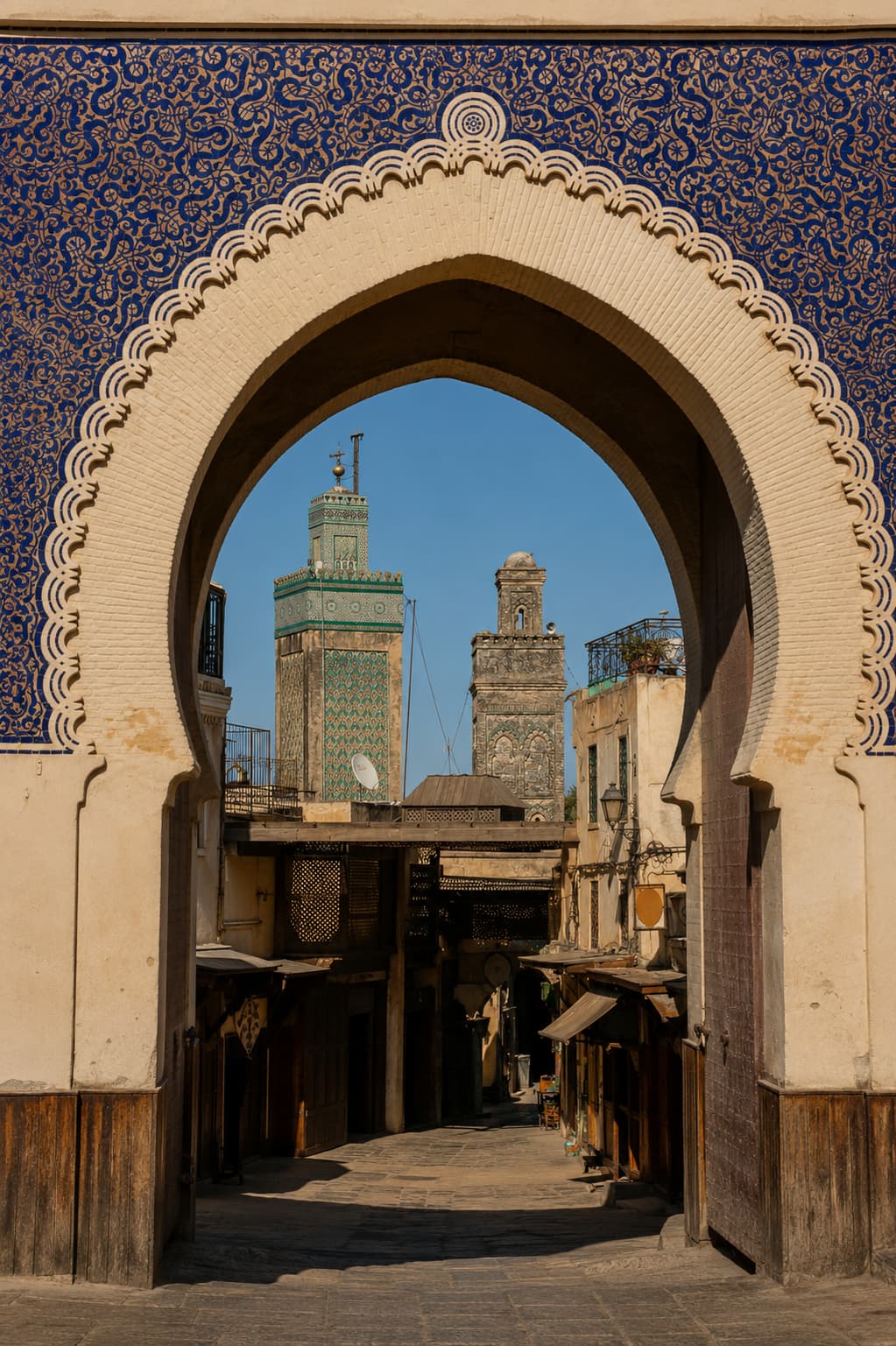
Fes. The answer here is emphatic. Fes el-Bali contains more than 9,000 alleyways and is widely regarded as the world’s largest car-free urban zone — a medieval city that still functions as one. The Bou Inania Madrasa, the tanneries, the foundouks, the University of al-Qarawiyyin (founded 859 CE, the oldest continuously operating degree-granting institution in the world): this is a city where the architecture isn’t preserved for tourists but still lives. Marrakech’s monuments are beautiful — the Bahia Palace, the Ben Youssef Madrasa — but they feel more like attractions. In Fes, the city is the architecture.
Budget Traveler
Fes. Riads, food, and guides all cost meaningfully less, and the savings compound over multiple days. Marrakech’s budget options exist but compete with a tourist economy that has pushed mid-range prices upward for years. More on this in the cost section below.
02 — Is Fes More Authentic Than Marrakech?
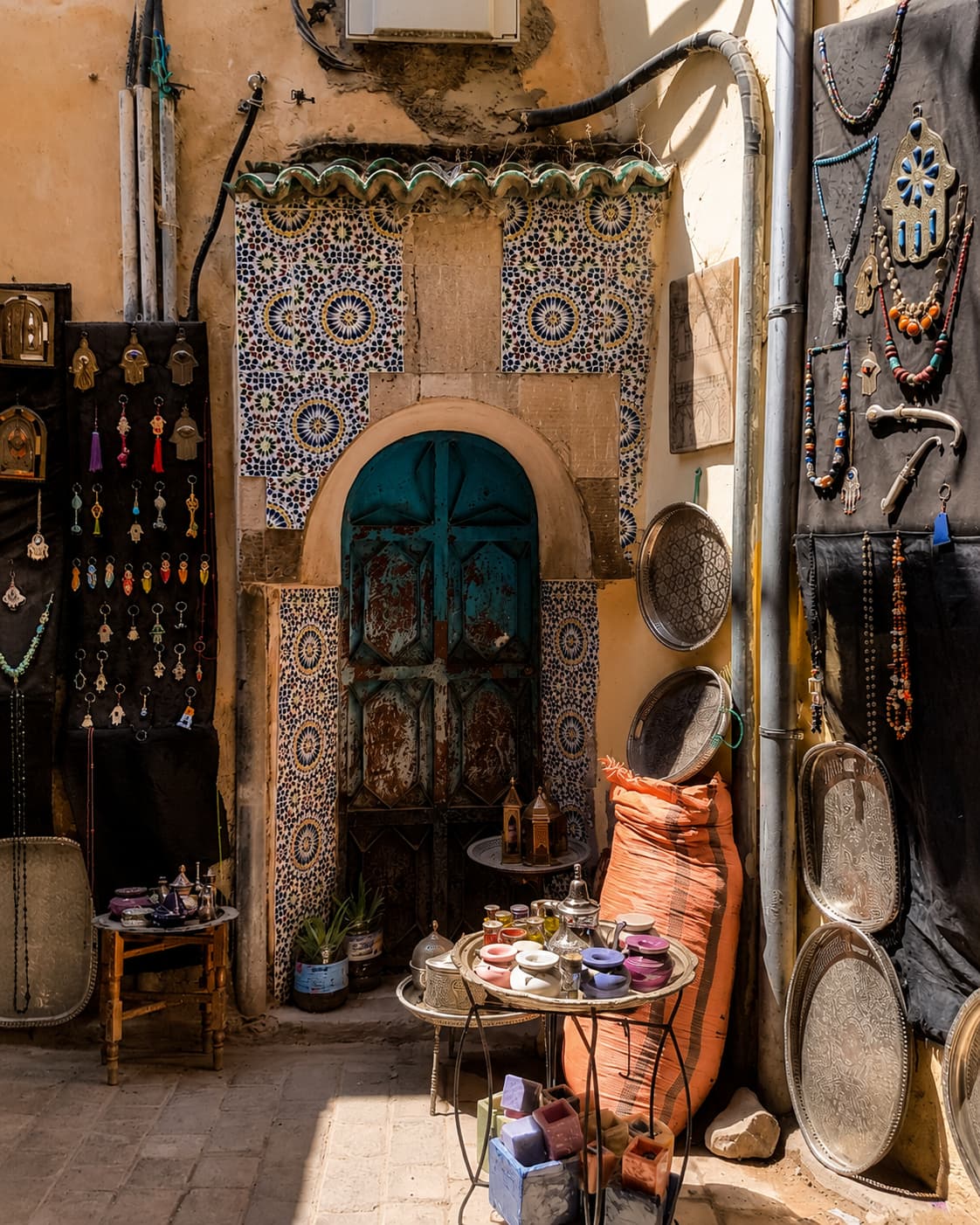
This is the question everyone asks and almost nobody interrogates. “Authentic” has become travel shorthand for “less touristic,” and by that definition, yes — Fes el-Bali’s medina is less commercially adapted to visitors than Marrakech’s. Fewer menu translations. Fewer riads with Instagram-ready courtyards. More genuine disorientation and more moments where you feel like an outsider in a city that doesn’t particularly need you to show up.
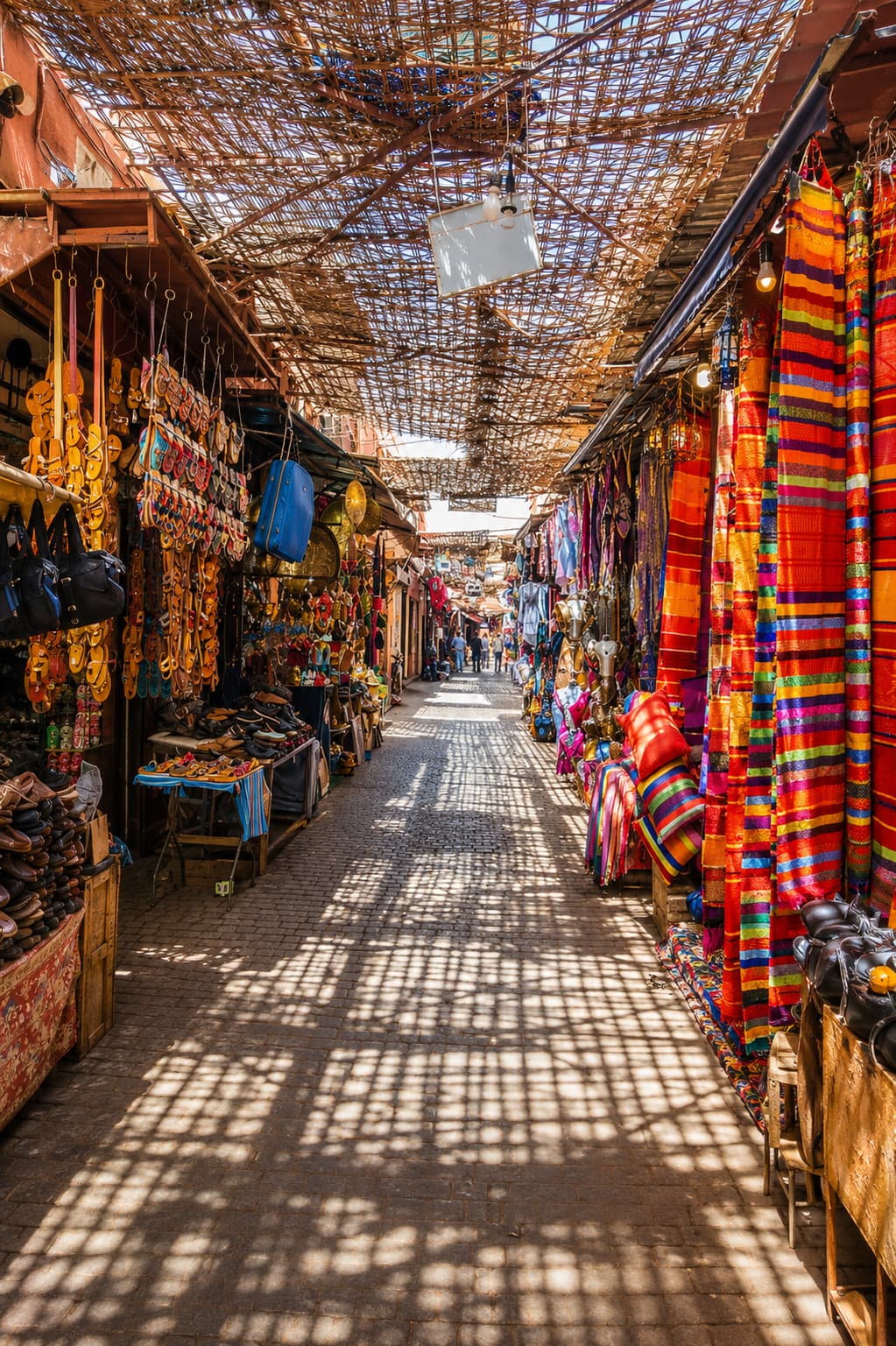
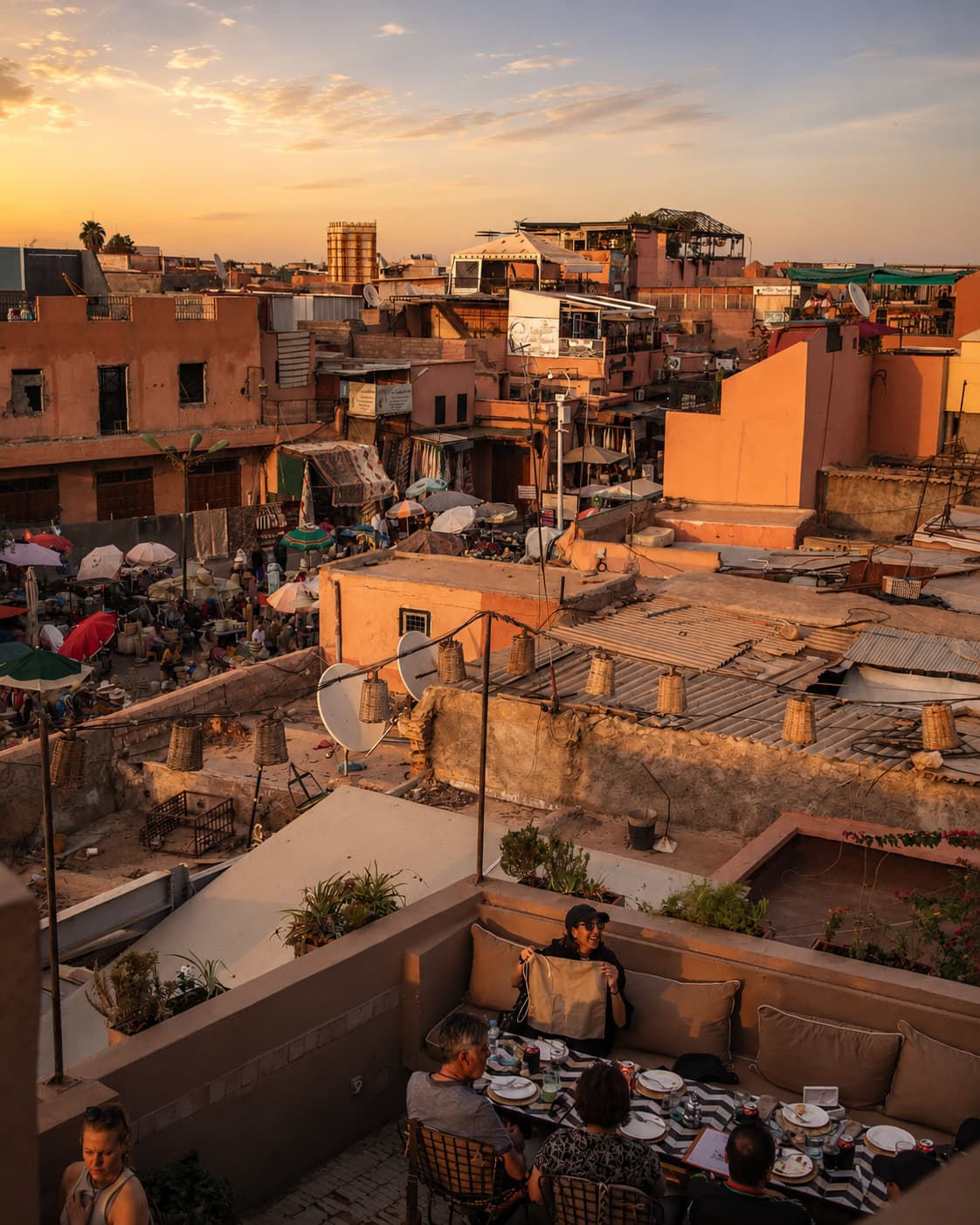
But authenticity isn’t the same as difficulty. Marrakech’s Jemaa el-Fnaa square has been a gathering point for storytellers, musicians, and food vendors for a thousand years — the fact that tourists now watch too doesn’t make the tradition performed. The residential lanes behind the souk quarter remain deeply lived-in. Gentrification is real, particularly in the riad district where foreign-owned properties have changed the character of some neighbourhoods, but Marrakech hasn’t sold its soul. It has adapted, strategically and not always gracefully, to being watched.
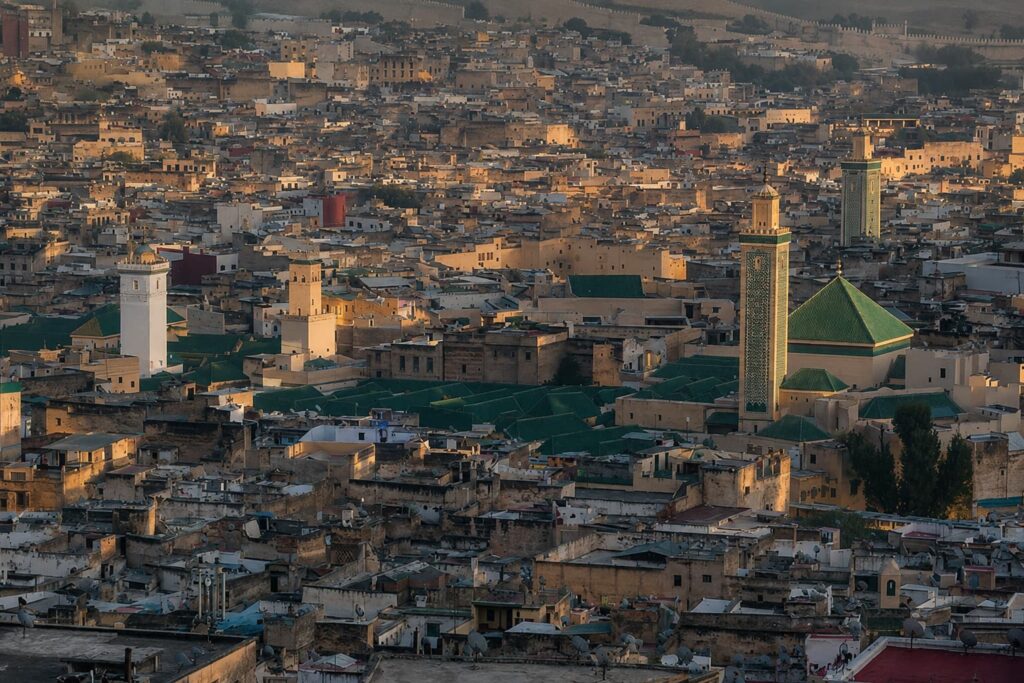
Fes, by contrast, hasn’t adapted much at all. The medina’s 9,000 alleys are too narrow for cars and too tangled for most modernization efforts to take hold. Artisans still work in the same foundouks, tanners still use the same vats, and the University of al-Qarawiyyin is still a functioning institution, not a museum. At street level, you encounter Fes as something closer to a living archaeological site — a place where medieval urban planning still dictates how goods move, how neighbourhoods organize, and how lost you will get.
The honest framing: Marrakech is genuine Morocco adapted for visitors. Fes is genuine Morocco that hasn’t bothered to adapt. Whether you call the second one “more authentic” depends on whether you think adaptation is a compromise or a skill. For the deeper dive into what each city actually offers, see the full Morocco guide, which profiles both cities individually rather than as adversaries.
03 — Is Fes Cheaper Than Marrakech?
Yes, and the gap is meaningful enough to affect how you plan your trip. In the Marrakech vs Fes cost comparison, Fes wins across nearly every category.
€60–120 / night
MAD 20–50
MAD 120–250 / person
MAD 400–600
High — especially in the souk
€40–85 / night
MAD 15–40
MAD 80–180 / person
MAD 250–400
Lower — large local population keeps prices honest
Riad accommodation is where the difference bites hardest. Marrakech has more than 1,000 riads, and demand — particularly from European weekend visitors — has pushed prices steadily upward. Fes has fewer properties but also far less pricing pressure; a riad in Fes that would cost €100 in Marrakech often runs €55–70 for comparable courtyard size, breakfast quality, and architectural character. In some cases, the Fes property is older and more historically significant.
Street food is comparable. Both cities serve exceptional tagine, msemen, and harira at similar price points in local neighbourhoods — our what to eat in Morocco guide covers the essentials. The gap widens at restaurants: Marrakech’s high-end dining scene rivals European capitals in price, while Fes’s best sit-down restaurants deliver outstanding meals for noticeably less.
Guides are cheaper in Fes too, though they’re arguably more essential — Fes el-Bali without a guide on your first morning is genuinely challenging to navigate. In Marrakech, you can orient yourself within an afternoon. On balance, a week in Fes costs roughly 20–30% less than a week in Marrakech at equivalent quality. That’s not a marginal saving. Over a full trip, it buys you an extra night or an extra excursion. For souvenir budgeting, the souk shopping guide covers what things actually cost in both cities.
04 — How Many Days Do You Need in Marrakech vs Fes?
This depends on whether you’re visiting one city or both — and at what total trip length. Here’s the framework that actually works.
If You’re Choosing One City Only
Give Marrakech 3 full days. That covers the medina, a day trip (Essaouira or the Ourika Valley), and enough time for a hammam and rooftop dinner without rushing. Fes deserves 3–4 days. The medina alone needs two full days of walking — one with a guide, one on your own — and the tanneries, madrasas, and food scene each pull weight. Fes rewards a slower pace; rushing it defeats the point.
If You’re Doing Both — 7 Days Total
Split it 3 days Marrakech, 4 days Fes. That gives Marrakech enough time to do its job as a starting point, and Fes the extra day it needs to unfold. One of those seven days will be eaten by the transfer between cities, whether by train or road — factor that in rather than pretending transit doesn’t cost a day. The 7 vs 10 day Morocco itinerary maps this day-by-day.
If You’re Doing Both — 10 Days Total
The more interesting question. With 10 days, the transfer itself becomes a trip highlight — two to three days overland via the Atlas Mountains, Aït Ben Haddou, and possibly the Sahara edge at Merzouga or Zagora, arriving in Fes from the south rather than the west. In that structure: 3 days Marrakech, 2–3 days overland, 4 days Fes. No day feels wasted.
05 — Should You Visit Marrakech or Fes First?
Marrakech first. Of everything in this Marrakech vs Fes breakdown, the sequencing argument is what most guides skip — and it’s the most practically useful thing in this post.
Moroccan medinas have a learning curve. The way navigation works (landmarks over maps), the way commerce works (bargaining as default, unsolicited guiding as normal), the way personal space and attention work (different from what most Western travelers are used to) — none of this is intuitive the first time. Marrakech teaches you these skills in a relatively forgiving environment. The medina is smaller and more structured than Fes’s, and its tourist infrastructure means mistakes cost less. By the time you’ve spent two or three days navigating Marrakech’s souk, dealing with touts, and finding your riad in the dark, you’ve built what I’d call medina literacy — a set of skills that makes Fes dramatically more enjoyable rather than overwhelming.
Fes without that preparation can feel hostile. The medina is exponentially more complex — more than 9,000 alleys, many of them dead ends, with minimal signage and no car access for orientation. First-time visitors to Morocco who start in Fes often spend their first day stressed and their second day recovering from the stress. Starting in Marrakech and ending in Fes means your trip escalates in intensity and depth rather than peaking on arrival and declining from there.
Book an open-jaw ticket: fly into Marrakech Menara (RAK), out of Fes-Saïss (FEZ). This eliminates the need to backtrack and often costs the same as a return to a single airport. Budget carriers like Ryanair and Air Arabia Maroc serve both airports with European connections.
06 — How Do You Get From Marrakech to Fes?
Three real options, and the one most travelers should choose is the one most guides treat as a footnote.
By Train
ONCF operates direct trains between Marrakech and Fes with roughly hourly departures. The journey takes approximately 6.5 hours, with fares ranging from around MAD 220 in second class to MAD 420 in first class. Trains are air-conditioned, comfortable, and scenic through the Middle Atlas section. This is the simplest and cheapest option if you want to get between the cities in a single day.
By Road (Direct)
Driving the direct route via the A7 motorway covers roughly 530 km in about five to five-and-a-half hours. Faster than the train, more flexible — but also less interesting. The motorway is modern and well-maintained but not scenic in the way the Atlas routes are. Hiring a private driver for the direct transfer typically costs MAD 2,500–3,500.
By Road (Overland via the Atlas — the Real Answer)
Here’s what competitors bury in a sidebar: the transfer between Marrakech and Fes, done overland via the Atlas Mountains, is one of the best parts of any Morocco trip. The route crosses the Tizi n’Tichka pass at 2,260 metres, drops to Aït Ben Haddou (a UNESCO-listed ksar used as the filming location for Gladiator and Game of Thrones), continues through the Dadès and Todra gorges, and optionally touches the Sahara’s edge at Merzouga before climbing back north through the cedar forests of the Middle Atlas toward Fes.
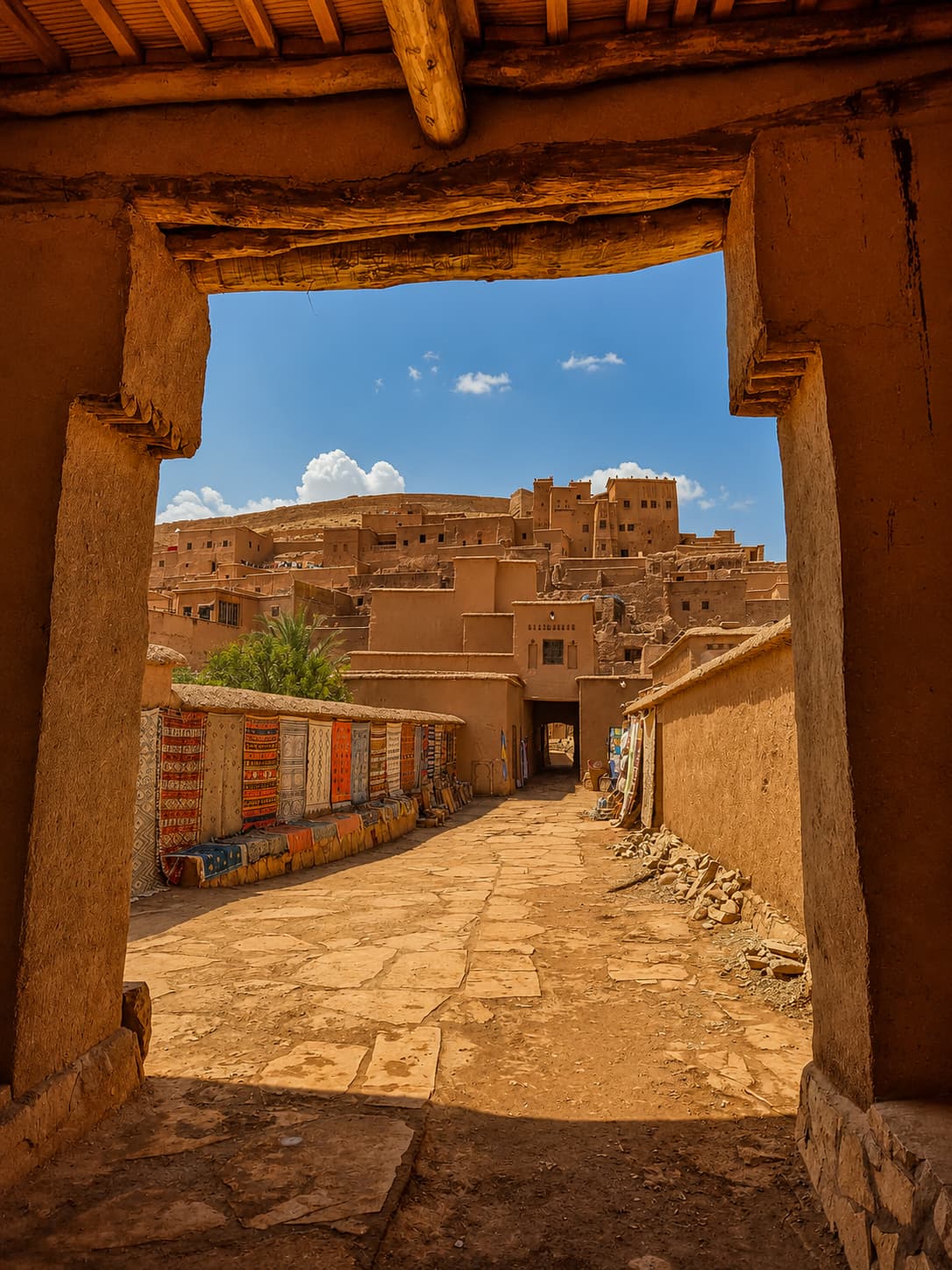
This takes two to three days rather than one, but it transforms dead transit into a trip highlight. Most guided tours and self-drive itineraries build this into the Morocco routing naturally — Marrakech first, Atlas overland, Fes last. If you have 10 days total, this is the move. With only 7, the train is fine — but know what you’re skipping.
-
Train (ONCF): ~6.5 hours, MAD 220–420, hourly departures. Best for time-limited trips. -
Direct drive: ~5.5 hours, 530 km via A7. Faster but less interesting. -
Atlas overland: 2–3 days via Tizi n’Tichka, Aït Ben Haddou, gorges, and optional Sahara. The honest recommendation.
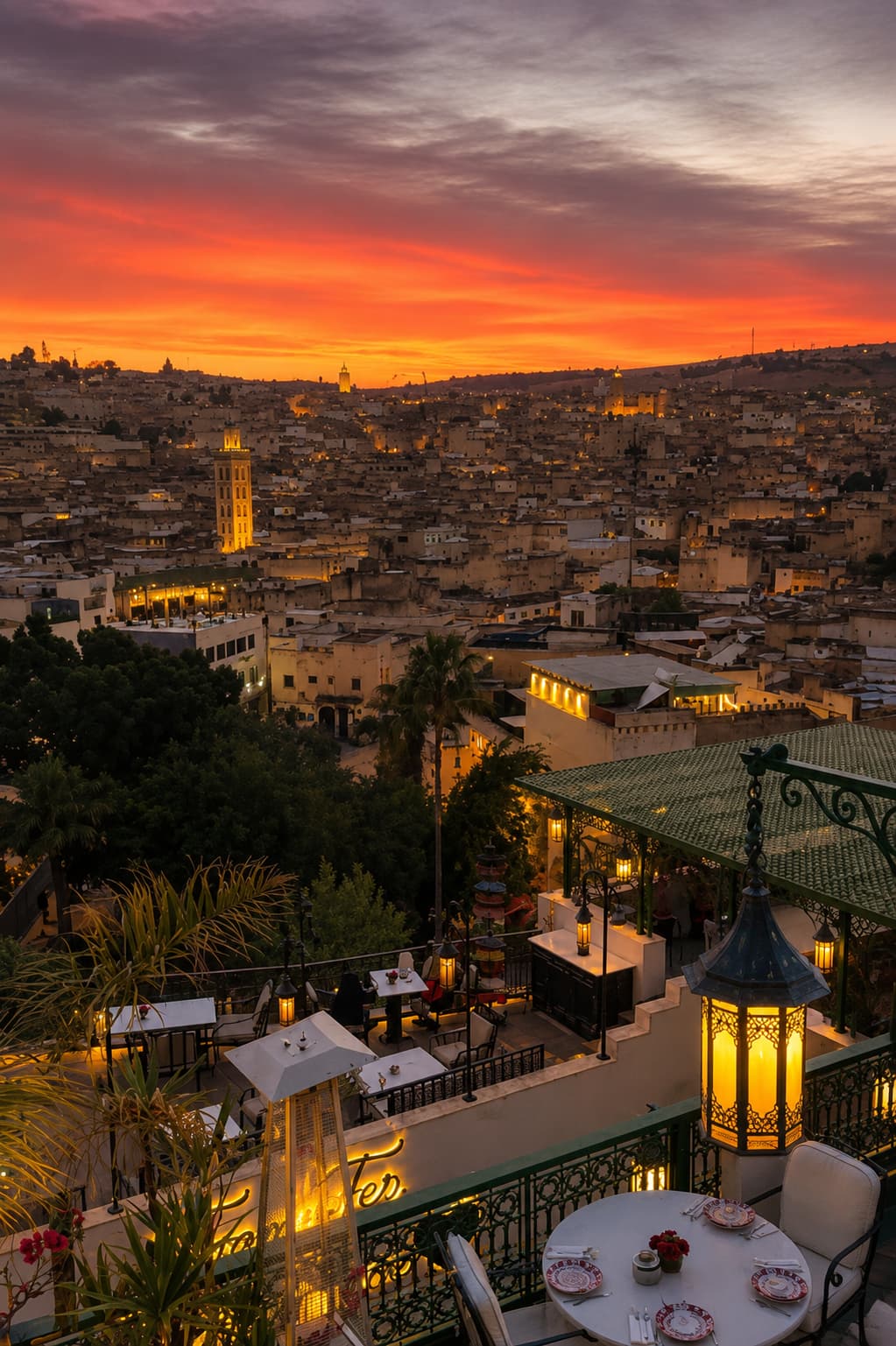
If you’re forced to choose one: match the city to your type. For those doing both — and you should — start in Marrakech, give Fes more nights than you planned, and don’t rush the road between them. The transfer, done properly, is the trip.