Madeira Travel Guide: An Honest Look at Who Should Actually Go
Not a beach holiday, not the Mediterranean, and selling out earlier every year — here’s who it’s really for, and who quietly comes home disappointed.
01 — Is Madeira worth visiting?
This Madeira travel guide gives you the honest verdict before the brochures get to you: yes, Madeira is worth visiting — but only for the right trip. If you want nature, serious hiking, and a landscape that genuinely stops you mid-sentence, Madeira earns every hour of the flight. However, if you booked imagining a towel on warm sand with the sea a few steps away, you are going to spend the week quietly recalibrating.
In particular, that single distinction — nature traveler versus beach traveler — predicts almost everyone’s experience here. Specifically, the island rewards people who want to move through a place rather than lie still in it. It suits walkers, early risers, and anyone who treats weather as part of the adventure rather than a threat to it.
So this Madeira travel guide isn’t really about whether the island is worth visiting. It is whether Madeira is worth visiting for you. Instead, the rest of this guide sorts that out honestly, trade-off by trade-off, without pretending the island is something it isn’t.
02 — What Madeira actually is (and the “Hawaii of Europe” thing)
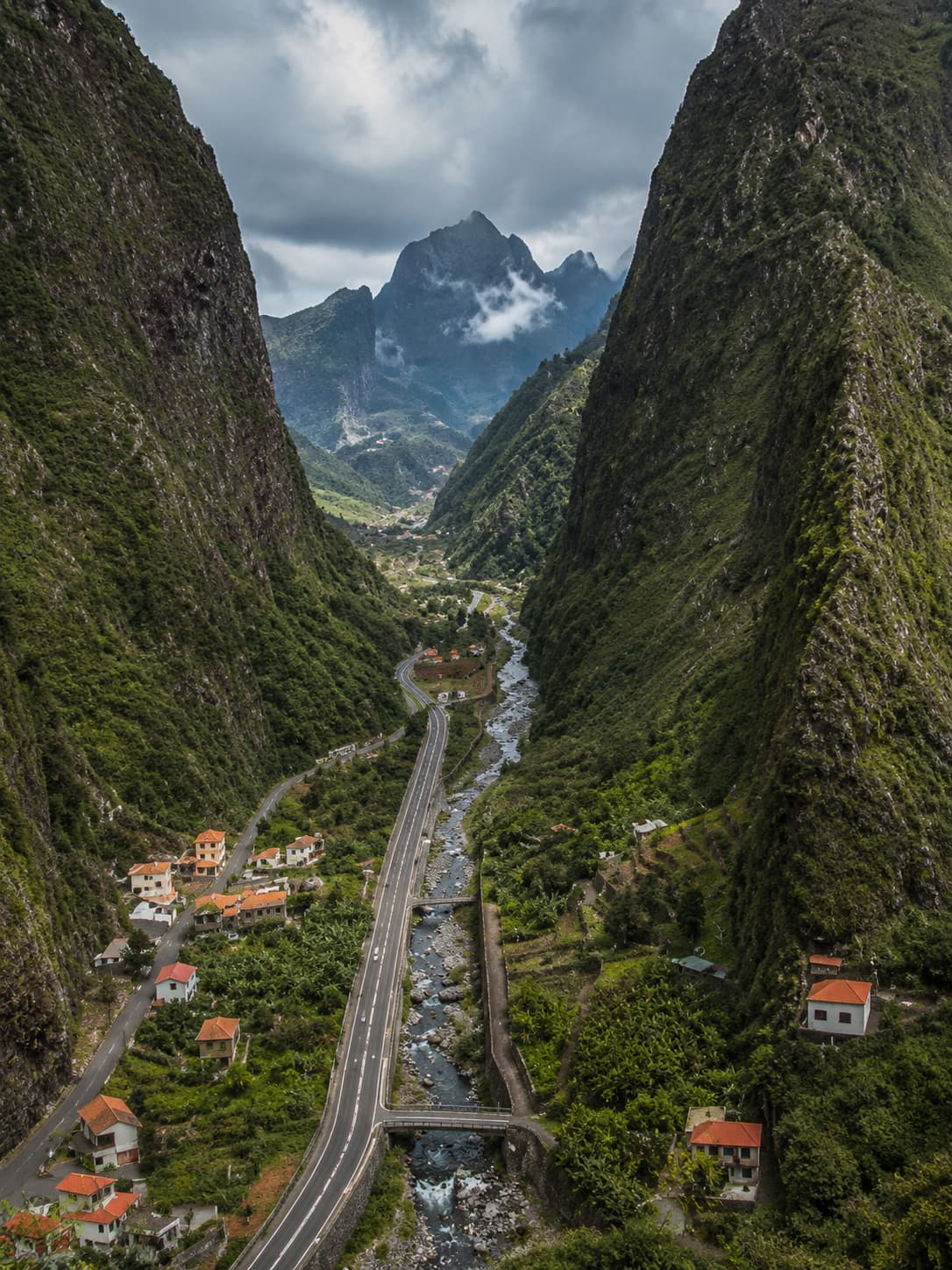
Madeira is a subtropical volcanic island in the Atlantic, roughly 600 miles southwest of mainland Portugal and about a 90-minute flight from Lisbon. That geography matters more than it sounds, because nearly every listicle quietly mislabels the place. For instance, you will read “Mediterranean island” constantly. It isn’t one. In reality, the Mediterranean is a thousand miles east, and that difference shows up in the weather, the water temperature, and the way the Atlantic throws cloud over the peaks without warning.
That said, the “Hawaii of Europe” tag is closer to honest, even if it gets overused. After all, both are volcanic, both are green to the point of excess, and both have that vertical, dripping, prehistoric quality where the interior feels far older than the resorts on the coast. Naturally, Madeira leans into that comparison in its marketing. Just know it is shorthand for the terrain, not a promise of Waikiki beaches.
The levadas — a 15th-century irrigation system you can now walk
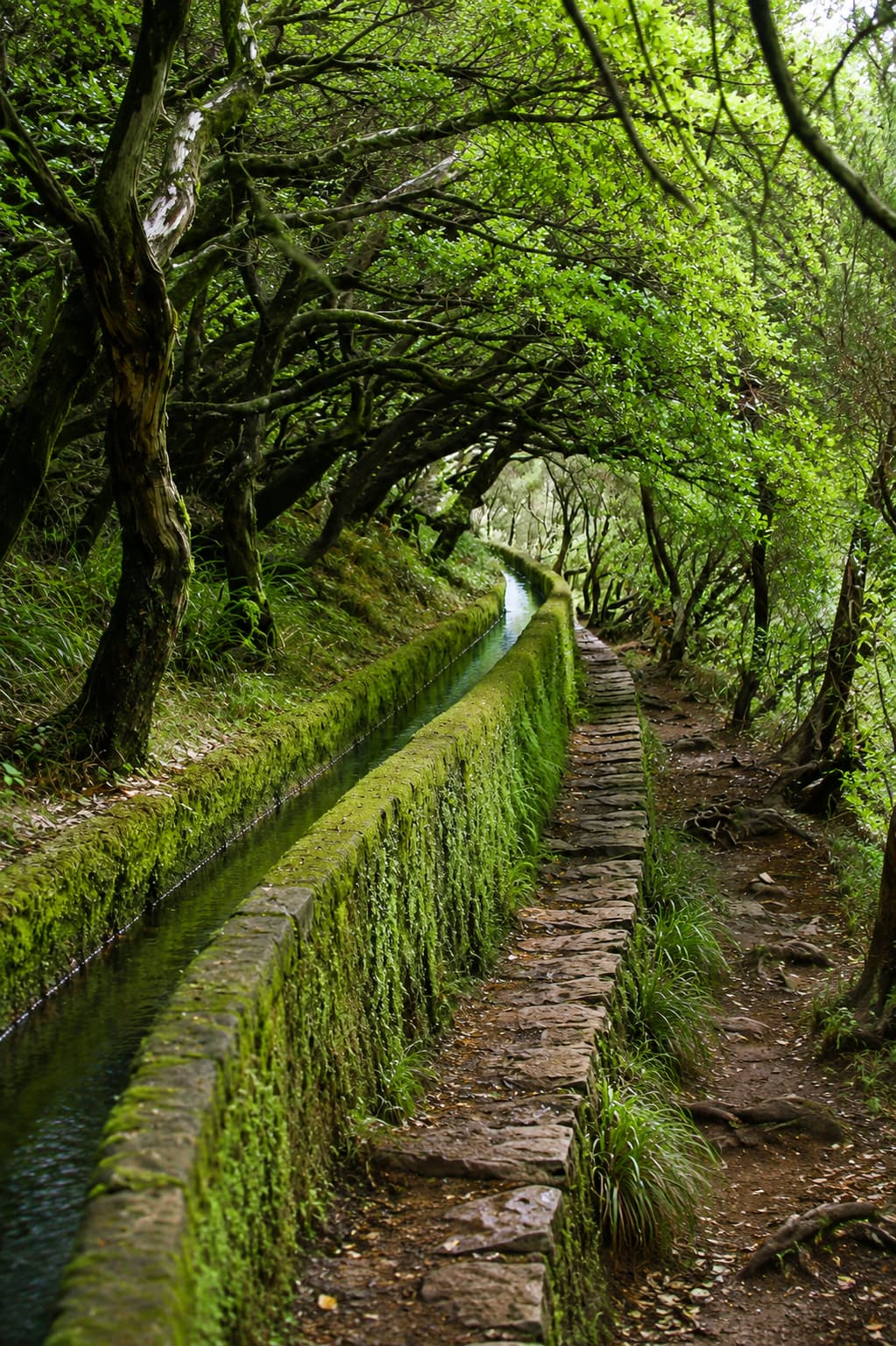
The island’s defining feature is its levada network: irrigation channels first dug in the 15th century to carry water from the wet north to the drier, sun-facing south. Over centuries they grew into a system that now extends more than 2,000 kilometres across the island. Today, in turn, they double as Madeira’s hiking infrastructure. Moreover, because the channels follow gravity, the paths beside them stay relatively level even as the land plunges away beside you — which is exactly why a beginner and a serious hiker can both find a levada walk that fits.
The Laurisilva — a forest that outlived its own era
Beyond the levadas, there is the Laurisilva — the largest surviving laurel forest on earth and a UNESCO World Heritage site. Moreover, it is a genuine relic: this ecosystem once blanketed much of southern Europe before the last ice age erased it nearly everywhere else. Consequently, walking into it feels like stepping sideways in time, into a damp, mossed, green-on-green world that simply stopped disappearing here. In fact, for a lot of visitors, this forest — not any beach — turns out to be the thing they remember most.
Madeira is a vertical, volcanic, forested island built for walking — not a flat, sandy island built for lying down. Set your expectations there and the rest of the trip falls into place.
03 — Best time to visit: a Madeira travel guide to the seasons
Admittedly, Madeira’s pitch is “the island of eternal spring,” and across a whole year that holds up reasonably well — temperatures stay mild, and there is no real off-switch season where everything closes. That said, the branding flattens some genuinely important month-to-month differences, and one of them catches people out badly.
The catch with June
June is the trap. On paper it sits in early summer; in practice, the south coast frequently disappears under a grey marine layer the locals know well and the marketing never mentions. Consequently, plenty of travelers arrive expecting peak-summer brightness and instead spend mornings under flat cloud, wondering what they did wrong. The answer is nothing — it is just the season. If sunshine is non-negotiable, June is the month to approach with the most skepticism.
Best months for hiking, swimming, and fewer crowds
For hiking, the shoulder months are the quiet winners. Specifically, April to May and September to October give you stable trails, comfortable walking temperatures, and clearer interior views before or after the summer haze. For swimming and the warmest sea, late summer into early autumn — roughly August to October — is your window. And for fewer crowds with still-pleasant weather, the same autumn shoulder does double duty. Winter, meanwhile, stays mild enough for walking and is increasingly popular as a warm-ish European escape, though the north can be wet.
04 — How many days do you need in Madeira?
In short, five days is the sweet spot. Realistically, that is enough to do two or three proper levada or peak hikes, give yourself one full day in and around Funchal, drive out to the west and the north coast, and still keep a buffer day for when the weather reshuffles your plans — which, on this island, it will.
Admittedly, three days is doable but tight, and you will feel like you skimmed. On the other hand, a full week is comfortable rather than excessive, especially if you want to slow down, build in a rest day, or wait out a cloudy stretch for a clear summit. Seven days only starts to feel long if hiking isn’t your thing — in which case, see the section below on visiting without it.
Madeira’s high peaks make their own weather. Keep one hike “floating” in your itinerary so you can move it to the clearest morning rather than locking it to a fixed date and hoping.
05 — Do you need a car in Madeira?
Honestly, yes — with a couple of caveats, though. In short, a rental car is what turns Madeira into the island people rave about. Without one, the island quietly shrinks to Funchal plus whatever organised day-tours you can book, and you end up experiencing the place through a coach window on someone else’s schedule. In practice, the best viewpoints, the north-coast villages, the trailheads, and the late-light drives all assume you can drive yourself.
That said, the caveats are real. Specifically, the roads are steep, narrow in the old villages, and full of tunnels and switchbacks that demand attention; nervous drivers find the first day genuinely tiring. Parking in central Funchal is also a minor sport. Therefore, if you are not comfortable on mountain roads, a workable compromise is to base yourself in Funchal, walk the city, and book a small handful of guided hiking or 4×4 day-trips for the dramatic stuff — accepting that you will see less, but with less stress.
- With a car: the whole island opens up — trailheads, viewpoints, north coast, your own pace
- Without a car: Funchal plus day-tours; convenient, but a much smaller version of Madeira
06 — Does Madeira have good beaches?
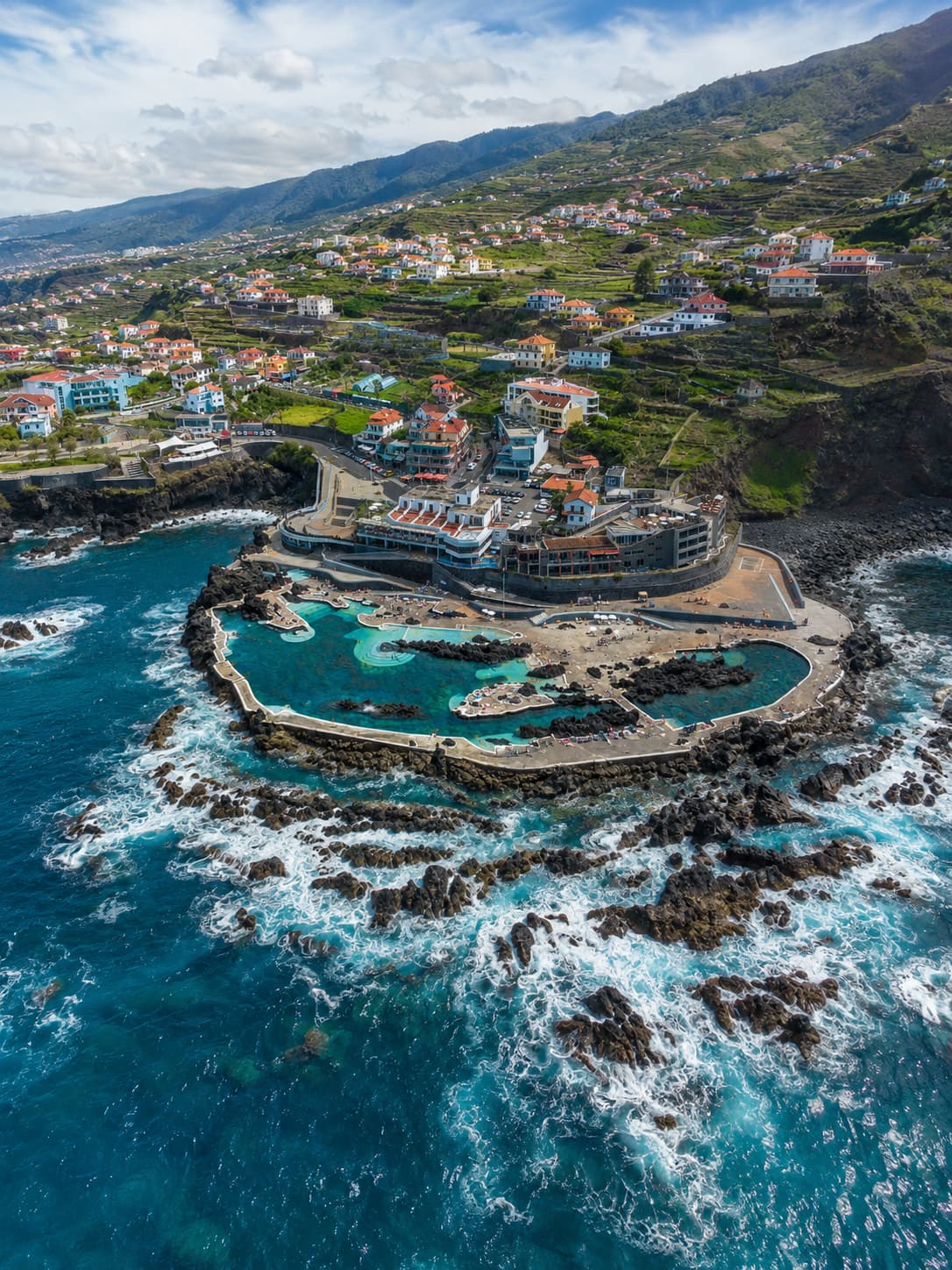
Here, however, is where expectations need the most managing. Madeira has very little natural sand. Because the island is volcanic, most “swimming” happens at rock pools and sea-access points rather than on classic beaches. For example, Porto Moniz, on the northwest tip, has the famous volcanic rock pools — natural basins where the Atlantic fills in and warms slightly in the sun. They are wonderful, and they are not a sandy beach.
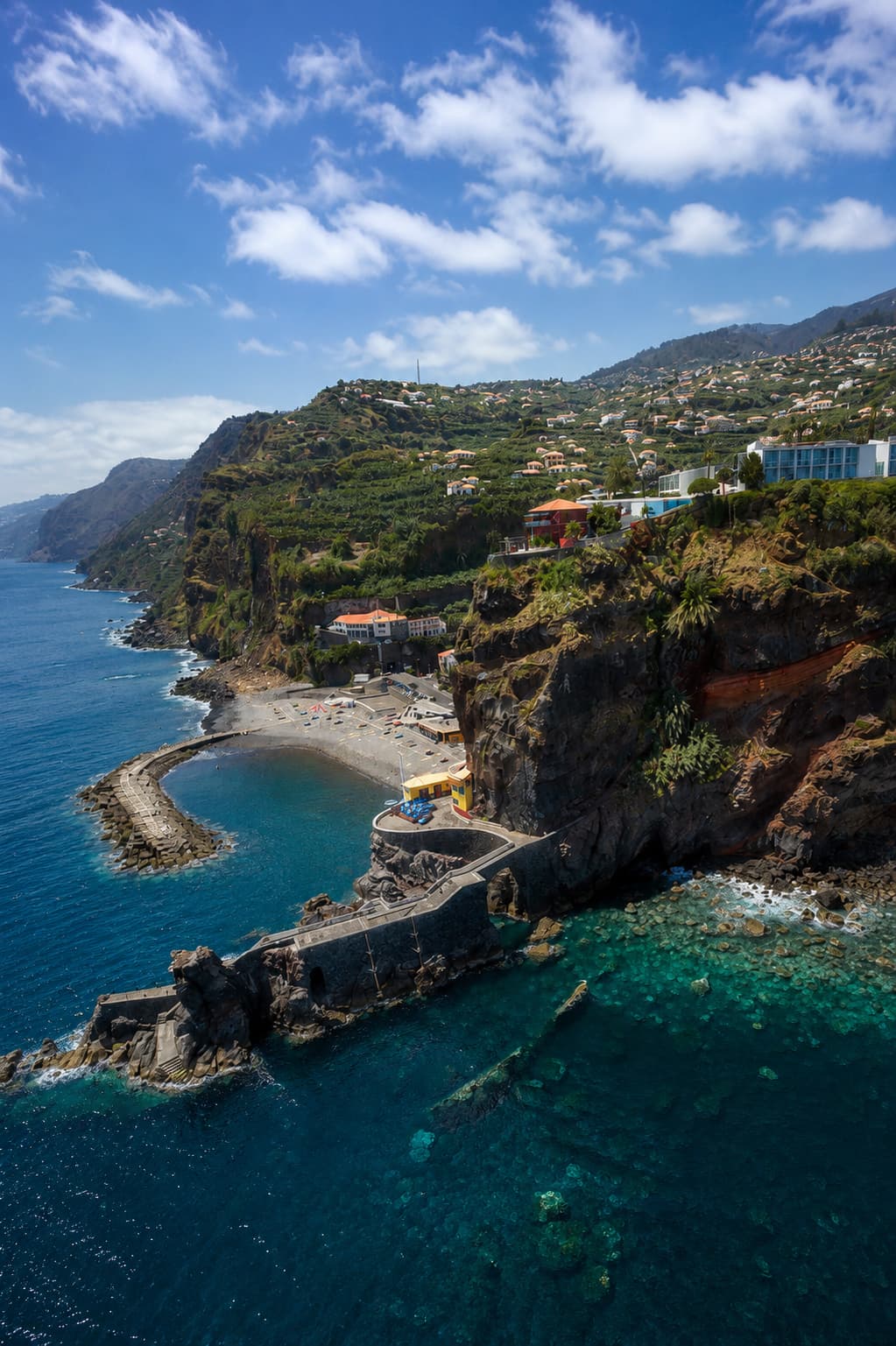
Moreover, where you do find sand, it has often been imported. Calheta, on the southwest coast, has a man-made golden-sand beach precisely because the island couldn’t supply one itself. Therefore, for genuine sand-between-your-toes holidays, many people take the short hop to nearby Porto Santo, a separate island with a long natural beach — which tells you something in itself. In short, Madeira suits nature and hiking travelers far more than it suits a sun-lounger week, and going in clear-eyed about that is the difference between delight and disappointment.
Consider pairing Madeira with a couple of nights on Porto Santo, the neighbouring island with the real beach — or honestly, choose a different destination and save Madeira for a hiking trip.
07 — Where is the best place to stay in Madeira?
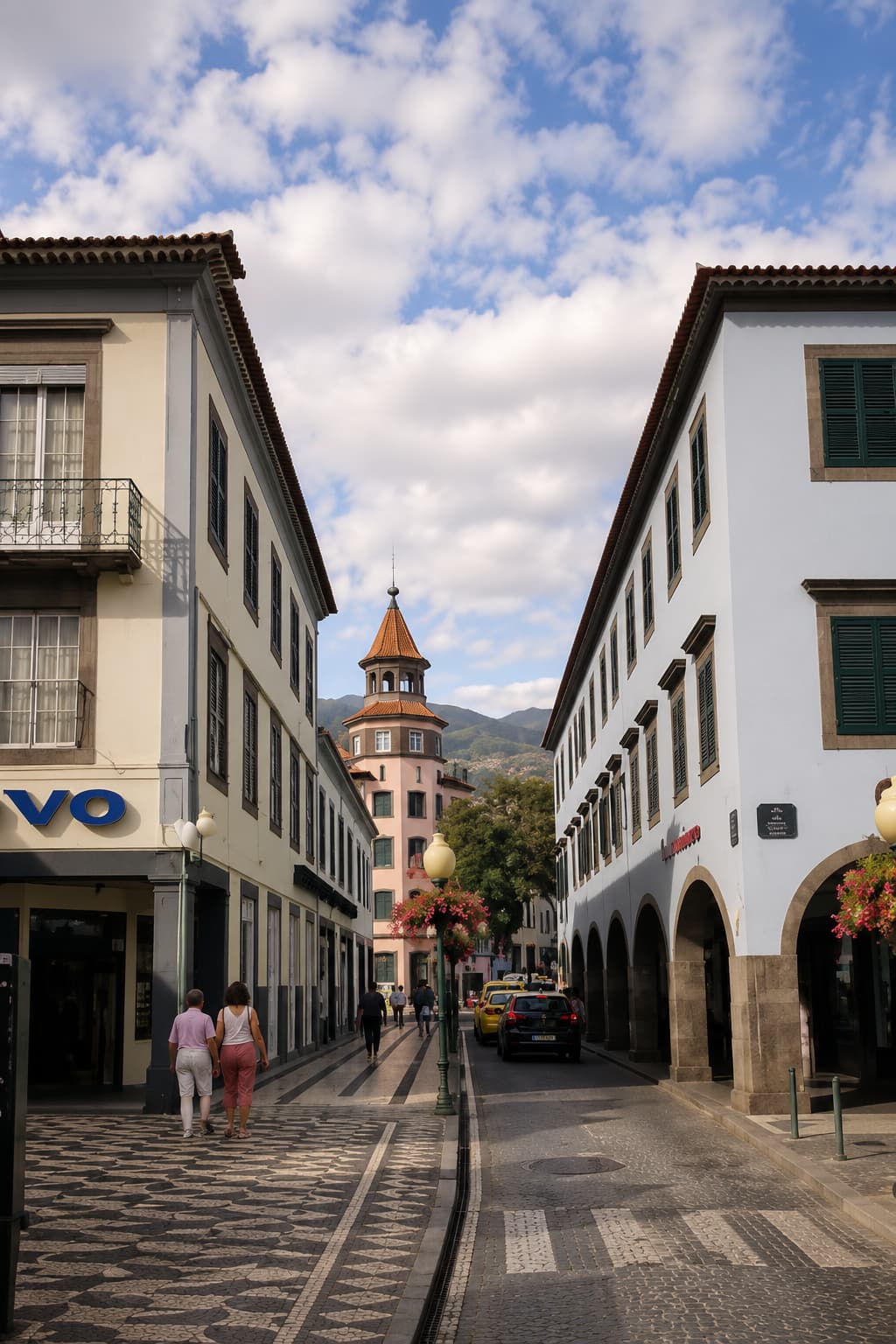
For most first-time visitors, Funchal is the right default base. After all, it is the island’s only real city, it has the broadest range of hotels and restaurants, and it sits central enough on the south coast that day-drives in either direction stay manageable. Furthermore, if you skip the car, Funchal is the one place where that decision still leaves you with plenty to do on foot.
That said, Funchal is not the whole island, and basing elsewhere makes sense for certain trips. For instance, the southwest around Calheta and Ponta do Sol gets reliably more sun and suits a slower, quieter stay. Meanwhile, the north and the high villages put you closer to trailheads and dramatic scenery, at the cost of restaurants and convenience. As a rule, then, stay in Funchal for your first visit and the practical ease; choose west or north when you already know what you came for.
08 — Is Madeira better than the Canary Islands?
Naturally, this comparison comes up constantly, and the honest answer is that they are different trips rather than better or worse. On one side, the Canaries — Tenerife, Gran Canaria, Lanzarote and the rest — are built around sun reliability and beaches, with big resort infrastructure and a near-guarantee of warmth. Madeira is built around landscape, hiking, and greenery, with a cooler, cloudier, more dramatic character. Therefore, choosing between them is really choosing what you want your week to feel like.
So if your ideal week is a sun-lounger, a sandy beach, and reliable heat, the Canaries win outright. On the other hand, if it is a trail, a viewpoint, and a forest older than recorded history, Madeira does something the Canaries can’t touch. Neither is the better island in the abstract — only the better island for a particular traveler.
09 — A note on timing: Madeira is having a moment
Finally, one more honest thing, because it affects your planning directly: Madeira is no longer a quiet secret. Notably, it was named a rising destination in Skyscanner’s 2026 travel trends, and it has been among the year’s fastest-climbing European searches. More concretely — and this is the part that actually matters for you — airlines across the UK, Germany, France, and Spain have added new routes to Funchal to meet the demand.
In short, the practical consequence is simple. Summer seats and the better-value accommodation now fill earlier than they used to. For this reason, the quiet, spontaneous version of a Madeira trip is partly already slipping; popular hikes see more foot traffic, and last-minute summer booking is riskier than it was a couple of years ago. None of this ruins the island — it is still spectacular — but it does reward planning ahead rather than improvising.
If you are going in summer, book flights and accommodation earlier than instinct tells you to. Alternatively, travel in the spring or autumn shoulder, when the trails are quieter and the prices ease anyway.
10 — Madeira: the quick answers
Conclusion: who Madeira is really for
Once you strip away the eternal-spring branding and the Mediterranean mislabelling, this Madeira travel guide becomes easy to sum up honestly. Ultimately, it is for the traveler who would rather earn a viewpoint than be handed a sun-lounger — someone who treats a forest, a ridgeline, and an unpredictable sky as the point of the trip rather than the obstacle. For that person, this is one of the most rewarding islands in Europe.
It is not for the traveler who wants sand, certainty, and stillness by the sea. Of course, there is no shame in being that traveler; it just means a different island is yours. The whole purpose of going in clear-eyed is landing on the right side of that line — and now you know which side you’re on.
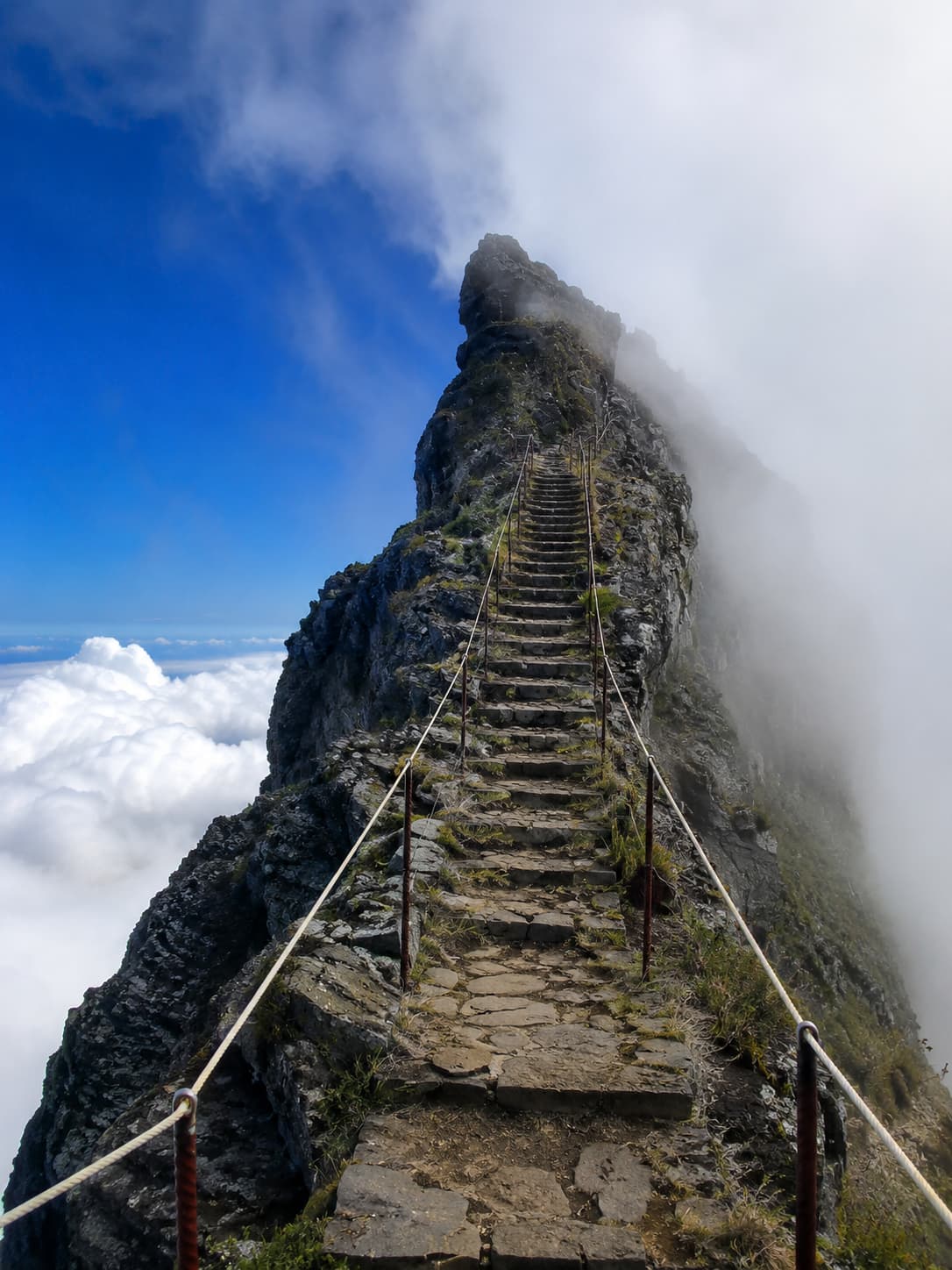
Some islands ask you to do nothing. Madeira asks you to go and look —
and rewards you exactly to the degree that you do.