
Lofoten Islands Norway: What It’s Actually Like to Drive Through the Most Beautiful Place in Europe
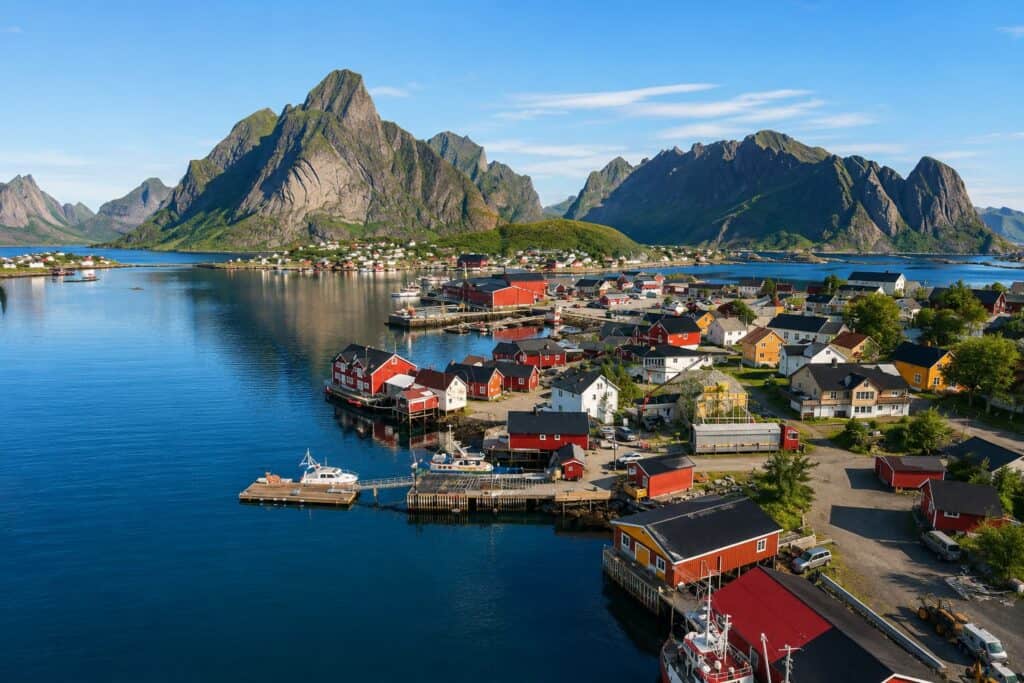
Mountains that drop straight into the Arctic Ocean. Red fishing cabins reflected in glassy water. White sand beaches that look borrowed from the Caribbean. This is what waits at the end of Europe’s most dramatic road.
The moment it stops looking real
There is a moment, somewhere on the E10 highway between Henningsvær and Nusfjord, when you understand why people describe the Lofoten Islands Norway as unrealistic. The road bends, the mountains come into frame, and the water turns a colour that has no business existing this far north. You stop the car. You take the same photograph that thousands of other people have taken. Then, unlike in the photographs, you stand there a while longer — because the scale doesn’t translate to a screen, and you are not yet ready to start driving again.
Lofoten Islands Norway is currently the number one trending destination on Pinterest globally, up 300% month-on-month as of May 2026. The reason is not difficult to understand. This archipelago in northern Norway, sitting 200km above the Arctic Circle, produces scenery that dominates travel boards because it looks like nowhere else — specifically, it looks like somewhere that shouldn’t exist: jagged granite peaks rising sheer from Arctic water, white sand beaches at their base, and small red fishing villages wedged into the narrow margins between rock and sea.
However, there are things nobody tells you before you go to the Lofoten Islands. Norway is genuinely expensive in a way that requires advance planning. The midnight sun is disorienting in ways worth knowing about. Furthermore, some of the most photographed spots are busier than the images suggest — and some of the best moments happen at places that never appear in travel roundups at all. This guide covers all of it.
01 — Why the Lofoten Islands Norway Don’t Look Real
Most beautiful places earn that description through accumulated details — a fine cathedral here, an attractive coastline there. The Lofoten Islands are different. The visual impact arrives all at once, immediately, and its source is geological. Specifically, the islands are the exposed tops of a drowned mountain range. The peaks you see rising from the water are not hills that happen to meet the sea — they are mountains swallowed to the waist, only their upper halves remaining. As a result, the scale here simply cannot be competed with by most landscapes in Europe.
The light compounds everything. At this latitude, even in summer, the sun sits low across much of the day. That angle produces the kind of golden, directional light that photographers travel the world to find — and in Lofoten, it is simply the default. On overcast days, cloud sits low on the peaks and gives the fjords a moody, glassy stillness. In other words, there is no bad weather for looking at the Lofoten Islands Norway. There is only weather.
The paradox of the Arctic beaches
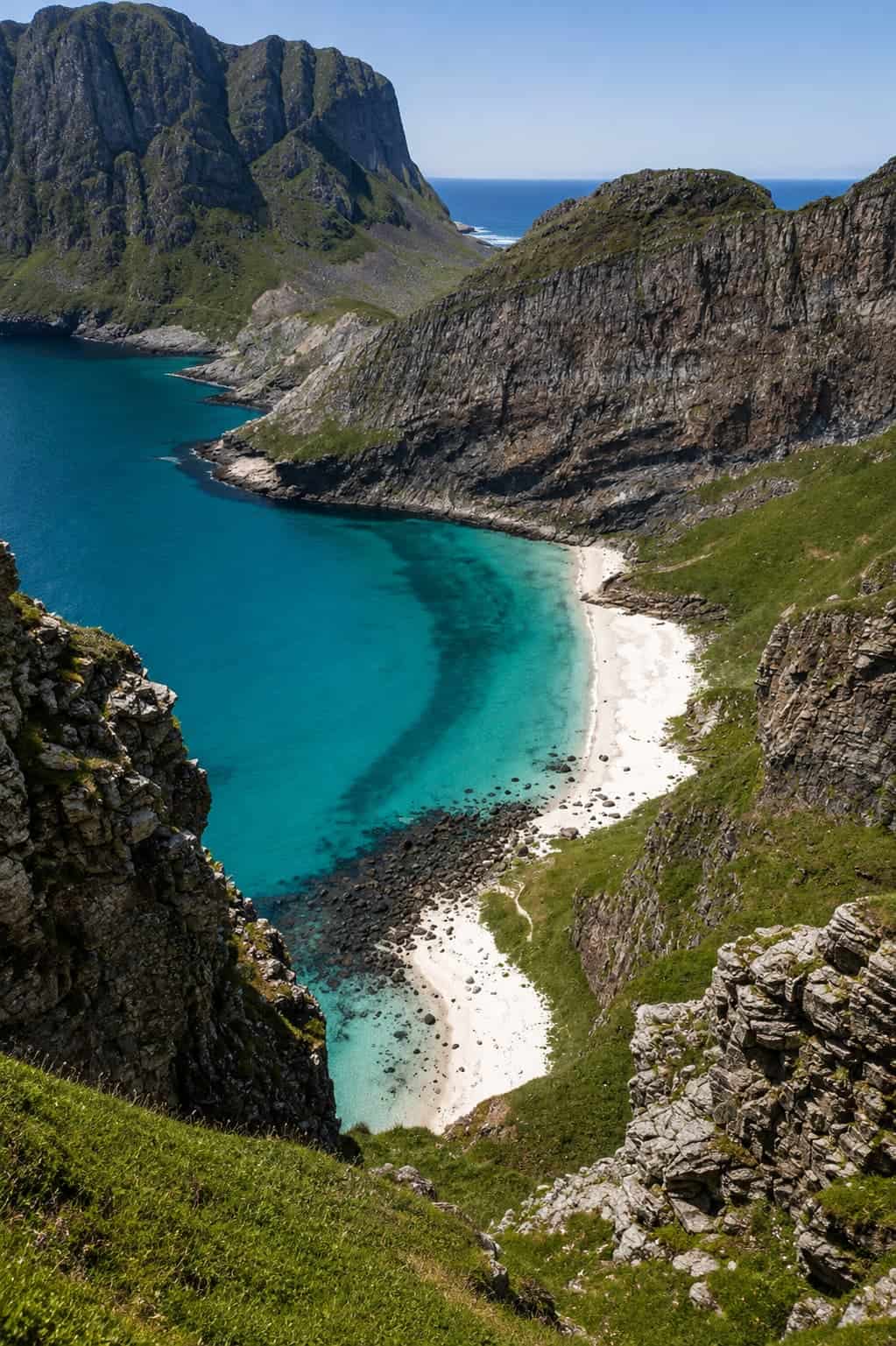
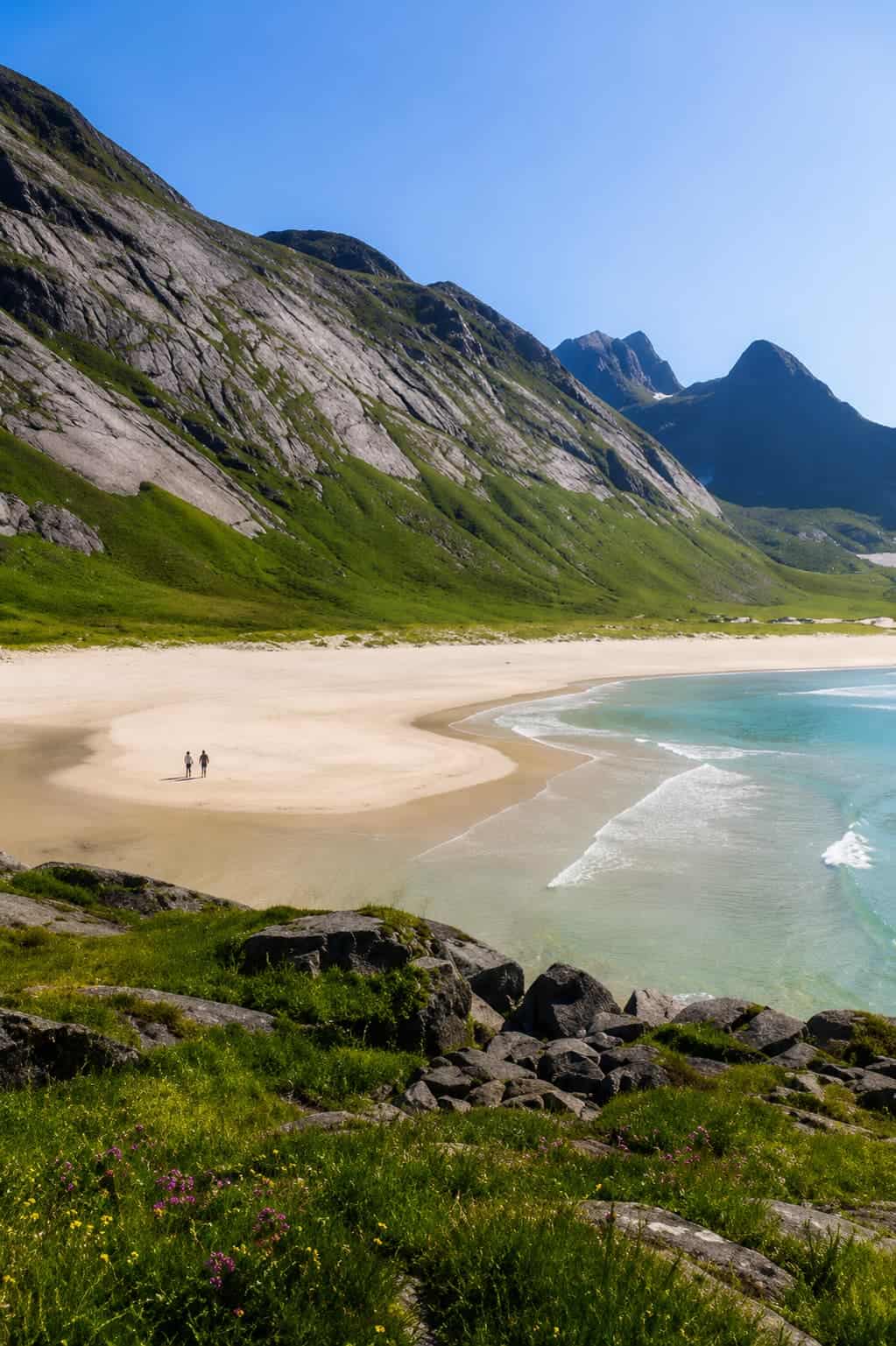
Then there is the paradox of the beaches. Haukland and Uttakleiv, on the western coast, have sand so pale and water so clear they could convincingly pass as Caribbean. They are not. The water temperature in summer rarely exceeds 12°C. You can swim — plenty of people do — but many visitors simply walk these beaches at midnight under a sun that refuses to set, which is an experience of a completely different order.
02 — How to Get to Lofoten Islands Norway
Reaching the Lofoten Islands requires more intention than booking a flight to a major European city — and that is partly why the archipelago still feels remote despite growing popularity. The options below cover every realistic approach from outside Norway.
By air — the fastest options
In practice, most international visitors arrive by one of the two air routes below — both of which connect through Oslo.
-
Fly to Bodø + ferry: The most common route. Fly into Bodø on the Norwegian mainland (via Oslo), then take the 4-hour Bodø–Moskenes ferry to the southern archipelago. Arriving by ferry means your first sight of Lofoten is the mountains rising from the water — a worthwhile introduction. Return by a different route to avoid repeating the journey. -
Direct flight to the islands: Widerøe flies from Oslo and other Norwegian cities directly into Leknes (LKN) and Svolvær (SVJ). From Oslo, Leknes takes around 2 hours. The quickest option — but island airports are small and weather cancellations do occur. Build a buffer day if you are catching an onward international flight.
By sea and road
Alternatively, two slower approaches suit visitors combining the Lofoten Islands with a broader Norway trip.
-
Hurtigruten coastal cruise: Norway’s famous coastal voyage runs from Bergen to Kirkenes, stopping at Svolvær. For visitors combining Lofoten with time elsewhere in Norway, taking the cruise one direction and flying the other is a genuinely beautiful option — and far more scenic than repeating the mainland route. -
Drive from Oslo: Approximately 1,500km and 18–22 hours. This exists, and some people do it — but it is only realistic with multiple overnight stops and at least 10 days total. Consequently, it is not recommended for trips under two weeks.
Car rental on Lofoten sells out fast in July and August. Book at least 8–10 weeks in advance for peak summer travel. Picking up in Bodø and boarding the ferry with your car is often cheaper than renting on the island — worth comparing on price.
03 — The E10: Driving the Lofoten Islands Norway End to End
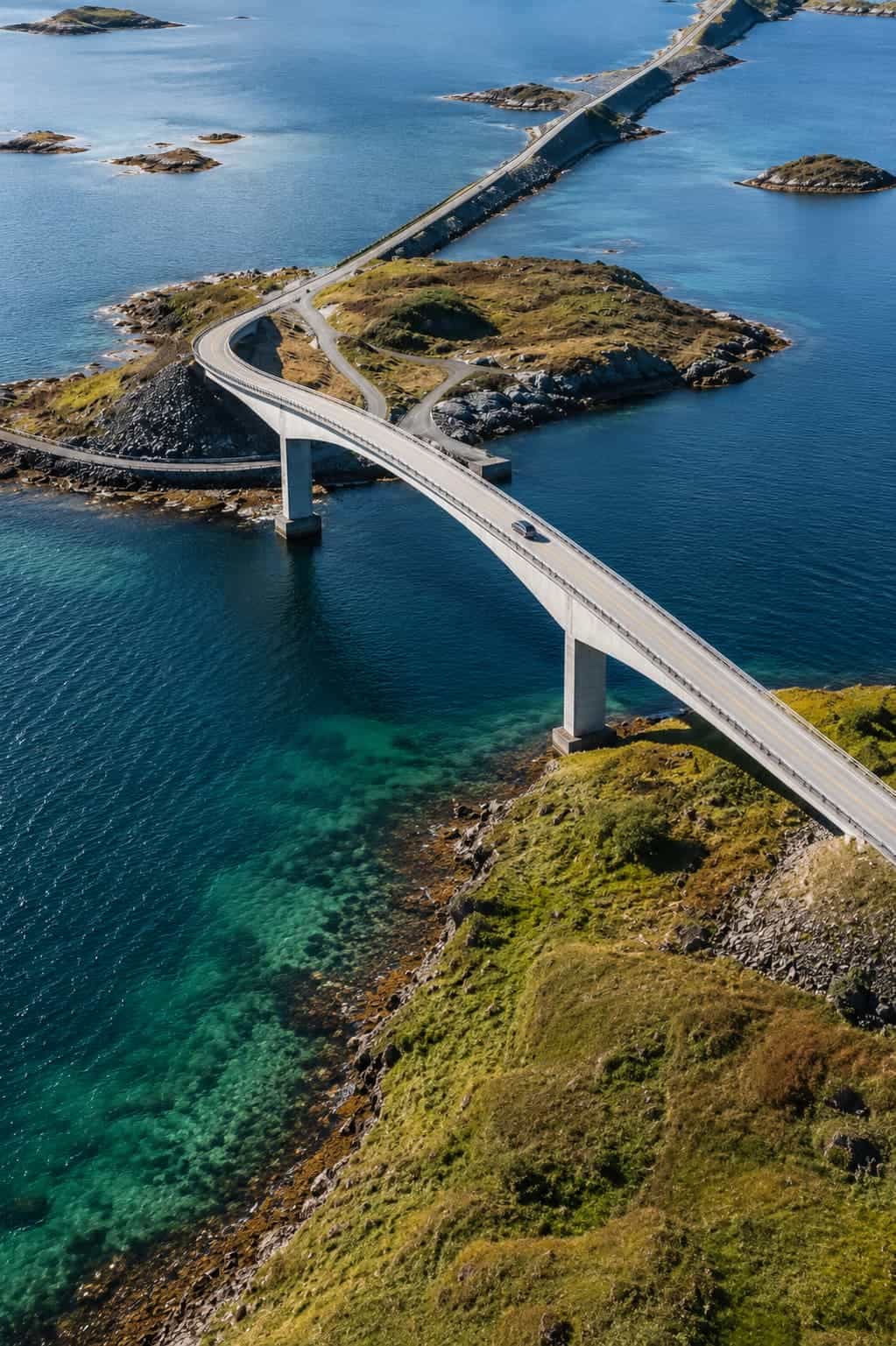
The E10 is the single highway threading through the Lofoten Islands from the northeastern tip to the village of Å at the southwestern end — approximately 170km of road that crosses bridges between islands, passes through fjord tunnels, and delivers a new unreasonable view every few kilometres. Most visitors drive it over several days, stopping at the villages along the route.
What follows is the honest version of the key stops — what each one actually offers, how crowded it gets, and what to prioritise if your time is limited.
The northern stops: Svolvær and Henningsvær
Svolvær — Northern Base
Henningsvær — Most Photographed Village
The southern stops: Nusfjord, Reine, and Å
Nusfjord — Best-Preserved Fishing Village
Reine — The Iconic View
Å — The End of the Road
→
→
→
→
04 — The Lofoten Islands Midnight Sun: What It’s Actually Like
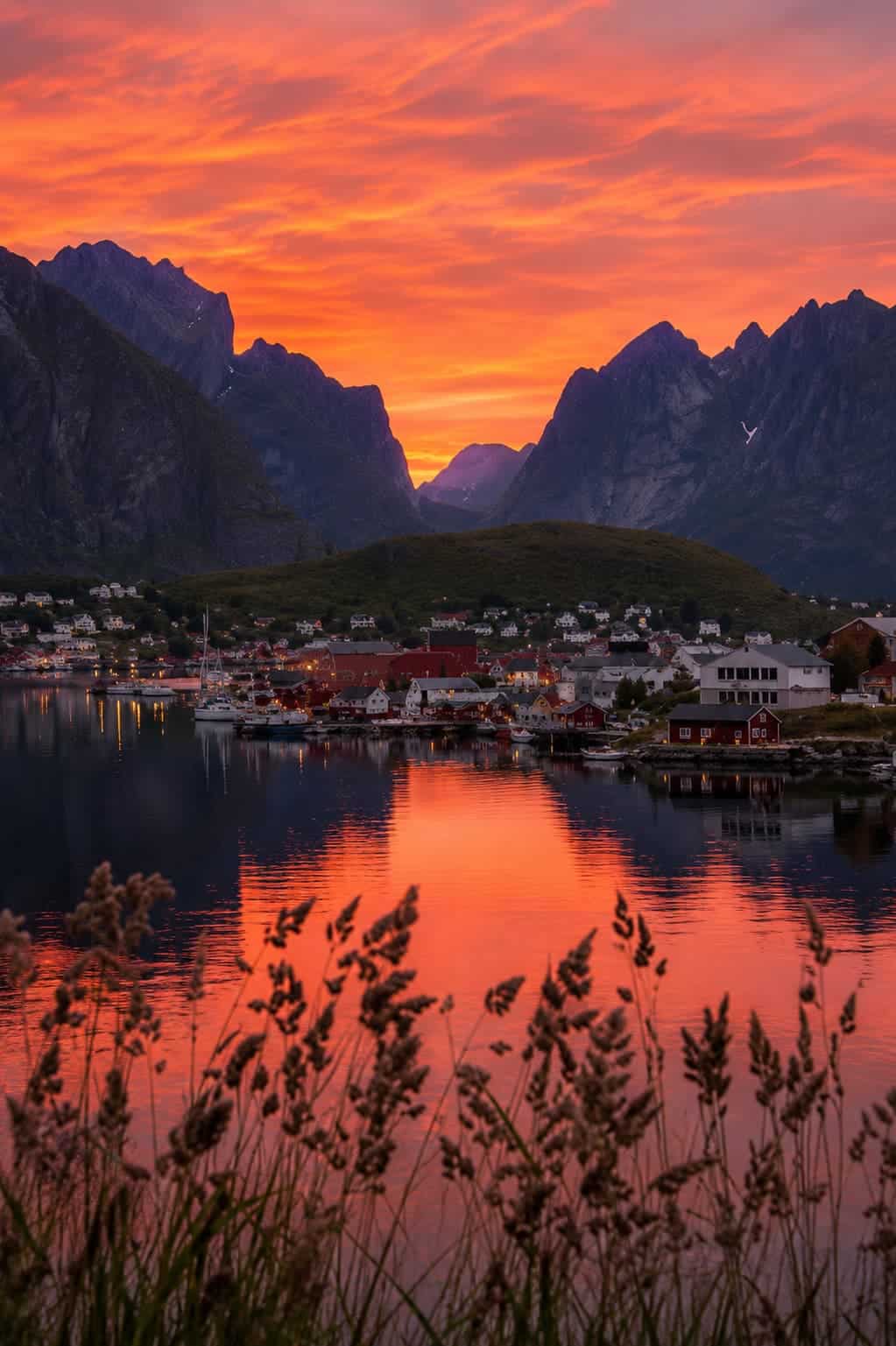
The midnight sun in Lofoten Islands Norway runs from late May to mid-July — approximately six weeks during which the sun does not set below the horizon at all. This is not a poetic description. The sun is genuinely visible at midnight, at 2am, at 4am. It rolls lazily along the northern horizon, casting long golden light across the mountains and water, and the sky holds a warmth your brain continues to associate with early evening regardless of what your watch says.
Season runs: approximately May 25 – July 14. Summer solstice: June 20–21 (maximum daylight). Sweet spot: First two weeks of June — midnight sun active, wildflowers in bloom, peak summer crowds not yet arrived.
What the midnight sun does to your sense of time
The disorientation is real and worth preparing for. After the first day, most visitors report losing track of time in a fundamental way. You sit down for dinner and look up to find it is 11pm with the room still flooded in warm light. You decide to go for a short evening walk and return three hours later, having not noticed. Because it is technically possible to hike, kayak, or simply sit by the water at any hour, the normal social signals that tell you when to stop doing things and go to sleep do not apply. This is genuinely wonderful and also genuinely confusing.
The practical consequence is sleep. Many Lofoten accommodations are well-equipped with blackout curtains — if yours is not, bring an eye mask. Light through an unblocked window at 3am is equivalent to midday sunshine.
The quality of Arctic light on the Lofoten Islands
Beyond the novelty, the light itself is extraordinary as a visual phenomenon. Because the sun sits low on the horizon throughout the night hours, the entire landscape is lit from the side rather than from above. Shadows are long. Mountains catch the light on their faces while the water below sits in relative shade. The quality is closest to what photographers call golden hour — except that in Lofoten Islands Norway in June, golden hour lasts the entire night.
05 — What to Do on the Lofoten Islands Beyond the Drive
The E10 road trip is the frame, but the Lofoten Islands Norway has enough to fill it properly. The activities below stand out not as tourist-brochure additions but as things that are genuinely different from what you can do anywhere else in Europe.
Outdoors and adventure on Lofoten
Specifically, the following activities stand out as things that are genuinely different from what you can do anywhere else in Europe — not additions to the itinerary, but reasons to come in their own right.
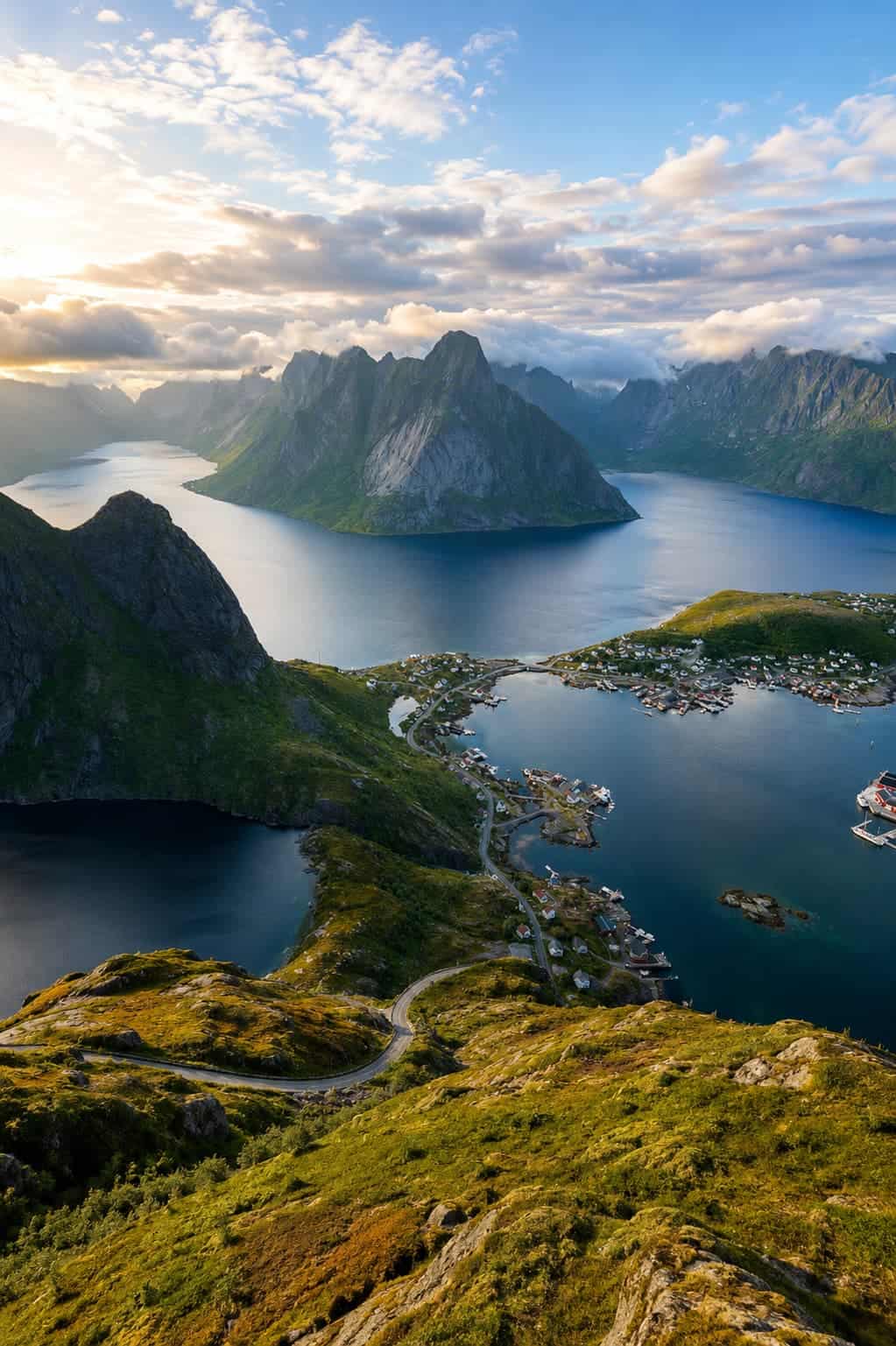
- Reinebringen hike: 448 metres of elevation from Reine to a ridgeline with a full 360-degree view of the surrounding fjords and peaks. Steep, direct, 1.5–2 hours each way. The upper section involves fixed chains — comfortable hiking shoes minimum, proper boots better. The best view in Lofoten Islands Norway. Go early morning to avoid peak summer queues on the trail.
- Kayaking through the fjords: Seeing Lofoten from the water changes the scale of everything. Mountains look taller from sea level; the villages appear differently when approached by paddle. Several operators offer guided tours from Svolvær, Henningsvær, and Reine. Under the midnight sun, an evening session starting at 9pm and finishing at midnight is a genuinely memorable option.
- Surfing at Unstad Beach: The northernmost surf beach in the world — a working surf break with consistent Atlantic swells, inside a steep-walled valley, with snow visible on the mountains above the car park. Lessons and board rentals are available from the Unstad Arctic Surf school. You do not need to surf to make the drive worthwhile.
- Haukland and Uttakleiv beaches: The pale sand beaches on the western coast — walk them in the evening light, or at midnight. Swimming is possible; standing and looking at them is required.
Wildlife and water
Beyond the land-based options, the water around the Lofoten Islands opens up two activities that are consequently impossible to replicate elsewhere in Europe.
- Sea eagle safari in Trollfjord: The Trollfjord — 3km long, 100 metres wide at its narrowest, walls rising 1,000 metres on both sides — is accessible only by boat from Svolvær. Boat tours combine the fjord with white-tailed sea eagle watching. The fjord alone is worth it. The eagles are a substantial bonus.
- Whale watching from Vesterålen: If you are extending the trip north beyond the Lofoten Islands, Andenes on the neighbouring island of Vesterålen runs some of the most reliable sperm whale watching tours in Europe, particularly in summer.
Culture and slow travel
In addition to the outdoor activity, the Lofoten Islands Norway offers three cultural experiences that reward visitors who build in time to slow down.
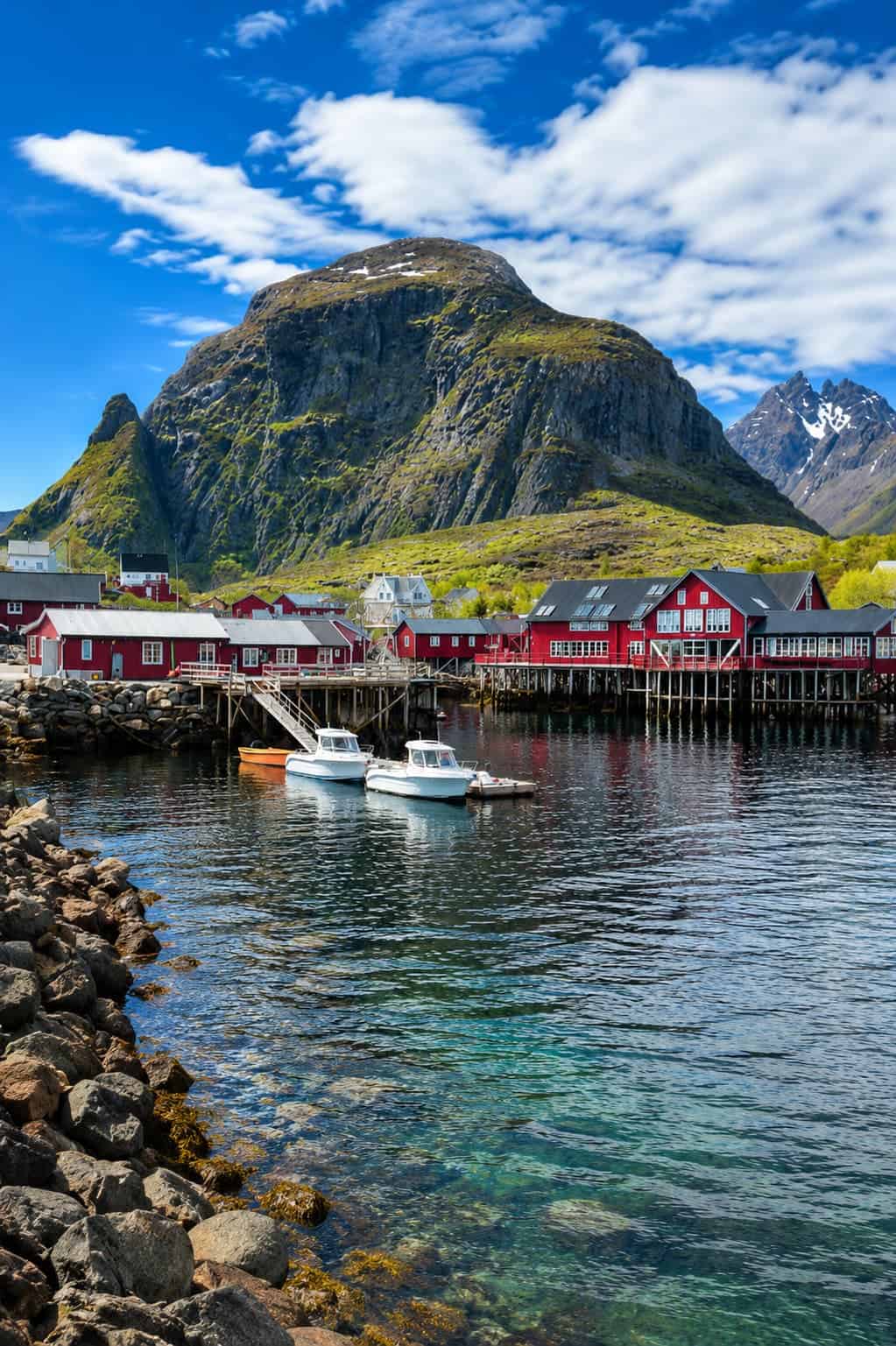
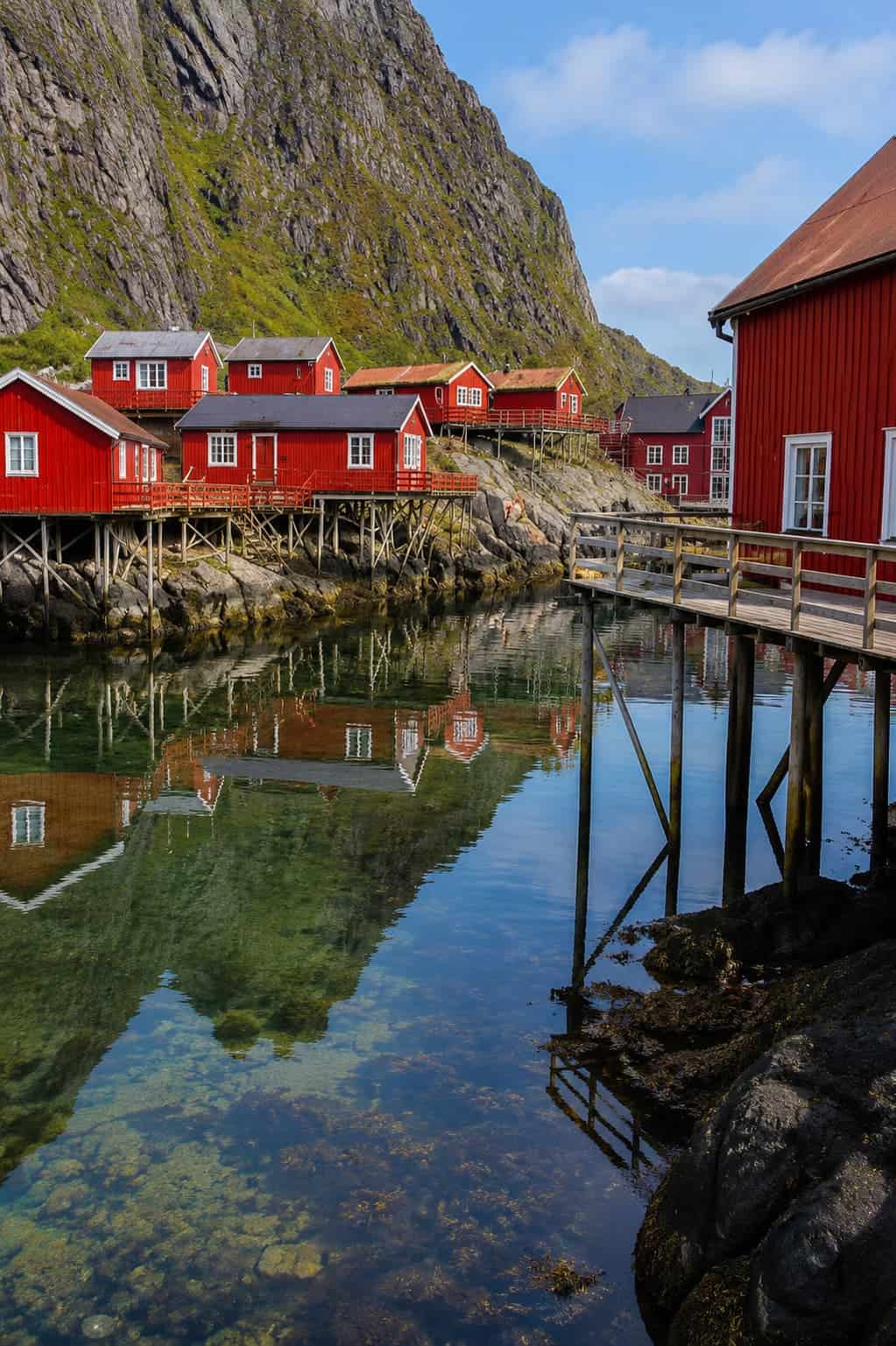
- Staying in a rorbuer cabin: The traditional fishermen’s cabins lining the Lofoten shoreline are the defining accommodation experience on the islands. Renovated to varying standards — from basic self-catering to high-spec boutique stays with harbour views. Budget €150–300 per night for a decent standard. Reine Rorbuer is the most celebrated; more affordable options exist in Nusfjord and Sakrisøy.
- Norwegian Fishing Village Museum, Å: One of the best-preserved fishing village environments in Norway — cod liver oil factory, a traditional boathouse, and the full context of what the Lofoten Islands actually were before tourism arrived.
- Lofotr Viking Museum, Borg: The site of the largest known Viking longhouse ever discovered — a reconstructed chieftain’s hall with artefacts, demonstrations, and the kind of immersive presentation that makes history legible. Particularly good for visitors with children or anyone wanting context for the landscape they are driving through.
06 — When to Visit the Lofoten Islands Norway: Season by Season
The Lofoten Islands Norway offer a meaningfully different experience in each season. The right choice depends entirely on what you are after — consequently, it is worth understanding what each window actually delivers before booking.
The most popular window — midnight sun, warmest temperatures, full activity season, all cafés and boat tours operating. Hiking is at its best: the mountain paths are clear of snow and the wildflowers on the hillsides are in bloom. Furthermore, July and August bring the heaviest crowds to the Lofoten Islands, particularly in Reine and Henningsvær. Best for: First-time visitors, hikers, kayakers, photographers. Book accommodation 3–4 months in advance for July.
Why late June beats July for the Lofoten Islands
Late June sits in the midnight sun window but before the school holiday crowds arrive in force. As a result, you get the full summer experience — long light, warm temperatures, all activities running — with noticeably more space on the trails and in the villages. For most visitors, it is the optimal week of the year to be on the Lofoten Islands Norway.
Shoulder season and winter on the Lofoten Islands
The underrated window for Lofoten Islands Norway travel. Midnight sun is beginning, wildflowers are in bloom across the hillsides, the mountain trails have mostly cleared of snow, and the summer crowds have not yet arrived. Prices are noticeably lower than July. Most activity operators are open by mid-May. Best for: Experienced travelers who want the summer Lofoten experience without peak-season crowds. Highly recommended.
Autumn on the Lofoten Islands: Northern Lights season begins
Dramatically fewer visitors than summer — the Lofoten Islands villages feel like villages again. Autumn colours appear on the hillsides, and the Northern Lights season begins in late September (not guaranteed, but increasingly possible through October). Additionally, the light takes on a different, moodier quality that rewards photographers in particular. Some activity operators begin winding down. Best for: Northern Lights seekers, photographers, those who actively prefer quiet. Requires warmer clothing and flexible weather expectations.
Winter on the Lofoten Islands: Arctic conditions and peak aurora
Winter Lofoten Islands Norway is a different destination entirely — snow-covered peaks, frozen beaches, the polar night (permanent twilight in the depths of December), and the best Northern Lights conditions of the year. Many accommodation options and activity operators close; however, the ones that remain are generally very good. Specifically, January and February offer the most reliable aurora conditions alongside the most dramatic winter scenery. Best for: Northern Lights photography, absolute solitude, those who have done summer Lofoten and want the other version.
The aurora requires darkness, clear skies, and solar activity — none of which can be guaranteed. September through March is the window; late September, February, and March offer the best balance of darkness and reasonable weather. A dark, clear night with a geomagnetic forecast of Kp 3 or above is the combination to watch for. The aurora is not rare in Lofoten — but it is also not guaranteed on any specific night. Yr.no is the most reliable weather forecasting tool for Norwegian Arctic conditions.
07 — Lofoten Islands Norway: Honest Costs and Getting Around
Norway is the most expensive country in Europe to travel in, and the Lofoten Islands — with limited capacity and high demand — sit at the higher end even within Norway. This is not a reason to avoid it. It is simply information worth having before you book, so the costs don’t come as a surprise.
Budget breakdown for Lofoten Islands Norway
| Category | Budget option | Mid-range | Notes |
|---|---|---|---|
| Accommodation | €40–60/night (hostel dorm) | €100–160/night (private room) | Rorbuer cabins: €150–300/night. Self-catering significantly reduces overall trip cost. |
| Food | €20–30/day (self-catering) | €60–90/day (eating out) | Restaurant mains €25–40. Harbour café lunch €15–20. Supermarkets reasonable. |
| Car rental | €60–100/day (booked in advance) | Petrol ~€2.00/litre. Full E10 road trip uses ~30–40 litres over 4–5 days. | |
| Flights | Oslo to Leknes/Svolvær: €70–180 return | Book 8–10 weeks ahead for summer. Check Widerøe directly. | |
| Activities | Reinebringen hike (free) | Kayak tour €60–90 · Sea eagle safari €50–70 | Unstad surf lesson €70–90. Viking Museum entry ~€20. |
Getting around Lofoten Islands Norway by car
- Rental car: Not optional — the only way to experience the Lofoten Islands properly. The E10 bus exists but is infrequent and misses most of the best stops and viewpoints. The freedom to pull over when the view demands it is half the experience.
- Pick-up location: Bodø airport (mainland) is often cheaper than island rentals. Take the ferry across with your car — compare total cost including ferry.
- Road conditions: The E10 is well-maintained. Some side roads to beaches and viewpoints are unpaved. A standard car handles everything except the most remote tracks.
- Fuel: Fill up in Svolvær or Leknes — smaller villages have limited or no fuel availability.
- Winter driving: October through April requires winter tyres (legally mandated in Norway). Confirm your rental includes them.
08 — Sample 5-Day Lofoten Islands Itinerary
This itinerary covers the full Lofoten Islands Norway E10 from north to south, with the key stops and activities distributed across five days. It can be compressed to four or extended to six depending on pace.
Day-by-day breakdown
| Day | Base | Focus |
|---|---|---|
| Day 1 | Svolvær | Arrive, collect rental car, walk the harbour, evening Trollfjord sea eagle safari by boat |
| Day 2 | Svolvær → Reine | Drive E10 south stopping at Henningsvær (morning, before crowds) and Nusfjord (afternoon). Arrive Reine, check into rorbuer cabin. |
| Day 3 | Reine | Reinebringen hike — early start. Afternoon rest or Reinefjord boat trip. Midnight walk along the shoreline under the midnight sun. |
| Day 4 | Reine area | Drive to Å (morning, end of the road). Detour to Unstad Beach and Haukland Beach on the return. Uttakleiv Beach at sunset — or midnight. |
| Day 5 | Depart | Final morning in Reine. Drive north to Leknes for afternoon flight, or back to Svolvær for ferry to Bodø. |
Add Vesterålen to the north of the Lofoten Islands for two extra days — similarly spectacular landscape, whale watching from Andenes, and dramatically fewer visitors. Alternatively, add a night on Senja Island further north, which many Norway regulars consider the most beautiful island in the country — and which appears on our list of the most beautiful places in Europe.
Planning your Lofoten Islands Norway trip
Getting around and where to stay
Costs and timing
The Lofoten Islands Norway are one of those places that justify the effort required to reach them — not because they exceed expectations, but because it turns out the photographs were not exaggerating.
The mountains really do look like that. The light really does last all night. You just have to go and stand there yourself.