

Northern Italy Road Trip: Dolomites, Lakes, and the Route Nobody Plans Properly
Most northern Italy road trip guides tell you what to see. None of them tell you where to start — or why the direction you drive changes everything. Here’s the routing logic, the honest Dolomites section, and the 10-day plan that actually works.
Why This Northern Italy Road Trip Route Works
A northern Italy road trip looks straightforward from the outside — Dolomites, Lake Como, a couple of cities — until you actually try to plan the route and realise that nobody has told you which direction to drive it. Or why it matters. Most guides start where the writer happened to fly in. That’s not routing logic. That’s an itinerary shaped by a cheap flight.
The actual routing question is this: where you fly in and where you fly out changes the whole shape of the trip. Do it in the wrong order and you’re backtracking across autostrada for half a day. Do it in the right order and the whole thing flows — lakes to mountains to alpine towns to Lake Como to Milan — like a journey with a narrative rather than a list of places visited.
This post is the guide nobody wrote: the honest routing verdict, the Dolomites section that actually explains how to use the mountains rather than just naming them, and the October-specific planning notes that change what you can access and when. If you’re looking at central and southern Italy instead, Italy in October covers where to go across the whole country.
01 — Is a Northern Italy Road Trip Better Than the Train?
Italy’s train network is excellent. Between the major cities — Venice, Milan, Verona, Florence, Rome — it’s genuinely faster and less stressful than driving. If your northern Italy trip is cities-only, take the train.
But a northern Italy road trip is not a cities-only trip. It’s a trip that includes the Dolomites. And there is no useful public transport to the Dolomite passes, the high rifugios, or the alpine meadows that make this part of Italy worth visiting. The bus connections exist, technically, but they’re slow, infrequent, and built for locals who live there — not for visitors who want to be at Seceda at dawn, drive Passo Gardena before lunch, and reach Cortina by evening.
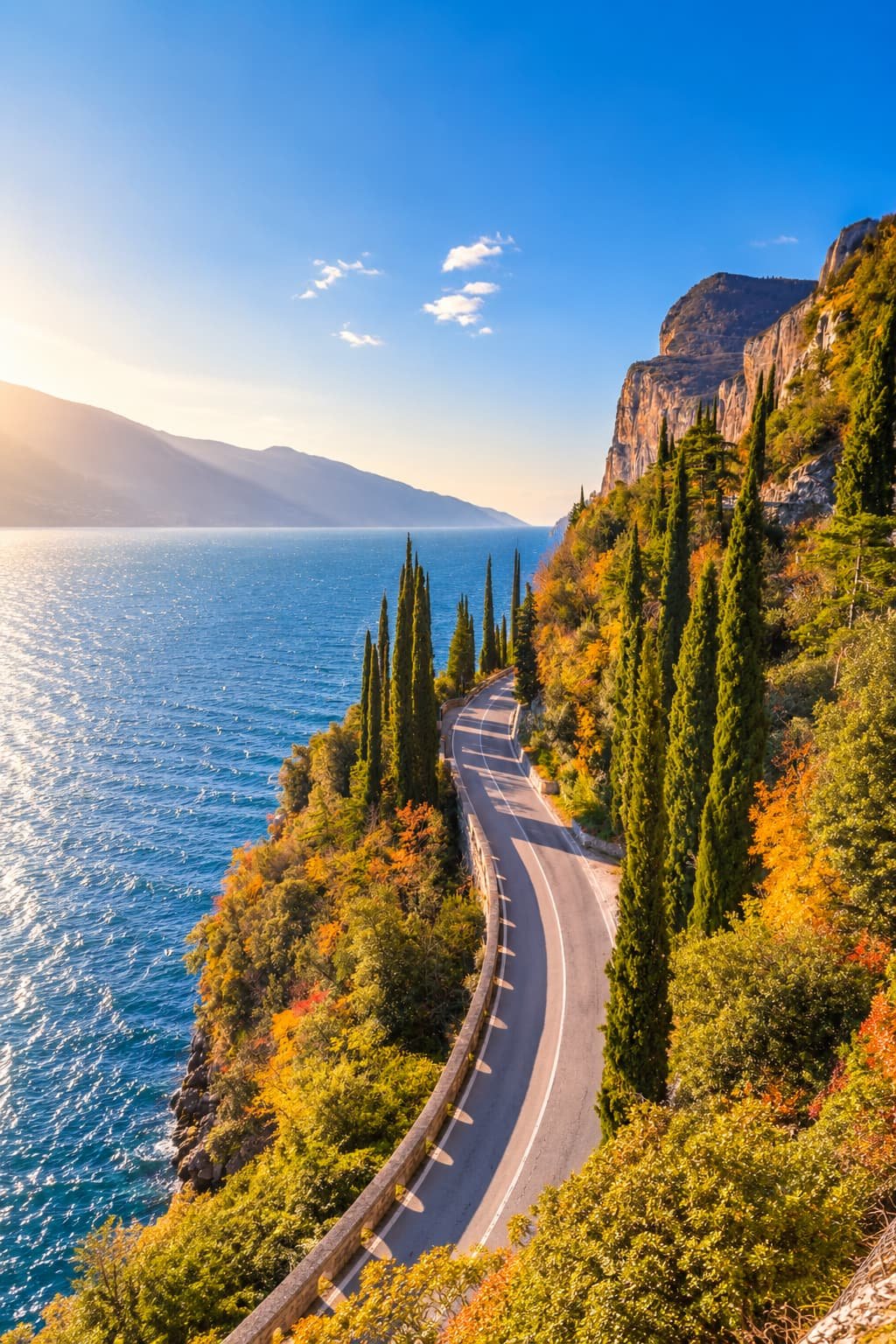
Lake Garda’s western shore has the same problem. The coastal road — a narrow, spectacular corniche cut through the cliff face above the water — is one of the most beautiful drives in Italy. You can’t do it on a bus.
Lake Como is actually fine without a car. The ferry system is excellent, Varenna is reachable by train from Milan, and the main lake towns are walkable. If you’re short on days, you could skip the car for the Como section entirely.
The honest verdict: drive for the Dolomites and Lake Garda. The car earns its keep completely in those sections. For Venice and Milan, park the car or skip the cities — they’re better on foot.
02 — Where to Start, and Which Direction to Drive
This is the section most guides skip entirely. They start where the writer flew in and present it as a route. It’s not. It’s a sequence of visits that may or may not make geographic sense.
Here are the three realistic options for a northern Italy road trip, and what each one means in practice:
Fly Verona in → Milan Malpensa out (recommended)
This is the cleanest route for a 10-day trip focused on lakes and mountains. Verona Airport sits 30 minutes from Lake Garda’s southern shore. You’re at the water within an hour of landing. From Garda, you drive north to the Dolomites — which is the right direction, since the mountains sit northeast of the lake. From the Dolomites, you cross west to Lake Como and drop into Milan for the flight home. The geography flows. No backtracking. One-way car hire Milan drop-off adds a modest surcharge but it’s worth it.
Fly Venice in → Milan out (adds Venice, adds backtracking)
Venice is 90 minutes east of the Dolomites, so flying in here makes sense if Venice is a priority stop. The problem: you’d drive Venice → Dolomites → Lake Como → Milan, which is broadly west across the country. That’s coherent directionally, but it puts you in the busiest destination on day one when you’re fresh off a flight. Workable, but the routing is less elegant than the Verona entry.
Fly Milan in → Milan out (the backtrack problem)
Flying both ways through Malpensa is convenient for booking, but it creates a geographic problem: the Dolomites are in the northeast and Lake Garda is southeast — starting and ending in Milan means you’re driving out and back to each destination rather than through them. The trip loses its narrative logic. If Milan is the only option for flights, this still works — just be honest about the extra driving involved, budget an extra half-day of transit, and don’t try to add Venice.
03 — How Many Days You Actually Need
Most northern Italy itineraries either cram too much in (10 cities in 7 days) or give each section too little time to breathe. Here’s the honest breakdown:
The Dolomites section is where most itineraries undershoot. Three days gives you two distinct areas — the western section around Val Gardena (Seceda, Alpe di Siusi, Val di Funes) and the eastern section around Cortina (Tre Cime di Lavaredo, Lago di Braies). Going less than three days means choosing one area. That said, missing the contrast is a real loss — the western Dolomites are more pastoral and larch-heavy; the eastern section is sharper, more dramatic, more alpine.
- 10 days: The full version described in this post. Verona arrival, Lake Garda (2 days), Bolzano (1 day), western Dolomites (3 days), eastern Dolomites (2 days), Lake Como (1 day), Milan fly-out.
- 8 days: Drop Venice from consideration and tighten Garda to one full day. Everything else holds.
- 7 days: Drop Lake Como and the second Garda day. Drive Verona → Garda (1 day) → Dolomites (4 days) → Milan. Still worth doing — the Dolomites are the point.
- 5 days: Dolomites only. Fly into Bolzano or Innsbruck, base yourself in Val Gardena, day-trip east. A complete, satisfying trip for the right traveller.
04 — The 10-Day Northern Italy Road Trip
→
→
→
→
→
→
Fly into Verona — drive to Sirmione, Lake Garda
Verona’s Villafranca Airport is one of Italy’s most useful lesser-known airports. Pick up the car and you’re at Lake Garda’s southern shore in 30 minutes. Sirmione is the base — a medieval walled town on a narrow peninsula with a 13th-century Scaligero castle rising directly from the water and Roman villa ruins at the tip. It’s small, it’s walkable, and it’s an unusually beautiful place to land on a travel day when you don’t want to navigate.
Arrival day
Lake Garda — drive the western shore
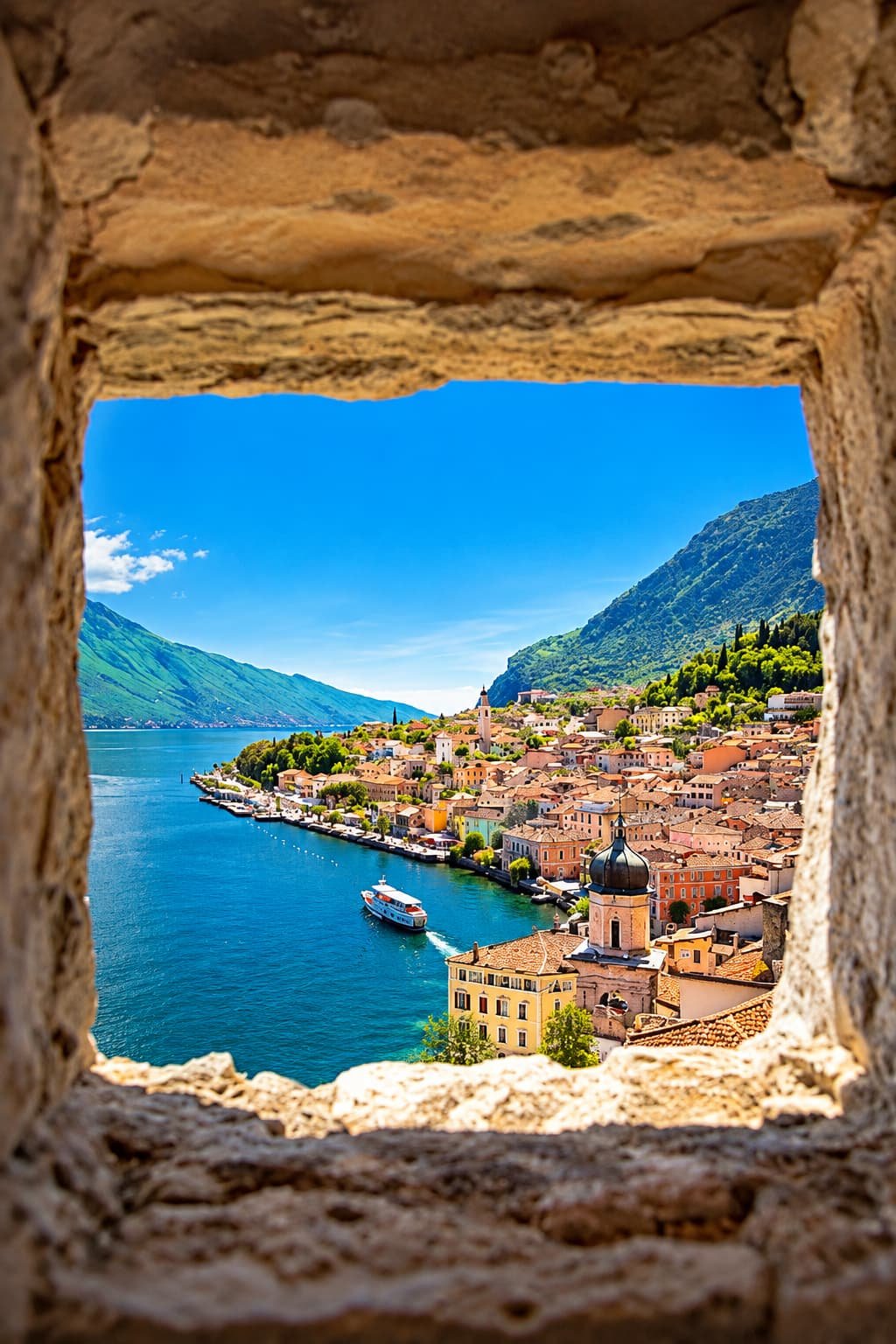
The western shore road between Salò and Riva del Garda is the reason a car is worth having on this trip. The Gardesana Occidentale is a clifftop corniche cut directly through the rock face — tunnels, hairpins, the lake hundreds of metres below. It’s one of Italy’s great drives. Stop in Limone sul Garda for lunch (the lemon trees that give the town its name still grow on the terraced groves above the road). Reach Riva del Garda at the northern tip by mid-afternoon. From the eastern shore, the cable car to Monte Baldo from Malcesine is worth the climb for the panorama — if time allows. Current ferry timetables and lake transport options are listed on the Visit Garda official site.
Scenic drive
Lake Garda to Bolzano — via Trento
Drive north from Garda through the Adige valley toward Trento. The city earns a stop — Piazza Duomo is one of the best squares in northern Italy, and the Castello del Buonconsiglio, the massive medieval castle overlooking the old town, is genuinely impressive. An hour is enough. Continue north to Bolzano: South Tyrol’s capital, geographically Italian, culturally Austrian, architecturally somewhere in between. The arcaded streets, the wine bars, and the fact that menus come in two languages are worth experiencing on their own terms. Overnight Bolzano — it’s underrated as a base and makes the next morning’s drive into the Dolomites feel earned.
Transit day with stops
Western Dolomites — Val Gardena base
Three days in the western Dolomites, based in Ortisei or Selva di Val Gardena. This is the larch-season core: the Odle spires, the high meadows of Alpe di Siusi, and the pass roads that make October driving in the Dolomites unlike anything else in Italy. Day 4: Seceda cable car (check October operating dates — some systems close mid-month) and the Val di Funes panorama trail. The view from the Seceda ridge — Odle towers behind you, the green valley below, Santa Maddalena church at the field floor — is among the most photographed in the Alps. In October, it’s surrounded by gold.
Day 5: Alpe di Siusi — Europe’s largest alpine meadow. Check the access road restrictions the night before. Private vehicles are permitted only during specific early morning and evening windows; the current schedule is published on the official Seiser Alm website, and fines for driving outside the permitted window are significant. October is one of the more permissive months, but confirm before going. The larches on the plateau in full October colour against the Sassolungo massif are worth planning the whole trip around. Day 6: The pass roads. Drive Passo Gardena and Passo Sella. These are Dolomite driving at its most cinematic — sweeping hairpins, pale limestone walls rising on both sides, barely any traffic in October.
Dolomites West · Larch Season

Eastern Dolomites — Cortina d’Ampezzo base
Drive east from Val Gardena through Alta Badia — the road through the valley is beautiful in its own right. Cortina d’Ampezzo is the base: more resort-town in character than the western valleys, but fully serviced year-round and central to both Tre Cime and Braies. Day 7: Tre Cime di Lavaredo. The access road to Rifugio Auronzo is a private toll road — approximately €30 per car — with restricted operating hours. In late October some years it closes entirely; confirm current access before committing to this as a plan. If it’s open, the three-hour circuit trail around the three pale limestone towers is one of the most iconic hikes in the Alps. In October, the surrounding larch slopes are gold and the crowds are a fraction of summer.
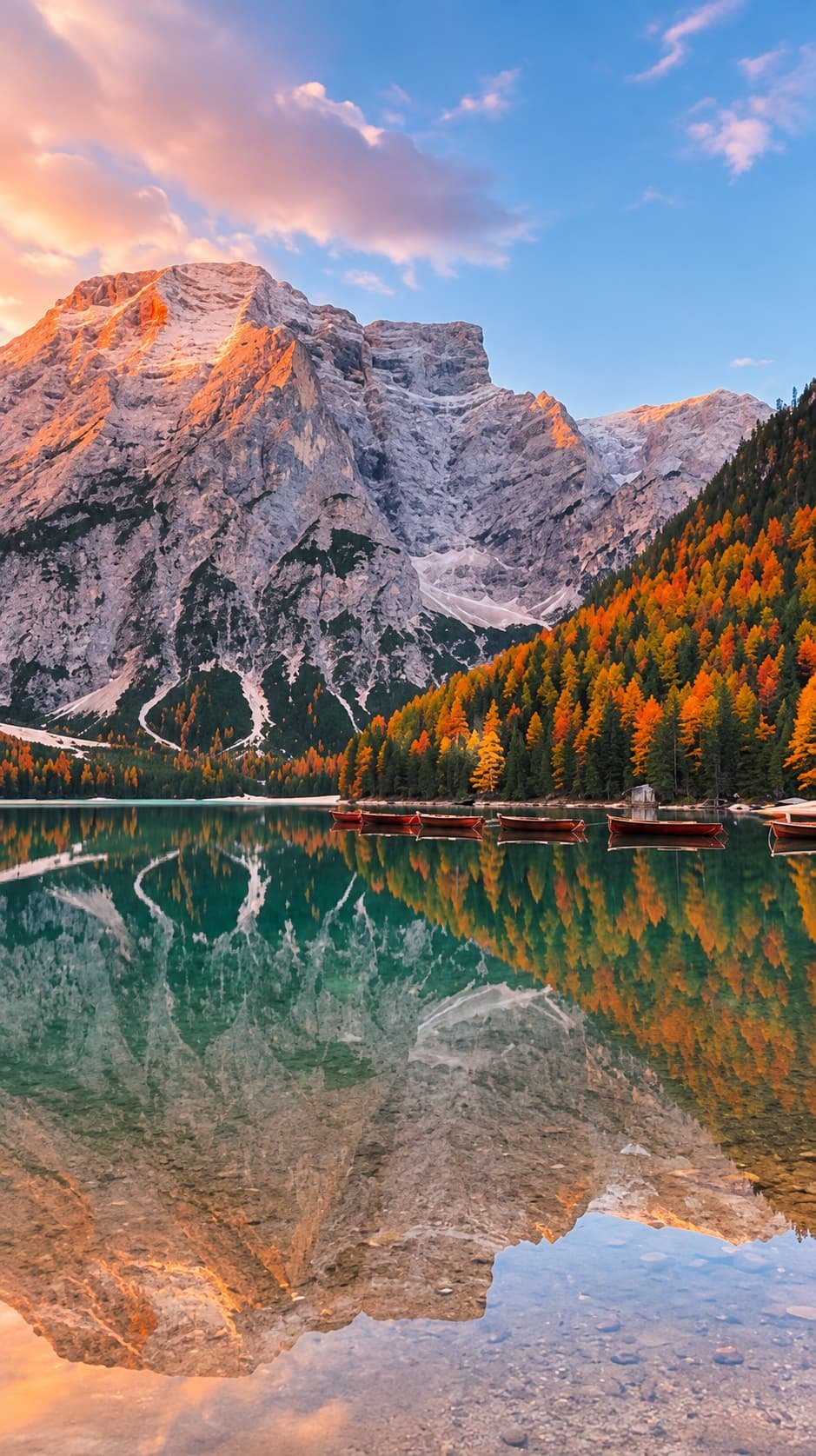
Day 8: Lago di Braies. The emerald lake, ringed by larch forest and backed by vertical cliff walls, is one of the Dolomites’ most photographed places. In summer it’s completely gridlocked before 8am. In October, it breathes. Walk the perimeter trail — 90 minutes — and leave before noon to begin the long drive west toward Lake Como.
Dolomites East · Tre Cime
Lake Como — based in Varenna
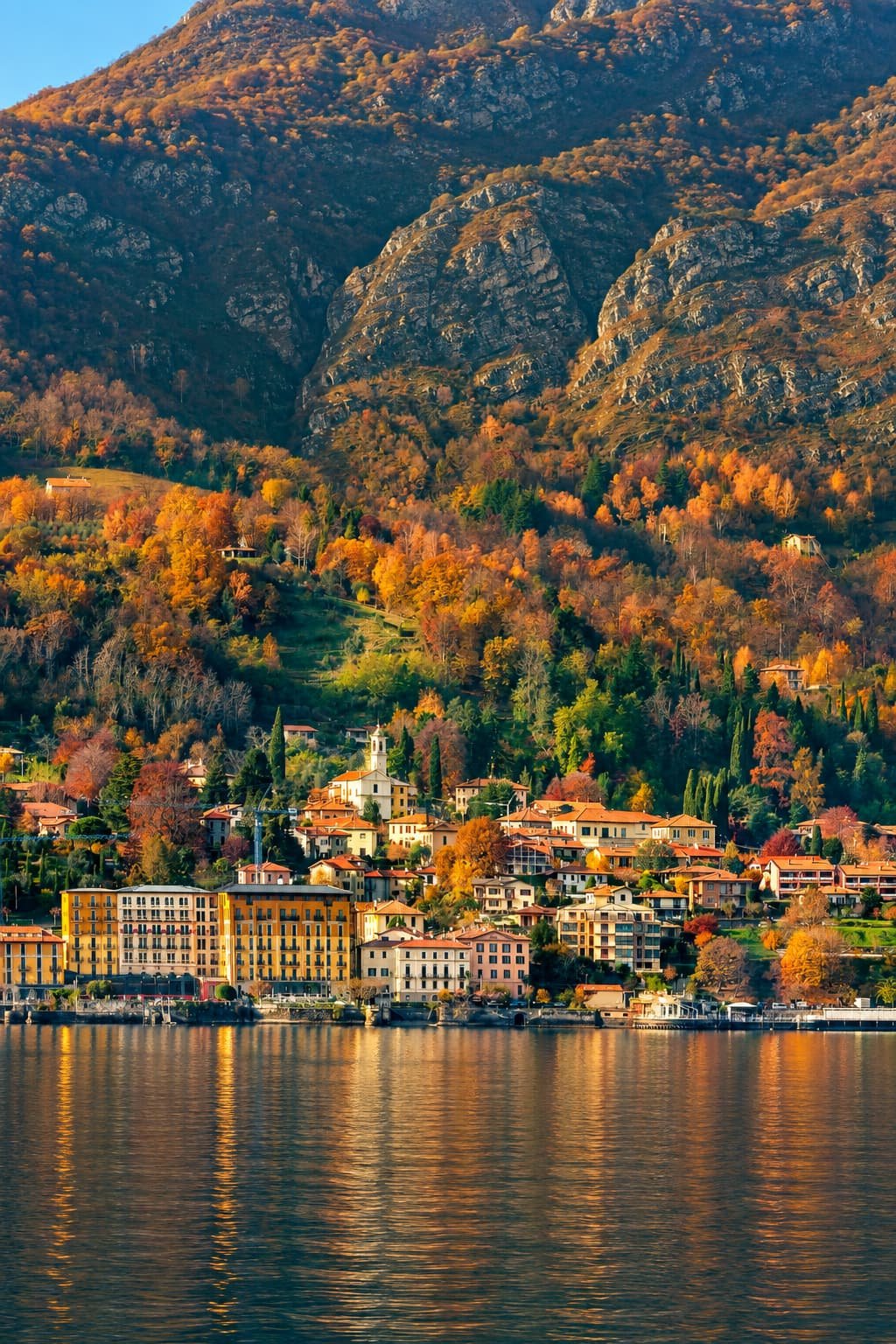
Drive west on the A4 autostrada, skirting Bergamo (worth a glance at the upper city’s silhouette from the road). Lake Como in October is genuinely better than summer — low-angle golden light on the water, fewer ferries crowding the lake, the Villa Monastero gardens in Varenna still open. Varenna is the right base: quieter than Bellagio, reached by ferry from the lake’s centre, and capable of keeping its character even when summer turns it into a postcard. Bellagio by morning ferry is the obvious day-trip — the lakeside esplanade and the silk shops are the same as always, but the walk up into the village itself is worth more of your time than most visitors give it. For alternatives to the main lake, Lake Como Alternatives covers the quieter options nearby.
Lake Como
Lake Como to Milan — fly home
One hour on the autostrada. Drop the car at Milan Malpensa — the airport is northwest of the city and works well for the direct Como-to-airport drive without entering Milan’s centre. If you arrive early enough: the Duomo rooftop is 20 minutes from the airport side of the city, the Brera neighbourhood is worth an hour, and an Aperol in any bar on Corso Como is a perfectly acceptable way to spend the last of Italy before a flight. Milan is a genuinely good city. It just doesn’t need more than a morning when the mountains have been done first.
Fly-out day
05 — When is the Best Time for a Northern Italy Road Trip?
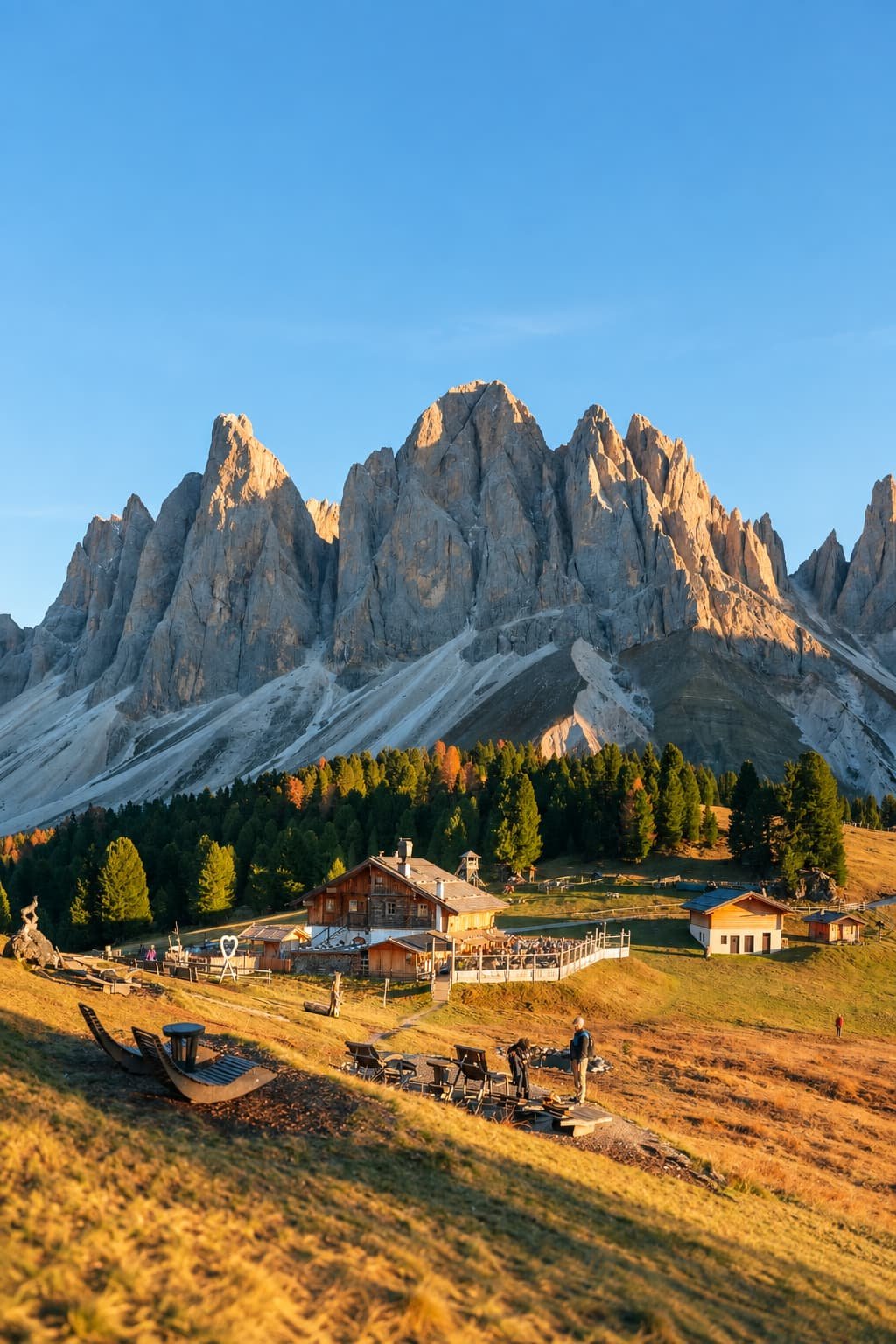
October. That’s the honest answer for the kind of traveller who reads IQT — people who want the visual impact without the summer gridlock, who find a mountain pass with no other car on it more appealing than a mountain pass with a queue.
The larch trees of the Dolomites turn from summer green to an almost impossible gold between roughly October 5th and 20th, with the exact peak varying by a week or two depending on the year’s temperatures. Val di Funes, Alpe di Siusi, and Passo Gardena are among the most dramatic locations during this window. The high terrain peaks earlier; the valleys later. For context on how the Dolomites compare against other European autumn destinations, the Italian Tourist Board’s autumn guide covers the broader seasonal picture across regions.
Early, Mid, and Late October in the Dolomites
Early October is the safest planning window: everything is still open, the colour is building, and the crowds have thinned from summer. Mid-October is the peak colour window with the best light — this is the window to target if you’re building the trip around the larch season specifically. Late October is the quietest but carries the most access risk: some cable cars finish their season, the Rifugio Auronzo road above Tre Cime may close, and higher terrain can see early snow. A dusting of snow on the pale limestone with gold larches below is, incidentally, one of the most spectacular things the Dolomites can produce — it’s not automatically a problem.
Summer (July–August) is the alternative for those who need school-holiday timing. It’s warmer, the hiking is easier, and the wildflowers on the high meadows are genuinely beautiful. However, it’s also significantly more crowded — Lago di Braies before 8am in August has a queue of cars; the Tre Cime circuit has more hikers than the path comfortably holds. The mountains are not ruined in summer. They’re just different.
06 — Honest Notes on Driving in the Dolomites
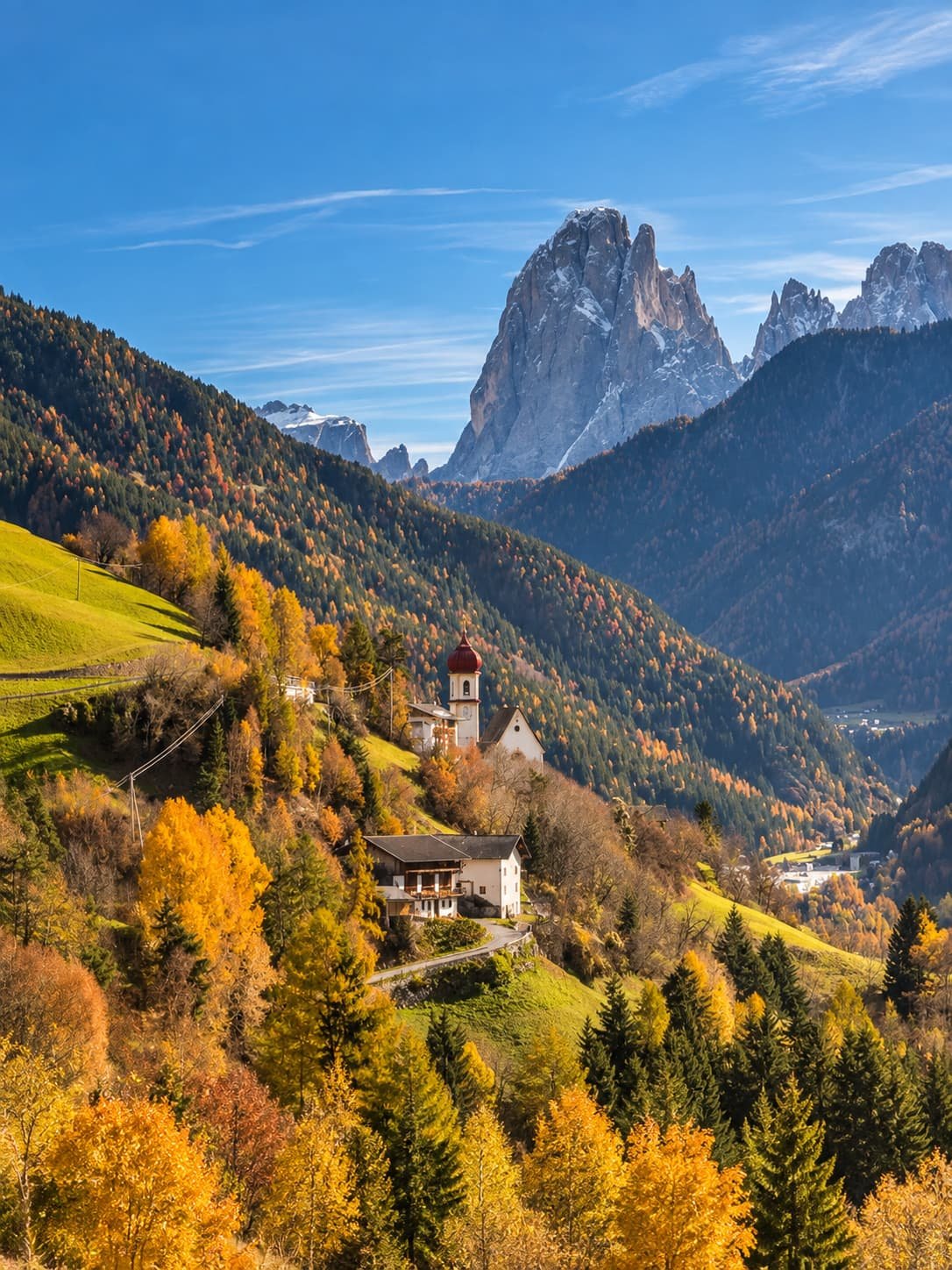
The mountain pass roads are narrower than they look on maps. Two-way traffic on single-lane roads is standard in the Dolomites and requires patience rather than panic. If you meet a vehicle coming the other way, one of you will back up to the nearest passing point. It happens, it’s normal, and everyone does it.
October traffic is genuinely light by comparison with summer. Lago di Braies in July has a car park that fills before 8am and a queue stretching down the road; in October you can arrive at 10am and park easily. The same is true of Tre Cime — the circuit trail has space to breathe.
Practical Rules for Driving the Dolomites
- GPS: Works in most valleys but can drop in some narrower sections. Download offline maps (Maps.me or OsmAnd cover the Dolomites well) before entering the mountains.
- Alpe di Siusi access: The road up to the plateau has a restricted vehicle access window. Look up the current schedule on the official Seiser Alm website — the hours change seasonally and fines for driving outside the permitted window are significant. October is one of the more permissive months, but confirm before going.
- Tre Cime toll road: Approximately €30 per car. Operates within restricted hours and may close entirely in late October. Check with your accommodation in Cortina before planning the visit.
- Fuel: Fill up in the valley towns (Bolzano, Ortisei, Cortina). Petrol stations are absent on the high passes and rare in the smaller mountain villages.
- Car type: A standard car is fine for all the roads in this itinerary. You do not need a 4×4. The passes are paved; snow is possible from mid-October but early snow events are usually brief and roads clear quickly.
Transport and Route Planning
Dolomites Timing and Trip Length
Lakes, October Snow, and Verona
08 — The Northern Italy Road Trip Verdict
The Dolomites in October are one of those places where the photograph doesn’t quite explain the experience — the scale of the pale rock above the gold trees, the silence of a pass road with nobody else on it, the way the light changes everything every half hour.
Plan the route properly, drive in the right direction, and give the mountains the time they actually need.