

Lisbon to the Algarve: The Road Trip That Gets Portugal Right
Three routes, one honest verdict. Here is how to drive from Lisbon to the Algarve — the scenic coastal way, the inland Alentejo option, and what the fast road actually skips.
Why the Lisbon to Algarve Road Trip Is Worth Slowing Down
The Lisbon to Algarve road trip has a default version: fly in, join the A2 motorway, arrive in the south 2.5 hours later. It works. The motorway is fine. The Algarve is lovely. And you will have completely missed the stretch of Portugal that most people who live there consider the real thing.
The Alentejo coast — a 150-kilometre strip of Atlantic cliffs and undeveloped beaches that runs between the Setúbal Peninsula and the Algarve border — is one of the least-visited coastlines in Western Europe. Not because it’s difficult to reach. Because the motorway doesn’t go near it, and most travel guides don’t mention it as a route.
This post covers the three ways to drive from Lisbon to the Algarve, makes an honest call on which one is actually worth doing, and builds out a five-day itinerary that uses the coastal route going south and the A2 on the return — so you see both without backtracking. One piece of information you’ll want before booking: the A22 motorway running the length of the Algarve coast became toll-free in January 2025. Almost every travel guide still quotes the old toll figures. They’re wrong.
01 — Lisbon to the Algarve: is the drive worth it, or should you take the train?

The train deserves an honest mention because it’s genuinely good. The Alfa Pendular from Lisbon Oriente to Faro takes around 2.5 to 3 hours, runs several times daily, costs €20–30, and drops you in the centre of Faro. If you are heading to a resort, staying put for a week, and have no interest in the Alentejo, the train wins on every metric that matters.
The car earns its keep when you want to move through the country rather than arrive in it. The coastal Alentejo stops on this itinerary — Comporta, Porto Covo, Vila Nova de Milfontes, Zambujeira do Mar — are either impossible or impractical by public transport. Odeceixe, where the Seixe river curves into the sea just above the Algarve border, has one bus a day in summer. In October, none.
The honest frame: renting a car for this trip is about unlocking a completely different part of Portugal, not about the drive itself being spectacular from end to end. If you’re a first-time Algarve visitor who just wants the beach, take the train and don’t feel like you’re missing anything important. If you’ve been before, or if you want to understand what Portugal actually looks like between the cities, the car route is the trip. For a wider overview of planning a first visit, see Portugal travel tips for first-timers.
02 — The three routes from Lisbon to the Algarve — and which one is actually right for you
Most coverage of this drive either lists every possible stop without making a call, or covers only the fast motorway with a brief mention that a coastal alternative exists. The honest picture is simpler: there are three meaningfully different routes, each suits a different type of traveller, and only one of them qualifies as a road trip in any real sense.
→
→
Route 1 — The A2 Motorway: fastest, least interesting
The A2 runs from Lisbon to Albufeira in roughly 2.5 hours with no stops. It cuts through the flat inland Alentejo on a smooth dual carriageway that tells you nothing about the country you’re in. That’s not a criticism — it’s the correct tool if getting there quickly is the point. Tolls come to approximately €23.30 one-way for a standard car.
If you’re driving the A2, the interesting stops are near the endpoints rather than along the route itself. Near Lisbon: Setúbal and the Arrábida coast. Near the Algarve: Silves (the old Moorish capital, genuinely underrated) or Loulé (the market town most tourists miss on the drive to Albufeira). But to reach either, you’re adding time to a journey that was meant to be quick. The honest verdict: the A2 is not a road trip. It’s a motorway with nice weather. Use it for the return.
Route 2 — The coastal Alentejo via the N120: the Lisbon to Algarve route worth doing
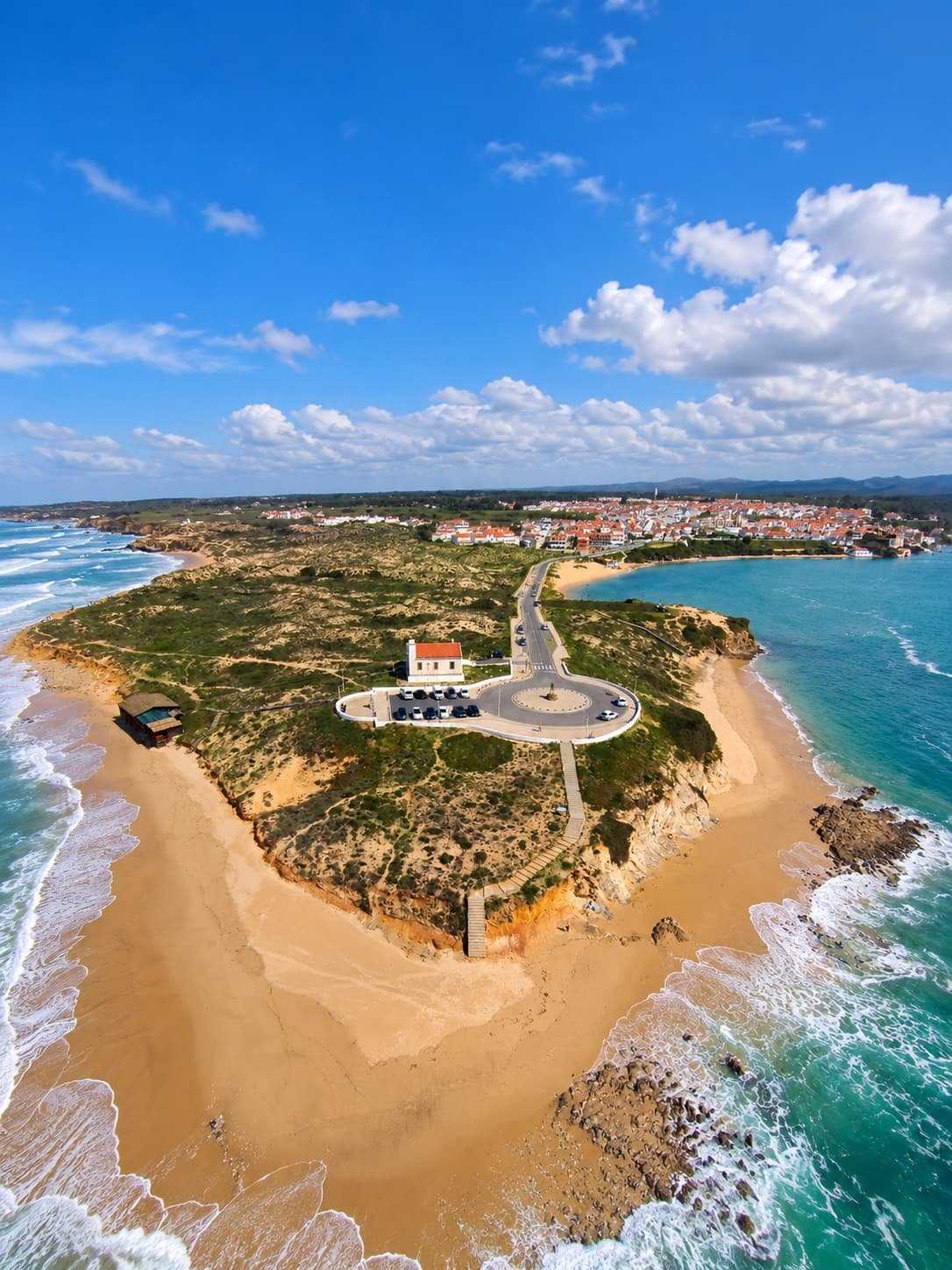
The N120 coastal route adds around 160 km and at least 2.5 hours to the direct drive. It is toll-free. It passes through Comporta, Porto Covo, Vila Nova de Milfontes, Zambujeira do Mar, and Odeceixe before crossing into the Algarve — places that collectively represent one of the least-developed Atlantic coastlines in Western Europe.
The beaches here are long, wild, and empty even in August relative to the Algarve. There are no sunlounger hire operations on the Alentejo coast. In October, you will often have a beach that stretches for a kilometre in either direction to yourself. The clifftop roads are single-lane and occasionally unsigned, which is part of the point. This is the recommended route south, built into the five-day itinerary below.
- Distance: ~400 km total Lisbon to Lagos
- Driving time: 5+ hours without stops — plan for a full day or split across two
- Tolls: None on the N120 coastal section
- Best for: Anyone who wants to understand what the Alentejo is, or who has already done the Algarve and wants the contrast
Route 3 — Inland via Évora: a cultural detour, better as a return leg
The third option trades the Atlantic for cork oaks, rolling plains, and megalithic standing stones. Évora sits roughly 1.5 hours from Lisbon and 2.5 hours from Lagos — making it a natural overnight stop if you’re using the inland route. It has been UNESCO World Heritage listed since 1986 for a historic centre that includes a Roman temple, a medieval cathedral, and the Chapel of Bones.
This route works best as the return leg from the Algarve rather than the outbound journey — partly because Évora makes a better afternoon stop than a morning one, and partly because arriving in the Algarve through the Alentejo interior feels anticlimactic when you haven’t yet seen the coast. The five-day itinerary below uses it exactly this way: coastal N120 going south, A2 via Évora coming back.
03 — How long does the Lisbon to Algarve drive take — and how many days do you need?
The honest minimum for the coastal route is three days: one night somewhere on the Alentejo coast (Vila Nova de Milfontes is the obvious anchor), and two nights in the Algarve before returning. That gets you the coastal scenery without any of the slow travel logic that makes it worth doing.
Five days is where the trip works properly. Two nights on the Alentejo coast lets you stop in Comporta, follow the N120 south at a pace that allows detours, and arrive in Lagos rested rather than road-weary. Then two or three nights in the Algarve is enough for the western highlights — Ponta da Piedade, the Seven Hanging Valleys coastal walk, Sagres. Return to Lisbon via Évora on day five.
What gets cut if you only have two days: the Alentejo coast entirely. Évora becomes your one stop — worth it, but a different trip. You’ll arrive in the Algarve knowing you’ve seen Évora and driven a motorway, rather than having made your way through the country. For how the Algarve behaves in the shoulder season specifically, the Portugal in October guide covers the regional timing picture in full.
04 — The 5-day Lisbon to Algarve road trip — stop by stop
→
→
→
→
Lisbon → Setúbal → Tróia Ferry → Comporta
Leave Lisbon on the A2 southbound and exit for Setúbal — the estuary town most people drive past without stopping. The main reason to stop here is the Sado estuary dolphin boat trips, which run from the waterfront and offer near-guaranteed sightings of the resident bottlenose dolphins (the Sado population is one of the few that actually lives in an estuary year-round). From Setúbal, take the Atlantic Ferries car ferry to Tróia Peninsula — 25 minutes across the estuary, runs roughly hourly, costs around €16 for car and driver. Drive the length of the Tróia peninsula and arrive in Comporta by early evening. Comporta is Lisbon’s expensive beach escape — the restaurants are priced accordingly, the beaches are empty, and the rice paddies behind the village are unlike anything else near the coast. Overnight in Comporta or Tróia.
~2.5 hours driving + ferry

Comporta → Porto Covo → Vila Nova de Milfontes
This is the day the Alentejo coast reveals itself properly. Follow the N120 south through Sines — an industrial port town that is best treated as a fuel stop — and on to Porto Covo, the first village worth pausing at: small, white-washed, clifftop, with a square that works for coffee and the kind of views that make you understand why this coast is different from the Algarve. Continue south to Vila Nova de Milfontes, a small town at the mouth of the Mira river. It’s the natural midpoint of the coastal route and the best overnight on this drive — old town centre, good seafood restaurants at non-Comporta prices, and a beach at the river mouth that’s sheltered for swimming when the Atlantic is rough. Overnight in Milfontes.
~120 km · 2 hours driving
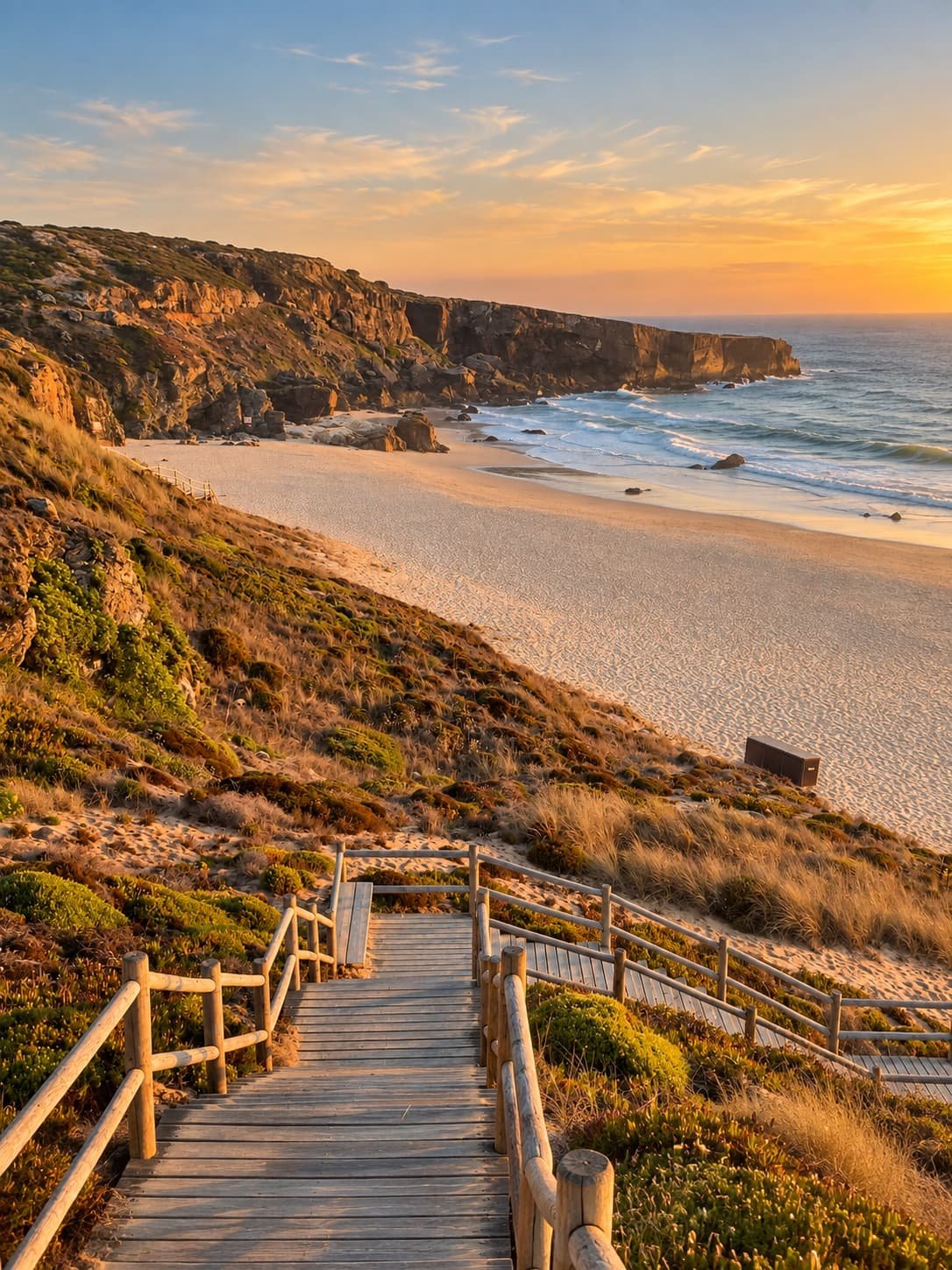
Milfontes → Zambujeira do Mar → Odeceixe → Lagos
The final stretch of the Alentejo coast before the Algarve border. Zambujeira do Mar is worth the 5 km detour off the main road — a sweep of beach backed by dark cliffs that is one of the most dramatic beach compositions in Portugal. Odeceixe comes next: the Seixe river curves in from inland and meets the sea in a formation that makes no visual sense until you’re standing in it — the beach faces north, the river runs alongside it, and in October the whole place is yours.
Cross into the Algarve near Odeceixe and follow the N120 and then the EN120 to Lagos. Arrive mid-afternoon, which gives you enough light for a first walk around the old town walls and down to Meia Praia. Lagos is the right base for the western Algarve — a real town with a proper historic centre, not a resort that happens to have history nearby. Overnight Lagos (2 nights).
~130 km · 2.5 hours with stops
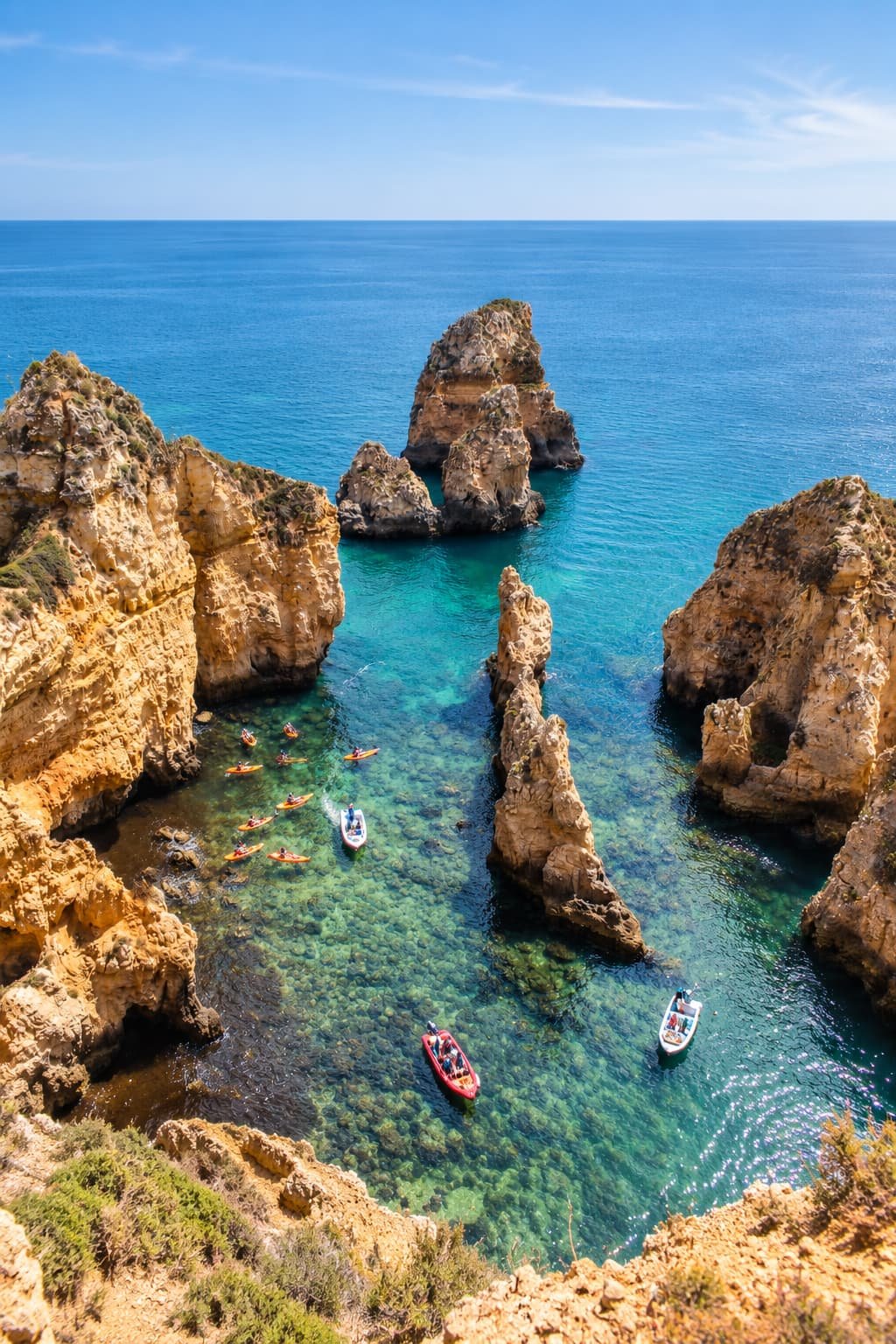
Lagos and the Western Algarve — Day Exploration
Start early for Ponta da Piedade — the sea stack formations just south of Lagos are at their best in morning light before the boat tour groups arrive. From there, drive east along the cliff-top road toward Benagil for access to the Seven Hanging Valleys coastal walk (Percurso dos Sete Vales Suspensos) — a 6 km loop above caves, arches, and sea stacks that is genuinely one of the better coastal walks in Southern Europe. In the afternoon, drive west to Sagres: the southwestern tip of mainland Europe, where the Atlantic hits the cliffs at a different angle than anywhere else on this trip and the fort looks like it was built to watch the edge of the known world. Return to Lagos for the evening and the old town.
Day exploration from Lagos base
Head east on the A22 — the Algarve’s coastal motorway, which has been toll-free since January 2025. This is the information most travel guides haven’t updated: the A22 between Lagos and the Spanish border now costs nothing.
Join the A2 north at around Ferreira do Alentejo and detour off to Évora — approximately 1.5 hours from Lagos with no Évora stop, meaning you arrive in Évora by late morning. The historic centre deserves at least three hours: the Roman Temple of Diana (standing in the middle of what is now a public square, which is a strange and wonderful thing), the medieval cathedral, and the Chapel of Bones in the Igreja de São Francisco (walls and ceiling lined with the bones of around 5,000 monks — the Portuguese inscription at the entrance translates roughly as “We bones that are here await yours”). From Évora, it is around 1.5 hours on the A2 back to Lisbon.
~320 km return · A22 toll-free · Évora stop 3 hrs

05 — Tolls — what you’ll actually pay on the Lisbon to Algarve drive in 2025/2026
Most travel guides covering the Lisbon to Algarve road trip still quote pre-2025 toll figures. Here is the current situation. For official toll registration, EasyToll is the Portuguese motorway authority’s system for cars without a Via Verde transponder.
| A2 (Lisbon to Algarve) | Approximately €23.30 one-way for a standard car. Both entry (from Lisbon) and the southbound run through the Alentejo are tolled at the A2’s standard rates. |
| A22 (Algarve coast — Lagos to Spanish border) | Toll-free since January 2025. This was a politically significant change — the A22 had been one of Portugal’s most-resented tolled roads and was largely avoided by locals as a result. Almost no travel guides published before 2025 reflect this. The Lagos–Faro section is included: it now costs nothing. |
| Via Verde transponder | Most rental cars in Portugal carry a Via Verde transponder already fitted. Tolls are charged automatically and added to your final rental invoice — you will not need to stop. Check your rental contract; some companies add a daily transponder fee of €1–3 regardless of whether you use it. |
| Cars without a transponder (EasyToll) | If your rental doesn’t have Via Verde, you can register your rental car plate at easytoll.pt before travel. This registers your plate and bills you by card within a few days. Do not ignore tolls — fines for non-payment range from €21 to €107 per toll point. |
| N120 coastal route | Completely toll-free. The entire Alentejo coastal section from Setúbal to the Algarve border on the N120 has no tolls. |
| Tróia ferry | Car and driver approximately €16 each way. The ferry is operated by Atlantic Ferries and runs hourly from Setúbal. The crossing takes 25 minutes. This is not a toll — it’s a ticket purchase at the terminal. |
Lisbon to Algarve Toll Cost Summary
| Section | Route | Cost 2025/2026 |
|---|---|---|
| Lisbon → Algarve border | A2 motorway | ~€23.30 one-way |
| Algarve coast (Lagos → Spain) | A22 motorway | €0 — toll-free since Jan 2025 |
| Lisbon → Algarve (coastal) | N120 via Comporta | €0 — no tolls |
| Setúbal → Tróia | Atlantic Ferry | ~€16 car + driver |

October Travel, Comporta, and Lagos
Tolls, Alentejo Stops, and Car Rental
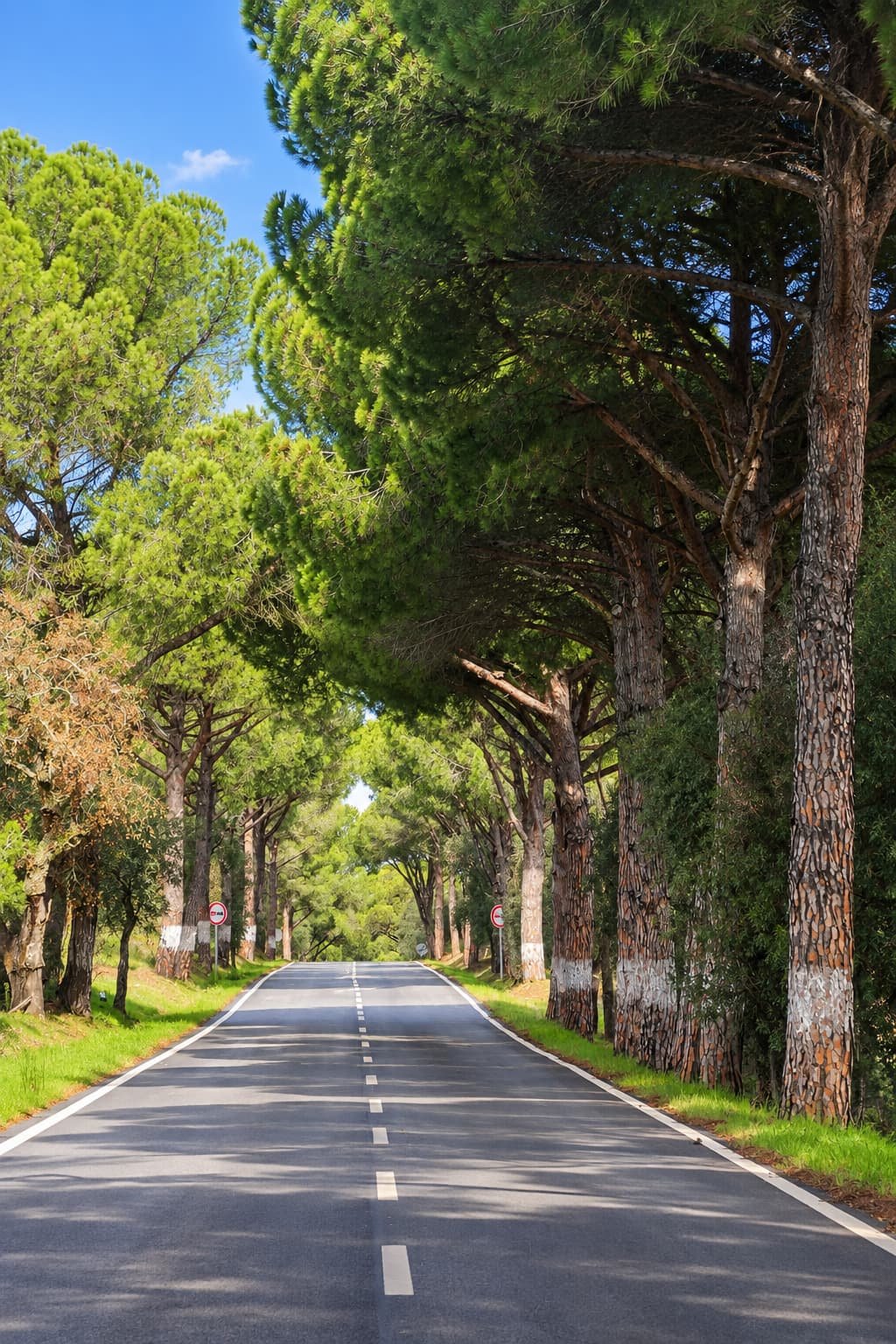
The A2 will get you there faster. But Portugal between Lisbon and the Algarve is not a stretch to be covered — it’s the part of the country that makes the rest of it make sense.