

Belgium Itinerary: 5 Days in Brussels, Ghent and Bruges
Where to go in December? This Belgium itinerary gives Brussels real time, sleeps in Bruges instead of day-tripping it, and uses Ghent as the easy middle. Three, five and seven day versions below.
If you are deciding where to go in December, Belgium is a strong answer, but most Belgium itinerary advice gets two things backwards. It rushes the capital, and it day-trips the one city that is only worth it overnight. This plan flips both. Brussels gets the most time, because it is the most varied of the three cities and, this winter, it has a major new museum. Bruges gets a night, because the crowds are the problem and the evening is the fix.
Ghent is the hinge. It sits between the other two, and it is the best city of the three after dark. Everything below runs by train from one hotel base per city, with no car. Furthermore, the order follows the map: you land in Brussels, move west, and come back to leave. If you only have a weekend or a full week, jump to the shorter and longer versions further down, because this Belgium itinerary scales in both directions.
- Where to go in December: the honest split
- Days 1–2: Brussels
- Day 3: Ghent
- Day 4: Bruges, and why you sleep there
- Day 5: Back to Brussels
- Shorter or longer: 3 and 7 days
- The mistake: Bruges and Ghent in one day
- Where to go in December: Belgium in November and December
- Getting around by train
- What to eat
- FAQ
01 — Where to Go in December: Brussels First, Bruges Overnight, Ghent in the Middle
The order is not arbitrary. Brussels Airport and the international trains both arrive in Brussels, so starting there saves a transfer. Ghent sits roughly halfway along the line to the coast, and Bruges is the far end. As a result, every move is a short hop west, and the return leg hands you a last half-day in the capital. Booking is simpler too, since you fly in and out of the same airport.
The split itself comes down to where each city repays time. Brussels is large and uneven, so it needs two full days before it makes sense. Ghent works as a single night, because its best hour is after dark. Bruges is the reverse: it is most striking and most crowded between mid-morning and late afternoon, so the night is what turns it from a queue into a town. Any Belgium itinerary that skips the night in Bruges saves a hotel bill and loses the best part of the stop.
| Trip length | Brussels | Ghent | Bruges | Shape |
|---|---|---|---|---|
| 3 days | 2 days | 1 day | An afternoon | The compromise |
| 5 days | 2 days, plus the last day | 1 day | 1 day, slept in | The one to book |
| 7 days | 3 days | 2 days | 1 day, slept in | Plus one day trip |
→
→
→
02 — Days 1–2: Where to Go in December Starts in Brussels
Day 1: Grand-Place to Saint-Géry
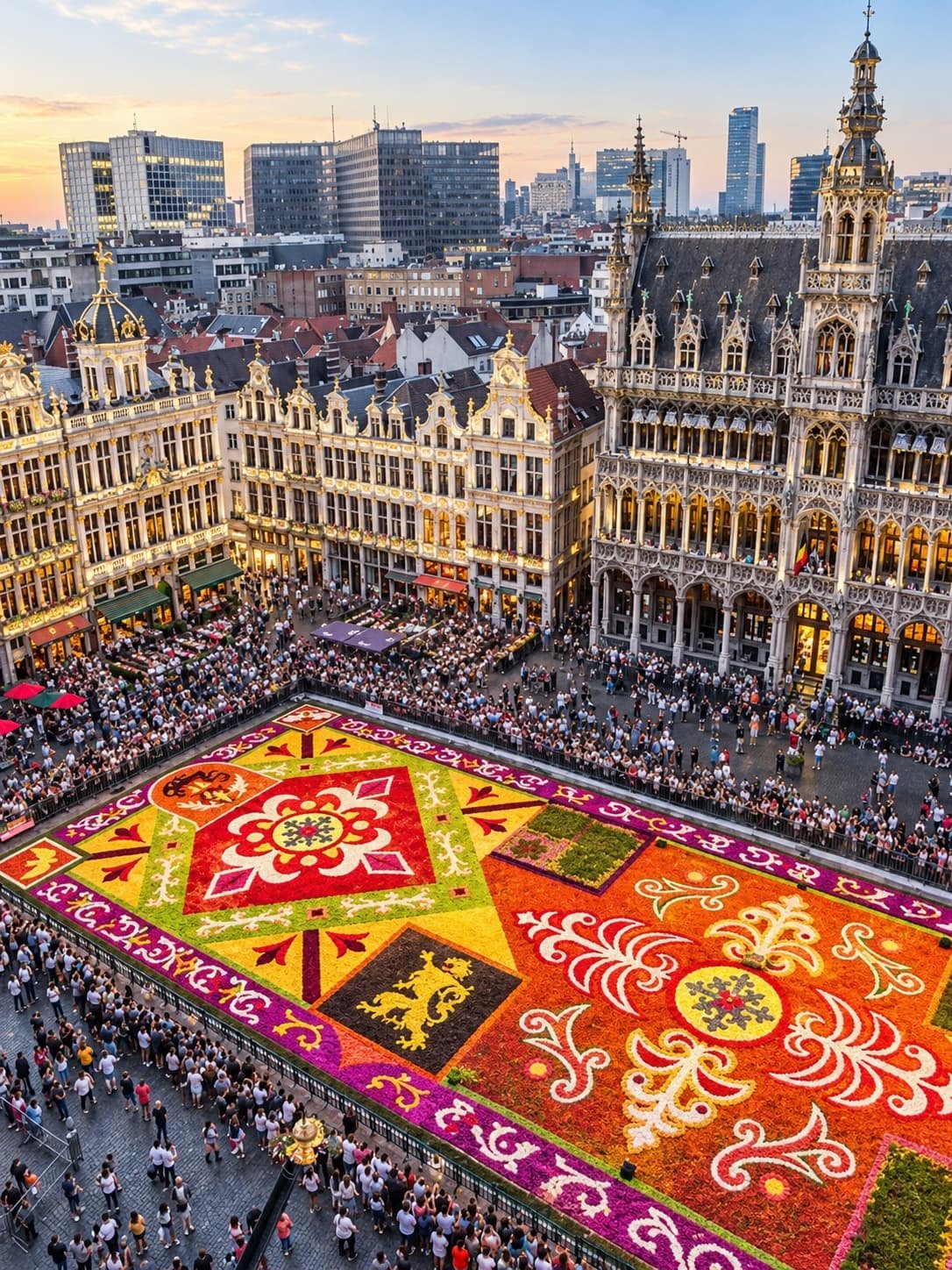
Start at the Grand-Place before the day groups arrive, since the guild houses and the town hall tower look best before ten. From there, walk five minutes to the Galeries Royales Saint-Hubert, a glass-roofed arcade from 1847 that is worth the detour even if you buy nothing. Afterwards, climb toward the Mont des Arts for the view back over the lower town, then drift down to the Sablon for the antiques dealers and the Gothic church. In the evening, cross to Saint-Géry, where the bars fill with locals rather than tour groups. Eat late, then walk back through the lit streets rather than taking the metro. Altogether, Day 1 is almost entirely on foot, so wear shoes that cope with cobbles.
Day 2: Museums, Art Nouveau and the Marolles
Spend the morning at the Royal Museums of Fine Arts, where the Magritte Museum sits in the same complex. Allow two to three hours for both, and book timed tickets online. Next, take the tram or metro to Saint-Gilles and Ixelles for Victor Horta’s Art Nouveau houses. The Horta Museum has the best interior, though the street facades alone justify the trip. If you only have time for one house, choose the museum and skip the others.
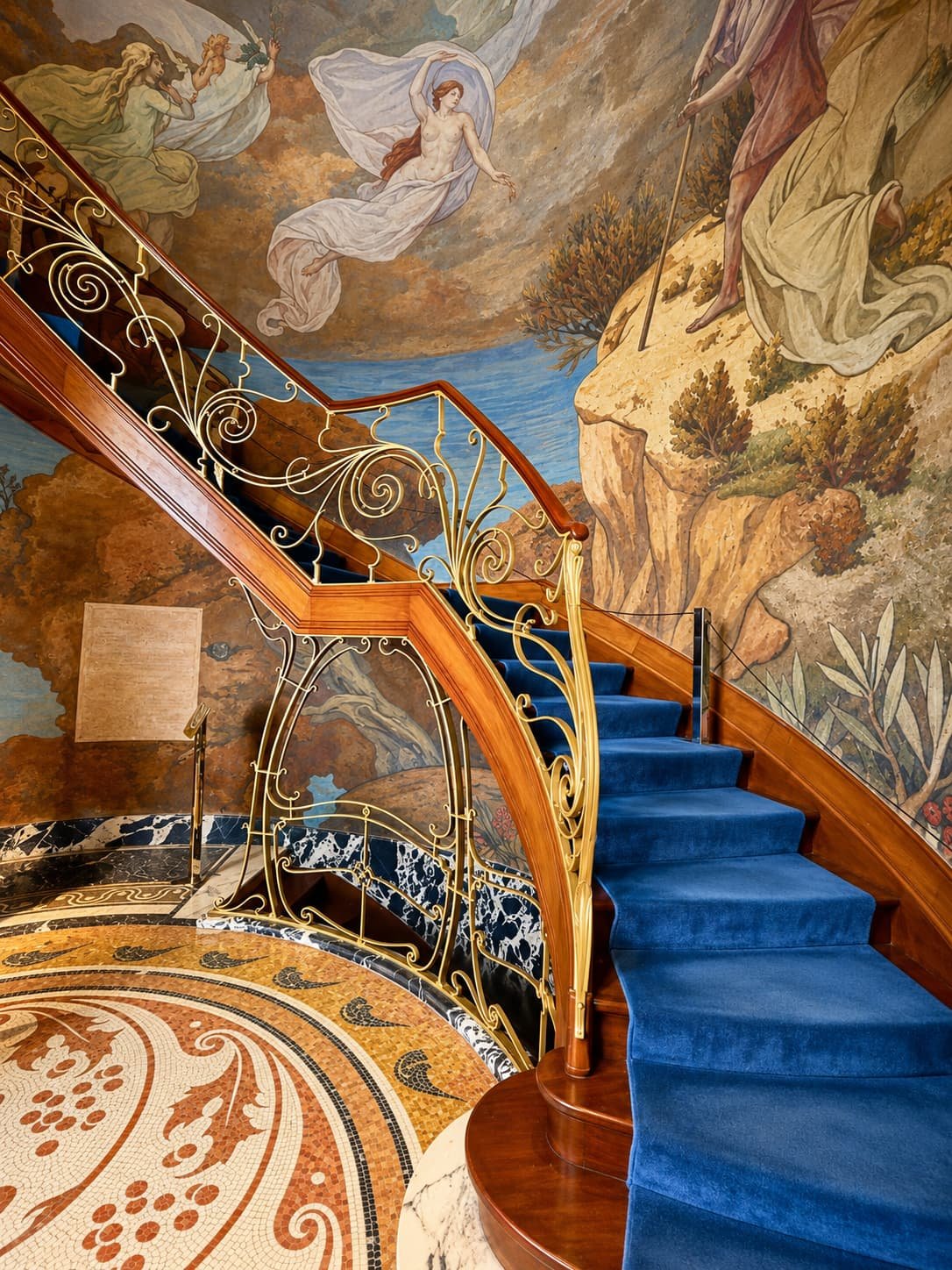
Finish in the Marolles, where the Place du Jeu de Balle flea market runs most mornings and weekends are the busiest. Go for the browsing, not for a bargain, then work back toward the centre through the antique shops on the way. Moreover, the walk between the Marolles and the Sablon is short, so the whole second day stays compact.

New this winter: KANAL, a reason to go in December
KANAL, a former Citroën garage beside the canal, opens as KANAL–Centre Pompidou on 28 November 2026 with ten exhibitions. One of them gathers more than 350 works, mostly from the Centre Pompidou collection. The partnership with Paris runs until at least 2030, when the Paris Pompidou is due to reopen. For the neighbourhood-by-neighbourhood version, read a full two or three days in Brussels.

Brussels has downsides, and they are worth stating. It sprawls more than Ghent or Bruges, parts of the centre around the stations are grittier, and theft at the North, Central and Midi stations is common enough that US security reports flag it. In practice, a zipped bag worn in front of you on platforms and trams keeps the risk small.
03 — Day 3: Ghent, Where to Go in December After Dark
Morning: the altarpiece and the castle
Take an early train from Brussels. The ride lasts about 35 minutes, and the station sits a tram ride from the centre, so drop your bag at the hotel first. Head first to St Bavo’s Cathedral for the Ghent Altarpiece, the van Eyck brothers’ polyptych, which has timed entry and is calmest early. Next, walk to the Gravensteen, a twelfth-century castle in the middle of town, where the battlements give you a clear read of the city’s layout. Together, the two sights take most of a morning, which is why this plan puts them before lunch and leaves the rest of the day loose.

Afternoon: the quays and Patershol
Walk down to the Graslei and Korenlei, the two quays facing each other across the Leie, lined with medieval guild houses. Later, cross into Patershol, a tight grid of cobbled lanes behind the castle. It rewards an unhurried hour, ideally with a coffee and no destination. Meanwhile, the Korenmarkt and the streets around the cathedral stay busy with students, which gives the afternoon a lived-in feel that Bruges lacks. Ghent is a university city, and it shows in how the centre uses its space.
Evening: why Ghent is where to go in December
Every night from sunset to midnight, a city lighting plan illuminates the centre. The quays, bridges and towers glow without any special event, and the crowds thin once the day-trippers catch their trains. Walk from the Korenlei to St Michael’s Bridge, then loop back along the Graslei, and you have covered the best two hours of the trip without a plan. For this reason, a night in Ghent beats a day in it. Between Bruges and Ghent, Ghent is the better city to live in for a night, and Bruges is the more striking to look at. This itinerary gives you both.

04 — Day 4: Bruges, and Why You Sleep There
The day-tripper problem in numbers
In 2025, Bruges received roughly 8.6 million day and overnight visitors, and only about 14% of people coming to the historic centre stayed the night. Put simply, most of them arrive after breakfast, photograph the same bridge and leave before dinner. The city, which publishes visitor information through Visit Bruges, has responded by banning new hotels in the centre, limiting short-term lets and restricting cruise ship arrivals. Bruges also appears among the most beautiful places in Europe, and it earns the spot on looks alone. The trade-off is that it is striking and crowded until evening. That is the argument for this Belgium itinerary in one line.
What changes after 6pm, and when to go in December
Around six, the tour groups leave and the Markt empties. The canals go quiet, the brick turns amber, and the walk between the main squares becomes a walk rather than a shuffle. Before nine you get the other quiet window, when the lanes belong to delivery vans and bakers. Use it for the loop through the Begijnhof and Minnewater, which is empty at first light and packed by eleven. Consequently, the night you spend here is not an extra, it is the whole point of the stop. A single evening is enough, so there is no need to stretch it to two.

Practical points
- Station to centre: Bruges station is a 15–20 minute walk from the Markt, so a bus makes sense with luggage
- The Belfry: 366 narrow steps, best first thing in the morning
- Rooms: book early, because the hotel ban keeps supply tight in the centre
- City tax: currently about €4 per person per night, with levies on cruise visitors from 2027 and coach visitors after that
Think of the tax as the price of being there when it is quiet.

05 — Day 5: Back to Brussels
The train back from Bruges takes about an hour, so there is no need for an early start. Spend the last half-day at KANAL if it is open for your dates, or head to the European Quarter, where Parc du Cinquantenaire and the EU institutions give you the other face of the capital. Then leave from Brussels-Midi for Paris, London or Amsterdam, or take the airport train. In short, the return leg gives Brussels a proper goodbye rather than a station dash. It also keeps your departure simple, since every international route and the airport train start in the same city where you began. If your flight leaves in the evening, you have time for one more museum or a final walk through the Sablon before you collect your bags. Early flights are the one exception, and for those it is smarter to sleep near Midi the night before.
06 — Shorter or Longer: The 3-Day and 7-Day Versions
If you have 3 days
Give Brussels two days and Ghent one, and add Bruges as an afternoon if the trains line up. This is the compromise, and it is worth being plain about it: Bruges then falls in the hours when it is busiest. Even so, three days works well if you treat Ghent as the main event and Bruges as a bonus. This Belgium itinerary was built around five days, but the three-day cut keeps the same order, only faster.
If you have 7 days
Add a third Brussels night, a second night in Ghent and one day trip. The extra Brussels night lets you slow down, and the second night in Ghent gives you a full day to explore the quieter streets. For options inside and outside Belgium, see day trips from Brussels. Beyond the big three, Antwerp, Leuven, Mechelen and others are covered in the best cities in Belgium beyond the big three.
For Wallonia and the south, see a Belgium road trip through the Ardennes. A car is a liability in Flanders, because trains already connect everything worth seeing and parking costs money and patience. It only pays off in the south, where the trains thin out.
07 — The Mistake: Bruges and Ghent in One Day From Brussels
On a map, it looks efficient. In practice, this is the Belgium itinerary mistake that wrecks the most trips, and it fails for three reasons. You spend two to three hours on trains once you add connections and walks to stations. Bruges is also at its busiest when you arrive, and you leave before Ghent has its evening. As a result, you see two cities through a window. Neither one gets the evening that makes it worth the journey.
The better alternative is one city per day out, which is how day trips from Brussels are planned: pick one, give it the whole day, and come home to a bed in the capital. That said, the five-day plan above removes the problem entirely, because you sleep where it matters.
08 — Where to Go in December: Belgium in November and December
The capital’s Christmas market and lights, running through the new year.
Opening one day after Winter Wonders starts, so the two share a weekend.
A triennial event. The last edition ran 31 January to 4 February 2024.
Bruges and Ghent open their markets on dates that differ between sources. Bruges typically starts around 20 November and Ghent in early December, so check Visit Bruges and Visit Gent before you fix a date. The Brussels dates are on visit.brussels. For a wider view, see the best Christmas markets in Europe and when the Christmas markets start.
Where to go in December is partly a budget question, and Belgium answers it well. January is the cheapest month for Belgian hotels, so a trip just after the new year pays off if you can skip the markets. Meanwhile, the short days suit this plan, since the evenings in Ghent and Bruges are the best part anyway. Pack for rain and wind, because the coast end of the line feels colder than Brussels. Book rooms early for the market weekends, especially in Bruges, where supply is capped. A December Belgium itinerary also makes sense for a first solo trip, as the trains run on time and the centres are compact.
09 — Getting Around by Train
- Brussels to Ghent: about 35 minutes, with direct trains throughout the day.
- Ghent to Bruges: about 30 minutes on a direct train.
- Brussels to Bruges: about an hour, with direct trains every 15 to 30 minutes.
- From the airport: a train runs into central Brussels in around 20 minutes (Brussels Airport lists the current timetable).
Fares are straightforward for a trip this size. SNCB currently lists a discount of about 30% on weekends and public holidays, and about 40% off for under-26s and over-65s, though the scheme has changed recently, so confirm on the SNCB site before you book. Buying at the station machine or in the app takes minutes, and you rarely need to reserve a seat on domestic trains. International trains from Paris, London and Amsterdam arrive at Brussels-Midi, roughly 1 hour 20 minutes, 2 hours and 2 hours respectively. If you are pairing Belgium with France, our guide to Paris landmarks covers the other end of that line.
10 — What to Eat
Start with frites, served in a paper cone with mayonnaise, which Belgians treat as a meal rather than a side. Waffles come in two kinds: the Brussels waffle is light, rectangular and crisp, and the Liège waffle is denser, with caramelised pearl sugar. In Ghent, order the Gentse waterzooi, a creamy stew traditionally made with fish or chicken and vegetables. Elsewhere, look for carbonade flamande, a Flemish beef stew braised in beer.
Beer is its own culture. Abbey beers, lambics and local blondes all have a proper glass, so ask what the bar recommends rather than reaching for the first name you know.
Belgium is small enough to rush and good enough to resist rushing.
Sleep where the crowds leave, and the rest of the Belgium itinerary gets easier.