

Brussels Itinerary: 2 or 3 Days in the City Most Rush Through
Where to go in December? Brussels, with a day-by-day plan that builds Monday closures, booking traps and the Art Nouveau houses into two or three days.
If you are working out where to go in December, Brussels earns a place on the shortlist, and a good Brussels itinerary starts by pushing back on how most people treat the city. Brussels is usually the place you change trains for Bruges, or the stop that gets half a day between a flight and the next town. That undersells the most varied city in Belgium, and it hides the real problem: the best parts of Brussels are spread across distinct neighbourhoods, not packed into one old town.
The 2-Day vs 3-Day Brussels Verdict
So here is the verdict, up front. Two days covers the essentials: the Grand-Place, the Royal Museums, the Marolles and the Art Nouveau houses. Three days lets you see the city beyond its postcard, with KANAL, the canal and the European Quarter added. A one-day version exists, but it is a compromise, and the Atomium is the first sight to cut when time is short.
This Brussels itinerary is built around the calendar, not only the map. Monday closures, booking requirements and free-entry windows decide which neighbourhood lands on which day, so they sit inside the plan instead of in a footnote.
- Where to go in December: why Brussels needs more than half a day
- Before you plan where to go in December: Mondays and other timing rules
- Day 1: where to go in December in the old centre and Upper Town
- Day 2: where to go in December for the Marolles, Art Nouveau and Ixelles
- Day 3: where to go in December for KANAL and the European Quarter
- If you only have one day
- Where to stay, neighbourhood by neighbourhood
- The honest downsides
- Is the Brussels Card worth it?
- Getting in and around
- Where to go in December: Brussels in winter
- What to eat
- Beyond Brussels: where to go in December next
- FAQ
01 — Where to Go in December: Why Brussels Needs More Than Half a Day
Four things make Brussels worth more than a stopover. The first is depth. One city pass covers more than 45 museums, and the Royal Museums of Fine Arts alone hold the Old Masters and the world’s largest Magritte collection, with more than 230 works and archive items.
The second is Art Nouveau. Brussels is where the style took hold, and its best houses sit across the southern districts of Saint-Gilles and Ixelles rather than around the Grand-Place. That spread is exactly why a lunch-break visit never works.
The third is new. KANAL–Centre Pompidou opens on 28 November 2026 in a former garage beside the canal, and more than half of the 40,000 m² building is free public space.
The fourth is range. The medieval centre, the formal Upper Town, the working-class Marolles, Art Nouveau Saint-Gilles and Ixelles, and the EU quarter each have a different pace and a different kind of street. On two or three days you feel the shifts between them; on half a day you only see the first.
02 — Before You Plan Where to Go in December: Mondays and Other Timing Rules
Where to go in December matters less than when you go, because Brussels punishes people who plan by neighbourhood alone, so plan by weekday first. The Royal Museums of Fine Arts, Magritte included, and the Horta Museum are both closed on Mondays. Never put the museum day on a Monday.
| Sight | Monday | What to know |
|---|---|---|
| Royal Museums of Fine Arts | Closed | Magritte included. Free from 1pm on the first Wednesday of each month, subject to availability. |
| Horta Museum | Closed | Book online in advance. Maison Hannon, on the combined ticket, opens Thursday to Sunday only. |
| Marolles flea market | Open | Runs every day, mostly in the morning. Weekends are the fullest. |
| Atomium | Open | Daily 10am to 6pm, last entry 5:30pm. Closed 18 January to 5 February 2027. |
| Parlamentarium and House of European History | Open | Both free to enter. |
If your only free day is a Monday, put the Marolles and the European Quarter there, and keep the Royal Museums and the Horta Museum for days when they are open. Everything else in the plan moves easily; the museums and the Horta booking do not.
03 — Day 1: Where to Go in December in the Old Centre and Upper Town
→
→
→
→
→
Early morning: where to go in December before the crowds
Be on the Grand-Place before 9am. The guild houses and the Town Hall spire look best in low light, and the square belongs to a few early walkers instead of tour groups. Give it twenty minutes, then let the gilded gables settle before the first coaches arrive. In December the square is also part of Brussels’ Winter Wonders season, which runs from 27 November 2026 to 3 January 2027.

Then walk to the Galeries Royales Saint-Hubert, a glass-roofed arcade of chocolatiers, bookshops and cafés that works as an indoor second act. Mornings here are calm, and the roof is the real attraction.

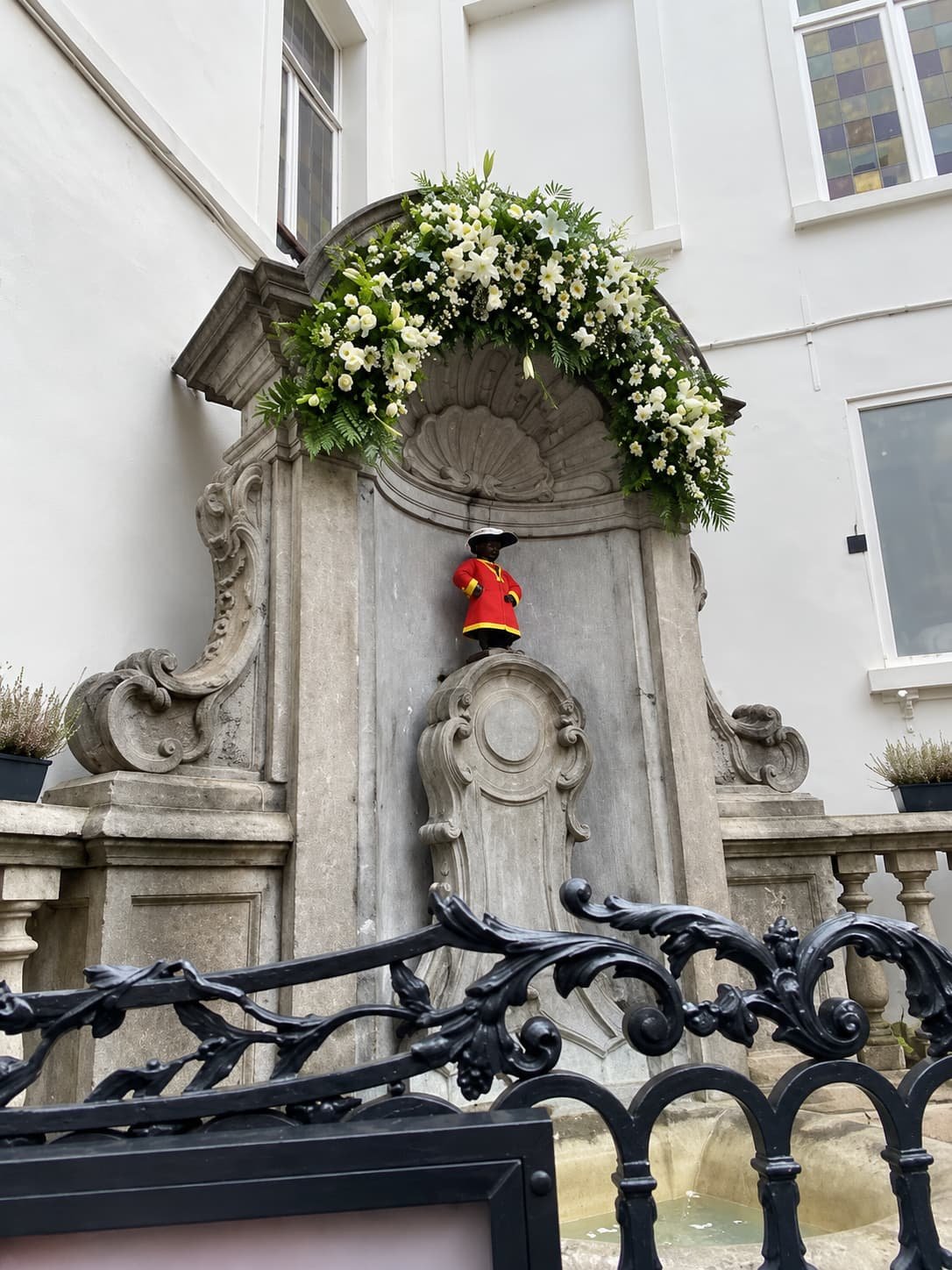
Manneken Pis sits a few minutes from the square. It is a small bronze statue with a large crowd, so treat it as a two-minute stop on the way past, not a destination. Photograph it, enjoy the absurdity, and keep walking.
Late morning: Mont des Arts and the Royal Museums
From there, climb to the Mont des Arts for the view back over the Lower Town. The gardens and steps make a natural pause before the day’s museum block.

Next, cross to the Royal Museums of Fine Arts at Place Royale. Start with the Old Masters, where Bruegel and Rubens carry the collection, then move up to the Magritte Museum, which holds the world’s largest Magritte collection. Allow three to four hours for both. If your visit falls on the first Wednesday of the month, the permanent collections are free from 1pm, so arrive then and expect a queue.

Afternoon and evening: the Sablon and Saint-Géry
After the museums, walk down to the Sablon for antique shops and chocolatiers. The square is quieter than the Grand-Place, and the dealers and chocolate counters reward a slow lap more than a quick one.

For the evening, head to Saint-Géry and Sainte-Catherine. Both neighbourhoods fill with bars and dinner options once the offices empty, and on a weekday you can usually find a table without a booking. Walk between them, because the old market quarter is the point.

04 — Day 2: Where to Go in December for the Marolles, Art Nouveau and Ixelles
→
→
→
→
Morning: the Marolles flea market, Rue Blaes and Rue Haute
Start Day 2 in the Marolles, the working-class quarter below the Palais de Justice. The flea market on Place du Jeu de Balle runs every day, so this stop never clashes with a closure, though weekends bring the fullest version. Dealers set up early, which means the best pieces go before most visitors finish breakfast. Browsing costs nothing, which makes it a good budget answer to where to go in December.

From the square, walk Rue Blaes and Rue Haute. Antique and secondhand shops line both streets, with cafés between them. Expect rough edges and good browsing rather than polish.

Midday: Saint-Gilles and the Horta Museum
Walk or take a tram south to Saint-Gilles, where the Horta Museum is the best single argument for Brussels Art Nouveau. Go in expecting a house that was designed as one object, from stair rail to light fitting, and not a gallery of exhibits.
- Booking: reserve your slot online before you travel
- Time needed: about 1 hour 15 minutes, plus 45 minutes at Maison Hannon on the combined ticket
- Maison Hannon: open Thursday to Sunday only, so on other days spend the time on the street facades
- Closed: Mondays and some public holidays

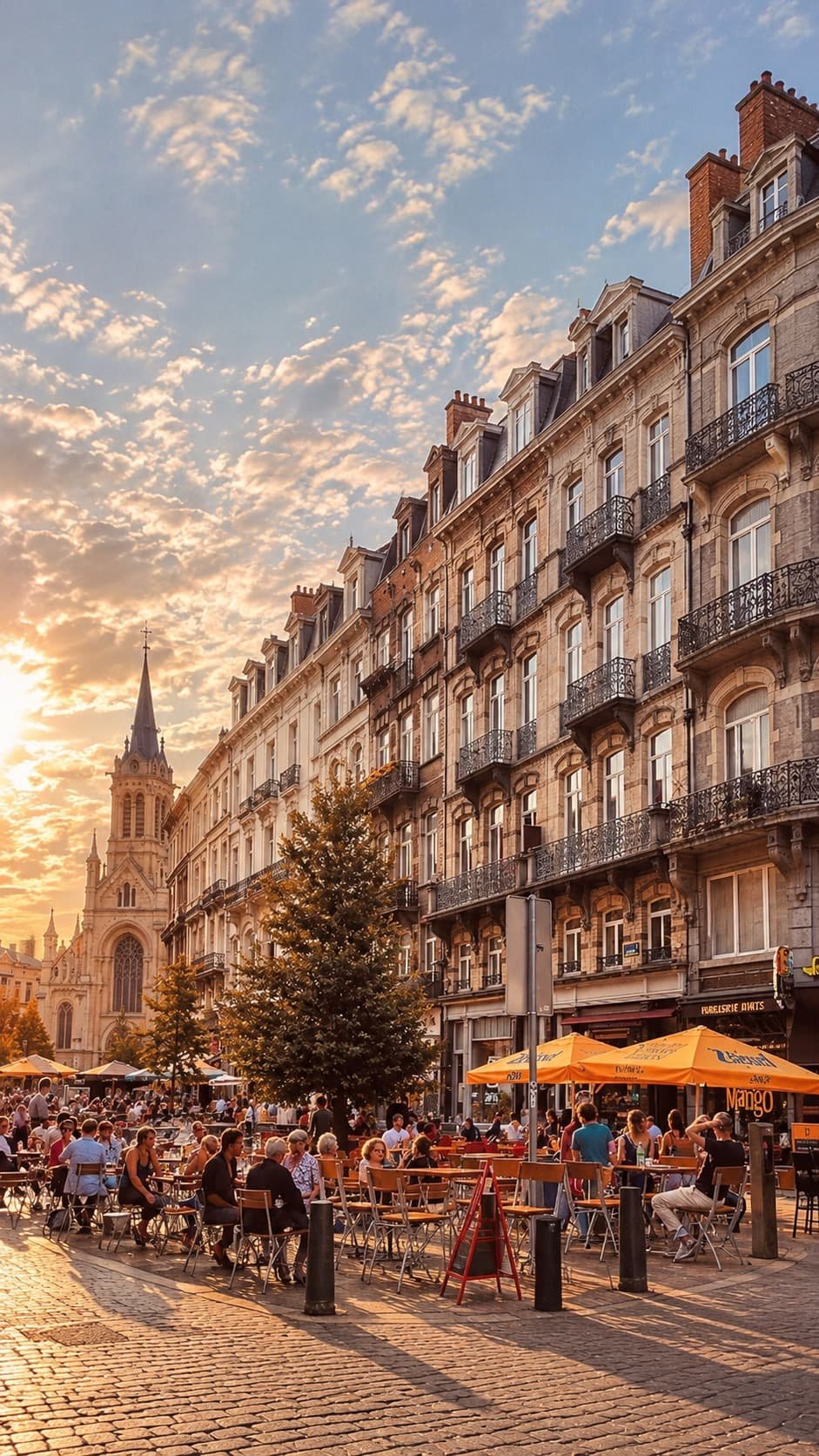
Even without a ticket, the streets around the museum are worth the walk. Look above shopfront height, where ironwork balconies, curved window frames and mosaic panels show how far the style spread into ordinary housing.
Afternoon and evening: Ixelles, Flagey and dinner
In the afternoon, continue to the Ixelles ponds, a long, calm stretch of water with a more residential feel than anywhere on Day 1. Flagey sits at one end, with its cafés and the former broadcasting house.

For dinner, choose between Châtelain and Matonge. Châtelain is a restaurant-lined district that suits a relaxed evening. Matonge, the Congolese quarter near Porte de Namur, suits you if you want a different table from Day 1; the food section below lists the dishes to look for.

05 — Day 3: Where to Go in December for KANAL and the European Quarter
→
or
Morning: where to go in December first, KANAL–Centre Pompidou
The third day of this Brussels itinerary is the one most visitors never reach, and it starts at KANAL, which opens on 28 November 2026, a strong answer to where to go in December this year. More than half of the building is free public space, so you get something even if you skip the ticketed galleries. The ten opening exhibitions include one with more than 350 works, mostly from the Centre Pompidou collection, and the partnership runs until 2031. The opening weekend, 28 and 29 November, is free, but exhibitions need a booked time slot; the Centre Pompidou’s KANAL page has the details.

Afternoon: where to go in December, the European Quarter or the Atomium
Day 3 splits into two afternoons, and the choice comes down to time and appetite for the postcard.
The European Quarter is the easier afternoon. The Parlamentarium and the House of European History are both free, and Parc du Cinquantenaire, with its triumphal arch and open lawns, suits a slow walk afterwards.

The Atomium is the postcard, and the honest verdict is mixed. It is worth it for the 1958 design and the views if you have three days, and it is the first thing to cut if you have two. The ticket includes entry to Design Museum Brussels, 150 metres away.

06 — If You Only Have One Day: A Compressed Brussels Itinerary
The compressed version runs from the Grand-Place to the Galeries, up the Mont des Arts to the Royal Museums, then down to the Sablon and across to Saint-Géry for the evening. In other words, it is Day 1 above with the slow parts trimmed.
Say it plainly: this is the compromise version, and it is a fair answer if you are only deciding where to go in December for a single day. You see postcard Brussels and skip the Marolles, the Art Nouveau houses and KANAL, which are the parts that set the city apart. Pick a day when the Royal Museums are open, and choose one wing instead of rushing both.
07 — Where to Stay, Neighbourhood by Neighbourhood
Choose the neighbourhood that fits your Brussels itinerary, not the cheapest listing on the map. Brussels is easy to cross by metro and tram, yet the wrong base still costs time every day.
Brussels-Midi deserves its own warning. The area around the station suits a late Eurostar arrival or an early departure, but it is rough at night, so don’t base a whole stay there.
08 — The Honest Downsides
Brussels doesn’t sell itself on first impressions, so a few downsides belong in any honest plan. The city sprawls and is hillier than people expect, with a real climb between the Lower Town and the Upper Town. It is also gritty in places, with litter, graffiti and patchy pavements close to the best sights.
Pickpocketing is the practical risk. US security reporting says theft is prevalent at Brussels-North, Brussels-Central and Brussels-Midi stations, and that Brussels has the highest crime rate in Belgium.
- Bags: zipped and worn in front of you on platforms, trams and the metro
- Phones: keep them out of back pockets and off café tables near stations
- Night arrivals: go straight to your hotel rather than wandering around Midi
Put the safety picture in proportion, though. The US State Department reissued Belgium’s advisory on 23 July at Level 2, which means exercise increased caution, and added crime and unrest to the risk indicators. France, Germany, Spain, Italy and the UK sit at the same level. Monday closures, by contrast, catch far more visitors out than any of this.
09 — Is the Brussels Card Worth It?
The Brussels Card gives free admission to more than 45 museums, with optional public transport and Atomium add-ons, in 24-, 48- and 72-hour versions. Most paid museums charge roughly €10 to €15 at the door, so the maths turns on how many you visit. Museums are also a good answer to where to go in December on a wet day, which gives the card more chances to pay off.
| Your plan | Verdict | Why |
|---|---|---|
| 3+ museums a day | Buy the card | The 48-hour version is usually the best value, especially with the Royal Museums on the plan. |
| 1–2 museums a day | Buy single tickets | This itinerary has only a few paid entries, so the card rarely earns its price. |
| Mostly walking and free sights | Skip it | The Marolles, the Galeries and the European Quarter cost nothing. |
Check the official Brussels Card page for current prices before you commit.
10 — Getting In and Around
Most of the centre is walkable, even when you are choosing where to go in December and the days are short, and the metro and trams cover the rest.
- From the airport: the train to Brussels-Central takes about 18 minutes. Up to six trains an hour run to Brussels-North, Central and South until around midnight, and a €6.90 airport surcharge is added to each single journey.
- International trains: services from Paris, London and Amsterdam arrive at Brussels-Midi.
- Inside the city: use the metro and trams between neighbourhoods, and walk the centre. Day 1 is almost entirely on foot.
If you are pairing Brussels with Paris, the two cities fit one trip well, and the Paris landmarks guide covers the other end.
11 — Where to Go in December: Brussels in Winter
The capital’s Christmas market and lights, running through the new year.
Opening the day after Winter Wonders starts, so the two share a weekend.
Annual maintenance closure, which removes Day 3 Option B in that window.
The cheapest month for Belgian hotels, and the budget play.
Where to go in December often comes down to timing, and Brussels rewards it. Late November and December give you the city at its busiest and most festive, with KANAL opening just as the lights go up. January then flips the picture, because rooms get cheaper and the Atomium shuts for its annual closure.
A quiet January trip is therefore the budget play. Pack for cold, wet weather using the Europe packing list, because most of this plan happens outdoors between museum stops.

The Christmas markets get their own coverage elsewhere. See the best Christmas markets in Europe for the wider comparison, and when the Christmas markets start for dates.
12 — What to Eat
Twice-fried and served in a paper cone, with mayonnaise as the default. Order a small cone as a snack, not a meal.
Brussels waffles are light, rectangular and crisp. Liège waffles are denser, chewier and studded with caramelised sugar. Eat one of each and decide.
Mussels cooked in white wine and served in the pot with fries on the side.
A comfort dish of mashed potato mixed with vegetables, often served with sausage.
Spiced, caramelised biscuits, sold in bakeries and as a spread. They make the cheapest edible souvenir in the city.
Buy from the Sablon and the Galeries, and choose a small box over a large one.
Sour, spontaneously fermented beers from the Brussels region. Gueuze blends young and old lambic, so start with a small glass.
Look for poulet à la moambe (chicken in palm-nut sauce), pondu (cassava leaves) and fried plantain.
13 — Beyond Brussels: Where to Go in December Next
This Brussels itinerary stays inside the city, so use the Belgium cluster for everything else, including the next stop when you are still choosing where to go in December. Read how Brussels fits into a 5-day Belgium itinerary for the link-up with Ghent and Bruges, and day trips from Brussels for days out inside and outside Belgium. For where else deserves a night, see the best cities in Belgium, and for the Ardennes, a Belgium road trip through the Ardennes.
Bruges is the obvious next stop for canals and medieval streets, covered in the Belgium itinerary. Ghent is the lower-key alternative with a livelier student-city feel, and it features in the best cities in Belgium.
Brussels Itinerary
Museums, Transport, and Where to Stay
Brussels does not hand itself over in an afternoon.
Give it the second day, and it starts to make sense.