
The Best Christmas Markets in Europe: An Honest Ranking
Not sure which best Christmas markets Europe has to offer are actually worth building a trip around? Here’s the honest ranking — which are genuinely overrun, where the crowd reality differs from the press release, and which lesser-known cities are the smarter call for 2026.
Europe has hundreds of Christmas markets. The best Christmas markets in Europe — the ones actually worth building a December trip around — are a much shorter list. This ranking is that list, with honest verdicts on which famous markets deliver, which are overwhelmed by their own reputation, and which lesser-known cities are the smarter choice for 2026.
01 — How this ranking actually works
Most Christmas market lists are effectively the same document recycled. Strasbourg leads. Vienna follows. Prague appears. Every entry gets two adjectives from a brochure — enchanting, magical, unmissable — and then it ends. Nobody tells you that Strasbourg on a Saturday in December requires a level of crowd tolerance usually reserved for airport security, or that some of the most atmospheric markets in Europe are in cities you’ve probably never considered visiting specifically for Christmas.
This ranking is built on four criteria, none of which are “vibes.” First: setting and atmosphere — does the physical backdrop actually justify the trip, or could the stalls be in a car park without you noticing? Second: crowd reality — what are conditions genuinely like at peak times, and what’s the honest window to visit? Third: cost — total trip cost including accommodation, not just the price of a mulled wine. Fourth: is it worth a dedicated trip versus a convenient stop if you’re already in the region.
One important note on framing: IQT doesn’t do fabricated personal visits. Where a market hasn’t been personally experienced, the judgments here are built on documented evidence — crowd data, accommodation pricing patterns, independent traveller reports, and verifiable facts about each market’s setting and history. That’s a more honest basis for a ranking than a single author’s one-time visit in ideal conditions.
02 — Which country has the best Christmas markets in Europe?
The honest answer is Germany by volume. No other country comes close in sheer number of markets, and the German tradition — Advent atmosphere, wooden stalls, Glühwein in a ceramic mug you return for your deposit, Bratwurst and Lebkuchen — is the template that every other European market is, consciously or not, trying to recreate. If you want the canonical Christmas market experience, Germany is where the format was built.
But Germany also has a problem: it’s where everyone goes. The most famous German markets — Nuremberg, Cologne, Dresden — draw millions of visitors in a four-week window, and that footfall changes the character of a market in ways no press release mentions. You can get the same atmosphere, better food, and a fraction of the crowds in Central Europe for significantly less money.
The honest podium for 2026 looks more like this: Germany for tradition and scale, France’s Alsace region for pure aesthetics (Colmar genuinely looks like a film set, and Strasbourg has the most photogenic market backdrop in Europe when the crowds are manageable), and Central and Eastern Europe for value, food quality, and the feeling that Christmas is still something the city is doing for itself rather than for tour groups.
Austria sits between these worlds — Vienna has outstanding markets in genuinely spectacular settings, but accommodation prices in December rival Paris. The Baltic states — Estonia and Latvia particularly — offer something different again: medieval cities where the festive season feels ancient rather than manufactured, and where tourist numbers are still a fraction of their Western European equivalents. If you’re trying to understand the full picture of best Christmas markets Europe offers, the answer isn’t one country — it’s a corridor from Alsace to the Baltics, each with a different trade-off.
03 — Best Christmas Markets Europe 2026: The Ranked List
These are ordered by overall verdict — worth it as a dedicated trip first, then worth it with clear caveats, then skip unless you’re already nearby. Each entry includes 2026 dates (confirmed or expected), setting, cost tier, and crowd reality.
Strasbourg, France — the Capital of Christmas
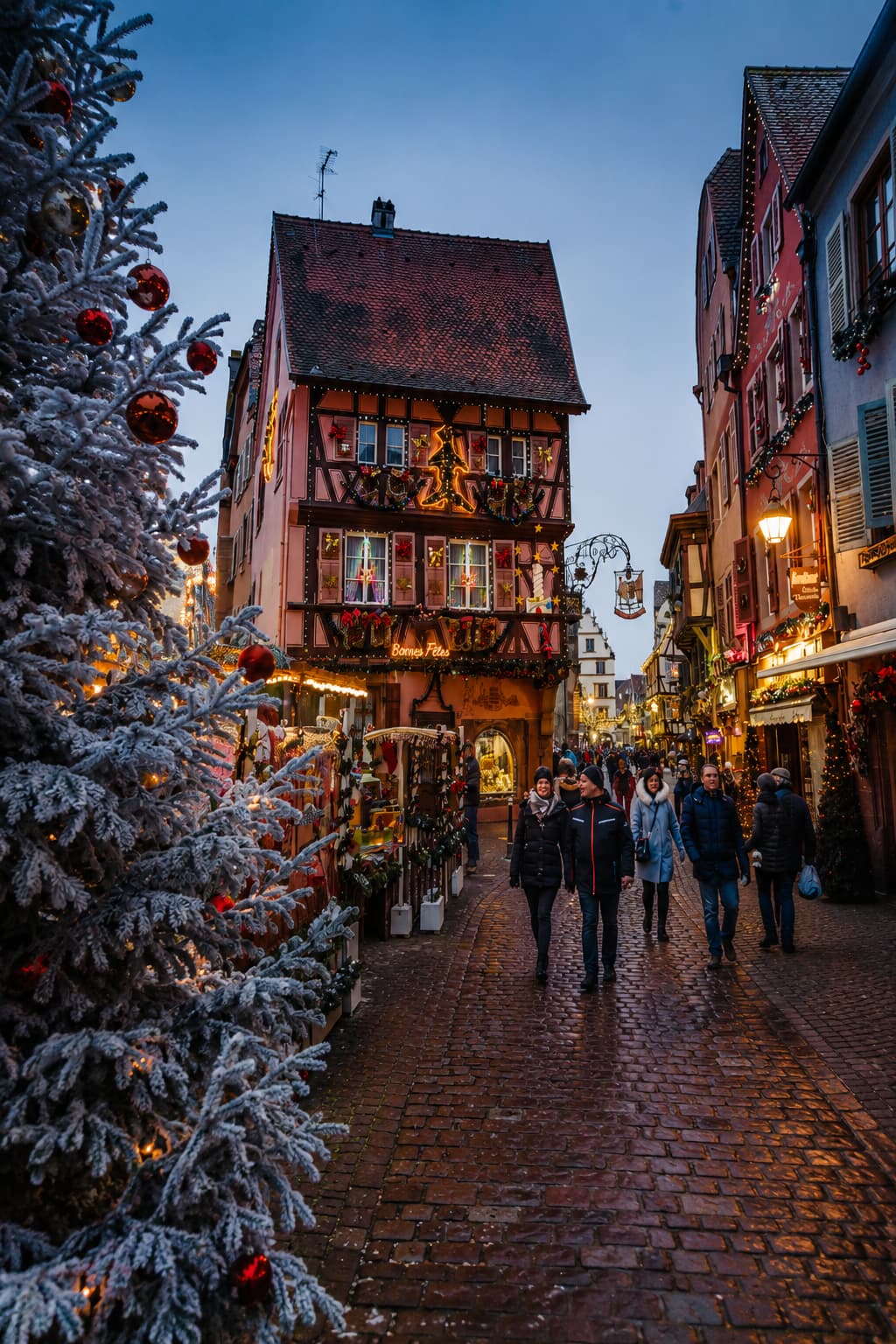
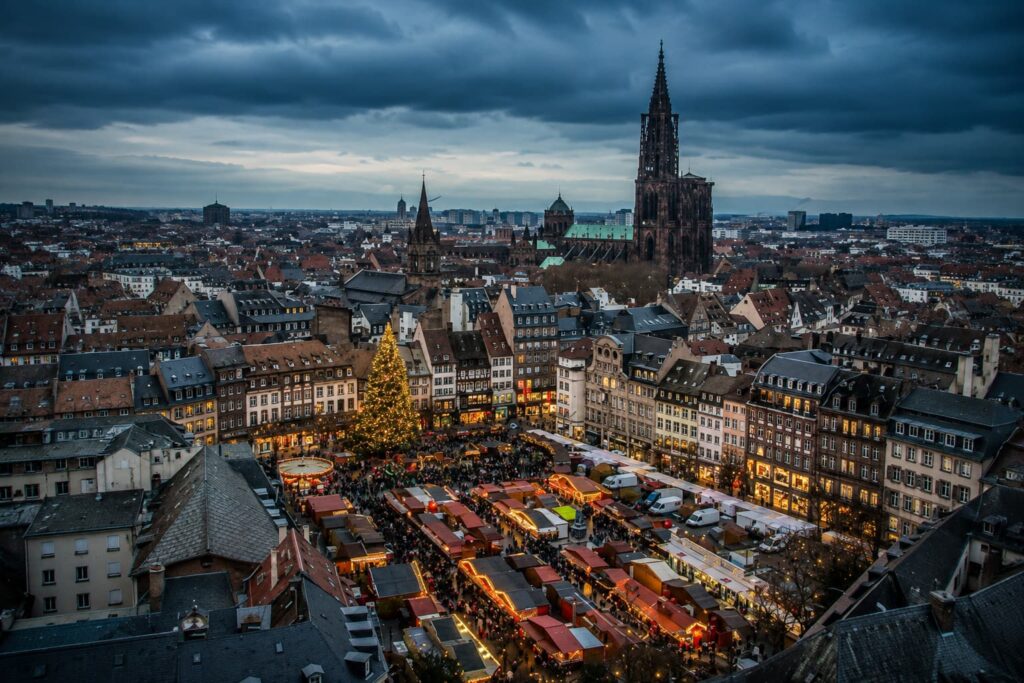
Strasbourg has been holding its Christmas market since 1570, and its claim to being the “Capital of Christmas” is at least partly deserved — a title the city’s official tourism office has promoted for decades. The nearly 100-foot Christmas tree on Place Kléber, lit against one of the finest Gothic cathedrals in France, is the single most photographed market scene in Europe for a reason. The Petite France district — half-timbered houses draped in lights, canal reflections, cobbled lanes — looks implausibly beautiful in December. None of this is constructed for tourists; the city’s Christmas identity runs deep.
The caveat is significant: Strasbourg is one of the most visited Christmas market destinations in Europe, drawing over two million visitors in December. On the second and third Advent weekends, the crowds are genuinely uncomfortable — you’re shuffling through rather than wandering. The fix is structural: visit on a weekday, arrive by early afternoon before the après-work crowds, and stay overnight so you can walk the market at 8am and 10pm when it’s a different place entirely. The market is spread across twelve locations around the city, which helps dilute the crowds more than a single-square market would.
Accommodation in Strasbourg in December is expensive and books months in advance for weekends. If you’re combining with Alsace — Colmar is 40 minutes by train — consider staying in Colmar and day-tripping to Strasbourg on a Tuesday.
Colmar, France — the gingerbread village
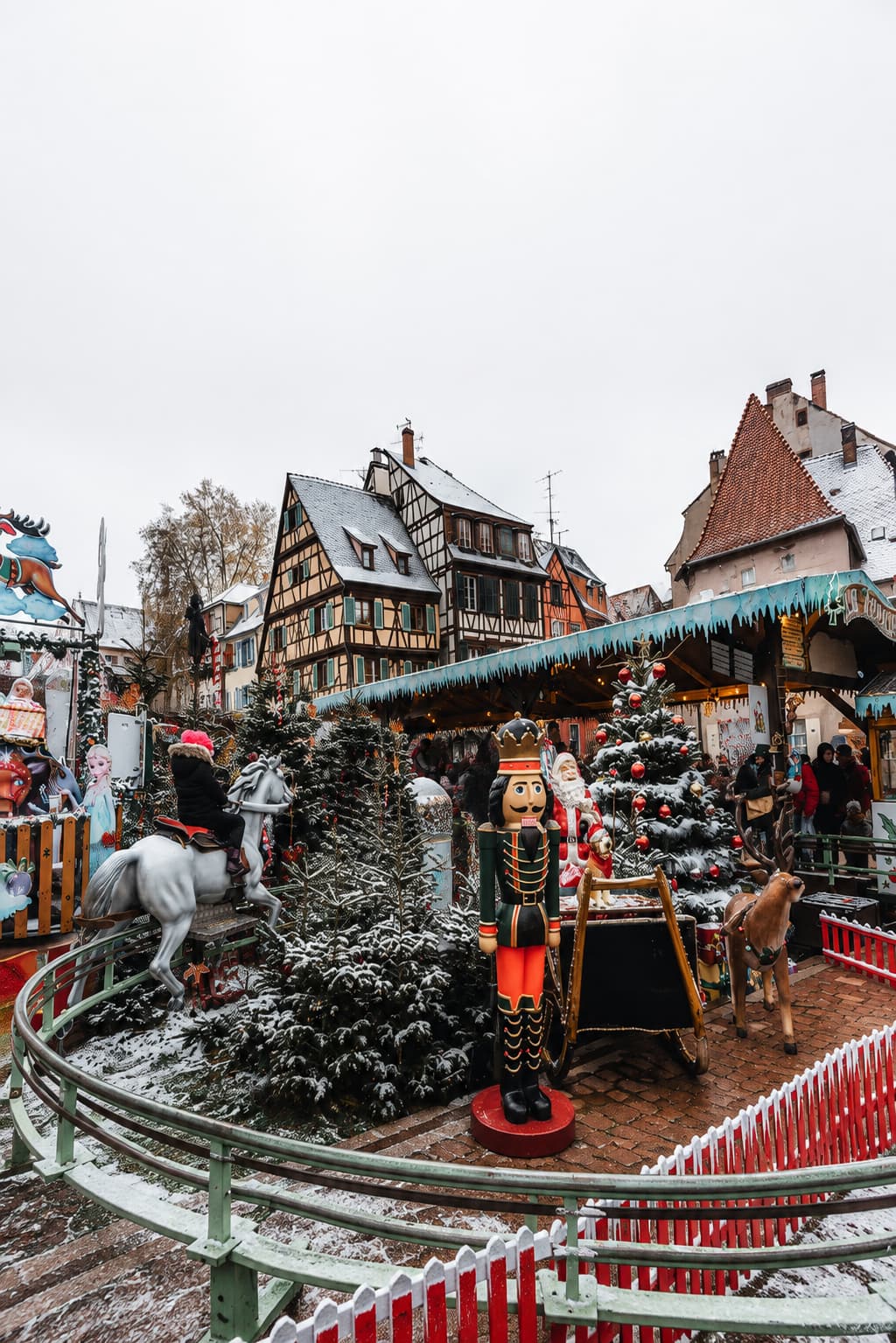
Colmar is where the Christmas market SERP photos come from — the Little Venice canal quarter with its pastel half-timbered houses, wooden bridges, and Christmas lights. The setting is genuinely extraordinary, the kind that makes you check whether you’ve stumbled into a film production. Five different market zones spread across the town, including a wine market in the Dominican monastery cloister and a toy market in the Place des Dominicains.
Colmar is smaller and more manageable than Strasbourg — not uncrowded on weekends, but more walkable. The food is exceptional: this is Alsace, which means choucroute, tartes flambées, bredele biscuits, and Alsatian wines alongside the standard Glühwein. Accommodation is reasonably priced compared to Strasbourg. For a first-time Christmas market trip that wants both the aesthetic and the atmosphere without Strasbourg’s tourist density, Colmar is the strongest single-city choice in Western Europe.
Nuremberg, Germany — the traditional benchmark
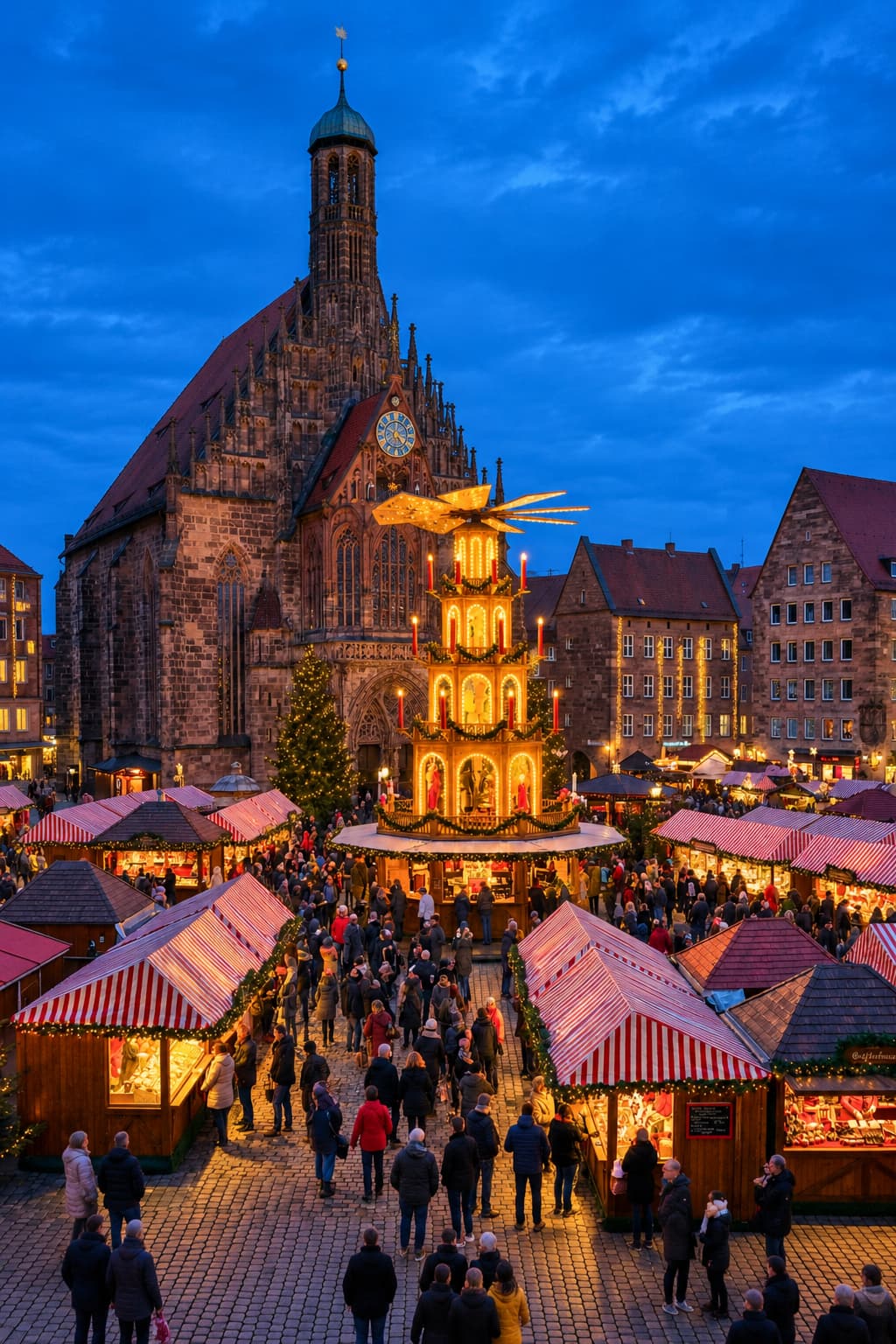
Nuremberg’s Christkindlesmarkt is Germany’s most famous market for a reason: it takes place in the medieval Hauptmarkt, opened each year by a young woman elected as the symbolic Christkind, and the focus is still primarily on traditional craftsmanship — handmade ornaments, Rauschgoldengel angels, Lebkuchen, and local Franconian food rather than generic market fare. It has a character that the largest German markets sometimes lose.
The crowds are substantial. The Hauptmarkt holds around 180 stalls and draws two million visitors over five weeks — which means weekends in December are very busy. The market is also compact: it doesn’t spread across a city like Strasbourg, so crowd density is higher. The saving grace is the quality: this is one of the few major European Christmas markets where most of the stalls are selling things worth buying. Visit on a weekday and you get something close to the authentic atmosphere. Visit on a Saturday afternoon in the second week of December and you get a crush.
Dresden, Germany — the oldest, and an underrated skyline
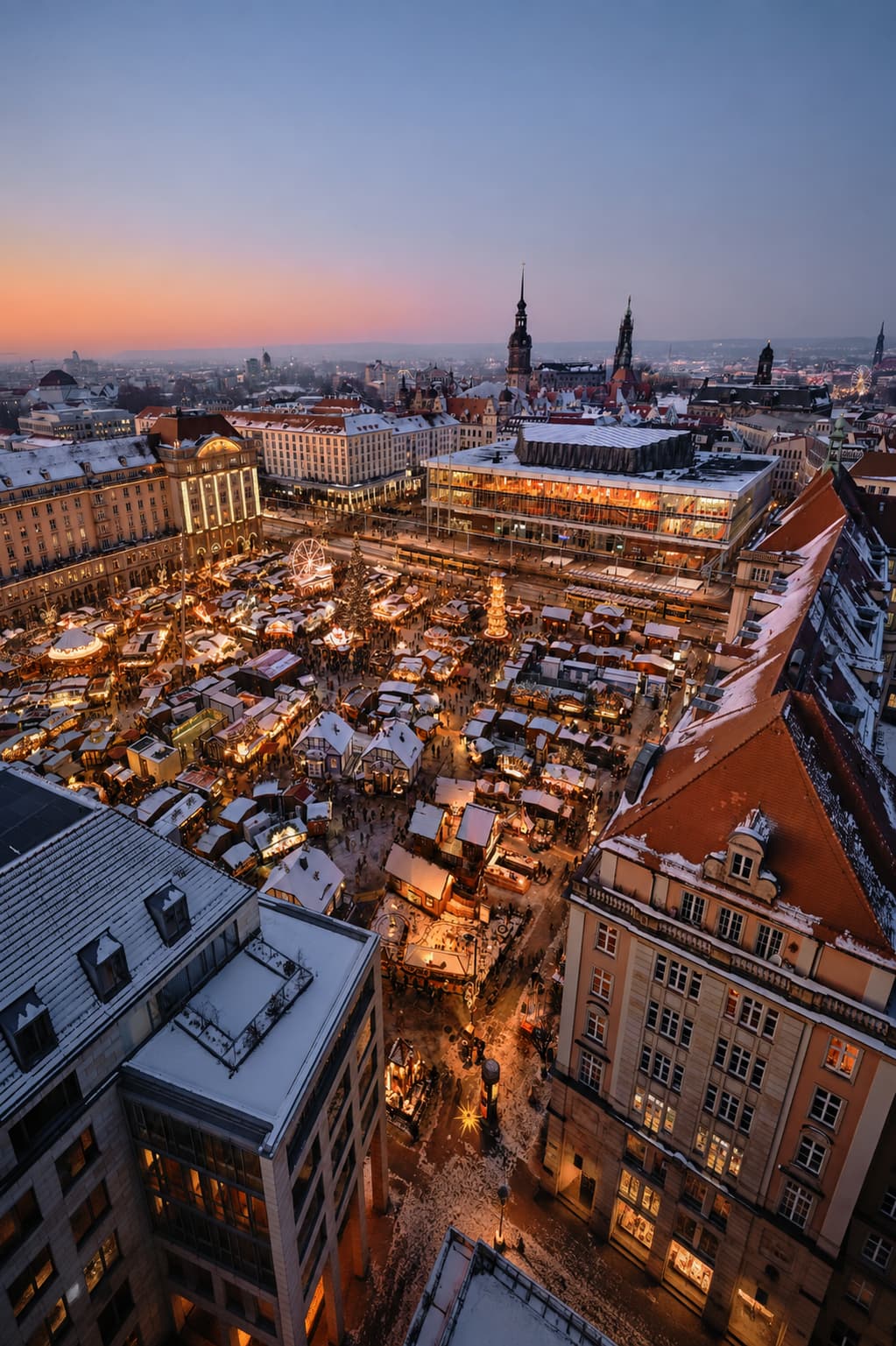
Dresden’s Striezelmarkt, first documented in 1434, is the oldest Christmas market in Europe — predating Strasbourg’s market by over 130 years. The backdrop on Altmarkt square, ringed by baroque buildings, is genuinely special, and Dresden has over eleven separate markets spread across a city whose architectural recovery from the war is still quietly astonishing. The central Christmas pyramid is one of the most recognisable market structures in Germany.
Dresden is significantly less crowded than Nuremberg or Cologne, partly because it sits in Saxony rather than Bavaria or the Rhine corridor where most Christmas market tourists are based. Accommodation is more affordable. The city also has one of the best Christmas museum shops in Germany (if ornaments and crafts are your thing). Dresden pairs well with Prague — they’re 2.5 hours apart by train — and if you’re doing a Central European Christmas market circuit, the Dresden travel guide covers the full city beyond the market.
Prague, Czechia — the photogenic one that runs past Christmas
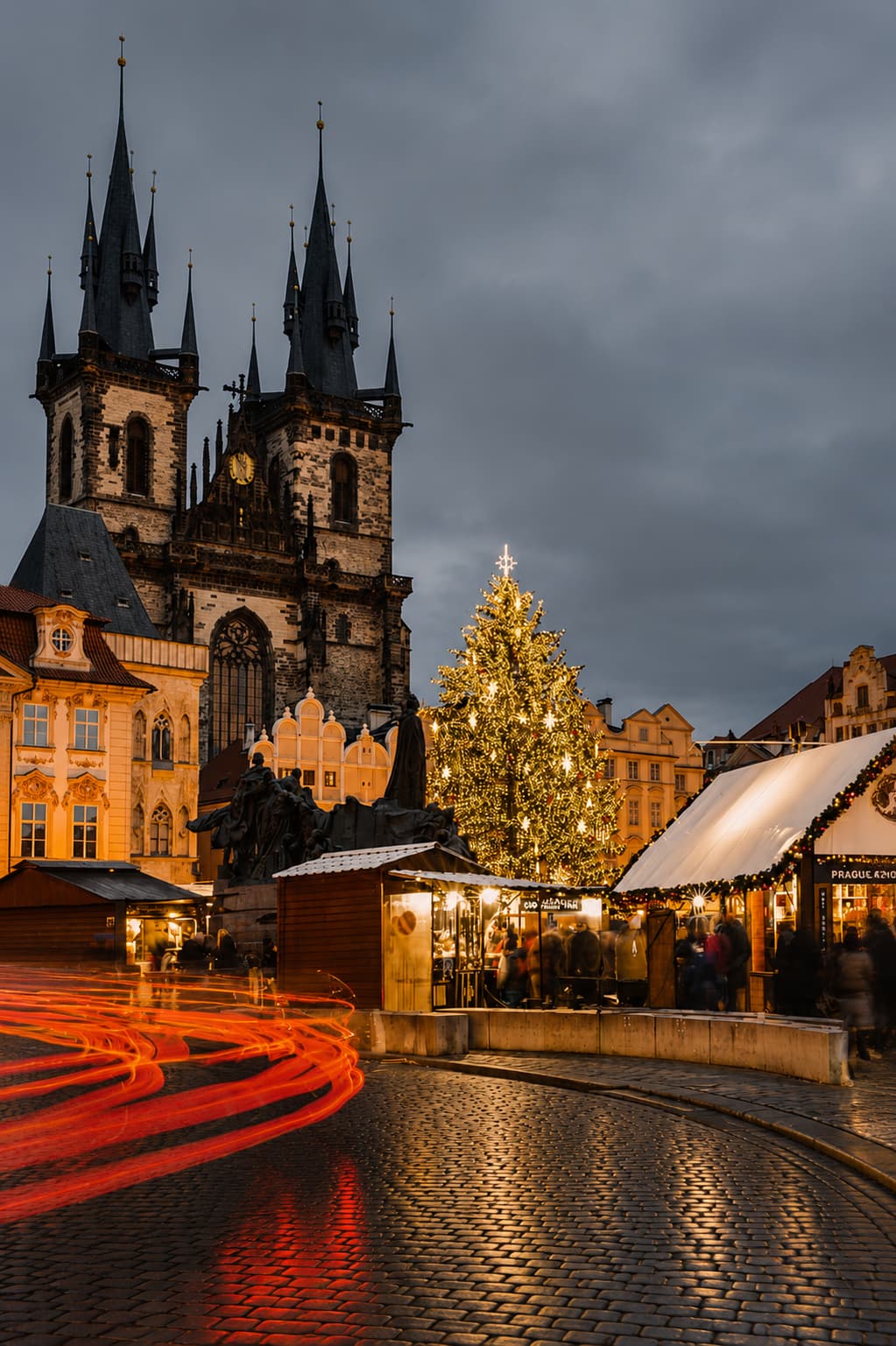
No market in Europe has a backdrop that competes with Prague’s Old Town Square in December: the Gothic towers of the Týn Church, the Astronomical Clock, a 100-year-old market tradition, and a decorated tree that looks like it was commissioned by a film director. Prague also has the advantage of running its market until January 6th — making it one of very few major markets accessible for trips between Christmas and New Year’s.
The honest problem: Prague’s Old Town is one of the most visited urban spaces in Europe year-round, and in December it reaches a level of footfall that makes wandering difficult. The stalls are good — trdelník, svařák (hot wine), roasted meats, and Czech crafts — but the secondary market on Wenceslas Square is often a better experience during peak periods. The camera shot from the tower of the Old Town Hall is outstanding and worth the entrance fee; the market from street level on a December Saturday is a different calculation. If you’re travelling between Christmas and New Year’s, Prague is the standout choice in Europe. See the Prague vs Budapest comparison if you’re deciding between the two.
Vienna, Austria — the all-rounder
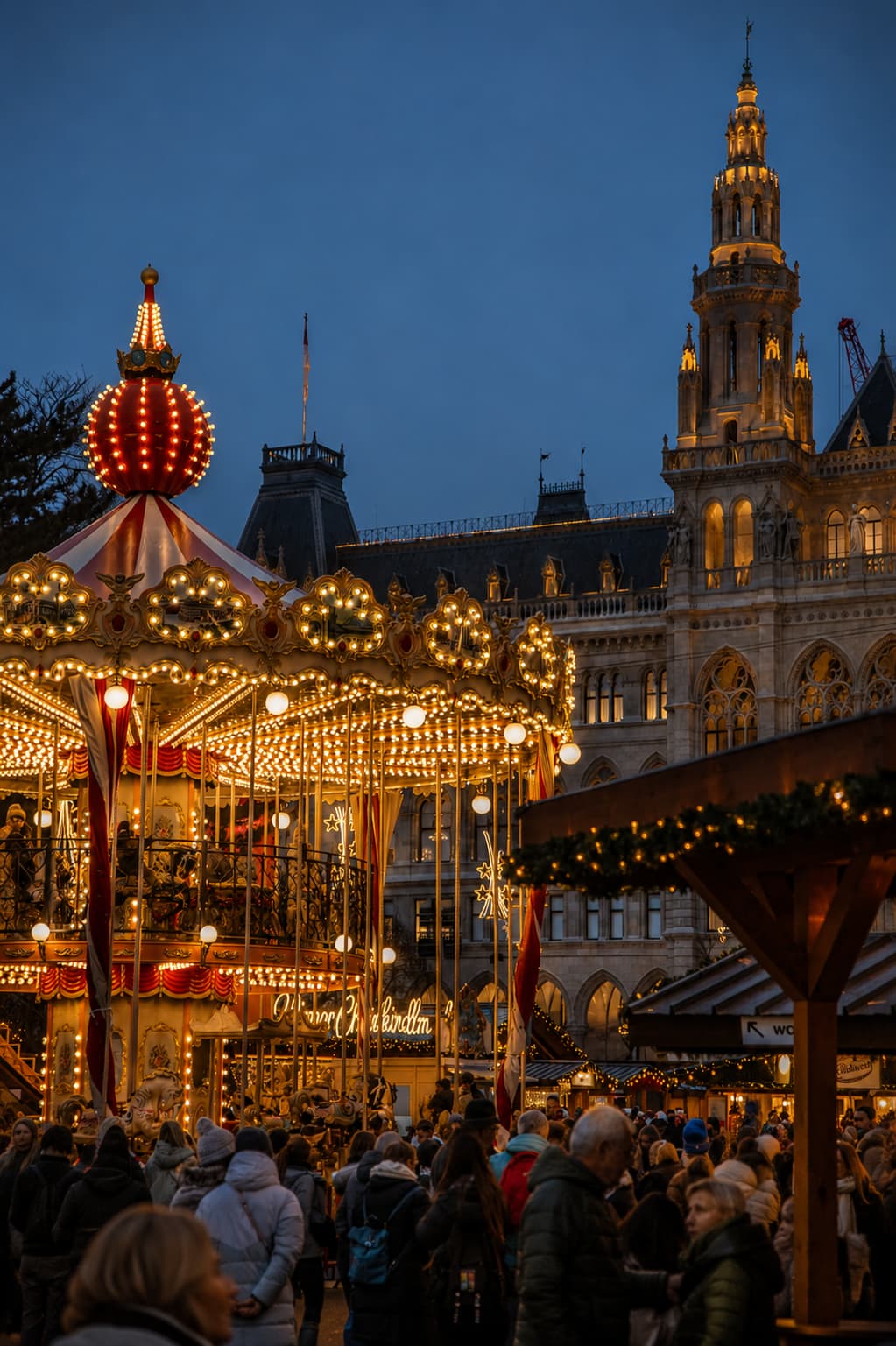
Vienna is the only city on this list where the markets spread so comprehensively across a capital that you can genuinely avoid the main crowds by choosing a different square. The Rathausplatz market is the famous one — around 150 stalls against the illuminated Gothic Town Hall — but the market at Belvedere Palace, the one at Schönbrunn, and the smaller Spittelberg village market in the 7th district all offer different experiences. Vienna at Christmas is a different proposition to Vienna in summer, and it’s genuinely strong.
The caveat is cost. Vienna in December is expensive: accommodation prices rise sharply through Advent and the city already skews toward premium pricing. A December weekend in Vienna can cost significantly more than an equivalent trip to Budapest or Prague. The trade-off is a city where every non-market hour is also excellent — the Kunsthistorisches Museum, the opera, the coffee houses — so you’re paying for Vienna, not just the market. Two days in Vienna covers how to structure the city.
Budapest, Hungary — the value and food winner
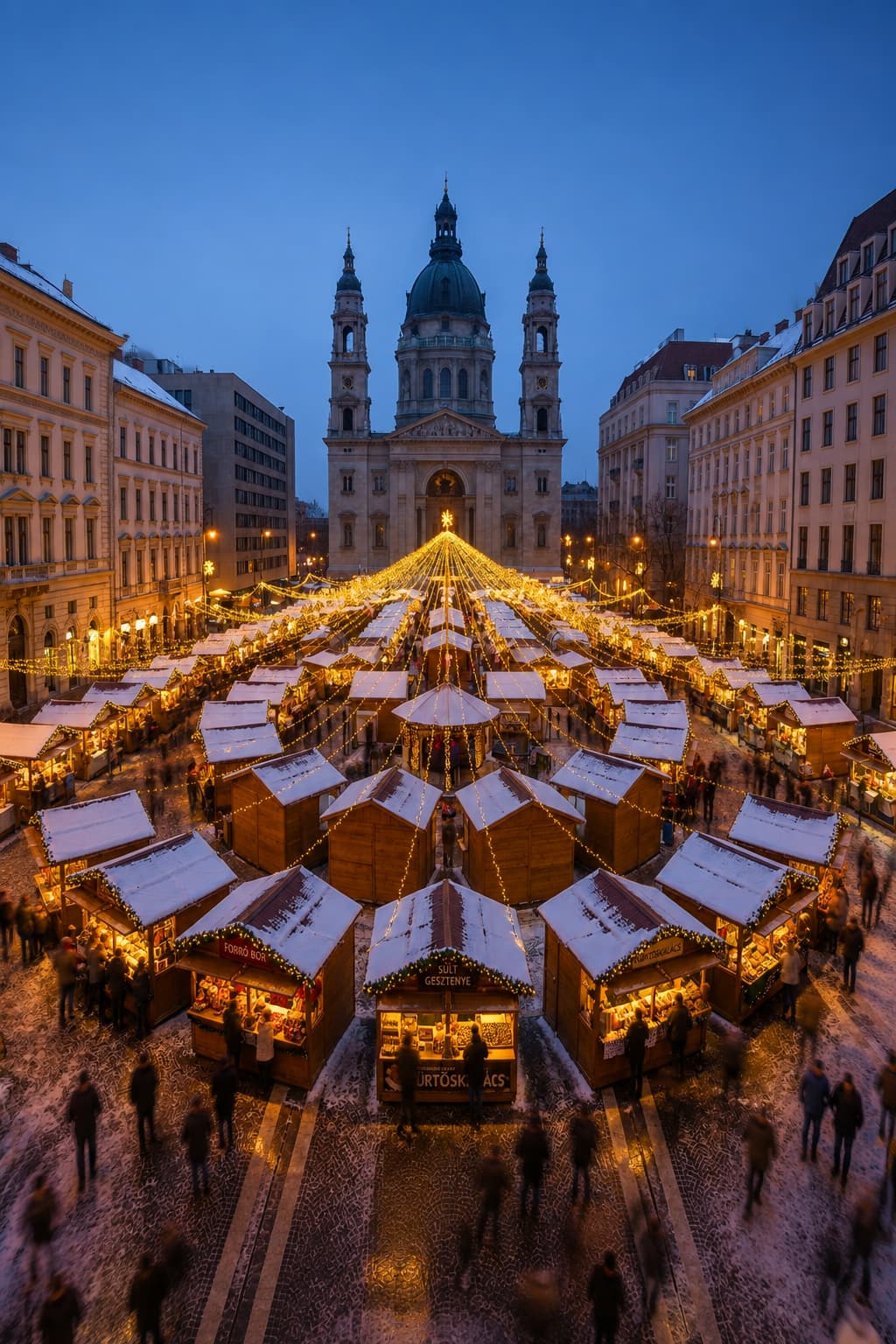
Budapest wins on food, value, and the combination of market and city experience more comprehensively than almost anywhere else on this list. The main market at Vörösmarty Square is elegant — wooden stalls against the handsome 19th-century square — and the St. Stephen’s Basilica market, where a light show projects onto the facade every 30 minutes, is one of the most dramatic settings for a European Christmas market. Hungarian market food is also genuinely excellent: chimney cakes (kürtőskalács), langos, goulash, and local pálinka make Bratwurst look one-dimensional.
Budapest’s market runs until December 31st, giving it strong appeal for the between-Christmas-and-New-Year window. Accommodation and food prices are lower than Vienna, Prague, or any Western European city. The city has thermal baths, ruin bars, a spectacular parliament building, and a Danube embankment that in December is among the most beautiful urban scenes in Europe. It’s not the most traditional-German market experience, but as a Christmas trip destination that happens to have excellent markets, it’s the most complete package. See Budapest in two days for how to structure the city beyond the stalls.
Cologne, Germany — the cathedral market
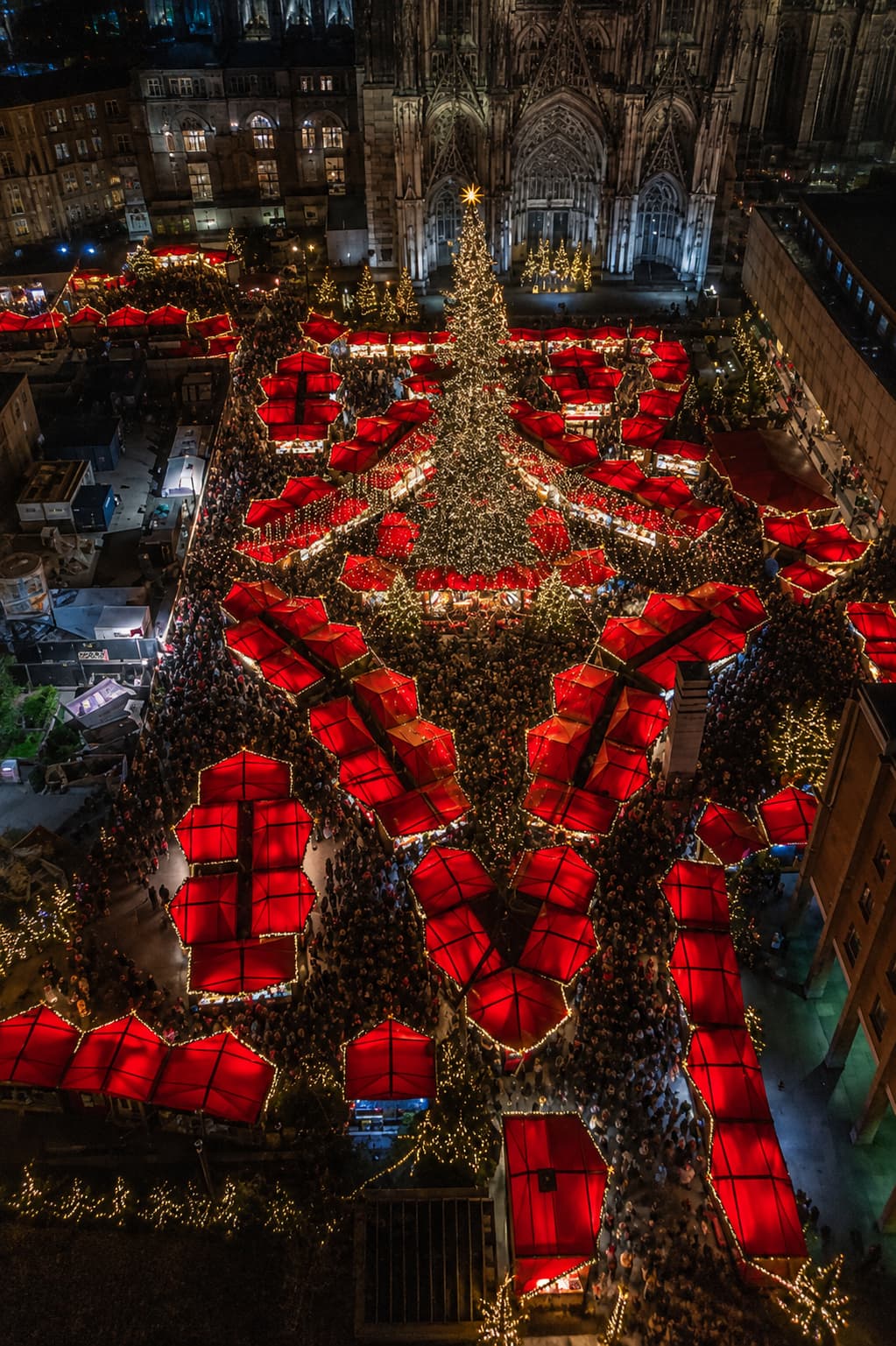
Cologne has seven distinct Christmas markets scattered across the city, which is its main structural advantage over single-square markets: when the market in front of the cathedral is overwhelmed (which it is, reliably, on weekends), you can walk 10 minutes to the market at the Old Town Hall or the harbour market by the Chocolate Museum and find something more manageable. The cathedral market itself — stalls directly in front of one of the most impressive Gothic buildings in Europe — has one of the strongest settings on this list. The Rievkooche (potato pancakes) at Cologne’s markets deserve their reputation.
Cologne is well-connected — it’s a major rail hub on the Rhine corridor — making it an easy addition to a Germany-focused trip. But it’s very crowded on weekends, and the city centre becomes difficult to navigate during peak periods. If you’re going to Cologne specifically for the markets, Tuesday through Thursday is a meaningfully different experience.
Tallinn, Estonia — the medieval, low-crowd choice
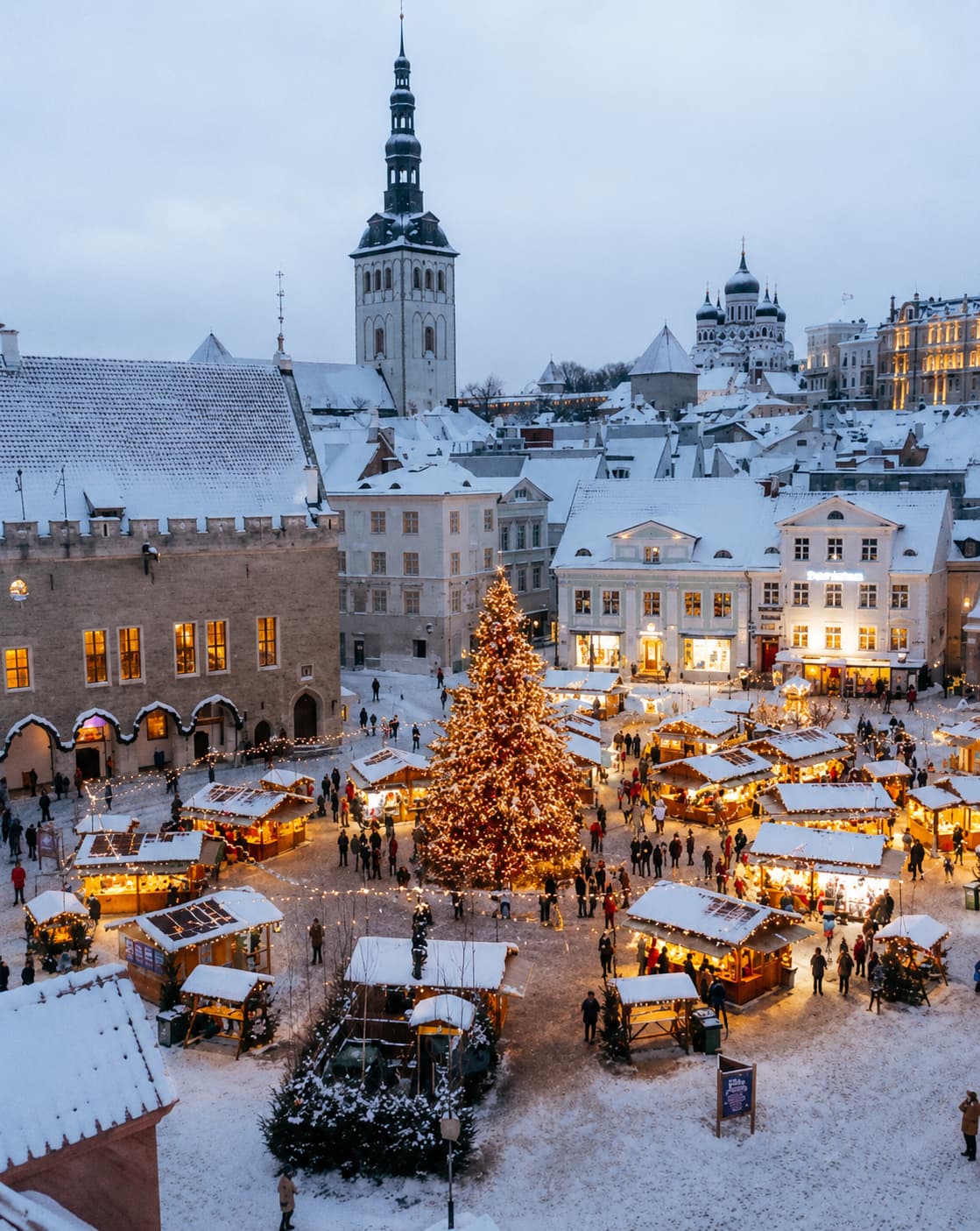
Tallinn’s Town Hall Square is widely regarded as one of the most beautiful Christmas market settings in Europe — a claim that holds up. The medieval Old Town, with its gothic Town Hall, limestone towers, and cobbled streets, looks like a Christmas market was the reason the city was built. Snow is a genuine possibility in December (unlike most Western European markets), and the Christmas tree in Town Hall Square has been lit every year since the 15th century, which gives it a depth of tradition that most newer markets are trying to construct.
Tallinn draws fewer international visitors than any other market on this list, which means the atmosphere is closer to what a real European Christmas market probably felt like before it became an industry. Food prices are low, accommodation is very affordable, and Tallinn’s Old Town is completely walkable within a couple of hours. The Baltic flying routes from most European cities are cheap and short. If you’re looking for the closest thing to an uncrowded, aesthetically outstanding Christmas market in a city that feels like it’s doing this for itself rather than for Instagram, Tallinn is the answer.
Kraków, Poland — the best-value big market
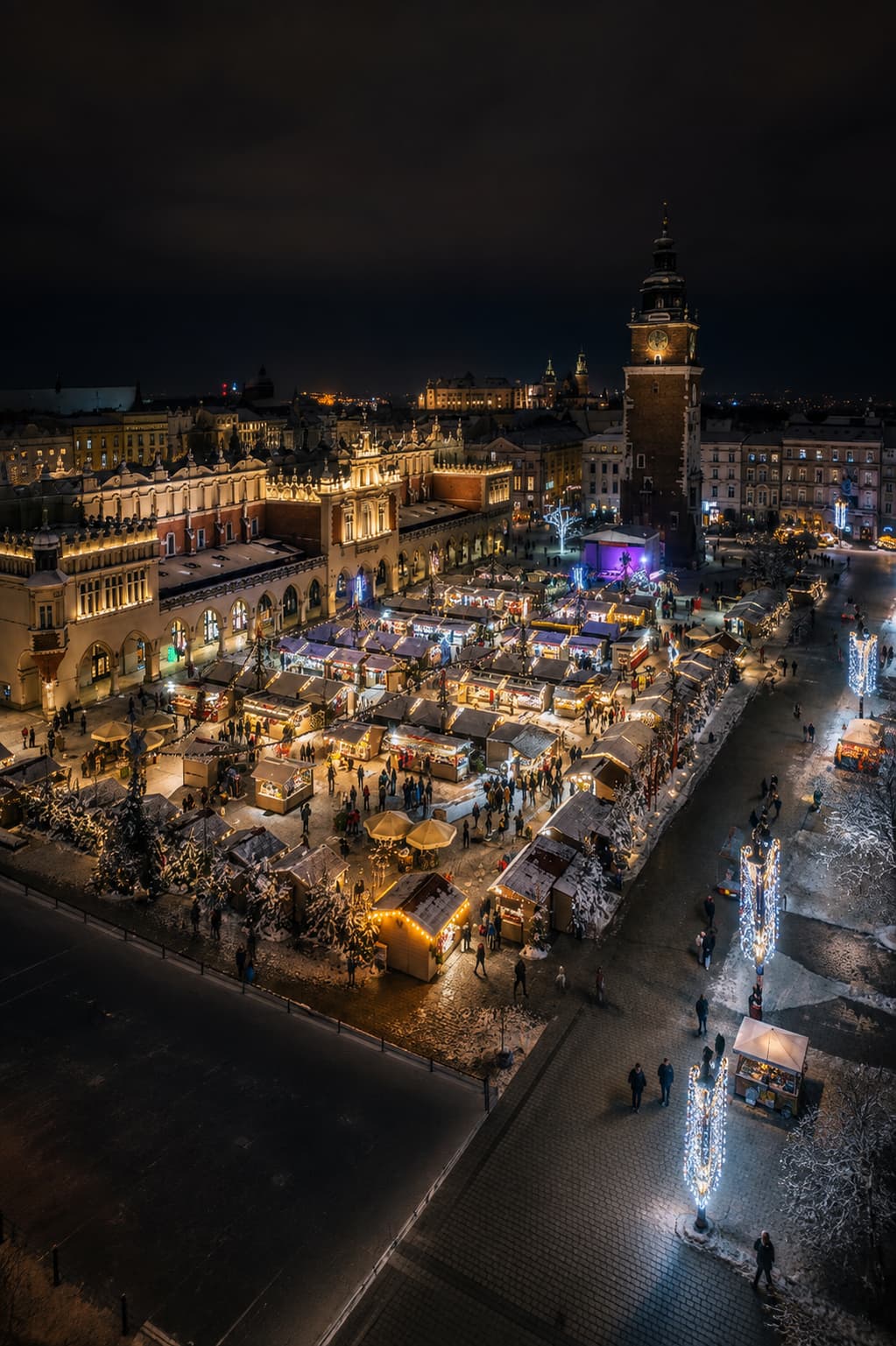
Kraków’s market takes place on the Rynek Główny — one of the largest medieval town squares in Europe — which gives it a scale and setting that few markets match. The market has consistently high ratings on independent review platforms, and the combination of food (Polish market food is genuinely excellent: oscypek grilled cheese, żurek soup, pierogi), setting, and price point is hard to beat. Kraków also has exceptional non-market appeal: Wawel Castle, the Kazimierz Jewish quarter, and one of the finest medieval city centres in Central Europe.
Accommodation and food costs in Kraków are among the lowest of any major European Christmas market city, making it the strongest pick for budget-conscious travellers who still want a proper festive atmosphere in a city worth being in. The main square market is atmospheric and manageable even on weekends.
04 — Which famous Christmas markets are overrated?
When you’re weighing up the best Christmas markets Europe offers, this is the section most travel sites skip because it offends tourism boards and affiliate partners. But if you’re flying specifically to a market and spending real money on accommodation, you deserve to know which celebrated names underdeliver.
Brussels, Belgium — not worth a dedicated trip
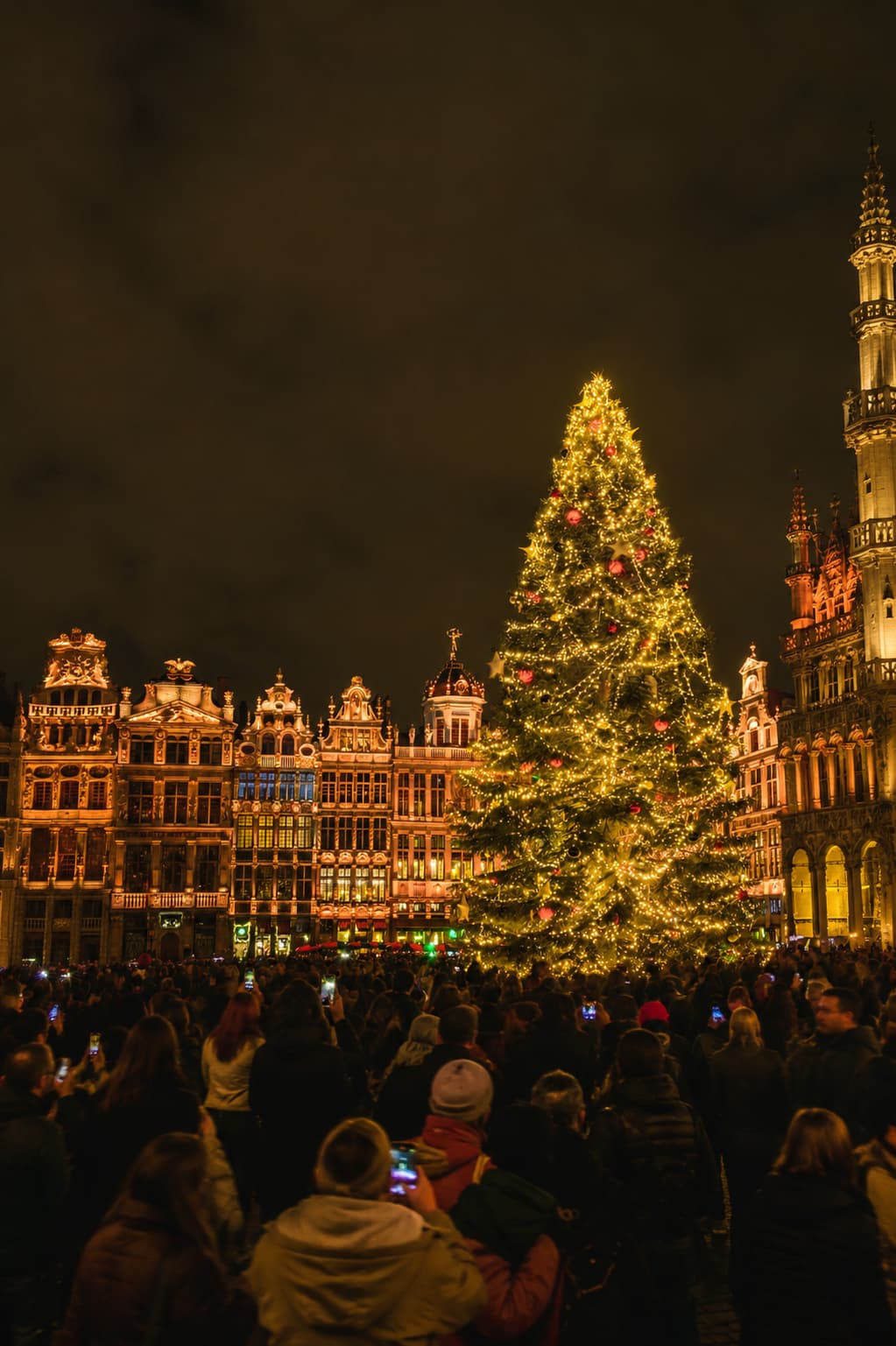
Brussels’ Winter Wonders market is large and well-publicised but has consistently received criticism for generic stalls that could be in any European city, high prices, and an atmosphere that feels more like a theme park than a Christmas tradition. The city is worth visiting for many other reasons; the market alone isn’t one of them. If you’re already in Belgium, Bruges is the stronger choice.
Munich, Germany — on a Saturday, not worth the pain
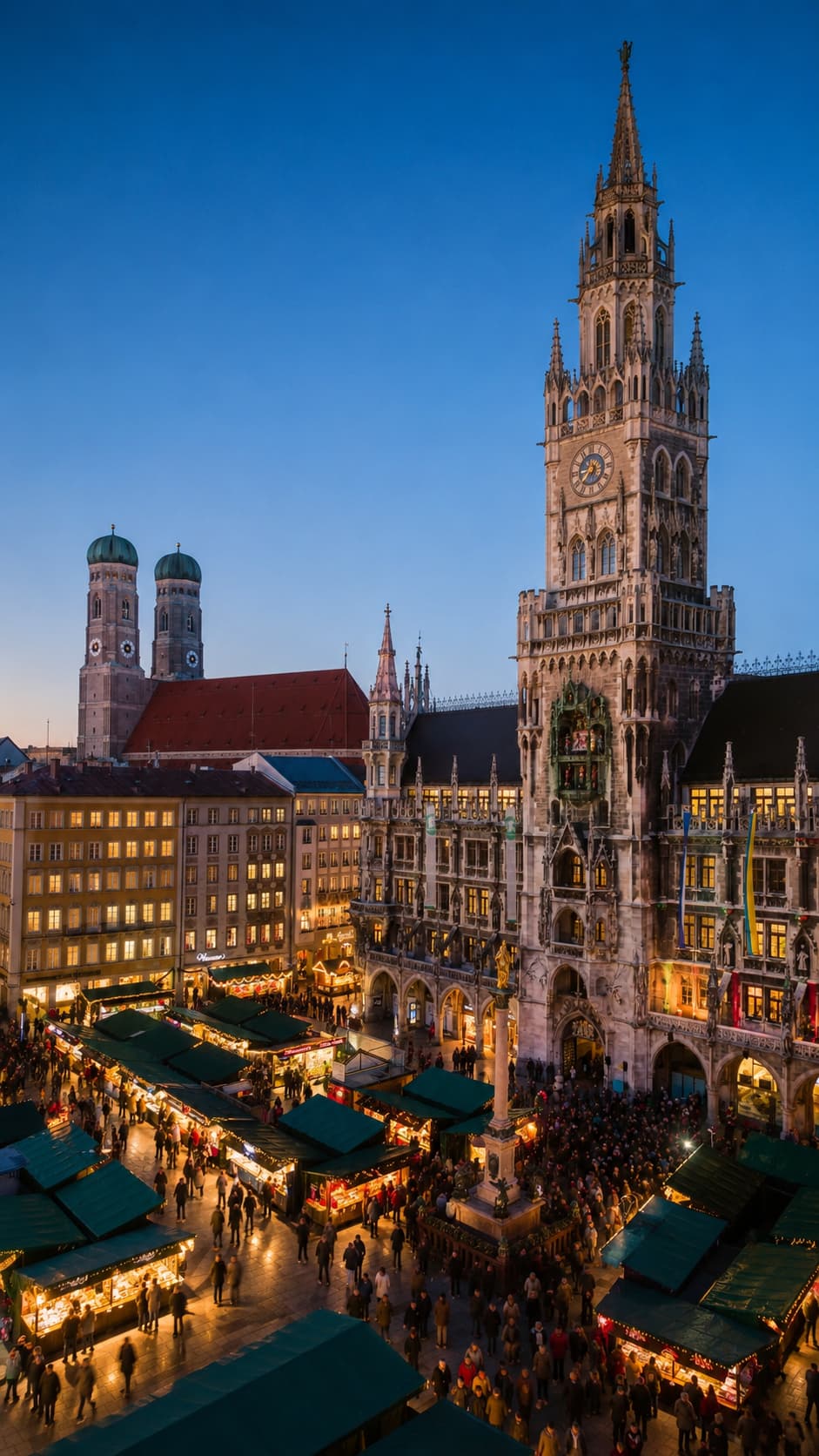
The Christkindlmarkt at Marienplatz is atmospheric and genuinely traditional, but Munich draws enormous visitor numbers and the crowds at peak periods — particularly second and third Advent weekends — are documented by multiple sources as among the worst in Germany. The market itself is excellent; the conditions are not. If Munich is your target, arrive on a weekday morning in the first week of December before the full tourist wave arrives.
Berlin, Germany — skip the main markets
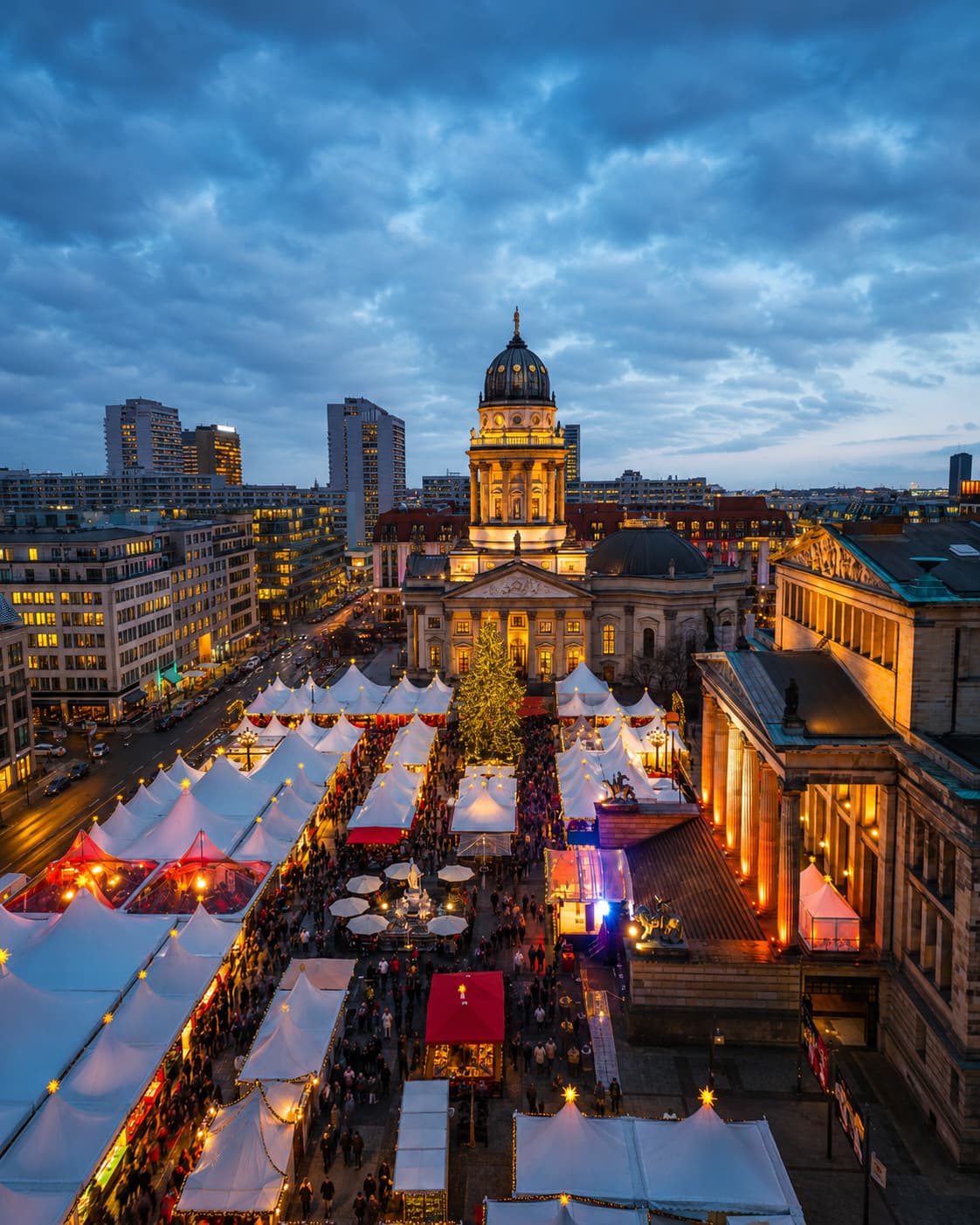
Berlin has over 80 Christmas markets, which is both its strength and its problem. The famous markets — Gendarmenmarkt, Alexanderplatz — are expensive, very crowded, and have been widely criticised for stall quality that doesn’t justify entrance fees. The genuinely good markets in Berlin are smaller, district-based ones in Charlottenburg, Prenzlauer Berg, and Schöneberg that get almost no attention in English-language travel content. Berlin’s reputation as a Christmas market city is largely inherited from its famous venues rather than earned by the overall experience.
05 — Best Christmas Markets Europe: The Low-Crowd Alternatives
These are the picks that consistently appear in independent traveller reports as markets with genuine atmosphere, strong settings, and manageable visitor numbers. None of them are secrets exactly — but they don’t appear on the main listicles because they’re not in cities where the tourism boards have marketing budgets.
Bratislava, Slovakia — underrated and genuinely charming
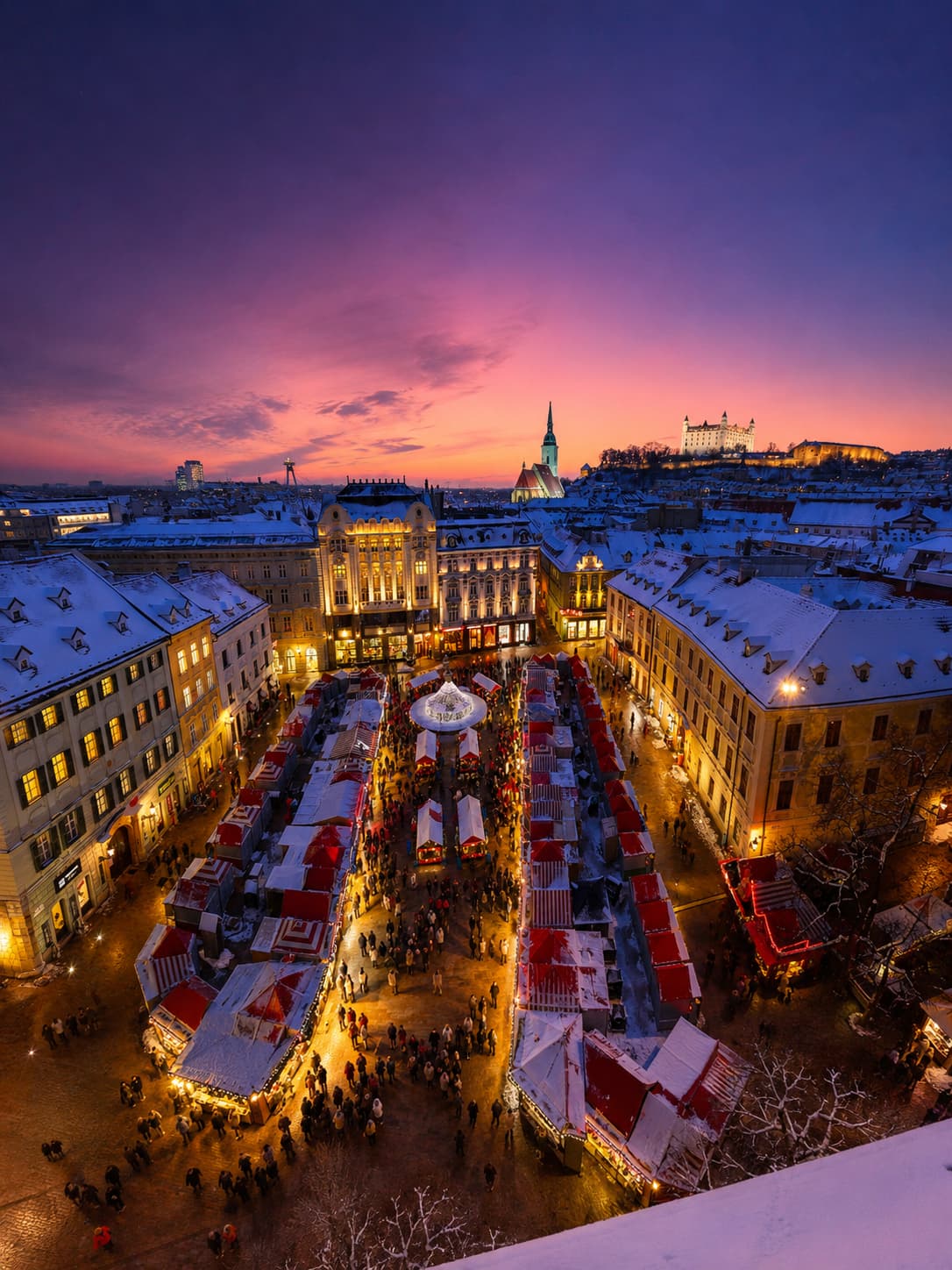
Bratislava’s compact old town hosts a market that draws a fraction of Vienna’s crowds, at a fraction of Vienna’s prices, with a genuinely local atmosphere. The medieval square setting is excellent. It’s also well-positioned for a multi-city trip — it’s 60 minutes from Vienna and 2.5 hours from Budapest by train. Is Bratislava worth stopping? covers the full case.
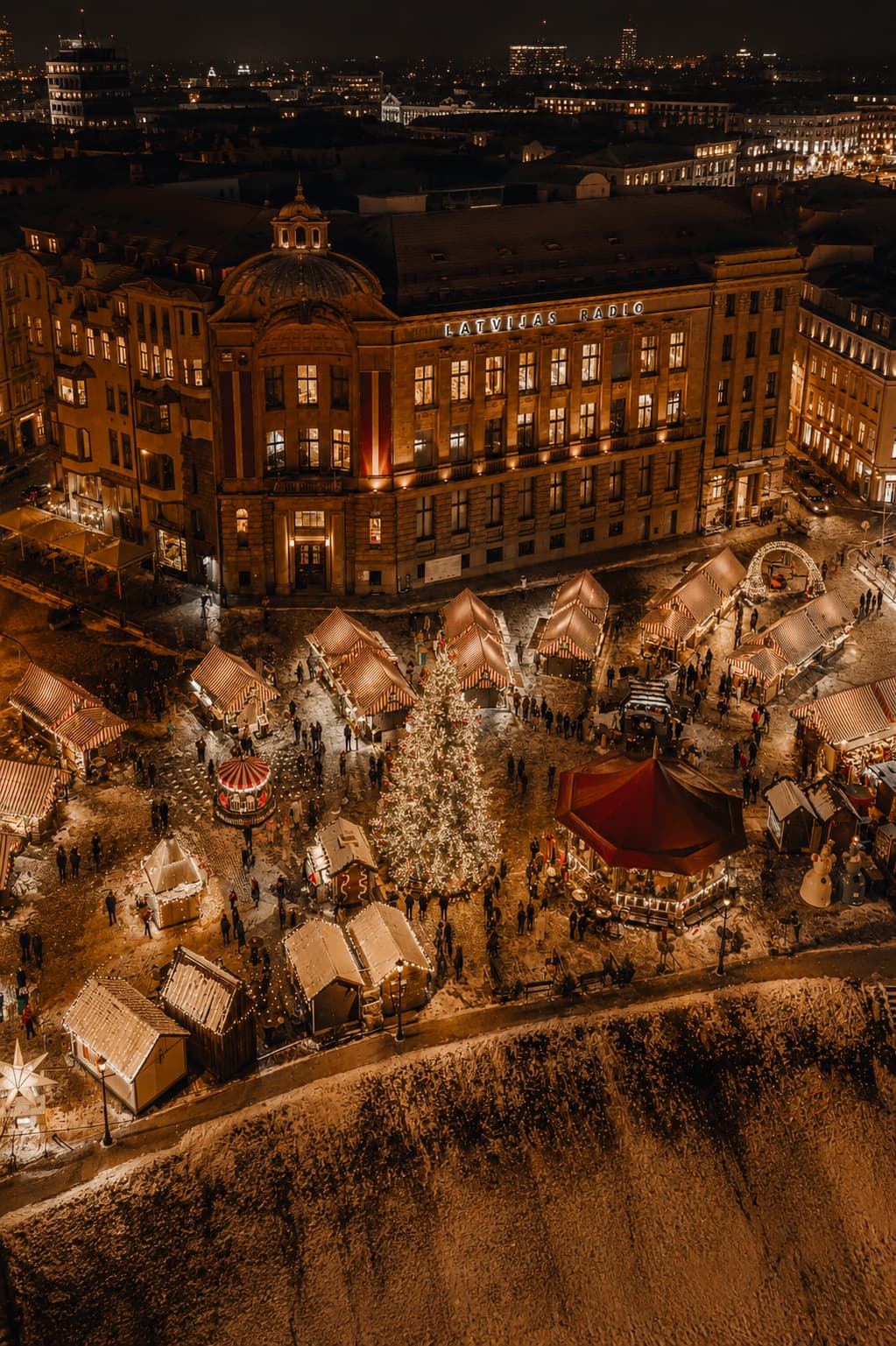
Riga, Latvia — voted best lights in Europe
Riga’s Old Town market has been recognised for its extraordinary lighting installations, and the Baltic capital’s UNESCO-listed historic centre is one of the most beautiful in Northern Europe. Like Tallinn, it offers a medieval Christmas experience at Eastern European prices, with the added draw of Latvian crafts and food that you won’t find at any other market.
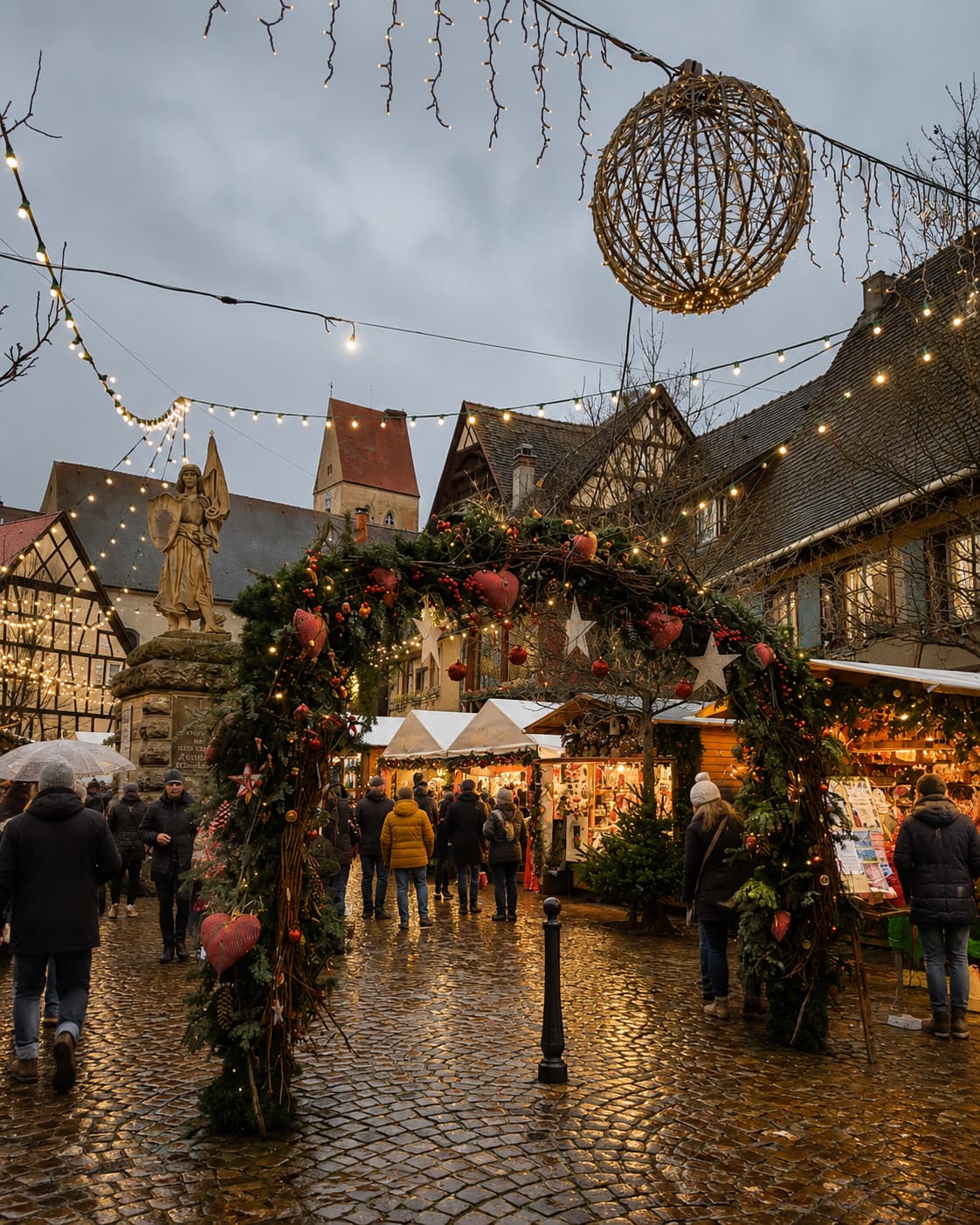
Alsace villages — Eguisheim, Kaysersberg, Ribeauvillé
While Strasbourg and Colmar get the traffic, the smaller Alsace wine-route villages running their own Christmas markets are a different experience entirely. Eguisheim, said to be the inspiration for the village in Beauty and the Beast, holds a market in its circular medieval square. Kaysersberg and Ribeauvillé have been recognised by independent European travel polls as among the most atmospheric small markets on the continent. Manageable crowds, outstanding settings, and the Alsace wine to match.
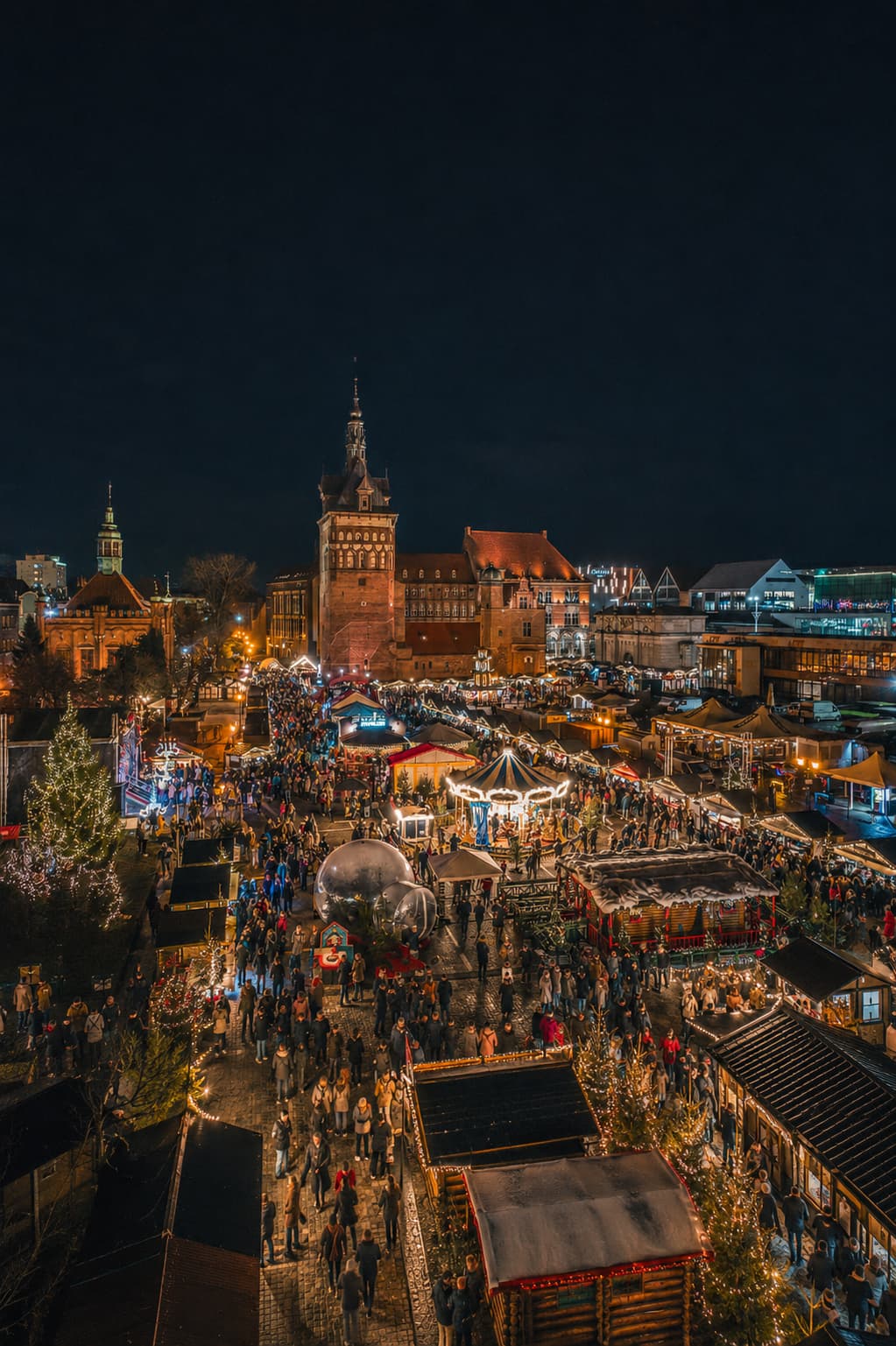
Gdańsk, Poland — ranked Europe’s best market by Forbes
Gdańsk’s Christmas market was ranked the top European Christmas market of 2025 by Forbes, concentrated near one another in the old city and set against Gothic brick architecture. Poland is dramatically under-represented on Christmas market travel itineraries given the quality of its markets, and Gdańsk specifically combines a remarkable city with a manageable, high-quality market experience at low cost.
06 — When to visit the best Christmas markets in Europe in 2026
Opening and closing dates for 2026
Advent begins on Sunday, 29 November in 2026, and most markets open the week before — roughly 20–28 November. The specific dates below are confirmed or expected based on consistent multi-year patterns; always verify with each city’s official market website before booking, as precise dates are sometimes finalised in September or October.
| City | Opens (approx.) | Closes | Note |
|---|---|---|---|
| Vienna | 13 November | 26 December | Earliest major market to open |
| Budapest | 15 November | 31 December | Good for New Year’s window |
| Tallinn | ~20 November | 7 January 2027 | Runs into New Year |
| Colmar | ~21 November | 26 December | Five market zones |
| Strasbourg | ~22 November | 24 December | 12 market locations across city |
| Kraków | ~27 November | 26 December | Rynek Główny square |
| Nuremberg | ~27 November | 24 December | Strictly closes on Christmas Eve |
| Prague | ~28 November | 6 January 2027 | Runs longest of major markets |
| Dresden | ~26 November | 24 December | 11 markets across the city |
| Cologne | ~23 November | 23 December | Seven markets across city |
German markets close strictly on 23 or 24 December — they don’t do New Year’s. If you’re travelling between Christmas and New Year, the Eastern European cities are your options: Prague runs until January 6th, Budapest until December 31st, and Tallinn until January 7th. Also worth knowing: if you’re planning further afield in winter, the where to go in December guide covers warm-weather alternatives for the same window.
The quietest days to visit
The two busiest weekends across all European markets are the second and third Advent weekends in December — roughly 5–6 December and 12–13 December in 2026. Accommodation prices peak on these dates and the crowds at the most popular markets are at their worst. For a meaningfully better experience, visit:
- First Advent weekend (28–29 November): Often the best combination of full decoration and manageable crowds — the tourist wave hasn’t fully arrived yet
- Weekday afternoons and evenings (Mon–Thu): Consistently the lowest footfall at every market, by a significant margin
- First two weeks of December: Better than the third week, which sees a rush of people trying to visit before markets close
- Post-Christmas (26 Dec – Jan 6): Prague and Budapest at their quietest; markets are less decorated but often excellent value
For everything you need to know about the 2026 opening calendar and market dates, the when do Christmas markets start post has the full breakdown.
07 — How to plan a multi-market trip
The appeal of a multi-market trip is obvious; the reality is that most people try to see too many markets in too short a time and end up spending the trip on trains rather than at stalls. The practical ceiling is three to four cities in a week, and that’s only comfortable if the routing is logical.
The rail corridor that works best in December runs roughly: Strasbourg → Colmar → Nuremberg → Dresden → Prague → Vienna → Budapest. This is the spine of European Christmas market travel and it’s entirely doable by train. Every leg is under four hours; several are under two. If you’re building a trip around the best Christmas markets Europe has on this corridor, two nights per city is the comfortable minimum — one night means you only see it at capacity.
Rail Times and Practical Routing Between Markets
- Strasbourg to Colmar: ~40 min by train — easily a day trip from either city
- Nuremberg to Dresden: ~2 hours — logical one-night stop before Prague
- Dresden to Prague: ~2.5 hours by train — natural pairing, covered in the Dresden guide
- Prague to Vienna: ~4 hours direct by train or bus
- Vienna to Budapest: ~2.5 hours by Railjet — the strongest two-city pairing on the list
- Bratislava detour: Sits between Vienna and Budapest and is 60 min from each — an easy half-day stop
- Book accommodation in advance for December — particularly in Vienna, Strasbourg, and Nuremberg, where rooms fill months ahead for Advent weekends
How many markets is too many? Two cities with two or three nights each gives you time to actually experience a market — morning visits, evening visits, a proper meal, a walk without the stalls. One night per city means the market is the only thing you do, which is fine for one or two stops but becomes exhausting by the third. The temptation to add one more city is almost always the wrong decision. If you’re also trying to decide between Germany and Austria specifically, the Germany vs Austria Christmas markets comparison covers that exact decision.
Beautiful Markets, Opening Dates, and Whether They’re Worth It
Best Countries, What to Buy, and Overrated Markets
The best European Christmas markets aren’t the ones with the largest marketing budgets or the longest press release histories.
They’re the ones where, for a few hours on a cold evening, a city is doing something it would do even if nobody came to watch.