

Portugal in October: The Honest Regional Guide
Not the same trip everywhere. Here’s what Lisbon, Porto, the Algarve, and the Douro Valley each actually deliver when the summer crowd is gone.
Visiting Portugal in October is a genuinely good idea — but the answer depends almost entirely on where you’re going. That’s not a hedge. It’s the single most useful thing anyone can tell you about this month.
The Algarve in October is genuinely excellent: warm, quiet, cheap, and still swimmable. Lisbon is comfortable and unhurried. Porto in October is a different proposition — beautiful on a clear day, frustrating if you’re there for four days and it rains for two of them. And the Douro Valley has a narrow window in early October that, if you catch it, is unlike anything else in Europe that month.
This guide gives you a region-by-region verdict, not a weather table. It tells you who October in Portugal is made for, and — more importantly — who should wait or choose differently.
- Is October actually a good time to visit Portugal?
- What the weather actually looks like — region by region
- Can you go to the beach in October?
- Is the Algarve worth it in October?
- How crowded is Portugal in October?
- What to do beyond the obvious cities
- What to pack for Portugal in October
- FAQ
- The honest verdict
01 — Is October actually a good time to visit Portugal?
Yes — with caveats that genuinely matter. October is Portugal’s shoulder season at its most functional: summer has released its grip, prices have fallen, and the places that were impossible to enjoy in August (Sintra, the Algarve cliffs, Lisbon’s miradouros) are suddenly manageable again.
What it isn’t is a guaranteed sun holiday. Portugal’s weather in October is not uniform across the country. The south stays reliably warm. The north, including Porto, enters a transitional period where wet days are real and not infrequent. The distinction matters more in Portugal than in some other countries because the most hyped cities sit in the north and centre, while the weather stays best in the south.
The travellers for whom October works best: city-breakers who find summer heat stifling, wine enthusiasts who want to be in the Douro Valley during harvest, anyone visiting the Algarve who can’t justify July prices, and slow travellers who want to actually feel like they’re living somewhere rather than competing for it.
The travellers who should reconsider: anyone booking a beach-first trip to Porto (wrong region for October beach), and those who need every day to be blue-sky perfect and won’t enjoy the alternative if it rains. If you’re still deciding on your first visit, the Portugal travel tips for first-timers covers what to know before you go regardless of season.
02 — What the weather actually looks like — region by region
Portugal is longer than most people realise — about 560 km from north to south — and October weather varies accordingly. Treating the country as one weather unit is the reason so many people arrive disappointed or pleasantly surprised for the wrong reasons.
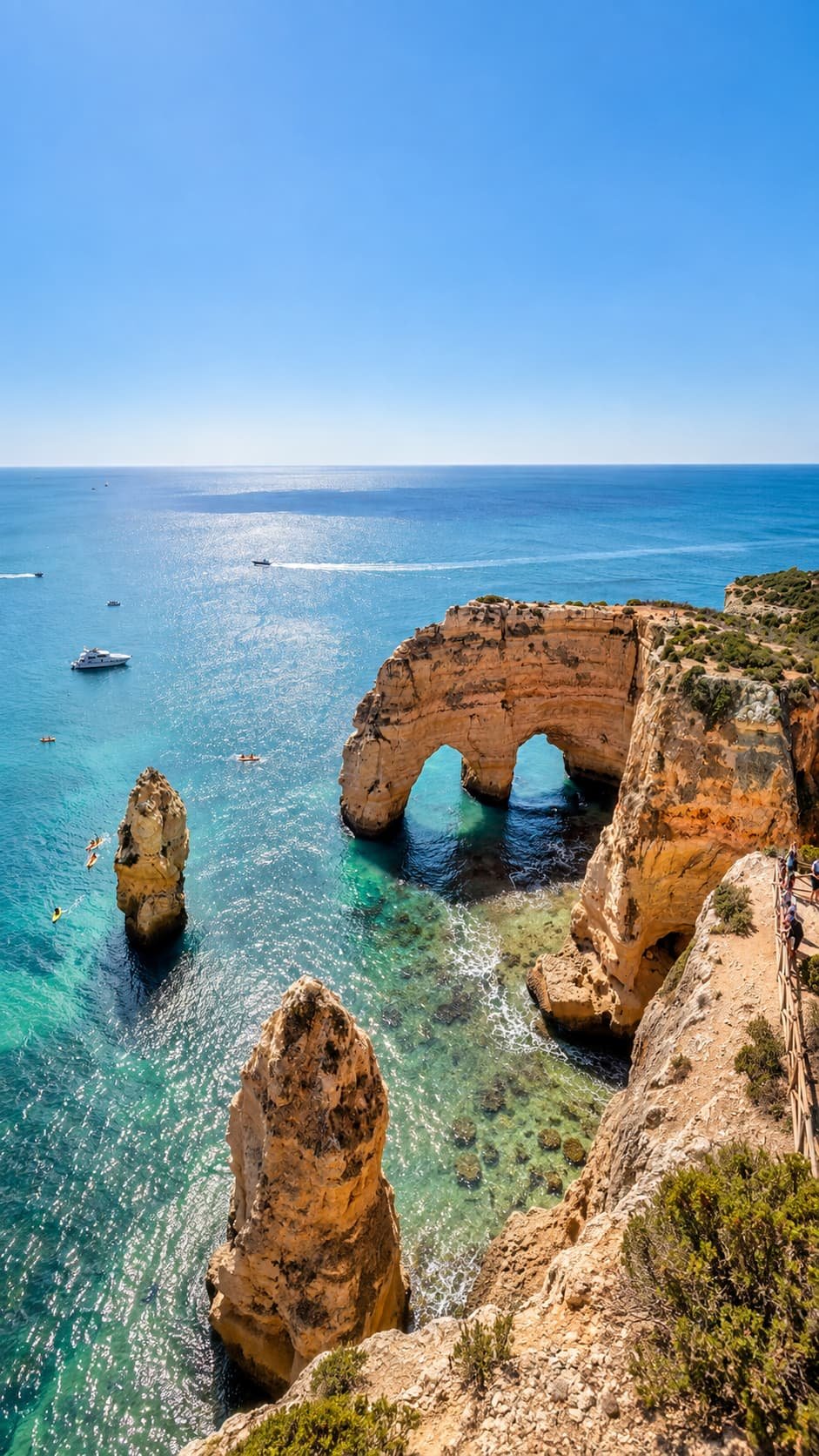
The Algarve in October
The Algarve is where October makes its strongest case. Average daytime highs sit around 25°C, with approximately 18 days of sunshine across the month — warmer and drier than anywhere else in Portugal in October. The Atlantic keeps sea temperatures at around 19–20°C in the south, which is perfectly swimmable for most people. If you came for beach and sun, this is the region where October actually delivers.
The trade-off is that the smaller resort towns begin to wind down. Some beach bars close after mid-October. Some seasonal restaurants reduce hours. Lagos stays lively because it has a year-round resident and expat population — it’s the right base. Tavira and the quieter eastern stretches feel more dormant. That quietness is exactly what some travellers want. For others, it reads as off-season emptiness.
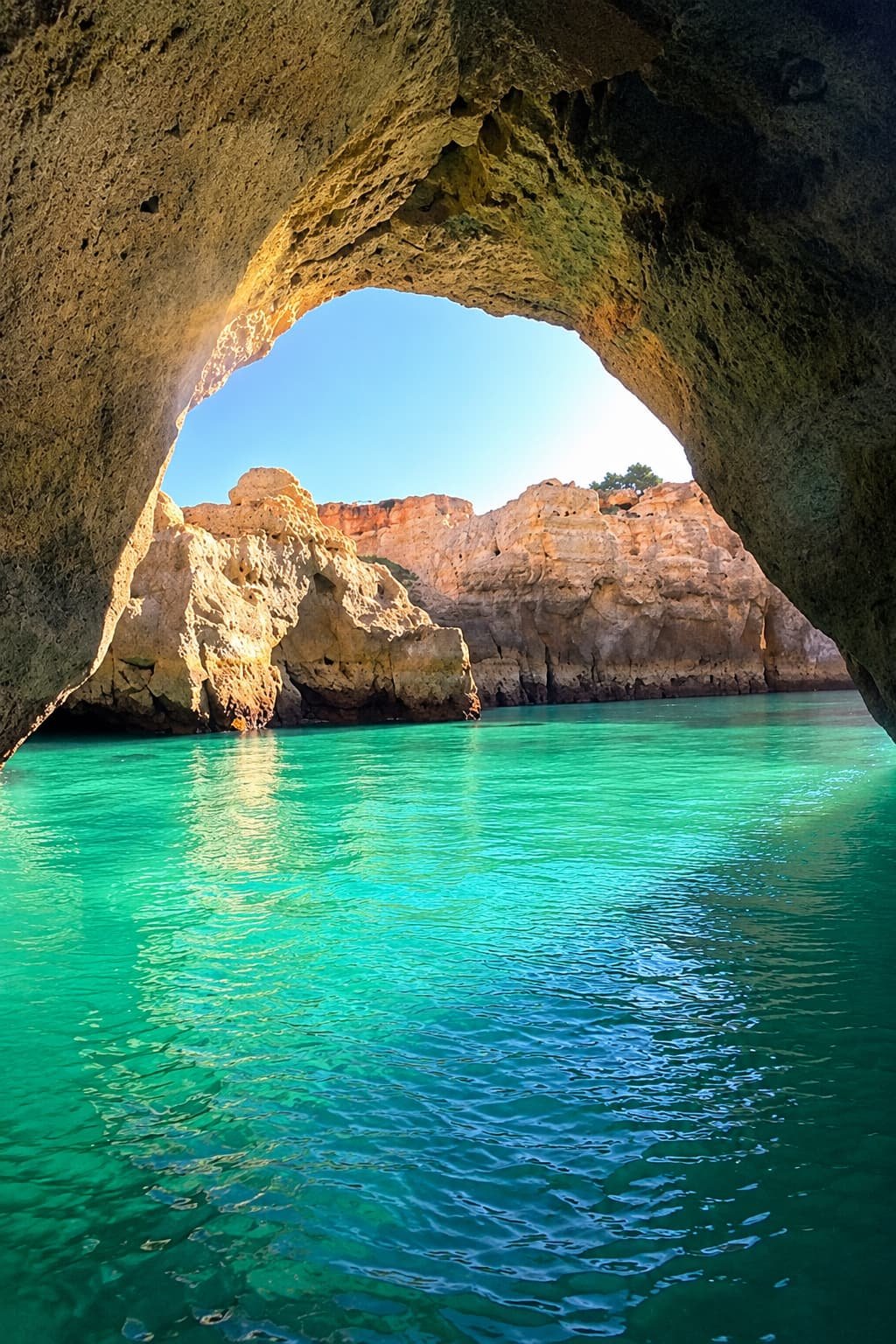
Lisbon and the centre in October
Lisbon in October is arguably its best month for city touring. Highs of 22–24°C mean you can walk Alfama for three hours without wanting to stop and sit in the shade every twenty minutes. The light is different — lower and more angled — and the city’s limestone and terracotta surfaces catch it well. Rain is possible but not dominant; Lisbon averages around 7–8 rainy days in October, and the city has enough depth — museums, palaces, covered markets, the kind of neighbourhood bars where afternoons disappear — that a wet afternoon doesn’t unravel a trip.
Sintra, 45 minutes out, is transformative in October. The palace walls look different without the summer haze. The queues are gone. The forest paths around Pena and Monserrate are damp and atmospheric in a way they simply aren’t in August. If Sintra was on your list and you went in summer and found it intolerable, October is its redemption.

One practical note: the Lisbon Marathon typically runs on October 25. Check the date before booking — it affects street access and hotel pricing around the date, but it also means the city has a particular energy that weekend if you’re into that.
Porto and the north in October
Porto in October is the honest complication in this guide. The city is genuinely beautiful — the Douro at dusk, the azulejo church facades, the wine cellars in Vila Nova de Gaia, the Foz district out by the coast. But Porto averages around 10 rainy days in October, and unlike Lisbon, it doesn’t have quite the same density of indoor cultural weight to absorb a grey afternoon gracefully. The port cellars are there, and they’re excellent. But if you’re spending four days in Porto and two of them are wet, the experience narrows.
The counterargument: Porto on a clear October day, when the light hits the Ribeira and the boats are on the river and you’re eating a pastel de nata by the waterfront, is one of the better things you can do in Europe this month. The risk is simply real, and it’s worth naming.

The Douro Valley in October — its own category
The Douro Valley harvest typically peaks in the first two weeks of October, and it places this stretch of river in an entirely different category from anything else you can do in Portugal that month. According to Visit Portugal, the vindima (grape harvest) is one of the country’s most distinctive seasonal experiences — wine estate visits become working experiences rather than tasting-room tourism. The terraced vineyards — already dramatic at any time of year — turn gold and copper. The quintas that offer harvest experiences book out months in advance, so this is not a spontaneous decision.
If you have any interest in wine, food, or watching a place do the thing it’s actually built for, the Douro in the first fortnight of October is worth building a trip around.

03 — Can you go to the beach in Portugal in October?
In the Algarve: yes, genuinely. Sea temperatures around 19–20°C in the south, combined with 18 or so sunny days, make beach time realistic — not a brave act, not an optimistic punt. Meia Praia near Lagos is one of the best choices: a long, broad Atlantic beach that doesn’t feel underpopulated even when it’s quiet. Praia da Marinha, with its sea stacks and clear water, is better in October than at any other time of year — the cliffs without the summer crowds are a different experience entirely.
On Lisbon’s coast — Cascais, Estoril, Costa da Caparica — beach time is possible on good October days, with sea temperatures a few degrees lower than the Algarve south coast. It’s conditional, not reliable.
In Porto: the Atlantic beaches at Matosinhos and Foz do Douro are wild and photogenic in October, but swimming is a different matter. Water temperatures sit in the 16–17°C range and the Atlantic swell gets significant. This is surf season beginning, not beach holiday season. Go for the walk, the waves, the grilled seafood at Matosinhos — but not for the sunbathing.
04 — Is the Algarve worth visiting in October?
Yes — and probably more straightforwardly than at any other time of year except September. The case is simple: the weather holds, the prices drop substantially, the beaches are quiet, and the landscape doesn’t lose anything by not being August.
Lagos is the strongest base in October. It has the combination of a real town — with bars, restaurants, and a year-round community — and immediate access to some of the Algarve’s best beaches and cliff walks. The Seven Hanging Valleys trail (Percurso dos Sete Vales Suspensos) between Praia de Vale Centeanes and Praia da Marinha is at its best in October: the limestone paths are warm underfoot, the light is lower and more dramatic on the cliffs, and you can walk two hours without meeting more than a handful of other people.

Accommodation prices in the Algarve in October can run up to 75% cheaper than peak summer rates for equivalent properties. This isn’t a rounding error — it’s the difference between a four-night trip feeling expensive and feeling like outstanding value. A beachfront hotel that costs €350 a night in August might be €90 in October. The same beach, the same cliffs, the same food.
The honest caveat: if you’re going to the quieter eastern towns — Tavira, Cacela Velha, Manta Rota — some seasonal places will be closing or reducing hours. The experience there in October skews quieter and more residential. That’s a feature for some travellers. For others, it’s not what they came for. If you’re planning to drive through the region, the Lisbon to Algarve road trip guide covers the route in full.
05 — How crowded is Portugal in October?
Noticeably, meaningfully less crowded than summer. The specific impacts are worth naming because they change the trip qualitatively, not just statistically.
The Pena Palace queue in August can exceed two hours. In October, you walk in. The forest paths around Monserrate are empty enough to feel like yours. The palace interiors don’t require holding your breath in a shoulder-to-shoulder corridor.
In summer, tastings at the major Gaia cellars need to be booked at least two weeks out. In October, you can walk into Graham’s or Ramos Pinto on the day. The experience is identical; the logistics are dramatically easier.
Miradouro da Graça and Portas do Sol are standing-room-only in August. In October, you can stand at the railing and look at the city without feeling like you’re in an orderly queue. Praça do Comércio, similarly, is just a square again — not an obstacle course of tour groups.
The best neighbourhood restaurants in Lisbon’s Mouraria, Intendente, and Santos areas are walkable in October. The places that require booking six weeks ahead in July will take you same-day. That’s not a small thing.
The one exception to the low-crowds assumption: the Lisbon Marathon on October 25. Book your accommodation early if you’re overlapping with that weekend, and check which streets are closed to taxis and transport on race morning. Around that date, Lisbon hotel prices temporarily spike and the central waterfront route is disrupted.
06 — What to do in Portugal in October beyond the obvious cities

This is the definitive October experience in Portugal. Quinta visits during harvest are working estate tours, not staged wine tourism. Book ahead — the estates that offer harvest experiences fill months out.
Sintra’s forested hills catch low cloud in October in a way that makes Pena Palace and Quinta da Regaleira look genuinely otherworldly. It’s atmospheric in a way no summer photo has ever captured. Worth staying overnight — most visitors come on a day trip, so the mornings are quiet.
Less famous than the Douro but producing some of Portugal’s most interesting wine, the Alentejo — centred on Évora — is at its most beautiful in October when the landscape shifts from scorched-dry to something softer. The cork oak plains, the whitewashed hilltop towns, and the wine estates around Monsaraz are quiet, generous, and unhurried.
October marks the start of the serious surf season on Portugal’s Atlantic coast. Peniche’s Supertubos is a world-class left-hand barrel that only works with Atlantic swell — and October brings it. Ericeira, a designated World Surfing Reserve north of Lisbon, comes alive. This is a specific draw for a specific traveller, but worth naming clearly.
07 — What to pack for Portugal in October
Portugal in October is a layering trip, not a holiday wardrobe trip. The specifics depend on where you’re going.
Mornings in Lisbon and Porto can sit at 14–16°C. By midday you’ll have removed two layers. A light merino base, a mid-layer, and something wind-resistant for evenings. Not a winter coat, but more than a summer dress on its own.
In the south you’ll probably not need it, but in Porto and northern Portugal, a packable waterproof jacket takes up almost no space and changes a rainy afternoon from a problem into a minor inconvenience.
Lisbon and Porto are cobblestone cities. In October, wet cobblestones become slippery. Anything with a flat smooth sole will have you shuffling and swearing. Trainers with grip or proper walking shoes are genuinely important, not optional.
If you’re heading south, the beaches are still swimmable and the sea is warm. Don’t leave your swimsuit out of the bag if you’re going anywhere near Lagos or the Algarve coast. No beach equipment needed; most rentals are still running in October.
The one packing mistake: treating this as a full beach holiday if you’re spending time in Porto or the north. Pack for a city break with variable weather, and you’ll be comfortable everywhere.

Planning, Sintra, and Madeira in October
Costs, the Douro Harvest, and Algarve Road Trips
08 — The honest verdict — who should go to Portugal in October
Portugal in October is excellent for:
- City-breakers who found summer Europe too hot: Lisbon at 23°C with no queues is a fundamentally better experience than Lisbon at 35°C with summer crowds. This is the month for people who actually want to walk around and look at things.
- Wine travellers with the Douro on their list: If the Douro Valley harvest is why you’re going, early October is the only month to go. Nothing else in Portugal competes with that specific window.
- Algarve visitors who can’t justify July prices: The beach is real, the prices are fractional, and the cliff walks are better without the summer crowd. Lagos in October is one of the easier cases to make in European travel this season.
- Slow travellers and repeat visitors: People who have done the headline hits in summer and want to actually feel Portugal — the neighbourhood restaurants, the wine estates, the quiet miradouros — will find October the most rewarding month.
Portugal in October requires more thought for:
- Beach-first travellers who need guaranteed sun: Go to the Algarve, not Porto. The Algarve delivers. The north doesn’t promise it in October.
- Anyone committed to Porto who won’t tolerate rain: Porto is the most honest complication in this guide. If your entire trip is Porto-based and you need every day to be sunny, October carries genuine risk. Go in September, or go in October with a backup plan that involves port wine and good books.
If you’re weighing how to split your time between the two main cities, the Lisbon vs Porto guide breaks down exactly when each city makes more sense — the October weather difference between them is addressed there directly.

October doesn’t make Portugal a different place. It just gives it back to itself.
That turns out to be enough.