
When Do Christmas Markets Start in Europe? A City-by-City Breakdown for 2026
The honest date guide: when the season opens, when most German markets close on Christmas Eve — and which cities keep running into January.
If you want to know when do Christmas markets start in Europe, the headline answer is: most open in the second half of November and close on or around 24 December. But if you’re actually planning a trip around them, you need the detail — because the gap between the earliest and latest markets is nearly two months, and whether the market you’re flying to is open on 26 December is the difference between a great trip and a very expensive disappointment.
The most consistent pattern: German markets — Nuremberg, Munich, Cologne, Dresden — tend to close on Christmas Eve. Vienna, Prague, Budapest, Tallinn, and Bruges run into January. If you’re travelling during Christmas week itself, that distinction is everything.
This post gives you a city-by-city breakdown of 2026 opening and closing dates, flagged as confirmed or provisional, plus the honest answer to when you should actually go. For the official season calendar, Christmas Markets and individual city tourism boards are the authoritative sources to check at publish time.
Some 2026 dates are confirmed by official tourism boards; others are projected from prior-year patterns. Each market is labelled accordingly. Verify on the market’s official site before booking non-refundable travel — dates occasionally shift by a few days.
01 — When Do Christmas Markets Start in Europe: The 2026 Season at a Glance
The first Sunday of Advent in 2026 falls on 29 November. That’s the traditional anchor point for the European Christmas market season. Many German markets open on the Friday before Advent — 27 November 2026. Some of the bigger cities open earlier, on the Monday before Advent (23 November). Vienna’s flagship market opens on 13 November, and the Schönbrunn Palace market even earlier on 6 November.
So the effective season runs roughly six weeks: mid-November through Christmas Eve. But the range between the earliest and latest markets is actually closer to two months, if you include into-January runners like Tallinn, Prague, and Bruges.
The key things to know before you book:
- Germany closes early: Nuremberg, Munich, Dresden, and most other German markets wrap up on 24 December — Christmas Eve itself. Don’t assume they’re open Christmas week.
- Central Europe runs later: Prague, Budapest, Kraków, and Tallinn are your options if you’re travelling over Christmas or into early January.
- Vienna does both: The main Rathausplatz market runs to 26 December; the Schönbrunn Palace market runs to 6 January 2027.
- Bruges and Brussels stay open: Both Belgian cities run comfortably into the new year.
- Strasbourg closes around Christmas: Despite being one of the most famous markets in Europe, it follows the German pattern closely.
02 — European Christmas Markets 2026: The Master Date Table
The centerpiece of this post. Save it, screenshot it, share it. Dates marked ✅ are officially confirmed at time of writing; dates marked ⚑ are provisional based on prior-year patterns and should be verified before booking. For confirmed official dates, always cross-check against the European Travel Commission’s Christmas Markets guide closer to the season.
| City | Country | 2026 Opens | 2026 Closes | Status |
|---|---|---|---|---|
| Vienna (Rathausplatz) | Austria | 13 Nov | 26 Dec | ✅ Confirmed |
| Vienna (Schönbrunn) | Austria | 6 Nov | 6 Jan 2027 | ✅ Confirmed |
| Dortmund | Germany | 19 Nov | 30 Dec | ✅ Confirmed |
| Munich | Germany | 20 Nov | 24 Dec | ✅ Confirmed |
| Budapest | Hungary | ~mid Nov | 1 Jan 2027 | ⚑ Expected |
| Cologne (Cathedral) | Germany | 23 Nov | ~23 Dec | ✅ Confirmed |
| Basel | Switzerland | 24 Nov | 23 Dec | ✅ Confirmed |
| Dresden (Striezelmarkt) | Germany | 25 Nov | 24 Dec | ✅ Confirmed |
| Strasbourg | France | 27 Nov | 27 Dec | ⚑ Expected |
| Nuremberg | Germany | 27 Nov | 24 Dec | ✅ Confirmed |
| Prague | Czechia | ~28 Nov | 6 Jan 2027 | ⚑ Expected |
| Kraków | Poland | ~27 Nov | ~1 Jan 2027 | ⚑ Expected |
| Tallinn | Estonia | ~20 Nov | ~6 Jan 2027 | ⚑ Expected |
| Bruges | Belgium | 20 Nov | 3 Jan 2027 | ⚑ Expected |
| Brussels | Belgium | ~20 Nov | ~3 Jan 2027 | ⚑ Expected |
| Bratislava | Slovakia | ~late Nov | ~5 Jan 2027 | ⚑ Expected |
| Zagreb | Croatia | ~late Nov | ~6 Jan 2027 | ⚑ Expected |
| Hamburg | Germany | ~23 Nov | ~23 Dec | ⚑ Expected |
| Frankfurt | Germany | ~23 Nov | 22 Dec | ⚑ Expected |
| Berlin | Germany | ~late Nov | ~30 Dec | ⚑ Expected |
| Salzburg | Austria | ~late Nov | 26 Dec | ⚑ Expected |
| Innsbruck | Austria | ~mid Nov | 6 Jan 2027 | ⚑ Expected |
| Colmar | France | ~late Nov | ~27 Dec | ⚑ Expected |
| Edinburgh | Scotland | ~mid Nov | ~5 Jan 2027 | ⚑ Expected |
| Copenhagen (Tivoli) | Denmark | ~13 Nov | ~4 Jan 2027 | ⚑ Expected |
| Zurich | Switzerland | ~late Nov | 24 Dec | ⚑ Expected |
03 — Germany: When Do Christmas Markets Start Here?
Germany has more Christmas markets than any other country in Europe — estimates run into the thousands — and the format originated here. The core pattern: most open in the last week of November and close on 24 December. If that sounds like a narrow window, it is. The Germany National Tourist Board’s Christmas Markets guide publishes confirmed dates for each city as the season approaches — worth bookmarking if you’re planning a German market trip.
Nuremberg — 27 Nov to 24 Dec 2026 ✅
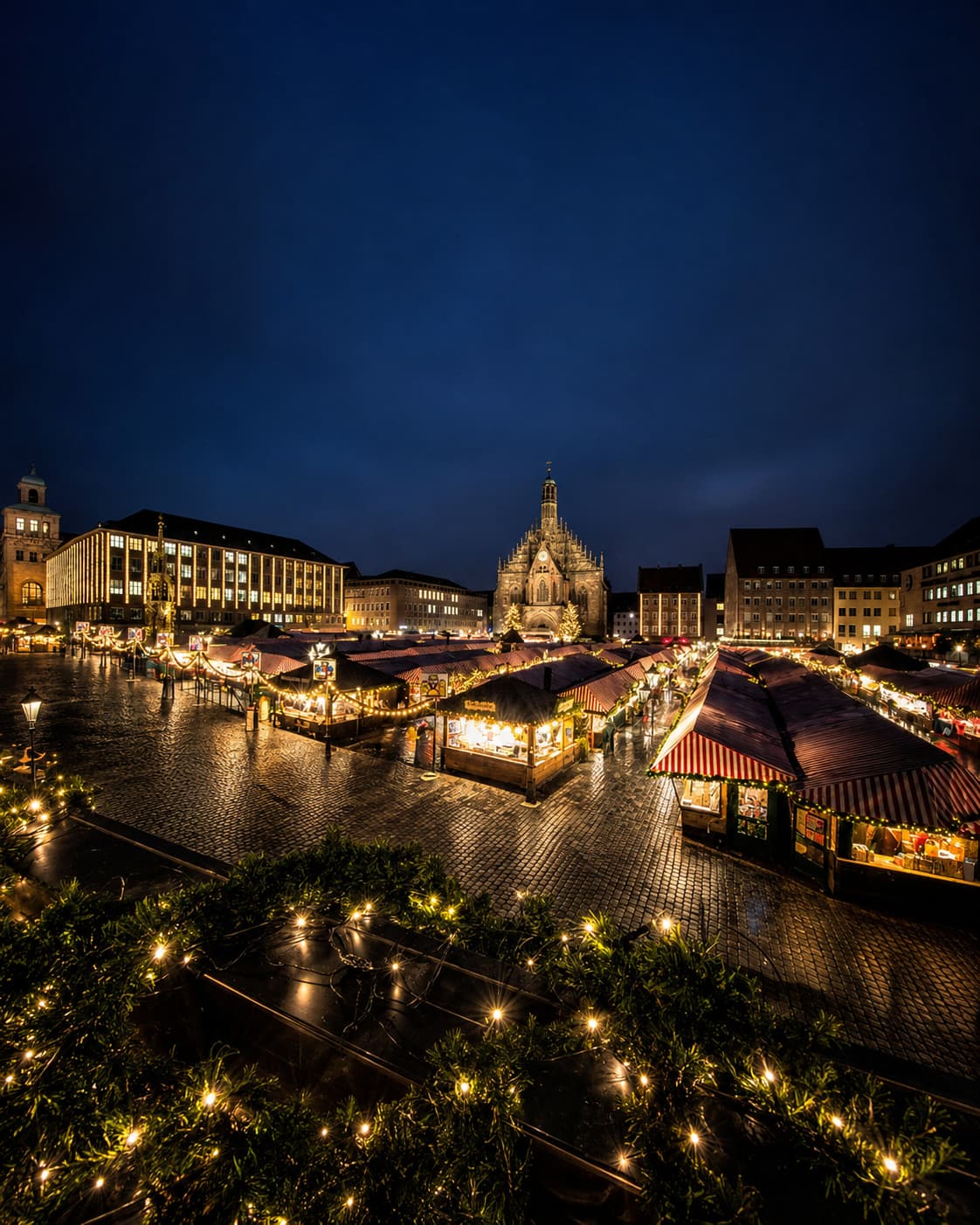
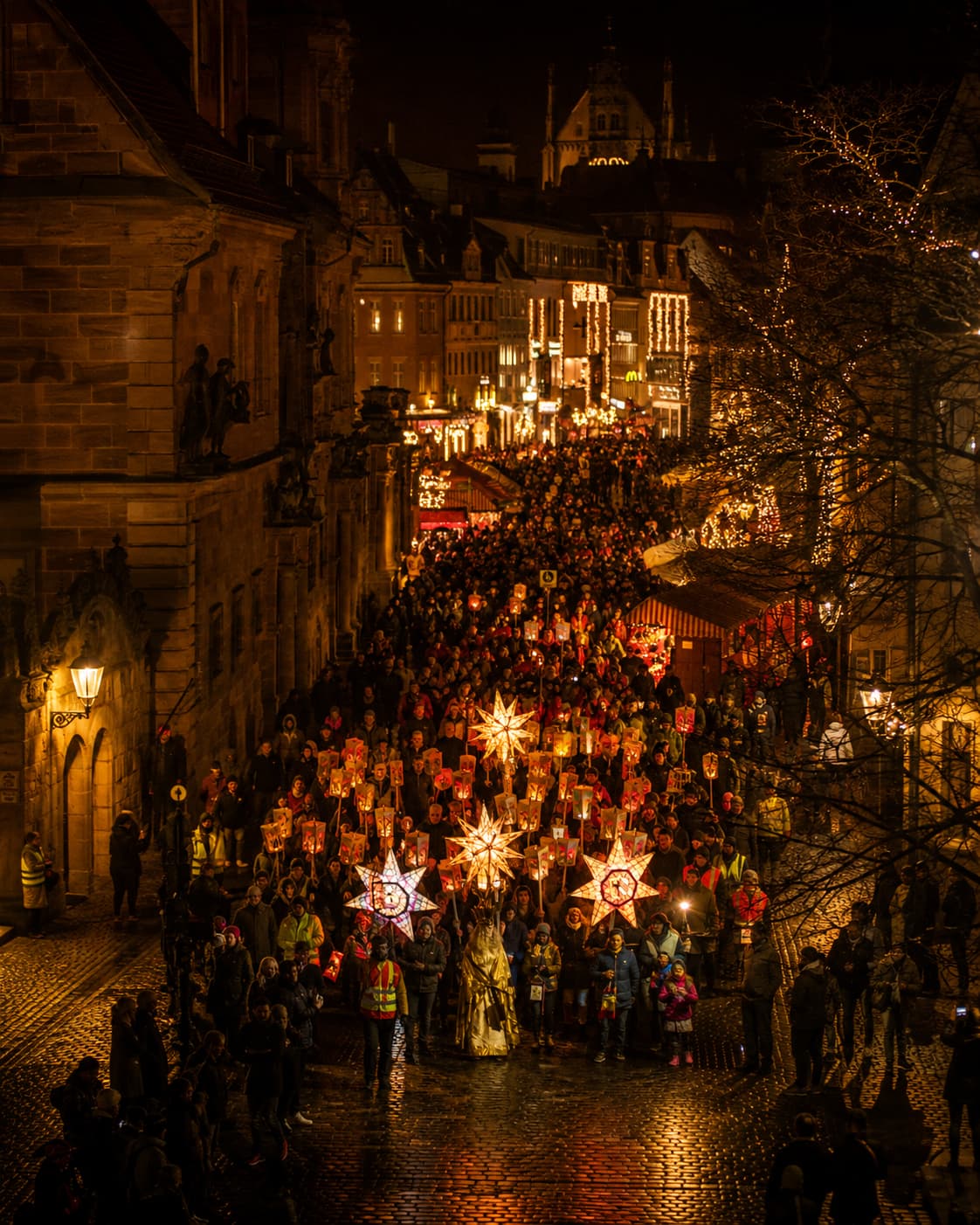
The Christkindlesmarkt is arguably Germany’s most iconic: hundreds of red-and-white striped stalls filling the Hauptmarkt, with the Frauenkirche as the backdrop. It’s famously strict — no plastic, no canned music, nothing that isn’t made in the region. The opening ceremony, where the Christkind reads a prologue from the church balcony, draws crowds in itself. Closes Christmas Eve.
Munich — 20 Nov to 24 Dec 2026 ✅
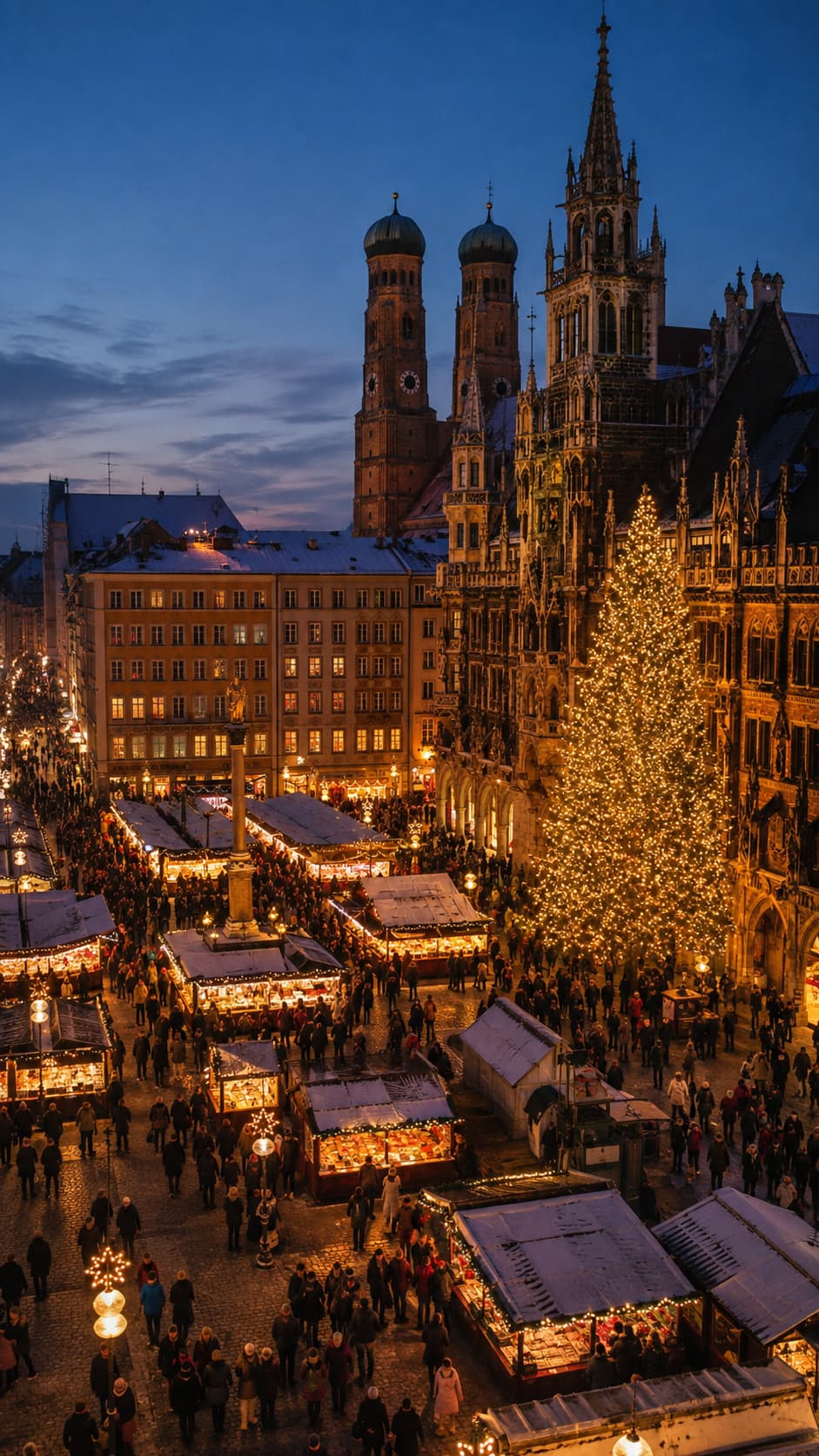
The Christkindlmarkt on Marienplatz is the most accessible entry point to German Christmas markets — easy to reach, high on spectacle, with a 30-metre tree and live music from the Neues Rathaus balcony on Advent evenings. Opens a week earlier than most, which gives it a slight advantage for early arrivals. Closes Christmas Eve.
Dresden — 25 Nov to 24 Dec 2026 ✅
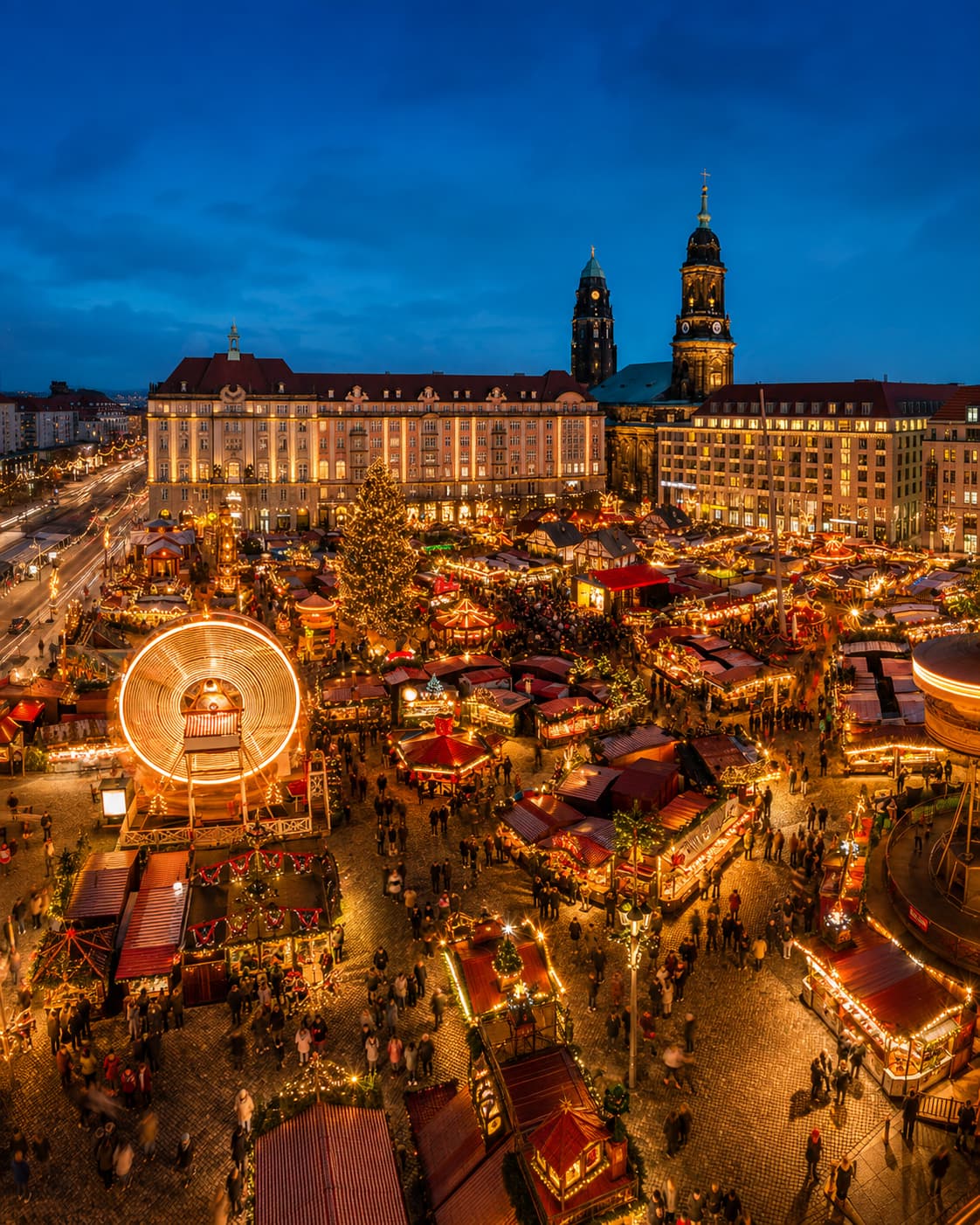
The Striezelmarkt, first documented in 1434, is one of the oldest Christmas markets in Europe — and the oldest claim that holds up to consistent scrutiny. It’s held in Dresden’s Altmarkt square, with the city’s iconic Frauenkirche a short walk away. See our Dresden travel guide for the wider city context. Closes Christmas Eve.
Cologne — 23 Nov to ~23 Dec 2026 ✅
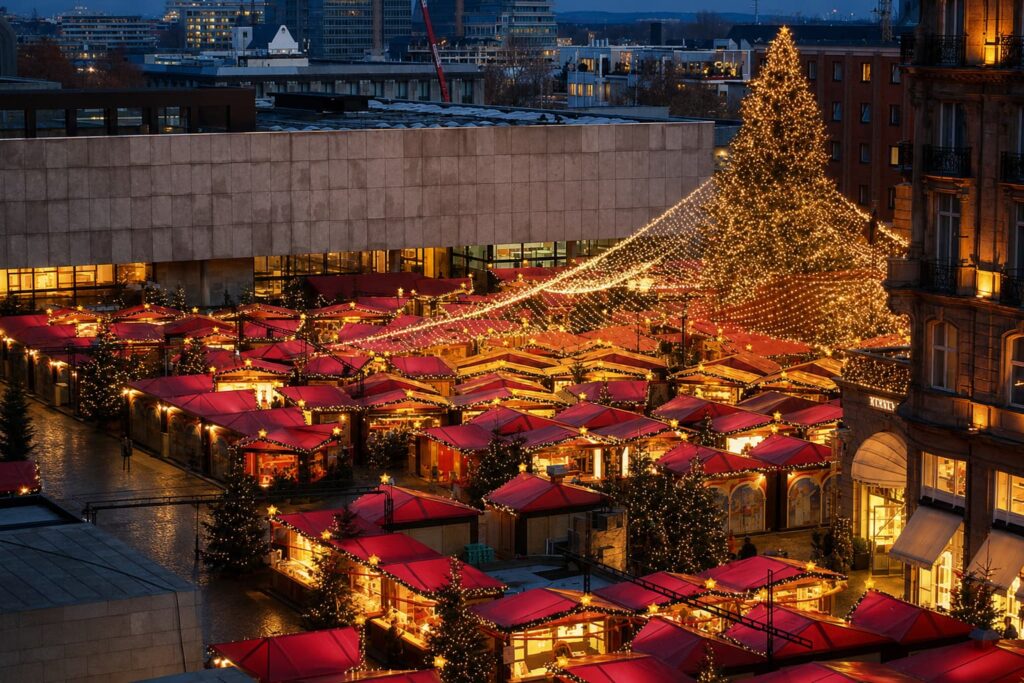
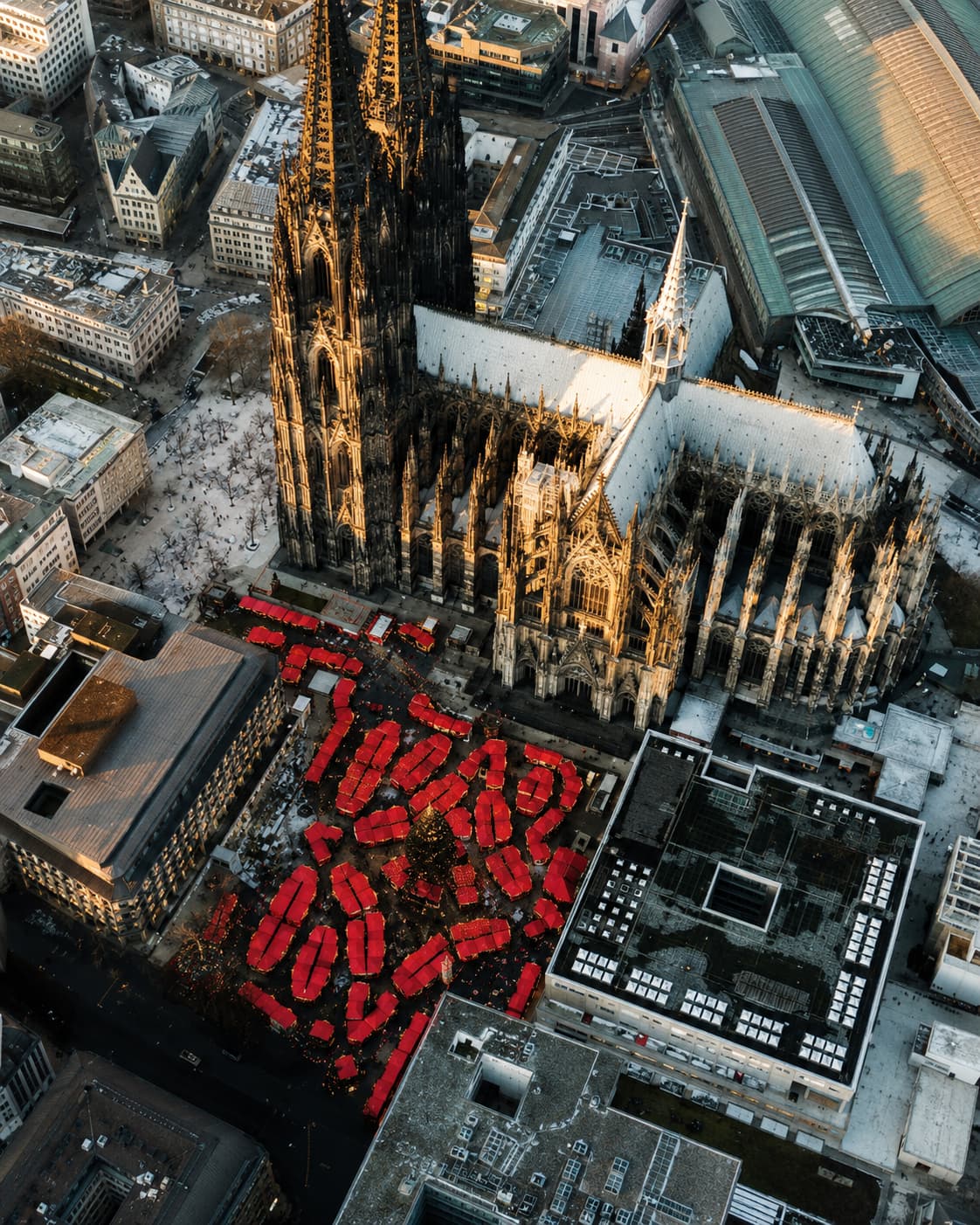
Cologne hosts six distinct markets across the city, the most famous being the Cathedral Market directly beneath the twin spires of the Kölner Dom — one of the most dramatic settings for any market in Europe. Unusually, Cologne’s markets tend to close just before Christmas Eve rather than on it. Pair with a day on the Rhine.
Dortmund — 19 Nov to 30 Dec 2026 ✅
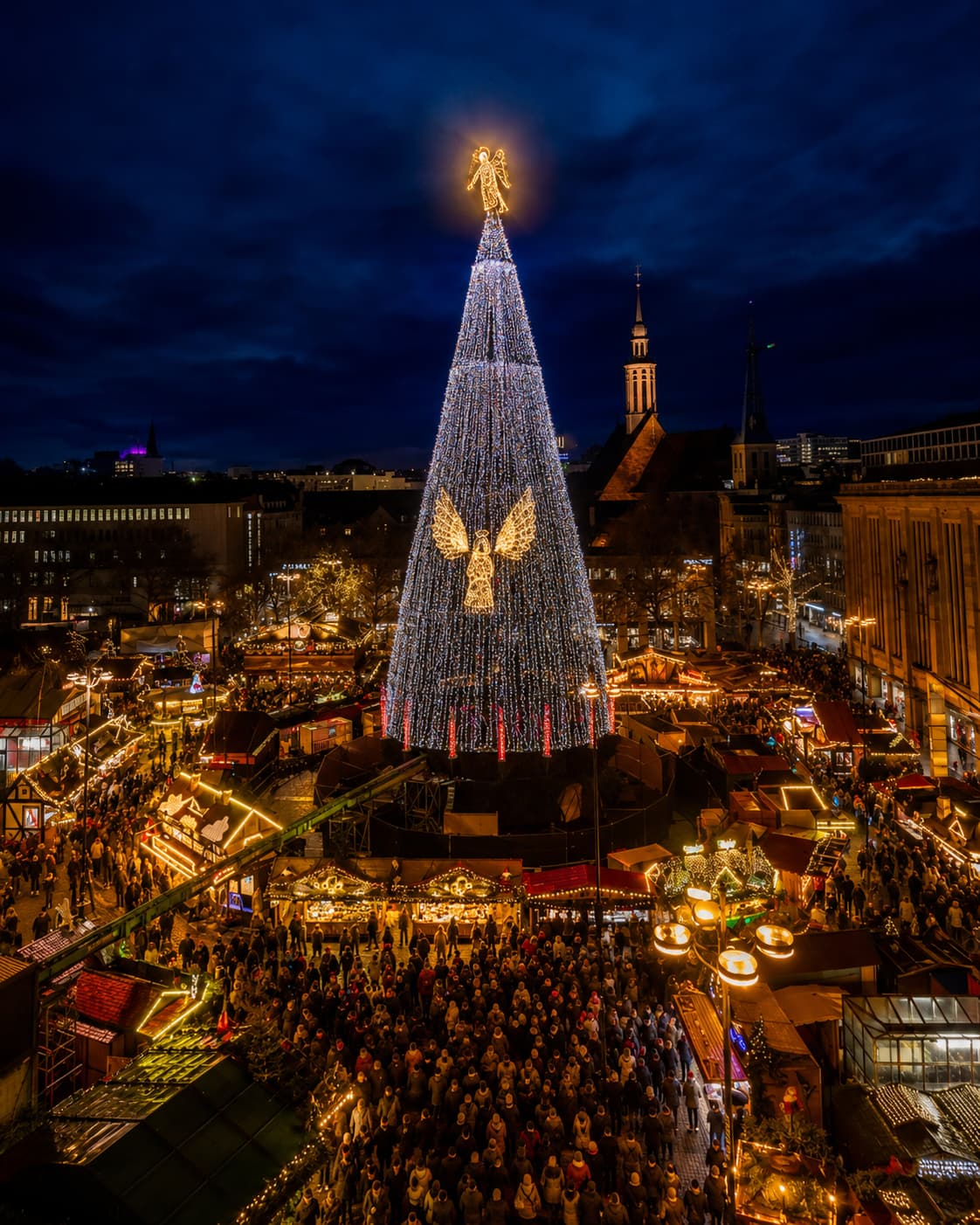
The one major German market that runs well past Christmas Eve. Dortmund is known for its giant Christmas tree — a 45-metre structure assembled from over 1,700 individual spruce trees — and is worth knowing about if you’re visiting Germany in late December and finding other markets shut.
Berlin — late Nov to ~30 Dec 2026 ⚑
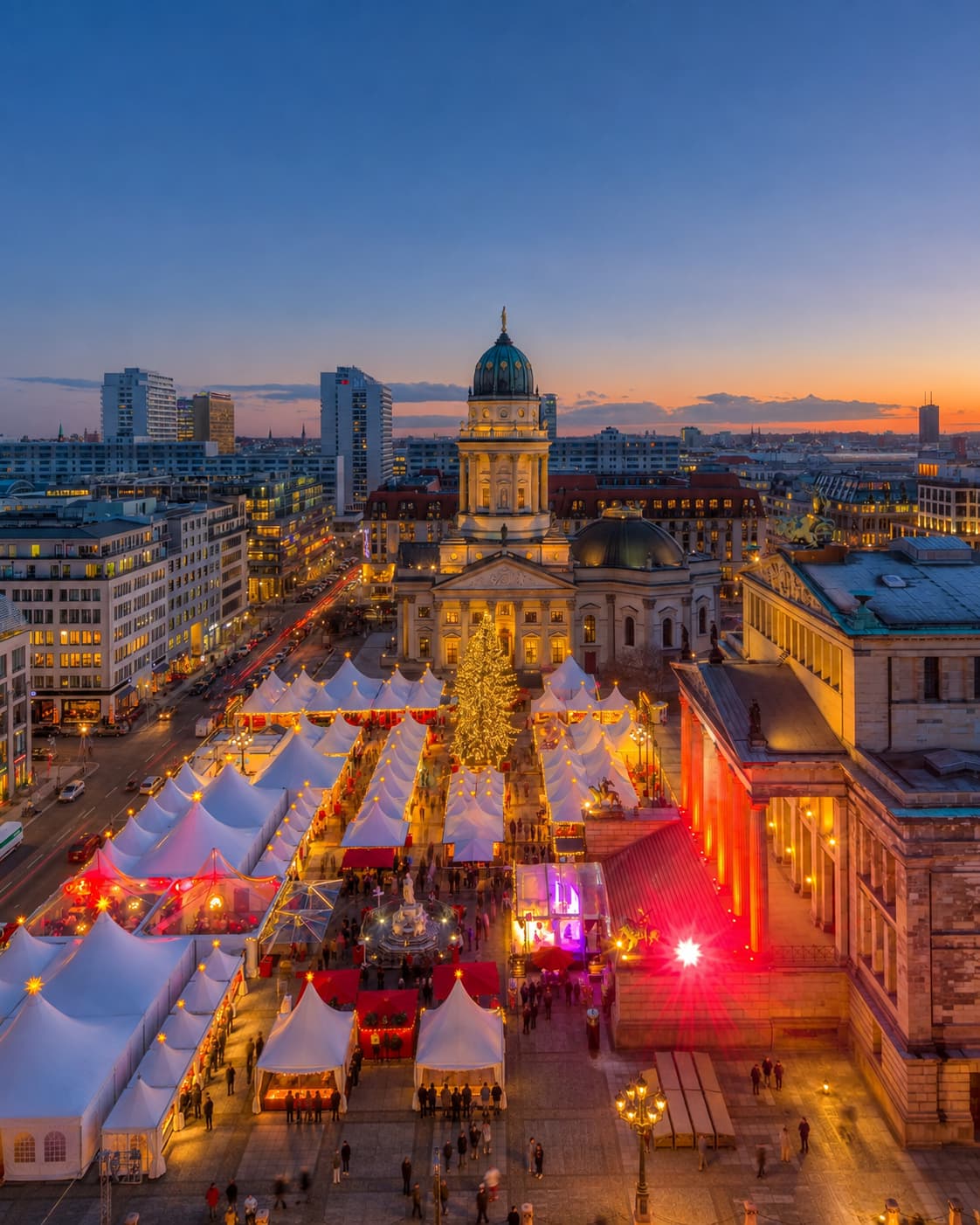
Berlin has dozens of markets, not one — the Gendarmenmarkt market (paid entry) is the most upscale; Spandau’s Altstadt market the most traditional; Charlottenburg the most family-friendly. Some close Christmas Eve; others run to 30 December or beyond. Worth researching which specific markets you want before booking dates.
Frankfurt, Hamburg, Stuttgart — ~23 Nov to 22–23 Dec ⚑
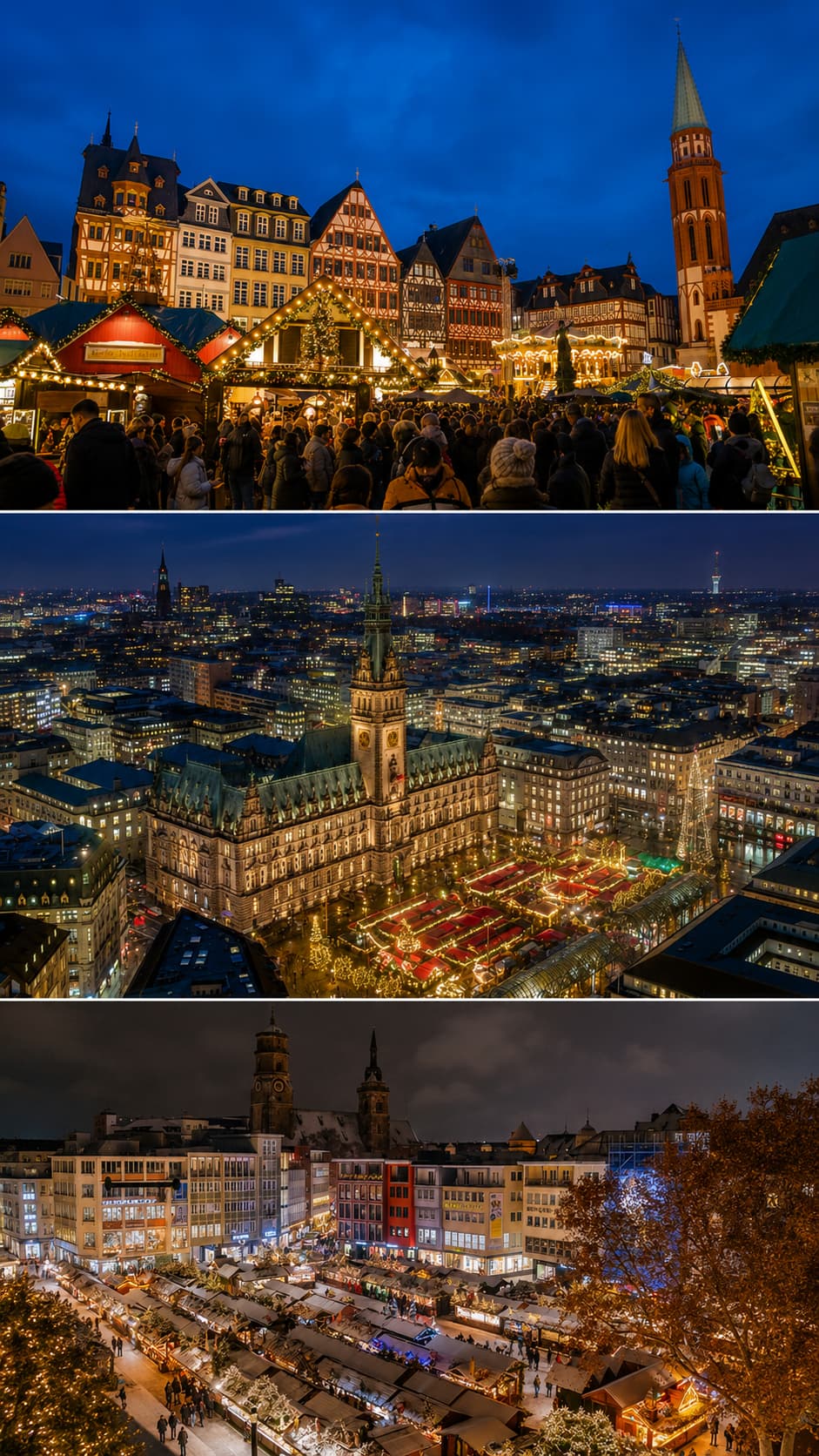
The three major markets that follow the standard German pattern: open the Monday before Advent, close just before Christmas Eve. Frankfurt’s Römerberg market, set in the half-timbered old town, is the most photogenic of the three. Hamburg’s market spans the Jungfernstieg and inner city. Stuttgart’s market on the Schlossplatz is quieter but well-regarded locally.
04 — Austria & Switzerland: European Christmas Market Dates
Austria is where German-style market culture meets longer opening windows and more architectural drama. Vienna in particular runs multiple markets that extend past Christmas and into January — making it the single best city for travellers arriving in late December. The Vienna two-day guide covers the wider city logistics if you’re planning a trip around the markets.
Vienna (Rathausplatz) — 13 Nov to 26 Dec 2026 ✅
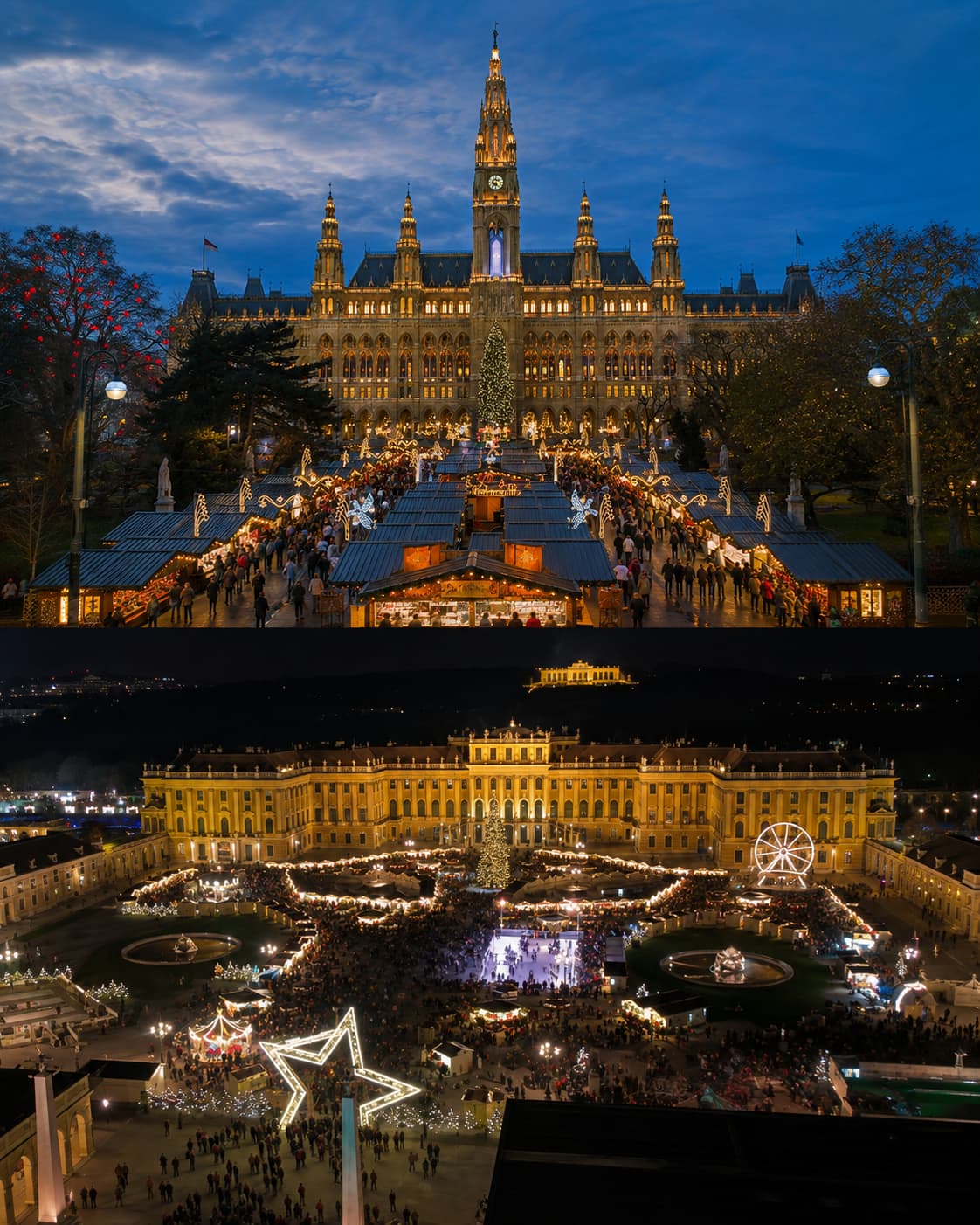
The main Christkindlmarkt in front of the Rathaus (City Hall) is one of the first major markets to open and one of the last to close among the big German-speaking cities. The adjacent ice rink stays open into January. Vienna runs approximately a dozen separate markets across the city; the Rathausplatz is the grandest but the quieter neighbourhood ones (Spittelberg, Freyung) have their own loyalists.
Vienna (Schönbrunn Palace) — 6 Nov to 6 Jan 2027 ✅
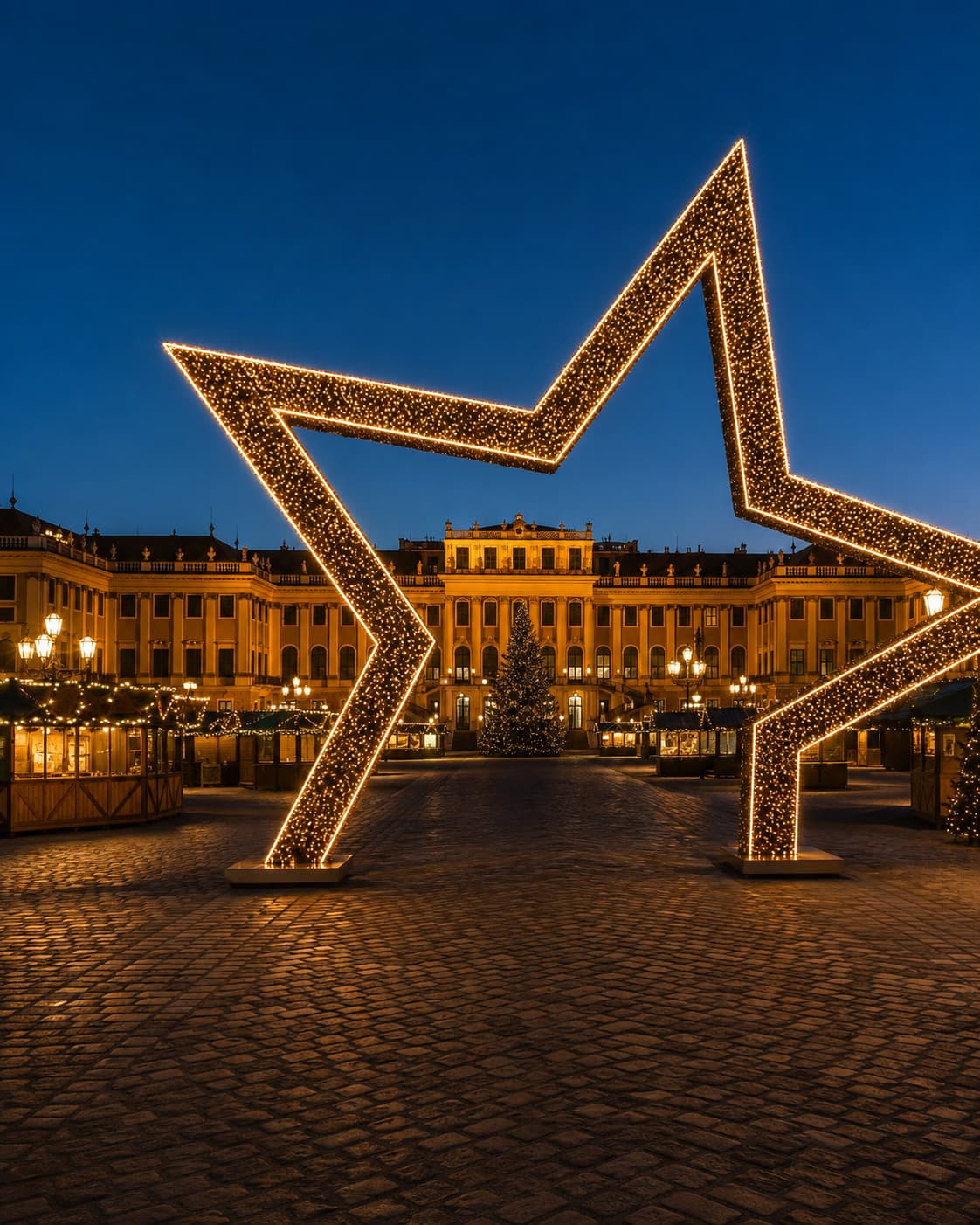
The earliest confirmed opening date among the major European Christmas markets. The Schönbrunn market runs against the backdrop of the Baroque palace — dramatically lit at night — and runs all the way to Epiphany on 6 January 2027. If you want a European Christmas market over the New Year, this is one of your best confirmed options. For full visitor details, the official Schönbrunn Christmas market page publishes confirmed dates and times.
Salzburg — late Nov to 26 Dec 2026 ⚑
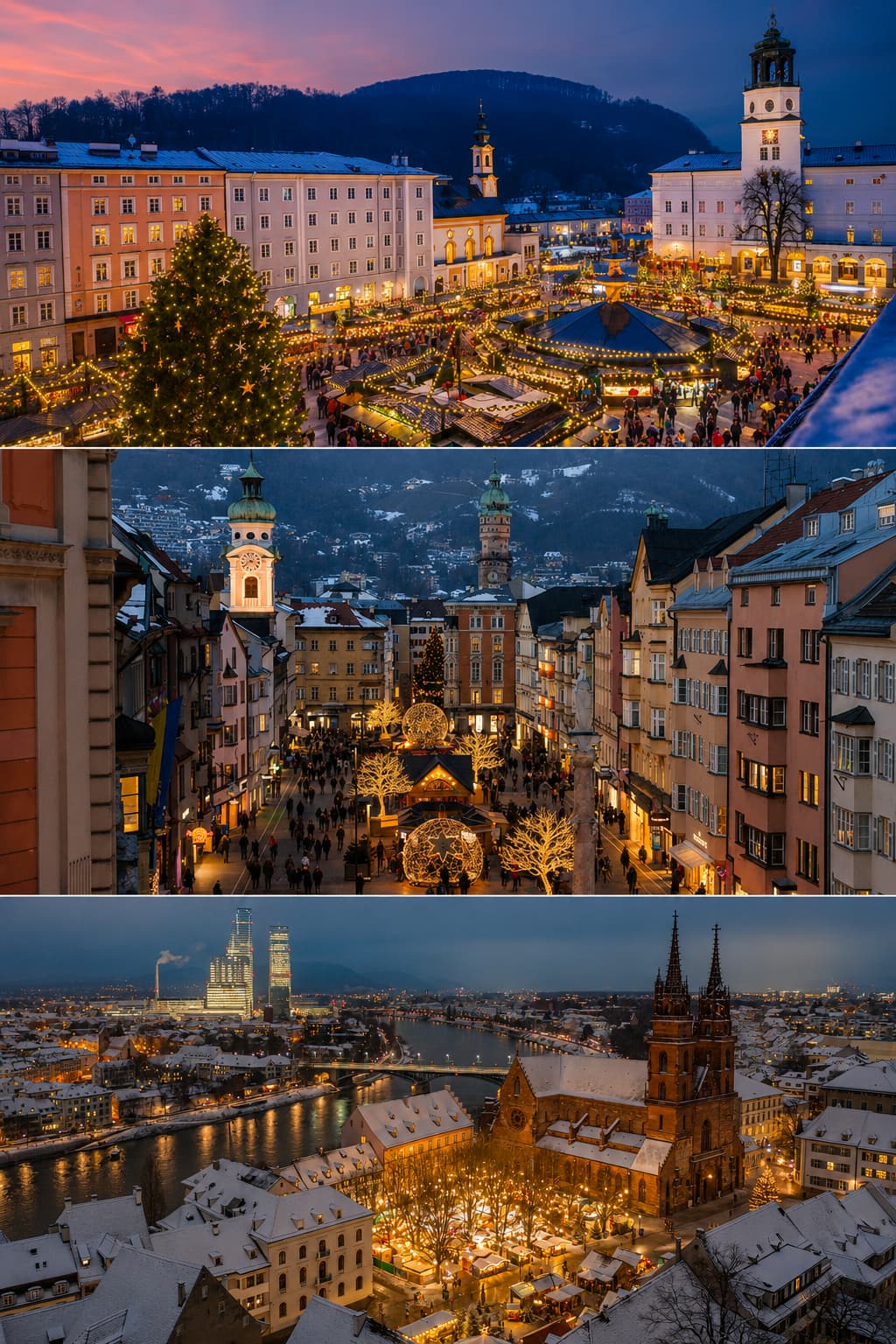
Three distinct markets: the cathedral square (Dom), the Residenzplatz, and Hellbrunn Palace (which often has its own slightly longer run). Salzburg’s setting is the draw — compact enough to walk all three in an afternoon, with the fortress on the hill above. Usually closes 26 December.
Innsbruck — mid Nov to 6 Jan 2027 ⚑
Five separate markets across the city, including one on the Golden Roof square in the medieval centre. Innsbruck often runs into January, making it a rare Alpine option for post-Christmas travellers. The combination of mountain backdrop and Tyrolean market culture is distinct from the flatter-city experience of Nuremberg or Munich.
Basel — 24 Nov to 23 Dec 2026 ✅
Basel’s market fills Barfüsserplatz and Münsterplatz and has a reputation for quality crafts over tourist kitsch. It closes slightly early — 23 December — making it best visited in early December. Compact but well-curated. Zurich runs a similar window (roughly late November to 24 December ⚑).
05 — France & Belgium
Strasbourg is the benchmark — France’s oldest market and one of the most atmospheric in Europe. The Belgian markets are consistently underrated and, crucially, run longer than most of their German counterparts.
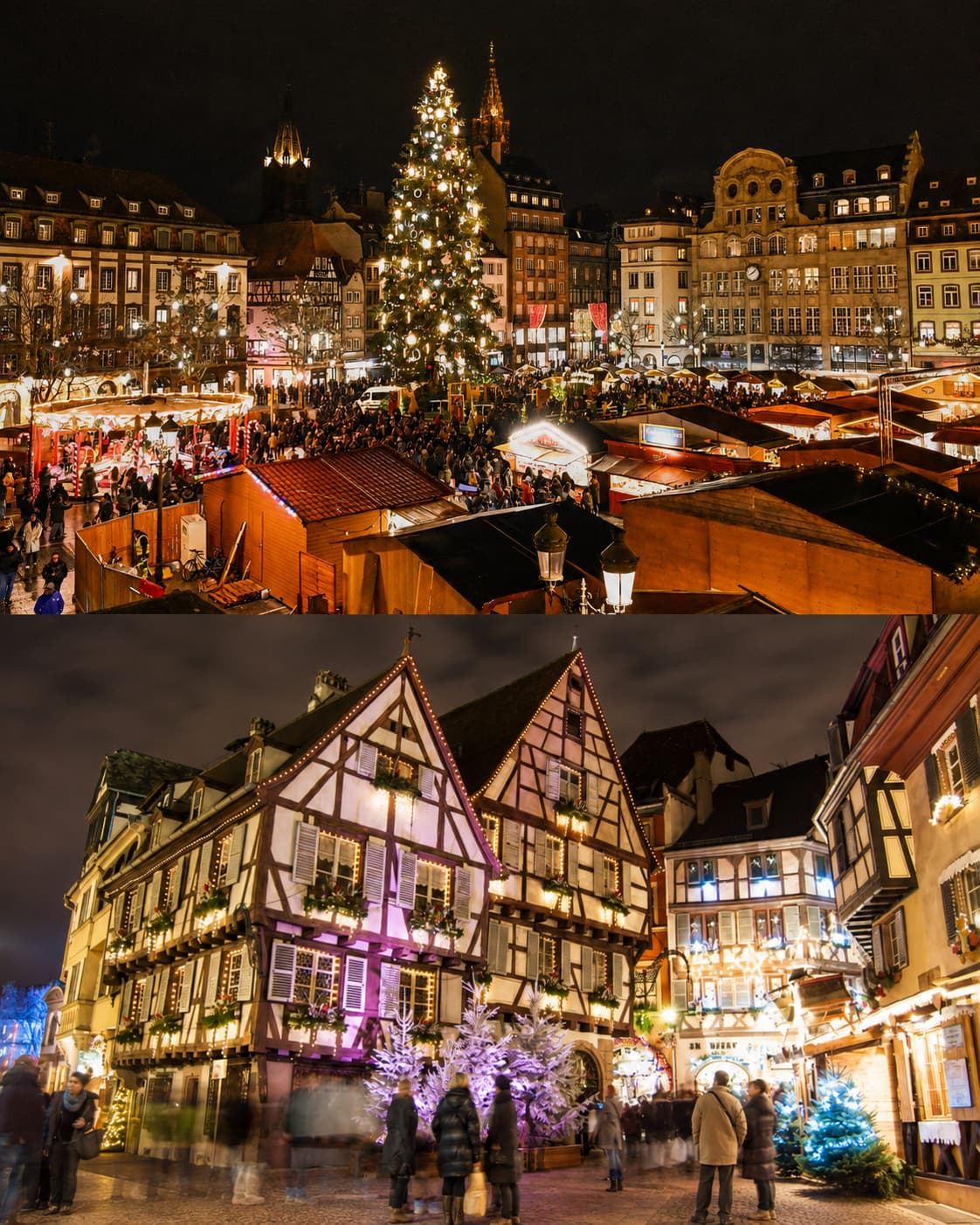
Strasbourg — 27 Nov to 27 Dec 2026 ⚑
Strasbourg has been running a Christmas market since 1570 and markets itself as the “Capital of Christmas.” Eleven distinct markets spread across the Grande Île — from Place Kléber (home of the 30-metre Grand Sapin tree) to Place de la Cathédrale and the atmospheric Petite France quarter. Official 2026 dates were not yet published at time of writing; based on the established pattern, expect 27 November opening. Verify on the official Strasbourg Christmas market site before booking.
Colmar — late Nov to ~27 Dec 2026 ⚑
Often paired with Strasbourg as a day trip (30 minutes by train), Colmar’s market occupies the town’s half-timbered squares — the Petite Venise canal district, the Dominican church. Smaller and quieter than Strasbourg but arguably more photogenic. Typical window: last week of November to 27 December.
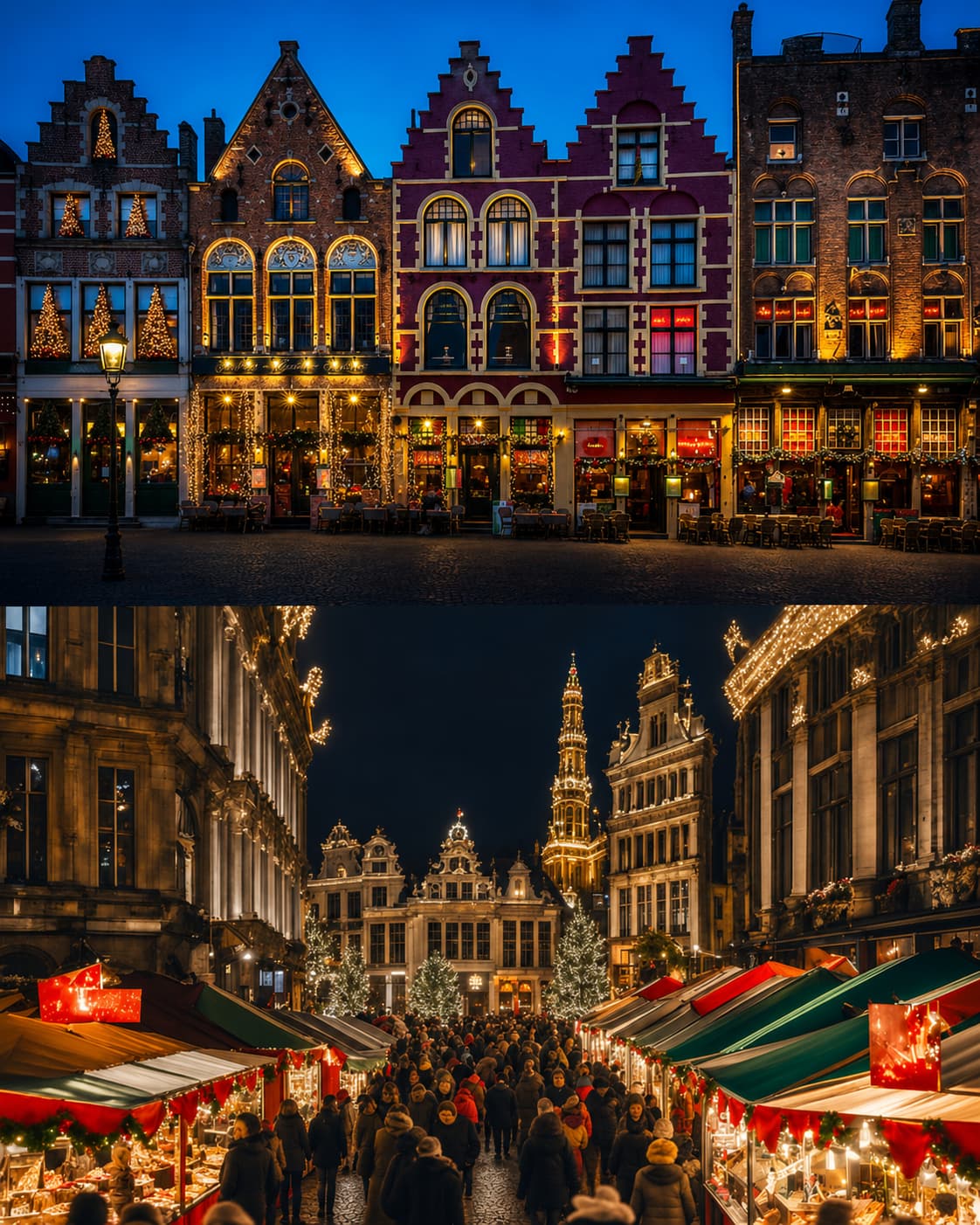
Bruges — 20 Nov to ~3 Jan 2027 ⚑
The Bruges Christmas Market is part of a city-wide winter festival called Winter Glow, which runs considerably longer — confirmed through 14 February 2027. The market stalls on Grote Markt are more compact, but the combination of medieval canals, Flemish architecture, Belgian chocolate and waffles, and that unmistakably quiet pedestrian-city atmosphere makes Bruges one of the most distinctive winter destinations in Europe. An excellent choice for late December or New Year travel.
Brussels — ~20 Nov to ~3 Jan 2027 ⚑
Brussels’ Winter Wonders market spans the Grand Place and surrounding streets, with a light show on the UNESCO-listed square, a Ferris wheel, ice rink, and around 200 stalls. Runs into early January. Pairable with a day trip to Bruges or Ghent on the Belgian rail network.
06 — Central Europe: Christmas Markets That Stay Open After Christmas
If your travel window falls over Christmas week or into early January, Central Europe is where to look. Prague, Budapest, Kraków, and Zagreb all run their markets past 25 December — some as late as 6 January (Epiphany). They also tend to be better value than their Western European equivalents. If you’re deciding between destinations, the Prague vs Budapest comparison breaks down both cities in detail.
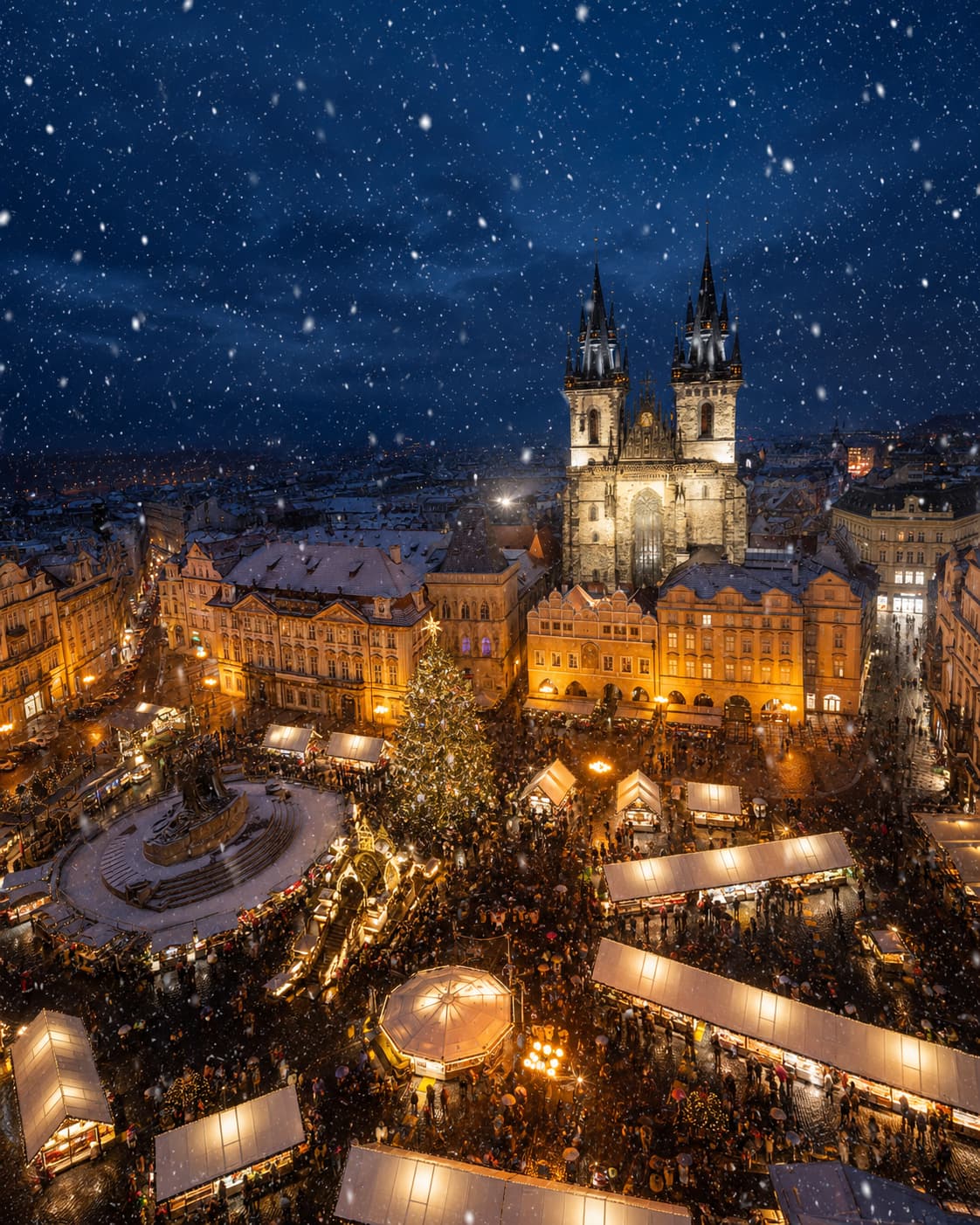
Prague — ~28 Nov to 6 Jan 2027 ⚑
Prague runs four main markets — Old Town Square (the most photographed), Wenceslas Square, Republic Square, and Na Kampě island under the Charles Bridge — all running from late November into the new year. The Old Town Square market, beneath the 15th-century astronomical clock and the Týn Church’s Gothic spires, is one of the most architecturally dramatic settings for any Christmas market in Europe. See the Prague travel guide for the full city picture. For confirmed dates, the Prague Tourism official Christmas market page is the authoritative source.
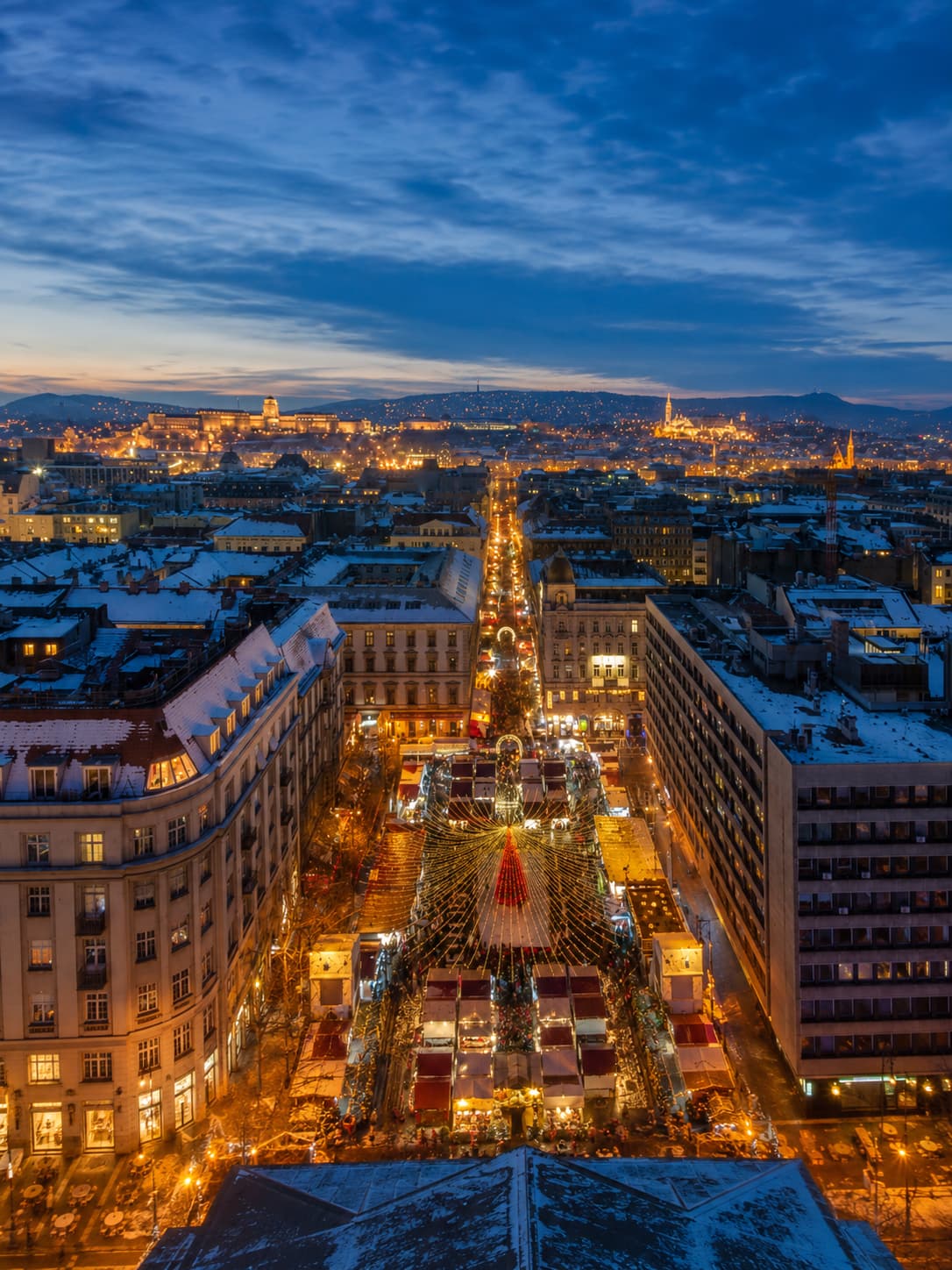
Budapest — ~mid Nov to 1 Jan 2027 ⚑
Two main markets: Vörösmarty Square (the established one) and the Advent Basilica market at Szent István tér, known for its nightly light show on the basilica façade. Budapest pairs better with its thermal bath culture in winter than almost anywhere else in Europe — the combination of a Christmas market afternoon and a thermal bath evening is hard to beat. See Budapest in Two Days for what to fit in around the market.
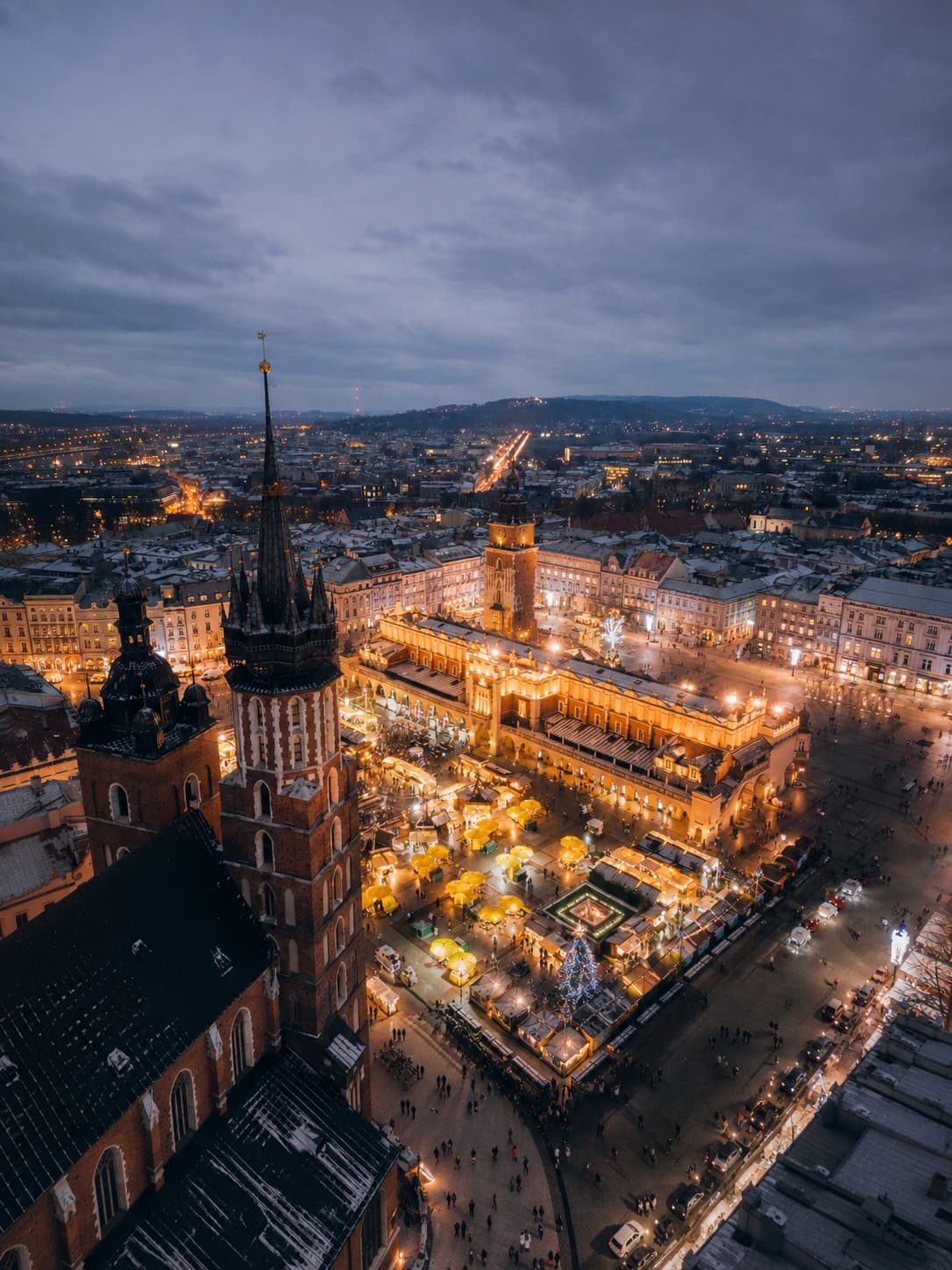
Kraków — ~27 Nov to ~1 Jan 2027 ⚑
The market fills Rynek Główny — the largest medieval town square in Europe — and runs until New Year’s Day. Kraków is significantly cheaper than Vienna or Prague, the market is well-regarded for local craft quality, and the city’s wider cultural offer (Wawel Castle, the Jewish Quarter, the proximity to Auschwitz-Birkenau for those making that visit) makes it a more substantial destination than a market trip alone.
Bratislava — late Nov to ~5 Jan 2027 ⚑
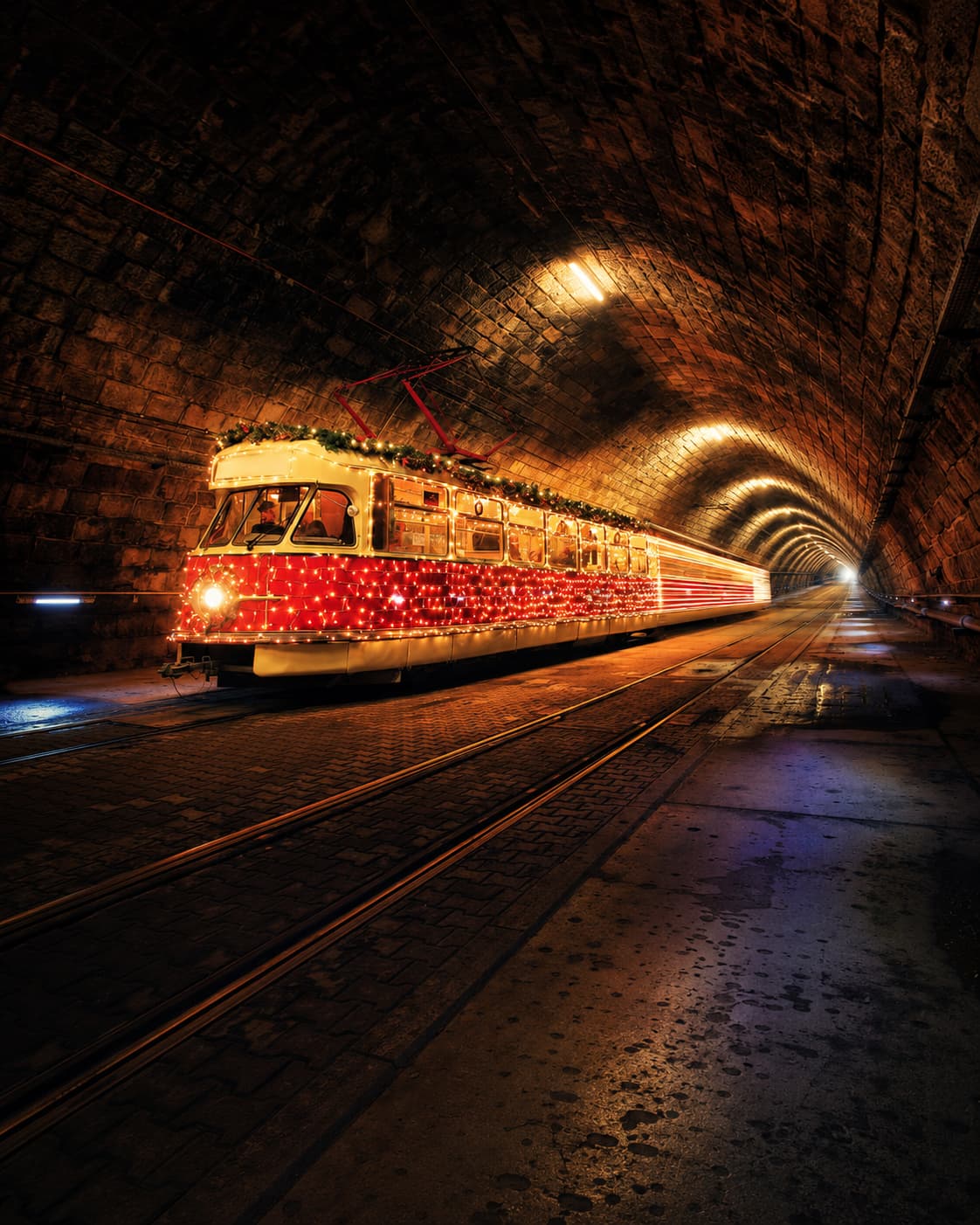
Small and walkable — Bratislava’s entire old town is reachable in an afternoon — making it a natural add-on to Vienna (an hour by train) or the Central Europe road trip circuit. See Bratislava: Worth Stopping? for an honest take on whether the city earns a standalone visit.
Zagreb — late Nov to ~6 Jan 2027 ⚑
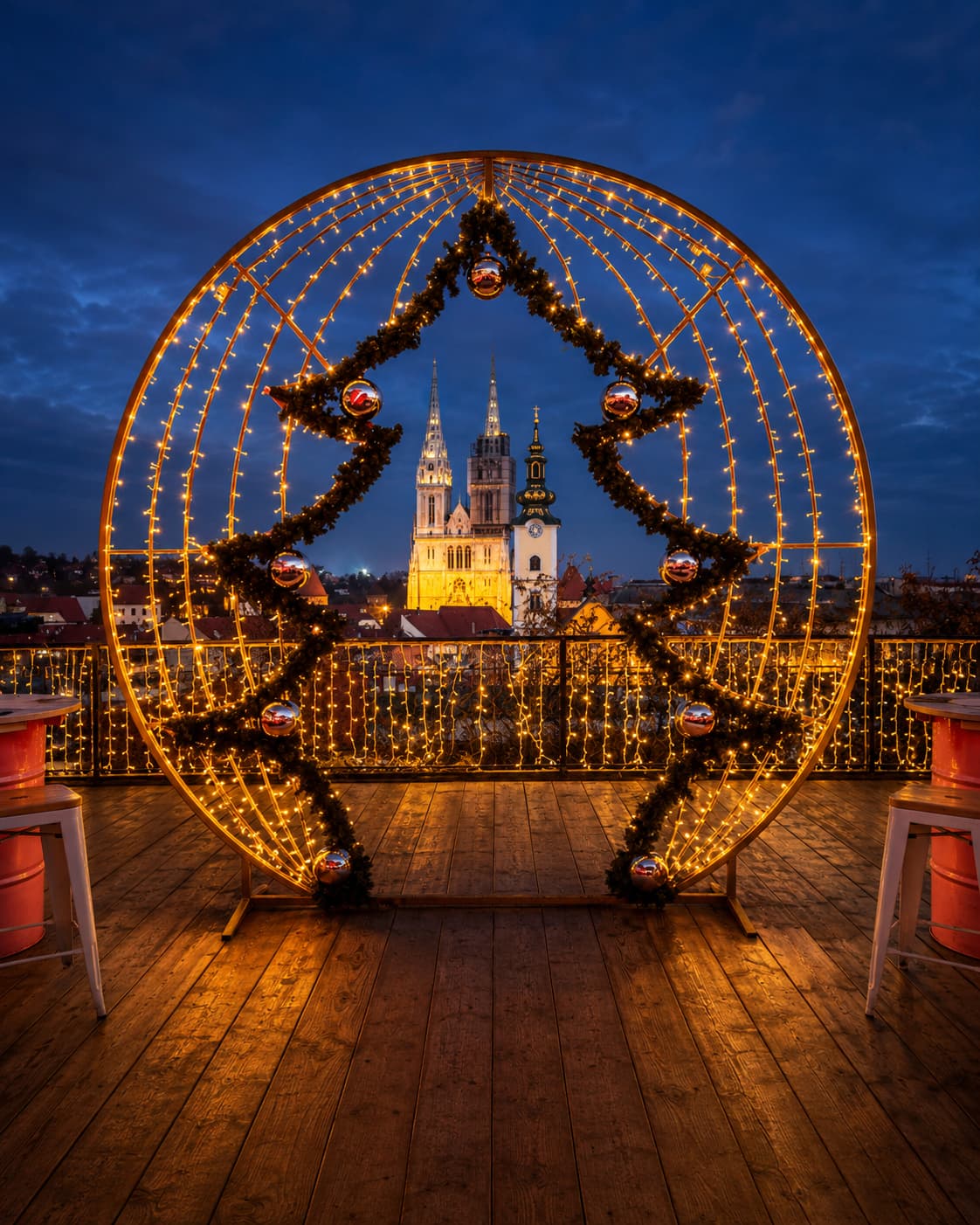
Zagreb’s Advent in Zagreb festival has won the title of Best Christmas Market in Europe from European Best Destinations multiple times — which generates justifiable scepticism, but the city’s markets are genuinely good. The combination of the Upper Town, Ban Jelačić Square, and the ice rink on Tomislavac gives it more geographic variety than most. Well-priced, rarely overrun.
07 — The Nordics & UK
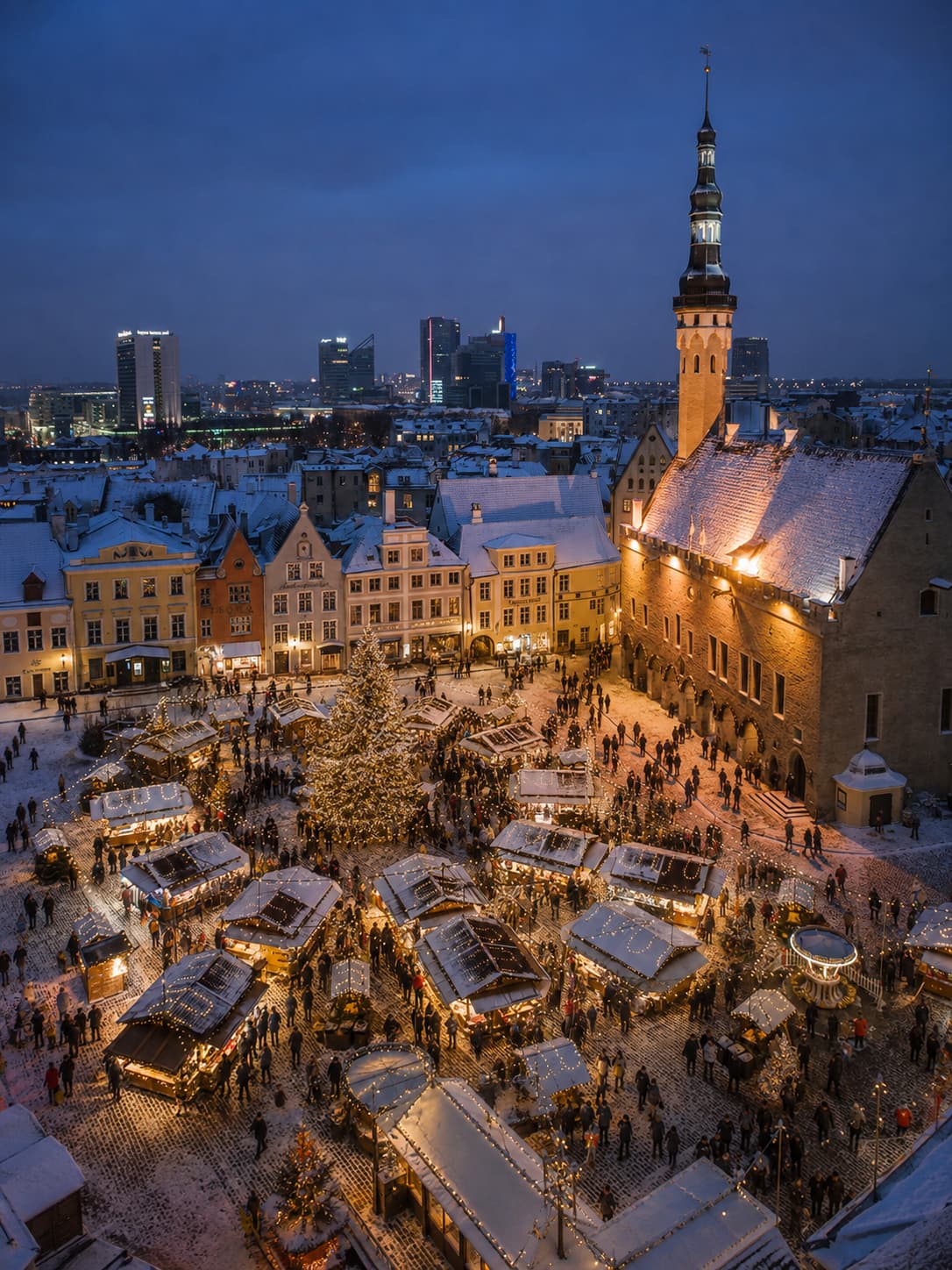
Tallinn — ~20 Nov to ~6 Jan 2027 ⚑
Tallinn’s Christmas market in Town Hall Square is set within one of the best-preserved medieval old towns in Europe — cobblestones, pointed guild houses, the 14th-century Town Hall tower — and regularly appears on “most beautiful markets” lists without generating the Nuremberg-level crowds. The long run (through Epiphany) and the Scandinavian-influenced food (blood sausages, pan-fried potatoes, gingerbread) give it a distinct character from Central European markets. Good choice for a quieter Christmas week option.
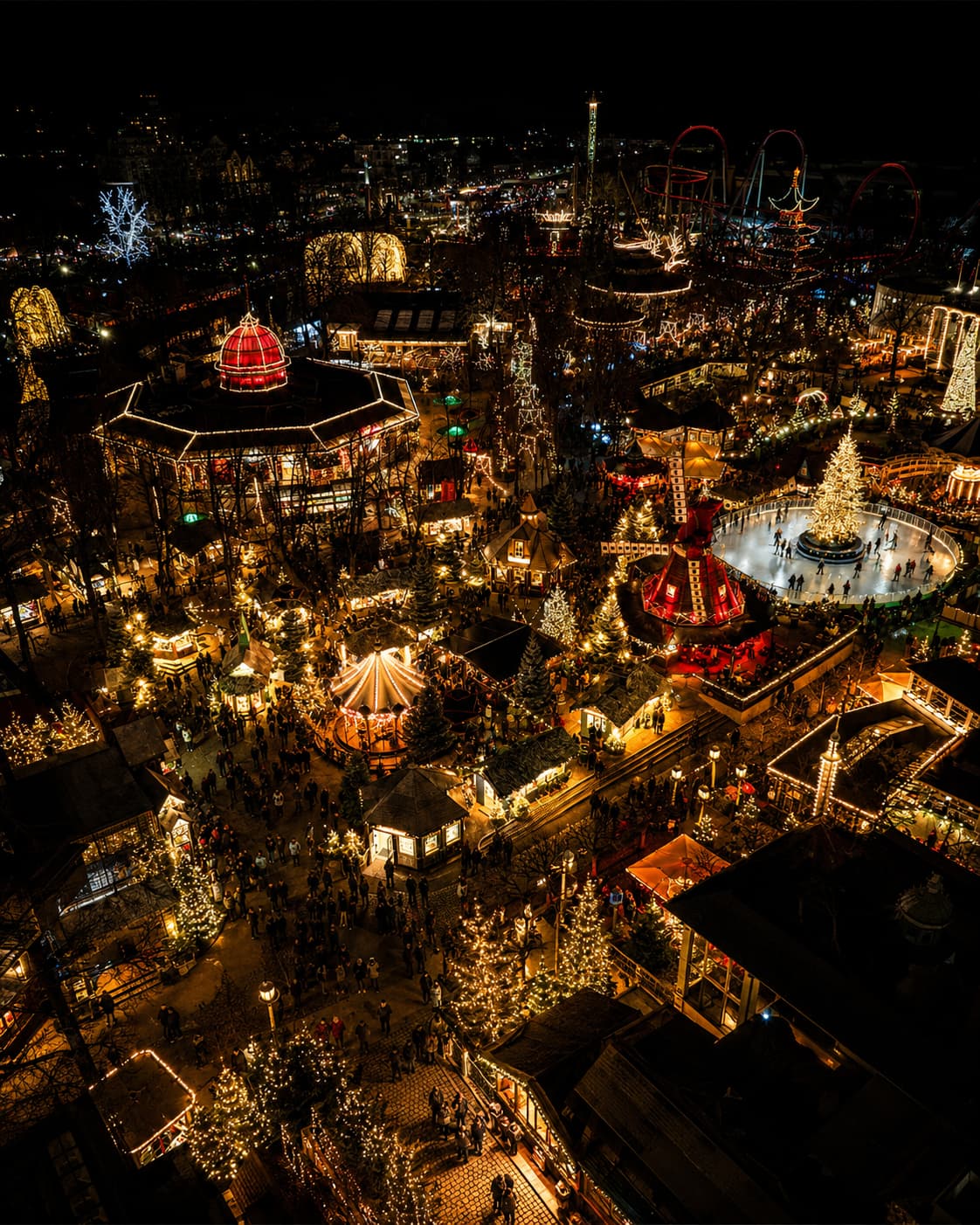
Copenhagen (Tivoli Gardens) — ~13 Nov to ~4 Jan 2027 ⚑
One important caveat: unlike almost every other Christmas market on this list, Tivoli requires a paid entry ticket to the gardens. Once inside, the experience is distinct — a Nordic winter park, not just a market, with rides, wooden stalls, and the gardens’ year-round character transformed by snow and lights. Worth knowing about the ticket cost (approximately 140 DKK/€19) before comparing it to free-entry alternatives. Current ticket pricing is on the Tivoli official Christmas site.
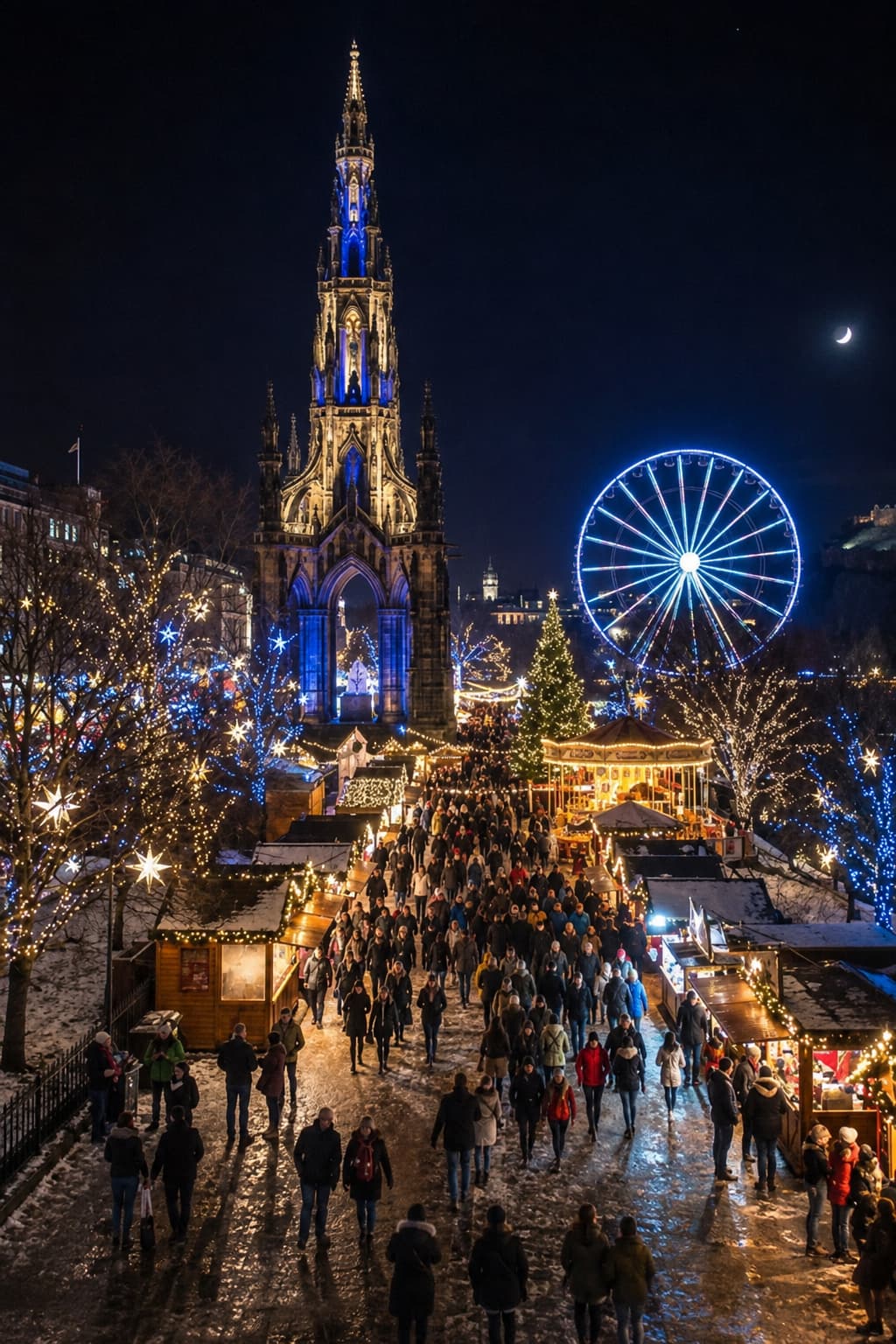
Edinburgh — ~mid Nov to ~5 Jan 2027 ⚑
Edinburgh’s Christmas market runs on Princes Street Gardens directly below the castle — one of the most dramatic skyline settings for any market in the British Isles. The wider Edinburgh Christmas festival includes a Ferris wheel, an ice rink, and the annual Hogmanay celebrations that make the New Year window particularly compelling. Long run into early January.
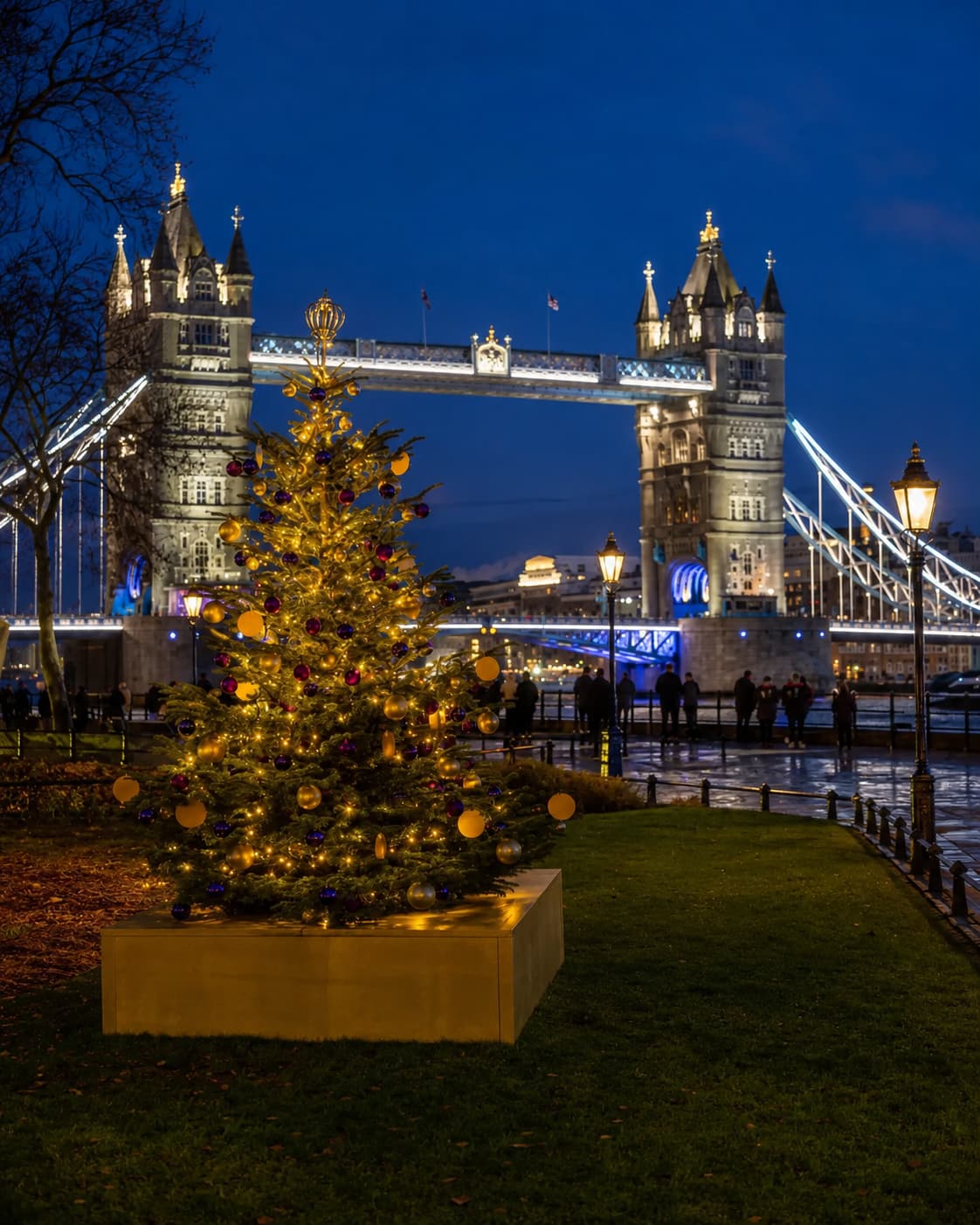
London — ~mid Nov to 1 Jan 2027 ⚑
Winter Wonderland in Hyde Park is the UK’s largest Christmas market — 400+ stalls, multiple ice rinks, a Bavarian village section — and runs through New Year’s Eve. It’s also the most commercial and expensive market on this list by some distance. Worth knowing what it is before expecting the handmade-craft atmosphere of a German or Austrian market.
08 — When Should You Actually Go to European Christmas Markets?
The honest answer depends on what you want. Here’s the breakdown:
Opening week (mid to late November)
The lowest crowds of the season, the most atmospheric light-switch-on events, and — if you’re going to Germany — your only option for the first days. Hotels are cheaper. Weather is colder. The markets feel less like a tourist attraction and more like what they actually are. The downside: not all stalls are open on day one, and some markets don’t hit their stride until the first weekend of Advent.
First two weeks of December
The sweet spot. Full atmosphere, all stalls open, before the peak-weekend crowds of mid-December arrive. This is the window that works for multi-city trips — you can cover Nuremberg, Munich, and Cologne in a week without the post-15 December hotel markups. The window between 26 November and 12 December is the safest booking target if you want to maximise the number of markets you can visit.
Mid-December (13–22 Dec)
The most festive atmosphere and the highest prices. Weekend visits to the most famous markets — Nuremberg, Vienna, Prague — will involve real crowds. If you’re going for the experience over logistics, this is the window. Book accommodation months in advance. Don’t expect to browse Nuremberg slowly on a Saturday afternoon in December.
Christmas week (24 Dec – 1 Jan)
The most misunderstood window. Most German markets — Nuremberg, Munich, Cologne, Dresden, Frankfurt — are closed from 24 December. If you arrive on 26 December expecting them to be open, they won’t be. Your options for this window: Vienna (Rathausplatz to 26 Dec, Schönbrunn to 6 Jan), Prague, Budapest, Kraków, Tallinn, Bruges, Brussels, Edinburgh, and Innsbruck. These are all genuinely good Christmas markets — they’re just not the German ones.
For what to pack for a late-November or December Europe trip, the honest Europe packing list covers the cold-weather essentials without the over-engineered gear lists. And if you’re planning a broader Central or Eastern Europe winter itinerary, the Eastern Europe travel guide is the place to start.
Christmas Market Opening Dates
Christmas Week and New Year Markets
The Earliest and Oldest Christmas Markets
Europe’s Christmas markets are not all the same thing. The Nuremberg one is nothing like Bruges, which is nothing like Prague, which is nothing like Tallinn.
Pick the one that matches when you can actually travel — and verify the dates before you book.