
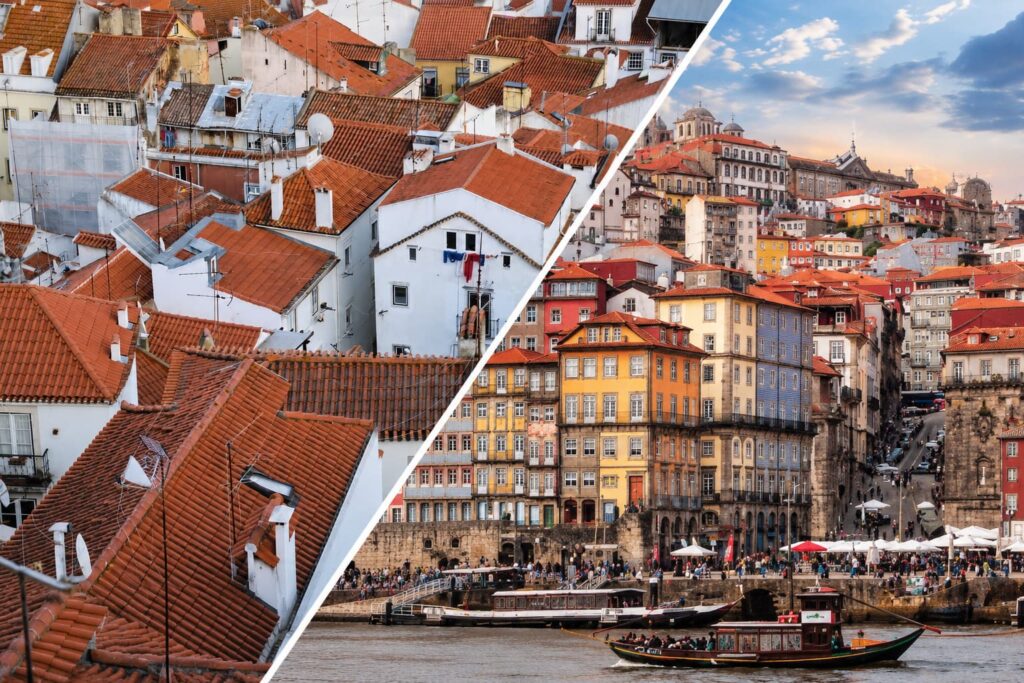
Lisbon vs Porto: An Honest Comparison (and a Straight Answer)
Both cities get compared constantly and decided on never. Here’s the framework that actually resolves it — based on how long you’re going, not which city has better sunsets.
The Lisbon vs Porto debate is one of the most searched questions in Portugal travel — and one of the least honestly answered. This post gives a straight verdict, structured by the trip you’re actually planning.
01 — What Is the Real Difference Between Lisbon and Porto?
Most lisbon vs porto comparisons bury the most important thing: these are not different-sized versions of the same city. They’re fundamentally different places with different characters, different paces, and different strengths.
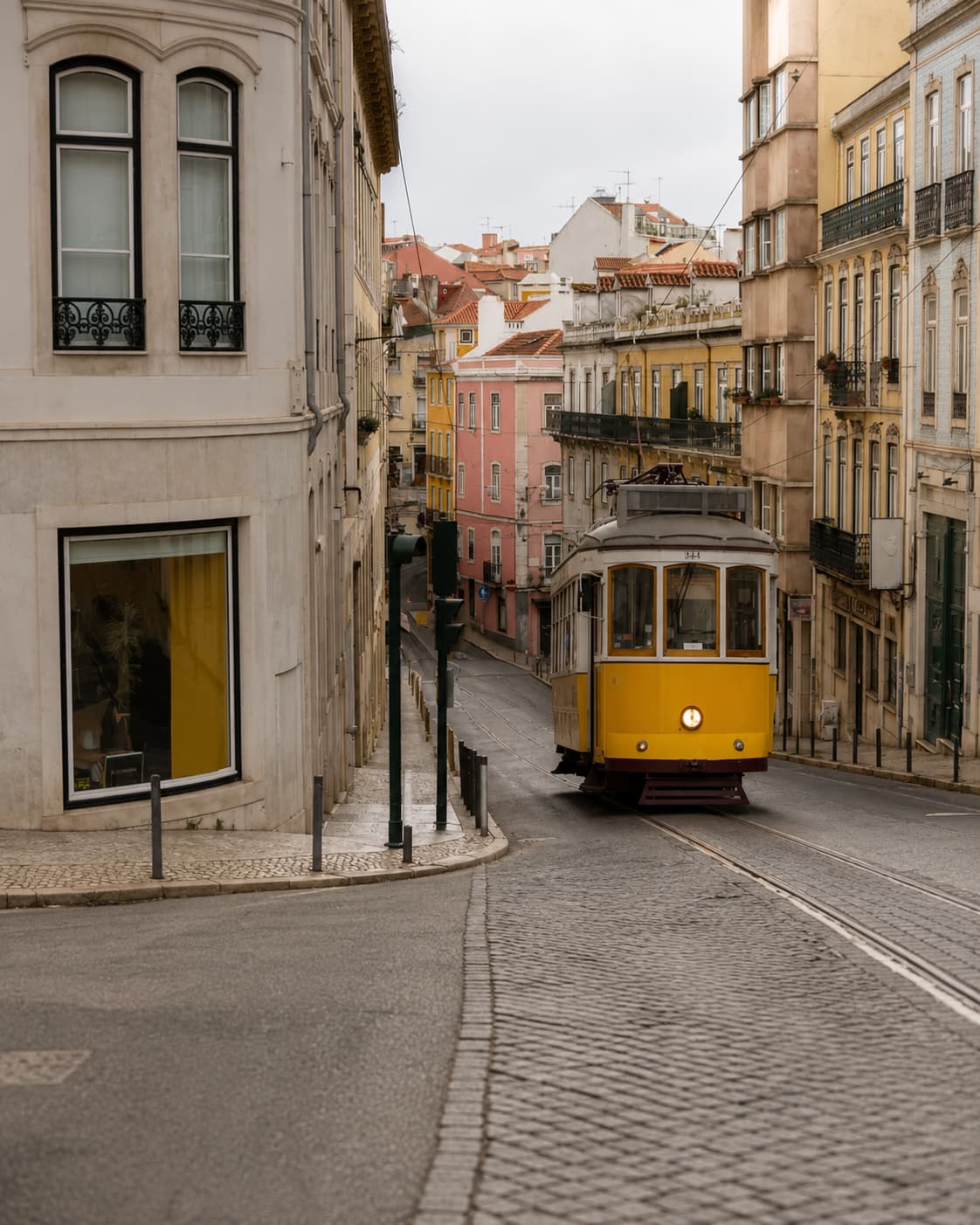
Lisbon is a capital city that behaves like one. It’s large, international, and layered — seven hills, a dozen neighbourhoods worth a full afternoon each, day trips in every direction, a restaurant scene that ranges from Time Out tasting menus to neighbourhood tascas nobody talks about online. The infrastructure is that of a major European destination, because that’s what Lisbon is — and the city delivers on every version of that expectation.
Porto doesn’t perform. Famous a bit by accident, it still carries that quality — a city that existed long before you arrived and will keep existing long after you leave. The historic core is compact enough to walk end to end, the port wine cellars sit right across the river from the cathedral, and the light on the Douro at dusk doesn’t seem to have been arranged for anyone in particular. That mood is what people mean when they say Porto surprised them.
Neither is better in the abstract. The honest question is which one matches the trip you’re actually planning — and that mostly comes down to how much time you have.
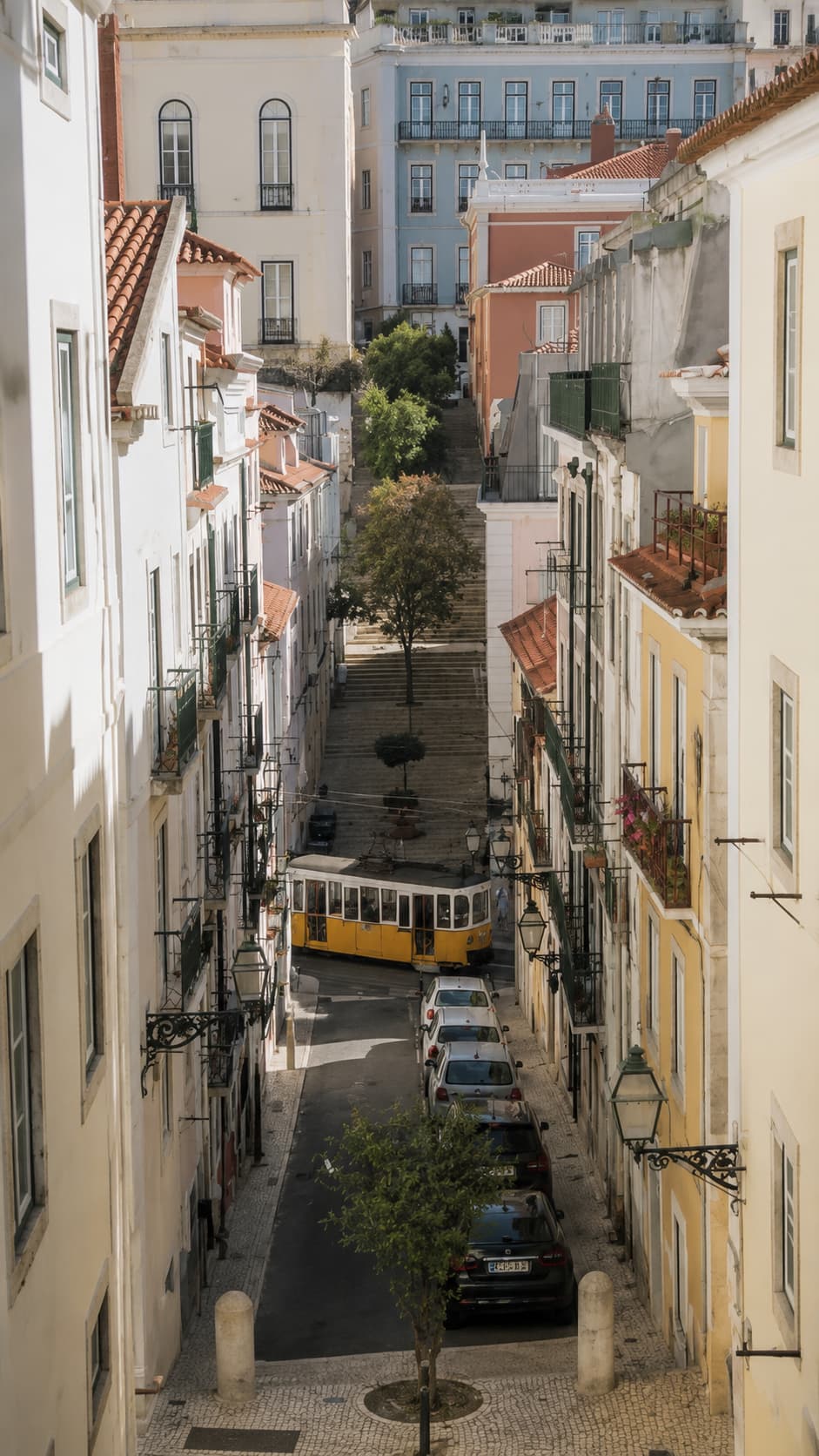
02 — Vibe and Scale: Lisbon Performs, Porto Lingers
Scale matters more than most comparisons admit. Lisbon is a genuinely big city by Southern European standards — over 500,000 people in the city proper, with a metro area closer to three million. Alfama, Chiado, Mouraria, Bairro Alto, Belém, Príncipe Real — these aren’t interchangeable neighbourhoods. Each has a different character, a different price point, a different reason to go. First-time visitors to Lisbon routinely underestimate how much there is, and how long it takes to move between things.
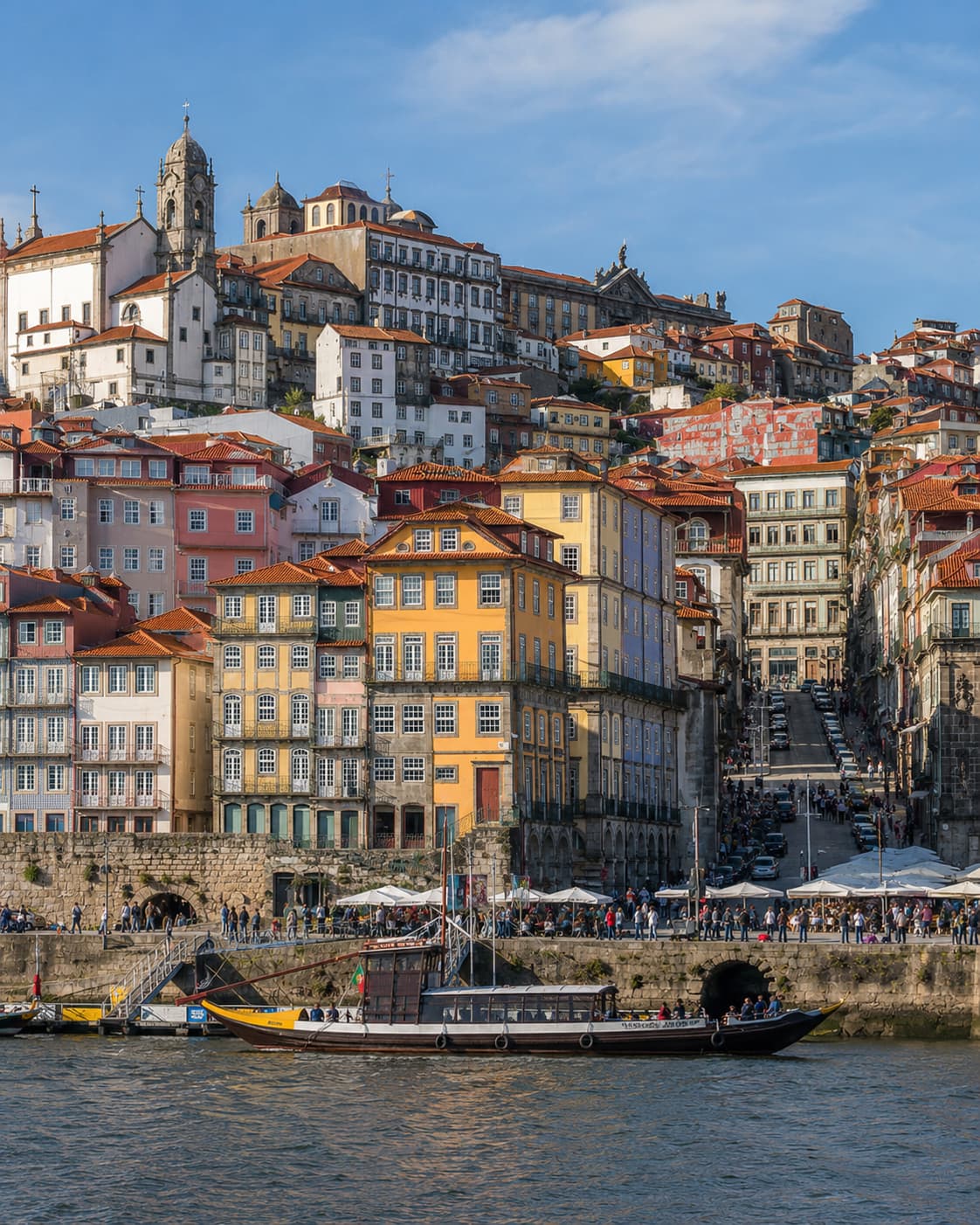
Porto is more contained. The historic centre sits between São Bento station and the river in a stretch you can cover on foot in a morning. That’s not a knock — it’s the whole point. Porto’s compact geography means you absorb it properly in a short visit, moving between the cathedral, the Livraria Lello bookshop, the port wine cellars in Vila Nova de Gaia, and the riverfront at the pace of a walk rather than a metro plan.
For travellers who want to feel like they genuinely understood a place before they left: Porto. For travellers who want the full range of a European capital, including the option to go back to different neighbourhoods on different days: Lisbon.
03 — Cost: Porto Is Genuinely Cheaper
The cost difference is real and worth knowing before you book. Porto runs roughly 10–15% cheaper than Lisbon across accommodation, food, and drink. A mid-range hotel in Porto averages around €95–130 per night versus €120–160 in Lisbon for an equivalent property.
Food follows the same pattern. A traditional lunch in Porto runs €7–10; the same meal in Lisbon is €10–14. The gap in cafés and bars is smaller, but it’s there. The practical consequence is that a three-night trip to Porto versus three nights in Lisbon makes a noticeable difference to your total spend — without any sacrifice in what you’re actually doing.
One extra cost note: tourist tax is €4 per person per night in Lisbon and €3 in Porto. Small individually, but worth factoring into a multi-night stay.
If budget is a genuine constraint, Porto is the better call. If you’re splitting your time between both cities, spend more nights in Lisbon where you need more days anyway, and fewer in Porto where two or three days is exactly right.
€120–160/night
€10–14
€4/night
€1.20–1.50
Full capital experience
€95–130/night
€7–10
€3/night
€0.80–1.20
Value city break
04 — Food: Different Cultures, Both Worth It
Lisbon has the bigger food scene by volume — more restaurants, more international range, more Michelin-level options, and the Time Out Market, which is either a great idea or a tourist trap depending on your tolerance for queues. If you want to eat Korean on Tuesday, Lebanese on Wednesday, and Portuguese fine dining on Thursday, Lisbon can do that.
Porto doesn’t compete on range. It competes on identity. The city’s food is more regional, more rooted, and more unapologetically itself. Long lunches, heavy dishes, the Douro’s wines poured without ceremony. And the francesinha — a layered meat sandwich smothered in a tomato and beer sauce, served with chips — is genuinely unlike anything else in Europe. It’s heavy and specific and not remotely photogenic, and it tastes exactly like the city it came from.
Porto wins on authenticity. Lisbon wins on range. Neither is a bad food city — the real question is what kind of eating you’re here for.

05 — Day Trips: Lisbon Has More, Porto Has the Douro
This is one of the clearest structural differences between Lisbon and Porto, and it matters most for first-time visitors to Portugal who want to see more than one place in a week.
Lisbon’s day trip lineup is strong across the board. Sintra — palaces in the hills above the Atlantic — is within 40 minutes by train and consistently ranks among Europe’s best day trips. Cascais is a coastal town worth a half-day. Óbidos is a walled medieval village. There are Atlantic beaches reachable in under an hour. If you want to keep moving without losing your base, Lisbon is the better launch pad.
Porto’s best day trip is the Douro Valley — terraced vineyards dropping to the river, world-class wine, genuinely beautiful scenery. It’s excellent, but it’s a longer commitment than Sintra. Braga and Guimarães are both worthwhile and accessible by train, but they’re more specialist interests than headline attractions.
Verdict: Lisbon is the stronger day-trip base for most first-time visitors. Porto’s Douro Valley is world-class, but it’s one day trip versus Lisbon’s several.

06 — Is Porto or Lisbon Better for a Short Trip?
This is the clearest verdict in the entire lisbon vs porto comparison, and the one no competing post states plainly: if you have 2–3 days, Porto is the better choice.
Porto’s compact historic core — the cathedral, the azulejo-covered train station at São Bento, the port cellars in Vila Nova de Gaia across the river, the Livraria Lello, the Foz district at the coast — can be covered properly in a long weekend without feeling rushed. Two days in Porto leaves you feeling like you understood the city. Three days gives you a Douro Valley afternoon on top of that.
Lisbon at 2–3 days leaves most people feeling like they grazed the surface. Belém is 6km from Alfama. Mouraria and Príncipe Real are both worth half a day each. Add Sintra and the maths becomes uncomfortable. You can technically do Lisbon in three days, but you’ll finish with a list of things you didn’t get to. That’s not a failure — it’s just the city’s nature. Lisbon rewards returning visitors more than Porto does, because it has more to reward them with.
The rule of thumb: if you have 4–5 days, Lisbon earns every one of them. If you have 2–3, Porto is the more satisfying short trip.
07 — Can You Do Both Lisbon and Porto in One Trip?
Yes — and the logistics are easier than most people assume.
Getting between them
The Alfa Pendular high-speed train runs the journey in around three hours from Porto Campanhã to Lisbon Oriente, with multiple daily departures. Tickets start from around €25–40 booked in advance on cp.pt. Buses are cheaper but take significantly longer and aren’t worth the time trade-off. Flying between the two isn’t recommended — by the time you factor in airport transfers, check-in, and the flight itself, it takes longer than the train and costs more.
The most natural combined shape: fly into Lisbon, train to Porto, fly home from Porto — or the reverse. Booking open-jaw flights typically adds nothing to the cost and removes the need to backtrack.
How to split the days
If you have six days total, a 3/3 split works well. If you have five days, the stronger split is 3 Lisbon / 2 Porto rather than 2 and 3 — Lisbon needs the extra day more. Don’t try to split two and two; that’s too short for either city to settle properly.
As for which city first: start in Lisbon. The capital gives you context for the whole country — the history, the scale, the way Portugal presents itself to the world. Porto then feels like the reward: quieter, cheaper, easier to decompress in. Ending in Porto also tends to mean ending on a high note, since most people find it the more surprising of the two.

08 — Solo Travel, Weather, and a Few Honest Notes
Solo travel
Both cities are safe and genuinely solo-friendly. Standard urban awareness applies — pickpockets operate in tourist-heavy zones like Alfama and the Ribeira, same as any popular European city — but neither place requires particular caution beyond that.
Lisbon has more of an established hostel and solo social scene; Bairro Alto and Cais do Sodré are easy places to fall into conversation. Porto is quieter but the university energy makes meeting people straightforward in the bars around the Cedofeita neighbourhood. If you’re after a social trip, Lisbon has more infrastructure for it. If you’re happy to be more self-directed, Porto’s atmosphere suits that too.
Weather
On the lisbon vs porto weather question, Lisbon is the clearer answer for sun-seekers — around 2,800 hours of sunshine per year, hot dry summers, and mild winters. It’s reliable in a way that few Western European cities are.
Porto is more Atlantic. Cooler, with noticeably wetter winters and the possibility of morning fog even in summer. The sun does arrive most afternoons, but it’s not guaranteed. If weather reliability matters for your trip — if you’re planning around beaches or outdoor walking — Lisbon is the safer bet. If you don’t mind variable skies, Porto’s grey-morning-turning-to-gold-afternoon atmosphere is part of what makes it feel different from everywhere else.
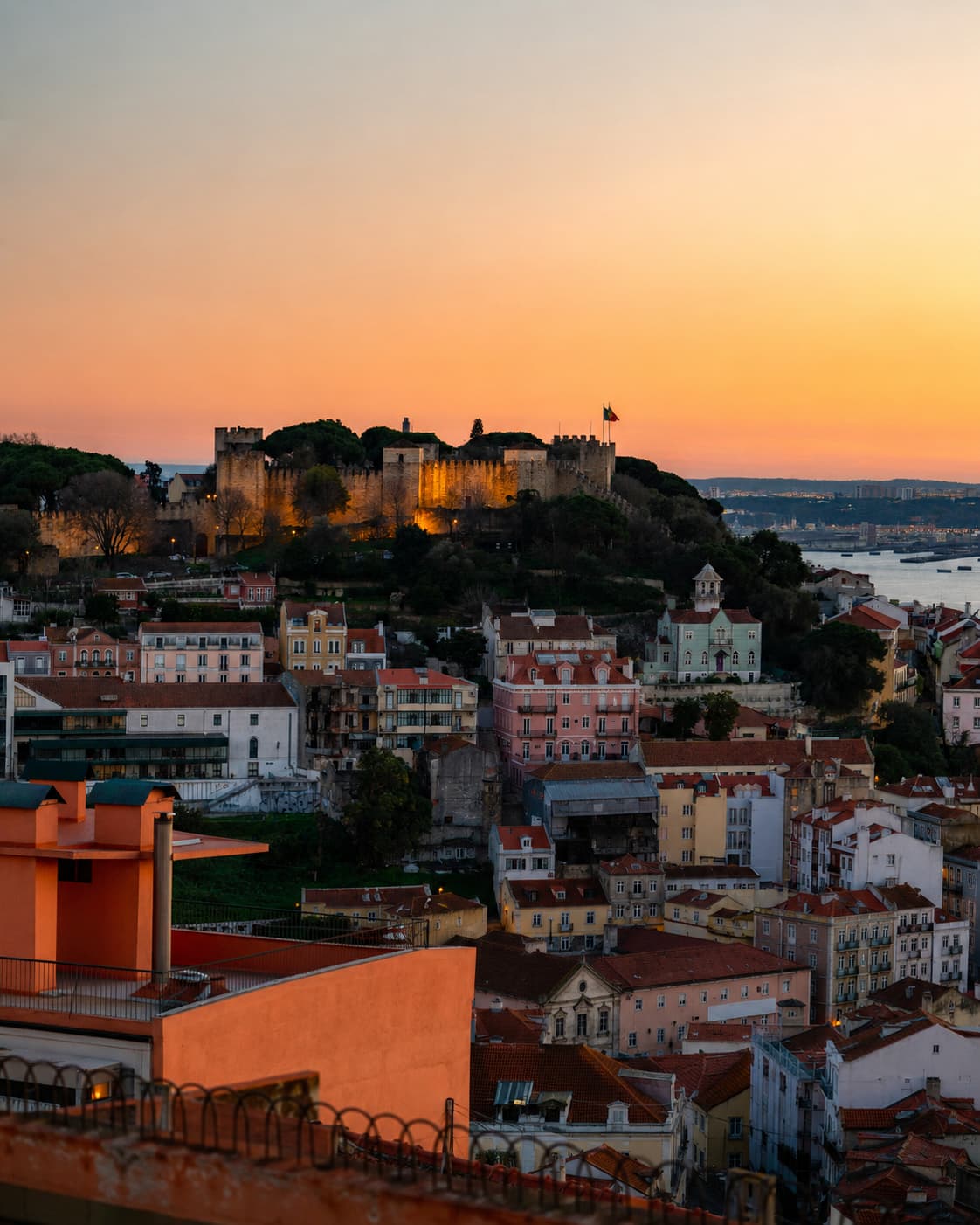
09 — Lisbon vs Porto: Which City Should You Visit?
Here’s the honest answer, structured by the trip you’re actually planning.
It’s your first time in Portugal and you want the full picture. You have 4 or more days. Day trips matter — Sintra especially. You want reliable sun, a proper nightlife scene, and the energy of a European capital that hasn’t lost its character yet.
You have 2–3 days and want to leave feeling like you understood a city rather than passed through one. Budget matters. Port wine and riverside atmosphere are the point. You’ve already done Lisbon and you’re ready for the city that tends to be the better memory.
You have 5–7 days and want to understand why Portugal has become one of Europe’s most consistently returned-to countries. The train makes it easy, the open-jaw flight makes it logical, and the two cities complement each other better than almost any other pairing in Europe.
Once you’ve decided, the practical next step is planning what you’ll actually do once you’re there. The Porto itinerary covers a three-day structure in detail. The Lisbon itinerary does the same — including the Sintra question, which neighbourhood to base yourself in, and where the Alfama actually rewards a slow morning.
If you’re building out a broader Portugal trip — islands included — Madeira and the Azores are both a short flight from Lisbon and worth adding to the itinerary if you have the time.

Portugal is one of those places where the debate about which city to visit ends up being less important than the fact that you went.
Both cities will hold up. The only real mistake is giving either of them less time than they deserve.