
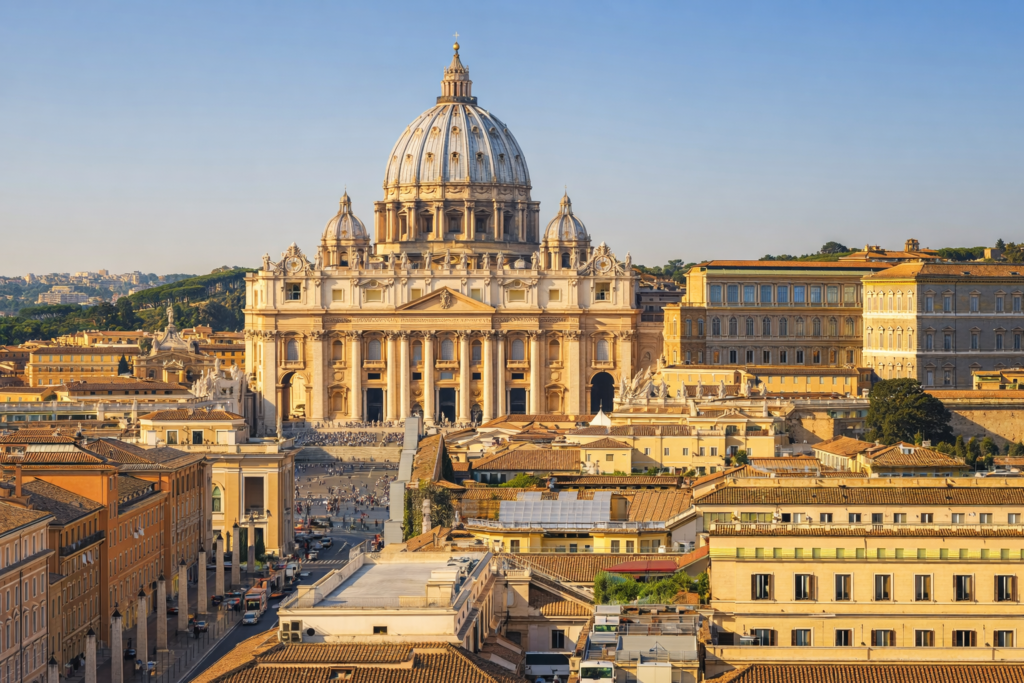
Vatican City: What to Expect When You Climb to the Top of St Peter’s
The dome is free to attempt, genuinely demanding, and one of the most singular views in Europe. Here’s what the climb actually feels like — and what to do with the rest of your time here.
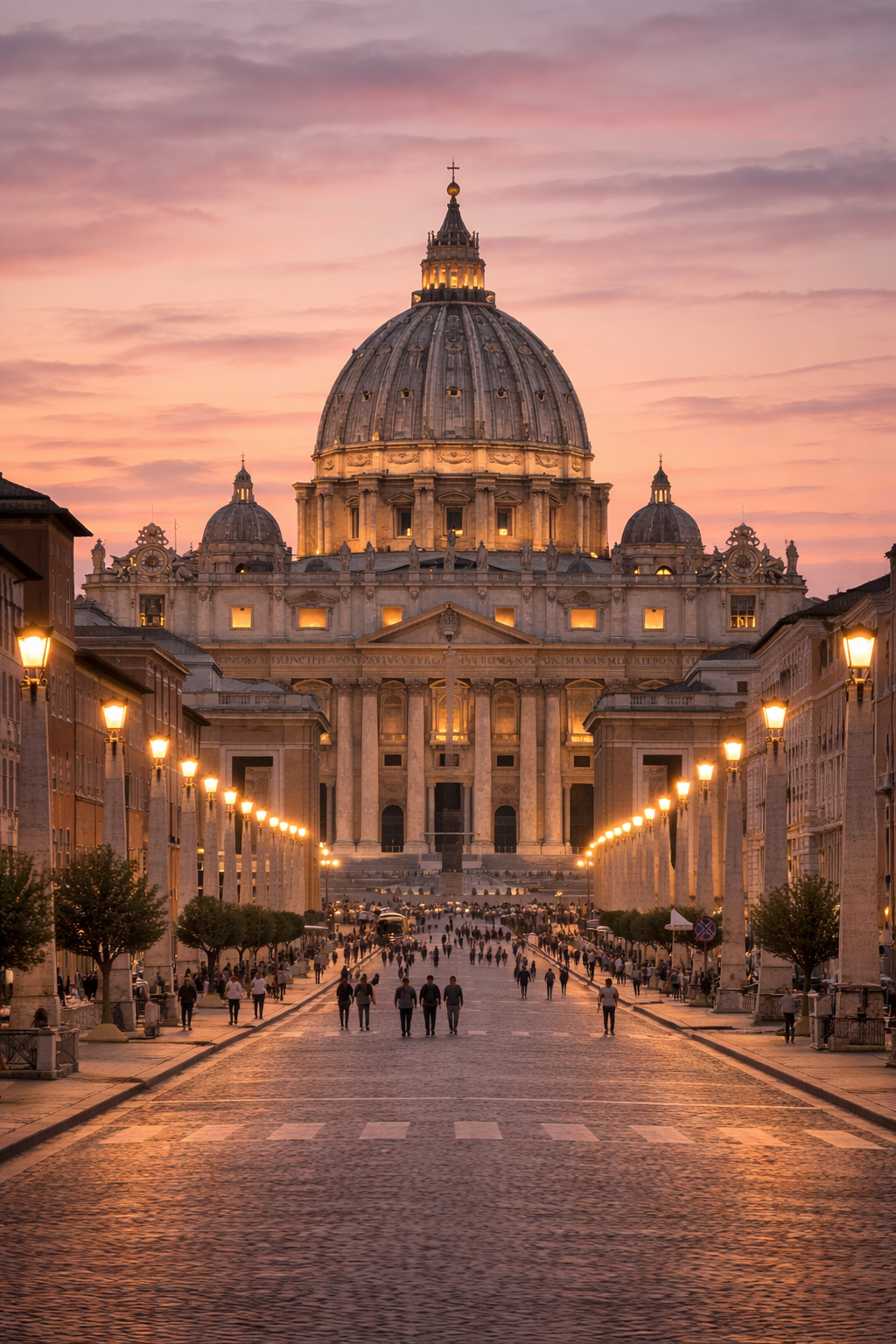
Vatican City is the smallest sovereign state in the world — 44 hectares, a population of around 800, and more concentrated artistic and architectural achievement per square metre than almost anywhere on earth. It sits just across the Tiber from Rome’s historic centre, technically a separate country, practically indistinguishable from the city surrounding it except for the Swiss Guards at the gate and the scale of what’s inside.
We spent a morning here as part of a broader Rome visit — basilica first, dome climb after, then out through a side gate and straight to a pizza place that nobody in the tourist queue was walking toward. This is what that morning looked like.
01 — Inside St Peter’s Basilica
Entry to the basilica is free. That fact deserves emphasis because it surprises most visitors — one of the most extraordinary buildings in the world, and you walk in without a ticket. The queue to get through security can run 20–40 minutes in high season, but the entry itself costs nothing.
What the interior is actually like
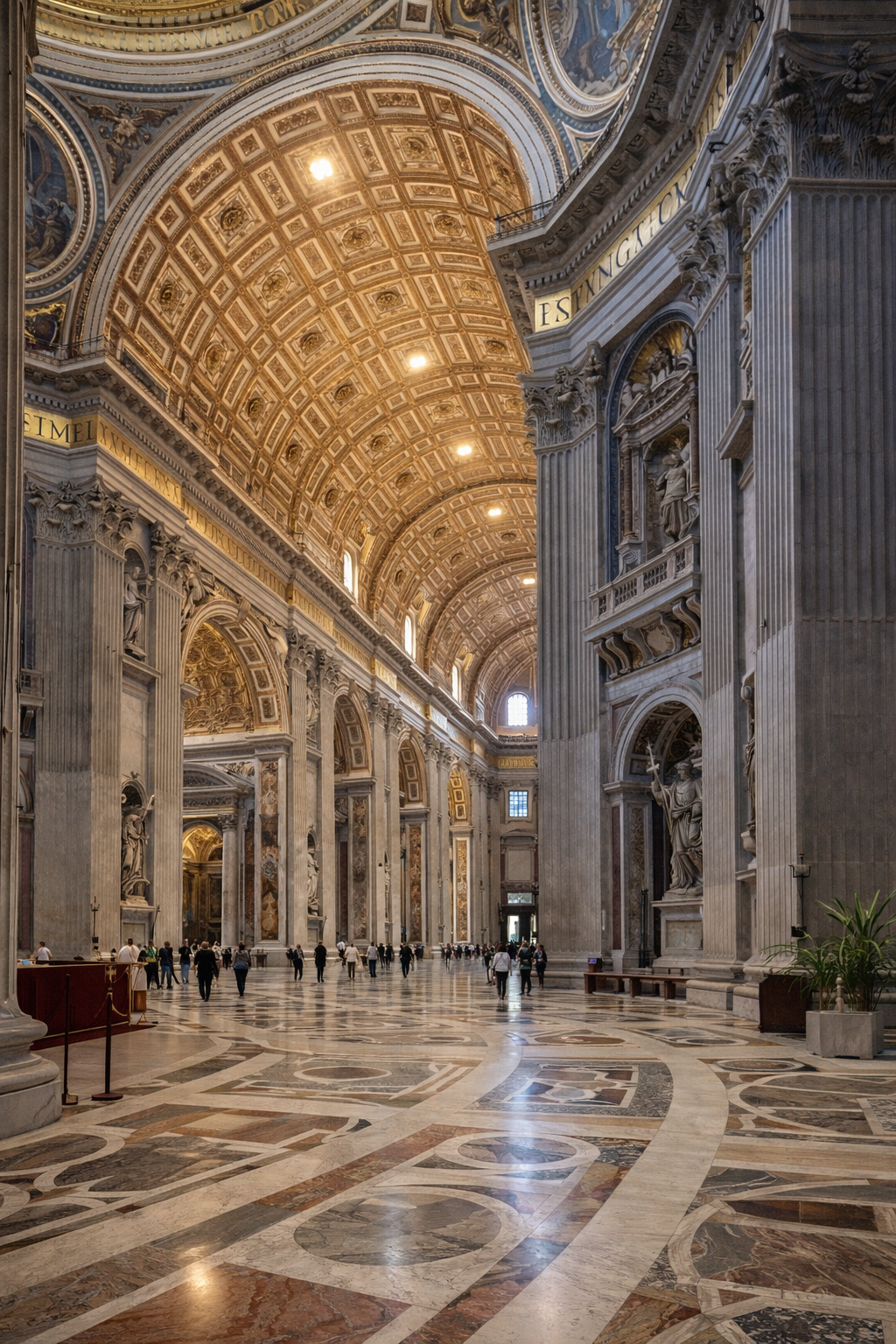
The first thing the basilica does is correct your sense of scale. Everything inside is larger than it appears from the outside — which is itself already enormous. Michelangelo’s dome rises 136 metres from the floor. The nave stretches 211 metres from entrance to apse. Markers embedded in the floor show, for comparison, the lengths of other great cathedrals of the world. All of them fall short.
Bernini’s baldachin — the vast bronze canopy over the papal altar — stands 29 metres tall. Seen in photographs it looks decorative. Standing beneath it, you realise it is the size of a substantial building. This quality of not-quite-believing-what-you’re-seeing runs through the entire interior.
What’s worth finding inside
Just inside the entrance on the right, behind glass since a 1972 attack. The scale surprises people — it is smaller than expected, which somehow makes the detail more affecting. Allow a few minutes here before moving deeper into the basilica.
The centrepiece of the basilica — the twisted bronze columns spiral 29 metres upward, directly beneath the dome. Standing here and looking straight up is the moment most visitors stop talking. The baldachin took Bernini eleven years to complete.
Even if you don’t climb the dome, look up from the floor of the basilica. The mosaic work inside the dome is visible from below — what appears to be painted lettering is in fact mosaic tiles, each one larger than a human hand. The inscription running around the base of the dome reads in letters two metres tall.
Shoulders and knees must be covered to enter. Guards turn people away at the door — not occasionally, but consistently. Bring a scarf or a light layer if you’re in summer clothing. Paper shawls are sometimes available at the entrance but are not guaranteed. This applies to everyone regardless of nationality or religion.
02 — The Dome Climb
The climb to the top of Michelangelo’s dome is one of Rome’s most rewarding experiences — and one of the least honestly described. Most guides mention the view and leave it at that. Fewer mention what the climb itself is like, which is the part worth knowing in advance.
Stairs vs the lift
Two options exist. Stairs only from the basilica floor (551 steps, €8) takes you the entire way on foot. Alternatively, the lift (€10) carries you to the roof terrace level — roughly halfway — after which another 320 steps remain to the top. The lift option is worth considering not primarily for the effort saved, but because the roof terrace itself is worth stopping on. Walking around the outside of the dome at terrace level, with the square below and Rome beyond, is a separate and genuinely good experience before the climb continues.
The tight section — what nobody mentions
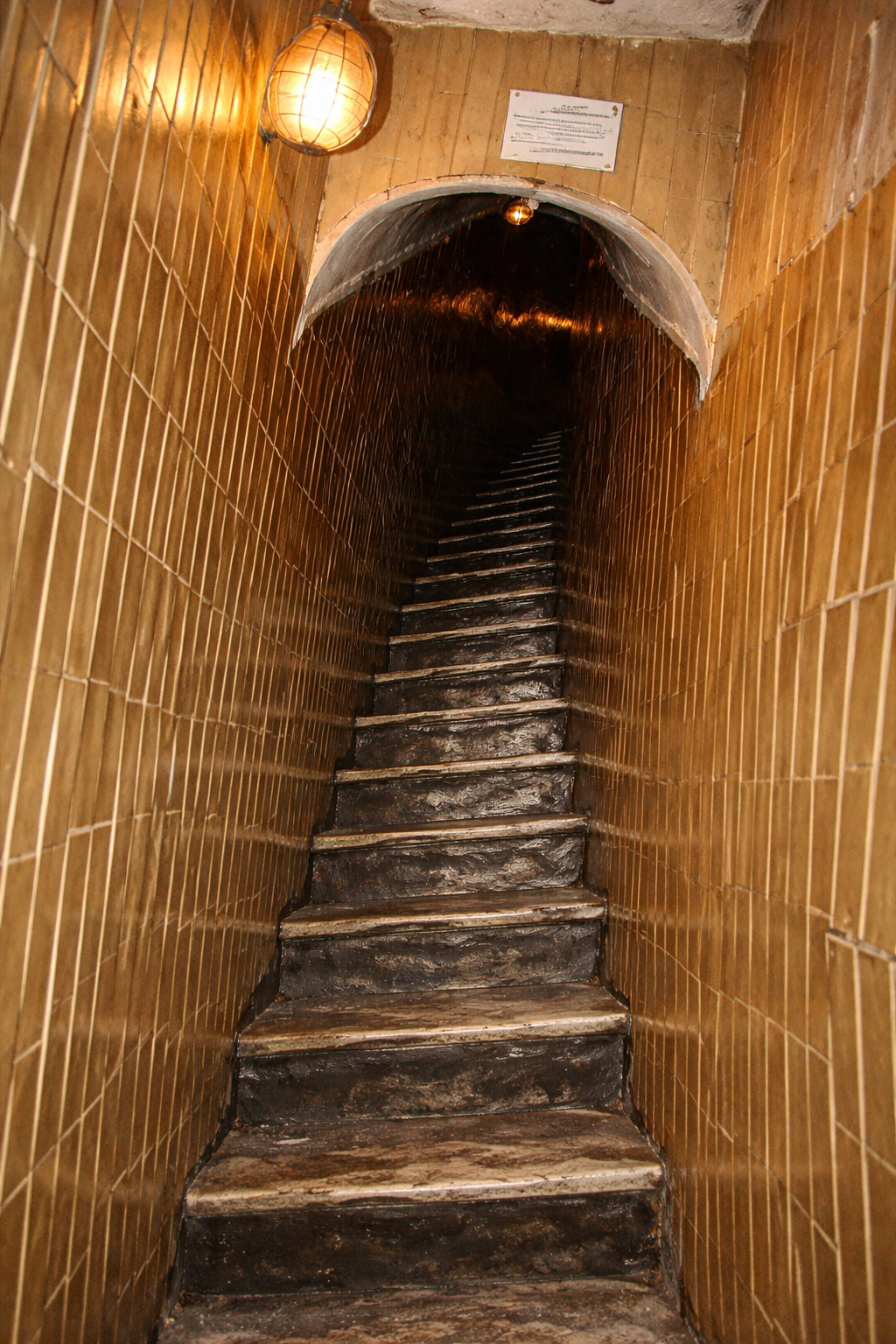
Between the terrace and the summit, the staircase enters the space between the dome’s inner and outer shells. Here the walls close in and the steps begin to follow the curve of the dome itself — meaning the floor tilts inward as you climb. Furthermore, the passage narrows significantly. Two people cannot pass each other comfortably. The ceiling lowers. For most visitors this is simply unusual and interesting. For anyone with claustrophobia, it is important to know about before committing to the climb.
There is no way out partway through this section. Once you are in it, you continue up or wait for a gap in the traffic to come back down. Factor this in honestly before you start.
The view from the top
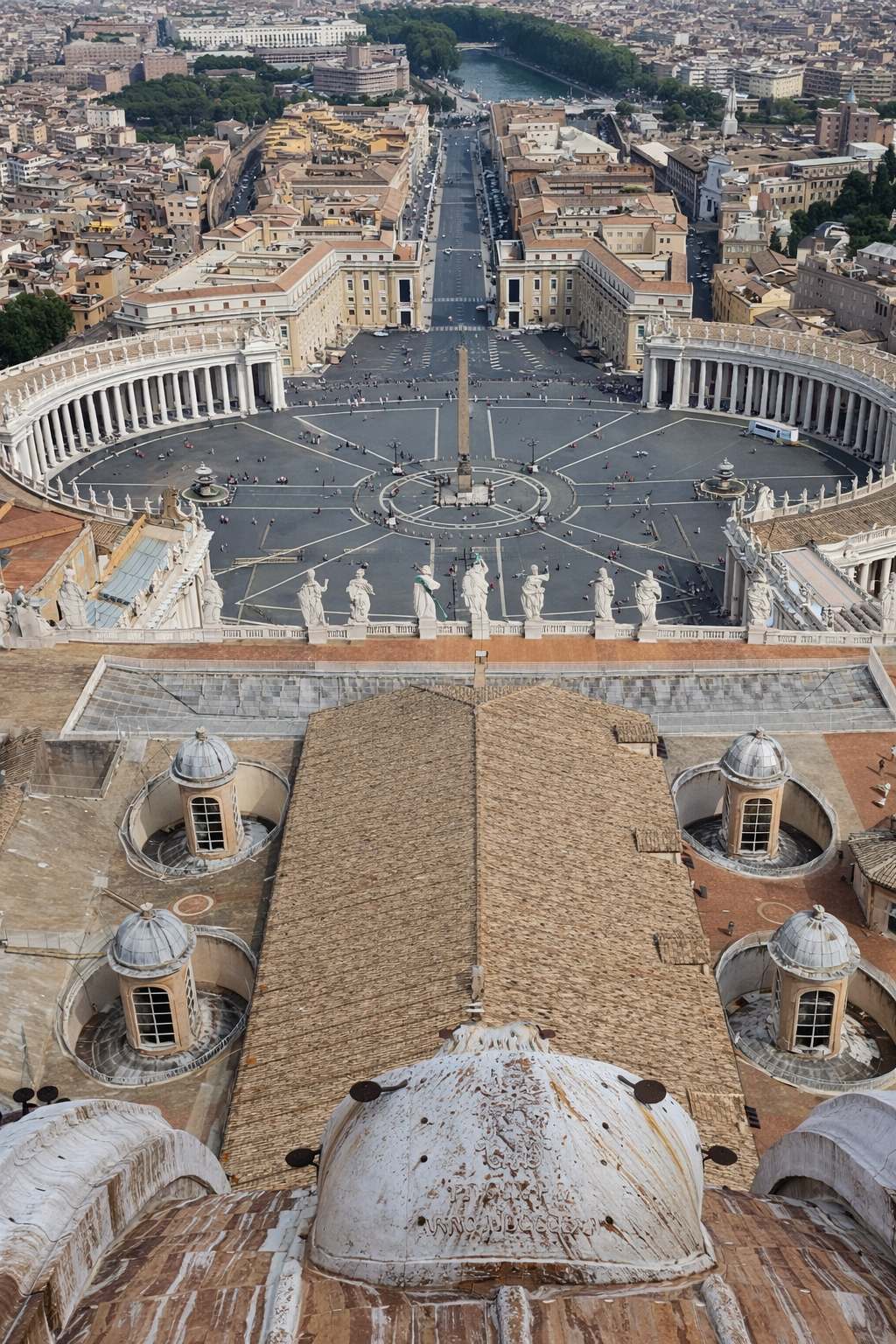
At the summit, the drum opens onto a narrow external walkway encircling the lantern. Two things are immediately apparent. First, St Peter’s Square below resolves into its perfect ellipse — the shape that Bernini intended but that is impossible to perceive from ground level. Second, Rome extends in every direction without interruption. On a clear day the view reaches the Alban Hills to the south and the Apennines to the east.
Looking straight down into the basilica interior through the oculus is the other thing worth doing from up here. The baldachin and the altar, seen from 120 metres directly above, look entirely different from this angle — smaller, more precise, the geometry of the whole building suddenly legible in a way it isn’t from the floor.
03 — The Keyhole Shot
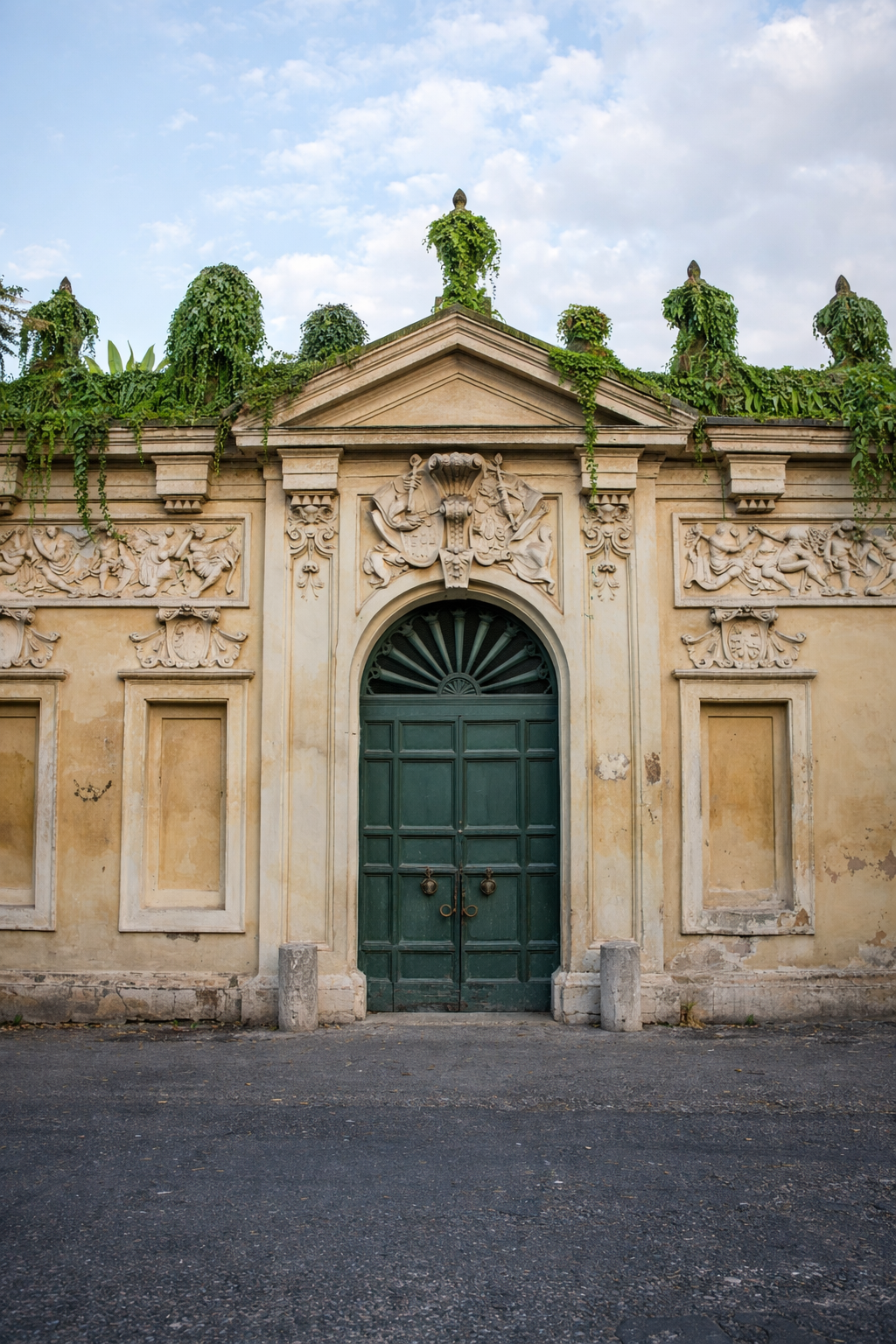
About fifteen minutes’ walk from the Vatican — across the Tiber and up the Aventine Hill — there is a wooden door in a garden wall with a keyhole in it. Looking through the keyhole gives you a perfectly framed view of St Peter’s dome, centred at the end of a long garden corridor of clipped hedges. The alignment is precise enough that it seems designed, though the effect is apparently coincidental.
Getting there and what to expect
The door belongs to the Priory of the Knights of Malta on Piazza dei Cavalieri di Malta. Access to the door itself is free and the piazza is public. In peak season a small queue forms at the keyhole — mostly people who have heard about it and made the detour specifically. Off-season, and early in the morning, you can have it to yourself.
Worth knowing: sometimes the gate next to the keyhole door stands open, which gives a broader view into the garden itself and a slightly different angle on the same framing. The open gate is not guaranteed and not officially encouraged, but it does happen. If it’s open, look through it.
Yes — if you have time and enjoy the kind of discovery that requires a small effort. The walk from the Vatican takes 20–25 minutes each way. The view through the keyhole is genuinely striking and produces one of the more unusual photographs you’ll take in Rome. It is the sort of thing that makes a trip feel like your own rather than the standard circuit.
04 — Where to Eat Nearby
Why the streets near the square don’t workThe streets immediately surrounding the Vatican — particularly Via della Conciliazione, the wide avenue leading to the square — are among the worst-value eating in Rome. Restaurants here price for captive tourist traffic and rely on it. Walking two or three streets away from that corridor changes things considerably.
What we found right next to the Vatican
There are good pizza spots within a short walk of the Vatican that the queue outside St Peter’s walks straight past. The neighbourhood of Prati — immediately north of the Vatican walls — is a lived-in Roman residential area with trattorias, pizza al taglio counters, and bars serving the people who actually live and work here rather than the tourists passing through. The quality is better and the prices reflect a local clientele rather than a tourist one.
What we found after the climb
We ate at a small place just off Via Cola di Rienzo — the main commercial street through Prati — where the pizza was excellent and the lunch crowd was entirely Italian. No English menu. No photographs on the wall. Exactly the right indicators. Additionally, the bars in Prati do coffee properly — a post-climb espresso standing at the counter costs what it should, not the tourist surcharge that applies in the streets near the square.
- Walk to Prati — north of the Vatican walls, 5 minutes, entirely different price level
- Via Cola di Rienzo — the main street through Prati, lined with local options
- Pizza al taglio — by weight, standing, under €5, genuinely good
- Avoid Via della Conciliazione — the tourist corridor to the square, overpriced throughout
- Coffee standing at the bar — €1–1.50 in Prati; €3–4 at tables near the square
05 — Practical Information
What’s free, what costs, and what to book
St Peter’s Basilica entry is free. The dome climb costs €8 (stairs only) or €10 (lift to terrace, then stairs). Vatican Museums — which include the Sistine Chapel — cost €20 and are a separate visit entirely; they share a wall with the basilica but have a different entrance on Viale Vaticano, a 10-minute walk around the outside.
Book Vatican Museums tickets in advance without exception. Same-day queues regularly exceed two hours in peak season and the museums are worth neither the time nor the frustration of standing in them. The dome climb does not require advance booking — you pay at the basilica entrance.
Timing and crowds
The basilica opens at 7am. Arriving between 7am and 8:30am gives you the interior in near-silence — the security queue is short, the nave is mostly empty, and the light through the high windows is at its most useful. By 10am the space is full. By noon it is difficult to move freely through the nave without navigating large groups.
Similarly, the dome is best climbed before 9am if possible. Later in the day the narrow upper section becomes congested in both directions, which makes the already-tight passage considerably less enjoyable. Morning timing solves most of the Vatican’s crowd problems in one decision.
Getting there
Metro Line A to Ottaviano is the simplest approach — the station exits onto Via Candia, a 10-minute walk from St Peter’s Square. Bus 40 and Bus 64 run from Termini directly to the Vatican along the river. Neither involves a particularly interesting journey, but both are faster and cheaper than a taxi from the historic centre.
A few things worth knowing from experience
If you are claustrophobic, do not attempt the stairs-only option. The section between the dome’s inner and outer shells is genuinely tight — the walls close in, the floor tilts, and the passage narrows to single-file. There is no exit partway through. The lift option gets you to the terrace, where you can assess the remaining stairs honestly before committing. For anyone with even mild claustrophobia, the terrace view alone may be the right call — it is already excellent.
The keyhole on Aventine Hill is worth the walk — but check whether the gate beside the door is open when you arrive. Sometimes it swings open and gives you a broader view into the garden. It doesn’t happen every time, but when it does the framing is even better than the keyhole itself.
The pizza spots right next to the Vatican are genuinely good — you just have to walk away from the tourist corridor. Head into Prati, find a counter with Italians at it, and eat there. We stumbled into a place off Via Cola di Rienzo that had no English menu and a queue out the door at 1pm. That queue is always the right indicator.
One more thing: the bronze statue of St Peter inside the basilica — the one whose foot pilgrims have been touching for centuries — has worn completely smooth. Standing beside it and looking at that foot says something about accumulated time that no guidebook quite captures. Don’t walk past it.
The dome climb
Planning your visit
There is a worn bronze foot inside that basilica that two thousand years of hands have touched smooth.
Stand next to it for a moment. Everything else in Vatican City is extraordinary. That one is human.